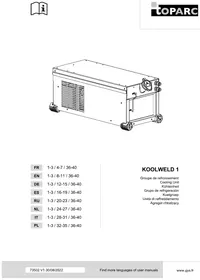
Koolweld 1 - Fridge GYS - Free user manual and instructions
Find the device manual for free Koolweld 1 GYS in PDF.


| Product Type | Cooling unit for liquid-cooled TIG torch |
| Brand | GYS |
| Model | Koolweld 1 |
| Tank capacity | 3 liters |
| Generator compatibility | TITANIUM 230 AC/DC FV (automatic detection) |
| Operating modes | AUTO (activation on welding, stop after 10 min), ON (permanent), OFF (disabled), PURGE (priming and filling) |
| Operating temperature | -10 to +40°C |
| Storage temperature | -20 to +55°C |
| Relative humidity | ≤50% at 40°C, ≤90% at 20°C |
| Maximum altitude | 1000 meters |
| Protection rating | IP23 |
| Built-in protections | Minimum water level, water flow, thermal |
| Recommended coolant | Ref. 062511 (low conductivity, anticorrosion, antifreeze) |
| Coolant change interval | Every 12 months |
| Recommended maintenance | Regular dusting with compressed air, checking electrical connections |
| Available option | Quick assembly kit (ref. 076006) |
| Warranty | 2 years (parts and labor) |
| Weight | Not specified in the manual |
| Dimensions | Not specified in the manual |
Frequently Asked Questions - Koolweld 1 GYS
User questions about Koolweld 1 GYS
0 question about this device. Answer the ones you know or ask your own.
Ask a new question about this device
Download the instructions for your Fridge in PDF format for free! Find your manual Koolweld 1 - GYS and take your electronic device back in hand. On this page are published all the documents necessary for the use of your device. Koolweld 1 by GYS.
USER MANUAL Koolweld 1 GYS
FR 1-3/4-7/36-40
EN 1-3/8-11/36-40
DE 1-3/12-15/36-40
ES 1-3/16-19/36-40
RU 1-3/20-23/36-40
NL 1-3/24-27/36-40
IT 1-3/28-31/36-40
PL 1-3/32-35/36-40
KOOLWELD 1
INSTALLATION - FONCTIONNEMENT PRODUIT
CONDITIONS DE GARANTIE
WARNING - SAFETY REGULATIONS
GENERAL INFORMATION
These instructions must be fully read and understood before operating the machine.
Do not carry out any modifications or maintenance work that is not included in the user manual.
Any personal injury or material damage due to use that does not comply with the instructions in this manual cannot be held at the expense of the manufacturer.
If you have a problem or query, please consult a qualified technician to set up the device correctly.
THE ENVIRONMENT
This equipment should only be used for welding operations within the limits indicated on the rating plate and/or in the user manual. The safety regulations must be observed. In the event of improper or dangerous use, the manufacturer shall not be held liable.
The device must be set up and operated in a location that is free of dust, acids, flammable gases and other corrosive substances, even when in storage. Make sure there is sufficient air circulation when in use.
Temperature ranges:
Use between -10 and +40^ (+14 and +104^)
Store between -20 and +55^ (-13 and 131^)
Air humidity:
Less than or equal to 50% at 40^ (104^)
Less than or equal to 90% at 20^ (68^)
Altitude:
Up to 1000 m above sea level (3280 feet).
PROTECTING YOURSELF AND OTHERS
Arc welding can be dangerous and cause serious injury or death.
Welding exposes people to a dangerous source of heat, light and radiation from the arc as well as electromagnetic fields (caution to those with pacemakers), risk of electrocution, noise and gaseous fumes.
To protect yourself and others, follow these safety instructions:

To protect yourself from burns and radiation, wear insulating, dry, fireproof clothing in good condition without lapels; the clothing must cover the whole body.

Wear gloves that provide electrical and thermal insulation.

Use welding protection and/or a welding hood with a sufficient level of protection (variable depending on the application). Protect your eyes during cleaning operations. Wearing contact lenses is strictly forbidden.
It is sometimes necessary to enclose the welding area with fireproof curtains to protect it from arc radiation, spatter and incandescent waste.
Inform people in the welding area not to look at the arc rays or the molten parts and to wear the appropriate clothing to protect themselves.

Wear noise-cancelling headphones if the welding process reaches a noise level above the permissible limit (these must be worn by anyone in the welding area).
Keep hands, hair and clothing away from moving parts (the fan).
Never remove the cooling unit's protective casing when the welding power source is on; the manufacturer cannot be held responsible in the event of an accident.
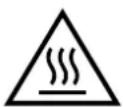
Newly welded parts are hot and can cause burns when handled. When carrying out maintenance on the torch or electrode holder, make sure that it has sufficiently cooled by waiting at least 10 minutes before starting any work. The cooling unit must be switched on when using a water-cooled torch to make sure that the liquid does not cause burns.
It is important to secure the work area before leaving it, this is to protect people and property.
WELDING FUMES AND GASES

The fumes, gases and dusts emitted by welding are health hazards. Sufficient ventilation must be provided and an air supply may be required. An air-fed mask could be a possible solution if there is inadequate ventilation.
Check that the extraction system is operating effectively by checking it against relevant safety standards.
Caution: Welding in confined environments requires remote monitoring for safety reasons. Furthermore, welding certain materials that contain lead, cadmium, zinc, mercury or even beryllium, can be particularly harmful; it is important to thoroughly degrease the parts before welding them.
Gas cylinders must be stored in an open or well-ventilated area. They must be in an upright position and held on a support or on a trolley.
Do not weld near grease or paint.
FIRE AND EXPLOSION RISK

Fully shield the welding area; flammable materials should be kept at least 11 metres away. Fire fighting equipment must be nearby during welding operations.
Beware of hot material or sparks being projected, even through cracks; they can cause a fire or explosion.
Keep people, flammable objects and pressurised containers at a safe distance.
Welding in closed containers or tubes should be avoided and if they are open they should be emptied of any flammable or explosive material (oils, fuels and gas residues, etc.).
Grinding operations must not be directed towards the welding power source or towards any flammable materials.
ELECTRICAL SAFETY

The electrical power supply must be earthed. Use the fuse size recommended on the information panel. Electric shocks can cause serious direct or indirect accidents and even death.
Never touch live parts inside or outside the live power source (torches, clamps, cables and electrodes) as these parts are directly connected to the welding circuit.
Before opening the welding current source, it must be disconnected from the mains and wait 2 minutes. so that all the capacitors are discharged. Do not touch the torch or electrode holder and the earth clamp at the same time.
Ensure that cables and torches are changed by qualified and authorised personnel if they become damaged. Select the cable's cross-section size according to the intended application. Always wear dry, undamaged clothing to insulate yourself from the welding circuit. Wear insulated footwear in all work environments.
TRANSPORTING AND MOVING THE PRODUCT
It is advisable to drain the cooling unit before transportation. Do not carry the equipment over people or objects.
SETTING UP THE EQUIPMENT
- Place the equipment on a floor with a maximum slope of 10^ .
- Ensure the work area has sufficient ventilation for welding, and that there is easy access to the control panel.
- The machine must not be used in an area with conductive metal dusts.
- The equipment must be protected from heavy rain and kept out of direct sunlight.
- The machine protection level is IP23, which means :
- Protection against access to dangerous parts from solid bodies of a ≥ 12.5mm diameter and,
- Protection against the rain inclined at 60^ towards the vertical.
These devices can be used outside in accordance with the IP23 protection index.
MAINTENANCE/ADVICE


- Maintenance should only be carried out by a qualified technician Annual maintenance is recommended.
-
Turn off the power supply by unplugging the outlet, and wait for the fan to stop before working on the device. The voltages and currents are high and dangerous inside the device.
-
Regularly remove the cover and blow out the dust. Take the opportunity to have the electrical connections checked by a qualified technician using an insulated tool.
- Check the condition of the power cord regularly If the power cable is damaged, it must be replaced by the manufacturer, their after-sales service department or a similarly qualified technician to avoid hazards.
- Leave the welding power source's vents free to allow air to enter and exit the machine
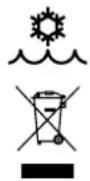
The coolant must be changed every 12 months in order to avoid deposits that may clog the torch's cooling circuit. Any leakage or residues from the welding machine after use must be treated at an appropriate treatment plant. The product should be recycled, if possible. Emptying the used fluid into waterways, pools or drainage systems is strictly forbidden. Unless permitted by local regulations, the diluted fluid should not be drained into the sewer system.
SET UP - OPERATING THE DEVICE
Only experienced personnel, authorised by the manufacturer, may set up and install the device. During setup, ensure that the power source is disconnected from the mains power supply. Serial or parallel power source connections are not allowed.
DESCRIPTION
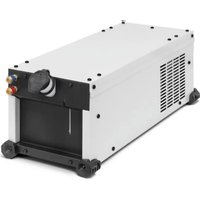
The KOOLWELD 1 cooling unit is designed to cool liquid TIG torches (L).
The cooling unit is controlled directly by the power source through the power cable (1-5).
KOOLWELD 1
Power source compatibility TITANIUM 230 AC/DC FV
This equipment is equipped with:
- a water level safeguard to prevent the water level from becoming too low for the unit, as well as the torch's water-cooling feature, to operate properly.
- a water flow safeguard to prevent clogs in the torch's water supply system and damage to the torch.
- a thermal safeguard to protect the torch against abnormal heating.
This equipment is automatically detected by the power source.
TITANIUM:
Select «System/Cooling unit» on the HMI:
- AUTO: activates when welding and deactivates the cooling unit 10 minutes after the welding is finished.
- ON: the cooling unit is permanently switched on.
- OFF: the cooling unit is switched off.
- PURGE: a feature that is designed to purge the cooling unit or fill the water circuit; these safeguarding features are then deactivated.
PRODUCT DESCRIPTION (II)
1.) Fill plug
2.) Coolant outlet (blue)
3.) Coolant inlet (red)
4.) Filling gauge
5.) Power cable
6.) Priming hose
PRIMING THE COOLING UNIT
When used for the first time or after emptying the tank completely, starting the pump may be difficult and may result in a lack of water flow. Use the priming hose supplied with the product (II-6) and follow the instructions below to prime it correctly:
- Fill the coolant tank to its maximum level. The tank has a three-litre capacity.
- Connect the priming hose to the coolant outlet connector (II-2) and place the other end in an empty container (ideally a bottle).
- Turn on the power source.
TITANIUM:
On the HMI, select «System/Cooling Unit» and click on the icon to start the priming procedure.
- Once the pump is running (with the container filling with coolant), stop the cooling unit by pressing one of the buttons on the HMI.
- Disconnect the ignition hose and refill the fluid in the cooling unit: the pump is now primed.
LIQUID COOLING
FILLING THE DEVICE

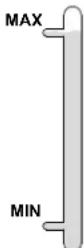
The cooling unit tank must be filled to the gauge's recommended MAX level on the front of the cooling unit. However, it must never fall below the MIN level, otherwise a warning message will appear.
Use only a specific coolant designed specifically for welding machines; it must have with low electrical conductivity as well as being protected against corrosion and freezing (P.N. 062511).
Using other coolants, in particular a standard automotive coolant, may lead to an electrolytic build-up of solid deposits in the cooling system which, in turn, may lead to poor cooling performance and even blockages in the cooling circuit.
The recommended MAX level is essential for optimising the liquid-cooled torch's operational performance.
Any damage to the machine caused by using a coolant other than those stipulated in these instructions will not be covered by the machine's warranty.
HOW TO USE
NEVER USE the cooling unit WITHOUT COOLANT when the pump is running. 1) Respect the minimum coolant level. Failure to do so may result in permanent damage to the cooling system's pump.
2.) Ensure that the cooling unit is switched off before disconnecting the liquid-cooled torch's inlet and/or outlet pipes. Coolant is hazardous and irritates eyes, mucous membranes and skin. The hot liquid can cause burns.
3.) Hot liquid burn hazard. Never drain the cooling unit after use. The liquid inside will be boiling, wait for it to cool down before draining.
TITANIUM. In «AUTO» mode, the cooling unit's pump will start running when the welding process is started. When the welding has stopped, the pump will continue to operate for 10 minutes. During this time, the liquid will cool the welding torch and brings it back to room temperature. Leave the power source connected for a few minutes after welding to allow it to cool down.
The cooling unit must be switched off (OFF) to use an air-cooled TIG torch. For further instructions on how to do this, please refer to the power source's HMI user manual.
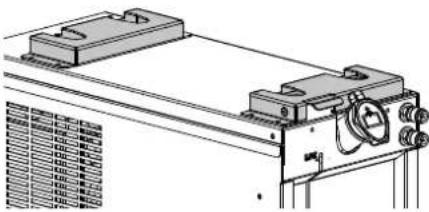
OPTIONAL QUICK-RELEASE COUPLING
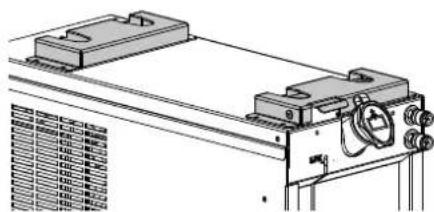
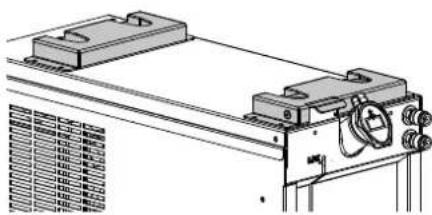
This equipment can be fitted with a quick assembly kit (P.N. 076006) in order to very quickly connect and disconnect a power source fitted to the cooling unit. Pleaser refer to the kit's user manual (076006) to confirm that it is compatible.
MESSAGE AND ERROR CODES
This equipment features a fault-monitoring system which is communicated directly to the appliance. Please refer to the corresponding welding machine or HMI user manual.
WARRANTY CONDITIONS
The warranty covers any defects or manufacturing faults for two years from the date of purchase (parts and labour).
The warranty does not cover:
Any other damage caused by transport
The parts normal wear and tear (e.g. cables, clamps, etc.)
- Misuse-related incidents (misfeeding, dropping or disassembling the device)
- Environmental failures (pollution, rust and dust, etc.)
Should the appliance malfunction, return it to your distributor together with:
- dated proof of purchase (receipt or invoice, etc.)
- a note explaining the breakdown
3NEKTPUeCKA B630nACHOCTb

IcnoB3yema 3JIeKTPnuecka CeTb DoJnxHa 063aTeNbHO 6bTb 3a3EmneHHo. IcnoB3yTe peKomeHdyemb pa3Mep npedoxpahnteY, yka3aHHb Ha Ta6nUKe C HOMHaNbHbIMXapaKTepNCkAMN.
IopaxeHne 3nKtpnueckm TOKOM MOXET CTaTB NCTOCHNkOM Cepbe3HOro IprMOrIO INN KOCBeHHOrO HeCChACTHO rCnyaA JIN daKe CMEpTn.
HnKorda He DoTpaunBaItecb do Uacteien noi HanpaeHem Kac BHytp, TaK i ChapyKn nCTOuyHka, KOrda OH noi HapraKeHnEM (ropeKN, 3axMbl, Ka6en, 3neKTpobl), T.K. OH nOKnIOUeyHb K CBapOCHn CEHN.
IpeTeM, KaK OTkpblb NcToHHK, eRo HxKyHO OTKnIOHTb OT CeTN IIOOJdaTb 2 MInHybl IINr TORO, YTO6bl BCE KOHDeHCaTOPbI pa3pRdINNCb.
HnkOrda He DoTpaRnBaITeCb OndHOBpeMeHHo Do rOpEnKn Hnn 3JeKtpOdoepKaTeNa I do 3axmMa Maccbbl.
Ecn KabeHn, ropeKn NOBpeKHeBn, nonpocnte KbaIINΦuNPOBaHHbIX n yIOnHMOueHHbIX CneuaJIACTOB IN 3aMeHHTb. Pa3Mepbl Ceehnna Ka6eJe IOnKHe CoOTBeTcBOBaTb npIMEnHeHIO. BceJa HOCnte cyxUo OExdy B XopoWem COCTOAHN DnA I30JauN OT CBAPouHOI cEN. HocTe I30IpyuOyO obvB He3aBNCMo OTo TcpeBl, rDe Bbl pa6oTaTe.
TPAHCIOPTIPOBKA I TPAH3NT OOBYIOBAHNA
XenateIbHO cIITb XnDkoCTb Kynepa nepei ero TpaHcnpTnpOBkO. He nepeHocntb 3To o6OpydoBaHne HAD IIOBmnn npedMeTaMn.
YCTAHOBKA ANNAPATA
- YcTaHOBnTe O6OpyOBoHnE Ha NOL C MaKcImaJIbHbIM YKJIOHOM 10^
- PnpDcMOTnE DoCTaTOH 6oJIbwoe npocTpaHCTBO dIg XopoWero npoBepTuBaHn IcToHHKa CBapOHHOro ToK nDocTyna K ynpabHeHIO.
He nCnoIb3ObaTb B cpeDe coepkaueMetaJIInueckyIO nbIb- npOBoDNK. - Le matériel doit être à l'abri de la pluie battante et ne pas être exposée aux rayons du soleil.
- 060pyoDBaHHe IMeET 3aunTy IP23,уTO O3NaUaeT:
-3aunTy OT nonaHnB Oanchblc 30hbl Tbepbix TeJ DnaMeTpom ≥ 12,5mm n
-3aunTy npoTnB kaenbdoxJa, HapabIeHHbIX NOd yrIOM 60° OTHOCHTbHOBePTKan.
3To 6obopyoBaHHe MoKet 6bItb NcNoB3ObaHO BHe NOMEeHn COOTBeTcBeHHO CTeneHn 3aunTy IP23.
OBCLJYKINBAHNE/PEKOMEHDAUIN


- TexNHueckoe obcnykubahne doJxho npou3BOundbca TOnbko KBaHnΦuPobAHbIM cneuaNtcm. Cobetyetc npoBodntb exerodhoe tex6cbnykubahne.
-
OTKIIOHTe NITaHHe BbIHy BUNKy I3 PO3eTKN I DOxJNTecb OCTaHOBKn BEHTINrTopa NepeD TeM, KAK PnCTyNTb K Texo6cIyKBAHnO annapata. BHtpn annapata BbICOKne n OnaChbIe HAnpRKeHne n Tok.
-
Perynpho OTKpbBaIte annapat n npOyBaIte er, yTo6bI OHCTNtB OT bJIIN. Heo6xOIMo TAKke pOBepaT Bce 3neKTPueckne coeHHeHcNOMOsbIO hONpOBaHHOrO HnCTpyMeHTA. POBepka DOnkHa OcyuEeTBJc KBAInΦmUPOBaHHbIM CNEuaHnCTOM.
- Perynphno npoBepaTe cocToHne npoBoa nHTAHN. EcnI shyp nHTAHN NOBpeXKeH, OH DoJKeH 6bITb 3ameHeH npOn3BOaNTeMe, erocepBnCHOn CnykboHn KBAINΦuNPoBaHbIM CNEuaJIncTOM BO n36exHae OnaCHOCTn.
OCTaBnIe OTBepTna IcToUHnKa CBapOuHOro ToKa CBo6oNbIMn IJIPOXOXKeHnBa 03dyxa.
KnDkoctb oxJaJeHn DaJnKHa 6bItb 3aMeHeHa KaJbIe 12 MecaeB, YTO nOmoKeT npEoTbpaTnB o6pa30BaHne ocAkoB, KOTObIe MOrY 3a6bIb TcIeN OxJaDeHn RopeKn. IIObIe OcAkn nnOCTaKN JxNKOctn DOnXhbl 6bItb 6bPa6OtaHb Ha npEaHaNeHHOH nIy 3TOBOooHnauOe CTAHu. EcnN BO3MOxHO, PpOyKT DOJKeH 6bItb nepepa6oTaH. KaTeOpnueckn 3aPneHcnoCInBaTB nONb3OBaHHy NkJOcKtB B peKn, OTCToHNKn IIpeHAnKHe CnTeMbI. Pa3GabNeHHyo XnKocTb He cJeTy eCINBaTB b KaHaJIIn3aHNo, KpOme CnyaeeB, KOrDa 3TO DOJNyCKaETcM MeTHo PERNaMeHTaUnei.
YCTAHOBKA - 3KCPNYATAUINN3DEJNIA
ToIbKO OIbIHb NepcoHJI, yOJHMOOHHH bI npOn3BODInTeLEM, MoKET BblONJIrTb YcTaHOBky. Bo BpEmy YcTaHOBKn Y6eIMTEcb, YTO INCTOCHNK OTKIIIOeH ON cTeN. IocneDobATEbHOe nI npaIannelbHOe NOkLIIOueHe NcTOUHnka 3anpeuEHO.
ONICAHNE
BLOK oxnaxkeHHN KOOLWELD 1 - annapat nIoxnaKeHHJxIKoCTbIX ropenok TIG (L). BLOK oxnaxkeHHN ynpabTcHHeOpCCTBeHHO NcToHHKOM Uepe3 cNoBOB Ka6eBb (I-5)
KOOLWELD 1
COBMECTMOCTb NCTOCHIKOB TITANUM 230 AC/DC FV
Danhoe o6opydoBaHne ochaueHo:
- 3aunTa yopBn B0bl, o6ecneuBaOuaa MInHmAlbHoe 3aONHeHne nI npabInbHoi pa6oTb 6noka oxnaKdHn, a TaKke dIy XopoWero OxnaKeHHra ropeJIKN.
- 3aunTa OT npoToKa BObI dIy 3aunTbI ropeJIKN OT 3acopeHnB OBOrO KOHTypa IIN N3HocA KryTa rOpEnKn.
- TENNOBA 3aunTa dIra 3aunTbI ropeJIkn OT HeHOpMaIbHoro NepepeBa.
3TOT annapat aBtOMaTHueckn onpeJeIeTcNtOCHIKOM.
TITANIUM:
Ha CMN BbI6epnTe CncTeMa/5nok OxnaJdeHnra>:
- ABTO: BKNIOHHe BO BpeM CBAPK N BbIKIOHHe XOJIOHO 6NOKa Uepe3 10 MNHy T Ocne OKOHuaHN CBAPK.
-ON:6nok oxJaXeHnHaXoDntcnoNocToHHbIM ynpaBHeHnEM. - OFF:Блok oxлaxденя Вькlnуeh.
- OYNCTKA yHKnna, npedHa3NaeHHa dny OuyCTKn 6Ioka OxJaehn NIn 3anONHeHn KryTOB, pni 3om 3aunTa OTKIOHeHa.
ONICAHNE OBOPYIOBAHNAI (II)
1- PpO6ka 3aIpaBcHOro OTBepCTn
2-BbIXoD oxJaXdAIOUeJ XnKocTn (CHHI)
3-Bxod oxlaqdaooue kndkoctn (kpacb)
4-YpOBHeMepeHAnOnHeHn
5- Lhnp nntaHn
6-Tpyka nodkura
NYCKCNCTEMBIOXJIAXDEHNA
Bo Bpem npBoro nCnOlb3OBAHn Hnn nocne nnHOro onOpokHeHH 6aka 3aJIbKbHa hAcOa MoKe 6bTb 3aTpduHeHa N Bbl3BaTb HapUweHnnoToKa BoDbl. IpnPabNlBHO 3aJIbKb PeKOMeHyEtcR nCnOlb3OBaTb 3aJIbBOHbI uHaHr, NoCTaBnEMy C n3dennm (II-6), n CneDoBaTbpINBeEHbIM Hnke IHCTpykUam:
-3aONHHe 6aOOK OxIaXkaIOUeJ KINKocTn Do MaKcMmaIbHoro ypoBHa. BaK iMeet EMKocTb 3 NITpa.
- PoiCoeMHInTe 3aIINBHOI WnAHT K BbIpyckHOMy nATpy6ky OXnaxJaIOSei XnIDKocTn (II-2) n NmecTe Dpyro KoHeu B IyctTyO EMKocTb (B uDeaJIe 6BytbnKy).
-BKNIIOHTe NCTOCHNK.
TITANIUM:
Ha MM BbIepeTe Cnctema/OxnaKdaIOuI 6NOK Hn HaxMnTe 3HaOc K To6bHaayb npOeDpy 3aINBKn.
- Iocne 3aINBn Hacocca (KoHTeHep HAnONHReTcR XNIOKcTbO) ocTaHOBtE 6JOK OXIAxKeHnHaKaB OHy n3 KOnOK Ha CMN.
- OToeHNHTe 3aHbHyTOpy6ky, 3aJeTe KnDkoCTb 6paTHO B 6NOK OxnaKdEHHa: Hacoc 3aHNT.
KINGKOCTHOE OXIAXDEHNE
HANOJIHEHNE
Pe3epByap kynepa doJhen oBraTeBHO bItb hanoIHeo peKOMeHDoBaHOrO ypOBH MAX, yka3aHOrO ha ypOBHeMepe cnepeNkynepa, HO H N B K O E M C nYueae He Hnke ypOBH MIN - B 3TOM cnuyae Ha 3Kpahe annapata TIG noarntc npdeynpeKdoUee cooo6uene.
Baxho nCnoB3oBAtc neuMaJIbHyIO oxJaDaIOUy IO xIKoCTb IIN CBAPouhBX AnnapaTOB C Hn3K0 JNEKTPOnpOBDOHOCbIO,
ABnHO uOxscA aHTNKOPPO3NOHBIMn aHTNΦPn3HbIMn. (apt. 062511).
NcNoB3oBAHne DpyRnx OXnaJdaOuX XnIKoCTei, HanpImep ToCoNA, IN-3a npOceCA 3NeKTPOni3a MOrT npBeCTN K HakONPeHNIO
ocAnKB V CEIN CNCTeMbI OxNaXKeDEnH N, TAKM Obpa3OM, YxudNtB npOceC OxNaXKeDEnH NIN DaJe 3aBtB ee.
MAX 3To peKoMeHdyEmy bypOBHeH Heo6xoDm Dn ONTNIMaUIN paOvHX pAcTOpOB pe3aKa C XnIKoCTbIM OxNaXKeDHNEM.
JIo6oe NobpeXDeHme MaunHbI IN-3a NcNoB3oBaHnA dpyroon OxNaXDaIOUe XnIKoCTN, OTNNHOr OT peKoMeHdyEmo, He 6ydet
pacCMatPNBaTbc R pAMkax rapaHTNI.
NcnoJIb3OBAHNE
HINKOTDA He nCOnb3yTe 6nok oxJaedHeN B E3 OXJAKDAIOUe JIKIOCTn npa6oTaOeH HAcOe. 1. Co6IIOaIte MMHmAlhBHy ypoBeHb. HeBbINOJIHeHne 3TOrTO Tpe6oBaHn MoKeT pNBecTN K Heo6paTMOMy NOBpeJdeHIO HAcOca CnCTEmb oXnaJdeHn.
2. 2.
Onachocb oxorob ropae Kndoctb. HkOrda He cnBaTe Kndoctb kynepa nocne ero nCnonb30BaHna. Kndoctb BHytpn Knnaa. Pdoxnte noka oHa ocBHeT npexde Hem cNBaTbe ee.
TITANIUM: B pexime «AUTO» HACOC oxnainten haunhaet paobatb nocne hauana cbapkn. Koanda cbapka npekpaaetcra, HACOC 4. npoonkaet paobatb b teehne 10 MNHT. 3a 3TO BPMA xikoctb oxlaqdaet cbapoyHIO ropENky N DOBOINT ee do KOMHAHOI TEMNEPATpybl. Nocne cbapkn OCTabnIte annapat noKNIOeHHbIM HECKONbKO MNHT dN OXIAJDEHIN.
IINTOB3OBAHnI ROPENK TIG C BO3dyuHbIM OXNAxDeHnEM 6NOK OXNAxDeHnA DOJXeH 6bITb DeAKTNBPOBaH (OFF). IINr 3TOrO o6paTntecb K INCTpykUaM IO INTEppeCy nCTOHTHnKa.
DONOHHTENbHOE BbICTPOcEMHOE KPEJIeHNE
3To 06opydOBaHne MoKET 6bITb OCHaSeHo KOMnNEkTOM DnIg 6bICTPO C6OpKn (CM. 076006) dIg
6bICTPO rPiNCoeDInHeHn I ChrTHN ICTOChnKa, yCTaHOBNeHHOro Ha 3TOM XIOJINHBom arperate.
1IpynpOBepKn COBmecTmOCHTn CM. 6pOshOpY o KOMnIEKeT (076006).
COOBUHNAKOJBIOWBOK
3To 6oppyoBaanHe BkIouaet B Ce6a CnCTeMy ynpabLeHnO Tka3AMn, O KOTopo Co0b7aTeC HEnocpeDCTBeHHO nctOHTNky. CM.pyKOBOCTBO DnI COOTBEcTByUeIero NtOCHNkA INI pyKOBOCTBO nIOb3OBATEJn INHTepceCa (IHM).
UCIOBNAIAPAHNTN
TapaHTIpaCnpocPraHaeTcHaJIIO6O3aBODCKoIeΦeKtIINb6pA B TeueHeN2X Iet C DaTbI NOKynnN3dEInna (3aYacTn npabOyar cNa).
TapaHTnHe paCnpocTpaHReTcHa:
- JIO6bIe NIOJOMK, BB3BaHHbIe TpaHCnOpTIpOBKO.
HopmaIbHbI u3Hoc Detanei (Hanpimep : ka6einn, 3axkmbln T.D.)
CnyuHnepaBnIbHorOncnoJIb3OBAHnO(oWn6KaNITaHn,naDeHne,pa36Opka).
Cnyan Bixoia n3 cTPOI 13-3a OKpykaUeien CpeBb (3arpyHHeHne Bo3dyxa, Kopp03n, Nblb).
PnBbIXOe n3 cTPO, o6paNTecb B nyHK T NOKyKn annapata C npdeBraHHeM CneDyUoXn DOKyMeHTOB:
-DOKymeHT,NOBtBePckDauOuNnOKyIKy(C DaToN):KaccOBbY KeK,HBOIC....
-ONNCAHNE NOJOMKN.
WAARSCHUWINGEN - VEILIGHEIDSINSTRUCTIES
ALGEMENE INSTRUCTIES
SNELBEVESTIGING OPTIONEEL