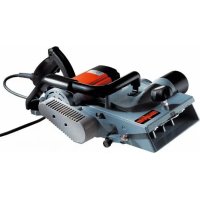
ZH 245 Ec - Plane Mafell - Free user manual and instructions
Find the device manual for free ZH 245 Ec Mafell in PDF.


| Brand | Mafell |
| Model | ZH 245 Ec |
| Category | Planer |
| Product type | Electric planer for carpentry |
| Service voltage | 230 V AC |
| Line frequency | 50 Hz |
| Power consumption | 2500 W |
| No-load speed | 8500 min⁻¹ |
| Rated load speed | 8500 min⁻¹ |
| Planing width | 245 mm |
| Depth of cut | 0 - 4 mm |
| Cutting speed at rated load | 32.9 m/s |
| Weight (without power cord) | 13.2 kg |
| Suction connection diameter (inner/outer) | 75/80 mm |
| Sound pressure level (LPA) | 102 dB(A) (uncertainty K=3 dB) |
| Sound power level (LWA) | 110 dB(A) (uncertainty K=3 dB) |
| Hand-arm vibration | 2.7 m/s² |
| Protection class | II |
| Standard equipment | 1 set of reversible blades, 1 service tool, 1 adapter cable (ref. 925121), 1 instruction manual, 1 "Safety Instructions" booklet |
| Safety devices | Wide base, handles, switch device, suction tube |
| Main functions | Planing, depth of cut adjustment (0-4 mm), electronic soft start, electronic speed control, automatic brake |
| Maintenance and cleaning | Regular cleaning of the shaft and blades, resin removal with petroleum or suitable product, clean storage and anti-corrosion |
| Spare parts and repairability | Reversible blades (ref. 091895/091896), clamping jaws (ref. 203319), knife holder (ref. 091796), ZH-RS gearbox (ref. 207877); revision recommended by Mafell service center |
| General information | Intended use: processing solid wood; non-conforming: other use; comply with safety instructions and local regulations |
Frequently Asked Questions - ZH 245 Ec Mafell
User questions about ZH 245 Ec Mafell
0 question about this device. Answer the ones you know or ask your own.
Ask a new question about this device
Download the instructions for your Plane in PDF format for free! Find your manual ZH 245 Ec - Mafell and take your electronic device back in hand. On this page are published all the documents necessary for the use of your device. ZH 245 Ec by Mafell.
USER MANUAL ZH 245 Ec Mafell
Please read all safety instructions and directions. Failure to comply with the safety instructions and directions can cause electric shock, fire and/or serious injuries. Please retain all safety instructions and directions for future reference.
AVERTISSEMENT
GB - EC Declaration of Conformity
We herewith confirm that the machine ZH 245 Ec complies with the EU directives quoted. The standards listed were used for design and construction. Empowered person for the configuration of the technical documents: Mafell AG
1 Signs and symbols 15
2 Product information 15
2.1 Manufacturer's data 15
2.2 Machine identification 15
2.3 Technical data 16
2.4 Emissions 16
2.5 Scope of supply 16
2.6 Safety devices 17
2.7 Use according to intended purpose 17
2.8 Residual risks 17
3 Safety instructions 17
4 Setting/Adjustment 18
4.1 Mains connection 18
4.2 Dust extraction 19
4.3 Blade change 19
5 Operation 19
5.1 Initial operation 19
5.2 Switching on and off 19
5.3 Depth of cut adjustment 19
5.4 Work instructions 20
5.5 Chip ejection 20
6 Service and maintenance 20
6.1 Tool 20
6.2 Storage 20
7 Troubleshooting 21
8 Optional accessories 21
9 Exploded drawing and spare parts list 21
1 Signs and symbols

This symbol is found in all places where you will find information for your safety.
Non-compliance with these instructions may result in very serious injuries.
This symbol indicates a potentially hazardous situation. If this situation is not avoided, the product or objects in its vicinity may get damaged.

This symbol indicates tips for the user and other useful information.
2 Product information
for machines with product no. 925101, 925120, 925121
2.1 Manufacturer's data
MAFELL AG, Beffendorfer Straße 4, D-78727 Oberndorf / Neckar, Phone +49 (0)7423/812-0, Fax +49 (0)7423/812-218, e-mail: mafell@mafell.de
2.2 Machine identification
All details required for machine identification are available on the attached rating plate.

Protection class II

CE symbol to document compliance with the basic safety and health requirements according to Appendix I of the Machinery Directive.
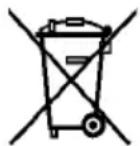
For EU countries only
Do not dispose of electric tools together with household waste material! In accordance with the European directive 2002/96/EC on waste electrical and electronic equipment and transposition into national law, obsolete electrical tools must be collected separately and recycled in an environmentally-compatible manner.

To reduce the risk of injury, please read the operating instructions.

Always wear ear protectors during work.
2.3 Technical data
| Operating voltage | 230 V AC | |
| Mains frequency | 50 Hz | |
| Input power continuous operation | 2500 W | |
| Speed of planing shaft | while idling | 8500 rpm |
| at normal load | 8500 rpm | |
| Planing width | 245 mm (9 5/8 in.) | |
| Chip removal | 0 - 4 mm (0- 3/16 in.) | |
| Cutting speed at normal load | 32.9 m/s (108 ft/sec.) | |
| Weight without mains cable | 13,2 kg (29.1 lbs) | |
| Extractor connection diameter | Inside / outside | 75/80 mm (2 15/16 – 3 1/8 in.) |
2.4 Emissions
The declared noise emission values have been measured in accordance with EN 62841-1 and EN 62841-2-14 and may be used for comparing the tool with another and also in a preliminary assessment of exposure.

Danger
The noise emissions during actual use of the power tool can differ from the declared values depending on the ways in which the tool is used especially what kind of workpiece is processed.
Always wear hearing protection, even when the power tool ist running idle in addition to the trigger time!
2.4.1 Noise emission specifications
Noise emission values determined according to EN 62841-1 and EN 62841-2-14:
Sound pressure level L P_A = 102dB (A)
Uncertainty K PA = 3,0dB (A)
Sound power level L_PA = 110dB(A)
Uncertainty K PA = 3,0 dB (A)
The noise measurement is recorded using the planing shaft included in the standard equipment.
2.4.2 Vibration specifications
The typical hand-arm vibration is 2.7m / s^2
2.5 Scope of supply
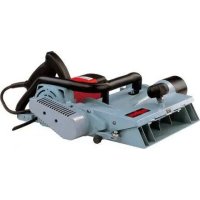
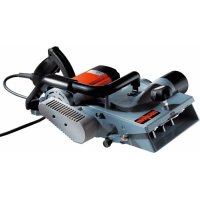
Carpenter's plane ZH 245 Ec complete with:
1 set reversible blades
1 operating tool
1 adapter cable for Item No. 925121
1 operating manual
1 folder "Safety Instructions"
2.6 Safety devices

Danger
These devices are required for the machine's safe operation and may not be removed or rendered inoperative.
Before operating the machine, check the safety devices for function and possible damage. Do not use the machine with missing or ineffective safety devices.
The machine is equipped with the following safety devices:
Large base plate
- Handles
- Index mechanisms
- Hose connector
2.7 Use according to intended purpose
The carpenter's plane is exclusively intended for processing solid wood using HL-reversible blades.
Dimension and quality of the spacer blocks, blade carriers and reversible blades used must correspond to the parts listed in the spare parts list. The order numbers can be found in the spare parts list.
Any other use than described above is not permissible. The manufacturer cannot be held liable for any damage arising from such other use.
So as to use the machine as intended, comply with the operating, maintenance and repair instructions specified by Mafell.
2.8 Residual risks

Danger
Even if used in accordance with its intended purpose and despite conforming with the safety instructions, residual risks caused by the intended use that can lead to health consequences will always remain.
- Touching the running planing shaft below the base plate.
- Touching the sharp planing blades with stationary planing shaft.
- Touching the sharp planing blade edges when changing the blades.
- Touching the running planing shaft through the chip ejector.
- Ejection of incorrectly fitted planing blades.
- Breakage and ejection of parts of the planing blades.
- Machine or workpiece get flung off when planing from within the workpiece.
- Touching live parts with the housing open and the mains plug not removed.
- Hearing can be impaired when working for long periods without ear protectors.
- Emission of harmful wood dusts during longer operation without extraction.
3 Safety instructions

Danger
Always observe the following safety instructions and the safety regulations applicable in the respective country of use!
Also read the safety instructions in the enclosed booklet "Safety instructions".
General instructions:
- Children and adolescents must not operate this machine. This rule does not apply to young persons receiving training and being supervised by an expert.
- Never work without the protection devices prescribed for the respective operating sequence and do not make any changes to the machine that could impair safety.
- When operating the machine outdoors, use of an earth-leakage circuit-breaker is recommended.
-
Damaged cables or plugs must be immediately replaced. Replacement may only be carried out by Mafell or an authorised MAFELL service workshop in order to avoid safety hazards.
-
Always check before beginning work whether the protection and work devices are safely attached and not damaged. Damaged protection devices and parts must be repaired or exchanged appropriately.
- Consider environmental influences. Do not expose the machine to rain and avoid working in a damp or wet environment as well as near to combustible liquids and gases.
- Do not carry the machine by its cable and do not use the cable to pull the plug out of the socket outlet.
- Pay attention that the cable is protected against oil and heat and is not pulled across sharp edges.
- Avoid sharp bends in the cable. Especially when transporting and storing the machine, do not wind the cable around the machine.
- Only allow an electrician to carry out work on the electrical parts of the machine.
- Store the machine in a dry, locked place outside the reach of children.
Instructions on the use of personal protective equipment:
- Always wear ear protectors during work.
- Always wear protective goggles during work.
- Always where a dust mark during work.
Instructions on operation:
- Wait for the cutter top stop before setting the tool down. An exposed rotating cutter may engage the surface leading to possible loss of control and serious injury.
- Hold the power tool by insulated gripping surfaces, because the cutter may contact its own cord. Cutting a "live" wire may make exposed metal parts of the power tool "live" and could give the operator an electric shock.
- Use clamps or another practical way to secure and support the workpiece to a stable platform. Holding the workpiece by your hand or against the body leaves it unstable and may lead to loss of control.
- Provide for an unobstructed and slip-proof location with adequate lighting.
-
The power plug must be pulled before replacing tools, making adjustments and repairing malfunctions (this also comprises removing jammed chips).
-
Do not work on workpieces which are too small or too large for the capability of the machine.
- The switch may not be wedged.
- Only begin planing the workpiece when the planing shaft has achieved its full speed.
- Examine the workpiece for foreign objects. Never attempt to plane over nails or other metal objects.
- During planing, always lead the connecting cable away from the machine to the side (Fig. 1).
- An even feed during planing increases the life time of blades and machine and reduces the risk of accidents. Do not reverse plane or plunge plane!
- Planing blades must be reversed or replaced in good time, as blunt blades do not only increase the danger of backlash, but also place an unnecessary strain on the motor.
- Never reach into the planing shaft or into the chip ejector while the machine is running.
- The wood dust arising during planing impairs the necessary view and is partly injurious to health. If the machine is used for longer periods, it must therefore be connected to a chip extractor, e.g. a portable small extractor, if the work is not carried out outdoors or in a sufficiently ventilated room. The air velocity must be at least 20m / s (65.6 ft/sec.).
Instructions on service and maintenance:
- Regularly cleaning the machine, especially the adjusting devices and guides, constitutes an important safety factor.
- Only original MAFELL spare parts and accessories may be used. Otherwise the manufacturer will not accept any warranty claims and cannot be held liable.
- Use a suitable tool, e.g. a piece of wood to clean a clogged ejection nozzle. Do not reach into the ejection nozzle.
4 Setting / Adjustment
4.1 Mains connection
The carpenter's plane is equipped with protective insulation according to Class I and may therefore only be connected to socket outlets with protective earth conductor.
Prior to commissioning make sure that the mains voltage complies with the operating voltage stated on the machine's rating plate.
4.2 Dust extraction
Connect the machine to a suitable external dust extractor during all work generating a considerable amount of dust. The air velocity must be at least 20m / s (65.6 ft/sec.).
The internal diameter of hose connector is 75mm (2 15/16 in.).
4.3 Blade change

Danger
Pull the power plug during all service work.
Sharp planing blades guarantee a regular planing pattern and put less strain on the motor. Blunt planing blades must therefore be reversed or exchanged.
Prior to the blade exchange, release screws 13 (Fig. 3) at the lateral cover and tilt away the cover 14. Screw the hexagon head screws 10 (Fig. 2) approx. 1 - 2 turns into the spacer blocks 12 using the open-ended spanner (width across flats 8). Pull the spacer blocks with blade and blade carrier 9 laterally from the planing shaft.
Clean all parts and the blade chamber inside the planing shaft.
Always reverse both blades or fit new blades. Pay attention that the blades are fitted on the pins in the spacer block first and only then the blade carriers. Afterwards, insert the blades including the carrier system laterally into the planing shaft and pay attention that blade carrier and blades do not laterally protrude beyond the shaft body. First only lightly, then firmly tighten the clamping screws from the centre outwards using the open-ended spanner (width across flats 8) included in the supply (8.4Nm) . Tilt the cover back again and tighten the screws. The planing shaft has been preset at the factory. An adjustment of the fitted blades is therefore not necessary and may not be carried out, as otherwise the permissible projection of the blades beyond the shaft body may be exceeded.
5 Operation
5.1 Initial operation
Personnel entrusted to work with the machine must be made aware of the operating instructions, calling particular attention to the chapter "Safety instructions".
5.2 Switching on and off
Before switching on, pay attention that the machine's planing shaft does not rest on the support or on the workpiece. For this purpose, lift the carpenter's plane with both hands by the handles 1 and 4 (Fig. 4).
- Switching on: First unlock the switch-on lock by pressing the locking lever 15 (Fig. 4) to the front. Then actuate the control lever 2. As this is a switch without locking device, the machine will only run for as long as this switch is pressed.
The built-in electronic system provides for jerk-free acceleration when the machine is switched on and under load readjusts the speed to the fixed setting.
In addition, this electronic system adjusts the motor down in case of overload, i.e. the planing shaft will stop. The load on the machine must then be reduced until the planing shaft has reached its full speed. After that, continue to plane at reduced feed speed.
- Switching off: To switch off, release the switch trigger 2. The switch-on lock automatically takes effect again and secures the machine against accidental switch-on.
On switching off the machine, the automatic brake takes effect simultaneously. This shortens the slowing time of the machine to approx. 1 - 3 seconds.
5.3 Depth of cut adjustment
The chip removal can be set to between 0 and 4mm (0 - 3/16 in.). This is done with the handle 5 (Fig. 4) for depth of cut adjustment. The set planing depth can be read off scale 6.
During normal operation, the chip removal should remain restricted to approx. 3mm (1/8 in.). To avoid overloading the motor, the maximum chip removal should only be used in extreme cases.
5.4 Work instructions
Thanks to its balanced weight distribution, the carpenter's plane has a good grip. It can be guided using the handles 1 and 4 (Fig. 4).
For planing, the machine's front contact area is placed onto the workpiece such that the planing shaft does not engage. After switching on and as soon as the planing shaft has reached its full speed, the carpenter's plane is guided over the timber applying an even pressure. An even feed results in a regular planing pattern and reduces the strain on the machine.
When the carpenter's plane is overloaded, the speed of the planing shaft drops. It is then necessary to wait until the planing shaft has reached its full speed again. Afterwards, it is possible to continue working with reduced feed.
When working with a full planing width, the lever with guide roller 7 is tilted downwards and tensioned with the knurled knob 8. This provides the plane with a lateral guide.
After planing, immediately switch off the machine by releasing the switch and do not put down with running planing shaft. When resetting the chip removal to 0, the plane may be put down on a flat surface without damaging the support, even if the blades are in an unfavourable position.
5.5 Chip ejection
The carpenter's plane is designed such that during planing with appropriate feed speed and fully utilised planing width, an efficient chip ejection is ensured. In the process, the chips are ejected to the side so that the view onto the workpiece is not obstructed.
6 Service and maintenance

Danger
Pull the power plug during all service work.
MAFELL machines are designed to be low in maintenance.
The ball bearings used are greased for life. When the machine has been in operation for a longer period of time, we recommend to hand the machine in at an authorised MAFELL customer service shop for inspection.
Only use our special grease, order No. 049040 (1 kg tin) for all greasing points.
6.1 Tool
The planing shaft, spacer blocks, blade carriers and blades used on the machine should be regularly deresinified as a clean tool improves the cutting quality. Deresinification is carried out by placing the spacer blocks, blade carriers and reversible blades for 24 hours in petroleum or a commercial deresinificaton agent.

Aluminium tools may only be deresinified with solvents which do not corrode the aluminium.
6.2 Storage
Clean the machine thoroughly if the machine is not used for a longer period of time. Spray blank metal parts with a rust-proofing agent.
7 Troubleshooting

Danger
Determining the causes for existing defects and eliminating these always requires increased attention and caution. Pull the mains plug beforehand!
Some of the most frequent defects and their causes are listed in the following chart. In case of other defects, contact your dealer or the Mafell customer service.
| Defect | Cause | Elimination |
| Machine cannot be switched on | No mains voltage | Check power supply |
| Mains fuse defective | Replace fuse | |
| Carbon brushes worn | Take the machine to a Mafell customer service shop | |
| Machine switches off automatically during idling or stops during planing | Mains failure | Check mains back-up fuses |
| Machine overloaded | Reduce feed speed | |
| Speed decreases during planing | Excessive chip removal | Reduce chip removal |
| Feed rate too fast | Reduce feed speed | |
| Blunt blades | Reverse or exchange blades | |
| Irregular planing pattern | Blunt blades | Reverse or exchange blades |
| Uneven feed | Plane with constant pressure and reduced feed | |
| Chip ejection blocked | Excessive chip removal | Reduce chip removal |
| Feed rate too fast | Reduce feed speed | |
| Blunt blades | Reverse or exchange blades | |
| Wood is too damp | Clean chip ejection | |
| Extended planing without extraction | Connect to an external extraction, e.g. portable dust extractor |
8 Optional accessories
- Reversible blades (1 pair) Order No. 091895
- Reversible blades (3 pairs) Order No. 091896
- Clamping jaws Order No. 203319
- Blade holder (1 pair) Order No. 091796
- Reducing socket ZH-RS Order No. 207877
9 Exploded drawing and spare parts list
The corresponding information in respect of spare parts can be found on our homepage: www.mafell.com
Sommaire
4 Forbereda/stalla in
4.1 Nätanslutting
- Reduceringsadapter ZH-RS
Art.nr 207877
2.5 KomnneKT noCTaBKn
BHyTpeneHHn DnaMeTp OTCacbIbaIOUeero NaTpy6Ka coCTaBJIaTe 75 MM.
4.3 3aMeHa HoxKei

Onacho
Pn npoBeHnn IIO6bIX pa60nt no TexHHueCKOMy 06cnyKINBaHHIO BbIHMaTb BNkY CoeINHHTeNbHO shHypa.
OctpbIe cTporaIbHbIe HOxI rapaHTnpyOT aKKypaTHoe CTporaHHe N CO3dAOT MehBsuH No Harpy3ky Ha DBnraTeIb. 3aTyINBwIeCn CToPoraJIbHbIE HOxN Heo6XoDIMO pa3BepHyTb IIn 3aMeHHTb.
Дялгпго посмehои HOжа OTKpyTNTe BnHTbI 13 (pnc.3)Ha 60koBoi KpbIuKke N OTBepHnTe KpbIuKy 14. 3aTAHnTe BnHTbI C 7ecTHrpaHHo TOnOBKOJ 10 (pnc. 2)ODHOCTOpOHnM raeHbIM KJIIOvOM Ha 8 npIMepHo Ha 1-2obopota B 3axmMbIX KyJaUkax 12. IV3BLeKnte 3axmHbIe KylauKIn C HOxAMN HoxKepePxAteJIaMn c6oky n3 CTporalhoro BaIa.
OuICTIe BCE DeTaN IN Kamepy HOXa B CTrporalbHOM Bane.
Bcerda nepebopauBaTb 6oa HOxaknn yctaHabnBaTb HOBbie HOxN.CIeNTe 3a Tem, YTO6bl Ha 7tNΦTbI B 3axHMhIX KynAChkax Chauana yCTaHaBnBaJcH OX, a NOTOM HOXeDEpKaTeNb. 3aTEM BCTaBbTe HOK BMeCTe C CNTeMOI KpeJIeHNI c60ky B CTporalnbHbIN BaN IN CNeDInTe 3a Tem, YTO6bl HOXeDEpKaTeNb IHOK He BbICTyNaIN NO 6OKAM 3a Kopnyc BaN. 3aTaNTE 3axHMhIE KynAChN C cepeINHbI HApxyOdHOCTOPOHMM RaeyHbIM KlnOyOM Ha 8, BXoJusIM B KOMNKeT NocTabKN, Chayana cnerka, Notom Tyro (8,4 Hm). ChOBA nobepHnte Ha3ad KpbIshky n 3aTaNTE BnHTbI. CTporalNBbIN BaI OTpeYIpnoBaH yXe Ha 3aBOde. IOnTOMU OCTIpOBKn BCTaBnEHbIX HOXe HE TpeByeTc, INOA He DOJXHa npON3BOJNTbcR, TaK KaK B IpOTUBHom CNYae MOXHO pEBbICNTb DOnyCTMbl BBICTyN HOXe HAOCHOBHOuBaJa.
5 3Kcnnnyataua
5.1 BbO D B 3KcNpyaTaunIO
DaHnyIO INHCTpyKUIO NO 3KcNpyaTuIN CNeIyET DOBeCTn DO CBeDEHnBCEX NlU, KOTOpbIM NOpyuHo UnpaBHeHne MaunHO, PnueM Oco6oe BHNMaHne CNeIyET ObpATNb Ha pa3dJe ,PpaBnla 6e3OnacHocT".
5.2 BkIIOueHne N BbIKIOueHne
Ipeed BKJIOUeHHe CJIeNTe 3a TeM, YTO6bl yCTpOInCTBO He npINerAno CTporanbHbIM BaIOM K KaKoI-Ni6o NOBepxHOCTn Nnn K 3aOTOBKe. Ppi 3TOM IODHMITE IILOTHNcKm py6aHOK OBeHMn pykAmn 3a pyuKn 1 n4 (pnc. 4).
BknOueHne: Pa36nokpyTe cHaana 6nOKPOBky npOTNB BkIIOUeHna HaxaTneM pbIyara 6nOKPOBKn 15 (pnc.4) Bnepei. 3aTe m aKTNbPyIte pbIar BkIIOUeHn2. NocKoNbKy peyb nET O BbIKIOUaTeIe 6e3 CTOnopa, yCTpoIcTB0 pa6oTaet, noka HaxaT bIKIOUaTeIb.
BcTpoEHnA 3JIeKTpOHnKa oBeCneuHBaET npi BkIIOUeHm 6e3yIapHOe yckOpEnHe n npi DeIcTBn HArpy3Kn yCTaHaBnBaet YactOTy BpaSeHnHa yCTaHOBLeHHoe 3HaueHne.
Kpome TOrO, 3a 3neKtpoHnka npOn3BODNT o6paTHyIO perynipOBky DnIraTeN B Cnyae nepeRpy3KN, T.e. cTporalbHbIN BaN OCTaETc HEnoDbXKBHbIM. TOrda Heo6xOIMO CHrTB HArpy3Ky C MaunHbI, YTO6bl CTporalbHbIN BaN DOCTNR NOJHOuCACTOTbIBPauEHHa. 3aTeM npOJnxAtb CTporAHne C yMeHbWeHHoN CKOpocTbIO nOdaUH.
- BbIKIOUeHne:ДЯВbIKIOUeHnOtNycTnTe pblurBkIOUeHn2.ПргЗOMaBTOMaTNUeCKn DeIcTByET6JOKINPOBka npOTNB BKIOUeHnN 3aunuaetMaunHy OT BKIOUeHnN NO OUn6Ke.
При Выкlio ueHIN OndHOBpeMeHNO BKIIOuaeTcA bTOMaTnueckn TOpMo3.БlaroDapr 3ToMv BpeM dBIXKeHnNo INHePcHMaShInbI yMeHbShaetc npIM. Na1-3 cekyHd.
5.3 PerynpobKa rny6nHbI pe3aHna
ToIuHy CHMaemOro CNoA MoXHo yCTaHOBnTb B npedeJax 0-4 MM.3TO BbINOJIHReTc pyKoN 5 (pnc. 4)ДЯ HAcTpoKn TlY6nHbI pe3AHn, pR N 3TOM MOxHO BnTeB HAcTPOeHHy ToIuHy CHMaemOro CNoA Ha Shkane 6.
B obbyHOM pexHme pa6oTbI TOUHHy CHMaemOrCNoA CJeDyeT OrpaHnHTb IprM. 3 MM.MakcImaJIbHOJ ToUHHOCHMaEMORO CNoR BO n36eXaHne nepepy3Kn DBrIaTeJIa CJeDyeTPOlb30BaTbCraToJIbKO B Oco6bIX Cnyaax.
5.4 Yka3aHn no pa6oTe
KoHcTpkyuMaunMAFELL Tpe6yet MHNImaJIbHOrTexHueCKOrO 06CnyXnBaHnI.
IcnoJb3yemble 7apIKOOnoUHnHnKcMca3aHbHa BeCb cPOK 3KcNpyatauIN. Nocne dInTeNbHOJ 3KcNpyatauINMbI peKOMeHdyEM nepeDaTb MaunHy Ha TexHNueckN OCMOTp aBTOp3OBaHHo FnpMOJMAFELL macTepcKo I NO o6CnyXnBaHnIO KInEHTOB. Jnra Cma3Kn BCEx TOueK Cma3Kn HcNoJIb3yIte TOnbKO HaShy CneuaJIbHyIO KOHCnCTeHTHyIO Cma3Ky, No dJa 3aKa3a 049040 (1 Kr 6aHka).
6.1 HhctpymehT
IcnoJIb3yEmbIe Ha MaUHHe CtporAJIbHbIe BaJIbI, 3aXIMHbIe KUJaUKN, HOKeDEpXaTeIIN HOXN DOJXHbI peYrJApHO ObecCMOnJBaTbCra, TaK KaK YnCTbI INHCTpyMeHT yJyUHaET KaueCTBO pe3Kn.
ObecmOnnBaHne ocuIeCTBJIeTcnyTeM NOMeueHn3axIMhIx KJNaUKOB,HOKeIepKaTeIeN I NOBOpOTbIX HOKeHa 24 Yaca B KePOCH NIN CTaHdApTHoe CpeDCTBO dIy ObecmOnnBaHn.

AnHMnHeBbI HcTpymeHTbl CneJyET OuHuaTb OT CMoJ pactBopNTeMa, HearpeCCNBbIMN K aHOMHIO.
6.2 XpaHeHne
TuaTeNbHO ONUCTHMe MaunHy,ecnHe Co6npaeteCb
NCNoB3OBaTb ee B TeueHne DInTeNbHoro BpeMeHn.
PacnbIInTe aHTNKoppO3nHoe CpeDCTBO Ha
He3aUuUeHHBe MetaJIuueckNe DeTaJN.
7 YcTpaHHe HEnoJaIok

Onacho
OnpeJeHne npuHn cyueCTbUoux HeNoaOK n nx ycTaPHeNHe Bcerda Tpe6yOT NOBbIeHHoro BHIMAHnI N OCTOpXHocTn. PpeDbapntelbHO BbInbTe n3 po3eTKBnKy Ka6eJI nHTaHnI!
Hnke nepeuusneHbI Han6oee yactbIe HenolakN Ix npunHbI. PpN Bo3HKnHOBeHHn Dpynx HenoJaOK oBauaTeCb K CBOeMy nocTaBUnKy IIN HENOCPeDCTBeHHO B cepBnchHy cLyXby KomnaHn MAFELL.
| Nivo zvočnega tlaka L | PA = 102 dB (A) |
| Negotovost | KPA = 3,0 dB (A) |
| Raven zvočne moči L | PA = 110 dB (A) |
| Negotovost K | PA = 3,0 dB (A) |
- AVERTISSEMENT
- GB - EC Declaration of Conformity
- Signs and symbols
- Product information
- Manufacturer's data
- Machine identification
- Technical data
- Emissions
- Danger
- Noise emission specifications
- Vibration specifications
- Scope of supply
- Safety devices
- Use according to intended purpose
- Residual risks
- Safety instructions
- General instructions:
- Instructions on the use of personal protective equipment:
- Instructions on operation:
- Instructions on service and maintenance:
- Setting / Adjustment
- Mains connection
- Dust extraction
- Blade change
- Operation
- Initial operation
- Switching on and off
- Depth of cut adjustment
- Work instructions
- Chip ejection
- Service and maintenance
- Tool
- Storage
- Troubleshooting
- Optional accessories
- Exploded drawing and spare parts list
- Sommaire
- Forbereda/stalla in
- Nätanslutting
- KomnneKT noCTaBKn
- 3aMeHa HoxKei
- Onacho
- 3Kcnnnyataua
- BbO D B 3KcNpyaTaunIO
- BkIIOueHne N BbIKIOueHne
- PerynpobKa rny6nHbI pe3aHna
- Yka3aHn no pa6oTe
- HhctpymehT
- XpaHeHne
- YcTpaHHe HEnoJaIok
Brand : Mafell
Model : ZH 245 Ec
Category : Plane