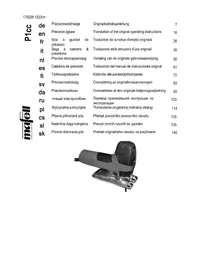
P1cc - Saw Mafell - Free user manual and instructions
Find the device manual for free P1cc Mafell in PDF.


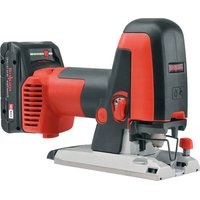
| Product type | Precision jigsaw |
| Brand | Mafell |
| Model | P1cc |
| Rated voltage | 230 V~, 50 Hz |
| Power consumption | 900 W |
| Rated current | 4.0 A |
| No-load stroke rate | 800 - 3000 min⁻¹ |
| Stroke length | 26 mm |
| Cutting depth | 65 mm / 115 mm |
| Weight | 2.5 kg |
| Dust extraction connection diameter | 29 mm |
| Sound pressure level | 90 dB(A) |
| Vibration (wood) | 5.7 m/s² |
| Protection class | II |
| Standard equipment | Base plate, parallel guide, saw blades, case |
| Intended use | Wood, engineered wood products, plastics, metals |
| Maintenance | Regular cleaning; lifetime lubricated bearings |
| Storage | Clean before long inactivity; apply anti-corrosion |
| Safety | Anti-restart device; protection wire; bipolar switch |
Frequently Asked Questions - P1cc Mafell
User questions about P1cc Mafell
0 question about this device. Answer the ones you know or ask your own.
Ask a new question about this device
Download the instructions for your Saw in PDF format for free! Find your manual P1cc - Mafell and take your electronic device back in hand. On this page are published all the documents necessary for the use of your device. P1cc by Mafell.
USER MANUAL P1cc Mafell
Precision jigsaw Translation of the original operating instructions 18
Please read all safety instructions and directions. Failure to comply with the safety instructions and directions can cause electric shock, fire and/or serious injuries. Please retain all safety instructions and directions for future reference.
AVERTISSEMENT
GB - EC Declaration of Conformity
We herewith confirm that the machine P1 cc complies with the EU directives quoted. The standards listed were used for design and construction.
Empowered person for the configuration of the technical documents: Mafell AG
CZ - PROHLASENI O SHODE
Timto prohlasujeme, z stroj P1 cc sphuhe polyny uvedenych smemic EU. Pn planovani a sestaveni byly vuyizty uvedene nomy.
Zasestaveni technickych podklad zu zodpovida: Mafell AG
SLO - ES izjava o skladnosti
S tem Izavljamo, da stroj P1 ccustreza naVEDenim direktivam EU. Pri konstrukcij in izdelavi so uporableni naštei standardi.
1 Signs and symbols 19
2 Product information 19
2.1 Manufacturer's data 19
2.2 Machine identification 19
2.3 Technical data 20
2.4 Emissions 20
2.5 Scope of supply 21
2.6 Safety devices 21
2.7 Use according to intended purpose 21
2.8 Residual risks 21
3 Safety instructions 22
4 Setting/Adjustment 22
4.1 Mains connection 22
4.2 Dust extraction 22
4.3 Sawblade change 23
4.4 Base plate 23
4.5 Hose connector / chip deflector 23
4.6 Use of the precision jig saw on the rail 23
4.7 Replacing / cleaning the saw blade holder 24
5 Operation 24
5.1 Initial operation 24
5.2 Switching on and off 24
5.3 Pendulum stroke setting 24
5.4 Splinter-free sawing 24
5.5 Positioning the base plate 24
5.6 Adjusting the base plate 25
5.7 Reverse sawing 25
6 Service and maintenance 25
6.1 Storage 25
7 Troubleshooting 25
8 Optional accessories 26
8.1 Swivel plate, anti-splintering device, parallel stop 26
8.2 Jigsaw blades 26
8.3 Guide rails 27
9 Exploded drawing and spare parts list 27
1 Signs and symbols

This symbol is found in all places where you will find information for your safety.
Non-compliance with these instructions may result in very serious injuries.
This symbol indicates a potentially hazardous situation. If this situation is not avoided, the product or objects in its vicinity may get damaged.

This symbol indicates tips for the user and other useful information.
2 Product information
for machines with product no. 917103, 917120, 917121, 917122, 917125, 917148
2.1 Manufacturer's data
MAFELL AG, Beffendorfer Straße 4, D-78727 Oberndorf / Neckar, Phone +49 (0)7423/812-0, Fax +49 (0)7423/812-218, e-mail: mafell@mafell.de
2.2 Machine identification
All details required for machine identification are available on the attached rating plate.

Protection class II

CE symbol to document compliance with the basic safety and health requirements according to Appendix I of the Machinery Directive.
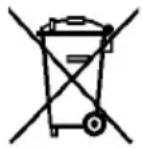
For EU countries only
Do not dispose of electric tools together with household waste material! In accordance with the European directive 2002/96/EC on waste electrical and electronic equipment and transposition into national law, obsolete electrical tools must be collected separately and recycled in an environmentally-compatible manner.

To reduce the risk of injury, please read the operating instructions.
2.3 Technical data
| Universal motor, radio and TV interference | 230 V~, 110 V~, 120 V~ | ||
| suppressed | 50 Hz | 50 Hz | 60 Hz |
| Current at nominal load | 4.0 A | 7.0 A | 7.0 A |
| Input power continuous operation | 900 W | ||
| Idling stroke rate | 800 - 3000 rpm | ||
| Length of stroke/working stroke | 26 mm (1.02 in.) | ||
| Cutting speed at normal load | 0.4 – 1.3 m/s (15.74 - 51.18 in./s) | ||
| Cutting depth | 65/115 mm (2.56/4.53 in.) | ||
| Weight without mains cable | 2.5 kg (5.51 lbs) | ||
| Diameter hose connector (outsideø) | 29 mm (1.14 in.) | ||
2.4 Emissions
The declared noise emission values have been measured in accordance with EN 62841-1 and EN 62841-2-11 and may be used for comparing the tool with another and also in a preliminary assessment of exposure.

Danger
The noise emissions during actual use of the power tool can differ from the declared values depending on the ways in which the tool is used especially what kind of workpiece is processed.
Always wear hearing protection, even when the power tool ist running idle in addition to the trigger time!
2.4.1 Noise emission specifications
Noise emission values determined according to EN 62841:
Sound pressure level L_PA = 90dB(A)
Uncertainty K PA = 1,5dB (A)
Sound power level L PA = 98dB(A)
Uncertainty K_PA = 1,5 dB (A)
The noise measurement was recorded using the saw blade included in the standard equipment.
2.4.2 Vibration specifications
The typical hand-arm-vibration is 5.7m / s^2 (224.4 in.) for wood and 5.6m / s^2 (220.4 in.) for metal.
The measuring inaccuracy K is 1.5m / s^2 (59.1 in.)
The vibration measurement was carried out with the saw blade available in the standard equipment.
Saw blade for wood: CUnex W1 WOOD (item No. 093676)
Saw blade for metal: M2 METAL Progressive BIM (item No. 093709)
2.5 Scope of supply
Precision jig saw P1cc complete with:
1 base plate
1 parallel stop
1 selection of jigsaw blades
1 hose connector
1 chip deflector
1 splinter guard
1 glider
1 carrying case
1 operating manual
1 folder "Safety Instructions"
2.6 Safety devices

Danger
These devices are required for the machine's safe operation and may not be removed or rendered inoperative.
Before operating the machine, check the safety devices for function and possible damage. Do not use the machine with missing or ineffective safety devices.
The machine is equipped with the following safety devices:
Large base plate
- Saw blade contact protection realised with guard wire
- Handles
- Index mechanisms
2.7 Use according to intended purpose
The precision jig saw is exclusively intended to be used to cut solid wood and panel materials such as chip board, coreboard and MDF board, synthetic materials, mineral building materials and metals.
Any other use than described above is not permissible. The manufacturer cannot be held liable for any damage arising from such other use.
So as to use the machine as intended, comply with the operating, maintenance and repair instructions specified by Mafell.
2.8 Residual risks

Danger
Even if used in accordance with its intended purpose and despite conforming with the safety instructions, residual risks caused by the intended use that can lead to health consequences will always remain.
- Touching the saw blade below the guide plate.
- Touching the part of the saw blade that protrudes below the workpiece when cutting.
- Machine backlash if the blade gets stuck in the workpiece.
- Breakage of the saw blade and risk of the blade or pieces of the blade being hurled away.
- Touching live parts with the housing open and the mains plug not removed.
- Hearing can be impaired when working for longer periods without ear protectors.
- Emission of harmful wood dusts during longer operation without extraction.
3 Safety instructions

Danger
Always observe the following safety instructions and the safety regulations applicable in the respective country of use!
Also read the safety instructions in the enclosed booklet "Safety instructions".
General instructions:
- Children and adolescents must not operate this machine. This rule does not apply to young persons receiving training and being supervised by an expert.
- Never work without the protection devices prescribed for the respective operating sequence and do not make any changes to the machine that could impair safety.
- When operating the machine outdoors, use of an earth-leakage circuit-breaker is recommended.
- Damaged cables or plugs must be immediately replaced. Replacement may only be carried out by Mafell or an authorised MAFELL service workshop in order to avoid safety hazards.
- Avoid sharp bends in the cable. Especially when transporting and storing the machine, do not wind the cable around the machine.
Do not use:
- Cracked and misshapen saw blades.
- Blunt saw blades as they impose an excessive load on the motor.
Instructions on the use of personal protective equipment:
- The noise pressure level at the ear generally exceeds 85 dB (A). Operators should therefore wear ear protectors.
- Wear protective goggles.
- Wear a dust mask.
Instructions on operation:
- Do not reach with your hands into the sawing area and do not touch the saw blade. Hold the machine with both hands at the grip areas intended.
-
Do not reach under the workpiece.
-
Use clamps or another practical way to secure and support the workpiece to a stable platform. Holding the workpiece by hand or against your body leaves it unstable and may lead to loss of control.
- Hold the power tool by insulated gripping surfaces, when performing an operation where the cutting accessory may contact hidden wiring or its own cord. Cutting accessory contacting a "live" wire may make exposed metal parts of the power tool "live" and could give the operator an electric shock.
- If you would like to restart a saw that is stuck in the workpiece, centre the saw blade in the saw slit and check whether the saw teeth are stuck in the workpiece.
- Support large plates to reduce the risk of backlash caused by a jammed saw blade.
- Do not use any blunt or damaged saw blades.
- Before starting to saw, tighten the cutting depth and cutting angle adjustments.
- Be especially careful when making a "plunge cut" into a concealed area, e.g. into an existing wall.
- Examine the workpiece for foreign objects. Never attempt to cut into nails or other metal objects.
Instructions on service and maintenance:
- Regularly cleaning the machine, especially the adjusting devices and guides, constitutes an important safety factor.
- Only original MAFELL spare parts and accessories may be used. Otherwise the manufacturer will not accept any warranty claims and cannot be held liable.
4 Setting / Adjustment
4.1 Mains connection
Prior to commissioning make sure that the mains voltage complies with the operating voltage stated on the machine's rating plate.
4.2 Dust extraction
Connect the machine to a suitable external dust extractor during all work generating a considerable amount of dust. The air velocity must be at least 20m / s (65.6 ft/sec.).
The outside diameter of hose connector 502 (Fig. 3) is 29mm (1.14 in.).
Chips in the visible tracing area are blown from this area into a chip collector by means of an air stream. From there they are transferred through a channel and can be extracted by means of a hose connector 502 mounted on the base plate (see chapter 4.5).
4.3 Saw blade change

Danger
Pull the power plug during all service work.
- Tilt the clamping arm 50 (Fig. 1) outwards until it engages.
- Remove the saw blade. If slight lateral pressure is exerted on the saw blade it is automatically ejected.
- When fitting the new jigsaw blade, pay attention that the new blade engages automatically.
- Close the clamping arm by pushing it back into its original position.
4.4 Base plate
The machine is equipped with a base plate 9 (Fig. 2) that facilitates precise rectangular cuts. To carry out angular cuts, mount the swivel plate that is available as special accessory.
To do so, proceed as follows:
- Turn the clamping lever 51 (Fig. 2) from a horizontal to a vertical position, thus releasing the connection between machine and base plate.
- Move the base plate until the indicator position on the machine coincides with the notch in the base plate (see notes in Fig. 5).
- You can now separate the machine and the base plate.
-
When joining base plate and machine, pay attention that the clamping lever is in the position as described under 1. Assemble the machine and base plate in such a manner that the indicator on the machine and the notch on the plates are standing above each other. Move the base plate towards the machine in the desired direction (see chapter 5.6).
-
Turn the clamping lever as far as possible into a horizontal position until the base plate and the machine are firmly joined.
4.5 Hose connector / chip deflector
The machine is supplied with a hose connector 502 (Fig. 3) and a chip deflector 503. Use the hose connector to connect an external dust scrubber. Use the chip deflector if you are unable to extract the arising dust. The dust is guided away from the user by the deflector. You can alternatively mount both parts on the machine base plate:
- Push the two spring arms together at the position marked with "X" (Fig. 3) and pull out the hose connector / chip deflector to the rear while keeping the spring arms pressed together.
- For assembly, push the hose connector / chip deflector into the opening at the rear end of the base plate until the spring arms engage automatically.

For undertable sawing, the chip deflector can be fitted turned by 180^
4.6 Use of the precision jig saw on the rail
The machine can be used on the guide rail. One half of the base plate will protrude the rail in the process. The rail thickness is levelled out by fitting a glider 504 (Fig. 4).
4.6.1 Attaching the glider
- Following Fig. 4, insert the glider hook into the recesses on the base plate. Glider and base plate will form an approximate angle of 30^ in the process.
- Tilt the glider against the base plate until the pin engages in the drill hole.
- Place the machine onto the rail such that the base plate groove reaches over the spring of the rail.
4.6.2 Detaching the glider
- Tilt the glider to approx. 30^ away from the base plate by reaching into the recess provided with your finger (Fig. 4) and lifting the glider.
- Now you can remove the hook from the recesses in the base plate and detach the glider.
4.7 Replacing / cleaning the saw blade holder
This machine is equipped with a particularly accurate saw blade holder. If this holder is worn or dirty, you can replace it or clean it.
To do this, proceed as follows:
- Tilt the clamping arm 50 (Fig.1) outwards until it engages.
- Remove the saw blade. If slight lateral pressure is exerted on the saw blade it is automatically ejected.
- Bring the plunger into an as deep as possible end position (by starting the machine several times).
- Remove the base plate, see section 4.4.
- The retainer may only be replaced / cleaned if the clamping lever 50 has been released (fig. 1).
- Unscrew the holder that is mounted at the end of the plunger using a wrench size 16.
- Pull out the holder and clean it or exchange it against the corresponding spare part. Carefully apply the holder so it can be screwed on (fine thread). Then retighten the holder using the wrench (6 Nm).
- Finally, reinstall the base plate on the machine.
5 Operation
5.1 Initial operation
Personnel entrusted to work with the machine must be made aware of the operating instructions, calling particular attention to the chapter "Safety instructions".
5.2 Switching on and off
The slide switch 39 (Fig. 1) is provided with reference markings that indicate the switching status:
0 for OFF and I for ON
-
Switching on: Slide the slide switch towards the base plate. (I becomes visible)
-
Switching off: Slide the slide switch away from the base plate. (0 becomes visible)
The built-in electronic system provides for jerk-free acceleration when the machine is switched on and under load readjusts the speed to the fixed setting.
In addition, this electronic system adjusts the motor down in case of overload, i.e. the saw blade will stop. Switch the machine off then. Then switch the machine on again and continue sawing at a reduced feed speed.
With the setting wheel E (Fig. 3) you can continuously adjust the stroke rate between 800 rpm and 3000 rpm.

Only switch on the machine with fitted saw blade.
5.3 Pendulum stroke setting
The degree of pendulum movement is set with control lever 7 (Fig. 1) in four levels. The pendulum stroke pushes the saw blade against the workpiece during the working stroke and lifts it off the workpiece during the downstroke. This results in a favourable chip removal and a reduction of the frictional heat.
If the switch is set to 0, the pendulum stroke is switched off.
You work without pendulum stroke:
on thin material
- when working with rasp, tooth saw blade or knife
on soft materials
- when cutting without predrilling for cut-outs in wood
- reverse sawing
5.4 Splinter-free sawing
For splinter-free working you use:
- a sharp saw blade
the anti-splintering device available as special accessory
5.5 Positioning the base plate
Once it has been released, the base plate can be moved to the front and rear.
- Release the base plate as described under 4.4.
- Move the base plate into the desired position.
- Clamp the base plate as described under 4.4.
5.6 Adjusting the base plate
Possible base plate positions:
- Standard position for right-angled cuts, saw blade is completely enclosed (Fig. 5).
- Base plate position is flush with the front edge of the saw blade. This makes sawing close to the edge possible (Fig. 6).
5.7 Reverse sawing
If a cut needs to be made in the vicinity of a corner, this may mean that the base plate support is very small and that angular application of the saw is difficult. To increase the bearing face, fit the saw blade the wrong way around and saw against the normal direction of sawing. Please note that it is not possible to use the pendulum stroke for this sawing operation and that it must be switched off.
6 Service and maintenance

Danger
Pull the power plug during all service work.
MAFELL machines are designed to be low in maintenance.
The ball bearings used are greased for life. When the machine has been in operation for a longer period of time, we recommend to hand the machine in at an authorised MAFELL customer service shop for inspection.
Only use our special grease, order No. 049040 (1 kg tin) for all greasing points.
6.1 Storage
Clean the machine thoroughly if the machine is not used for a longer period of time. Spray blank metal parts with a rust-proofing agent.
7 Troubleshooting

Danger
Determining the causes for existing defects and eliminating these always requires increased attention and caution. Pull the mains plug beforehand!
Some of the most frequent defects and their causes are listed in the following chart. In case of other defects, contact your dealer or the MAFELL customer service.
| Defect | Cause | Elimination |
| Machine cannot be switched on | No mains voltage | Check power supply |
| Mains fuse defective | Replace fuse | |
| Carbon brushes worn | Take the machine to a MAFELL customer service shop | |
| Machine stops while cutting is in process | Mains failure | Check mains back-up fuses |
| Machine overloaded | Reduce feed speed | |
| Saw blade jams as the machine is advanced | Feed rate too fast | Reduce feed speed |
| Blunt saw blade | Release the switch immediately. Remove the machine from the workpiece and replace the saw blade | |
| Tension in the workpiece | ||
| Poor machine guidance | Use parallel guide fence | |
| Uneven workpiece surface | Straighten the surface | |
| Burn marks on the cut surfaces | The saw blade used is unsuitable for the task or blunt | Replace saw blade |
| Chip ejection blocked | Wood is too damp | Clean chip ejection |
| Extended operation without exhaustion | Connect to an external exhaustion, e.g. portable dust extractor |
8 Optional accessories
8.1 Swivel plate, anti-splintering device, parallel stop
- swivel plate cpl. P-SP Order No. 205446
- anti-splintering device P-SS (5 pieces) Order No. 205447
- parallel stop P-PA Order No. 205448
8.2 Jigsaw blades
- Jigsaw blades W1, 2 pieces for precise straight and curved cuts till 64 Order No. 093676 mm in solid wood and chip / core board
- Jigsaw blades W2, 5 pieces for coarse straight cuts and plunging till 64 Order No. 093701 mm in solid wood and chip / core board
- Jigsaw blades W3, 5 pieces for coarse straight cuts in solid wood till Order No. 093702 114 mm and chip / core board
- Jigsaw blades W4, 5 pieces for coarse / curved cuts and plunging till Order No. 093703 64 mm in solid wood and chip / core board as well as coated / veneered board
- Jigsaw blades W5, 5 pieces for clean straight cuts and plunging till 79 Order No. 093704 mm in solid wood and chip / core board as well as coated / veneered board
- Jigsaw blades W6, 5 pieces for fine/clean straight cuts and plunging till Order No. 093706 64 mm in solid wood and chip / core board as well as coated / veneered board inverse tothing
- Jigsaw blades W+P 2, 5 pieces for fine/clean straight cuts and plunging Order No. 093705 till 64~mm in solid wood and chip / core board as well as coated / veneered board, soft gypsum / cement fibre board and soft synthetic / acrylic materials
- Jigsaw blades W+M 2, 5 pieces for straight cuts and plunging till 94 Order No. 093707 mm in solid wood and construction timber with metallic residues, long-life design
- Jigsaw blades L2, 5 pieces for fine/clean straight cuts and plunging till Order No. 093708 15 mm in laminate panels and parquet, long-life design
-
Jigsaw blades M2, 5 pieces for fine straight cuts in precious / non-ferrous metals, till 3 mm metals, Al and Al composite board, long-life design
-
Jigsaw blades E+F 2, 1 pieces for coarse cuts in melamine resin board, Order No. 093710 till 64 mm fibre cement and fibre-reinforced synthetic materials, long-life design
-Selection 1 of jigsaw blades:4xW2,W+P2,W5,W4,2xCUnex W1 Order No.093712
-Selection 2 of jigsaw blades:4xM2,W6,L2,W+M2,2xCUnex W1 Order No.093713
8.3 Guide rails
- Guide rails F80 (0.8 m long) Order No. 204380
- Guide rails F 110 (1.10 m long) Order No. 204381
- Guide rails F 160 (1.60 m long) Order No. 204365
- Guide rails F 210 (2.10 m long) Order No. 204382
- Guide rails F 310 (3.10 m long) Order No. 204383
- Connecting piece F-VS Order No. 204363
- Angle fence F-WA Order No. 205357
- Rail bag 160 Order No. 204626
- Rail bag kit F160/160 consisting of: 2 × F160 + connecting piece + 2 Order No. 204805 screw clamps + rail bag
- Rail bag kit F80/160 with angle fence consisting of: F80 + F160 + Order No. 204749 connecting piece + angle fence + 2 screw clamps + rail bag
- End caps packed F-EK Order No. 205400
- Adhesive profile packed F-HP 6.8 m Order No. 204376
- Splinter guard packed F-SS 3.4 m Order No. 204375
- Tension clamp packed F-SZ 180 mm (2 pcs) Order No. 207770
- Aerofix suction-clamping-system F-AF 1 consisting of: Rail 1.3m , Order No. 204770 adapter for top and bottom, flexible hose
- Flexible hose FXS-L, length 3.2 m Order No. 205276
9 Exploded drawing and spare parts list
The corresponding information in respect of spare parts can be found on our homepage: www.mafell.com
Sommaire
- plaque inclinable cpl. P-SP
Ref. 205446
- pare-éclats P-SS (5 pieces)
Ref. 205447
- Guide parallele P-PA
Ref. 205448
$$ 0 = O F F, I = O N $$
$$ 0 = \text {P O I S P A A L T A j a} 1 = \text {P A A L L A} $$
5.7 Sahaus taaksepain
4 Forbereda/stalla in
4.1 Natsaslutning
He pa3pewaaetcncnoIb30BaTb:
-ДИСКИ ПИЛБIСТpeUINHAMи ИЗМЕнIBWHeФорMy.
- 3aTyNIBUHeCRA DNCKI NINbI H3-3a CJIuKOM BbICOKO HApy3KN Ha DBrTaTeJb.
Yka3aHnno npnmeHeHnO cpeCTB IuHOn 3aunTbl:
- YpOBeHb 乌Ma BO3Ne yxa npeBbIwaet 85 d5 (A). I03TOMy BO BpEM pa6OTbI HocHTe CpeCTBa 3aUHTbI opraHOB cnyxa.
-Hocnte3aunTHbIeOuKn.
-Hocnte npotnbONbJIeBOB peCnnpaTOp.
Yka3aHnno 3Kcnnyatau:
- He BtopraItecB pykAmn B oBnaCTb nIbI n DnCKa nIbI. DepxKeTe MaunHy oBeuMn pykAmn 3a npeducMOtpeHHbI 30HbI pyueK.
- He npocobbaiTe pykn no3arToBky.
- 3aФИКСИРУТe 3aROTOBky c nOMOuSbI O 3axIMOB IIN dpyrHm CnOCo6OM Ha npOuHOM OCHOBAHNI. EcNn Bbl ydePknBaete 3aROTOBky TOnbKO pyKaMn IIN CBON TEJOM, OHa OCTaETc HecYCTOuHNB0I, YTO MOKET npUBeCTN K NOTepn KOHTpOJIa.
-ДерхиTe 3ЛЕКТРОИСТPyМeHT 3a N3OЛнрOBaHHbIe NOBepXHOCTN 3aXBaTа, ecn ВыINONHЯTe pa6ToY, пrN KOtopoN Hacadka MOxKET NONACTb Ha CkpbITbI NCHIOBOI Ka6eIb. Пр nKOHTaKTe c LInHnei, nPoBOdЯшe HAnpJxKeHne, 3TO HApJxKeHne TAKKe MOxET NepeDaTbCЯ MTeaJIINUcECKIM YAcTЯM INHCTpyMeHTa N Bbl3BaTb NopaxKeHne 3JIeKTPuYeCKIM TOKOM. - Ecni Bbl XOTnTe 3aNyCTnTb Nlny, HaxoJyUc8 B 3arOTOBKe, pa3MeCTnTe DnCK NlIbI NO cHTpy npOnnHa n PpOBepbTe, He 3aCTPraNn Nn 3y6bA NlIbI B 3arOTOBKe.
- OnpaTe KpyHbIe PnITbI, YTObI COKpaTntb PnCK OTDaUH B pe3yNbTaTe 3axmA DnCKa PnJIbI.
He nCnoIb3yIe TynbIX INI NOBpeKdEHHbIX INCKOB nnbl. - Ppepe pe3aHnem 3aФнкpynte HactpoKn Tny6HbI yrTa pe3aHnI.
- Bydte Oc06eHNO OCTOpOxHbI npn BblnoJIHeHn «YtanIIBaEMOro pa3pe3a» B cKpbIToN oblaCTn, HApP., cyueeCTByIOUe CTeHe.
- PpOBepaTe 3arOTobky Ha HauNue NHOpOdHbIX TeI. He pexbTe MeTaNueckne YacTn, HApP., TBO3m.
Yka3aHnno TeXnueckomy 6cnyxnbauHIO n TekyuemeMy peMOHTy:
- PerylpaHna OunchKa MaunHbI (n npexde BceropeylTopoB HappaBnIOxN) ABJareTcBaxHbIMnoka3aTeJeM HaedXHOCTN.
- Pa3pe7aetcЯ nCNoIb3OBAHHe TOIbKO OpIINHaJIbHbIX 3aIaChbIX YacteY I npInHaIeJXHOCTeФnPmblMAFELL.BIpOTNBOM Cnyuae OCHOBaHNI DnI pPeTeH3N I OTBeTCTBeHHOCTn N3rTOBNTeJI He cyUeCTByET.
4 Ochauene / NaCTpOka
4.1 PoiokJIIOUeHne K cETn
Ipeed BBOOM B3KcIIyatauIO o6paTITe BHIMaHne, UTo6bl HnprjKeHne CETN COOTBeTCTBOBaNo C pa6oUM HnprjKeHneM, yKa3aHHbIM Ha 3aBOJCKOJI Ta6nUKe.
4.2 OtcabBaHne nbIIN
Ipn npoBeHnN IIO6bIX pa6O, npn KOTOpbIX 6pa3yETc 60JIbWoe KOINueCTBO NblIn, NOCDoeHNITE MaUNHy K NOxOJaUeMy BHeUHEmy BbITXHOMY yCTpOuCTBy. CkopoCt bDINKeHnB O3dyxa DOJnxHa COCTaBnTb He MeHee 20 M/c.
HapykhbI dIaMeTp OTCaCbIBaIOUeIro NaTpy6ka 502 (puc.3)coCTabJIeT 29 MM.
HaxoJaaCBA NOIe 3peHnTpeunHbI CTpyKKa NOTOKOM BO3dUxa BblDyBaETcN 3TOI 3OHbIB yNoBInTe bCTpyKKn. OTTuJa OHa HAnpaBnEaTcN KOHaany N MoKeT 6bITb OTCocaHa C NOMOuBO MOHTnpyEMoro Ha NNITE OCHOBaHn OTCacbIBaIOUeero NaTpPy6ka 502 (cm. pa3den 4.5).
4.3 3aMeHa dIscKa nIJIbI

Onacho
Ipn npoBeHn IIO6bIX pa60nt no TexHnueckOMy o6cnyKnBaHHIO BbIHMaTb BNkY CoeINHHTbHO O hypa.
- ПоворачиBaTe 3axmHOn pbIar 50 (pnc.1) hapxky, noka OH He BOiDeT B 3aueJIeHne.
- 3BNEKITe NINbHoe NOJOTHO. OHO ABTOMaTnueckN Bbl6paCbIBaETcR NyTEM JERKOTO 6OKOBORo HAXIMHa NINbHoe NOJOTHO.
- Ipn yctaHOBKe HOBOrO NINbHOrO NOIOTHa NINbIHOXOBKn O6paTnTe BHIMAHne Ha To, YTO6blHOBOe NIOtHO CAMOCToRteJbHO BOUINO B3aueJIpeHne.
3amKHTe 3aXIMHOI pbIar, CdBnHyB erO o6paTHOB INCXODHoe nIOJKeHne.
4.4ПЛNTa OCHOBaHnA
Maunha obopydobaHa pInToH oCHOBaHH 9 (pnc.2), oBeceuBaIOSeI ToHbI e npAryoRbHbIe pa3pe3bl. DnA ocUseCTBHeHH pe3Ka IOD yrnom cMOHTnpyTe
IMeIoUyOcB CNeuHaIbHbIX PnHaIeXHOCTaX KaHaIOUyOcR PnHTy.
5.5 P03nIOHnpOBaHne pIITbIOcHOBaHHa
Iocne ocna6nHn nnTy OCHOBaHn MOxHo CMeuatb Bnepei Ha3aD.
- Ocna6bTe PnHTy OCHOBaHn, KaK 3TO ONuCaHO B 4.4.
- CmecTe PnHTy OCHOBaHnB Tpe6yeMoe NOJIOXeHne.
3axmTe PnITy OCHOBaHn, KaK 3TO ONuCAHO B 4.4.
5.6 PerynpoBka nIHTbIO OCHOBaHna
Bo3MOxHbIe NOIOXeHnIJIINbI OCHOBaHnI:
- CtaHdapTHoe NOIOXeHne dIpyMOyROJbHbIX npONINOB, INNbHOe NOJOTHO NOJHOCTbO OXBauHo (pnc. 5).
- Полхене пинтbl OCHOBAHЯ 3aNoDnIO C nepeHne KpOMKoI NIIbHOrO nOLOTHa. Blaorapr 3TOMy BO3MOxHO nJIeHne 6JIn3KO K KpOMKe (pnc.6).
5.7Пи�нгьзднххoДм
Ecn 3aHnBAHne DOJXHO 6bITb OcyIeCTBJeHO B6n3u yra, To 3TO MoKeT O3Haayatb, YTO BO3MOxHOCTb PnIeRanr NIIITbIO OCHOBAHnO Oeyb MaJa, N yIIOBaTe npICTabJIeHne OCLOXHeNo. IyBENueHn NOBepxHOCTN PnIeRanr YCTaHOBInTe NIIbHO E NOJTO HAO6OpOT IO OcyIeCTBJaIte NIIeHnE B nPOTINBOIOnIOXHom HOPMaJIbHOMy NIIeHnIO HAnpaBNeHnIO. UYtnte, YTO pNt TaKOM CnoCObe NIIeHnI HeNb3r NCNOJIb3OBaTb MaTHNKOBbl XOD, IN OH DOJXeH 6bITb BvIKNUOeH.
6 Texnueckoe 06cnyxnbHne n Tekyun peMOHT

Onacho
При поведенлюбix pa6ot no texнчeckomу obcnyxmbahno BbIHMaTb BnKy coeINHITeIbHOro shhya.
KoHcTpkykun Maunn MAFELL Tpe6yeT MNHMaJIbHOrTO TexHnueckoro 06CnyKnBaHn.
IcnoIb3yeMbIe 7apIKOJIoHINHnKn CMa3aHbI Ha BeCb cPOK 3KcNpyatau. Nocne dInTeIbHOJ 3KcNpyatauMbl peKOMeHnyem nepeDaTb MaINHy Ha TexHnueckn OCMOpTp aBTOpN3OBaHHo JnPmOJ MAFELL MaTepckNo o6CnyXnBaHHIO KIneHTOB.
Дя СмаЗКИ BCEX TOYE Cмa3KN IСПОЛьЗУТЕ TOLБКO Haшу CпeцmaJIbHyI OKHCиTeHTHyI O CmazKy, № ДЯ 3akazа 049040 (1 кг 6анka).
6.1 XpaHeHne
TuaTeNbHO ONUCTNTE MaunHy,ecnHe CObnpaTeCb
NCNoIb3OBaTbe ee B TeueHne DInTeNbHorO BpeMeHN.
PacnbInTe aHTNKoppo3Hoe CpeCDTO Ha
He3aUuHHe MeTaJIInueckne DeTaNI.
7 YctpaHne HenoJaok

Onacho
OnpeJeHne npuH cyueCTbUOx HnolaoK nX yctpaHe Hne Bcerda Tpe6yOT NOBbIeHHoro BHMaHn I OCTOpXHO CT. PpeBapntbHo BblbTe N3 p03ETKn BuKy Ka6eI PuTAHn!
Hnke nepeuucneHbI Hanboe yacTbe HeNoJaKn Ix npuHbI. Pn BO3NkHOBeHH npynx HenoJaoK oBpaaTeCb K CBOeMy DInepy nn HEnocpeCTBeHHo B cepBnchHyO cnyXby KomnaHm MAFELL.
Negotovost K_PA = 1,5 dB (A)
- AVERTISSEMENT
- GB - EC Declaration of Conformity
- CZ - PROHLASENI O SHODE
- SLO - ES izjava o skladnosti
- Signs and symbols
- Product information
- Manufacturer's data
- Machine identification
- Technical data
- Emissions
- Danger
- Noise emission specifications
- Vibration specifications
- Scope of supply
- Safety devices
- Use according to intended purpose
- Residual risks
- Safety instructions
- General instructions:
- Do not use:
- Instructions on the use of personal protective equipment:
- Instructions on operation:
- Instructions on service and maintenance:
- Setting / Adjustment
- Mains connection
- Dust extraction
- Saw blade change
- Base plate
- To do so, proceed as follows:
- Hose connector / chip deflector
- Use of the precision jig saw on the rail
- Attaching the glider
- Detaching the glider
- Replacing / cleaning the saw blade holder
- To do this, proceed as follows:
- Operation
- Initial operation
- Switching on and off
- for OFF and I for ON
- Pendulum stroke setting
- You work without pendulum stroke:
- Splinter-free sawing
- For splinter-free working you use:
- Positioning the base plate
- Adjusting the base plate
- Possible base plate positions:
- Reverse sawing
- Service and maintenance
- Storage
- Troubleshooting
- Optional accessories
- Swivel plate, anti-splintering device, parallel stop
- Jigsaw blades
- Guide rails
- Exploded drawing and spare parts list
- Sommaire
- Sahaus taaksepain
- Forbereda/stalla in
- Natsaslutning
- He pa3pewaaetcncnoIb30BaTb:
- Yka3aHnno npnmeHeHnO cpeCTB IuHOn 3aunTbl:
- Yka3aHnno 3Kcnnyatau:
- Yka3aHnno TeXnueckomy 6cnyxnbauHIO n TekyuemeMy peMOHTy:
- Ochauene / NaCTpOka
- PoiokJIIOUeHne K cETn
- OtcabBaHne nbIIN
- 3aMeHa dIscKa nIJIbI
- Onacho
- 4.4ПЛNTa OCHOBaHnA
- P03nIOHnpOBaHne pIITbIOcHOBaHHa
- PerynpoBka nIHTbIO OCHOBaHna
- Bo3MOxHbIe NOIOXeHnIJIINbI OCHOBaHnI:
- 5.7Пи�нгьзднххoДм
- Texnueckoe 06cnyxnbHne n Tekyun peMOHT
- XpaHeHne
- YctpaHne HenoJaok
Brand : Mafell
Model : P1cc
Category : Saw