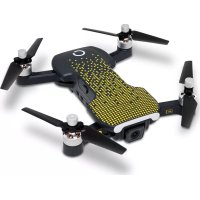
XBee Drone Fold One - Drone Overmax - Free user manual and instructions
Find the device manual for free XBee Drone Fold One Overmax in PDF.


User questions about XBee Drone Fold One Overmax
0 question about this device. Answer the ones you know or ask your own.
Ask a new question about this device
Download the instructions for your Drone in PDF format for free! Find your manual XBee Drone Fold One - Overmax and take your electronic device back in hand. On this page are published all the documents necessary for the use of your device. XBee Drone Fold One by Overmax.
USER MANUAL XBee Drone Fold One Overmax
X-bee drone fold one
Instrukcja obstugi / User Manual / Bedienungsanleitung / Manuale d'uso / Manuel de l'Utilisateur / Manual de usuario / Handleiding / Посібник користувача / Vartotojo vadovas / Korisnički priručnik
natural_image
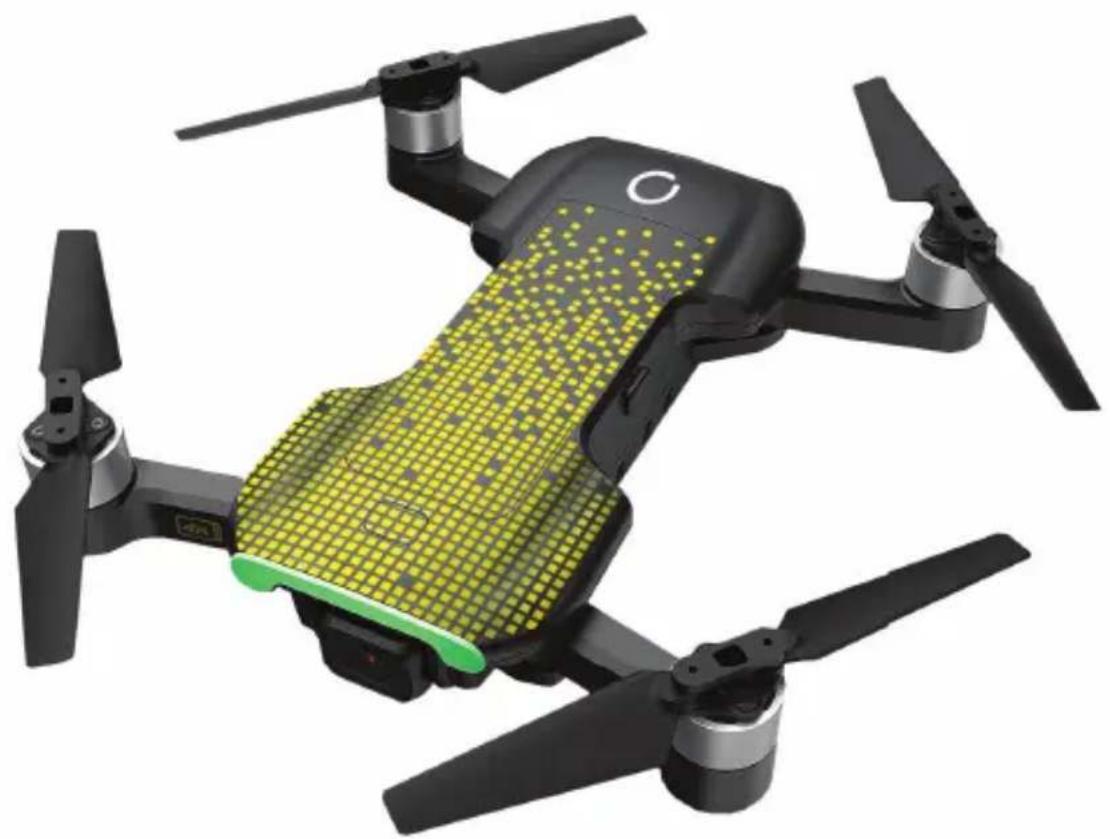
Top-down view of a black and yellow quadcopter drone with green sensor patch (no text or symbols visible)

App Store

Google play
1
![[1] [2] [3] [4] [5]](/content/2026/03/575288/images/d8f1706401dd976e42a0155ca6acc07f0a967fd71985e1424b090250b9f45233.jpg)
![[6] [7]](/content/2026/03/575288/images/8569209457f6cf7c260446448a064856c4f2ba517e28c37df12d10753fb21866.jpg)
2
![[1] [2] [3] [4] [5] [6] [7] [8] [9] [10]](/content/2026/03/575288/images/b9efb6e2bd7e008a2369ea0d192ea1ab0f06a2423be80c70cf45116e6469c1e3.jpg)
3
natural_image
Top-down schematic of a multi-rotor drone with visible propellers and internal components (no text or symbols)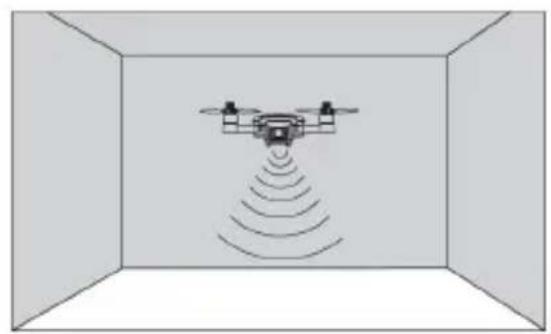
natural_image
Diagram of a drone flying inside a transparent enclosure with concentric waves (no text or symbols)4
natural_image
Line drawing of a rectangular electronic device casing with a handle and mounting bracket (no text or symbols)A
natural_image
Line drawing of a rectangular device with two internal compartments and three small holes (no text or symbols)B
5
natural_image
Line drawing of a cable being inserted into a socket, showing the connector and outlet (no text or symbols)6a
6b
7
8
9
natural_image
Line drawing of a hand holding a firearm, no text or symbols present10
natural_image
Front view of a Drones 2 control device with dual speakers and a digital display (no readable text or symbols)11
natural_image
Top-down schematic of a vehicle dashboard with internal compartments and buttons (no text or labels)12
13
natural_image
Technical line drawing of a drone with extended targeting system and mounted device (no text or symbols)14
15
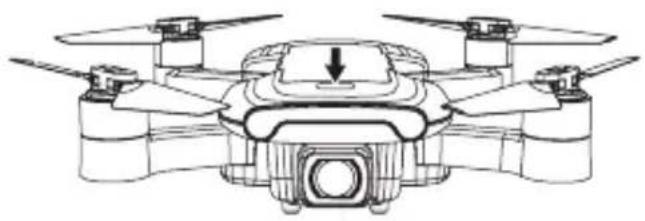
natural_image
Line drawing of a quadcopter drone with four propellers and a central cockpit, showing no text or symbols.16
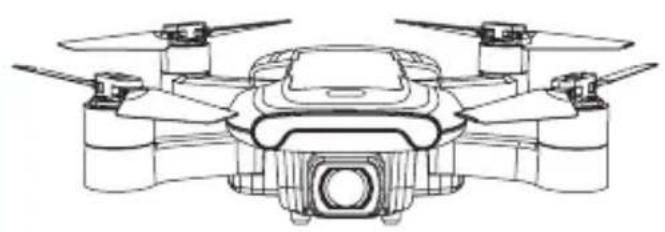
natural_image
Line drawing of a quadcopter drone with four propellers and central cockpit (no text or symbols)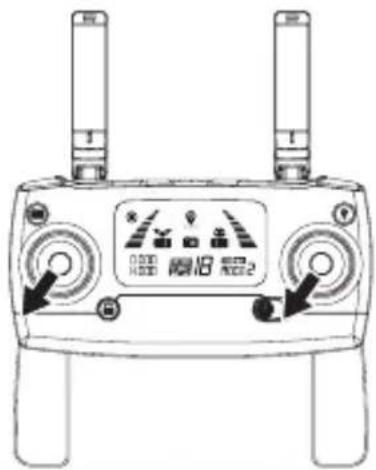
17
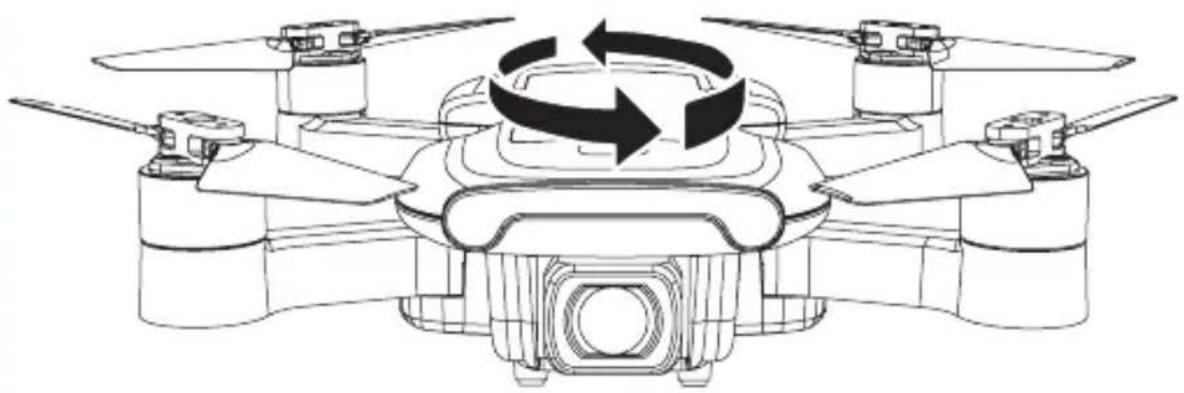
natural_image
Line drawing of a quadcopter drone with four propellers and a central body, showing rotational arrows (no text or symbols)18
natural_image
Top-down diagram of a drone with six propellers and a central body, showing rotational arrows (no text or symbols)19
20
PL
Wprowadzenie
Drogi Kliencie!
Thank you for placing trust in us and choosing Overmax.
Thanks to the use of high-quality materials and modern solutions, we provide you with a product perfect for everyday use. We are convinced that the product will satisfy your requirements as it has been manufactured with utmost care. Before you use the product, please read this manual carefully.
Should you have any remarks or questions concerning the product, please do not hesitate to contact us: pomoctechniczna@overmax.pl
Important
- The product is intended for persons above the age of 14 and experienced in operating drones. Users aged below 18 may operate the product only if supervised by an adult. For those who are inexperienced in operating drones, we suggest that they take advice from the more experienced users.
- Before you start using the product, make sure the area you have chosen is free from obstacles, and when operating – keep a safe distance from people, animals and properties.
- Do not use the product near power lines, in public areas (busy areas), near high buildings and in the forest (low range risk), and in closed zones.
- It is forbidden to use the product in the north pole, south pole and near base stations and radio stations.
- Do not use the product at night.
- Do not use the product in unfavorable weather conditions: at high temperatures, rain, fog, snow, frost and strong wind.
- Do not repair or modify the device. Only an authorized service technician is allowed to perform these operations.
- Do not start the device if you have noticed any damage.
- Do not use the device when it starts acting up, has been dropped or wetted, overheats extensively, is discolored or deformed, emits abnormal sounds or odors, and when other atypical circumstances occur. This being the case, contact the manufacturer's authorized service center.
- Do not use the device if your hands are wet.
- Use the device away from sources of heat, high temperatures, hot surfaces, sources of ignition, naked flame, oils and sharp edges.
- Do not use the device in inflammable, explosive or toxic atmosphere.
- Do not use chemicals and water to clean the device. The product must be cleaned with a soft and dry cloth.
- Do not use the device for other purposes than designed.
- Do not store fully charged batteries because it shortens their life and they may get damaged.
- To avoid injuries, do not touch rotating propellers or other moving parts of the device.
- Do not use the product near small children. The set includes small elements which may cause accidents.
- Keep a distance of at least 20 cm from the device, when using the drone, due to radio waves.
- Users are obligated to make sure the product is safe both to themselves and the surrounding. The manufacturer, importer and distributor are not held responsible for potential damage and injuries arising from wrong use of the product.
BATTERY USE REMARKS
- The drone uses a special battery (supplied in the set), while the remote control uses 2 AA batteries (not included).
- The batteries of the same type must be used.
- Pay special attention to battery polarization.
- Do not charge batteries which are not intended for such purpose.
- Before you start charging the battery, take it out of the device.
- To avoid potential fire risk, do not short-circuit battery terminals, do not place batteries in the compartment at variance with the polarization marks and do not puncture. Storage battery charging must always be supervised by an adult, out of reach of children.
- After charging, disconnect the battery from the power supply.
- After using, remove the battery from the drone and remote control.
- When the battery or storage battery overheats extensively, stop using them and stop charging immediately. Otherwise they may deform or explode.
- Do not mix batteries of various types or old (worn-out) batteries with new ones. Flat batteries must be removed from the device.
- Worn-out batteries must be disposed of in accordance with local regulations in designated areas.
- The elements intended for battery charging must be regularly checked in terms of damage to wire, plugs, casing and other. Do not use them in case of any damage.
Specification:
| Product weight (with battery and propellers) | 249 g |
| Dimensions (unfolded) 240 x 235 x 55 mm | |
| Dimensions (folded) 140 x 75 x 55mm | |
| Working temperature 5°C - 40°C | |
| Photo/video resolution 3840 x 2160 | |
| Maximum take-off weight 249 g | The drone must not fly with any additional load, use elements attached to the set or spare parts supplied by the manufacturer only! |
| Model configuration The drone with battery and propellers assembled as presented in the manual. | |
| Elements of the set Drone, controller, four propellers, drone battery, battery docking station, USB cable, screwdriver, propeller wrench | |
EN
Before every use
- Make sure the remote control and drone are fully charged.
- Make sure the propellers have been properly installed.
- Make sure the motors operate property after unlocking the drone.
- Make sure the camera lens is not dirty.
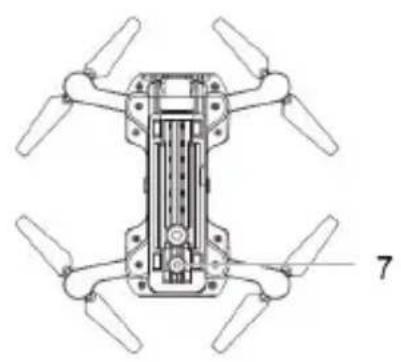
Description: drone (fig.1)
- On/off switch
- Status LED
- Propeller
- Battery
- Camera
- Lower LEDs
- Vision camera
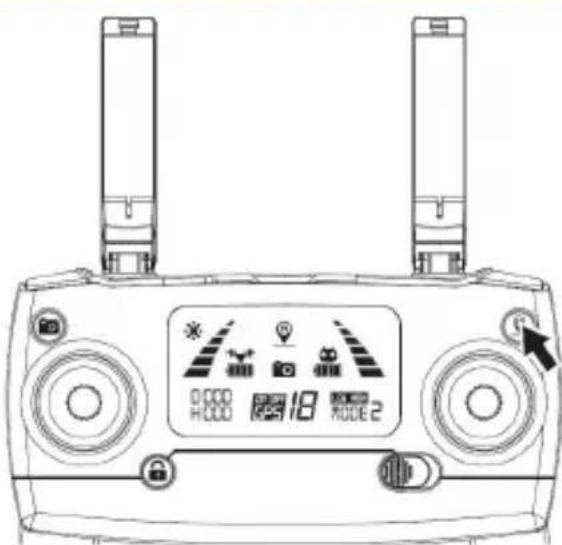
Description: controller (fig. 2)
- Photo/video
- Left bar
- Lock/unlock
- Drone return key - RTH
- Right bar
- On/off switch
- LCD display
- Quick start/landing key
- Short press: sets Optical Flow mode. Long press: allows controlling the speed
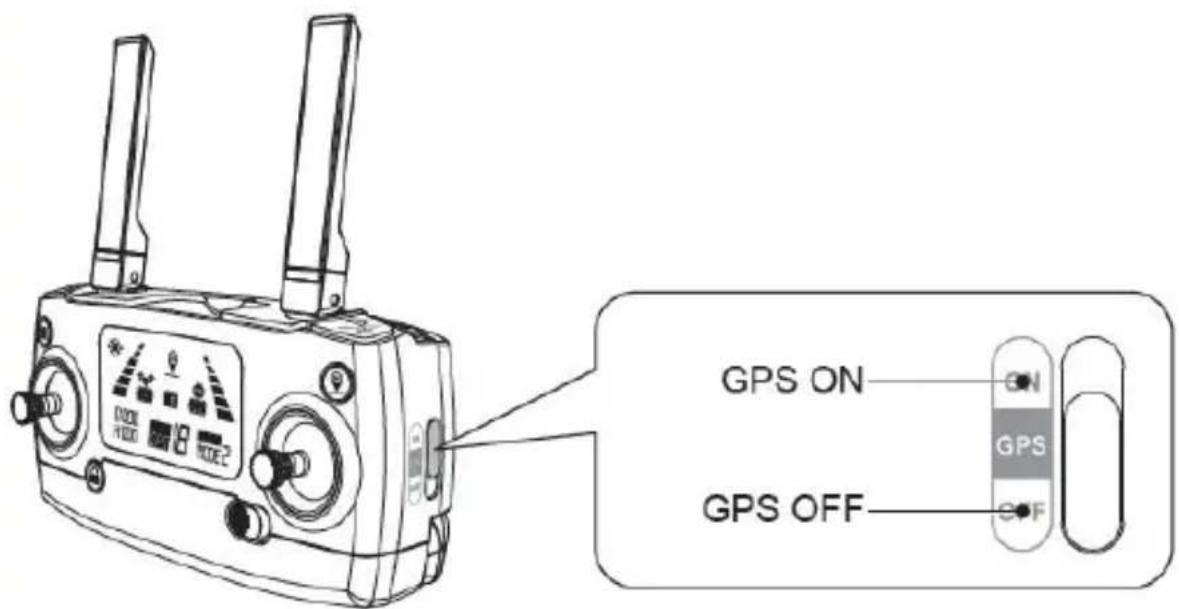
- GPS enabled/disabled
How to switch the drone on
Short-press the drone on/off switch (1 in fig. 1). The product will switch on and status LED will go on.
To switch the product off, keep this key pressed for 3 seconds.
Flight modes
GPS mode
In this mode, the drone will use GPS signal to keep its position. If GPS signal is too weak, the drone will switch into Optical Flow mode or maintain its previous altitude (you can check in the application). This being the case, land as soon as possible. Do not fly in areas with high risk of weak GPS signal.
Optical Flow mode
In this mode, the drone does not use GPS to keep its position. If GPS signal is lost and the drone:
- is at the height of max. 3 meters: Optical Flow mode will be activated (more about this mode in the chapter below).
- is at the height of more than 3 meters: the drone will keep its altitude with the use of built-in altimeter. This mode is not precise, you need to have experience in operating the drone to use it.
Optical Flow mode
The drone is equipped with a vision system which allows effective control with weak GPS signal. Due to the nature of its operation, it must be used mainly in areas of very poor GPS coverage. To set the position, this mode uses an additional built-in camera (marked as 7 in fig. 1), and proves to be most effective at the height of max. 3 meters.
There are a few factors which influence the quality of vision system. If some of them fail, the mode based on vision will deactivate and the drone will switch into constant altitude mode. You should remain highly careful during the following:
a. fast flight at the height of up to 0,5m,
b. flight above uniform-color surfaces,
c. flight above spaces which reflect light,
d. flight above water or transparent objects,
e. flight above moving elements (e.g. crowd of people),
f. flight above spaces in which light fluctuates,
g. flight above extremely bright or very dark surfaces,
h. flight above dirty surfaces,
i. flight above surfaces with recurring pattern (e.g. above cobblestone path),
j. flight above objects inclined at the angle of more than 30 degrees,
If the drone is only a meter above the ground, the speed must not be higher than 5m/s, in turn at the height of 2 meters above the ground – must not be higher than 14m/s.
- Keep sensors clean.
- This system works properly only if the drone is at the maximum height of 3m.
• Fly in properly illuminated areas above elements with clear textures so that sensors of the drone can properly collect information about the position of the product. - The system may not work properly when flying above water, when illumination is poor or above uniform-structure surfaces.
- In dark areas – turn on additional drone illumination (at the bottom).
Drone status indicators
(2 in fig. 1)
EN
| Yellow LED flashes fast No connection with drone | |
| LED flashes alternately in yellow, green and red | Drone tries to connect to remote control |
| Yellow LED glows No GPS connection | |
| Green LED glows Strong GPS signal detected, the drone will enter GPS flight mode | |
| Green LED flashes fast Drone calibrates the gyroscope | |
| Yellow LED flashes Drone is in horizontal compass calibration mode | |
| Green LED flashes Drone is in vertical compass calibration mode | |
| Red LED flashes slowly Weak drone battery, 1/6 battery left | |
| Red LED flashes fast Drone battery is almost flat, 1/8 battery left | |
| Red LED flashes every 1,5 seconds Gyroscope issue | |
| Red LED flashes twice every 1,5 seconds Barometer issue | |
| LED flashes three times every 1,5 seconds | Compass issue |
| LED flashes four times every 1,5 seconds GPS module issue | |
| LED flashes six times every 1,5 seconds Vision positioning module issue | |
Return to home - RTH function (Return To Home)
The return function causes the drone to return to last saved place (“home”). There are three modes of this function: smart return, emergency return and low-battery return.
The saved spot is the place in which the drone takes off. To make sure the spot is properly remembered, GPS signal must be strong enough (at least 7 satellites at the takeoff).
1. Smart return
If GPS signal is available (more than 7 satellites) and the starting point has been saved, press return key. The drone will return to the saved place. During the return, you can control the drone, for example to avoid obstacles. Press the key again to leave the return function.
2. Emergency return
If GPS signal is good (more than 7 satellites) and the starting point has been saved, the emergency
return will be initiated automatically when the remote control loses connection with the drone for more than 6 seconds. You can regain control over the drone if the remote control regains connection and you press the return key.
NOTE:
- During emergency return, you cannot control the drone to avoid obstacles.
• The drone will not return to the starting point if the GPS signal is weak (fewer than 7 satellites). - If during the smart return the user wants to raise the drone to the altitude of 15 m or more, the drone will stop rising and will initiate the emergency return procedure instantly.
- If the GPS signal is not good at the takeoff (fewer than 7 satellites), and the drone loses connection with the remote control for more than 6 seconds, the drone will drop slowly and will block after landing.
3. Low-battery return
This mode activates when the drone battery is flat, and it affects its ability to return to the spot marked as “home”.
- When LEDs of the drone flash fast, the battery status shows flat battery ( ), the remote control emits short signals and the drone is above the height of 30 meters or at a distance of more than 100 meters from the remote, the drone will return to the starting point automatically. During the return arising from low battery, if the distance is up to 100 meters, you can cancel the return by clicking the return to home key.
- When the drone's LEDs blink quickly, the battery charge indicator shows the battery is low ( ), the remote control emits short signals and the drone is at the height of more than 15 meters or at a distance of more than 15 meters from the remote, the drone will return to the starting point automatically. If the drone is closer or lower (15m high or 15 m of distance), it will drop and land on the ground.
During the return arising from flat battery, you cannot regain control when clicking the return function key.
How to charge battery
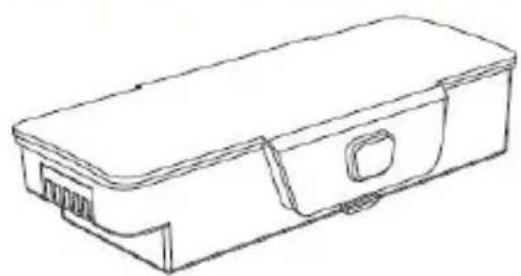
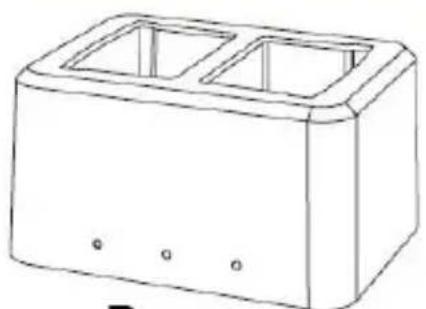
See: fig. 4.
A - battery B - battery charging station
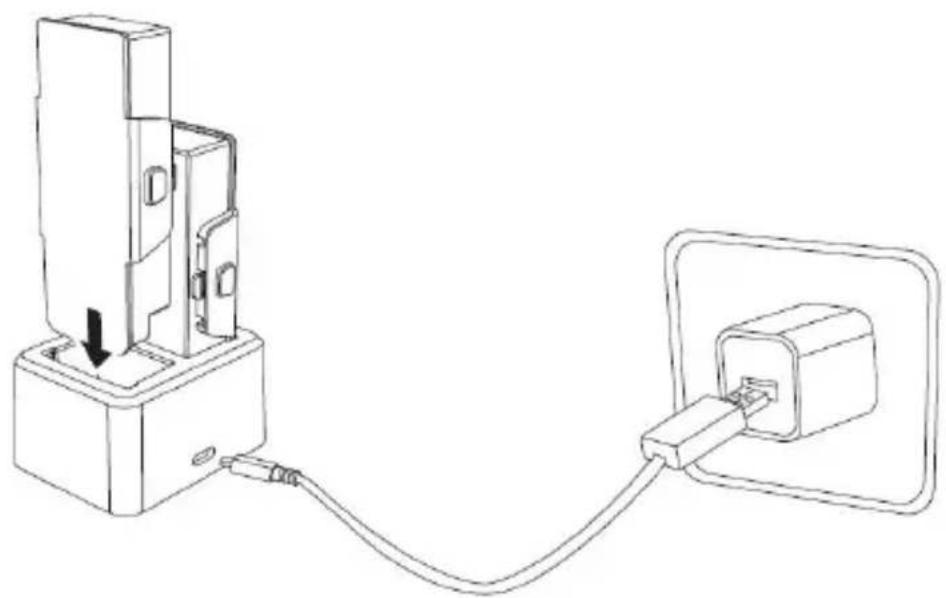
See: fig. 5
- Insert the battery into the charging station.
- Connect the USB cable to the USB power adapter (adapter not supplied).
- Connect the second tip to the charging station with battery.
- Plug the feeder cable in the socket
Fully charge the battery before you use the drone. Use the USB cable supplied only. Use the power adapter USB 5 V = 2 A (not supplied). The use of other power adapters may affect the product charging time. Full charging of the recommended adapter takes about 2,5 hours.
- Use batteries of the same type or equivalents only.
- When inserting batteries, pay attention to polarization.
• Storage batteries must be removed from the drone before they are charged.
• Storage batteries can be charged only if supervised by an adult. - Worn-out storage batteries must be removed from the drone.
• Power terminals must not be short-circuit. - USB cable must be regularly checked for potential hazard, such as damage to the cable or wire, plug, casing or other parts. The product must not be used until potential damage is properly eliminated.
• After using the drone, charge it for an hour to maintain its battery life. - If you do not use the device for a long time, it is advisable to discharge and charge the storage battery once a month to avoid damage.
Low battery of the controller
When the controller emits sounds and the battery status ( ) crashes on LCD screen, it means that the battery is about to go flat. Replace the battery in the controller.
How to put batteries into the controller
Open the battery cover, fix two AA batteries in the compartment in accordance with terminal marks and then close the cover.
Signal strength indicator
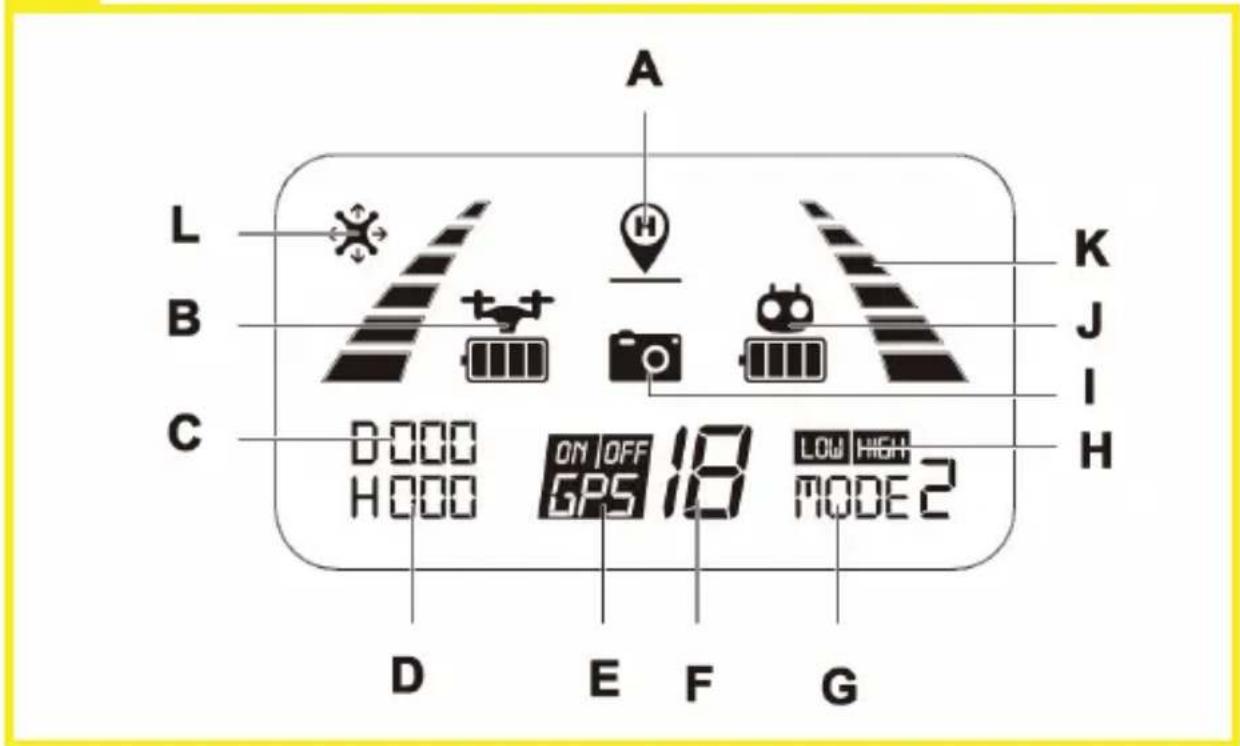
The icon (K in fig. 8) show the signal strength received by the controller from the drone. The more the bars, the stronger the signal. If the icon shows maximum two signal bars or there is no bar, and the controller emits a sound, it may mean two things:
- The distance between the drone and controller is too big. Reduce the distance.
- The remote control battery has been removed after pairing the drone with controller.
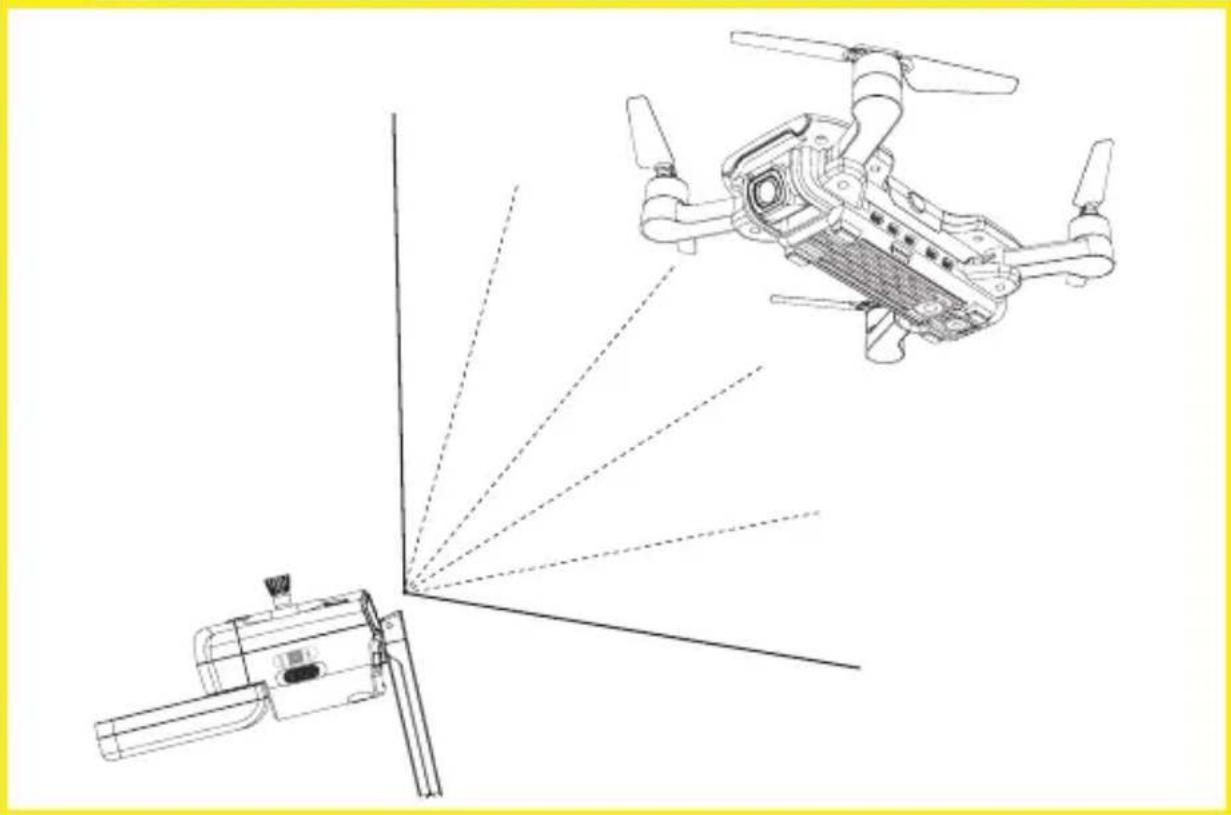
To make the signal as strong as possible, make sure the drone flies above the controller and there are no obstacles between the controller and drone (fig. 13).
How to assemble and disassemble drone propellers
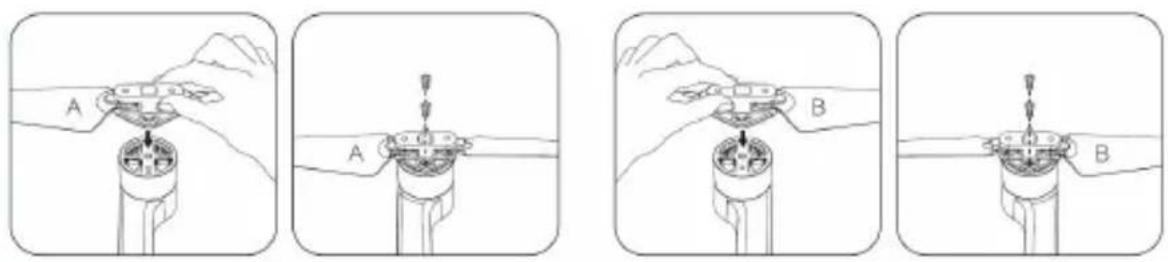
Propellers are marked as "A" and "B" - when assembling, please pay special attention to this marking.
A - Assembly of the propeller rotating in a clockwise manner
Assemble the propeller marked as “A” on the relevant motor. Tighten up two screws with the use of screwdriver in a clockwise manner (fig. 6a).
B - Assembly of the propeller rotating in an anti-clockwise manner
Assemble the propeller marked as “B” on the relevant motor. Tighten up two screws with the use of screwdriver in a clockwise manner (fig. 6a).
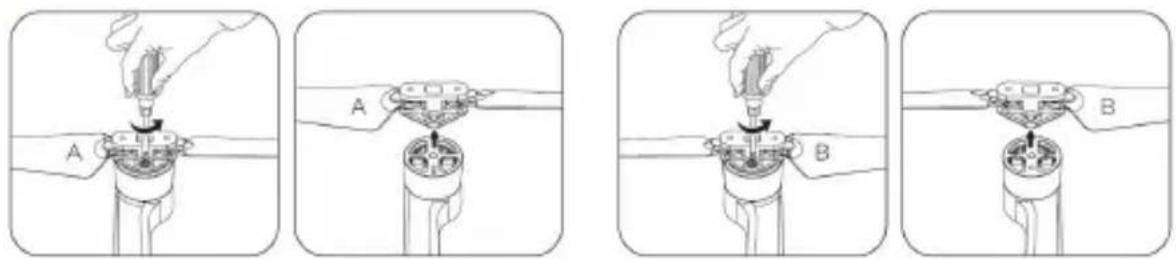
How to disassemble propellers
Use a screwdriver to unscrew two screws which hold the propeller and remove them from the motor (fig. 6b).
Be careful during the assembly. Propellers have sharp edges, there is an injury risk. If the assembly is improper, the product will not fly properly and may get damaged. Please pay special attention to marking of propellers and their target position on the drone. Use propellers from the set or purchased directly from the manufacturer only. Do not touch moving/rotating propellers. Before you use the drone, make sure the assembly of propellers is correct and stable. Do not use propellers if they are damaged.
LCD display icons (fig. 8)
A - Return to home icon (RTH mode)
This icon will be visible until the drone returns to the specific spot.
B - Drone battery status
Shows drone battery status.
C - Distance from home
The indicator shows distance between the drone and spot marked as "home".
D - Height from home
The indicator shows height between the drone and spot marked as "home".
E - GPS
ON - GPS mode enabled
OFF - GPS mode disabled
F - Number of GPS satellites
As soon as the drone connects with the sufficient number of satellites (at least 7), the starting point of the drone will save in the memory as “home”.
G - Drone working mode
After the device has started, the product enters the working mode "mode 2" by default.
H - Speed mode
The indicator of the selected drone flight speed mode – HIGH (high speed) or LOW (low speed).
I - Photo/video
After taking a photo, the camera icon will glow on the screen for a while. When recording a video, this icon will flash until the end of the recording.
J - Controller battery status
Shows the controller battery status.
EN
K - Signal strength indicator
The icon shows signal strength received by the controller from the drone.
L - Headless mode
Headless mode indicator.
How to adjust camera angle
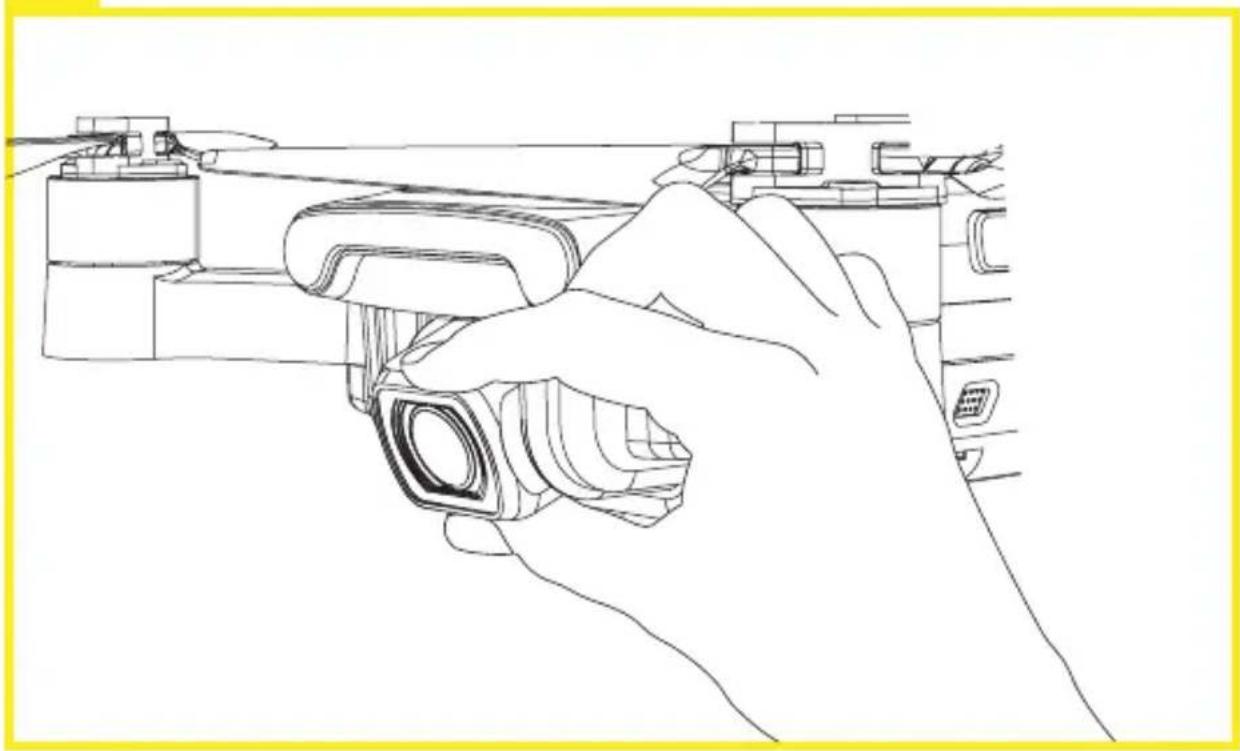
The camera angle can be adjusted manually at the range of 90^ (see: fig. 9). Grab the camera with your hand and set the desired angle.
Photo / video
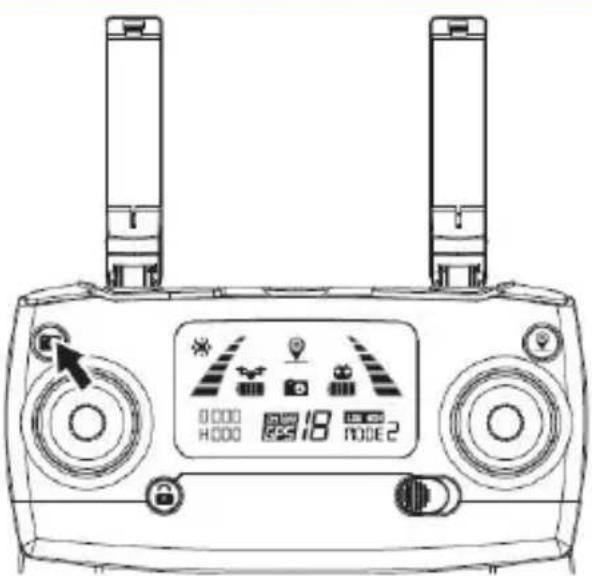
Short press the camera key to take a photo. The camera icon (☐) will go on for a while on the display (fig. 10).
Keep the camera key pressed for at least 2 seconds to make the drone camera start recording a video. The display will show a flashing icon. Keep the camera key pressed longer to finish recording.
NOTE: when the camera does not have a memory card or memory card is damaged, you cannot take photos or record videos through the remote control key. This being the case, such option is available only through the smartphone applicatio.
Quick takeoff/landing
-
After starting motors, press (fig. 11) to make the drone take off and keep the constant altitude of 1,5 meters above the ground automatically.
-
During the flight, press ↓, to make the drone land automatically. You can cancel this command before the drone lands by moving the bar.
Control mode
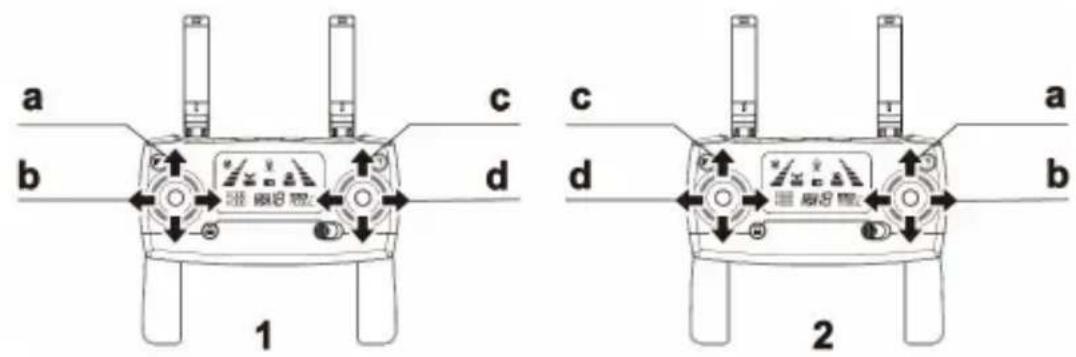
The drone has two control modes which switch left and right bars. By default the mode 2 is active.
A - Fly forward or backward
B - Turn left or right
C - Throttle
D - Fly left or right
To change the mode:
- Press the lock key (3)
and activate the controller by sliding the on/off switch. - Press and hold the return-to-home key for about 3 seconds 📂 to choose between mode 1 and 2. The selected mode is displayed on the LCD screen. Every time you press and hold, you change the mode.

By default the product works in the mode 2. To change the mode, the controller must be connected to the drone.
Quick return to home (RTH)
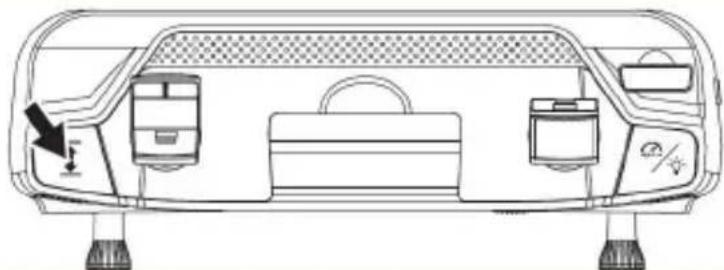
Press the return-to-home key (fig. 12). The controller will emit a sound to signal that the function has been activated. The drone will return to the spot marked as “home”. If you press this key once more, the return will be cancelled.
How to connect the remote control to the drone
Press and hold the lock key and then activate the controller by sliding the on/off switch (see: fig. 15). The controller will emit two sounds and the signal indicator on LCD screen will start flashing. It will mean that the controller is ready for the pairing procedure.
Switch the drone on. It will emit a sound and connect to the controller automatically. The controller will emit a sound and the signal indicator on LCD screen will stop flashing – it will mean the end of the pairing procedure.
It is possible to connect the remote control to the drone only if the controller is not connected to any other drone. If there are a few kinds of drone and controllers in one place, the pairing procedure must be performed one by one for each set to avoid wrong pairing.
Detection mode
After connecting to the remote control, the drone enters detection mode. Drone LEDs will flash alternately in red, green and yellow. Make sure the drone stands on the flat and horizontal surface at this time. The procedure takes about 8 seconds. When the procedure is finished, the drone will switch into compass calibration mode.
Note! If the drone is unable to finish this stage and cannot switch into compass calibration mode on its own, put it on the floor and try to call the gyroscope calibration mode.
Gyroscope calibration
After connecting to the remote control, put the drone on a flat and horizontal surface and then direct both bars on the remote into bottom left corner (fig. 16). When green LEDs stop flashing fast, it will mean that the calibration is over.
Note: the drone has already been calibrated. There is no need to calibrate again unless the drone has difficulty in taking off or completing the detection procedure.
Compass calibration
NOTE: The compass calibration must be performed after detection mode. Calibration must be performed before every flight and after replacement of the battery into new or after putting it into the product.
1. Horizontal calibration
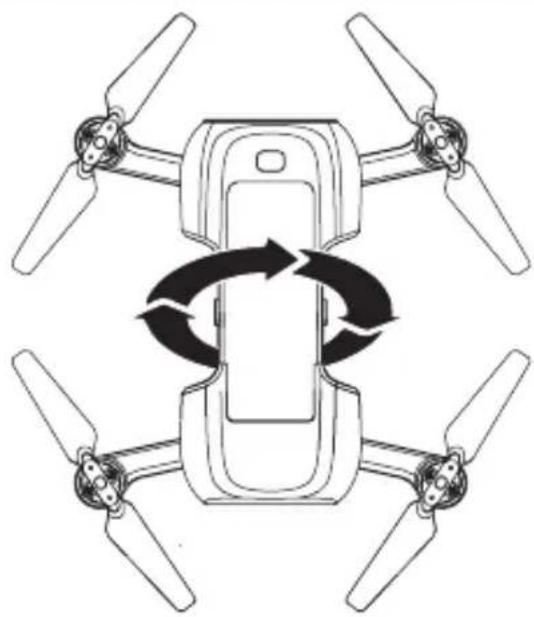
LEDs in the horizontal calibration mode will flash alternately in yellow. Keep the drone and revolve horizontally on its axis. Make about three turns. When the calibration is correct, LEDs will start flashing in green (fig. 17).
2. Vertical calibration
LEDs in the vertical calibration mode will flash alternately in green. Keep the drone vertically (camera facing upwards) and revolve on its axis. Make about three turns. When the calibration is correct, LEDS will glow constantly (fig. 18).
NOTE:
- Do not calibrate the compass in a strong magnetic field.
- When calibrating, do not wear any magnetic items (e.g. keys, phones).
- When calibrating, keep a distance from large metal items
How to lock and unlock the drone
To lock and unlock the drone, you need to start drone motors.
To unlock the drone short press the lock key. The motors will start and the drone will be unlocked.
You can lock (stop motors) it in two ways:
- When the drone lands on the ground, point the throttle bar downwards for about 3 seconds. Motors will stop and the drone will be locked.
- The drone will switch off automatically if there is no operation for 15 seconds after unlocking.
NOTE: Do not stop drone motors with key during the flight because the drone will start falling.
Emergency stop:
If the drone is farther than 30 meters and its altitude exceeds 14 m:
Keep the lock key for about 3 seconds. The motors will stop and the drone will be locked. Do not use this option during regular flight, this option is intended for emergencies!
How to control the drone
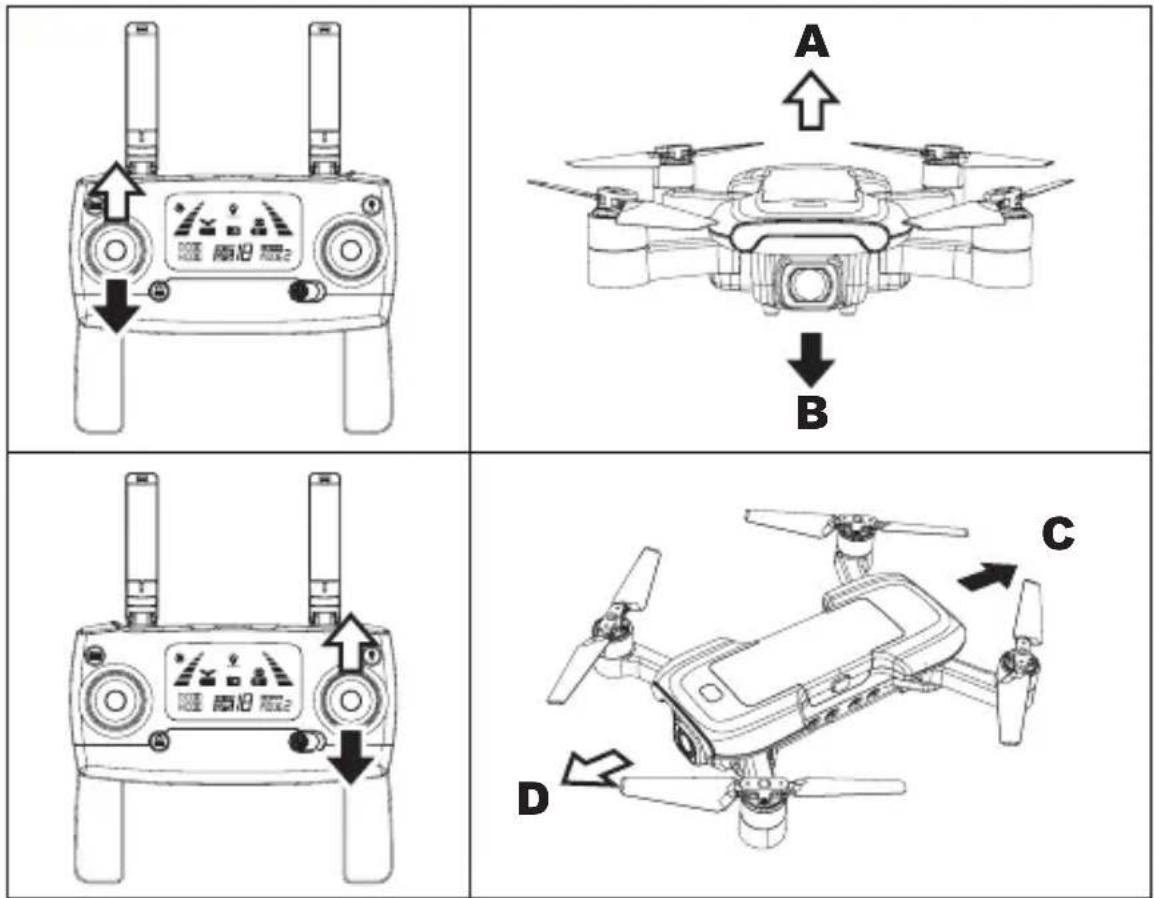
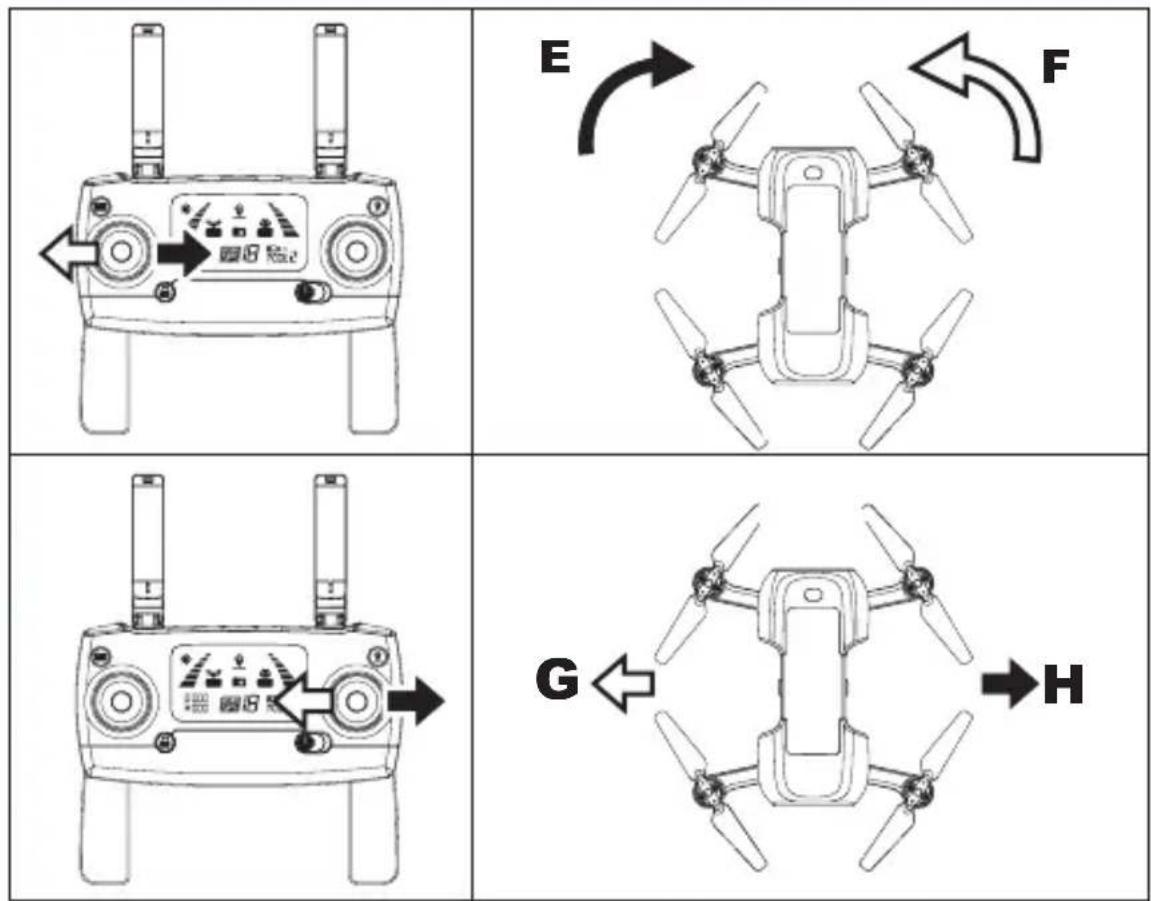
To control the drone, move remote control bars in accordance with figures below. Figures present bars in the default control mode 2.
| Fig. 19 A - lift | B - drop |
| C - fly backwardsD - fly forward | |
| Fig. 20 E - turn right | F - turn left |
| G - fly leftH - fly right |
Test flight
Take the following steps to make sure the drone operates properly.
- Place the drone in the open space so that both front of the drone and user have the same direction.
- Start the drone and controller.
- Connect the controller to the drone. Perform detection procedure.
- Run M RC PRO application, enter the camera interface.
- Unlock the drone.
- Lift the drone into the air. Test the left/right turn.
- Make the drone land.
- Lock the drone.
- Remote the battery from the drone and switch the controller off.
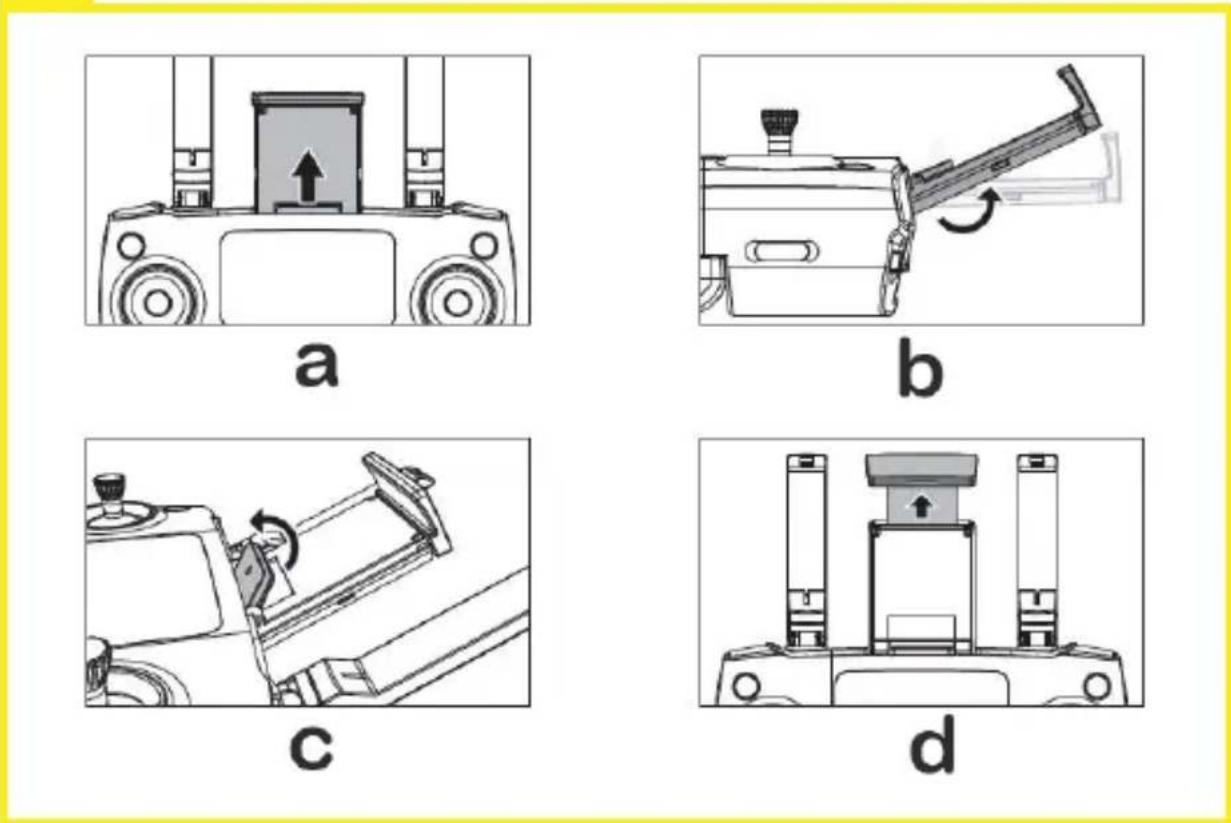
Phone holder
See: fig. 14
Slide the phone holder out. Lift it by 30 degrees until you can hear a distinctive "click". Tilt the protection. Adjust the size of the holder to your phone.
Smartphone application
For Apple iOS: find M RC PRO application in Apple Store or scan QR code.
For Android: find M RC PRO application in Google Store or scan QR code.
You can also scan the universal QR code. QR codes can be found at the beginning of the manual.
How to connect the drone to application
Switch the drone on. Enter WiFi settings in your phone. Find and select the network called „Drone4_*****”.
The drone uses WiFi in 5G standard.
If you do not use the memory card in the drone, photos and videos will be saved in the application. If the memory card has been installed, the photos and videos will be saved on the card. Files stored on the memory card can be downloaded to your phone via the application.
Cleaning and maintenance
- Do not use chemicals to clean the drone.
- Do not use water to clean the drone.
- To clean the drone and its accessories, switch the device off, remove batteries and wipe with a dry cloth.
- Keep the drone and its elements in a dry place and out of reach of children.
The product complies with requirements of EU directives. Pursuant to the Directive 2012/19/EU, this product is subject to selective collection. The product must not be disposed of along with domestic waste as it may pose a threat to the environment and human health. The worn-out product must be handed over to the electrics and electronics recycling center.
Note: Temperature fluctuations can cause water to condense in the device.
Device operating temperature: from 5°C to 40°C.
Class 4 wind resistance (max. 7.9 m/s).
The pictures are for reference only. The real design of the products may differ from the pictures presented.