EasyManual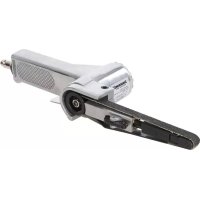
942944 - Sander SILVERLINE - Free user manual and instructions
Find the device manual for free 942944 SILVERLINE in PDF.



Download the instructions for your Sander in PDF format for free! Find your manual 942944 - SILVERLINE and take your electronic device back in hand. On this page are published all the documents necessary for the use of your device. 942944 by SILVERLINE.
USER MANUAL 942944 SILVERLINE
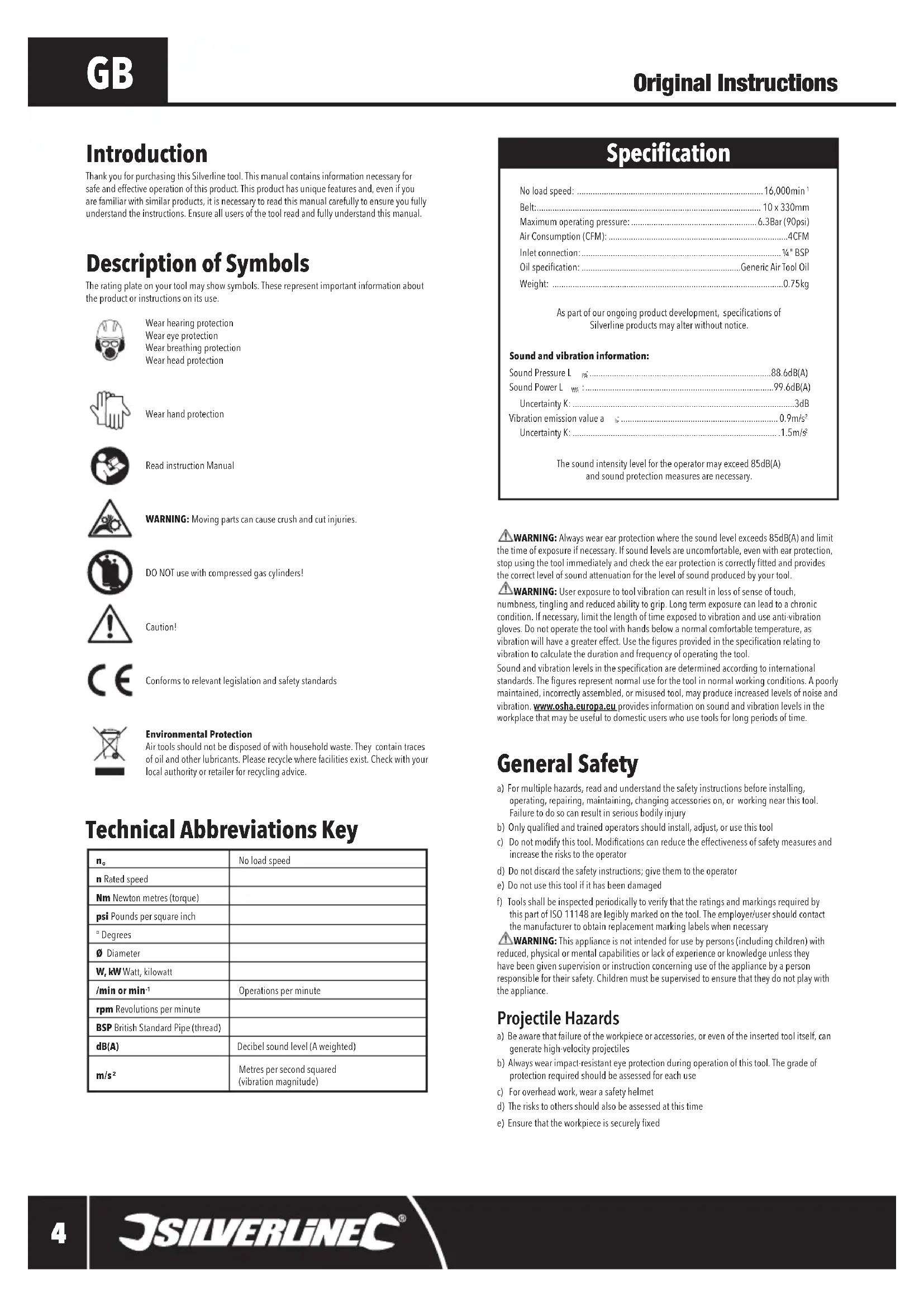
silverlinetools.com Original Instructions WARNING: Always wear ear protection where the sound level exceeds 85dB(A) and limit the time of exposure if necessary. If sound levels are uncomfortable, even with ear protection, stop using the tool immediately and check the ear protection is correctly tted and provides the correct level of sound attenuation for the level of sound produced by your tool. WARNING: User exposure to tool vibration can result in loss of sense of touch, numbness, tingling and reduced ability to grip. Long term exposure can lead to a chronic condition. If necessary, limit the length of time exposed to vibration and use anti-vibration gloves. Do not operate the tool with hands below a normal comfortable temperature, as vibration will have a greater effect. Use the gures provided in the specication relating to vibration to calculate the duration and frequency of operating the tool. Sound and vibration levels in the specication are determined according to international standards. The gures represent normal use for the tool in normal working conditions. A poorly maintained, incorrectly assembled, or misused tool, may produce increased levels of noise and vibration. www.osha.europa.eu provides information on sound and vibration levels in the workplace that may be useful to domestic users who use tools for long periods of time. General Safety a) For multiple hazards, read and understand the safety instructions before installing, operating, repairing, maintaining, changing accessories on, or working near this tool. Failure to do so can result in serious bodily injuryb) Only qualied and trained operators should install, adjust, or use this toolc) Do not modify this tool. Modications can reduce the effectiveness of safety measures and increase the risks to the operatord) Do not discard the safety instructions; give them to the operatore) Do not use this tool if it has been damagedf) Tools shall be inspected periodically to verify that the ratings and markings required by this part of ISO 11148 are legibly marked on the tool. The employer/user should contact the manufacturer to obtain replacement marking labels when necessary WARNING: This appliance is not intended for use by persons (including children) with reduced, physical or mental capabilities or lack of experience or knowledge unless they have been given supervision or instruction concerning use of the appliance by a person responsible for their safety. Children must be supervised to ensure that they do not play with the appliance. Projectile Hazards a) Be aware that failure of the workpiece or accessories, or even of the inserted tool itself, can generate high-velocity projectilesb) Always wear impact-resistant eye protection during operation of this tool. The grade of protection required should be assessed for each usec) For overhead work, wear a safety helmetd) The risks to others should also be assessed at this timee) Ensure that the workpiece is securely xed Description of Symbols The rating plate on your tool may show symbols. These represent important information about the product or instructions on its use.Wear hearing protection Wear eye protection Wear breathing protectionWear head protectionWear hand protectionRead instruction ManualWARNING: Moving parts can cause crush and cut injuries.DO NOT use with compressed gas cylinders!Caution!Conforms to relevant legislation and safety standardsEnvironmental Protection Air tools should not be disposed of with household waste. They contain traces of oil and other lubricants. Please recycle where facilities exist. Check with your local authority or retailer for recycling advice. Specication No load speed: ................................................................................... 16,000min
The sound intensity level for the operator may exceed 85dB(A) and sound protection measures are necessary.
Metres per second squared (vibration magnitude) Technical Abbreviations Key Introduction Thank you for purchasing this Silverline tool. This manual contains information necessary for safe and effective operation of this product. This product has unique features and, even if you are familiar with similar products, it is necessary to read this manual carefully to ensure you fully understand the instructions. Ensure all users of the tool read and fully understand this manual. 942944_Manual.indd 4 15/02/2017 08:42GB Air Belt Sander 942944
silverlinetools.com Vibration Hazards a) Exposure to vibration can cause disabling damage to the nerves and blood supply of the hands and armsb) Wear warm clothing when working in cold conditions and keep your hands warm and dryc) If you experience numbness, tingling, pain or whitening of the skin in your ngers or hands, stop using the machine, inform your employer and consult a physiciand) Operate and maintain the sander or polisher as recommended in the instruction handbook, to prevent an unnecessary increase in vibration levelse) Hold the tool with a light but safe grip, taking account of the required hand reaction forces, because the risk from vibration is generally greater when the grip force is higher Additional Safety Instructions for Pneumatic Power Tools Air under pressure can cause severe injury:• Always shut off air supply, drain hose of air pressure and disconnect tool from air supply when not in use, before changing accessories or when making repairs• Never direct air at yourself or anyone else• Whipping hoses can cause severe injury. Always check for damaged or loose hoses and ttings• Whenever universal twist couplings (claw couplings) are used, lock pins should be installed and whipcheck safety cables should be used to safeguard against possible hose-to-tool or hose-to-hose connection failure• Do not exceed the maximum air pressure stated on the tool• Never carry an air tool by the hose Sanding Tool Safety WARNING!
- Use clamps or another practical way to secure the workpiece to a stable platform. Holding the workpiece by hand or against the body makes it unstable and may lead to loss of control.a. ALWAYS wear appropriate protective equipment, including a dust mask with a minimum FFP2 rating, eye protection and ear defenders b. Ensure all people in the vicinity of the work area are also equipped with suitable personal protective equipmentc. Take special care when sanding some woods (such as beech, oak, mahogany and teak), as the dust produced is toxic and can cause extreme reactions d. NEVER use to process any materials containing asbestos. Consult a qualied professional, if you are uncertain whether an object contains asbestos e. DO NOT sand magnesium or alloys containing a high percentage of magnesium f. Be aware of paint nishes or treatments that may have been applied to the material that is being sanded. Many treatments can create dust that is toxic, or otherwise harmful. If working on a building constructed prior to 1960, there is an increased chance of encountering lead-based paintsg. The dust produced when sanding lead-based paints is particularly hazardous to children, pregnant women, and people with high blood pressure. DO NOT allow these people near to the work area, even if wearing appropriate personal protective equipment h. Whenever possible, use a vacuum dust extraction system to control dust and wastei. Be especially careful when using a machine for both wood and metal sanding. Sparks from metal can easily ignite wood dust. ALWAYS clean your machine thoroughly to reduce the risk of rej. Empty the dust bag or container (where applicable) frequently during use, before taking breaks and after completion of sanding. Dust may be an explosion hazard. DO NOT throw sanding dust into an open re. Spontaneous combustion may occur when oil or water particles come into contact with dust particles. Dispose of waste materials carefully and in accordance with local laws and regulations.k. Work surfaces and sandpaper can become very hot during use. If there is evidence of burning (smoke or ash), from the work surface, stop and allow the material to cool. DO NOT touch work surface or sandpaper until they have had time to cool l. DO NOT touch the moving sandpaperm. ALWAYS switch off before you put the sander down n. DO NOT use for wet sanding. Liquids entering the motor housing can cause severe electric shocks o. ALWAYS unplug the sander from the mains power supply before changing or replacing sandpaper p. Even when this tool is used as prescribed it is not possible to eliminate all residual risk factors. If you are in any doubt as to safe use of this tool, do not use it Entanglement Hazards
- Choking, scalping and/or lacerations can occur if loose clothing, personal jewellery, neck wear, hair or gloves are not kept away from the tool and its accessories Operating Hazards a) Use of the tool can expose the operator’s hands to hazards, including cuts, abrasions and heatb) Wear suitable gloves to protect handsc) Operators and maintenance personnel should be physically able to handle the bulk, weight and power of the toold) Hold the tool correctly; be ready to counteract normal or sudden movements and have both hands availablee) Maintain a balanced body position and secure footingf) Release the start-and-stop device in the case of an interruption of the energy supplyg) Use only lubricants recommended by the manufacturerh) Personal protective safety glasses should be used; suitable gloves and protective clothing are recommendedi) Avoid direct contact with moving parts in order to prevent pinching or cutting of hands or other body partsj) There is a risk of electrostatic discharge if used on plastic and other non-conductive materials Repetitive Motions Hazards a) When using this tool to perform work-related activities, the operator can experience discomfort in the hands, arms, shoulders, neck or other parts of the bodyb) While using this tool, the operator should adopt a comfortable posture whilst maintaining secure footing and avoiding awkward or off-balance postures. The operator should change posture during extended tasks; this can help avoid discomfort and fatiguec) If the operator experiences symptoms such as persistent or recurring discomfort, pain, throbbing, aching, tingling, numbness, burning sensations or stiffness, these warning signs should not be ignored. The operator should inform the employer and consult a qualied health professional Accessory Hazards a) Disconnect the tool from the energy supply before tting or changing the inserted tool or accessoryb) Avoid direct contact with the inserted tool during and after use, as it can be hot or sharpc) Use only sizes and types of accessories and consumables that are recommended by the manufacturer of this tool; do not use other types or sizes of accessories or consumables Workplace Hazards a) Slips, trips and falls are major causes of workplace injury. Be aware of slippery surfaces caused by use of the tool and also of trip hazards caused by the air line or hydraulic hoseb) This tool is not intended for use in potentially explosive atmospheres and is not insulated against contact with electric power Dust & Fume Hazards a) Dust and fumes generated when using this tool can cause ill health (for example cancer, birth defects, asthma and/or dermatitis); risk assessment and implementation of appropriate controls for these hazards are essentialb) Risk assessment should include dust created by the use of the tool and the potential for disturbing existing dustc) Direct the exhaust so as to minimise disturbance of dust in a dust-lled environmentd) Where dust or fumes are created, the priority should be to control them at the point of emissione) Select, maintain and replace the consumable/inserted tool as recommended in the instruction handbook, to prevent an unnecessary increase in dust or fumesf) Use respiratory protection in accordance with employer's instructions and as required by occupational health and safety regulations Noise Hazards a) Exposure to high noise levels can cause permanent, disabling hearing loss and other problems, such as tinnitus (ringing, buzzing, whistling or humming in the ears). Therefore, risk assessment and implementation of appropriate controls for these hazards are essentialb) Appropriate controls to reduce the risk can include actions such as damping materials to prevent workpieces from ‘ringing’c) Use hearing protection in accordance with employer's instructions and as required by occupational health and safety regulationsd) Operate and maintain this tool as recommended in the instruction handbook, to prevent an unnecessary increase in the noise levele) Select, maintain and replace the consumable/inserted tool as recommended in the instruction handbook, to prevent an unnecessary increase in noisef) If the tool has a silencer, always ensure it is in place and in good working order when the tool is being operated942944_Manual.indd 5 15/02/2017 08:42GB Air Belt Sander 942944
silverlinetools.com Fitting the quick connector Note: This tool is supplied with two different male air line quick connectors: EQ-4 commonly used in Europe EN-6 mainly used in the UK• Please choose the connector that is compatible with the air line system you are using, and install as outlined below:
1. Apply some PTFE tape (not included) to the screw threads of the Quick Connector (10). This
will help to maintain an air-tight sealNote: Apply PTFE tape tightly, and in a clockwise direction, so it does not come off when the thread is screwed into the tool.2. Remove the protective plug from the Air Inlet (9)
3. Using a spanner (not included) screw the Quick Connector into the Air Inlet located at the
4. Connect to the air line, pressurise carefully, and carry out a leak check (eg by spraying small
amounts of soapy water on to the outside of the connectors)• Air lines tted with matching female quick connectors will now be a push-t to the tool Air supply connection TO YOURAIR TOOLLEADER HOSENIPPLEQUICK COUPLERWATER SEPARATIONOILERNIPPLEREGULATORDRAIN DAILYAIR SUPPLYRECOIL HOSE
- This tool should be connected to a clean, dry air supply with inline oiler and water separator
- Do not allow supply pressure to exceed the maximum stated (see “Specications”)• Ensure that water is drained from air system daily• Ensure that all parts of the system (hoses, couplers, etc.) are correctly rated for the air pressure to be used Fitting a sanding belt
1. Depress the Tensioning Lever (4) and push the Tensioning Arm (1) into the Extension Arm
(5), then release the Tensioning Lever
2. Wrap the Sanding Belt (3) around the Drive Pulley (12) and the Tensioning Pulley (2),
ensuring it is centred3. Tension the Sanding Belt by pressing and holding the Tensioning Lever. Release the Tensioning Lever once the belt is installed Angle adjustment
- The Extension Arm (5) is adjustable to increase versatility when performing sanding operations to complex geometries
1. Loosen the Angle Adjustment Screw (6) using the provided Hex Key, and rotate the entire
sanding belt assembly to the desired position2. Securely fasten the Angle Adjustment Screw Operation
WARNING: ALWAYS wear eye protection, adequate respiratory and hearing protection, as
well as suitable gloves, when working with this tool.Note: Always use clamps to secure the workpiece to the workbench wherever possible.1. Connect the sander to the air supply and ensure the pressure setting is correct, see ‘Specications’ for the air supply pressure rating
2. Hold the tool by the Handle (7), and gently squeeze the Throttle Trigger (11) towards
3. The Sanding Belt (3) will begin to rotate. Squeeze the Throttle Trigger further to increase the
speed, slightly release to decrease the speed,
4. With the Sanding Belt spinning at the required speed, slowly move the belt towards the
workpiece and gently engage the material
5. Apply moderate pressure to the workpiece surface during operation. Do not apply excessive
pressure Additional Safety Instructions for Pneumatic Sanding Tools
- Inspect the backing pad before use. Do not use if cracked or broken or if it has been dropped• Never run the tool unless abrasive is applied to the workpiece• Grinding wheels and cutting-off tools shall not be used• Check that the maximum operating speed of the inserted tool (ap wheels, abrasive belts, bre discs, backing pads, etc.), is higher than the rated speed of the sander or polisher• Self-xing sander discs shall be placed concentrically on the supporting pad• Ensure that there are no electrical cables, gas pipes, etc., which can cause a hazard if damaged by use of the toolAccessories (not shown):• 2 x Sanding Belt (60 grit)• Hex Key Intended Use Compressor-powered belt sander with adjustable belt arm and easy tensioning function. Designed for light duty surface preparation and paint removal. Unpacking Your Tool
- Carefully unpack and inspect your new tool. Familiarise yourself with all its features and functions
- Ensure that all parts of the tool are present and in good condition. If any parts are missing or damaged, have such parts replaced before attempting to use this tool Before Use WARNING: Always disconnect from the air supply and depressurise before cleaning or carrying out any maintenance. WARNING: Before tting sanding sheets, ensure the sander is disconnected from the power supply.Note: DO NOT continue to use worn, torn, or heavily clogged sanding sheets. Ensure foreign objects, such as nails and screws, are removed from the workpiece before commencing sanding. WARNING: DO NOT use a sanding sheet on wood that has previously been used on metal. This may cause scouring on the wooden surface. DO NOT use this sander for sanding magnesium. Note: Before every use drip 3 droplets of Air Tool Oil (not supplied) into the Air Inlet (9) to increase tool longevity.1 Tensioning Arm2 Tensioning Pulley 3 Sanding Belt 4 Tensioning Lever 5 Extension Arm 6 Angle Adjustment Screw 7 Handle 8 Exhaust9 Air Inlet10 Quick Connector11 Throttle Trigger12 Drive Pulley Product Familiarisation 942944_Manual.indd 6 15/02/2017 08:42GB Air Belt Sander 942944
- To stop the tool, move the Sanding Belt away from the workpiece, fully release the Throttle Trigger and allow the Safety Catch to re-engage Accessories
- A range of accessories and consumables, including Coiled Air Hose (269591), Air Filter Regulator & Lubricator (245014) and Mini In-Line Oiler (456965) is available from your Silverline stockist. Spare parts can be obtained from toolsparesonline.com Maintenance General inspection
- Regularly check that all the xing screws are tight Cleaning
- Keep your tool clean at all times. Dirt and dust will cause internal parts to wear quickly, and shorten the machine’s service life. Clean the body of your machine with a soft brush, or dry cloth. If available, use clean, dry, compressed air to blow through the ventilation holes• Clean the tool casing with a soft damp cloth using a mild detergent. Do not use alcohol, petrol or strong cleaning agents• Never use caustic agents to clean plastic parts Lubrication
- Slightly lubricate all moving parts at regular intervals with a suitable spray lubricant Storage
- Store this tool carefully in a secure, dry place out of the reach of children942944_Manual.indd 7 15/02/2017 08:42GB Air Belt Sander 942944
silverlinetools.com Troubleshooting Problem Possible Cause Solution No function when Throttle Trigger (11) is operated. Oscillating Spindle (21) rotates freelyAir supply issueCheck all connections between compressor and tool, and ensure the operating pressure is set correctlyDefective Throttle Trigger or throttle componentsIn the event the internal throttle mechanism becomes jammed. Check for dirt within the Air Inlet (9) and remove. Pour a small amount of air tool oil (not included) into the Air Inlet, reconnect the air supply and operate the Throttle Trigger in small bursts. If the tool still ceases to function, return to an authorised Silverline service centreDrive Pulley (12) performance is restricted, yet air ows freely from the toolInternal vane seized Disconnect the air supply. Pour a small amount of air tool oil (not included) into the Air Inlet (9), reconnect the air supply and operate the Throttle Trigger in small bursts. Periodically tap the Drive Pulley using a rubber mallet (not included). If the tool still ceases to function, return to an authorised Silverline service centreSeized Drive Pulley (12) Broken internal vane Return to an authorised Silverline service centreSander will not turn off when Throttle Trigger (11) is released Defective internal Throttle Trigger components Return to an authorised Silverline service centre 942944_Manual.indd 8 15/02/2017 08:42GB Air Belt Sander 942944
silverlinetools.com Terms & Conditions Silverline Tools Guarantee This Silverline product comes with a 3 year guarantee Register this product at www.silverlinetools.com within 30 days of purchase in order to qualify for the 3 year guarantee. Guarantee period begins according to the date of purchase on your sales receipt. Registering your purchase Registration is made at silverlinetools.com by selecting the Guarantee Registration button. You will need to enter:-• Your personal details• Details of the product and purchase information Once this information is entered your guarantee certicate will be created in PDF format for you to print out and keep with your purchase. Guarantee period becomes effective from the date of retail purchase as detailed on your sales receipt.
PLEASE KEEP YOUR SALES RECEIPT
If this product develops a fault within 30 days of purchase, return it to the stockist where it was purchased, with your receipt, stating details of the fault. You will receive a replacement or refund.If this product develops a fault after the 30 day period, return it to:Silverline Tools Service Centre PO Box 2988 Yeovil BA21 1WU, UKThe guarantee claim must be submitted during the guarantee period.You must provide the original sales receipt indicating the purchase date, your name, address and place of purchase before any work can be carried out.You must provide precise details of the fault requiring correction.Claims made within the guarantee period will be veried by Silverline Tools to establish if the deciencies are related to material or manufacturing of the product.Carriage will not be refunded. Items for return must be in a suitably clean and safe state for repair, and should be packaged carefully to prevent damage or injury during transportation. We may reject unsuitable or unsafe deliveries.All work will be carried out by Silverline Tools or its authorized repair agents.The repair or replacement of the product will not extend the period of guaranteeDefects recognised by us as being covered by the guarantee shall be corrected by means of repair of the tool, free of charge (excluding carriage charges) or by replacement with a tool in perfect working order.Retained tools, or parts, for which a replacement has been issued, will become the property of Silverline Tools. The repair or replacement of your product under guarantee provides benets which are additional to and do not affect your statutory rights as a consumer. What is covered: The repair of the product, if it can be veried to the satisfaction of Silverline Tools that the deciencies were due to faulty materials or workmanship within the guarantee period.If any part is no longer available or out of manufacture, Silverline Tools will replace it with a functional replacement part.Use of this product in the EU. What is not covered: Silverline Tools does not guarantee repairs required as a result of:Normal wear and tear caused by use in accordance with the operating instructions eg blades, brushes, belts, bulbs, batteries etc.The replacement of any provided accessories drill bits, blades, sanding sheets, cutting discs and other related items.Accidental damage, faults caused by negligent use or care, misuse, neglect, careless operation or handling of the product.Use of the product for anything other than normal domestic purposes.Change or modication of the product in any way.Use of parts and accessories which are not genuine Silverline Tools components.Faulty installation (except installed by Silverline Tools).Repairs or alterations carried out by parties other than Silverline Tools or its authorized repair agents.Claims other than the right to correction of faults on the tool named in these guarantee conditions are not covered by the guarantee. CE Declaration of Conformity The undersigned: Mr Darrell Morrisas authorised by: Silverline ToolsDeclares thatThis declaration has been issued under the sole responsibility of the manufacturer.The object of the declaration is in conformity with the relevant Union harmonisation Legislation.Identication code: 942944Description: Air Belt Sander Conforms to the following directives and standards: • Machinery Directive 2006/42/EC• EN ISO11148-8:2011Notied body: Ente Certicazione Macchine The technical documentation is kept by: Silverline Tools Date: 23/07/15Signed: Mr Darrell MorrisManaging DirectorName and address of the manufacturer:Powerbox International Limited, Company No. 06897059. Registered address: Powerbox, Boundary Way, Lufton Trading Estate, Yeovil, Somerset BA22 8HZ, United Kingdom.942944_Manual.indd 9 15/02/2017 08:42FR