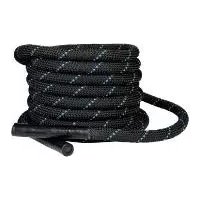
IAN 365985 - Fitness Equipment CRIVIT - Free user manual and instructions
Find the device manual for free IAN 365985 CRIVIT in PDF.


| Product type | Battle rope for fitness |
| Brand | Crivit |
| Model | IAN 365985 |
| Length | Approx. 10 meters |
| Diameter | Approx. 3 cm |
| Weight | Approx. 5.6 kg |
| Material | Not specified (resistant textile rope) |
| Intended use | Private outdoor use, for fitness training |
| Safety instructions | Consult a doctor before training; do not use as a climbing, lifting, or tug-of-war rope; risk of strangulation; do not wrap around neck/head/chest |
| Usage precautions | Use only on a flat, non-slip surface; clear space of about 5 meters around; do not use near stairs; check for damage before each use |
| Recommended minimum age | 14 years |
| Number of simultaneous users | 1 person |
| Proposed exercises | Alternating waves, waves with side steps, with lunges, circles, lateral waves, lateral slam, powerslam, jumping jack |
| Assembly | Wrap the rope around a sturdy anchor (tree, post) to obtain two ends of equal length |
| Holding the ends | Two positions: thumb on rope side (hands parallel to the ground) or thumb towards you (ends perpendicular upwards) |
| Maintenance and cleaning | Damp cloth; do not use harsh products; store in a dry, clean place at room temperature |
| Warranty | 3 years from date of purchase, covers material and manufacturing defects. Normal wear and tear excluded. |
| Customer service France | Phone: 0800 9192, Email: deltasport@lidl.fr |
| Customer service Belgium | Phone: 070 270 171 (€0.15/min), Email: deltasport@lidl.be |
| Manufacturing date | 04/2021 (indicated on packaging) |
Frequently Asked Questions - IAN 365985 CRIVIT
User questions about IAN 365985 CRIVIT
0 question about this device. Answer the ones you know or ask your own.
Ask a new question about this device
Download the instructions for your Fitness Equipment in PDF format for free! Find your manual IAN 365985 - CRIVIT and take your electronic device back in hand. On this page are published all the documents necessary for the use of your device. IAN 365985 by CRIVIT.
USER MANUAL IAN 365985 CRIVIT
Instructions for use
NL BE
BATTLE-ROPE
Gebruiksaanwijzing
CZ
POSILOVACÍ LANO
Návod k použití
ES
CUERDA ONDULATORIA BATTLE ROPE
Extra caution - risk of injury for children! 16
Dangers due to wear and tear 17
Securing the product 17
Holding the rope ends 17
General training instructions 17
Warming up 17
Exercise suggestions 18-20
Stretching 20
Storage, cleaning 20
Disposal 20
Notes on the guarantee and service handling 20-21
NL BE
Leveringsomvang 29
Durchmesser: ca. 3 cm
Gewicht: ca. 5,6 kg
Verwendete Symbole
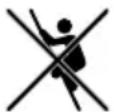
You have chosen to purchase a high-quality product. Familiarise yourself with the product before using it for the first time.

Read the following instructions for use carefully.
Use the product only as described and only for the given areas of application. Store these instructions for use carefully. When passing the product on to third parties, please also hand over all accompanying documents.
Package contents
1 x battle rope
1 x instructions for use
1 x quick start guide
Technical data
Length: approx. 10m
Diameter: approx. 3cm
Weight: approx. 5.6kg
Symbols used
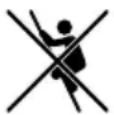
Not suitable for use as a climbing rope!
Not suitable for lifting/carrying loads!

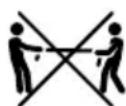
Do not use for tug-of-war!

Date of manufacture (month/year): 04/2021
Intended use
This fitness product is designed for private use and is not suitable for medical or commercial purposes. The product is suitable for outdoor use only. The product is not suitable for children under 14 years of age.

Safety information
Risk of injury!
- Consult your doctor before you start training. Make sure you are healthy enough to train.
- Always remember to warm up before training and train according to your current performance ability. High exertion and overtraining can lead to serious injuries. Stop exercising immediately and contact a doctor if you experience pain, weakness or fatigue.
- Always keep the instructions for use with the exercise instructions readily available.
- Pregnant women should only train after consulting with their doctor.
The product must only be used by one person at a time.
The product is not suitable for therapeutic purposes. - Ensure that a radius of approx. 5m around the training area is cleared (Fig. K).
- Train on a flat, non-slip surface only.
- Do not use the product near steps or landings.
- Never wrap the product around your head, neck or chest. Risk of strangulation!
- Do not use the product for other purposes (e.g., as a tension cable, towing rope, or similar).
- Only use the product for the application for which it was intended.
- Not suitable for lifting or carrying loads!
- Do not use as a climbing rope.
- Do not use for tug-of-war.
Make sure that the ground is able to withstand the load/impact exerted by the rope.

Extra caution - risk of injury for children!
- Do not allow children to use this product unsupervised. Instruct them in the correct use of the product and maintain supervision. Only allow the use of the product if the mental and physical development of the child allows it. This product is not a toy.

Dangers due to wear and tear
- Check the product for damage or wear before each use. Only use the product if it is in perfect condition!
- The safety of the product can only be guaranteed if it is regularly inspected for damage and wear and tear. If damaged, it must no longer be used.
- Parts that are particularly susceptible to wear and tear, such as the rope ends, must be checked for damage before each use.
- Use only original replacement parts.
- Protect the product from extreme temperatures, sun and dampness. Improper storage and use of the product could lead to premature wear and tear, which could result in injury.
Securing the product
Wrap the product several times around an anchor point, such as a tree trunk (Fig. A). Make sure that the rope ends are of equal length and that the attachment can withstand the force applied during the exercise.
Note: attachment to a tree is only one option.
Holding the rope ends
You can hold the rope ends in two ways (Fig. B): Hand position A
Grip the ends of the rope from above, with your thumbs pointing along the rope, and the rope parallel to the ground.
Hand position B
Grip the ends of the rope from below, with your thumbs pointing towards your body. Hold the rope ends perpendicular to the ground, pointing upwards.
Note: grip the ends of the rope firmly throughout the exercise.
General training instructions
Training procedure
- Wear comfortable sports clothing and athletic shoes.
Warm up before each training session and end the session gradually. - Take sufficient breaks between the exercises and keep yourself sufficiently hydrated.
If you are a beginner, never train with too much intensity. Increase the intensity of the training sessions slowly.
- Perform all exercises smoothly, not awkwardly or fast.
- Be sure to breathe steadily.
Exhale during exertion and inhale upon release.
- Maintain correct body posture while exercising.
Warming up
Take sufficient time before each training session to warm up. Some simple exercises to do this are described below.
You should repeat each exercise 2 to 3 times.
Neck muscles
- Turn your head slowly to the left and to the right. Repeat this movement 4 to 5 times.
- Rotate your head slowly, first in one direction then in the other.
Arms and shoulders
- Clasp your hands behind your back and pull them carefully upwards. If you bend your upper body forwards at the same time, all your muscles will be maximally warmed up.
- Rotate both your shoulders forwards at the same time and then change direction after one minute.
- Pull your shoulders up to your ears and then let them drop again.
- Circle your right and left arms alternately forwards and then, after one minute, backwards.
Important: don't forget to keep breathing steadily!
Leg muscles
- Stand on one leg and lift the other leg, with the knee bent, approx. 20cm off the floor.
- Then rotate your raised foot first in one direction, then change direction after a few seconds.
- Switch legs and repeat this exercise.
- Lift your legs one after another and take a few steps on the spot. Make sure you only lift your legs to a height where you are still able to maintain your balance well.
Exercise suggestions
Below are some of the many possible exercises.
Alternating waves (Fig. C)
Hand position A
Starting position
- Stand with your feet hip-width apart on the ground.
- Grasp the rope at both ends. Your arms are slightly bent at your sides, next to your body.
- Extend your buttocks out behind you and bend your knees. Make sure that your back is straight and your upper body is slightly tilted forward.
End position
- Tense your buttock, arm and abdominal muscles.
- Now alternately swing and bend your arms up at 90 degrees, while the other arm is extended downwards. Perform this movement regularly and rhythmically so that your arm movements create an alternating undulation of the rope.
- Repeat this exercise 10-15 times in sets of three.
Important: the undulation is generated exclusively by the movement of your forearms. Important: keep your back straight and your shoulders lowered during the exercise.
Waves with side step (Fig. D)
Hand position A
Starting position
- Stand with your feet hip-width apart on the ground, with slightly bent.
- Grasp the rope at both ends. Your arms are slightly bent at your sides, next to your body.
End position
- Tense your buttock, arm and abdominal muscles.
- Now alternately swing and bend your arms up at 90 degrees, while the other arm is extended downwards. Perform this movement regularly and rhythmically so that your arm movements create an alternating undulation of the rope.
-
Take two big side steps to the right, starting with the right leg and bringing the left leg to meet it. Keep swinging the rope evenly.
-
Change direction and take two side steps to the left, continuing to swing the rope.
- Repeat this exercise 10-15 times in sets of three.
Important: the undulation is generated exclusively by the movement of your forearms. Keep your shoulders down and your upper arms close to your body. Hold your back straight throughout the entire exercise and continue breathing steadily. To increase the intensity of the exercise, increase your speed and bend your knees more.
Waves with lunge (Fig. E)
Hand position A
Starting position
- Stand with your feet hip-width apart on the ground.
- Grasp the rope at both ends. Your arms are slightly bent at your sides, next to your body.
End position
- Tense your buttock, arm and abdominal muscles.
- Now alternately swing and bend your arms up at 90 degrees, while the other arm is extended downwards. Perform this movement regularly and rhythmically so that your arm movements create an alternating undulation of the rope.
- Now lunge forward with your right leg and continue swinging the rope evenly.
- Hold this position briefly and then return to the starting position.
- Now put the left leg forward in a lunge and continue swinging the rope rhythmically. Make sure that the back knee does not touch the ground and that the pelvis is straight.
- Repeat this exercise 10-15 times in sets of three.
Important: the undulation is generated exclusively by the movement of your forearms. Keep your shoulders down and upper arms alongside your body. Keep your back straight throughout the exercise and keep breathing steadily.
Circles (Fig. F)
Hand position B
Starting position
- Stand with your feet hip-width apart on the ground, with slightly bent.
- Grasp the rope at both ends. Your arms are at your sides, next to your body.
End position
- Tense your buttock, arm and abdominal muscles.
- Raise your arms out to the sides at chest level and then cross your arms. Perform this movement regularly and rhythmically.
- Change direction and swing both ends of the rope simultaneously out from the centre in a circular motion.
- Repeat this exercise 15-20 times in sets of three.
Important: keep your back straight and your shoulders lowered during the entire exercise. To increase the intensity of the exercise, increase your speed and bend your knees more.
Lateral waves (Fig. G)
Hand position A
Starting position
- Stand with your feet hip-width apart on the ground, with slightly bent.
- Grasp the rope at both ends. Your arms are at hip height in front of your body.
End position
- Tense your buttock, arm and abdominal muscles.
- Swing both arms simultaneously, alternately to the left and then to the right. Perform this movement regularly and rhythmically so that your arm movements create an undulation in the rope. Your body moves as little as possible.
- Put your weight evenly on your legs during the exercise to maintain the tension in your abdomen and buttocks.
- Repeat this exercise 15-20 times in sets of three.
Important: keep your back straight throughout the entire exercise and continue to breathe steadily. To increase the intensity of the exercise, increase your speed and lift your arms.
Lateral slam (Fig. H)
Hand position A
Starting position
- Stand with your feet hip-width apart on the ground, with slightly bent.
- Hold the ends of the rope together with one hand behind the other. Your arms are at hip height in front of your body.
End position
- Tense your buttock, arm and abdominal muscles.
- Lift the rope and swing your arms alternately left and right. While doing this, let the rope hit the ground with full force.
- Perform this movement regularly and rhythmically so that your arm movements form a half-circle.
- Repeat this exercise 15-20 times in sets of three.
Important: keep your back straight throughout the entire exercise and continue to breathe steadily. To increase the intensity of the exercise, increase your speed.
Power slam (Fig. I)
Hand position A
Starting position
- Stand with your feet hip-width apart on the ground, with slightly bent.
- Grasp the rope at both ends. Your arms are at your sides, next to your body.
End position
- Tense your buttock, arm and abdominal muscles.
- Lift the rope and lift your arms high above your head. Stretch your entire body upwards during this movement.
- Go into the squat position and let the rope hit the floor with full force. Do not lose your body tension during these movements.
- Perform this movement regularly and rhythmically so that your arm movements create an undulation of the rope.
- Repeat this exercise 15-20 times in sets of three.
Important: keep your back straight throughout the entire exercise and continue to breathe steadily. To increase the intensity of the exercise, increase your speed.
Star jumps (Fig. J)
Hand position A
Starting position
- Stand with your feet hip-width apart on the ground, with your knees slightly bent.
- Grasp the rope at both ends. Your arms are at your sides, next to your body.
End position
- Tense your buttock, arm and abdominal muscles.
- Raise your arms out to the sides, pulling the rope up high above your head, and at the same time jump your feet apart, so that your body is stretched.
- Now jump your legs back together and lower your arms to your sides.
- Perform this movement regularly and rhythmically so that your arm movements create an undulation of the rope.
- Repeat this exercise 15-20 times in sets of three.
Important: keep your back straight throughout the entire exercise and continue to breathe steadily. To increase the intensity of the exercise, increase your speed.
Stretching
Take sufficient time to stretch after each training session. Some simple exercises to do this are shown below.
You should perform each exercise 3 times per side for 15-30 seconds.
Neck muscles
- Stand in a relaxed posture.
- Pull your head gently to one side with your hand, first to the left and then to the right.
This exercise stretches the sides of your neck.
Arms and shoulders
- Stand up straight with your knees slightly bent.
- Bend your right arm behind your head until your right hand is between your shoulder blades.
- Grip your right elbow with your left hand and pull it backwards.
- Change sides and repeat the exercise.
Leg muscles
- Stand upright and lift one foot off the floor.
- Rotate it slowly, first in one direction, then the other.
- Switch feet after a while.
Important: make sure your thighs remain parallel to each other. Push your pelvis forwards, keeping your upper body upright.
Storage, cleaning
When not in use, always store the product clean and dry at room temperature.
Only clean the product with a damp cloth and wipe dry afterwards.
IMPORTANT! Never clean the product with harsh cleaning agents.
Disposal
Dispose of the article and the packaging materials in accordance with current local regulations. Packaging materials such as foil bags are not suitable to be given to children. Keep the packaging materials out of the reach of children.

Dispose of the products and the packaging in an environmentally friendly manner.

The recycling code is used to identify various materials for recycling. The code consists of the recycling symbol - which
is meant to reflect the recycling cycle - and a number which identifies the material.
Notes on the guarantee and service handling
The product was produced with great care and under continuous quality control. DELTA-SPORT HANDELSKONTOR GmbH gives private end customers a three-year guarantee on this product from the date of purchase (guarantee period) in accordance with the following provisions. The guarantee is only valid for material and manufacturing defects. The guarantee does not cover parts subject to normal wear and tear that are thus considered wear parts (e.g. batteries) or fragile parts such as switches, rechargeable batteries, or parts made of glass.
Claims under this guarantee are excluded if the product has been used incorrectly, improperly, or contrary to the intended purpose, or if the provisions in the instructions for use were not observed, unless the end customer proves that a material or manufacturing defect exists that was not caused by one of the aforementioned circumstances.
Claims under the guarantee can only be made within the guarantee period by presenting the original sales receipt. Please therefore keep the original sales receipt. The guarantee period is not extended by any repairs carried out under the guarantee, under statutory guarantees, or as a gesture of goodwill. This also applies to replaced and repaired parts.
If you wish to make a claim please first contact the service hotline mentioned below or contact us by e-mail. If there is a guarantee case, then the product will be repaired or replaced free of charge to you or the purchase price will be refunded, depending on our choice.
Your legal rights, in particular guarantee claims against the respective seller, are not limited by this guarantee.
IAN:365985_2010
GB Service Great Britain
Tel.: 08004047657
E-Mail: deltasport@lidl.co.uk
IE Service Ireland
Tel.: 1890 930 034
(0,08 EUR/Min., {peak})
(0,06 EUR/Min., (off peak))
E-Mail: deltasport@lidl.ie
Felicitations!




- BATTLE-ROPE
- POSILOVACÍ LANO
- CUERDA ONDULATORIA BATTLE ROPE
- NL BE
- Verwendete Symbole
- Read the following instructions for use carefully.
- Package contents
- Technical data
- Symbols used
- Intended use
- Safety information
- Risk of injury!
- Extra caution - risk of injury for children!
- Dangers due to wear and tear
- Securing the product
- Holding the rope ends
- Hand position B
- General training instructions
- Training procedure
- Warming up
- Neck muscles
- Arms and shoulders
- Important: don't forget to keep breathing steadily!
- Leg muscles
- Exercise suggestions
- Alternating waves (Fig. C)
- Starting position
- End position
- Important: the undulation is generated exclusively by the movement of your forearms. Important: keep your back straight and your shoulders lowered during the exercise.
- Waves with side step (Fig. D)
- Waves with lunge (Fig. E)
- Important: the undulation is generated exclusively by the movement of your forearms. Keep your shoulders down and upper arms alongside your body. Keep your back straight throughout the exercise and keep breathing steadily.
- Circles (Fig. F)
- Important: keep your back straight and your shoulders lowered during the entire exercise. To increase the intensity of the exercise, increase your speed and bend your knees more.
- Lateral waves (Fig. G)
- Important: keep your back straight throughout the entire exercise and continue to breathe steadily. To increase the intensity of the exercise, increase your speed and lift your arms.
- Lateral slam (Fig. H)
- Important: keep your back straight throughout the entire exercise and continue to breathe steadily. To increase the intensity of the exercise, increase your speed.
- Power slam (Fig. I)
- Star jumps (Fig. J)
- Stretching
- Important: make sure your thighs remain parallel to each other. Push your pelvis forwards, keeping your upper body upright.
- Storage, cleaning
- Disposal
- Notes on the guarantee and service handling
Brand : CRIVIT
Model : IAN 365985
Category : Fitness Equipment