PAT 4 C3 - Electric stapler PARKSIDE - Free user manual and instructions
Find the device manual for free PAT 4 C3 PARKSIDE in PDF.

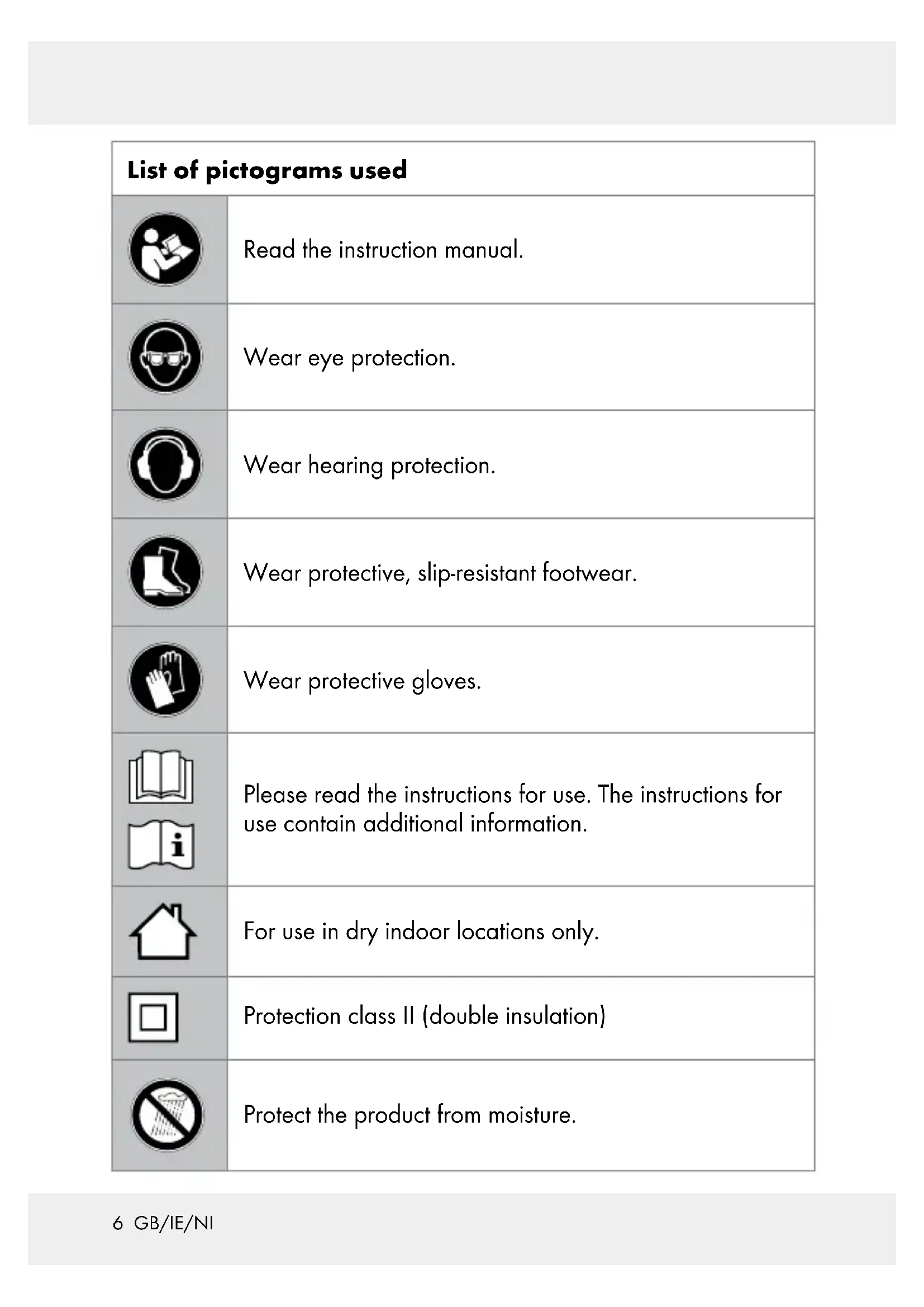


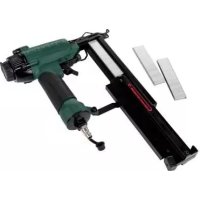
| Product type | Cordless electric stapler |
| Brand | Parkside |
| Model | PAT 4 C3 |
| Rated voltage | 4 V (DC) |
| Battery type | Integrated lithium-ion |
| Battery capacity | 1500 mAh |
| Operating speed | Max. 30 strokes/min |
| Magazine capacity | 100 staples or 50 nails |
| Compatible staple types | Fine wire, width 11.4 mm, length 4–10 mm |
| Compatible nail types | Width 1.2 mm, length 6–10 mm |
| Charger power supply | 100–240 V ~ 50/60 Hz, USB output 5 V / 600 mA |
| Charging time | Approximately 180 minutes |
| Sound pressure level | LpA = 80.6 dB(A) (K=3 dB(A)) |
| Sound power level | LWA = 91.6 dB(A) (K=3 dB(A)) |
| Total vibration (a_hw) | 2.75 m/s² (K=1.5 m/s²) |
| Protection class | II (double insulation) |
| Delivery contents | 1 stapler, 1 charger, 1000 staples 6 mm, 1000 staples 8 mm, 500 nails 10 mm, instruction manual |
| Intended use | Stapling cardboard, paper, leather, textiles, etc. on softwood, plywood, fiberboard |
| Maintenance and cleaning | Clean with a dry cloth; do not use oil or grease |
| Warranty | 3 years from date of purchase |
| After-sales service France | Phone 0800 919 270, email owim@lidl.fr |
| Repairability index | Not communicated |
Frequently Asked Questions - PAT 4 C3 PARKSIDE
User questions about PAT 4 C3 PARKSIDE
0 question about this device. Answer the ones you know or ask your own.
Ask a new question about this device
Download the instructions for your Electric stapler in PDF format for free! Find your manual PAT 4 C3 - PARKSIDE and take your electronic device back in hand. On this page are published all the documents necessary for the use of your device. PAT 4 C3 by PARKSIDE.
USER MANUAL PAT 4 C3 PARKSIDE
Translation of the original instructions
FR BE
AGRAFEUSE SANS FIL
GB/IE/NI Translation of the original instructions Page 5
| DK Original driftvejledning Side 26 |
| FR / BE Traduction des instructions d'origine Page 48 |
| NL / BE Vertaling van de oorspronkelijke gebruiksaanwijzing Pagina 71 |
| DE / AT / CH Originalbetriebsanleitung Seite 94 |
List of pictograms used.. 6
Introduction
Intended use.. 7
Parts description.. 7
Scope of delivery.. Page 8
Technical data.. 8
General power tools safety warnings......Page 10
Tacker safety warnings.. Page 14
Charger safety warnings.. Page 15
Before use. Page 16
Starting the charging process.. Page 17
Completing the charging process.. Page 17
Initial use
Adding Staples.. Page 17
Adding Nails. Page 18
Functions Page 18
Cleaning and care.. Page 20
Disposal.. Page 20
Service
Warranty claim procedure.. Page 22
Service . Page 23
Warranty.. Page 23
Translation of original conformity declaration
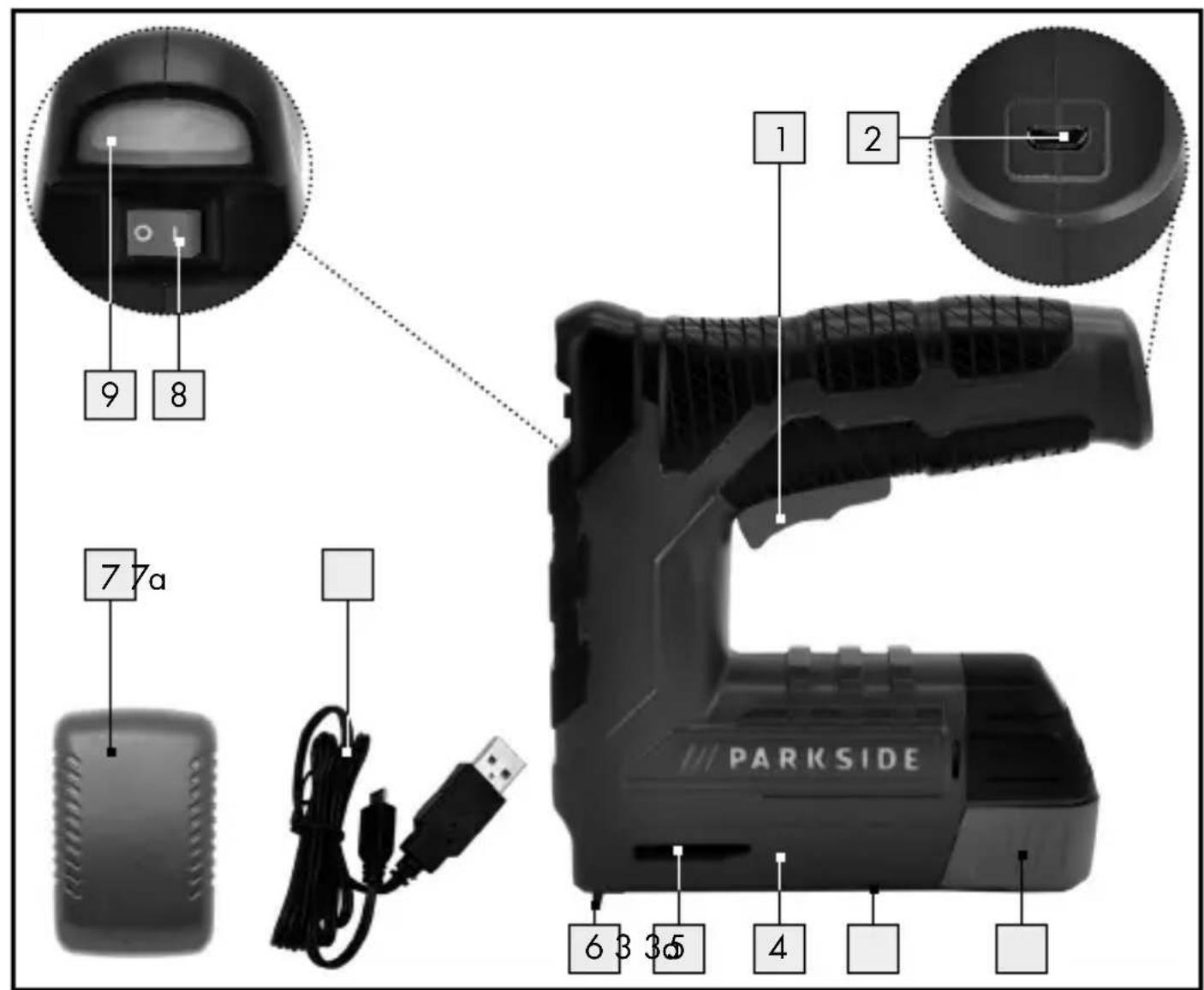
| List of pictograms used | |
| Read the instruction manual. | |
| Wear eye protection. | |
| Wear hearing protection. | |
| Wear protective, slip-resistant footwear. | |
| Wear protective gloves. | |
| Please read the instructions for use. The instructions for use contain additional information. | |
| For use in dry indoor locations only. | |
| Protection class II (double insulation) | |
| Protect the product from moisture. | |
Cordless Nailer / Stapler PAT 4 C3
Introduction

We congratulate you on the purchase of your new product. You have chosen a high quality product. The instructions for use are part of the product. They contain important infor
mation concerning safety, use and disposal. Before using the product, please familiarise yourself with all of the safety information and instructions for use. Only use the product as described and for the specified applications. If you pass the product on to anyone else, please ensure that you also pass on all the documentation with it.
Intendeduse
This product is intended for fastening paperboard, sheets of paper, leather, insulation, fabric and similar materials onto soft wood (real wood), plywood boards having similar hardness as softwood and low density fiberboard. It is only intended for private household use. Any other use or modification of the product shall be considered improper use and may result in serious accident hazards. The manufacturer is not liable for any damages caused by improper use. Not intended for commercial use. This product is not intended for securing electrical cables.
-Partsdescription
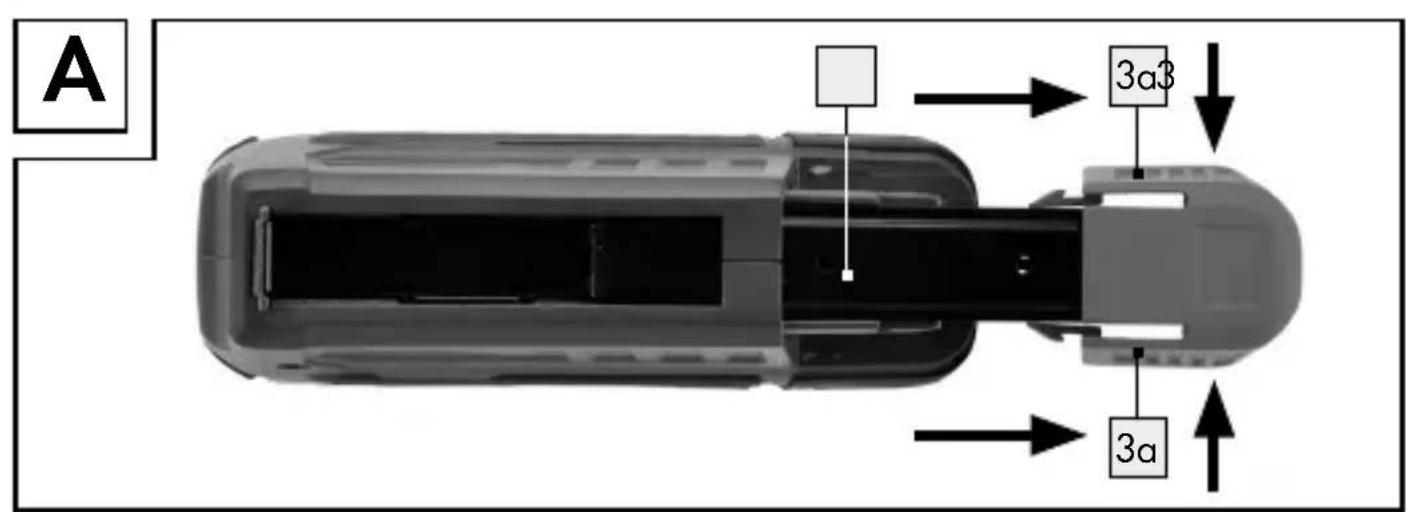
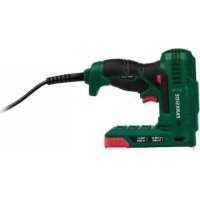
| 1 Trigger |
| 2 Micro-USB charging socket |
| 3 Pusher |
| 3a Release button |
| 4 Magazine |
| 5 Fill indicator (staples) |
| 6 Safety contact |
Charger
USB cable
On/Off switch
Charge indicator
Scope of delivery
1 Cordless Nailer / Stapler PAT 4 C3
1 Charger
1000 Staples 6 mm
1000 Staples 8 mm
500 Nails 10mm
1 Operating instructions
-Technicaldata
Cordless stapler: PAT 4 C3
Rated voltage: 4V = = (direct current)
Rechargeable
battery (installed): LITHIUM-ION
Cells: 1
Capacity: 1500 mAh
Speed: Max. 30/min
Magazine capacity: 100 staples or 50 nails
Wire staples:
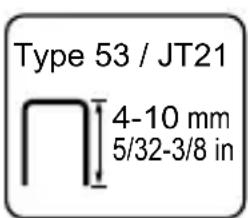
Staple width: 11.4mm
Staple length: 4 - 10mm
Nails:
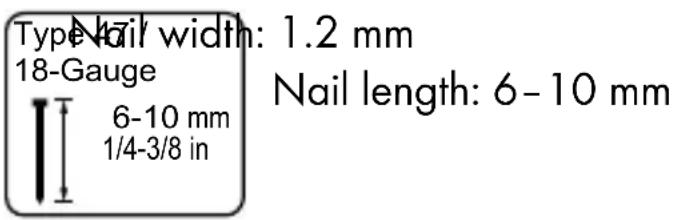
Battery charger: HG04133
Input:
Rated voltage: 100 - 240V 50 / 60Hz
Rated current: 0.2 A
Connection type: USB
Output:
Rated voltage: 5V = = (direct current)
Rated current: 600mA
Output power: max. 3 W
Charging time: approx. 180 min
Protection class: II/ (double insulation)
Noise emission value:
The measured values for sound comply with EN 60745. The A-weighted single-event noise level, standardised to 1~s , is typically:
Sound pressure level: L_pA = 80.6 dB(A)
Uncertainty: K_pA = 3 dB(A)
Sound power level: L WA = 91.6 dB(A)
Uncertainty: K_WA = 3 dB(A)
Wear hearing protection!
Vibration values determined in accordance with EN 60745:
Vibration emission value a_hw = 2.75 m/s^2
Uncertainty K = 1,5 m/s^2
Note: The vibration level specified in these instructions has been measured in accordance with a standardized measuring procedure specified in EN60745 and can be use for equipment comparisons.
The specified vibration emission value can also be used to make an initial exposure estimate.
WARNING!
The vibration level varies in accordance with the use of the power tool and may be higher than the value specified in these instructions in some cases. Regular use of the electric tool in such a way may cause the users to underestimate the vibration. Try to keep the vibration loads as low as possible. Measures to reduce the vibration load are, e.g. wearing gloves and limiting the working time. All states of operation much be taken into account (e.g. time when the power tool is switched off and time where the power tool is switched on but running without load).
- General power tools safety warnings
WARNING!
Read all safety directions and instructions. Failure to follow the warnings and instructions may result in electric shock, fire and / or serious injury.
Save all warnings and instructions for future reference.
The term "power tool" in the warnings refers to your mains-operated (corded) power tool or battery-operated (cordless) power tool.
Work area safety
a) Keep work area clean and well lit. Cluttered or dark areas invite accidents.
b) Do not operate power tools in explosive atmospheres, such as in the presence of flammable liquids, gases or dust. Power tools create sparks which may ignite the dust or fumes.
c) Keep children and bystanders away while operating a power tool. Distractions can cause you to lose control.
Electrical safety
a) Power tool plugs must match the outlet. Never modify the plug in any way. Do not use any adapter plugs with earthed (grounded) power tools. Unmodified plugs and matching outlets will reduce risk of electric shock.
b) Avoid body contact with earthed or grounded surfaces, such as pipes, radiators, ranges and refrigerators. There is an increased risk of electric shock if your body is earthed or grounded.
c) Do not expose power tools to rain or wet conditions. Water entering a power tool will increase the risk of electric shock.
d) Do not abuse the cord. Never use the cord for carrying, pulling or unplugging the power tool. Keep cord away from heat, oil, sharp edges or moving parts. Damaged or entangled cords increase the risk of electric shock.
e) When operating a power tool outdoors, use an extension cord suitable for outdoor use. Use of a cord suitable for outdoor use reduces the risk of electric shock.
f) If operating a power tool in a damp location is unavoidable, use a residual current device (RCD) protected supply. Use of an RCD reduces the risk of electric shock.
Personal safety
a) Stay alert, watch what you are doing and use common sense when operating a power tool. Do not use a power tool while you are tired or under the influence of drugs, alcohol or medication. A moment of inattention while operating power tools may result in serious personal injury.
b) Use personal protective equipment. Always wear eye protection. Protective equipment such as dust mask, non-skid safety shoes, hard hat, or hearing protection used for appropriate conditions will reduce personal injuries.
c) Prevent unintentional starting. Ensure the switch is in the off-position before connecting to power source and / or battery pack, picking up or carrying the tool. Carrying power tools with your finger on the switch or energising power tools that have the switch on invites accidents.
d) Remove any adjusting key or wrench before turning the power tool on. A wrench or a key left attached to a rotating part of the power tool may result in personal injury.
e) Do not overreach. Keep proper footing and balance at all times. This enables better control of the power tool in unexpected situations.
f) Dress properly. Do not wear loose clothing or jewellery. Keep your hair, clothing and gloves away from moving parts. Loose clothes, jewellery or long hair can be caught in moving parts.
g) If devices are provided for the connection of dust extraction and collection facilities, ensure these are connected and properly used. Use of dust collection can reduce dust-related hazards.
Power tool use and care
a) Do not force the power tool. Use the correct power tool for your application. The correct power tool will do the job better and safer at the rate for which it was designed.
b) Do not use the power tool if the switch does not turn it on and off. Any power tool that cannot be controlled with the switch is dangerous and must be repaired.
c) Disconnect the plug from the power source and / or the battery pack from the power tool before making any adjustments, changing accessories, or storing power tools. Such preventive safety measures reduce the risk of starting the power tool accidentally.
d) Store idle power tools out of the reach of children. Do not allow persons unfamiliar with the power tool or these instructions to operate the power tool. Power tools are dangerous in the hands of untrained users.
e) Maintain power tools. Check for misalignment or binding of moving parts, breakage of parts and any other condition that may affect the power tool's operation. If damaged, have the power tool repaired before use. Many accidents are caused by poorly maintained power tools.
f) Keep cutting tools sharp and clean. Properly maintained cutting tools with sharp cutting edges are less likely to bind and are easier to control.
g) Use the power tool, accessories and tool bits etc. in accordance with these instructions, taking into account the working conditions and the work to be performed. Use of the power tool for operations different from those intended could result in a hazardous situation.
Battery tool use and care
a) Recharge only with the charger specified by the manufacturer. A charger that is suitable for one type of battery pack may create a risk of fire when used with another battery pack.
b) Use power tools only with specifically designated battery packs. Use of any other battery packs may create a risk of injury and fire.
c) When battery pack is not in use, keep it away from other metal objects, like paper clips, coins, keys, nails, screws or other small metal objects, that can make a connection from one terminal to another. Shorting the battery terminals together may cause burns or a fire.
d) Under abusive conditions, liquid may be ejected from the battery; avoid contact. If contact accidentally occurs, flush with water. If liquid contacts eyes, additionally seek medical help. Liquid ejected from the battery may cause irritation or burns.
Service
a) Have your power tool serviced by a qualified repair person using only identical replacement parts. This will ensure that the safety of the power tool is maintained.
Tacker safety warnings
- Always assume that the tool contains fasteners. Careless handling of the tacker can result in unexpected firing of fasteners and personal injury.
2.D o not point the tool towards yourself or anyone nearby. Unexpected triggering will discharge the fastener causing an injury. - Do not actuate the tool unless the tool is placed firmly against the workpiece. If the tool is not in contact with the workpiece, the fastener may be deflected away from your target.
- Disconnect the tool from the power source when the fastener jams in the tool. While removing a jammed fastener, the tacker may be accidentally activated if it is plugged in.
-
Use caution while removing a jammed fastener. The mechanism may be under compression and the fastener may be forcefully discharged while attempting to free a jammed condition.
-
Do not use this tacker for fastening electrical cables. It is not designed for electric cable installation and may damage the insulation of electric cables thereby causing electric shock or fire hazards.
- Charger safety warnings
- This product can be used by children aged from 8 years and above and persons with reduced physical, sensory or mental capabilities or lack of experience and knowledge if they have been given supervision or instruction concerning use of the product in a safe way and understand the hazards involved.
- Children shall not play with the product.
- Cleaning and user maintenance shall not be made by children without supervision.
- Do not charge non-rechargeable batteries. Disregarding this instruction may be hazardous.
-
If the supply cord is damaged, it must be replaced by the manufacturer, its service agent or similarly qualified persons in order to avoid a hazard.
-
Protect the electrical parts against moisture. Do not immerse such parts in water or other liquids to avoid electrical shock. Never hold the product under running water. Pay attention to the instructions provided for cleaning, maintenance and repair.
- The charger is suitable for indoor use only.
- Before use
Note: Remove all packaging materials from the product.
Note: The rechargeable battery comes partly charged. Charge the battery prior to first use, ideally at least 3-5 hours. Li-lon batteries may be charged at any time without reducing their life. Interrupting the charging process does not damage the rechargeable battery.
This product is equipped with a depth discharge protection which prevents discharging below final discharging voltage.
Do not continuously pull the trigger 1 to prevent damaging the built-in rechargeable battery.
Set the On / Off switch to the "0" position if the product will not be used or will be stored for extended periods.
Note: If the charge indicator 9 lights up red during use, the charge is below 30% and the battery must be recharged.
Starting the charging process
Connect the USB cable 7a to the charger 7 using the USB socket.
Connect the other end of the USB cable 7a to the micro-USB charging socket 2 on the product.
Connect the charger 7 to a 100 - 240V 50 / 60Hz power source. The charge indicator 9 shows the charging progress. It will light up red whilst charging. Once the battery is fully charged it lights up green.
- Completing the charging process
Disconnect the charger from the power source.
- Disconnect the charger 7 from the micro-USB charging socket 2 on the product.
Note: The product cannot be used whilst charging. It is normal for the handle to warm up slightly whilst charging.
- Initial use
- Adding Staples
Set the On / Off switch 8 to the "0" position before working on the product.
Turn the product over.
Squeeze the release button 3a (see Fig. A).
Pull back on the pusher 3 (see Fig. A).
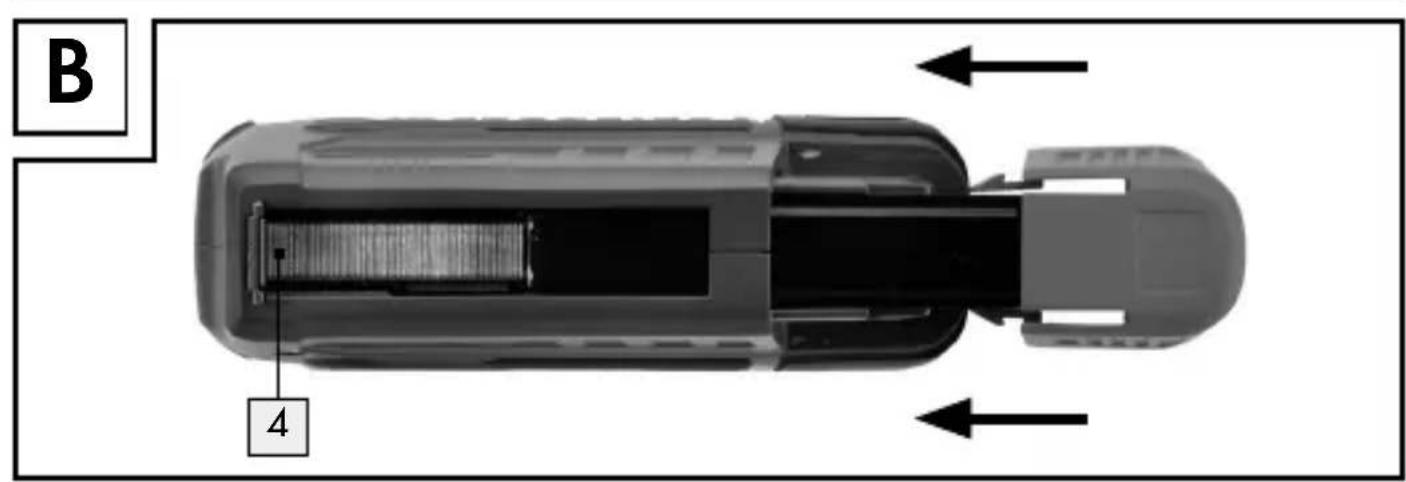
Add staples to the magazine 4 (see Fig. B).
After adding staples, slide the pusher 3 in again until the magazine 4 is fully closed. Release the release button 3a. It must click and lock into place for the magazine 4 to be closed correctly.
Note: Use the window on the fill indicator 5 to see if the magazine 4 is empty.
- Adding Nails
Set the On / Off switch 8 to the "0" position before working on the product.
Turn the product over.
Squeeze the release button 3a (see Fig. A).
Pull back on the pusher 3 (see Fig. A)
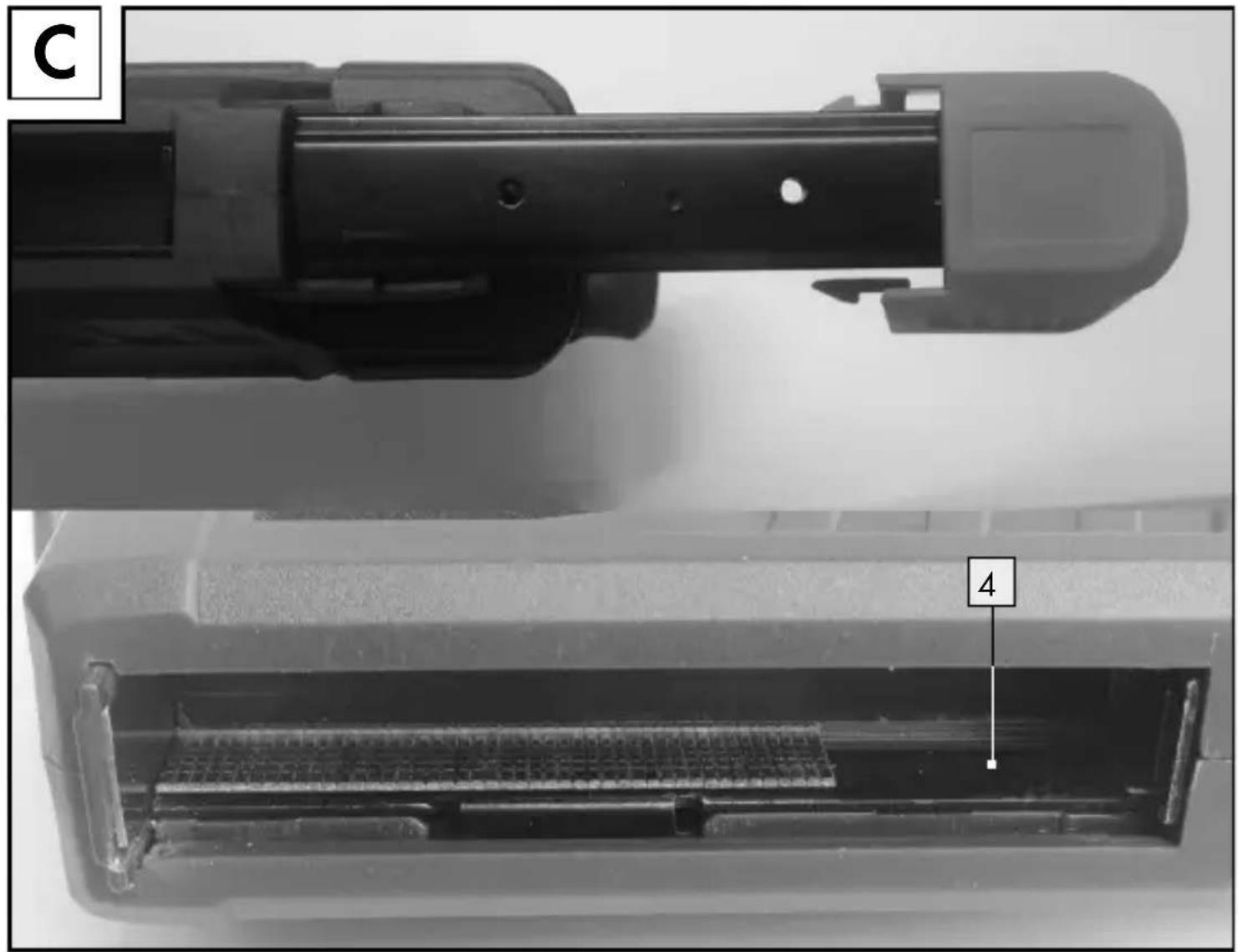
Follow icon shown on pusher 3 (see Fig. C) and add nails to the magazine 4 (see Fig. C)
□ After adding nails, slide the pusher 3 in again until the magazine 4 is fully closed, (see Fig B).
- Release the release button 3a. It must click and lock into place for the magazine 4 to be closed correctly.
Note: Use the window on the fill indicator to see if the magazine 4 is empty.
- Functions
Stapling & Nailing
Set the On/Off switch 8 to the "l" position to switch the product on.
Press the safety contact 6 into the work piece.
Squeeze the trigger 1 whilst holding the product against the work piece to drive a staple / nail into it.
Set the On / Off switch 8 to the "0" position to switch the product off.
Note: Hold tool firmly and press on work surface before firing to ensure the complete penetration of the staple / nail.
Clearing Jammed Staples
WARNING! If a staple is jammed, do not squeeze the trigger 1 It may otherwise accidentally be triggered after removing the staple.
Note: Set the On / Off switch to "0" position prior to clearing the jammed staple.
Open the magazine 4 and pull back on the pusher 3.
Remove the jammed staple from the magazine 4
Note: Do not trigger the staple gun when empty to prevent wear.
Determining the Staple Length
Consider two factors when determining the correct staple length:
- the thickness of the material being fastened
- the composition (hardness) of the material being fastened.
4 - 6 mm staple or 6 - 8 mm nail in length will typically suffice when driving into plywood and fiber board.
8- 10 mm staple or 10 mm nail in length will typically suffice when fastening into softwood such as pinewood.

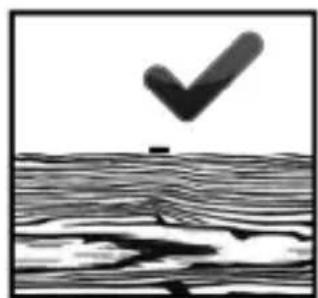
The crown of the staple or head of the nail should be flushed with the top of the material being fastened as shown.
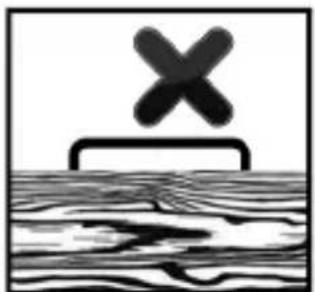
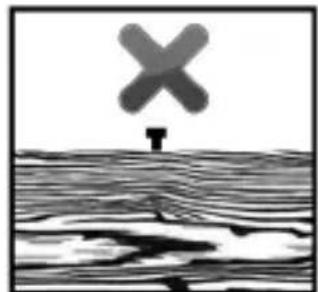
If the crown of the staple or head of the nail is not flush with the top of the material being fastened, it means it is too long. In this case, use the next shorter staple or nail for optimal results.
- Cleaning and care
- Set the On / Off switch 8 to the "0" position to switch the product off before cleaning or maintaining the product.
The product must always be clean, dry, and free from oil and grease.
Clean the housing with a dry cloth.
This product contains a Lithium-ion rechargeable battery and is therefore subject to hazardous materials regulations. The user may transport the rechargeable batteries on roads without special requirements.
The packaging and marking is subject to special requirements when transported by third parties (e.g. airline, courier, carrier). A hazardous materials expert must be consulted when transported by third parties. Rechargeable batteries may only be shipped if the housing is intact. Cover open contacts with tape and package the rechargeable batteries so they cannot move inside the packaging. Particularly observe the specific national regulations.
- Disposal
The packaging is made entirely of recyclable materials, which you may dispose of at local recycling facilities.

Observe the marking of the packaging materials for waste separation, which are marked with abbreviations (a) and numbers (b) with following meaning: 1-7: plastics / 20-22: paper and fibreboard / 80-98: composite materials.

The product and packaging materials are recyclable, dispose of it separately for better waste treatment. The Triman logo is valid in France only.

Contact your local refuse disposal authority for more details of how to dispose of your worn-out product.
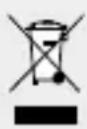
To help protect the environment, please dispose of the product properly when it has reached the end of its useful life and not in the household waste. Information on collection points and their opening hours can be obtained from your local authority.
Faulty or used batteries / rechargeable batteries must be recycled in accordance with Directive 2006/66/EC and its amendments. Please return the batteries / rechargeable batteries and / or the product to the available collection points.
Environmental damage through incorrect disposal of the batteries /rechargeable batteries!
Batteries / rechargeable batteries may not be disposed of with the usual domestic waste. They may contain toxic heavy metals and are subject to hazardous waste treatment rules and regulations. The chemical symbols for heavy metals are as follows: Cd = cadmium, Hg = mercury, Pb = lead. That is why you should dispose of used batteries / rechargeable batteries at a local collection point.
This product has a built-in rechargeable battery which cannot be replaced by the user. The removal or replacement of the rechargeable battery may only be carried out by the manufacturer or his customer service or
by a similarly qualified person in order to avoid hazards. When disposing of the product, it should be noted that this product contains a rechargeable battery.
Service
WARNING!
Have your product repaired at the service centre or an electrician, using only original manufacturer parts. This will maintain the safety of this product.
Warranty claim procedure
To ensure quick processing of your case, please observe the following instructions:
Please have the till receipt and the item number (e.g. IAN 123456) available as proof of purchase.
You will find the item number on the type plate, an engraving on the front page of the instructions (bottom left), or as a sticker on the rear or bottom of the appliance.
If functional or other defects occur, please contact the service department listed either by telephone or by e-mail.
You can return a defective product to us free of charge to the service address that will be provided to you. Ensure that you enclose the proof of purchase (till receipt) and information about what the defect is and when it occurred.
Service
GB Service Great Britain
Tel.: 0871 5000 720
(£ 0.10 / Min.)
E-Mail: owim@lidl.co.uk
IE Service Ireland NI Service Northern Ireland
Tel.: 1890 930 034
(0,08 EUR / Min., (peak)) (0,06 EUR / Min., (off peak))
E-Mail: owim@lidl.ie
IAN 304116
Warranty
The product has been manufactured to strict quality guidelines and meticulously examined before delivery. In the event of product defects you have legal rights against the retailer of this product. Your legal rights are not limited in any way by our warranty detailed below.
The warranty for this product is 3 years from the date of purchase. Should this product show any fault in materials or manufacture within 3 years from the date of purchase, we will repair or replace it - at our choice - free of charge to you.
The warranty period begins on the date of purchase. Please keep the original sales receipt in a safe location. This document is required as your proof of purchase. This warranty becomes void if the product has been damaged, or used or maintained improperly.
The warranty applies to defects in material or manufacture. This warranty does not cover product parts subject to normal wear, thus possibly considered consumables (e.g. batteries) or for damage to fragile parts, e.g. switches, rechargeable batteries or glass parts.
- Translation of original conformity declaration
We, OWIM GmbH & Co. KG, Stiftsbergstraße 1, DE-74167 Neckarsulm, GERMANY, hereby declare under our sole responsibility that the product: Cordless Nailer / Stapler PAT 4 C3, Model No.: HG04109, Version: 07 / 2018, to which this declaration refers, complies with the standards / normative documents of 2006/42/EC, 2014/35/EU, 2014/30/EU, 2011/65/EU.
Applied harmonised standards:
EN 60745-1:2009/A11:2010
EN 60745-2-16:2010
EN 60335-1:2012+A11
EN 60335-2-29:2004+A2
EN 55014-1:2017
EN 55014-1:2006+A1:2009+A2:2011
EN 55014-2:2015
EN 61000-3-2:2014
EN 61000-3-3:2013
EN 62233:2008
EN 50581:2012
Serial number: IAN 304116

Tobias König
Division Manager / Responsible for documentation
The declaration of conformity can also be viewed at: www.owim.com.

The object of the declaration described above satisfies the provisions of Directive 2011/65/EUof the European Parliament and the Council of 8 June 2011 on limiting the use of certain harmful substances in electrical and electronic appliances.
spijkerlength: 6-10mm
Acculader: HG04133
INGANG /input:
Nominate spanning: 100 - 240V 50 / 60Hz
Nominate stroom: 0,2A

- AGRAFEUSE SANS FIL
- List of pictograms used.. 6
- Introduction
- General power tools safety warnings......Page 10
- Before use. Page 16
- Initial use
- Functions Page 18
- Cleaning and care.. Page 20
- Disposal.. Page 20
- Service
- Warranty.. Page 23
- Translation of original conformity declaration
- Cordless Nailer / Stapler PAT 4 C3
- Intendeduse
- -Partsdescription
- Scope of delivery
- -Technicaldata
- Cordless stapler: PAT 4 C3
- Battery charger: HG04133
- Input:
- Output:
- Noise emission value:
- Wear hearing protection!
- Vibration values determined in accordance with EN 60745:
- WARNING!
- - General power tools safety warnings
- Save all warnings and instructions for future reference.
- Work area safety
- Electrical safety
- Personal safety
- Power tool use and care
- Battery tool use and care
- Tacker safety warnings
- - Charger safety warnings
- - Before use
- Starting the charging process
- - Completing the charging process
- - Initial use
- - Adding Staples
- - Adding Nails
- - Functions
- Stapling & Nailing
- Clearing Jammed Staples
- Determining the Staple Length
- - Cleaning and care
- - Disposal
- Environmental damage through incorrect disposal of the batteries /rechargeable batteries!
- Warranty claim procedure
- GB Service Great Britain
- IE Service Ireland NI Service Northern Ireland
- IAN 304116
- Warranty
- - Translation of original conformity declaration
- Applied harmonised standards:
- Acculader: HG04133
- INGANG /input:
Brand : PARKSIDE
Model : PAT 4 C3
Category : Electric stapler