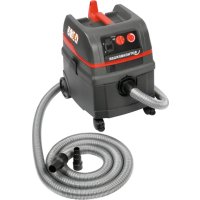
RODIA DRY CLEANER 1200 - Industrial vacuum cleaner ROTHENBERGER - Free user manual and instructions
Find the device manual for free RODIA DRY CLEANER 1200 ROTHENBERGER in PDF.



| Product type | Industrial vacuum cleaner |
| Brand | Rothenberger |
| Model | RODIA DRY CLEANER 1200 |
| Dimensions (L × D × H) | 45.7 x 40 x 54 cm |
| Weight | 12.7 kg |
| Power supply | 220-240 V ~ 50/60 Hz |
| Nominal power | 1200 W |
| Maximum power | 1400 W |
| Air flow (blower) | 220 m³/h |
| Vacuum (blower) | 248 hPa |
| Protection class | IP24 |
| Sound pressure level | 69.5 dB(A) |
| Filtration type | Pleated filter cassettes + motor protection filter |
| Main functions | Solid/liquid vacuuming, automatic filter cleaning, power tool outlet |
| Tank capacity | Approx. 30 L (estimate) |
| Suction hose length | 500 cm |
| Maintenance and cleaning | Clean tank and accessories with water; wipe upper part with damp cloth |
| Safety | Automatic shut-off when tank full, IP24 water splash protection |
| Spare parts and repairability | Spare parts available from Rothenberger after-sales service |
| General information | Professional use (hotels, schools, workshops); do not vacuum hazardous dust |
Frequently Asked Questions - RODIA DRY CLEANER 1200 ROTHENBERGER
User questions about RODIA DRY CLEANER 1200 ROTHENBERGER
0 question about this device. Answer the ones you know or ask your own.
Ask a new question about this device
Download the instructions for your Industrial vacuum cleaner in PDF format for free! Find your manual RODIA DRY CLEANER 1200 - ROTHENBERGER and take your electronic device back in hand. On this page are published all the documents necessary for the use of your device. RODIA DRY CLEANER 1200 by ROTHENBERGER.
USER MANUAL RODIA DRY CLEANER 1200 ROTHENBERGER
EN Instructions for use
EU-DECLARATION OF CONFORMITY
We declare on our sole accountability that this product conforms to the standards and guidelines stated.
DECLARATION EU DE CONFORMITE
Herstellerunterschrift Manufacturer/authorized representative signature
ppa. Thorsten Buhl Kelkheim, 09.09.2016
Director Corporate Technology
Email: service@rothenberger.com
www. rothenberger.com
9 Entsorgung
1.1 Intended use 14
1.2 General safety instructions 14
1.3 Special safety instructions 15
2 Technical Data 17
Function of the Unit 17
3.1 Overview (A) 17
3.2 Indicator and operating elements 18
3.3 Commissioning 18
3.4 Operating modes 19
3.5 Cleaning the filter 19
3.6 Emptying the container 19
3.7 Changing the filter 20
3.8 Changing the motor protection filter 20
3.9 Transport 20
4 Maintenance 20
5 Cleaning 21
6 Troubleshooting 21
7 Accessories 21
8 Customer service 22
9 Disposal 22
Markings in this document:

Danger!
This sign warns against the danger of personal injuries.

Caution!
This sign warns against the danger of property damage and damage to the environment.

Call for action
1.1 Intended use
This appliance is intended for commercial use, for instance in hotels, schools, hospitals, factories, shops, offices and leasing companies.
For wet and dry vacuum cleaning.
Not suitable for vacuuming health hazardous dusts.
The vacuum cleaner with socket and ON/OFF automatic switching system is intended for the connection of electric tools.
1.2 General safety instructions

ATTENTION! When using electric tools, the following fundamental safety measures must be taken to prevent electric shock, injury or fire.
Read all of these instructions before you use the electric tool, and store the safety instructions properly.
Service and maintenance:
1 Regular cleaning, maintenance and lubrication. Always pull the electrical plug before any adjustment, maintenance or repair.
2 Have your device repaired only by qualified experts and only with original replacement parts. This ensures the continued safety of the device.
Working safely:
1 Keep your work area orderly. A messy work area can cause accidents.
2 Consider environmental influences. Do not expose electric tools to rain. Do not use electric tools in damp or wet environments. Keep the work area well lit. Do not use electric tools where there is a risk of fire or explosion.
3 Protect yourself from electric shock. Avoid physical contact with earthed parts (such as pipes, radiators, electric stoves or cooling devices).
4 Keep other people away. Do not let other people — especially children — touch the electric tool or its cable. Keep them away from the work area.
5 Store electric tools safely when they are not in use. Unused electric tools should be kept in a dry, high or closed area, out of reach of children.
6 Do not overload your electric tool. Work is better and safer within the performance range indicated.
7 Use the right electric tool. Don't use low-performance machines for heavy-duty jobs. Do not use the electric tool for purposes for which it was not intended. For example, do not use a portable circular saw for cutting tree branches or logs.
8 Wear proper clothing. Do not wear loose clothing or jewellery, as they can get caught in moving parts. When working outdoors, wear slip-resistant shoes. Wear a hairnet over long hair.
9 Use protective gear. Wear safety glasses. Wear a breathing mask during work that creates dust.
10 Connect the dust extraction equipment. If there are connections to dust extraction and collection equipment, make sure that they are connected and properly used.
11 Do not use the cable for purposes for which it was not intended. Never use the cable to pull the plug from the socket. Protect the cable from heat, oil and sharp edges.
12 Secure the work piece. Use clamps or a vice to hold the work piece firmly. They will hold it more securely than your hand can.
13 Avoid abnormal postures. Make sure to stand securely and always keep your balance.
14 Maintain your tools with care. For better and safer work, keep cutting tools sharp and clean. Follow the instructions for lubrication and changing tools. Regularly inspect the electric tool's connection cable, and if it is damaged, have it replaced by an authorized expert.
Regularly check extension cords and replace them if they are damaged. Keep the handles dry, clean and free of oil and grease.
15 Pull the plug from the socket. When not using the electric tool, before maintenance or when changing tools, such as saw blades, drills and cutting bits.
16 Do not leave any tool keys inserted. Before switching on, check to see that keys and adjustment tools have been removed.
17 Avoid unintentional activation. When plugging the tool in, make sure that the switch is turned off.
18 Use outdoor extension cords. When outdoors, use only extension cords that are approved and appropriately marked.
19 Be alert. Pay attention to what you do. Approach your work sensibly. Do not use the electric tool when you are distracted.
20 Check the electric tool for damage. Before using the electric tool, you must inspect safety equipment or slightly damaged parts carefully to ensure that they work properly and as intended. Check to see that the moving parts operate freely and don't stick, and to make sure no parts are damaged. All parts must be mounted properly and meet all the conditions for ensuring trouble-free operation of the electric tool.
Damaged safety equipment and parts must be properly repaired or replaced by a professional facility, unless otherwise indicated in the user manual. Damaged switches must be replaced by a customer service facility.
Never use an electric tool whose switch cannot be turned on and off.
21 Caution. Using other insertion tools and accessories may cause injury.
22 Have your tool repaired by an electrical expert. This electric tool meets applicable safety requirements. Repairs must be made only by an electrical expert using original replacement parts. Otherwise accidents many occur.
1.3 Special safety instructions

Danger of suffocation! Keep packaging material such as plastic bags away from children.
Never stand or sit upon the vacuum device.
Particular caution is advised when ascending stairs. Pay attention to standing safely
Do not pull the suction hose and connection line over sharp edges, kink it or shut it.
Always lay the suction hose and connection line so that nobody may trip over them.
In case of any leakage of foam or liquid, immediately switch off the vacuum device.
Always keep dry the inside of the lid.
Do not start the vacuum device including its accessories if:
- the vacuum device shows detectable damage (fissures/cracks),
- the power connection line is defective or shows fissuring or ageing; or,
- any invisible defect is suspected (after a fall).
Do not allow the rotating brushes to get into contact with the power connection line.

Do not operate the vacuum device where there is danger of explosions.
Keep away the vacuum device from inflammable gases and substances.

Do not aspirate any combustible or explosive solvents, materials soaked in solvents, explosive dusts, liquids such as petrol, oil, alcohol, diluents or materials hotter than 60^ (140^) . Otherwise there will be danger of fire and explosions!

Have repairs been made only by experts, e. g. the producer's service. Use original spare parts only.
Improperly repaired devices pose a hazard for the user.

Use the socket of the vacuum device only for the purposes defined in the instruction manual.
In case of any inappropriate usage, improper operation or repair, the producer shall
be exempt from liability.
Do not use any damaged extension lines.
If the connector line of the vacuum device has been damaged, it must be replaced with a special connector line which is available from the producer or their service.
Electric brushes: Do not allow the rotating brushes to get into contact with the power connection line.
The voltage on the type sign must correspond to the grid voltage.
After every use and before any maintenance, switch off the vacuum device and pull the power plug.
Pull on the plug only, not on the line.
Never plug or pull the power plug with wet hands.
The socket must be secured via a household fuse with a suitable current rating.
Never open the vacuum device outdoors in rain or storm.
Store the vacuum cleaner dry and indoors, protected from frost.

Do not point nozzle, tube or hose at people or animals.
Use only the brushes supplied with the vacuum device or defined in the instruction manual. Use of any other brushes may pose a safety hazard.
Clean and disinfect the vacuum device immediately after use to prevent microbial contamination due to long-term failure to clean it, especially when using the device in food-processing.
Do not use any steam jets or high-pressure cleaners for cleaning.
Acids, acetone and solvents may corrode parts of the vacuum device.
Do not leave the device without supervision. In case of longer interruptions of work, pull the power plug.
Do not clean filter cassettes with compressed air.
Vacuum cleaners are not suitable for aspiration of health hazardous dusts.

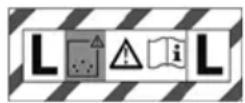
Class L vacuum devices are suitable for aspiration/clearing of dry, noncombustible dusts and hazardous dusts with occupational exposure limit values (AGW) >1mg / m^3 .
This device is not intended for use by children and persons with physical, sensory or mental limitations or a lack of experience or knowledge. This device can be used by children aged 8 and above and by persons who have physical, sensory or mental limitations or a lack of experience or knowledge if a person responsible for their safety supervises them or has instructed them in the safe operation of the device and they understand the associated dangers. Otherwise, there is a danger of operating errors and injuries.
Supervise children during use, cleaning and maintenance. This will ensure that children do not play with the device.
2 Technical Data
Part number.. FF35148 (Typ C),FF35148Z (Typ J)
Voltage 220-240V
Frequency 50/60 Hz
Rated power 1200 W
Max. power 1400 W
Air flow at the fan 220 m³/h/MG
Negative pressure at the fan. 248 hPa/MG
Air flow at the hose 140 m³/h/SE
Negative pressure at the hose 225 hPa/SE
Connecting cable. H05VV F 3 x 1,5
Dimensions (× × ) 45,7x40x54cm
Weight 12,7 kg
Protection class
Type of protection IP 24
Noise pressure level (LpA) 69,5 dB (A) KpA 3 dB (A)
Sound power level (LwA) 80,5 dB (A) KwA 3 dB (A)
The noise level during operation can exceed 85 dB (A). Wear hearing protection!
Measured values determined in accordance with EN 60335.
Vibration total value. ≤ 2,5m / s^2 K = 1,5m / s^2
The vibration level given in this information sheet has been measured in accordance with a standardised test given in EN 60335 and may be used to compare one tool with another. It may be used for a preliminary assessment of exposure.

The declared vibration emission level represents the main applications of the tool. However if the tool is used for different applications, with different accessories or insertion tools or is poorly maintained, the vibration emission may differ. This may significantly increase the exposure level over the total working period.
An estimation of the level of exposure to vibration should also take into account the times when the tool is switched off or when it is running but not actually doing the job. This may significantly reduce the exposure level over the total working period. Identify additional safety measures to protect the operator from the effects of vibration such as: maintain the tool and the accessories, keep the hands warm, organisation of work patterns.
3 Function of the Unit
3.1 Overview (A)
1 Top section 4 Latch 10 Wheels
Functional plate 5 Lock 11 Steering castors
2a Rotary switch ON/ 6 Connecting line 12 Filter cassettes
OFF/Automatic/Vibration 13 Motor protecion filter
2b Power socket for electric 7 Container 14 Paper filter bag (optional accessory) tools
2c Volume flow display (Fill level indicator) 8 Suction opening 15 Vacuum hose
3 Cooling air inlet 9 Snap-in locks
3.2 Indicator and operating elements
Select from the following functions and settings:
0 Vacuum cleaner is switched Plug socket current-conducting off
Vacuum cleaner is running Plug socket current-conducting, Automatic shaker function off
A Ready mode for ON/OFF Plug socket curren-conducting, automatic mode The vacuum cleaner is switched on and off via the con- nected electrical/compressed air tool at the plug socket
R Filter cleaning function In this switch setting the vibrator is activated for approx. 10 sec. and then switches off again automatically
RA Ready mode for ON/OFF Ready mode like "A" plus automatic filter cleaning automatic mode
Automatic shaker function Filter cleaning is performed (switch setting RA) automatically during the next working break when the minimum volume flow level is reached
Fill level indicator When the container is full and/or there is a blockage in the suction hose, the full indicator lights up
3.3 Commissioning
Switching on and off Electric tools:
The plug socket on the vacuum cleaner will always be live when the mains plug is plugged in, irrespective of the position of the switch.
Electric tools and compressed air tools must be switched off when they are connected!
Note: If the switch is in the >0< position, the plug socket on the vacuum cleaner can be use as an extension lead. Connection value: Vacuum cleaner + connected unit, maximum 16 A.
Insert the plug into socket
0< Vacuum cleaner is switched off
Vacuum cleaner switched on without shaker function
A< Vacuum cleaner on standby The vacuum cleaner only switches on when the tool is switched on. After the tool is switched off, the vacuum cleaner runs on for approx. 10 sec to prevent any residue from collecting in the hose.
>R< Filter cleaning function
RA< Ready mode like >A < plus automatic filter cleaning
Set the vacuum cleaner to the switch position >0<
Pull out the plug after you have finished
Fix the suction hose in the accessory storage location on the back of the container for storage.
The ends of the hose can be pushed into each other to prevent particles of dirt from coming out.
Switching on and off vacuum cleaner:
Push the plug of the vacuum cleaner into the plug socket.
Set the desired operating mode on the switch. The vacuum cleaner is ready for suction.
After vacuum cleaning, set the switch to _O^ . The vacuum cleaner is switched off.
Pull the mains plug of the vacuum cleaner out of the plug socket.
Secure the mains cable.
Remove the electric/compressed air tool.
3.4 Operating modes
When using the grip handle you can adapt the suction performance by using the slider to control access of air into the hose.
Dry vacuum cleaning:
You should only use the vacuum cleaner with a dry filter and appropriate accessories to prevent dust from accumulating and forming encrustations.
When using the vacuum cleaner to remove soot, cement, plaster, flour or similar dust we recommend using fleece filter bags.
Always use filter bags in combination with folding filter cassettes.
Wet vacuum cleaning:

Switch the vacuum cleaner off immediately if foam or liquid starts to come out. Empty the container and, if necessary, the folding filter cassette.
Note! Clean the water level sensors (W) regularly and examine for signs of damage!
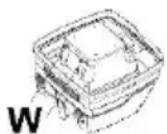
Vacuum cleaning without paper filter bags.
The folding filter cassettes are designed for wet vacuum cleaning. The fitted sensor switches the motor off when the container is full. The handling of the vacuum cleaner can be compromised by a full container.
Empty the vacuum cleaner (see Emptying the container)
If the vacuum cleaner is not switched off, the re-start protection unit remains operative. Only after switching off and re-starting is the vacuum cleaner ready for use again.
Remove the suction hose from the liquid before emptying.
After switching off, a small quantity of water can flow back out of the hose, as a result of the high suction level and the favourable flow condition in the container.
If you use it as a dry vacuum cleaner, you must insert dry filters.
Note: If you change between dry and wet vacuum cleaning frequently, we recommend using a second set of filters, preferably polyester folding filter cassettes.
3.5 Cleaning the filter
The suction unit is fitted with an electro-magnetic filter cleaning device which can shake off any dust adhered to the folded filter cassettes.
Cleaning the filter:
The vibration function (switch setting R or RA /switch should be activated at the latest when the volume flow display (warning lamp) lights up or when the warning signal sounds or when the suction output sinks.
Automatic cleaning.
Filter cleaning is performed (switch setting RA/switch automatically during the next working break when the minimum volume flow level is reached.
3.6 Emptying the container
Note: Only permitted for dust with AGW's >1mg / m^3
Switch the vacuum cleaner off, pull the mains plug out.
Open the latches.
Remove the cover and suction hose from the container.
Empty the container by pouring out.
Dispose of the fleece filter bag:
Pull the mains plug out.
Fit mouth protection.
Remove suction hose, close off the suction spigot with a plug.
Open the side latches, remove the top section.
Carefully pull the flange off the suction spigot and close off the flange.
Dispose of the vacuumed up material in accordance with legal requirements.
Insert fleece filter bag:
Note: Only use fleece filter bags for dry vacuum cleaning.
Slide the flange completely over the suction aperture.
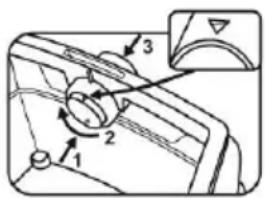
Note: Operating the rotary slider:
Push the rotary slider from the inside to the outside, turn through 180^ (see mark) and then push inwards again from the outside through the suction spigot.
Place the rotary slider in the suction aperture with the mark pointing upwards.
Place the upper section on the container and close the side latches.
3.7 Changing the filter
Changing the folding filter:
Shake the folding filter cassettes before changing them.
Turn the lock on the latch through 90^ in a counter-clockwise direction with a coin or similar object and push the latch to the rear.
Fold the hood up.
Immediately isolate the folding filter cassettes that you have removed in a dust-tight plastic bag and dispose of properly in accordance with the stipulations.
Insert new folding filter cassettes.
Lift the locking bracket up, fold the hood down and click in place with light pressure.
3.8 Changing the motor protection filter
Note: If the motor protection filter is contaminated this indicates defective filter cassettes.
Replacing the folding filter cassettes.
Replace the motor protection filter or wash the motor protection filter under flowing water, dry and re-insert.
3.9 Transport
The motor head must be securely fixed to the container (close the latches).
Place the accessories in a suitable plastic bag and seal the plastic bag or place it in the tool storage compartment.
Plug the ends of the suction hose into each other.
Place the hose around the vacuum cleaner and clamp onto the handle.
4 Maintenance
Switch the vacuum cleaner off and pull out the mains plug before any maintenance work!
For maintenance by the user, the vacuum cleaner must be
-- dismantled,
-- cleaned and
-- maintained,
as far as possible without creating any danger to the maintenance personnel or other.
Precautionary measures:
Suitable precautionary measures include
-- Cleaning before dismantling,
-- Provide local filtered positive ventilation where the vacuum cleaner is to be dismantled,
-- Clean the maintenance area and
-- suitable personal protection equipment
Contaminated items:
When carrying out maintenance or repair work, all contaminated items which have not been adequately cleaned must be disposed of. Such items must be disposed of in impermeable bags in accordance with the applicable regulations concerning the disposal of such waste.
Testing the effectiveness of the vacuum cleaner:
There must be an adequate air exchange rate L in the room if the exhaust air returns to the room. Further information can be taken from your national regulations. If the suction of the vacuum cleaner reduces and the cleaning procedure of the folding filter cassettes increases, the suction performance is not adequate (provided that the container is empty and the fleece filter bag has been replaced) then it is necessary to replace the folding filter cassettes.
5 Cleaning
Acids, alkalis and solvents can corrode the vacuum cleaner parts.
Clean the container and accessories with water.
Wipe the top section with a damp cloth.
Allow the container and accessories to dry
6 Troubleshooting
Malfunctions cannot always be traced back to defects in the vacuum cleaner!
| Fault | Possible cause | Remedy |
| Reduction in suction | Filter contaminated | Clean. |
| fleece filter full | Change. | |
| Container full | Empty. | |
| Nozzle, pipes or hose blocked | Clean. | |
| Vacuum cleaner will not start | Mains plug plugged in? | |
| Mains power missing? | ||
| Mains cable OK? | ||
| Cover closed properly? | ||
| Water sensor switched off? | ||
| Vacuum cleaner in readiness for operation "RA"? | Set to "I" (see "Display and Operating Elements") | |
| The vacuum cleaner does not start when the tool is switched on in the >RA< mode | Is the mains plug of the unit in the plug socket? | Put the mains plug in the vacuum cleaner plug socket |
| Solenoid valve of compressed air automatic switch-on contaminated? | Flush the compressed air automatic switch-on with alcohol |
No other "interventions" are permitted; please consult the servicing workshop.
7 Accessories
| Accessory Name | ROTHENBERGER Part Number |
| Suction hose 500 cm | FF55387 |
| Folded filter (2 piece) for wet suction | FF55374 |
| Fleece filter (5 piece) for dry suction | FF55388 |
8 Customer service
The ROTHENBERGER service locations are available to help you (see listing in catalog or online) and replacement parts and service are also available through these same service locations.
Order your accessories and spare parts from your specialist retailer or using RoService+ online:
Phone: +49 (0) 61 95 / 800 - 8200
Fax: +49 (0) 61 95 / 800 - 7491
Email: service@rothenberger.com
www. rothenberger.com
9 Disposal
Components of the unit are recyclable material and should be put to recycling. For this purpose registered and certified recycling companies are available. For an environmental friendly disposal of the non-recyclable parts (e.g. electronic waste) please contact your local waste disposal authority.
For EU countries only:
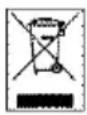
Do not dispose electric tools with domestic waste. In accordance with the European Directive 2012/19/EU the disposal of electrical and electronic equipment and its implementation as national law, electric tools that are no longer serviceable must be collected separately and utilised for environmentally compatible recycling.
Table des matieres
Page
Email: service@rothenberger.com
www. rothenberger.com
Email: service@rothenberger.com
www. rothenberger.com
9 Eliminación
Email: service@rothenberger.com
www. rothenberger.com
9 Smaltimento
ROTHENBERGER Worldwide
Australia ROTHENBERGER Australia Pty. Ltd.
Unit 6 - 13 Hoyle Avenue - Castle Hill - N.S.W. 2154
Tel. +61 2/98 89 75 77 Fax +61 2/98 89 76 77
rothenberger@rothenberger.com.au
www. rothenberger.com.au
office@rothenberger.at·www.rothenberger.at
Belgium ROTHENBERGER Benelux bya
Brazil ROTHENBERGER do Brasil LTDA
Av. Fagundes de Oliveira, 538 - Galpao A4
09950-300-Diadema/SP-B
Tel+5511//4044-4748-Fax+5511//4044-5061
D4, No.195 Qianpu Road East New Area of Songjiang
Industrial Zone, Shanghai 201811, China
Ta. + 86 21 / 67 60 20 61 + 86 21 / 67 60 20 67
Fax +86 21/67 60 20 63 - office@rothenberger.cn
Czech ROTHENBERGER CZ
Republic Prumyslova 1306/7 - 102 00 Praha 10
Tel. +420 271 730 188 Fax +420 267 310 187
prodej@rothenberger.cz · www.rothenberger.cz
Denmark ROTHENBERGER Scandinavia A/S
Smedevaenget 8 · DK-9560 Hadsund
Tel. +45 98/157566-Fax +45 98/156823
roscan@rohenberger.dk
France ROTHENBERGER France S.A.
24, rue des Draplers, BP 45033 - F-57071 Metz Cedex 3
Tel+333/87749292-Fax+333/87749403
Info-fr@rothenberger.com·www.rotherbergfedfr
Hungary ROTHENBERGER Hungary KfL
Gubacsl 26 - H-1097 Budapest
Tel. +361/347-5040 Fax+361/347-5059
Plot No 17, Sector - 37, Pace city-4
Gurgaon, Haryana - 122 001, India
Tel.91124-4618800-Fax91124-40018471
contactus@rothenbergerIndia.com
www.rohenberger.com
Italy ROTHENBERGER Italiana s.r.l.
Via G. Reiss Romoli 17-19 - 20019 Setimo Milanese
-
- 3902/3850601-Fax+3902/38500151
info@rohenbergerjt.com www.rohenbergerjt.com
Nether- ROTHENBERGER Nederland by
lands Postbus 45·NL-5120 AA Rijen
Tel. +31 161 / 29 85 79 - Fax +81 161 / 29 89 08
Info@rohenberger.nl • www.rohenberger.nl
Poland ROTHENBERGER Polska Sp. zo.o.
U, Annopd 4A-Budynek C-PL-08-236 Wateszawa
Tel. +48 22/2 135900 Fax+48 22/2 135901
bluro@rolhenberger.pl · www.rolhenbergerpl
Russia ROTHENBERGER Russia
Avlosavodskaya str. 25
115280 MoscgoW, Russia
- +7495/7825944-Fax+7495/7825946
info@rothenberger.tu www.rothenberger.tu
South ROTHENBERGER-TOOLS SA (PTY) Ltd
P.O.Box 4360-Edenwale 1610
165Vanderdill Street, Meadowdale Gemlston
Gaureng (Johannesburg), South Africa
T+2711/37298631-Fax+2711/3728632
Info@rothenberger.co.za·www.rothenberger.co.za
Spaln ROTHENBERGER S.A.
Ctra. Durango-Elomo. Km 2·E-48220 Abadiano
(Vizcaya)
(P.O.Box)117-E48200Durango (Uizeaya)
- +34.94 / 6210100 - 18x + 34.94 / 6210101
export@rothenberger.es · www.rothenberger.es
Sweden ROTHENBERGER Sweden AB
rothenberger@rothenberger.com.tr
www.rohenberger.com.tr
UAE ROTHENBERGER Middle East FZCO
PO Box 261190 • Jebel Ali Free Zone
Dubal, United Arab Emirates
Tel. +971 / 48839777 - Fax +971 / 48839757
office@rohenberger.ac
ROTHENBERGER EQUIPMENT TRADING &
SERVICESLLC
PO Box 91208 - Mussafah Industrial Area
Abu Dhabi, United Arab Emirates
- +971 / 25500154 + + 971 / 25500158
uaesales@rothenberger are
UK ROTHENBERGER UK Limited
- Kingsthome Park, Henson Way
Kettering - GB-Northants NN16 8PX
- +44 1536/310800-Fax +44 1536/310600
Info@rothenberger.co.uk
USA ROTHENBERGER USA LLC
7130 Clinton Road • Loves Park, IL 61111, USA
Tel+1/8005457698-Fax+1//8156330879
pipetools@rothenberger-usa.com
www.rotherberger-usa.com
D-65779 Kelkheim / Germany
Telefon + 49 (0) 61 95 / 800 - 0
Fax + 49 (0) 6195 / 800 - 3500
info@rothenberger.com

- EU-DECLARATION OF CONFORMITY
- DECLARATION EU DE CONFORMITE
- Entsorgung
- Technical Data 17
- Function of the Unit 17
- Maintenance 20
- Cleaning 21
- Troubleshooting 21
- Accessories 21
- Customer service 22
- Disposal 22
- Markings in this document:
- Danger!
- Caution!
- Call for action
- Intended use
- General safety instructions
- Service and maintenance:
- Working safely:
- Special safety instructions
- Technical Data
- Function of the Unit
- Overview (A)
- Indicator and operating elements
- Commissioning
- Switching on and off Electric tools:
- Switching on and off vacuum cleaner:
- Operating modes
- Dry vacuum cleaning:
- Cleaning the filter
- Cleaning the filter:
- Automatic cleaning.
- Emptying the container
- Dispose of the fleece filter bag:
- Changing the filter
- Changing the motor protection filter
- Transport
- Maintenance
- Contaminated items:
- Cleaning
- Troubleshooting
- Accessories
- Customer service
- Disposal
- For EU countries only:
- Table des matieres
- Page
- Eliminación
- Smaltimento
- ROTHENBERGER Worldwide
Brand : ROTHENBERGER
Model : RODIA DRY CLEANER 1200
Category : Industrial vacuum cleaner