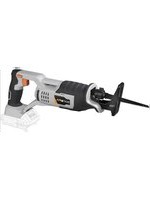
BTRS004 - Saw Batavia - Free user manual and instructions
Find the device manual for free BTRS004 Batavia in PDF.


| Brand | Batavia |
| Model | BTRS004 |
| Product type | Reciprocating saw |
| Stroke length | 28 mm |
| Power cable length | 3 m |
| Weight | 3.4 kg |
| Acoustic pressure (L_pA) | 92.2 dB(A) |
| Acoustic level (L_WA) | 103.2 dB(A) |
| Hand/arm vibration | 25.65 m/s² |
| Protection degree | IP20 |
| Protection class | II (double insulation) |
| Power supply | Mains 230 V ~ |
| Variable speed | Yes, by trigger |
| Main functions | Cutting wood, metals, plastics; plunge cutting; flush cutting |
| Pressing unit | Adjustable in length |
| Continuous operation | Yes, with lock button |
| Operation indicator | LED |
| Included accessories | Wood blade, metal blade, hex key |
| Maintenance and cleaning | Cleaning of ventilation slots, checking and replacing carbon brushes |
| Safety | Double insulation, protection against electric shock, emergency stop |
| Spare parts and repairability | Replaceable carbon brushes, standard blades |
| Warranty | 2 years |
Frequently Asked Questions - BTRS004 Batavia
User questions about BTRS004 Batavia
0 question about this device. Answer the ones you know or ask your own.
Ask a new question about this device
Download the instructions for your Saw in PDF format for free! Find your manual BTRS004 - Batavia and take your electronic device back in hand. On this page are published all the documents necessary for the use of your device. BTRS004 by Batavia.
USER MANUAL BTRS004 Batavia
Operating instructions
- Saw Blade for Wood
- Saw Blade Holder
- Carbon brush holders
- LED Indicator Light
- ON/OFF Switch
- Power on lock
- Ventilation Opening
- Pressure Shoe
- Allen Key
- Saw Blade for Metal
- a. Allen Screw
b. Allen Screw
Übersicht
1.Explanation of the symbols. 4
2. General safety instructions for power tools 4
3. Additional safety warnings for reciprocating saws 6
4. Electrical safety 6
5.Before the first use 6
6. Contents of packing 7
7. Intended use 7
8. Mounting and removing the saw blade 7
9.Use. 7
10. Pressure shoe. 7
11. Sawing tips 7
12. Maintenance and Cleaning 8
13. Technical data. 8
14.Disposal 9
15. EC-Declaration of conformity 9
Inhaltsverzeichnis
Please familiarize yourself with the proper usage of the device by reading and following each chapter of this manual, in the order presented. Keep these operating instructions for further reference.
Please read all safety instructions!
This manual contains important information on operating and handling the device. Keep these operating instructions for further reference. Please pass it on along with the unit if it is handed over to a third party.
1. Explanation of the symbols
The following symbols are used in the user manual or on the product:

Warning! To reduce the risk of injury, the user must read the instruction manual.

Denotes risk of personal injury, loss of life or damage to the tool in case of non-observation of the instructions in this manual.
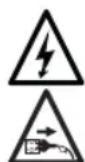
Risk of electric shock.
Immediately remove the mains plug from the mains if the mains cable becomes damaged and during cleaning and maintenance.

Always wear hearing protection. The effects of noise can cause hearing loss.

Wear a dust mask. When working with wood and other materials, harmful dust may be generated. Work with asbestos containing materials is not permitted!

Wear safety glasses. When working with electric power tools, sparks, splinters, chips and dust particles may be generated and these can cause loss of sight.

Electric power tool, protection class II. This sign symbolises that this unit corresponds to Protection Class II. This means that the unit is equipped with either reinforced or double insulation between the

mains circuit and output voltage or metal housing respectively.
Variable speed control.
CE stands for "Conformité Européenne", which means "In accordance with EU Regulations". With the CE marking, the manufacturer confirms that this Electric tool complies with the applicable European directives.

Do not dispose of electric power tools with domestic refuse.
2. General safety instructions for power tools

WARNING!Read all instructions!
Failure to follow all instructions listed below may result in electric
shock, fire and/or serious injury.
The term "power tool" in all of the warnings listed below refers to your mains operated (corded) power tool or battery operated (cordless) power tool.
Save these instructions for future reference!
21 Work area
a. Keep work area clean and well lit. Cluttered and dark areas invite accidents.
b. Do not operate power tools in explosive atmospheres, such as in the presence of flammable liquids, gasses or dust. Power tools create sparks which may ignite the dust of fumes.
c. Keep children and bystanders away while operating a power tool. Distractions can cause you to lose control.
2.2 Electrical safety
a. Power tool plugs must match the outlet. Never modify the plug in any way. Do not use any adapter plugs which earthed (grounded) power tools. Unmodified plugs and matching outlets will reduce risk of electric shock.
b. Avoid body contact with earthed or grounded surfaces such as pipes, radiators, ranges and refrigerators. There is an increased risk of electric
shock if your body is earthed or grounded.
c. Do not expose power tools to rain or wet conditions. Water entering a power tool will increase the risk of electric shock.
d. Do not abuse the cord. Never use the cord for carrying, pulling or unplugging the power tool. Keep cord away from heat, oil, sharp edges or moving parts. Damaged or entangled cords increase the risk of electric shock.
e. When operating a power tool outdoors, use an extension cord suitable for outdoor use. Use of a cord suitable for outdoor use reduces the risk of electric shock.
f. Always use tool in conjunction with a residual circuit breaker device. The use of a residual circuit breaker device reduces the risk of electric shock.
2.3 Personal safety
a. Stay alert, watch what you are doing and use common sense when operating a power tool. Do not use a power tool while you are tired or under the influence of drugs, alcohol or medication. A moment of inattention while operating power tools may result in serious personal injury.
b. Use safety equipment. Always wear eye protection. Safety equipment such as dust mask, non-skid safety shoes, hard hat, or hearing protection used for appropriate conditions will reduce personal injuries.
c. Avoid accidental starting. Ensure the switch is in the off position before plugging in. Carrying power tools with your finger on the switch or plugging in power tools that have the switch on invites accidents.
d. Remove any adjusting key or wrench before turning the power tool on. A wrench or a key left attached to a rotating part of the power tool may result in personal injury.
e. Do not overreach. Keep proper footing and balance at all times. This enables
better control of the power tool in unexpected situations.
f. Dress properly. Do not wear loose clothing or jewellery. Keep your hair, clothing and gloves away from moving parts. Loose clothes, jewellery or long hair can be caught in moving parts.
g. If devices are provided for the connection of dust extraction and collection facilities, ensure these are connected and properly used. The use of these pieces of equipment reduce hazards caused by dust.
2.4 Power tool use and care
a. Do not force the power tool. Use the correct power tool for your application. The correct power tool will do the job better and safer at the rate for which it was designed.
b. Do not use the power tool if the switch does not turn it on and off. Any power tool that cannot be controlled with the switch is dangerous and must be repaired.
c. Disconnect the plug from the power source before making any adjustments, changing accessories, or storing power tools. Such preventive safety measures reduce the risk of starting the power tool accidentally.
d. Store idle power tools out of the reach of children and do not allow persons unfamiliar with the power tool or these instructions to operate the power tool. Power tools are dangerous in the hands of untrained users.
e. Maintain power tools. Check for misalignment or binding of moving parts, breakage of parts and any other condition that may affect the power tools operation. If damaged, have the power tool repaired before use. Many accidents are caused by poorly maintained power tools.
f. Keep cutting tools sharp and clean. Properly maintained cutting tools with sharp cutting edges are less likely to bind and are easier to control.
g. Use the power tool, accessories and tool bits etc., in accordance with these


English
instructions and in the manner intended for the particular type of power tool, taking into account the working conditions and the work to be performed. Use of the power tool for operations different from intended could result in a hazardous situation.
2.5 Service
a. Please use a qualified expert who uses original replacement parts to repair your power tool. This will ensure proper functioning of the power tool.
3. Additional safety warnings for reciprocating saws
- Do not work materials containing asbestos. Asbestos is considered carcinogenic.
- Wear safety goggles, hearing protection and if necessary other protective means, such as safety gloves, safety shoes, etc.
- Before use, remove all nails and other metal objects from the workpiece.
- Make sure that the workpiece is properly supported or fixed.
- Do not use the machine without the guard.
- Inspect the saw blade before each use. Do not use saw blades which are bent, cracked, or otherwise damaged.
- Make sure that the saw blade is properly mounted.
- Only use saw blades that are suitable for use with the machine.
- Only use saw blades with the correct dimensions.
- Do not use other accessories than saw blades.
- Do not use saw blades made of HSS steel.
- Do not use the machine on workpieces requiring a maximum sawing depth that exceeds the maximum sawing depth of the saw blade.
- Hold the machine by the insulated gripping surfaces where the saw blade may contact hidden wiring or the mains cable. If the saw blade contacts a 'live' wire, the exposed metal parts of the
machine can also become, live'. Risk of electric shock.
- Let the machine run at no load in a safe area after mounting the saw blade. If the machine vibrates strongly, immediately switch off the machine, remove the mains plug from the mains, and try to solve the problem.
- Beware that the saw blade continues to rotate for a short period after switching off the machine. Do not attempt to bring the saw blade to a standstill yourself.
3.1 Kickback
Kickback is the upward and backward movement of the saw blade when the saw blade unexpectedly touches an object.
Securely hold the machine with both hands during use. Keep your attention focused on the operation.
Kickback is usually caused by:
-unintentionally touching hard objects or materials with the rotating saw blade;
-a blunt saw blade;
-a saw blade that is not properly mounted;
-sawing into a previous cut;
-a lack of attention to the operation;
-an instable stance.
4. Electrical safety

Always check that the voltage of the power supply corresponds to the voltage on the rating plate.
- Do not use the machine if the mains cable or the mains plug is damaged.
- Only use extension cables that are suitable for the power rating of the machine with a minimum thickness of 1.5mm^2 . If you use an extension cable reel, always fully unroll the cable.
5. Before the first use
Remove the machine and all accessories from the package. Keep the packaging materials out of the reach of small children. There is a danger of suffocation!
6. Contents of packing
1 × Reciprocating saw
1 × Saw blade for wood
1 × Saw blade for metal
1 × Allen key
1× Instruction manual
7. Intended use
Your reciprocating saw has been designed for sawing wood, metal and plastics.
8. Mounting and removing the saw blade
Always switch off and unplug the saw before working on the machine or changing the saw blade.
8.1 Mounting
- Open the saw blade holder (2) by turning it counter-clockwise.
- Insert the saw blade (1) in the saw blade holder (2) as far as possible. The teeth of the saw blade (1) must point downward and forward.
- Close the saw blade holder (2) by turning it clockwise.
8.2 Removing
- Open the saw blade holder (2) by turning it counter-clockwise.
- Remove the saw blade (1) from the saw blade holder (2).
- Close the saw blade holder (2) by turning it clockwise.
9. Use
Always follow the safety notes and the relevant safety code.
Make sure that the saw blade does not rest on or touch any objects when the machine is switched on.
9.1 Insert the plug into the socket. The LED (4) lights up and indicates that power is applied.
9.2 Switching on and off
-
To turn on the machine, press the ON/OFF switch (5). The switch can be set to continuous mode by pressing the power on lock (6).
-
Pressing the ON/OFF switch (5) again returns the power on lock (6) to the starting position.
To turn off the machine, release the ON/ OFF switch. -
The ON/OFF trigger is also used to control the no load speed. The deeper the trigger is pressed, the faster the unit runs.
10. Pressure shoe
The pressure shoe (8) serves as a support during cutting. The pressure shoe is freely movable and can be tilted accordingly so that it can be adjusted to the respective cutting operation.
101 To adjust the length of the pressure shoe, loosen both Allen screws (11a and 11b) with the provided Allen key (9) and pull the pressure shoe outward or slide the shoe all the way inside.
10.2 Tighten the Allen screws again after you have set the length of the pressure shoe.
11. Sawing tips
- Adjust saw blade and stroke rate to suit the material to be processed. For right radius curves it is best to use a narrow saw blade. Apply coolant or lubricant to deal with the fluttering produced along the cut line when sawing metal.
- Check wood, chip boards, building materials etc, for foreign bodies (nails, screws etc.), before sawing and remove them, if necessary.
- Clamp material well. Do not support the workpiece with hand or foot. Do not touch objects or the floor with the saw running (danger of backlash).
- Put the footplate on the surface of the workpiece, and saw through it with constant contact pressure or feed. If the saw blade seizes switch the machine off immediately. Spread the gap with a suitable tool and pull out the saw blade.
After finishing work, switch off the machine and only put down after it has come to a complete standstill.


English
11.1 Plunge cutting
- Plunge cutting may only be used on soft materials such as wood, aerated concrete, gypsum plaster boards, etc.
However, this requires a certain practise and is only possible with short saw blades. - Place the saw onto the workpiece and switch it on.
- Ensure that the bottom edge of the footplate rests on the workpiece surface.
- Slowly saw into the workpiece at an angle, moving the saw to a vertical position and continue to saw along the cutting line.
- Switch the saw off and lift off the workpiece when the work is complete.
11.2 Flush sawing
- Elastic bi-metal saw blades allow you to saw protruding objects (e.g, water pipes, iron bars, etc.) nearby the wall.
- Apply the saw blade directly to the wall and bend slightly so that the footplate rests against the wall.
- Switch the machine on and saw off the workpiece keeping constant lateral pressure against the wall.
12. Maintenance and Cleaning
- Prior to all work on the reciprocating saw, first disconnect the main power plug.
- Keep the saw blade and the saw in a good and clean condition in order to work well and safely. Clean the device of dust and sawdust only with a paintbrush, cloth or brush. Keep the ventilation openings (7) always clean.
- Never use gasoline or other harsh chemicals or abrasives to avoid damaging the reciprocating saw. Make sure that no liquids get into the reciprocating saw.
12.1 Checking and replacing the carbon brushes
The carbon brushes must be checked regularly. If the carbon brushes are worn, the machine will start to run unevenly.

Only use the correct type of carbon brushes.
-
Remove the carbon brush holders (3) using a screwdriver.
-
Clean the carbon brushes.
- In case of wear, replace both carbon brushes at the same time.
- Mount the carbon brush holders (3) using a screwdriver.
After mounting the new carbon brushes, let the machine run at no load for 15 minutes.
13. Technical data
Nominal Voltage: 230 V~50 Hz
Nominal Power: 1050 W
Stroke: 0 - 2500 min
Stroke Rate: 28 mm
Length of Power Cord: 3 m
Weight: 3.4 kg
Sound Pressure Level (L_pA) ..92 dB(A)
Uncertainty: 3 dB(A)
Sound Power Level (L_WA) .. 103.2 dB(A)
Uncertainty: 3 dB(A)
Hand Arm Vibration: 25.65 m/s²
Uncertainty: K = 1.5 m/s^2
Degree of Protection: IP20
Protection Class: Ⅱ
13.1 Vibration level
The vibration emission level stated in this instruction manual has been measured in accordance with a standardised test given in EN 60745; it may be used to compare one tool with another and as a preliminary assessment of exposure to vibration when using the tool for the applications mentioned
- using the tool for different applications, or with different or poorly maintained accessories, may significantly increase the exposure level
- the times when the tool is switched off or when it is running but not actually doing the job, may significantly reduce the exposure level
Protect yourself against the effects of vibration by maintaining the tool and its accessories, keeping your hands warm, and organizing your work patterns.
14. Disposal

Do not dispose of electric power tools with domestic refuse.
The electric power tool is shipped
in packaging to reduce transport damage. This packaging is a raw material and as such can either be reused or can be fed back into the raw material cycle. The electric power tool and its accessories are made from various materials such as metals and plastics. Take defective components to a special refuse collection point. Ask about these at your specialist shop or local council.
15. EC-Declaration of conformity
We, the Batavia GmbH, Weth. Buitenhuisstraat 2a, NL-7951 SM Staphorst, declare by our own responsibility that the product Reciprocating Saw, Item-No 7062850, Model Nr. BT-RS004, is according to the basic requirements, which are defined in the European Directives Electromagnetic Compatibility 2014/30/EC (EMC), 2006/42/EC (Machinery) and their amendments. For the evaluation of conformity, the following harmonized standards were consulted:
EN 60745-1:2009+A11;
EN 60745-2-11:2010;
EN 55014-1:2006/A2:2011;
EN 55014-2:2015;
EN 61000-3-2:2014;
EN 61000-3-3:2013
Staphorst, 15 January 2018
Meino Seinen, QA Representative
Batavia GmbH, Weth. Buitenhuisstraat 2a, 7951 SM Staphorst, Netherlands
The product and the user manual may be subject to changes. Technical data may be changed without prior notice.


Deutsch
This product has got a 2 year warranty
Dear Client, if for any reason this product is not working, please ensure you contact our Client Service Centre. Ensure you have your original receipt of purchase. This warranty covers all defects in workmanship or materials in this Batavia product for a two year period from the date of purchase. The warranty does not cover any malfunction, or defect resulting from misuse, neglect, alteration, or repair.
Other European countries - Customer Services /