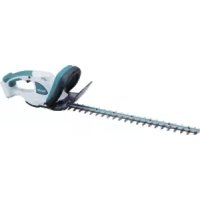
UH522DZ - Grass trimmer MAKITA - Free user manual and instructions
Find the device manual for free UH522DZ MAKITA in PDF.


User questions about UH522DZ MAKITA
0 question about this device. Answer the ones you know or ask your own.
Ask a new question about this device
Download the instructions for your Grass trimmer in PDF format for free! Find your manual UH522DZ - MAKITA and take your electronic device back in hand. On this page are published all the documents necessary for the use of your device. UH522DZ by MAKITA.
USER MANUAL UH522DZ MAKITA
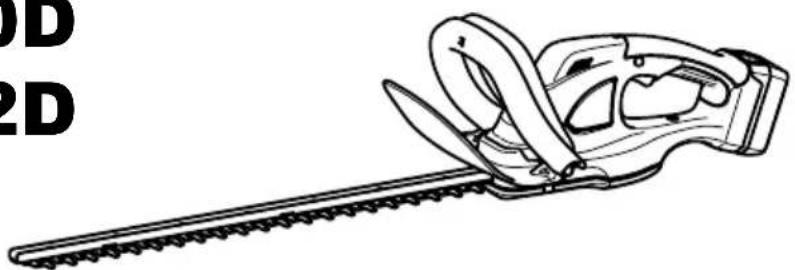
GB Cordless Hedge Trimmer Instruction manual
F Taille-haie sans fil Manuel d'instructions
D Akku-Heckenschere Betriebsanleitung
I Tagliasiepi a batteria Istruzioni per l'uso
NL Accuheggenschaar Gebruiksaanwijzing
E Cortasetos Inalábrico Manual de instructiones
P Aparador De Cerca Viva a Manual de instruções Bateria
DK Batteridrevet hækkeklipper Brugsanvisning
GR Ψαλίδι Mπροντόμας Mπαταρίας Μθηγές χρήσς
TR Akuli Cit Budama Kullanim kilavuzu
UH420D
UH480D
UH482D
UH520D
UH522D
1 012445 2 012491
3 012480 4 007559
5 0124846 012485
7 012486 8 012487
9 012488 10 012489
11012493 12 012494
13 009293 14 012447
15 012451 16 012481
17 012450 18 012490
19 012454 20 012455
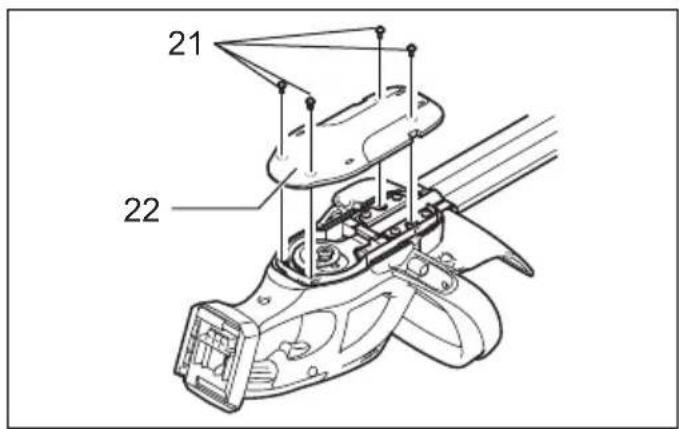
21 012482 22 012452
23 012446

012453
ENGLISH (Original instructions)
Explanation of general view
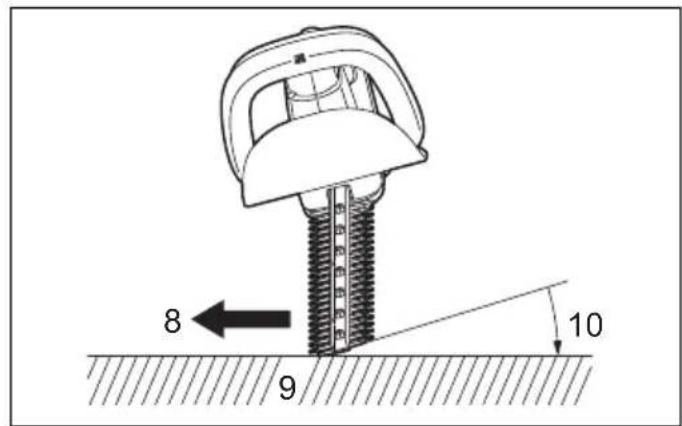
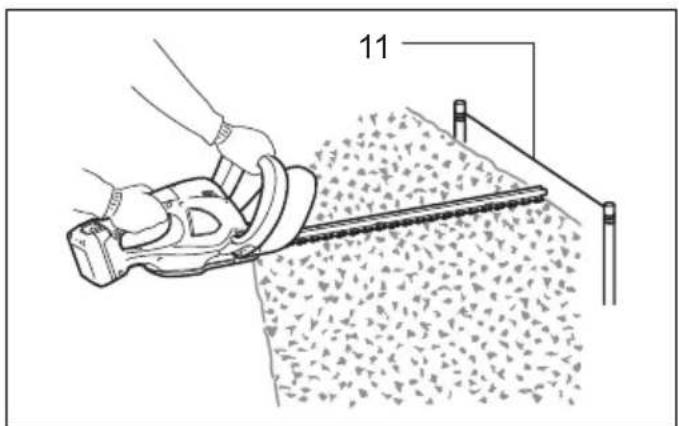
| 1. Red indicator | 11. String | 21. Screws |
| 2. Button | 12. Press | 22. Under cover |
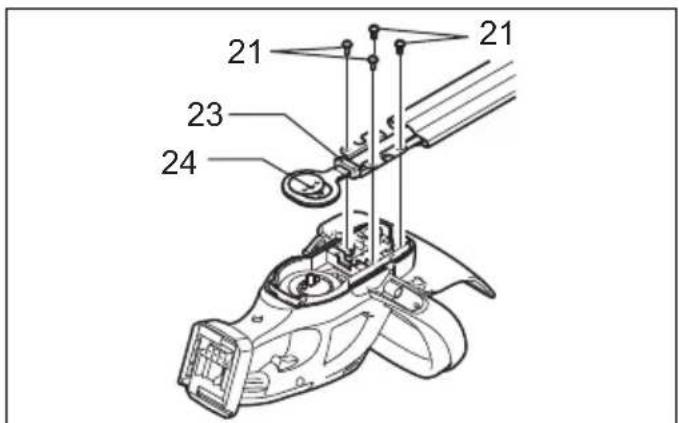
| 3. Battery cartridge | 13. Chip receiver | 23. Sponge |
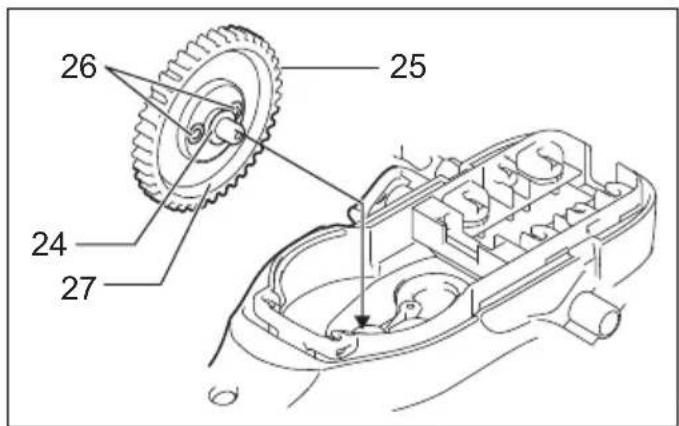
| 4. Switch trigger A | 14. Nut | 24. Washer |
| 5. Switch trigger B | 15. Shear blade | 25. Gear |
| 6. Lock-off button | 16. Hooks | 26. Sleeves |
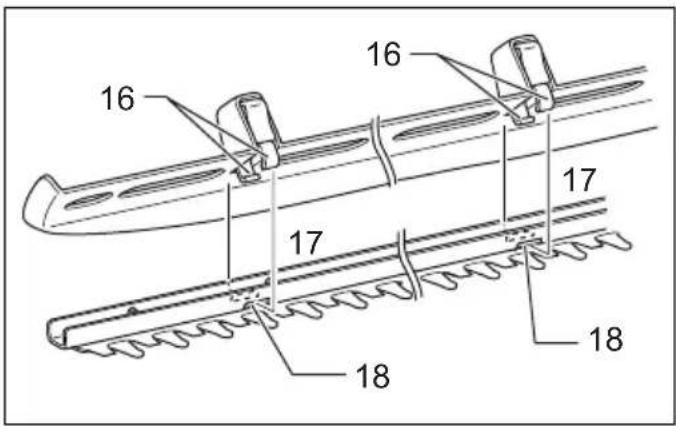
| 7. Indication lamp | 17. Fit the hooks into groove | 27. Groove |
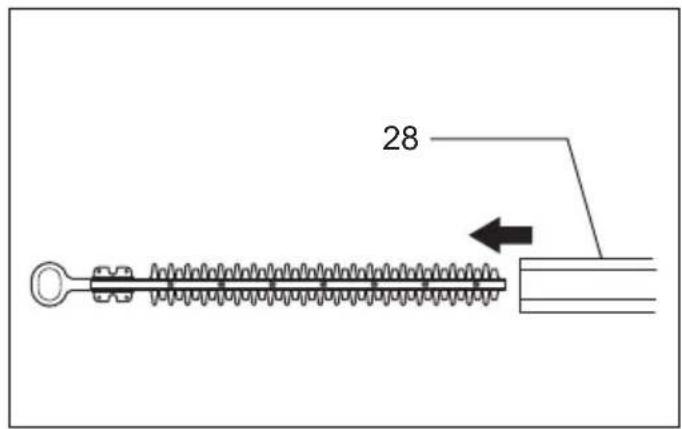
| 8. Trimming direction | 18. Grooves | 28. Blade cover |
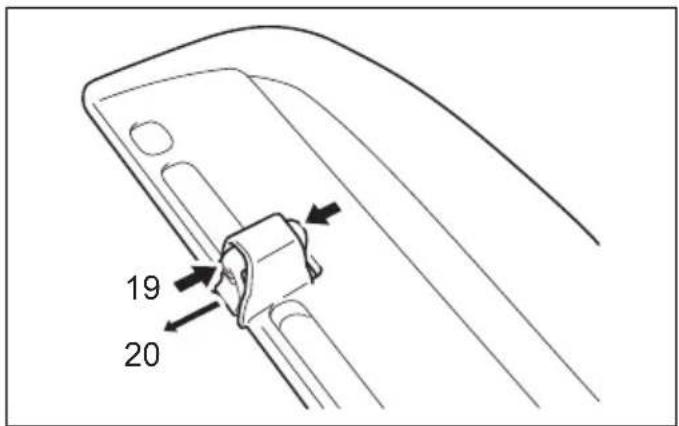
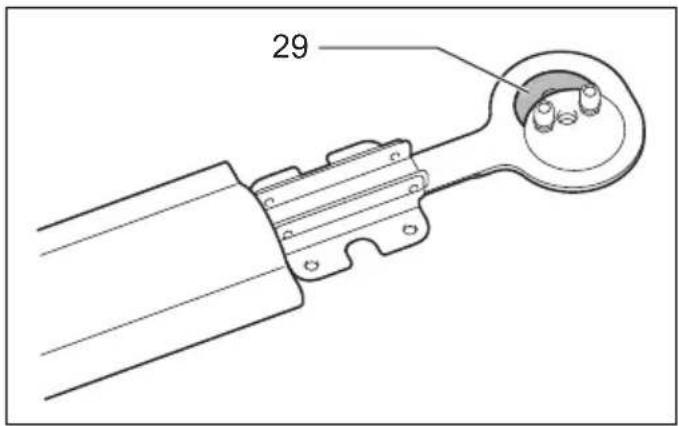
| 9. Hedge surface to be trimmed | 19. Press the levers on both sides | 29. Grease |
| 10. Tilt the blades | 20. Unlock the hooks | 30. Blade |
SPECIFICATIONS
| Model UH420D UH48 | 0D UH482D UH5 | 520D UH522D | |||
| Blade length 420 mm 48 | mm 480 mm 5 | 20 mm 520 mm | |||
| Strokes per minute (min-1) | 1,350 | ||||
| Overall length | 823 mm 873 | mm 879 mm 923 | mm 929 mm | ||
| Net weight | 2.9 kg | 3.0 kg | 3.0 kg | 3.0 kg | 3.1 kg |
| Rated voltage | D.C.14.4V | D.C.18V | D.C.14.4V | D.C.18V | |
- Due to our continuing program of research and development, the specifications herein are subject to change without notice.
- Specifications and battery cartridge may differ from country to country.
- Weight, with battery cartridge, according to EPTA-Procedure 01/2003
Symbol
END013-4
The following show the symbols used for the equipment.
Be sure that you understand their meaning before use.


Read instruction manual.

Do not expose to rain.

Only for EU countries Do not dispose of electric equipment or battery pack together with household waste material! In observance of the European Directives, on Waste Electric and Electronic Equipment and Batteries and Accumulators and Waste Batteries and Accumulators and their implementation in accordance with national laws, electric equipment and batteries and battery pack(s) that have reached the end of their life must be collected separately and returned to an environmentally compatible recycling facility.
Intended use
ENE014-1
The tool is intended for trimming hedges.
General Power Tool Safety Warnings GEA010-1

WARNING Read all safety warnings and all
instructions. Failure to follow the warnings and
instructions may result in electric shock, fire and/or serious injury.
Save all warnings and instructions for future reference.
CORDLESS HEDGE TRIMMER SAFETYWARNINGS
GEB062-5
- Keep all parts of the body away from the cutter blade. Do not remove cut material or hold material to be cut when blades are moving. Make sure the switch is off when clearing jammed material. A moment of inattention while operating the hedge trimmer may result in serious personal injury.
- Carry the hedge trimmer by the handle with the cutter blade stopped. When transporting or storing the hedge trimmer always fit the cutting device cover. Proper handling of the hedge trimmer will reduce possible personal injury from the cutter blades.
- Hold the power tool by insulated gripping surfaces only, because the cutter blade may contact hidden wiring. Cutter blades contacting a "live" wire may make exposed metal parts of the power tool "live" and could give the operator an electric shock.
- Do not use the hedge trimmer in the rain or in wet or very damp conditions. The electric motor is not waterproof.
- First-time users should have an experienced hedge trimmer user show them how to use the trimmer.
- The hedge trimmer must not be used by children or young persons under 18 years of age. Young persons over 16 years of age may be exempted from this
restriction if they are undergoing training under the supervision of an expert.
- Use the hedge trimmer only if you are in good physical condition. If you are tired, your attention will be reduced. Be especially careful at the end of a working day. Perform all work calmly and carefully. The user is responsible for all damages to third parties.
- Never use the trimmer when under the influence of alcohol, drugs or medication.
- Work gloves of stout leather are part of the basic equipment of the hedge trimmer and must always be worn when working with it. Also wear sturdy shoes with anti-skid soles.
- Before starting work check to make sure that the trimmer is in good and safe working order. Ensure guards are fitted properly. The hedge trimmer must not be used unless fully assembled.
- Make sure you have a secure footing before starting operation.
- Hold the tool firmly when using the tool.
- Do not operate the tool at no-load unnecessarily.
- Immediately switch off the motor and remove the battery cartridge if the cutter should come into contact with a fence or other hard object. Check the cutter for damage, and if damaged repair immediately.
- Before checking the cutter, taking care of faults, or removing material caught in the cutter, always switch off the trimmer and remove the battery cartridge.
- Switch off the trimmer and remove the battery cartridge before doing any maintenance work.
- When moving the hedge trimmer to another location, including during work, always remove the battery cartridge and put the blade cover on the cutter blades. Never carry or transport the trimmer with the cutter running. Never grasp the cutter with your hands.
- Clean the hedge trimmer and especially the cutter after use, and before putting the trimmer into storage for extended periods. Lightly oil the cutter and put on the cover. The cover supplied with the unit can be hung on the wall, providing a safe and practical way to store the hedge trimmer.
- Store the hedge trimmer with the cover on, in a dry room. Keep it out of reach of children. Never store the trimmer outdoors.
SAVE THESE INSTRUCTIONS.

WARNING:
DO NOT let comfort or familiarity with product (gained from repeated use) replace strict adherence to safety rules for the subject product. MISUSE or failure to follow the safety rules stated in this instruction manual may cause serious personal injury.
IMPORTANT SAFETY INSTRUCTIONS ENCO09-2
FOR BATTERY CARTRIDGE
- Before using battery cartridge, read all instructions and cautionary markings on (1) battery charger, (2) battery, and (3) product using battery.
-
Do not disassemble battery cartridge.
-
If operating time has become excessively shorter, stop operating immediately. It may result in a risk of overheating, possible burns and even an explosion.
- If electrolyte gets into your eyes, rinse them out with clear water and seek medical attention right away. It may result in loss of your eyesight.
- Do not short the battery cartridge:
(1) Do not touch the terminals with any conductive material.
(2) Avoid storing battery cartridge in a container with other metal objects such as nails, coins, etc.
(3) Do not expose battery cartridge to water or rain. A battery short can cause a large current flow, overheating, possible burns and even a breakdown.
- Do not store the tool and battery cartridge in locations where the temperature may reach or exceed 50^ (122^) .
- Do not incinerate the battery cartridge even if it is severely damaged or is completely worn out. The battery cartridge can explode in a fire.
- Be careful not to drop or strike battery.
- Do not use a damaged battery.
- Follow your local regulations relating to disposal of battery.
SAVE THESE INSTRUCTIONS.
Tips for maintaining maximum battery life
- Charge the battery cartridge before completely discharged. Always stop tool operation and charge the battery cartridge when you notice less tool power.
- Never recharge a fully charged battery cartridge. Overcharging shortens the battery service life.
- Charge the battery cartridge with room temperature at 10^ - 40^ (50^ - 104^) . Let a hot battery cartridge cool down before charging it.
FUNCTIONAL DESCRIPTION

CAUTION:
- Always be sure that the tool is switched off and the battery cartridge is removed before adjusting or checking function on the tool.
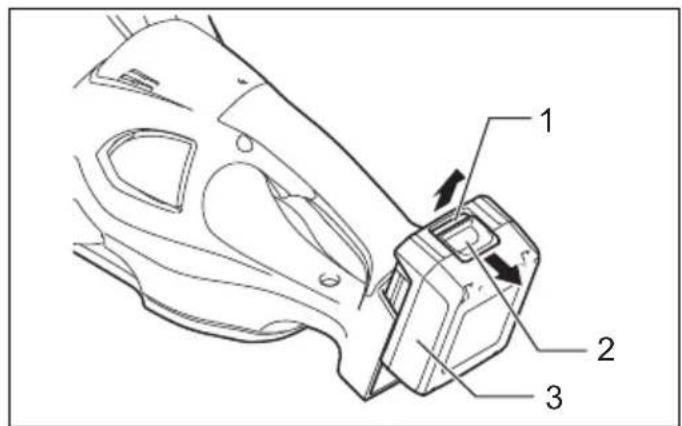
Installing or removing battery cartridge (Fig. 1)

CAUTION:
- Always switch off the tool before installing or removing of the battery cartridge.
- Hold the tool and the battery cartridge firmly when installing or removing battery cartridge. Failure to hold the tool and the battery cartridge firmly may cause them to slip off your hands and result in damage to the tool and battery cartridge and a personal injury.
To remove the battery cartridge, slide it from the tool while sliding the button on the front of the cartridge.
To install the battery cartridge, align the tongue on the battery cartridge with the groove in the housing and slip it
into place. Insert it all the way until it locks in place with a little click. If you can see the red indicator on the upper side of the button, it is not locked completely.

CAUTION:
- Always install the battery cartridge fully until the red indicator cannot be seen. If not, it may accidentally fall out of the tool, causing injury to you or someone around you.
- Do not install the battery cartridge forcibly. If the cartridge does not slide in easily, it is not being inserted correctly.
Battery protection system
The tool is equipped with a battery protection system. This system automatically cuts off power to the motor to extend battery life.
The tool will automatically stop during operation if the tool and/or battery are placed under one of the following conditions:
Overloaded:
The tool is operated in a manner that causes it to draw an abnormally high current.
In this situation, release the switch trigger on the tool and stop the application that caused the tool to become overloaded. Then pull the switch trigger again to restart.
If the tool does not start, the battery is overheated. In this situation, let the battery cool before pulling the switch trigger again.
- Low battery voltage:
The remaining battery capacity is too low and the tool will not operate. If you pull the switch trigger, the motor runs again but stops soon. In this situation, remove and recharge the battery.
Switch action
CAUTION:
- Before inserting the battery cartridge into the tool, always check to see that the switch trigger actuates properly and returns to the "OFF" position when released.
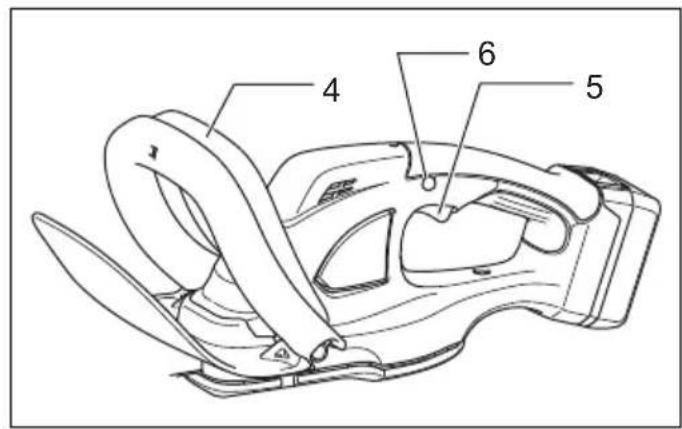
For your safety, this tool is equipped with a dual switching system. To turn on the tool, press the lock-off button and triggers A and B. Release either one of the two pressed triggers to turn off. The sequence of switching is unimportant as the tool only starts when both switches are activated. (Fig. 2)
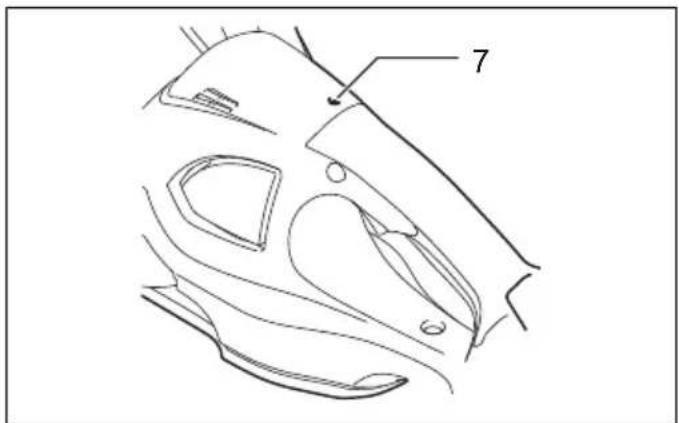
Indication lamp (Fig. 3)
Running the tool allows the indication lamp to show the battery cartridge capacity status.
When the tool is also overloaded and has stopped during operation, the lamp lights up in red.
Refer to the following table for the status and action to be taken for the indication lamp.
| Indication lamp Status Action | to be taken | |
| The lamp blinks in red. | This indicates the appropriate time to replace the battery cartridge when the battery power becomes low. | Recharge the battery cartridge as soon as possible. |
| The lamp lights up in red. (Note 1) | This function works when the battery power is almost used up. At this time, tool stops immediately. | Recharge the battery cartridge. |
| The lamp lights up in red. (Note 1) Auto stop due to overload. Turn off the tool. | ||
Note 1: The time at which the indication lamp lights up varies by the temperature around the work area and the battery cartridge conditions.
010970
OPERATION

CAUTION:
- Be careful not to accidentally contact a metal fence or other hard objects while trimming. The blade will break and may cause serious injury.
Overreaching with a hedge trimmer, particularly from a ladder, is extremely dangerous. Do not work from anything wobbly or infirm.
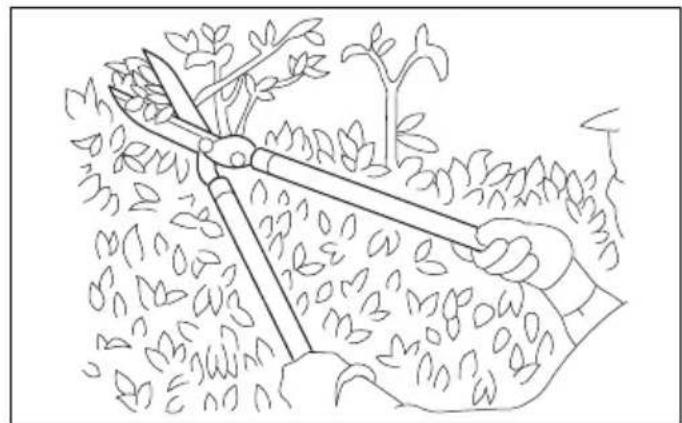
Do not attempt to cut branches thicker than 10mm diameter with this trimmer. These should first be cut with shears down to the hedge trimming level. (Fig. 4)

CAUTION:
- Do not cut off dead trees or similar hard objects. Failure to do so may damage the tool.
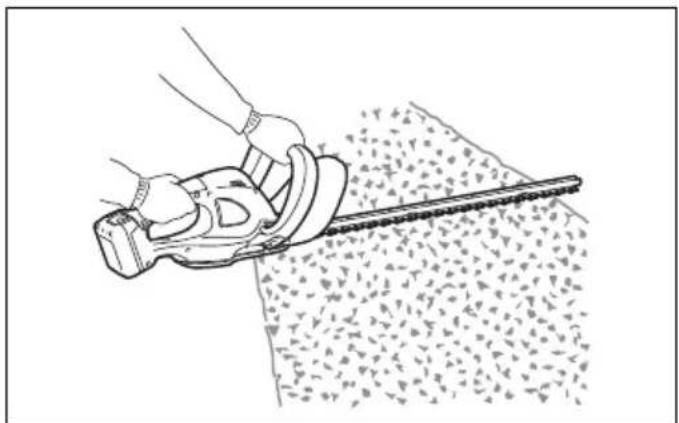
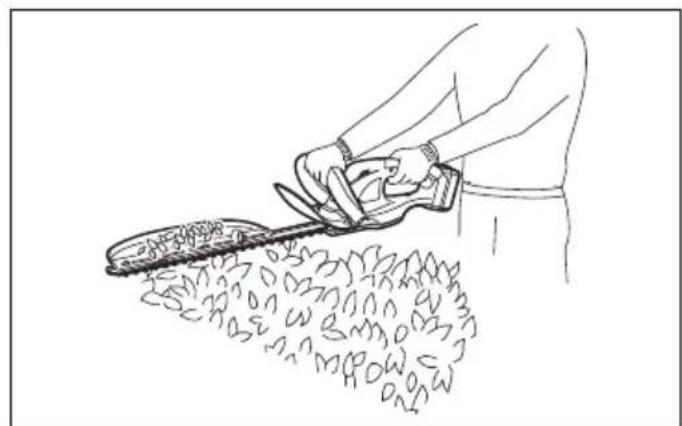
Hold the trimmer with both hands and pull the switch trigger A or B and then move it in front of your body. (Fig. 5)
As a basic operation, tilt the blades towards the trimming direction and move it calmly and slowly at the speed rate of 3 - 4 seconds per meter. (Fig. 6)
To cut a hedge top evenly, it helps to tie a string at the desired hedge height and to trim along it, using it as a reference line. (Fig. 7)
Attaching the chip receiver (optional accessory) on the tool when trimming the hedge straight can avoid cut off leaves' being thrown away. (Fig. 8)
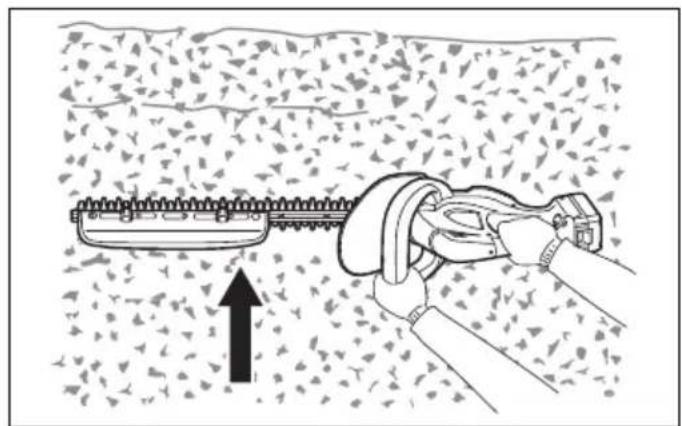
To cut a hedge side evenly, it helps to cut from the bottom upwards. (Fig. 9)
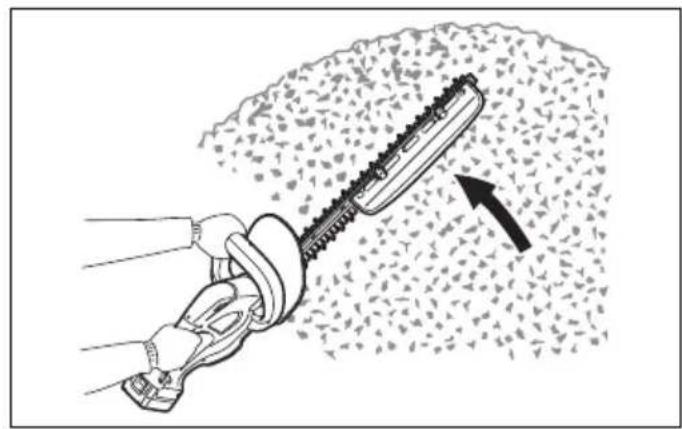
Trim boxwood or rhododendron from the base toward the top for a nice appearance and good job. (Fig. 10)
Installing or removing chip receiver (optional accessory)
CAUTION:
- Always be sure that the tool is switched off and unplugged before installing or removing chip receiver.
NOTE:
- When replacing the chip receiver, always wear gloves so that hands and face does not directly contact the blade. Failure to do so may cause personal injury.
- Always be sure to remove the blade cover before installing the chip receiver.
- The chip receiver receives cut-off leaves and alleviates collecting thrown-away leaves. This can be installed on either side of the tool.
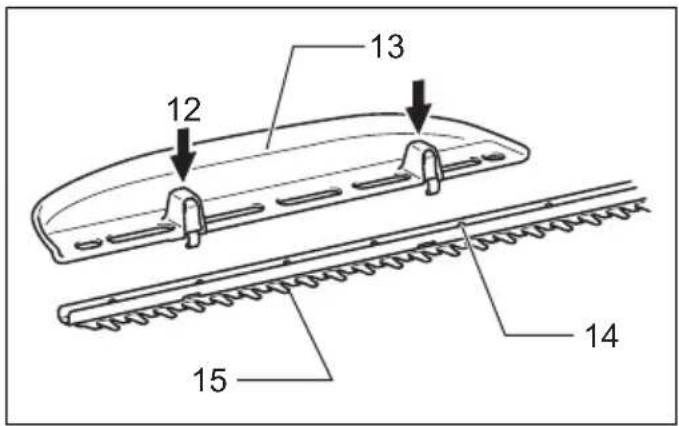
Press the chip receiver on the shear blades so that its slits overlap with the nuts on the shear blades. (Fig. 11)
At this time, the chip receiver needs to be installed so that its hooks fit into grooves in the shear blade unit. (Fig. 12)
To remove the chip receiver, press its lever on both sides so that the hooks are unlocked. (Fig. 13)

CAUTION:
- The blade cover (standard equipment) cannot be installed on the tool with the chip receiver being installed. Before carrying or storing, uninstall the chip receiver and then install the blade cover to avoid blade exposure.
NOTE:
- Check the chip receiver for secure installment before use.
- Never try to uninstall the chip receiver by an excessive force with its hooks locked in the blade unit grooves. Using the excessive force may damage it.
MAINTENANCE

CAUTION:
- Always be sure that the tool is switched off and the battery cartridge is removed before attempting to perform inspection or maintenance.
Cleaning the tool
Clean out the tool by wiping off dust with a dry or soap-dipped rag.

CAUTION:
- Never use gasoline, benzine, thinner, alcohol or the like. Discoloration, deformation or cracks may result.
Blade maintenance
Smear the blade before and once per hour during operation using machine oil or the like.
NOTE:
- Before smearing the blade, remove the chip receiver. After operation, remove dust from both sides of the blade with wired brush, wipe it off with a rag and then apply enough low-viscosity oil, such as machine oil etc. and spray-type lubricating oil.

CAUTION:
- Do not wash the blades in water. Failure to do so may cause rust or damage on the tool.
Removing or installing shear blade

CAUTION:
-
Before removing or installing shear blade, always be sure that the tool is switched off and the battery cartridge is removed.
-
When replacing the shear blade, always wear gloves without removing blade cover so that hands and face does not directly contact the blade. Failure to do so may cause personal injury.
NOTE:
- Do not wipe off grease from the gear and crank. Failure to do so may cause damage to the tool.
Removing the shear blades
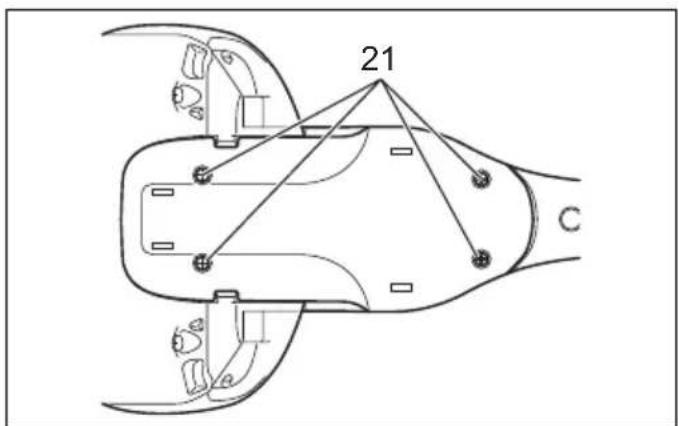
Reverse the tool and loosen four screws and remove the under cover. (Fig. 14)
NOTE:
- Be careful not to get your hands dirty as grease is applied in the shear blade driving area.
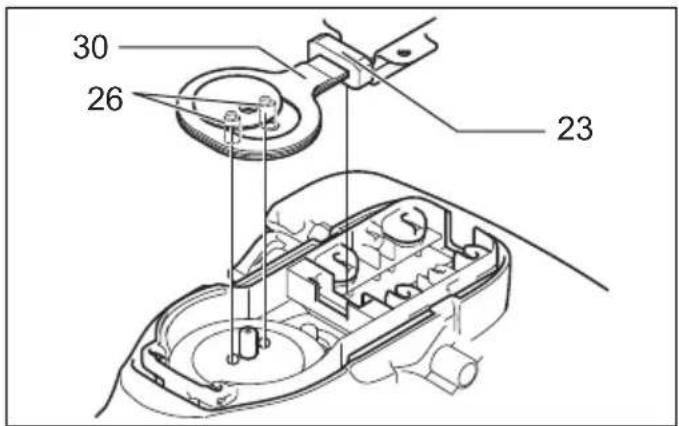
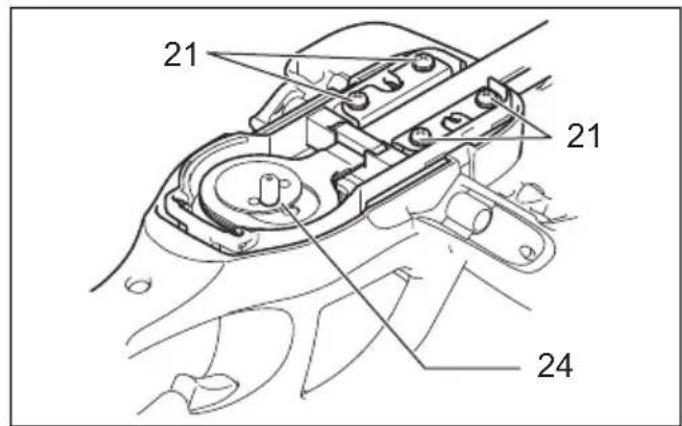
Loosen four screws and remove the blades. Remove the washer and sponge from the shear blades and put them aside. They are required for the later installation. (Fig. 15) If the sleeves are still left in the holes of the gear, remove the gear and push the sleeves out of it with a screwdriver or the like. (Fig. 16)
NOTE:
The washer underneath the gear may come off by mistake when removing the gear. In this case, return it to the original position as it was installed.
Installing the shear blade
Remove the blade cover from the old shear blades and fit it onto the new ones to avoid contact with blades. (Fig. 17)
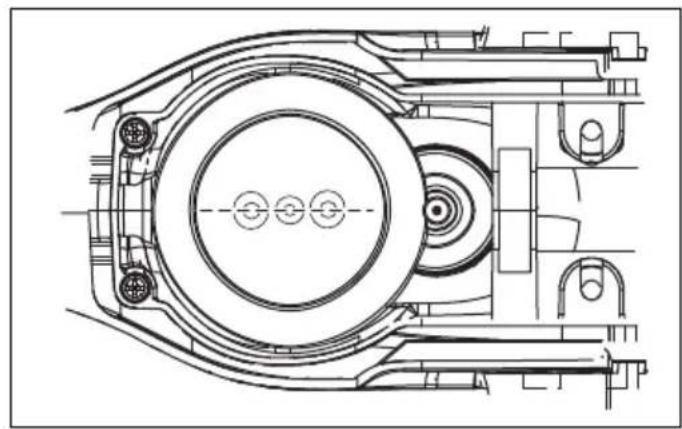
Adjust the hole positions by turning the gear as illustrated. (Fig. 18)
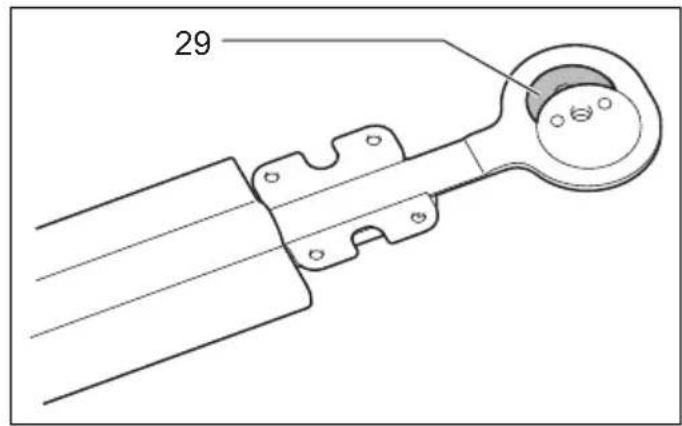
Apply some grease provided with the new shear blades as illustrated. (Fig. 19 & 20)
Put the removed sponge in the same position as the old one. Make sure that the sleeves provided with the new shear blades are put on the pins of the blade. Place the new shear blades on the tool so that the pins fit in the holes of the gear. If the sleeves on the pins come off mistakenly, put them into the holes of the gear beforehand. (Fig. 21)
Install the blade and tighten the four screws and put the removed washer in the same position as the old one. (Fig. 22)
Install the under cover on the tool and tighten the four screws firmly. (Fig. 23)
Storage
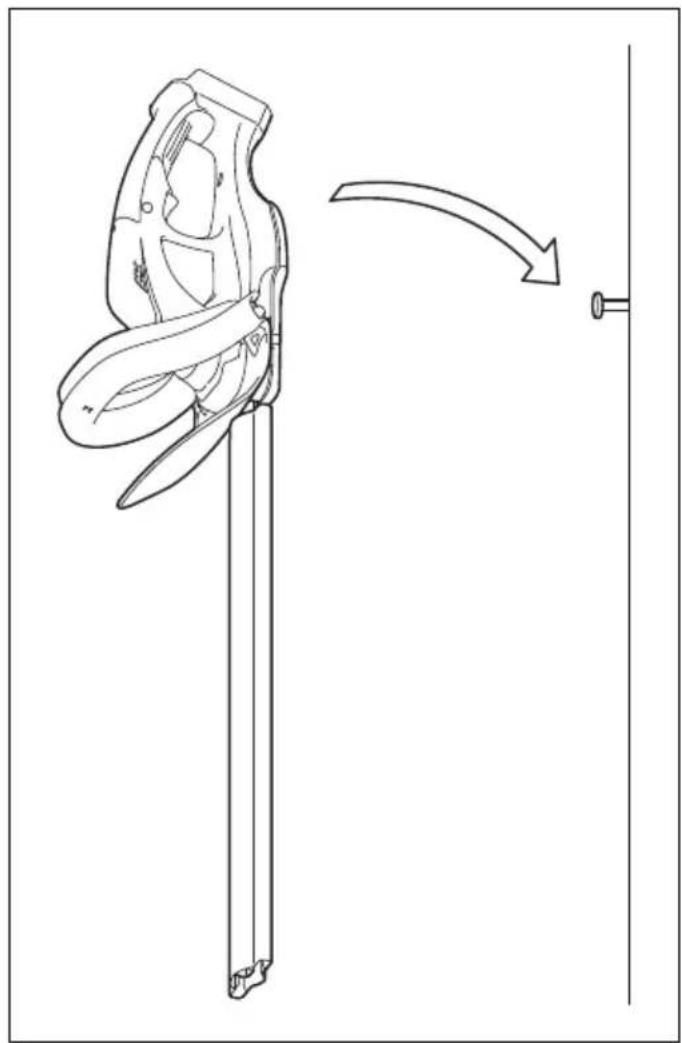
The hook hole in the tool bottom is convenient for hanging the tool from a nail or screw on the wall. (Fig. 24)
Remove the battery cartridge and put the blade cover on the shear blades so that the blades are not exposed.
Store the tool out of the reach of children carefully. Store the tool in the place not exposed to water and rain. To maintain product SAFETY and RELIABILITY, repairs, any other maintenance or adjustment should be performed by Makita Authorized Service Centers, always using Makita replacement parts.
OPTIONAL ACCESSORIES
CAUTION:
- These accessories or attachments are recommended for use with your Makita tool specified in this manual. The use of any other accessories or attachments might present a risk of injury to persons. Only use accessory or attachment for its stated purpose.
If you need any assistance for more details regarding these accessories, ask your local Makita Service Center.
- Blade cover
- Shear blade assembly
- Makita genuine battery and charger
Chip receiver
NOTE:
- Some items in the list may be included in the tool package as standard accessories. They may differ from country to country.
Noise
ENG905-1
The typical A-weighted noise level determined according to EN60745:
Model UH420D
Sound pressure level (L_pA) : 74 dB (A)
Sound power level (L_WA) : 82.5 dB (A)
Uncertainty (K): 2.5 dB (A)
Model UH480D
Sound pressure level (L_pA) : 75 dB (A)
Sound power level (L_WA) : 83.2 dB (A)
Uncertainty (K): 2.5 dB (A)
Model UH482D
Sound pressure level (L_pA) : 75 dB (A)
Sound power level (L_WA) : 82.8 dB (A)
Uncertainty (K): 2.5 dB (A)
Model UH520D
Sound pressure level (L_pA) : 75 dB (A)
Sound power level (L_WA) : 82.9 dB (A)
Uncertainty (K): 2.5 dB (A)
Wear ear protection.
Vibration
ENG900-1
The vibration total value (tri-axial vector sum) determined according to EN60745:
Work mode: hedge trimming
Vibration emission (a_h) .. 2.5m / s^2
Uncertainty (K): 1.5m / s^2
ENG901-1
- The declared vibration emission value has been measured in accordance with the standard test method and may be used for comparing one tool with another.
- The declared vibration emission value may also be used in a preliminary assessment of exposure.
WARNING:
- The vibration emission during actual use of the power tool can differ from the declared emission value depending on the ways in which the tool is used.
- Be sure to identify safety measures to protect the operator that are based on an estimation of exposure in the actual conditions of use (taking account of all parts of the operating cycle such as the times when the tool is switched off and when it is running idle in addition to the trigger time).
For European countries only
ENH040-4
EC Declaration of Conformity
Makita declares that the following Machine(s):
Designation of Machine:
Cordless Hedge Trimmer
Model No./Type:
UH420D, UH480D, UH482D, UH520D
Specifications: see "SPECIFICATIONS" table.
Conforms to the following European Directives:
2000/14/EC, 2006/42/EC
They are manufactured in accordance with the following
standard or standardized documents:
EN60745
The technical file in accordance with 2006/42/EC is available from:
Makita, Jan-Baptist Vinkstraat 2, 3070, Belgium
The conformity assessment procedure required by
Directive 2000/14/EC was in Accordance with annex V
Model UH420D
Measured Sound Power Level: 82.5 dB (A)
Guaranteed Sound Power Level: 84 dB (A)
Model UH480D
Measured Sound Power Level: 83.2 dB (A)
Guaranteed Sound Power Level: 86 dB (A)
Model UH482D
Measured Sound Power Level: 82.8 dB (A)
Guaranteed Sound Power Level: 84 dB (A)
Model UH520D
Measured Sound Power Level: 82.9 dB (A)
Guaranteed Sound Power Level: 86 dB (A)
-
- 2014

Yasushi Fukaya
Director
Makita, Jan-Baptist Vinkstraat 2, 3070, Belgium
ACCESSIONS FOURNIS EN OPTION
ATTENTION:
2000/14/EC, 2006/42/EC
WAARSCHUWING Lees alle
2000/14/EC, 2006/42/EC
2000/14/EF, 2006/42/EF
Móvo yia TiC xwpe ts EEE
Mny aToppiTTETe Tov nEKTPIKO OTIaioo n TIV mTATApia pazi Ie Ta oIKiakataToppimuata!
Uupwva u Tnv Eupwniokn Odbvia
Tepi atoppiuatwv nEKTpiKw,
nEKTPOVIKW vOoKEuwv, mTATAPIWV
kai ouoowpeutw KAI TWV
aToppmuTsw mTataiw kai
ouoomegaewv kai Tnv evomegaatwoh
touc otnv eVikn vOotheia,oi
nAEktpikecs oukeuecs,oi TATAPIEC
KAI OI KAOETEC μTTaapiwv, Tuv OTIOIWV éXeI πapéλθeI o xpovoc
wefaiung zwns Touc, TpTei va oulambdaevovtai gexwpiotkaiv aETIOTeovvTai eEVKATAAGAEC
Tepiabaaovtikn avakukawon.
Npooipizóμevn xpno
ENE014-1
To epyaieio npoopiεeai yia yaiδiσμa μπopvtoupaç.
2000/14/EK, 2006/42/EK
KataoKeuaovta ouuwa va e To TapaKaTu TpOTuTo n TUTOTIneva Eyypa:
EN60745
To texvko apxio oupawva nTv 2006/42/EK ivai diaeoiu aio:
Makita, Jan-Baptist Vinkstraat 2, 3070, Belgium
Hdeltaikaaekipunonc omuoppwongn Tou aataeitai
aTnV Obnyia 2000/14/EK kTeAeotnke oupwwva e To
Tapaptnya V.
Movélo: UH420D
Metpnuevo eTTeEO nxntiKnc 10xuoc:82,5 dB (A)
Eyyunévo eππe do nxtikn 1oXoC:84 dB (A)
MovTeUH480D
Mertnueo 1ntieoo nxtiknc 1oxuoc:83,2 dB (A)
Eyyunévo επΠεδo ηχηικίς 1σxóoc: 86 dB (A)
Movélo UH482D
MeTpnevo 1nTtEdo nxntiknc 1oxuoc:82,8 dB (A)
Eyyunévo εππεδo nπtiknσxuoc: 84 dB (A)
Movélo UH520D
MertnEvo eTtEeO nxTtKnc 10xUoc:82,9 dB (A)
EyyunmuEvO eTINIEo nNtIKnS IOXuoc: 86 dB (A)
-
- 2014

Yasushi Fukaya
AIEUoVTns
Makita, Jan-Baptist Vinkstraat 2, 3070, Belgium
TÜRKÇE (Original talimatlar)
Genel görünüm
Gösterge lambasi (§ekil 3)
2000/14/EC, 2006/42/EC