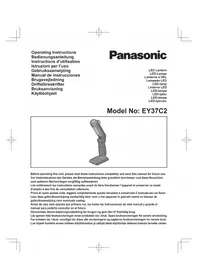
EY37C2 - Camera lens PANASONIC - Free user manual and instructions
Find the device manual for free EY37C2 PANASONIC in PDF.

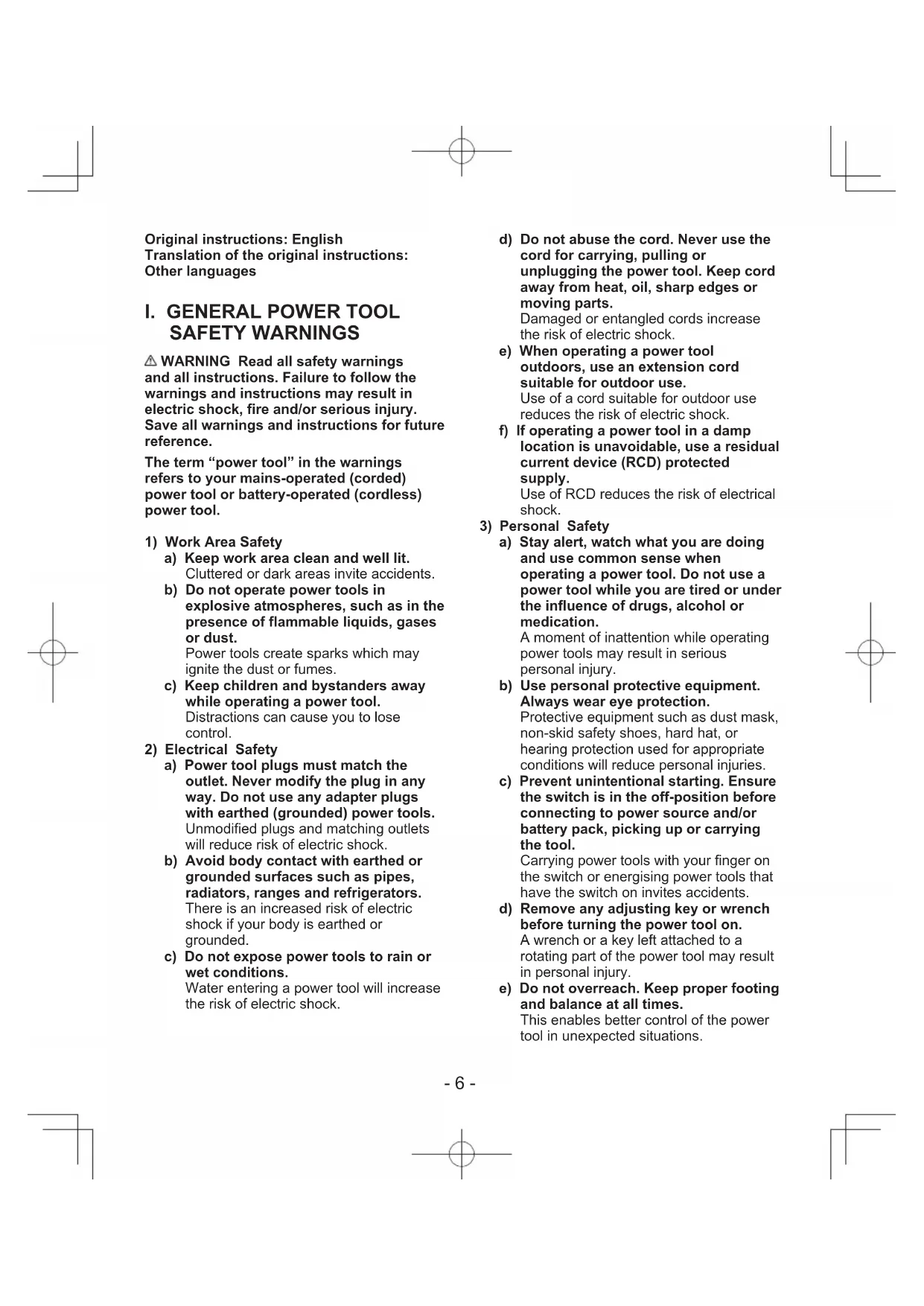


| Product Type | LED Lantern |
| Brand | Panasonic |
| Model | EY37C2 |
| Dimensions (L × W × H) | 287 mm × 124 mm × 55 mm |
| Weight | 0.34 kg (0.75 lbs) |
| Power Supply | Rechargeable Li-ion battery: DC 14.4 V / 18 V / 21.6 V (depending on battery model) |
| Compatible Batteries | EY9L41, EY9L42, EY9L44, EY9L45, EY9L50, EY9L51, EY9L61, EY9L62 |
| Lighting Type | LED (two sources: front and side) |
| Number of Lighting Modes | 3 (both LEDs, side LED only, off) |
| Adjustable Head Angle | Yes |
| Suspension Hook | Yes, for hanging the device (e.g., electrical cabinet) |
| Shoulder Strap | Yes, included, attached via belt loop |
| Excessive Discharge Prevention Function | Yes, LEDs dim 10 minutes before shutdown |
| Overheat Protection | Automatic shutdown if battery overheats |
| Protection Rating | Not waterproof (do not use in damp environments) |
| Maintenance | Wipe with a dry, soft cloth |
| Charging Temperature | Between 0°C and 40°C |
| Included Accessories | Shoulder strap, battery and charger not included |
| Warranty | Limited warranty (excluding prolonged intensive use) |
Frequently Asked Questions - EY37C2 PANASONIC
User questions about EY37C2 PANASONIC
0 question about this device. Answer the ones you know or ask your own.
Ask a new question about this device
Download the instructions for your Camera lens in PDF format for free! Find your manual EY37C2 - PANASONIC and take your electronic device back in hand. On this page are published all the documents necessary for the use of your device. EY37C2 by PANASONIC.
USER MANUAL EY37C2 PANASONIC
English: Page 6 Dansk: Side 60
NOTE: Battery pack and charger are not included in this kit.
Fig. 3. Head Angle adjustment
Fig.5. The LED lantern can be suspended to provide light inside an electric cabinet.
Original instructions: English Translation of the original instructions: Other languages
I. GENERAL POWER TOOL SAFETYWARNINGS
WARNING Read all safety warnings and all instructions. Failure to follow the warnings and instructions may result in electric shock, fire and/or serious injury. Save all warnings and instructions for future reference.
The term "power tool" in the warnings refers to your mains-operated (corded) power tool or battery-operated (cordless) power tool.
1) Work Area Safety
a) Keep work area clean and well lit. Cluttered or dark areas invite accidents.
b) Do not operate power tools in explosive atmospheres, such as in the presence of flammable liquids, gases or dust. Power tools create sparks which may ignite the dust or fumes.
c) Keep children and bystanders away while operating a power tool. Distractions can cause you to lose control.
2) Electrical Safety
a) Power tool plugs must match the outlet. Never modify the plug in any way. Do not use any adapter plugs with earthed (grounded) power tools. Unmodified plugs and matching outlets will reduce risk of electric shock.
b) Avoid body contact with earthed or grounded surfaces such as pipes, radiators, ranges and refrigerators. There is an increased risk of electric shock if your body is earthed or grounded.
c) Do not expose power tools to rain or wet conditions. Water entering a power tool will increase the risk of electric shock.
d) Do not abuse the cord. Never use the cord for carrying, pulling or unplugging the power tool. Keep cord away from heat, oil, sharp edges or moving parts. Damaged or entangled cords increase the risk of electric shock.
e) When operating a power tool outdoors, use an extension cord suitable for outdoor use.
Use of a cord suitable for outdoor use reduces the risk of electric shock.
f) If operating a power tool in a damp location is unavoidable, use a residual current device (RCD) protected supply.
Use of RCD reduces the risk of electrical shock.
3) Personal Safety
a) Stay alert, watch what you are doing and use common sense when operating a power tool. Do not use a power tool while you are tired or under the influence of drugs, alcohol or medication.
A moment of inattention while operating power tools may result in serious personal injury.
b) Use personal protective equipment. Always wear eye protection.
Protective equipment such as dust mask, non-skid safety shoes, hard hat, or hearing protection used for appropriate conditions will reduce personal injuries.
c) Prevent unintentional starting. Ensure the switch is in the off-position before connecting to power source and/or battery pack, picking up or carrying the tool.
Carrying power tools with your finger on the switch or energising power tools that have the switch on invites accidents.
d) Remove any adjusting key or wrench before turning the power tool on.
A wrench or a key left attached to a rotating part of the power tool may result in personal injury.
e) Do not overreach. Keep proper footing and balance at all times.
This enables better control of the power tool in unexpected situations.
f) Dress properly. Do not wear loose clothing or jewellery. Keep your hair, clothing and gloves away from moving parts.
Loose clothes, jewellery or long hair can be caught in moving parts.
g) If devices are provided for the connection of dust extraction and collection facilities, ensure these are connected and properly used.
Use of dust collection can reduce dust-related hazards.
4) Power Tool Use and Care
a) Do not force the power tool. Use the correct power tool for your application.
The correct power tool will do the job better and safer at the rate for which it was designed.
b) Do not use the power tool if the switch does not turn it on and off.
Any power tool that cannot be controlled with the switch is dangerous and must be repaired.
c) Disconnect the plug from the power source and/or the battery pack from the power tool before making any adjustments, changing accessories, or storing power tools.
Such preventive safety measures reduce the risk of starting the power tool accidentally.
d) Store idle power tools out of the reach of children and do not allow persons unfamiliar with the power tool or these instructions to operate the power tool. Power tools are dangerous in the hands of untrained users.
e) Maintain power tools. Check for misalignment or binding of moving parts, breakage of parts and any other condition that may affect the power tool's operation. If damaged, have the power tool repaired before use.
Many accidents are caused by poorly maintained power tools.
f) Keep cutting tools sharp and clean. Properly maintained cutting tools with sharp cutting edges are less likely to bind and are easier to control.
g) Use the power tool, accessories and tool bits etc., in accordance with these instructions, taking into account the working conditions and the work to be performed.
Use of the power tool for operations different from those intended could result in a hazardous situation.
h) Hold power tools by insulated gripping surfaces when performing an operation where the power tool may contact hidden wiring.
Contact with a "live" wire will make exposed metal parts of the tool "live" and shock the operator.
5) Battery Tool Use and Care
a) Recharge only with the charger specified by the manufacturer.
A charger that is suitable for one type of battery pack may create a risk of fire when used with another battery pack.
b) Use power tools only with specifically designated battery packs.
Use of any other battery packs may create a risk of injury and fire.
c) When battery pack is not in use, keep it away from other metal objects, like paper clips, coins, keys, nails, screws, or other small metal objects, that can make a connection from one terminal to another.
Shorting the battery terminals together may cause burns or a fire.
d) Under abusive conditions, liquid may be ejected from the battery; avoid contact. If contact accidentally occurs, flush with water. If liquid contacts eyes, additionally seek medical help.
Liquid ejected from the battery may cause irritation or burns.
6) Service
a) Have your power tool serviced by a qualified repair person using only identical replacement parts.
This will ensure that the safety of power tool is maintained.
II. FOR BATTERY CHARGER & BATTERY PACK
- SAVE THESE INSTRUCTIONS
This manual contains important safety instructions for battery charger and battery pack. - Before using battery charger, read all instructions and cautionary markings on battery charger, battery pack.
- The charger and battery pack are specifically designed to work together. Do not attempt to charge any other cordless tool or battery pack with this charger. Do not attempt to charge the battery pack with any other charger.
- Do not expose charger and battery pack to rain or snow or use in damp location.
- Use of an attachment not recommended may result in a risk of fire, electric shock, or injury to persons.
- Do not abuse cord. Never carry charger by cord or yank it to disconnect from outlet. Keep cord away from heat, oil and sharp edges.
- An extension cord should not be used.
- Do not operate charger with damaged cord or plug; take it to a qualified service personnel to replace them.
- Do not operate charger if it has received a sharp blow, been dropped, or otherwise damaged in any way; take it to a qualified service personnel.
- Do not attempt to disassemble charger and battery pack, take it to a qualified service personnel when service or repair is required. Incorrect reassembly may result in a risk of electric shock or fire.
- To reduce risk of electric shock, unplug charger from outlet before attempting any maintenance or cleaning.
-
Make sure cord is located so that it will not be stepped on, tripped over, or otherwise subjected to damage or stress.
-
Do not store battery pack in locations where the temperature may reach or exceed 50^ (112^) (such as metal tool shed, or a car in the summer), which can lead to deterioration of the storage battery.
- Do not incinerate the battery pack. It can be explode in a fire.
- The charger is designed to operate on standard household electrical power only. Charge only on the voltage indicated on the nameplate. Do not attempt to use it on any other voltage!
- Charge the battery pack in a well ventilated place, do not cover the charger and battery pack with a cloth, etc., while charging.
- Do not short the battery pack. A battery short can cause a large current flow, over heating and burns.
- The appliance is not intended for use by persons (including children) with reduced physical, sensory or mental capabilities, or lack of experience and knowledge unless they have been given supervision or instruction concerning use of the appliance by a person responsible for their safety.
- Children should be supervised to ensure that they do not play with the appliance.
III. IMPORTANT SAFETY INSTRUCTIONS
Read All Instructions
1) SAVE THESE INSTRUCTIONS -This manual contains important safety and operating instructions for battery charger.
2) Before using battery charger, read all instructions and cautionary markings on (1) battery charger, (2) battery pack.
3) CAUTION -To reduce the risk of in jury, charge only applicable bat tery pack as shown in the last page. Other types of batteries may burst causing personal injury and damage.
4) Do not expose charger and battery pack to rain or snow or use in damp location.
5) Use of an attachment not recommended may result in a risk of fire, electric shock, or injury to persons.
6) To reduce risk of damaging the electric plug and cord, pull by plug rather than cord when disconnecting charger.
7) An extension cord should not be used.
8) If the supply cord is damaged, it must be replaced by the manufacturer or its service agent, or a similarly qualified person in order to avoid a hazard.
9) Do not operate charger if it has received a sharp blow, been drop ped, or otherwise damaged in any way; take it to a qualified service agent.
10) To reduce risk of electric shock, un plug charger from outlet before at tempt ing any maintenance or cleaning.
11) Make sure cord is located so that it will not be stepped on, tripped over, or otherwise subjected to damage or stress.
12) The charger and battery pack are specifically designed to work together. Do not attempt to charge any other cordless tool or battery pack with this charger. Do not attempt to charge the battery pack with any other charger.
13) Do not attempt to disassemble the
battery charger and the battery pack housing.
14) Do not store the tool and battery pack in locations where the temperature may reach or exceed 50^ (122°F) (such as a metal tool shed, or a car in the summer), which can lead to deterioration of the storage battery.
15) Do not charge battery pack when the temperature is BELOW 0^ (32^) or ABOVE 40^ (104^) .
16) Do not incinerate the battery pack. It can be explode in a fire.
17) The charger is designed to operate on standard household electrical power only. Charge only on the volt age indicated on the nameplate. Do not attempt to use it on any other voltage!
18) Do not abuse cord. Never carry char ger by cord or yank it to disconnect from outlet. Keep cord away from heat, oil and sharp edges.
19) Charge the battery pack in a well ventilated place, do not cover the charger and battery pack with a cloth, etc., while charging.
20) Do not short the battery pack. A battery short can cause a large current flow, over heating and burns.
21) NOTE: If the supply cord of this appliance is damaged, it must only be replaced by a repair shop appointed by the manufacturer, because special purpose tools are required.
22) The appliance is not a portable luminaire for children usage.
23) Children shall not play with the appliance.
| Symbol Meaning |
| To reduce the risk of injury, user must read and understand instruction manual. |
| For indoor use only |

WARNING
LED lights create heat whilst in use. Heat may be trapped and cause an accident.
- Do not cover the LED lantern with cloth or paper during use.
- Do not touch the LED lights during use or just after the use as they become hot.
- Do not use any other battery pack besides as shown in the Specifications.

CAUTION
-
This LED Lantern is not waterproof.
-
Do not use it in damp or wet locations.
- Do not expose it to rain or snow.
- Do not wash it in water.
-
Keep it in a safe, dry, and clean area when it is not in use.
-
The LED Lantern automatically goes off when the battery voltage drops below a specified level.
- Do not disassemble the LED Lantern. Servicing should be performed by an authorized service center.
- Do not throw the battery pack into a fire. This can cause an explosion.
- Do not look into the LED light and do not allow the lights to contact the eyes directly. If the LED lights contact the eye continuously, it may result in injuries to the eyes.

WARNING
- Do not use other than the Panasonic battery packs that are designed for use with this rechargeable tool.
- Do not carry or store the battery pack in the same container as nails or similar metal objects.
- Do not dispose of the battery pack in a fire, or expose it to excessive heat.
- Do not drive the likes of nails into the battery pack, subject it to shocks, dismantle it, or attempt to modify it.
- Do not allow metal objects to touch the battery pack terminals.
- Do not charge the battery pack in a high-temperature location, such as next to a fire or in direct sunlight. Otherwise, the battery may overheat, catch fire, or explode.
- Never use other than the dedicated charger to charge the battery pack. Otherwise, the battery may leak, overheat, or explode.
- After removing the battery pack from the tool or the charger, always reattach the pack cover. Otherwise, the battery contacts could be shorted, leading to a risk of fire.
- When the Battery Pack Has Deteriorated, Replace It with a New One.
Continued use of a damaged battery pack may result in heat generation, ignition or battery rupture.
IV. ASSEMBLY
- To connect the battery pack; (Fig.1)
Line up the alignment marks and attach the battery pack.
-
Slide the battery pack until it locks into position.
-
To remove the battery pack:
Push down the button and slide the battery pack forward.
- Shoulder strap:(Fig.2)
Follow the step to make the loop at the buckle. Make sure the strap is firmly fixed on the LED lantern.
V. OPERATION
How to use the LED Lantern
- Attach the battery pack to the main unit.
- Head angle adjustment; (Fig.3)
- Press the switch once to turn on both LED lights (1 + 2) .
Press the switch again to turn on side surface of LED light only (①).
Press the switch once again to turn off the LED light.

Over-discharge prevention function
- To avoid turning off suddenly, the LED lights dim approximately 10 minutes before the battery runs out.
- Read the instruction manual of the charger to charge the battery pack, and how to handle battery pack.
How to use the hook
- Raise the hook on the top to use it. (Fig.4)
- The LED lantern can be suspended to provide light inside an electric cabinet. (Fig.5)
WARNING
Do not use the hook at a location where it cannot be fully locked in position.
The unit could fall down and cause an injury.
CAUTION
When hanging at a high location, use a rope to secure the unit so that it will not fall down.
The unit could fall down and cause an injury.
VI. MAINTENANCE
To make any adjustments, changing accessory, or storing the LED lantern, remove battery pack from the LED lantern.
- To clean the LED lantern, wipe with a dry, soft cloth.
WARNING
The battery pack must be removed from the LED lantern before it is scrapped.
VII. ACCESSORIES
Battery Pack
See the Specification.
Battery Charger
- For inquiries please contact an authorized dealer.
NOTE: Battery pack and charger are not included in this kit.
[Battery Pack]
For Appropriate Use of Battery Pack
- For optimum battery life, store the Li-ion battery pack following use without charging it.
- When charging the battery pack, confirm that the terminals on the battery charger are free of foreign substances such as dust and water etc. Clean the terminals before charging the battery pack if any foreign substances are found on the terminals.
The life of the battery pack terminals may be affected by foreign substances such as dust and water etc. during operation.
- When battery pack is not in use, keep it away from other metal objects like: paper clips, coins, keys, nails, screws, or other small metal objects that can make a connection from one terminal to another.
Shorting the battery terminals together may cause sparks, burns or a fire. - When operating the battery pack, make sure the work place is well ventilated.
Battery Pack Life
The rechargeable batteries have a limited life. If the operation time becomes extremely short after recharging, replace the battery pack with a new one.
Battery Recycling
NOTE:
For environmental protection and recycling of materials, be sure that it is disposed of at an officially assigned location, if there is one in your country.
Recommendations for use

Be sure to use the Pack cover
-
When the battery pack is not being used, store the battery in a way that foreign substances such as dust and water etc. do not contaminate the terminals. Be sure to attach the battery pack cover to protect the battery terminals.
-
When charging the battery pack, confirm that the terminals on the battery charger are free of foreign substances such as dust and water etc. Clean the terminals before charging the battery pack if any foreign substances are found on the terminals. The life of the battery pack terminals may be affected by foreign substances such as dust and water etc. during operation.

CAUTION: To protect the motor or battery, be sure to note the following when carrying out operation.
- If the battery becomes hot, the protection function will be activated and the battery will stop operating.
For safe use
The battery pack is designed to be installed by proceeding two steps for safety. Make sure
the battery pack is installed properly to the main unit before use.
- Connect the battery pack into the body of the tool until the red or yellow label disappears.
[Battery Charger]
Charging
#
The charger is designed to operate on standard domestic electrical power only as stated in the rating plate. Charge only on the voltage indicated on the rating plate of unit. e.g.230 V / 50 Hz.
- Do not attempt to use it on any other voltage or frequency rating!
- If the temperature of the battery pack falls approximately below -10^ (14°F), charging will automatically stop to prevent degradation of the battery.
- Do not charge the battery pack whose temperature is below 0^ C (32°F).
- When charging a cool battery pack (below 0^ (32^) ) in a warm place, leave the battery pack at the place and wait for more than one hour to warm up the battery to the level of the ambient temperature. Otherwise battery pack may not be fully charged.
Cool down the charger when charging more than two battery packs consecutively.
- Do not insert your fingers into contact hole, when holding charger or any other occasions.
#
CAUTION:
To prevent the risk of fire or damage to the battery charger.
- Do not cover vent holes on the charger and the battery pack.
- Unplug the charger when not in use.
NOTE:
Your battery pack is not fully charged at the time of purchase. Be sure to charge the battery before use.
How to charge
- Plug the charger into the AC outlet.
NOTE:
Sparks may be produced when the plug is inserted into the AC power supply, but this is not a problem in terms of safety.
-
Connect the battery pack firmly into the charger.
-
Line up the alignment marks and place the battery onto the dock on the charger.
- Slide forward in the direction of the arrow.

-
During charging, the charging lamp will be illuminated. When charging is completed, an internal electronic switch will automatically be triggered to prevent overcharging.
-
Charging will not start if the battery pack is warm (for example, immediately after heavy-duty operation). The orange standby lamp will be flashing until the battery cools down. Charging will then begin automatically.
-
The charge lamp (green) will flash slowly once the battery is approximately 80% charged.
- When charging is completed, the charging lamp in green color will turn off.
- If the temperature of the battery pack is 0^ or less, charging takes longer to fully charge the battery pack than the standard charging time. Even when the battery is fully charged, it will have approximately 50% of the power of a fully charged battery at normal operating temperature.
- Consult an authorized dealer if the charging lamp (green) does not turn off.
- If a fully charged battery pack is connected into the charger again, the charging lamp lights up. After several minutes, the charging lamp in green color will turn off.
LAMP INDICATIONS

Turn off Illuminated Flashing
Information for Users on Collection and Disposal of Old Equipment and used Batteries
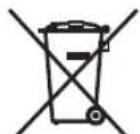
These symbols on the products, packaging, and/or accompanying documents mean that used electrical and electronic products and batteries should not be mixed with general household waste.
For proper treatment, recovery and recycling of old products and used batteries, please take them to applicable collection points, in accordance with your national legislation and the Directives 2002/96/EC and 2006/66/EC.

By disposing of these products and batteries correctly, you will help to save valuable resources and prevent any potential negative effects on human health and the environment which could otherwise arise from inappropriate waste handling.

For more information about collection and recycling of old products and batteries, please contact your local municipality, your waste disposal service or the point of sale where you purchased the items.
Penalties may be applicable for incorrect disposal of this waste, in accordance with national legislation.
For business users in the European Union
If you wish to discard electrical and electronic equipment, please contact your dealer or supplier for further information.
[Information on Disposal in other Countries outside the European Union]
These symbols are only valid in the European Union. If you wish to discard these items, please contact your local authorities or dealer and ask for the correct method of disposal.
VIII. SPECIFICATIONS
NOTE: Weight is indicated by 0.01kg
| Model no. | EY37C2 | ||||||||
| Size | 287 mm × 124 mm × 55 mm(11-5/16" × 4-7/8" × 2-5/32") | ||||||||
| Weight | 0.34 kg (0.75 lbs) | ||||||||
| Battery packs | Li-ion battery pack | ||||||||
| EY9L41 EY9L42 EY9L44 EY9L45 EY9L50 EY9L51 EY9L61 EY9L62 | |||||||||
| Battery voltage | DC 14.4 V DC 18 V DC 21.6 V | ||||||||
| 3.6 V × 4 cells 3.6 V × 8 cells 3.6 V × 10 cells | 3.6 V × 6 cells | 3.6 V × 12 cells | |||||||
NOTE: This chart may include models that are not available in your area.
Please refer to the latest general catalogue.
For the dealer name and address, please see the included warranty card.
IX. APPENDIX
WARRANTY SUPPLEMENT
The breakdown and damage caused by usage consistent for a long time (e.g.: factory work on the assembly line, etc.) is out of warranty.
VIII. TEKNISET TIEDOT
Panasonic Testing Center
Winsberging 15,
22525 Hamburg,
Germany
Panasonic Corporation
1006,Kadoma,Osaka 571-8501,Japan
http://panasonic.net
EN. DE. FR. IT. NL. ES. DA. SV. NO. FI
EY971037C201 2014.01
Printed in Japan



- GENERAL POWER TOOL SAFETYWARNINGS
- FOR BATTERY CHARGER & BATTERY PACK
- IMPORTANT SAFETY INSTRUCTIONS
- Read All Instructions
- WARNING
- CAUTION
- ASSEMBLY
- OPERATION
- How to use the LED Lantern
- Over-discharge prevention function
- How to use the hook
- MAINTENANCE
- ACCESSORIES
- Battery Pack
- Battery Charger
- [Battery Pack]
- For Appropriate Use of Battery Pack
- Battery Pack Life
- Battery Recycling
- NOTE:
- Recommendations for use
- Be sure to use the Pack cover
- For safe use
- [Battery Charger]
- Charging
- #
- CAUTION:
- How to charge
- LAMP INDICATIONS
- Information for Users on Collection and Disposal of Old Equipment and used Batteries
- For business users in the European Union
- [Information on Disposal in other Countries outside the European Union]
- SPECIFICATIONS
- APPENDIX
- WARRANTY SUPPLEMENT
- TEKNISET TIEDOT
Brand : PANASONIC
Model : EY37C2
Category : Camera lens