PEEKS 1835 - Saw Pattfield - Free user manual and instructions
Find the device manual for free PEEKS 1835 Pattfield in PDF.




User questions about PEEKS 1835 Pattfield
0 question about this device. Answer the ones you know or ask your own.
Ask a new question about this device
Download the instructions for your Saw in PDF format for free! Find your manual PEEKS 1835 - Pattfield and take your electronic device back in hand. On this page are published all the documents necessary for the use of your device. PEEKS 1835 by Pattfield.
USER MANUAL PEEKS 1835 Pattfield
Pattfield® ERGO TOOLS
GB Electric chainsaw 1800 W Translation of the Original Instructions

natural_image
Exterior view of a Pelt Field Double Guard 91 electric chain saw (no text or symbols on the device itself)PE-EKS 1835
Pattfield® ERGO TOOLS
text_image
1 2 3 5 4 6 7 8 9 10 11 12 13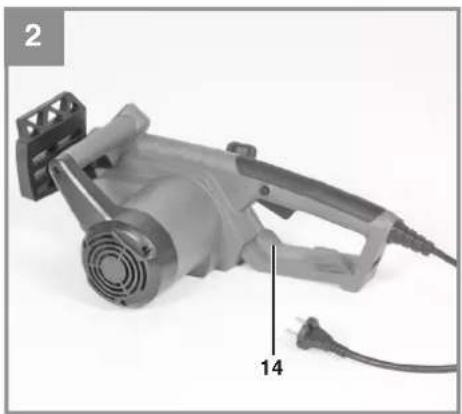
natural_image
Exterior view of a gray electric shaver with labeled component '14' (no other text or symbols)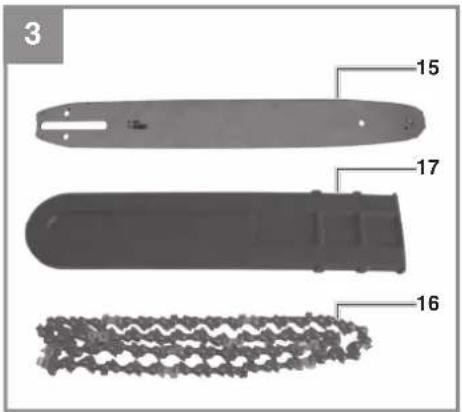
text_image
3 15 17 16-2-
Pattfield® ERGO TOOLS
natural_image
Close-up of a hand pressing down on a mechanical component with a circular dial (no visible text or symbols)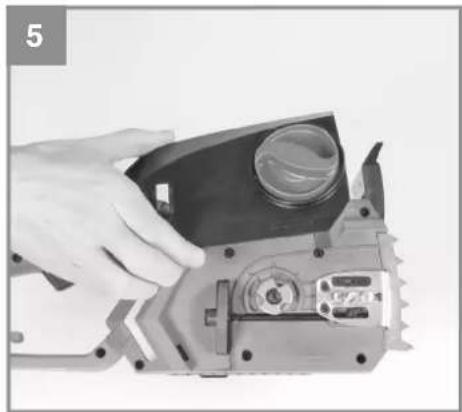
natural_image
Hand operating a mechanical device with a circular component and internal components (no visible text or symbols)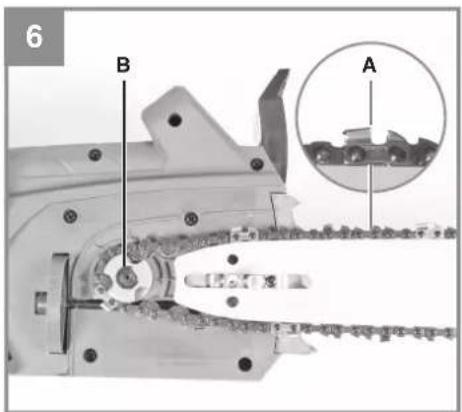
text_image
6 B A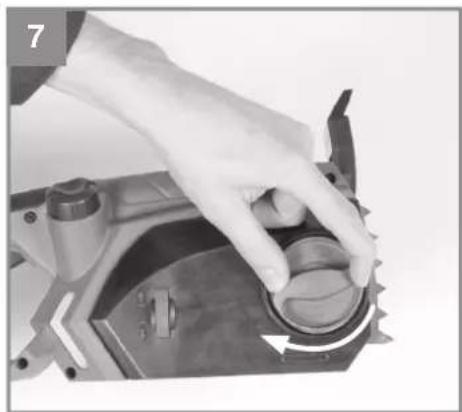
natural_image
Close-up of a hand operating a mechanical component with a circular dial and arrow indicator (no text or symbols visible)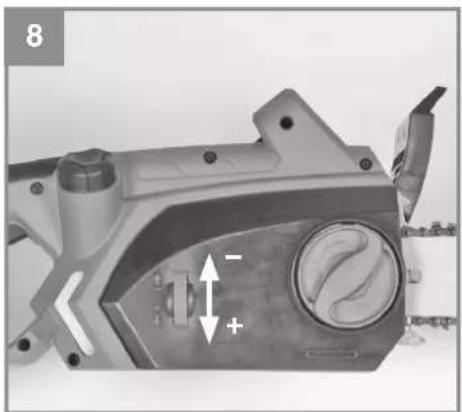
natural_image
Mechanical component with labeled dimensions (no readable text or symbols)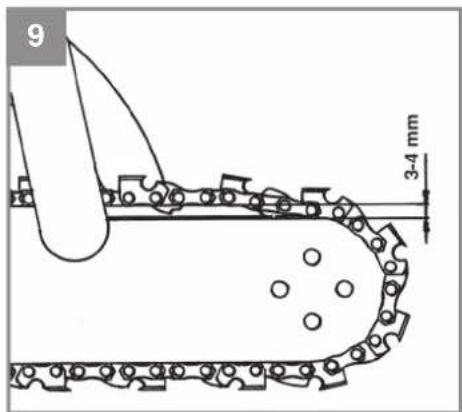
text_image
9 3-4 mmPattfield® ERGO TOOLS
natural_image
Mechanical component with labeled parts A and B, no visible text or symbols beyond labels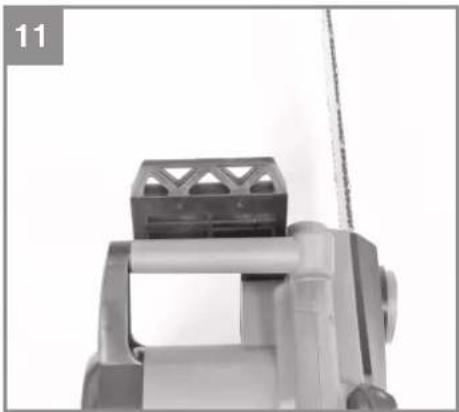
natural_image
Mechanical device with a bracket and cylindrical frame, no visible text or symbols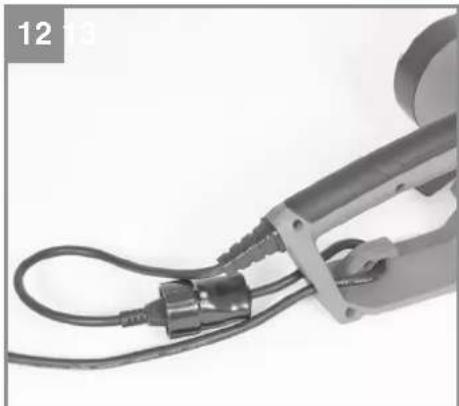
natural_image
Close-up of a mechanical device with coiled wires and connectors (no visible text or symbols)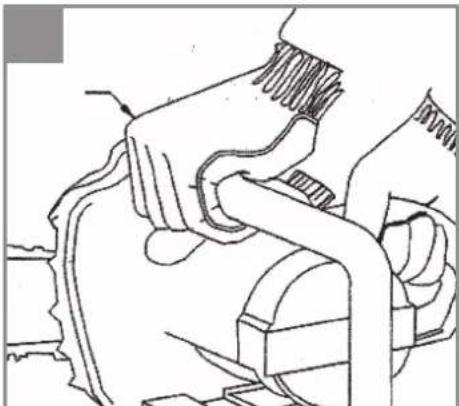
natural_image
Line drawing of a mechanical component with no visible text or symbols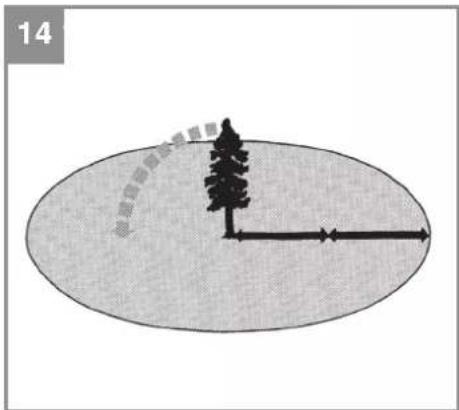
natural_image
Simple diagram showing a tree on an oval surface with directional arrows, no text or symbols present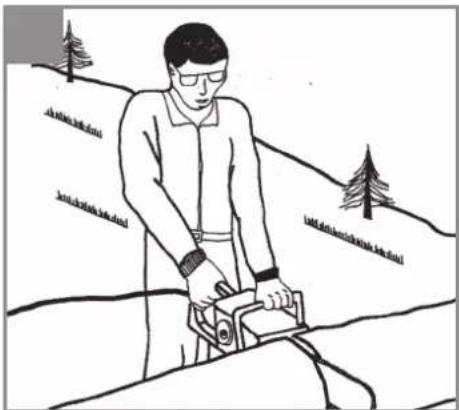
natural_image
Line drawing of a person using a power tool in a rural landscape with trees and hills (no text or symbols)Pattfield® ERGO TOOLS
text_image
16 A A B C C A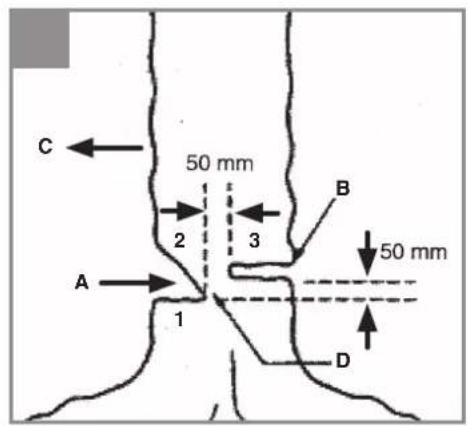
text_image
C 50 mm 2 3 A 1 B 50 mm D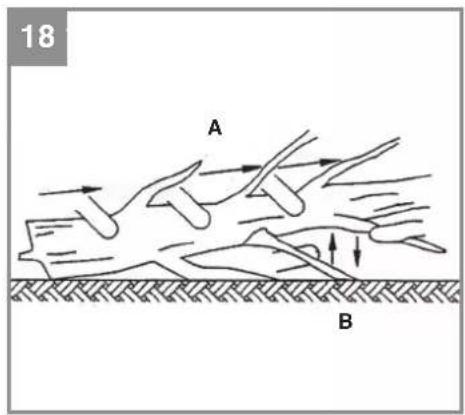
text_image
18 A B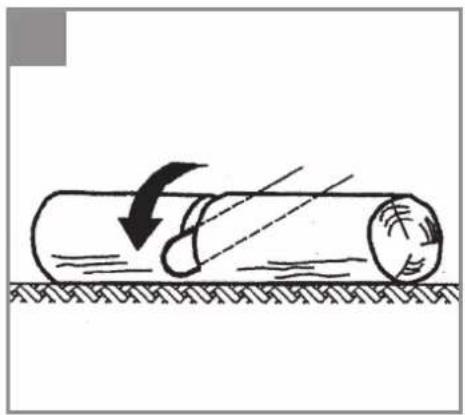
natural_image
Diagram of a cylindrical object with a curved arrow indicating motion, resting on a textured surface (no text or symbols)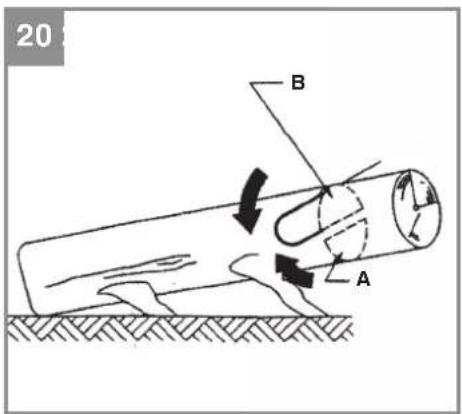
text_image
20 B A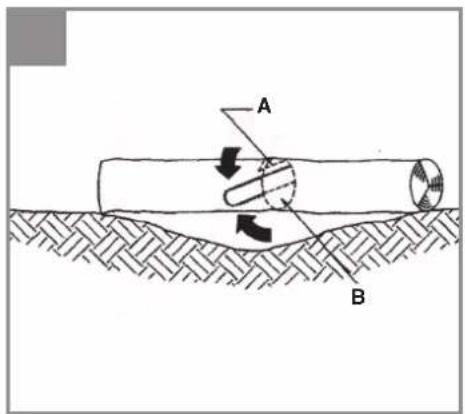
text_image
A BPattfield® ERGO TOOLS
text_image
22 23 2/10 Sek.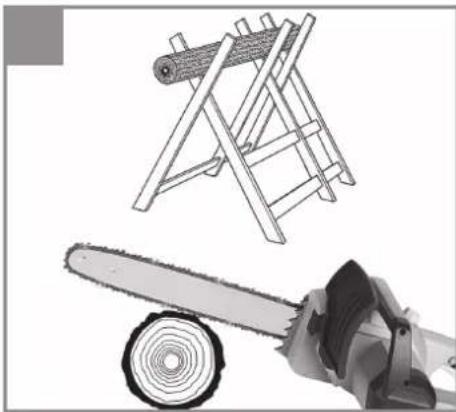
natural_image
Illustration of a wooden log stack and a pair of sawaws, no text or symbols present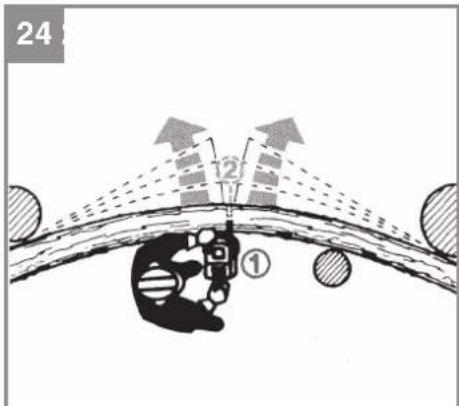
text_image
24 ① ②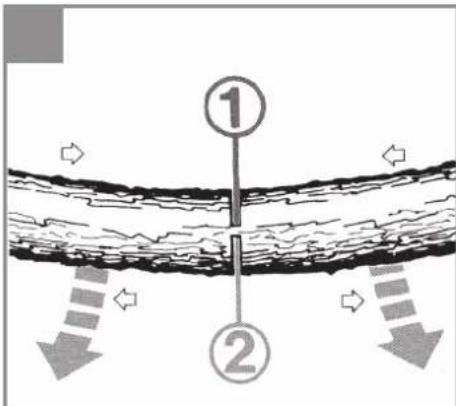
text_image
① ②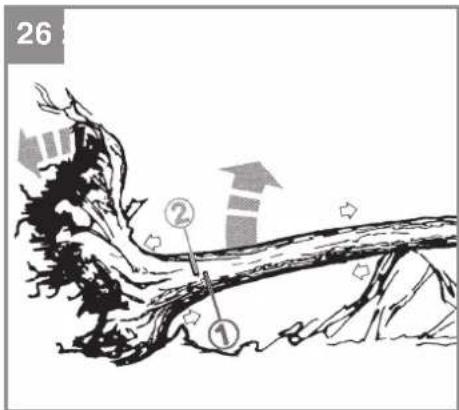
text_image
26 ② ①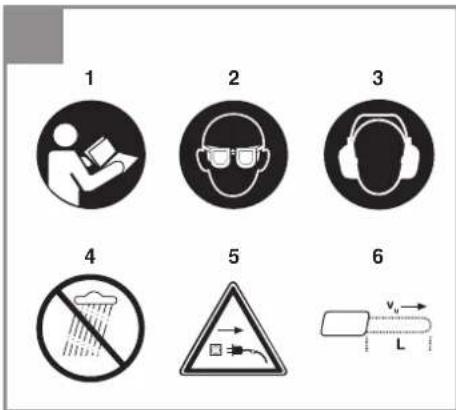
text_image
1 2 3 4 5 6 v_u LPattfield® ERGO TOOLS
Inhaltsverzeichnis
Pattfield® ERGO TOOLS
Gefahr!
Pattfield® ERGO TOOLS
Pattfield® ERGO TOOLS
Pattfield® ERGO TOOLS
Pattfield® ERGO TOOLS
Pattfield® ERGO TOOLS
Pattfield® ERGO TOOLS
4. Technische Daten
Pattfield® ERGO TOOLS
Pattfield® ERGO TOOLS
Pattfield® ERGO TOOLS
Pattfield® ERGO TOOLS
Öltank befüllen:
Pattfield® ERGO TOOLS
Ausschalten
Pattfield® ERGO TOOLS
Pattfield® ERGO TOOLS
Pattfield® ERGO TOOLS
Pattfield® ERGO TOOLS
und nicht stolpern.
Entasten
Pattfield® ERGO TOOLS
Pattfield® ERGO TOOLS
Pattfield® ERGO TOOLS
Pattfield® ERGO TOOLS
Pattfield® ERGO TOOLS
D
Pattfield® ERGO TOOLS
Pattfield® ERGO TOOLS
Pattfield® ERGO TOOLS
Pattfield® ERGO TOOLS
Sommaire
Pattfield® ERGO TOOLS
Danger!
Pattfield® ERGO TOOLS
Pattfield® ERGO TOOLS
Pattfield® ERGO TOOLS
Pattfield® ERGO TOOLS
Pattfield® ERGO TOOLS
Pattfield® ERGO TOOLS
Pattfield® ERGO TOOLS
valente.
Pattfield® ERGO TOOLS
Poignée sous charge
Pattfield® ERGO TOOLS
Pattfield® ERGO TOOLS
Pattfield® ERGO TOOLS
Pattfield® ERGO TOOLS
Pattfield® ERGO TOOLS
Pattfield® ERGO TOOLS
Pattfield® ERGO TOOLS
Pattfield® ERGO TOOLS
Pattfield® ERGO TOOLS
Pattfield® ERGO TOOLS
Pattfield® ERGO TOOLS
9.3 Maintenance
Pattfield® ERGO TOOLS
Pattfield® ERGO TOOLS
Pattfield® ERGO TOOLS
12. Élimination

Pattfield® ERGO TOOLS
Pattfield® ERGO TOOLS
14. Informations service après-vente
Pattfield® ERGO TOOLS
15. Bon de garantie
Chère cliente, cher client,
Pattfield® ERGO TOOLS
Pattfield® ERGO TOOLS
Indice
Pattfield® ERGO TOOLS
Pericolo!
Pattfield® ERGO TOOLS
Pattfield® ERGO TOOLS
Pattfield® ERGO TOOLS
Pattfield® ERGO TOOLS
Pattfield® ERGO TOOLS
Pattfield® ERGO TOOLS
Pattfield® ERGO TOOLS
Pattfield® ERGO TOOLS
Pattfield® ERGO TOOLS
Pattfield® ERGO TOOLS
Pattfield® ERGO TOOLS
Pattfield® ERGO TOOLS
Pattfield® ERGO TOOLS
Pattfield® ERGO TOOLS
Catena della sega
Pattfield® ERGO TOOLS
Pattfield® ERGO TOOLS
Pattfield® ERGO TOOLS
Pattfield® ERGO TOOLS
Pattfield® ERGO TOOLS
9.1 Pulizia
Pattfield® ERGO TOOLS
Pattfield® ERGO TOOLS
10. Conservazione
Pattfield® ERGO TOOLS
Pattfield® ERGO TOOLS
Pattfield® ERGO TOOLS
Pattfield® ERGO TOOLS
Pattfield® ERGO TOOLS
Inhoudsopgave
Pattfield® ERGO TOOLS
Gevaar!
Pattfield® ERGO TOOLS
Pattfield® ERGO TOOLS
Pattfield® ERGO TOOLS
Pattfield® ERGO TOOLS
Pattfield® ERGO TOOLS
Pattfield® ERGO TOOLS
Pattfield® ERGO TOOLS
Pattfield® ERGO TOOLS
Pattfield® ERGO TOOLS
Pattfield® ERGO TOOLS
Pattfield® ERGO TOOLS
Pattfield® ERGO TOOLS
Pattfield® ERGO TOOLS
mijden.
Pattfield® ERGO TOOLS
Pattfield® ERGO TOOLS
Pattfield® ERGO TOOLS
Pattfield® ERGO TOOLS
Pattfield® ERGO TOOLS
Pattfield® ERGO TOOLS
Controleren van de automatische kettingsmering
Pattfield® ERGO TOOLS
10.Opbergen
Pattfield® ERGO TOOLS
11. Foutopsporing
Gevaar!
Pattfield® ERGO TOOLS
Pattfield® ERGO TOOLS
12. Afvalverwerking

Pattfield® ERGO TOOLS
Pattfield® ERGO TOOLS
14. Service-informatie
Pattfield® ERGO TOOLS
15. Garantiebewijs
Geachte klant,
Pattfield® ERGO TOOLS
Pattfield® ERGO TOOLS
Pattfield® ERGO TOOLS
Fara!
Pattfield® ERGO TOOLS
Pattfield® ERGO TOOLS
Pattfield® ERGO TOOLS
Ytterligare viktig information:
Pattfield® ERGO TOOLS
Pattfield® ERGO TOOLS
transporten.
Pattfield® ERGO TOOLS
4. Tekniska data
Nätspänning: 230-240 V \~ 50 Hz
Nominell effekt: 1800 W
Pattfield® ERGO TOOLS
Pattfield® ERGO TOOLS
5. Före användning
Pattfield® ERGO TOOLS
Pattfield® ERGO TOOLS
Fylla på oljetanken
Pattfield® ERGO TOOLS
Slå ifrån maskinen
Pattfield® ERGO TOOLS
Handskydd
Pattfield® ERGO TOOLS
Kedjebroms
Pattfield® ERGO TOOLS
Pattfield® ERGO TOOLS
Kapa trädstammen
Pattfield® ERGO TOOLS
7.3 Rekyl
Pattfield® ERGO TOOLS
Pattfield® ERGO TOOLS
Pattfield® ERGO TOOLS
Pattfield® ERGO TOOLS
12. Avfallshantering

Pattfield® ERGO TOOLS
Pattfield® ERGO TOOLS
14. Serviceinformation
Pattfield® ERGO TOOLS
Pattfield® ERGO TOOLS
Obsah
Pattfield® ERGO TOOLS
Nebezpečí!
Pattfield® ERGO TOOLS
Pattfield® ERGO TOOLS
Pattfield® ERGO TOOLS
Pattfield® ERGO TOOLS
Pattfield® ERGO TOOLS
Pattfield® ERGO TOOLS
4. Technická data
Pattfield® ERGO TOOLS
Rukojeť při zátěži
Pattfield® ERGO TOOLS
Pattfield® ERGO TOOLS
Pattfield® ERGO TOOLS
Pattfield® ERGO TOOLS
Pattfield® ERGO TOOLS
Ochrana rukou
Pattfield® ERGO TOOLS
Brzda řetězu
Pattfield® ERGO TOOLS
Pattfield® ERGO TOOLS
Pattfield® ERGO TOOLS
Pattfield® ERGO TOOLS
Pattfield® ERGO TOOLS
9.3 Údržba
Pattfield® ERGO TOOLS
Pattfield® ERGO TOOLS
Pattfield® ERGO TOOLS
Pattfield® ERGO TOOLS
12. Likvidace

Pattfield® ERGO TOOLS
Pattfield® ERGO TOOLS
Pattfield® ERGO TOOLS
15.Záruční list
Pattfield® ERGO TOOLS
Pattfield® ERGO TOOLS
Obsah
Pattfield® ERGO TOOLS
Nebezpečenstvo!
Pattfield® ERGO TOOLS
Pattfield® ERGO TOOLS
Pattfield® ERGO TOOLS
Pattfield® ERGO TOOLS
ka proti prachu.
Pattfield® ERGO TOOLS
Pattfield® ERGO TOOLS
- Pokial' možno, uschovajte si obal až do konca záručnej doby.
Nebezpečenstvo!
Pattfield® ERGO TOOLS
4. Technické údaje
Siet'ové napätie: 230-240 V \~ 50 Hz
Pattfield® ERGO TOOLS
Rukovät pod záťažou
Pattfield® ERGO TOOLS
Pattfield® ERGO TOOLS
Pattfield® ERGO TOOLS
Pattfield® ERGO TOOLS
Vypnutie
Pustite vypínač zap/vyp (obr. 1/pol. 6).
Pattfield® ERGO TOOLS
Ochrana rúk
Pattfield® ERGO TOOLS
Brzda retaze
Skontrolujte funkciu brzdy reťaze podl’a popisu v kapitole „Ochranné zariadenia“ a pustite ju.
Ochranné oblečenie
Pattfield® ERGO TOOLS
Pattfield® ERGO TOOLS
Pattfield® ERGO TOOLS
7.3 Spätný úder
Pattfield® ERGO TOOLS
Pattfield® ERGO TOOLS
9.3 Údržba
Pattfield® ERGO TOOLS
Pattfield® ERGO TOOLS
Pattfield® ERGO TOOLS
12. Likvidácia

Pattfield® ERGO TOOLS
Pattfield® ERGO TOOLS
Pattfield® ERGO TOOLS
15.Záručný list
Pattfield® ERGO TOOLS
Pattfield® ERGO TOOLS
Cuprins
Pattfield® ERGO TOOLS
Pericol!
Pattfield® ERGO TOOLS
Pattfield® ERGO TOOLS
Pattfield® ERGO TOOLS
Pattfield® ERGO TOOLS
Pattfield® ERGO TOOLS
Riscuri reziduale
Pattfield® ERGO TOOLS
Pattfield® ERGO TOOLS
Pattfield® ERGO TOOLS
4. Date tehnice
Tensiunea de retea: 230-240 V \~ 50 Hz
Pattfield® ERGO TOOLS
Mâner sub sarcină
Valoarea vibratiilor emise la mânerul anterior
$$ \mathrm{a} _ {\mathrm{h}} = 4, 0 3 9 \mathrm{m} / \mathrm{s} ^ {2} $$
Valoarea vibratiilor emise la mânerul posterior
$$ \mathrm{a} _ {\mathrm{h}} = 5, 7 8 1 \mathrm{m} / \mathrm{s} ^ {2} $$
Nesiguranta K = 1,5 m/s²
Pattfield® ERGO TOOLS
Pattfield® ERGO TOOLS
Pattfield® ERGO TOOLS
Pattfield® ERGO TOOLS
Pattfield® ERGO TOOLS
Pattfield® ERGO TOOLS
Pattfield® ERGO TOOLS
Pattfield® ERGO TOOLS
Pattfield® ERGO TOOLS
Avertisement!
Pattfield® ERGO TOOLS
Pattfield® ERGO TOOLS
Pattfield® ERGO TOOLS
10. Lagăr
Pattfield® ERGO TOOLS
Pattfield® ERGO TOOLS
Pattfield® ERGO TOOLS
Pattfield® ERGO TOOLS
14.Informatii de service
Pattfield® ERGO TOOLS
Pattfield® ERGO TOOLS
Table of contents
- Safety regulations
- Layout and items supplied
- Proper use
- Technical data
- Before starting the equipment
- Operation
- Working with the chainsaw
- Replacing the power cable
- Cleaning, maintenance and ordering of spare parts
- Storage
- Troubleshooting
- Disposal
- EC Declaration of Conformity
- Service information
- Warranty certifi cate
GB
Pattfield® ERGO TOOLS
Danger!
When using the equipment, a few safety precautions must be observed to avoid injuries and damage. Please read the complete operating instructions and safety regulations with due care. Keep this manual in a safe place, so that the information is available at all times. If you give the equipment to any other person, hand over these operating instructions and safety regulations as well. We cannot accept any liability for damage or accidents which arise due to a failure to follow these instructions and the safety instructions.
1. Safety regulations
Danger!
Read all safety regulations and instructions.
Any errors made in following the safety regulations and instructions may result in an electric shock, fire and/or serious injury.
Keep all safety regulations and instructions in a safe place for future use.
GB
Explanation of the symbols on the machine (Fig. 27):
- Read the operating instructions.
- Wear safety goggles.
- Wear ear protectors.
- Never expose the device to rain.
- If the cable is damaged or cut, disconnect the power plug from the mains immediately.
- Maximum cutting length / chain speed v: 13.5 m/s
Pattfield® ERGO TOOLS
General safety instructions for electric tools
Danger!
Read all safety regulations and instructions.
Any errors made in following the safety regulations and instructions may result in an electric shock, fire and/or serious injury.
Keep all safety regulations and instructions in a safe place for future use.
The term “electric tool” used in the safety instructions refers to electric tools operated from the mains power supply (with a power cable) and to battery operated electric tools (without a power cable).
1. Workplace safety
a) Keep your work area clean and well illuminated. Untidy or un-lit work areas can result in accidents.
b) Do not operate the electric tool in an environment where there is a risk of explosions and where there are infl ammable liquids, gases or dust. Electric tools produce sparks which could set the dust or vapours alight.
c) Keep the electric tool out of the reach of children and other persons. If there is a distraction, you may lose control of the appliance.
2. Electrical safety
a) The connector plug from this electric tool must fit into the socket. The plug should never be altered in any way. Never use adapter plugs together with earthed electric tools. Unaltered plugs and correct sockets reduce the risk of an electric shock.
b) Avoid bodily contact with earthed surfaces such as pipes, heating, ovens and fridges. The risk of electric shock is increased if your body is earthed.
Pattfield®
ERGO TOOLS
c) Keep the tool out of the rain and away from moisture. The ingress of water into an electric tool increases the risk of an electric shock.
d) Do not use the cable to carry the electric tool, to hang it up or to pull it out of the socket. Keep the cable away from heat, oil, sharp edges and moving parts of the appliance. Damaged or entangled cables increase the risk of an electric shock.
e) If you are working outdoors with an electric tool, only use extension cables which are designed specifically for this purpose. Using specially designed outdoor extension cables, the risk of electric shock is reduced.
f) If operation of the electric tool in a damp environment can not be avoided, use a earth-leakage circuit-breaker. The earth-leakage circuit-breaker reduces the risk of an electric shock.
3. Safety of persons
a) Be careful, watch what you are doing and use an electric tool sensibly. Do not use the tool if you are tired or under the influence of drugs, alcohol or medication. A moment of inattention when using the electric tool can result in serious injuries.
b) Wear personal protection equipment and always wear safety goggles. Wearing personal protection (such as dust masks, non-slip safety shoes, safety helmet or ear protection, depending upon the type and use of the electric tool) reduces the risk of injury.
c) Make sure that the appliance cannot start up accidentally. Ensure that the electric tool is switched off before you connect it to the power supply and/or insert the battery, or pick up or carry the tool. If your finger is on the switch whilst carrying the electric tool or if you connect the appliance to the mains when it is switched on, this can lead to accidents.
d) Remove keys and wrenches before switching on the electric tool. A tool or key which comes into contact with rotating parts of
Pattfield®
ERGO TOOLS
the appliance can lead to injuries.
e) Avoid abnormal working postures. Make sure you stand squarely and keep your balance at all times. In this way, you can control the electric tool better in unexpected circumstances.
f) Wear suitable work clothes. Do not wear loose clothing or jewellery. Keep hair, clothes and gloves away from moving parts. Loose clothing, jewellery or long hair can get trapped in moving parts.
g) If vacuuming devices and draining devices can be fitted, make sure that these are correctly attached and correctly used. The use of a dust extraction system can reduce the danger posed by dust.
- Usage and treatment of the electric tool
a) Do not overload the appliance. Use the correct tool for your work. You will be able to work better and more safely within the given performance boundaries.
b) Do not use an electric tool with a defective switch. An electric tool that cannot be switched on or off is dangerous and must be repaired.
c) Pull the plug out of the socket and/or remove the battery before making any adjustments to the appliance, changing accessories or put the appliance down. This safety measure prevents starting the electric tool unintentionally.
d) Keep unused electric tools out of the reach of children. Do not allow people who are not familiar with the appliance or who have not read these instructions to use the appliance. Electric tools are dangerous if they are used by inexperienced people.
e) Clean your electric tool carefully. Check whether moving parts are functioning properly and not jamming, whether parts are broken or damaged enough that the functioning of this electric tool is affected. Have damaged parts repaired before using the appliance. Many accidents are caused by
Pattfield® ERGO TOOLS
badly maintained electric tools.
f) Keep your cutting tools sharp and clean. Carefully maintained cutting tools with sharp cutting edges will jam less and are easier to control.
g) Make sure to use electric tools, accessories, attachments, etc. in accordance with these instructions. Take the conditions in your work area and the job in hand into account.
Using electric tools for any purpose other than the one for which they are intended can lead to dangerous situations.
5. Service
a) Have your electric tool repaired only by trained personnel using only genuine spare parts. This will ensure that your electric tool remains safe to use.
Special safety instructions for chainsaws
- When the chainsaw is running make sure that you keep all parts of your body away from the chainsaw. Before starting up the chainsaw make sure that it is not touching anything.
When you are working with a chainsaw, a single moment of carelessness is all it takes for clothing or parts of your body to get caught by the chainsaw.
• Always hold the chainsaw securely with your right hand on the rear handle and your left hand on the front handle. Holding the chainsaw with your hands in other positions increases the risk of injury and is therefore not allowed. - Wear safety goggles and ear protection. Other safety equipment for the head, hands, legs and feet is recommended.
Correct protective clothing reduces the risk of injury caused by catapulted chips or in the event of accidental contact with the chainsaw. - Never use the chainsaw up a tree. You risk injuring yourself if you use the chainsaw up a tree.
• Always maintain a steady standing position and only use
Pattfield®
ERGO TOOLS
the chainsaw when you are standing on a solid, safe and flat surface. Slippery or unsafe surfaces in combination with a ladder can cause you to lose your balance and control over the chain-saw.
- When cutting through a branch which is under tension, take into account how it will spring back once the cut has been made. Once the tension in the wood fibers is released, the tensioned branch could hit the operator and/or seize control of the chainsaw.
• Take special care when cutting undergrowth and young trees. The thin material can become caught in the saw chain and whip back towards you or make you lose your balance. - Carry the chainsaw by the front handle with the chainsaw switched off and the chain facing away from the body. Always fit the protective cover when transporting the chainsaw or putting it into storage. Careful handling of the chainsaw reduces the likelihood of accidental contact with the saw chain while it is running.
- Follow the instructions for lubrication, chain tension and replacement of accessories. A chain which is not properly tensioned or lubricated can either break or increase the risk of kick-back.
- Keep the handles dry, clean and free from oil and grease. Greasy or oily handles are slippery and will result in loss of control.
- Only use the chainsaw to cut wood. The chain must only be used to perform the work for which it is intended. For example: Never use the chainsaw to cut plastic or brickwork or building materials which are not made of wood. Use of the chainsaw for non-intended or non-approved work can create dangerous situations.
- Hold the appliance only by the insulated handles when carrying out work during which the cutting tool could strike
Pattfield® ERGO TOOLS
concealed power cables or its own cable. Contact with a live cable will also make the metal parts of the appliance live and will cause an electric shock.
Causes of and ways to avoid recoil
Recoil can occur if the tip of the chain bar touches an item or if the wood bends and jams the saw chain in the cut.
In many cases contact with the bar tip can result in an unexpected reaction aimed backwards in which the chain bar is catapulted upwards towards the operator.
Jamming the saw chain on the top of the chain bar can catapult the bar towards the operator at high speed.
Any of these reactions can result in you losing control over the saw and possibly suffering serious injuries. You should therefore not rely totally on the safety equipment fitted to the chainsaw. When using a chainsaw you should take various precautions to enable you to work without suffering accidents or injuries.
GB
Recoil is the result of incorrect or wrong use of the electric tool. It can be prevented by suitable precautions, as described below:
- Hold the saw firmly with both hands, with fingers and thumbs gripped around the handles. Steady yourself with your body and arms in a position in which you can control the kickback forces. Provided appropriate measures are taken, an operator should be capable of controlling the kickback forces. Never let go of the chain saw.
- Avoid abnormal working postures. Never cut above shoulder height. This prevents accidental contact with the tip of the rail and offers better control over the chainsaw in unexpected situations.
• Always use the correct replacement rails and saw chains recommended by the manufacturer. The use of incorrect replacement rails or saw chains may result in breakage of the chain
Pattfield® ERGO TOOLS
and/or kickback.
- Follow the manufacturer's instructions for sharpening and maintaining the saw chain. The risk of kickback is increased if the depth limiter is set too low.
More important information:
- Use an earth-leakage circuit breaker with a trip current of 30 mA or less.
- Position the power cable such that it cannot be caught by branches or the like during sawing.
• We recommend that first-time users should at least practice cutting roundwood (logs) on a sawing trestle or similar.
Residual risks
Even if you use this electric power tool in accordance to instructions, certain residual risks cannot be eliminated. The following hazards may arise in connection with the equipment's construction and layout:
• Cut injuries if no safety clothing is used.
• Lung damage if no suitable protective dust mask is applied.
• Damage to hearing if no suitable ear protection is applied.
- Health damage caused by hand-arm vibrations if the equipment is used over a longer period or is not properly guided and maintained.
Warning! The electric power tool generates an electromagnetic field during operation. Under certain circumstances this field may actively or passively impede medical implants. To reduce the risk of serious or fatal injuries, we recommend persons with medical implants to consult their doctor and the manufacturer of the medical implant prior to using the equipment.
Do not lose these safety instructions
Pattfield® ERGO TOOLS
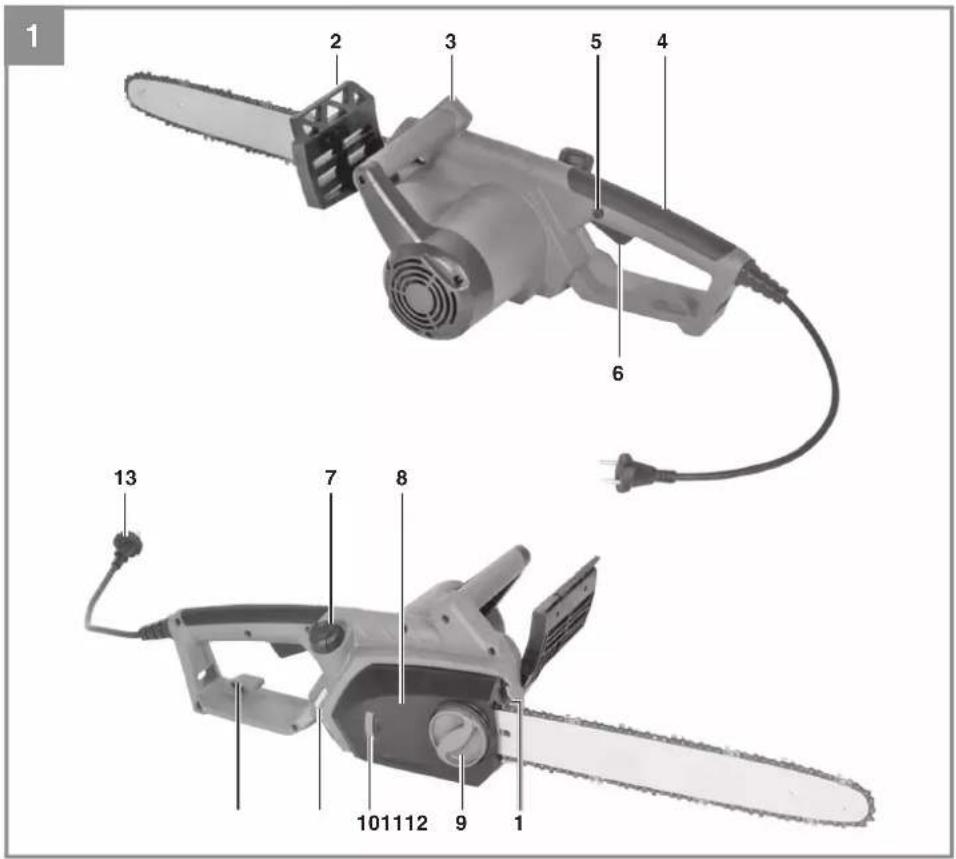
2. Layout and items supplied
2.1 Layout (Fig. 1-3)
- Claw stop
- Front hand guard
- Front handle
- Rear handle
- Safety lock-off
- ON/OFF switch
- Oil tank cover
- Chain wheel cover
- Fixing screw for the chain wheel cover
- Chain tensioning screw
- Chain oil fi ll level indicator
- Cable strain-relief clamp
- Power cable
- Rear hand guard
- Cutter rail
- Saw chain
- Cutter guard
GB
2.2 Items supplied
Please check that the article is complete as specified in the scope of delivery. If parts are missing, please contact our service center or the sales outlet where you made your purchase at the latest within 5 working days after purchasing the product and upon presentation of a valid bill of purchase. Also, refer to the warranty table in the service information at the end of the operating instructions.
- Open the packaging and take out the equipment with care.
- Remove the packaging material and any packaging and/or transportation braces (if available).
- Check to see if all items are supplied.
- Inspect the equipment and accessories for transport damage.
Pattfield® ERGO TOOLS
- If possible, please keep the packaging until the end of the guarantee period.
Danger!
The equipment and packaging material are not toys. Do not let children play with plastic bags, foils or small parts. There is a danger of swallowing or suff ocating!
• Original operating instructions
- Safetyinstructions
3. Proper use
The chainsaw is intended for felling trees and for cutting trunks, branches, wooden beams, boards etc. and can be used for cross cuts and longitudinal cuts. It is not suitable for cutting any materials other than wood.
The equipment is to be used only for its prescribed purpose. Any other use is deemed to be a case of misuse. The user / operator and not the manufacturer will be liable for any damage or injuries of any kind caused as a result of this.
Please note that our equipment has not been designed for use in commercial, trade or industrial applications. Our warranty will be voided if the machine is used in commercial, trade or industrial businesses or for equivalent purposes.
GB
Pattfield® ERGO TOOLS
4. Technical data
Mains voltage: 230-240 V \~ 50 Hz
Power rating: 1800 W
Idling speed: 7800 rpm
Cutter rail length: 356 mm
Cutting length, max.: 325 mm
Cutting speed at rated rpm: 13.5 m/s
Oil tank capacity: 160 ml
Weight with cutter rail and chain: 5 kg
Protection class: ....II /回
Danger!
Sound and vibration
Sound and vibration values were measured in accordance with EN 60745.
GB
L_nA sound pressure level 84,6 dB(A)
K_pA uncertainty 3 dB
L_WA sound power level 104,6 dB(A)
K_WA uncertainty 2,36 dB
L_WA sound power level guaranteed 108 dB(A)
Wear ear-muff s.
The impact of noise can cause damage to hearing.
Total vibration values (vector sum of three directions) determined in accordance with EN 60745.
Pattfield® ERGO TOOLS
Handle under load
Vibration emission value front handle
$$ \mathrm{a} _ {\mathrm{h}} = 4. 0 3 9 \mathrm{m} / \mathrm{s} ^ {2} $$
Vibration emission value rear handle
$$ \mathrm{a} _ {\mathrm{h}} = 5. 7 8 1 \mathrm{m} / \mathrm{s} ^ {2} $$
K uncertainty = 1.5 m/s ^2
The specified vibration value was established in accordance with a standardized testing method. It may change according to how the electric equipment is used and may exceed the specified value in exceptional circumstances.
The specified vibration value can be used to compare the equipment with other electric power tools.
The specified vibration value can be used for initial assessment of a harmful effect.
Keep the noise emissions and vibrations to a minimum.
- Only use appliances which are in perfect working order.
• Service and clean the appliance regularly. - Adapt your working style to suit the appliance.
• Do not overload the appliance.
• Have the appliance serviced whenever necessary. - Switch the appliance off when it is not in use.
• Wear protective gloves.
5. Before starting the equipment
Before you connect the equipment to the mains supply make sure that the data on the rating plate are identical to the mains data.
Pattfield® ERGO TOOLS
Warning!
Always pull the power plug before making adjustments to the equipment.
Caution: Do not connect the chainsaw to the power supply until it has been fully assembled and the chain tension has been adjusted. Always wear protective gloves when working on the chainsaw to protect yourself against injury.
5.1 Assembly of the cutter rail and the saw chain
- Carefully unpack all parts and check that they are complete (Fig. 2-3).
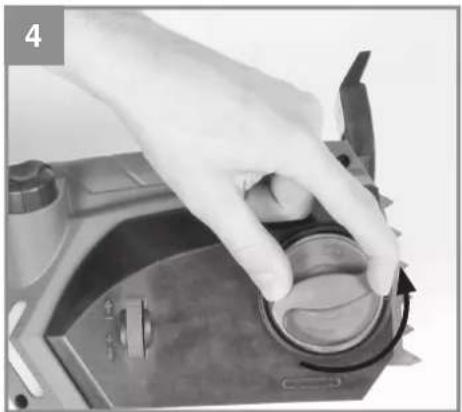
- Undo the fixing screw of the chain wheel cover (Fig. 4).
• Take off the chain wheel (Fig. 5). - Lay the chain as shown in the groove which runs around the cutter rail (Fig. 6/Item A).
- Insert the cutter rail and chain as shown in the mounting in the chainsaw (Fig. 6). At the same time guide the chain around the chain wheel (Fig. 6/ Item B).
- Attach the chain wheel cover and secure it with the fixing screw (Fig. 7). Caution: Do not fully tighten the fixing screw until after adjusting the chain tension (refer to point 5.2).
5.2 Tensioning the saw chain
Warning! Always disconnect the mains plug before performing any checks or adjustments. Always wear protective gloves when working on the chainsaw to protect yourself against injury.
- Undo the fixing screw of the chain wheel cover a few turns (Fig. 4).
- Adjust the chain tension with the chain tensioning screw (Fig. 8). Turning the screw clockwise increases the tension, turning it counter-clockwise decreases the chain tension. The saw chain is correctly tensioned if it can be lifted around 3-4 mm in the middle of the cutter rail (Fig. 9).
- Tighten the fixing screw of the chain wheel cover.
Pattfield® ERGO TOOLS
Danger! All of the chain links must lie properly in the guide groove of the cutter rail.
Notes on tensioning the chain:
The saw chain must be properly tensioned to ensure safe operation. You can tell that the chain tension is perfect if the saw chain can be lifted by around 3-4 mm in the middle of the cutter rail. As the saw chain heats up during cutting and thus changes in length, please check the chain tension every 10 minutes and adjust it again as required. This applies in particular to new saw chains. When you have finished working slacken the chain again, as the chain will shorten when it cools down. This will prevent the chain from being damaged.
5.3 Saw chain lubrication
Warning! Always disconnect the mains plug before performing any checks or adjustments. Always wear protective gloves when working on the chainsaw to protect yourself against injury.
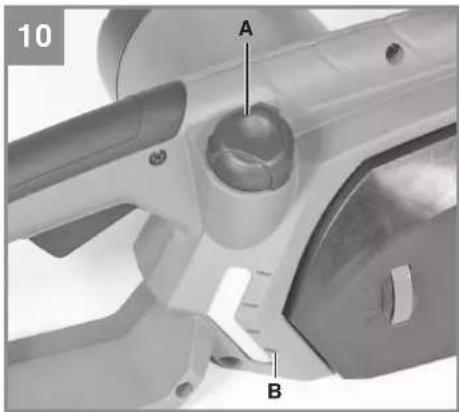
Notice! Never operate the chain if it is not lubricated with saw chain oil. Use of the chainsaw without saw chain oil or if the oil level is below the "min" mark (Fig. 10/ Item B) will damage the chainsaw.
Notice! Be aware of the temperature conditions: different lubricants with completely different viscosities are required at different ambient temperatures. At lower temperatures you will need low viscosity oils in order to achieve a sufficient lubricating film. However, if the same low viscosity oil is used during the summer it will become even thinner due to the ambient temperatures alone, and as a result the lubricating film could break down, causing the chain to overheat and become damaged. In addition, the chain oil would burn and produce unnecessary pollutants.
GB
Pattfield® ERGO TOOLS
Filling the oil tank:
- Place the chainsaw on a flat surface.
- Clean the area around the oil tank cover (Fig. 10/Item A) and then clean the oil tank cover.
- Fill the tank with saw chain oil. In the process, make sure that no dirt enters the tank, as this could cause the oil nozzle to become blocked.
- Close the oil tank cover.
6. Operation
6.1 Connecting to the mains supply
- Connect the power cable to a suitable extension cable. Make sure that the extension cable is designed for the power rating of the chainsaw.
- Secure the extension cable as shown in Fig. 12 to protect it against pulling forces and accidental disconnection.
- Connect the extension cable to a professionally installed safety mains outlet with ground contact.
We recommend using a cable with a bright and highly visible color, e.g. red or yellow. This will reduce the risk of accidentally damaging it with the chainsaw.
6.2 Switching on/off
Switching on
- Hold the chainsaw by the handles with both hands as shown in Fig. 13 (thumbs under the handles).
- Press and hold the safety lock-off (Fig. 1/Item 5).
- Switch on the chainsaw at the ON/OFF switch. You can then release the safety lock-off.
Pattfield® ERGO TOOLS
Switching off
Release the ON/OFF switch (Fig. 1/Item 6).
The integrated brake will bring the running chainsaw to a standstill within a very short space of time. Always disconnect the mains plug when you stop working, even if it is only for a short time.
Warning! Always carry the saw by the front handle. If the saw is plugged in and you carry it by the rear handle (which is where the switches are located), then there is a risk that you could accidentally press the safety lock-off and the ON/OFF switch at the same time, and the chainsaw could inadvertently start up.
6.3 Safety devices
Motor brake
The motor brakes the saw chain as soon as the ON/OFF switch (Fig. 1/Item 6) is released or the power supply is interrupted. This significantly reduces the risk of injury that would otherwise be present if the chain continued to run after being switched off or disconnected.
GB
Chain brake
The chain brake is a safety mechanism which is triggered via the front hand guard (Fig. 1/Item 2). If kickback causes the chainsaw to suddenly jerk back then the chain brake trips and stops the saw chain in less than 0.1 seconds. You must check the operation of the chain brake on a regular basis. To do this, fold the hand guard (Fig. 1/Item 2) forward and briefly switch the chainsaw on. The saw chain must not start up.
Pull back the front hand guard (Fig. 1/Item 2) until it engages to release the chain brake.
Pattfield® ERGO TOOLS
Danger! Never use the saw if the safety equipment is not working properly. Never try to repair safety related protection systems yourself – always have any work done by our service department or by a similarly qualified workshop.
Hand guard
The front hand guard (which also acts as the chain brake at the same time) (Fig. 1/Item 2) and the rear hand guard (Fig. 2/Item 14) protect against finger injuries resulting from contact with the saw chain if the chain breaks because it is overloaded.
7. Working with the chainsaw
7.1 Preparations
To ensure that you can work safely, check the following points before every use:
GB
Condition of the chain saw
Inspect the chainsaw before the start of work for damage to the housing, the power cable, the saw chain and the cutter rail. Never use a chainsaw which is obviously damaged.
Oil container
Fill level of the oil container. Even while working, keep checking that sufficient oil is in the system. To avoid damaging the chainsaw, never run the saw if there is no oil in the system or if the oil drops below the "min" mark (Fig. 10/Item B).
On average, a single filling will last around 15 minutes depending on the number of pauses in cutting and the loads involved.
Saw chain
Tension of the saw chain, condition of the cutting elements. The sharper the chainsaw, the easier and more controllable it is to operate the
Pattfield® ERGO TOOLS
chainsaw. The same also applies to the chain tension. Again, while working also check the chain tension every 10 minutes in order to increase your safety. New saw chains in particular often tend to expand more.
Chain brake
Check the operation of the chain brake as described in the chapter "Safety devices" and then release it.
Safety clothing
Always wear appropriate tight-fitting safety clothing like special trousers which protect against cuts, protective gloves and safety shoes.
Hearing protection and protective goggles.
When felling trees or performing forest work, always wear a protective helmet with integral face and hearing protection. This will offer protection against falling branches and any branches if they spring back.
GB
7.2 Description of the correct procedures for basic use of the chainsaw
Felling a tree (Figs. 14-17)
If two or more persons are working at the same time on felling and cutting back then the minimum distance between the tree being felled and the tree being cut back should be at least twice the height of the tree being felled (Fig. 14). When felling trees, care must be taken to ensure that no other persons are endangered, no power supply lines are hit and no material damage is caused to equipment or property. In the event that a tree comes into contact with a power supply line, he responsible power supply company should be informed immediately. When working with the saw on a slope, the operator of the chainsaw must be standing at a higher point on the slope than the tree being
Pattfield® ERGO TOOLS
felled, as the tree will roll or slip downhill once it has been felled (Fig. 15).
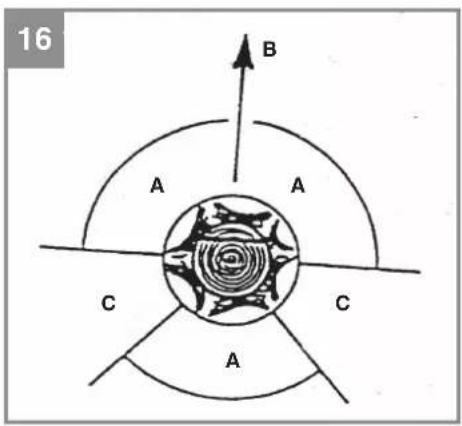
Before felling the tree you must first plan and if necessary clear an escape route. This escape route must lead away diagonally in the opposite direction to the expected fall direction – this can be seen in Fig. 16 (A= danger zone, B= direction of fall, C= escape zone).
Before felling the tree you must take into account the natural inclination of the tree, the location of larger branches and the wind direction, as this will help you to correctly determine the direction in which the tree will fall. Dirt, stones, loose bark, nails, staples and wire must be removed from the tree.
Making the felling notch (Fig. 17)
Cut a notch (A) at right angles to the fall direction to a depth of 1/3 of the tree diameter as shown in Fig. 17. First make the lower horizontal felling notch (1). This prevents the saw chain or the guide rail from becoming trapped when the second felling notch is made.
GB
Making the felling cut (Fig. 17)
The felling cut should be positioned at least 50 mm above the horizontal felling notch. Make the felling cut (B) parallel to the horizontal felling notch. The felling cut should be cut to a depth which leaves a thin strip (felling hinge strip) (D) which can act as a hinge. This strip prevents the tree from rotating and falling in the wrong direction. Do not cut through the strip. When the felling cut gets close to the strip the tree should start to fall. If it becomes clear that the tree may well fall in a different direction to the desired fall direction (C) or it starts to lean back and traps the saw chain, interrupt the felling cut and insert wedges made of wood, plastic or aluminum to open out the cut and control the lean of the tree until it leans in the required direction.
When the tree starts to fall, remove the chainsaw from the cut, switch it off, place it on the ground and exit the danger zone via the planned escape route. Watch out for falling branches and take care not to trip.
Pattfield® ERGO TOOLS
Removing branches
Here we are talking about removing branches from the felled tree. When removing branches, leave any downward facing branches which are supporting the tree until the trunk of the tree has been cut up. Smaller branches should be removed as shown in Fig. 18 (A= cutting direction when removing branches, B= keep away from the ground! Supporting branches should be left until the trunk is cut up) in a single cut from the bottom to the top. Any branches which are under tension should be cut from the bottom to the top to prevent the saw from becoming trapped.
Cutting the tree trunk into lengths
Here we are looking at the process of cutting the felled tree into sections. Make sure you have a sure footing and distribute your body weight evenly onto both feet. If possible the trunk should be underlaid and supported with branches, beams or wedges. For easy cutting follow the simple instructions below.
If the full length of the tree trunk is evenly supported as shown in Fig. 19 then proceed by cutting from the top down. Take care not to cut into the ground in the process.
GB
If the weight of the tree trunk is resting on one end as shown in Fig. 20, first cut through 1/3 of the trunk diameter from the underside (A) in order to prevent it from splintering. Make the second cut from the top (2/3 of the diameter) to the height of the first cut (B) (this prevents the chainsaw from being trapped).
If the weight of the tree trunk is resting on both ends as shown in Fig. 21, first cut through 1/3 of the trunk diameter from the top (A) in order to prevent it from splintering. Make the second cut from underneath (2/3 of the diameter) to the height of the first cut (B) (this prevents the chainsaw from being trapped).
Pattfield® ERGO TOOLS
When working with the saw on a slope, always position yourself at a higher point on the slope above the tree as shown in Fig. 15. In order to retain full control at the moment when the cut goes through, reduce pressure towards the end of the cut without releasing your firm grip on the handles of the chainsaw. Take care to ensure that the chainsaw does not touch the ground.
After completing the cut, wait for the chain saw to come to a stand-still before removing the chainsaw. Always switch off the motor of the chainsaw before moving from tree to tree.
7.3 Kickback
The term “kickback” describes what happens when the running chainsaw suddenly kicks upward and backward. Usually, this is caused by contact between the tip of the cutter rail and the workpiece or the saw chain becoming trapped.
In the event of kickback, large forces occur suddenly and violently.
As a result, the chainsaw usually reacts uncontrollably. This can often result in very serious injuries to the worker or persons in the vicinity.
The risk of kickback is particularly great when performing cross cuts, angled cuts and longitudinal cuts, as it is not possible to use the claw stop on these cuts. You should therefore avoid these cuts as far as possible and take particular care when they are unavoidable.
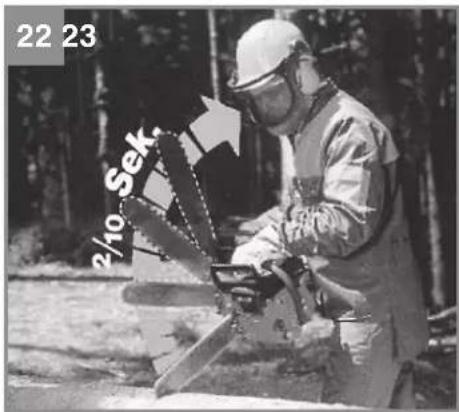
The risk of kickback is at its greatest when the saw is positioned for a cut in the region of the tip of the cutter rail, as the leverage effect is greatest there (Fig. 22). It is therefore safest to position the saw flat and as close as possible to the claw stop before making the cut (Fig. 23).
Warning!
• Make sure that the chain tension is always correctly adjusted.
- Only use a chainsaw if it is in perfect working order.
- Only work with a saw chain that has been properly sharpened in accordance with the instructions.
Pattfield® ERGO TOOLS
• Never operate the saw above shoulder height.
- Never cut with the upper edge or the tip of the sword.
• Always hold the chainsaw firmly with both hands.
- Whenever possible, use the claw stop as a leverage point.
Cutting wood which is under tension
Special care is required when cutting wood which is under tension. Wood which is under tension from which it is released by cutting may in some cases react completely unpredictably and uncontrollably. In the worst case this could result in extremely severe or even fatal injuries (Fig. 24-26).
This type of work must only be performed by persons who have been specially trained.
8. Replacing the power cable
Danger!
If the power cable for this equipment is damaged, it must be replaced by the manufacturer or its after-sales service or similarly trained personnel to avoid danger.
GB
9. Cleaning, maintenance and ordering of spare parts
Danger!
• Always disconnect the mains plug before cleaning the chainsaw.
- Never immerse the unit in water or other liquids in order to clean it.
- Store the chainsaw in a safe and dry place out of the reach of children.
Pattfield® ERGO TOOLS
9.1 Cleaning
- Regularly clean the clamping mechanism by blowing it out with compressed air or cleaning it with a brush. Do not use tools for cleaning.
- Keep the handles free of grease so that you can maintain a firm grip.
- Clean the device as required with a damp cloth and, if necessary, mild washing up liquid.
- If the chainsaw is not to be used for an extended period of time then you should remove the chain oil from the tank. Briefly immer-se the saw chain and the cutter rail in an oil bath and then wrap them in oil paper.
9.2 Carbon brushes
In case of excessive sparking, have the carbon brushes checked only by a qualified electrician.
Danger! The carbon brushes should not be replaced by anyone but a qualified electrician.
GB
9.3 Maintenance
Replacing the saw chain and cutter rail
The cutter rail needs to be replaced if
• the guide groove of the cutter rail is worn;
• the nose sprocket in the cutter rail is damaged or worn.
Proceed as described in the section "Assembly of the cutter rail and the saw chain".
Pattfield® ERGO TOOLS
Checking the automatic chain lubrication
You should check the operation of the automatic chain lubrication system on a regular basis in order to guard against overheating and the associated damage to the cutter rail and the saw chain. To do this, point the tip of the cutter rail towards a smooth surface (board, section of a cut tree) and allow the chainsaw to run.
If an increasing oil trace becomes evident during this process then the automatic chain lubrication system is working properly. If no clear oil trace is evident then please refer to the corresponding instructions in “Troubleshooting”. If the information contained there still fails to remedy the situation then please contact our service department or another similarly qualified workshop.
Danger! Do not actually touch the surface with the tip of the cutter rail when performing this test. Keep a safe distance (approx. 20 cm).
Sharpening the saw chain
Eff ective working with the chainsaw is only possible if the saw chain is in good condition and sharp. This also reduces the risk of kickback. The saw chain can be re-sharpened by any dealer. Do not attempt to sharpen the saw chain yourself unless you have the necessary special tools and experience.
GB
9.4 Ordering replacement parts:
Please quote the following data when ordering replacement parts:
- Type of machine
• Article number of the machine
• Identification number of the machine
• Replacement part number of the part required
Current prices and information are available on request at your Hornbach store.
Pattfield® ERGO TOOLS
10.Storage
Store the equipment and accessories out of children's reach in a dark and dry place at above freezing temperature. The ideal storage temperature is between 5 and 30^ . Store the electric tool in its original packaging.
11. Troubleshooting
Danger!
Before troubleshooting, switch off the tool and disconnect the mains plug.
The table below contains a list of fault symptoms and explains what you can do to remedy the problem if your tool fails to work properly. If the problem still persists after working through the list then please contact your nearest service workshop.
| Cause Fault Remedy | ||
| Chainsaw does not work at all | - Quick stop brake has been triggered- No power supply- Defective mains outlet- Power extension cable damaged- Defective fuse | - Pull the hand protection back to the normal position.- Check the power supply.- Try an alternative source of electrical power, replace if necessary.- Check the cable and replace as required.- Replace the fuse. |
| Chainsaw operates intermittently | -Powercabledamaged- Loose connection (external)- Loose connection (internal)- ON/OFF switch defective | - Consult a specialist workshop.- Consult a specialist workshop.- Consult a specialist workshop.- Consult a specialist workshop. |
GB
Pattfield® ERGO TOOLS
| Cause Fault Remedy | ||
| Sawchain dry | - No oil in the tank- Oil tank cap breather blocked- Oil outlet blocked | - Fill up with oil.- Clean the oil tank cap.- Clear the oil outlet. |
| Chainbrake does not work | - Problem with the switch mechanism in the front hand guard | - Consult a specialist workshop. |
| Chain/guide rail hot | - No oil in the tank- Oil tank cap breather blocked- Oil outlet blocked- Blunt chain | - Fill up with oil.- Clean the oil tank cap.- Clear the oil outlet- Re-sharpen or replace the chain. |
| Chainsaw juddering, vibrating or not sawing properly | - Chain tension too loose- Blunt chain- Worn chain- Saw teeth pointing in the wrong direction | - Adjust the chain tension.- Re-sharpen or replace the chain.- Replace the chain.- Reinstall the saw chain with the teeth facing in the correct direction. |
Pattfield® ERGO TOOLS
12. Disposal

The crossed-out wheeled bin logo requires the separate collection of waste electric and electronic equipment (WEEE). Such equipment may contain dangerous and hazardous substances. These tools must be returned to a designated collection point for the recycling of WEEE and must not be disposed as unsorted municipal waste. By doing so, you will help to conserve resources and protect the environment. Contact your local authorities for more information.
Children must not play with plastic bags and packaging material, due to possible injury or danger of suffocation. Store such material safely or dispose of environmentally friendly.
Subject to technical changes
GB
Pattfield® ERGO TOOLS
- The product meets the requirements of EN 61000-3-11 and is subject to special connection conditions. This means that use of the product at any freely selectable connection point is not allowed.
- Given unfavorable conditions in the power supply the product can cause the voltage to fluctuate temporarily.
- The product is intended solely for use at connection points that a) do not exceed a maximum permitted mains system impedance of Z sys = 0.3 Ω, or b) have a continuous current-carrying capacity of the mains of at least 100 A per phase.
- As the user, you are required to ensure, in consultation with your electric power company if necessary, that the connection point at which you wish to operate the product meets one of the two requirements, a) or b), named above.
13. EC Declaration of Conformity
EC Declaration of Conformity
in accordance with the EC Machinery Directive 2006/42/EC and the Noise Emission of Outdoor Equipment Directive 2000/14/EC
We hereby declare that the machine identified below conforms with the basic safety and health requirements of EC Directives 2006/42/EC, 2000/14/EC, 2014/30/EC, 2011/65/EC by virtue of its design and construction in the configuration in which we sell it. This declaration loses its validity in the event of a change to the machine which we have not approved.
Manufacturer: Hornbach Baumarkt AG Hornbachstrasse 11 76879 Bornheim, Germany
Description: Electric chainsaw PE-EKS 1835
The following harmonised standards were applied:
EN 60745-1/A11:2010, EN 60745-2-13/A1:2010, EN 55014-1/A2:2011, EN 55014-2/A2:2008, EN 61000-3-2/A2:2014, EN 61000-3-11:2000, EN 62321:2009
Conformity with the EC Machinery Directive is verified by the assessment procedure in accordance with Appendix IX:
Notified Body: TÜV SÜD Product Service GmbH Ridlerstraße 65 – D 80339 München Germany Notified Body No.: 0123 Reg. No.: M6A 17 03 27730 111
The conformity with the Noise Emission of Outdoor Equipment Directive is verified by the adherence to the following emissions values:
Measured sound power level: 104,6 dB(A) Guaranteed sound power level: 108 bB(A)
Bornheim, 17/11/2017
Andreas Back
Head of Quality Management & Person authorised to compile the technical file Hornbach Baumarkt AG
| H | o | r | n | b | a | c |
| 7 | 6 | 8 | 7 | 9 | B |
GB
| h | s | t | r | a |
| o | r | n | h | e |
Pattfield® ERGO TOOLS
14. Service information
Please note that the following parts of this product are subject to normal or natural wear and that the following parts are therefore also required for use as consumables.
| Category Example | |
| Wear parts* Cutter bar, carbon brushes | |
| Consumables* Saw chain | |
| Missing parts |
* Not necessarily included in the scope of delivery!
In case of defects or faults, please contact your nearest Hornbach store. Describe the fault as precisely as possible and always answer the following questions:
- Did the equipment work at all or was it defective from the beginning?
• Did you notice anything (symptom or defect) prior to the failure? - What malfunction does the equipment have in your opinion (main symptom)?
Describe this malfunction.
GB
15.Warranty certifi cate
Dear Customer,
All of our products undergo strict quality checks to ensure that they reach you in perfect condition. In the unlikely event that your device develops a fault, please contact our service department at the address shown on this guarantee card or the sales outlet from where you bought the device. Please note the following terms under which guarantee claims can be made:
-
These warranty terms regulate additional warranty services, which the manufacturer mentioned below promises to buyers of its new products in addition to their statutory rights of guarantee. Your statutory guarantee claims are not affected by this guarantee. Our guarantee is free of charge to you.
-
The warranty services cover only defects due to material or manufacturing faults on a product which you have bought from the manufacturer mentioned below and are limited to either the rectification of said defects on the product or the replacement of the product, whichever we prefer.
Please note that our devices are not designed for use in commercial, trade or professional applications. A guarantee contract will not be created if the device has been used by commercial, trade or industrial business or has been exposed to similar stresses during the guarantee period.
- The following are not covered by our guarantee:
- Damage to the device caused by a failure to follow the assembly instructions or due to incorrect installation, a failure to follow the operating instructions (for example connecting it to an incorrect mains voltage or current type) or a failure to follow the maintenance and safety instructions or by exposing the device to abnormal environmental conditions or by lack of care and maintenance. - Damage to the device caused by abuse or incorrect use (for example overloading the device or the use or unapproved tools or accessories), ingress of foreign bodies into the device (such as
GB
Pattfield® ERGO TOOLS
sand, stones or dust, transport damage), the use of force or damage caused by external forces (for example by dropping it).
- Damage to the device or parts of the device caused by normal or natural wear or tear or by normal use of the device.
- The guarantee is valid for a period of 3 years starting from the purchase date of the device. Guarantee claims should be submitted before the end of the guarantee period within two weeks of the defect being noticed. No guarantee claims will be accepted after the end of the guarantee period. The original guarantee period remains applicable to the device even if repairs are carried out or parts are replaced. In such cases, the work performed or parts fitted will not result in an extension of the guarantee period, and no new guarantee will become active for the work performed or parts fitted. This also applies if an on-site service is used.
Also refer to the restrictions of this warranty concerning wear parts, consumables and missing parts as set out in the service information in these operating instructions.
GB
Hornbach Baumarkt AG, Hornbachstraße 11, 76879 Bornheim / Germany www.hornbach.com
Pattfield® ERGO TOOLS

Pattfield® ERGO TOOLS
Pattfield® ERGO TOOLS

Pattfield® ERGO TOOLS
Manufactured for HORNBACH-Baumarkt AG
Hornbachstraße 11,76879 Bornheim / Germany
ED201711