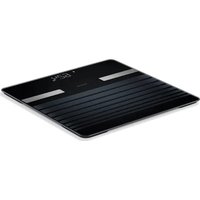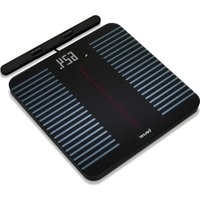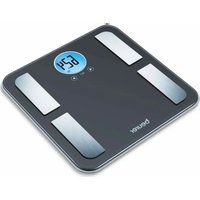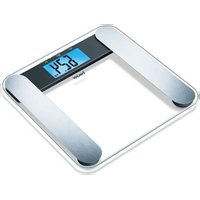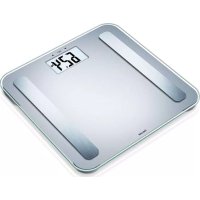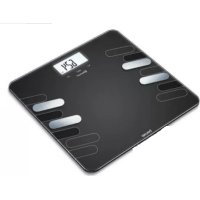
BF 600 - Scale BEURER - Free user manual and instructions
Find the device manual for free BF 600 BEURER in PDF.


| Features | Details |
|---|---|
| Product type | Electronic scale |
| Maximum capacity | 180 kg |
| Accuracy | 100 g |
| Display | Backlit LCD screen |
| Additional features | Body Mass Index (BMI) measurement |
| Power supply | Batteries (included) |
| Dimensions | 30 x 30 x 2.5 cm |
| Weight | 1.5 kg |
| Material | Tempered glass and plastic |
| Usage | For weighing body weight at home |
| Maintenance | Clean with a damp cloth, do not immerse in water |
| Safety | Do not use on slippery surfaces |
| Warranty | 2 years |
Frequently Asked Questions - BF 600 BEURER
User questions about BF 600 BEURER
0 question about this device. Answer the ones you know or ask your own.
Ask a new question about this device
Download the instructions for your Scale in PDF format for free! Find your manual BF 600 - BEURER and take your electronic device back in hand. On this page are published all the documents necessary for the use of your device. BF 600 by BEURER.
USER MANUAL BF 600 BEURER
EN Diagnostic bathroom scale
Instructions for use 15
FR Pese-personne impedancemetre
Mode d'emploi 27
ES Báscula de diagnóstico
www.beurer.com/web/we-landingpages/de/cedeclarationofconformity.php.
16. Garantie/Service
Read these instructions for use carefully and keep them for later use, be sure to make them accessible to other users and observe the information they contain.
Dear customer,
Thank you for choosing a product from our range. Our name stands for high-quality, thoroughly tested products for applications in the areas of heat, weight, blood pressure, body temperature, pulse, gentle therapy, massage, beauty, baby and air.
With kind regards,
Your Beurer team
Contents
- Getting to know your device 15
- Signs and symbols 16
- Intended use 17
4.Warnings and safety notes.. 17
5.Information 18 - Device description.. 19
- Initial use with the app.. 19
-
Initial use of the scale without the app.....20
-
Take measurement 20
- Evaluating the results 21
- Other functions 23
- Cleaning and maintaining the device 24
13.What if there are problems? 24 - Cleaning and maintenance 25
- Technical specifications 25
- Warranty/service 26
Included in delivery
- Quick guide
- BF 600 diagnostic bathroom scale
- 2 x 1.5 V AAA batteries
These instructions for use - 1x warranty leaflet
1. Getting to know your device
Functions of the device
This digital diagnostic scale is intended for weighing and providing a diagnosis of your personal fitness data.
It is intended for self-testing in the private domain.
The scale is equipped with the following diagnostic functions, which can be used by up to 8 different people:
- Body weight measurement and BMI,
Calculating body fat percentage, - Body water content,
- Muscle percentage,
Bone mass and - Basal metabolic rate and active metabolic rate.
The scale also includes the following additional features:
- Switch between kilograms "kg", pounds "lb" and stones "st",
Automatic switch-off function, - Low battery indicator,
Automatic user recognition,
Storage of the last 30 measurements for 8 users if the data cannot be transferred to the app.
System requirements „beurer HealthManager Pro“ / „beurer HealthManager“ App
iOS from version 12.0, Android™ from version 8.0 with Bluetooth® ≥ 4.0.
List of compatible devices:
2. Signs and symbols
The following symbols are used on the device, in these instructions for use, on the packaging and on the type plate for the device:
| WARNING Warning notice indicating a risk of injury or damage to health. | |||
| IMPORTANT Safety note indicating possible damage to the device/accessory. | |||
| i | Note Note on important information | ||
| Observe the instructions for use | |||
| Disposal in accordance with the Waste Electrical and Electronic Equipment EC Directive - WEEE | |||
| 20 PAP | Disposition of packaging in an environmentally friendly manner | ||
| CE | This product satisfies the requirements of the applicable European and national directives. | ||
| UKCA | United Kingdom Conformity Assessed Mark | ||
| EAC | The products demonstrably meet the requirements of the Technical Regulations of the EAEU. | ||
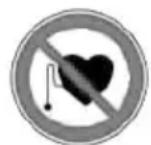
| The device may not be used by people with medical implants (e.g. pacemakers), as this may affect their functionality. | |||
| Manufacturer | |||
| 180 kg | Do not load the scale beyond 180 kg/396 lb/28 st. | Danger of slipping: do not step on the scale with wet feet. | |
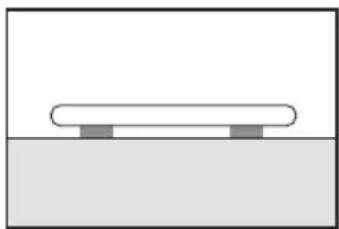
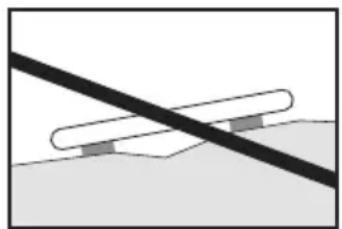
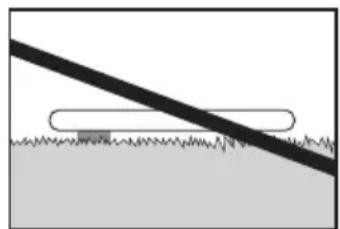
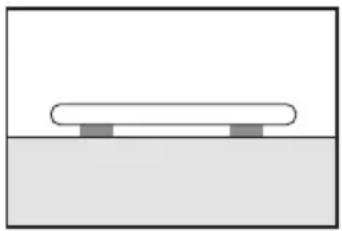
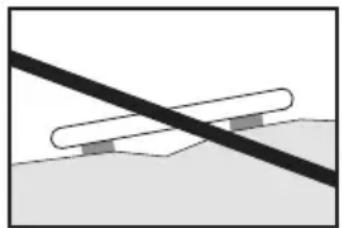
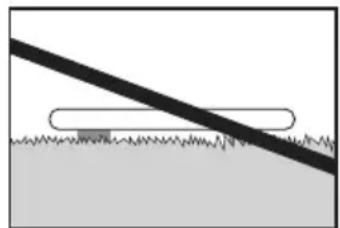
| Danger of tipping: position yourself in the centre of the weighing surface. | Place the scale on an even surface. No carpet. | ||
3. Intended use
The device is only intended for weighing humans and for recording your personal fitness data. The device is only intended for private use, and not for medical or commercial purposes.
4.Warnings and safety notes
Please read these instructions for use carefully and keep them for later use, be sure to also make them accessible to other users and observe the notes they contain.

WARNING
- The scale may not be used by people with medical implants (e.g. pacemakers), as this may affect their functionality.
- Do not use during pregnancy.
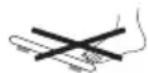
- Never step onto the outer edge of the scale with one foot as this could cause the scale to tip!
- Swallowing batteries can be extremely dangerous. Keep the batteries and scale out of the reach of small children. Should a battery be swallowed, seek medical assistance immediately.
- Keep packaging material away from children (risk of suffocation).
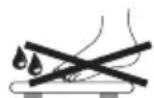
- Warning, do not step onto the scale with wet feet or if the surface of the scale is damp - danger of slipping!

Notes on handling batteries
- If your skin or eyes come into contact with battery fluid, rinse the affected areas with water and seek medical assistance.
- Choking hazard! Small children may swallow and choke on batteries. Store the batteries out of the reach of small children.
- Observe the plus (+) and minus (-) polarity signs.
- If a battery has leaked, put on protective gloves and clean the battery compartment with a dry cloth.
- Protect batteries from excessive heat.
- Risk of explosion! Do not throw batteries into a fire.
- Do not charge or short-circuit batteries.
- If the device is not to be used for a relatively long period, take the batteries out of the battery compartment.
- Use identical or equivalent battery types only.
Always replace all batteries at the same time. - Do not use rechargeable batteries.
- Do not disassemble, split or crush the batteries.
i General notes
- The device is suitable only for private use, and not for medical or commercial purposes.
- Please note that measuring tolerances are possible for technical reasons as this scale is not calibrated for use in a professional medical context.
- In cases of differing measurements (between the scale and app), only use the measured values displayed on the scale.
- The scale's maximum capacity is 180kg (396 lb/28 st). The results for weight and bone mass are displayed in 100 g increments (0.2 lb).
- Measurements of body fat, body water and muscle content are displayed in increments of 0.1% .
- Calorie requirement is indicated in steps of 1 kcal.
- When supplied to the customer, the scale is set to weigh and measure in "kg" and "cm". You can change the unit settings during initial use of the app.
- Place the scale on an even, hard surface; a hard surface is crucial to accurate measurements.
- Protect the device from knocks, damp, dust, chemicals, marked temperature fluctuations and nearby sources of heat (ovens, heaters).
- Repairs must only be carried out by Beurer Customer Services or authorised retailers. Before making a claim, please check the batteries first and replace them if necessary.
Storage and maintenance
The accuracy of the measurements and service life of the device depend on its careful handling:

IMPORTANT
- The device should be cleaned from time to time. Do not use any abrasive cleaning products and never submerge the device in water.
- Make sure that no liquids come into contact with the scale. Never submerge the scale in water. Never rinse it in running water.
- Do not place any objects on the scale when not in use.
- Protect the device from knocks, damp, dust, chemicals, marked temperature fluctuations and nearby sources of heat (ovens, heaters).
- Do not press the buttons violently or with pointed objects.
- Do not expose the scale to high temperatures or strong electromagnetic fields (e.g. mobile telephones).
5. Information
The measurement principle
This scale works on the principle of B.I.A. (bioelectrical impedance analysis). This involves the calculation of body content within seconds, using a current that is not noticeable, is completely non-hazardous and does not pose any risk.
When this measurement of the electrical resistance (impedance) is considered alongside constants and/or individual values (age, height, gender, activity level), the body fat percentage and other variables in the body can be calculated. Muscle tissue and water conduct electricity well and therefore have a lower resistance. In contrast, bones and fat tissue have low conductivity as the fat cells and bones are barely able to conduct the current due to very high levels of resistance.
Please note that the values calculated by the diagnostic scale only represent an approximation of the actual medical analytical values for the body. Only a specialist doctor can precisely establish the body fat, body water, muscle percentage and bone structure using medical methods (e.g. computer tomography).
General tips
- As far as possible, weigh yourself at the same time everyday (ideally in the morning), after having been to the toilet, on an empty stomach and without clothing, in order to obtain results which can be compared.
- Important point regarding the measurement: the calculation of body fat may only be made when barefoot; the soles of the feet may be lightly dampened where appropriate.
Results may be unsatisfactory if the soles of the feet are completely dry or feature high levels of horny skin as this results in insufficient conductivity.

Note: There must be no skin contact between your feet, legs, calves or thighs. Otherwise, the measurement cannot be taken correctly.
- Stand up straight and still whilst weighing yourself.
- Wait a few hours after any physical exertion to which your body is unaccustomed.
- Wait approx. 15 minutes after getting up so that the water stored in the body can disperse.
- You must remember that only the long-term trend is important. Brief deviations in weight within a few days are normally caused by loss of fluids; however, body water plays an important role in terms of well-being.
Limitations
When calculating the body fat and the additional values, deviating and implausible results may occur in the case of:
Children under 10 years of age,
Performance athletes and body-builders,
- Persons with a fever, persons undergoing dialysis, persons demonstrating oedema symptoms and persons suffering from osteoporosis,
- Persons taking cardiovascular medicine (affecting the heart and vascular system),
- Persons taking vasodilative or vasoconstrictive medication,
- Persons with significant anatomical deviations in their legs compared with their overall body height (leg length significantly shorter or longer).
6. Device description
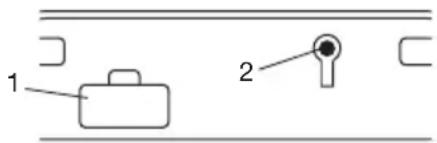
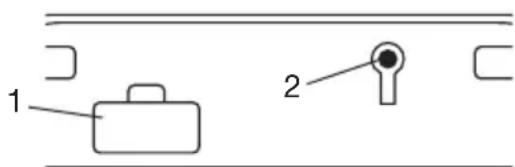
Rear
- Battery compartment
- Unit reset button
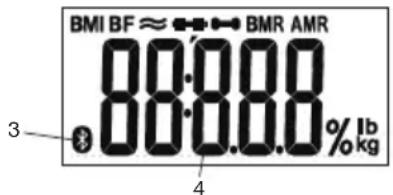
Display
- Bluetooth® symbol for connection between scale and smartphone.
- Measurements
7. Initial use with the app
To calculate your body fat percentage and additional body values, you must save the personal user data on the scale.
The scale has 8 user memory spaces which allows, for example, you and your family members to save personal settings.
It is also possible to activate users via other mobile end devices on which the "beurer HealthManager Pro" / "beurer HealthManager" app has been installed or by changing the user profile in the app (see the app settings).
Keep the smartphone close to the scale in order to maintain an active Bluetooth® connection during initial use.
- Activate Bluetooth® in your smartphone's settings.
- Insert the batteries and place the scale on a solid surface ("App" will flash on the scale's LCD).
- Download the free "beurer HealthManager Pro" / "beurer HealthManager" app from the Apple App Store (iOS) or at Google Play (Android™).
- Start the app and follow the instructions.
- Enter the BF 600 related data.
The following settings must be set or entered in the "beurer HealthManager Pro" / "beurer HealthManager" app:
| User data Set values | |
| Gender Male ( | ), female ( |
| Height 100 to 220 cm (3' 3.5" to 7' 2.5") | |
| Age 10 to 100 years | |
| Activity level 1 to 5 | |
Activity levels
The medium-term and long-term perspective is decisive when selecting the activity level.
| Activity level | Physical activity |
| 1 | None. |
| 2 | Low: little and light physical exertion (e.g. going for walks, light gardening work, gymnastic exercises). |
| 3 | Medium: physical exertion, at least 2 to 4 times a week for 30 minutes each session. |
| 4 | High: physical exertion, at least 4 to 6 times a week for 30 minutes each session. |
| 5 | Very high: intensive physical exertion, intensive training or hard physical work, daily for at least 1 hour. |
The app assigns the next free scale user memory (P-01-P-08) to you.
- Taking the measurement
For automatic personal recognition, the first measurement must be assigned to your personal user data. The app will prompt you to do this. Step onto the scale, ideally with bare feet, and ensure that you are standing still with equal weight distribution and with both feet on the electrodes. Now continue with chapter "Take measurement".
8. Initial use of the scale without the app
We recommend using the app for the initial use and implementing all settings. See chapter 6 "Initial use with the app" However, this can also be carried out on the device itself.
Remove the batteries from the protective packaging and insert the batteries into the scale ensuring that the battery polarity is correct. If the scale does not function, remove the batteries completely and reinsert them.
Place the scale on an even, hard surface; a hard surface is crucial to accurate measurements.
Press the "SET" button.
Set the year/month/day and hour/minute by pressing the buttons “ ” and confirm these settings by pressing the “SET” button.
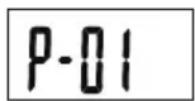
The scale displays "0.0". Press the "SET" button again. "P-01" or the last used scale user memory will appear. Select your user memory (P-01 to P-08) with the arrows "√^" and press the "SET" button. Carry out your settings, such as gender, height etc. (see chapter "Initial use with the app (table)". Confirm each setting by pressing the "SET" button. A PIN will be displayed at the end of your settings. This will be required for logging into the app later. Afterwards "0.0" is displayed.
For automatic personal recognition, the first measurement must be assigned to your personal user data.
Step onto the scale, ideally with bare feet, and ensure that you are standing still with equal weight distribution and with both feet on the electrodes.
7.1 Logging in to the app at a later time
If you have carried out the initial use of the scale without using the app, you can transfer or create your user on the app as follows.
- Download the free "beurer HealthManager Pro" / "beurer HealthManager" app from the Apple App Store (iOS) or at Google Play (Android™).
- Start the app and follow the instructions.
9. Take measurement
Place the scale on an even, hard surface; a hard surface is crucial to accurate measurements.
9.1 Diagnostic functions
Step onto the scale with bare feet and ensure that you are standing still with equal weight distribution and with both legs on the electrodes.

Note: The measurement result will be incorrect if the measurement is taken with socks on.
The scale begins to take measurements straight away.
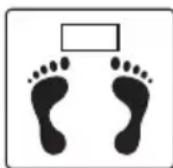
First, the weight is displayed.
During the BIA analysis, "..." is displayed.
0000
If a user was assigned, P-01-P-08 is displayed and all of the following values will be saved.
- BMI
- Body fat in %
- Body water in % ≈
- Muscle percentage in % 0-0
- Bone mineral amount in kg
- Basal metabolic rate in kcal (BMR)
- Active metabolic rate in kcal (AMR)
Note: If the user is not recognised, then the user assignment (e.g. P-01) is missing and only the weight can be displayed. The measured values will not be saved.
This happens if your measured weight differs from the previous measurement by ± 3kg or if another user has similar values (± 3kg) to yours. In this case, repeat the measurement by turning on the scale and pressing the “ ” button to select your user memory (P-01-P-08). Repeat the measurement.
9.2 Weight
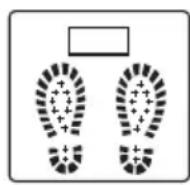
Step onto the scale wearing shoes and ensure that you are standing still with equal weight distribution and with both legs on the scale. The scale begins to take measurements straight away.
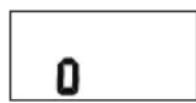
First, the weight is displayed.
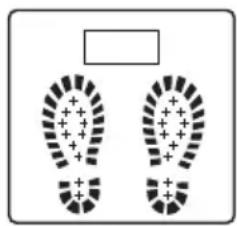
" d " will briefly be displayed on the LCD. A BIA analysis is not possible.
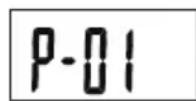
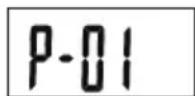
If a user was assigned, "P-01", for example, will be displayed and the weight will be saved.
Note: If the user is not recognised, then the user assignment (e.g. P-01) is missing and only the weight can be displayed. The measured values will not be saved.
This happens if your measured weight differs from the previous measurement by ± 3kg or if another user has similar values (± 3kg) to yours. In this case, repeat the measurement by turning on the scale and pressing the “ ” button to select your user memory (P-01-P-08). Repeat the measurement.
10. Evaluating the results
Body mass index
The Body Mass Index (BMI) is a figure that is commonly used to evaluate body weight. The figure is calculated from body weight and height. The formula is:
Body mass index = body weight ÷ height². The measurement unit for BMI is [kg / m^2] . According to the BMI, weight is classified for adults (20 years and over) using the following values:
| Category BMI | ||
| Underweight Severely underweight <1 | 6 | |
| Underweight 16-16.9 | ||
| Slightly underweight 17-18.4 | ||
| Normal weight 18.5-25 | ||
| Overweight Overweight 25.1-29.9 | ||
| Obese (overweight) Class I obesity 30 | 34.9 | |
| Class II obesity 35-39.9 | ||
| Class III obesity ≥40 | ||
Body fat percentage
The subsequent body fat percentages serve as a guideline (for further information ask your doctor).
Male Female
| Age Low | Normal | Moderate | High | Age Low | Normal | Moderate | High | |||
| 10-14 <1 | 1% 11-16 | % 16.1-21% | >21.1% | 10-14 <16% | 16-21% | 21 | 1-26% >26.1% | |||
| 15-19 <1 | 2% 12-17 | % 17.1-22% | >22.1% | 15-19 <17% | 17-22% | 22 | 1-27% >27.1% | |||
| 20-29 <1 | 3% 13-18 | % 18.1-23% | >23.1% | 20-29 <18% | 18-23% | 23 | 1-28% >28.1% | |||
| 30-39 <1 | 4% 14-19 | % 19.1-24% | >24.1% | 30-39 <19% | 19-24% | 24 | 1-29% >29.1% | |||
| 40-49 <1 | 5% 15-20 | % 20.1-25% | >25.1% | 40-49 <20% | 20-25% | 25 | 1-30% >30.1% | |||
| 50-59 <1 | 6% 16-21 | % 21.1-26% | >26.1% | 50-59 <21% | 21-26% | 26 | 1-31% >31.1% | |||
| 60-69 <1 | 7% 17-22 | % 22.1-27% | >27.1% | 60-69 <22% | 22-27% | 27 | 1-32% >32.1% | |||
| 70-100 | <18% 18-2 | 3% 23.1-28% | >28.1% | 70-100 <28% | 23-28% | 28.1-33% | >33.1% |
A lower value will often be determined in the case of athletes. Depending on the sporting activities performed, the training intensity and the physical constitution, the results may still be below the stated standard values. Please note, however, that there may be a risk to health in the case of extremely low values.
Body water content
The body water content in % is normally within the following ranges:
Male Female
| Age | Poor | Good | Very good |
| 10-100 | <50 % | 50–65% | >65% |
| Age | Poor | Good | Very good |
| 10-100 | <45 % | 45–60% | >60% |
Body fat contains relatively little water, therefore body water content may be below the standard values in persons with a high body fat percentage. On the other hand, endurance athletes may exceed the standard values due to having low levels of fat and a high muscle percentage.
The body water calculation performed using this scale is not suitable for drawing medical conclusions, for example in the case of age-related water retention. Consult your doctor where necessary. A high body water content is generally desirable.
Muscle percentage
The muscle percentage is normally within the following ranges:
Male Female
| Age | Low | Normal | High |
| 10-14 | <44% | 44-57% | >57% |
| 15-19 | <43% | 43-56% | >56% |
| 20-29 | <42% | 42-54% | >54% |
| 30-39 | <41% | 41-52% | >52% |
| 40-49 | <40% | 40-50% | >50% |
| 50-59 | <39% | 39-48% | >48% |
| 60-69 | <38% | 38-47% | >47% |
| 70-100 | <37% | 37-46% | >46% |
| Age | Low | Normal | High |
| 10-14 | <36 % | 36-43% | >43% |
| 15-19 | <35 % | 35-41% | >41% |
| 20-29 | <34% | 34-39% | >39% |
| 30-39 | <33% | 33-38% | >38% |
| 40-49 | <31% | 31-36% | >36% |
| 50-59 | <29% | 29-34% | >34% |
| 60-69 | <28% | 28-33% | >33% |
| 70-100 | <27% | 27-32% | >32% |
Bone mass
Like the rest of our body, our bones undergo natural processes of growth, breakdown and ageing. Bone mass increases rapidly during childhood and reaches its peak between 30 and 40 years. As you age, your bone mass starts to gradually decline. If you have a healthy diet (particularly calcium and vitamin D) and regularly exercise, you can slow this process down. You can also strengthen the stability of your skeletal structure using targeted muscle growth. Please note that this scale does measure minerals of bones. Bone mass is very difficult to modify but does vary slightly as a result of influencing factors (weight, height, age, sex). There are no recognised guidelines and recommendations available.
BMR
The basal metabolic rate (BMR) is the amount of energy required by the body at complete rest in order to maintain its basic functions (e.g. when lying in bed 24 hours a day). This value is primarily dependent on weight, height and age.
It is displayed on the diagnostic scale in the unit kcal/day and calculated using the scientifically recognised Harris-Benedict equation.
This is the amount of energy that is required by your body under all circumstances and must be re-supplied to the body in the form of food. If your energy intake is below this level in the longer term, this can result in damage to health.
AMR
The active metabolic rate (AMR) is the amount of energy that the active body consumes each day. An individual's energy requirement increases when the level of physical activity increases; the diagnostic scale calculates this by means of the activity level (1-5) that has been entered.
To maintain the current weight, the energy that the body uses must be replaced in the form of food and drink. If less energy is taken in than is used over a long period of time, the body takes the difference from the fat stores with resulting weight loss. However, if the amount of energy taken in exceeds the calculated active metabolic rate (AMR) for a longer period, the body cannot burn off the excess energy. The excess is stored in the body as fat, leading to weight gain.
Temporal context of the results

Please note that only the long-term trend is important. Brief deviations in weight within a few days are normally caused by loss of fluids.
The interpretation of the results is based on changes in total body weight, percentage of body fat, body water and muscle content, as well as on the length of time over which these changes occur.
Rapid changes within the scope of a few days are to be considered separately from medium-term changes (in the scope of weeks) and long-term changes (months).
It can be said as a basic rule that short-term changes in weight are almost entirely changes in water content, whereas medium-term and long-term changes may also relate to the fat percentage and the muscle percentage.
- If your weight drops in the short term but your body fat percentage increases or stays the same, you have only lost water, for example following a training session, visit to the sauna or a diet aimed only at fast weight loss.
- On the other hand, if your weight increases in the medium term and your body fat percentage drops on stays the same, you may have built up valuable muscle mass.
- If your weight and body fat percentage both fall at the same time, then your diet is working - you are losing fat mass.
- Ideally, you should support your diet with physical activity, fitness or strength training. This enables you to increase your muscle percentage in the medium term.
- Body fat, body water and muscle percentages must not be added (muscle tissue also contains components made of body water).
11. Other functions
User assignment
It is possible to assign up to 8 scale users for a weight-only measurement (with shoes) and for a diagnosis measurement (bare feet).
For a new measurement, the scale assigns the measurement to the user whose most recently saved measurement falls within ± 3kg of this. See chapter "Take measurement".
Storing the assigned measurements on the scale and transferring them to the app.
If the app is not open, the newly assigned measurements are saved on the scale. A total of 30 measurements per user can be saved on the scale. The saved measurements are transferred automatically to the app if you open the app within the Bluetooth® range.
It is possible to automatically transfer data when the scale is switched off.
Deleting scale data
If you would like to completely delete all measurements and old user data on the scale, remove the batteries for at least 10 seconds. Then press the unit-reset button and reinsert the batteries at the same time. "Ic" will appear on the display for several seconds.
This is necessary if you would like to delete scale users who have been set up incorrectly or are no longer required, for example.
You must then carry out the actions in chapter "Initial use with the app" again (user assignment).
Changing the batteries
Your scale is equipped with a low battery indicator. If you operate the scale with flat batteries, "L0" will appear on the display and the scale will automatically switch off. In this case, the batteries must be replaced (2 x 1.5 V AAA). All saved measurements and users remain saved.
Connect the scale to the app again. The system time is updated.

NOTE:
- When changing the batteries, use batteries of the same type, make and capacity.
- Do not use rechargeable batteries.
- Use batteries free from heavy metals.
12. Cleaning and maintaining the device
The device should be cleaned from time to time.
This should be done using a damp cloth and, if necessary, a small amount of detergent.

IMPORTANT
- Never use abrasive solvents or cleaning products!
- Never submerge the device in water!
- Do not clean the device in a dishwasher!
13. What if there are problems?
If the scale encounters an error during measurement, the following is displayed:
| Display Cause Solution | ||
| Only weight display and P-01-P-08 are missing | Unknown measurement as it is outside the user assign-ment limit or a unique assign-ment is not possible. | Select user on the scale using the “^” but-ton or repeat user assignment in the app.See chapter “Other functions”. |
| Err | The proportion of fat is out-side the measurable range(less than 4% or greater than 65%). | Please repeat the measurement barefoot, or with the soles of the feet lightly dampened if necessary.If Err is still displayed, you are outside of the measurable range. |
| Old | Maximum weight capacity of 180 kg exceeded. | Loads must be limited to 180 kg. |
| Incorrect weight is displayed. | No flat, stable surface. Place the scale on a flat, stable surface.No carpet. | |
| Not standing still. Stand as still | as possible. | |
| Incorrect zero point of scale. | Wait until the scale switches itself off. Activate scale. “C” may be displayed. Wait for “0.0kg”. Then repeat the measurement. | |
| No Bluetooth® con- nection (®symbol is missing). | Device outside the range. | The range in the open is approx. 15 m. Walls and ceilings reduce the range. Other radio waves may interfere with the transmission. Therefore, do not position the scale near devices such as WIFI routers, microwaves, induction hobs etc. |
| No connection to the app. Com | pletely close the app (including in the background). Switch Bluetooth® off and back on again. Switch the smartphone off and back on again. Remove the batteries in the scale for a short period and reinsert them. See FAQs at www.beurer.com. | |
| FULL | User memory space is full. New measurements overwrite the older measurements. | Open the app. The data is transferred automatically. This may take up to one minute. |
| Lo | The batteries in the scale are empty. | Replace the batteries in the scale. |
14. Cleaning and maintenance
Empty, completely flat batteries must be disposed of through specially designated collection boxes, recy
cling points or electronics retailers. You are legally required to dispose of the batteries.
The codes below are printed on batteries containing harmful substances:
Pb = Battery contains lead,
Cd = Battery contains cadmium,
Hg = Battery contains mercury.

For environmental reasons, do not dispose of the device in the household waste at the end of its service life. Dispose of the device at a suitable local collection or recycling point.
Dispos of the device in accordance with EC Directive - WEEE (Waste Electrical and Electronic Equipment). If you have any questions, please contact the local authorities responsible for waste disposal.
Dispose of packaging in an environmentally friendly manner.

15. Technical specifications
| Model: | BF 600 |
| Dimensions: 30 x 30 x 2.1 cm | |
| Weight: 1.6 kg | |
| Measurement range: 5-180 kg | |
| Scale interval d: The display can be read in | increments of 0.1 kg. |
| Repetition accuracy: The measuring tolerance | for repeated measurements is +/- 0.4 kg (several measurements in direct succession on the same scale with position of scale and person the same as far as possible). |
| Absolute precision: | In comparison with a calibrated weight, the measured value is +/-1% +0.1 kg. E.g. at 40 kg this corresponds to +/- 0.5 kg; at 100 kg this corresponds to +/-1.1 kg. |
| Data transfer via Bluetooth® low energy technology | The product uses Bluetooth® low energy technology, frequency band 2400 - 2483.5 MHz, transmission power max. -0.93 dBm. |
| A list of compatible smartphones, information on software and details on the devices can be found at the following link: connect.beurer.com | |
| System requirements for the "beurer HealthManager Pro" / "beurer HealthManager" app | iOS ≥ 12.0, Android™ ≥ 8.0 Bluetooth® ≥ 4.0. |
Subject to technical changes.
We hereby confirm that this product complies with the European RED Directive 2014/53/EU. The CE Declaration of Conformity for this product can be found under:
www.beurer.com/web/we-landingpages/de/cedeclarationofconformity.php.
16. Warranty/service
Further information on the warranty and warranty conditions can be found in the warranty leaflet supplied.
FRANÇAIS

Chere clientele, cher client,
www.beurer.com/web/we-landingpages/de/cedeclarationofconformity.php.
16. Garantie/maintenance
www.beurer.com/web/we-landingpages/de/cdeclarationofconformity.php.
| Età basso | normale alto | Età basso normale alto |
| 10-14 <44% 44-57% >57% 10-14 <36% 36-43%>43% | ||
| 15-19 <43% 43-56% >56% 15-19 <35% 35-41%>41% | ||
| 20-29 <42% 42-54%>54% 20-29 <34% 34-39%>39% | ||
| 30-39 <41% 41-52% >52% 30-39 <33% 33-38%>38% | ||
| 40-49 <40% 40-50%>50% 40-49 <31% 31-36%>36% | ||
| 50-59 <39% 39-48%>48% 50-59 <29% 29-34%>34% | ||
| 60-69 <38% 38-47%>47% 60-69 <28% 28-33%>33% | ||
| 70-100 <37% 37-46%>46% 70-100 <27% 27-32%>32% | ||
Massa ossea
www.beurer.com/web/we-landingpages/de/cedeclarationofconformity.php.
www.beurer.com/web/we-landingpages/de/cedeclarationofconformity.php.
Saklama ve bakim
www.beurer.com/web/we-landingpages/de/cedeclarationofconformity.php.
16. Garanti / Servis
IocpeCTBOM n3MepeHn 3JIeKTPnueCKOro COnpOTNBJeHn (IMnPeHaHCA) C yYeTOM NOCTOBHHbIX BeINuH INn INnIBNuYalNbHbIX npaMeTpOB (BO3pact, POCT, CTeneHb AKTNBHOCTN) MOxHO ONpeDeNTb DOJIO XnPOCKyIO pOBODMOCTb, N0TOMy yPoBeHb COnpOTNBJeHn 3Decb HeBeJIHK. KocTn JxIpOBaR TkaHb, HAO6oPOT, IMeOT He6OJBSyIO 3JIeKTPnueCKyIO pOBODMOCTb, TaK KaK JxIpOBbIE KJIETKN I KOCTN 13-3a OChHB BlicOKoro COnpOTNBJeHn PpaKTNUeCKN He IpOBoDfT TOK.
YuHbIaIe, YTO 3HaueHn, OnpedeJIeHHbIe DnaHOCHTUeCKMn BeCaIM, RaJIOTc JINb np6JNKeH HbIMKpeaJIbHbIM MeDUnHckIM 3HaueHnAM, NOpUeHHbIM B pe3yJIbTaTe aHaJIIm3a. DOnIO XInpoBoi Maccbl, TKAHeBOJ XnIKOCTN, MbISeHON MaCCbl I CTpoEHne KOCTe MoKeT ONpeDeJIITb ToJIbKO Bpa, INCNoB3yra MeDUnHckNe MeToDbI (HaNPmep, KOMNbItepHyTO TomOrpaΦnIO).
06uhe coBeTbI
-Дя NOуehnno CONOCTaBmblx pe3yIbTaTOB NO BO3MOXHOCTn B3BeUHBAuTEcB OODHO TO JKe BpeMcyTOK (Jyuue BCero yTpOM), NocJe TORO, KAK CXoDHTe B Tyanet, Ha rONoHbI JKeYyDOK u 6e3 OeKdbI.
Baxho npn n3mepeHn: OnpedeneHne doJn JxpoBOM Maccb MoKet OcyueCTBnTbcra TOnbKO 6e3 obyu, npn 3tOM nooWbbl cTOnbl dOJXhbl 6bItb CLeRka yBnaXHeHbl. A6coIIOTHo cyxne nooWbbl cTyNHe Hnn nooWbbl cTyNHe C cnJIbHO opOROBuHMn yactkamn Koxn IMeOT cInuKOM Hn3KyU npOBDoIMocTb, YTO MOKeT npNBecTu K HeyIOBJeTBOpUteMbHbIM pe3yIbTaTaM n3mepeHn.
Uka3aHne CToBbI, roJIeHN u 6eJa pa OJHO HOrn He doJXHbI KacaTbcra dpyroHorn. B npotNBHom cnUyae n3MepenHe he 6ydt ToHbIM.
- Bo Bpemr B3BvHbAHn CToIe prrMo n HenoDnXHo!
- Посл синческон Harpy3КВ He npBbIuH O6JbIOM 6OJIbIOM 6OJIbIOM 6OJIbIOM 6OJIbIOM 6OJIbIOM 6OJIbIOM 6OJIbIOM 6OJIbIOM 6OJIbIOM 6OJIbIOM 6OJIbIOM 6OJIbIOM 6OJIbIOM 6OJIbIOM 6OJIbIX YACOB.
BCTAB yTPOM, nOdoXdTe npImepHO 15 MmHyT, YTo6bI BOa, coOpexkaaJcR B opraHn3Me, pacnpedeJIINacb IIO Hemy.
Baxho:3aueHne IMeOT ToIbKO TeHdEun,Ha6JIOaEMbIe B TeueHne npoOJIKNTbHO rnpnoa BpeMeH. Ka npabnlo, KpaTkoBpeMeHHbIe OTKIOHeHnBEca B TeueHne HeckOJIbKnx DHei oOycNoBJIeHbI nTepeJ XnKocT; Ondako TkaHeBa JxNkOcTBIrpaET dnn CaMOyBCTBn 60JIbUPOnlb.
OrpaHnueHna
Pn onpeeneHnn DoJIN KnpoBm MaccbI N Dpyrnx 3HaueHn CInbHbe OTKIOHeHn 3HaueHn HneocToBepHbpe 3yNbTaTb MoYr IMeTb MeCTO y CNeDyUxN rpynn JIOen:
- DeTn npImepHo do 10 jeT,
- PpOpeccnHaJIbHbIe CnOpTcMeHbI IN KyJIbTypNCTbl,
- Llca c TempepaTPOJ, Llca, npoxoJnne JeeHne DnaJIIN3OM, Llca C CmPTOMAMN OTEKOB NIn OCTeOp03a,
JIua, npHnMaHOue cepduHo-cocyDnCTbIe npenapatbI (cepua n KPOBeHOChbE cocdybl), - liuca, npinHmaoiue cocydopacwnpiaouiue nn cocydocxnbauoi ne npenapatbl,
JIuca C cyueCTBeHHbIM aHaTOMnueCKmM OTKIOHeHnMaM (JINHa HOR NO OTHOWeHIO K POCTy YeNoBeka 3HaHTeNbHO MeHbSe IIN 3HaHTeNbHO 6oIbSe).
6.Описане пибopa
06paTHa cTOpoha
1.Отделене ДЯбатаpeek
2. Khonka unit/reset
Ducnnei
YcTaHOBnTe BeCbI Ha pOBHyIO TBepDyIO NOBepXHOCTb; TBepdA IOBepXHOCTb YBnEeTc HEO6xOIMMbIM ycIOBnEM IJIr TOHOrO n3MepeHnI.
9.1Диагнoctma
BcTaHbTe Ha BeCbI 6e3 06yBn, o6paTInTe BnImaHne Ha To, YTO Heo6xOJMo CnoKoHcSTOrTb Ha 3JIeKTPoJaX, paBHomePHO paCnpedeJIb BEc Ha Obe HOrn.

Yka3aHne EcnBb npoBoNTe n3MepeHne Maccbl, cTOr Ha Becax B HockaX, pe3yIbTaTbI n3MepeHn6 Bydy T He npaBnBhIMN.
BecbI HEmeDJIeHHO HaUNHaOT N3MepeHHe.
Chauana oTo6paxkaetcBec.

Bo bpeaHaIina 6no3neKtpueeckoro coipotnBleHna (BIA) oTo6paKaetcra
0000
Ecn nonb3oBaTeIb npncBoeH,To oTo6pa3ntcra P-01-P-08, n Bce noCneDuOuJe 3NaueHnB 6yDyT coXpAHeHbl.
- INDEK MaccbI TeJa
2.Доляжиробий масьВ %
3.ДоляТкаНБОйЖИДКОCTNВ%
4.ДолЯ Мьшеун МаСсы B%
5.ДОЛЯ KOTHOnMaCCbI B Kc - Ckopoocb OCHOBHoro 06MeHa BeueCTB Kkai (BMR)
- Ckopoocb aKtNBHO O6MeHa BeueCTB Kkan (AMR)
Uka3aHne Ecnn noIb3oBaTeIb He onpeJeIeH, npncBoEHne noIb3oBaTeJIa HeBO3MOxHO (HaPIMep, P-0), nO3tOMy 6ydt noka3aH ToIbKO Bec. I3MepeHne He coXpaHITcra.
3TO npOn3oJdeT,ecnH3MepeHHbI BEc 6yJeT OTnuaTbca Ha ± 3 Kr OT nocJeHero H3MepeHn nn y dpYrOro noB3OBaTeJIg 6yDyT NOXOXHe 3NaueHnC pa3HnCei ± 3 Kr. B 3tOM clyuae Heo6xE DIMO NOBTOpNTb H3MepeHne, BKIOHTb BeCb I NaXIMaTb KHOIPKy «AДЯ BbIbopa BaUe JYeKn namrtn (P01-P08). NOBTOpTE H3MepeHne.
9.2 Bec
BcTaHbTe Ha BcBi B 06yBn, o6paTnte BnImaHne Ha To, uTo Heo6xOIMo CnoKoHcSTOrTb Ha Becax, paBHomepHo pacPpeJINB Bec Ha o6e Hor. BeCbI HEmdJIeHNo HaunHaOT n3MepeHne.
Chayana OTo6paKaeTcBec.
Ha KK-dncnnee ha kopoTKoe BpeM nOBITcR «. AhaHn3 6no3neKtpnueckoro conpoTnBJIeHn HEO3MOxKeH.
EcnI noIb3OBeTb npncBoeH, To oTo6pa3ntcra, HanpImep, «P-01», n Bec 6ydeT coxpanen.
i Yka3aHne EcIIN noIb3OBaTeJIb He onpeJeH, npncBOeHne noIb3OBaTeJIa HEBO3MOxHO (HaIpmep, P-0),no3tOMy 6ydt noka3aH ToIbKO Bec. I3MepeHne He coXpaHITcra.
3TO npou3oienet,ecnHn3mepeHHbI BeC 6ydeT OTnuaTbcra Ha ± 3 kR OT nocJeHero n3mepeHn nn y dpyrto noIb3ObaTeIa 6dyT noXoxKe 3naeHnca Pa3Hnuei ± 3 kR. B 3tOM cIyae Heo6x eDIMO NOBTOpUb H3MepeHne,BKNIOHTb Becbl NaKImaTb KONky «AJnBaIBopa BaWeJ raenKn naMRTn (P01-P08).NobTOpUte n3mepeHne.
10. Oцениpeультатов
HndekmcaccbTea(BMI)
Hndekc MaccbI Tea (BMI) - 3TO nCJIO, KOtOpoe qacto nCNOJb3yeTc np OueHke MaccbI Tea YeNoBeka. 3TO YnCJIO paccuNTbIbaETcra, NcxOJa I3 MaccbI Tea YeNoBeka n erO poCTa, no CneDyUoJe FopMyne: Hndekc MaccbI Tea = Macca TeLa ÷ poCT². EunHnce uN3MpeHnry INdekca MaccbI Tea COOTBeTCTBeHHO YABJIeTcra [Kr/M²].ДЯ B3PocJIbIX JIoDei (20 let n CTapSe) pacnpedeJeHne no Becy Ha ochobAHn BMI npOnCXoNDT cLeNyUoUmO6pa3OM:
IcToUHK:BO3(World Health Organization),1999.
Ecn npn n3MepeHn BecbI pernctpnpyIOT HncnpaBHOCTb, Ha dncnlee OTO6pa3NTcJeNyUoee:
NoIb3OBaTeJeI OeCneuTb yTuIN3aQuIIO 6aTaapeek.
3Tn 3NaK npedynpekdaIOT O HAnuN B 6aTaapeKax TOKCuHbIX BeUeCTB:
Pb = CBnHeu,
www.beurer.com/web/we-landingpages/de/cdeclarationofconformity.php.
16. rapaHTn/cepBnchoe 06cnyKbHaHne
Boloe npo6HyIO INΦopMaIHO O rapaHTnN yCIOBnX rapaHTnN CM. B npuIraeMOM rapaHTnHOM IInCTe
POLSKI

Zródio: WHO, 1999 (World Health Organization)
| Wiek | Mało | Standar-dowa | Duźo | Bardzo duźо |
| 10-14 | <11% | 11-16% | 16,1-21% | >21% |
| 15-19 | <12% | 12-17% | 17,1-22% | >22% |
| 20-29 | <13% | 13-18% | 18,1-23% | >23% |
| 30-39 | <14% | 14-19% | 19,1-24% | >24% |
| 40-49 | <15% | 15-20% | 20,1-25% | >25% |
| 50-59 | <16% | 16-21% | 21,1-26% | >26% |
| 60-69 | <17% | 17-22% | 22,1-27% | >27% |
| 70-100 | <18% | 18-23% | 23,1-28% | >28% |
Kobieta
| Wiek | Mało | Standar- dowa | Duźο | Bardzo duźο |
| 10–14 | <16 % | 16–21 % | 21,1–26 % | >26 % |
| 15–19 | <17 % | 17–22 % | 22,1–27 % | >27 % |
| 20–29 | <18 % | 18–23 % | 23,1–28 % | >28 % |
| 30–39 | <19 % | 19–24 % | 24,1–29 % | >29 % |
| 40–49 | <20 % | 20–25 % | 25,1–30 % | >30 % |
| 50–59 | <21 % | 21–26 % | 26,1–31 % | >31 % |
| 60–69 | <22 % | 22–27 % | 27,1–32 % | >32 % |
| 70–100 | <23 % | 23–28 % | 28,1–33 % | >33 % |
www.beurer.com/web/we-landingpages/de/cdeclarationofconformity.php.
The Bluetooth® word mark and logos are registered trademarks owned by Bluetooth SIG, Inc. and any use of such marks by Beurer GmbH is under license. Other trademarks and trade names are those of their respective owners.
Apple and the Apple logo are trademarks of Apple Inc., registered in the U.S. and other countries. App Store is a service mark of Apple Inc., registered in the U.S. and other countries.
Google Play and the Google Play logo are trademarks of Google LLC.
Android is a trademark of Google LLC.