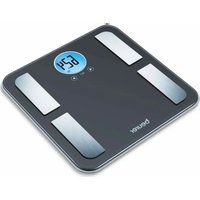
BF 195 LE - Scale BEURER - Free user manual and instructions
Find the device manual for free BF 195 LE BEURER in PDF.


| Product Type | Body composition scale with impedance analysis |
| Brand / Model | Beurer BF 195 LE |
| Maximum Capacity | 180 kg / 396 lb / 28 st |
| Weight Graduation | 100 g (0.2 lb, 1/4 st) |
| Body Composition Graduation | 0.1 % |
| User Age Range | 10 to 80 years |
| User Height Range | 100 to 220 cm |
| Number of User Memories | 10 positions |
| Measurement Functions | Weight, body fat percentage (BF), body water (BW), muscle mass (MM), bone mass (BM), basal metabolic rate (BMR), active metabolic rate (AMR), body mass index (BMI) |
| Power Supply | 2 CR2032 batteries (3V) |
| Low Battery Indicator | Display « LÜ » |
| Auto Power-Off | Yes, after a few seconds of inactivity |
| Weight Units | kg (default), lb, st |
| Electrode Material | Stainless steel |
| Safety | Do not use by persons with medical implants (pacemakers) or during pregnancy. Do not step on with wet feet. |
| Care and Cleaning | Clean with a damp cloth, do not use harsh agents, do not immerse. |
| Operating Conditions | On a flat, stable surface, away from shocks, humidity, and strong temperature variations. |
| Adjustable Activity Level | 5 levels (from 1 = none to 5 = very intense) |
| Batteries Included | Yes, with insulating tab |
Frequently Asked Questions - BF 195 LE BEURER
User questions about BF 195 LE BEURER
0 question about this device. Answer the ones you know or ask your own.
Ask a new question about this device
Download the instructions for your Scale in PDF format for free! Find your manual BF 195 LE - BEURER and take your electronic device back in hand. On this page are published all the documents necessary for the use of your device. BF 195 LE by BEURER.
USER MANUAL BF 195 LE BEURER
- Important notes - keep for later use! 10
1.1 Safety notes 10
1.2 General notes 10
- Operation 11
2.1 Batteries 11
2.2 Measuring weight only 11
2.3 Setting user data 11
2.4 Taking measurements 12
2.5 Tips for using the scale 12
- Evaluation of results 13
- Cleaning and care of the unit 15
- Incorrect measurement 15
Dear Customer
Thank you for choosing one of our products. Our brand stands for well-engineered, quality made products; driven by innovation and safety. Our product range encompasses a wealth of products for health and well-being in the heat, weight, blood pressure, body temperature, pulse, gentle therapy, massage and air sectors.
Please read these instructions for use carefully and keep them for later use, be sure to make them accessible to other users and observe the information they contain.
Best regards,
Your Beurer Team
1. Important notes - keep for later use!
1.1 Safety notes
- The scales must not be used by persons with medical implants (e.g. heart pacemakers). Otherwise their function could be impaired.
- Do not use during pregnancy.
- Caution! Do not stand on the scale with wet feet and do not step on the scale when its surface is wet - danger of slipping!
- Keep children away from packing materials (danger of suffocation).

Notes on handling batteries
- If your skin or eyes come into contact with battery fluid, flush out the affected areas with water and seek medical assistance.
- Choking hazard! Small children may swallow and choke on batteries. Store the batteries out of the reach of small children.
- Observe the plus (+) and minus (-) polarity signs.
- If a battery has leaked, put on protective gloves and clean the battery compartment with a dry cloth.
-
Protect the batteries from excessive heat.
-
Risk of explosion! Never throw batteries into a fire.
- Do not charge or short-circuit batteries.
- If the device is not to be used for a long period, take the batteries out of the battery compartment.
- Use identical or equivalent battery types only.
Always replace all batteries at the same time. - Do not use rechargeable batteries.
- Do not disassemble, split or crush the batteries.
1.2 General notes
- Not intended for medical or commercial use.
-
Please note that measuring tolerances are possible due to technical reasons because the scale has not been calibrated.
-
Ages 10 to 80 years and height settings from 100 to 220~cm (3-03" to 7-03") can be preset. Load capacity: max. 180~kg (396 lb, 28 st). Result in steps of 100g (0.2 lb, 1/4 st). Measurements of body fat, body water and muscle density in steps of 0.1% .
- When supplied to the customer, the scale is set to weigh and measure in "kg" and "cm". On the back of the scale, there is a toggle button where you can select "pounds" (lb) and "stones" (st).
- Place the scale on a firm level floor; a firm floor covering is required for correct measurement.
- The scale should be cleaned occasionally with a damp cloth. Do not use abrasive detergents and never immerse the scale in water.
- Protect the scale against hard knocks, moisture, dust, chemicals, major temperature fluctuations and heat sources which are too close (stove, heating radiator).
- Repairs may only be carried out by customer service or authorized dealers. Before submitting any complaint, first check the batteries and replace them if necessary.
- For environmental reasons, do not dispose of the device in the household waste at the end of its useful life. Dispos of the unit at a suitable local collection or recycling point. Dispos of the device in accordance with EC Directive - WEEE (Waste Electrical and Electronic Equipment). If you have any questions, please contact the local authorities responsible for waste disposal.
2. Operation
2.1 Batteries
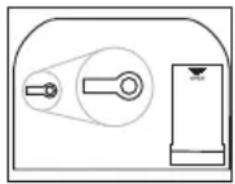
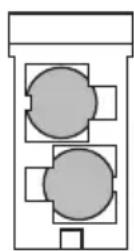
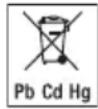
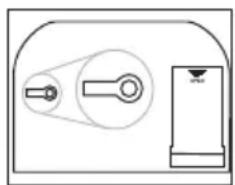
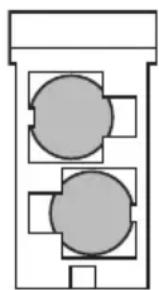
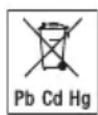
If present, pull the battery insulating strip off the battery compartment cover or remove the battery's protective film and insert the battery according to the polarity. If the scale fails to operate, remove the battery completely and insert it again. Your scale is equipped with a "replace battery" indicator. When the scale is operated with a battery which is too weak, "L0" appears in the display field and the scale automatically switches off. In this case the batteries must be replaced (2x CR 2032). The empty, completely flat batteries must be disposed of through specially designated collection boxes, recycling points or electronics retailers. You are legally required to dispose of the batteries.
The codes below are printed on batteries containing harmful substances:
Pb = Battery contains lead,
Cd = Battery contains cadmium,
Hg = Battery contains mercury.
2.2 Measuring weight only
Step onto the scale. Stand still with your weight distributed equally on both feet. The scale begins to take measurements straight away. If the display appears continuously, the measurement has finished.
If you step off the weighing area, the scale switches off after a few seconds.
2.3 Setting user data
To measure your body fat percentage and other physical data, you must enter your personal user para meters.
The scale has 10 memory positions in which you and other members of your family can save and recall personal settings. Please note that the memory begins with 1.
Switch on the scale (tap the standing surface). Wait until the display shows "0.0".
Then press "SET". The first memory position will appear flashing on the display. Now you can enter the following settings:
| Memory position 1 to 10 | |
| Age 10 to 80 years | |
| Body size 100 to 220 cm | \( (3^4-03^4 \) to \( 7^4-03^4 \)) |
| Sex | male( ), female( ) |
| Degree of activity 1 to 5 |
- Modifying values: Press or press and hold for more rapid progress.
- Confirming entries: Press the "SET" button.
-
After the values have been set and displayed again, “0.0” appears on the display together with the symbol for the selected gender /
-
Then the scale is ready for measuring. If you do not carry out a measurement, the scale switches off automatically after several seconds.
Degrees of activity
Selection of the degree of activity must refer to the medium and long term.
| Degree of activity Physical activity | |
| 1 None. | |
| 2 | Low: A small amount of light physical effort (e.g. short walks, light garden work, gymnastic exercises). |
| 3 Medium: Physical effort for 30 minutes at least 2 to 4 times a week. | |
| 4 High: Physical effort for 30 minutes at least 4 to 6 times a week. | |
| 5 | Very high: Intensive physical effort, intensive training or hard physical work for at least one hour daily. |
After all parameters have been entered, you can now measure your weight, body fat and the other data.
2.4 Taking measurements
Switch on the scale (tap the standing surface). Wait until the display shows "0.0".
- First press the SET button, then the user memory flashes.
- Press "SET".
- Step onto the scale with bare feet and make sure that you are standing still with equal weight distribution. Stand on the stainless steel electrodes with both feet.
- Press "SET". All values will then be shown in turn until "0.0" is shown on the display. Weighing can now be started again.
- The scale begins to take measurements straight away. First, the weight is displayed.
Whilst the other parameters are being measured, "_____appears.
The measurement is displayed shortly afterwards.
If a user has been assigned, the BMI, body fat, water, muscle, bone, BMR and AMR are shown. This is the case if the initials are shown.

Note: Your feet, legs, calves and thighs must not touch each other. Otherwise the measurement cannot be performed correctly. The scale immediately begins to measure your weight.
The following data are displayed:
- Body weight in kg
- Body fat percentage BF in %
Water percentage BW in % - Muscle percentage MM in %
- Bone mass BM, in kg
Basal metabolic rate Kialkcal (BMR) - BMI
- Now all measured values are displayed consecutively and the scale switches off.

Note: When taking a body fat measurement, the most recently selected user will always appear in the display.
2.5 Tips for using the scale
Important when measuring body fat/body water/muscle percentage/bone content:
If possible, always weigh yourself at the same time of day (preferably in the morning), after using the toilet, on an empty stomach and unclothed, in order to achieve comparable results.
- The measurement may only be carried out while barefoot and it is helpful if the soles of your feet are slightly damp. Completely dry soles can result in unsatisfactory results, as they have insufficient conductivity.
- Stand still during the measurement.
- Wait several hours after unusually strenuous activity.
- Wait approx. 15 minutes after getting out of bed so that the water in your body can be distributed.
- Remember that only long-term trends are important. Short-term changes in weight within a few days are usually caused by a loss of fluid. Body water plays an important role towards our general wellbeing.
The measurement is not reliable for:
- Children under approx. 10 years of age.
- Competitive athletes, Bodybuilders.
Pregnant women. - Persons with fever, undergoing dialysis, with symptoms of edema or osteoporosis.
- Persons taking cardiovascular medication.
- Persons taking vascodialating or vasoconstricting medications.
- Persons with substantial anatomical deviations in the legs relative to their total height (leg length considerably shorter or longer than usual).
The measuring principle
This scale works on the principle of B.I.A. (bioelectrical impedance analysis). This involves the calculation of body content within seconds, using a current that is not noticeable, is completely non-hazardous and does not pose any risk.
When this measurement of the electrical resistance (impedance) is considered alongside constants and/ or individual values (age, height, gender, activity level), the body fat percentage and other variables in the body can be calculated. Muscle tissue and water conduct electricity well and therefore have a lower resistance. In contrast, bones and fat tissue have low conductivity as the fat cells and bones are barely able to conduct the current due to very high levels of resistance.
Please note that the values calculated by the diagnostic scale only represent an approximation of the actual medical analytical values for the body. Only a specialist doctor can precisely establish the body fat, body water, muscle percentage and bone structure using medical methods (e.g. computer tomography).
3. Evaluation of results
Body fat percentage
The following body fat percentages are for guidance (contact your physician for further information).
Man
| Age very | good good average poor | ||
| 10-14 <1 | 1% 11-16% | 16,1-21% >21 | 1% |
| 15-19 <1 | 2% 12-17% | 17,1-22% >22 | 1% |
| 20-29 <1 | 3% 13-18% | 18,1-23% >23 | 1% |
| 30-39 <1 | 4% 14-19% | 19,1-24% >24 | 1% |
| 40-49 <1 | 5% 15-20% | 20,1-25% >25 | 1% |
| 50-59 <1 | 6% 16-21% | 21,1-26% >26 | 1% |
| 60-69 <1 | 7% 17-22% | 22,1-27% >27 | 1% |
| 70-100 <1 | 8% 18-23% | 23,1-28% >28 | 1% |
Woman
| Age very | good good average poor | ||
| 10-14 <16% 16-21% 21,1-26% >26.1% | |||
| 15-19 <17% 17-22% 22,1-27% >27.1% | |||
| 20-29 <18% 18-23% 23,1-28% >28.1% | |||
| 30-39 <19% 19-24% 24,1-29% >29.1% | |||
| 40-49 <20% 20-25% 25,1-30% >30.1% | |||
| 50-59 <21% 21-26% 26,1-31% >31.1% | |||
| 60-69 <22% 22-27% 27,1-32% >32.1% | |||
| 70-100 <23% 23-28% 28,1-33% >33.1% | |||
A lower value is often found in athletes. Depending on the type of sports, training intensity and physical constitution, values may result which are below the recommended values stated.
It should, however, be noted that there could be a danger to health in the case of extremely low values.
Body water:
The body water percentage (%) is normally within the following ranges:
Man
| Age | poor | good | very good |
| 10-100 | <50 | 50-65% | >65 |
Woman
| Age | poor | good | very good |
| 10-100 | <45 | 45-60% | >60 |
Body fat contains relatively little water. Therefore persons with a high body fat percentage have body water percentages below the recommended values. With endurance athletes, however, the recommended values could be exceeded due to low fat percentages and high muscle percentage.
Body water measurement with this scale is not suitable for drawing medical conclusions, for example concerning age-related water retention. If necessary ask your physician.
Basically, a high body water percentage should be the aim.
Muscle percentage:
The muscle percentage (%) is normally within the following ranges:
Man
| Age low nornal high Age low normal high |
| 10-14 <44 44-57% >57% 10-14 <36 36-43% >43% |
| 15-19 <43 43-56% >56% 15-19 <35 35-41% >41% |
| 20-29 <42 42-54% >54% 20-29 <34 34-39% >39% |
| 30-39 <41 41-52% >52% 30-39 <33 33-38% >38% |
| 40-49 <40 40-50% >50% 40-49 <31 31-36% >36% |
| 50-59 <39 39-48% >48% 50-59 <29 29-34% >34% |
| 60-69 <38 38-47% >47% 60-69 <28 28-33% >33% |
| 70-100 <37 37-46% >46% 70-100 <27 27-32% >32% |
Woman
Bone mass
Like the rest of our body, our bones are subject to natural growth, shrinking and ageing processes. The bone mass increases rapidly during childhood and reaches its peak between the ages of 30 and 40. As we age, our bone mass then begins to reduce. You can combat this reduction to an extent with the help of a healthy diet (particularly calcium and vitamin D) and regular physical exercise. The stability of the skeleton can be further increased by means of targeted muscle build-up. Please note that this scale does not identify the calcium content of the bones; instead, it calculates the weight of all the components that make up the bones (organic matter, inorganic matter and water). It is very difficult to influence the bone mass, although it does fluctuate within the scope of influencing factors (weight, height, age, gender). There are no recognised guidelines or recommendations.

IMPORTANT:
Please do not confuse bone mass with bone density.
The bone density can only be determined by means of a medical examination (e.g. computer tomography, ultrasound). It is therefore not possible to draw conclusions on changes to bones and bone hardness (e.g. osteoporosis) using this scale.
BMR
The basal metabolic rate (BMR) is the amount of energy required by the body at complete rest in order to maintain its basic functions (e.g. when lying in bed 24 hours a day). This value is primarily dependent on weight, height and age.
It is displayed on the diagnostic scale in the unit kcal/day and calculated using the scientifically recognised Harris-Benedict equation.
This is the amount of energy that is required by your body under all circumstances and must be re-supplied to the body in the form of food. If your energy intake is below this level in the longer term, this can result in damage to health.
Body mass index (BMI)
The body mass index (BMI) is a number that is often called upon to evaluate body weight. The figure is calculated from body weight and height. The formula is: body mass index = body weight : height². The measurement unit for BMI is [kg / m^2] . According to the BMI, weight is classified for adults (20 years and over) using the following values:
| Category BMI | ||
| Underweight Severely underweight < | 16 | |
| Underweight 16-16.9 | ||
| Slightly underweight 17-18.4 | ||
| Normal weight 18.5-25 | ||
| Overweight Overweight 25.1-29.9 | ||
| Obese (overweight) Class I obesity 30 | -34.9 | |
| Class II obesity 35-39.9 | ||
| Class III obesity ≥ 40 | ||
Results in relation to time

Note: Remember that only long-term trends are important. Short-term fluctuations in weight over a few days are usually the result of a loss of fluid.
The interpretation of the results will depend on changes in your overall weight and body fat, body water and muscle percentages, as well as on the period during which these changes take place. Sudden changes within days must be distinguished from medium term changes (over weeks) and long term changes (months).
A basic rule is that short term changes in weight almost exclusively represent changes in water content, whereas medium and long term changes may also involve the fat and muscle percentages.
If your weight reduces over the short term, but your body fat percentage increases or remains the same, you have merely lost water - e.g. after a training session, sauna session or a diet restricted only to rapid weight loss.
- If your weight increases over the medium term and the body fat percentage falls or stays the same, then you could have built up valuable muscle mass.
If your weight and body fat percentage fall simultaneously then your diet is working - you are losing fat mass.
- Ideally you should support your diet with physical activity, fitness or power training. This way you can increase your muscle percentage over the medium term.
- Body fat, body water or muscle percentages should not be added (certain elements of muscle tissue also contain body water).
4. Cleaning and care of the unit
The unit should be cleaned occasionally. Clean using a damp cloth, to which you can apply a little detergent if necessary.

IMPORTANT:
- Do not use aggressive solvents or cleaning agents!
- Never immerse the unit in water!
- Do not wash the unit in a dishwasher!
5. Incorrect measurement
If the scale detects an error during weighing, "FFFF" or "Err" appears in the display.
If you step onto the scale before "0.0" appears in the display, the scale will not operate properly.
| Possible causes of errors Remedy | |
| - The maximum load-bearing capacity of 180 kg was exceeded. | - Only weigh the maximum permissible weight. |
| - Not standing still. - Stand as still as possible. | |
| - The electrical resistance between the electrodes and the soles of your feed is too high (e.g. with heavily callused skin). | - Repeat weighing barefoot. - Slightly moisten the soles of your feet if necessary. Remove the calluses on the soles of your feet if necessary. |
| - Your body fat lies outside the measurable range (less than 5% or greater than 75%). | - Repeat weighing barefoot. - Slightly moisten the soles of your feet if necessary. |
FRANÇAIS
Sommaire
Chere cliente, cher client,
| Edad Excelente Bueno Regular Malo | |||
| 10-14 <16% 16-21% 21 | 1-26% >26 | 1% | |
| 15-19 <17% 17-22% 22 | 1-27% >27 | 1% | |
| 20-29 <18% 18-23% 23 | 1-28% >28 | 1% | |
| 30-39 <19% 19-24% 24 | 1-29% >29 | 1% | |
| 40-49 <20% 20-25% 25 | 1-30% >30 | 1% | |
| 50-59 <21% 21-26% 26 | 1-31% >31 | 1% | |
| 60-69 <22% 22-27% 27 | 1-32% >32 | 1% | |
| 70-100 <23% 23-28% 28,1-33% >38,1% | |||
| 70-100 | <27 | 27-32% | >32% |
Massa ossea
BecI cIeNyET yCTaHaBnBaTb Ha TBepOM pOBHOM nOly; TBepDoe, He npOrnbaueec HAnoJIbHOe NOKpbITne AByIeTc HEO6XoUMbIM YCNoBmE ToHOrO n3MepeHn.
-
PekomehnyetcnpnoDnueckn npotnpaTb np6op BnaJXHO TpIKnO. He nCNoB3yIte abpa3NBhle YnCTraUne CpeDCTBa Hn B KOem Cnyuae He norpyxkaTe np6Op B Body.
-
ObeperaIte npIbop OT ToJyKOB, Bo3deIcTBnB BlaRi, PbIiN, XIMMueCKNX BeIeCTB, 3HaHTeJIbHbIX KOJIe6aHNI TeMnepaTypbl n CNIuKOM 6JIN3KO paCNOIOKeHHbIX NCTOUYHKOB TeIINa (Neeu, paDnaTopoB OToJIeHn).
-
Pemont pa3pewaeTcBbINHrTb TOnbKO nepcoHany cepBnCHoCnyk6bl nNn ABTOPu3OBaHHbIX TOPROBix npedCTabnteJe. NpexDe Yem npedbArlaTb npTeH3nIO, npOBepbTe 6aTaapeKn n npn Heo6xOUMocTn 3ameHnte IX.
B INTEpecax oxpaHbI OKpykaOuSeI cpebl KaTEROpueckn 3aPpeuaTcB bIbpaCbBaT np6op no 3aBepweHn Cpoka ero cnYk6bl BMeCTe C 6bITOBbIMN OTXdAMn. YtINImaun DOnJHa nPON3BOIDTBcR cepE3 COOTBeTCTByUOuNe nyHKtbI c6opa B BaWei CTpaHe. Pnp6op cJeDyET yTNIm3nPoBaTb corlacho DInpeKtIbe EC no OTXoam 3neKtpuueckoro n 3neKTPoHHoro o6OpyDoBaHn - WEEE (Waste Electrical and Electronic Equipment). B cnyae Bonpocob O6paauTeCb B MeCTHyIO KOMMyHaJIbHyIO cnyx6y, OTBECTBeHHyIO 3a YTINImaun OTXdOB.
2. BbOaB 3KcPnyatauHIO
2.1 BaTapeiKu
Ecnn NmeeTc, CNMITE n30JIpyUOyIO nnEHky C KpbIuKo OTCeKa dJa 6aTaapeek JIn6o CNMITE 3aunTHyo nneHky C cAmo 6batapeynu yCTaHOBNTe ee, co6IIOaJ noJrphocTB. Ecnn BeCbl He pa6oTAOT, NOHOCTBIO BbITaUNTE 6batapeynu yCTaHOBNTe ee 3aHOBO. Becbl OCHa-ueHbI INHdNKATOpOM 3aMeHbI 6batapeynu>. Ecnn Bbl BCtaete Ha Becbl c pa3pJxHeHHo 6batapeKo, H daCnIeepnueHne ,L"u, n Becbl ABtOMaTneCKN BbIKJouAOTc. B ATOM clyuae 6batapeynk CyJeDyET 3aMeHNTb (2x CR 2032). Bbl6paCbBaIte NCNoJB3OBaHHbe, PNOHOCTBIO pa3pJxKeHHbIE 6batapeynu B cNeuaJIbHbIE KOHTeHepbl, CdBaJIte B NYKtbl npHEMA CNEcOTXODOB IIN B Mara3HNbI 3JeKTPOO6OpyIDOBAHNA. 3aKOH 06ra3bIaET NOJIb3OBaTeJIe oBeCeNeHTb yTuIN3aUIO 6batapeek.
3Tn 3NaKn ppeDynpexkaIOT O HaNuIN B 6aTaepKax TOKcNHyBx BeueCTB:
Pb = CBUNHeU,
IocpeCTBOM n3MepeHn 3neKTPueeCKOTo COpOTNBHeHn (mMpeHaC) C yyeTOM IOCToHHbIX BeiunH nn Hn DnBnDyAaHbIX npaMeTPOB (BO3pact, poCT, CTeneHb aKTNBHOCTn MOxHO ONpeJIHT b DOJIIO XIpOBoM Maccbl IIN dpyrNx BeuecTB B opraHn3me. MbIeHna TkaHb N BODa IMeIoXopoUyIO 3neKTPueeCKyIO pPOBOIMOCtB, PO3Tomy yPoBeHb COpOTNBHeHn 3decb HeBeNIk. KocTN u XkpOBa TkaHb, HAObOpOT, IMeIoT HeboJbUIO 3neKTPuYeCKyIO pPOBOIMOCtB, TaK KaK XnpOBbIe KIeTKN I KOCTN I3-3a OChEh BbICOKTO COpOTNBHeHn PpaKTNUeCKN He pPOBOIT TOK.
YuHTbIaIte, YTO 3NaueHnA, ONpeJeHHeBle DnaHocTneCKmBecAMn, ABJIOTcJINMb pnp6NKeHHbIM K peaJIbHbIM MeiunHckm 3HaueHnA, NOpUeHHbIM Bpe3yIbTaTe aHaJIu3a. OJIO JxipOBoM Maccbl, TkaHEBOJ KIOKCTN, MbIseHou Maccbl I CTPOEHnE KOCTe MoKeT ONpeJeNTb TOJbKO Bpaq, INCNOJB3yR MeiunHCKne MeToDbI (HaNPImep, KomNbIoTePhyIO TOMorpaΦnIO).
Pe3yIbTaTbI n3MepeHn HeBepHbe:
-ydTeMmJadwe10JeT;
- npocecnoHaNbHbIX CnOpTcMeHOB, KylbTypncTOB;
-6epeMeHHbIX;
JIuC C BbICOKoT TempeatpoJ,JeuaXxCJ DaIaIIN3OM,CKIOHNbIX K OTeKaM IIN 6OJIbHbIX OCTeONOp03OM;
JIu, pInHIMaIOxIeKapCTBa npOTnB 3a6OJIeBaHn cepJeHc-OcCyJNCTOn CNTeMb;
- JnU, npHnHaOuXxCocyOpacSmpRpaOuIe IIN cocyOcYKBAoUne cpeDCTBa;
- JIuC CO 3HaHTeJIbHbIMn aHaTOMUeCKIMN OTKIOHEHnMn HOR OTHOCITeJIbHOrO o6Jero poCTa (JINHa HOR 3Ha-HTeJIbHO yMeHbSeHa nIy yBeJInuHeHa).
3. Ангелов.TaTOB
PpoeHThoe coedepeXaHne XnpoBOI TkaHn
PnBHeHbIe Hxke 3NaueHnI npoentHO CoepKaHn JkpOBn TkaH npeCTaJIyOT c6oB JIMb opneHTNPOBOUHbIe BELuHbI (3a 6Olee noDpo6HOn IHΦopMaunE o6paTntEc b K BpaY!).
MyxkunHbI
| Возаразец | Ченихорошо | хорошу undовлenteвори-Тельно | плобхо |
| 10-14 <1> | % 11-16% | 16,1-21% >21,1% | |
| 15-19 <12% | 12-17% 17, | -22% >22,1% | |
| 20-29 <13% | 13-18% 18, | -23% >23,1% | |
| 30-39 <14% | 14-19% 19, | -24% >24,1% | |
| 40-49 <15% | 15-20% 20, | -25% >25,1% | |
| 50-59 <16% | 16-21% 21, | -26% >26,1% | |
| 60-69 <17% | 17-22% 22, | -27% >27,1% | |
| 70-100 <18% | 18-23% 23 | 1-28% >28,1% |
XeHunHbI
| Возаразу chенихорosity | хорosity уд. | OBлeтвори-Тельно | плобо |
| 10-14 <16% | 16-21% 21,1-26% >26,1% | ||
| 15-19 <17% | 17-22% 22,1-27% >27,1% | ||
| 20-29 <18% | 18-23% 23,1-28% >28,1% | ||
| 30-39 <19% | 19-24% 24,1-29% >29,1% | ||
| 40-49 <20% | 20-25% 25,1-30% >30,1% | ||
| 50-59 <21% | 21-26% 26,1-31% >31,1% | ||
| 60-69 <22% | 22-27% 27,1-32% >32,1% | ||
| 70-100 <23% | 23-28% 28,1-33% >33,1% |
Y cnoptcmeHO uacto 6bIaet 60onee Hn3Koe 3haeHne. B 3aBNCIMOCtN OT Bnda CnpTa, INTEHCNBHOCTN TpeHHPOBOK I n3uECKO KoHCTNTUcM MOyT 6bITb DOCTINHyTbI 3haeHnA, KOTOpBIE 3HaHTeJIbHO MeHbWe yKa3aHbIX opNEHTpOBOuHbIX 3HaueHn.
Ho yHTTe, TTo npn CmIkwOM Hn3Knx 3HaueHnX MoKeT Bo3HKnHyTb ONaCHOCTb DnA 3DopoBb.
PpoeHTHoe coepxahanbe BoDbI:
PpoeHTHOe coepKaHne BObl ObIu HO HaxOUnTCB CNeDyUOnx PpeJax:
MyxKuHHbI
IoxaIyIcTa, He nyTaIte KOCTHyIO MAccy C IIOHTHOCTbIO KOCTN.
ПлOTHOCТь KОCTи MOкET ONрЕДЯТбСТ OЛьКо пИ МeДинСКOM NССLEДОВаHN (HaNPIMeP, KOMNbIOTepHЯТOMorpaФи, уьТраЗБУКOBе ИССLEДОВаHN). ПОэТOMу DeЯТь KaKHe-Либо 3aKЛIOчEHЯ OБ ИЗМeHEHЯХ KOCTeIи IX ПLOTHOCТи (HарIMeP, OCTeONOpO3) пИ pOMOДи DAHHbIX BEcOB HeBO3MOxHOb.
BMR
OchOBHO mbm HBeecTB (BMR = Basal Metabolic Rate) - 3TO KOINueCTBO 3heprn, KOTOpoe Tpe6yeTcR opraHIMy B COCToHn NOnHOro NOKoI NODepXaHn CBOx OCHOBbIX FyHKuN (HaNPmep, ecn KpyTlbce cyTKn JExKaTb B NoCTeN). DaHHe 3NaueHne B 3NaHTeJbHO CTeneHn 3aBucn OT BeCa, PoCTa N BO3pacta. Ha dnaHocntuecknx Becax OTO6paXaETcB EeHNUe «KkA/J/deHb» N paCCHTbIbAEtC corlaCHO HayHO npnsHaHHo fOpMye Xappica-BeHEnikTa.
3TOT o6bem 3Heprn Heo6xOIM nIg BaWero opraHIm3Ma B IIO6OM clyuae n DOJKeH NOCTABJIaTbcB φOpMe ebl. EcIn Bbl npOdoJXHTeJIbHOe BpEma noJyuaete MaIOe KOINueCTBO 3Heprn, 3TO MOKeT HeraTUBHO OTPa3 NTbca Ha BaWem 3dOpOBbe.
Hndekmaccbi Teja (BMI)
Hndek MaccbI Tea (BMl) - 3To nCNO, KOtOpoe yacto nCnoJb3yeTc npn oueHKe Maccbl Teja yeNoBeka. 3To nCnlo paccHTbIbAeTc, nCxOJa n3 MaccbI Teja yeNoBeka n ero poCTa, no cneDyIOse fopMylne: Hndek MaccbI TeJa = Macca TeJa : PocT². EduHnuei N3MepeHnry INdeKCa Maccbl TeJa COOTBeTCTBeHNO YBJIeTc [KR/M²].ДлЯ B3pocIbIX IIOeN (20 let n CTapSe) pacnpedeJeHne no Becy Ha ochOBaHn BMIpovcxOJIT cneDyUOIm o6pa3OM:
| Kateropnia BMI (ин Deus мась Teа) | ||
| He docta tohna Macca Tea Octrbui | dephiunt Maccs bI < 16 | |
| Средни.DeфiniT Maccs bI 16-16,9 | ||
| Лergкий Dephiunt Maccs bI 17-18,4 | ||
| Hoprimalnyi Boc 18,5-25 | ||
| Избыточь Boc Празожирешие 25, | 1-29,9 | |
| Ожирения (Избыточь Boc) Oжирote | пси e I-у SteteMu 30-34,9 | |
| Oжирения II-у SteteMu 35-39,9 | ||
| Ожирabella III-у SteteMu ≥ 40 | ||
Bpemennha cbr3b pe3yntbTaTOB

Yka3aHne! O6paTInTe BnMaHne, YTO 3TO BCe NMeet 3HaYeHne TOIbKO npN DOCTaTOUHO dIINTEJbHOM Ha6JIIOHeHH. KpaTKOBpeMeHHbIE I3MeHeHHa Maccbl TeLa B ppeJax HeCKOJIbKnx DHeN KaK npaBnIO Bbl3BaHbI NOTepe JxNDKOCTN.
TpaKToBka pe3yIbTaTOB daTeCn Ha OCHOBaHm N3MeHeH N 6UeMaccbl TeJa, nPoUeTHORO COOTHOWeHn XInpoBOi Maccbl, CoepXaHn JxNIOKCTN N MbIeHOn MACcbl TeJa, N 3aBNCNT OT IpOMexKyTA BpeMeHN, 3a KOtOpb 3Tu N3MeHeH N pON30JNJ. KpaTKOBpeMeHHbE N3MeHeH N B TeueHne DnH MOrY CnJIbHO OTJNUATcR OT cpeHeCPOuHbIX N3MeHeH N (B TeueHne HeJeN) N DOJROCPoHbIX N3MeHeH N (MecaIb).
Kak npabnlo, KpatkOBpeMeHHbIe N3MeHeHnB B OCHOBHom CBa3aHbI C oDePkaHnEM XnIKOCTN, B TO BpeM KaK CpeDHe- I DOJIROCPoHbIe N3MeHeHnB BbI3BaHbI N3MeHeHnMaB JxipOBoN MblIeHoH MaCCax.
KpaTkoBpeMeHHoe ChnXeHne MaccbI OndHOBeMeHHbI POCT NIN HEn3MeHHoe KOJIueCTBO XInPOBoMaccBbI3BaHbI NCKJIIOHTeJIbHO ChnXeHHeM XnIDKOCTN B OprAHn3Me, HAnp. B pe3yJIbTaTe TpeHnpOBKn, NOceUeHnCayHbI INI Pn6blCTpoI NoTepe MaccbI IOB3DeIcTBnEM DnEtbl.
- Ecnn OTmecaeTc CpeHecpOuHoe yBefiueHne Maccbl npn CHNKeHHN IJI HEN3MeHHOM KOJIInueCTBe KINPOBOI Maccbl, BO3MOXHO, pON3OJNO yBefiueHne MbIJeHNo Maccbl.
- Ecni Bbl OTmehaeTe OndHOBpeMeHHoe CHnHexeHne o6uei Maccbl N XnpoBoMaccbl, BaIa dIeta pa6oTaet - Bbl TepaTe KInpOByIO Maccy.
- INeaIbHbIM RAJIeTcra CoUeTaHne DnEeTbIC Hn3NueCKo DeTeJIbHOCTbIO, 3aHrTnMn HHTHECOM NIN CUNOBIMn Harpy3kAMn. Pn3TOM Bbl MoKeTe Ha6JIOdaTb CpeDHeCPOHoe NOBblWeHne MblueHOn MACCbI.
- HeIb3a cymmnpoBaT bKnpOByIO Maccy, copeXaHne KnIDKOCTN IIN MbIeHyIO Maccy, TaK KaK MbIeHbIE TKAHN TAKKe copeXaT KnIDKOCTN, yHTbIBaIOUncieC npu copeXaHIn KnIDKOCTN.

- Dear Customer
- Important notes - keep for later use!
- Safety notes
- Notes on handling batteries
- General notes
- Operation
- Batteries
- Measuring weight only
- Setting user data
- Degrees of activity
- Taking measurements
- The following data are displayed:
- Tips for using the scale
- Important when measuring body fat/body water/muscle percentage/bone content:
- The measurement is not reliable for:
- The measuring principle
- Evaluation of results
- Body fat percentage
- Body water:
- Muscle percentage:
- Bone mass
- IMPORTANT:
- BMR
- Body mass index (BMI)
- Results in relation to time
- Cleaning and care of the unit
- Incorrect measurement
- FRANÇAIS
- Sommaire
- Chere cliente, cher client,
- Massa ossea
- BbOaB 3KcPnyatauHIO
- BaTapeiKu
- Pe3yIbTaTbI n3MepeHn HeBepHbe:
- Ангелов.TaTOB
- PpoeHThoe coedepeXaHne XnpoBOI TkaHn
- PpoeHTHoe coepxahanbe BoDbI:
- Hndekmaccbi Teja (BMI)
- Bpemennha cbr3b pe3yntbTaTOB
Brand : BEURER
Model : BF 195 LE
Category : Scale