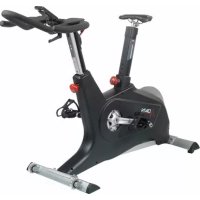
M109 - Exercise bike DKN - Free user manual and instructions
Find the device manual for free M109 DKN in PDF.


| Technical Features | DKN M109 exercise bike with magnetic resistance, 16 difficulty levels, LCD screen displaying speed, distance, time, and calories burned. |
|---|---|
| Dimensions | Compact dimensions, ideal for home use. |
| Maximum User Weight | 120 kg |
| Usage | Designed for effective cardio training at home, suitable for users of all levels. |
| Maintenance | Regularly check screws and bolts, clean the frame and console with a soft cloth. |
| Safety | Use on a flat surface, do not exceed maximum weight, follow usage instructions. |
| General Information | 2-year warranty, customer service available for technical assistance. |
Frequently Asked Questions - M109 DKN
User questions about M109 DKN
0 question about this device. Answer the ones you know or ask your own.
Ask a new question about this device
Download the instructions for your Exercise bike in PDF format for free! Find your manual M109 - DKN and take your electronic device back in hand. On this page are published all the documents necessary for the use of your device. M109 by DKN.
USER MANUAL M109 DKN
This DKN product is designed for residential use only.
Network to the original retail purchaser and authenticated by proof of purchase from a retailer a product sold by an authorized DKN dealer.
This Limited Warranty is not transferable and does not cover normal wear and tear (including, but not limited to, damage and wear to batteries, springs, bearings, running mats, hydraulic systems, ropes, belts, pulleys, power shocks, drive belts and other non-durable parts, etc...).
This Limited Warranty is void if the product is damaged by accident, unreasonable use, improper service, failure to follow instructions provided, modification from its original state, or other causes determined not arising out of defects in material, the consequences of improper treatment, bad installation, wrong assembly or tampering of the parts by incorrect assembly, improper use of the machine (eg. too heavy load in time, weight etc...), problems caused by lack of maintenance, deviations of the standard machine, such as light vibrations or noise, and in case of semi-professional, professional and commercial use (inter alia in sports schools, physio, companies, etc...).
Transport charges, travel charges for technicians, and possible trader and/ or workshop charges are excluded from this warranty, and will be at the sole cost of the owner.
The liability of the manufacturer under this Limited Warranty shall not include any liability for direct, indirect, or consequential damages resulting from any defect nor the use of this machine.
Before you start training on your DKN exerciser, please read the instructions carefully. Be sure to keep the Instructions for Information, in case of repair and for spare part delivery.
This exerciser has been tested up to a max. body weight of 120kg / 260 lbs.
Follow the carefully the different steps of the assembly instructions.
Use only original parts as delivered.
Before starting the assembly, be sure to check if delivery is complete by using the included parts-list.
For assembly use only suitable tools and ask for assistance with assembly if necessary.
Place the exerciser on an even, non-slippery surface. Because of possible corrosion, the usage of any exerciser in moist areas is not recommended.
Check before the first training and every 1-2 months that all connecting elements are tight fitting and are in the correct condition.
Replace defective components immediately and/or keep the equipment out of use until repair.
For repairs, use only original spare parts.
In case of repair please ask your dealer for advice
Avoid the use of aggressive detergents when cleaning.
Ensure that training starts only after correct assembly and inspection.
For all adjustable parts be aware of the maximum positions to which they can be adjusted/tightened to.
This exerciser is designed for adults. Please ensure that children use the exerciser only under the supervision of an adult.
Ensure that those present are aware of possible hazards, e. g. movable parts during training.
Warning: incorrect/excessive training can cause health injuries.
Please follow the advice for correct training as detailed in training instructions.
Consult your physician before starting with any exercise programme. He can advise on the kind of training and which impact is suitable.
The owner's manual is only for customers' reference.
The supplier can not guarantee for mistakes occurring due to translation or change in technical specification of the product.
All data displayed are approximate guidance and cannot be used in any medical application.
Operating Instructions Computer
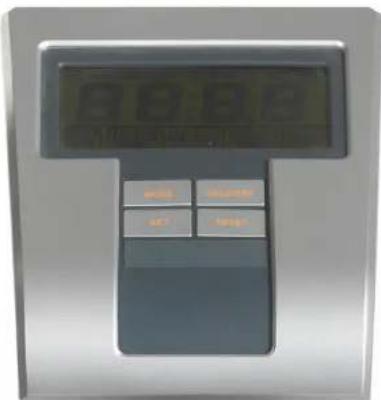
Switch on
Display activates automatically when starting pedalling, and cumulative values for speed, distance, time, calorieburn and heartrate will show in the lower part of the display.
The monitor will automatically turn off if no movement has been detected for 4 minutes, and will reset all function values to zero.
Function buttons and descriptions
MODE Press to enter setting mode, and to confirm value settings.
SET To select the active display function and set values.
RECOVERY Press this button for recovery function: After exercising, while the LCD is still active, press recovery button, and hold both sensors. The computer will run a time down for 60 seconds, after which your recovery rate will be displayed, grades 1 up to 6. Level 1 featuring fast recovery, level 6 slow recovery.
RESET To clear the display and reset all data.
Scan
Press SET until SCAN flashes on the screen. The monitor will display respectively time-speed-distance-calorie-pulse, and each function will be displayed for 6 seconds on the main screen.
Speed
Displays speed in km/h.
Time
Displays time.
For countdown: press SET to select time, confirm by pressing MODE. Enter total exercise time pressing SET, and once again press MODE to confirm.
Start pedaling to activate count down.
Distance
Displays distance.
For countdown: press SET to select distance, confirm by pressing MODE. Enter total exercise distance pressing SET, and once again press mode to confirm.
Start pedaling to activate count down.
KJoule
Displays calorieburn.
Pulse
Hold firmly both sensors on the handgrip (please wipe sensors and hands before starting measuring your pulse).
Your current heart rate will be displayed within 30 seconds up to one minute. A stable figure requires to hold both sensors firmly.
If no pulse signal is received within 16 seconds, the display will indicate P'. This is a power saving device.
Press SET key to restart pulse function.
Heart rate displayed is an approximate read-out, and may not be used as guidance in any cardio-vascular related medical or paramedical program.
Training Instructions
If you have not been physically active for a long period of time and also to avoid health risks you should consult your general physician before starting to exercise.
Everyone, or almost everyone, is fascinated by the champions/athletes among us. We dream away when we have one look at a trained body, full of muscles, in movement, and hope that one day we also have an athletic body like that. It's then that we realize that exceptional performances need exceptional talents, but also daily training, well organized and planned within the smallest detail.
If we compare the genetic inheritance of great athletes to the genetic inheritance of the sporty amateur in general, we only can determine small deviations, which can't explain the difference in performances.
However if we compare the trainings, we do see great differences. In general, athletes on a higher level do not only had years of training, they also benefit from the help of a professional coach and have adapted their lives to their physical condition. Their training program is outlined and planned within the smallest detail and is being regularly evaluated in order to check if the preset goals are being achieved.
The sporty amateur who wants to improve his performances usually starts training without a plan. Sometimes he copies the training program of a well known athlete. This usually slows down his progress and often leads to strain the muscles and sometimes the cardiovascular system. A special, optimal training
program, suitable for everyone, would be wishful.
The incredible complexity and the different adapting processes which our body has to go through every training, don't allow us to use such a training program. Whether you train on muscle development, power, endurance, speed, flexibility or a better coordination of your movements, everyone starts with different initial conditions.
The goal of each training program is to improve your performances. You don't need to become a top athlete, you also can train to lose weight or just to feel better. The optimal performance can be for example, run 5 minutes longer than before at the same tempo and without interruption, or do more push-ups than the day before.
The research on the influence of a sporty training on our body has made lot of progress in the last several years. Even if some questions are still unanswered, the knowledge we achieved from the sporty science and related fields, have proven their use in practice and serve in the first place our top athletes. This doesn't mean we can't use the basics of a training for top athletes for every individual which practice a sport and who wants to improve his performances.
Evaluation of your physical condition
For each level of your training program (development of the muscles, endurance, flexibility, speed, coordination of your movements), we recommend you to find out through some tests on which level you find yourself. But first we recommend you to consult your physician in order to set up a health report:
Are you older than 35 years
- Have you not been exercising for a long time?
- Do you have overweight
- Are some movements not suitable for you?
Do you have to take medicines
- Are you suffering from a serious disease or are you having breathing difficulties
- Do you have a metabolic disorder (ex. Diabetes)
- Do you have any infections
- Do you have a fever as a result of any disease
- Do you have an infectious disease
Are you having problems with your organs
- Do you suffer from hyperventilation
- Are you having any respiration diseases
- Do you have any pain while breathing
- Or do you have a poor physical condition
If your medical health is satisfactory, you can begin to set up your training program. But before you start, make sure you know your initial capacities - or a diagnose - so it is easier to determine your goals. Only then you can set up a training program which will match your goals.
Diagnosis
Determine your goals.
- Organization (long, mid-long, short term)
Evaluate
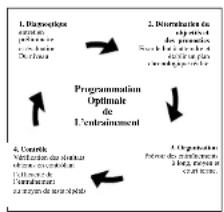
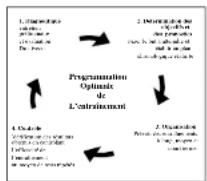
Regularly check your progress, so you can adapt your training program if necessary. The following survey shows the interaction between the 4 elements, which are important in an efficient training program.
Diagnostic - initial level
Before setting up a program, you have to take note of some parameters and take your sizes. These measurements will help you determine your present physical condition. It is the intention to collect all data concerning your personality, your health and your performances.
- Individual data: age, sex, figure, weight, fat percentage, measurements, pictures, etc.
- Data concerning your health : blood pressure, orthopedic data, research of the metabolism, serious diseases, injuries, etc.
Performance data: endurance tests, power tests, movement tests and speed control is often not necessary in fitness. Coordination of the movements however is crucial because it is very important when you execute the exercises.
"Clumsiness" usually means a lack of exercise. Therefore stick to the preset modules when you exercise, even if it is an endurance sport.
Every test, intellectually or physically, shows you your personal possibilities at a certain moment in time. Even though mathematic results become inadequate after a certain time, the results which you will achieve (after the same test one week later) will be better than the first one, because you have been able to locate your weak points and adapt your training in order to get rid of your shortcomings.
We work in the same way for the body. Let us assume you have taken an endurance test and the result of this test is 20% under the average level. This result must now help you to set up a program to achieve this average level. This shows that the test is the base to set up a training program in order to reach your goal. So it is very important you check your performances on a regular base to see if they measure up to the preset goals. If not, you have to adapt your training program.
The results of these check-ups give you the opportunity to compare your performances with the average performances, but also show if you are making progress. After 6 weeks we begin again with the same test to check if your performances have been improved and how much they have been improved.
Physical features
Weight
Are you happy with your body, often depends on the balance. But what is the ideal weight? Following formulas are known to determine the ideal weight:
Normal weight = girth waist in centimeter 100
- Ideal weight women = normal weight - 15%
- Ideal weight men = normal weight -10%
This formula designed by "Broca" has a limited value. As long as there is no new method to determine the ideal weight, the image we have of ourselves, tells us more than any other number. But a lot of people feel better when they can compare themselves with figures and numbers. Therefore it is sensible to take into account a few well known formulas as the body mass index (BMI) and with some reserve, the waist to hip rate (girth waist - hip).
Body Mass Index (BMI)
The BMI refers to the connection between weight and body shapes, which allows us to set up a better and exact standard than the "Broca" formula.
BMI = present weight (in kg): height in m². Ex. A man of 70 kg and 1.70 m high has a BMI of 70:1.7m² = 24.22.
In the table beneath you can situate yourself. These values are a guidance and are not guaranteed, especially not for sick persons, children and elderly people.
Women Men
<19 <20 Underweight
19-24 19-25 Normal
24 >25 Overweight
30 >30 Corpulent
40 >40 Obese
Fatpercentage
Body fat expressed in percentage tells us more than numbers about the relation weight/waist. To determine the fat percentage we have to take into account some parameters depending on age. You can determine your fat percentage in different ways. You even find many balances who also can measure your fat percentage. If you want to lose weight, then the fat percentage is more important than the weight itself, because it is the fat you want to disappear.
| BMI Table Standard according BMK index related to age. Age Female Male | ||
| 17-29 year 15 % | 25 % | |
| 30-39 year 17 % | 27,5 % | |
| Over 40 20 % 30 % | % | |
Connection waist - hip (waist to hip rate) You have determined a higher fat percentage than normal in above chart. This fat can have a different impact on your health. With a simple test, which you can do at home, you can determine if you have a higher risk for cardiac disorders. To execute this test, you have to measure the girth of your waist just above your belly button, without holding in your stomach and in a relaxed position. Than measure the girth of your hips on his widest point. Divide the girth of the waist by the girth of the hips. If the result is lower than 0.9 (for men) and 0.8 (for women), you don't have a higher risk for cardiac disorders than normal.
Measurements
Do also take your other measurements, besides your waist and hips. If you want to improve your silhouette, these measurements can show you the changes your body made during training. This method is still the most precise, fastest and cheapest one. Please pay attention you take your measurements always on the same place. We advise you to take measurements of the following parts: girth of the neck, shoulders, breast, arms, upper arms, waist, hips, thighs and calves.
Figure
Talents are often seen as interesting and attractive in daily life. This is also the case for our figure. If it doesn't measure up to certain criteria, we find a way to change this. Unfortunately we also have to say that the "Rubens" type will not become easily a "topmodel".
So before we begin fighting windmills, it is probably more sensible to take into account our figure. Do we all have to be "topmodels"? Our physical appearance depends strongly on the time we live in. Therefore it is rarely that the body types, you find next, exist. Most people among us are a combination of different types.
Leptosome/ectomorphe type
Features :
Wider pelvis than shoul
- Very supple joints
- Weak muscle development
- Weak blood pressure
- Increased pulse in rest
- Weak circulation (less endurance)
Cold hands and feet, dizziness when you stand up
- Intense activity of the nervous system
- Weak metabolism (hard to gain weight)
Contradictory to other types, this type will not be suitable for performances which include power and endurance. An adapted training can improve these shortcomings even though the starting points are not always favorable. The figure of the ectomorphe types often creates envy by other types. This type has the privilege to eat as many as he wants without gaining weight.
The atlete / mesomorphe type
Features:
Strong and muscular
- Wider shoulders than hips
- The muscular system and the blood circulation are suitable for excellent performances
- Weak blood pressure and pulse in rest by the active mesomorphe types
- Increased blood pressure and pulse by the non-active types
Not susceptible to cold
- Correct general figure
Normal digestion
In case of inactivity or over feeding, the fat stays hanging on the body
Taking into account above features, a moderate training will be enough for the mesomorphe type to improve his performances. The risk on injuries is much higher for this type because the development of the muscles isn't always in proportion to the elasticity of the muscles. We therefore recommend you to invest a lot of time of your training in improving the elasticity of the muscles.
The figure of the athletic type and the active mesomorphe type stands very close to the ideal figure in the 80ties and 90ties. Therefore many of us would like to belong to this category, although they often belong to another category. Those who can't admit that not everybody can have the perfect body, often remain frustrated.
Endomorphe type
Features:
-
Round shapes, holding fat
-
Width shoulders, width pelvis (due to overweight)
- More equal distribution of the weight in comparison to the other 2 types
Average figure - Very suitable for performances aimed at power and endurance
- Easy food insertion and slow digestion make it easy to gain weight
Slow pulse in rest, normal blood pressure (for active types)
Power, endurance and mobility are the greatest trumps of the endomorph. Only the weight, often too high, can be an interference in some situations. Therefore he must pay attention to his food, healthy and adapted to his needs, emphasizing endurance to stabilize his weight.
Taking into account the beauty ideals of this moment, the figure of the endomorph type is not suitable. But above features also show that the active endomorph has the right talents for a good health and a sportive attitude. If the endomorph takes into account his genetic potential, a few extra pounds, can not harm him.
Endurance test
An endurance test may not be executed in following circumstances, except when it is done under medical supervision:
- Serious and chronic illnesses of the respiration
- Illnesses with fever attacks
- Infectious diseases
- Serious increased blood pressure
Disorders (ex. of the heart or longs)
Infections -
Taking of medicines (betablockers)
-
When you aren't feeling well
The most know endurance test which is used in sports is the "Cooper test". In this test you have to run as hard as you can for 12 minutes and run as much kilometers as you can on an flat underground.
Even it's aim is not to stop, you can slow down and walk. The covered distance is noted and compared with the numbers in the Cooper chart. This chart gives us more information about your performances.
The benefit of this test is that you can do the test whenever you want, you only need a chronometer and a course with a fixed distance.
The disadvantage of this test is that you need some running experience to become a good result. You may not take this test if you are not feeling well (tiredness, feeling unwell, etc...)
| Cooper Test | Data in km, M = male, F = female | |||||
| Age | 20-29 | 30-39 | 40-49 | 50- | 59- | |
| Very well | M | 2,64- | 2,51- | 2,46- | 2,32- | |
| 2,81 | 2,70 | 2,64 | 2,53 | |||
| F | 2,16- | 2,08- | 2,00- | 1,90- | ||
| 2,32 | 2,22 | 2,14 | 2,08 | |||
| Well | M | 2,40- | 2,34- | 2,24- | 2,10- | |
| 2,63 | 2,50 | 2,45 | 2,31 | |||
| F | 1,97- | 1,90- | 1,79- | 1,70- | ||
| 2,15 | 2,07 | 1,99 | 1,89 | |||
| Average | M | 2,11- | 2,10- | 2,00- | 1,87- | |
| 2,39 | 2,33 | 2,23 | 2,09 | |||
| F | 1,79- | 1,70- | 1,58- | 1,50- | ||
| 1,96 | 1,89 | 1,78 | 1,69 | |||
| Weak | M | 1,95- | 1,89- | 1,82- | 1,65- | |
| 2,10 | 2,09 | 1,99 | 1,86 | |||
| F | 1,54- | 1,52- | 1,41- | 1,34- | ||
| 1,78 | 1,69 | 1,57 | 1,49 | |||
| Too weak | M | <1,95 | <1,89 | <1,82 | <1,65 | |
| <1,54 | <1,52 | <1,41 | <1,34 | |||
You also can take another endurance test: the "Harvard-Step-Test. For this test you need a hear rate monitor, a chronometer, a stair or bench. The height of the stairs or bench depends on your length.
| Harvard-Step-Test | |
| Height in cm | Height of the step |
| <152 cm 30 cm | |
| <160 cm 35 cm | |
| <175 cm 40 cm | |
| <180 cm 48 cm | |
| >180 cm 50 cm | |
To execute this test, step down and up the bench or stairs every 2 seconds. This makes 30 times/minute up the bench, which gives a total of 120 up—and down steps. Whether you change leg or always use the same leg, this has no effect on the result. Measure your heart rate after 4 minutes. When you are done with the exercise, take your pulse after 60 seconds, and again after 1 minute. In this way you become 3 values which you have to use in the following formula:
A + 3000 divided by heart rate B + 3000 divided by heart rate C = endurance index. Example: when your heart rate is 160 after ending the exercise (heart rate A), 120 a minute later (heart rate B) and 100 after 2 minutes (heart rate C), then you have an endurance index of :
3000:160=18.75
3000:120=25.00
3000:100=30.00
Endurance index = 18.75 + 25.00 + 30.00 = 73.75
On the basis of the chart below you can adapt your training and divide your powers better according the result of this test. If you take the endurance index from our example (73.75), you can see in the chart below that this value is sufficiently for someone younger than 35 and good for someone older than 35.
| Endurance index | |
| Less than 35 Over 35 | |
| < 50 | not sufficient medium |
| 51-60 | medium medium |
| 61-70 | medium fair |
| 71-76 | fair well |
| 77-85 | good very well |
| 86-90 | very well exceptional |
| >90 | excellent exceptional |
Training planning
Overload
Training means making an effort, using our energy reserve. This effort will show a lower performance afterwards. This effort can only be undone if we give our body time to recover and to rest. So both effort and rest are the ingredients of a perfect training. Effort and relaxation are one.
To determine how long we have to rest is not simple because it depends on a lot of elements such as the number of executed exercises, the used weights, the kind of exercise, how long we exercise...etc.
Furthermore, not every muscle needs the same time to recuperate. A small muscle can already be ready during practice, a big muscle can need extra time.
To set up an intelligent training, we recommend you to use some constant parameters during a limited training period. Based on these parameters it is much easier to see if our body has enough time to recuperate.
If you start training, you will feel "tired" after every effort. However the longer you train, the more easy it will become for your body to recuperate and after a while you want feel "tired" anymore and your performances will get better. However if you keep feeling "tired", your body needs more time to recuperate and we even recommend you to stop training for a few days and give your body the rest it deserves.
You will notice that when you resume training, your performances will get better much faster than when you keep training without resting (overload).
Descending or stagnating performances can be signs of overload. Also an increased heart rate can lead to overload, which also increases the risk for injuries.
Muscular trainingperiode
To prevent physical overload by overtraining, we recommend you to train no longer than 4 to 6 weeks on one territory. Divide your training up into different periods and change your program regularly.
- Training unity = one training session
- Micro cycle : all training sessions during 1 week
- Meso cycle : groups 3 to 5 micro cycles. In muscle training, the meso cycle is a training which emphasizes endurance, increase of size or power.
Macro cycle : groups different meso cycles and can take a few months (6 to 12 months).
Now you find some more information about the different features of each territory:
Endurance
A run of 400 meter requires endurance and power. The endurance training will include a preset series and the repetition of it. Attention! the recuperation period is also very important.
The lactic acid in the muscles will increase and will cause a inflamed feeling when the tiredness keeps increasing.
One of the greatest effects of a training with extended efforts is the increase of the tolerance of the acid in the muscles, which can be put into work as follows: there will appear different causes who will neutralize a part of the lactic acid; muscles will no longer be sour, this brings along a extended action for a few seconds, or by repetition, by which they refuse to go on.
Increase of the muscular mass
he growth of our muscle cells is promoted by an extended stimulant. The use of energetic phosphates of the muscle cells is reduced to a minimum. The corn of the cell, which also contains a product of proteins, under the form of muscle fibres, also works in on the thickness of the muscles.
Maximal power/ effort
The maximum power of the muscle depends on the average thickness, and also on the number of muscle fibres due to movement. The interaction between the nerves and the muscles determine the capacity of a muscle during an effort.
Training period: endurance
Competition sports is one of the basics to set up a training schedule in function of endurance. The sporty amateur once again takes advantage of the benefits of a training set up for a competitive sportsman. As the weights and the repetition of the exercises play an important part in the measurement of our "tiredness" in the training of muscle development, the heart rate is the most important element in the endurance training.
Before we give you some recommendations for cardio training, it is important to know your maximum heart rate. We can determine this rate by a test which will ask a maximum effort of our cardio-vascular system. This test whoever is not suited for the sporty amateur. However we can determine our maximum heart rate by another formula : 220 minus our age.
Starting from this formula, our optimal heart rate in function of age, will be between 70 and 85% of our maximum heart rate obtained during a cardio-vascular training session, and between 60 and 70% during a metabolism training.
We have different ways of training in the endurance sports.
Continuous training
- Training by interval
- Repetition training
- Competition training
Continuous training is most used in leisure sports, training by interval in a less way. Repetition and competition training mostly ask for exceptional and intense efforts and therefore they are not recommended for the sporty amateur.
A continuous training is characterized by a training over a longer period, without interruption of the effort. The most sporty amateurs automatically go for this kind of training.
They often become good results when the level of effort correspond to the optimal heart rate in a certain age category.
The training by interval usually contains a series of efforts and a series of relaxation. The series of relaxation contains moments of partial rest.
Continuous training is chosen by 80 to 90% of the sportsmen who wants to work on endurance. We therefore recommend continuous training to every sporty amateur.
| Age | HR MAX/ min | 60% MAX/ min | 65% MAX/ min | 70% MAX/ min | 75% MAX/ min | 80% MAX/ min | 85% MAX/ min |
| 20 | 200 | 120 | 130 | 140 | 150 | 160 | 170 |
| 25 | 195 | 117 | 127 | 137 | 146 | 156 | 166 |
| 30 | 190 | 114 | 124 | 133 | 143 | 152 | 162 |
| 35 | 185 | 111 | 120 | 130 | 139 | 148 | 157 |
| 40 | 180 | 108 | 117 | 126 | 135 | 144 | 153 |
| 45 | 175 | 105 | 114 | 123 | 131 | 140 | 149 |
| 50 | 170 | 102 | 111 | 119 | 128 | 136 | 145 |
| 55 | 165 | 99 | 107 | 116 | 124 | 132 | 140 |
| 60 | 160 | 96 | 104 | 112 | 120 | 128 | 136 |
| 65 | 155 | 93 | 101 | 109 | 116 | 124 | 132 |
| 70 | 150 | 90 | 98 | 105 | 113 | 120 | 128 |
Training evaluation
The preset program is only effective if you regularly control yourself. It is better to use the term "evaluation" because we evaluate the present data/results in function of the next training cycle.
Even though the preset goals were chosen carefully and realistic, it always is possible that the program of a meso cycle is realized partially.
This can have several causes such as illness, injuries, occupation activities, or other motifs to interrupt your training. If you already reached some goals, but not all of them, you have to adapt your training program for the next meso cycle.
Training diary
The keeping of a training diary can help you in finding the causes when you have not reached your goals. In this diary you can write down different information, which can help you to set up a training program, such as your eating habits, periods of rest and sleep, remarkable results etc. A visit to the dentist for example can influence your training results. If you can take into account certain circumstances, you can avoid a stagnation in your results. Adaptations of your training are usually important for the intensity of your program, the succession and the repetitions of the exercises and the achieving of results.
Summary
Make sure if a fitness training doesn't cause problems for your health.
- Evaluate your level of power, endurance, flexibility, speed and coordination before you start training.
- Set realistic goals based on your physical possibilities.
- Set up a training program for a longer period (6 to 12 months)
- Divide your long term planning up into different cycles (meso cycle) of 4 to 6 weeks.
Make sure there is enough variation in your training. Train on endurance, power and muscle development.
If you choose for endurance training, vary between short, mid-long and long training periods.
During a meso cycle you have to increase the intensity of the training for endurance as well as for muscle training. Limit the intensity of the training in the beginning of every new cycle. Evaluate regularly your training to make sure you are on the right track and if you can achieve your most important goals, if not:
- Adapt the next meso cycle
Repeat the initial test - Do interim tests at the end of every meso cycle
Success
Even after a short period of regular exercises you will realise that you constantly have to increase the pedalling resistance to reach your optimum pulse rate.
The units will be continuously easier and you will feel a lot fitter during your normal day. For this achievement you should motivate yourself to exercise regularly. Choose fixed hours for your work out and do not start training too aggressively.
An old saying amongst sportsmen says:
"The most difficult thing about training is to start it."
Wishing you lots of fun and success with your exerciser.
All data displayed are approximate guidance and cannot be used in any medical application.
Heart rate displayed is an approximate read-out, and may not be used as guidance in any cardio-vascular related medical or paramedical program.
Surcompensation/Surentrainement
Body Mass Index (BMI)
- Continue training
- Training per interval
Herhalingstraining - Competitietraining
Indice de Massa Corporal (IMC)
| Endurance index | |
| Less than 35 | Over 35 |
| < 50 | not sufficient medium |
| 51 - 60 | medium medium |
| 61 - 70 | medium fair |
| 71 - 76 | fair well |
| 77 - 85 | good very well |
| 86 - 90 | very well exceptional |
| > 90 | excellent exceptional |
Sobrecarga
| Less than 35 | Over 35 |
| Not sufficient medium | |
| Medium medium | |
| Medium fair | |
| Fair well | |
| Good very well | |
| Very well exceptional | |
| Excellent exceptional |
Sovraccarico
Body Mass Index (BMI)
CBOCTBEHNOI BAM PINOXOEΦM3NEeCKOE COCTOHNHE
EcnncoCToHnBeBaWeroOprAHH3Ma yDObNtBOPInTebHoe,To BblMoKeTe Hauatb nHaHnPoBaTc6bCTeBHeHyNpOrpaMMy TpeHNPOBok.Ho nePeTtemKaKNaHauatb y6eNTecb,HTo Bbl 3HaEte BaWi BNHTpeHNBeCNOC6HOctN-NNn DnArHO3-TAK npOSeOnpeDenHbAaN CEJI. ToNbKO TOrDa Bbl MoKeTe HauATb TpeHNPOBky COOTBeCTByOuHyBAWIM UeJAM.
- DuaarH03
OnpeelenheBaunxueen - Oprana3aZua (OJONcPOUHa, cpeDHeoPCHau, kpaTkoCPOHa)
OueHka
Perynphno npobepa Te ypoBeb Baewero
pa3BNTIa -3TO NOBON, pN
He6xOdMnOCTn, 3MEnHtB nporpAMMy
TpeHnPOBKn. Ha cNeDyIOeM pCynHke
NOKA3AHa CBBb MEXy4 3NEMeHTAMn,
IrpaIoUIMM BaxHyIO pON B 3FfpeKTHBHOJ
nporpAmme TpeHnPOBKn.
Dnaarhoctnka-HaayabHbIyypoBeh
Ipeed nactpoKo nporpAMMb Bam Heo6XOIMMO 3aONMHTb HeckonBko napamTPOB u Bauu pAmpei. TaKe n3MepeHnNoB0BnTAM OnpeDenNTb
Tekyuee fni3nueckoe coctoHne. Heo6xOIMO noIyHTb Bce DaHHble, kacaioueceBacBaJero 3OpobBya peayntaTOB.
-ПИЧьдaeДаньБ:ВОЗ pact,Non,ФИгура, Bec,npoJeHT TENECHORO xHpa, N3MpeHnI,ФOTORpaФmI T.N.
- DAnHbIe O COCTOHN Bawaero 3DopoBbR KPOBHOE DaJIBEHNE, OPONDEMECKHe DAHHbIe, aHaJIIN3 MeTa6OJIuYeCKNX npouceCOB, TRKeJIe bIe 3a6oBeBAHnR, TpaBMblT.D
Даньные розулстам:Тсесын ВиюпсьбгБСИСИ,ТсесыдвижениMu KOTPONа КСОПСТОБИЗHо Tpe6yOTcTЯФTNHECA.Koopdmahua DBNKEHЯRBJRATECOhBakHBIM NapametpoB bnpouceTpeHHPOB.
HeNoBOpOTnIOBCTbO6bIHO RAJIeTcRpe3yNbTaOM HeIOCTaTOHbIXTpEHINPOBOK.103ToMy,BO BpEmrTeHNIOBKN PnpdeKBMaiTecb3aJAHbXb MODyIeNJaBe XB TOM Cnyae,ecn 3TO ynpakHeHn Ha BbIHOCNIIOBCTb
KaJdbI TECT,6yDb TO TECT DnIgOnpeDeneHIN HntEnneKtAynBHX INHmNecKHX cnocobhctei,OTObpaaet BauYpObeHB B TeKyUIMOMeT BPemEH DaKe,HeCMOTRA To,TO MaTeMaTHueCKNe pe3yNbTaTbIC TeHeHEMB PBeMeHH TepRoT CBOIO 3HaunMoCTb,DOCTrHaemble BaMn pe3yNbTaTb (NoCne AHAONHORoTECTa HeDeNIO NoCyTc) UyHuATbCAOTHOCHiTBeHo NepBbIX TAK KAK BB CMOKeTBE ONPeDENTB CBOIN CJaBle MeCTa N3MeHHTbPOrpAMMy TpeHNPoBKN, DnI RTO YToBbI N3cbABNTCB O TaANHbX HeNDCTAtKOB
AHAnOrHNO MoI paObTaem H NaiHmTENom. DabaiTe npEpiNOnOKM,TO Bbl BbINONHHITeCT Ha BbHOCINBOCTb N BAI pe3yNbTAT Ha
20% HnHex CpeHrOyoBn.
TOnyueHHbI pe3yNbTat DonKeH NMOCh BaM
NoTOrTOBnTp nporpAMMy dNIOCTKHeHn
3TOro CpeHrOyoBn.3To 03Haaet, TTO
TeCT ABnEeTCs OCHOBON DnA 3aAHH
nporpAMMbI TpeHHPOBKn DnO DCtNKHeHn
BaWeu CeIN. NoTOMy Ouyh BaxHo
perynHPO npoeBrt BaWn pe3yNbTaTbI Dn
HX CONOCTABNeHN C 3aDaHHbIMN CEJIAMN.
Ecnn Takoe COOTBeTCTBHe He HabIoDaeTcN,
To nporpAMMy TpeHHPOBKn Heo6XoJIMO
N3MeHnTB.
DaHHbIe KOHTpOraJaOT Bam BO3MOXHOCTb
cpaBHbATBaAM pe3yJbTatb1 CO cpeHIMn
3aHuEHNMM, HO pNt 3OM oBceNeHVBOAT
BaIae pas3BNTHe. Ype3 6 HeDJIb Nocle
HaAana TpeHINPOBKn Mbl BbINOHNM
aHaONHbIe TeCTb I npOBepHM,
yUyHmNcbl BaAM pe3yJbTatb1 n EcNI
yUyHmNcB, To HA KAKYIO BEINHHy.
Φnueckne npaMeTpbi
Bec
YOBDNETBOPEHOCTB BAAIMTENOM ObjuHO 3aBNCITOT6aHCA.KaKoi BEcRAJIeTcA NDAEJIbHbM?
IpaonpeeneHnIeaeabHoroBeca IcNoIb3yIOCTcNeDyOuHoe fOpMynb
HopMaJIbHbI Bec = 06XBaT rpyd n B Cm. - 100
IeAaBbHbBecnJXeHnH= HOpMaIbHbHbBc-15%
IeaeBbH BcDnMyKuHH= HOpMaBbHbBc-10%
Danhaopymyna,HabBaemarphiopmylon Bpokka,MeEeTOrpaenHHoe3HaueHne.Tak KAK HeCyuenceByet HOBO CnOcoba OnpeDenHnIeNIEAeAlbHoroBeCa,To HaWe
co6CTBENHO BOCIPNATNE CAMNX Ce6KcKaKET
HAM BoJIbIe, CEM NIOBOE YNCNO. Ho
60bnuHnCTBy IIOJe yOboHe cpaBHNBaTb
CBOE COCTOHNE C YCNAMN IO NTOMY CTOM
yHTbBAbTe HECKOBko H3BeCThBIX fOpMyJ IN
BbUHCNEHn. INDEkca Maccbl Tena (IMT) n, C
HEKOTOPoI OROBOPKoi OTHOWeHne pa3Mepa
rpydn K 6eDpam (oxBaTa rpydKn OXBaty
6eep).
HndekmcmbteNa (MNT)
3HaueHHe IMTOnpeJenIeRb3AaMmocB3b MEXdy BECOM Tena Iero FOpmOu IN CnONlb3yETcIINa3aHaHnIyUweroN6oJe e TOHOHO CTAnrpa, YemC nCnONlb3ObaHem FOpmMyblb Epokka.
VMT = phaTnueckn BEc (B Kr) : (pocT B M)².
Pnimep. Дя МунИHb BEcOM 70 KI n pOCTM
1,70 M VMT coCTabJIeRET
70 : (1,7M)² = 24,22.
BnpBeHNOH Nxke TaBnue Bbl MoKeTe HauTn CBOe 3aueHMe DaHHbIe 3aueHnraBnIOCT OpeHTNPOBOHBMn Hep aRapAHTpyIOT ToHoe 3aueHne,OCo6eHNO dnoBbHx IIOJe, dna deten n nnc noKINoro BO3pacta.
KHeHuiHbI
MyJxHbI
<19 <20
Hn3knBec
19-24 19-25
HopMaJIbHbI BEc
24 >25
N3bIToHbINBec
30 >30
TyHOctb
40>40
OxkpeHne
PpoeHT coepKaHHXnpa
BbpaaeHHe B npoeehTx coepxahme TneChOrO Xnpa Hecet 0bnue HnΦopMaun, Yem OTHoUeHHe BEc/tpydb.Дпг onpeJeHn npoehTa Xnpa Heo6xOIMO
yUHTbBaTb HEKOTOpBie napaMeTpbl B 3aUBCIMOCTN OT BO3pACTa. Bbl MOxete ONpeIeNTb IPOeHT KIPA pa3NIHbIMN NYrTMn. Bbl TAKKe MoxTe MAHNI MHOKeCTBO BEcoB, CIOcO6HbIX INMepA TB DAHBIIN napaMeTp. Ecnn Bbl XOTNE cboPcHTB Bec, TO COePckAnHe KIPA b IPOeHTAX JABIETC0 Boee BaXhBIM NapaMeTpOM, Yem Cam Bec, TAK KAC OINCbBAET KOINueCTBO KIPA, OT KOTOPORO.
Ta6nua IMT
CTaHapTnI INHeKcBA BMK B 3abNcMoCTn OT Bo3pacta.
Bo3pact XeHunHb MyxHbI
| 17-29.net | 15 % | 25 % |
| 30-39.net | 17 % | 27,5 % |
| Старшев 40 | 20 % | 30 % |
OTHoWeHne rpyb-6eepa (OTHoWeHne oxBaTa rpyn K OxBaTy 6eep)
NcnoIb3y npBedeHny BwIe Ta6nuiy
Bbl onpeDnHn. YTO yOpoBEn hJpa BA WIE
HOPMaIbHOrO. 3OT Jxnp MOKeT OKa3bIBaTB
pa3NJuHoe BnINHne Ha BaWe 3dOpOBBe.
EbnarOapr npocToMv TcTe, KOTopBn
MOXHO BInONHnTb DOMA ONpeDnHTe,
OTOCNTcB Nn Blpynnpe PnCKA
cepDeHbX 3a60NEBaHN. . DnA 3TOrO BAM
Heo6XoDMIO H3MePrtb OXBat BAwe rpyDN
YbTB BbIe PnK4 He BTARBA
XJBOT INHXoDCB B paccna6bJeHOM
NONOXeHN. 3aTe MPOINBEdnte INMepeHne
OXBata 6Beep B CamoN 1pNpOKoTouKe.
Pa3dJIeNTe OXBAT rpyDn HA OXBat 6Beep.
EcNIOnNoyEHoe 3hauHHe HmKe 0,9 (DnA MyxHH) n 0,8 (DnA XeHsIH), TO Bb HE
OTOHOCTeB K rpynne pnca cepdenebIX 3a0bebaHn
N3mepenHn
POMMIMO n3MepeHnOxBaTa rpydn 6beep Heo6XoIMMo BbIPOINHTb cneDyIOUe N3MepeHnE. Ecnn Bbl XeJaTe yNyUHTb CBOIOΦnIpy,
To pe3yIbTaBn3MpeHnHnOMrYT Bam CneDnTb 3a pe3yIbTaTAMn B npOceCe TpeHnPOBok DaHHb MeTOB BCE eue ABnIEcTBAHbOeNE ToCHyB,6bCTpBM IN DeWeBbIM.HeoBXoHmNO NOMHnTB,4TO N3MpeHnRA BbIOHnHrOHTcB O DnHX IN TEX Ke TOchKax.MblpeKoMeHdyE m3MePbT CnDEyUOnne YactN TeA: OKyXHocTb Uen, rpyDN,pneIpNeu n, nIeu,TanN,bedep,roHee nIKp.
Фигура
B NOBCEHeBHON XIN3HN MBI BNIMM AKTePOB KAK OENH INTEPECHbIX NPNBNEKATEbHBIX IIOJei. 3TO OTHOCHITcNIK HAWeI Hrype.ECnn ee napaMetpBo HE COOTBECTBYOT ONpeDEHOMHY KIPTEHPBO, TO MB CTpeMMcR YTO-TO I3MeHNTB.KCOXaJIeHHo,HAM npHXOINTCB Pn3HAtB, YTO Hrpya Phepa Actepa He BcerDa CTAHOBTcBc PHrpyo ApOHbDa WBePueHeHETepa.3TO OTHOCHITcBc N HAWEY TEY, PyBEHC He TAK pOCTO cTbT ON MOEnbIO. POToMY nepeD TeM, KaK Hauatb Bopotbcra C BerOBOn dopokko, HABePHoe, 6yET npABInbHee npHnB To BHMaHHe Hauy FHyyp. HxKHO NAM BCem CTAOHBTcTON MOJeHMn? Hawe fH3NUeCKoe COCToHHe B3HaHTeBHOn Mepe ONpeENHETcB BPemeHem, B KOTOPOM MBI XINBEEM. POToMY pINBEHHe BHXe TINbl fHyrp BCTpeAioTcpeKo, BoLbWNHCTBO IIOJei CPeDN HAC- 3TO IIOJIO PA3HOrTO TnA. ACTEHueckn/3KTOMOpfHbTIN
Oc06eHHoCTn:
Ta3 shpe neey
OueHb n6Kne ccyTabbl
Cna6oe pa3BHTneMbI山
Hn3Koe KpoBraHoe DaBneHne
- YBENHbIyIbC B NOKoe
Cna6aBzPkyIaHn3KaBbIHOCJIINBOCTb
XoIOnDbIky pIu cTynH, rONOBOKpyKHeHne pINBCTA
HTHeCNBHaA DeTaeTbHOCTb HEPBHO CNTEmbl
Cna6bmyMeta60n3M(T8KeIHOh6upaetcBec)
BOTINHue OT DpyrNx DaHHbI TNH He NOxDxOHT
DnA DeTEnBHoCTN, PnpDNaIauIOue yCUNHe
N BbHOCINBOCTy ADAnTHPOBAHNA
TpeHINPOBka No3BONaET YcTPaHNTb DAHHbIE
HEoCTATK, Daxe B TOM CNYae, eCNl
HaAHJIbHe yCNOBnE HE ABNIOTc
6bnAFOnPnIHbIMN FUnpyra kTOMOpFHO TnHa
0bHiHO BV3Baet 3ABNCbTy ppeCTaBntTeNe
DpyrNX TINOB. PpeCTaBNTen DAHHORo TnA
MOryt cctb CKONbKO XOTRT N pRn 3OTm HE
HabNPaTb BEc.
CnoptcMeH/Me3oMOpΦhBtTN
Oc6eHHoCTn:
CunbHaHpa3BHTaMyckyNAtypa
- Pnueu wape 6eep
MblueHnA C1CTeMa HcKpyJLpIa KPOB BENIKOJIeHNO HOxOHT DnI 3HaHTeJIbHbIX Hary30K
HIMKoe KPOBHOe DABNEHHe INyNbC B NOKOE dRn AKTINHBxI npdCTaBtTeN e ME3OMOPFOHOro TINa
YBeNueHHe KPOBHOe DaBHeMe nnybcIra He AKTNbHbIX PnepCTaBtTeNe
Me3OMOPCHOROTUNA
Hn3KaBOCnpmMNUBOCTKXOIOyD
Ppabunbnaa qnrypa
HopmaJIbHoe nIeBapeHne
BcIyuae HeaKTHBHOCTn mNm36bItoHOro nTaHnKHPaHnHaetCBNaBtCTeNa
YuTbBae BcBleecka3aHHoe DnnyuHHepeyIbTaTOB ME3OMOpFHO Tnna DoCTaTOH yMeepHBHX TeHPoBOK. Dn daHHO Tnna PnCK TpABM 3HaHTeNBbBOIue, TAK KAc pa3BNTme MblUc He BCERda COOTBETCTBYET IN 3AnactMHOCTN. PO3OTMy MblpeKomeHdyEM 3AtpaMbTa3 hauHTeNBHO BpEmrDnT TpeHOBOP C CEbIy YBeHNueH N3AactMHOCN MbIiU.
Φnypbl CnoptNBHORO H OueHb AKTNBHORO
Me3OMOpHOrTO TNIOB HbI3Kb K
NdeAebHOHnФype 80-90x rOoB. T03tomy
MHOrne H3 NAC XOTAT PnHaDnEkaTb K
DAHHOH KATEOPIN, XOTAR3aAcTyO 3TO He
TaK. IHOu, KOtOpBE HmOry TpN3HbTb TO
ΦaKT, YTO nAeAIBHoE TELO HE MoKet 6Btby
KaKdOro, ObivHoo OueHb PaCtPbnABoTcR.
3HDOMOPHbI TIN
Oc6eHHoCTM
- Okpyrblie opmbI, xkpobblc konneHn
- Wnpokme pneu, npokn Ta3 (no npnuHne H36bItoHoro Beca)
Bolnee paBHOpHoe paccpeeneHHe BEca no cpaBHeHIO C DByM JpyTmTNnAMN
CpeHnHaFHypA
Xopoio noDxOaIAT DnA DeTeNbHocTNaueenHHo HA CNy N BbHOCMBOCTb
PpOToI npHem NnUeN MeDHeHHoe
nueBapene npBodnt Kbictpmy Habopy Beca
Hn3kni npIbc B nOKoe, HopMaIbHoe KpOBAHOe daBneHe (dna kTINBbIX npEcTabTeNei)
TnBIMKO3bPMMNDOOMOPOBABIReTCA
CnNA,BbHOCINBOCTNBNOBHXOCTB, B
HEKOTOpBIX CNTyauNXPerpaoMDoMeT
CTaTBTOBKeBCE.PnpctTabntBdAHHORO
TnA DOJIKENOBpaatBBNHMAnHe HnUy,
OHa DOnkHA6bTB3DopOB0N
aADTNPOBaHNaKero NpTope6HOCTM,
OBeCNeYBaT BbHOCINBOCTB dJa
CTaBnMaAsmNBeCa.
YuTbBAc cyueCTByoUme Ha daHHbI
MOmeHT MeaBbKPacotb, Fynpya
3HDOMOPFOHOro TnA He NoDxOaNT K TakOMy
OnpeJeHHe.Ho Ykaa3aHbIe BbIe
Oco6EHHOCTN TAKke CBNDetNcBTyIOT, YTO
AKTHBHy 3HDOMOPΦ OblaadaET
Heo6XoDMbIM TaIANTAMn DnXoPoEro
3DOPOBBn I cnoptNBHOrO CTnJIaK3HNI.
YuTbBA reHeTuweckn NotehuaI
3ΦDoomopFp, napa JInhHex KInlorgpAMM EmY
He NOBPeDIT.
Tect Ha BbIHOCINBOCTb
TecHa BbHocnBocTb He MoXeT
BbIOJNTHcBcB CnEduOuNX ycNOBnx,3a
NCKJIUHeHn npOBeHnno Na HbIIODeHnEM
Bpca:
TaeIbIe IxpoHnuecknepececnpaTophble 3a6oJIeBaHH
3a6oJIeBaHnIe,coPbOxKaIOuIeCeBbICOKo TEMNepaTpyo
HfekuOHHe 3a6oneBaHH
3aHTeBHOe yBENueHne KpOBAHOro DABNEHn
HapyeHne FyHKn (HaNPmep, cepua
nIeRnx)
HHΦeKUH
PnemMeDnKAMeHTOB(6eTa-6NOKaTOpb)
- Pnnoxoe camoybCTBne
E0BbUHCTBOI3BcTbIX TcTeOBHa BbIOHCINBOCTb, IcNObY3eMbIX B CnOpTe, ABJRAIOCTcTeOM Kynea. Ppi BblIOJIHeHH DaHHO TcTeA Bam Heo6XoIMo 6eKaTb C MaKcMAmJIbHO CKOpOCTbIO B TeueHne 12 MHyT Ha MAKcMAmJIbHO pAcCToRHe Na NlONKO NoBepxHOctn.
Hecmotpr Ha To, YTO cIeIbO RaJIaTeTc DBINKeHHe 6e3 OCTaHOBKn, BBy MoKeTe 3aEMdNtB 6eR nP0rTI NELKOM.
PpeoDoneHnoe paccOthne fKnCnpyTc n CpabHBaetc co 3haeHennm 13 TaBnIcbl Kyepa. DaHna TabIuca daet 3HaHTenbHyo HnΦopMaIIO u Baoiux pe3ynbTaTAX.
OCHOBHbIM IpemMyIeCTBOM DaHHOro TcTea
RBnRETCrTo, Yo Bb MoKeTe BblNOHHTb eRo
B IIO6oe BpEMr N 63 NoCTopoHNHei
NOMOu, Bam NotpeSyetc ToIbKO
CEKHyDOpMep HANPABNeHc E
ΦHKnPOBaHHbIM PaCtOHaHMe.
HeoctaKom daHHoro Tecta ABnEeTcTo, YTO
Ia nnoyChraXopouHxpeayntaTOB
Heo6xoImo NMeTb HeKoTOpbl onbl B 6ere.
Bb MoKeTe He BbInOnHrTaDaHHb TeC npn
PiNooM CamOyBCTBN (60Nb,yCTanocTb,
He3DopOBoe CoCtOHRn I T.D.)
Tect Kynepa
| Test kynepa Жендана Ворота | Даанныев KM, M = мужунна, X = | |||
| 20-29 | 30-39 | 40-49 | 50-59 | |
| Очьнх оposло M | 2.64-2.81 | 2.51-2.70 | 2.46-2.64 | 2.32-2.53 |
| 2.16-2.32 | 2.08-2.22 | 2.00-2.14 | 1.90-2.08 | |
| Хорошо M | 2.40-2.63 | 2.34-2.50 | 2.24-2.45 | 2.10-2.31 |
| 1.97-2.15 | 1.90-2.07 | 1.79-1.99 | 1.70-1.89 | |
| Среший MЛК | 2.11-2.39 | 2.10-2.33 | 2.00-2.23 | 1.87-2.09 |
| 1.79-1.96 | 1.70-1.89 | 1.58-1.78 | 1.50-1.69 | |
| Очьн сCLAо M | 1.95-2.10 | 1.89-2.09 | 1.82-1.99 | 1.65-1.86 |
| 1.54-1.78 | 1.52-1.69 | 1.41-1.57 | 1.34-1.49 | |
| <1.95 | <1.89 | <1.82 | <1.65 | |
| <1.54 | <1.52 | <1.41 | <1.34 | |
BbTaKKe MoKTe BbInOpHnTb DpyroTecT Ha
BbHocNIOBcT: FapBaPdCKMn CTyneHuatBn Tect]. DnBbIaONHeHaeDnHOCTe
Heo6xoDMMOHITop CepDeHOrO pNTMa,
CekyHOMeP, CTyneHbKa Nn CKaMeKa.
BbICota CTyneHem Nn CKaMeKn 3abNCtOT
BaWeroPoCTa.
TapBapdckn CTyneHuaTbI Tect
| Рост,см | Бу科协етастуейни |
| <152 cm | 30 cm |
| <160 cm | 35 cm |
| <175 cm | 40 cm |
| <180 cm | 48 cm |
| >180 cm | 50 cm |
IINBbInONHeHn DaHHOro Tecta BCTabaHTe HcKaAMekHy INNCTyHEnbKy IcxOOnTe C Hee KaKDb2 cekHybB MHNY Ty bblINOHReTe 30 DnBeXeHn,ITo BO6eM AeT 120 wAROB BBePx INHn, CMeHa Horn INN INCNPO3BOAHne TOJIbKO ODHNOH HnRE HBNIEHn pe3ynbTa. NImepbTe yactoty
cepdeHbIX cokpaueHnYepe3 4 MNHytbl. Pocne OKOHaHnYpnaKHeHn INMepTe nyIbc Yepe3 60ceKyHn Ieue pa3 yepe3 TakoE JeBpMa. TaKIM o6pazOM. Bbl nonyHTe 33HaueHn, KOtOpbe Heo6xOdmo NOCTABITB CneNyUOuyo FOpmMyny:
A+3000 dehenhhe Ha CC B + 3000 dehenhhe Ha CC = INDeKC BbHOCNBOCTi.
PpIMep: ecnn nocne okohanny ynpaxHeHHa BAC npNbC coCTABnREt 160 (CC A), 120 cnYCTMaMHHTy (CCB) u 100 uepe3 2 MHNytB (CCC C),To BaWnHNeKc BBIHOCPNBOCTn COCTABNT:
3000:160=18.75
3000:120 = 25.00
3000:100=30.00
INHDEC BbHOCINBOCTN=18,75+25,00+30,00=73,75
Ha OCHOBAHIN pInBeDeHNO HNKe TaBnIbbl MoXeTe hMEnHTb IpOgPAMMy CBOeI TpeHIpOBKn pa3aDenIbYcNnB B COOTBcTCTBN Cpe3yNbTaTAmN TectA, N3 pInBeDEHOH NHXe TaBnIbbl, dNn INHeKca BBIHOOCBtN 3npmepa (73,75), Bbl BNDITE, QTO DAHHOE 3NaueHMe IABNTcR DOCTaTOHNO XOpOWIM DnA YenOBeka MmAdwe 35NET n OChbXopoWIM DnA YenOBeka CTAPWe 35NET.
ПланноВанг TepeирВК
Neperpyska
TpEHPOBKa NpOpa3ymBeAeT BbIOnHHeHne yCINNcNOLTB0BOAHmpe3epBa 3HEprn. BnocnEcdTBM dAnHoe ycHnE noKaxet MeBbIM pe3yntBat. Bo3o6HOBnHnE 3HEPRn DnY CYNNIA BbIOnHReTCB
npoucece OTdIbxa HBOCCTaHOBHeHnraHnMa. Po3OMy COCTaBnHOUcHmXoOpse TpeHHIOBKB CERda JBAJIOTcYcHnne OITbIX.HanpJxHeHnPaccNa6BeHnYe BJIaTOcOdHM pOeCCOM.OnpeJeHHe HBeMeHN OITbIXaBnTcNcKHOH 3aDaueH, TAK KAc OHO 3aBVCNT OMHoKeCTBa 3JeMeHTOB, HApNIMep, KOJIuCeTBA BBINONHeHn ynpaxHeHn, HcNoIb3yeMbE BEC, TUN ynpaxHeHn, DJIInTeNbHOCT TpeHHIOBKN t.N.D.
Boone TOrO, BpEMBocCTaHOBJIeHnIpa3NHybIXMbUcIpa3NHyo.He6OnbuaMbluMaMOKeTOTbXaTBBnpouceTePHeiPOBKM. aBOJbWOnMbUcIeMOKeTNotpeboBaTcRdONOpINHTeNbHoBepMeIgnoPoeBDENHtEJIeKTyAhnIO
TpeHIOBKMblpeKOMeHNyEm BAMNCNlOBaBtHEKOTOpBENoCTOHHBe napameTpblHa npotraKeHHn OrpaHueHHORepnoJa3AHrT.NHa oCHobAHm TaKHXnapameTpOBHAMHO rpoSe OcEHNTbDOCTaTOHOCbBpEMeHI DnBOCCTaHOBJIeHnOPraHn3Ma.
B npoucece tpeHnPOBKn Bbl 6ydeTe
YcBCTBOBaTb "ycTANOCb" NOCE KAKDORO
YCINIA. Ondako cem DOnIe Bbl
TpeHNpyTeCb, TEm npOse 6yET BAWeMy
opraHN3Myc BOCCTAHABNBAbTCB, Bbl 3axOTNE
NoCYBCTBOBaTb "ycTANOCb" eEne N 3TO
npBVEdet K nobIeHnIO BAaNX pe3ynbTaTOB.
HECMOTPr HA 3TO,ecNN Bbl 6yDEte
YcBCTBOBaTb "ycTANOCb",TO BAWeMy
opraHN3Myc Notpe6yETCBoNBue BpemeHn Ha
BOcCTAHOBnE Hm MdaXe peKOMeHnyEM
Bam PpeKpATNTb TpeHnPOBKnHa HECKJbKO
dHe n DaTb TeNy TO T0DbIX, KOtOpBn OHO
3acJyXnBaet.
Bbl 3aMeNTe, YTO NoCneTORO KAK Bbl
BO3oBHOBnTE TpeHnPOBKn, BAaN pe3ynbTaBl
6dyT pactn b6IcTpeq cem ecnn 6bl Bbl
3aHIMAMnCb 6e3 OTbIxA (neperpy3ka)
YMeHbUeHHe INN CTAHaUNpe3yNbTaTOB
MOKET 6bTb Pn3HakOM neperpy3kn. K
NEPERPY3kAM TaKe MoKET BcTN I
yBENHueHHb NpYNbc, QTO MOKET CTAb
PnINHOITpaMBbl.
PepnoMbIeHNoTpeHnpOBKn
Bo n36exaHne 4n3nuecko nepepy3Kn B pe3yIbTaTe nepeTpeHNPOBKn Mbl peKOMeHnyem BAM 3aHmAtbCra He Goone 4-6 HeJeB bOHOJ O6NaCTn. Pa3dEnITe BAuy TpeHNPOBky Ha nepnoDbl, nperyrnpHO n3MeHnTe nporpAmmy TpeHNPOBKn.
3nemENT TpeHnpOBKn = ONo 3aHrTne MnkpoUKNBce 3aHrTna 3a 1 HeDeIIO
Me3oJnKrTnpyBt3-5MnKPOLKnOB. B MblEHN TpeHnOBe Me3oJNk npedctabIeR c6oB 3aHnTHe, HnapBaHnHOe BA HbIOcNnBOCTb, VBENJIeHNe PA3mEOB pIN CnJIb.
- MaKPOUKNr: rpynblpaa3HHbIX Me3OuKNOB B TeueHHe NcKoJIbKINM CMeaJIeB (6-12MeCAJIeB).
Tenep Bbl MoKete y3HaTb HEMHOrO 60bnue opa3nUHbX Oo6eHHOCTRX kaKaDOn o6bAtni:
BbHOCJNBOCTb
BcHa 400 MeTPOB Tpe6yET BbHOCNBOCTn
cnbl. TpeHNPOBKa BbHOCNBOCTn
BKIOUaet B c6eI pneBapntelbHO
3aDaHHy cepno H neoTOpeHnra
BHIMAHue! Oeyb BaxKHe 3aHEHe NMeet
npoB OBCCTaHOBNEHn, KOJIueCTBO
MOOCHOH KICNOTb BMbUxax
yBNuHMAEaTC I MOKeT npBECTn K
BOcPAnlTeNbHbM OUsyEHNr PnI
yBNuEHHN yCTANOCTn.
ODHMnB BaxKHeuINx 3ΦΦeKToB TpeHNPOBKn
CnpoDIOJXNTBbIMN yCNINMn RBNRETCPOCTYc0THMbOTCN KANHIMNO KNCNOTB BMBUHxap6OtaKOTOBxBbINONHETCcIeYIOUMOcbp3OM: NOBHeHNEpaNHyBHXPnHH, Bb3bBAIOHN HePTNAaHIOuACTNMOHOHOKCNTOB MbbUHb 60NBE octAIOTCOcnaBHeHbIMN,3TO pNBOiT KdIHTeBHOHY DeICTBINO HA NpOTRAEHHHECKONKIX cekyHm INB PteyHbTaTe NOBOTOpEHN,KOTOBIM OHN COnPOTABJIOTCA.
YBeJIHueHHeMbIeUeHOnMaccbI
PoCT HaIIX MbIu npOVCXoNDIT NOd
DeCTBMEm DnTEnbHO CTMHYNaHIM.
UcnPb3OBAHne 3hePeTNUeCKHX
focCpaTOB MbIeueYbX KNETOK COKpaHeO DO MNHMMyA.KnetKN,KOTOpBte TaKKe
CoepKxatBeNkoBle IpOyKtB, BΦpMe
MbIeUHbX BoNOKOH,TaKKe paOToAOT HAD
TOnUIHNO HAIWx MbIu.
MaKcMaJIbHoe yCnIe
MaKHMnBHe yCnHneMbUuB3aBVCHT Oe
cpeDHei ToIuHbI, a TaIOke KOJIYHeCTBa
MbUeYHbIX
BOJOKOH, npBDOIMbIX B DBXKeHne.
B3aMMoDECTBe MekyHepBaMn
MbUcAMn ONpeDeIeR eBO3MOKHOCTM MbUuC
BO BpEM paOBoTb.
NepnoD TpeHnPOBKM: BbIHOCINBOCTb
CopeBHOBAHIN RAIBIOTCAODHIM IN3OCHOBHIX 3nEMENTOB DnA CO3dAHIN rpaFIna TpeHPOB KBIHOICNBOCTN. JIObTei nCnOPT CHOBAMORYT BOCNOB3OBATCB NpEIMyUeCTBAMNI TpeHPOBKN, nIa CnOPTCMEOH, YAcTHByIOuNX B COPEBHOBAHINX. BTO BPEM, KOrJa I3MepeHne HaJero yPoBHN "ycTaIOcTN" MOKET 6bITb BbONHEno H OCSOBAHIN KOJIueCTBA NOBTopeHn I Beca, IcNObYBeMOr BOPOCeCE TpeHPOBKN, TO
HnMpeHHBbHOCMBOCTNNCNOJIb3yETC Hau npbc
IpepeTEm, KaKa TaB Bam HeckoBko
peKoMeHdauaio No KApDIOPTeHPOBkAM,
BaXHO NOyUHTb 3HaHeNeMaKcMAmlbHoH
YAcTObIcpeDHeHbCCKpaueHem.Mb MoXeM
OppeEniMb daHyO BeHnHy nocne
PnIOxHeHMy MaKcMAmlbHoH Hary3Kn Ha
HaWy cepDeHco-cocdynty cscTeMy. Ho
TaKo CNOC6 He NpOxOJTn IIOBtenei.
PiOTMy Mbl OnpeJeRm Baws
MAKcMAmlbHy OaCTOTy cepDeHbIX
COKpaueHem no CneNyUoJeFopmye:220
MNHCbA B0pact.
OCHOBbIaBcH a daHHOfOpMyne Haua
ONHMAbNHa YCC,3ABICuaAOT
Bo3pTa,6ydt HaxoDnTcB Dnana3OHe
MeKdy 70 H 85% OT MAkCmAbNHOY CC,
nonyuHNO B p3eyNbTate TpeHnpOBKn
cepdeHo-cocyndToi CNCTeMb, a TaKaKe B
dAna3Ote O 60 Do 70 % JnA
Meta6oJIuCheKoT PteHnpOBKn.
Y Hac ectb HeckoBko CnOco6OB
TpeHnpOBKn BBHOCINBOCTN.
- HenpepbBnHa TpeHnpOBka
- INHTepBaIbHaTpeHnpOBka
- NOBTOPRAUCAr TpeHnPOBka
CopeBHOBAHNA
HnpeBbHna TpeHnpOBka qaue Bcero
HCNons3yETCB AKTMBHbIX BnDax OTbIbX
HHTepBaIbHna TpeHnpOBka pexe.
TObTropHOuaJcra TpeHnpOBKa n
CopeBHOBaHnO obuHIO Tpe6yIOT O
CnOPTCMeHO NCKLIOUHTeBbIX
INHeTHcHBbIX Harpy3OK, INo3ToMy He
NoXdoNT dnnio6nTEnJ.
HenpepbBHaT PteHnpoBkxa xapaKTePn3yeTcA
npoJnKtIeBbHIM 3aHrTnMn6e3 nppebIbAHINy ycNII. Han6bonee NOIOTOBENHHBe IIO6BteINy ABTOMATUeCKn NEPEXODAT HA DANHbTN TPNHEPBOKN. OHNI O6bHuO DOCTTRAOT XOPOxIH N pe3yIbTA0B, KOrDa yPoBEh bYcNIIa COOTBETCTByET ONTMALbHO YCC dNra DAHNHO yOpBN. INTEpBaJIbHNa TpeHNPBOKa OBuHOn COCTOHT N3 NocLeIDoBAteBbHbIX ycNII IN oTdbxa. NocNeDobATEBbHOCTb nepMOBD Odbxa coDEpKNT IN BpeMa YCaTHNO HOr O tDbxa. HenpepeBbHNa TpeHNPBOKa BBbIpaTeC8 80-90% cNoPTcmEHO, Jkenaoux pAbOTab HAD CBOEi BblHOCLNBOCTbIO. NoTcOMy Mbl PEKOMHeyEM HenpepeBbHbYIO TpeHNPBOKy BCEM IO6BteINm cNopta.
| Bo3pact | 60% | 65% | 70% | 75% | 80% | 85% |
| 20 | 200 | 120 | 130 | 140 | 150 | 160 |
| 25 | 195 | 117 | 127 | 137 | 146 | 156 |
| 30 | 190 | 114 | 124 | 133 | 143 | 152 |
| 35 | 185 | 111 | 120 | 130 | 139 | 148 |
| 40 | 180 | 108 | 117 | 126 | 135 | 144 |
| 45 | 175 | 105 | 114 | 123 | 131 | 140 |
| 50 | 170 | 102 | 111 | 119 | 128 | 136 |
| 55 | 165 | 99 | 107 | 116 | 124 | 132 |
| 60 | 160 | 96 | 104 | 112 | 120 | 128 |
| 65 | 155 | 93 | 101 | 109 | 116 | 124 |
| 70 | 150 | 90 | 98 | 105 | 113 | 120 |
OceHka TpeHnpOBkn
PepdabapTeIbHO 3aHaHHa NporpMaM 3aFpeKTHBaTOnB TaNbO TcmCyaE,ecn Bbl KOHTPNOpye cEB. PuJyue IcNOnb3oBAt TepMNH “UcEHKA”, TAK KAK Mbl OcEHNAEM TeKyuue DaHNbIe/pe3yNbTaTb B WIDE fYHKm CneDyUoero TpeHnpOBOHORuKNLA.
JaKeB TOM Cnyae,ecn cenblb Bb6paHb BHIMATEbHO,HO INH BnTIOCTc peaNBbMn,BO3MOXHO qACTYHNOBEIINOHNE pOgPAMMbB Me3oUKNLE.3TO MOKET npON30HTN Bpe3yJbTaTE 60NE3HNTPaBMn, pON3BQCTBeHHoDJeTeNbHOCTN I dpyTN pPcHb,3actABuHIOueBaNPepBaT bTpeHPOBky.Ecnbl yke DCIOTHNI KHeOTOpbX,HO He BCex cJeH, Bbl MOKETe M3MeHbT CBOO IpOpamrT TpeHPOBKn DnCneDyIOUe MoEoUKNla.
DheBnK TpeHnpOBKn
BeHeHnDHEBHnKa TpeHnPOBKn NOMOKeT Bam
onpeJenITb PnHHnHe NoCTNKeHnueNei
B TakOM DheBnKe BBoMeke peNTcPnpoBaT
pa3nnHyNo HnOpMauHIO, NO3BOJnHOyO Bam
3aDaBAtb npOrpAmMy TpeHnPOBKn, HApIMep,
BaAn pncCTpactN B eJe, nepNObl CHa N
OTbIXA, BbDAIOUeNEc Pe3YbTatbI N.T.D.
HaNPmep, Ha pe3yNbTaTaB BaWeI TpeHnPOBKn
MOKTe NOBnRtN OceSeHne CTomATOnORA.
PnHNMA BO BnHMaNE HeKOTOpBc YCtOBNa
BbMoKTe N36EkaTb CTaHauMn B BaWix
3AhTnX. AaANTaUN BaaNX TpeHnPOBOK
0bBuHO BaxKa Ira INHTeHCNBOCHTN BaWeI
nporpAMMb, NocPeNoBaTeNbHOctN I
NoBOTpeMOCTN UppaxHeHn I DoCTNKeHn
pe3yNbTaTOB.
Pe3IOme
- Y6eJITecb, yTO TpeHnObKN He Bb3bBaIOT npo6JIem co 3dOpOBbEM.
OueHnTe Bau ypoBeHb CInbl, BIIHOcINBOCTN, CKoPcTn KOpDnHaun npeH naHON TpeHnPOBKn
CTBaBte peaJIbHbIe CEJI, OCHOBAHHbIe Ha BaAunx cNoOcBOHCToX.
IIOIroTOBbTe nporpaMMy TpeHnPOBOK Ha dNITeNbHi nepNoD (6-12 MecaueB)
Pa3dneHte BauDIOIOPOCHyIINAH HeKoJIbko UIKNIOB (Me3OuKNbl) dInTeHbOCTbIO TO 4 Do 6 HeNDJ.
BHOCHTe pa3Hoo6pa3ne B BaUN TpeHnPOBKn. Pa6ToaIte HAD BbHOCINBOCTbO, CInIOI n pa3BNTMEM MbUc
Ecnn BbOCTaHOBnHcBa H nporpamme
BbHOCNBOCTN, INMHeHrTe ee B npeJeIAX
KpaTKocPOHbX, CpeHecPoHbX I
DIOIOrcPOHbX nepIOIOB.
B Me3oJIKne BaM Heo6XdHMO yBeJIuHbTaB INHTEHBCHOCT TpeHINOBKM dIaMbIeHNbIX nPpGMn HnpORpMM BbHOCNBOCT.
OrpAHmBaIte HHTeHcNBHOCTb TpeHnpoBKn B HaJane KaKDoRO HOBOrO LKJa.
PeyIyRHO OueHbAte BAaN TpeHpyBKn, DnTTO YTObI NOHrTb,HaxoMDTeCb Nb Hb ABeHOM PYN CNOcObHI NIN DOCTNu 60bIuHnCTBa BaxhIx cJeIe,ecm Het:
- 3MeHHe CneDyUOuM Me3OuKn
- NOBTOPe HaayalbHbI TeCT
BbINOHnHrTe npOMeKHyToHbIteTcTbIKOHueKaKDoRo Me3OuKnla.
Ycnex
JaKeYepe3 HnpoDoJXnTeIbHOe BpEmr peyIaRbIx TPEHINPOBOK Bbl YBUNITE, YTO DoJIKNbIOCTOARHOYBeINuINBaT COPTOBHEHNE Ha neJaIAX IJN DOCTXKHeH NOTIMaNbHOrO nyIbCa.
IoctenenHo ynpaxhenHn 6dyT daBaTbCn
Ppoue, n Bbl 6ydeTe 7yBCTBOBaT bce6
HEMHO Tnyue B TeeyHe DnR.
3To DoJnxHO CTaT BaMeu MoTHaue N dN
peYnApHbIX TpeHPOBOK. Bbl6epnte
onpeJeENHBe Yacbl dNra3aHn I He
HaHHaTe TpeHPOBky OChb arpeccnBHO.
CTapra NoCNOBuCA cpei CnoptcMeHOB
rnACNT:
"CaBM CNOxHbIM B TpeHPOBKe RnBnTcEe
hauano
KeJaem Bam MOp yIOBOBbCTBn IycNEXOB pI NcNOJIb3OBAHN TpeHaxKepa.
Bce npBBeedeHHbIe DaHHbIe ABJIOTcR npi6H3ntEhblIM pyKOBoDCTBOM H Me MoryT 6bITb NcOJIb3OBAHbI B MEHNHCKNX CEJIAX
OTo6paKaMaJ qaCToTa cepDeHbIX cokpaAaENrABnEeTc npBn3ntbHoN He MoXeT bIb NCNo103OBaBA KauCeTBe
pykoobcTBA Jnla MeDnHcknx nporpamM NOJeueHNO 6oNe3He neceHn cepDeHNo-CocyNCTO CnCTeMb nnapaMeDnHnCkNx nporpamM
Pyko0dCTBO nOJIb3oBaTeIa npEHa3NaHeO ToJIbK DoJI nCpAbOuHbIX cIeJI NOKyIaTEI. IocTabuN He rapaHTnpyET oTCyTCTBne OIOU KOpBeBOda Hn3MeHEni TEXHuecKINX XapAKTePncTNI H3DeJIInA.
| Nr | Description | Internal code | Specification | Q'ty | ||
| 1 | Computer WB2000-00-01-A | 1 | ||||
| 2 | Handlebar WB2000-00-14-B | 1 | ||||
| 3 | Front post WB2000-00-02-C | 1 | ||||
| 4 | Hex bolt WB2000-01-16(C-1) M8*16L 4 | |||||
| 5 | Flat washer WB2000-01 | 6(C-2) D19*D8*2T 4 | ||||
| 6 | Sensor up wire WB2000-02-06(C-3) 1 | |||||
| 7 | Tension control WB2000-02-07(C-4) 1 | |||||
| 8 | Top cover WB2000-02-07(C-5) 1 | |||||
| 9 | Front stabilizer WB2000-08-01-D D60*350*1.5T 1 | |||||
| 10 | Front Cap (R/L) WB2000-08-02/03(D-1/2) 1 | |||||
| 11 | Screw WB2000-08-04(D-1) 3/16*3/4" 4 | |||||
| 12 | Base frame WB2000-08-01-E 1 | |||||
| 13 | Sensor down wire WB2000-01-18(E-1) 1 | |||||
| 14 | Tension down wire WB2000-01-17(E-2) 1 | |||||
| 15 | Screw WB2000-01-19(E-3) 1 | |||||
| 16 | Sleeve WB2000-01-14(E-4) 1 | |||||
| 17 | Bearing WB2000-01-20(E-5) 6203(3-18um) 2 | |||||
| 18 | Washer WB2000-01-24(E-6) D25D*D17.5*0.3T 1 | |||||
| 19 | C ring WB2000-01-27(E-7) D17 1 | |||||
| 20 | Bushing WB2000-01-23(E-8) D22*D17.5*SL 1 | |||||
| 21 | Crank (R/L) WB2000-11-01/02 E 9R/L 9/16*20BC,6.5" 1 | |||||
| 22 | Rex bolt WB2000-01-25 E-10) M8*20L 2 | |||||
| 23 | Belt WB2000-01-26 (E-10) PJ1041,(410J6) 1 | |||||
| 24 | Chain cover (R/L) WB2000-13-01/02 E12R/L 1 | |||||
| 25 | Rear cover WB2000-13-04(E-13) 1 | |||||
| 26 | Pull knob WB2000-01-13(E-14) M16*1.5 1 | |||||
| 27 | Screw WB2000-13-05(E-15) M4*20L 5 | |||||
| 28 | Screw WB2000-13-05(E-15) 3/16*3/4" 6 | |||||
| 29 | Pedal (R/L) WB2000-11-03(F-R/L) 9/16" 1 | |||||
| 30 | Rear foot WB2000-09-01-G D60*430*1.5T 1 | |||||
| 31 | Rear cap WB2000-09-02(G-1) 2 | |||||
| 32 | Seat post WB2000-00-03-H 25*50*1.5T*540L 1 | |||||
| 33 | Saddle WB3900-03-01(H-1) 1 | |||||
| 34 | Saddle rail WB3900-03-01(H-2) 1 | |||||
| 35 | Flat washer WB1002-04 04(H-3) D25*D14*2T 1 | |||||
| 36 | Knob WB1002-04-04(H-4) 7/16*14 1 | |||||
| 37 | Knob WB2000-15-07(I-1) M8*70L 1 | |||||
| 38 | Handlebar cover up WB2000-12-01(I-2) 1 | |||||
| 39 | Bushing WB2000-15-06(I-3) D12*D8.1*35L 1 | |||||
| 40 | Spring washer WB2000-15-05(I-4) D13*D8*2T 1 | |||||
| 41 | Flat washer WB2000-15-04(I-5) D16*D8*1T 1 | |||||
| 42 | Screw WB2000-10-06(I-6) M3*14L 4 | |||||
| 43 | Handlebar cover low WB2000-12-01(I-7) 1 |
| Nr | Description | Internal code | Specification | Q'ty | ||
| 44 | Nut | WB2000-15-03(-8) | M8 | 4 | ||
| 45 | Wave washer | WB2000-15-02(-9) | D19*D6*2T 4 | |||
| 46 | flex bolt WB2000-15-01(-10) | M8*75L 4 | ||||
| 47 | Cross screw driver | WB2000-15-10(-11) | 1 | |||
| 48 | flex wrenche | WB2000-15-09(-12) | 1 | |||
| 49 | Pulley | WB2000-05-02(J-1) | D240*D17*21W | 1 | ||
| 50 | Axle | WB2000-05-11(J-2) | D17*150L | 1 | ||
| 51 | Hex bolt WB2000-05-03(-3) | M8*10L 1 | ||||
| 52 | Fly wheel | WB1002-09-01(K-1) | D280*32W | 1 | ||
| 53 | Bearing | WB2000-06-05(K-2) | S203(6-12um) | 1 | ||
| 54 | Small pulley | WB2000-06-04(K-3) | J8*D34 | 1 | ||
| 55 | Bearing | WB2000-06-08(K-4) | 6000 | 1 | ||
| 56 | One-way ratchet WB2000-06-04(K-5) D35*D17*17W 1 | |||||
| 57 | Flat washer WB2000-06-09(K-6) D34*D30*1T 1 | |||||
| 58 | Bearing | WB2000-06-06(K-7) | 6003 | 1 | ||
| 59 | Bearing | WB2000-06-07(K-8) | 6300 | 1 | ||
| 60 | Flywheel axle | WB2000-06-03(K-9) | D10*120L | 1 | ||
| 61 | Bushing | WB2000-04-05(K-10) | D14D*10*6L | 1 | ||
| 62 | Nut | WB2000-06-10(K-11) | 98*26 5 | |||
| 63 | Star washer | WB2000-06-11(K-12) | D17*D10*1T | 2 | ||
| 64 | dier Shaft | WB2000-00-04 (L-1) | 1 | |||
| 65 | dior wheel | WB2000-04-03(L-2) | 1 | |||
| 66 | Bushing | WB2000-04-05(L-2) | D14*D10*6L | 1 | ||
| 67 | Nylon nut | WB2000-04-07(L-4) | M8*7T | 2 | ||
| 68 | Flat washer WB2000-04-06(L-5) D16*D8*1T 2 | |||||
| 69 | Hex bolt WB2000-04-04(-6) M8*25L 1 | |||||
| 70 | Spring | WB2000-01-25(L-7) | N-35 | 1 | ||
| 71 | Magnetic | WB1002-00-07-M | 1 | |||
| 72 | Flat washer WB2000-07-07(M-1) D13*D6*1T 2 | |||||
| 73 | Spring washer | WB2000-07-08(M-2) | D10*D6*2T | 2 | ||
| 74 | Hex bolt WB2000-07-06(M-3) M8*16L 2 | |||||
The owner's manual is only for customers' reference. The supplier can not guarantee for mistakes occurring due to translation or changes in technical specifications of the product.
1000 South Fremont Avenue 38
Alhanbra Los Angeles
California CA 91803
USA
DKN-Suisse
Hauptstrasse 37
9553 BETTWIESEN
Switzerland