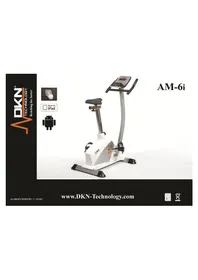
AM6i - Exercise bike DKN - Free user manual and instructions
Find the device manual for free AM6i DKN in PDF.


| Product type | Exercise bike |
| Brand | DKN |
| Model | AM6i |
| Maximum user weight | 140 kg |
| Resistance levels | 32 |
| Training programs | Manual, Program (Beginner, Advanced, Performance), Cardio, Watt |
| Display | Time, Distance, Calories, Speed (km/h), Watt, Heart rate |
| Heart rate sensors | Hand pulse sensors and telemetric chest strap |
| Number of user profiles | 4 |
| Power supply | Mains adapter (not included) |
| Dimensions (L x W x H) | Approx. 100 x 55 x 130 cm |
| Machine weight | Approx. 35 kg |
| Maintenance | Clean with a soft cloth; avoid liquids; use original parts |
| Safety | Read the manual; consult a doctor before any training; do not leave children unattended |
| Warranty | 2 years (residential use only) |
| Use | Residential only |
Frequently Asked Questions - AM6i DKN
User questions about AM6i DKN
0 question about this device. Answer the ones you know or ask your own.
Ask a new question about this device
Download the instructions for your Exercise bike in PDF format for free! Find your manual AM6i - DKN and take your electronic device back in hand. On this page are published all the documents necessary for the use of your device. AM6i by DKN.
USER MANUAL AM6i DKN
Create or Select User profile.

Landing page: select work-out.

Start work-out.
AFTER WORK-OUT:

Press Home to LANDING PAGE.
Press BACK (3x), press EXIT.


Press Home to LANDING PAGE.
Press BACK (3x), exit APP on the tablet.
Deactivate Bluetooth Connection on iPad to clear Treadmill
Console.
DKN Motion supports:
iPad 2
iPad
"Made for iPod," "Made for iPhone," and "Made for iPad" means that an Electronic accessory has been designed to connect specifically to iPod, iPhone, or iPad, respectively, and has been certified by the developer to meet Apple performance standards.
Apple is not responsible for the operation of this device or its compliance with safety and regulatory standards.
Please note that the use of this accessory with iPod, iPhone, or iPad may affect wireless performance.
iPod, iPhone, iPod classic, iPod nano, iPod shuffle, and iPod touch are trademarks of Apple Inc., registered in the U.S. and other countries.
Garantia - Warranty - Garantle - Garantle - Garancia - Garanzia - Garantle - Garanties - Eyyuon
This DKN product is designed for residential use only.
Network to the original retail purchaser and authenticated by proof of purchase from a retailer a product sold by an authorized DKN dealer.
This Limited Warranty is not transferable and does not cover normal wear and tear (including, but not limited to, damage and wear to batteries, springs, bearings, running mats, hydraulic systems, ropes, belts, pulleys, power shocks, drive belts and other non-durable parts, etc...).
This Limited Warranty is void if the product is damaged by accident, unreasonable use, improper service, failure to follow instructions provided, modification from its original state, or other causes determined not arising out of defects in material, the consequences of improper treatment, bad installation, wrong assembly or tampering of the parts by incorrect assembly, improper use of the machine (eg. too heavy load in time, weight etc...), problems caused by lack of maintenance, deviations of the standard machine, such as light vibrations or noise, and in case of semi-professional, professional and commercial use (inter alia in sports schools, physio, companies, etc...).
Transport charges, travel charges for technicians, and possible trader and/or workshop charges are excluded from this warranty, and will be at the sole cost of the owner.
The liability of the manufacturer under this Limited Warranty shall not include any liability for direct, indirect, or consequential damages resulting from any defect nor the use of this machine.
Before you start training on your DKN strider, please read the instructions carefully. Be sure to keep the instructions for information, in case of repair and for spare part delivery.
This exerciser has been tested up to a max. body weight of 140 kg/300 lbs.
Follow the carefully the different steps of the assembly instructions.
Use only original parts as delivered.
Before starting the assembly, be sure to check if delivery is complete by using the included parts-list.
For assembly use only suitable tools and ask for assistance with assembly if necessary.
Place the exerciser on an even, non-slippery surface. Because of possible corrosion, the usage of any exerciser in moist areas is not recommended.
Check before the first training and every 1-2 months that all connecting elements are tight fitting and are in the correct condition.
Replace defective components immediately and/or keep the equipment out of use until repair.
For repairs, use only original spare parts.
In case of repair please ask your dealer for advice
Avoid the use of aggressive detergents when cleaning.
Ensure that training starts only after correct assembly and inspection.
For all adjustable parts be aware of the maximum positions to which they can be adjusted/tightened to.
This exerciser is designed for adults. Please ensure that children use the exerciser only under the supervision of an adult.
Ensure that those present are aware of possible hazards, e. g. movable parts during training.
Warning: incorrect/excessive training can cause health injuries.
Please follow the advice for correct training as detailed in training instructions.
Consult your physician before starting with any exercise programme. He can advise on the kind of training and which impact is suitable.
The owner's manual is only for customers' reference.
The supplier can not guarantee for mistakes occurring due to translation or change in technical specification of the product.
All data displayed are approximate guidance and cannot be used in any medical application.
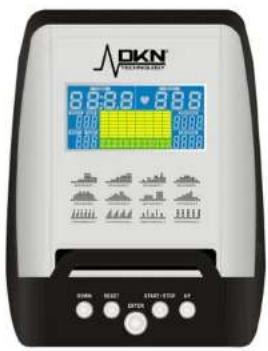
Connect the power adapter, slide the switch to on-position, select user 1 to 4 with UP/DOWN and press ENTER to confirm. Program user data (gender, age, height and weight) using UP/DOWN/ENTER.
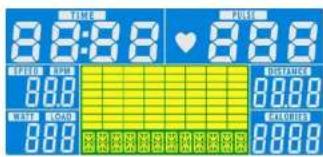
Press ENTER to proceed to landing page (MANUAL, PROGRAM (beginner, advanced or performance)WATT,and CARDIO).
FKnc3ionmbK33onmmandMdEcrip3ionN
ENTER Press to confirm data entry.
ST/STOP To start or stop the exercise program.
RESET To clear the display and reset all data.
UP To select upward function.
DOWN To select downward function.
Time:
Displays exercise time.
Distance:
Displays exercise distance.
Calories:
Displays calorieburn.
Speed
Displays speed in km/h.
Watt:
Displays generated energy in WATT.
Pulse:
Hold firmly both sensors on the handgrip (please wipe sensors and hands before starting measuring your pulse) or apply optional cheststrap (moisten slightly the contacts of the strap).
Your current heart rate will be displayed within 30 seconds up to one minute.
A stable figure requires to hold both sensors firmly.
A chest belt transmitter is compulsory for HR training.
YoKrmcompK3ermiIMcompa3ibleMdi3hm3hemm
op3ionaIcmeH3am3ranImi33ermyrefMOuWJXHObIM
forminegaedMdireHmhear3ma3em
reglra3ionnM
FormanPmqKeNionImpleaHemdomcon3acam
PoKRMDKn dealerimorm3iMoKrDeBn3em
DIIuDKN-TechnogycombImormaKfMform
moreinformationInfo@dU-deVignibe
TrainingMinMANUALmmode
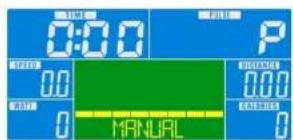
- Select MANUAL and use
UP/DOWN/ENTER to program time. - Press START
- Use UP/DOWN to adjust load level (32 levels).
- Stop/pause the exercise by pressing STOP.
- Press RESET to exit the program.
TrainingMinMPROGRAMmmode
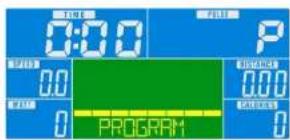
- Press UP/DOWN to select beginner, advanced or performance, confirm with ENTER.
- Select profile 1 to 4, confirm selection with ENTER.
- Program target value for time using UP/DOWN/ENTER.
Press START. - Eventually use UP/DOWN to adjust load level.
- Stop/pause the exercise by pressing STOP.
- Press RESET to exit the program.
TrainingMinMCARDIOmmode
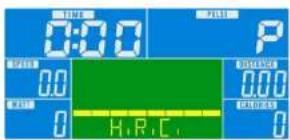
- Select CARDIO using UP/DOWN/ENTER
- Set Target Heart Rate, confirm selection with ENTER (THR default value is 100 Bpm).
- Program target value for program time using UP/DOWN/ENTER and press START.
Upon entering rate in Bpm (beats per minute) the load tension will be controlled by current heart rate. The resistance will be auto-adjusted according to current heart rate figure. If your heart rate figure is under the target pulse, the tension will be up-adjusted one level every 30 seconds, up to the maximum level 32. As soon as your heart rate figure has achieved the target pulse, tension will be down adjusted one level immediately. In case of overload the level will be down adjusted one level immediately, and keep down-adjusting each 15 seconds until your heart rate figure has achieved the target pulse. - Stop/pause the exercise by pressing STOP.
- Press RESET to exit the program.
Chest belt transmitter is compulsory for HR training.
HearmraemdiNplaPedmiManmaproMimaem read-OKbImandMmaPMno3mbekKMedMaMagKidanceminManPcardio-3aNcklarmrelaed medicalormparamedicalprogramm
TrainingMinWATTmmode
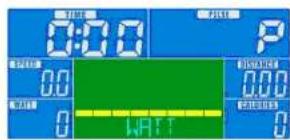
- Select WATT, USE UP/DOWN to program target watts (programmable between 10 up to 350 Watt), confirm with ENTER.
- Program target value for time using UP/DOWN/ENTER.
Press START - The tension difficulty will be auto-adjusted according to the Watt figure. If the figure is under the target value, the tension difficulty will be up-adjusted one level every 30 seconds, up to the maximum level 32. As soon as you achieved the set value, tension difficulty will be down adjusted one level immediately. In case of overspec the level will be down adjusted one level immediately, and keep down-adjusting each 15 seconds until you reach the preset value.
- Stop/pause the exercise by pressing STOP.
- Press RESET to exit the program.
Training Instructions
If you have not been physically active for a long period of time and also to avoid health risks you should consult your general physician before starting to exercise.
Everyone, or almost everyone, is fascinated by the champions/athletes among us. We dream away when we have one look at a trained body, full of muscles, in movement, and hope that one day we also have an athletic body like that. It's then that we realize that exceptional performances need exceptional talents, but also daily training, well organized and planned within the smallest detail.
If we compare the genetic inheritance of great athletes to the genetic inheritance of the sporty amateur in general, we only can determine small deviations, which can't explain the difference in performances.
However if we compare the trainings, we do see great differences. In general, athletes on a higher level do not only had years of training, they also benefit from the help of a professional coach and have adapted their lives to their physical condition. Their training program is outlined and planned within the smallest detail and is being regularly evaluated in order to check if the preset goals are being achieved.
The sporty amateur who wants to improve his performances usually starts training without a plan. Sometimes he copies the training program of a well known athlete. This usually slows down his progress and often leads to strain the muscles and sometimes the cardiovascular system. A special, optimal training
program, suitable for everyone, would be wishful.
The incredible complexity and the different adapting processes which our body has to go through every training, don't allow us to use such a training program. Whether you train on muscle development, power, endurance, speed, flexibility or a better coordination of your movements, everyone starts with different initial conditions.
The goal of each training program is to improve your performances. You don't need to become a top athlete, you also can train to lose weight or just to feel better. The optimal performance can be for example, run 5 minutes longer than before at the same tempo and without interruption, or do more push-ups than the day before.
The research on the influence of a sporty training on our body has made lot of progress in the last several years. Even if some questions are still unanswered, the knowledge we achieved from the sporty science and related fields, have proven their use in practice and serve in the first place our top athletes. This doesn't mean we can't use the basics of a training for top athletes for every individual which practice a sport and who wants to improve his performances.
Evaluation of your physical condition
For each level of your training program (development of the muscles, endurance, flexibility, speed, coordination of your movements), we recommend you to find out through some tests on which level you find yourself. But first we recommend you to
consult your physician in order to set up a health report:
Are you older than 35 years
Have you not been exercising for a long time
- Do you have overweight
- Are some movements not suitable for you
- Do you have to take medicines
- Are you suffering from a serious disease or are you having breathing difficulties
- Do you have a metabolic disorder (ex. Diabetes)
- Do you have any infections
- Do you have a fever as a result of any disease
- Do you have an infectious disease
- Are you having problems with your organs
- Do you suffer from hyperventilation
- Are you having any respiration diseases
- Do you have any pain while breathing?
- Or do you have a poor physical condition?
If your medical health is satisfactory, you can begin to set up your training program. But before you start, make sure you know your initial capacities - or a diagnose- so it is easier to determine your goals. Only then you can set up a training program which will match your goals.
Diagnosis
Determine your goals.
- Organization (long, mid-long, short term)
- Evaluate
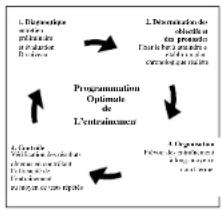
Regularly check your progress, so you can adapt your training program if necessary. The following survey shows the interaction between the 4 elements, which are important in an efficient training program.
Diagnostic - initial level
Before setting up a program, you have to take note of some parameters and take your sizes. These measurements will help you determine your present physical condition. It is the intention to collect all data concerning your personality, your health and your performances.
- Individual data: age, sex, figure, weight, fat percentage, measurements, pictures, etc.
- Data concerning your health : blood pressure, orthopedic data, research of the metabolism, serious diseases, injuries, etc.
Performance data: endurance tests, power tests, movement tests and speed control is often not necessary in fitness. Coordination of the movements however is crucial because it is very important when you execute the exercises.
"Clumsiness" usually means a lack of exercise. Therefore stick to the preset modules when you exercise, even if it is an endurance sport.
Every test, intellectually or physically, shows you your personal possibilities at a certain moment in time. Even though mathematic results become inadequate after a certain time, the results which you will achieve (after the same test one week later) will be better than the first one, because you have been able to locate your weak points and adapt your training in order to get rid of your shortcomings.
We work in the same way for the body. Let us assume you have taken an endurance test and the result of this test is 20% under the average level. This result must now help you to set up a program to achieve this average level. This shows that the test is the base to set up a training program in order to reach your goal. So it is very important you check your performances on a regular base to see if they measure up to the preset goals. If not, you have to adapt your training program.
The results of these check-ups give you the opportunity to compare your performances with the average performances, but also show if you are making progress. After 6 weeks we begin again with the same test to check if your performances have been improved and how much they have been improved.
Physical features
Weight
Are you happy with your body, often depends on the balance. But what is the ideal weight? Following formulas are known to determine the ideal weight:
Normal weight = girth waist in centimeter- 100
- Ideal weight women = normal weight - 15%
- Ideal weight men = normal weight -10%
This formula designed by "Broca" has a limited value. As long as there is no new method to determine the ideal weight, the image we have of ourselves, tells us more than any other number. But a lot of people feel better when they can compare themselves with figures and numbers. Therefore it is sensible to take into account a few well known formulas as the body mass index (BMI) and with some reserve, the waist to hip rate (girth waist - hip).
Body Mass Index (BMI)
The BMI refers to the connection between weight and body shapes, which allows us to set up a better and exact standard than the "Broca" formula.
BMI = present weight (in kg): height in m². Ex. A man of 70 kg and 1.70 m high has a BMI of 70:1.7m² = 24.22.
In the table beneath you can situate yourself. These values are a guidance and are not guaranteed, especially not for sick persons, children and elderly people.
Women Men
<19 <20 Underweight
19-24 19-25 Norma
24 >25Overweight
30 >30 Corpulent
40 >40 Obese
Fatpercentage
Body fat expressed in percentage tells us more than numbers about the relation weight/waist. To determine the fat percentage we have to take into account some parameters depending on age. You can determine your fat percentage in different ways. You even find many balances who also can measure your fat percentage. If you want to lose weight, then
the fat percentage is more important than the weight itself, because it is the fat you want to disappear.
| BMI Table Standard according BMK index related to age. Age Female Male | ||
| 17-29 year 15 % | 25 % | |
| 30-39 year 17 % | 27,5 % | |
| Over 40 20 % 30 % | % | |
Connection waist - hip (waist to hip rate) You have determined a higher fat percentage than normal in above chart. This fat can have a different impact on your health. With a simple test, which you can do at home, you can determine if you have a higher risk for cardiac disorders. To execute this test, you have to measure the girth of your waist just above your belly button, without holding in your stomach and in a relaxed position. Than measure the girth of your hips on his widest point. Divide the girth of the waist by the girth of the hips. If the result is lower than 0.9 (for men) and 0.8 (for women), you don't have a higher risk for cardiac disorders than normal.
Measurements
Do also take your other measurements, besides your waist and hips. If you want to improve your silhouette, these measurements can show you the changes your body made during training. This method is still the most precise, fastest and cheapest one. Please pay
attention you take your measurements always on the same place. We advise you to take measurements of the following parts : girth of the neck, shoulders, breast, arms, upper arms, waist, hips, thighs and calves.
Figure
Talents are often seen as interesting and attractive in daily life. This is also the case for our figure. If it doesn't measure up to certain criteria, we find a way to change this. Unfortunately we also have to say that the "Rubens" type will not become easily a "topmodel".
So before we begin fighting windmills, it is probably more sensible to take into account our figure. Do we all have to be "topmodels"? Our physical appearance depends strongly on the time we live in. Therefore it is rarely that the body types, you find next, exist. Most people among us are a combination of different types.
Leptosome/ectomorphe type
Features :
- Wider pelvis than shoulders
- Very supple joints
- Weak muscle development
- Weak blood pressure
- Increased pulse in rest
- Weak circulation (less endurance)
Cold hands and feet, dizziness when you stand up - Intense activity of the nervous system
- Weak metabolism (hard to gain weight)
Contradictory to other types, this type will not be suitable for performances which include power and endurance. An adapted training can improve these shortcomings even though the starting points are not always favorable. The
figure of the ectomorphe types often creates envy by other types. This type has the privilege to eat as many as he wants without gaining weight.
The atlete / mesomorphe type
Features:
Strong and muscular
- Wider shoulders than hips
- The muscular system and the blood circulation are suitable for excellent performances
- Weak blood pressure and pulse in rest by the active mesomorphite types
- Increased blood pressure and pulse by the non-active types
Not susceptible to cold
- Correct general figure
Normal digestion
- In case of inactivity or over feeding, the fat stays hanging on the body
Taking into account above features, a moderate training will be enough for the mesomorphe type to improve his performances. The risk on injuries is much higher for this type because the development of the muscles isn't always in proportion to the elasticity of the muscles. We therefore recommend you to invest a lot of time of your training in improving the elasticity of the muscles.
The figure of the athletic type and the active mesomorphe type stands very close to the ideal figure in the 80ties and 90ties. Therefore many of us would like to belong to this category, although they often belong to another category. Those who can't admit that
not everybody can have the perfect body, often remain frustrated.
Endomorphe type Features:
- Round shapes, holding fat
- Width shoulders, width pelvis (due to overweight)
More equal distribution of the weight in comparison to the other 2 types
Average figure - Very suitable for performances aimed at power and endurance
- Easy food insertion and slow digestion make it easy to gain weight
Slow pulse in rest, normal blood pressure (for active types)
Power, endurance and mobility are the greatest trumps of the endomorph. Only the weight, often too high, can be an interference in some situations. Therefore he must pay attention to his food, healthy and adapted to his needs, emphasizing endurance to stabilize his weight.
Taking into account the beauty ideals of this moment, the figure of the endomorph type is not suitable. But above features also show that the active endomorph has the right talents for a good health and a sportive attitude. If the endomorph takes into account his genetic potential, a few extra pounds, can not harm him.
Endurance test
An endurance test may not be executed in following circumstances, except when it is done under medical supervision:
- Serious and chronic illnesses of the respiration
- Illnesses with fever attacks
- Infectious diseases
- Serious increased blood pressure
Disorders (ex. of the heart or longs)
Infections - Taking of medicines (betablockers)
- When you aren't feeling well
The most know endurance test which is used in sports is the "Cooper test". In this test you have to run as hard as you can for 12 minutes and run as much kilometers as you can on an flat underground.
Even it's aim is not to stop, you can slow down and walk. The covered distance is noted and compared with the numbers in the Cooper chart. This chart gives us more information about your performances.
The benefit of this test is that you can do the test whenever you want, you only need a chronometer and a course with a fixed distance.
The disadvantage of this test is that you need some running experience to become a good result. You may not take this test if you are not feeling well (tiredness, feeling unwell, etc...)
| Cooper Test | Data in km, M = male, F = female | |||||
| Age | 20-29 | 30-39 | 40-49 | 50-59 | ||
| Very well | M | 2,64- | 2,51- | 2,46- | 2,32- | |
| 2,81- | 2,70- | 2,64- | 2,53 | |||
| F | 2,16- | 2,08- | 2,00- | 1,90- | ||
| 2,32- | 2,22- | 2,14- | 2,08 | |||
| Well M | 2,40- | 2,34- | 2,24- | 2,10- | ||
| 2,63- | 2,50- | 2,45- | 2,31 | |||
| F | 1,97- | 1,90- | 1,79- | 1,70- | ||
| 2,15- | 2,07- | 1,99- | 1,89 | |||
| Average M | 2,11- | 2,10- | 2,00- | 1,87- | ||
| 2,39- | 2,33- | 2,23- | 2,09 | |||
| F | 1,79- | 1,70- | 1,58- | 1,50- | ||
| 1,96- | 1,89- | 1,78- | 1,69 | |||
| Weak M | 1,95- | 1,89- | 1,82- | 1,65- | ||
| 2,10- | 2,09- | 1,99- | 1,86 | |||
| F | 1,54- | 1,52- | 1,41- | 1,34- | ||
| 1,78- | 1,69- | 1,57- | 1,49 | |||
| Too weak | M | <1,95 | <1,89 | <1,82 | <1,65 | |
| <1,54 | <1,52 | <1,41 | <1,34 | |||
You also can take another endurance test: the "Harvard-Step-Test. For this test you need a hear rate monitor, a chronometer, a stair or bench. The height of the stairs or bench depends on your length.
| Harvard-Step-Test | |
| Height in cm | Height of the step |
| <152 cm | 30 cm |
| < 160 cm | 35 cm |
| < 175 cm | 40 cm |
| < 180 cm | 48 cm |
| >180 cm | 50 cm |
To execute this test, step down and up the bench or stairs every 2 seconds. This makes 30 times/minute up the bench, which gives a total of 120 up-and down steps. Whether you change leg or always use the same leg, this has no effect on the result. Measure your heart rate after 4 minutes. When you are done with the exercise, take your pulse after 60
seconds, and again after 1 minute. In this way you become 3 values which you have to use in the following formula :
A + 3000 divided by heart rate B + 3000 divided by heart rate C = endurance index. Example: when your heart rate is 160 after ending the exercise (heart rate A), 120 a minute later (heart rate B) and 100 after 2 minutes (heart rate C), then you have an endurance index of :
3000:160 = 18.75
3000:120 = 25.00
3000:100 = 30.00
Endurance index = 18.75 + 25.00 + 30.00 = 73.75
On the basis of the chart below you can adapt your training and divide your powers better according to the result of this test. If you take the endurance index from our example (73.75), you can see in the chart below that this value is sufficiently for someone younger than 35 and good for someone older than 35.
| Endurance Index | |
| Less than 35 Over 35 | |
| < 50 no sufficient medium | |
| 51 - 60 medium medium | |
| 61 - 70 medium fair | |
| 71 - 76 fair well | |
| 77 - 85 good very well | |
| 86 - 90 very well exceptional | |
| > 90 excellent exceptional | |
Training planning
Overload
Training means making an effort, using our energy reserve. This effort will show a lower performance afterwards. This effort can only be undone if we give our body time to recover and to rest. So both effort and rest are the ingredients of a perfect training. Effort and relaxation are one.
To determine how long we have to rest is not simple because it depends on a lot of elements such as the number of executed exercises, the used weights, the kind of exercise, how long we exercise...etc.
Furthermore, not every muscle needs the same time to recuperate. A small muscle can already be ready during practice, a big muscle can need extra time.
To set up an intelligent training, we recommend you to use some constant parameters during a limited training period. Based on these parameters it is much easier to see if our body has enough time to recuperate.
If you start training, you will feel "tired" after every effort. However the longer you train, the more easy it will become for your body to recuperate and after a while you want feel "tired" anymore and your performances will get better. However if you keep feeling "tired", your body needs more time to recuperate and we even recommend you to stop training for a few days and give your body the rest it deserves.
You will notice that when you resume training, your performances will get better much faster than when you keep training without resting (overload).
Descending or stagnating performances can be signs of overload. Also an increased heart rate can lead to overload, which also increases the risk for injuries.
Muscular trainingperiode
To prevent physical overload by overtraining, we recommend you to train no longer than 4 to 6 weeks on one territory. Divide your training up into different periods and change your program regularly.
- Training unity = one training session
- Micro cycle : all training sessions during 1 week
- Meso cycle : groups 3 to 5 micro cycles. In muscle training, the meso cycle is a training which emphasizes endurance, increase of size or power.
Macro cycle : groups different meso cycles and can take a few months (6 to 12 months).
Now you find some more information about the different features of each territory:
Endurance
A run of 400 meter requires endurance and power. The endurance training will include a preset series and the repetition of it. Attention! the recuperation period is also very important.
The lactic acid in the muscles will increase and will cause a inflamed feeling when the tiredness keeps increasing.
One of the greatest effects of a training with extended efforts is the increase of the tolerance of the acid in the muscles, which can be put into work as follows: there will appear different causes who will neutralize a part of the lactic acid; muscles will no longer be sour,
this brings along a extended action for a few seconds, or by repetition, by which they refuse to go on.
Increase of the muscular mass
he growth of our muscle cells is promoted by an extended stimulant. The use of energetic phosphates of the muscle cells is reduced to a minimum. The corn of the cell, which also contains a product of proteins, under the form of muscle fibres, also works in on the thickness of the muscles.
Maximal power/ effort
The maximum power of the muscle depends on the average thickness, and also on the number of muscle fibres due to movement. The interaction between the nerves and the muscles determine the capacity of a muscle during an effort.
Training period: endurance
Competition sports is one of the basics to set up a training schedule in function of endurance. The sporty amateur once again takes advantage of the benefits of a training set up for a competitive sportsman. As the weights and the repetition of the exercises play an important part in the measurement of our "tiredness" in the training of muscle development, the heart rate is the most important element in the endurance training.
Before we give you some recommendations for cardio training, it is important to know your maximum heart rate. We can determine this rate by a test which will ask a maximum effort of our cardio-vascular system. This test whoever is not suited for the sporty amateur. However we can determine our maximum heart rate by another formula : 220 minus our age.
Starting from this formula, our optimal heart rate in function of age, will be between 70 and 85% of our maximum heart rate obtained during a cardio-vascular training session, and between 60 and 70% during a metabolism training.
We have different ways of training in the endurance sports.
Continuous training
- Training by interval
- Repetition training
- Competition training
Continuous training is most used in leisure sports, training by interval in a less way. Repetition and competition training mostly ask for exceptional and intense efforts and therefore they are not recommended for the sporty amateur.
A continuous training is characterized by a training over a longer period, without interruption of the effort. The most sporty amateurs automatically go for this kind of training.
They often become good results when the level of effort correspond to the optimal heart rate in a certain age category.
The training by interval usually contains a series of efforts and a series of relaxation. The series of relaxation contains moments of partial rest.
Continuous training is chosen by 80 to 90% of the sportsmen who wants to work on endurance. We therefore recommend continuous training to every sporty amateur.
| Age | HR MAX/ min | 60% MAX/ min | 65% MAX/ min | 70% MAX/ min | 75% MAX/ min | 80% MAX/ min | 85% MAX/ min |
| 20 | 200 | 120 | 130 | 140 | 150 | 160 | 170 |
| 25 | 195 | 117 | 127 | 137 | 146 | 156 | 166 |
| 30 | 190 | 114 | 124 | 133 | 143 | 152 | 162 |
| 35 | 185 | 111 | 120 | 130 | 139 | 148 | 157 |
| 40 | 180 | 108 | 117 | 126 | 135 | 144 | 153 |
| 45 | 175 | 105 | 114 | 123 | 131 | 140 | 149 |
| 50 | 170 | 102 | 111 | 119 | 128 | 136 | 145 |
| 55 | 165 | 99 | 107 | 116 | 124 | 132 | 140 |
| 60 | 160 | 96 | 104 | 112 | 120 | 128 | 136 |
| 65 | 155 | 93 | 101 | 109 | 116 | 124 | 132 |
| 70 | 150 | 90 | 98 | 105 | 113 | 120 | 128 |
Training evaluation
The preset program is only effective if you regularly control yourself. It is better to use the term "evaluation" because we evaluate the present data/results in function of the next training cycle.
Even though the preset goals were chosen carefully and realistic, it always is possible that the program of a meso cycle is realized partially.
This can have several causes such as illness, injuries, occupation activities, or other motifs to interrupt your training. If you already reached some goals, but not all of them, you have to adapt your training program for the next meso cycle.
Training diary
The keeping of a training diary can help you in finding the causes when you have not reached your goals. In this diary you can write down different information, which can help you to set up a training program, such as your eating habits, periods of rest and sleep, remarkable results etc. A visit to the dentist for example can influence your training results. If you can take into account certain circumstances, you can avoid a stagnation in your results. Adaptations of your training are usually important for the intensity of your program, the succession and the repetitions of the exercises and the achieving of results.
Summary
- Make sure if a fitness training doesn't cause problems for your health.
- Evaluate your level of power, endurance, flexibility, speed and coordination before you start training.
- Set realistic goals based on your physical possibilities.
- Set up a training program for a longer period (6 to 12 months)
- Divide your long term planning up into different cycles (meso cycle) of 4 to 6 weeks.
- Make sure there is enough variation in your training. Train on endurance, power and muscle development.
If you choose for endurance training, vary between short, mid-long and long training periods.
During a meso cycle you have to increase the intensity of the training for endurance as well
as for muscle training. Limit the intensity of the training in the beginning of every new cycle. Evaluate regularly your training to make sure you are on the right track and if you can achieve your most important goals, if not:
- Adapt the next meso cycle
- Repeat the initial test
- Do interim tests at the end of every meso cycle
Success
Even after a short period of regular exercises you will realise that you constantly have to increase the pedalling resistance to reach your optimum pulse rate.
The units will be continuously easier and you will feel a lot fitter during your normal day. For this achievement you should motivate yourself to exercise regularly. Choose fixed hours for your work out and do not start training too aggressively.
An old saying amongst sportsmen says:
"The most difficult thing about training is to start it."
Wishing you lots of fun and success with your exerciser.
All data displayed are approximate guidance and cannot be used in any medical application.
Heart rate displayed is an approximate read-out, and may not be used as guidance in any cardio-vascular related medical or paramedical program.
Inn3rKcsoiNmduK3iiHaioionmdeUoordinaeKr
MiMemenmarche
Surcompensation/Surentrainement
Body Mass Index (BMI)
-
Continue training
-
Training per interval
Herhalingstraining - Competitietraining
Indice de Massa Corporal (IMC)
Cooper Data in km, M = male, F = female Test
Age 20-29 30-39 40-49 50-59
| Very well M | 2,64-2,81 | 2,51-2,70 | 2,46-2,64 | 2,32-2,53 |
| F | 2,16-2,32 | 2,08-2,22 | 2,00-2,14 | 1,90-2,08 |
| Well M | 2,40-2,63 | 2,34-2,50 | 2,24-2,45 | 2,10-2,31 |
| F | 1,97-2,15 | 1,90-2,07 | 1,79-1,99 | 1,70-1,89 |
| Average M | 2,11-2,39 | 2,10-2,33 | 2,00-2,23 | 1,87-2,09 |
| F | 1,79-1,96 | 1,70-1,89 | 1,58-1,78 | 1,50-1,69 |
| Weak M | 1,95-2,10 | 1,89-2,09 | 1,82-1,99 | 1,65-1,86 |
| F | 1,54-1,78 | 1,52-1,69 | 1,41-1,57 | 1,34-1,49 |
| Too weak M | <1,95 | <1,89 | <1,82 | <1,65 |
| F | <1,54 | <1,52 | <1,41 | <1,34 |
| Endurance Index | |
| Less than 35 | Over 35 |
| < 50 not sufficient medium | |
| 51 - 60 medium medium | |
| 61 - 70 medium fair | |
| 71 - 76 fair well | |
| 77 - 85 good very well | |
| 86 - 90 very well exceptional | |
| > 90 excellent exceptional | |
| Endurance index | |
| Less than 35 | Over 35 |
| < 50 not sufficient medium | |
| 51-60 medium medium | |
| 61-70 medium fair | |
| 71-76 fair well | |
| 77-85 good very well | |
| 86-90 very well exceptional | |
| >90 excellent exceptional | |
Piano d'Allenamento
Sovraccarico
Body Mass Index (BMI)
Function buttons and descriptions
ENTER
Haxmnte,HTo6bBoITN B pexMM HACTPOKIM, N NOITBepnltb 3auehenna napameTPOB.
ST/STOP
Tb3aynctnbHnOCTAHOBHTb nprgpMMyynpaehneHn.
RESET
IaOChTKn DnCnner HcBPOCTb BCE DaHHbIe.
UP/DOWN
HaKMMTe KhoNkU P/DOWN, YTo6bBb6pTaB HauHbHbN, npOdBnHyTbMnINnpON3BOIDNTeHbHOCTN, NOITBepDENTENTER.
HaxMITE KHOIky ENTER, yTO6by yCTaHOBNTB BPEM, yTO6by 3MmEHNTb 3NaeHHN, nIONoB3yTe UP / DOWN, HaxMITE KNABIMU BBOJ, yTO6by noDTBePNTb.
Haxmte START nHaayana TpeHnpOBKn.
Hakmte KhoNky UP/DOWN dnypeynipOBKn ypOBn harpykn.
CTon/nay3a ynpaxHeHnA Hxab STOP.
HakmTe RESETIbYBixOda n3 nporpaMMbl.
MeHIO PpOpaMa 4CC
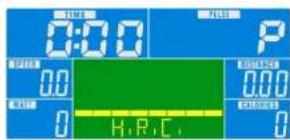
Bb6epte HRC' nCnObn3oBaTb UP/DOWN/ENTER yctaHOBNt b ceneBOI qactoTb cepdHbX cokpaueHn (3aHHeHne no yomHaHncoCTaBnR 100 BPM).
BoiB B Kypc BPM (yIapOB MmHyTu) HarpzKn HnnpKHeN6 6yDet KOHTpOINPOBaTb TeKyUH YoCTOTy cepDeHHx COKpaAeHN. ConpoTMBHeN6 6yDet ABTOMaTHHeCKn peryNpyETcB 3aBMCMOCTOn TgKyuEe FInype cepDeyHOro pITMa.ECN BaH Npbc nokAsTeNo CEneBOH Npbc, HnPaeKeHMe 6yDet CoCTABJIbC c nonpABKO HA yPoBEh KaXDbE 30 ckyHd, Do MaKcMAmbHoro yPoBHn 32. KaK ToBko BAH npIsc uHpa DocTnHa ceneBOH Npbc, HnPaeKeHNe 6yDet CKOPeKTnPOBaHb BHN HA OIN H yPoBeH bp3ay. B cnuyae nepepy3kn yPoBEh 6yDet BHN peryNPOBaTb yPoBEh cp3ay, H depKaTaB BHN KOPeKTnPOBe kKaJbIe 15 cekHyD, NOKA BAH npbc cHpF DocTnHa cen HHMnybca.
- Cton/nay3a ynpaxHeHn, Haxab STOP.
HaxmTe RESET nBbixo#a n3 nporpaMbl.
Heo6xOIMOn HcNoJIb3OBaHne HarpydHorO daTtKa.
MeHIO WATT(BATT)
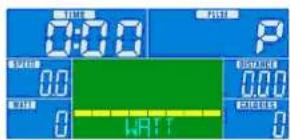
BubepHTe'BATTnncno3yIte UP/DOWN/ENTERTYcHOBtuebeoB BT (nporpaammpyetcr 010 350BT).
HaxMMTE KONKY ENTER, 706bI yCTAHOBITb BPEM, 706bI N3MEHMTb 3HAeHHN, INCNOB3yTE UP /DOWN, HAXMMTE KABMIUY BBOID, 706bI NODTBEPNTb.
HapnKHeHNoCTb CNOxHOCTn 6ydtert ABToMaTHeCKn perynpyetcB 3aBmNCmOCTN O T Bfynpyb. Ecnntot NOKa3aTeNb cocTaNReT B COOTBeTcTBnC ueNeBbIM 3HaYeHMem, HapnKHeHocTb TpyHOCTn 6yDyt c nonpabKn Ha ypoBeH KaXDbIe 30 cekYHD,do MaKcImaNbHoro ypoBNH 32. KaTOnbKO Bbl DOCTnIn YcTaHOBneHORO 3HaEHn, HapnKHeNE TpyHOCTn 6yDyt ckoppeKTIPOBaHb BN3 HA ONiH yPOBEH cp3y.B cnUyae nepepy3kn ypoBeH bEET BHN3 perynipOBaTb ypoBEh cpa3y, IN depXtAB BN3 KoppeKTIPOBKe KAKnBle 15 cekYHD, noka He doJeTe Do 3aDaHHoro 3HaEHn.
- Cton/nay3a ynpaxkHeHn, Hxab STOP.
HaxMnTe RESET nla BixOda n3 nporpaMMbl.
COKPAUH HRAIETCA
Pn6Bn3HTeHbN He MoKTe 6blTb
HCNOJI3OBAH B KaHeCTBe pyKOBOCTBa
JINr MEuHcHKx nporpAMM NO
JeueHIO BoE3Ne cepDeHo-
CocyDcTO ChTeMbI N
napaMeuHnckHX nporpAMM.
3KcnpIyatauHnHCTpykunK TpeHnPoBkAm
Ecnn Bbl dInTeBHe BpeM He 3aHIMALINc bHm3HecKHMn ynpaxHeNMMTO Go H36bKaHne pNcKa DnI3DopOBBe peKOMeHdyetc npOKoHcyTIpOBoBaTcpeRed hauAOM TpeHnPOBOK C BaWIM BpaOH.
Bce, INI NOCTN BCE, OCHAPOBAHb JXKByUIMM
cpeIN HAC YEMNIHOAMC/NOPTCMEHAM. NocJe
OHDORH B3rJDAH Ma THePENPOBAHHOE, NOHIO
MbIuT ETO B DVBIXeHN Mbl BnAaEM B MeYtBu
HaJeEMcR, YTO B ODNH CHACTNIBB JDeH Taoka
CTAHem OBnAdATEm TAKORA CNOPTNBHOr TEa.
UNToLBO KOTOM Mbl HauINHAe NOHIMATb, YTO
BeINKOJIeNHbIe pe3yNbTaTB Tpe6yIOT He ToLbKO
CKNIOHTbHOr TanaHTa, HO I EKeJHEBbIX,
XOpOo OprAHIOBaHHbIX IN CnIIaHIpOBAHHbIX DO
MeNoue TpeHIOBOPK.
EcnnMbIcpaBHMrHeTnueckyH
HaCNECTBEHNHOCTBeBENKHX CNOPTCMeHOB C
HACNECTBENHOCTbIO NIObTeNei CNOPTa,TO B
ObuxNcpeTAXMbI HAnDEM MNHHMAnbHie
pa3NJHry,KOTOpBMHEnb3aOBxCHNTB
pa3NJHwME BDOCTNHybIXpe3YbTATax.
OdHako eCNMbIcpaBHMN XeJedHeBHeB
TpEHPOBKN,TOYBNIM CYUeCTBEHNHyO
pa3NJHy.Bo6NJX CEPTAX CNOPTCMeHb
BbICOKORTo TpeHEP ToBJKO PNOBENMI MHorne
rOda BVcNIeHHbX TpeHOBKAX HO OHN TaKke
pnpEBoHOT K NOMQUI NPOPeCCMOHaBbX
TpEHBOHnA daANTnpyIOT CBOIO Xm3Hb K
PfN3HECKOMy COCTOHNI. IPrpAMMA IN
TpEHPOBOK BBBeHHe nCnJIHnPOBaHa Do
MeNoeH,OHa NOCTHO OueHNBAeTcRA
npEdMeTOcTnKKeHn 3aDaHHbPaHe CeJeI.
ObnuHcnoptcmHbI-NoBntenX,KeaioueynyuHTCBonpeyltatbl,HaHnHaOT
TpeHIOBky 6e3 nporpammbl. HnHOrda OHN KONHPyOT npORpAMMy TpeHIOBKN h3BcEThBIX CnOPTCMeHOB. 3aAcTy 3TO BeTeK 3aMeDEHNO pa3BHTNA, Ype3MeHOp Harpy3Ke HaMbIuSb, a HnOHa daXe npo6nMaC cepDeHNo-cocdyctOn CTneCTMbl... CneUaNbHaonTNMAlbHna npOrpAmma TpeHIOBKN, NOxOJaAaJ DnBCEk, BJIaeTcM MeToH.
HebeporTHa CNOxHocb n pa3Hoobpa3ne npoeccOB aadTauim, npoxcOrauxn C haunm OprAHINMOM BO BVPem KAKdo TpeHPOBKn, He noBONrHAM NCONb3OBATbc noprPammy CNoptCMeHOB bIcoaywero ypOBn. Bce TpeHPOBKn, npOBOnMbte B CEJnx PABNTN MaIIu, CNbI, BBIHOCNIBOCn, CKoPCtN, RIOKcTN IINI KOOPdAHLm, HauHAnOTc npi pa3NIuHBIX HAaIbHBix ycIOBnx. LelBo kAOdo noprPammbI TpeHPOBOK ABAIECTe yUyHWeHBeaXIN pe3YbTaTOB. Bam He HxHO CTaHOBbITbc npoPeCCNOHaNbHbIM CNOPTCMeHOM, Bt TpeHpyTeCb Dnro TOR 0To6bl c6PoCITb BEc INI nPoTO yUyHUMTB CBOE camOyCbTBE. ONImaJIbHM p3YbTaTom, HannpMep, MoKet 6bItb BPEMa 8era Ha 5 MHyT dOnbwe, QEM obUYHO pRn AhANOrNHOM Temne 6E3 OCTAHOBok, INI BInONHHeNE 6BJWero KOLINCTBa OTXIMAHm, Ym Bepa. 3a HECKoBko NocJeHNx NE tncNeDobAHnB, CB3AHHBe C N3UyeHMe BINHn 3AhTm N CNOTOM Ha Hau OPAH3M, 3HAHTeBHO npOBDYNHC. HecMptor Ha To, Yo HA HEKOTOpBE BonpOsI OTBETb TaK He HainDeHb, 3HAHn, KOTOpBE Mbl NOnyUnn OT cNOPTRHOB HAYKn CMEKHODaeTbHOCTN, DOKAzAJN CBOIO pAKTIueckyo 3HAUMOCTb HauCeJeHb, B nepByO uepeBb, Hc nOPTCMeHOB BVICoAHwero ypOBn. 3To He O3Haaet, YTO Mbl Me KOEM NcONb3OBATb IX OCHOB DnI R cNOPTCMeHOB-NIOBtEn, JekaIoUsx yUyHUNB CBON p3YbTbTb.
OeHka Baewero Hnueckoro coCToHHN
MbpeKOMeHdyem Bam npOtn HeckoNko OueOHbIX McBtAHmI NnKaKdOro yPOBHR nporpAmMb TpeHNPOBKN (pa3BNTne MbUIL, BbHIOHCBOCTb, HbKoCTb, CKoPcTb, KOOPINHAUNBaWIX DnBKeHNI), KOTOpBle NO3BONrT ONPeDInb BaWy yPoBeHb NOrTOBKn. Ho CHaHaI Ma bpeKOMeHdyET NOUYHT KOHCyIbTaAImO y BaWero BpAaDN COCTABHNE OHTeA O COCTOBHNI 3DOPOBBa.
Bam 60nee 35 net
3aHMMaJIbIb IiBblΦnUeCKHMn ynpaxhHeNIMMa H npToTKeHN dInTeBbHO BpeMeH
CTpaaeTe Nn Bbl NnHm BECOM
BceIIN DnKHeHn npXoJr IBaC
PnHHMaTe Nm BbJeKapCTBeHHbIe cpeCTDa
CTpaJaTe JIN Bb TJeKBeIM 3a6oJIeBAHHeM INI np6nMaMmC DbIXaHMeM
Ctpadaete JIN BbH npueHnem 6meha BeueCTB (HapnpMep,na6eT)
Ecnnn y BACKaKHe-NHΦeKcM
Повьшени Лу вастмпература В pe3yntate 3a60neBaHnI
CTpaaeTe Nbl INHΦeKIOHbIM 3ab0eneBaHmEe
CTpaaeTe Nm Bbl 3a6oBeBaHnA Mn BHYTpEHnX opraHOB
- Ctpadaete Nn Bbl nepbentnnae ne nerkx
CTpaAeTe NBI KAKMMI-IM60pecnipatOpHbIM 3a6oJeBaHnM
Ouyyaete nn Bbl 60nB npoucece DbbxAHN
CBoiCTBeHHo Hn Bam PINOxOe FIn3Hueckoe COCTORHHe
Ecnn coctoHne Bawero oprAHn3Ma yD0BnetBOpntenbHOe,TOBblMOKTe Hauatb
nlaHnpoBaT co6cTBeHHy nporpaMMy
tpeHApOBok. Ho nepTe TEM kauaBb
y6BeiTeCb, yTO Bbl 3HaTe BAaM BHTpeHNHe
CnOco6HoCTN -INN DnaH03-Tak PpoIe
onpeDEnTb BAaM CEII.N. TOnbKO ToDa Bbl
MOKeTe HauaTb TpeHNpOBky COOTBeCTByUOuYIO BAaIM CEJIaM.
- DnarH03
OnpeJeHneBaunxZeJeN - Opranin3aun(DnroocpoHna, cpeHncpoHna, KpaTkoCPOHna)
OueHka
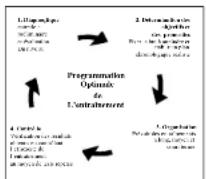
Peynno npoBepreIte ypoBeHbBaWero
pa3BHTN-3TO No3BOINIT, pnp Heo6xOIMOCTH,
n3MeHntb nporpammy TpeHPOBKn. Ha
cneyUoem PncyHke NOKa3Ha C8r3b MExdy 4
3NEmENTAMn, IrpAHOUMM BAXHyPO nB
3fOeKTHBNO nporpamme TpeHPOBKn.
DnarHocTKa-HauJIbHiI yPoBeHb
Ipeepnactpoikno nporpaMMb Bam Heo6xOIMO 3aONMHTB HECKOBko napamePOB n Baoi pan3MePB. TaKHe N3MepeHn no3BOJrT Bam ONpeDenTb Tekyuee Pfn3NHeCoe cCtOarHne. Heo6xOIMO nOnyHTB Cce daHNbIe, kacaIOuNEcB Bac, Bawaero 3dOpOBn pe3YbTATOB.
IHHbde daHbte:Bo3pact,non,phiypa, BEc, npoueHT Tenechoro Xnpa, m3mepeHnA
ΦOTOrpaΦmN T.D.
- DAnHbIe O COCTOHN BaaWero 3aOpOBbR: KpOBAHoe DaBnEHe,OPTOEIMHECKMe DaHHbIe,ahAIN3 MeTa6oNlUeCKNX npouceCOB,TaKeJIe 3a6oBeBaHnra, TpaMbIuT.D.
JaHbIe Ope3yIbTatax:TcTebHa BbHocNIOBcTb CnCnY,TeTbDnKHeHH N KOHTPONCKOPoCTNo6bHNO He Tpe6yIO Ta DnFTHcA. KoOpMaJr DnKHeHH RBAETCR OChb BaxHbIM npametPOB B npocece TpEHNPBOK.
《HEnoBopOTnMBOCTb》06bNHO RBNETcpe3yJbTaTOM HeOCTaTOHyBX TpeHnPOBOK.1030TOM, BO BPEM TpeHnPOBKnPnpdepxKBAntec 3aDaHHbIX MoDyIe,daKe B TOM CNYae,ecnn3To YnpaxHeHnHa BblHocnBOCTb.
KaKdbTcct,6yIbTOTeCTdNOnpeDeeneHn HHTeJIKeKTyAlhBxIN INHΦ3HeCCKHX cnOco6HoCTei,OTo6paKaet Baw yOpBeB b TeKuyuMMOMeHT BpeMeHN DaKe, HeCMOTpHa To, YTO MaTEMAtueckne pe3yblTaTBc TceEHHEM BpeMeHN TepaHT CBOO 3NaUMOCtB, DOCTInraemble Bampe3yblTaTB (Nocne aHAnOMUHOro Tecta HeDenHO CnCTR) yNyUaTbCR OTHOCHTeBHO NepBx, TAK KAK Bbl CMoxete OnpeDnITCB CBOI cAbbe MeCTA n MHeMTb PnOrpAMMy TpeHPOBKN, dNTo TORO YTObI h3abBNTCB OT DAHHBX HEOCTATKOB
AHaIOrnHMo pa6oTaem n C haUIM TeIOM.
DabaTe npednoJoxm, YTO BbBbINOnHNI TcT
Ha BbIOCNIOCTb N BaW pe3yNbTat Ha 20%
NHeke cpeHrero yPOBnH.
POnyehHHb pe3yNbTat DOJXeH NOMOy BaM
NoDTOTOBtB nporpAMMy DIO DOCTKKeHn 3TO
cpdHrero yPOBn. ETO O3HaueaET, pTcT E
ABnRETC OCHOBn IADzAHnnpORpMMb
TpeHPOBKn dIg DOCTKKeHn BaWe CEII.
TIO3OMy ouHb BaXHO perynIrpHO npOBepaB TaBnpe3YbTaTbI DnRA IX CONOCTABNEHc 3aHaHHbIMN CEJIMN. EcnTakoe COOTBeTCTBHe He haJIIOJaTeC, TpNoPpAMMy TpeHINPOBKN Heo6xOIMO NIMMEHbTb.
DaHHbIe KOHTponlaIOT Bam BO3MOXHOCTb
cpaBHnBaTb BAsn pe3yIbTaBtCo CpeHIMM
3aHuEHeHMI, HO pNp 3TOm o6ecneHBAIoT BAWe
paBnTHYe. Hepe3 6 HeJeB nOce Hauana
TpEHIpOBKn Mbl BbINOHNHM aHaONHbYteCTb
nPiPoBeIMM yNuUHINCb Jn BAuN
pe3yIbTaB, n EcnN yNuUHINNCb, To Ha KaKyO
BeMNHy.
Фичecкп napametpbi
Bec
YOBETBOpEHHOCT BaUHM TeOM o6bH03aBcHOT O banaHCA. KaKo BEc RAJIaTcRnEaIbHbIM?
IOnpepeHnIeAJIbHORO Beca
NCIOJIb3yOTCR CNeIyoIeΦOpMyJIb:
HopmaHbHbBec=06XBaT rpydN Bcm.- 100
VdeanbHbBecnJXeHcHn= HOpMaHbHbBec-15%
VdeanbHbBecnMyKuH=HopMaNbHbI Bc-10%
DaHnHaFpMyna,Ha3bIbaemarFopmyno
BpOkka,IMeERTOrpAHnHHe 3HaHeHne.Tak Ka
He cyueCTByet HOBORo CnOcoba OnpeJeHnE
HaeIaNbHorO Beca,TO HaHe Co6CTBeHHe
BOcPnrtne Camnx Ce6BaCKeTeHAM BoJIbe,
Yem IIOBoe YncNo.Ho BoNBJUnHCTBy IOJei
yDoo5be cpABHHBaTB CBOE COCTOnHE CYNCnAMn.
PiOTOMy CTONT YuHTlbATb HECKONbKO N3BecTHbIX
FOmpyI INI BvUcHNeHn.IHKeDA Maccbl Tena
(NMT) n,C HeKOTOpO rOBoRPoK,OTHOHeJNE
pa3MePa rpydn K6epam (OXBATApydn K OXBAty
6eep).
HndekcMaccbTeNa (MMT)
3HaueHHe IMT onpeJeTeB3aMocB3b Mekdy BEcom Tena n ero foPMoN n NcNoIb3yETcra Ina 3aDaHnI NyUwero N 60nee TOHOrO CTaNapTa, Yem CnONb3OBAHmE foPMybl BpOKKa.
IMT = Φακτηνεκήν Bεc (B Kr) : (pοςθ B M)². Πριμερ. Ππλ Myκχυήν Bεc ocom 70 Kπ pοςθom 1,70 M IMT coctabnēt 70 : (1,7M)² = 24,22.
B npBBeHHOH HNKe TaBnue Bbl MoKTe HauTN CBOE 3HAeHMe. DaHHbIe 3HAeHMe RAJIHTOc OPNEHTNOBOCHbIMn He rapaHTnpyIOT ToHoe 3HAeHMe, OcoBeHNO dR BonbHbIX IIODe, Dn DeTeN nIOu NOkINoro BO3pacta.
JKeHuiHbMyxuHbI
<19 <20 Hn3kN Bc
19-24 19-25 HopmaJIbHbI BEc
24>25N36blTOUHbI BEC
30>30TuyHOCTb
40>40OxHpeHne
PpoeHT cOepxHnIy Knpa
BbpaKHeHoe B npOeHTax CoepaJHane
TeNECHORo XnPa HeceT BoNbIe HnOpMaun,
Yem OHoUHeHne Bc/tpyD. JnOn ppeJeHnA
npOeHTa XnPa Heo6XoDMo YUnTBaBt
HEKOTOpbIe npaMeTpbl B 3aBNCIMoCTn OT
Bo3pacta.Bb MoKeTe OnpEeNTb IpOeHT
XnPa pa3nHbIMn NytTBM. B TaKke MokTe
HaHTN MHoKecTB Bo Bec0B, CnOCo6bHx IM3MpTa
DaHHbI npaMeTp. Ecnbl Bx OKTte C6pocntb BEc, To cOePkaHHe XnPa B npOeHTax
RbIReTc8 BoOee BaXhBIM npaMeTpOM, Yem
CAM BeC, TAK KAK ONCbBaET KOINueCTBO XnPa,
OT KOTOPoro.
Tabnua HMT
CTaHdApTnA INHeKcBA MKB 3aBNCIMoCTN OT Bo3paCTa.
Bo3pact XeHunnMyxuHbI
17-29 net
15%
25%
30-39 net
17%
27.5%
Crappe 40
20%
30%
OTHOSeHne rpyb-6eepa (OTHOseHne oxbata rpyn K oxbaty 6eep)
Icnobn3y npnBeHnyo Bblue TaBnUy Bbl
onpeDnInn, YTO yPoBeHb Knpa Bblue
HopMaNbHorO. 3OT TJPK MoKt OEa3BaBt
paJINHoe BmHnne Ha BAe 3dOpOBe.
Blaorapn pOCTomy TeCTy, KOToPbIM MOKHO
BbONHHTB DOMA, ONpeDnITE, OTHOCNTecB
Bblrpynne pNcKa cepDeHbX
3a60NEBAHn. DnA 3TO rAM BHe 6xOdmo
hMepTe bOXB BAsWe rpyn qYb TBbIe
nyka He BTraNBba
XKBOT n HaxoJaCb B paccna6nEHOM
nonoKeHN. 3aTEM npOn3BeDIne N3MepeHne
oxBata 6bePb C amoI uPpOKoi TOyKe.
Pa3dEnite oxBat rpynHa OXBat 6eep. Ecnl
nonuynHeHne 3aHeNe Hnke 0,9 (DnMyxvH)
n 0,8 (Dn JxHeuHn), To Bbl e OTHocNTec B
rpynn PcCKa cepDeHbX 3a60NEBAHn.
N3MepeHn
IOMMIMO n3MepeHnO xOBaTa rpyuN 6eep
Heo6xOdHMo BbInOnHnTb cneDyUOuIe
n3MepeHn. Ecnn Bbl XeJaTe yNyUHTb CBOO
fumrpy,
TOpe3yIbTaTbI 3MpeHn NOMOry BAm
CneDnTb 3pe3yIbTaTAMn B npOceCe
TpeHnPOBok. AnHHb MeTOB cEe EeJRAETcR
HaN6oEBTe OToHbIM, b6CTbIM IN DeUeBBtM.
HeoBXODIMO NOMHTb, qTO N3MEpHINr
BbIOJNJHOITcB OdNHx IN TEX JToKax.Mbl peKOMeHN dyem N3MePbTc CNeDyIOuNue YacTn
TeNa:
okpyknoctbwen,pydnnpednneu nnue,taann,6eep,roennei nKp.
Фигура
B NOBCEHBN HN HN MBI BUNIM AKTEPOB KAK OYBE HNTEPECHBIX INPNIIBNEKATEENbIX NIOEIN. 3TO OTHOCITCR K HAWEI PHNYE. ECIN ee napaMetpHe COOTBCTBYOT ONpeDEEHOMY KPIETMPO, TO MBI CTPEMMCQ YTO-TO N3MEHHTB. K COXANHEHO, HAM PNXODHTC PRN3HATB, YTO CFpyra PPeDA AcTePA He BcERda CTAHOBnTcBc FHyrop APhOBla WBPceHReRepa.3TO OTHOCHTCBN K HAWEMy TEny, Py6HCb HE TAK NPoCTO cTAbTON MOeBIO. PO3OMy nepeD TEM, KAK HauBaT BOpOTBCr C6ERBOB DOPOKKO, HABEPHOE, 6yET npAINbHBee pINHRTB BO BHIMAHINE HAUYFUPy. HKyHo NAM HAM BCEM CTAHOBtCBTON MOJENMAH? Haue Fm3NECKOE COCTOHIE B 3HAHTeBLHO MEpeONpeENETCR BPEHM, B KOTOPOM MBI XNBEM. PO3OMy pINBEDEHNE HNKe TnBIs FHypr BCTpeVAOTCR peKD. BoJIbHNCTBO IIOeDN CPEDN HAC -3TO IIOID pa3HO rTNIA.
ActHueckn/3KTOMOpΦhbl TnI
Oc06eHHoCTn:
Ta3 shipe nneu
OueHnBn6KHeCycTaBbI
Cna6oe pa3BnTne MbIu
Hn3Koe KpOBAHOe daBn
- YBENHnIyIbC B NOKoe
Cna6a用KyH(H3KaBbHOCINBOCTb)
XoIOIbIe pyKn nCTynHn, roIOBOKpyKeHne npN BCTaHmN
VHTEHCNBHAJDAETeJIbHOCTbHepBOHCHCTeMb
Cna6bMyMeta6oNIm3M(TJKeNoHa6paetcBec)
B OTNTHOEOTpyINHbTNHeNDXoHNT
DnA DeTaeTbHOCT,nePOnaraouey cYNmIE H
BbIOHCNOBOCTb.AaANTIPOBAHNA TpeHNPOBKa
No3BOJNT EytpaHNTBaDHBe HeOCTaTKa, DaKe
B TOM CNYae,ecnn HaaybHbIe ycNOBnHE
BRAIOCT6NaoropnATbIMn.Φnrypa
3KTOMOPFOHO Tnna Obblu BOblbAEET 3aBcHbTy npdctabntene Dpyrno TnNOB.
Pepctabentn DAnHOro Tnna Moryt cTb CKonboXOTN n npu 30m He Happatb Bec.
CnoptcmeH/Me3omophbl TIN OcoeHHOCTN:
CunbHa npa3BnTa MyckynaTpa
- Pnneu wnpe 6eep
MbIeueHna CnCTMa nIepKpyLZnua KpOBN BENIKONEnHO NOxOuNT dJa 3NaHTBbHbX Harpy30K
HnKoe KPOBHOe DABNEHne NynbcN POKOE DnA kAnTBHbX IpEcTaNBeTeJe MEOMOpFOHOro TUNa
- YBENHHOE KPOBHAOE DAJIENHEI nIybcIaI He aKTHBbX npcDCTABNTeIeM3OMOpFOHOrO TINIA
Hn3KaBBOCPmMmMHBOCTbKXoNoDy
PpaBnBnaHgIpya
HopMaJIbHoe NnueBapeHne
B Cnyae HeaKTNIBHOCT NIM N36bIToHORO NITaHn XIN HauHaet CBNAbT C TeNa
YyntbBae BcBieck3aHHeO nnyuueHnepe3yIbTaOB Me3oMOpFHorO TnA DOCTaTOHO yMepeHHbIX TeHPNOBOK. DnA daHHoro TnA pNCK TpABM 3aHTeBbHO Bblwe, TAK KAc PA3BUTNE MbIiU He BCERda COOTBETCTByet IN 3JAACTNUHOCIn. N0TOMY
MbpeKoMeHpyEM 3aTpaHNBATb 3HaHTeINbHOE BpEMrIg TpeHnPOBOK CcENbYOBEINuHEH NACTNUHOCTN MIIUI.
ΦHypb CnpTnBHO r OeHb akTNBHO rMe3OMOPfHO rTNOB OeHb Bn3K4 NHeaBH OHrype 80-90 roB. Po3ToMy MHOrne H3 NaXOTr npHaJNeKgA k DaHHo KaTeROpN, XOTr 3aAcTyO 3To HE TaK. JIODi, KOTopBe He MOry pInp3HaTb TOT qAKT, 1TO NHeaBH eNo TEO He MoKET bTb y KaKaDoro, 06bI4Ho OeyH pacCTpaNBAIOTCr.
3HDMOPΦHbI TnOc6eHHoCTn:
OkpyrnbiepOpmbi,KnpoBbIeckonneHn
- Ⅲpokme pIeun, Ⅲpokm Ta3 (no npnHne H36bItoHOro Beca)
Bolnee paBHOMepHoe pacnpedeHneHBe cacoPbAHNIO C DByMnDpyTMM TINAMM
CpeHnHnHpya
Xopoio noDxOaTnIeTeTbHocTn HAeHenHO HA CNY N BbHOCINBOCTb
PpOToH pnpH MnU HmEeHHeo Hne pNBOuT K bIcTpOmy HabOpy Beca
HnKnnIyIbScBnIOe, HopMaNbHoE KpOBAHOe DaBHeNE (DnA kTNBbIX npEctaTneTI)
Tnna, BbHcNIOBCTb NoBDNKHOCTb. B HEKOTobx CNTaUaUNI ppepaO MoKET cTaB TOnbKO BEc. PpeCTABITeB DAHONTO TnA DoJKeH ObaaTb BHMaHHe Ha NiuO, Oha DOnKHa 6bItb DOPOBOi N aadTnpOBaHHa K eRo Notpe6HoCTAm, OBeCneuBaT bBbHOcNIOBCTb CTa6BNI3aUM BeCA. YcHtBaBa CyueCTByIoune Ha daHHb MOpENT
IeAJIbKpacoTb, FnIpya 3HDoomopfHOrTO HnA He nOxdoNT K TAKOMy ONpeDeneHHIO.H yka3AHHe BblIe OocBHeHcOT TaKOE CBINTeBbCTBYOT, 0tQ AKTIBHb 3HDoomopf 6bnaaet Heo6XoDMbIMn TanaHTAMn Dnra XopoWero 3dOpOBBa H CNOPTBHO r CTNIg KHN.YuHbBA rHeHTUeCKn NOTeHuaN 3FDoomoppa, npa IaIIuHnx KInOrpamM eMy NeOBPeINT.
TecHa BbHOCNBOCTb
TCT HA BbHOCINMOCTb HE MOKET BbIONHTRbCA BcNEyUOxN YCNOBx,3a NcKNIOeHnnpoBeDEHnNDabNoHDHeMeBvqa?
TaeIbIe IxpoHnueckne pecnnpaTophIe 3aboneBaHH
3aboneBaHHa, conpoBoXdaHooIuecBbICOKo TEMpeaTPOI
HΦeKUHOHHbE3a60JIeBAHn
3HaHTeBHOe yBeHueHHe KPOBraHoro DaBHeHn
HapyuheHne yHKun (HanpMep, cepua nnn neKnx)
-Инф ekunu
- PnHm MeINKamENTOB (6eTa-6nokatopb)
- IINOxOe cAmouyBCTBNE
BbIbHCTBO I3BcTbIX TcTeOB Ha BbIbOCNIBOcTB, IcNbIb3yEmbIX B CnOpTe, BApIbONJIeTcTOm Kynepa. PpI BaIbONJIeHMe NDaHHOro TcTea Bam Heo6XoHMo 6eKaTb C MaKcIMaNBJHO CKOPoCTb BO TeueHne 12 MInHY Ta MaKcIMaNBJHO paCtOrHne Ha NIOcko NOBepxHOCTNo.
HECMOTpHaTo,TOeIbIORBnRETCB DmKHeHBe 63OCTaHOBKn,BblMOKeTe 3aMeDnTb 6er n npOtnNeuKOM.PpeoednoHoe paccToHnne FncnpyETcN
cpaBnBaTeC0 3HaueHnMn 3 TaBnIebl Kyepa.DanHaa TaBnIa Daet 3AHTeNtBHyo HnΦopMaHIO O BauXh PezYbTaTAX.
OCHOBHbIM npeMMyIeCTBOM daHHoro Tecta
RBAJIETcTO, YTO Bbl MOKEtBEblONHHTb efo B
JIIOBOe BpEMr N63 NOCTOPOHHe NOMOuN.
BaM noTpe6yTeTc TOnbKO cekHyDomepn
HaNPaBNeHHe CФHKINPOBaHHbIM
pacCToHHeM.
HeIOCTaTOM daHHoro TcTa raBnreTcTo,TO,TO
dIra NOnyEHN XoPOxH xPe3yblTATOB
Heo6XoIMMo IMeTb HeKOTOpB IOnbIT B6ere. Bbl
MOKeTe HE bIooJIHTb DaHHb I TeCT npI NIOXOM
CaMOyCBTBm (6OJIb,yCTaIOCTb,He3DpOBoE
COCTOHN Hn T.D.)
Tect Kynepa
| Test kynepa Данныев KM, M = мужшина,Ж = Жени Ворис | 20-29 | 30-39 | 40-49 | 50-59 |
| Онихусяо M Ж Хорочи Ж Средney МК Слабо МК Очны слабо M Ж | 2,64-2,81 2,16-2,32 2,40-2,63 1,97-2,15 2,11-2,39 1,79-1,96 1,95-2,10 1,54-1,78 <1,95 <1,54 | 2,51-2,70 2,08-2,22 2,34-2,50 1,90-2,07 2,10-2,33 1,70-1,89 1,89-2,09 1,52-1,69 <1,89 <1,52 | 2,46-2,64 2,00-2,14 2,24-2,45 1,79-1,99 2,00-2,23 1,58-1,78 1,82-1,99 1,41-1,57 <1,82 <1,41 | 2,32-2,53 1,90-2,08 2,10-2,31 1,70-1,89 1,87-2,09 1,50-1,69 1,65-1,86 1,34-1,49 <1,65 <1,34 |
BbTaKKe MoKeTe BbINHnTb DpyroT TeCT Ha BbHOCNBOCTb:「rapBaDcKm CTyNEHnatBt TeC T」.ДЯ BbIOnHHeHn DaHHO TcTeA Heo6xOIM MOHINTOP cepDeHoro pITMa, cekyHdOpem, CTyNEhKa INI cKaMeKa. BbICota CTyNeHm INI cKaMeKN 3aBNCNT OT BaWero
DOCTA.
TapBapdckn CTyneHauTaB TeCT
The owner's manual is only for customers' reference. The supplier can not guarantee for mistakes occurring due to translation or changes in technical specifications of the product.
Centre Auvergne Entrepreneur
1000 South Fremont Avenue 38
Suite 38
Alhambra Los Angeles
California CA 91803
USA
DKN-Suisse
Thurgauerstrasse 74
8050 Zürich
Switzerland
- AFTER WORK-OUT:
- DKN Motion supports:
- Garantia - Warranty - Garantle - Garantle - Garancia - Garanzia - Garantle - Garanties - Eyyuon
- Before you start training on your DKN strider, please read the instructions carefully. Be sure to keep the instructions for information, in case of repair and for spare part delivery.
- FKnc3ionmbK33onmmandMdEcrip3ionN
- Time:
- Distance:
- Calories:
- Speed
- Watt:
- Pulse:
- TrainingMinMANUALmmode
- TrainingMinMPROGRAMmmode
- TrainingMinMCARDIOmmode
- TrainingMinWATTmmode
- Training Instructions
- Evaluation of your physical condition
- Diagnostic - initial level
- Physical features
- Weight
- Body Mass Index (BMI)
- Women Men
- Fatpercentage
- Measurements
- Figure
- Leptosome/ectomorphe type
- Features :
- The atlete / mesomorphe type
- Features:
- Endomorphe type Features:
- Endurance test
- Training planning
- Overload
- Muscular trainingperiode
- Endurance
- Increase of the muscular mass
- Maximal power/ effort
- Training period: endurance
- Training evaluation
- Training diary
- Summary
- Success
- Inn3rKcsoiNmduK3iiHaioionmdeUoordinaeKr
- Surcompensation/Surentrainement
- Indice de Massa Corporal (IMC)
- Piano d'Allenamento
- Sovraccarico
- Function buttons and descriptions
- ENTER
- ST/STOP
- RESET
- UP/DOWN
- MeHIO PpOpaMa 4CC
- MeHIO WATT(BATT)
- 3KcnpIyatauHnHCTpykunK TpeHnPoBkAm
- OeHka Baewero Hnueckoro coCToHHN
- DnarHocTKa-HauJIbHiI yPoBeHb
- Фичecкп napametpbi
- Bec
- 6eep).
- HndekcMaccbTeNa (MMT)
- JKeHuiHbMyxuHbI
- PpoeHT cOepxHnIy Knpa
- Tabnua HMT
- Bo3pact XeHunnMyxuHbI
- OTHOSeHne rpyb-6eepa (OTHOseHne oxbata rpyn K oxbaty 6eep)
- N3MepeHn
- Фигура
- ActHueckn/3KTOMOpΦhbl TnI
- CnoptcmeH/Me3omophbl TIN OcoeHHOCTN:
- 3HDMOPΦHbI TnOc6eHHoCTn:
- TecHa BbHOCNBOCTb
Brand : DKN
Model : AM6i
Category : Exercise bike