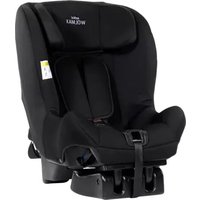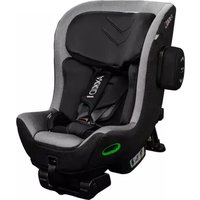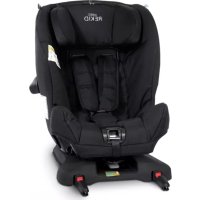
Rekid - Car seat Axkid - Free user manual and instructions
Find the device manual for free Rekid Axkid in PDF.



| Product Type | Child car seat (group 1/2/3) |
| Brand | Axkid |
| Model | Rekid |
| Safety standard | ECE R44/04 |
| Recommended use | From 6 months to about 6 years (9 to 25 kg) |
| Max child weight | Up to 25 kg |
| Installation | Rear-facing only |
| Fixation system | ISOFIX (9-18 kg) or 3-point seat belt (9-25 kg) |
| Support leg | Yes, included and mandatory |
| Harness | 5-point adjustable height |
| Headrest | Adjustable with safety lock |
| Recline | 3 adjustable positions |
| Lower attachment straps | Included (anti-rotation) |
| ISOFIX indicator | Green when secured |
| Cover care | Machine washable at 30°C, short cycle, do not tumble dry |
| Plastic parts care | Water and mild soap, no abrasive products |
| Warranty | 24 months from date of purchase |
| Spare parts available | Covers, ISOFIX guides, attachment straps (via www.axkid.com) |
| Approximate dimensions | W55 x D45 x H65 cm (estimate) |
| Seat weight | Approximately 12 kg (estimate) |
Frequently Asked Questions - Rekid Axkid
User questions about Rekid Axkid
0 question about this device. Answer the ones you know or ask your own.
Ask a new question about this device
Download the instructions for your Car seat in PDF format for free! Find your manual Rekid - Axkid and take your electronic device back in hand. On this page are published all the documents necessary for the use of your device. Rekid by Axkid.
USER MANUAL Rekid Axkid
natural_image
Line drawing of a car comfort seat with seatbelt and seatbelt (no text or symbols)EN 3-11
FR 12-20
ES 21-29
DE 30-38
PL 39-47
SE 48-56
CZ 57-65
ECE R44/04
ISOFIX C/R3
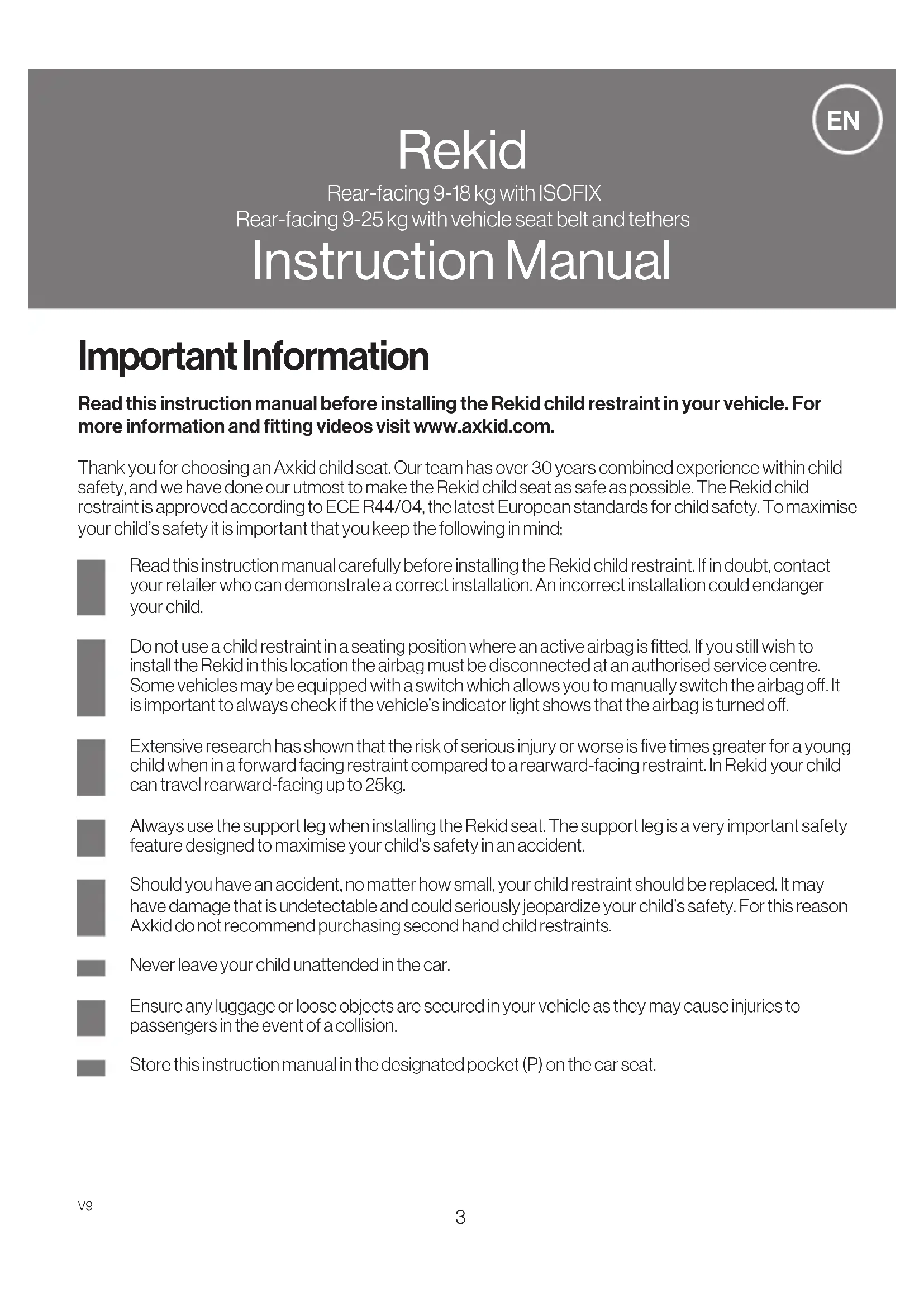
Rekid
Rear-facing 9-18 kg with ISOFIX
Rear-facing 9-25 kg with vehicle seat belt and tethers
Instruction Manual
Important Information
Read this instruction manual before installing the Rekid child restraint in your vehicle. For more information and fitting videos visit www.axkid.com.
Thank you for choosing an Axkid child seat. Our team has over 30 years combined experience within child safety, and we have done our utmost to make the Rekid child seat as safe as possible. The Rekid child restraint is approved according to ECE R44/04, the latest European standards for child safety. To maximise your child's safety it is important that you keep the following in mind;
Read this instruction manual carefully before installing the Rekid child restraint. If in doubt, contact your retailer who can demonstrate a correct installation. An incorrect installation could endanger your child.
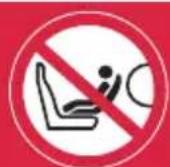
Do not use a child restraint in a seating position where an active airbag is fitted. If you still wish to install the Rekid in this location the airbag must be disconnected at an authorised service centre. Some vehicles may be equipped with a switch which allows you to manually switch the airbag off. It is important to always check if the vehicle's indicator light shows that the airbag is turned off.
Extensive research has shown that the risk of serious injury or worse is five times greater for a young child when in a forward facing restraint compared to a rearward-facing restraint. In Rekid your child can travel rearward-facing up to 25kg.
Always use the support leg when installing the Rekid seat. The support leg is a very important safety feature designed to maximise your child's safety in an accident.
Should you have an accident, no matter how small, your child restraint should be replaced. It may have damage that is undetectable and could seriously jeopardize your child's safety. For this reason Axkid do not recommend purchasing second hand child restraints.
Never leave your child unattended in the car.
Ensure any luggage or loose objects are secured in your vehicle as they may cause injuries to passengers in the event of a collision.
Store this instruction manual in the designated pocket (P) on the car seat.
Contents
The Rekid child restraint is suitable for use from approximately six months of age, or from when your child can sit up unsupported, up until the age of six. This child restraint can be installed in two different ways depending on your child's age and size.
Parts 4
Allowed and disallowed positioning of the child car seat 5
Rear-facing 9-18kg with ISOFIX 6-8
This assembly can be used if your vehicle is equipped with ISOFIX brackets and is for children weighing between 9-18kg (20-39lb).
Rear-facing 9-25kg with vehicle seat belt and tethers 8-11
This is for vehicles that do NOT have ISOFIX brackets. This assembly can be used with the vehicle's 3-point seat belt and is for children weighing between 9-25kg (20-55lb).
Care and maintenance 11
Warranty 11
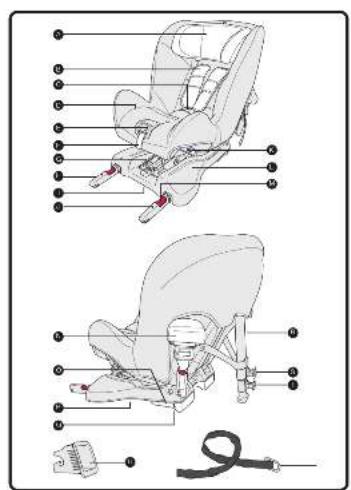
Parts
| A Headrest L Base | ||
| B Integral harness M ISOFIX release button | ||
| C Harness buckle N Tether straps | ||
| D Seat belt slot O Heels | ||
| E Harness adjuster button P Pocket for storage of instruction manual | ||
| F Harness adjustment strap Q Indented vertical line | ||
| G | Recline adjustment lever | R Support leg |
| H ISOFIX arms S Top latch | ||
| I | Adjuster for ISOfix | T Lower latch |
| J | ISOFIX indicator | U ISOFIX guides (x2) |
| K | Belt lock-off | V Lower anchor straps (x2) |
Allowed And Disallowed Positioning Of The Child Car Seat

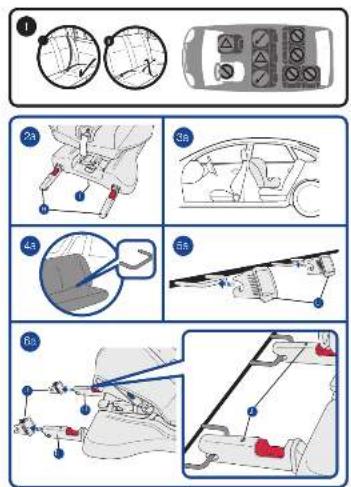
The child restraint can be used on any forward facing passenger seat which has ISOFIX brackets or which has a 3-point seat belt (i), so long as there is no active airbag in place. The child restraint cannot be used with a 2-point lap belt (ii).
IMPORTANT: If you wish to install your Rekid in a location where an airbag is fitted, then the airbag must be disconnected at an authorized service centre. Some vehicles may be equipped with a switch which allows you to manually switch the airbag off. It is important to always check if the vehicle's indicator light shows that the airbag is turned off.
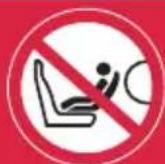
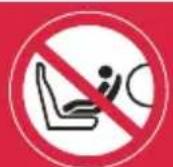
WARNING: Never use on a seat with an active airbag
WARNING: Never use on rearward or side facing vehicle seats
WARNING: Air bags are designed for adults and can seriously harm your child in a crash.
Allowed and disallowed positioning of the child car seat.
| Front passenger seat (no active airbag) Yes | |
| Front passenger seat (active airbag) NO | |
| Forward facing seat with 3-point seat belt Yes | |
| Seat with 2-point seat belt NO | |
| Forward facing seat with ISOFIX brackets Yes | |
| Side facing seats NO | |
| Rear facing seats NO |

Never install a child restraint in a passenger seat where an active airbag is fitted.
Rear-Facing 9-18 Kg With ISOFIX Positioning The Child Restraint
2a
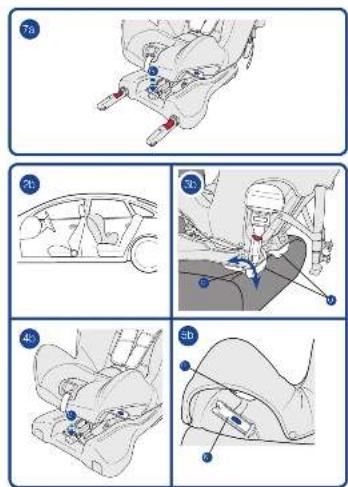
To begin push and hold the adjuster for ISOfix (I). Now you should be able to unfold the ISOfix arms (H).
3a
The easiest way to lift the Rekid into the vehicle is with its back first. Place the child restraint in the vehicle with the back of the restraint facing the front of the vehicle.
Note: When installing Rekid in the front seat it is possible, but not crucial, for the back of the restraint to have contact with the dashboard.
Attaching The Isofix Fittings
4a
The ISOfix brackets are located between the joint of the backrest and base of the vehicle's seat.
5a
The supplied ISOfix-guides (U) may assist you in locating these brackets, and they will also help protecting the vehicle's upholstery.
6a
Push the ISOfix arms (H) through the guides and clip them onto the brackets. Once there is an audible click and both indicators (J) are green they are properly secured. To remove the Rekid child restraint, hold both of the release buttons (M).
7a
To adjust the angle of the child restraint, press the recline adjustment lever (G) to select one of the three reclining positions. Always choose the most upright position as possible, however your child must be able to hold their head up on its own, and there should be enough recline to
ensure your child's head does not fall forward when sleeping. The rule of thumb is that the older the child grows, the more upright the seat can be installed. Please note that once the installation of the Rekid is complete, it will be somewhat more reclined as it sinks into the vehicle's seat from tightening seat belts and tether straps.

Never install a child restraint in a passenger seat where an active airbag is fitted.
Attaching The Tether Straps
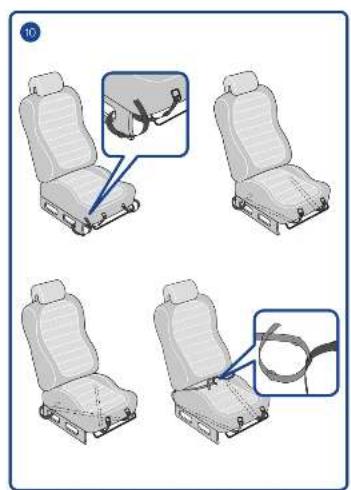
Some vehicles may already be fitted with anchorage points at the base of the front seat rails, or, if installing in the front passenger seat, in front of that seat.
8
If your vehicle does not have these anchor points, the supplied lower anchor straps must be used.
9
For installation in the back seat, feed the buckle end of the anchor strap through either the rear of the front seat rails, or the hinge of the front seat. The anchoring point needs to be as close to the floor as possible. In doing so you should always insert the buckle of the anchor strap through the closest appropriate slot in the strap to create a slip knot then pull tight. This needs to be rated on both sides to create two anchor points.
10
When installing Rekid in the front passenger seat the lower anchor straps must be attached to the front gliding tracks so the anchor points will be located along the front edge of the passenger seat.
11a
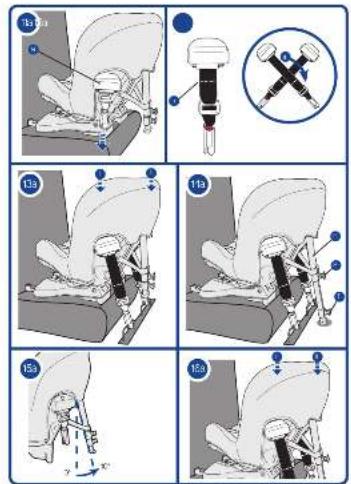
Pull out the upper tether strap from the belt housing (N) to an appropriate length.
12a
Check that the white marking on the strap (i) is visible. If not, you can try crossing the straps over (ii) to give them some extra length to enable the white marking to be visible.
13a
Clip the anchor attachments directly onto the vehicle anchorage points (or lower anchor straps if you have used them). Press down hard on the top of one side (i) of the child restraint then repeat on the other side (ii). When you do this it's important that you really use your full body to press down and get the tether straps to really tighten hard. This will give the tether straps first tightening.
14a
Unfold the support leg (R) out to its maximum angle. Pull out the top latch (S) to release the upper part of the support leg until it reaches the floor. If the support leg does not reach the floor, repeat with the lower latch (T).
15a
It is important that you check that the support leg is at an angle over 10^ from the back of the seat. You could check this by ensuring that the support leg is further away from the seat than the vertical line.
16a
Press down on the child restraint from side to side again (i)(ii), the tether straps will be then be automatically tightened.
If you have installed Rekid in the back seat you can now move the front seat to a comfortable position. Note: The back of the child restraint may, but does not need to be in contact with the back of the front seat.
Placing Your Child In The Seat
17 Press the harness adjuster button (E) and pull forward on the shoulder straps (not the shoulder pads) to completely loosen the harness.
18 Press the red harness release button on the buckle and unfasten the harness.
19 Place your child in the car seat. Put your child's arms in between the shoulder straps so that the straps are hanging over the chest and stomach.
20 Pull the shoulder straps together and insert the harness tongues into the crotch buckle.
21 Pull the harness adjustment strap (F). It's important that you always pull the harness straight and central when you tighten the adjustment strap. This will tighten the harness and the headrest will automatically slide down to the appropriate height.
Head Support Brake On Headrest
22 The headrest on your Rekid is equipped with a head support brake. This can be used if you want to keep the headrest in a fixed position. To activate the head support brake, pull the harness adjustment strap until the headrest is at the desired height, you will hear a faint “click” sound from the headrest as it locks into position. Check that the headrest can not be pulled down any further and activate the headrest brake by moving the lever (i) across to the right.
WARNING: Do not pull up the headrest with the parking brake activated.
Rear-Facing 9-25Kg With Seat Belt & Tethers Positioning The Child Restraint
2b The easiest way to lift the Rekid into the vehicle is with its back first. Place the child restraint in the vehicle with the back of the restraint facing the front of the vehicle.
3b The heels (O) should be sitting over the edge of the vehicle seat. The indented vertical line (Q) on the heel should align vertically with the end of the vehicle's seat. If installing in a small vehicle, or if your child does not require extra leg room, you can instead place the heel upon the vehicle's seat this will also achieve a more reclined position.
Note: When installing Rekid in the front seat it is possible, but not crucial, for the back of the restraint to have contact with the dashboard.

Never install a child restraint in a passenger seat where an active airbag is fitted.
4b To adjust the angle of the child restraint, press the recline adjustment lever (G) to select one of the three reclining positions. Always choose the most upright position as possible, however your child must be able to hold their head up on its own, and there should be enough recline to ensure your child's head does not fall forward when sleeping. The rule of thumb is that the older the child grows, the more upright the seat can be installed. Please note that once the installation of the Rekid is complete, it will be somewhat more reclined as it sinks into the vehicle's seat from tightening seat belts and tether straps.
Fastening The Vehicle Seat Belt
5b Open the belt lock-off clips (K) on both sides of the Rekid child restraint. Fully lengthen the seat belt until the lap section of the belt is at least 70-80cm (27-32 inches) long. Feed the seat belt through the seat belt slot (D), between the seat cover and seat body until the belt comes out through the seat belt slot on the other side. If you prefer, you can instead feed the seat belt through the seat belt slot (D), then over the top of the seat belt cover and then through the seat belt slot on the other side.
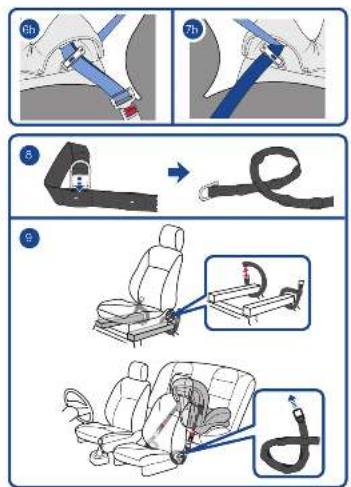
6b Insert the seat belt tongue into the vehicle's seat belt buckle. Pull the seat belt until all slack is removed along the seat belt route. Secure both the lap and shoulder belt in the lock-off closest to the vehicle's seat belt buckle.
7b In the lock-off on the opposite side, only the lap belt should be secured.
Attaching The Tether Straps
Some vehicles may already be fitted with anchorage points at the base of the front seat rails, or, if installing in the front passenger seat, in front of that seat.
8 If your vehicle does not have these anchor points, the supplied lower anchor straps must be used.
9 For installation in the back seat, feed the buckle end of the anchor strap through either the rear of the front seat rails, or the hinge of the front seat. The anchoring point needs to be as close to the floor as possible. In doing so you should always insert the buckle of the anchor strap through the closest appropriate slot in the strap to create a slip knot then pull tight. This needs to be repeated on both sides to create two anchor points.
10 When installing Rekid in the front passenger seat the lower anchor straps must be attached to the front gliding tracks so the anchor points will be located along the front edge of the passenger seat.
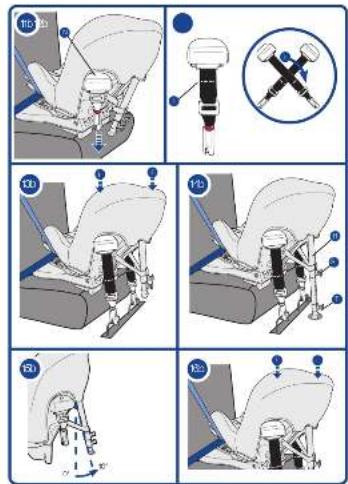
11b Pull out the upper tether strap from the belt housing (N) to an appropriate length.
12b Check that the white marking on the strap (i) is visible. If not, you can try crossing the straps over (ii) to give them some extra length to enable the white marking to be visible.
13b Clip the anchor attachments directly onto the vehicle anchorage points (or lower anchor straps if you have used them). Press down hard on the top of one side (i) of the child restraint then repeat on the other side (ii). When you do this it's important that you really use your full body weight to press down and get the tether straps to really tighten hard. This will give the tether straps their first tightening.
14b Unfold the support leg (R) out to its maximum angle. Pull out the top latch (S) to release the upper part of the support leg until it reaches the floor. If the support leg does not reach the floor, repeat with the lower latch (T).
15b It is important that you check that the support leg is at an angle over 10^ from the back of the seat. You could check this by ensuring that the support leg is further away from the seat than the vertical line.
16b Press down on the child restraint from side to side again (i)(ii), the tether straps will be then be automatically tightened.
If you have installed Rekid in the back seat you can now move the front seat to a comfortable position. Note: The back of the child restraint may, but does not need to be in contact with the back of the front seat.
Placing Your Child In The Seat
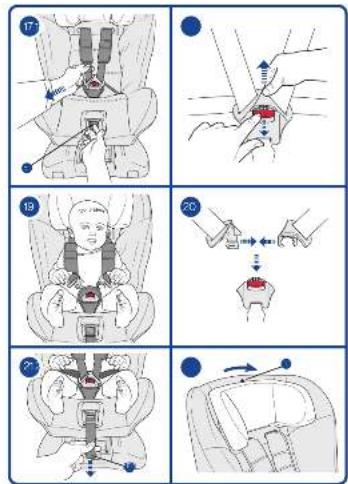
17 Press the harness adjuster button (E) and pull forward on the shoulder straps (not the shoulder pads) to completely loosen the harness.
18 Press the red harness release button on the buckle and unfasten the harness.
19 Place your child in the car seat. Put your child's arms in between the shoulder straps so that the straps are hanging over the chest and stomach.
20 Pull the shoulder straps together and insert the harness tongues into the crotch buckle.
21 Pull the harness adjustment strap (F). It's important that you always pull the harness straight and central when you tighten the adjustment strap. This will tighten the harness and the headrest will automatically slide down to the appropriate height.
Head Support Brake On Headrest

The headrest on your Rekid is equipped with a head support brake. This can be used if you want to keep the headrest in a fixed position. To activate the head support brake, pull the
harness adjustment strap until the headrest is at the desired height, you will hear a faint “click” sound from the headrest as it locks into position. Check that the headrest cannot be pulled down any further and activate the headrest brake by moving the lever (i) across to the right.
WARNING: Do not pull up the headrest with the parking brake activated.
Care And Maintenance
The seat cover can be removed and washed in a washing machine at 30^ C on the “Gentle Cycle” programme. Do not put the cover in a dryer as this can damage the cover and the padding may separate from the fabric.
Visit www.axkid.com to find videos explaining how to remove and attach the cover.
Any plastic parts of Rekid can be cleaned with mild detergent and water. Do not use aggressive chemicals containing solvents etc, as this can cause damage to the plastic and compromise the safety of the child restraint.

All materials used in the Rekid child restraint are recyclable and should be recycled as per your local legislation. Ask your local recycling centre for advice when recycling this product.
Do not make any modifications or alterations to the Rekid child restraint other than those described in this instruction manual. Follow the instructions in this manual carefully. Any repairs must be carried out by the manufacturer or agent.
If the seat cover needs replacing ensure only original products from Axon Kids are used. If other products are used the Rekid's safety system may be compromised and could lead to severe injury or death in case of an accident.
All materials used have a very high UV-resistance rating. However, UV-light is very aggressive and will ultimately lead to fading of the seat cover. This is not covered by our warranty as it is considered normal wear and tear.
Warranty
The Rekid child restraint is covered by a 24 month warranty from date of purchase. Ensure you save your receipt and bring it to your place of purchase should you have any warranty issues. The warranty does not cover:
* Normal wear and tear
* Damage due to incorrect use, neglect or accident
* If repairs have been carried out by a third party
Rekid
Distributed in the UK by
KoolTrade Ltd, Unit 3, Orbital Way, Denton, Manchester,
United Kingdom M34 3QA. Tel: (+44) 0161 335 2500
•
KoolTrade Ltd, Unit 3, Orbital Way, Denton, Manchester,
United Kingdom M34 3QA. Tel: (+44) 0161 335 2500
•