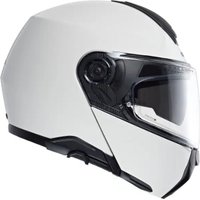
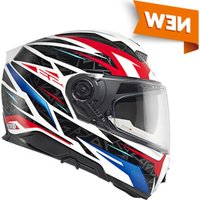
USER MANUAL S2 Schuberth
This helmet is not intended for use in the USA and Canada, The helmet has been inspected and approved to the European ECE Standard and therefore does not conform to US and Canadian regulations and requirements. It is only legal to use the helmet in countries in which the European ECE Standard is valid. If you use the helmet in other countries, you will not in the event of injury be entitled to make a claim for compensation before the US or Canadian courts or the courts of other countries not bound by the ECE Standard.

Avertissement:
Anti-Roll-Off-System (A.R.O.S.)
You have made an excellent choice with the SCHUBERTH S2. The S2 is the result of the very latest design and manufacturing methods. This helmet combines the top characteristics of a sports helmet in terms of aerodynamics and aeroacoustics with the comfort of a flip-up helmet.
You can feel secure in the knowledge that you now own a quality helmet that is designed to provide the very highest standards of safety and performance on the road - in particular on long journeys - and that will give you a great deal of pleasure at the same time.
We wish you a safe ride.

Marcel Lejeune E. Van Hoof
CEO International Sales
A. HOW TO USE THIS MANUAL CORRECTLY
Please take time to read through this manual carefully so that your helmet protects you properly when riding your motorcycle. In order to ensure that you do not overlook any aspect of the manual that is relevant to your safety, we recommend that you read it in the order in which it appears.
Please play particular attention to:

Caution: safety instructions

Note: advice

Tip: practical tips

Warning:
This helmet is not intended for use in the USA and Canada. The helmet has been inspected and approved to the European ECE Standard and therefore does not conform to US and Canadian regulations and requirements. It is only legal to use the helmet in countries in which the European ECE Standard is valid. If you use the helmet in other countries, you will not in the event of injury be entitled to make a claim for compensation before the US or Canadian courts or the courts of other countries not bound by the ECE Standard.

Avertissement:
We reserve the right to make changes that reflect technical advances and to do so without express notice.
51
B. CONTENTS
A. How to use the manual correctly 51
B. Contents 52
C. The helmet 54
1. Standard 54
2. ECE approval 54
3. Anatomy the helmet 55
4. Outer shell 55
5. Inner shell 55
6. Aerodynamics 56
7.Aeroacoustics 56
8. Wind deflector 58
9.Retention system 58
10. Pinlock® visor 60
11. Sun visor 67
12. Inner lining 70
13. Ventilation systems 76
14. Additional safety features 79
D. Putting on and taking off the helmet 80
- Putting on the helmet 80
- Taking off the helmet 80
E. Before every journey 81
- Checking the helmet 81
- Checking the chinstrap 81
- Checking the face shield and sun visor 82
F. For your safety 83
- Safety advice concerning the helmet 83
- Safety advice concerning the face shield / sun visor 85
-
Safety advice concerning modifications / accessories 85
-
Care and maintenance 86
-
Outer shell 86
- Face shield and sun visor 86
- Inner lining 88
- Ventilation 88
5.Locking system 89
- Storing the helmet 89
H. Accessories and replacement parts 90
- Accessories and replacement parts 90
- Communication systems 90
- Obtaining original SCHUBERTH parts 91
I. SCHUBERTH service 92
- Safety check 92
- Repair service 92
- Warranty 93
J. How to contact us 94
C. THE HELMET
1. STANDARD
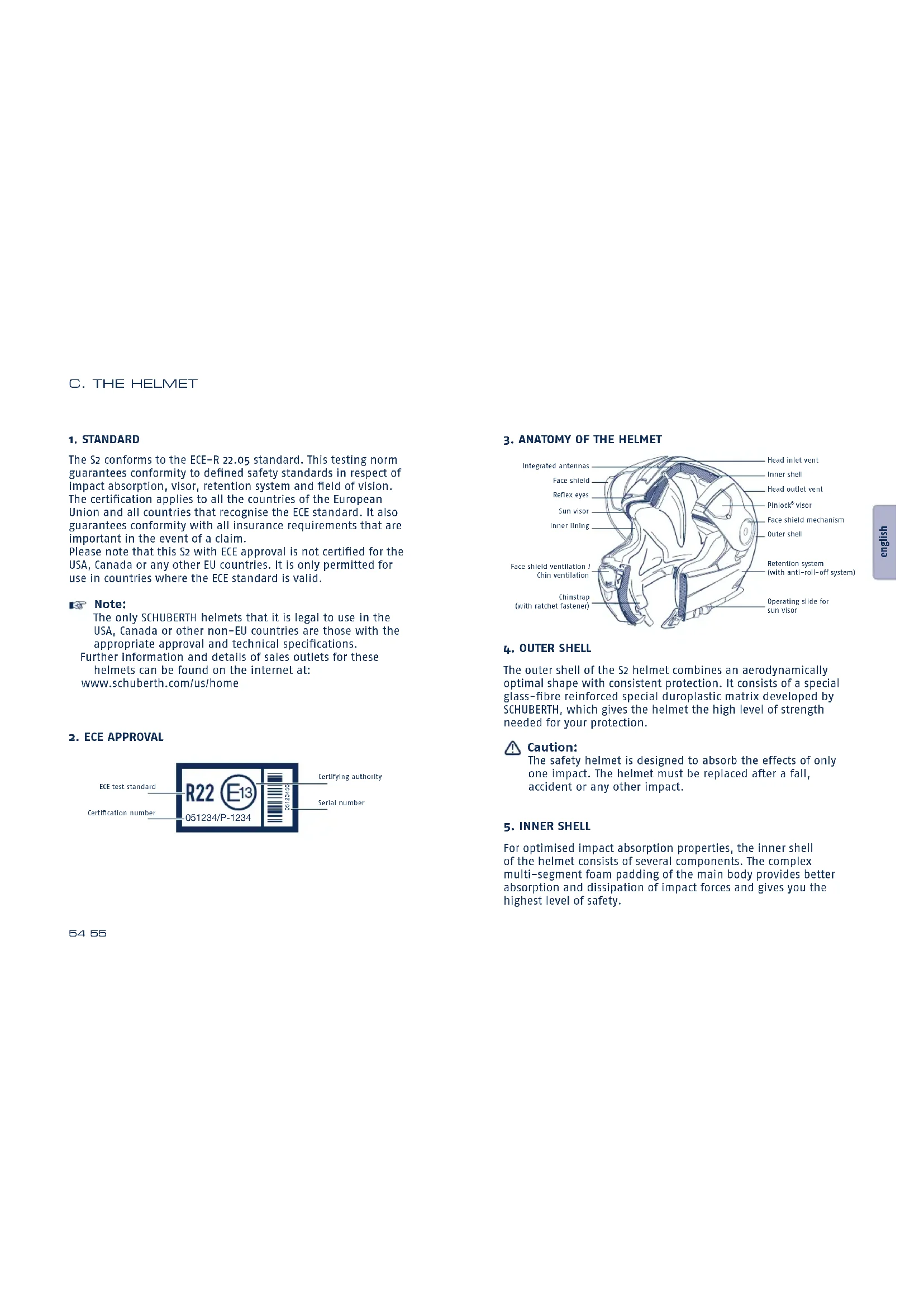
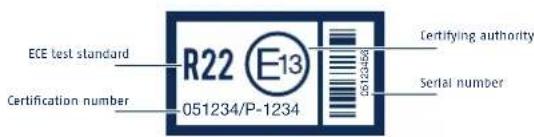
The S2 conforms to the ECE-R 22.05 standard. This testing norm guarantees conformity to defined safety standards in respect of impact absorption, visor, retention system and field of vision. The certification applies to all the countries of the European Union and all countries that recognise the ECE standard. It also guarantees conformity with all insurance requirements that are important in the event of a claim.
Please note that this S2 with ECE approval is not certified for the USA, Canada or any other EU countries. It is only permitted for use in countries where the ECE standard is valid.
Note:
The only SCHUBERTH helmets that it is legal to use in the USA, Canada or other non-EU countries are those with the appropriate approval and technical specifications. Further information and details of sales outlets for these helmets can be found on the internet at: www.schuberth.com/us/home
2. ECE APPROVAL
3. ANATOMY OF THE HELMET
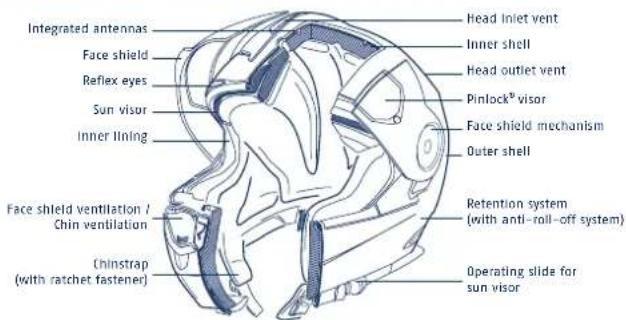
4. OUTER SHELL
The outer shell of the S2 helmet combines an aerodynamically optimal shape with consistent protection. It consists of a special glass-fibre reinforced special duroplastic matrix developed by SCHUBERTH, which gives the helmet the high level of strength needed for your protection.
Caution:
The safety helmet is designed to absorb the effects of only one impact. The helmet must be replaced after a fall, accident or any other impact.
5. INNER SHELL
For optimised impact absorption properties, the inner shell of the helmet consists of several components. The complex multi-segment foam padding of the main body provides better absorption and dissipation of impact forces and gives you the highest level of safety.
C. THE HELMET
6. AERODYNAMICS
All SCHUBERTH motorcycle and racing helmets are developed and optimised in SCHUBERTH's own wind tunnel under precisely defined scientific conditions. The S2 is specifically designed for a touring or sports-touring riding posture and remains stable in the air current. Even when travelling at high speeds, the S2 generates practically no upward lift. Other characteristics of the S2 include improved air resistance and excellent directional stability. In addition, the buffeting* often experienced at high speed on an unfaired motorcycle is significantly reduced.
- Shaking of the helmet as the air flows around it.

Note:
Please note that the strong eddy currents that can occur as a result of the fairing on faired motorcycles may have a significant effect on the aerodynamic characteristics of a helmet.
7. AEROACOUSTICS
Various features developed in SCHUBERTH's wind tunnel make the helmet agreeably quiet as far as aeroacoustics are concerned, while providing optimised acoustic feedback when riding. This enhances concentration, especially at high speeds.

Note:
Aeroacoustic values may vary according to the type of motorcycle, fairing design, seat position and physical size of the rider.

Caution:
As a result of the aeroacoustic optimisation of the helmet (and the lower wind noise inside the helmet that comes with it), your actual speed can easily be underestimated. Please do not rely on your sense of hearing to estimate your road speed - always check it using your speedometer.
56 57

Note:
With fared motorcycles, strong eddy currents occur at the edges of the wind shadow. These may significantly reduce the aeroacoustic performance of the helmet. The motorcycle fairing should be adjusted so that the turbulence created does not strike the bottom surface of the helmet.
aeroacoustically non-critical area
aeroacoustically critical area
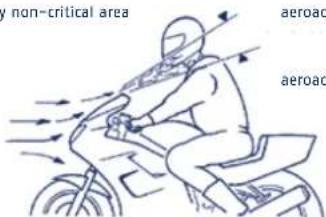
aeroacoustically non-critical area
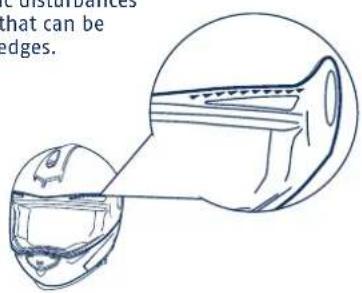
Turbulators
The patented turbulators on the top of the face shield also optimise the aeroacoustic properties when riding and prevent acoustic disturbances in the form of whistling sounds that can be created by smooth and straight edges.
C. THE HELMET
8. WIND DEFLECTOR
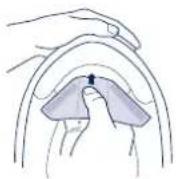
The wind defi cctor prevents the unpleasant effect of the wind created as you ride fl owing into the helmet. In addition, the riding noise in the helmet is reduced.
- The wind deflector is attached by Velcro strips on the inside of the acoustic collar and can be removed when required to provide an additional flow of fresh air, especially in hot weather.
Tip:
The fit of the bottom of the helmet is extremely important in ensuring that the helmet is as quiet as possible. If you have a smaller collar size, we recommend that you also wear a scarf.
9. RETENTION SYSTEM
The retention system of the S2 consists of a chinstrap that is additionally secured with neckbands at the back of the helmet shell (the anti-roll-off system, see section C.14.).
Chinstrap with Micro-Lock ratchet fastener
The S2 comes with a ratchet fastener. This locking system is easy to use and enables you to adjust the chinstrap perfectly to your head every time you put the helmet on.
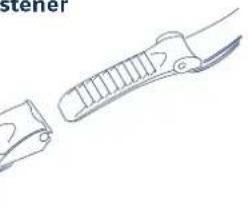
Adjusting the chinstrap
The length of the chinstrap is adjusted by increasing or reducing the length of strap pulled through the metal buckle. Adjust the length of the chinstrap so that it fits firmly but comfortably under your chin and fit x the end of the strap using the retaining loop with comfort pad.
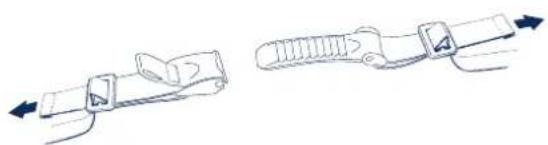
Caution:
When adjusting the strap, make sure that the helmet cannot be pulled off in a forward direction with the chinstrap closed.
Caution:
Check the adjustment of the chinstrap length at regular intervals (see section E.2.).
Opening and closing
To close the chinstrap fastener, slide the ratchet tongue step by step into the locking buckle. If you find that the chinstrap fits too loosely around your chin, slide the ratchet tongue one step further into the locking buckle.
When adjusting the chinstrap, make sure that it rests firmly but not uncomfortably around your chin. To open the chinstrap, pull
C. THE HELMET
the red ribbon on the ratchet fastener upwards to release the locking buckle. Then pull the ratchet tongue out of the locking buckle.

Caution:
Never ride without making sure that the chinstrap is correctly fastened and adjusted and properly positioned. If the chinstrap is not correctly adjusted or fastened, the helmet could be displaced in the event of an accident.
Caution:
Closing the comfort pad of the chinstrap alone will not provide adequate protection. The chinstrap must always be fully fastened.
Caution:
Never open the chinstrap while riding.
10. PINLOCK® VISOR
The Pinlock® visor is a double-wall visor that does not mist up. The two visor plates are separated from each other and sealed with transparent, fl exible silicone. The inner visor plate is fixed in place by eccentric pins, which pretensions the two visor plates towards each other and creates the sealing effect. An insulating air cushion is thus formed between the visor's main plate - i.e. the outer plate - and the inner plate, which prevents any fogging up of the inner plate.
COATING
The main plate has a HighClear® anti-scratch coating on both sides.
Note:
The helmet should never be used to hold gloves or any other objects as this may damage the scratch-sensitive Pinlock® inner visor shield.
Note:
The Pinlock ^® inner visor is supplied with a protective fi lm. Remove this fi lm before using the helmet for the first time.
Note:
The Pinlock ⑧ inner visor may only be used in conjunction with the SCHUBERTH main face shield that has been specially designed for this purpose. Other face shields must not be fit tted.
Opening the face shield
To open the face shield, use your thumb to push the face shield up using one of the finger tabs situated to the left and right of the face shield, and move it to the desired position.
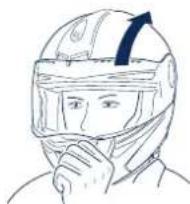
Face shield (including urban position)
The face shield can be locked in any one of seven positions. The second position (urban position) locks in place more firmly, providing greater resistance when the face shield is in this position. This makes it easier to lock the face shield in the urban position, especially while riding.
C. THE HELMET
When you push the face shield open, it may well travel beyond the urban position, but it is easy to find this position by moving it downwards again. The face shield mechanism requires no additional lubrication. The face shield can be operated at any time irrespective of the position of the sun visor.
Closing the face shield
To close the face shield, grip the finger tabs at top left and right and press the face shield down with one movement until it audibly locks into place.
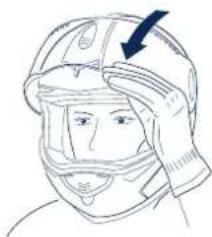
REPLACING THE VISOR SHIELD
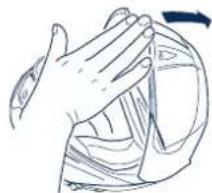
Changing the visor shield is easy to do without tools using the convenient EasyChange visor mechanism. To replace the visor, it is helpful to place the helmet on a flat surface or on your lap while seated.
Removing the face shield
- Move the face shield into the uppermost locked position.
- Press the spring underneath the face shield mechanism on one side towards the face shield opening, then do the same with the spring on the other side.
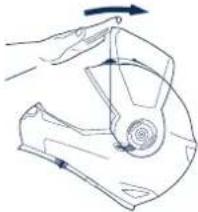
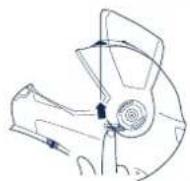
- Move the face shield upwards until it is released from the face shield mechanism.
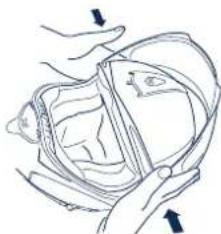
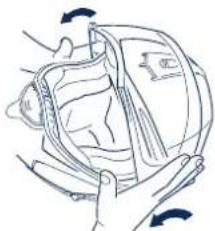
Fitting the face shield
- Using both hands, guide the face shields locking studs into the respective recesses in the face shield mechanism.
- The face shield will then audibly lock into place when you press it gently towards the helmet with a simultaneous closing movement.
- Make sure that the face shield mechanism is functioning properly by opening the face shield once to its maximum extent.
C. THE HELMET
PINLOCK VISOR
Fitting
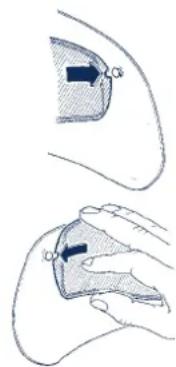
- Lay the Pinlock ⑧ visor in the face shield in such a way that one side of it is already slotted into the locking pin and the silicone seal is on the side facing the face shield.
- Now grasp the other side of the Pinlock® visor by its upper and lower transverse edges and use your index finger to gently press the end of the visor into a slight "S" shape. Now you can easily guide the slot over the locking pin and release the Pinlock® visor into place.
- The Pinlock visor should now be positioned in the face shield with its lower edge parallel to the lower edge of the face shield. If you need to change the positioning of the Pinlock visor, use the balls of your thumbs to gently bend the face shield apart until the inner visor can be adjusted as required.
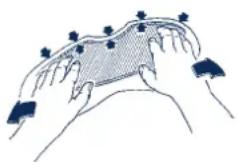
- Check all round the visor to make sure that the silicone seal fits tightly and evenly against the face shield. Only if this is the case will the anti-misting properties function properly.
- If you have not done so already, remove the protective film from the Pinlock visor
If the Pinlock® visor is not air-tight and the face shield mists up, either the visor is not correctly in place or the pressure on the seal is inadequate. You can regulate the pressure on the seal by adjusting the eccentric locking pins. To do so, remove the Pinlock® visor, then use a flat object with no sharp-edges to push the locking pins out of the face shield carefully from the inside; then rotate them by 180^ and reinsert them. Fit the Pinlock® visor and check the seal.
Removal
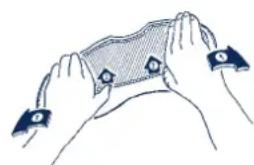
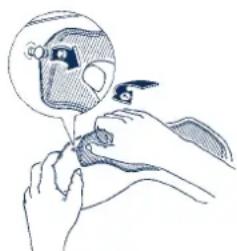
- Before starting to remove the Pinlock ^ 念 visor, first lay the face shield on a soft, clean cloth so that its top edge is facing you.
- To reduce the pretensioning of the Pinlock® visor slightly if necessary, use the balls of your thumbs to carefully bend the face shield sufficiently apart while applying pressure with your thumbs to release the Pinlock® visor and move it approx. 2-3 mm forward.
C. THE HELMET
- Now grip the back of the Pinlock visor with your index and middle fingers and lift it off the face shield. In this position you can easily remove the Pinlock visor from the locking pin with your thumb.
- You can now remove the Pinlock visor from the face shield.
Note:
to avoid scratching the face schield, never remove or fit the Pinlock ⑨ visor unless the visor unit is clean and dry.
- When fitting the Pinlock® shield, check that neither dust nor moisture are able to get between the two plates.
- When removing or fitting the Pinlock visor, it is always best to lay the face schield unit on a clean, dry cloth.
- Check regularly to ensure that the fit of the silicone seal between the face shield and the Pinlock visor is tight and even.
Note:
In view of the strong air pressure acting on the silicone seal when travelling with an open face schield, we recommend riding with a closed face schield at all times to prevent any dirt or moisture from getting inside the helmet.
Note:
Never press the locking pins out with your fingers as they may break.
Caution:
As a result of the double shield lens structure, there is a possibility of greater light reflection in the face schield, especially when riding at night. As a rule, such light reflection is regarded as uncritical due to the absence of misting with
this type of visor. However, if this light reflection should cause you difficulties - because of particular sensitivity to it, for example - you should refrain from using the Pinlock® visor.
Caution:
If moisture is present in or has penetrated the airtight area between the two plates, you should remove the Pinlock visor immediately in order to prevent any interference with visibility. Do not re-fit it until both plistes are completely dry (we recommend air-drying). If you should subsequently detect any further penetration of moisture, the Pinlock visor should not be used on any account and must be replaced.
Safety note
Check before each journey that the face shield and sun visor mechanism are functioning correctly and that the face shield and sun visor will provide good visibility. Any dirt should be removed before setting off. Check the face shield and sun visor for physical damage and cracks. Severely scratched or matt face shields will seriously impair visibility and should be replaced before setting off on a journey.
Caution:
Petrol, solvent and fuel vapours can cause cracking of the face shield. Make sure that the face shield is never exposed to such vapours! Never place the helmet on the tank of your bike.
11. SUN VISOR
Sun visor
The sun visor is tinted grey and has a 3D shape. Thanks to the sun visor's 1.5mm thickness, it provides protection against small
C. THE HELMET
stone chips or insects when driving with the visor up. It is also scratch-resistant and offers effective UV protection* with its special polycarbonate structure.
- Tested in accordance with the Australian sunglasses standard AS/NZS 1067:2003 lens category 3.
Operation
The sun visor is operated by means of the slide positioned on the left in the chin area, which is easy to use even when wearing gloves.
Moving the slide towards the back lowers the sun visor, moving it forwards retracts the sun visor inside the inner helmet shell and locks it in position.
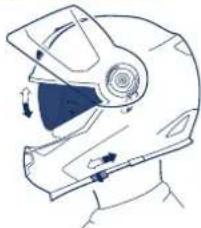
The sun visor can be operated irrespective of the position of the face shield
Note:
Only use the slide to operate the sun visor.
Caution:
Never ride in the dark or in conditions of poor visibility with the sun visor down. Always raise the sun visor before entering a tunnel
Caution:
Riding without the face shield or with an open face shield can result in injury to the eyes and face from stones, dust, insects and other flying objects. The sun visor, when lowered, will offer a certain amount of protection from light impact from stones or insects but does not provide protection against all hazards.
REPLACING THE SUN VISOR
The sun visor can be replaced without tools.
Tip:
To avoid fingerprints and scratches, use a soft, clean cloth (we recommend a microfi ble cloth) to hold the sun visor when removing or ftting it.
Tip:
Tip:
Changing the sun visor is easier when the chin section is open and locked in place. It is also helpful if you place the helmet on a flat surface or on your lap while seated.
Note:
Try to prevent the sun visor coming into contact with the helmet's inner shell when removing or fitting it.
Removing the sun visor
- Pivot the sun visor down.
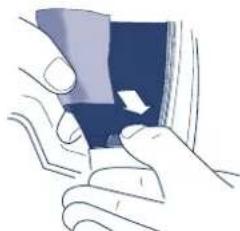
- Bend the middle snap connection with locating pegs gently outwards until the sun visor is released from the holder on one side.
- Repeat this step for the other side.
Tip:
The sun visor holders should remain in the lower position until you re-fi t the sun visor.
C. THE HELMET
Fitting the sun visor
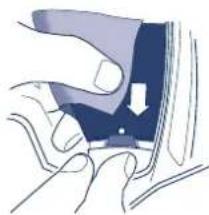
- Put the sun visor between the snap connections and fit it on to the locating pegs on one side and then on the other.
- Position the sun visor between helmet inner and outer shell and lower it with the operating slide.
- For safety, check that the sun visor mechanism is functioning correctly
12. INNER LINING
The replaceable inner lining of the S2 is washable and ensures both an excellent fit and improved ventilation of the helmet.
The high-comfort cheek pads ensure that the helmet fits comfortably around the cheeks, and the headband pad provides an optimal fit all around the head. The head pad sits comfortably on the head without covering the ventilation channels (see Section C.13, Ventilation systems/Head ventilation).
All parts of the inner lining are made from materials that are gentle on the skin (especially those that come into direct contact with the head). The material used for the cheek pads is Coolmax®, a soft, breathable material that also conducts heat and moisture very well, while the headband pad is made from a special, cooling Thermacool material.
Removing the lining
Note:
When removing the lining, the cheek pads must fi rst be detached before taking out the headband pad. When fi tting the lining, remember to insert the headband pad before the cheek pads.
Removing the high-comfort cheek pads
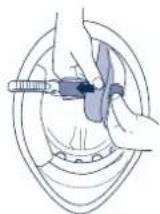
- Take hold of the sides of the acoustic collar and pull it out of its fitting.
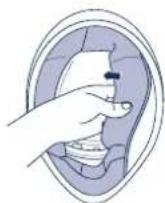
- Release the high-comfort chin pads by pulling the three red pins out of their plug fittings.
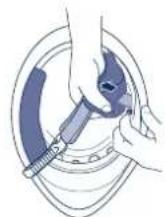
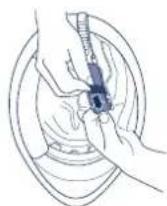
- Take hold of the chinstrap pad and pull the loop of the neckband out from around the chinstrap.
C. THE HELMET
- Now pull the chinstrap backwards out of the cheek pad.
- Pull the neckband out through the neckband channel.
- Separate the chinstrap pad from the chinstrap by releasing the button fixing.
- Repeat steps 2-5 for the second cheek pad.
Fitting the high-comfort cheek pads
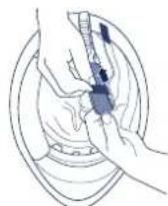
- Button the chinstrap pad on to the chinstrap and thread the chinstrap through the loop on the chinstrap pad.
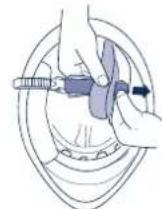
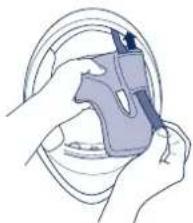
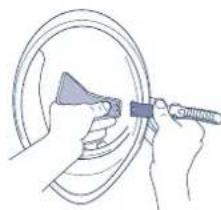
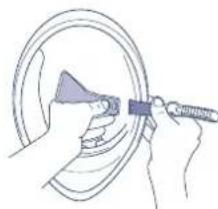
- Thread the neckband through the neckband channel.
- Push the chinstrap and chinstrap pad through the opening in the high-comfort cheek pad.
- Now pull the loop of the neckband over the chinstrap and pull the neckband tight from the back.
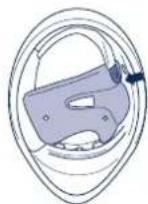
- Push the plastic tongue with round holes on the head pad over the pin sewn in to the back of the cheek pad and fix it in place using the red plug-in strip.
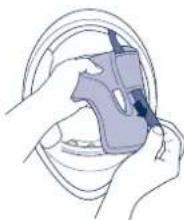
C. THE HELMET
- Fix the remaining two pins on the cheek pad into the red plug-in strips.
- Replace the acoustic collar in the guide strip between the bottom edge of the helmet and the high-comfort cheek pads. Start inserting it at the back and slowly feed the acoustic collar along the guide strip.
- Repeat steps 2 - 6 for the second cheek pad.
Note: Ensure that the neckbands are not twisted.
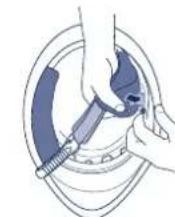
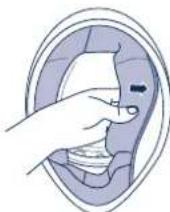
Removing the headband pad
- First remove the high-comfort cheek pads.
- The headband pad is attached to the inner shell by means of Velcro strips and clamps and can be removed by pulling it out carefully.
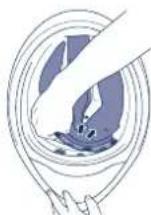
Fitting the headband pad
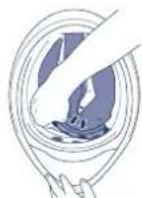
The plastic strip sewn into the front section and the clips in the neck area serve as attachments for the headband pad.
- Slide the plastic strip gradually under the notches of the plastic strip attached to the inner shell.
- Put the plastic tongue with the round holes over the pin sewn into the rear section of the cheek pad and fix this into place using the red plug-in strip.
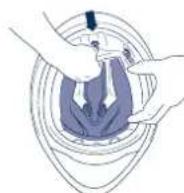
Note:
When inserting the headband pad, make sure that the headband ventilation cut-outs are positioned over the ventilation channels at the back of the helmet and that the headband runs centrally between the two ventilation channels.
Caution:
Never ride when parts of the inner lining have been removed.
Caution:
Excessive heat (e.g. exhaust heat) can cause damage to the inner lining!
Note:
To avoid damage to the inner lining and inner shell, do not hang the helmet over the mirrors or handlebar grips.
C. THE HELMET
13. VENTILATION SYSTEMS
Ventilation device 1 - face shield setting
The S2 has a face shield that adjusts to several positions. Depending on your road speed and the tendency of the face shield to mist up, open the face shield sufficiently wide to stop it misting up but so that it still protects your eyes from excessive draft.
Urban position
In its second locking position, the face shield is automatically in urban position. Air entering through the bottom gap flows over the inside of the face shield and escapes through the opening at the top.
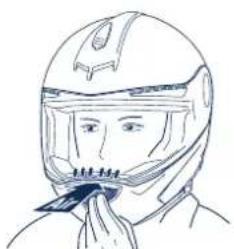
Ventilation device 2 - inlet vent in chin area (face shield ventilation)
To ventilate the face shield, the S2 is provided with an inlet in the chin area. Irrespective of riding posture, around 80 - 90% of the central airstream flows directly into this inlet when open. A deflector ensures that the air current ventilates the face shield effectively even at low road speeds. You can open and close the inlet by pushing the vent upwards or downwards.
Ventilation system 3 - head ventilation
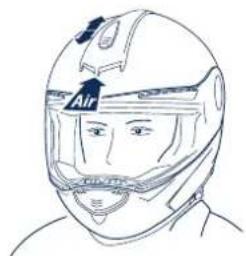
There is a large air inlet cowl with a three-stage adjustable ventilation
system on the top of the helmet shell for ventilating the top of your head. Air entering the helmet through this inlet cowl is directed via channels to the top of the head. Inside the helmet, the head padding system enables direct contact between incoming air and the surface of the head, thereby conducting the heat away from the inside of the helmet quickly. The ventilation is adjusted by means of a slide on the air inlet cowl that is easy to operate even when wearing gloves. Moving the slide backwards to the first locking position produces partial ventilation, moving it further back opens the air inlet to its full extent.
Summer and winter adjustment
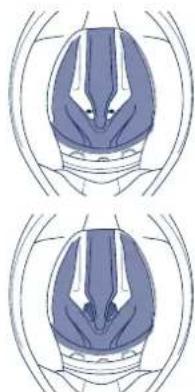
The ventilation of the S2 can also be adjusted to suit the seasons, weather conditions or your personal preferences. While you will prefer the cooling air current to flow directly on to your head in summer, in autumn/winter you can reduce the volume of incoming cold air, or divert it, by covering the ventilation channels with the head pad. To do so, raise the middle bar of the head pad slightly and fold out the fabric flaps located behind the front section.
C. THE HELMET
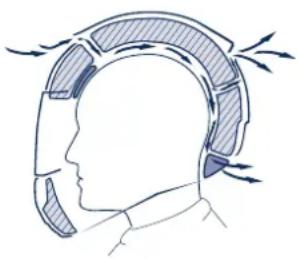
The S2 is equipped with an innovative air extraction system. Fresh air flowing in through the head vent is directed via the air channels in the inner shell to the back of the helmet. The reduced pressure that prevails at the back of the helmet ensures that the air is constantly sucked out through the air vents and special netting material fitted to the neck pad, thus guaranteeing a pleasant climate inside the helmet.
Ventilation device 5 - minimum level of fresh air
The special shaping of the top of the chin vent provides the helmet with a guaranteed minimum ventilation function that ensures a constant supply of fresh air. The air entering in this way is regulated so that the rider barely notices it, but it provides an effective supply of fresh air from a speed as low as 30 kph (provided the helmet is positioned fully in the air flow when travelling). This function counteracts any build-up of mist on the visor and any excessive concentration of CO _2 , even when the helmet is fully closed.
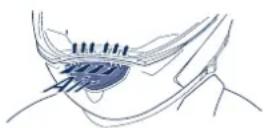
14. ADDITIONAL SAFETY FEATURES
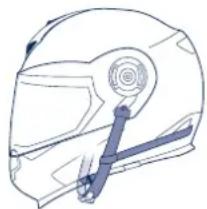
Anti-roll-off system (A.R.0.S.)
The anti-roll-off system specially developed by SCHUBERTH and provided as a safety feature in every SCHUBERTH motorcycle helmet ensures that, if the chinstrap is fastened and correctly adjusted
a) the helmet cannot pivot off the head from behind,
b) the risk of contact between the chin section of the helmet and the chin or neck of the rider is minimised due to the low angle of tilt and
c) the consequences of the helmet hitting the rib cage as the result of an accident are reduced.
Reflective panels
Together with the silver reflective strips located laterally at the back of the neck pad, the two reflective panels integrated into the left and right areas under the visor plate help make the motorcycle rider more noticeable on the road, especially in conditions of poor visibility. If the helmet is plain (no decoration), the SCHUBERTH name also appears on the front and back of the helmet in a reflective film.
Note:
Keep the reflective safety areas clean.
Note:
When riding in France, local law requires that further reflective safety stickers be attached to the front, back and both sides of the helmet.
D. PUTTING THE HELMET ON AND TAKING IT OFF
1. PUTTING THE HELMET ON AND TAKING IT OFF
Note:
See section C.9 for operation of the chinstrap/fastener system
- Open the chinstrap.
- Take hold of the lower ends of the chinstrap and pull these apart.
- It will now be easy to put the helmet on.
- Fasten the chinstrap by pushing the ratchet tongue into the lock step by step so that you hear it engage properly.
- Make sure the chinstrap passes under the chin and fits firmly.
Note:
Check that the chinstrap fits correctly and is adjusted to the correct length at regular intervals (see section F.2).
2. TAKING OFF THE HELMET
- Open the chinstrap by pulling the red strap on the ratchet fastener and thus releasing the locking buckle. Having done this, pull the ratchet tongue out of the locking buckle.
- Grasp the ends of the chinstrap and pull the chinstrap ends apart.
- The helmet can now be removed easily from the head.
Tip:
To avoid scratching any objects on which you place the helmet, when you take it off, we recommend closing the chinstrap after you have taken the helmet off.
For your safety, check the following points before every journey:
1. CHECKING THE HELMET
Check the helmet regularly for damage. Small superficial scratches will not impair the protective function of your helmet. In the case of more serious damage (cracks, dents, flaking and cracking paint, etc.), the helmet should no longer be used. If you wish, you can send your S2 to the SCHUBERTH customer service department to be checked free of charge (see Section I.1 Safety Check).
Note:
If you have lost a significant amount of weight, you should check that your helmet is still the right size for you.
2. CHECKING THE CHINSTRAP (with helmet on and fastened)
- Check that the chinstrap passes under your chin.
-
Slip your index finger under the chinstrap and pull.
-
If the chinstrap is loose under the chin, it is too long and needs to be tightened.
-
If the chinstrap loosens when you pull it, it is not properly fastened. Undo the chinstrap completely and try fastening it again. Repeat the test.
-
If you are unable to fasten the chinstrap so that it fits firmly against the chin, check that your helmet is still the right size for you.
Note:
Repeat the test after each adjustment.
Never ride with the chinstrap unfastened or incorrectly adjusted. The chinstrap should fit correctly and should not become loose when pulled. The fastener is not correctly closed if the chinstrap becomes loose when pulled.
3. CHECKING THE FACE SHIELD AND SUN VISOR
Before every journey, check that the mechanisms of the face shield and sun visor are working properly and that the face shield and sun visor will provide sufficiently clear visibility. Any dirt should be removed before riding (for care instructions, see Section G.2).
Check the face shield and sun visor for physical damage and cracks. A badly scratched face shield will considerably impair your vision and should be replaced before setting off on a journey.
Caution:
Never use tinted face shield or sun visor in conditions of poor visibility, when riding at night or in a tunnel.
Caution:
A scratched and/or dirty face shield will seriously impair visibility. For your own safety, replace it or clean it immediately.
Caution:
Make sure the face shield and sun visor are always in perfect condition. A damaged face shield is not suitable for riding and needs to be replaced.
Caution:
Stop riding if visibility is poor.
F. FOR YOUR SAFETY
1. SAFETY ADVICE CONCERNING THE HELMET
Make sure your helmet is always correctly positioned and fits your head properly!
Motorcycling is associated with particular risks and dangers for the rider and passenger. These risks and dangers can be reduced, but not eliminated completely, by wearing a helmet. It is impossible to state precisely what the protective effect of a helmet will be in the event of an accident. Safe riding techniques, adapted to the particular road and weather conditions, are essential for your safety.
To provide adequate protection, the helmet must fit well and be securely fastened.
Always fasten the chinstrap before setting off and check that the fastening system and strap are correctly in position.
Never ride with the chinstrap unfastened or incorrectly adjusted. The chinstrap must be correctly positioned and must not come loose when pulled. The fastener is not correctly closed if the chinstrap becomes loose when pulled.
The full protective function of a helmet can no longer be guaranteed after an accident or impact. Like the crumple zone of a car, the impact energy of a collision is absorbed by complete or partial destruction of the structure of the outer and/or inner shell of the helmet. Because of the way helmets are designed, this damage is rarely visible from the outside. The safety helmet is designed to absorb only one impact. It is therefore essential to replace the helmet after a fall, accident or other violent impact. For safety reasons, the old helmet should be rendered unusable.
If you wish, you can send your S2 to the SCHUBERTH customer service department to be checked free of charge.
F. FOR YOUR SAFETY
The helmet safety mechanism described above can also cause small cracks in the shell when the helmet is dropped from a small height (less than 1 metre). You are welcome to send your S2 to our customer service department to be checked free of charge. You will only have to pay for packaging and shipping.
Any helmet that has been subjected to a violent impact should be replaced.
No helmet provides absolute protection from all conceivable impacts. This helmet has been specially developed for motorcycle riding and is unsuitable for other purposes.
Examine the helmet for damage at regular intervals. Small scratches will not impair the protective function of your helmet.
The helmet should be replaced after 5 to 7 years, depending on use and care. Although the outer shell is in principle capable of a longer service life, the occurrence of material fatigue and wear to other components, as well as the overall action of the helmet and the unknown conditions in which the helmet has been used, make it advisable for your own safety to replace the helmet after this period of use.
Excessive heat (e.g. exhaust heat) can cause damage to the decoration, the inner shell of the helmet and the interior lining.
Direct contact with motor fuel, thinners or solvents can destroy the structure of the inner and outer shell. Make sure the helmet does not come into contact with such substances, even for cleaning purposes.
2. SAFETY ADVICE CONCERNING THE FACE SCHIELD / SUN VISOR
The protective film used during shipping should be removed before use.
Any scratches and/or dirt arising from the use of the face shield and/or sun visors significantly impair your vision in any driving situation and thus increase the risk of an accident. For your own safety, replace them or clean them immediately.
Never use a tinted face shield or sun visor in conditions of poor visibility, at night or in a tunnel!
Benzene, solvent and fuel vapour can cause cracks in the face shield. Keep the face shield away from such vapours and do not allow these kinds of substances to come into direct contact with the face shield! Never place the helmet on the tank of your motorcycle.
Make sure the face shield is always in perfect condition. Don't ride when visibility is poor!
3. SAFETY ADVICE CONCERNING MODIFICATIONS / ACCESSORIES
Original components (in particular on the outer shell, inner shell and restraint system) should not be altered or removed. The fitting of additional parts from other manufacturers that have not been recommended can reduce the protective effect and renders the ECE certification and all warranty and insurance claims invalid.
Use only original parts, replacement parts and accessories that SCHUBERTH has expressly approved for your helmet!
G. CARE AND MAINTENANCE
1. OUTER SHELL
To clean the helmet shell, you can use water, soap or one of the commonly available motorcycle shampoos, cleaners, polishes, plastic cleaners or cleaning fluids. Using water and soap is usually sufficient. Make sure when using the other cleaning materials that these do not come into contact with the face shield, since they can cause damage to the visor and its coating.
Note:
Never use motor fuel, thinners or solvents to clean the helmet. These substances can cause serious damage to the helmet with no external signs. The full safety function of the helmet can then no longer be guaranteed.
2. FACE SHIELD AND SUN VISOR
PINLOCK@ VISOR
Outer surface of the face shield
Use a soft cloth and a mild soap solution (< 20^) to remove dirt from the outside of the face shield. To dry the face shield, use a lint-free cloth and apply gentle pressure.
Inside surface of the face shield
The inside surface of the face shield must only be cleaned with a soft cloth, which may be slightly dampened if required (we recommend a mocrofibre cloth). Do not use any cleaning agents.
SUN VISOR
The sun visor should only be cleaned with a soft and, if necessary, slightly damp cloth (we recommend a microfibre cloth). Do not use any cleaning agents.
Note:
Only use tepid water (< 20^) for cleaning. Never on any account clean the face shield or sun visor with petrol, solvent, a window or glass cleaner or other cleaning agents containing alcohol.
Note:
The face shield should not be soaked in water even if it is very dirty on the outside, as this will severely reduce the surface hardness and thus the durability of the anti-fog/anti-scratch coating.
Note:
The face shield should not be completely closed when not in use (particularly during periods of storage), as the moisture contained on the inside cannot escape if closed and will largely be absorbed by the anti-fog/anti-scratch coating. This can lead to a reduction in the lifespan of the coating. Ideally, position the face shield in the third locking setting above the urban position.
Note:
Never attach labels, adhesive tape or stickers to the face shield or sun visor.
Tip:
Stubborn dirt on the outer surface of the face shield (e.g. dried-on insect remains) can be easily removed by covering the closed visor with a moist or wet cloth and allowing the dirt to soften for around 30 minutes to 1 hour.
Note:
Always avoid temperatures above 40^ and high humidity when choosing a place to store the face shield, as these conditions can cause damage to the face shield.
G. MAINTENANCE AND CARE
3. INNER LINING
The inner lining of the S2 can be removed completely. The head and cheek pads can be washed by hand using a mild soap solution (e.g. with highly diluted standard mild detergent) at a maximum temperature of 30^ . Allow the lining to dry at room temperature and with good ventilation. (For removal of the inner lining, see Section C.12.)
Tip:
If required (e.g. during a break in a journey), the headband can be hung out to dry over the mirror.
4. VENTILATION
Ventilation cowl
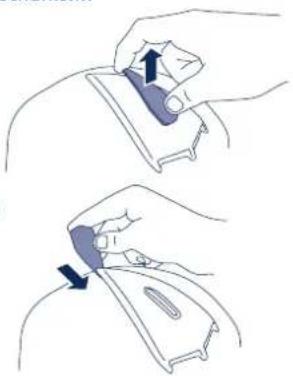
When necessary, the head ventilation system's air inlet cowl can be removed to clean the ventilation mechanism.
- To do this, first remove the control unit by simply lifting it out of the ventilation cowl.
- Then slide the flat end of the control unit under the edge behind the ventilation cowl and remove the latter by levering it upwards.
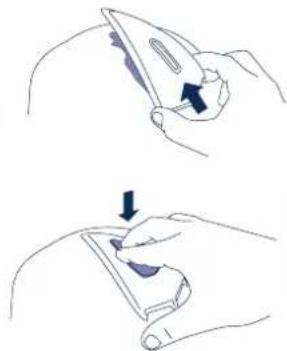
- On completion of the cleaning, fix the ventilation cowl back in place by hooking it into the front of the ventilation mechanism and pressing it into the helmet shell until you hear an audible click.
- When this has been done, insert the control unit through the ventilation cowl and into the ventilation mechanism.
5. LOCKING SYSTEM
Ratchet fastener
The metal components of the locking system do not require maintenance.
6. STORING THE HELMET
Store the helmet in the helmet bag supplied in a dry, well-ventilated and stable place. Always position the helmet so that it cannot fall to the floor. Damage that occurs in this way is not covered by the warranty.
Note:
Store the helmet out of the reach of children and animals.
H. ACCESSORIES AND SPARE PARTS
1. ACCESSORIES AND SPARE PARTS
You will find a summary of all of the available accessories and spare parts on the internet at www.schuberth.com in the "Accessories for your helmet" section.
Caution:
For safety reasons, all other parts of the helmet should only be replaced by your specialist dealer.
2.COMMUNICATION SYSTEMS
Caution:
The installation of a communication system (including basic headsets) constitutes a modification to the helmet. For this reason it is necessary for any communication system and headset intended for installation into a specific model of helmet to be tested and approved in line with the ECE-R 22.05 European helmet standard, otherwise the helmet's approval and compliance with insurance requirements become invalid on installation.
Evidence of approval in line with ECE-R 22.05 in connection with a specific communication system is only valid if certified by an official regulatory office of an EU member state. Any other form of information from these or other institutions (e.g. on the general suitability of communication systems for use in motorcycle helmets) is of no relevance and the helmet will lose its approval.
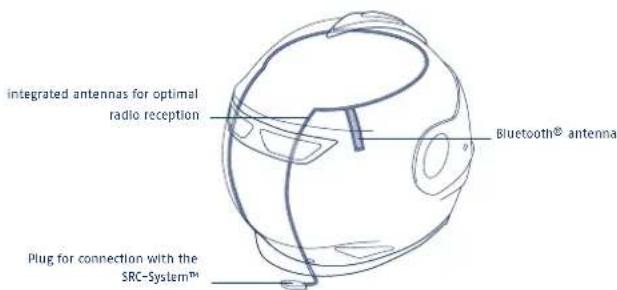
Your S2 is supplied ready for installation of the SCHUBERTH SRC-SystemTM as standard. The S2 is already fitted with two integrated antennas to amplify reception and a Bluetooth connection, to provide you with the best possible radio reception.
You can find out more about the SRC-SystemTM from your specialist dealer and at schuberth.com
We recommend that you only use original SCHUBERTH accessories and spare parts for your SCHUBERTH helmet as they are specially adapted to your helmet model.
3. ORDERING ORIGINAL SCHUBERTH PARTS
SCHUBERTH original replacement parts and accessories can be purchased from your specialist dealer. You can find details of your local SCHUBERTH specialist dealer in the "Motorcycle" section of our website by clicking on the "Dealers" link:
www.schuberth.com
I. SCHUBERTH SERVICE
1. SAFETY CHECK
If you wish you can send your S2 with sufficient postage to the SCHUBERTH Service Centre for a free check. If you wish to do so, you can find your contact through the SCHUBERTH Service Centre. Please always specify the date on which you purchased your helmet and the reason for sending it in. We hope you will understand that safety checks are not possible as part of the normal repair service as they may take longer to complete.
2. REPAIR SERVICE
The S2 is a SCHUBERTH quality product that has been designed and manufactured using the latest development and production methods. If a repair to your helmet is necessary, please consult your dealer.
Note:
If we receive an order from a customer to carry out a repair without a clear description of the fault, we are entitled to examine the item and/or delay completion of the order until the customer has been consulted. Even where a clear description of the original fault has been provided, if we discover further faults in the course of the repair, we are entitled, but not obliged, to rectify these without a specific order if this is necessary to restore the correct functioning of the helmet and the cost of this is low in relation to the original repair job. Otherwise, we will seek the agreement of the customer.
3. WARRANTY
The warranty period for your helmet is two years from the date of purchase, provided it is used properly. If work is required under the warranty, this will be carried out through your specialist dealer. Production of the purchase receipt is a compulsory requirement of any claim under the warranty. Please retain the original receipt in a safe place. In the event of a warranty claim, the original sales receipt (or a copy) must be enclosed with the helmet. Without the sales receipt, we cannot meet any guarantee claims. A claim cannot be made under the warranty without the purchase receipt.
The provision of a proper replacement or completion of a repair does not extend the original guarantee period. Complaints must be submitted to your dealer in writing as soon as possible, but within 8 days of the purchase date at the latest. Details of defects that are not discovered within this period even after careful examination must be submitted to your dealer in writing as soon as possible after their discovery. Please do not forget to describe the fault in detail when returning the helmet to your dealer.
SCHUBERTH and/or your dealer reserve the right to check the serial number when claims are made under the warranty. Products that have already been worn will not be exchanged but will be repaired.
Generally it is at the discretion of SCHUBERTH and/or your dealer to determine whether defective parts should be repaired, replaced or a credit note should be issued.
In particular, claims may not be made under the warranty in the event of:
improper use of and excessive strain on the product
- modification of the product by the customer
- failure to observe our product recommendations
normal wear and tear
| Headquarters |
| Phone | Address |
| +49 (0)391 8106-0 | SCHUBERTH GMBH |
| Stegelitzer Str. 12 | |
| 39126 Magdeburg | Germany |
| Service Centre |
| Phone | Anschrift |
| +49 (0)391 8106-555 | SCHUBERTH GMBH |
| Service Centre | |
| Stegelitzer Str. 12 | |
| 39126 Magdeburg | Germany |
| Internet |
| www.schuberth.com |
| E-Mail |
| kundenservice@schuberth.com |
FR
Felicitations!
This helmet is not intended for use in the USA and Canada. The helmet has been inspected and approved to the European ECE Standard and therefore does not conform to US and Canadian regulations and requirements. It is only legal to use the helmet in countries in which the European ECE Standard is valid. If you use the helmet in other countries, you will not in the event of injury be entitled to make a claim for compensation before the US or Canadian courts or the courts of other countries not bound by the ECE Standard.

Attention :
REEMPLACEMENT DE L'ECRAN
Système anti-roll-off (A.R.O.S.)
This helmet is not intended for use in the USA and Canada. The helmet has been inspected and approved to the European ECE Standard and therefore does not conform to US and Canadian regulations and requirements. It is only legal to use the helmet in countries in which the European ECE Standard is valid. If you use the helmet in other countries, you will not in the event of Injury be entitled to make a claim for compensation before the US or Canadian courts or the courts of other countries not bound by the ECE Standard.

Attenzione:
This helmet is not intended for use in the USA and Canada. The helmet has been inspected and approved to the European ECE Standard and therefore does not conform to US and Canadian regulations and requirements. It is only legal to use the helmet in countries in which the European ECE Standard is valid. If you use the helmet in other countries, you will not in the event of injury be entitled to make a claim for compensation before the US or Canadian courts or the courts of other countries not bound by the ECE Standard.

Avertissement 1
www.schuberth.com/us/home
2. ECE-GOEDKEURING

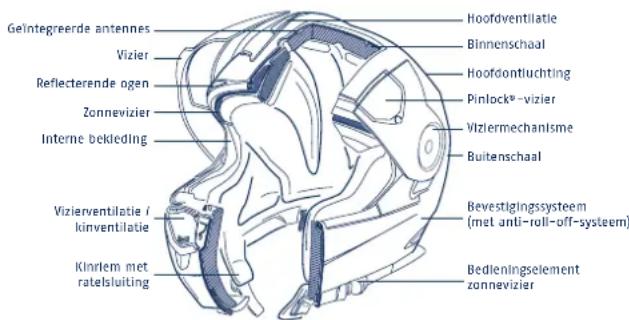
3. ANATOMIE VAN DE HELM
4. BUITENSCHAAL
Anti-roll-off-system (A.R.O.S.)
This helmet is not intended for use in the USA and Canada. The helmet has been inspected and approved to the European ECE Standard and therefore does not conform to US and Canadian regulations and requirements. It is only legal to use the helmet in countries in which the European ECE Standard is valid. If you use the helmet in other countries, you will not in the event of Injury be entitled to make a claim for compensation before the US or Canadian courts or the courts of other countries not bound by the ECE Standard.

Avertissement:
www.schuberth.com/us/home
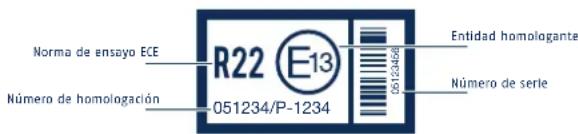
2. HOMOLOGACION ECE
3. ANATOMÍA DEL CASCO
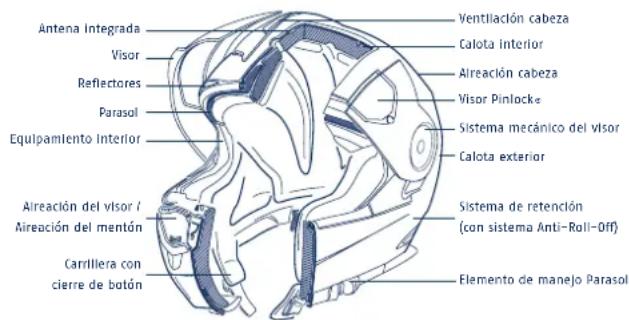
4.CALOTA EXTERIOR