Quatcopter Nano Pocket - Remote control toy Revell - Free user manual and instructions
Find the device manual for free Quatcopter Nano Pocket Revell in PDF.



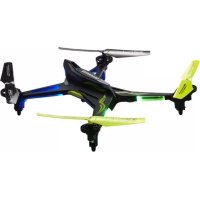
| Product type | Remote-controlled pocket nano quadcopter |
| Brand | Revell |
| Model | Quadcopter Nano Pocket |
| Model power supply | Rechargeable Li-Po battery 3.7 V / 100 mAh (included) |
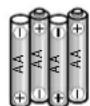
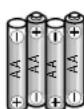
| Remote control power supply | 4 AA 1.5 V batteries (not included) |
| Flight time | Approximately 4 to 6 minutes |
| Charging time | Approximately 40 minutes |
| Speed levels | 3 levels (beginner, intermediate, advanced) |
| Special features | Flip, Headless mode, automatic return (Return to Home) |
| Recommended use | Indoor and outdoor in dry and windless weather |
| Recommended age | 14 years and up |
| Maintenance | Clean with a clean, damp cloth; protect from sun and heat; avoid contact with water |
| Spare parts | Use only original Revell Control parts |
| Charger | Specific Li-Po charger included, do not use for other batteries |
| Motors | 4 electric motors (type not specified) |
| Batteries for remote control | Alkaline recommended; do not mix different types or new and used batteries |
Frequently Asked Questions - Quatcopter Nano Pocket Revell
User questions about Quatcopter Nano Pocket Revell
0 question about this device. Answer the ones you know or ask your own.
Ask a new question about this device
Download the instructions for your Remote control toy in PDF format for free! Find your manual Quatcopter Nano Pocket - Revell and take your electronic device back in hand. On this page are published all the documents necessary for the use of your device. Quatcopter Nano Pocket by Revell.
USER MANUAL Quatcopter Nano Pocket Revell
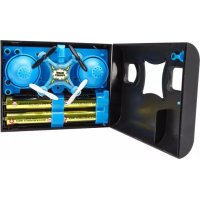
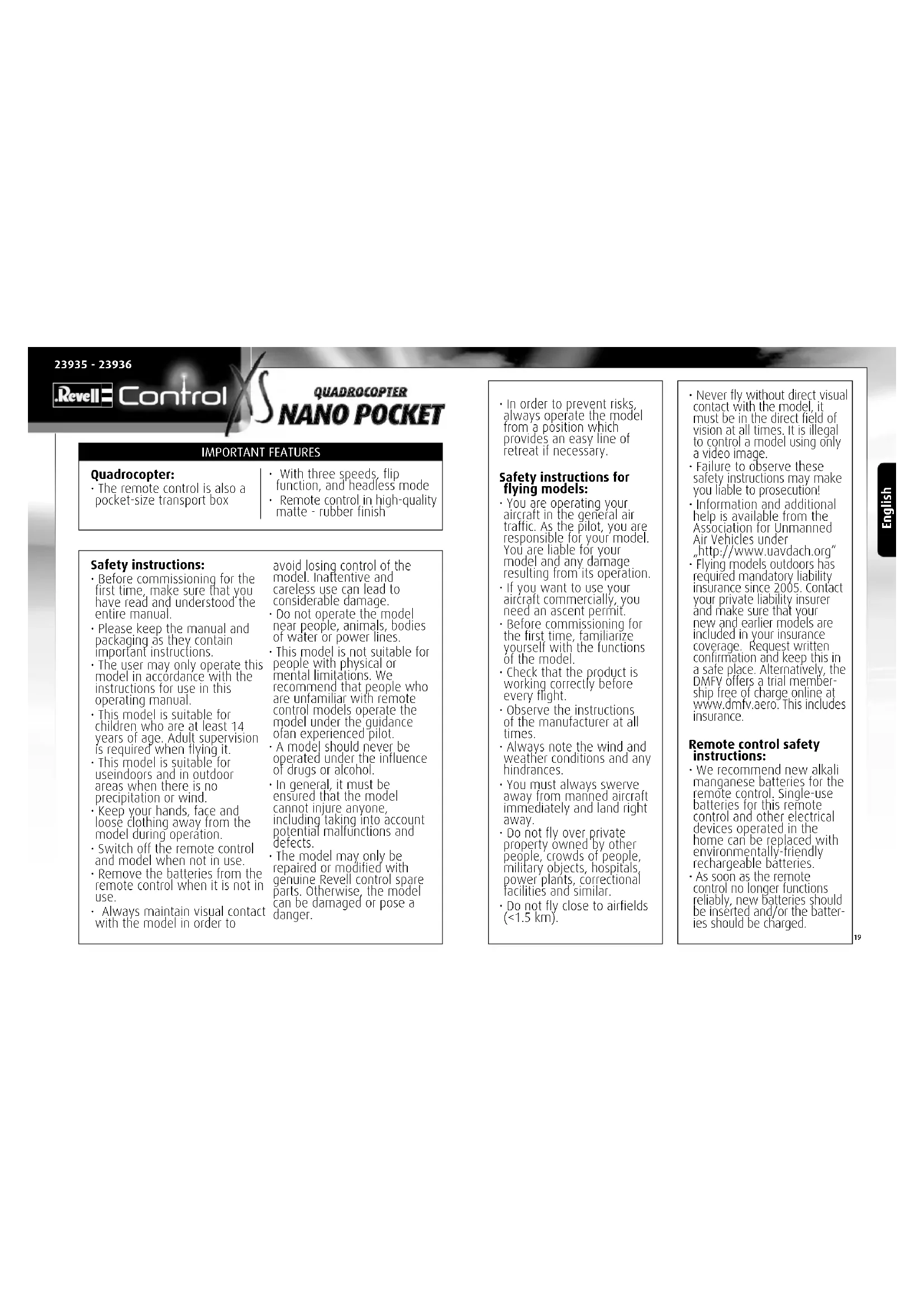
The remote control is also a pocket-size transport box
with three speeds, flip function, and headless mode
Remote control in high-quality matte - rubber finish
Safety instructions:
Before commissioning for the first time, make sure that you have read and understood the entire manual.
- Please keep the manual and packaging as they contain important instructions.
The user may only operate this model in accordance with the instructions for use in this operating manual.
This model is suitable for children who are at least 14 years of age. Adult supervision is required when flying it.
This model is suitable for useindoors and in outdoor areas when there is no precipitation or wind.
-
Keep your hands, face and loose clothing away from the model during operation.
-
Switch off the remote control and model when not in use.
- Remove the batteries from the remote control when it is not in use.
Always maintain visual contact with the model in order to
avoid losing control of the model. Inattentive and careless use can lead to considerable damage.
Do not operate the model near people, animals, bodies of water or power lines.
This model is not suitable for people with physical or mental limitations. We recommend that people who are unfamiliar with remote control models operate the model under the guidance of an experienced pilot.
A model should never be operated under the influence of drugs or alcohol.
In general, it must be ensured that the model cannot injure anyone, including taking into account potential malfunctions and defects.
The model may only be repaired or modified with genuine Revell control spare parts. Otherwise, the model can be damaged or pose a danger.
In order to prevent risks, always operate the model from a position which provides an easy line of retreat if necessary.
Safety instructions for flying models:
- You are operating your aircraft in the general air traffic. As the pilot, you are responsible for your model. You are liable for your model and any damage resulting from its operation.
If you want to use your aircraft commercially, you need an ascent permit.
Before commissioning for the first time, familiarize yourself with the functions of the model. - Check that the product is working correctly before every flight.
- Observe the instructions of the manufacturer at all times.
Always note the wind and weather conditions and any hindrances.
You must always swerve away from manned aircraft immediately and land right away. - Do not fly over private property owned by other people, crowds of people, military objects, hospitals, power plants, correctional facilities and similar.
-
Do not fly close to airfields (< 1.5km)
-
Never fly without direct visual contact with the model, it must be in the direct field of vision at all times. It is illegal to control a model using only a video image.
- Failure to observe these safety instructions may make you liable to prosecution!
Information and additional help is available from the Association for Unmanned Air Vehicles under
http://www.uavdach.org" Flying models outdoors has required mandatory liability insurance since 2005.Contact your private liability insurer and make sure that your new and earlier models are included in your insurance coverage. Request written confirmation and keep this in a sale place. Alternatively, the DMFV offers a trial membership free of charge online at www.dmfv.aero.This includes insurance.
Remote control safety instructions:
We recommend new alkali manganese batteries for the remote control. Single-use batteries for this remote control and other electrical devices operated in the home can be replaced with environmentally-friendly rechargeable batteries.
- As soon as the remote control no longer functions reliably, new batteries should be inserted and/or the batteries should be charged.
Safety instructions for batteries:
- Rechargeable batteries must be removed from the remote control prior to recharging.
Non-rechargeable batteries may not be charged. - Rechargeable batteries may only be charged under the supervision of an adult.
- The combination of different types of batteries as well as new and used batteries must be avoided.
- Only recommended batteries or those of an equivalent type may be used.
- Batteries must be inserted according to the correct polarity (+ and -).
- Depleted batteries must be removed from the remote control.
The connection terminals may not be short-circuited. - Remove the batteries from the remote control if they are not to be used for an extended period of time.
Charging unit safety instructions:
Non-rechargeable batteries may not be charged.
- This charging unit is not suitable for people (including children) with physical or mental limitations, or those with insufficient knowledge and experience of charging units, unless under supervision or following proper directions from a parent or legal guardian.
Children must be supervised - the charging unit is not a toy!
- The charging unit for the LiPo battery is specially designed for the charging of the model battery. The charging unit may only be used to charge the model battery, not other batteries.
The model is equipped with a rechargeable lithium polymer battery. Please observe the following safety instructions:
- Never throw LiPo batteries into a fire or store them in a hot location.
Only use the supplied charger to charge the battery. The use of a different charger may lead to the permanent damage of the battery and neighbouring parts, as well as physical injury! - Never use a charger for NiCd/NiMH batteries!
Always ensure that the charging process takes place on a fireproof surface in a fire-resistant environment. - Do not leave the battery unsupervised during the charging process.
- Never disassemble or alter the battery contacts. Do not damage or puncture the battery cells. There is a risk of explosion!
The LiPo battery must be kept out of reach of children. - When disposing of batteries, they must be discharged or
their capacity must be fully depleted. Cover exposed terminals with adhesive tape in order to prevent short-circuiting!
Maintenance and care:
- Please only use a clean, damp cloth to wipe off the model.
- Protect the model and batteries from direct sunlight and/or direct heat.
- Never allow the remote control and charging unit to come into contact with water, because the electronics will be damaged as a result.
Technical changes and differences in colour reserved!
Required batteries for the model:
Power supply:
Rated output: 1 x DC 3,7 V / 2 Wh
Batteries: 3,7 V rechargeable
LiPo battery (included)
Capacity: 100 mAh
Battery requirement for the remote control:
Power supply: DC 6 V Batteries:
4 x 1.5 V "AA" (not included)
1 MODEL
1A Rotors
1B Charge socket
1C ON/OFF switch
1D Status LED
2 REMOTE CONTROL
2A Controller for thrust and rotation
28 Control for forwards/backwards and banking
2C Trim for forwards/backwards
2D Banking trim
2E Joystick
2F Charger plug
26 Charge indicator
2H Battery compartment
21 Battery holder
2 Battery cover
2K Flip button - press longer for return to home
2L ON/OFF switch
2M Turbo button - press longer for headless mode
3 INSERTING BATTERIES (REMOTE CONTROL)
3A In order to insert the batteries, open the remote control and remove the battery holder (21) and battery cover (22) by unscrewing the two screws.
3B Insert 4 × 1.5 ~V AA batteries and pay attention to the polarity specifications, as indicated in the battery compartment.
3C Replace the battery cover (2j) and carefully screw in both screws. The battery holder (21) has a long tab and a short tab. The short tab should be inserted at the top and the long tab pressed down at the bottom.
4 CHARGING THE MODEL
Attention: The battery and motor must cool down for 15 to 30 minutes before charging and after every flight. Otherwise they can be damaged. The charging process must be constantly monitored. Always ensure that the charging process takes place on a fireproof surface in a fire-resistant environment.
4A Switch off the ON/OFF switch of the model (1C), then switch off the remote control by pressing and holding the ON/OFF button (2L) (only if the remote control is still switched on).
4B Insert the charger plug (2F) in the charging socket (1B) of the model. The charger plug must be gently inserted into the charging socket - DO NOT USE FORCE. If the charger plug is not correctly inserted into the charging socket, the battery may become damaged and, under certain circumstances, cause injury.
4C The charge indicator (2G) will light up red when charging begins. The charging process lasts approx. 40 minutes and must be continuously monitored. As soon as the charging process is complete, the charge indicator goes out. Disconnect the model from the charger plug when the charging is complete.
The model can fly for approx. 4-6 minutes after a charge time of approx. 40 minutes.
Warning notice: The battery does not normally heat up while charging. If it should become warm or even hot and/or changes to the surface begin to appear, immediately discontinue the charging process!
5 START PREPARATION
The model must be switched on first in order to connect it to the remote control. For this purpose, set the ON/OFF switch on the model (1c) to the ON position (5A).
The control for thrust and rotation (2A) must point down before the remote control is switched on. To switch on the remote control, briefly press the ON/OFF button (2L). The remote control issues a short beep as confirmation (5B). Then briefly move the control for thrust and rotation (2A) all the way forward and back again (5C). After approx. 3 seconds, the model activates and is ready for use.
After flying, switch off the model first, then the remote control by pressing and holding the ON/OFF button (2L) for about three seconds.
6 TRIM ADJUSTMENT OF THE CONTROL
The correct trim is a basic requirement for fault-free flying behavior of the model. Its adjustment is simple, but it requires some patience and a feel for it. Please observe the following instructions precisely: Carefully move the thrust control up and raise the copter approximately 0.5 to 1 metre in altitude.
6A If the model automatically moves slowly or quickly to the left or right ...
gradually press the trim for sideways flight (2D) in the opposite direction.
6B If the model automatically moves slowly or quickly forwards or backwards ...
gradually press the forwards/backwards trim (2c) in the opposite direction.
7 FLIGHT CONTROL
Note: Only minimal corrections of the controls are necessary for a smooth flying behavior of the model! The direction indication applies when the model is viewed from behind. If the model is flying forwards towards the pilot, it must be moved in the opposite direction.
7ATake off or increase altitude by carefully moving the control for thrust and rotation (2A) forward.
7B Land or decrease altitude by moving the control for thrust and rotation (2A) backward.
7C Fly forward by moving the controller for forward/backward and sideways flight (2B) carefully forward.
70 Fly backward by moving the controller for forward/backward and sideways flight (28) carefully backward.
7E Fly to the left by moving the controller for forward/backward and sideways flight (2B) carefully to the left.
7F Fly to the right by moving the controller for forward/backward and sideways flight (28) carefully to the right.
7G Turn the model around to the left by moving the control for thrust and rotation (2A) to the left.
7H Turn model around to the right by moving the control for thrust and rotation (2A) to the right.
2M Turbo button: The lowest speed is activated when the model is switched on. By pressing the button twice, the medium level is activated and the remote control issues two short beeps. By pressing again, the remote control issues three short beeps for the highest speed. Pressing the button again returns to the lowest level.
2MPress and hold the 2M Turbo button for three seconds:
activation of headless mode. Headless mode assists beginners by adjusting the controls so that the flight direction corresponds to the exact direction in which the control for forwards/backwards and banking (2B) is actuated, regardless of the model rotation. For example: If the model is rotated 180^ and flying towards the pilot, it would be necessary to 'rethink' forwards/backwards and banking and the controls are reversed. With headless mode activated, this is no longer necessary, because the internal processor always automatically re-computes the control directions. This function is even active in inverted flight. When the pilot actuates the control forwards, the model flies forwards, regardless of how the model is positioned. If headless mode is activated, the LEDs of the model blink alternatingly. Pressing the button (2M) again for three
seconds deactivates the mode. Attention: With each activation, the model ' notices' the forward alignment. This means that you cannot rotate the model when controlling it, because you have a different perception of 'forward' and 'right/left' in regard to the model. If you change position and would like to use headless mode - or the control direction is no longer correct due to a collision - it is necessary to restart headless mode.
2K Flip button: Each time the flip button is pressed, the model performs a flip in the direction in which it is controlled with the control for forwards/backwards and banking (2B). Only activate this function if there is enough space available and the model is flying at a height of at least 2 meters.
2K Press and hold the 2K Flip button for three seconds: Activation of return to home mode. This causes the model to move in the approximate direction of the pilot. Please only use this function as aid, because wind or collisions can completely falsify the result. Any movement with the control for forwards/backwards and banking (2B) deactivates the mode.
8 INSTALLING THE JOYSTICKS
8A The joysticks (2E) are located inside the remote control on the left upper side.
8B They can be easily pulled out and fit on the controls for thrust and rotation (2A) as well as forwards/backwards and banking (2B).
INSTRUCTIONS FOR SAFE FLYING
GENERAL FLYING TIPS:
-
Always place the model on a level surface. An inclined surface can, under certain circumstances, have a negative impact on the starting behavior of the model.
-
Always operate the controls slowly and with a gentle touch.
- Always maintain visual contact with the model and do not look at the remote control!
- Move the thrust control down again somewhat as soon as the model lifts off from the ground. Maintain flying altitude by adjusting the thrust controller.
- If the model lowers, move the thrust control slightly upward again.
- If the model climbs, move the thrust control down slightly.
To fly along a curve, tapping the directional controller very slightly in the respective direction often suffices.
There is a general tendency during preliminary attempts at flight to operate the model's controls too aggressively. Always operate the controls slowly and carefully. Never fast and fitfully.
- Beginners should first master trimming before attempting to master the thrust controller. The model does not necessarily have to fly straight at the beginning - initially, it is more important to maintain a constant height of approximately one meter above the ground by repeatedly tapping the thrust control. Only then should the pilot practice steering the model left and right.
BATTERY STATUS:
- The battery is empty if the model begins to lose thrust. Land in order to avoid crashing.
9 CHANGING THE PROPELLERS
If the rotor blades on the model are damaged, they must be replaced. Pay attention to the direction of rotation of the propellers. The marking A and B are found on the upper side of the propeller at the hub. To do so, proceed as follows:
9A Hold the faulty rotor blade with two fingers and pull it off carefully to the top.
98 Place the new rotor blade on the shaft and press it carefully in place.
Additional tips and tricks can be found online at www_REVell-control.de.
TROUBLESHOOTING
Problem: The propellers do not move.
Cause: No connection has been established. The battery is too weak or deple
Remedy: Switch everything off and switch on again in the correct sequence. Charge the battery.
Problem: The model stops and descends during flight for no apparent reason.
Cause: The battery is too weak.
Remedy: Charge the battery.
Problem: The model cannot be controlled with the remote control.
Cause: The ON/OFF switch is in the "OFF" position. The batteries were not inserted correctly. The batteries do not have enough power.
Remedy: Set the ON/OFF switch to the "ON" position. Check whether the batteries are inserted correctly. Insert new batteries
Problem: The model only turns on its vertical axis or rolls over when started.
Cause: Incorrect arrangement of the propellers.
Remedy: · Install the propellers and arms as outlined in the manual.
Problem: The model will no longer fly loops.
Cause: Battery too weak.
Remedy: Charge the battery.
SERVICE NOTES
Go to www_REVell-control.de for ordering information and tips on replacing spare parts, plus other useful information on all Revell Control models.

23935 - 23936
Revill Control
QUADROCEPTOR
NANOPOCKET
CHARACTERISTIQUES PRINCIPALES
Quadricoptère :
Alimentation:
DC 6 VFiles
4 piles AA de 1,5 V
(non incluses)