Model 1120 - Talkie Walkie OLYMPIA - Free user manual and instructions
Find the device manual for free Model 1120 OLYMPIA in PDF.



User questions about Model 1120 OLYMPIA
0 question about this device. Answer the ones you know or ask your own.
Ask a new question about this device
Download the instructions for your Talkie Walkie in PDF format for free! Find your manual Model 1120 - OLYMPIA and take your electronic device back in hand. On this page are published all the documents necessary for the use of your device. Model 1120 by OLYMPIA.
USER MANUAL Model 1120 OLYMPIA
natural_image
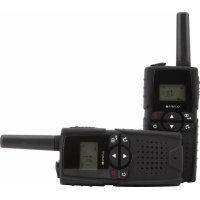
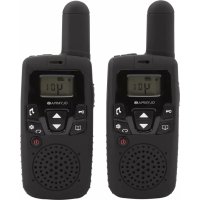
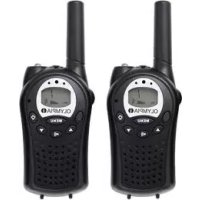
Two black Olympic radio telephones with visible brand logos and control buttons (no text or symbols on the devices themselves)Model 1120
Operating instructions GB
Mode d'emploi Ⓕ
text_image
Labeled diagram of a walkie-talkie with numbered parts for identification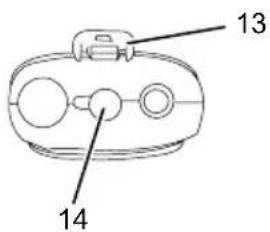
text_image
13 14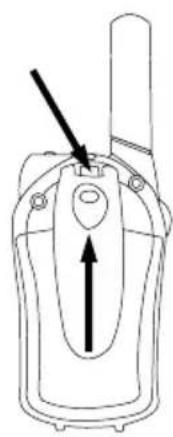
natural_image
Line drawing of a mechanical device with an arrow indicating upward motion (no text or symbols)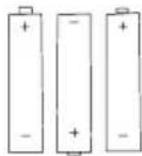
natural_image
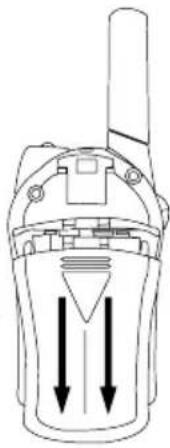
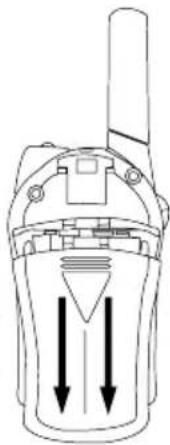
Technical line drawing of a mechanical device with internal components and directional arrows (no text or symbols)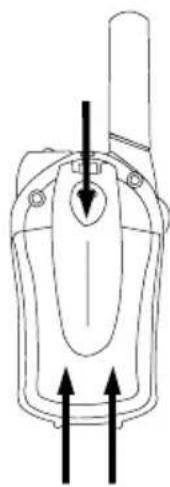
natural_image
Technical line drawing of a mechanical component with two upward arrows indicating motion or force direction (no text or symbols)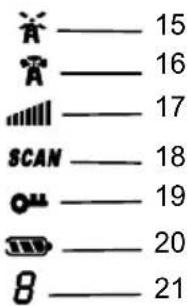
| Kanal Frequenz (MHz) |
| 1 446.00625 |
| 2 446.01875 |
| 3 446.03125 |
| 4 446.04375 |
| 5 446.05625 |
| 6 446.06875 |
| 7 446.08125 |
| 8 446.09375 |
SICHERHEITSHINWEISE
text_image
Labeled diagram of a walkie-talkie with numbered parts for identification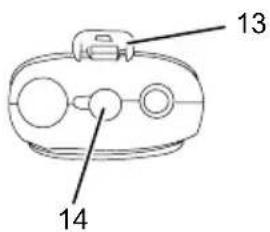
text_image
13 14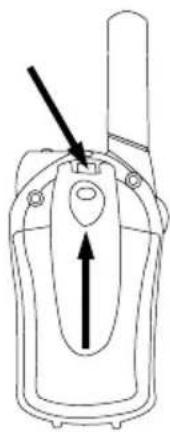
natural_image
Technical line drawing of a mechanical device with an arrow indicating direction (no text or symbols)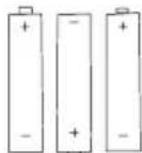
natural_image
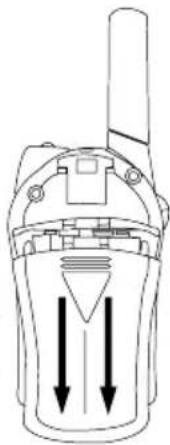
Technical line drawing of a walkie-talkie with directional arrows indicating movement (no text or symbols)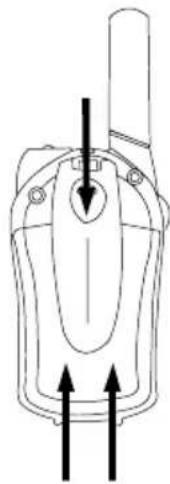
natural_image
Technical line drawing of a mechanical component with two upward arrows indicating force or movement (no text or symbols)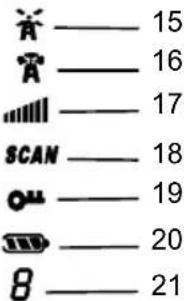
text_image
A — 15 A — 16 SCAN — 17 Ou — 18 B — 19 20 21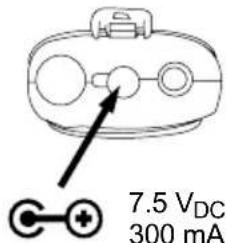
text_image
7.5 VDC 300 mACAUTION: Risk of explosion! Do not charge alkaline batteries!

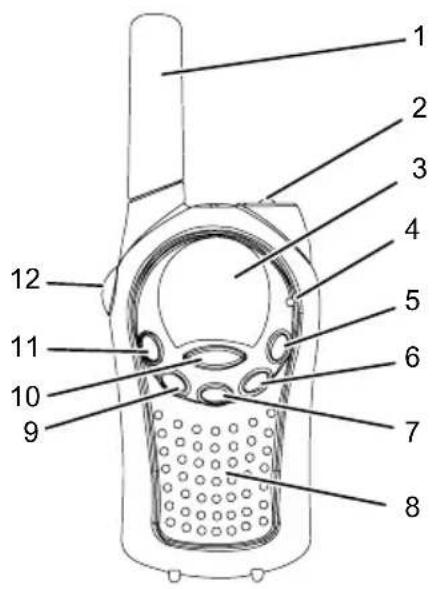
- Antenna
- Lamp
- LC Display
- Microphone
- Lamp Button
- Down Button
- Call Button
- Speaker
- Up Button
- MENU-Button
- Power on/off
- PTT-Button
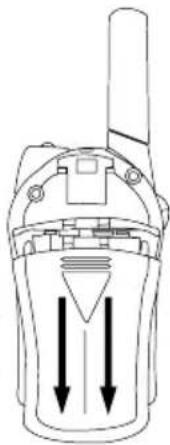
- Belt clip
- Connector Power Plug/Headset
- Receiving icon
- Transmitting icon
- Volume icon
- Scan icon
- Lock icon
- Battery charge level indicator
- Channel number
| Technical Data |
| Channels: 8 |
| Frequency: 446.00625 MHz - 446.09375 MHz |
| Range: < 5 km |
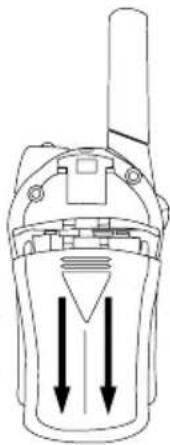
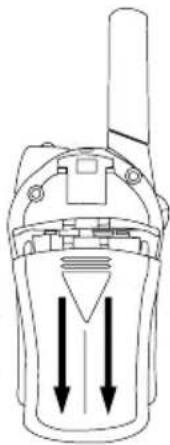
| Power Source:3 x AAA Alkaline or NiMh rechargeable |
| Transmission Power: < 500 mW PMR |
| Bandwidth: 12,5 kHz |
| Channel Frequency (MHz) |
| 1 446.00625 |
| 2 446.01875 |
| 3 446.03125 |
| 4 446.04375 |
| 5 446.05625 |
| 6 446.06875 |
| 7 446.08125 |
| 8 446.09375 |
SAFETY INFORMATION
Please read the following information carefully to ensure you use the equipment safely and properly.
- This walkie-talkie set is not suitable for use as a toy.
- Do not expose the walkie-talkies to extreme temperatures or high relative humidity and protect them from direct sunlight and extreme exposure to dust.
- Clean the walkie-talkies with a soft, slightly damp cloth. Never use any cleaning agents or solvents on the equipment.
- Pay attention to the correct polarity when using a power adapter plug.
- Never open the walkie-talkies. If you open the walkie-talkies, rights to claims under the terms of guarantee are automatically annulled and there is a risk of an electric shock.
- The equipment may only be repaired at appropriate service centered.
- Remove the batteries if the walkie-talkie set will remain unused for a longer period.
- Use in vehicles: Do not install the device above an airbag or within the area in which an airbag can inflate.
- In some countries, it is forbidden to use the walkie-talkie set while driving a vehicle.
- Switch the walkie-talkie set OFF immediately you suspect it is causing interference in medical equipment.
- Check local regulations before using the equipment outside the country in which it was purchased. Standards may vary from country to country.
text_image
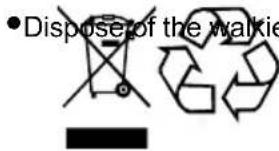
• Dispose of the walkietalkie set and used batteries according to the
applicable local environmental laws. Never dispose of the walkie-talkies and batteries in normal domestic waste. Contact your local authorities with regard to laws and facilities for disposing of the walkie-talkies properly, in accordance with the applicable environmental laws.
EXEMPTION FROM LIABILITY
We reserve the right to make modifications to the features described in this operating instruction manual.
INTENDED USE
These walkie-talkies are suitable for communication with other walkie-talkies complying to the same standard. Any other use is considered unintended use. Unauthorized modifications or reconstruction not described in this manual are not permitted.
Guarantee
If your new equipment does not work
Do not return the equipment immediately but contact us first. Problems with technical equipment often have a minor cause which can be cleared up quickly and easily. Our technical staff know the equipment concerned and can often provide valuable information.
Dear Customer,
We are pleased that you have decided to purchase this equipment. Please observe the following:
- The period of guarantee for the device is 24 months.
- It is essential to retain the purchase receipt and, if possible, the original packaging. Only then is repair or replacement possible, free of charge, during the period of guarantee.
Yours faithfully
Your Olympia Team
In order to be able to communicate with the walkie-talkies, they must both be set to the same channel and positioned within the range of reception (max. 5 km in open space).
Since these walkie-talkies use free channels, all the walkie-talkies in operation use the same channels. This means that confidentiality is not ensured. All persons in possession of a walkie-talkie which is set to your channel are capable of listening to your calls.
In order to communicate (establish voice connection), press the PTT button (Push To Talk). The walkie-talkie switches to Transmit mode as soon as the button is pressed. You can then speak into the microphone. Every walkie-talkie within the range of reception and set to the same channel receives your call. You must wait until the caller has stopped speaking before you can answer. If the confirmation signal is activated, the walkie-talkie sends an acoustic signal when you end transmission. To answer, press the PTT button on the receiving walkie-talkie and speak into the microphone.
| SWITCH THE EQUIPMENT ON/OFF 2 sec | |
| SET THE LOUDSPEAKER VOLUME ▲/▼ | |
| TRANSMIT A SIGNAL | (PTT) |
| RECEIVE A SIGNAL (PTT) Release | |
| CHANGE CHANNELS (1...8) | 1x MENU / ▲/▼ / Q (PTT) |
| SCAN CHANNELSWhen SCAN CHANNELS is active, it continuously scans channels 1 to 8 for active signals. | Start: ▲ + MENUReply to signal found: Stop: MENU |
| KEY LOCK ON/OFF | ON: 2 sec MENUOFF: 2 sec MENU / Q (PTT) |
| TRANSMIT RING TONE | |
| CHANGE RING TONE | 2x MENU / ▲/▼ / Q (PTT) |
| LAMP ON/OFF | Release |
text_image
Labeled diagram of a walkie-talkie with numbered parts for identification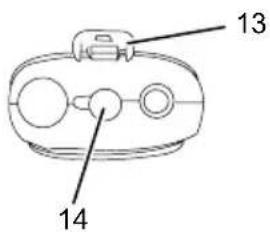
text_image
13 14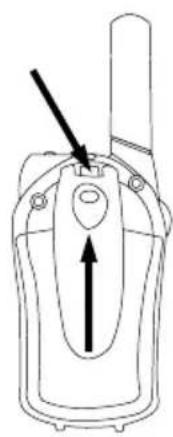
natural_image
Technical line drawing of a mechanical device with an arrow indicating upward motion (no text or symbols)
natural_image
Technical line drawing of a walkie-talkie with directional arrows indicating movement (no text or symbols)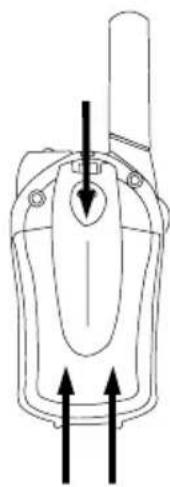
natural_image
Technical line drawing of a mechanical component with two upward arrows indicating motion or force direction (no text or symbols)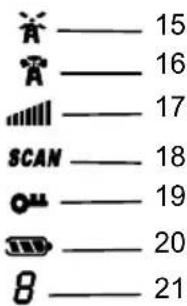
text_image
Labeled diagram of a walkie-talkie with numbered parts for identification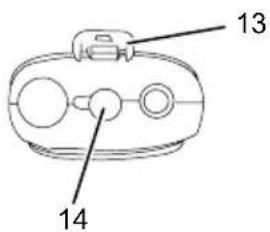
text_image
13 14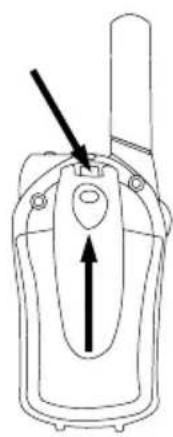
natural_image
Technical line drawing of a mechanical device with an arrow indicating upward motion (no text or symbols)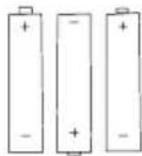
natural_image
Technical line drawing of a walkie-talkie with directional arrows indicating movement (no text or symbols)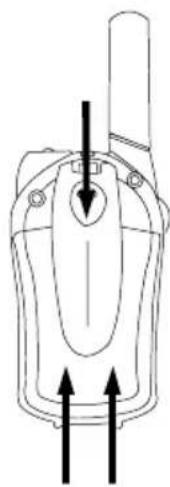
natural_image
Technical line drawing of a mechanical component with two upward arrows indicating motion or force direction (no text or symbols)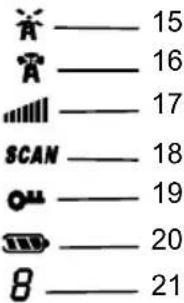
text_image
15 16 17 SCAN 18 19 20 8 21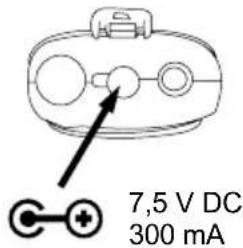
text_image
7,5 V DC 300 mAVOORZICHTIG: Explosiegevaar! Geen alkaline-batterijen opladen!

text_image
Labeled diagram of a walkie-talkie with numbered parts for identification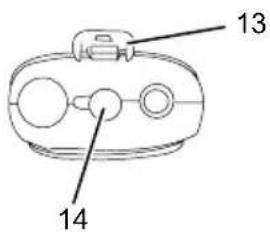
text_image
13 14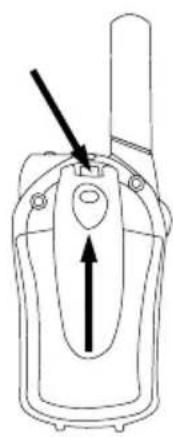
natural_image
Technical line drawing of a mechanical device with an arrow indicating upward motion (no text or symbols)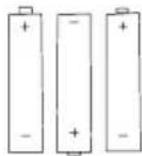
natural_image
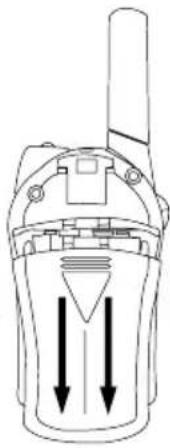
Technical line drawing of a mechanical device with internal components and directional arrows (no text or symbols)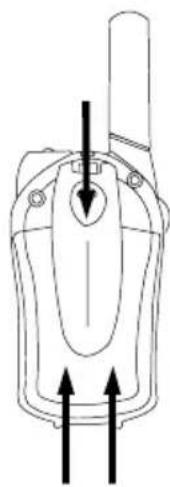
natural_image
Technical line drawing of a mechanical component with arrows indicating force or movement (no text or symbols)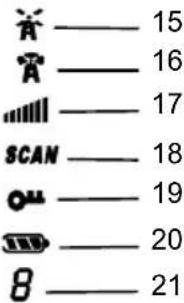
text_image
A — 15 A — 16 SCAN — 17 OU — 18 B — 19 20 21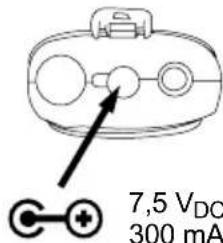
text_image
7,5 VDC 300 mAtext_image
Labeled diagram of a walkie-talkie with numbered parts for identification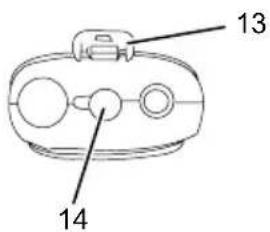
text_image
13 14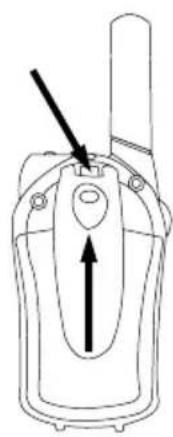
natural_image
Line drawing of a mechanical device with an arrow indicating upward motion (no text or symbols)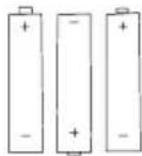
natural_image
Technical line drawing of a mechanical device with internal components and directional arrows (no text or symbols)
natural_image
Technical line drawing of a mechanical component with two upward arrows indicating force or movement (no text or symbols)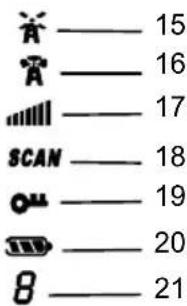
text_image
Labeled diagram of a walkie-talkie with numbered parts for identification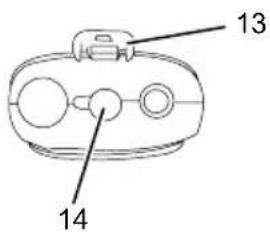
text_image
13 14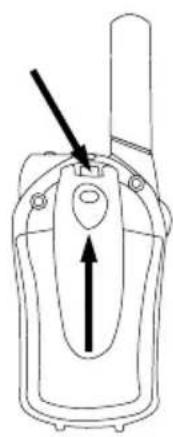
natural_image
Technical line drawing of a mechanical device with an arrow indicating upward motion (no text or symbols)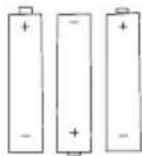
natural_image
Technical line drawing of a walkie-talkie with directional arrows indicating movement (no text or symbols)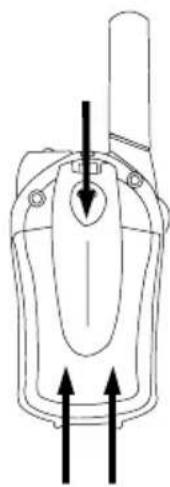
natural_image
Technical line drawing of a mechanical component with two upward arrows indicating motion or force direction (no text or symbols)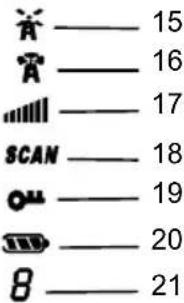
text_image
15 16 17 SCAN 18 19 20 8 21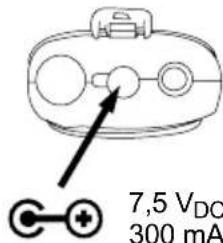
text_image
7,5 VDC 300 mAtext_image
Labeled diagram of a walkie-talkie with numbered parts for identification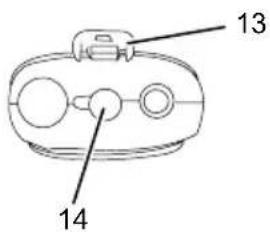
text_image
13 14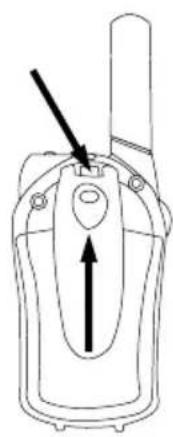
natural_image
Technical line drawing of a mechanical device with an arrow indicating upward motion (no text or symbols)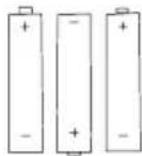
natural_image
Technical line drawing of a walkie-talkie with directional arrows indicating movement (no text or symbols)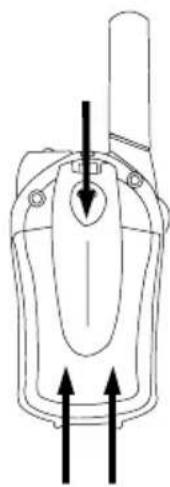
natural_image
Technical line drawing of a mechanical component with two upward arrows indicating motion or force direction (no text or symbols)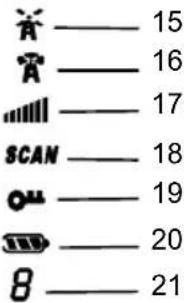
text_image
15 16 17 SCAN 18 19 20 8 21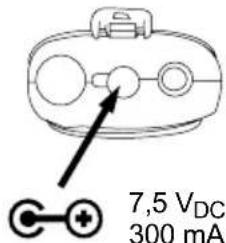
text_image
7,5 VDC 300 mAtext_image
Labeled diagram of a walkie-talkie with numbered parts for identification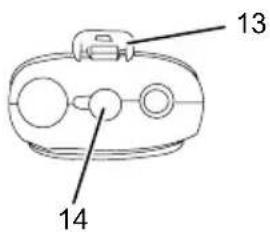
text_image
13 14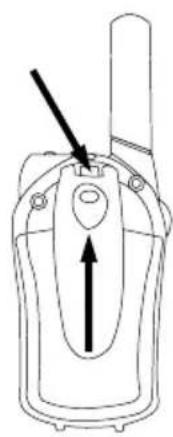
natural_image
Technical line drawing of a mechanical device with an arrow indicating upward motion (no text or symbols)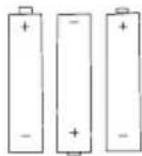
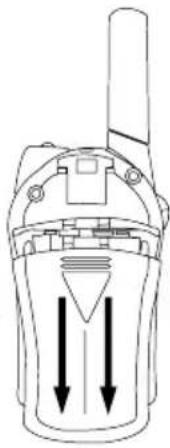
natural_image
Technical line drawing of a mechanical device with internal components and directional arrows (no text or symbols)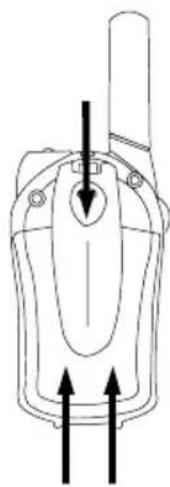
natural_image
Technical line drawing of a mechanical component with arrows indicating force or movement (no text or symbols)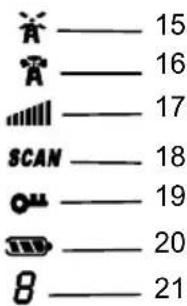
| Hattingen, 09. November 2009 |
| Ort, Datum / Place & date of issue |
| Heinz Prygoda |