SR 4339 CD - Radio AEG - Free user manual and instructions
Find the device manual for free SR 4339 CD AEG in PDF.



| Product type | Stereo radio with CD/MP3 player |
| Brand | AEG |
| Model | SR 4339 CD |
| Mains power supply | 220-240 V~, 50 Hz |
| Battery power supply | 6 x 1.5 V, type UM2/R14 |
| Power consumption | 12 W |
| Net weight | 1.34 kg |
| Protection class | II |
| FM frequency range | 88 - 108 MHz |
| AM frequency range | 540 - 1600 kHz |
| Radio functions | FM stereo and AM reception, telescopic antenna |
| CD/MP3 functions | Playback of audio CDs and MP3, programming, repeat, random play, intro |
| USB port | Playback of MP3 files from USB devices |
| Display | LCD screen with track and folder information |
| Maintenance | Clean with a slightly damp cloth, without additives |
| Laser safety | Class 1 laser; do not open the CD compartment during operation |
Frequently Asked Questions - SR 4339 CD AEG
User questions about SR 4339 CD AEG
0 question about this device. Answer the ones you know or ask your own.
Ask a new question about this device
Download the instructions for your Radio in PDF format for free! Find your manual SR 4339 CD - AEG and take your electronic device back in hand. On this page are published all the documents necessary for the use of your device. SR 4339 CD by AEG.
USER MANUAL SR 4339 CD AEG
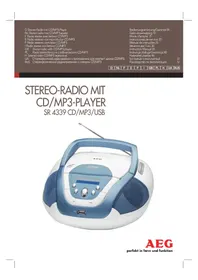
GB Stereo radio with CD/MP3 player
natural_image
A portable electronic device with blue and white casing, featuring a digital display and antenna (no visible text or symbols)AEG
Overview of the Components ...... Page 3
Instruction Manual......Page 35
Technical Data Page 39
Disposal Page 39
Język polski
Spis treści
If ID-3 Tag information has been stored this appears in the display in the form of an LED ticker display. Press the button once more in order to switch the function off again.
ALBUM (12)
$$ \begin{array}{c} \text {UKW (Stéréo) = FM ST., UKW = FM,} \ \text {ondes moyennes = AM (Mono)} \end{array} $$
Lecture de CD/MP3
Thank you for choosing our product. We hope you enjoy using the device.
General Safety Instructions
Read the operating instructions carefully before putting the appliance into operation and keep the instructions including the warranty, the receipt and, if possible, the box with the internal packing. If you give this device to other people, please also pass on the operating instructions.
- To avoid the risk of fire or an electric shock, you should not expose the device to rain or moisture. Consequently, do not use the device in the immediate vicinity of water - for example near a bath tub, a swimming pool or in a damp cellar.
- The appliance is designed exclusively for private use and for the envisaged purpose. This appliance is not fit for commercial use.
- Only connect the device at a properly installed plug socket. Pay attention that the specified voltage corresponds to the voltage of the plug socket.
- When using external mains supply, pay attention to the correct polarity and voltage. Always place the batteries in the correct direction.
- Assemble the device in such a way that the available ventilation openings are not covered.
- Never open the housing of the device. Incorrect repairs can constitute a considerable risk for the user. Should the device become damaged, in particular the mains supply cable, do not operate the device any longer, but rather have it repaired by an expert. Check the mains supply cable regularly for damage.
- For safety reasons a broken or damaged mains lead may only be replaced by an equivalent lead from the manufacturer, our customer service department or a similar qualified person.
- If the device is not used for a longer period, remove the plug connector from the plug socket or take out the batteries.
These symbols may be found on the machine and are intended to indicate the following:
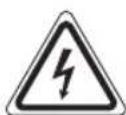
The lightning symbol should advise the user of parts in the inside of the device which carry dangerously high voltage levels.

The symbol with an exclamation mark should advise the user of important operation or maintenance instructions in the accompanying documentation.
English
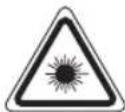
Devices bearing this symbol work with a "class 1 laser" for tracing the CD. The built-in safety switches should prevent the user being exposed to dangerous laser light, which is invisible to the human eye, when the CD compartment is opened.
Under no circumstances should these safety switches be bypassed or manipulated, as this could result in a danger of exposure to the laser light.
Symbols in these Instructions for Use
Important information for your safety is specially marked. It is essential to comply with these instructions in order to avoid accidents and prevent damage to the machine:
WARNING:
This warns you of dangers to your health and indicates possible injury risks.
CAUTION:
This refers to possible hazards to the machine or other objects.
i NOTE:
This highlights tips and information.
Children and Frail Individuals
- In order to ensure your children's safety, please keep all packaging (plastic bags, boxes, polystyrene etc.) out of their reach.
WARNING!
Caution! Do not allow small children to play with the foil as there is a danger of suffocation!
- This device is not intended to be used by individuals (including children) who have restricted physical, sensory or mental abilities and/or insufficient knowledge and/or experience, unless they are supervised by an individual who is responsible for their safety or have received instructions on how to use the device.
• Children should be supervised at all times in order to ensure that they do not play with the device.
Special safety information
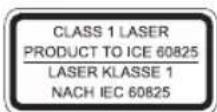
This device works with a class 1 laser.
36 English
Overview of the Components
1 Telescopic antenna
2 Handle
3 CD compartment
4 TUNING control
5 Radio scale
6 Band selection switch (FM.ST / FM / AM)
7 Loudspeaker
8 OPEN/CLOSE (open/close) CD compartment
9 FM ST. control lamp
10 SKIP+ button (forward search)
11 STOP button
12 ALBUM button (album upwards)
13 USB port
14 PLAY/PAUSE/USB button (Play/Pause)
15 INFO button
16 MODE button (Repeat/random playback/memory)
17 SKIP-button (reverse search)
18 POWER control lamp
19 LCD display
20 Function selector switch (OFF / RADIO / CD/MP3/USB)
21 VOLUME MAX/MIN (volume control)
22 AC Mains connection
23 Battery compartment
Intended Use
This device is used for:
• The reception of radio programmes
- Playing back audio/MP3 CDs/files.
It is intended exclusively for this purpose and may only be used as such.
It may only be used in the manner described in these instructions for use. The device must not be used for commercial purposes.
Any other use of this device is considered to be contrary to the intended use and may result in damage to materials or even personal injury.
The firm ETV – Elektro-Technische Vertriebsgesellschaft mbH does not accept any liability for damage caused as a result of the use of this device contrary to its intended use.
Start-up of the device/introduction
- Please read the operating instructions carefully before using the device for the first time!
- Select a suitable location for the device, such as a dry, flat, non-slip surface on which it is easy to operate the machine.
- Ensure that the device is sufficiently ventilated!
- Remove the protective film from the display if it is still present.
Power Supply
- Connect the power cable supplied (see battery compartment if necessary (23)) to a properly installed 230 V / 50 Hz safety power socket and the mains connector AC (22) on the back of the machine.
- Ensure that the voltage is the same as that indicated on the model identification plate.
Inserting the Batteries (not supplied)
- Open the lid of the battery compartment (23) on the bottom.
- Insert 6 batteries of type UM2/R14 1,5 V. Please ensure that the polarity is correct (see the floor of the battery compartment)!
- If the device is not used for a long period of time, remove the batteries to avoid the spilling of battery acid.
- Then close the battery lid.
i NOTE:
When a mains cable is connected the batteries are automatically switched off.
CAUTION:
- Different battery types or new and used batteries must not be used together.
- Batteries are not to be disposed of together with domestic wastes. Dispose of the used batteries at the relevant collection bin or at your dealer's.
WARNING:
Do not expose the batteries to high temperatures or direct sunlight. Never throw batteries into the fire. There is a danger of explosion!
Transport Safety Device, CD Compartment
- Use the OPEN/CLOSE button (8) to open the CD compartment (3).
- Before operating the machine for the first time, re-move the transport safety device from the CD player if it is still in place.
Volume
The desired volume can be sent using the VOLUME / regulator (21).
Switch-off
The machine is switched off when the function selector switch (20) is turned to the OFF position. The POWER (18) control lamp goes off. Unplug the device.
USB port (13)
This device has been developed in line with the latest technical advances in the USB field. The wide range of different USB storage devices of all types which are currently on the
market, unfortunately do not allow us to guarantee full compatibility with all USB storage devices. For this reason, in rare cases there may be problems in playing back files from USB storage devices. This is not a malfunction of the device.
- Set the function selector (20) to CD/MP3/USB.
- Connect a USB storage device. USB appears on the display. After a few seconds, the total number of folders and titles appears briefly. Playback then begins. The elapsed playing time is shown on the display and the current track and folder are displayed alternately.
For operation, please refer to the section "Playing CDs/MP3".

NOTE:
If there is a CD in the CD compartment at the same time, keep the PLAY/PAUSE/USB button (14) pressed to select the USB mode.

CAUTION:
Before removing the USB storage device, switch the function selector (20) to RADIO.
Listening to the Radio
- Turn the function selector switch (20) to the RADIO position.
- Use the band selector switch (6) to select the desired frequency band.
$$ \text { VHF (Stereo) } = \text { FM ST. }, \text { VHF } = \text { FM }, $$
$$ \text { Medium wave } = \mathrm{AM} (\text { Mono }) $$
- Tune in the desired station with the station adjustment knob TUNING (4).
- The FM ST control lamp (9) only lights up when you have selected FM stereo and the station is being received in stereo quality. If reception is too weak and there is noise on the station being received, this lamp will flicker. Where reception is bad we recommend switching to FM.
- For VHF/FM mode pull out the telescopic antenna (1) and turn it to improve reception.
- An aerial is integrated into the device for the reception of AM stations. The machine can be aligned to the station by turning it. In this frequency band programs are transmitted in "mono" only.
Playing CDs/MP3
This is how you play a CD
- Turn the function selector switch (20) to the "CD/MP3/USB" position.
- Use the OPEN/CLOSE button (8) to open the CD compartment (3).
-
Insert an audio CD with the printed side facing upwards on to the central cone so that the CD clicks into place and then close the lid of the CD compartment.
-
After a few seconds the total number of songs/tracks is shown in the display.

NOTE:
In the case of CDs in MP3 format the number of folders is briefly displayed at first. MP3 also appears on the display.
- The CD will play from the first title. The current track and the playing time that has elapsed are shown in the display.

NOTE:
With CDs in MP3 format the current track and folder are shown alternately in the display.
- In order to remove a CD, please press the STOP key (11), open the CD compartment and lift the CD out carefully.
Always keep the CD deck closed.
i NOTE:
- In the case of CDs in MP3 format that contain folders, when the device changes to a different folder 001 appears for the first track of the new folder.
- If a disc is incorrectly inserted - or no disc has been inserted - the symbol "CD READ" and the word "NO DISC" appear in the display.
- Playback of CDs produced by the user cannot be guaranteed due to the large variety of software and CD media available.
Description of the CD buttons
PLAY/PAUSE (14)
Press briefly:
You can briefly interrupt and resume playback using this button. The playing time that has elapsed flashes in the display. Pressing again continues playback.
Keep pressed:
Select the USB port.
SKIP+/SKIP- (10/17)
When an audio CD, or a CD in MP3 format or file is playing: With SKIP + you can jump to the next or previous track etc.
- If the button is kept pressed down, the machine starts to search through the tracks.
The SKIP - button can be used as follows:
Press once = This starts the current track again from the beginning.
Press twice = This jumps back to the previous track.
Press three times = This plays the song before etc. If the button is kept pressed down, the machine starts to search through the tracks.
38 English
i NOTE:
In the case of CDs in MP3 format that contain folders, when the device changes to a different folder 001 appears for the first track of the new folder.
STOP (11)
The CD stops.
MODE (16)
In stop mode for programming any order of tracks (see the section on "Programmed Play").
When an audio CD, or a CD in MP3 format or file is playing.
Press once = (the emits a fixed light) the current track is repeated continuously.
Press twice = (the ALL emits a fixed light) the whole CD is played continuously.
Press three times = the display contains the word RAND and the track number that is to be played first. All tracks are played back in random order.
Press four times = (INTRO appears in the display) Each track on the CD is played for 10 seconds.
Press five times = all functions are cancelled. The normal play mode is resumed.
Only for CDs in MP3 format or files which are playing:
Press once = the current track is repeated continuously (appears in the display).
Press twice = the selected folder of the MP3 CD is repeated continuously (↔ FOLDER appears in the display). Use the ALBUM button (12) to select individual folders.
Press three times = the whole CD is played continuously ( ALL appears in the display).
Press four times = the display contains the word RAND, MP3 and the track number that is to be played first. All tracks are played back in random order.
Press five times = (INTRO appears in the display) Each track on the CD is played for 10 seconds.
Press six times = the function is deactivated and the CD is played in the normal mode.
INFO (15)
If ID-3 Tag information has been stored this appears in the display in the form of an LED ticker display. Press the button once more in order to switch the function off again.
ALBUM (12)
Press this button during playback to change to a higher folder. The display, e.g. FOLDER F02, flashes briefly. Then the CD begins to play back automatically. If the button is pressed in stop mode the display also flashes. Then start playback with the PLAY/PAUSE/USB button.
Programmed Play
This can be used to program any desired sequence of tracks.
- Press the STOP key (11).
- Press the MODE key (16). The number "P01" (storage location) and the symbol MEMORY flash in the display. Use the SKIP+/SKIP- buttons (10/17) to select the desired track and then press the MODE button again. The display changes to memory slot P02.
i NOTE:
- In the case of CDs in MP3 format, press the ALBUM button (12) in order to change the folder.
-
In the case of CDs in MP3 format that contain folders, when the device changes to a different folder 001 appears for the first track of the new folder.
-
Select the next track with the SKIP+/SKIP- key and press the MODE key again. Repeat the procedure until all the desired tracks are selected.
i NOTE:
Once the storage capacity of the tracks to be programmed has been reached, "FULL" flashes in the display.
- Press the PLAY/PAUSE/USB key (14). The playback starts. The first track number selected is shown in the display together with the playing time that has elapsed and the word MEMORY.
- Press once the STOP key to stop the playback while retaining the program.
- To play the programme back again, press the PLAY/PAUSE/USB button.
- To delete the program, press the STOP key twice. The MEMORY control lamp goes out.
The device stops automatically once the entire sequence of programmed tracks is completed. The abbreviation MEMORY goes off and the programmed order of tracks is deleted from the memory.
It is also possible to combine the programmed tracks with the REPEAT function. After you have programmed and started the device, please press the MODE button (16) up to three times and then you can use the functions as described under MODE".
Playing back Music in MP3 Format
With this device it is possible to play back pieces of music in MP3 format. The device also supports all standard CD types: CD, CD-RW, CD-R.
This machine of is able to play MP3 CDs. Up to 200 tracks can be compressed and stored on these CDs. Your machine detects an MP3 CD automatically (the total number of tracks and MP3s appears in the display). If you would like to play one of these CDs, proceed as described under "Playing CDs/MP3". Tracks can be programmed as described under "Playing Back Programmed Tracks".
Please note:
There are a number of different recording and compression methods, as well as quality differences between CDs and self-recorded CDs.
Furthermore, the music industry does not adhere to fixed standards (copy protection).
For these reasons it is possible that in rare cases there are problems with the playback of CDs and MP3 CDs. This is not a malfunction of the device.
Cleaning and Maintenance
• Always remove the mains plug before cleaning the machine.
- Any marks on the surface can be wiped off with a slightly damp cloth without any additives.
Troubleshooting
| Symptoms Course Solution | ||
| CD can not be played back. | CD is not inserted or inserted incorrectly. | Ensure that the disc is inserted with the label facing upwards. |
| Batteries too weak. | Insert new batteries or operate the device with the mains lead. | |
| CD jumps during playback. | Check the disc for fingerprints, dirt or scratches. | Check the disc for fingerprints, dirt or scratches. |
| Device cannot be operated. | Device crashes and "hangs". | Disconnect the power supply for 5 sec. Then switch the device on again. |
Technical Data
Model: ....SR 4339 CD/MP3/USB Power supply: ....220-240 V\~, 50 Hz Battery operation: ....6 x 1.5 V, Type UM2/R 14 Power consumption: ....12 W Protection class: ....II Net weight: ....1.34 kg Radio section: Frequency ranges: ....VHF/FM 88 \~ 108.0 MHz ....MW/AM 540 \~ 1600 KHz
Subject to technical changes without prior notice!
This device has been tested according to all relevant current CE guidelines, such as electromagnetic compatibility and low voltage directives, and has been constructed in accordance with the latest safety regulations.
Disposal
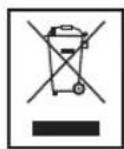
Meaning of the "Dustbin" Symbol
Protect our environment: do not dispose of electrical equipment in the domestic waste.
Please return any electrical equipment that you will no longer use to the collection points provided for their disposal.
This helps avoid the potential effects of incorrect disposal on the environment and human health.
This will contribute to the recycling and other forms of reutilisation of electrical and electronic equipment.
Information concerning where the equipment can be disposed of can be obtained from your local authority.
$$ \text { UKF (Stereo) } = \text { FM ST. }, \text { UKF } = \text { FM }, $$
$$ \text { Fale średnie } = \text { AM (Mono) } $$



- Język polski
- Spis treści
- ALBUM (12)
- Lecture de CD/MP3
- General Safety Instructions
- English
- Symbols in these Instructions for Use
- WARNING:
- CAUTION:
- i NOTE:
- Children and Frail Individuals
- WARNING!
- Special safety information
- English
- Overview of the Components
- Intended Use
- Start-up of the device/introduction
- Power Supply
- Inserting the Batteries (not supplied)
- Transport Safety Device, CD Compartment
- Volume
- Switch-off
- USB port (13)
- NOTE:
- Listening to the Radio
- Playing CDs/MP3
- This is how you play a CD
- Description of the CD buttons
- PLAY/PAUSE (14)
- SKIP+/SKIP- (10/17)
- English
- STOP (11)
- MODE (16)
- INFO (15)
- Programmed Play
- Playing back Music in MP3 Format
- Please note:
- Cleaning and Maintenance
- Technical Data
- Disposal
- Meaning of the "Dustbin" Symbol
Brand : AEG
Model : SR 4339 CD
Category : Radio