MW 749 - Microwaves CLATRONIC - Free user manual and instructions
Find the device manual for free MW 749 CLATRONIC in PDF.



| Product type | Microwave |
| Brand | Clatronic |
| Model | MW 749 |
| Power supply | 230 V, 50 Hz |
| Oven capacity | 20 litres |
| Microwave power | 800 W (max) |
| Protection class | I |
| Power levels | 5 levels: Keep warm (18%), Defrost (36%), Low (58%), Medium (81%), High (95%), Maximum (100%) |
| Timer | Mechanical, up to 30 minutes |
| Functions | Defrosting, reheating, cooking |
| Accessories included | Glass turntable, rotating ring |
| Door opening | Front handle, safety lock |
| Ventilation | Minimum free space of 10 cm around the appliance |
| Cleaning | Damp cloth after each use; do not use metal objects |
| Recommended dishes | Glass, porcelain, ceramic, heat-resistant plastic, microwave-safe dishes |
| Safety | Do not use if door or seal damaged; do not heat sealed containers; do not operate empty |
| Warranty | 24 months |
Frequently Asked Questions - MW 749 CLATRONIC
User questions about MW 749 CLATRONIC
0 question about this device. Answer the ones you know or ask your own.
Ask a new question about this device
Download the instructions for your Microwaves in PDF format for free! Find your manual MW 749 - CLATRONIC and take your electronic device back in hand. On this page are published all the documents necessary for the use of your device. MW 749 by CLATRONIC.
USER MANUAL MW 749 CLATRONIC
natural_image
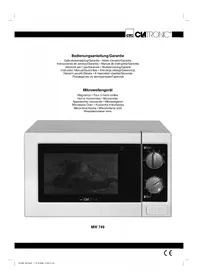
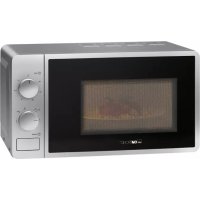
Front view of a white CTC CATRONC microwave oven with control knobs and a mesh screen (no visible text or symbols on the main body)MW 749
DEUTSCH
NORSK
Inhalt
Overview of the Components ...... Page 3
8Instruction Manual Page 32
Technical Data...... Page 35
Guarantee Page 35
FRANÇAIS
JE, ZYK POLSKI
Sommaire
*) Caution: Do not remove any installed parts from inside the oven or anything from the inside of the door! The foils on the inside of the door must not be removed!
D-47906 Kempen/Germany
Consommation: 1200 W
Puissance micro-ondes: 800 W, 2450 MHz
Tabell for oppvarming
| Næringsmidler/matvarer | Mengde | Effekt ca. watt | Tid ca. min. | Tildekking |
| Væsker | ||||
| Vann, 1 kopp | 150 g 800 | 0,5 | 1 nei | |
| Vann, 0,5 l | 500 g 800 | 3,5 | 5 nei | |
| Vann, 0,75 l | 750 g 800 | 5 - 7 | nei | |
| Kaffe, 1 kopp | 150 g 800 | 0,5 | 1 nei | |
| Melk, 1 kopp | 150 g 800 | 0,5 | 1 nei | |
| OBS: Sett en glasstav e.l. (ikke metall) i beholderen for å forhindre forsinket oppkoking. Rør godt rundt før du drikker. | ||||
| Tallerkenretter | ||||
| Snitsel, poteter og grønnsaker | 450 g 800 | 2,5 - | 3,5 ja | |
| Gulasj med pasta | 450 g 800 | 2 - 2,5 | ja | |
| Kjøtt, raspeball og saus | 450 g | 800 | 2,5 - 3,5 | ja |
| Tips: Fukte maten lett på forhånd, rør om iblant. | ||||
| Kjøtt | ||||
| Snitsel, panert | 200 g 800 | 1 - 2 | nei | |
| Kjøttkaker, 4 stk. | 500 g 800 | 3 - 4 | nei | |
| Braadvlees | 250 g | 800 2 - 3 | nei | |
| Tips: Pensle med olje, slik at paneringen eller skorpen ikke blir blot. | ||||
| Fjærkre | ||||
| 1/2 kylling | 450 g 800 | 3,5 | 5 nei | |
| Hønsefrikassé | 400 g 800 | 3 - 4,5 | ja | |
| Tips: Pensle kjøttet med olje, rør om iblant. | ||||
| Tilbehør | ||||
| Pasta, ris 1 porsjon | 150 g 800 | 1 - 2 | ja | |
| 2 porsjoner | 300 g 800 | 2,5 - | 3,5 ja | |
| Poteter 500 g 800 3 + 4 | ja | |||
| Tips: Fukte matvarene lett på forhånd. | ||||
| Supper/sauser | ||||
| Klar suppe, 1 tallerken | 250 g | 800 | 1 - 1,5 | ja |
| Suppe med biter av kjøtt, pasta, grønnsaker e.l. | 250 g 800 | 1,5 | 2 ja | |
| Saus | 250 g 800 | 1 - 2 | ja | |
| Babymat | ||||
| Melk | 100 ml | ca. 450 | 0,5 - 1 nei | |
| Grøt | 200 g | ca. 450 | 1 - 1,5 nei | |
| Tips: Rist godt og rør om. Kontroller temperaturen! | ||||
Rengjøring
General Safety Instructions
- Read the operating instructions carefully before putting the appliance into operation and keep the instructions including the warranty, the receipt and, if possible, the box with the internal packing.
- The appliance is designed exclusively for private use and for the envisaged purpose. This appliance is not fit for commercial use. Do not use it outdoors (except if it is designed to be used outdoors). Keep it away from sources of heat, direct sunlight, humidity (never dip it into any liquid) and sharp edges. Do not use the appliance with wet hands. If the appliance is humid or wet, unplug it immediately. Do not put it in water.
- When cleaning or putting it away, switch off the appliance and always pull out the plug from the socket (pull on the plug, not the cable) if the appliance is not being used and remove the attached accessories.
- Do not operate the machine without supervision. If you should leave the workplace, always switch the machine off or remove the plug from the socket (pull the plug itself, not the lead).
• To protect children from the dangers posed by electrical appliances, make sure that the cable is hanging low and that children do not have access to the appliance. - Check the appliance and the cable for damage on a regular basis. Do not use the appliance if it is damaged.
- Do not try to repair the appliance on your own. Always contact an authorized technician. To avoid the exposure to danger, always have a faulty cable be replaced only by the manufacturer, by our customer service or by a qualified person and with a cable of the same type.
- Use only original spare parts.
- Pay careful attention to the following "Special Safety Instructions".
Important Safety Information!
Please read carefully and keep for future use.
- Warning: When the door or the door seals are damaged, the microwave oven must not be used until it has been repaired by a qualified specialist.
- Warning: Please do not repair the device yourself, but have it repaired by an authorised specialist. Carrying out maintenance or repair work which involves removal of the cover that protects the surroundings from microwave radiation is dangerous unless carried out by an expert.
- Warning: Do not heat liquids in closed containers. Danger of explosion!
• Note: The microwave oven is not suitable for warming/heating up living animals. -
Warning: Children and frail individuals may only use the oven without supervision if they have been instructed in its use in such a way that they are able to use the device safely and understand the dangers of incorrect operation.
-
Do not place your microwave in a cupboard. Please ensure that you maintain a space of at least 10 cm to walls etc for ventilation purposes on all sides of the machine.
- Only suitable tableware should be used such as: glass, porcelain, ceramics, heat-resistant plastic or special microwave tableware.
- If food is being heated or cooked in combustible materials, such as plastic or paper containers, the microwave oven should be checked frequently due to the risk of fi re.
- If smoke is produced, turn the device off and remove the plug. Keep the door closed in order to suffocate any flames.
- Delay in boiling: During boiling, particularly during the reheating of liquids (water), it may happen that the boiling temperature has been reached but the typical bubbles have not yet started to rise. The liquid does not boil evenly. When the vessel is removed this so-called delay in boiling may result in the sudden formation of bubbles when the vessel is knocked, causing the water to boil over. There is a serious danger of burns! In order to achieve even boiling, please place a glass rod or similar item, but nothing metallic, in the vessel.
- The contents of babies' bottles and jars of baby food must be stirred or shaken and the temperature checked before use. There is a danger of burns.
- Food with a shell or skin, such as eggs, sausages, sealed jars etc. must not be heated up in the microwave as they may explode even when heating by the microwaves is finished.
- Any dirt on the door frame/door seal and neighbouring parts must be carefully cleaned with a damp cloth.
- Clean the microwave oven regularly and remove any food residues from the interior.
- If the machine is not clean the surface may be damaged, affecting its serviceable life and possibly resulting in hazardous situations.
Description of the Operating Controls
| 1 | Door | lock |
| 2 | Viewing | win |
| 3 Cover for microwave outlet | ||
| 4 | Rotating | bas |
| 5 | Revolving | tr |
| 6 | Timer | |
| 7 | Power | contr |
| 8 | Door | opene |
Caution: Do not remove any installed parts from inside the oven or anything from the inside of the door! The foils on the inside of the door must not be removed!
Initial Operation
- If you would like to use your microwave in a cupboard, on a shelf or similar item, please ensure that you maintain a space of at least 10 cm to cupboards, walls etc for ventilation purposes on all sides of the machine.
• Take the accessories out of the oven and unpack them. First place the rotating base in position and then put the glass plate on top in such a way that it grips into the indentations and is lying flat.
- In order to ensure your children's safety, please keep all packaging (plastic bags, boxes, polystyrene etc.) out of their reach.
- Check the device for any visible damage, particularly in the area of the door. If any damage is found, the machine must not be used.
- In order to avoid interference to other machines when the microwave oven is operated, do not place it in the direct vicinity of other electronic devices.
- Remove any protective foils that may be adhered to the housing.
- The foils on the inside of the door must not be removed!
- Insert the mains plug into a properly installed 230 V, 50 Hz power socket.
Using the Device
What you should know about microwave operation:
- Your device works with microwave radiation, which heats up water particles in food in a very short time. There is no heat radiation and therefore hardly any browning.
- Only food should be heated up with this device.
- The device is not suitable for baking in fl oating fat.
- Only 1-2 portions should be heated up at the same time. Otherwise the microwave will become less efficient.
- In order to interrupt the cooking process, turned the timer to „0“.
- Do not heat up any food with a shell or skin, such as eggs, sausages or closed glass jars etc as there is a danger of explosion!
- Microwaves provide their full energy levels immediately. Pre-heating is therefore not necessary.
- Never operate the microwave function when the oven is empty.
- The microwave oven does not replace your traditional cooker. It is used mainly for:
- defrosting deep-frozen food
- rapid warming/heating of food or drinks
- cooking meals
- Only suitable tableware should be used such as: - glass, porcelain, ceramics, heat-resistant plastic or special microwave tableware.
- Please do not use any plastic or paper tableware.
Operation
-
Place the food to be heated in a suitable piece of tableware.
-
Open the door and place the vessel in the middle of the glass plate. Then close the door. (For safety reasons the oven only operates when the door is tightly closed.)
-
Adjust the microwave power as required:
| Symbol | Value | Power Microwave in % | Field of Application |
| Keeping warm | 18 Melting cheese etc. | ||
| Defrosting 36 | Defrosting frozen - food | ||
| Low 58 | Continued cooking | ||
| Medium 81 | Cooking e.g. meat | ||
| High | 95 | Brief heating | |
| Maximum | 100 | Rapid heating |
* 100% corresponds to 800 W
- Set the required cooking time with the timer. The cooking time depends on the quantity and constituency of the contents of the oven. With a little practice you will soon learn to estimate the cooking time.
Please note: preparation of food in a microwave oven is very much faster than in a conventional cooker. Set the cooking time to a low level if you are not sure and continue cooking again if necessary.
Once the cooking time is set the oven switches itself on. The light inside the oven goes on. If you would like to set times shorter than 3 minutes, turn the button past the 10 minute mark and then back. The timer will then run more accurately.
- When the time has fi nished the oven switches off automatically. A sound is heard. The food should then be removed.
Please note: A cover should be placed over the food when operating the microwave.
You will find recipe books at specialist bookshops.
ENGLISH
Defrosting Table
| Food/dish Quantity | Approx. power in watts | Approx. time in minutes | Additional thawing time in minutes | |
| Meat, Sausages | ||||
| Meat (beef, veal, pork)in pieces | 500 g1000 g | 280280 | 14 - 1825 - 30 | 10 - 1520 - 25 |
| Schnitzel, cutlet 200 g 280 | 4 - 6 5 - 10 | |||
| Minced meat 250 g 280 6 - | 8 5 - 10 | |||
| Frying sausage,Frankfurter | 200 g 280 | 4 - 6 5 - 10 | ||
| Slices of cold meat 300 g 280 | 4 - 6 5 - 10 | |||
| Tip: turn the meat halfway through and cover sensitive pieces; break upthe minced meat and remove pieces that have already thawed; separatesausage slices. | ||||
| Poultry | ||||
| Chicken 1000 g 280 20 - 25 | 10 - 15 | |||
| Chicken pieces 500 g 280 | 2 - 15 5 - 10 | |||
| Duck 1700 g 280 25 - 40 | 20 - 25 | |||
| Goose and turkey pieces 500 g 280 12 | - 18 10 - 15 | |||
| Tip: turn poultry halfway through, cover wings and legs.Note: Throw away thawed liquid and do not allow to come into contactwith other foods. | ||||
| Game | ||||
| Saddle of venison | 1000 g 280 | 20 - 35 20 | - 30 | |
| Saddle of hare | 500 g 280 | 12 - 13 10 | - 20 | |
| Tip: turn once and cover edges. | ||||
| Fish | ||||
| Prawns, shrimps | 250 g 280 | 5 - 7 5 - 10 | ||
| Trout | 340 g 280 | 4 - 6 5 - 10 | ||
| Whole fish | 500 g 280 | 7 - 10 | 10 10 - 15 | |
| Fish fillet | 250 g 280 | 5 - 7 5 - 10 | ||
| Tip: stir several times and turn frequently. | ||||
| Fruit | ||||
| Raspberries, strawberries | 250 g 280 | 4 - 6 5 - 10 | ||
| Cherries, plums | 250 g 280 | 5 - 7 5 - 10 | ||
| Stewed apple | 500 g 280 | 9 - 12 | 5 - 10 | |
| Tip: stir carefully or break up into pieces. | ||||
| Bread and Pastries | ||||
| Rolls | 4 pieces | 280 ca. | 1-3 | $ |
| Bread | 1000 g 280 | 13 - 15 8 | 10 | |
| Bread for toasting | 500 g 280 | 5 - 6 5 - 10 | ||
| Stirred cake | 500 g 280 | 6 - 8 5 - 10 | ||
| Fruit cake | 1 piece | 280 2 - 3 | 2 - 3 | |
| Flan | 1 piece | 280 | 0,5 - 1 | 3 - 5 |
| 1200 g 280 | 10 - 12 30 | - 60 | ||
| Tip: place the bread and pastries on kitchen crepe paper to take up themoisture; only defrost sensitive pastry slightly. | ||||
| Milk Products | ||||
| Butter | 250 g 280 | 5 - 7 | 10 - 15 | |
| Curds | 250 g 280 | 6 - 8 5 - 10 | ||
| Cream | 200 g 280 | 3 - 5 | 2 - 3 | |
| Tip: remove the aluminium foil and stir halfway through; whip the creamuntil it is semisolid. | ||||
Warming
The warming and heating of food is a particular strength of the microwave. Liquids and foods that are in the refrigerator can be easily brought up to room temperature or the right temperature for consumption without the need for many pots.
The heating times contained in the following table are only rough guides as the time depends very much on the starting temperature and the composition of the food. You are therefore advised to check from time to time whether the dish is already hot enough.
Heating Table
| Food/dish Quantity | Power in watts | Approx. time in minutes | Cover | |
| Liquids | ||||
| Water, 1 cup 150 g 800 | 0,5 - 1 | no | ||
| Water, 0.5 l | 500 g 800 | 3,5 | 5 no | |
| Water, 0.75 l 750 g 800 5 - 7 | no | |||
| Coffee, 1 cup | 150 g 800 | 0,5 | 1 no | |
| Milk, 1 cup | 150 g 800 | 0,5 | 1 no | |
| Note: Place a glass rod or similar item (nothing metal) into the vessel in order to prevent delayed boiling. Stir well before drinking. | ||||
| One-Course Meals | ||||
| Schnitzel, potatoes and vegetables | 450 g 800 | 2,5 | 3,5 yes | |
| Goulash with noodles | 450 g | 800 | 2 - 2,5 | yes |
| Meat, dumpling and sauce | 450 g 800 | 2,5 | 3,5 yes | |
| Tip: moisten slightly beforehand, stir from time to time. | ||||
| Meat | ||||
| Schnitzel, coated with breadcrumbs | 200 g 800 | 1 - 2 | no | |
| Meatballs, 4 in total | 500 g 800 | 3 - 4 | no | |
| Joint | 250 g 800 | 2 - 3 | no | |
| Tip: brush with oil so that the breadcrumbs or crust do not become soft. | ||||
| Poultry | ||||
| Half a chicken | 450 g 800 | 3,5 | 5 no | |
| Chicken fricassee | 400 g 800 | 3 - 4,5 | yes | |
| Tip: brush with oil, stir from time to time. | ||||
| Extras | ||||
| Noodles, rice 1 portion | 150 g 800 | 1 - 2 | yes | |
| 2 portions | 300 g | 800 | 2,5 - 3,5 | yes |
| Potatoes 500 g 800 | 3 - 4 | yes | ||
| Tip: moisten slightly beforehand. | ||||
| Soups/Sauces | ||||
| Clear soup, 1 plate 250 g 800 | 1 - | 1,5 yes | ||
| Soup with garnish | 250 g 800 | 1,5 | 2 yes | |
| Sauce | 250 g 800 | 1 - 2 | yes | |
| Baby Food | ||||
| Milk | 100 ml | approx. 450 | 0,5 - 1 | no |
| Mash | 200 g | approx. 450 | 1 - 1,5 | no |
| Tip: shake well or stir. Check the temperature! | ||||
Cleaning
• Disconnect the oven from the power supply.
- Clean the inside of the oven after use with a slightly damp cloth.
- Clean the accessories in the usual way in soapy water.
- The door frame and seal and neighbouring parts must be cleaned carefully when dirty with a damp cloth.
Technical Data
Model: MW 749
Power supply: 230 V, 50 Hz
Power consumption: 1200 W
Rated microwave power output: 800 W, 2450 MHz
Cavity volume: 20 litres
Protection class: I
This device has been tested according to all relevant current CE guidelines, such as electromagnetic compatibility and low voltage directives, and has been constructed in accordance with the latest safety regulations.
Subject to technical changes without prior notice!
Guarantee
The device supplied by our Company is covered by a 24 month guarantee starting on the date of purchase (receipt).
During the life of the guarantee any fault of the device or its accessories *) ascribable to material or manufacturing defects will be eliminated free of charge by repairing or, at our discretion, by replacing it. The guarantee services do not entail an extension of the life of the guarantee nor do they give rise to any right to a new guarantee!
Proof of the guarantee is provided by the proof of purchase. Without proof of purchase no free replacement or repair will be carried out.
If you wish to make a claim under the guarantee please return the entire machine in the original packaging to your dealer together with the receipt.
*) Damage to accessories does not mean automatic free replacement of the whole machine. In such cases please contact our hotline. Broken glass or breakage of plastic parts are always subject to a charge.
Defects to consumables or parts subject to wearing (e.g. motor pistons, kneading blades, drive shafts, spare remote control, spare toothbrushes, saw blades, etc.) as well as cleaning, maintenance or the replacement of said parts are not covered by the guarantee and hence are to be paid!
The guarantee lapses in case of unauthorized tampering.
After the expiry of the guarantee
After the expiry of the guarantee repairs can be carried by the competent dealer or repair service against the payment of the ensuing costs.
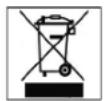
Meaning of the "Dustbin" Symbol
Protect our environment: do not dispose of electrical equipment in the domestic waste.
Please return any electrical equipment that you will no longer use to the collection points provided for their disposal.
This helps avoid the potential effects of incorrect disposal on the environment and human health.
This will contribute to the recycling and other forms of reutilisation of electrical and electronic equipment.
Information concerning where the equipment can be disposed of can be obtained from your local authority.
In many EU countries the disposal of electrical and electronic equipment in the domestic waste is prohibited from August 13, 2005 on.
In Germany from March 23, 2006 on.
- DEUTSCH
- NORSK
- Inhalt
- FRANÇAIS
- JE, ZYK POLSKI
- Sommaire
- Rengjøring
- General Safety Instructions
- Important Safety Information!
- Please read carefully and keep for future use.
- Initial Operation
- Using the Device
- Operation
- Warming
- Cleaning
- Technical Data
- Guarantee
- After the expiry of the guarantee
- Meaning of the "Dustbin" Symbol
Brand : CLATRONIC
Model : MW 749
Category : Microwaves