ManualGo.com
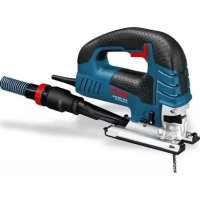
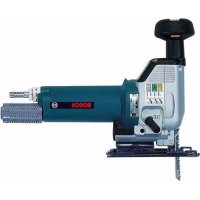
0 607 561 114 - Scie BOSCH - Free user manual and instructions
Find the device manual for free 0 607 561 114 BOSCH in PDF.


Download the instructions for your Scie in PDF format for free! Find your manual 0 607 561 114 - BOSCH and take your electronic device back in hand. On this page are published all the documents necessary for the use of your device. 0 607 561 114 by BOSCH.
USER MANUAL 0 607 561 114 BOSCH
Senior Vice President
3 609 929 250 • (04.07) T
1 GENERAL SAFETY RULES FOR PNEUMATIC TOOLS Read and understand all in-
structions. Failure to follow all in-
structions listed below may result in
electric shock, fire, and/or serious personal injury.
Save these instructions.
The terminology “Pneumatic Tool” or “Tool” used in
the following text refers to the so-called air tool in these
operating instructions.
Keep work area clean and well lit. Cluttered and
dark areas invite accidents.
Do not operate tools in explosive atmospheres,
such as in the presence of flammable liquids, gas-
es, or dust. During operation of the tool, its accessory
can create sparks that may ignite the dust or fumes.
Keep bystanders, children, and visitors away
while operating a tool. Distractions can cause you
Use compressed air of Quality Class 5 in accord-
ance with DIN ISO 8573-1 and a separate mainte-
nance unit near the tool. The compressed air sup-
plied should be free of foreign material and moisture to
protect the tool from damage, contamination, and rust.
Check the connections and air supply lines. All
maintenance units, couplers, and hoses should con-
form to the product specifications in terms of pressure
and air volume. Too low a pressure impairs the func-
tioning of the tool; too high a pressure can result in
physical damage and personal injury.
Protect the hoses from kinks, restrictions, sol-
vents, and sharp edges. Keep the hoses away
from heat, oil, and rotating parts. Immediately
replace a damaged hose. A defective air supply line
may result in a wild compressed air hose and can
cause personal injury. Raised dust or chips may
cause serious eye injury.
Make sure that hose clamps are always tight-
ened firmly. Loose or damaged hose clamps may re-
sult in uncontrolled air escape.
Stay alert, watch what you are doing, and use
common sense when operating a tool. Do not
use tool while tired or under the influence of
drugs, alcohol, or medication. A moment of inat-
tention while operating tools may result in serious per-
Use safety equipment. Always wear eye protec-
tion. Safety equipment such as a dust mask, non-skid
safety shoes, a hard hat, or hearing protection used for
appropriate conditions will reduce personal injuries.
Avoid accidental starting. Be sure switch is off
before connecting to the air supply. Carrying tools
with your finger on the switch or connecting tools to
the air supply with the switch on invites accidents.
Remove adjusting keys before turning the tool
on. A key that is left attached to a rotating part of the
tool may result in personal injury.
Do not overreach. Keep proper footing and bal-
ance at all times. Proper footing and balance ena-
bles better control of the tool in unexpected situations.
Dress properly. Do not wear loose clothing or
jewelry. Keep your hair, clothing, and gloves
away from moving parts. Loose clothes, jewelry, or
long hair can be caught in moving parts.
If dust extraction and collection devices are in-
stalled, ensure these are connected and properly
used. Use of these devices can reduce dust-related
Do not directly inhale the exhaust air. Avoid ex-
posing the eyes to exhaust air. The exhaust air of
the air tool may contain water, oil, metal particles, or
contaminants that may cause personal injury.
Pneumatic tool use and care
Use clamps or other practical way to secure and
support the workpiece to a stable platform. Hold-
ing the work by hand or against your body is unstable
and may lead to loss of control.
Do not force tool. Use the correct tool for your
application. The correct tool will do the job better
and safer at the rate for which it is designed.
Do not use tool if switch does not turn it ON or
OFF. Any tool that cannot be controlled with the
switch is dangerous and must be repaired.
Disconnect the air hose from the air supply be-
fore making any adjustments, changing acces-
sories, or storing the tool. Such preventive safety
measures reduce the risk of starting the tool acciden-
Store idle air tools out of the reach of children and
do not allow persons unfamiliar with the air tool
or these instructions to operate the air tool. Air
tools are dangerous in the hands of untrained users.
Maintain air tools. Check for misalignment or
binding of moving parts, breakage of parts, and
any other condition that may affect the operation
of the air tool. If damaged, have the air tool re-
paired before use. Many accidents are caused by
poorly maintained air tools.English–2
3 609 929 250 • (04.07) T Keep the tool bits clean. Well cared for tool bits are
easier to use and can be controlled better.
Use the air tool, accessories, and tool bits, etc.,
in accordance with these instructions and in the
manner intended for the particular type of air
tool, taking into account the working conditions
and the work to be performed. Use of the air tool
for operations different from those intended could re-
sult in a hazardous situation.
Have your air tool serviced by a qualified repair
person using only identical replacement parts. This
will ensure that the safety of the air tool is maintained.
2 SPECIFIC SAFETY RULES AIR JIGSAW SAFETY Avoid contact with a live wire. The
tool is not insulated and contact with
a live wire may result in electric shock.
Use suitable detectors to find hidden utility lines
or call the local utility company for assistance.
Contact with electric lines can lead to fire or electrical
shock. Damaging a gas line can result in an explosion.
Penetrating a water pipe will cause property damage
or an electrical shock.
When removing a saw blade, avoid contact with
skin and use proper protective gloves when
grasping the blade or accessory. Saw blades and
accessories may become hot during prolonged use.
Never use bent or damaged saw blades. Bent or
dull saw blades may break or kick back.
When you install the saw blade, insure that the
saw blade is seated in the groove of the roller
guide. The grooved roller keeps the saw blade held
securely in the tool.
Check that the saw blades are seated firmly in
the tool before you connect the tool to the air
supply. Saw blades that are not clamped properly in
the appropriate holder may slip out and can cause
damage to the workpiece or injury to you or others.
Position the tool on the workpiece only when the
tool is switched on. Otherwise, there is the danger
of a kickback when the teeth bind in the workpiece.
Keep your hands away from the cutting area. Do
not reach underneath the workpiece. Contact
with the saw blade may result in injury.
Take care during cutting to insure that the foot-
plate 10 lies completely on the workpiece. A foot-
plate that does not lie completely on the surface may
result in breakage of the saw blade.
After cutting has been completed, switch off the
air tool and withdraw the saw blade from the cut
only when the saw blade has come to a complete
stop. In this way, you avoid a kickback and can put
down the air tool safely.
Do not brake the saw blade by applying side
pressure against it after the tool is switched off.
The saw blade may be damaged, may break, or may
Some dust created by power
sanding, sawing, grinding, drill-
ing, and other construction ac-
tivities contains chemicals known to cause can-
cer, birth defects, or other reproductive harm.
Some examples of these chemicals are:
– Lead from lead-based paints,
– Crystalline silica from bricks and cement and other
masonry products, and
– Arsenic and chromium from chemically treated
Your risk from these exposures varies, depending on
how often you do this type of work. To reduce your
exposure to these chemicals: work in a well-ventilated
area, and work with approved safety equipment, such
as those dust masks that are specially designed to fil-
ter out microscopic particles.English–3
3 609 929 250 • (04.07) T SYMBOLS Important notice: Some of the following symbols could have meaning for the use of your tool. Please take note
of the symbols and their meaning. The correct interpretation of the symbols will help you to use the tool in a
better and safer manner.
Unit of energy, torque
bar/psi Bar/pounds per square inch Air pressure
°C/°F Degrees Celsius/Degrees
Ø Diameter Size of drill bits, grinding wheels, etc.
Rotational speed at no load
.../min Revolutions or reciprocations per
Revolutions, strokes, surface speed, orbits, etc.
0 Off position Zero speed, zero torque
Left rotation/right rotation Direction of drive rotation
/■/UNF Hex socket drive/square drive/
Unified National Fine
Arrow Action in the direction of arrow
Warning symbol Alerts user to warning messages.
Symbol for directions Gives instructions for correct handling – for exam-
ple, read operating instructions or wear safety
3 Allen wrench in the footplate
6 Air outlet with muffler
Not all the accessories illustrated or described are in-
cluded in standard delivery.
The machine is intended for making cuts and cutouts
in wood, plastic, metal, ceramic plates, and rubber
while resting firmly on the workpiece. It is suitable for
straight and curved cuts with bevel angles to 45°. The
saw blade recommendations are to be observed.
Measured sound values determined in accordance
Measured vibration values determined in accordance
with EN 28662 and EN ISO 8662.
Typically, the A-weighted sound pressure level of the
product is 76 dB(A).
Measuring inaccuracy K = 3 dB.
The noise level when working can exceed 85 dB(A).
Wear ear protection!
The typically weighted acceleration is 4.0 m/s
uring inaccuracy K = 1.6 m/s
Declaration of Conformity
We declare under our sole responsibility that this pro-
duct is in conformity with the following standards or
standardization documents: EN 792, according to the
provisions of the directive 98/37/EC.
Robert Bosch GmbH, Geschäftsbereich Elektrowerkzeuge
Product Specifications
Dr. Egbert Schneider
Senior Vice President
Cutting depth capacity
Maximum Blade cutting angle
(Orbiting action) 45° 45° 45° 45°
Locking switch ● –––
Deadman switch – ● – –
Paddle style switch – – ●●
Safety cover ● ● ● ●
Anti-splinter insert ●●●●
Rated pressure bar/psi 6.3/91 6.3/91 6.3/91 6.3/91
Connecting thread 1/4" NPT 1/4" NPT 1/4" NPT 1/4" NPT Hose inner diameter mm
Air consumption under load l/s
Weight in accordance with
3 609 929 250 • (04.07) T
4 MOUNTING Saw Blade Recommendations
The jigsaw is delivered with different saw blades.
Choose the saw blade that is appropriate for your
work from the following table.
Note: Only T-shank type blades (Single Lug Shank) fit
Do not remove the safety cover!
The safety cover 14 attached to the
housing prevents accidental contact
with the saw blade 11 during opera-
Installing the Saw Blade
Disconnect the air hose from the air supply be-
fore making any adjustments, changing acces-
sories, or storing the tool. Such preventive safety
measures reduce the risk of starting the tool acciden-
The Bosch SDS system provides a
simple and convenient way to change
saw blades without any tools.
When removing a saw blade, avoid contact with
skin and use proper protective gloves when
grasping the blade or accessory. Saw blades and
accessories may become hot during prolonged use.
To install the saw blade, set the orbit
selector switch 9 to setting III. This
position provides the easiest insertion
access for the saw blade.
Push the orange-colored SDS blade change button 1
downward. This unlocks the barrel grip 2.
Turn the barrel grip 2 approximately three turns coun-
Insert the saw blade 11 into the opening of the plunger
13 perpendicular to the cutting direction. There are
two small grooves in the blade plunger into which the
“T-tabs” on the blade fit precisely. Turn the saw blade
11 90° in the cutting direction and push it into the
groove of the roller guide 12. The saw teeth should
now point towards the front of the saw. Pull the saw
blade 11 slightly downward.
Turn the barrel grip 2 clockwise until you hear the lock-
ing mechanism engage or “click” a few times. Pull the
orange-colored SDS blade change button 1 back up.
This locks the barrel grip in place.
Check that the saw blades are seated firmly in
the tool before you connect the tool to the air
supply. Saw blades that are not clamped properly in
the appropriate holder may slip out and can cause
damage to the workpiece or injury to you or others.
● specially suitable for
T 244 D T 144 DP T 123 X Solid wood ● ● –
laminated wood fiberboard ❍ – –
wood composite materials ❍ ––
PVC, general plastics ● – –
3 609 929 250 • (04.07) T Exhaust Line
You can use an exhaust line to carry exhaust air away
from your workplace and, at the same time, achieve
optimal muffling. You also improve the operating con-
ditions, because your workplace will no longer be con-
taminated by oil-containing air and there are no longer
any raised dust or chips.
Type 0 607 561 114 / ... 116
Unscrew the muffler at the air
outlet 6 and replace it with
Loosen the hose clamp 15 of
the exhaust hose 16 and at-
tach the exhaust hose over
the hose nipple 17 by firmly
tightening the hose clamp.
Type 0 607 561 118 / ... 120
bined) 18, which car-
ries the exhaust air
tool to the air supply
Supply) and pull the
bined) 18 over the mounted air inlet hose to the end of
Variant 2: Route the exhaust air away from the area
by attaching an exhaust assembly (decentralised) 21.
Make sure that the hose nipple 7 is not screwed into
the connector at the air inlet 8 and that the O-ring 20
lies in the recess between the housing and the exhaust
assembly, so that the exhaust air can only escape to
the exhaust hose. Tightly screw first the connector 22
of the exhaust assembly into the connector 8 at the air
inlet and then the hose nipple 7 into the connector 22.
Replace the muffler 23 on the exhaust assembly with
the hose nipple 17 of the exhaust assembly.
Loosen the hose clamp 15 of the exhaust hose 16 and
attach the exhaust hose over the hose nipple 17 by
firmly tightening the hose clamp.
Connection to the Air Supply
The air tool is designed for an operating pressure of
6.3 bar (91 psi). For maximum performance, the inner
diameter of the hose is 10 mm with connection
threads of 1/4" NPT. To maintain full performance,
use only hoses with a maximum length of 4 m.
The supplied air must be free of foreign material and
moisture to protect the air tool from damage, contam-
The use of a compressed air maintenance unit is
This ensures optimum functioning of compressed air
tools. Observe the operating instructions of the main-
All fittings, connecting lines, and hoses must be di-
mensioned for the required air pressure and volume.
Avoid restrictions in the air supply resulting from, e.g.,
pinching, kinking, or stretching!
In case of doubt, measure the pressure with a pres-
sure gauge at the air inlet with the tool switched on.
Connection of the Air Supply to the Air Tool
Type 0 607 561 118 / ... 120
Screw the hose nipple 7 into the connector at the air
inlet 8. To prevent damage to the internal valve com-
ponents of the tool, you should use an open end
wrench (22 mm) to apply a counterforce at the pro-
truding connector of the air inlet 8 when screwing/un-
screwing the hose nipple 7.
Loosen the hose clamps 15 of the air inlet hose 19
with a maximum length of 4 m and attach the air inlet
hose over the hose nipple 7 by firmly tightening the
tool, then to the maintenance unit.
Slip the air inlet hose 19 over the coupling nipple 24
and attach the air inlet hose by firmly tightening the
Screw a quick hose connector 25 into the air outlet of
the maintenance unit 26. Quick hose connectors
make possible a quick connection and, when uncou-
pled, they shut off the air supply automatically.
Take care that you do not start the tool accidentally
when you insert the coupling nipple 24 into the coupler
Type 0 607 561 114 / ... 116
Screw the hose nipple 7 into the connector at the air
inlet 8. To prevent damage to the internal valve com-
ponents of the tool, you should use an open end
wrench (22 mm) to apply a counterforce at the pro-
truding connector of the air inlet 8 when screwing/un-
screwing the hose nipple 7.
When you use the exhaust assembly, screw the hose
nipple 7 into the connector 22 of the exhaust assembly
Loosen the hose clamps 15 of the air inlet hose 19
with a maximum length of 4 m and attach the air inlet
hose over the hose nipple 7 by firmly tightening the
Always connect the air inlet hose 19 first to the
tool, then to the maintenance unit.
Slip the air inlet hose 19 over the coupling nipple 24
and attach the air inlet hose by firmly tightening the
Screw a quick hose connector 25 into the air outlet of
the maintenance unit 26. Quick hose connectors
make possible a quick connection and, when uncou-
pled, they shut off the air supply automatically.
Take care that you do not start the tool accidentally
when you insert the coupling nipple 24 into the coupler
5 OPERATING INSTRUCTIONS Blade Orbiting Action
You can optimize the cutting speed,
cutting power, and the appearance of
the cut to match the material being cut
by using the blade orbit selector
switch, which has four adjustable set-
tings. When the tool is in operation,
you can also use the orbit selector
switch 9 to change the blade orbit in
– The finer and cleaner the cut desired, the lower the
orbit setting (zero). The faster and rougher the cut
desired, the higher the orbit setting (three).
– When cutting thin workpieces (like sheet metal) or
when a blade knife is used, you should switch off
– Hard workpieces (e.g., nonferrous metals like brass
or copper) may be cut with a small blade orbit.
– Hard wood and plastic may be cut with a medium
– Soft materials (e.g., soft woods) or ripping (cutting
with the grain) may be cut with a large blade orbit.
Putting into Operation
The air tool operates optimally with a pressure of
6.3 bar (91 psi) measured at the air inlet with the tool
In the event of an interruption of the air supply
or reduced operating pressure, switch off the
tool. Check the operating pressure and start
again when the pressure returns to normal.
Type 0 607 561 114 Locking switch
Slide the on/off switch 5 forward.
Slide the on/off switch 5 backward
to release the locking mechanism
and to switch off the tool.
Setting I: small orbit
Setting II: medium orbit
Setting III: large orbit
Press the on/off switch 5 and keep
it pressed down during the opera-
Release the on/off switch 5.
Type 0 607 561 118 / ... 120 Paddle style switch
Press the lever switch 4 and keep it
pressed down during the operation.
Release the lever switch 4.
Removing the Saw Blade
Disconnect the air hose from the air supply before
making any adjustments, changing accessories,
or storing the tool. Such preventive safety measures
reduce the risk of starting the tool accidentally.
When removing a saw blade, avoid contact with
skin and use proper protective gloves when
grasping the blade or accessory. Saw blades and
accessories may become hot during prolonged use.
To remove the saw blade, set the or-
bit selector switch 9 to setting III.
This position provides the easiest re-
moval access for the saw blade.
Push the orange-colored SDS blade change button 1
downward. This unlocks the barrel grip 2.
Turn the barrel grip 2 approximately three turns coun-
Push the saw blade 11 gently in the directly of the bar-
rel grip, turn it 90°, and pull it out of the plunger 13.
Working Instructions
Disconnect the air hose from the air supply before
making any adjustments, changing accessories,
or storing the tool. Such preventive safety measures
reduce the risk of starting the tool accidentally.
Excess loads that cause the tool to stall or reduce
speed will not damage the motor.
In the event of an interruption of the air supply
or reduced operating pressure, switch off the
tool. Check the operating pressure and start
again when the pressure returns to normal.
Use a saw blade that is appropriate for the thick-
ness of the workpiece. In its highest point of up-
and-down stroke, the saw blade should project
at least 10 % beyond the thickness of the work-
piece. This insures that the saw blade will not bind in
the workpiece and will help you achieve precise, clean
Note that too high a feed rate reduces the output ca-
pacity substantially and shortens the life of the saw
blades. Sharp tool bits provide good cutting power
and protect the tool.
Always use a stable support or a bench when
small or thin workpieces are being cut. Thin work-
pieces may bend or vibrate during cutting and may no
longer be controllable.
The footplate 10 can be adjusted to change the bevel
Loosen the locking screw 29 by unscrewing it several
turns counterclockwise using the Allen wrench 3,
which is located in the footplate 10. Slide the footplate
10 in the direction of the saw blade and pivot it to the
right or to the left, depending on the desired bevel.
3 609 929 250 • (04.07) T After the bevel has been rough adjusted, snug down
the locking screw 29 until it is still just barely possible
to shift the footplate 10. Adjust the bevel precisely.
Bevels of 0°, 15°, 30°, and 45° are indicated with
markings on the bevel scale 28 Intermediate adjust-
ments are also possible. For exact bevels, you should
employ a protractor 30. Tighten the locking screw 29
by using the Allen wrench 3.
You can adjust the 0° position (saw blade perpendic-
ular) by sliding the footplate 10 toward the rear of the
tool until it is caught in a detent notch 27. Slide the
footplate 10 in the direction of the motor against the
detent notch 27 and tighten the locking screw 29.
For flush cutting, you can reposition the footplate 10 to-
ward the back of the tool:
Completely unscrew the locking screw 29 in the coun-
terclockwise direction by using the Allen wrench 3,
which is located in the footplate 10. Lift up the footplate
10 and reposition it toward the back of the tool so that
you can screw the locking screw 29 into the rear thread
31. Tighten the locking screw 29 at first only slightly,
slide the footplate 10 in the direction of the saw blade,
and then tighten the locking screw firmly.
Flush cutting can be performed only with a per-
pendicular saw blade (0° position). It is not pos-
sible in this case to use the parallel guide with cir-
Note: For easier cutting in very tight places, you can
remove the barrel grip 2:
Push the orange-colored SDS blade change button 1
downward over the locking point and simultaneously
pull the barrel grip 2 upward away from the tool.
To reinstall the hand grip:
Push the SDS blade change button 1 upward into the
initial position. Set the hand grip 2 back in place and
press it downward with (if needed) a slight twist until
you hear it lock in place.
You can make parallel cuts up to a material thickness
of 30 mm (1.2 inches) by using the parallel guide with
Loosen the locking screw 33 and slide the scale
through the cutting guide slot 32 in the footplate 10.
Slide the scale through the cutting guide slot as far as
needed for the separation of the parallel cut. Use the
scale value on the inner edge of the footplate as your
guide. Parallel cuts of up to 20 cm separation are pos-
sible. Tighten the locking screw 33 at the desired
3 609 929 250 • (04.07) T Circle Jig
You can make circular cuts up to a material thickness
of 30 mm (1.2 inches) by using the parallel guide with
Remove the locking screw 33 and flip the parallel
guide. Reinstall the locking screw on the other side.
Slide the scale through the cutting guide slot 32 of the
footplate 10. Pull off the centering tip 35 and place it
into the opening at the level of the saw blade. Bore a
hole in the center of the cutout in order to fix the
centering tip 35 in place and adjust the radius on the
inner edge of the footplate 10 by using the locking
Note: For tight curves, it is best to use narrow saw
Anti-Splinter Insert
The anti-splinter insert 36 reduces splintering of the
work piece surface during cutting.
Press the anti-splinter insert 36 into the footplate 10
from below. You may use the anti-splinter insert 36 for
the following types of saw blades: T 101 B, T 101 D,
T 244 D, T 301 CD, T 301 DL.
Cooling and Lubricating work pieces
When cutting metal, consider applying a coolant or lu-
bricant along the line of cut to reduce any heat that is
generated by the cutting process.
6 MAINTENANCE AND SERVICE Maintenance
Disconnect the air hose from the air supply be-
fore making any adjustments, changing acces-
sories, or storing the tool. Such preventive safety
measures reduce the risk of starting the tool acciden-
Should the tool fail in spite of careful manufacturing
and testing procedures, have the repairs performed by
an authorized customer service location for Bosch
For inquiries and spare parts ordering, please include
the 10-digit order number on the nameplate of the
Clean the screen of the air inlet
regularly. For this purpose, un-
screw the hose nipple 7 and re-
move dust and dirt particles from
the screen. Then firmly remount
To prevent damage to the internal
valve components of the tool, you should use an open
end wrench (22 mm) to apply a counterforce at the
protruding connector of the air inlet 8 when screw-
ing/unscrewing the hose nipple 7.
Water and dirt particles in the com-
pressed air cause rust formation and
lead to clogging of vanes, valves, etc.
To prevent this, a few drops of motor oil
should be placed in the air inlet 8. Re-
connect the tool to the air supply and
let the tool run for 5–10 s while catching the oil that
runs out with a rag. If the air tool is not used for a
longer time, this procedure should always be
All Bosch air tools that do not belong to the CLEAN se-
ries (a special kind of air motor that functions with oil-
free compressed air), require a small amount of lubri-
cating oil be mixed into the flow of compressed air.
The compressed air oiler required for this is located at
the compressed air maintenance unit connected to
the tool (you may obtain further details on this from a
compressor manufacturer).
Occasionally lubricate the roller guide 12 with a drop
of oil and inspect it for any wear. If the roller guide 12
is worn, it should be replaced by an authorized Bosch
service center for air tools and electric power tools.
You should use SAE 10 or SAE 20 motor oil for direct
lubrication of the tool or for admixture at the mainte-
nance unit (compressor).
After the first 150 hours of operation, the gearbox
should be cleaned and lubricated by an authorized
service center. This process should be then performed
after every 300 hours of operation. After each cleaning,
it should be lubricated with special gearbox grease.
Special gearbox grease 225 ml . . . . . 3 605 430 009
The motor vanes should be routinely inspected by
trained personnel and, if necessary, replaced.
Have maintenance and repair work performed
only by qualified specialists. In this manner, it can
be ensured that the safety of the tool is maintained.
Any Bosch customer service center can perform this
work quickly and reliably.
Dispose of lubricants and cleaning agents in an
environment-friendly manner. Comply with the
Various saw blades are available for all jigsaws.
Information about the complete quality accessory pro-
gram can be found on the Internet at
www.bosch-pt.com and
www.boschproductiontools.com or at your dealer.
Robert Bosch GmbH is responsible for the delivery of
the tool in accordance with the sales contract within
the framework of the legal/country-specific regula-
tions. For claims with respect to the tool, please con-
tact the following location:
Fax . . . . . . . . . . . . . . . . . . . . . +49 (711) 7 58 24 36
www.boschproductiontools.com
Tool, accessories, and packaging should be sorted for
environment-friendly recycling.
The plastic components are labeled for categorized
If your tool can no longer be used, deliver it to a recy-
cling center or return it to a dealer – for example, an
authorized Bosch service center.
Specifications subject to change without notice
tructions. Le non-respect,
tuations dangereuses.
Senior Vice President
T 244 D T 144 DP T 123 X Bois massif ● ● –
Senior Vice President
Senior Vice President
Senior Vice President
Unified National Fine-thread
Senior Vice President
Senior Vice President
pen en-knast-skaft (T-skaft).
Senior Vice President
Senior Vice President
6 SERVICE OG VEDLIKEHOLD Vedlikehold
bar/psi bar/pounds per square inch
Senior Vice President
bar/psi bar/pounds per square inch
Senior Vice President
Senior Vice President