
SCD489 - Baby monitors PHILIPS - Free user manual and instructions
Find the device manual for free SCD489 PHILIPS in PDF.
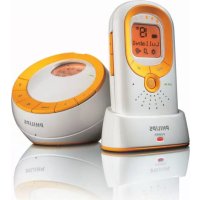



| Product Type | Baby monitor (babyphone) DECT |
| Brand | Philips |
| Model | SCD489 |
| Baby unit power supply | 9 V / 300 mA DC mains adapter (included) or 4 non-rechargeable 1.5 V AA batteries (not included) |
| Parent unit power supply | 9 V / 300 mA DC charger (included) or 2 rechargeable NiMH 1.2 V AAA batteries (included) |
| Operating range | Up to 300 meters outdoors; up to 50 meters indoors |
| Technology | DECT (Digital Enhanced Cordless Telecommunications) |
| Main functions | Two-way audio monitoring, nightlight, lullaby (5 melodies), 'Talk' function, temperature alarm, sound level alarm, microphone sensitivity adjustment, link indicator, parent unit contact |
| Display | LCD screen on parent unit and baby unit with temperature, volume, sensitivity, battery, nightlight, lullaby indicators |
| Operating temperature | 0 °C to 40 °C |
| Materials | Plastic, electronic components |
| Care and cleaning | Clean with a damp cloth; check batteries every six months if used on mains power |
| Safety | Baby unit out of child's reach (≥1 m), do not cover the device, do not use in wet environment, do not open (except battery compartment) |
| Package contents | Baby unit, parent unit, 2 mains adapters, 1 charger, 2 rechargeable AAA batteries, 1 belt clip, 1 strap, 1 carrying case, user manual |
| Guarantee | See worldwide guarantee leaflet; support via www.philips.com or customer care centre |
| Repairability | No user-serviceable parts; contact Philips service department |
| Environmental information | Compliant with Directive 2002/96/EC; do not dispose of with household waste; recycle batteries |
Frequently Asked Questions - SCD489 PHILIPS
User questions about SCD489 PHILIPS
0 question about this device. Answer the ones you know or ask your own.
Ask a new question about this device
Download the instructions for your Baby monitors in PDF format for free! Find your manual SCD489 - PHILIPS and take your electronic device back in hand. On this page are published all the documents necessary for the use of your device. SCD489 by PHILIPS.
USER MANUAL SCD489 PHILIPS
A-2 Temperature sensor
A-3 LINK light
A-4 Volume - / + buttons
A-5 PAGE button
A-6 Microphone
A-7 Night light button ()
A-8 Lullaby button ()
A-9 Play/stop button (▶)
A-10 Night light
A-11 Display
A-12 Battery compartment cover
A-13 DC 9V / 300mA power supply jack
A-14 AC power adapter
B. Parent unit
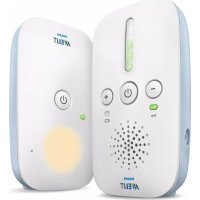
B-1 TALK button B-2 MENU button B-3 LINK light B-4 Loudspeaker B-5 Microphone B-6 On/Off button () B-7 OK button B-8 Display B-9 Sound level lights B-10 Volume - / + buttons B-11 Recess for the belt clip or neck strap B-12 Battery compartment cover B-13 Belt clip B-14 AC power adapter B-15 Charging base B-16 POWER light B-17 Neck strap B-18 Travel bag
C. What else you need
Both units can be battery operated.
For battery-operated use you will need:
- 4 × 1.5 V AA non-rechargeable batteries for baby unit. Not supplied.
- 2 × 1.2 V AAA NiMH rechargeable batteries for parent unit. Supplied.
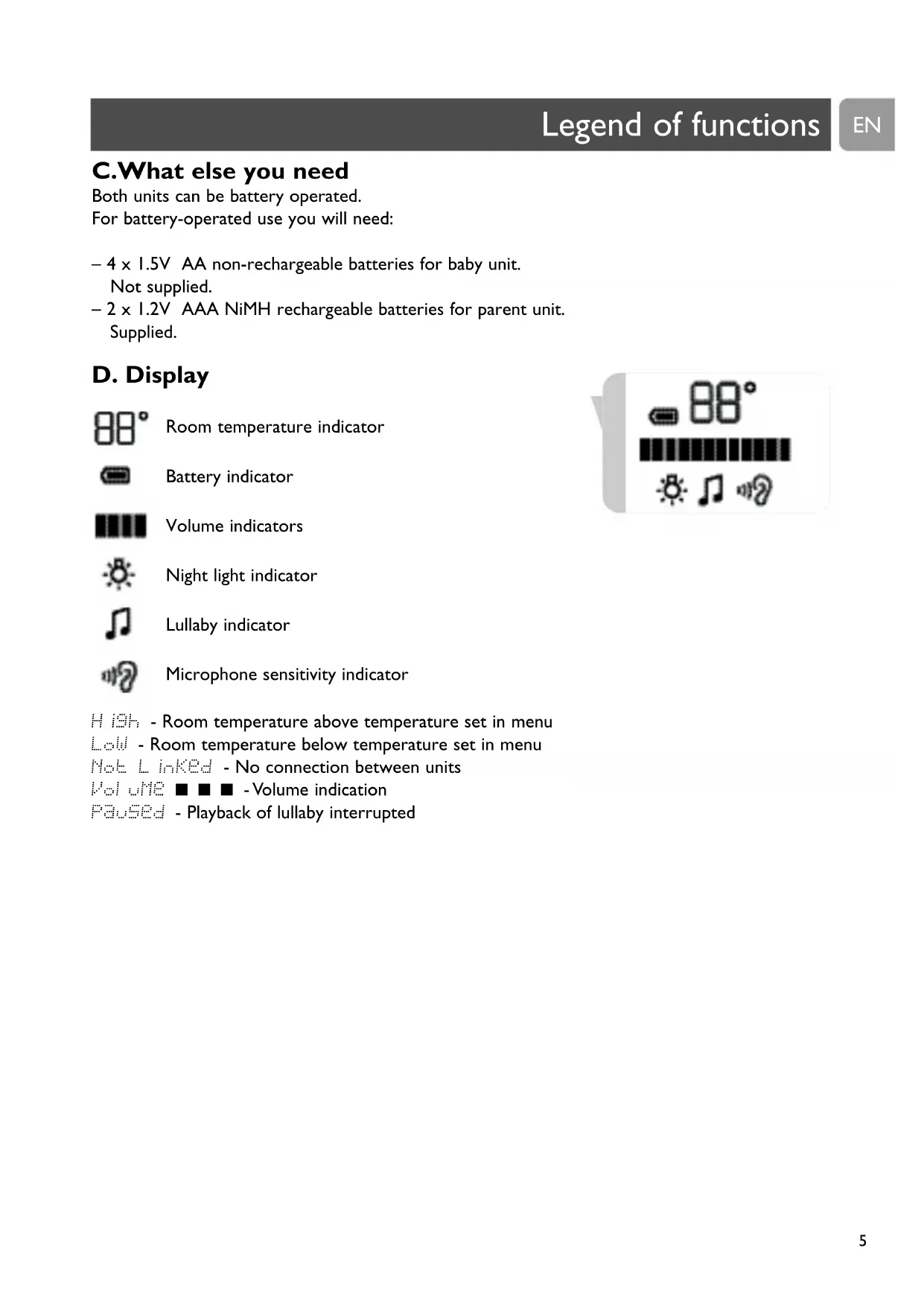
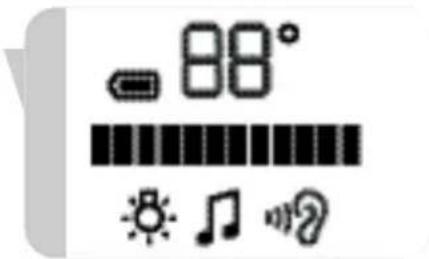
D. Display

Room temperature indicator

Battery indicator

Volume indicators

Night light indicator

Lullaby indicator

Microphone sensitivity indicator
Hi - Room temperature above temperature set in menu
Lo - Room temperature below temperature set in menu
Not Linked - No connection between units
Volume indication
Paused - Playback of lullaby interrupted
3 Illustrations
4 Legend of functions
4 Baby unit 4 Parent unit 5 What else you need 5 Display
6 Contents
7 Welcome
7 Safety information
7 Preparing your baby monitor
7 Baby unit 8 Parent unit
9 Using your baby monitor
10 Other features
10 Adjusting loudspeaker volume 11 Talking to your baby Monitoring baby silently 12 Switching night light on / off 12 Paging the parent unit 12 Playing lullabies 13 Connecting / disconnecting belt clip and neck strap
14 Menu options
14 Menu operation - General explanation 15 Switching nightlight on / off 15 Playing lullabies 15 Adjusting microphone sensitivity 16 Switching sound alert on / off 16 Setting room temperature range 16 Setting temperature alert
17 Troubleshooting
19 Frequently asked questions
21 Important information
21 Technical specifications 21 Maintenance 22 Environmental information 22 Factory initialization mode
23 Guarantee and service
Philips is dedicated to producing caring, reliable products to give parents the reassurance they need. You can trust this Philips baby monitor to provide round-the-clock support by ensuring you can always hear your baby clearly without any disturbing noise. Your SCD489 uses DECT technology which guarantees zero interference from other wireless appliances and a clear signal between the parent unit and baby unit.
Philips Baby Care, taking care together
Safety information
Please read this user manual carefully before using your baby monitor and keep it for future reference. This baby monitor is intended as an aid. It is not a substitute for responsible and proper adult supervision and should not be used as such.
- Make sure the baby unit and adapter cable are always out of reach of the baby (at least 1 meter / 3 feet away).
- Never place the baby unit inside the baby's bed or playpen.
- Never cover the baby monitor (with a towel, blanket, etc.).
- Never use the baby monitor in moist places or close to water.
- Check if the voltage indicated on the type plate of the adapters (A-14, B-14) corresponds to the local power voltage before connecting to the AC power supply.
- Do not expose the baby monitor to extreme cold, heat or light (e.g. direct sunlight).
- To prevent electric shock, do not open the case of the baby unit and parent unit (except battery compartment covers).
- Risk of explosion if batteries are replaced by an incorrect type. For the parent unit, always use rechargeable batteries.
Preparing your baby monitor
Baby unit
The baby unit can be mains or battery operated. When batteries are inserted, you will have an automatic back-up in case of mains failure.
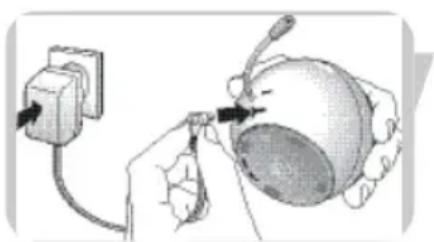
Mains operated use
1 Connect the power adapter cord (A-14) to the power supply jack (DC 9V / 300mA - A-13) of the baby unit. 2 Connect the AC power adapter (A-14) to a wall outlet.
The baby unit is now ready for mains operated use!
Preparing your baby monitor
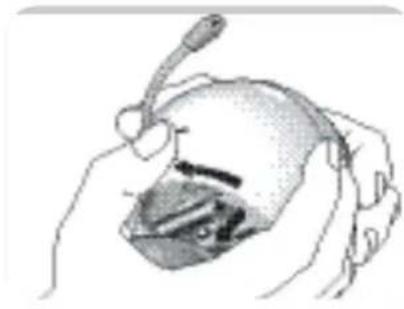
Battery operated use
1 Open the battery compartment by turning the cover (A-12) to the left (OPEN), using the palm of your hand. Take the cover off.

2 Insert four 1.5V AA batteries, noting the + and - configuration inside the battery compartment (batteries are not supplied; we recommend Philips alkaline batteries).
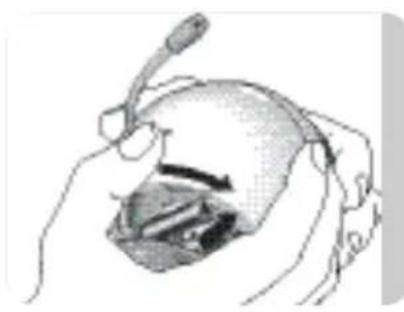
3 Put the battery compartment cover (A-12) back in place. Close the compartment by turning the cover (A-12) to the right (CLOSE), using the palm of your hand.
Note: When the units are switched off, in case of battery operated use, the batteries will still discharge slowly.
The baby unit is now ready for battery operated use!
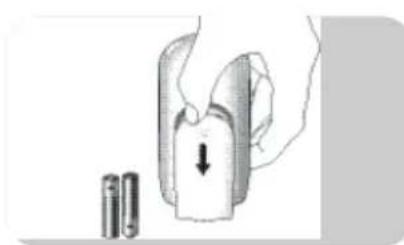
Parent unit
Open the battery compartment by sliding the cover (B-12) downwards.
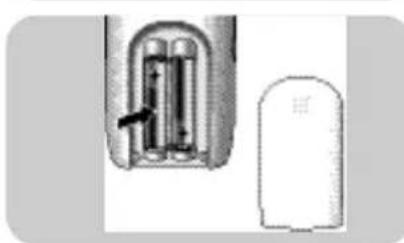
2 Insert the two 1.2V AAA size NiMH rechargeable batteries (supplied), noting the + and - configuration inside the battery compartment.
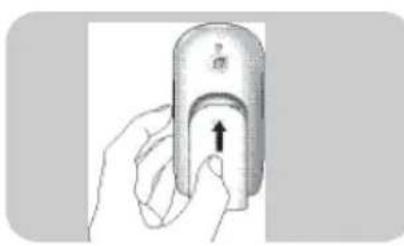
3 Put the battery compartment cover (B-12) back in place. Close the compartment by sliding the cover (B-12) upward until it clicks into position.
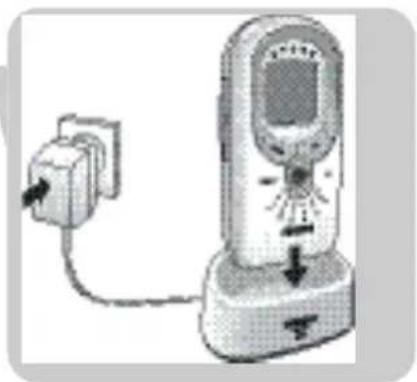
4 Connect the AC power adapter (B-14) of the charging base (B-15) to a wall outlet.
5 Place the parent unit in the charging base (B-15).
The POWER light (B-16) lights up red.
6 Leave the parent unit in the charging base until the batteries are fully charged (at least 16 hours).
The POWER light (B-16) will stay red, even when batteries are fully charged. When the batteries are fully charged, the parent unit can be taken out of the charging base and used cordlessly for at least 8 hours. When the battery indicator (the display (B-8) is empty and the parent unit beeps, battery power is low. Place the parent unit in the charging base (B-16) to recharge the batteries.
Notes:
Operation time will be 8 hours based on the assumption that the baby unit will be transmitting 25% of the time and is in standby mode for the rest of the time (baby does not make any sound). - When the parent unit batteries are charged for the first time, operating time will be less than 8 hours. The batteries will use their maximum capacity after at least four times charging and discharging. - The charging time may be longer if you leave the parent unit switched on while the batteries are charging.
The parent unit is now ready for use!
Using your baby monitor
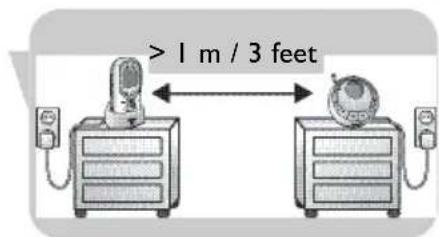
1 Place both units in the same room to test the connection. Make sure the baby unit is at least 1 meter / 3 feet away from the parent unit.
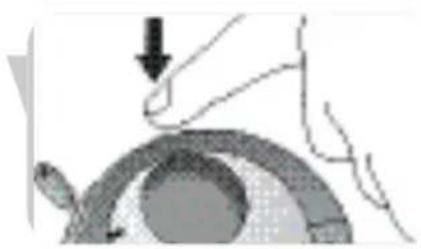
2 Press and hold the On/Off (O) button (A-1) on the baby unit for 2 seconds.
The night light (A-10) lights up briefly. The display light (A-11) lights up indicating the current room temperature. 'Not Linked' lights up on the display and the LINK light (A-3) starts blinking red as it seeks connection with the parent unit.
Using your baby monitor

3 Press and hold the On/Off button (O) (B-6) on the parent unit for 2 seconds.
The sound level lights (B-9) briefly light up orange. The display (B-8) lights up. The battery indicator and the room temperature light up in the display. The LINK light (B-3) lights up red briefly then starts blinking green as it is seeking connection with the baby unit. The LINK light (B-3) on the parent unit blinks green and the LINK light (A-3) on the baby unit blinks red until connection has been established. This will take up to 30 seconds. Both LINK lights (A-3, B-3) then light continuously green and the message 'Not Linked' will disappear from the baby unit display (A-11).
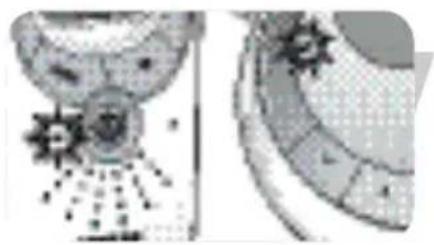
4 Position the baby unit at least 1 meter / 3 feet away from your baby.
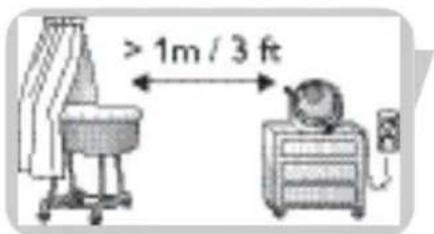
5 Position the parent unit at the desired place within the operating range of the baby unit but at least 1 meter / 3 feet away from the baby unit.
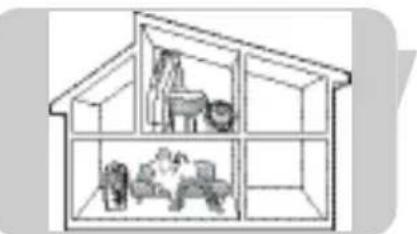
For more information on the operating range see 'Technical specifications'.
You can now monitor your baby!
Other features

Adjusting loudspeaker volume
- Briefly press the volume + and - buttons (A-4) on the baby unit repeatedly until the desired loudspeaker volume for the baby unit has been reached.
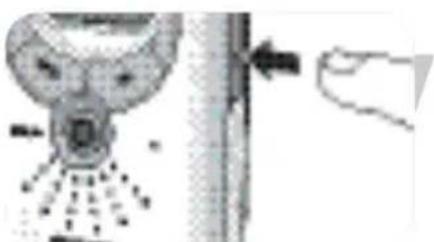
- Briefly press the volume + and - buttons (B-10) on the parent unit repeatedly until the desired loudspeaker volume for the parent unit has been reached.
The displays (A-11, B-8) provide visual feedback on the volume settings of the units:
- Vol 1: parent unit volume switched off / monitoring baby silently;
- Vol 1: minimum volume (parent unit and baby unit);
Volume maximum volume (parent unit and baby unit).
Notes:
If you press the Volume + and - buttons (A-4, B-10) too long, the volume will not be adjusted. - You only need to adjust the baby unit volume when using the talk function (see below). - If the volume is set to a high level, the units consume more power.
Talking to your baby (Talk function)
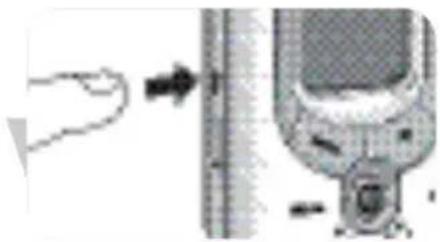
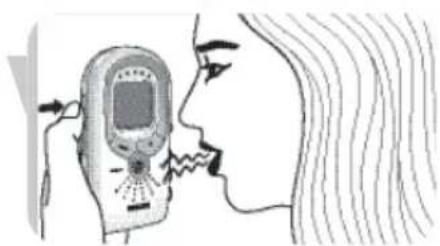
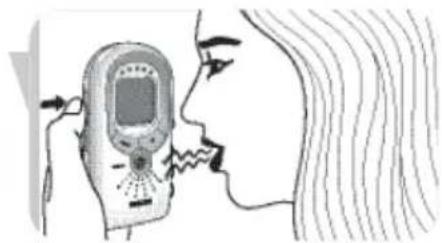
While using the TALK button (B-1) on the parent unit you can talk to your baby (e.g to comfort your baby).
- Press and hold the TALK button (B-1) and talk clearly into the microphone (B-5).
- Release the TALK button (B-1) when finished talking.
Note: When the TALK button (B-1) is pressed, you can no longer hear your baby.
Monitoring baby silently
- Briefly press the Volume - button (B-10) on the parent unit repeatedly until the volume is switched off completely.
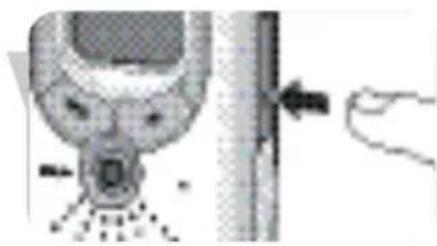
When no sound is detected all sound-level lights (B-9) will be off.


When sound is detected the sound-level lights (B-9) light up orange.
Switching night light on/off
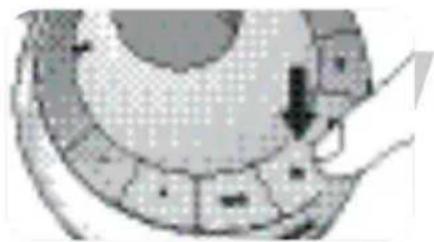
1 Briefly press the night light button (A-7) on the baby unit to switch on the night light (A-10).
lights up on both displays.
2 Press the night light button (A-7) again briefly to switch off the night light (A-10).
The night light dims and gradually switches off.
goes out on both displays.
- Switch off the night light when operating the baby unit with batteries. This saves power!
Note: If you press the night light button (A-7) too long, the night light (A-10) will not switch on/off.
Paging the parent unit
When the parent unit is misplaced and the volume is switched off, you can use the PAGE button (A-5) on the baby unit to locate the parent unit.
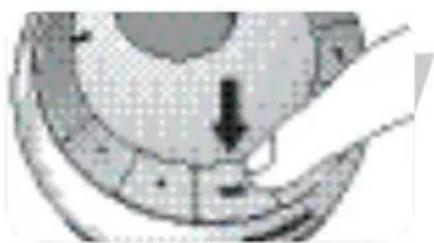
1 Briefly press the PAGE button (A-5) on the baby unit
P39 in3 appears on both displays (A-11, B-8).
The parent unit will automatically reset to medium volume level and a paging alert will sound.
2 To stop the paging alert, press the PAGE button (A-5) again briefly or any button on the parent unit
Note: If you press the PAGE button (A-5) too long, the paging alert will not sound.
Playing lullabies
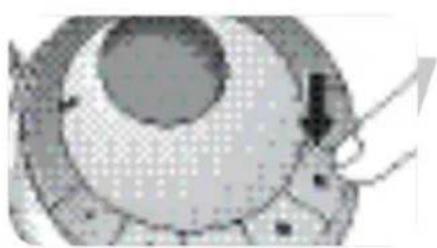
Briefly press the lullaby button (A-8) on the baby unit repeatedly to select one of five available lullabies.
Briefly press the play/stop button (▶ ■, A-9) to play the selected lullaby.
- Briefly press the OK button (B-7) on the parent unit to interrupt playback of the lullaby. Press the OK button (B-7) on the parent unit again to restart playback of the lullaby.
If the lullaby is not restarted within 60 seconds, the lullaby function will switch off automatically.
- Briefly press the play/stop button (▶ ■, A-9) on the baby unit again to stop playback of the lullaby.
Note: If you press the lullaby button (A-8) too long, no lullaby will be selected.
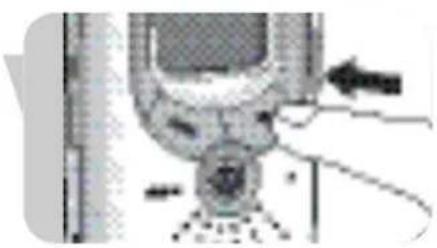
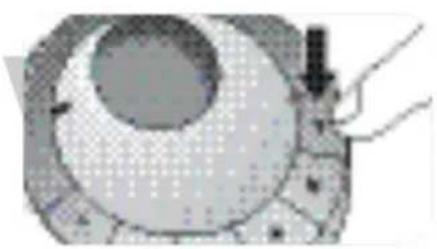
Connecting / disconnecting belt clip and neck strap
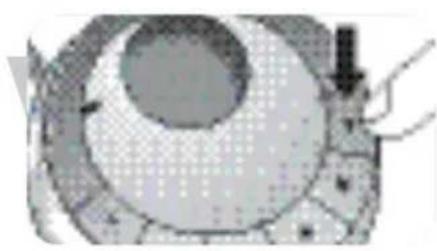
If the parent unit is operated using batteries, you can carry it in and around your house, allowing you freedom of movement while still monitoring your baby.
Connecting the belt clip
- Insert the little spindle on the rear of the belt clip into the recess (B-11) on the rear of the parent unit. Twist the belt clip to the left until it clicks in position.
Disconnecting the belt clip
- Twist the belt clip to the right (TURN▶) and take it off.
Connecting the neck strap
- Insert the little spindle at the end of the neck strap into the recess (B-11) on the rear of the parent unit. Twist the spindle to the left until it clicks in position.
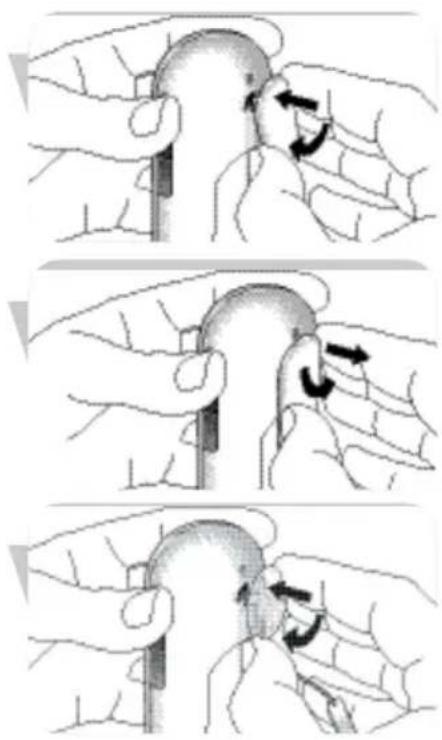
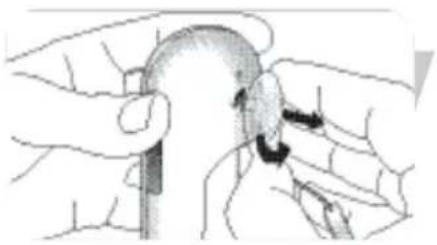
Disconnecting the neck strap
- Twist the spindle to the right (TURN▶) and remove it.
Menu options
Most functions of your baby monitor can be operated using the local buttons on the units. The functions described below can only be operated remotely using the parent unit menu.
The nightlight and lullaby functions can be operated using both menu and local buttons.
Note: All buttons mentioned are located on the parent unit.
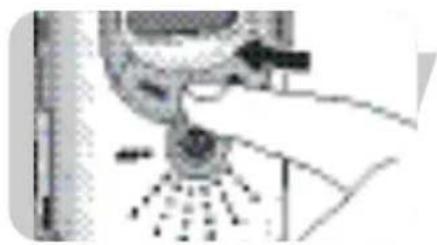
Menu operation - General explanation
Press the MENU button (B-2) to open the menu.
The first menu option appears on the display.
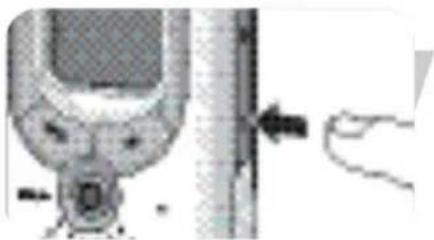
2 Use the - and + buttons (B-10) to select the desired menu option.
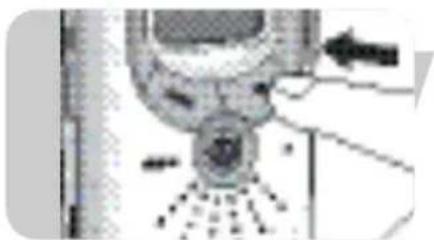
3 Press the OK button (B-7) to confirm your selection. >SAVED appears on the display.
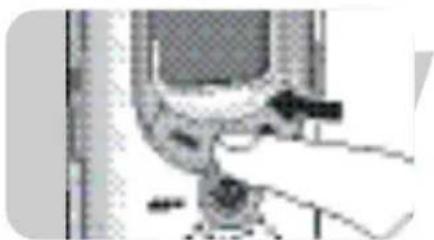
4 Press the MENU button (B-2) again to exit the menu.
Note: Always press the buttons MENU (B-2), - and + (B-10) and OK (B-7) briefly.
Switching night light on/off
- Select L ight on? or L lght oFF?, using - and + (B-10). Confirm by pressing OK (B-7).
Playing lullabies
To play or stop a lullaby:
- Select LULLABY, using - and + (B-10). Confirm with OK (B-7).
- Select Play? to replay the last played lullaby or Stop Lullaby? to stop playback. Confirm with OK (B-7).
To select a different lullaby:
- Select LULLABY, using - and + (B-10). Confirm with OK (B-7).
- Select Select new, using - and + (B-10). Confirm with OK (B-7).
- Select the desired lullaby, using - and + (B-10). Confirm with OK (B-7).
Adjusting microphone sensitivity
You can set the sound sensitivity of the baby unit to the desired level. When set to the maximum sensitivity level all sounds (including your baby's breathing, when loud enough) can be heard on the parent unit. You can only change the microphone sensitivity if the connection between the baby unit and the parent unit is established (when LINK lights (A-3, B-3) light continuously green).
- Select Sensitivity, using - and + (B-10). Confirm with OK (B-7).
- Select the desired sensitivity level for the baby unit microphone, using - and + (B-10). Confirm with OK (B-7).
Sensitivity: minimum level / lowest sensitivity;
Sensitivity
maximum level / highest sensitivity.
Note: When the sensitivity level of the baby unit is set to a high level, the unit will consume power because it is in continuous transmission mode.
Switching sound alert on and off
If sound alert is switched on, the parent unit beeps as soon as the second sound level light (B-9) lights orange while the volume is switched off.
- Select Sound Alert, using - and + (B-10). Confirm with OK (B-7).
- Select Alert On? or Alert Off? Confirm with OK (B-7).
Setting room temperature range
You can set the temperature range (minimum and maximum temperature) for your baby's room.
- Select TEMPERATURE, using - and + (B-10). Confirm with OK (B-7).
- Range appears on the display. Confirm with OK (B-7).
- Set the desired minimum temperature, using - and + (B-10). Confirm with OK (B-7).
- Set the desired maximum temperature, using - and + (B-10). Confirm with OK (B-7).
Note: When the set maximum temperature is lower than the room temperature, the unit consumes more power because the display is continuously lit. This is also the case when the set minimum temperature is higher than the room temperature.
Setting temperature alert
Temperature alert will sound from the parent unit if the actual room temperature exceeds the set minimum or maximum temperature or if the room temperature drops below 7°C or rises above 33°C.
- Select TEMPERATURE, using - and + (B-10). Confirm with OK (B-7).
- Select Alert On/Off, using - and + (B-10). Confirm with OK (B-7).
- Select AI ErE On? or AI ErE OFF? Confirm with OK (B-7).
Problem Possible cause Solution
LINK light (A-3, B-3) Parent unit:
does not light at all. Power adapter (B-14) not Connect power adapter (B-14) to
plugged in. wall outlet.
Unit not turned on. Press and hold On/Off button (O)
(B-6) for two seconds.
Batteries are low. Recharge batteries (B-12).
Batteries are empty. Replace batteries (B-12).
Baby unit:
Power adapter (A-14) not Connect power adapter (A-14) to
plugged in. baby unit.
Connect power adapter (A-14) to
wall outlet.
Unit not turned on. Press and hold On/Off button (O)
(A-I) for two seconds.
Batteries are low. Replace batteries (A-12).
LINK light (A3, B-3) Units out of range. Decrease distance between units
flashing red/alarm
beeping on parent unit.
(see 'Technical specifications').
Baby unit batteries are low.
Replace batteries (A-12).
Parent unit batteries are low.
Recharge batteries (B-12).
Parent unit batteries are empty.
Replace batteries (B-12).
Units cannot establish connection, even when close to each other.
Try solving the problem by using the factory initialization mode.
See chapter 'Factory initialization mode'
No power on one of the units.
Press On/Off button (A-1, B-6) for two seconds.
Problem Possible cause Solution
Charging time of parent unit batteries exceeds 16 hours. Parent unit switched on during charging. Switch off parent unit (B-6).
High pitched noise. Units are too close to each other. Move parent unit away from baby unit (at least 1 meter / 3 feet).
Volume on parent unit set too high. Decrease volume (B-10) on parent unit.
No sound/ baby's crying cannot be heard. Volume on parent unit is set too low or switched off. Increase volume on parent unit (B-10).
Microphone sensitivity level set too low on parent unit.
Increase microphone sensitivity level in parent unit menu.
Units are out of range.
Move parent unit closer to baby unit.
Parent unit reacts too fast to other ambient sounds.
Ambient sounds trigger transmission.
Move baby unit closer to baby (keep minimal distance of 1 meter / 3 feet).
Microphone sensitivity level set too high. Decrease level in parent unit menu.
Battery check light () lights up on the display (A-1 I, B8).
Batteries are low or empty.
Replace / recharge batteries (A-12, B-12).
Parent unit reacts slowly/late to baby's crying.
Microphone sensitivity is set too low.
Increase microphone sensitivity level in parent unit menu and/or move baby unit closer to baby (keep minimal distance of 1 meter/3 feet).
Problem Possible cause Solution
Baby unit battery power diminishes rapidly. Microphone sensitivity is set too high. Set microphone sensitivity to a lower level.
The selected minimum/maximum temperature is higher/lower than room temperature. Select a lower/higher minimum/maximum temperature.
Volume setting too high. Set volume to a lower level (A-4).
Frequently asked questions
Question
The technical specifications show an operating range of 300 meters / 900 feet outdoors. How come my baby monitor manages much less than that?
The link is lost every now and then, sound interruptions etc.
What happens during a mains failure?
Is my DECT baby monitor secure from eavesdropping and interference?
Answer
The specified range is only valid outdoors in open air. Inside your house the workable range is limited by the amount and type of walls and/or ceilings in between. Inside the house the operating range will be up to 50 meters / 150 feet.
You are probably approaching the outer limits of the practical range. Try a different location or decrease the distance between the units slightly. Please note that it takes about 30 seconds each time before a new link between the units is established.
When batteries are installed in the both units, the units will automatically switch over to battery use in case of mains failure.
The 120 channels guarantee no interference from other equipment.
Question
Some buttons do not seem to work when I press them. What do I do wrong?
I place the parent unit in the charging base (B-15) but the unit doesn't function.
Operating time of the parent unit batteries is supposed to be at least 8 hours. How come the battery operating time of my parent unit is less?
Answer
Except for the On/Off buttons (A-1, B-6), only press the buttons briefly.
When the batteries of the parent unit are low, you have to wait for up to 20 minutes after placing the unit in the charger before the unit starts functioning.
When the parent unit batteries are charged for the first time, operating time will be less than 8 hours. The batteries will use their maximum capacity after at least four times charging and discharging.
Maybe the volume setting is too high. When the volume is set to a high level, the unit consumes more power. Set the volume to a lower level (B-10).
Maybe the microphone sensitivity setting is too high. When the sensitivity is set to a high level, the unit consumes more power. Set the sensitivity to a lower level (B-10).
When the set maximum temperature is lower than the room temperature, the unit consumes more power because the display is continuously lit. This is also the case when the set minimum temperature is higher than the room temperature.
| Technical specifications - 1 x AC power adapter DC 9V / 300mA for baby unit (supplied). - 1 x charging base DC 9V / 300mA for parent unit (supplied). - 4 x 1.5V AA non rechargeable batteries for baby unit. Not supplied. - 2 x 1.2V AAA NiMH rechargeable batteries for parent unit. Supplied. | |
| Operating range | Up to 300 meters / 900 feet in ideal conditions.Walls, doors, etc will affect range. Indoors the range is up to 50 meters (150 feet). |
| Dry materials Material thickness Loss of range | |
| Wood, plaster, < 30cm / 12" 0 - 10% plaster cardboard, glass (without metal or wires, no lead) | |
| Brick, plywood < 30cm / 12" 5 - 35% Reinforced concrete < 30cm / 12" 30 - 100% Metal grids, bars < 1cm / 0.4" 90 - 100% Metal, aluminium < 1cm / 0.4" 100% sheets | |
Operating temperature
+0 °C to +40 °C
Standard
Digital Enhanced Cordless Telecommunication (DECT). The DECT standard makes use of advanced digital radio techniques to achieve efficient use of the radio spectrum. It delivers high speech quality and security and low power technology. It makes it possible to hear your baby at a range of up to 300 meters / 900 feet in open air.
Maintenance
- Clean the baby monitor with a damp cloth.
- Dispose of used batteries in an environmentally friendly manner.
- If the batteries are left in the unit when it is powered from the mains, check them for leakage every six months.
Environmental information
Disposal of your old product
Your product is designed and manufactured with high quality materials and components, which can be recycled and reused.
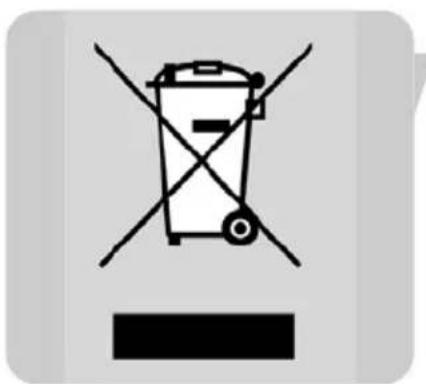
When this crossed-out wheeled bin symbol is attached to a product it means the product is covered by the European Directive 2002/96/EC.
Please inform yourself about the local separate collection system for electrical and electronic products.
Please act according to your local rules and do not dispose of your old products with your normal household waste. The correct disposal of your old product will help prevent potential negative consequences for the environment and human health.
Factory initialization mode
In this mode both units can be reset to the default factory settings. Factory initialization can be used if problems occur which cannot be solved by following the suggestions in the chapter 'Troubleshooting'. Resetting must be done separately for each unit.
Press and hold the On/Off button (A-1, B-6) for 2 seconds to switch on the unit.
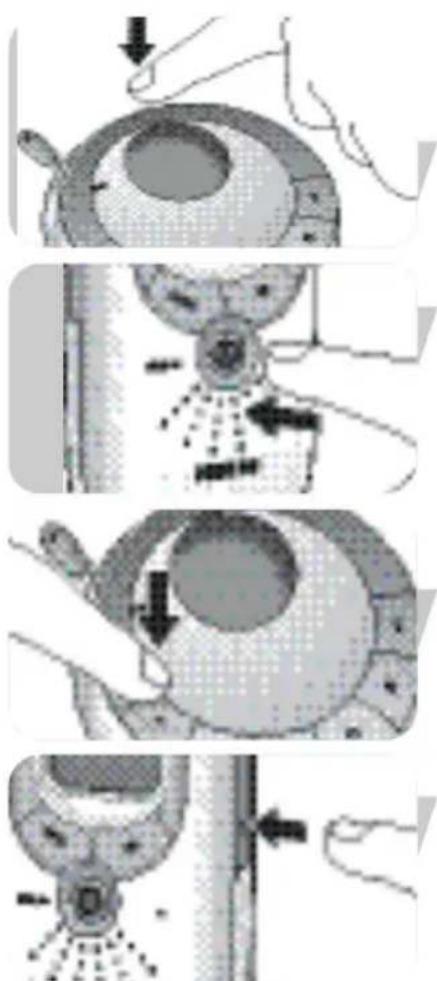
2 When the LINK light (A-3, B-3) on the unit lights up, immediately press and hold the volume - button (A-4, B-10). > The unit has now been reset to the default factory settings.
Default factory settings
Parent unit
- Loudspeaker volume: I
- Microphone sensitivity: 3 Sound alert: on
- Temperature alert: on
Baby unit
- Loudspeaker volume: 3 Night light: off Lullaby: I
- Temperature alert low: 14°C
- Temperature alert high: 30°C
Guarantee and service
If you need information or if you have a problem, please visit the Philips website at www.philips.com or contact the Philips Customer Care Centre in your country (you will find its phone number in the worldwide guarantee leaflet). If there is no Customer Care Centre in your country, turn to your local Philips dealer or contact the Service Department of Philips Domestic Appliances and Personal Care BV.
A. Baby unit
You can now monitor your baby!
Other functions

Technical specifications
Philips Baby Care, taking care together
Philips Baby Care, taking care together
B. Parent unit (receiver)
88 Parent unit (receiver)
Philips Baby Care, taking care together
Parent unit (receiver)
Digital Enhanced Cordless Telecommunication (DECT)
Parent unit (receiver)
Philips Baby Care, taking care together
Note: Whenever you are in the public area, you will be treated with a warm and friendly touch.
Philips Baby Care, taking care together
Replace the batteries (A-12).
Recharge the batteries (B-12).
Replace the batteries (B-12).
Digital Enhanced Cordless Telecommunication (DECT)
The DECT form uses advanced digital radio techniques to make efficient use of the radio frequency spectrum.
Philips Baby Care, taking care together
Safety information
Insert the adapter (A-14) into
the wall outlet.
Digital Enhanced Cordless Telecommunication (DECT)
Philips Baby Care, taking care together
Indicator for night light

Indicator for lullaby

Microphone sensitivity indicator
H iH - Room temperature higher than the menu-set temperature
Loll - Room temperature lower than the menu-set temperature
(A-1) for two seconds.
Batteries almost discharged. Replace batteries (A-12).
Specifications are subject to change without notice.
Trademarks are the property of Koninklijke Philips Electronics N.V. or their respective owners.
2005 © Koninklijke Philips Electronics N.V. All rights reserved.
www.philips.com
- PARENT UNIT
- WHAT ELSE YOU NEED
- DISPLAY
- ILLUSTRATIONS
- LEGEND OF FUNCTIONS
- CONTENTS
- WELCOME
- PREPARING YOUR BABY MONITOR
- USING YOUR BABY MONITOR
- OTHER FEATURES
- MENU OPTIONS
- TROUBLESHOOTING
- FREQUENTLY ASKED QUESTIONS
- IMPORTANT INFORMATION
- GUARANTEE AND SERVICE
- PHILIPS BABY CARE, TAKING CARE TOGETHER
- SAFETY INFORMATION
- BABY UNIT
- MAINS OPERATED USE
- BATTERY OPERATED USE
- NOTES
- ADJUSTING LOUDSPEAKER VOLUME
- TALKING TO YOUR BABY (TALK FUNCTION)
- MONITORING BABY SILENTLY
- SWITCHING NIGHT LIGHT ON/OFF
- PAGING THE PARENT UNIT
- PLAYING LULLABIES
- CONNECTING / DISCONNECTING BELT CLIP AND NECK STRAP
- CONNECTING THE BELT CLIP
- DISCONNECTING THE BELT CLIP
- CONNECTING THE NECK STRAP
- DISCONNECTING THE NECK STRAP
- MENU OPERATION - GENERAL EXPLANATION
- ADJUSTING MICROPHONE SENSITIVITY
- SWITCHING SOUND ALERT ON AND OFF
- SETTING ROOM TEMPERATURE RANGE
- SETTING TEMPERATURE ALERT
- PROBLEM POSSIBLE CAUSE SOLUTION
- QUESTION
- ANSWER
- OPERATING TEMPERATURE
- STANDARD
- MAINTENANCE
- ENVIRONMENTAL INFORMATION
- FACTORY INITIALIZATION MODE
- DEFAULT FACTORY SETTINGS
- OTHER FUNCTIONS
- TECHNICAL SPECIFICATIONS
- PARENT UNIT (RECEIVER)
Brand : PHILIPS
Model : SCD489
Category : Baby monitors