
Domino NK 3430 N - Deep fryer NEFF - Free user manual and instructions
Find the device manual for free Domino NK 3430 N NEFF in PDF.
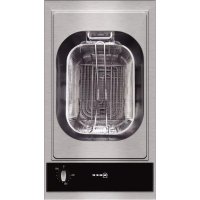



| Product type | Electric deep fryer |
| Brand | Neff |
| Model | Domino NK 3430 N |
| Category | Deep fryer |
| Tank type | Stainless steel tank (estimated) |
| Maximum oil capacity | 4 liters |
| Maximum fat capacity | 3.5 kg |
| Temperature range | 160 °C to 190 °C |
| Power | Not specified in the manual (estimated: 2000 W) |
| Power supply | 220-240 V, 50/60 Hz (standard estimate) |
| Dimensions (W x D x H) | Not specified in the manual |
| Weight | Not specified in the manual |
| Lid material | Glass ceramic |
| Heating element | Liftable for cleaning |
| Safety - Safety cut-off | Automatic shutdown if oil level is too low |
| Safety - Thermal protection | Shutdown in case of overheating |
| Safety - Drain | Integrated drain tap |
| Cleaning | Manual cleaning; do not put in dishwasher (except basket?) |
| Additional functions | Power-on and heating indicator light |
| Included accessories | Frying basket, glass ceramic lid |
| After-sales service | Repairs by Neff authorized technician |
| Repairability index | Not specified in the manual |
| Warranty | Not specified in the manual |
Frequently Asked Questions - Domino NK 3430 N NEFF
User questions about Domino NK 3430 N NEFF
0 question about this device. Answer the ones you know or ask your own.
Ask a new question about this device
Download the instructions for your Deep fryer in PDF format for free! Find your manual Domino NK 3430 N - NEFF and take your electronic device back in hand. On this page are published all the documents necessary for the use of your device. Domino NK 3430 N by NEFF.
USER MANUAL Domino NK 3430 N NEFF
Before installation 19
Safety instructions 20
How to avoid damage 22
Before first use 22
Accessories 22
Your new appliance 23
This is your new deep-fryer 23
Temperature switch 24
Indicator light 24
Heating up light 24
Heating element 24
Setting the deep-fryer 25
Notes regarding the deep frying oil or fat 25
Deep frying 25
Safety switch-off 26
Draining the deep frying oil or fat 27
Tables and tips 28
Settings table 28
Tips and tricks 30
Care and cleaning 31
After-sales service 33
Important information
Read these instructions carefully. Only after reading these will you be able to operate the appliance safely and correctly.
Please keep the operating and installation instructions in a safe place. If the appliance is passed to another person, please enclose the instructions.
Before installation
Environmental protection: Remove the packaging from the appliance and dispose of the packaging in an environmentally-friendly way.
This appliance is labelled in accordance with the European Directive 2002/96/EG concerning used electrical and electronic appliances (waste electrical and electronic equipment - WEEE). The guideline determines the framework for the return and recycling of used appliances as applicable.
Transport damage: Check the appliance after removing the packaging. If it has suffered any damage during transport, do not connect the appliance.
Electrical connection: The connecting lead must be replaced if it has been damaged. This can only be carried out by one of our after-sales service technicians, in order to guarantee the safety.
Installation and connection: Please refer to the installation instructions.
Safety instructions
This appliance should only be used for domestic cooking.
Safe operation: Do not let adults or children operate the appliance unsupervised:
if they are mentally or physically unable to use the appliance safely and correctly,
- if they don't have the knowledge and experience to use the appliance safely and correctly.
- if they don't have the knowledge and experience to use the appliance safely and correctly.
Never allow children to play with the appliance.
Oil and fat: Only operate the deep fryer when it is filled with oil or fat.
If the appliance is operated empty, it will switch off automatically.
Top up oil or fat as soon as it is below the minimum level (bottom marking).
Caution: There is a risk of fire if the filling should drop below the bottom marking!
Inserting the food. Caution, risk of burns! The deep frying oil or fat will foam over if foodstuffs that are too wet or if
Overheated oil and fat: Caution, fire risk! Only operate the appliance under
Overheated oil and fat Caution, fire risk! Only operate the appliance under
supervision. Food that is prepared in fat and oil must be constantly supervised! Overheated fat and oil can ignite easily.
Hot appliance Caution, risk of burns! The appliance heats up during
operation. Keep children away!
Observe particular caution when working with water near the hot appliance. Explosion risk!
Risk of short circuits! The connecting cables of electric appliances must not come into contact with the hot appliance. The cable insulation can be damaged.
Never switch on the deep fryer while the heating element is tilted up.
Caution, fire risk! Do not store any combustible objects in your appliance (for example cleaners, aerosols).
Ventilation Keep ventilation openings open (doors, windows, switch on extractor hoods).
Caution! Over-greased filters are a fire risk if the appliance is positioned under an extractor hood or adjacent to a hob ventilator!
In the event of fire • Switch off the deep-fryer or pull out mains plug!
- Remove the basket!
- Attach the glass ceramic cover!
- Switch off extractor hood immediately! The draught will intensify the fire!
Explosion risk! Never attempt to extinguish a grease fire with water!
After deep frying Switch off the deep fryer after use. Regularly clean the deep fryer.
Glass ceramic cover Always place the glass ceramic cover on the deep-fryer when it is not in use since oil or fat is very sensitive to light.
Do not place the glass ceramic cover on the deep fryer while you are frying food.
Changing oil or fat Caution, fire risk! Old oil or fat may foam over or ignite more easily.
Replace old or soiled oil or fat if it becomes brown, has an unpleasant smell and/or smokes prematurely.
Replace oil or fat if it contains too much water (e.g. after frequent frying of frozen food).
You will notice:
- rising bubbles -water drops -steam
- excessive splashing
Repairs Incorrect repairs are dangerous. Risk of electric
shock! Repairs must be carried out by one of our experienced after-sales engineers.
If the appliance is damaged, switch off the corresponding household fuse. Call after-sales service.
How to avoid damage
Hard or pointed objects Hard or pointed objects may cause damage if they fall onto the glass ceramic panel or the glass ceramic cover.
Glass ceramic cover Wait until the appliance has cooled down completely before placing the glass ceramic cover on the appliance. Do not switch on the deep fryer with the glass cover placed on it. Do not use the glass ceramic cover as a surface for placing objects or for keeping things warm.
Before first use
Clean the frying basin and the frying basket with a sponge and soapy water. Polish with a clean, dry cloth.
Accessories
Only use the frying baskets suitable for this deep fryer.
Do not place plastic cutlery into the oil or fat.
Your new appliance
Your new appliance and its accessories are described in this section.
This is your new deep-fryer
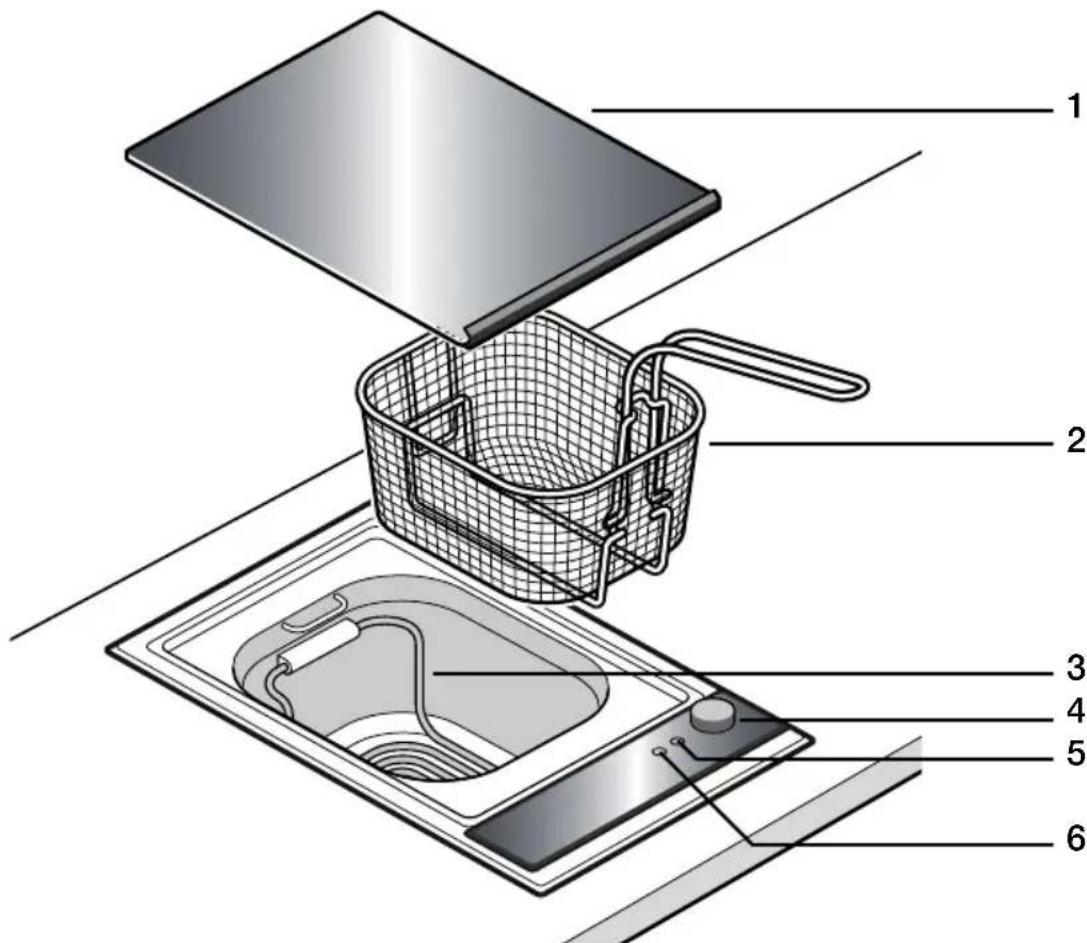
1 Glass ceramic cover 2 Frying basket 3 Heating element 4 Temperature switch 5 Indicator light 6 Heating up light
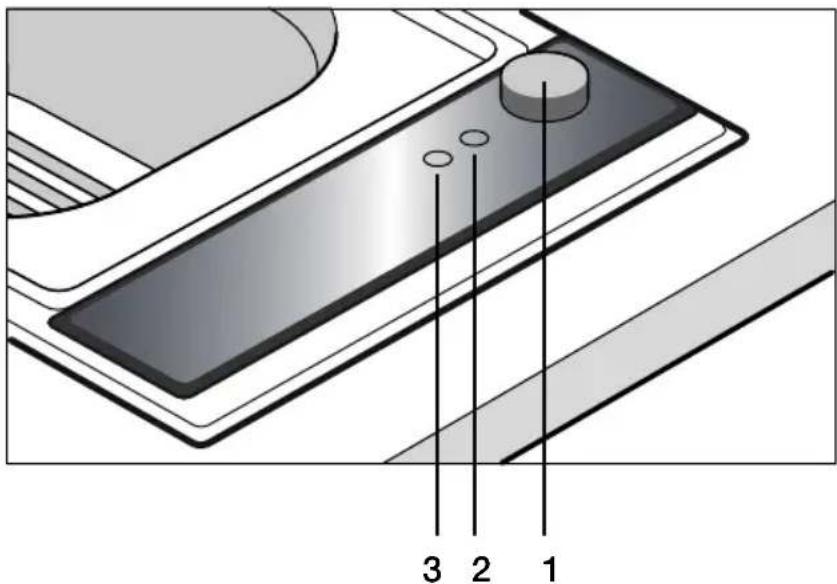
Temperature switch (1)
The temperature of the frying oil or fat can be set with the temperature switch.
Indicator light (2)
The indicator light goes on when the deep fryer is switched on and warns that the appliance is hot.
Heating up light (3)
The heating up light goes on while the heating element of the deep fryer is heating up. When the frying oil or fat has reached the set temperature the heating up light goes off.
Heating element
You can tilt up the heating element to clean the frying basin.

Caution, risk of burns! Never switch on the deep fryer while the heating element is tilted up.
Setting the deep-fryer
During deep frying, the heat that is generated by the appliance is transmitted by the fat to the food you are frying.
When this fast cooking method is employed, a tasty crust is formed around the food.
The deep frying temperature range lies between 160 and 190°C.
Notes regarding the deep frying oil or fat
Use only pure vegetable oil or fat for deep frying. Avoid using mixtures of different fats.
Fill the frying basin with 4 litres frying oil or 3.5 kg frying fat. Cut fresh fat into small pieces before melting. When using the deep-frying fat the next time, you should press a hole down through the solid grease as far as the heating element (e.g. with a wooden kitchen spoon).
Caution, fire risk! Thaw frozen frying fat before melting it.

Caution, fire risk! When using frying fat, first melt it at 100°C. Wait until the fat is mostly melted before setting a higher temperature.

Top up oil or fat as soon as it is below the minimum level (bottom marking).
Caution: There is a risk of fire if the filling should drop below the bottom marking!
Frying fat may smoke during melting. This is normal.
Deep frying
When using frying fat, first melt it at 100°C.
- Set the required temperature. Wait until the frying oil or fat has reached the set temperature and the heating up light goes off.
- Lower the frying basket with the food into the oil or fat.
- Having finished frying, lift out the basket and shake it lightly in order to remove excess oil. To allow the rest of the oil or fat to drip off, the basket can be placed onto the suspension rack.
Safety switch-off
Your appliance is fitted with a safety switch-off function switching the appliance off automatically, if the frying basin is not filled at least to the lower mark with oil or fat.
You will know that an automatic safety switch-off has been effected, if the heating up light does not light up and the oil or fat is no longer heated.
- Turn the temperature switch to 0 and wait until the deep fryer has cooled down.
- Fill the frying basin with at least 3 litres of frying oil or fat.
- Firmly press in the pin on the front of the deep fryer (with a pen, for example).
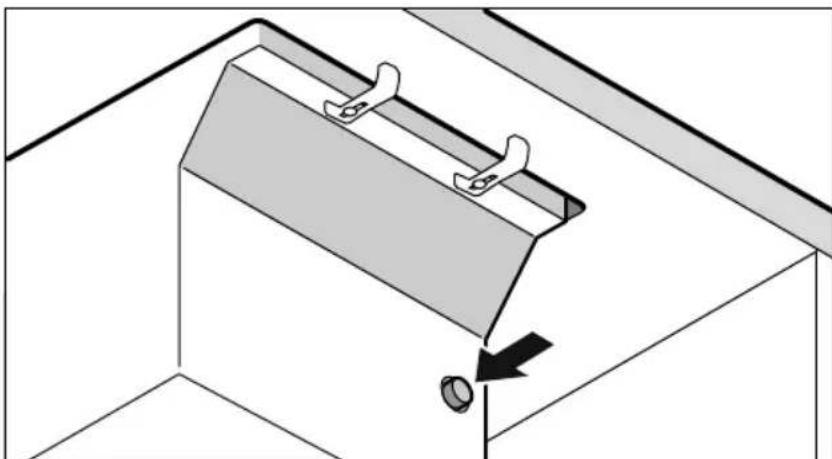
You will now be able to operate the deep fryer in the usual manner.
Draining the deep frying oil or fat
Caution, risk of burns! Before draining fat or oil, wait until it has cooled down.
If the deep fried food no longer becomes the usual crispy brown despite the correct temperature setting or if the oil or fat turns slightly brown you have to replace it.
Place a temperature resistant container with a capacity of at least 4 litres under the drainage tap on the bottom of the deep fryer. Drain used oil or fat by opening the drainage tap.
Note: Drain the fat while it is still warm and in a liquid state.
If the fat is solid in the drainage outlet, pierce it using a thin stick such as a wooden spoon handle.
Do not pour the used oil or fat down the drain, but arrange for it to be disposed of at special disposal sites.
Tables and tips
A selection of recipes and the correct frying times are specified in the following table.
Settings table
The frying time will depend on the quality, the size and the amount of the food.
| Food Quantity Temperature Time in min. Remarks | ||||
| To melt deep-frying fat 3.5 kg 100°C | ||||
| Fresh food | ||||
| Flaky pasties, filled 5 pieces 190°C 6 - 8 Fry meat filling first. | Vegetable filling raw. Tum. | |||
| King prawns in batter 12 pieces 170 - 180°C 4 - 6 Pre-cooked and peeled. Turn. | ||||
| Vegetables in batter | 8 pieces | 170 - 180°C | 4 - 8 | e.g. cauliflower florets*, courgette slices, mushroom heads, onion rings. Tum. |
| Fish fillet, breaded | 100-200 g each | 160 - 170°C | 5 - 10 | |
| Chicken legs, breaded | 200-350 g each | 160°C | 15 - 20 | |
| Potato croquettes 6 - 8 pieces | 170°C 5 - 6 | |||
| French fries | 500 g | 180°C | first 2 -4 then 6 - 8 | Wait at least 15 min between the first and the second frying. Use starchy / floury potatoes. |
| Cutlet, breaded | 2 cutlets | 170 - 180°C | 5 - 8 | |
*pre-cooked
| Food Quantity Temperature Time in min. Remarks | ||
| Desserts | ||
| Doughnuts 6 pieces 160 - 170°C 6 - 10 Deep fry without the | basket. Turn. | |
| Fruit wrapped in pastry 8 pieces 170 - 180°C 5 - 7 e.g. slices of pine- | apple, apples or kiwi | |
| Beignets / Churros 4 pieces 170 - 180°C 6 - 8 Turn | Tum. | |
| Frozen food** | ||
| Camembert, breaded 75-100 g each 160°C 6 - 8 | ||
| Fish fillet, breaded 150 g each 170°C 5 - 7 | ||
| Fish fingers 500 g | 170°C 3 - 5 | |
| Small spring rolls / nems 500 g | 180°C 3 - 5 | |
| Chicken nuggets 500 g | 160°C 5 - 6 | |
| Potato croquettes 500 g | 170°C 3 - 5 | |
| French fries 500 g 180°C 5 - 7 | ||
| Calamari 500 g | 180°C 3 - 5 | |
**please also refer to the information specified on the packaging
Tips and tricks
Correct temperature The correct temperature is very important for
achieving the desired deep frying result:
- temperature too low: The food is fried too slowly and absorbs too much oil or fat.
- temperature too high: The food is browned too quickly and remains raw on the inside.
Suitable food for deep frying Nearly all foodstuffs are suitable for deep frying, e.g.: poultry, fish, meat, vegetables, fruit, potatoes.
Foods with a high water content are less suitable.
Before lowering food into the frying fat, dry carefully, shake off any surplus flour, and firmly press on the breadcrumb layer.
Frozen food Remove ice from deep frozen foodstuffs. Fill the
basket outside the deep fryer.
Moist or frozen food leads to violent foaming of the fat when it is inserted. Slowly lower the filled basket several times. This prevents overflowing of the fat.
Deep frying large amounts If you wish to fry a large amount of food at once, we
recommend that you remove the basket after
1-2 minutes and place it in the hanger rack to enable the oil or fat to reach its original temperature more quickly. This makes the fried food more crispy.
Deep frying fat or oil After every use of the deep fryer, remove any
remainders of food from the oil or fat. Line a metal sieve with kitchen paper and filter the lukewarm oil or fat through the paper.
If the deep fried food no longer becomes the usual crispy brown despite the correct temperature setting or if the oil or fat turns slightly brown you have to replace it.
Care and cleaning
Do not use high-pressure or steam jet cleaning devices.

Caution, risk of burns! Wait until the appliance has cooled down completely before cleaning it.

Caution, risk of burns! Never switch on the deep fryer while the heating element is tilted up.
Cleaning the deep fryer: After draining the oil, remove coarse soiling in the frying basin with kitchen paper.
Fill up the frying basin to the lower marking with warm water and added detergent. Clean the frying basin and the heating element using a soft brush.
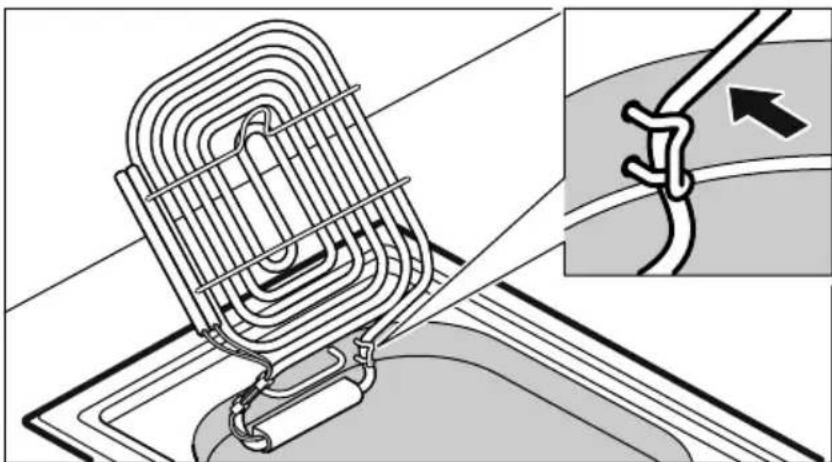
Avoid scratching or scrubbing as this could cause permanent scratches.
Tilt up the heating element so that it clicks into the bracket. Then you can clean the bottom of the frying basin under the heating element.
Drain the water, lower the heating element so that it is on the base of the basin and rinse with clear water. Important: Do not leave any cleaner residues in the frying basin. Dry the frying basin and the heating element with a soft cloth.
Cleaning the frying basket: Wash the frying basket by hand with warm water. Do not clean the frying basket in a dish washer.
Cleaning the glass ceramic cover: Remove light soiling using a damp cloth or with warm soapy water.
Rinse any left-over detergent with cold water and dry
the surface well.
Do not clean the glass ceramic cover in a dish washer.
Unsuitable cleaning agents: Do not use an abrasive sponge or a scouring agent. Nor should any chemically aggressive cleaners such as oven sprays or stain removers be used.
After-sales service
Our after-sales service is there for you if your appliance should need to be repaired. You will find the address and telephone number of your nearest after-sales service centre in the phone book. The after-sales service centres listed will also be happy to inform you of a service point in your local area.
E-number and FD-number
Please quote the E number (product number) and the FD number (production number) of your appliance when contacting the after-sales service. The nameplate containing these numbers can be found on the appliance. For future reference you can note these numbers here:
E-Nr. FD
Table of contents
Important notes 35
Notes and useful tips 108
Installation table 108
Tips for sorting 110
Cleaning and care 111
After-sales service 112
What you should pay attention to
Read the instruction manual carefully before use. Only after this will you be able to operate the appliance safely and correctly. Keep the instruction manual and installation instructions in a safe place. If you pass the appliance on to someone else, please include these instructions.
Before installation
Disposal: Unpack the appliance and dispose of the packaging in an environmentally responsible manner.
This appliance is marked according to the European Directive 2002/96/EG on waste electrical and electronic equipment (WEEE). This directive establishes the framework for the return and recycling of old appliances, valid throughout Europe.
With this quick cooking method, the food is covered with a crispy crust.
The temperature for frying is from 160 to 190°C.
Instructions for using oil/fat for frying
For frying, use only clean vegetable oil or vegetable fat. Avoid mixing different types of fat.
Pour 4 liters of oil or 3.5 kg of fat for frying into the reservoir. Chop fresh fat for frying before melting it. When using new fat for frying, before melting it, make a hole in the solidified fat mass down to the heating element (for example, with a wooden spoon handle).

Caution, fire hazard! Frozen fat for frying should be thawed before melting.

Caution, fire hazard! Fat for frying must first be melted at 100°C. Set higher temperature only after the fat for frying is mostly melted.

Add oil or fat. If the oil or fat level drops below the minimum permissible (minimum level mark). Attention: if the level is below the minimum level mark, there is a fire hazard!
When melting fat for frying, smoke may appear. This is normal.
Tables and useful tips
Here you will find the range of settings for optimal adjustment of the device.
Adjustment table
Suitable product for frying: Almost all products for frying are suitable, for example: home fries, fish, meat, vegetables, fruits, potatoes.
To a lesser extent, products with high water content are suitable.
Before immersing in oil, the product to be fried should be thoroughly dried, remove excess flour, and bread well.
Frozen product: Remove ice from the frozen product. For frying, fill the basket with the product separately from the fryer.
Draining hot oil or frozen product during frying leads to particularly intense oil splashing. Slowly lower the filled frying basket several times. In this way, oil splashing can be avoided.
Frying: If you want to fry a large mass at once, it is recommended to wait 1-2 minutes.
Remove the basket and hang it on a special device so that the oil/fat can quickly return to its original temperature. In this way, the crust of the fried product will be crispier.
Oil/fat: After each frying, check the frying oil/fat for possible remaining food particles.
To do this, place a metal sieve with a paper napkin and strain the cooled oil/fat.
Completely replace the oil/fat for frying if, at the correctly set temperature, the fried product is not covered with a crispy crust or the oil/fat takes on a brownish tint.
Care and cleaning
Do not use cleaning devices with high pressure or steam cleaners.

Caution, burn hazard! Before cleaning, the fryer must be completely cooled.

Caution, burn hazard! Do not switch on the fryer when the heating element is folded up.
Cleaning the fryer: After draining the oil through the valve, remove any large food particles remaining in the fryer.
Fill the fryer with warm water with a little dishwashing detergent dissolved in it up to the lower mark. Clean the chamber and the heating element with a soft brush or dishcloth.
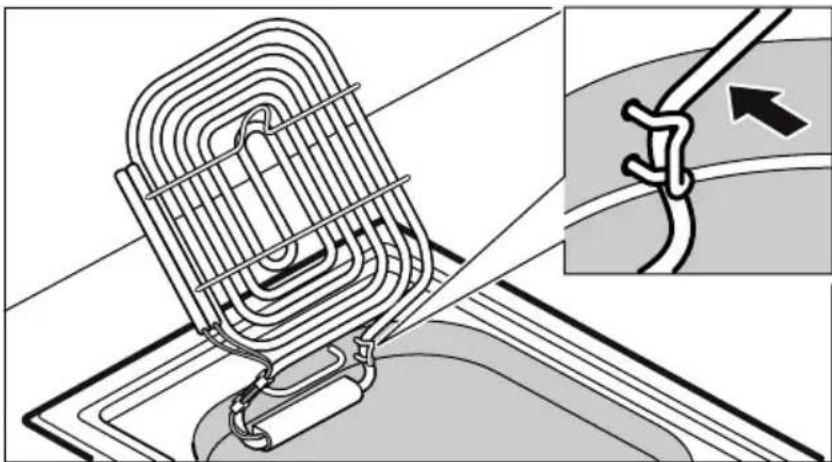
Avoid abrasive or scouring agents, as they can cause scratches on the surface. Fold the heating element up so that it locks in the holder. Now you can clean the chamber space under the heating element.
Wipe the dirty water, turn the heating element back down, and then rinse everything with clean water. Attention: Do not allow any cleaning agent residue to remain in the chamber! Dry the chamber and the heating element with a soft cloth.
Cleaning the basket: Clean the frying basket by hand with a mild detergent. Do not clean the frying basket in a dishwasher.
Ceramic hob cleaning. For minor soiling, wipe with a damp cloth and a mild detergent solution.
Residual detergent should be rinsed off with cold water, then wipe the surface dry.
Do not use abrasive cleaners on the ceramic hob.
Unsuitable cleaning agents must never be used, such as scouring pads or abrasive powders.
Also do not use chemically aggressive cleaners, such as aerosols or oven cleaners.
Service
If your appliance requires repair, our service department is always ready to help. You can find the address and phone number of the nearest service center in the telephone directory. You can also ask about the nearest service center at the indicated service centers.
E-number
FD-number. When contacting our service department, please quote the E-number and FD-number of the appliance. You will find these numbers on the rating plate. To avoid having to search for them in case of a malfunction, you can enter your appliance's data here right away.
E-number FD-number
- YOUR NEW APPLIANCE
- SETTING THE DEEP-FRYER
- DRAINING THE DEEP FRYING OIL OR FAT
- IMPORTANT INFORMATION
- BEFORE INSTALLATION
- SAFETY INSTRUCTIONS
- EXPLOSION RISK! NEVER ATTEMPT TO EXTINGUISH A GREASE FIRE WITH WATER
- HOW TO AVOID DAMAGE
- BEFORE FIRST USE
- ACCESSORIES
- THIS IS YOUR NEW DEEP-FRYER
- TEMPERATURE SWITCH (1)
- INDICATOR LIGHT (2)
- HEATING UP LIGHT (3)
- HEATING ELEMENT
- NOTES REGARDING THE DEEP FRYING OIL OR FAT
- DEEP FRYING
- SAFETY SWITCH-OFF
- TABLES AND TIPS
- SETTINGS TABLE
- TIPS AND TRICKS
- CARE AND CLEANING
- AFTER-SALES SERVICE
- E-NUMBER AND FD-NUMBER
- TABLE OF CONTENTS
- IMPORTANT NOTES
- NOTES AND USEFUL TIPS
- WHAT YOU SHOULD PAY ATTENTION TO
- INSTRUCTIONS FOR USING OIL/FAT FOR FRYING
- TABLES AND USEFUL TIPS
- ADJUSTMENT TABLE
- SERVICE
- E-NUMBER
Brand : NEFF
Model : Domino NK 3430 N
Category : Deep fryer