
PROFI 1800-2 - Portable electric mixer ATIKA - Free user manual and instructions
Find the device manual for free PROFI 1800-2 ATIKA in PDF.



| Product type | Portable electric mixer |
| Brand | ATIKA |
| Model | PROFI 1800-2 |
| Motor power (P1) | 1800 W |
| Power supply | 230 V ~ 50 Hz |
| Rotation speeds | 2 speeds: 150-300 rpm and 300-650 rpm |
| Maximum mixer diameter | 160 mm |
| Mixer length | 600 mm |
| Maximum mixing volume | 90 L |
| Weight | 7.5 kg |
| Protection class | II (double insulation) |
| Protection type | IP20 |
| Sound pressure level (LPA) | 85.8 dB(A) |
| Sound power level (LWA) | 96.8 dB(A) |
| Hand-arm vibrations (ahw) | < 1.69 m/s² |
| Mixer housing | M14 |
| Main functions | Mixing of construction materials (paints, mortars, adhesives, plasters, etc.); continuous operation; electronic speed control; 2 mechanical speeds |
| Maintenance and cleaning | Clean with a soft cloth; do not use water or solvents; replace worn carbon brushes by customer service |
| Safety | Use a 30 mA residual current circuit breaker; wear PPE (gloves, goggles, mask); unplug before maintenance |
| Spare parts and repairability | Mixers (spiral, mortar, disk), carbon brushes, tightening wrenches; repairs by the manufacturer or authorized service center |
| Included accessories | 1 mixer, 1 spiral mixer, 2 tightening wrenches, 1 pair of carbon brushes |
Frequently Asked Questions - PROFI 1800-2 ATIKA
User questions about PROFI 1800-2 ATIKA
0 question about this device. Answer the ones you know or ask your own.
Ask a new question about this device
Download the instructions for your Portable electric mixer in PDF format for free! Find your manual PROFI 1800-2 - ATIKA and take your electronic device back in hand. On this page are published all the documents necessary for the use of your device. PROFI 1800-2 by ATIKA.
USER MANUAL PROFI 1800-2 ATIKA
Page 9 Operating Manual - Safety instructions - Spare parts
Do not operate machine before having read the operating instructions, understood all the notes and assembly the machine as described here.
Keep the instructions in a safe place for future use.
F
| Extent of delivery | 9 |
| Disposal | 9 |
| Description of device / spare parts | 9 |
| Symbols operating manual / machine | 9 |
| Declaration of conformity | 9 |
| Normal intended use | 10 |
| Risidual risks | 10 |
| Safe working | 10 |
| Assembly | 11 |
| Start-up | 11 |
| Notes on usage | 12 |
| Maintenance and Care | 12 |
| Storage | 12 |
| Guarantee | 12 |
| Possible faults | 13 |
| Technical data | 13 |
Extent of delivery
After unpacking, check the contents of the box
That it is complete
Check for possible transport damage
Report any damage or missing items to your dealer, supplier or the manufacturer immediately.
1 agitator
- 2 chuck key
1 beater (2-part)
1 set carbon brushes
1 operating manual
Disposal
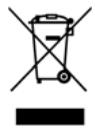
Electrical devices do not go into the domestic rubbish.
Give devices, accessories and packaging to an ecofriendly recycling.
Description of device / Spare parts
| Pos | Denomination | Order-No. | |
| RW 1400-2 | RW 1800-2 | ||
| 1. | Agitator | ||
| 2. | Spiral beater | 372613 | 372616 |
| 3. | ON / OFF-switch | ||
| 4. | Locking knob | ||
| 5. | Speed control | ||
| 6. | 2-speed switch | ||
| 7. | Handle | ||
| 8. | Shaft | ||
| 9. | Spanners | 372562 | |
| 10. | Mortar beater | 372612 | 372615 |
| 11. | Disk beater | 372614 | 372614 |
| 12. | Agitator stand | 372653 | |
Symbols operating manual

Threatened hazard or hazardous situation. Not observing this instruction can lead to injuries or cause damage to property.

Important information on proper handling. Not observing this instruction can lead to faults.

User information. This information helps you to use all the functions optimally.

Assembly, operation and servicing. Here you are explained exactly what to do.
Symbols machine
| Carefully read operator's manual and the safety instruc-tions before starting the machine and observe the instructions when oper-ating. | Before starting any repair, maintenance or cleaning work, always switch off the motor and remove the plug from the socket. |
| Wear eye and ear protection. | Wear dust mask. |
| Wear protec-tive gloves. | Protect against humidity. |
EC Declaration of Conformity
according to Directive 98/37 EC
ATIKA GmbH & Co. KG
declare under our sole responsibility, that the device
Handhel Agitator Profi RW 1400-2 / Profi RW 1800-2
to which this declaration relates corresponds to the relevant basic safety and health requirements of the Directive 98/37/EC, and to the requirements for the other relevant Directives:
2006/95EG, 2004/108 EG and EN 60745-1
Ahlen, 20.08.2008
A. Pollmeier, management
Normal intended use
- This agitator is suited for DIY work for mixing liquid and powdry building material such as: paints, mortar, adhesives, plaster, grouting compounds, knitting fillers, coating compounds.
- Only beaters intended for the device with a max. diameter of 140 ~mm (Profi RW 1400-2) or 160 ~mm (Profi RW 1800-2) must be used.
STOP
Any other utilisation counts as improper use, espemixing combustible or explosive materials (4 fire explosion hazard) and use with foodstuffs. The manu- rer is not liable for damages resulting from improper
the user alone shall bear the risk.
- The intended usage also includes compliance with the operating, servicing and repair conditions prescribed by the manufacturer and following the safety instructions included in the instructions.
- The relevant accident prevention regulations for the operation as well as the other generally acknowledged occupational medicine and safety rules must be complied with.
- Unauth orised modifi ca tio ns on the agitator exclude a liability of the manufacturer for damages of any kind resulting from it.
- Only persons who are familiarised with the device and informed about possible risks are allowed to prepare, operate and service this device. Repair works may only be carried out by us or by a customer service agent nominated by us.
Risidual risks
Even if used properly, residual risks can exist even if the relevant safety regulations are complied with due to the design determined by the intended purpose.
Residual risks can be minimised if the "Safety instructions" and the "Normal intended use" as well as the whole of the operating instructions are observed.
Observing these instructions, and taking proper care, will reduce the risk of personal injury or damage to the equipment.
- Failure to observe the safety precautions can lead to injury to the operator or damage to property.
- Risk from electricity, by using non-standard electrical connections.
- Touching live parts of opened electrical components.
- Impairment of hearing when working on the machine for longer periods of time without ear protection.
In addition, in spite of all the precautionary measures taken, non-obvious residual risks can still exist.
Safe working
Pass the safety instructions on to all persons who work with the machine.
- Do not use the machine for unsuitable purposes (see "Normal intended use" and "Working with the agitator").
- Do not touch, inhal (dust) or swallow cement and additives. Wear personal protective equipment (gloves, safety goggles, face mask) when filling or emptying the mixing container.
- Keep children, bystanders and animals at a distance from your working area. Do not allow other persons, especially children, to touch the tool or the cable.
- Switch off the machine if persons, in particular children or pets, are close to you or if you change your working area.
- The operator is responsible to third persons within the area of operations.
- The operator is responsible for accidents or risks which occur to other persons or their properties.
- Never operate the machine if other persons are in the immediate vicinity.
- Children and young persons under 16 years of age as well as persons who have not read the instruction manual are not allowed to operate this product.
- Never leave the device unattended.
- Only operate the machine with complete and correctly attached safety equipment and do not alter anything on the machine that could impair the safety.
- Do not modify the device or parts of the device respectively.
-
Switch the machine off and remove the mains plug from the socket when
-
carrying out repair works
- maintenance and cleaning
- eliminating faults.
- checking connecting lines, whether these are knotted or damaged.
- transport
- leaving unattended (even during short interruptions).
- unusual noises and vibrations
Thoroughly maintain your agitator:
- Make sure that the ventilation apertures are free.
-
Keep handles dry and free of oils and grease. Follow the maintenance instructions.
-
Check the machine for possible damage:
-
Before further use of the machine the safety devices must be checked carefully for their proper and intended function.
- Check whether the parts are damaged. All parts must be correctly installed and fulfil all conditions to ensure perfect operation of the machine.
- Damaged guards and parts must be properly repaired or exchanged by a recognized, specialist workshop; insofar as nothing else is stated in the instructions for use.
-
Damaged or illegible safety labels should be replaced immediately.
-
Store unused equipment in a dry, locked place out of the reach of children.


- Design of the connection cable according to IEC 60 245 (H 07 RN-F) with a core cross-section of at least 3 × 1.5 ~mm^2 for a maximum cable length of up to 25 ~m 3 × 2.5 ~mm^2 for cable lengths over 25 ~m
- Long and thin connection lines result in a potential drop. The motor does not reach any longer its maximal power; the function of the device is reduced.
- Plugs and coupler outlets on connection cables must be made of rubber, non-rigid PVC or other thermoplastic material of same mechanical stability or be covered with this material.
- The connector of the connection cable must be splashproof.
- When running the connection line observe that it does not interfere, is not squeezed, bended and the plug connection does not get wet.
- Wind off completely the cable when using a cable drum.
- Regularly check the extension cables and replace them if they are damaged.
- Do not use any defective connection cables.
- Do not set up any provisional electrical connections.
- Never bypass protective devices or deactivate them.
- Only hook up the machine by means of a fault-current circuit breaker (30 mA).

The electrical connection or repairs to electrical parts of the machine must be carried out by a certified electrician or one of our customer service points.

Repairs to other parts of the machine must be carried out by the manufacturer or one of his customer service points.

Use only original spare parts. Accidents can arise for the user through the use of other spare parts. The manufacturer is not liable for any damage or injury resulting from such action.
Assembly
Chucking the beater:
Screw the beater assembly (2) on the shaft (8). Secure the beater using the spanners (9).
Start-up
-
Check that the machine is completely and correctly assembled.
Before each use, check -
Connection cables for defects (cracks, cuts, etc.).
Do not use any defective cables.
- there are no damages at the machine (see "safe working")
- that the beater is properly secured.

Mains connection
-
Compare the voltage given on the machine model plate e.g. 230V with the mains voltage and connect the machine to the relevant and properly earthed plug.
-
Connect the machine via a 30 ~mA fault current safety switch.
- Do not use any defective connection cables.
- Use connecting or extension cables up to a length of 1.5 m featuring a core cross section of at least 25 ~mm^2

Main fuse: 10 A
Switching on
Do not use any device where the switch can not be switched on and off. Damaged switches must be repaired or replaced immediately by the customer service.

Switching on

Press the ON/OFF button (3) on the handle. The device will slowly start after powering up. As you press more firmly on the button the rotational speed also increases.

Switching off
Release the ON/OFF handle button.
2- speed gear D
The device is equipped with a 2-speed gear.
1.speed: 150 - 300 rpm
2.speed: 300 - 650 rpm
For the speed selection turn the switch (6) by 180^ .

Only operate this switch at standstill.
Continuous operation D

Switching on
For continuous operation press the locking knob (4) in switched on condition.
Use the agitator only in continuous mode with the agitator stand fitted. (Optional accessories: Agitator stand, order-no.: 372652)

Switching off
Press the ON/OFF button (3).
Speed control
With this type, the motor's speed and thus the agitator performance can be adjusted. You can continuously adjust the speed with the speed control (4).
1.speed:150-300rpm
2.speed:300-650rpm
Notes on usage
If persons who have blood circulation problems are too often exposed to vibrations damages to the nervous system or to blood vessels may occur.
You can reduce vibrations:
- by thick and warm working gloves,
- shorter working time (have longer breaks).
See a doctor if your fingers swell, you don't feel well or your fingers become numb.
- Only use beaters recommended by the manufacturer. Pay attention the max. diameter (Ø 140mm - Profi RW 1400-2 / 160 mm - Profi RW 1800-2).
- The supplied spiral beater is suited for following materials: - Viscous and glutinous building compounds such as adhesives, paste, glue, knifing filler, plaster, tile cement etc.
- Increase the speed during the mixing process. Immerse the beater through the material to be mixed until it is thoroughly mixed. Follow the processing instructions from the suppliers.
- Do not work with low speed in continuous mode. This may result in overloading/overheating the motor as no sufficient cooling can be generated.
- Hold the device with both hands during mixing.
- Do not reach in the running beater (rotating beater).
- Avoid splashing. Work with low speed when immersing the beater in the material to be mixed or pulling it out.
Maintenance and Care
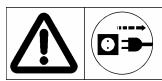
Before each maintenance and cleaning work:
- switch off device
- wait for standstill of the beater
- pull out power plug
Use only original parts. Other parts can result in unexpected damages and injuries.
Maintenance and repair work beyond this is only allowed to be carried out by the manufacturer or authorized service staff. Store unused equipment in a dry, locked place out of the reach of children.
Observe the following to maintain the operability of the machine:
- Keep vent slits clean and free from obstructions.
- Remove dust and dirt using a cloth or a soft brush.
- Do not clean the machine with running water or high-pressure cleaners.
- Do not use solvents for the synthetic parts (petrol, alcohol, etc.) as these can damage the synthetic parts.
-
Check that the handles are properly secured.
Clean the beater. -
The agitator is equipped with carbon brushes. Have the carbon brushes be replaced by the customer service if they are worn
Regularly check the beater for damages for your own safety. Immediately replace any damaged beater.
Check the shaft on a regular basis. An agitator with defective shaft must no longer be used. Have the device be repaired by the customer service.
Storage
Pull out power plug
-
Store unused equipment in a dry, locked place out of the reach of children.
Before a longer period of storage carry out the following to extend the machine's service life and ensure an easy operating: -
thoroughly clean the device
Guarantee
Please observe the enclosed terms of guarantee.
Before each fault elimination:
- switch off device
- wait for standstill of the beater
- pull out power plug
After each fault clearance, put into operation and recheck all security installations.
| Problem | Possible cause | Remedy |
| Motor does not start. | ⇒No power supply (power failure)⇒Mains cable defective.⇒Motor or switch defect | ⇒Check fuses (10 A)⇒exchange defect cable, respectively check extension cable, (by electrician)Never use defect lead⇒To correct the problem, refer to the manufacturer or other approved service centre. |
| Unusual vibrations | ⇒Beater defective.⇒Chuck defective.⇒Non-intended material to be mixed. | ⇒Replace the beater.⇒To correct the problem, refer to the manufacturer or other approved service centre.⇒Incorrect processing. Follow the processing instructions from the supplier. |
| Device starts but blocks under slight load and cuts off automatically. | ⇒Extension cable too long, or cross-section too small.⇒Socket too far away from main connection, and cross-section of connection lead too small. | Extension cable at least 1,5 mm2, maximum 25 m long.Cross- section of at least 2,5 mm 2 in longer cables. |
Technical data
| Model | Profi RW 1400-2 | Profi RW 1800-2 |
| Motor power P1 | 1400 W | 1800 W |
| MotorMotor | AC-motor 230 V ~ 50 Hz | |
| Speed n0(with speed control) | 1. speed: 150 - 300 rpm2. speed: 300 - 650 rpm | |
| Beater diameter | 140 mm | 160 mm |
| Beater chuck | M 14 | |
| Beater length | ca. 600 mm | |
| Hand/arm vibration on the handle(according to EN 1033/DIN 45675) | avhw = < 1,69 m/s2 | |
| Volume of the material to be mixed | < 65 Liter | < 90 Liter |
| Weight | 7,0 kg | 7,5 kg |
| Sound power level LwA(as per 2000/14/EG) | Measured sound power level LWA 96,8 dB (A) | |
| Sound pressure level LPA(as per 2000/14/EG) | 85,8 dB (A) | |
| Safety classSafety class | II / ☐ | |
| Protection class | IP 20 | |
Sommaire
Cnrypnoct npa6ota 20
MOnTaX 21
Bb3MOxHn HEn3npaBHOCTN 23
TexHnueckn daHHN 23
ОБем наdoesTakata

Cnei pa3oNaKOBaHe npOBepeTe CbIbPkaHneTo Ha KaWoHa 3a:
H0A
EBeTuaJIHn IOBpeDN npu TpaHCnopta.
PeklampaaiTe He3a6abHo Ipei npoabaay,doctaBnuka Nn npou3bOInTeIy. PpeIaBHeN No-KbCHO npTeHcN Hma Da 6bDat npu3HaTn. Peklamaun, HnpaBeHn No-KbCHO, He ce npu3HaBat.
1 MmKcep
16bpkakka (OT 2 actn)
- 1 pьковдосто 3a облуквае
- 2 ключа за заеганe
1 KOMnJIeKr BvIgIepoDNH
I3xBbPnJaHe
EneKtpnuecknte ypeNi He 6nBa Da Ce n3XbPnT B KOHTeHepTe 3a 6nTOBn OTnAdbu. YpeNITE, npHaIJIeXHoCTte N ONAKOKBtpe Tp6Ba Da ce npedeBaT 3a npepa6OTka B CbOTBeTcTBne Cp3nope6bTe 3a ONa3BaHe Ha OKOJHaTa cpeDa.
A. Pollmeier, management
Reglementaire toepassing
conform directivei 98/37 EG
ATIKA GmbH & Co. KG
IcnoJIb3ObaHneB COOTBeTCTBnC Ha3NaYeHnEM 70
Cnmbonbl,ncnoIb3yeMbIe B HNcTpyKuIN NO 3KcnIyatauIN

Ipo3aJauOnachocTb Hn OnacHauCHTyaUa. Heco6JIouDeHne 3Txx yka3aHm MoXe TpNBecTu K TpaBMam nN K MaTePnaJIbHOMy uSepe6y.

Baxhble yka3aHnno HapIeXaUeMy o6paueHnIO. HecobJIOJeHne 3Tnx yka3aHn MoKET pINBeCTN K HeNoJaKam.

Yka3aHnI JnI NOb3OBaTeJI. 3Tn Yka3aHnI NOMOyT Bam ONTImaJIbHO INCNoJIb3OBaTb BCE yHKUIN.

MONTAX, obcnyxuBaHne n TexHuYeCKoe obcnyxuBaHne. 3decb Bam daIOTCa TOUHbIe pa3bAcHeHnO TOM, yTO Bam hyxHo DeJaTb.
CnMBOJIbI,NCNOLb3yEmbIeBycTPOJCTBe
- F
- Extent of delivery
- Disposal
- Symbols operating manual
- Symbols machine
- EC Declaration of Conformity
- Normal intended use
- Risidual risks
- Safe working
- Assembly
- Chucking the beater:
- Start-up
- Mains connection
- Main fuse: 10 A
- Switching on
- Switching off
- 2- speed gear D
- Continuous operation D
- Speed control
- Notes on usage
- Maintenance and Care
- Storage
- Pull out power plug
- Guarantee
- Sommaire
- ОБем наdoesTakata
- I3xBbPnJaHe
- Reglementaire toepassing
- Cnmbonbl,ncnoIb3yeMbIe B HNcTpyKuIN NO 3KcnIyatauIN
Brand : ATIKA
Model : PROFI 1800-2
Category : Portable electric mixer