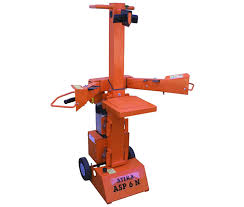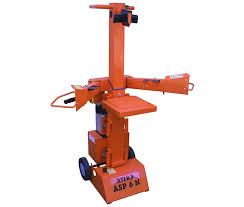
ASP 6 N-400 - Log splitter ATIKA - Free user manual and instructions
Find the device manual for free ASP 6 N-400 ATIKA in PDF.



User questions about ASP 6 N-400 ATIKA
0 question about this device. Answer the ones you know or ask your own.
Ask a new question about this device
Download the instructions for your Log splitter in PDF format for free! Find your manual ASP 6 N-400 - ATIKA and take your electronic device back in hand. On this page are published all the documents necessary for the use of your device. ASP 6 N-400 by ATIKA.
USER MANUAL ASP 6 N-400 ATIKA
Original instructions
GB under our sole responsibility, that the product
Log splitter ASP 6 N, ASP 6 N - 400 (Serial number: see last page)
is conform with the above mentioned EC directive as well as with the provisions of the guideline below: 2004/108/EC.
Depending on the length of the wood to be cleaved, the table can be mounted at three different heights.
Locking bolt is available in every installation position.
Fit the table into the appropriate mounting angles.
Pay attention that the locking bolt is engaged.
Do not operate machine before having read the operating instructions, understood all the notes and assembly the machine as described here.
Keep the instructions in a safe place for future use.
Contents
EC-Declaration of Conformity 1
Spare parts / Description of device 3
Assembly 6
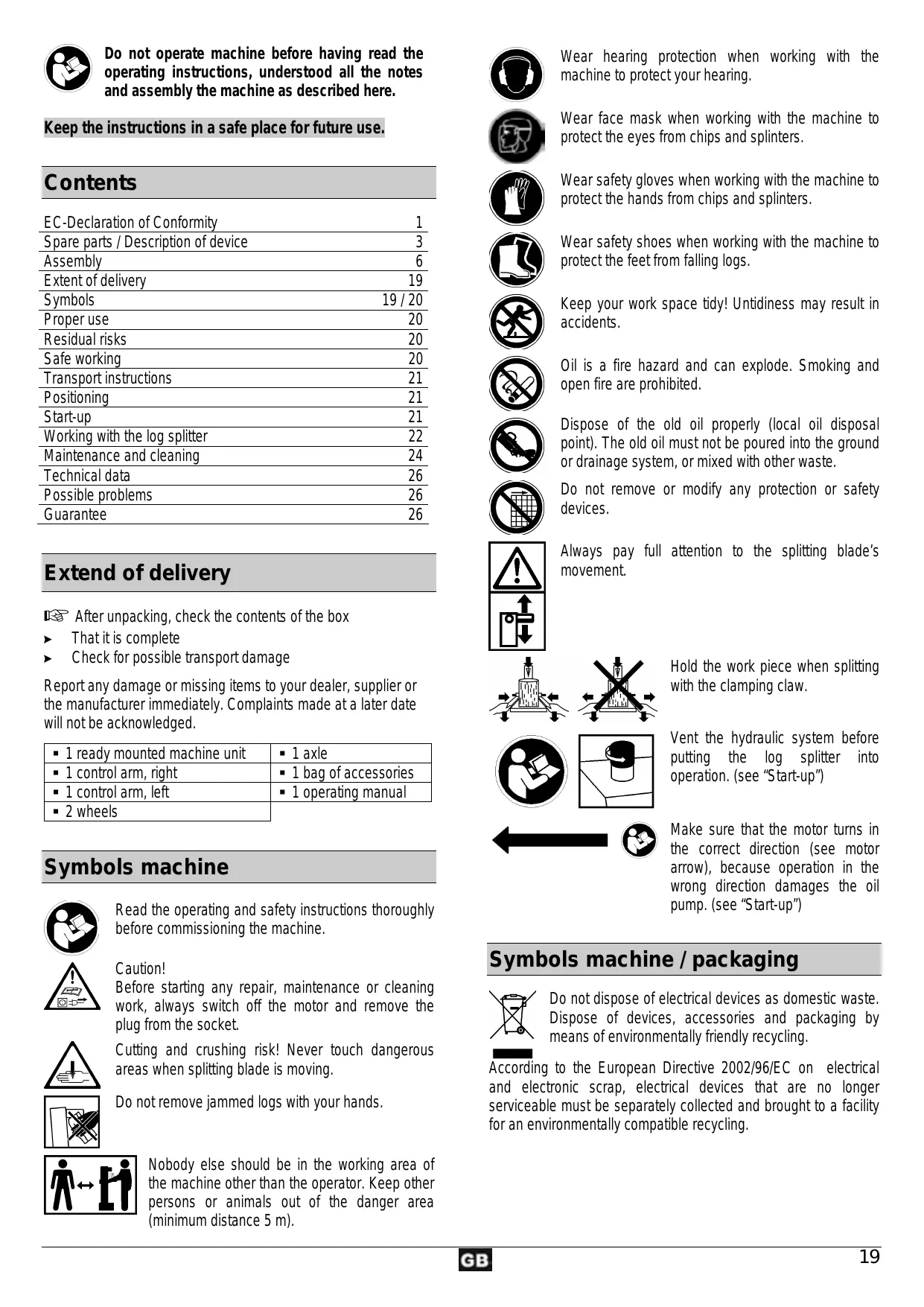
Extent of delivery 19
Symbols 19/20
Proper use 20
Residual risks 20
Safe working 20
Transport instructions 21
Positioning 21
Start-up 21
Working with the log splitter 22
Maintenance and cleaning 24
Technical data 26
Possible problems 26
Guarantee 26
Extend of delivery

After unpacking, check the contents of the box
That it is complete
Check for possible transport damage
Report any damage or missing items to your dealer, supplier or the manufacturer immediately. Complaints made at a later date will not be acknowledged.
| ■ 1 ready mounted machine unit | ■ 1 axle |
| ■ 1 control arm, right | ■ 1 bag of accessories |
| ■ 1 control arm, left | ■ 1 operating manual |
| ■ 2 wheels |
Symbols machine

Read the operating and safety instructions thoroughly before commissioning the machine.

Caution!
Before starting any repair, maintenance or cleaning work, always switch off the motor and remove the plug from the socket.
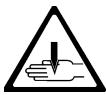
Cutting and crushing risk! Never touch dangerous areas when splitting blade is moving.
Do not remove jammed logs with your hands.
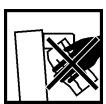
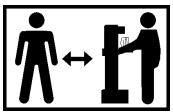
Nobody else should be in the working area of the machine other than the operator. Keep other persons or animals out of the danger area (minimum distance 5 m).
Wear hearing protection when working with the machine to protect your hearing.
Wear face mask when working with the machine to protect the eyes from chips and splinters.
Wear safety gloves when working with the machine to protect the hands from chips and splinters.
Wear safety shoes when working with the machine to protect the feet from falling logs.
Keep your work space tidy! Untidiness may result in accidents.
Oil is a fire hazard and can explode. Smoking and open fire are prohibited.
Dispose of the old oil properly (local oil disposal point). The old oil must not be poured into the ground or drainage system, or mixed with other waste.
Do not remove or modify any protection or safety devices.
Always pay full attention to the splitting blade's movement.









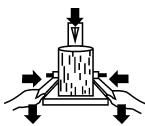
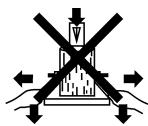



Hold the work piece when splitting with the clamping claw.
Vent the hydraulic system before putting the log splitter into operation. (see "Start-up")
Make sure that the motor turns in the correct direction (see motor arrow), because operation in the wrong direction damages the oil pump. (see "Start-up")
Symbols machine / packaging

Do not dispose of electrical devices as domestic waste. Dispose of devices, accessories and packaging by means of environmentally friendly recycling.
According to the European Directive 2002/96/EC on electrical and electronic scrap, electrical devices that are no longer serviceable must be separately collected and brought to a facility for an environmentally compatible recycling.
Symbols operating manual

Threatened hazard or hazardous situation. Not observing this instruction can lead to injuries or cause damage to property.

Important information on proper handling. Not observing this instruction can lead to faults.

User information. This information helps you to use all the functions optimally.

Assembly, operation and servicing. Here you are explained exactly what to do.
Proper use
The log splitter must only be used for splitting logs.
- Only straight-cut logs are suitable for use with the log splitter.
- Foreign bodies (nails, wire, concrete etc.) must always be removed from the wood before it is split.
- The intended usage also includes compliance with the operating, servicing and repair conditions prescribed by the manufacturer and following the safety instructions included in the instructions.
- Any other use is deemed not to be use as prescribed. The manufacturer is not liable for any type of damage resulting from this: the user bears the sole risk.
- Unauthorised modifications on the log splitter exclude a liability of the manufacturer for damages of any kind resulting from it.
- Only persons who are familiarised with the device and informed about possible risks are allowed to prepare, operate and service this device. Repair works may only be carried out by us or by a customer service agent nominated by us.
Residual risks
Even if used properly, residual risks can exist even if the relevant safety regulations are complied with due to the design determined by the intended purpose.
Residual risks can be minimised if the "Safe working" and the "Proper use" as well as the whole of the operating instructions are observed.
Observing these instructions, and taking proper care, will reduce the risk of personal injury or damage to the equipment.
- Failure to observe the safety precautions can lead to injury to the operator or damage to property.
- Carelessness, failure to comply with the safety regulations and incorrect use can result in injuries to your hands and fingers when the splitting blade is moving.
- Risk from electricity, by using non-standard electrical connections.
- Touching live parts of opened electrical components.
- Impairment of hearing when working on the machine for longer periods of time without ear protection.
In addition, in spite of all the precautionary measures taken, non-obvious residual risks can still exist.
Safe working
Before commissioning this product, read and keep to the following advice. Also observe the preventive regulations of your professional association and the safety provisions applicable in the respective country, in rder to protect yourself and others from possible injury.
Pass the safety instructions on to all persons who work with the machine.
① Keep these safety instructions in a safe place.
- Be observant. Attend to what you do. Start working with rationality. Do not use the device when you are tired or under the influence of drugs, alcohol or medicaments. One moment of carelessness when using the device can result in serious injuries.
- Make yourself familiar with the equipment before using it, by reading and understanding the operating instructions.
- Do not use the machine for unsuitable purposes (see "Proper use" and "Working with the log splitter").
- Ensure that you have stand in a secure standing position and maintain your balance at all times.
Take up a working position which is close to the controls. - Never stand on top of the machine.
-
When working with the machine, always wear
-
face mask
- safety gloves
hearing protection - safety shoes with steel toe-caps
Wear suitable work clothing:
-
do not wear any loose-fitting clothing or jewellery, since these may be caught or trapped by moving parts
-
Within his area of work the operator is responsible for third parties.
- The machine may not be operated by children or young people under the age of 18.
- Keep children away from machine.
- Never operate the machine if other persons are in the immediate vicinity.
- Never leave the machine unattended.
- Keep your workplace in an orderly condition! Untidiness can result in accidents.
- Do not overload the machine! You work better and safer in the given performance range.
- Only operate the machine with complete and correctly attached safety equipment and do not alter anything on the machine that could impair the safety.
- Do not modify the machine or parts of it.
- Do not spray machine with water (this is hazardous due to live components).
- Do not leave the machine standing in the rain or use when raining.
- Store the unused machine in a dry locked place away from the reach of children.
- Switch the machine off and remove the mains plug from the socket when
carrying out repair works
- maintenance and cleaning work
- checking connecting lines, whether these are knotted or damaged
- removing faults
- transporting
- leaving unattended (even during short interruptions)

-
Check the machine for possible damage
-
Before continuing to use the machine, the protective devices must be inspected to ensure that they work perfectly and with their intended function
- Check whether the movable parts function perfectly and do not stick or whether the parts are damaged. All parts must be correctly installed and fulfil all conditions to ensure perfect operation of the machine.
- Damaged guards and parts must be properly repaired or exchanged by a recognized, specialist workshop; insofar as nothing else is stated in the instructions for use.
- Damaged or illegible safety warning labels should be replaced immediately.

Electrical safety
- Electrical connections must conform to IEC 60245 (H 07 RN-F) with a cable cross-section of at least
230V
3 × 1.5 ~mm^2 for a maximum cable length of up to 10 ~m
400 3-
5 × 1.5 ~mm^2 for a maximum cable length of up to 10 ~m - Never use the machine with a power supply cable of over 10 m in length. Longer power supply cables will cause a drop in voltage. The motor will not be able to provide its maximum performance and the operation of the machine will be impaired.
- Plugs and coupler outlets on connection cables must be made of rubber, plasticised PVC or other thermoplastic material of same mechanical stability or be covered with this material.
- The connector of the connection cable must be splash-proof.
- When running the connection line observe that it does not interfere, is not squeezed, bended and the plug connection does not get wet.
- Wind off completely the cable when using a cable drum.
- Do not use the cable for purposes for which it is not meant. Protect the cable against heat, oil and sharp edges. Do not use the cable to pull the plug from the socket.
- Regularly check the extension cables and replace them if they are damaged.
- Do not use any defective connection cables.
- When working outdoors, only use extension cables especially approved and appropriately labelled for outdoor use.
- Do not set up any provisional electrical connections.
- Never bypass protective devices or deactivate them.

The electrical connection or repairs to electrical parts of the machine must be carried out by a certified electrician or one of our customer service points. Local regulations - especially regarding protective measures - must be observed.

Repairs to other parts of the machine must be carried out by the manufacturer or one of his customer service points.

Use only original spare parts. Accidents can arise for the user through the use of other spare parts. The manufacturer is not liable for any damage or injury resulting from such action.
Transport Instructions

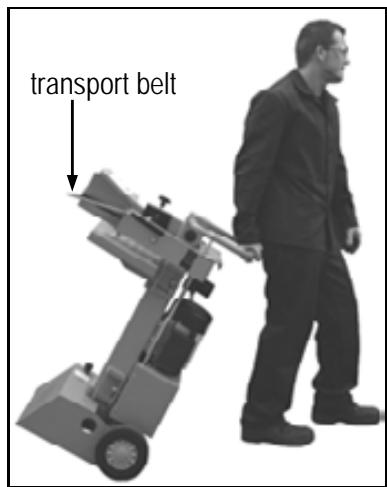
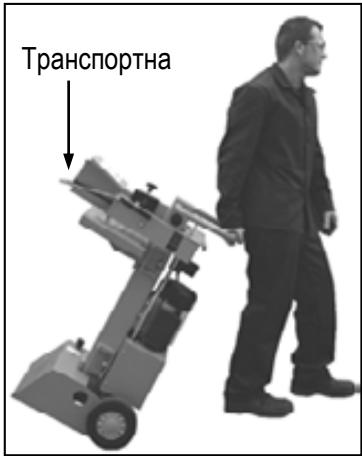
Move the splitting blade right down every time before the
machine is transported.
To transport the machine, grasp the handle and tilt the log splitter slightly towards you. The log splitter can be easily transported in this position.
Make sure that the oil tank cap is securely tightened to prevent oil from leaking during transport.
Positioning
Ensure that the working area meets the following conditions:
no danger of slipping
level
- free of obstacles
- sufficiently well lit

Do not operate the machine in the direct vicinity of gas, petrol pipes or containers, or any other easily inflammable materials.
Start-up
-
Check that the machine is completely and correctly assembled.
Before using the log splitter, make sure each time that -
there are no faulty connections (tears, cuts, etc.)
Do not use defective power supply cables.
there are no damages at the machine
all screws are tight
- check the hydraulic system for any possible leaks
the oil level
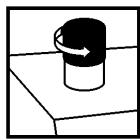
Venting
Vent the hydraulic system before putting the log splitter into operation.
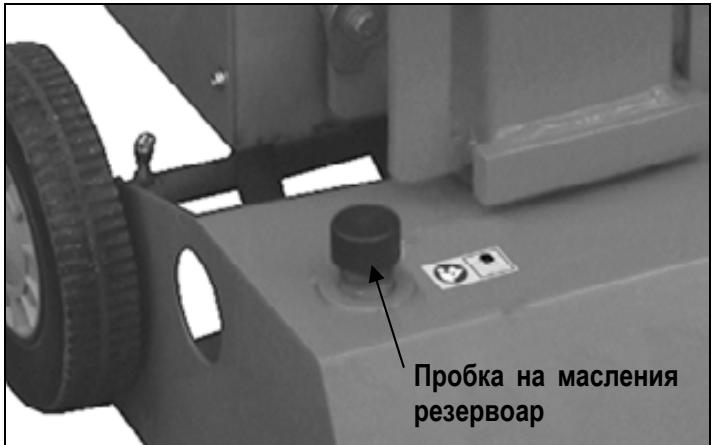
Unscrew the oil cap by several turns so that air may escape from the oil tank.
Leave the oil cap open during operation.
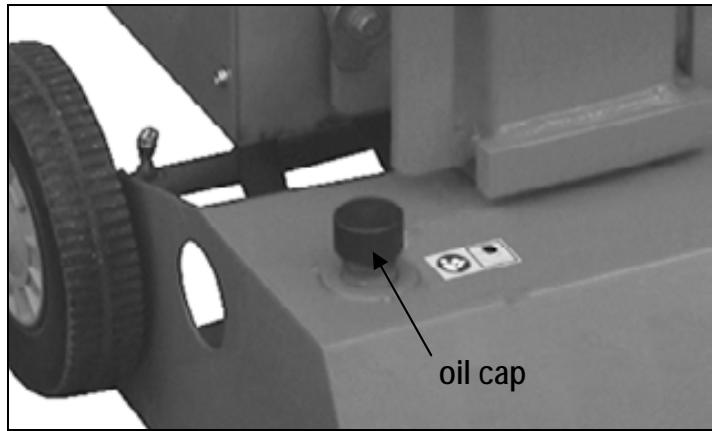
Close the oil cap before moving the log splitter, as otherwise oil will leak at this point.
If the hydraulic system is not vented, the trapped air will damage the seals and cause permanent damage to the log splitter.
(1) Mains connection
- Compare the voltage given on the machine model plate e.g. 230 ~V with the mains voltage and connect the machine to the relevant and properly earthed plug.
Only use connection cables with sufficient cross-sections. - Connect the machine via a 30mA fault current safety switch.
(1) Fuse protection
230 V ~ → 16 A time-lag

400 V 3~ → 16 A
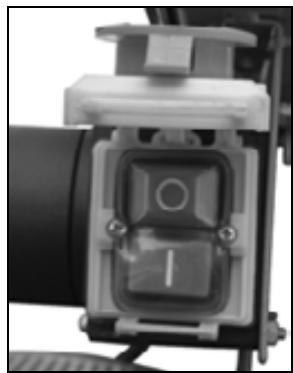
(1) Switching on / off
Prior to every use, check the function of the disconnection mechanism (by switching on and off).
Do not use any device where the switch can not be switched on and off. Damaged switches must be repaired or replaced immediately by the customer service.
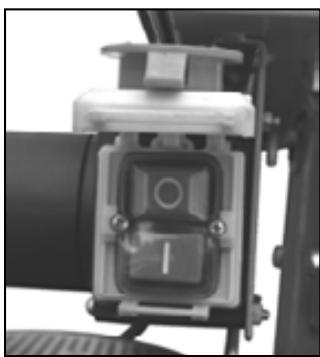

Switching on
Press the green button.

Switching off
Press the red button.
① Lock in case of power (zero-voltage initiator)
The equipment will switch off automatically if there is a power cut. Repress the green button to switch it on again.
Log splitter with 400 V 3~

Make sure that the motor turns in the
correct direction (see motor arrow), because operation in the wrong direction damages the oil pump.
Switch on motor; the splitting blade automatically moves to the highest position.
If the splitting blade is already in its highest position: grip both operating handles and push them down. The splitting blade moves downwards.
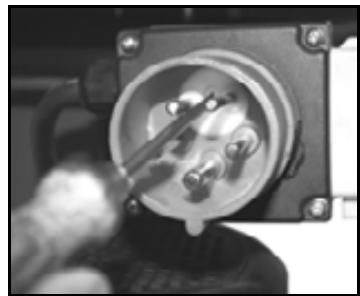
If the splitting blade does not move after the motor has started, switch off the motor and change the direction of rotation.
You can change the direction by placing a screw-driver in the slot provided in the plug collar, and adjust the correct direction by moving to the left or right applying slight pressure.
(i) Hydraulics
- Never operate the machine in the event of any possible danger from hydraulic fluid.
- Ensure that the machine and working area are clean and free of oil.
Danger of slippage or fire! - Check the hydraulic reservoir regularly to ensure that it contains enough hydraulic oil (see "Care and maintenance").
Capacity: approx. 4.0 litres
Working with the log splitter
Additional SAFETY INSTRUCTIONS
The log splitter may only be operated by a single person.
- The machine may only be operated by persons over the age of 18 years, and who have read and understood these operating instructions.
- Wear protective equipment (safety goggles/mask, gloves, safety shoes) to protect yourself from possible injury.
- Never try to split logs containing nails, wire or other similar objects.
- Already split wood and wood chips create a dangerous working area. The operator may stumble, slip or fall. Always keep the working area neat and tidy.
- Never place the hands on or near any moving parts of the machine when it is switched on. Maintain a safe distance from the log, the ram and the wedge in order to protect your hands from injury.
- The machine should only be used for splitting logs with a maximum length of 1050 ~mm .
- Check before splitting if the splitting column has been sufficiently lubricated to allow its trouble-free retraction and extension.
What type of logs can I split?
Size of logs
Length: max. 1050mm
Diameter: min. 50 - max. 340 mm
The log diameter is a recommended guideline figure, because:
- thin logs can be difficult to split if they contain knots or if the fibres are too strong.
Do not try to split green logs. Dry logs are much easier to split, and do not cause jams as often as green (damp) wood.
Hardwood tend to bursting: Exercise utmost caution!
Operation
Two-hand operation
Never operate the log splitter with two people.
Never block the control handles (clamping claws).
- Press the green switch on the electric motor. Wait a few moments until the motor has reached its operating revolutions and the required pressure has been built up in the hydraulic pump.
① Check the direction of the motor in the log splitter with three-phase motor (400 V 3~), because operation in the wrong direction damages the oil pump.
At temperatures below -5^ , let the log splitter run for at least 15min in neutral to heat up the oil.
- Place the log on the log splitter table.
Only split the logs in the direction of the wood fibres.
- Hold the log tight with the clamping claws.
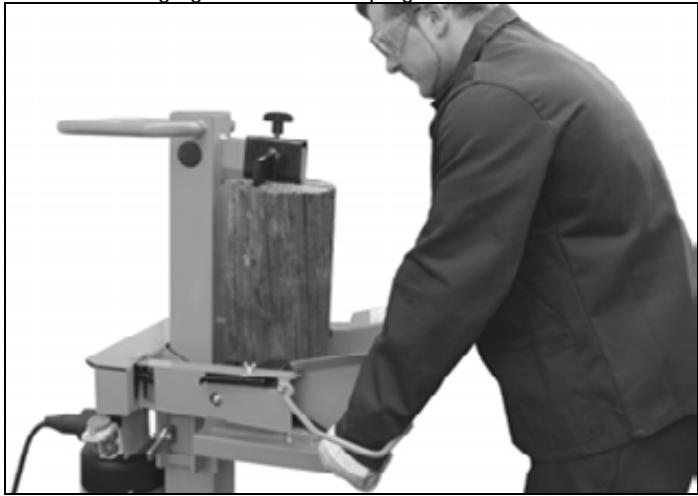
- Press both operating handles down simultaneously:
The splitting blade falls down and splits the log. - Release the two control handles, the splitting blade returns to its initial position.
If you only release one control handle, then the splitting blade remains where it is.
Special instructions for splitting logs:
Preparations:
The logs to be split should be cut to the maximum dimensions.
Ensure also that the logs are cut straight and square.
Place the log properly on the log splitter, so as not to cause any risk of stumbling or falling to the operator.
Adjusting the stroke height
In case of shorter wood pieces the efficiency can be increased by shortening the return of the splitting cutter.
- Place the log on the splitting table and press the two control handles to bring the splitting blade down to approx. 2 cm above the log.
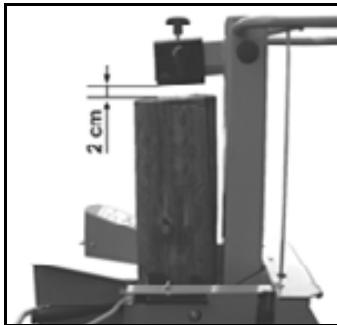
- Release one control handle so that the blade stays in this position.
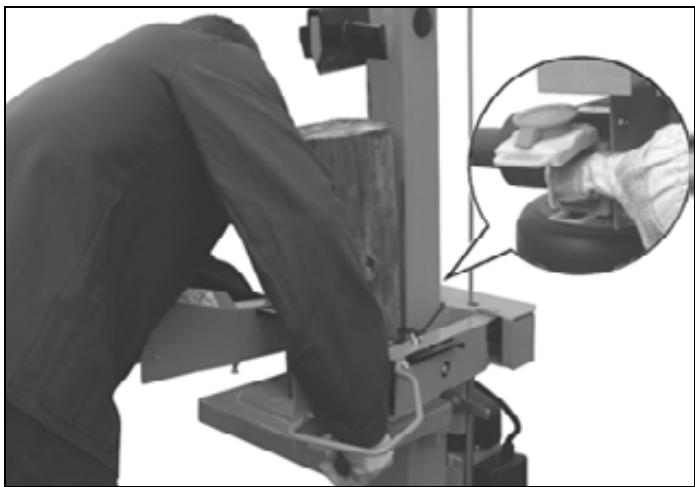
- Switch the machine off and disconnect the power.
- Release the second control handle.
- Shorten the return path at the rod fitted to the side by fixing the holding screw at the necessary height.
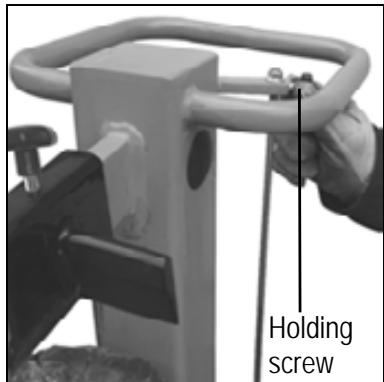
Adjusting the table height
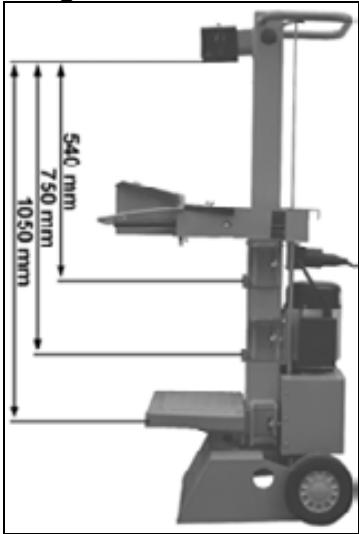
Upper table plate position for logs up to 540~mm .
Middle table plate position for logs up to 750 ~mm .
Lower table plate position for logs up to 1050 ~mm .
- Release the locking bolt.
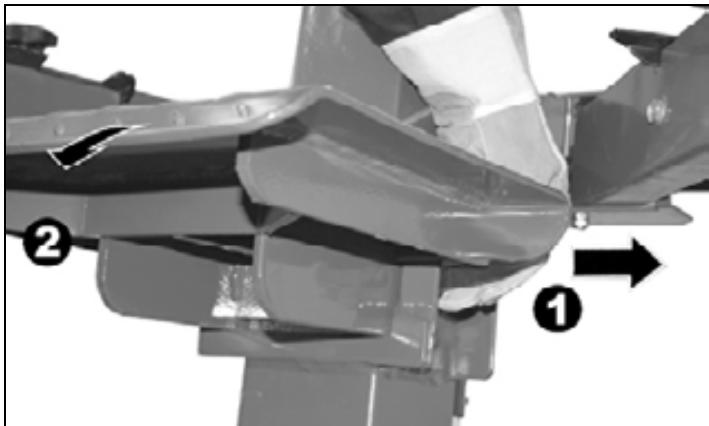
- Pull the table out.
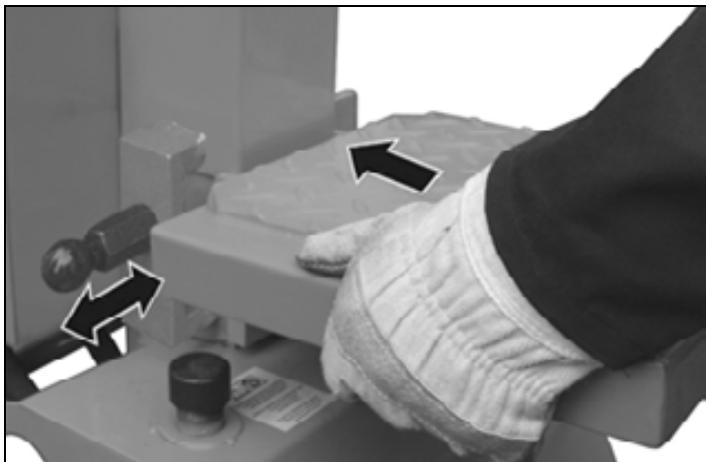
- Use the table in a position that comes close to the log length and secure it with the locking bolt.
Adjusting the splitting cross:
- Loosen star grip screw.
- Move the splitting cross to the correct position (The star grip screw is beyond the borehole in the splitting blade).
- Mount star grip screw.
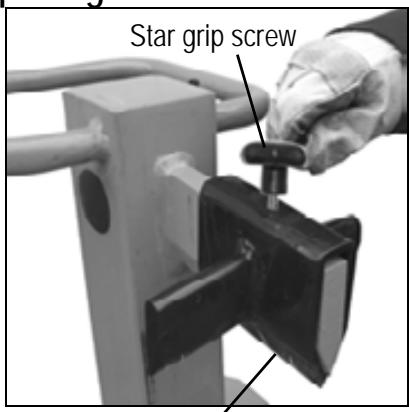
Splitting cross
- Splitting short wood:
- Upper position of table plate.
- Place the log on the splitter's table plate.
- Hold the log tight with the clamping claws.
① Only split the logs in 'he direction of the wood fibres.
- Splitting long wood:
- Middle or low position of table or base.
- Remove the splitting cross.
- Place the log on the splitter's table.
Possible malfunction when cleaving logs: The log to be cleaved is not cleaved right through, jams on the cleaving blade and is pulled up during the blade's return movement.
In this case, proceed as follows:
- Switch off the device.
- Depending on the log still to be cleaved fix the table plate in the middle or upper position.
- Switch on the device and continue the splitting operation.
Never try to split two logs at once.
Never try to remove or replace the log during the splitting process.
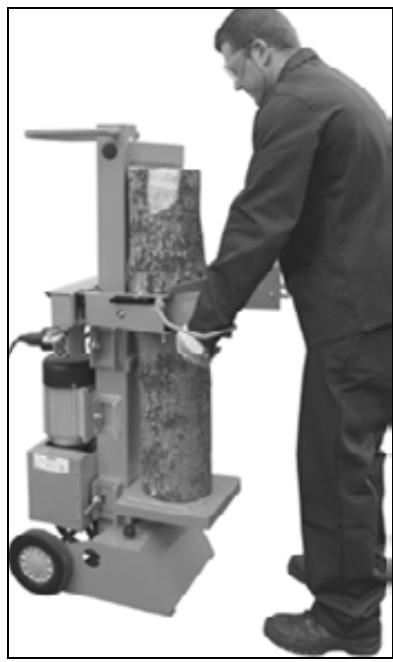
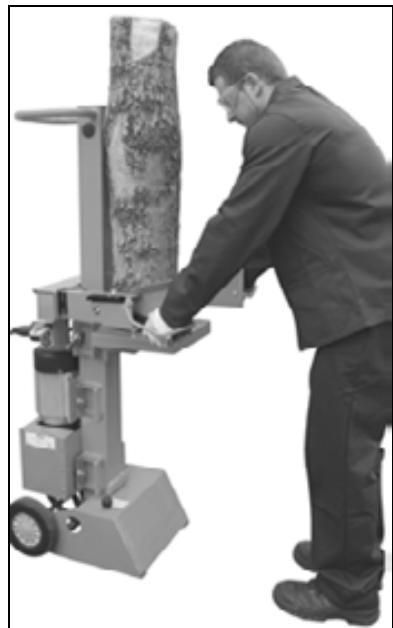
① Never try to force the splitting of the log by maintaining the pressure for several seconds. This can lead to damage to the machine.
Position the log on the table again and repeat the splitting phase, or put the log on one side.
How to release a jammed log?
There is a risk of knotted logs getting stuck during the splitting process.
- Switch machine off and disconnect the power.
-
Do not remove jammed logs with your hands.
-
Carefully move the stuck log with a crowbar backwards and forwards to loosen it. Don't damage the splitting pillar.
Never hammer on the stuck log.
Never use a saw to cut the stuck log out of the machine.
Do not enlist the aid of a second person - this is a one-man job.
Finishing work:
Bring the splitting blade to the lower position (run-in state).
Release one of the control handles.
Switch the machine off and disconnect the power.
Follow the care and maintenance instructions.
Maintenance and cleaning

Before each maintenance and cleaning work:
- switch off device
- pull out main plug

Wear protective gloves in order to avoid injury to the hands.
For maintaining and cleaning, removed security devices must unconditionally be mounted properly and proved again.
Use only original parts. Other parts can result in unexpected damages and injuries.
Be sure to have removed any tools from the machine after completion of service work.
Maintenance and repair work other than those described in this chapter is only allowed to be carried out by service staff.
To guarantee a long and reliable usage of the product carry out the following maintenance works regularly.
① Observe the following in order to keep the log splitter in good working order:
- Clean the machine thoroughly after you have finished using it.
- Loose fastening elements.
Worn out or damaged parts. - Remove any resin remains on the machine.
- Lubricate the splitting column regularly or oil it using environmentally friendly spray oil.
- Check hydraulic hoses and hose connections regularly for any leaks and firm fitting.
- Correct assembly and faultless covers and protective devices.
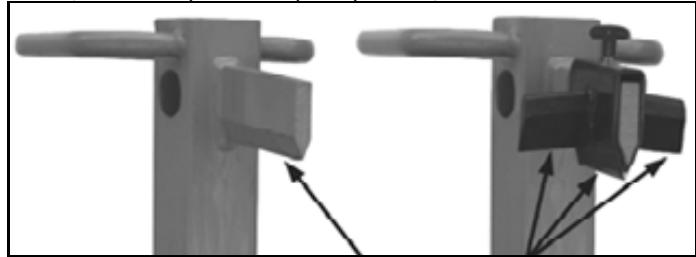
Sharpening the splitting blade
After longer operating periods, for reduced splitting performance or slight deformation of the cutting edge, grind the splitting blade or sharpen it with a fine file (remove burrs).
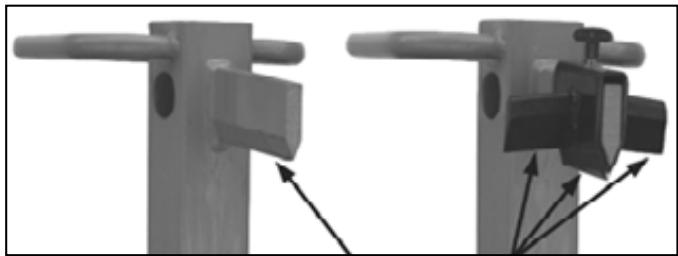
Sharpen wedges

How do I check the oil level?
- The splitting column must be in run-in state. Now remove the dipstick.
- Clean the dipstick and the oil seal.
- Replace the dipstick fully into the oil reservoir.
- Now remove the dipstick again and read off the oil level.
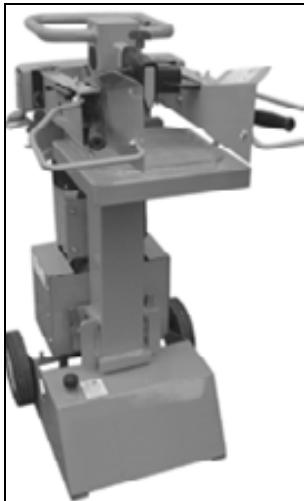
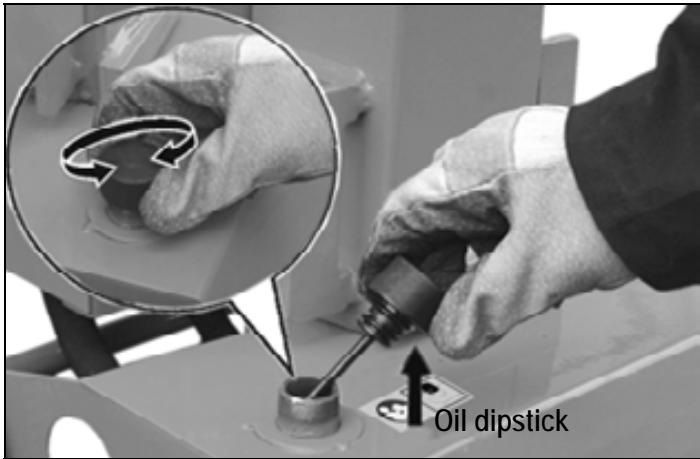
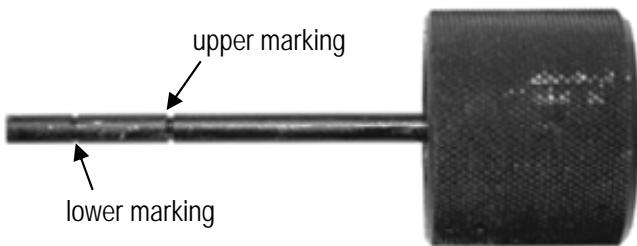
If the oil level is between the two marking on the oil dipstick, there is sufficient oil in the reservoir.
If the oil level is below the lower marking, more oil should be added with the aid of a clean funnel.
- Check the oil seal and replace it if it is damaged in any way.
- Replace the dipstick into the oil reservoir.

When should I change the oil?
The first oil change should be carried out after 50 operating hours, and then every 500 operating hours.

Two persons are required for this.
Changing the oil:
- The splitting column must be in run-in state.
- Now remove the dipstick.
- Place a container under the log splitter to catch the old oil. The container should have a capacity of at least 4.5 litres.
- Screw off the drain plug to allow the oil to flow out.
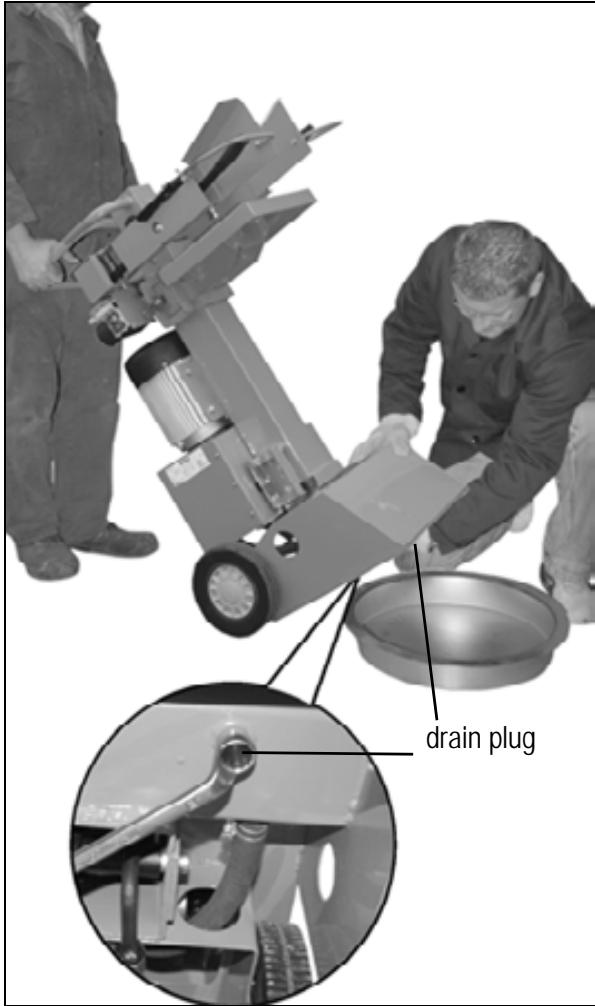
- Insert the seal and drain plug again.
- Pour in the new hydraulic oil (approx. 1.5 litres) using a clean funnel.
- Clean the dipstick and the oil seal.
- Check the oil seal and replace it if it is damaged in any way.
- Replace the dipstick.
Dispose of the old oil properly (local oil disposal point). The old oil must not be poured into the ground or drainage system, or mixed with other waste.
i Hydraulic oil
We recommend the following hydraulic oils for the hydraulic cylinder:
Shell Tellus T 22
Mobil DTE 11
Aral Vitam Gf 22
or equivalent
BP Energol HLP 22
Do not use any other types of oil. The use of any other type of oil will adversely affect the operation of the hydraulic cylinder.
Technical data
Possible problems
| Model / Type | ASP 6 N | ASP 6 N - 400 |
| Splitting force | 60 kN (6 t) | |
| Log length | max. 1050 mm | |
| Log diameter | min. 50 mm – max. 340 mm | |
| Stroke | ≈ 500 mm | |
| Feed speed | approx. 0.04 m/sek. | |
| Return speed | approx. 0.17 m/sek. | |
| Hydraulic oil (max.) | 4.5 litres | |
| Hydraulic pressure | 21 MPa (210 bar) | |
| Electric motor performance (power consumption) | P1 3.5 kW (S6 40%) | P1 3.0 kW (S6 40%) |
| Power supply | 230 V~ 50 Hz, 16 A time-lag | 400 V 3~ 50 Hz, 16 A |
| Dimensions | length 760 x width 500 x height 1520 mm | |
| Weight | approx. 100 kg | approx. 99 kg |

Before each fault clearance:
- switch off device
- pull out main plug
| Problem | Possible cause | Remedy |
| Logs are not being split properly (insufficient splitting performance). | →The log is not positioned correctly. →The log exceeds the maximum dimensions or the wood is too hard for the performance of the machine. ⇒Splitting blade does not split log. ⇒Hydraulic pressure too low. ⇒Release rods bent (hydraulic tappet not quite pressed in). ⇒Incorrect connecting lead (longer than 10 m or too small cable cross-section). | →Reposition the log correctly. ⇒Cut the log to the required dimensions. ⇒Sharpen splitting blade, check for burrs or notches. ⇒Check the oil level and add more oil if necessary. If the problem cannot be rectified, refer to the manufacturer or other approved service centre. ⇒Arrange for manufacturer or authorised company to adjust the rods. ⇒Use the correct connecting lead. |
| Splitting column moves unsteadily or with strong vibrations. | →Air in the circuit. ⇒Splitting column not sufficiently lubricated or oiled. | ⇒Check the oil level and add more oil if necessary. ⇒Lubricate splitting column or oil with environmentally friendly spray oil. If the problem cannot be rectified, refer to the manufacturer or other approved service centre. |
| Splitting column does not move in. | ⇒Hydraulic pump defective. | ⇒To correct the problem, refer to the manufacturer or other approved service centre. |
| Motor starts, but splitting column does not move in. | Motor turns in wrong direction | ⇒Check the motor direction Threephase: adjust the motor direction AC: To correct the problem, refer to the manu-facturer or other approved service centre. |
| Motor will not start. | ⇒No electrical power. ⇒2-phase mode in threephase motor. ⇒Connection cable defective. ⇒Electric motor defective. | ⇒Check the fuse. ⇒Have fuse and lead checked by qualified electrician. ⇒Replace the connection cable or have it checked by an electrician. ⇒To correct the problem, refer to the manufacturer or other approved service centre. |
Guarantee
Please observe the enclosed terms of guarantee.

EneKtpnuecka 6e3oNaCHOCT
- ɪənʌbʌnneHne Ha npɪncbædɪnHnteɪnHaTa Jɪnɪŋc bɪrʌaCHo IEC 60245 (H 07 RN-F) c hʌnpeuHNo ceueHne Ha xɪnɪnata Hau-majIko
230V
3x1,5mm² npi Ka6eJHa dIbJxHnHa do MaKc. 10 m
400 3
5x1,5mm² npi Ka6eJHa dIbJxHnHa do MaKc. 10 m
Hnkora He n3noJI3BaIte 3axpaHbauu Ka6eNn Hn 10 m. PnpcbEHNHTeINn Ka6eNn C rOJMa DbJXnHa N MaJIKO ceHHe cB3dABat Na Ha HApexKeHHeTo. DBrarTeJeT Beue He MoKe Da DOCTnHE CBOrTa MAKCmAlNaH MaOJHOCT, DeIcTBnEO Ha UpeDa Ce HAmJaBa.NHcTaInpaHnTe B npCbeHNHTeHNTE LInn UcenCeNn N CbeHNHTeHN KONTAKTHN KyTN Tp8Ba Da ca n3paBoTeHn OT rYma, MeK PVC INN OT dpyr TepMOJIaCTUChEn MaTePnaI Cbc CbUaTaMexAHNuHa JKOCT INN Da IMAT NOKPITne OT TaKbB MaTePnaI.
- ΚεπζηHOTO CβeДинЕне Na πριсьeДинHTeПнЯ Ka6eI Tp8bBa Da e 3aùnteHo OT ΠΟΝаДaHETo Ha BODH npbckn.
- Пи покарвано на письединтелся Кабел да се Виммав тд да He e cпескан Илп пргнат, a сцпселно Тбединене дд He ce MOKpn.
- Пи уnotpe6а на мakapa за кавелюразмотайу Кавеланпьлно.
He n3noJI3BaIte Ka6eJa 3a ZeI, 3a KOInTo ToJ He e npedHa3NaueH. Na3eTe Ka6eJa OT ropeuHa, MacNo I OCTpR p6oBe. He n3noJI3BaIte Ka6eJa, 3a Da n3TerIInTe UenCeJa OT KOHTaTa.
KoHTpOInpaIte peIOBHO yIbJnxTeJIHnTe Ka6eIN n 3aMeHnTe, KOraTO ca NOBpeDeHN.
He nnpaTe NOBpeHnna 3axpaHbaa Ka6e nped Da ro n3KJIIOHTe OT MPexKaTa. NOBpeHnAe 3axpaHbau Ka6e MoKe Da npEIN3BnKa KOHTaKT C YaCTN, PO KOnTO Teue TOK.
He n3non3baaTe deekeTHn npncbeHNHTJIH KaeJIn.
Ha otKpnto nOJ3BaIte cAmO yDbJNKeJIHn Ka6eJI, KOITo ca pa3peSeHn 3a TOBa n IMat CbOTBtHTo O603HaHeHne.
He n3noJI3BaIte BpeMeHH eIeKtpnueckn npncbEduHITeHNBpJ3KN.
Hnkora He uHTnpaTe 3aunTHnte yctpoCTBa n He m n3BexdaTe OT DeiCTBne.

EneKtpueckoto npncbdeHnHaBe pecn. peMOHTte Ha eNeKtpueckn Yactn Ha ypeDa Tp6Ba Da 6bDat N3BbprWBAHN OT KOHcEsCNOHpaN CneuJaNCT NO eNeKtpotexnka NJIOn OT HAKO ON HAaHTe CepBn3HN CEHTPOBE 3a KIneHTN. Tp6Ba Da ce cna3Bat MeCTHTe pa3npopeDn N NaH-BeYe Te3N, KOINTo Ca CBbp3aHn Cbc 3aUHTHNTe MepKn.

Pemontte Ha npyn qactn Ha ypea Tp6ba Da 6bdat N3Bpbwahn OT cTpaHa Ha npOn3BoNTeJpeCn.OT HAKOI OT HerOBtE cepBn3Hn ceHTPOBE 3a KJIneHTN.

Ja ce n3noJ3BaT cAmO opuHnHaHn pe3epBn qactN. N3noJ3BaHeTo Ha npu np3epBn qactn MoKe da doBeDe Do 3IPOJNYKc C noJ3BaTeJIa. 3a npoJ3TuAaUte OT ToBa UeTI npoJ3BOJNTeJIa HE HOCN OTROBOPHOCT.
Yka3aHnna 3a TpaHcnpTnpaHe

Ipeeni BcraKa CmHa Ha MrcTOTO n TpaHCnOpTnpaHe Ite pa3zepBaunr HOK B Hau-DoHNO NIOJOKHeN.
3a TpahcnopTnpaHcXbAte Ckobata c eHa npKa nLeko HauKIOHete ypeDa ca zeneHe Ha DpbBa KbMaBac.B ToBa NpOJoxKeHne ypeDbT 3a ZepeHe Ha DpbBa MoKe JIeCHO Da CE TpaHCnOpTnpa.
3a da ce n36eHne n3n3aHe Ha MacNo npi TpaHCnOpTnpaHc, KanaykaTa Ha MacNeHpe3epBoap Tp6Ba da e 3aterHa.
NocTabrHe
ObpHete BnMaHne Ha TOBa, pa6oTHaTa o6NaCT da OTROBApHa CNeDnTe yCJIOBnA:
Ja e 3aunTeHa OT NOxJb3BaHe
-Да ce paBha
-Да e CBO6OДнA OT ONaCHOCtN 3a NOxJIb3BaHc
- IOCTaTbUHO CBETIIHa.

Ja He Ce eKcnIloaTnpa MaunHaTa B 6Jn3OcT Do Ra3, HIOBn KaHAn NIn dpyrN JecHO rOpIMM MaTePnaJI.
Пускан eксплобатая
-
Y6eTeCe, Ye ypeIbT e MOHTnpaH n34JIIO N B CbOTBETCTBne C npEtnicaHnraTa.
IpeDn BcraKo nOJI3BaHe npOBepeTe CneHOTO: -
npncbeHnHTeHNHTe Ka6eN 3a depekTHMeCTa (nyKHaTnH, cpeOBe nIu npyRn pOo6H);
He n3noJ3BaIte deoekTHn Ka6eJI
- ypea - 3a eBentyaHn noBpei (noIeHn 6e3oNa cha pa6ota)
-ДалIN BCNUKIN BUNTOBIN CbeENHeHNA Ca 3aTeRHaTIN 3dpaBO
- XnДравлNiKaTа 3a TeчОBE
HNBOTO HA MACJIOTO
06e3Bb3dnywaBaHe
Ipei Da IycheTe MaunHaTa 3a Zeene He Ha DbPba oBe3Bb3dUweTe XnpabnHata CnCTema.
Pa3Bbptete npo6kaTa Ha MaCJIeHnpe3epBoap, 3a Da MoKe Bb3dYbT da n3ne3e OT MaCJIeHnpe3epBoap.
Octabete KanaykaTa OTBopeHa no BpeMe Ha pa6oTa.
Ipei Da npemecnte MaunHaTa 3a ceneHe Ha IbPba 3aTbOpTe np6KaTa Ha MacJIeHnPe3epBoAp, Tb' KaTO B IpOTINBeH CnyaM MoKe Da N3TeYe MaCNo.
Ako xndpaBnHnHa Ta CnTeMa He ce oBe3Bb3DyuH, Bne3nIaT Bb3dYx NOBpeJda yNtBTHHeHnTa I npEi3BnKBA TpaHa nobpeDa Ha ypeDa 3a ueHe Ha DbpBa 3a OrpeB.
i BkIIOUBaHe / n3KJIIOUBaHe
IpeiBcraKa ynoTpe6a npOBepaBaiTe pa6oTaHa n3KJIIOUbaUTo UCTPOINCTBO (Upe3 BKNIOUBAHe n 3KJIIOUBAHe).
He n3noJ3BaIte ypei, Ha KOITo npEbkIIOUbaTeJIaT He MoKe Da ce BkIIOUba NnKIIIOUBA. NobpeJeHnte npEbkIIOUbaTeJIu TpIbBa He3a6abHO da ce nonpaBrt OT cepBn3a IIN Da ce CMEHrT C HOBn.

BkIIOUbaHe
HaTnCHete 3eJIeHTo KOnHe.

N3KJIIOUBaHe
HaTncheTe YepBeHToKoJIe.
He n3IOn3BaIte MaIINHaTa HNKOra, aKO cbIeCTByBa OnaCHOCT OT XnDpaBNIuHa TeUHOCT.
IopcnHypeTe ToBa, MaunHaTa n paOthata oBnact da ca YnCTn N CBo6oHn OT MacJeHn neTha.
Onachoct OT nIb3raHe n noxap!
PeIOBHO npOBeRpaIte, daJIIMma IOCTaTbUHO xINpaBJIuHOMacNo Bpe3epBoapa(BIXK,IOIDpbXkaN rPnXn").
CbDbpxaHne:okoJIo 4,0IInTpa
Pabota c ypeda 3a haçenBahe haDbpBa 3a ropene

Hikora He ueene Te DBe Ibpa HabeHbK.
Hnkora He do6abay Te nnn CmehnTe DbpBa no BpeMe ha pa6ota.
1 Da He Ce IpeN3BnKBA HnKora HauePbAHe Ha CTBoIa NocpeDCTBOM NOIDbPxAHe Ha IIb3raHeTo B IpOdbJKeHne Ha HnKOJIc KeYHNI. Toba MoXe Da DoBeDe Do NobpeDN Ha MaunHaTa.
HarlaCeTe CTBOJa OTHOBo BbPxy rnaBHaTa paMkn NIOBTOpeTe npoueca Ha HauenBaHe n OCTaBeTe CTBOJa HAcTpaHn.
Kakceocbo6oxdaBa3akneuiocecte6no?
Ima onaCHOCT Ibpbata C KIOHn Da 3aJat Pnp Zenehe.
1.ИЗклочeteураиинздьрmaiteцencela.
2. He oTcTaPnAByaIe IbPbBaTa c pIe.
3. BnImaTeIHo pa3dBnKete 3aJIIoTo IbIpBO c ⅢaHra HAnpeIHa3aI, 3a da MoKeTe Da ro OcBo6OJte. He nobpeXdaIte KOIOHATA 3a ueNeHe!
A
При освобождаванeto НКога He поукайт eВьрху 3akneшено tceблno He слагаиTe pьцete 6и30do CTBOJa.
A
HnKora He n3BaXdaiTe 3aINoTo IbPBo Ype3 pR3aHe.
A
He monete Btopo Ince 3a nodkpena.
KpaHn pa6oTaTa:
ПoctabeTe HOxa 3a ueeneB VdoIHO nIoXeHne (cnychaT).
Пусhte eнHaTeДрьЖka 3a 06cnyЖbaHe.
I3knIoueTe ypeDa n n3dbpnaIte uenceJa.
La ce cna3BaT yka3aHnraTa 3a noDpBxKa n grnKn.
TexHnuecka nOdprbXka

Пре徳и BCЯкa Тхнчесka ПОДрьжka IN OпчICTbaHe:
- da 6bIe n3KnHoueH ypeJa
-Да ce ИЗвади Урпсела 3a eнктчесkaТа Мрека

a ce HocrT npedna3n pKaBUN, 3a da ce npedOTbpaTaBAt hapaHbAHnHa pbcTe.
3aunthnte npncnocobleny, konto ca cbaJeHc ceI n3BbprBaHe Ha texnuecka IopdpbXka I nooNCTBaHe, Tp6Ba da 6bDat OTHOBo HndEeKHO MOHTnpaHn I npOBepHn.
Ia ce n3no13BaT cAmO opunHaJIHn YactN. IpyrY qactm MORat da npedn3BnKaT HepeDnIMN IOBpeN HapaHraHna.
BHHMaBaIe cIeI IOIaPbJxKaTa IIN peMOHTa OTHOBa MaXHeTe INHCTpyMeHTa IraeHnI KJIIOH.
Pa60Tu No TexHnueckata NopdpbXka I NOuchTbaHeTo, pa3NUnHn OT ONuCaHnte B HactoIaIpa3dJI, MORa T da Ce n3BbPWBat CAMO OT cepBn3a.
3a da ce rapaHTnpoDbJXHTeHNO HnAeKdHO n3noJI3BaHe Haypea, npOBekdaIte peDobHO TexHuecka noDpBxka.
Cna3BaIe cIeHTo, 3a da 3ana3nTe roDHOCTTa Ha ypeDa 3a HauenBaHe Ha IbPba:
IOnuInCTe OCHOBHO MaunHaTa Cnei npNKIOUbaHe Ha pa6ota.
xna6abvBp3kn.
N3HOCEHN NIN NOBpeDeHn YAcTn.
- OtrpaheTe OTnaraHnO TcMoJa.
- HamaçlajBaIte peIobHO MOTOBJIkata C ekOJIogUH O macNo 3a npbCKaHe.
PeioBHO npOBepraBaIte PJIbTHOCCTa 3dpabHnHaTa Ha XnpaBnUHnTe WJlayXOBe NJlayXOBn Bp3Kn.
-Правино могторази Изправи Калачи Лл 3ацHTи риснообеля.
HaToUbaHe Ha KJIInHa
Cnei npoIbIxnteHa ekCnloatauia nn npn HamaJeH kanaTet Ha hauenBaHe da ce nPiPi pa3npnHa KInn C pHa nla (da ce oCTpaHrT OCTpnte pb6obe).
HaToUBaHe Ha p6a

Symbol apparatus / emballage

(1) Indkobling / Frakobling
Indhold: ca. 4,0 liter
BP Energol HLP 22