KH 2305 - Hi-Fi System SILVERCREST - Free user manual and instructions
Find the device manual for free KH 2305 SILVERCREST in PDF.



User questions about KH 2305 SILVERCREST
0 question about this device. Answer the ones you know or ask your own.
Ask a new question about this device
Download the instructions for your Hi-Fi System in PDF format for free! Find your manual KH 2305 - SILVERCREST and take your electronic device back in hand. On this page are published all the documents necessary for the use of your device. KH 2305 by SILVERCREST.
USER MANUAL KH 2305 SILVERCREST
MICROCADENA ESTÉREO
MINI IMPIANTO STEREO
ES MICROCADENA ESTÉREO
Intended use 32
Items supplied 32
Technical Data 32
Safety information 32
Setting the device 33
The operational controls 33
Inserting the batteries 34
Handling of batteries 34
Becoming acquainted with the remote control 34
Connecting the components 34
Switching the device on and off 34
Selecting the programme source 34
Setting the volume 34
Using headphones 34
The Bass Boost function 35
Operating the radio 35
Operating the CD player 35
MP3 functions 36
Playback of USB memory devices 37
Operating the cassette player/ recorder 37
Cleaning and care 38
Troubleshooting 38
Disposal 38
CE Conformity 38
38
Important warranty Notices 38
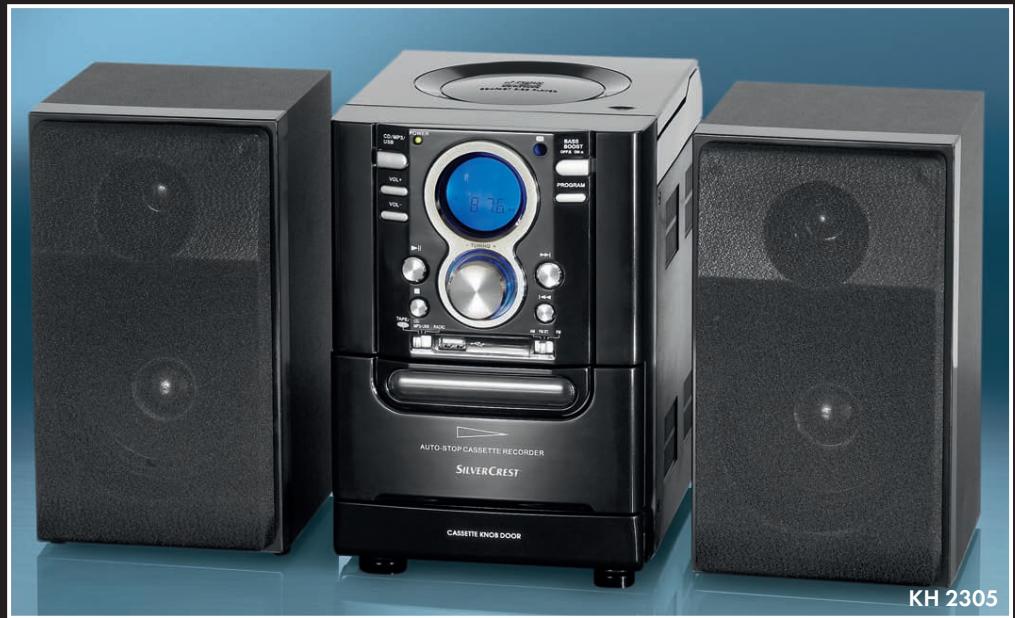
This micro system is intended exclusively for the playback of audio CDs, MP3-CDs, CD-R, CD-RW, USB flash memory mediums, audio cassettes and for the playback of radio programmes. Additionally, the micro system is suitable for the recording of audio cassettes. The micro system is not intended for use in commercial or industrial environments. No warranty claims will be granted for damage resulting from improper use!
Items supplied
1 Micro-system
2 Loudspeakers
1 Remote control (incl. 3 V battery, CR-2025)
1 Operating instruction manual
Technical Data
Micro system
Rated voltage: 230V ,50Hz
Power consumption:
In standby <6 Watt
During operation 12 Watt
Frequency range radio: MW (AM): 526,5 -1606,5 kHz
VHF (FM): 87,5 - 108 MHz
Measurements (W× H× D)
Main device: 16 × 23,5 × 23,2 ~cm
Per box: 13 × 23,7 × 15 ~cm
Weight
Main device: approx. 2180 g
Per box: approx. 960 g
Speaker power rating.: 2 × 2 Watt RMS
Impedance: 4 Ohm
Max. output voltage
at the headphone socket: 250 - 260 mV
USB port
Readable memory
medium: USB1.1 and 2.0 up to a
capacity of 2GB
CD Laser: Laser class 1
Operating temperature: 5^ - 40^
Storage temperature: -20^ - 60^
Protection class: II
Cassette player/recorder
Cassettes: Standard cassette
(C-90 or shorter)
Tape speed: 4.75 cm/sec.
Remote control
Battery: 1 x 3 V Type CR 2025
Safety information
- Do not permit children to handle electrical equipment without supervision, as they cannot correctly assess the possible dangers of injury.
- Unplug the power cord after every use and before cleaning, so as to prevent the device from switching on inadvertently.
-
Check the device and all parts for visible damages. The safety concept can work only if the device is in a faultless condition.
-
The power plug must always be easily accessible, so that in the event of an emergency the device can be quickly disconnected from the mains power supply.
Risk of explosion!
- Do not throw batteries into a fire.
- Do not recharge the batteries.
- Never open batteries, never solder or weld batteries. The risk of explosions and injuries exists!
- Regularly check the condition of the batteries. Leaking batteries can cause damage to the remote control or to the device.
- If you do not intend to use the device for an extended period, remove the batteries.
- If the batteries have leaked put on protective gloves and clean the battery compartment and the battery contacts with a dry cloth.
Risk of electrical shocks.
- Connect the device to an electrical wall socket with a mains voltage of 230V / 50Hz .
- Do not operate the device if the connection cord or the power plug is damaged.
- The connection cord or device should be immediately repaired or exchanged by the customer service department if they fail to function faultlessly.
- NEVER submerse the device in water. Wipe it only with a slightly damp cloth.
- Do not expose the device to rain and never use it in a damp or wet environment.
- Make sure that the power cord does not become wet during operation.
- You must not open the device housing or repair the device. Inside the device there is invisible laser radiation ("Laser class 1"). Therefore in this case safety is not assured and the warranty will become void.
- Do not place objects containing fluids, e.g. flower vases, on or near the device.
- Notice regarding power disconnection
- To completely disconnect the device from the power source the power plug must be removed from the power socket. For this reason the device should be placed in a position where a constant unobstructed access to the power socket is assured, thus in an emergency situation you are able to immediately pull out the power plug. To eliminate the risk of fire you should completely disconnect the power plug from the power socket when the device is not going to be used for a long time, for example, during holidays.
- Always grasp the power cord by the plug. Do not pull on the cord itself and never touch the power cord with wet hands as this could result in a short circuit or an electrical shock. Do not place the device, furniture or anything else on the power cord and make sure that it does not become clamped. Never tie knots in the power cord and do not join it to other cables. Place the power cord in a position where it can not be trod on. A damaged power cord can cause a fire or an electrical shock. Check the power cord from time to time. Should it become damaged contact your nearest authorized customer service centre or dealer to have it replaced.

Risk of fire!
- Do not use the device in the vicinity of hot surfaces.
- Do not place the device in locations that are subject to direct sunlight. Otherwise, it may overheat and become irreparably damaged.
- Never leave the device unattended while it is being used.
- Never cover the ventilation slots of the device while it is on. Avoid placing this device in locations that provide insufficient ventilation or hot locations and do not place the device in direct sunlight or under strong artificial light sources.
- Do not place any open sources of fire, like candles, on the device.
- When a storm and/or thunderstorm with the risk of lightening threatens please disconnect the device from the mains power.

Risk of personal injury!
- Keep the power cord and device away from children. Children frequently underestimate the dangers of electrical equipment.
- Ensure a safe location for the device.
- Do not operate the device if it has sustained a fall or is damaged. Arrange for the device to be checked and/or repaired by qualified technicians.
- Batteries should not be allowed to fall into the hands of children. Children can put batteries into their mouths and swallow them. If a battery is swallowed medical assistance must be sought immediately.
- This device is not intended for use by individuals (including children) with restricted physical, physiological or intellectual abilities or deficiencies in experience and/or knowledge unless they are supervised by a person responsible for their safety or receive from this person instruction in how the device is to be used. Children should be supervised to ensure that they do not play with the device.

Danger of eye injuries!
- The device is fitted with a "Class 1 Laser". Never look directly into an open CD tray. The invisible laser beam could damage your eyes.

CAUTION!
Information on surge voltage (EFT / rapid electrical transition process) and Electrostatic discharge:
In the case of a misfunction due to rapid electrical transition (surge voltage) or electrostatic discharge the product must be reset (it may be necessary to disconnect the power source and then reconnect it) to restore normal operation.
Note: A case of electrostatic discharge occurs if one walks with plastic-soled shoes over a carpet that also contains elements of plastic. Through the friction of the shoe soles on the carpet a charge is created in the body which discharges itself as soon as one touches an electricity conducting object, such as for example a door knob or the bodywork of a motor vehicle. Thereby it is sufficient to approach the conductor to within only a few cm. Direct contact is not required to effect a discharge. The charge can also unload itself over an electrical arc. A discharge is thus also possible through plastic housing components.
Note: This device is equipped with non-slip rubber feet.
As upper surfaces can comprise of various materials and are
treated with various cleaning materials, it cannot be completely excluded that some of these materials contain components that could attack and soften the rubber feet. If possible place an anti-slip material under the feet of the device.

Observe copyright laws
When recording CDs, cassettes or radio transmissions observe the copyright laws of the country, in which the device is to be used.
Setting the device
Remove the micro system and accessories from the packing.
Remove all transportation fasteners and tapes/foils.
Place the micro system on an even, level surface. Place the micro system in such a position that the CD tray cover ① can open fully.
Place the speakers to the right and left of the micro system.
The operational controls
On the device
CD compartment
- CD pressure point - Tray open / close
3 Infrared sensor for the remote control signal
BASS BOOST -To emphasis the deep frequencies
5 PROGRAM -For the saving of CD programmes
⑥ Display
TUNING
8
9
10 BAND
Station tuning
CD title skip forwards
CD title skip backwards
Radio band switching, USW mono/stereo switching
cover viewing window
cover
assette player/recorder keys
Stop cassette playback
End cassette playback Open cassette compartment
Cassette wind forward
Cassette wind backwards
Start cassette playback
Start cassette recording
Headphones socket
USB port
Select programme source On/Off switch
CD playback end
CD playback start/stop
Reduce volume
Increase volume
Switching between CD/USB playback
Operation indicator
23
24 II
VOL-
26 VOL +
CD/MP3/USB
playback
28 POWER
Speaker box
FM (USW) dipole antenna
31 Power switch
Speaker connection LEFT +
3 Speaker connection LEFT -
Speaker connection RIGHT -
Speaker connection RIGHT +
Power cord
On the remote control:
FOLDER UP -To the next MP3 folder
STOP -End CD playback
99 SKIP + CD title skip forwards
PROG -For the saving of CD programmes
Battery compartment (rear panel)
MODE -Activate the CD repeat function and random playback
SKIP- -CD title skip backwards
44 II PLAY/PAUSE -CD playback start/stop
FOLDER DOWN -To the previous MP3 folder
Inserting the batteries
The remote control requires a 3 V battery type CR2025, which has been preinstalled at the factory. To protect against premature discharging we have isolated the poles with a plastic strip, which you can simply pull out before initial operation. The remote control is then ready for operation.
If the device no longer reacts reliably on the remote control signal, the battery is depleted. Change the battery with a fresh one of the same type.
For this open the battery compartment on the rear side of the remote control ①. To open press the battery holder's locking device to the side and pull the holder out.
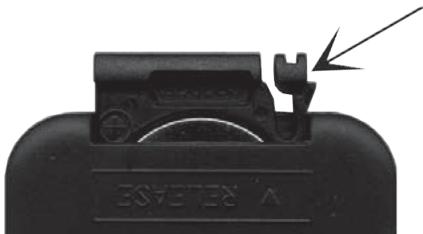
Before removing the old battery please take note of the battery's position by means of the inscription that is visible from outside.
Remove the battery and replace it with a fresh one of the same type. Thereby the inscription must still be visible from the outside otherwise the device will not function and could be damaged.
Slide the battery holder back into the remote control until it locks into place.
Handling of batteries
A leaking battery can cause damage to the remote control.
If you do not intend to use the remote control for a long time, remove the battery.
Do not attempt to recharge the battery.
Becoming acquainted with the remote control
Point the remote control towards the device when you activate its buttons. The remote control functions at a distance of approx. 5m from the device and at an angle of at least 60^ . For transmission of the signal there must be no objects placed between the device and the remote control.
Connecting the components
Loudspeakers
Connect the speaker wires of the right speaker to the right speaker terminals:
- connect the red lead of the speaker wire to the + terminal 35.
- connect the black lead of the speaker wire to the terminal 34.
Connect the speaker wires of the left speaker to the left speaker terminals:
- connect the red lead of the speaker wire to the + terminal ②.
- connect the black lead of the speaker wire to the - terminal 3.
Power supply
Connect the power plug of the power cord to a properly connected power socket 230V /50Hz
Switching the device on and off
To supply the device with mains power move the power switch ① on the rear panel of the micro system to the position "l".
To switch the device on move the FUNCTION switch 2 to the CD/MP3/USB or RADIO position. The micro system is now operational and the green POWER indicator 28 as well as the blue background illumination of the display 6 light up.
To switch the device off move the FUNCTION switch 2 to the TAPE/ position.
To separate the appliance from mains power, remove the plug from the mains power socket.
Selecting the programme source
You can select between the following programme sources:
CD/MP3/USB-Playback of audio CDs, MP3-CDs or
-
USB memory mediums
-
TAPE -Playback of audio cassettes
- RADIO -Playback of radio stations
For this move the FUNCTION switch 2 to the desired position.
Setting the volume
To increase the volume, repeatedly press the VOL + 25 button or hold the button down until the device has reached the desired volume.
To decrease the volume, repeatedly press the VOL-25 button or hold the button down until the device has reached the desired volume.
Using headphones
You can connect headphones to the micro system with a 3.5mm jackplug (not supplied). The headphones socket 20 is located on the front of the micro system behind the cassette keys cover. When you have connected the headphones, the
loudspeakers are disconnected and you will only hear sound via the headphones.
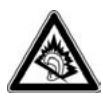
Important! Listening to music with headphones for long periods and at high volume levels can lead to hearing damage!
The Bass Boost function
When you want to emphasize the deep frequencies during playback press the BASS BOOST ① button. To deactivate the function press the button again.
Operating the radio
This device receives radio stations on the frequency bands, Ultra short wave (USW or Engl. FM) and Medium wave (MW or Engl. AM).
The technical details of the device allow for an adjustable frequency range of MW (AM) 526,5 - 1606,5 kHz, and/or FM (USW) 87,5 - 108 MHz. In some countries, different national regulations may apply to the assigned radio frequency ranges. Please note that information received outside of the assigned radio frequency ranges may not be used, passed on to third parties or otherwise misused.
In order to receive a good USW reception with the micro system unwind the dipole antenna on the rear panel of the device completely.
If the reception is insufficient change the position of the dipole antenna ①. Secure the dipole antenna ②, if necessary, with sticky tape.
The device has a built in ferrite antenna for reception of MW stations. When the MW reception is insufficient please turn the device in a more favourable direction.
To activate the radio function move the FUNCTION switch 2 to the "RADIO" position.
Now select with the BAND switch ⑩ the desired frequency band FM or AM depending on which band the station that you want to hear is located. If the switch is in the position FM ST, the appliance plays the VHF station in stereo.
With the aid of the TUNING controller ① you can now select the station. For this turn the controller in a clockwise direction to select stations with a higher broadcast frequency than the one currently shown in the display ⑥.
Turn the TUNING controller ⑦ in a counter clockwise direction to select stations with a lower broadcast frequency than the one currently shown in the display ⑥.
When the device receives stereo USW transmissions, in the display ⑥ the (ST) symbol lights up.
If the stereo reception becomes noisy move the BAND-switch to the FM position and thus switch to mono.
Operating the CD player
The device plays audio CDs (CD-A) and MP3-CDs. Both pressed and blank discs burnt on the computer of the format CD-R and CD-RW are supported. Because of the many different kinds of blank discs, computer types, operating systems,
burning software and burning processes we are not able to guarantee that every "burnt" disc will playback faultlessly.
Inserting a CD
Move the FUNCTION switch ② to the CD/MP3/USB position.
To open the CD tray ① carefully press on the "▲" marked spot ② of the CD tray lid. The lid will open.
Place the CD with the marked side up pointing towards the arbor of the CD disc in the CD tray ①.
Press the CD lightly downwards until it locks firmly onto the arbor.
To close the CD tray ① push the lid, by hand, downwards and carefully press on the "▲" marked spot ② until the lid locks into place.
The device will now read the CD. Subsequently the display ⑥ shows the number of CD titles.
Starting playback
Press the button II 24 on the device and/or the button II PLAY/PAUSE 44 on the remote control.
The display ⑥ shows you the number of the currently playing back title, the playback symbol as well as "DISC".
Playback stop/resume
During playback press the button II 24 on the device and/or the button II PLAY/PAUSE 44 on the remote control to stop playback. When CD playback is stopped the playback symbol blinks in the display 6.
To resume playback press the button II 2 and/or II PLAY/PAUSE again.
Next/previous title
To playback the next title of a CD press the button 1 8 on the device and/or the SKIP ^+ button 督 on the remote control.
To playback the previous title of a CD briefly press twice successively the button on the device and/or the SKIP - button on the remote control.
Search forward and backward
You can activate a search to look for specific passages within a title.
For this, during playback, hold down the button and/or SKIP + (forwards) or the button and/or SKIP - (backwards) until the desired location in the title is reached.
Stopping the play function
Press the button on the device and/or STOP on the remote control.
Removing the CD
To open the CD tray ① carefully press on the "▲" marked spot ② of the CD tray lid. The lid will open.
Remove the CD.
To close the CD tray ① push the lid, by hand, downwards and carefully press on the "▲" marked spot ② until the lid locks into place.
Switching on the repeat function
With the repeat function you can repeat play individual titles or all the titles of a CD.
To repeat an individual title press the MODE button before or during playback.
The display ⑥ shows "REP".
To repeat all the titles on a CD press the MODE button twice.
The display ⑥ shows "REP ALL".
To end the repeat press the MODE ② button continuously until the notice REP / ALL goes out.
Playing back titles in random order
Press three times the MODE button. The display shows "RANDOM". The titles on the CD will be played back from now on in random order.
Press the button MODE again to turn the function off.
Programme playing order
You can programme an order in which the titles of a CD are to be played. 20 program positions are available for this purpose. Programming is only possible when playback is stopped.
Press the PROG 40 or PROGRAM 5 button.
In the display ⑥ blinks the programme position 1 (P - U 1) of the title, which will be the first title played when programme playback begins. The PROGRAM indicator also blinks.
Starting the programmed title list.
Once you have programmed all desired titles you can start playback by pressing the II PLAY/PAUSE button and/or
When you press the STOP button and/or you will end the playback, however the device remains in the programme mode.
When you press the STOP button and/or twice you delete the programme and the device exits the programme mode.
When the device has played back all of the programmed titles the programme will be deleted. This also happens when you open the CD tray ①, switch to another programme source or switch the micro system off. Then the PROGRAM indicator goes out.
MP3 functions
"MP3" denotes a process and/or format developed by the Fraunhofer Institute for the compression of audio data. In the MP3 format compressed music pieces are only a fraction of their original size, which, for example, on CD-Rs/CD-RWs allows for storage of a considerably greater volume of music than on commercially available audio CDs, on which audio data is stored in the CDA format. Indeed the audio quality is scarcely reduced by the process.
Playing MP3 titles
Place a CD with MP3 files into the CD tray 1.
Move the FUNCTION switch ② to the CD/MP3/USB position.
The display shows the number of disc titles.
To start playback of the MP3-CD press the button II PLAY/PAUSE 24 and/or 44.
In the display 6 the MP3 indicator and the playback symbol appear.
The display ⑥ shows, alternating with the title number, the number of the folder from which is currently being played back (i.e. F02 for folder 2 in alphabetical order).
When the MP3-CD contains several folders proceed as follows:
To select a folder before playback starts press the button FOLDER DOWN or the button FOLDER UP.
Within aprox. 3 seconds press the button II PLAY/ PAUSE and/or to start playback with the files from this folder. If the time elapses the display returns to the indicator for the total title count. After the files from this folder have played back the device switches to the next alphabetical folder.
To select another folder during playback press the button FOLDER DOWN or the button FOLDER UP.
Stopping the play function
Press the button STOP and/or 38.
Next/previous title
To playback the next MP3 title on the CD press the button 8 and/or SKIP + 9.
To playback the previous MP3 title on the CD press twice briefly, one after the other, the buttons and/or SKIP -
Search forward and backward
You can activate a search to look for specific passages within an MP3 title.
For this, during playback, hold down the button and/or SKIP + (forwards) or the button and/or SKIP - (backwards) until the desired location in the title is reached.
Programming the MP3 title order
You can programme the order, in which the titles on an MP3-CD are played back. 99 programme locations are available for this purpose. This is only possible when the play function has been stopped.
Press the PROG 40 or PROGRAM 5 button.
In the display ⑥ blinks the programme position 1 (P - U 1) of the title, which will be the first title played when programme playback begins. The PROGRAM indicator also blinks.
Select with the FOLDER DOWN or FOLDER UP and the / buttons and/or SKIP-/+39 the desired title for the indicated programme position. In place off the programme position indicator the display now shows the CD titles available for selection.
To save the selected title press the PROG or PROGRAM 5 button.
To programme further titles repeat the previously described steps.
Starting the programmed title list.
Once you have programmed all desired titles you can start playback by pressing the II PLAY/PAUSE button and/or
When you press the STOP button and/or you will end the playback, however the device remains in the programme mode.
When you press the STOP button and/or twice you delete the programme and the device exits the programme mode.
When the device has played back all of the programmed titles the programme will be deleted. This also happens when you open the CD tray ①, switch to another programme source or switch the micro system off. Then the PROGRAM indicator goes out.
Switching on the MP3 repeat function
With the repeat function you can repeat playback individual MP3 titles, the contents of a folder or all the titles on an MP3-CD.
To repeat an individual MP3 title press the MODE button before or during playback.
The display ⑥ shows "REP".
To repeat all titles in a folder on the MP3-CD press the button MODE twice.
The display ③ shows "REP ALBUM".
To repeat all the titles on an MP3-CD press the MODE button three times.
The display ⑥ shows "REP ALL".
To end the repeat press the MODE button continuously until the notice REP/ALBUM/ALL goes out.
Playing back MP3 titles in random order
Press the MODE ② button four times. The display ⑥ shows "RANDOM". The titles on the MP3-CD will be played back from now on in random order.
Press the button MODE again to turn the function off.
Playback of USB memory devices
We have equipped the device with a USB port. You can use this interface to play MP3 and WMA data.
Connect the USB memory medium to the USB port 21.
Move the FUNCTION switch ② to the CD/MP3/USB position.
Now press the CD/MP3/USB button so that "USB" and the symbol are shown in the display .
The device will now read the medium. After which the display shows the number of titles contained on it.
Press the PLAY/PAUSE button 24 and/or 44 to start playback. The display 6 shows you the title number and the file format of the currently playing title (MP3 or WMA).
Further operations are identical to the playback of MP3-CDs.
Before removing the memory medium from the USB port 21 stop playback.

Note:
Because of the many different formats, specifications and manufacturers of flash memory mediums we can not guarantee that every memory medium can be played. It is not possible to playback hard discs connected to the USB port.
Operating the cassette player/recorder
Inserting a cassette
Fold the protective flap forward and down. Behind are located the operation keys for the cassette player/recorder.
To open the cassette compartment 2 press the key / 15. The cassette compartment opens automatically.
Place the cassette with the tape opening down into the holder in the cassette compartment lid. The tape should be taut and without loops. Close the cassette compartment by hand.
Select with the FUNCTION switch ② the cassette recorder (TAPE).
Starting cassette playback
Press the cassette key 18.
Cassette playback stop/resume
During playback press the cassette key II 14.
To resume playback press the cassette key II again.
Stop cassette playback
Press the cassette key / 15 .
If the device reaches the end of the tape when recording or when playing back, the tape is stopped automatically.
Winding the cassette forward and backward
① Only use the wind function when the tape is stopped otherwise the tape could be damaged.
Press the cassette key 16 to wind the tape forward.
Press the cassette key to wind the tape backwards.
Press the cassette key / 5 to stop winding.
Cassette recording
You have the potential of recording radio programmes, CDs or MP3 files from a USB memory medium onto a cassette tape.
Tune to the desired station or place the desired CD into the CD tray.
When you want to start the recording press the cassette key 19. The key 18 locks in at the same time.
When you want to stop recording press the cassette key /△ 15.

Observe copyright laws!
When recording cassettes from CDs, USB memory mediums or copying radio transmissions be aware of the copyright regulations of the country, in which the device is to be used.
Risk of potentially fatal electrical shock:
- Never open the device housing. There are no user-servicable parts inside.
- NEVER submerge the device or its components in water or other fluids!
- Do not allow any liquids to penetrate the housing.
Cleaning the housing:
Remove the power plug from the power socket beforehand.
Clean the housing surface with a slightly damp cloth Never use petrol, solvents or detergents that can damage plastics!
Cleaning the sound heads
- At regular intervals remove dust and cassette deposits from the sound heads. Contamination on the sound heads impairs sound quality, both when recording and on playback.
- To clean the sound heads you should use a commercial head cleaning cassette.
Cleaning the CD-Laser
- Clean the laser at regular intervals.
- To clean the laser you should use a commercial cleaning CD.
Troubleshooting
No or poor radio reception
When the MW reception is insufficient check to see if the device is optimally aimed and/or with insufficient USW reception whether the USW dipole antenna 30 is unwound and optimally aimed.
With noisy USW stereo reception switch, with the BAND switch to the mono position (FM position).
The device is not providing any sound
Is the plug of the power cord inserted firmly into the power socket?
Have you switched the device on with the power switch ①?
Is there a plug inserted into the headphones output? This will switch off the speaker.
Disposal
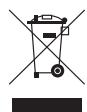
Do not dispose of the device in your normal domestic waste. This device is subject to the European Guidelines 2002/96/EC.
Micro system and speakers
- Have the micro-system or parts of it disposed of by a professional disposal company or by your communal disposal facility.
- Observe the currently applicable regulations. In case of doubt contact your disposal facility.
Batteries/rechargeable battery packs
- Used batteries/rechargeable battery packs may not be disposed of in household waste.
-
Batteries can contain poisons which are damaging to the environment. Therefore, dispose of the batteries/rechargeable batteries in accordance with statutory regulations.
-
Every consumer is legally obligated to surrender batteries/ rechargeable batteries to a community collection centre in their district or to a dealer. The purpose of this obligation is to ensure that batteries are disposed of in a non-polluting manner.
- Only dispose of batteries when they are fully discharged.

Dispose of packaging materials in an environmentally responsible manner.
CE Conformity
This device has been both examined and approved in regard to conformity with the fundamental requirements and other relevant regulations of the EMC Directive 2004/108/EC and the low voltage directive (LVD) 2006/95/EC.
Importer
KOMPERNASS GMBH
BURGSTRASSE 21
44867 BOCHUM, GERMANY
www.kompernass.com
Important warranty Notices
The warranty for this device is for 3 years from the date of purchase. Should you, in spite of our high quality standards, have grounds for complaint please contact our Service Hotline. In the event that processing of your complaint is not possible by telephone here you will receive
- a processing number (RMA number) as well as
- an address to which you can send your device for repair under warranty.
In the case of a mail-in shipment please enclose a copy of the purchase receipt (sales slip). The device must be securely packed and the RMA number clearly visible. Products sent in without the RMA number cannot be processed.
Note: The warranty provisions cover only material or factory defects.
The warranty is not valid;
for parts subject to wear
- for damage to breakable parts such as switches or rechargeable batteries.
This product is for private use only and is not intended for commercial use. The warranty is void in the case of abusive and improper handling, use of force and internal tampering not carried out by our authorized service branch. Your statutory warranty claims are not restricted by this warranty.
GB DES Ltd
Tel.: 0870/787-6177
Fax: 0870/787-6168
e-mail: support.uk@kompernass.com
IE Kompernass Service Ireland
Tel: 1850 930 412 (0,082 EUR/Min.)
Standard call rates apply. Mobile operators may vary.
e-mail: support.ie@kompernass.com