USER MANUAL KEO BOSCH
Power Tools Division
70745 Leinfelden-Echterdingen
Germany
www.bosch-garden.com
F016L70773(2012.01)0/182UNI

Keo

BOSCH
de Originalbetriebsanleitung en Original instructions fr Notice originale es Manual original pt Manual original it Istruzioni originali nI Oorspronkelijke gebruiksaanwijzing da Original brugsanvisning sv Bruksanvisning i original no Original driftsinstruks fi Alkuperäiset ohjeet
el Πρωτότυπο οδηγιών χρήσης tr Orijinal işletme talimatı pl Instrukcja oryginalna cs Původní návod k používání sk Pôvodný návod na použitie hu Eredeti használati utasítás ru Оригинальное руководство по эксплуатации uk Оригінальна інструкція з експлуатації ro Instrucțiuni originale bg Оригинална инструкция
sr Originalno uputstvo za rad sl Izvirna navodila hr Originalne upute za rad et Algupärane kasutusjuhend lv Instrukcijas oriģinālvalodā lt Originali instrukcija

Deutsch . 3
English 9
Français. 16
Español . Página 22
Português.. Página 29
Italian.. 36
Dutch .43
Danish. 49
Swedish. Page 55
Norwegian. 60
Finnish. 66
EAnvika. 72
Turkish Page 79
Polish .85
Czech . Page 92
Slovak. Page 97
Hungarian Page 104
Russian Page 111
Ukrainian. ..Page 118
Romanian . 125
Serbian. Page 139
Dr. Egbert Schneider Senior Vice President Engineering
Dr. Eckerhard Strötgen Engineering Director PT/ESI

Robert Bosch GmbH, Power Tools Division D-70745 Leinfelden-Echterdingen 22.08.2011
www.bosch-garden.com
Explanation of symbols

Read instruction manual.

General hazard safety alert.

Keep bystanders a safe distance away from the power tool.

Wear protective gloves.

Do not use the power tool in the rain or leave it outdoors when it is raining.
WARNING
Read all safety warnings and all in
Structions. Failure to follow the warnings
and instructions may result in electric shock, fire and/or serious injury.
Save all warnings and instructions for future reference.
The term "power tool" in the warnings refers to your mains-operated (corded) power tool or battery-operated (cordless) power tool.
Work area safety
- Keep work area clean and well lit. Cluttered or dark areas invite accidents. Do not operate power tools in explosive atmospheres, such as in the presence of flammable liquids, gases or dust. Power tools create sparks which may ignite the dust or fumes.
- Keep children and bystanders away while operating a power tool. Distractions can cause you to lose control.
Electrical safety
Power tool plugs must match the outlet. Never modify the plug in any way. Do not use any adapter plugs with earthed (grounded) power tools. Unmodified plugs and matching outlets will reduce risk of electric shock. - Avoid body contact with earthed or grounded surfaces, such as pipes, radiators, ranges and refrigerators. There is an increased risk of electric shock if your body is earthed or grounded. Do not expose power tools to rain or wet conditions. Water entering a power tool will increase the risk of electric shock. Do not abuse the cord. Never use the cord for carrying, pulling or unplugging the power tool. Keep cord away from heat, oil, sharp edges and moving parts. Damaged or entangled cords increase the risk of electric shock. - When operating a power tool outdoors, use an extension cord suitable for outdoor use. Use of a cord suitable for outdoor use reduces the risk of electric shock. If operating a power tool in a damp location is unavoidable, use a residual current device (RCD) protected supply. Use of an RCD reduces the risk of electric shock.
Personal safety
Stay alert, watch what you are doing and use common sense when operating a power tool. Do not use a power tool while you are tired or under the influence of drugs, alcohol or medication. A moment of inattention while operating power tools may result in serious personal injury. - Use personal protective equipment. Always wear eye protection. Protective equipment such as dust mask, non-skid safety shoes, hard hat, or hearing protection used for appropriate conditions will reduce personal injuries. Prevent unintentional starting. Ensure the switch is in the off-position before connecting to power source and/or battery pack, picking up or carrying the tool. Carrying power tools with your finger on the switch or energising power tools that have the switch on invites accidents. Remove any adjusting key or wrench before turning the power tool on. A wrench or a key left attached to a rotating part of the power tool may result in personal injury. Do not overreach. Keep proper footing and balance at all times. This enables better control of the power tool in unexpected situations.
Dress properly. Do not wear loose clothing or jewellery. Keep your hair, clothing and gloves away from moving parts. Loose clothes, jewellery or long hair can be caught in moving parts. If devices are provided for the connection of dust extraction and collection facilities, ensure these are connected and properly used. Use of dust collection can reduce dust-related hazards.
Do not force the power tool. Use the correct power tool for your application. The correct power tool will do the job better and safer at the rate for which it was designed. Do not use the power tool if the switch does not turn it on and off. Any power tool that cannot be controlled with the switch is dangerous and must be repaired. - Disconnect the plug from the power source and/or the battery pack from the power tool before making any adjustments, changing accessories, or storing power tools. Such preventive safety measures reduce the risk of starting the power tool accidentally. - Store idle power tools out of the reach of children and do not allow persons unfamiliar with the power tool or these instructions to operate the power tool. Power tools are dangerous in the hands of untrained users. - Maintain power tools. Check for misalignment or binding of moving parts, breakage of parts and any other condition that may affect the power tool's operation. If damaged, have the power tool repaired before use. Many accidents are caused by poorly maintained power tools. - Keep cutting tools sharp and clean. Properly maintained cutting tools with sharp cutting edges are less likely to bind and are easier to control. - Use the power tool, accessories and tool bits etc. in accordance with these instructions, taking into account the working conditions and the work to be performed. Use of the power tool for operations different from those intended could result in a hazardous situation.
Recharge only with the charger specified by the manufacturer. A charger that is suitable for one type of battery pack may create a risk of fire when used with another battery pack. - Use power tools only with specifically designated battery packs. Use of any other battery packs may create a risk of injury and fire. - When battery pack is not in use, keep it away from other metal objects, like paper clips, coins, keys, nails, screws or other small metal objects, that can make a connection from one terminal to another. Shorting the battery terminals together may cause burns or a fire. Under abusive conditions, liquid may be ejected from the battery; avoid contact. If contact accidentally occurs, flush with water. If liquid contacts eyes, additionally seek medical help. Liquid ejected from the battery may cause irritation or burns.
Service
Have your power tool serviced by a qualified repair person using only identical replacement parts. This will ensure that the safety of the power tool is maintained.
Safety Warnings for Sabre Saws
Hold power tool by insulated gripping surfaces, when performing an operation where the cutting accessory may contact hidden wiring. Cutting accessory contacting a "live" wire may make exposed metal parts of the power tool "live" and could give the operator an electric shock. Do not use the tool with the hook without rubber covers or with damaged rubber covers. If the rubber covers on the hook are damaged, replace the hook with a new one. Keep hands away from the sawing range. Do not reach under the workpiece. Contact with the saw blade can lead to injuries. Apply the machine to the workpiece only when switched on. Otherwise there is danger of kickback when the cutting tool jams in the workpiece. When sawing without the hook, the guide plate must always face against the workpiece. The saw blade can become wedged and lead to loss of control over the power tool. When the cut is completed, switch off the machine and then pull the saw blade out of the cut only after it has come to a standstill. In this manner you can avoid kickback and can place down the machine securely. Use only undamaged saw blades that are in perfect condition. Bent or dull saw blades can break, negatively influence the cut, or lead to kickback. Do not brake the saw blade to a stop by applying side pressure after switching off. The saw blade can be damaged, break or cause kickback. Clamp material well. Do not support the workpiece with your hand or foot. Do not touch objects or the floor with the saw running. Danger of kickback. Use appropriate detectors to determine if utility lines are hidden in the work area or call the local utility company for assistance. Contact with electric lines can lead to fire and electric shock. Damaging a gas line can lead to explosion. Penetrating a water line causes property damage. Secure the workpiece. A workpiece clamped with clamping devices or in a vice is held more secure than by hand. Always wait until the machine has come to a complete stop before placing it down. The tool insert can jam and lead to loss of control over the power tool. Before any work on the machine (e.g. maintenance, changing the tool, etc.) as well as during its transport and storage, lock the On/Off switch in the off position. There is danger of injury when the On/Off switch is unintentionally actuated.

Protect the power tool against heat, e.g., against continuous intense sunlight, fire, water, and moisture. Danger of explosion.
In case of damage and improper use of the battery, vapours may be emitted. Provide for fresh air and seek medical help in case of complaints. The vapours can irritate the respiratory system.
Safety Warnings for Battery Chargers

Keep the battery charger away from rain or moisture. Penetration of water in the battery charger increases the risk of an electric shock.
- Only charge Bosch lithium-ion batteries or batteries installed in Bosch products with the voltages listed in the technical data. Otherwise, there is a danger of fire and explosion.
- Keep the battery charger clean. Contamination can lead to a danger of electric shock. Before each use, check the battery charger. If damage is detected, the battery charger should be replaced with a new one. Never open the battery charger yourself. Have repairs performed only by a qualified technician and only using original spare parts. Damaged battery chargers, cables, and plugs increase the risk of electric shock. Supervise children. This will ensure that children do not play with the charger. Children or persons who, owing to their physical, sensory, or mental limitations or to their lack of experience or knowledge, are not capable of securely operating the charger, may only use this charger under supervision or after having been instructed by a responsible person. Otherwise, there is a danger of operating errors and injuries.
Products sold in GB only: Your product is fitted with a BS 1363/A approved electric plug with internal fuse (ASTA approved to BS 1362).
If the plug is not suitable for your socket outlets, it should be cut off and an appropriate plug fitted in its place by an authorized customer service agent. The replacement plug should have the same fuse rating as the original plug.
The severed plug must be disposed of to avoid a possible shock hazard and should never be inserted into a mains socket elsewhere.
Symbols
The following symbols are important for reading and understanding the operating instructions. Please take note of the symbols and their meaning. The correct interpretation of the symbols will help you to use the machine in a better and safer manner.
Symbol
Meaning

Wear eye protection.

Only use the battery charger indoors.
12 | English
| Symbol | Meaning |
| ↑ | Reaction direction |
| ↓ | Movement direction |
| I | Switching On |
| ✓ | Permitted action |
| × | Prohibited action |
| ○○ | Accessories |
Intended Use
This power tool is intended for domestic use. It is for cutting branches and can also be used for the sawing of wood, soft metal such as copper, and plasterboard. It is suitable for straight and curved cuts. The saw blade recommendations must be observed.
Technical Data
| Sabre saw | Keo |
| Article number | | 3600 H61 9.. |
| Rated voltage | V= | 10.8 |
| Stroke rate at no load n0 | min-1 | 0 - 1600 |
| Tool holder | | SDS |
| Stroke | mm | 20 |
| Cutting capacity, max. diameter | | |
| - in wood | mm | 80 |
| - in soft metal | mm | 7 |
| Weight according to EPTA-Procedure 01/2003 | kg | 1.05 |
| Battery Charger | | |
| Article number | EU | 2609 003 916 |
| UK | 2609 003 932 |
| AU | 2609 004 762 |
| Input voltage | V | 100 - 240 |
| Charging current | mA | 500 |
| Charging period (battery dis-charged) | min | 180 |
| Allowable charging temperature range | °C | 0 - 45 |
| Weight according to EPTA-Procedure 01/2003 | kg | 0.088 (EU) |
| kg | 0.093 (UK) |
| kg | 0.085 (AU) |
| Protection class | | ☐ / II |
| Please observe the article number on the type plate of your machine. The trade names of the individual machines may vary. |
C
We declare under our sole responsibility that the product described under "Technical Data" is in conformity with the following standards or standardization documents: EN 60745 (battery powered products) and EN 60335 (battery chargers) according to the provisions of the directives 2011/65/EU, 2006/95/EC, 2004/108/EC, 2006/42/EC. Technical file (2006/42/EC) at: Bosch Lawn and Garden Ltd., PT-LG/ENS, Stowmarket, Suffolk IP14 1EY, England
C 09
Dr. Egbert Schneider
Senior Vice President
Engineering
Dr. Eckerhard Strötgen
Engineering Director
PT/ESI
pa. MaTa 1. V. Nogc
Robert Bosch GmbH, Power Tools Division
D-70745 Leinfelden-Echterdingen
22.08.2011
Measured sound values determined according to EN 60745. Typically the A-weighted sound pressure level of the product is 72 dB(A). Uncertainty K = 3 dB. The noise level when working can exceed 80 dB(A).
Wear hearing protection!
Vibration total values a_h (triax vector sum) and uncertainty K determined according to EN 60745: Cutting board: a_h = 19 m/s^2, K = 6.0 m/s^2. Cutting wooden beam: a_h = 20 m/s^2, K = 3.0 m/s^2.
The vibration emission level given in this information sheet has been measured in accordance with a standardised test given in EN 60745 and may be used to compare one tool with another. It may be used for a preliminary assessment of exposure.
The technical specifications of the power tool deviate from the test criteria laid out in the standardised test given in EN 60745.
The declared vibration emission level represents the main applications of the tool. However if the tool is used for different applications, with different accessories or poorly maintained, the vibration emission may differ. This may significantly increase the exposure level over the total working period. An estimation of the level of exposure to vibration should also take into account the times when the tool is switched off or when it is running but not actually doing the job. This may significantly reduce the exposure level over the total working period.
Identify additional safety measures to protect the operator from the effects of vibration such as: maintain the tool and the accessories, keep the hands warm, organisation of work patterns.
Mounting and Operation
| Action | Figure |
| Delivery Scope | 1 |
| Battery Charging | 2 |
| Mounting the Hook | 3 |
| Checking if the Hook fits correctly | 4 |
| Inserting/Replacing the Saw Blade | 5 |
| Checking if the Blade is connected | 6 |
| Starting | 7 |
| Controlling the Stroke Rate | 7 |
| Working Advice | 8 – 9 |
| Maintenance and Cleaning | 10 |
| Selecting Accessories/Spare Parts | 11 |
Starting
Before any work on the machine (e.g. maintenance, changing the tool, etc.) as well as during its transport and storage, lock the On/Off switch in the off position. There is danger of injury when the On/Off switch is unintentionally actuated.
Battery Charging
- Do not use other battery chargers. The supplied battery charger is designed for the Lithium-Ion battery in your machine. Observe the mains voltage! The voltage of the power supply must correspond with the data given on the nameplate of the battery charger. Battery chargers marked with 230 V can also be operated with 220 V. The voltage range of the charger is 100 - 240 V. Ensure that the plug matches the outlet.
Note: The battery is supplied partially charged. To ensure full capacity of the battery, completely charge the battery before using your power tool for the first time.
The Lithium-Ion battery can be charged at any time without reducing its service life. Interrupting the charging procedure does not damage the battery.
The "Electronic Cell Protection (ECP)" protects the lithium ion battery against deep discharging. When the battery is run down or discharged, the garden product is shut off by means of a protective circuit: The garden product no longer operates.
WARNING
Do not continue to press the On/Off switch after the machine has been automatically switched off. The battery can be damaged.
The battery can be damaged.
Plug the mains plug of the battery charger into a socket outlet and the charger plug into the socket on the rear side of the handle, in one way only.
The charging procedure starts as soon as the charger plug of the battery charger is inserted into the socket.
The battery charge-control indicator indicates the charging progress. During the charging process, the indicator flashes green. When the battery charge-control indicator lights up green continuously, the battery is fully charged.
During the charging procedure, the handle of the machine warms up. This is normal.
Disconnect the battery charger from the mains supply when not using it for longer periods.
The power tool cannot be used during the charge procedure; it is not defective when inoperative during the charging procedure.
Protect the battery charger against moisture!
Working Advice
- When mounting the saw blade, wear protective gloves. Danger of injury when touching the saw blade. When changing the saw blade, do not hold the tool with one hand on or around the On/Off switch and lock off. There is danger of injury when the On/Off switch is unintentionally actuated.
- When changing the saw blade, take care that the saw blade holder is free of material residue, e.g. wood or metal shavings.
- When sawing light building materials, observe the statutory provisions and the recommendations of the material suppliers. While sawing, hold the machine firmly with one hand by the handle.
- While sawing, do not touch the hook, the blade or the air vents. After sawing, the blade may be hot; let it cool down before touching it.
Selecting a Saw Blade
Use only saw blades suitable for the material being worked.
An overview of recommended saw blades can be found at the beginning of these instructions. Do not use other blades than recommended.
Use a thin saw blade for narrow curve cuts.
Battery Charge-control Indication
The battery charge-control indicator indicates the charge condition of the battery continuously when the On/Off switch is pressed.
| LED | Capacity |
| Continuous lighting, green | ≥35% |
| Flashing light, green | 15 – 35% |
| Flashing light, red | 5 – 15% |
| Continuous lighting, red | ≤5% |
- Dusts from materials such as lead-containing coatings, some wood types, minerals and metal can be harmful to one's health. Touching or breathing-in the dusts can cause allergic reactions and/or lead to respiratory infections of the user or bystanders.
Certain dusts, such as oak or beech dust, are considered as carcinogenic, especially in connection with wood-treatment additives (chromate, wood preservative). Materials containing asbestos may only be worked by specialists.
ment additives (chromate, wood preservative). Materials containing asbestos may only be worked by specialists.
- Provide for good ventilation of the working place.
- It is recommended to wear a P2 filter-class respirator. Observe the relevant regulations in your country for the materials to be worked.
Prevent dust accumulation at the workplace. Dusts can easily ignite.
Troubleshooting

| Problem | Possible Cause | Corrective Action |
| Power tool fails to op- erate | Battery discharged | Recharge battery; also see "Battery Charging" |
| Power tool defective | Contact Service Agent |
| Internal wiring of power tool damaged | Contact Service Agent |
| Power tool functions intermittently | On/Off switch defective | Contact Service Agent |
| Excessive vibrations/ noise | Power tool defective | Contact Service Agent |
| Sawing time per ba- tery charge too low | Blade holder area needs cleaning | Hold the tool to point to the ground and start to op- erate |
| Saw blade has worn | Change saw blade |
| Poor sawing technique | see "Working Advice" (figure 8) |
| Battery not fully charged | Recharge battery; also see "Battery Charging" |
| The saw blade is run- ning slow | Battery is getting discharged | Recharge battery; also see "Battery Charging" |
| On/Off switch is not fully pressed | Fully press On/Off switch |
| Overloaded during operation | Reduce pressing force of tool against branch |
| Green and red LED flash alternately | Battery temperature is out of charging range | Increase or reduce the battery temperature to within the specified range between 0 °C and 45 °C |
| Red LED flashes 1x | Battery voltage is too low, battery is empty | Recharge battery; also see "Battery Charging" |
| Red LED flashes 2x | Battery temperature is out of operating range | Increase or reduce the battery temperature to within the specified range between -15 °C and +65 °C |
| Red LED flashes fast 5x | Overload (jammed blade) | Reduce pressing force of tool against branch
Operate tool before the blade touches the branch |
Maintenance and Service
Maintenance, Cleaning and Storage
Before any work on the machine (e.g. maintenance, changing the tool, etc.) as well as during its transport and storage, lock the On/Off switch in the off position. There is danger of injury when the On/Off switch is unintentionally actuated. Always remove the blade before any work on the machine. For safe and proper working, always keep the machine and ventilation slots clean.
Clean the saw blade holder preferably with compressed air or a soft brush. Remove the saw blade from the power tool for
this. Ensure proper operation of the saw blade holder by applying a suitable lubricant.
Heavy contamination of the machine can lead to malfunctions. Therefore, do not saw materials that produce a lot of dust from below or overhead.
Store the power tool in a secure, dry place, out of the reach of children.
Do not place other objects on the power tool.
After-sales Service and Customer Assistance
In all correspondence and spare parts order, please always include the 10-digit article number given on the type plate of the machine.
English | 15
Great Britain
Robert Bosch Ltd. (B.S.C.)
P.O.Box 98
Broadwater Park
North Orbital Road
Denham
Uxbridge
UB9 5HJ
Tel. Service: +44 (0844) 736 0109
Fax: +44 (0844) 736 0146
E-Mail: boschservicecentre@bosch.com
Ireland
Origo Ltd.
Unit 23 Magna Drive
Magna Business Park
City West
Dublin 24
Tel. Service: +353 (01) 466 67 00
Fax: +353 (01) 466 68 88
Australia, New Zealand and Pacific Islands
Robert Bosch Australia Pty. Ltd.
Power Tools
Locked Bag 66
Clayton South VIC 3169
Customer Contact Center
Inside Australia:
Phone: +61 (01300) 307 044
Fax: +61 (01300) 307 045
Inside New Zealand:
Phone: +64 (0800) 543 353
Fax: +64 (0800) 428570
Outside AU and NZ:
Phone: +61 (03) 9541 5555
www.bosch.com.au
Republic of South Africa
Customer service
Hotline: +27 (011) 6519600
Gauteng - BSC Service Centre
35 Roper Street, New Centre
Johannesburg
Tel.: +27 (011) 4939375
Fax: +27 (011) 4930126
E-Mail: bsctools@icon.co.za
KZN - BSC Service Centre
Unit E, Almar Centre
143 Crompton Street
Pinetown
Tel.: +27 (031) 7012120
Fax: +27 (031) 7012446
E-Mail: bsc.dur@za.bosch.com
Western Cape - BSC Service Centre
Democracy Way, Prosperity Park
Milnerton
Tel.: +27 (021) 5512577
Fax: +27 (021) 5513223
E-Mail: bsc@zsd.co.za
Bosch Headquarters
Midrand, Gauteng
Tel.: +27 (011) 6519600
Fax: +27 (011) 6519880
E-Mail: rbsa-hq.pts@za.bosch.com
Transport
The contained lithium-ion batteries are subject to the Dangerous Goods Legislation requirements. The user can transport the batteries by road without further requirements.
When being transported by third parties (e.g.: air transport or forwarding agency), special requirements on packaging and labelling must be observed. For preparation of the item being shipped, consulting an expert for hazardous material is required.
Disposal
Do not dispose of power tools and batteries/rechargeable batteries into household waste!
Only for EC countries:
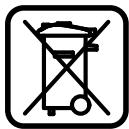
According to the European Guideline 2002/96/EC, power tools that are no longer usable, and according to the European Guideline 2006/66/EC, defective or used battery packs/batteries, must be collected separately and disposed of in an environmentally correct manner.
Batteries no longer suitable for use can be directly returned at:
Great Britain
Robert Bosch Ltd. (B.S.C.)
P.O.Box 98
Broadwater Park
North Orbital Road
Denham
Uxbridge
UB95HJ
Tel. Service: +44 (0844) 736 0109
Fax: +44 (0844) 7360146
E-Mail: boschservicecentre@bosch.com
Integrated batteries may only be removed for disposal.
Opening the housing shell can damage or destroy the power tool.
When removing the battery from the machine, actuate the On/Off switch until the battery is completely discharged. Unscrew the screw in the casing and take off the casing shell. Disconnect the connections on the battery and remove the battery.
Battery packs/batteries:
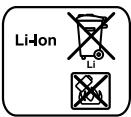
Li-Ion:
Please observe the instructions in section "Transport".
Subject to change without notice.
Technical file (2006/42/EC) at: Bosch Lawn and Garden Ltd., PT-LG/ENS, Stowmarket, Suffolk IP14 1EY, England
CC 09
Dr. Egbert Schneider Senior Vice President Engineering
Dr. Eckerhard Strötgen Engineering Director PT/ESI

Robert Bosch GmbH, Power Tools Division D-70745 Leinfelden-Echterdingen 22.08.2011
Robert Bosch (France) S.A.S.
Technical File (2006/42/EC) at: Bosch Lawn and Garden Ltd., PT-LG/El Stowmarket, Suffolk IP14 1EY, England
CC 09
Dr. Egbert Schneider Senior Vice President Engineering
Dr. Eckerhard Strötgen Engineering Director PT/ESI
ppa.
Robert Bosch GmbH, Power Tools Division D-70745 Leinfelden-Echterdingen 22.08.2011
Bosch Lawn and Garden Ltd., PT-LG/ENS,
Stowmarket, Suffolk IP14 1EY, England
C 09
Dr. Egbert Schneider
Dr. Eckerhard Strötgen
Senior Vice President
Engineering Director
Engineering
PT/ESI
i.v. Moju
Robert Bosch GmbH, Power Tools Division D-70745 Leinfelden-Echterdingen 22.08.2011

Portuguese | 33
Technical file (2006/42/EC) at: Bosch Lawn and Garden Ltd., PT-LG/ENS, Stowmarket, Suffolk IP14 1EY, England
C 09
Dr. Egbert Schneider
Senior Vice President
Engineering
Dr. Eckerhard Strötgen
Engineering Director
PT/ESI
Robert Bosch GmbH, Power Tools Division
D-70745 Leinfelden-Echterdingen
22.08.2011
Technical file (2006/42/EC) at: Bosch Lawn and Garden Ltd., PT-LG/ENS, Stowmarket, Suffolk IP14 1EY, England
C09
Dr. Egbert Schneider
Dr. Eckerhard Strötgen
Senior Vice President
Engineering Director
Engineering
PT/ESI
ppa.
Robert Bosch GmbH, Power Tools Division
D-70745 Leinfelden-Echterdingen
22.08.2011
Bosch Lawn and Garden Ltd., PT-LG/ENS, Stowmarket, Suffolk IP14 1EY, England
C 09
Dr. Egbert Schneider
Senior Vice President
Engineering
Dr. Eckerhard Strötgen
Engineering Director
PT/ESI
ppa.
i.v. Mo Tu We Th Fr So Su
Robert Bosch GmbH, Power Tools Division
D-70745 Leinfelden-Echterdingen
22.08.2011
Measured values for noise calculated in accordance with EN 60745.
Bosch Service Center
Telegrafvej 3
2750 Ballerup
Tel. Service Center: +45 (4489) 8855
Fax: +45 (4489) 87 55
E-Mail: vaerktoej@dk.bosch.com
Transport
Senior Vice President
Engineering
Dr. Eckerhard Strötgen
Engineering Director
PT/ESI
Paa. Maata
Robert Bosch GmbH, Power Tools Division
D-70745 Leinfelden-Echterdingen
22.08.2011
Noise/vibration data
Noise level values are given according to EN 60745.
Bosch Service Center
Telegrafvej 3
2750 Ballerup
Denmark
Tel.: +46 (020) 41 44 55
Fax: +46 (011) 187691
Transport
The lithium-ion batteries included are subject to the requirements for dangerous goods. The user can transport the batteries by road without further obligations.
Bosch Lawn and Garden Ltd., PT-LG/ENS,
Stowmarket, Suffolk IP14 1EY, England
C 09
Dr. Egbert Schneider
Senior Vice President
Engineering
Dr. Eckerhard Strötgen
Engineering Director
PT/ESI
Robert Bosch GmbH, Power Tools Division
D-70745 Leinfelden-Echterdingen
22.08.2011
Bosch Lawn and Garden Ltd., PT-LG/ENS,
Stowmarket, Suffolk IP14 1EY, England
C 09
Dr. Egbert Schneider
Senior Vice President
Engineering
Dr. Eckerhard Strötgen
Engineering Director
PT/ESI
i. V. MioJycu
Robert Bosch GmbH, Power Tools Division
D-70745 Leinfelden-Echterdingen
22.08.2011
Noise/vibration information
Explanation of the pictograms

Read the operating instructions carefully.

General safety instructions.
F016L70773|(23.1.12)

Keep the work area clean and well lit.

Wear protective gloves.

Do not use the power tool in the rain and do not leave it outdoors.
General safety instructions for power tools
INTRODUCTION
Dr. Egbert Schneider Senior Vice President Engineering
Dr. Eckerhard Strötgen Engineering Director PT/ESI
Paa.
i.v. 100gcu
Robert Bosch GmbH, Power Tools Division D-70745 Leinfelden-Echterdingen 22.08.2011
Greek
Maintenance and Service
Maintenance, cleaning and storage
Always switch the tool off (position OFF) before carrying out any work on the electric tool (e.g. maintenance, changing tools). Also, when transporting it, secure the tool against any unintentional switching on. When the ON/OFF switch is pressed, there is a risk of injury. Always remove the battery from the electric tool before carrying out any work on it. ◂ Switch the electric tool off and disconnect the battery before attempting to work safely.
Clean the battery and the battery charger with a dry, soft cloth. For this, disconnect the battery from the electric tool. Check the functionality of the battery charger with the help of qualified personnel.
A strong electromagnetic field of the electric tool can lead to malfunctions. For this, keep the battery away from the top of your head and do not inhale any dust that may be produced.
Store the electric tool in a safe, dry place.
Do not place any objects on top of the electric tool.
Service and maintenance
When requesting spare parts or when ordering accessories, always quote the 10-digit article number printed on the type plate.
Greece
Robert Bosch A.E.
Ergias 37
19400 Koropi-Athens
Tel.: +30 (0210) 57 01 270
Fax: +30 (0210) 57 01 283
www.bosch.com
www.bosch-pt.gr
ABZ Service A.E.
Tel.: +30 (0210) 57 01 380
Fax: +30 (0210) 5701607
Meraopua
Opiepixoevee, mntapiec tovtwv lioiu unokivtai otic anaitnnoei ctwv enikivduwov ayahov. Oi natapiec mnpouv va metaepoov obikwac ao to xphotn xwipc allouc opuoc. 'Otav, ouwc, o i npatiec aonoteleovtai ano ptiou (x.x. aeponopikwck h ie taia petae metafopow) npenei va npoivtai biapopec 1daiitepec anaihoeic yia tn oukeuaia kai tn omavon. Eed npenei, kata nvy npoeioaia tou uno anotolai tejaxiou, va zntnthe onwoohnote kai n auouanlv ecidkou yia enikivduva aytheta.
ce|79
Anoupon
Mny pixveTe Ta nAekptiKa epyaia kai tic natapiec oTa anoppiuata Tou ontiou oac!
Movi yia xwpe cTc EE:
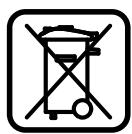
Tnpoue to dikaiwa aalaywv.
Türkce
Güvenlik Talimatu
Bosch Lawn and Garden Ltd., PT-LG/ENS,
Stowmarket, Suffolk IP14 1EY, England
C 09
Dr. Egbert Schneider
Senior Vice President
Engineering
Dr. Eckerhard Strötgen
Engineering Director
PT/ESI

Robert Bosch GmbH, Power Tools Division
D-70745 Leinfelden-Echterdingen
22.08.2011
Noise/Vibration information
Bosch San. ve Tic. A.S.
Ahi Evran Cad. No:1 Kat:22
Polaris Plaza
80670 Maslak/Istanbul
Bosch Expert Team +90 (0212) 367 18 88
Transport
Dr. Egbert Schneider Senior Vice President Engineering
Dr. Eckerhard Strötgen Engineering Director PT/ESI

Robert Bosch GmbH, Power Tools Division D-70745 Leinfelden-Echterdingen 22.08.2011
Robert Bosch Sp. z o.o.
2011/65/EU, 2006/95/EC, 2004/108/EC, 2006/42/EC.
Bosch Lawn and Garden Ltd., PT-LG/ENS,
Stowmarket, Suffolk IP14 1EY, England
C09
F016L70773|(23.1.12)
Bosch Power Tools


Czech|95
Dr. Egbert Schneider
Senior Vice President
Engineering
Dr. Eckerhard Strötgen
Engineering Director
PT/ESI
Robert Bosch GmbH, Power Tools Division
D-70745 Leinfelden-Echterdingen
22.08.2011
Bosch Service Center PT
K Vapence 1621/16
692 01 Mikulov
Bosch Lawn and Garden Ltd., PT-LG/ENS,
Stowmarket, Suffolk IP14 1EY, England
C 09
Dr. Egbert Schneider
Senior Vice President
Engineering
Dr. Eckerhard Strötgen
Engineering Director
PT/ESI

Robert Bosch GmbH, Power Tools Division
D-70745 Leinfelden-Echterdingen
22.08.2011
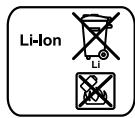
Batteries:
Bosch Lawn and Garden Ltd., PT-LG/ENS,
Stowmarket, Suffolk IP14 1EY, England
C 09
108 | Magyar
Dr. Egbert Schneider
Senior Vice President
Engineering
Dr. Eckerhard Strötgen
Engineering Director
PT/ESI
Robert Bosch GmbH, Power Tools Division
D-70745 Leinfelden-Echterdingen
22.08.2011
Do not work with this power tool in an explosive atmosphere in which flammable liquids, gases or dust are present. Power tools create sparks, which may ignite the dust or fumes. While working with the power tool, do not allow other persons or animals to come close to your work area. If you are distracted, you may lose control of the power tool.
Electrical safety
The power tool plug must fit into the outlet. Never modify the plug in any way. Do not use adapter plugs with earthed (grounded) power tools. Unmodified plugs and matching outlets will reduce risk of electric shock. Avoid body contact with earthed surfaces, such as pipes, radiators, ranges and refrigerators. There is an increased risk of electric shock if your body is earthed or grounded.
Protect the power tool against moisture. Touching the power tool increases the risk of electric shock. Do not use the power tool, for example, for transporting or hanging the power tool, or for pulling the plug out of the socket. Protect the tool from high temperatures, oil, sharp edges, or moving parts of the power tool. Damaged or tangled cords increase the risk of electric shock.

112|Russian
When working with the power tool outdoors, use extension cords suitable for outdoor use. Using an outdoor extension cord reduces the risk of electric shock. If it is unavoidable to use the power tool in a damp location, connect the power tool through a residual current device (RCD). Using an RCD reduces the risk of electric shock.
Personal safety
Stay alert, watch what you are doing, and use common sense when operating a power tool. Do not use a power tool while you are tired or under the influence of drugs, alcohol, or medication. A moment of inattention while operating a power tool may result in serious personal injury. Use personal protective equipment and always wear eye protection. Using personal protective equipment, such as a dust mask, non-skid safety shoes, a hard hat, or hearing protection, depending on the type of work, reduces the risk of injury. Prevent unintentional starting. Ensure the switch is in the off position before connecting to a power source and/or battery pack, picking up or carrying the tool. Carrying power tools with your finger on the switch or energizing power tools that have the switch on invites accidents.
Remove any adjusting key or wrench before turning the power tool on. A wrench or a key left attached to a rotating part of the power tool may result in personal injury. Do not overreach. Keep proper footing and balance at all times. This enables better control of the power tool in unexpected situations. Dress properly. Do not wear loose clothing or jewelry. Keep your hair, clothing, and gloves away from moving parts. Loose clothes, jewelry, or long hair can be caught in moving parts. If devices are provided for the connection of dust extraction and collection facilities, ensure these are connected and properly used. Use of dust collection can reduce dust-related hazards.
Power tool use and care
Power tool safety warnings. Read all safety warnings and all instructions. Failure to follow the warnings and instructions may result in electric shock, fire and/or serious injury. Save all warnings and instructions for future reference. The term "power tool" in the warnings refers to your mains-operated (corded) power tool or battery-operated (cordless) power tool. Work area safety. Keep work area clean and well lit. Cluttered or dark areas invite accidents. Do not operate power tools in explosive atmospheres, such as in the presence of flammable liquids, gases or dust. Power tools create sparks which may ignite the dust or fumes. Keep children and bystanders away while operating a power tool. Distractions can cause you to lose control. Electrical safety. Power tool plugs must match the outlet. Never modify the plug in any way. Do not use any adapter plugs with earthed (grounded) power tools. Unmodified plugs and matching outlets will reduce risk of electric shock. Avoid body contact with earthed or grounded surfaces, such as pipes, radiators, ranges and refrigerators. There is an increased risk of electric shock if your body is earthed or grounded. Do not expose power tools to rain or wet conditions. Water entering a power tool will increase the risk of electric shock. Do not abuse the cord. Never use the cord for carrying, pulling or unplugging the power tool. Keep cord away from heat, oil, sharp edges or moving parts. Damaged or entangled cords increase the risk of electric shock. When operating a power tool outdoors, use an extension cord suitable for outdoor use. Use of a cord suitable for outdoor use reduces the risk of electric shock. If operating a power tool in a damp location is unavoidable, use a residual current device (RCD) protected supply. Use of an RCD reduces the risk of electric shock. Personal safety. Stay alert, watch what you are doing and use common sense when operating a power tool. Do not use a power tool while you are tired or under the influence of drugs, alcohol or medication. A moment of inattention while operating power tools may result in serious personal injury. Use personal protective equipment. Always wear eye protection. Protective equipment such as dust mask, non-skid safety shoes, hard hat, or hearing protection used for appropriate conditions will reduce personal injuries. Prevent unintentional starting. Ensure the switch is in the off-position before connecting to power source and/or battery pack, picking up or carrying the tool. Carrying power tools with your finger on the switch or energising power tools that have the switch on invites accidents. Remove any adjusting key or wrench before turning the power tool on. A wrench or a key left attached to a rotating part of the power tool may result in personal injury. Do not overreach. Keep proper footing and balance at all times. This enables better control of the power tool in unexpected situations. Dress properly. Do not wear loose clothing or jewellery. Keep your hair, clothing and gloves away from moving parts. Loose clothes, jewellery or long hair can be caught in moving parts. If devices are provided for the connection of dust extraction and collection facilities, ensure these are connected and properly used. Use of dust collection can reduce dust-related hazards. Power tool use and care. Do not force the power tool. Use the correct power tool for your application. The correct power tool will do the job better and safer at the rate for which it was designed. Do not use the power tool if the switch does not turn it on and off. Any power tool that cannot be controlled with the switch is dangerous and must be repaired. Disconnect the plug from the power source and/or the battery pack from the power tool before making any adjustments, changing accessories, or storing power tools. Such preventive safety measures reduce the risk of starting the power tool accidentally. Store idle power tools out of the reach of children and do not allow persons unfamiliar with the power tool or these instructions to operate the power tool. Power tools are dangerous in the hands of untrained users. Maintain power tools. Check for misalignment or binding of moving parts, breakage of parts and any other condition that may affect the power tool's operation. If damaged, have the power tool repaired before use. Many accidents are caused by poorly maintained power tools. Keep cutting tools sharp and clean. Properly maintained cutting tools with sharp cutting edges are less likely to bind and are easier to control. Use the power tool, accessories and tool bits etc., in accordance with these instructions, taking into account the working conditions and the work to be performed. Use of the power tool for operations different from those intended could result in a hazardous situation.
Battery tool use and care
Recharge only with the charger specified by the manufacturer. A charger that is suitable for one type of battery pack may create a risk of fire when used with another battery pack. Use power tools only with specifically designated battery packs. Use of any other battery packs may create a risk of injury and fire. When battery pack is not in use, keep it away from other metal objects, like paper clips, coins, keys, nails, screws or other small metal objects, that can make a connection from one terminal to another. Shorting the battery terminals together may cause burns or a fire.
Russian | 113
Power tools may differ.
Declaration of Conformity
We declare under our sole responsibility that the described product complies with the following standards or normative documents: EN60745 (battery-powered tools) and EN60335 (chargers for battery packs)
in accordance with Directive 2011/65/EC,
2006/95/EC, 2004/108/EC, 2006/42/EC.
Technical documentation (2006/42/EC):
Bosch Lawn and Garden Ltd., PT-LG/ENS,
Stowmarket, Suffolk IP14 1EY, England
C09
Dr. Egbert Schneider
Dr. Eckerhard Strötgen
Senior Vice President
Engineering Director
Engineering
PT/ESI
paa.
Robert Bosch GmbH, Power Tools Division
D-70745 Leinfelden-Echterdingen
22.08.2011

Russian | 115
Data on noise and vibration
The vibration level is determined in accordance with the European standard EN 60745.
The measured and weighted sound pressure level of the power tool is typically 72 dB(A). The measurement uncertainty K = 3 dB.
The noise level at the workplace may exceed 80 dB(A).
Use hearing protection!
The total vibration value a_h (vector sum of three directions) was determined in accordance with EN 60745:
Calculation of longitudinal acceleration: ah=19 m/s², K=6.0 m/s²,
Calculation of transverse acceleration: ah = 20m/s2 K = 3.0m/s2
The vibration level indicated in these instructions has been measured in accordance with the standardized measurement method specified in EN 60745 and may be used for comparison of power tools. It is also suitable for a preliminary assessment of vibration exposure. The technical specification of the power tool differs from the criteria used in the standardized test procedures according to EN 60745.
The vibration level is indicated for the main applications of the power tool. However, if the power tool is used for other applications, with different accessories or is poorly maintained, the actual level may be different. This may significantly increase the vibration load over the entire working period.
For an accurate estimation of the vibration load during a defined working period, the times when the tool is switched off, or when it is running but not actually in use, must also be taken into account. This can significantly reduce the vibration load over the entire working period.
Additional safety measures to protect the operator from the effects of vibration should be considered, such as: maintaining the power tool and working tools, keeping hands warm, and organizing work procedures.
Mounting and operation
Application instructions
When installing the dust filter, wear protective gloves. Contact with the dust filter can cause injuries. When changing the dust filter, ensure that you do not hold the power tool with the switch on or with the switch and lock-on button engaged. If the switch is accidentally actuated, there is a risk of injury. When replacing the dust filter, check the condition of the fastening (absence of wood chips and metal shavings). When working with materials containing asbestos, follow the safety recommendations of the material manufacturer. During cutting, hold the power tool firmly with both hands. During cutting, do not touch the saw blade and do not cover the ventilation slots. The dust filter may become clogged with sawdust and must be cleaned regularly.
Selection of the dust filter
Use only dust filters suitable for the material being processed.
An overview of recommended dust filters can be found at the beginning of these instructions. Use only recommended dust filters.
For small radii, use narrow dust filters.
Battery charge indicator
The battery charge indicator of the battery pack shows the charge level when the switch is pressed.
Dust from certain materials, such as paint containing lead, some wood types, minerals, and metals, can be harmful if inhaled. Contact with or inhalation of dust may cause allergic reactions and/or respiratory diseases in the operator or bystanders. Certain dusts, e.g., oak or beech dust, are considered carcinogenic, especially when combined with additives for wood treatment (chromate, wood preservatives). Materials containing asbestos should only be processed by specialists.
Ensure good ventilation of the work area. - It is recommended to use a respirator with filter class P2.
Observe the regulations applicable in your country for the materials to be processed.
Avoid dust accumulation at the workplace. Dust can easily ignite.

Do not place foreign objects on the power tool.
Customer service and consultation
Please always specify the 10-digit article number from the type plate of the power tool in all inquiries and orders.
For region: Russia, Belarus, Kazakhstan
Warranty service and repair of the power tool, in compliance with the standards and regulations of the manufacturer, are carried out in all countries only in authorized and certified service centers of Robert Bosch.
WARNING! Use of contact spray is dangerous and may lead to health damage. Manufacture and distribution of contact spray are subject to administrative and criminal law.
Russia
LLC "Robert Bosch"
Service center for power tools, ul. Akademika Koroleva, str. 13/5
129515, Moscow
Russia
Tel.: +7 (800) 100 800 7
E-Mail: pt-service.ru@bosch.com
You can get full information about the location of service centers on the official website www.bosch-pt.ru or by phone of the Bosch reference and service service 8-800-100-8007 (the call is free).
118|Ukraine
Belarus
IITPpOoi00
Service center for power tools, ul. Timiryazeva, 65A-020
220035, Minsk
Belarus
Tel.: +375 (17) 254 78 71
Tel.: +375 (17) 254 79 15/16
Fax: +375 (17) 254 78 75
E-Mail: pt-service.by@bosch.com
Official site: www.bosch-pt.by
Kazakhstan
LLC "Robert Bosch"
Service center for power tools: pr. Rabimbeka / st. Kommunalnaya, 169/1
050050, Almaty
Kazakhstan
Tel.: +7 (727) 2323707
Fax: +7 (727) 2330787
E-Mail: pt-service.ka@bosch.com
Official site: www.bosch-pt.kz
Transportation
The contained lithium-ion batteries are subject to the Dangerous Goods Legislation requirements. The batteries can be transported by the user by road without further requirements.
When transport is carried out by third parties (e.g. by air freight or forwarding agency), special requirements on packaging and labelling must be complied with. For the preparation of the item being shipped, consulting an expert for hazardous material is required.
Disposal
Do not throw electric tools, accumulators, and batteries into household waste!
For EU countries only:
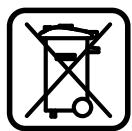
According to European Directive 2002/96/EC on waste electrical and electronic equipment and in accordance with European Directive 2006/66/EC on batteries and accumulators, used and spent batteries and accumulators must be collected
separately and handed over to an environmentally sound recycling facility.
Damaged accumulators may only be disposed of under the hood. There is a risk of explosion if the housing is opened.
To remove the accumulator from the electric tool, switch off the tool and disconnect it from the power supply. Remove the screws on the housing and take off the cover part. Disconnect the accumulator connections and pull it out of the housing.
Accumulators, batteries:
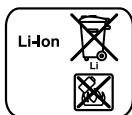
Nickel-cadmium:
Please observe the instructions in the "Transport" section.
Subject to change.
Ukrainian
Safety instructions
Read the operating instructions.

Read the operating instructions.

Warning: Read the operating instructions.

Keep bystanders at a safe distance from the power tool.

Remove the adjusting key.

Do not use the power tool in the rain; protect the power tool from rain.
General safety warnings
AND PRECAUTIONS
Read all safety warnings and instructions.
Failure to follow the warnings and instructions may result in electric shock, fire and/or serious injury.
Always store the safety warnings and instructions for future reference.
The term "power tool" in the warnings refers to your mains-operated (corded) power tool or battery-operated (cordless) power tool.
Technical documentation (2006/42/EC): Bosch Lawn and Garden Ltd., PT-LG/ENS, Stowmarket, Suffolk IP14 1EY, England
C 09
Dr. Egbert Schneider Senior Vice President Engineering
Dr. Eckerhard Strötgen Engineering Director PT/ESI
ppa.
Robert Bosch GmbH, Power Tools Division
D-70745 Leinfelden-Echterdingen 22.08.2011
Ticra AB TomaTHOBO BMHKahHReAeKToPnHaAd6iBHe He HtckyIte Ha
BIMHKa. Ye MoKe ToIwKOAnTHn aKymyAToTpy 6aTapeio.
BCTPOMITb 3a4nHOro PnCTPOHO p03eTKy, a 3apAHnIteKep y rH3Ao 3aHbOro 60ky pykOaTK (TIAKn ODA HMOANIBCTb TII'cEAHAHH).
He cTaBte Ha eAeKToiHCTpyMeHT CTOpOHHi IpeDMeTH.
CepBicaHa MaHcTePnI o6cAlyroByBaHHa KIAeHTIB www.bosch-garden.com
Пи BCiX 3aIITaHJx i ПИЗ 3aMOBENHII 3aIuaCTNH,6yIb IaCKa,06OB'3KoBO 3a3NaUte 1O-3HaUNTOBAPHNI HOMeP,IO 3HaXoDnTbCn Ha 3aBOcBkI Ta6LnuIe AEKToPpNlaNy.
IapaHTiHne 6cayyroBvBaHH i peMOHT ealeKtpoiHCTpyMeHTy 3diCHIOJTOCB BIDTOBIOHO DO BHMOR I HOPM BINOBOBAuHa Ha TepHOTPIB CIX KpaIH ANiE y fipMOBNx a60 aBTopN3OBaHnx cepBicnHex CEHTPAX fipMN (Po6ept BoW).
TOTTEPEKHEH! BnKOpNCTAHNN KOnTpaKaTKHOI pOdyKuII He63eYNEH B ECKLAYaTuATI I MOXE MATN HERATMBH HACALIK N A4 3AOPOB'B. BVTOROTBeHNN I pO3IOBLOKDEHH KOnTpaKaTKHOI pOdyKuII TEpeCaIYEbTCB 3a 3aKOHOM B aAMHiCTpAINBHOMY I KPMiHaNbHOMY IOPRAky.
ykpaiHa
TOB《Po6ept Bou》
CepbicnIeHTpeAekTpoiHCTpymehTIB
ByI.KpaHra,1,02660,KnIB-60
YkpaHa
TeA.:+38(044)4902407(6aataKaHaBHH)
E-Mail: pt-service.ua@bosch.com
Website: www.bosch-powertools.com.ua
The addresses of regional warranty service workshops are indicated in the warranty card.
Ukraine | 125
Transport
The contained lithium-ion batteries are subject to the Dangerous Goods Legislation requirements. The batteries can be transported by the user by road without further requirements. When shipping by third parties (e.g.: by air transport or forwarding agency), compliance with special requirements for packaging and labelling must be observed. In this case, when preparing the item for shipping, consulting an expert for hazardous material is required.
Disposal
Do not dispose of power tools and batteries/rechargeable batteries in household waste!
Batteries:
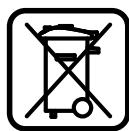
According to the European Directive 2002/96/EC and the European Directive 2006/66/EC, power tools, rechargeable batteries/battery packs or batteries that are no longer usable must be collected separately and disposed of in an environmentally correct manner.
Rechargeable batteries/battery packs that are defective or used up must be recycled in accordance with Directive 2006/66/EC. If they are not disposed of in an environmentally compatible manner, they may have a harmful effect on the environment and on human health.
Integrated rechargeable batteries may only be removed for disposal. When opening the housing of the power tool, there is a risk of injury.
To remove the rechargeable battery from the power tool, press the battery release button until the battery is completely released. Open the cover on the housing, remove the protective cover. Disconnect the connector on the rechargeable battery and remove the rechargeable battery.
Rechargeable batteries/battery packs:
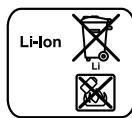
Lithium-ion: Please observe the notes in section «Transport».
Romanian
Safety and occupational health instructions
Explanation of pictograms

Technical documentation (2006/42/EC) at: Bosch Lawn and Garden Ltd., PT-LG/ENS, Stowmarket, Suffolk IP14 1EY, England
C 09
Dr. Egbert Schneider
Senior Vice President Engineering
Dr. Eckerhard Strötgen
Engineering Director PT/ESI

Robert Bosch GmbH, Power Tools Division
D-70745 Leinfelden-Echterdingen
22.08.2011
Tel. service scule electric: +40 (021) 405 75 40
Fax: +40 (021) 4057566
E-Mail: infoBSC@ro.bosch.com
Tel. consultanta clienti: +40 (021) 4057500
Fax: +40 (021) 2331313
E-Mail: infoBSC@ro.bosch.com
www.bosch-romania.ro
Transport
Do not dispose of power tools together with household waste.
General safety warnings
WARNING
Read all safety warnings and all instructions. Failure to follow
the warnings and instructions listed below may result in electric shock, fire and/or serious injury.
Save all warnings and instructions for future reference.
The term "power tool" in the warnings refers to your mains-operated (corded) power tool or battery-operated (cordless) power tool.
Safety at the workplace
Keep the workplace clean and well lit. Cluttered or dark areas can lead to accidents. Do not operate power tools in explosive atmospheres, such as in the presence of flammable liquids, gases, or dust. During operation, power tools may produce sparks that could ignite dust or fumes. Keep children and bystanders at a safe distance while operating a power tool. If your attention is diverted, you may lose control of the power tool.
Electrical safety
The power tool plug must match the outlet. Never modify the plug in any way.
Do not use any adapter plugs with earthed (grounded) power tools. Unmodified plugs and matching outlets will reduce risk of electric shock.
Avoid body contact with earthed or grounded surfaces, such as pipes, radiators, ranges, and refrigerators. There is an increased risk of electric shock if your body is earthed or grounded. Do not expose power tools to rain or wet conditions. Water entering a power tool will increase the risk of electric shock. Do not abuse the cord. Never use the cord for carrying, pulling, or unplugging the power tool. Keep the cord away from heat, oil, sharp edges, or moving parts. Damaged or entangled cords increase the risk of electric shock. When operating a power tool outdoors, use an extension cord suitable for outdoor use. Use of a cord suitable for outdoor use reduces the risk of electric shock. If operating a power tool in a damp location is unavoidable, use a residual current device (RCD) protected supply. Use of an RCD reduces the risk of electric shock.
Personal safety
Before using the power tool, read the instructions carefully. Do not use the power tool when you are tired or under the influence of drugs, alcohol, or medication. A moment of inattention while operating the power tool may result in serious personal injury. Use personal protective equipment. Always wear eye protection. Protective equipment such as a dust mask, non-skid safety shoes, hard hat, or hearing protection used for appropriate conditions will reduce personal injuries. Prevent unintentional starting. Ensure the switch is in the off-position before connecting to power source and/or battery pack, picking up or carrying the tool. Carrying power tools with your finger on the switch or energizing power tools that have the switch on invites accidents. Remove any adjusting key or wrench before turning the power tool on. A wrench or a key left attached to a rotating part of the power tool may result in personal injury.

The power tool, if it is held by the rotating part, may cause injury.
Avoid awkward positions and poor posture. Keep proper footing and balance at all times. This enables better control of the power tool in unexpected situations. Dress properly. Do not wear loose clothing or jewelry. Keep your hair, clothing, and gloves away from moving parts. Loose clothes, jewelry, or long hair can be caught in moving parts. If devices are provided for the connection of dust extraction and collection facilities, ensure these are connected and properly used. Use of dust collection can reduce dust-related hazards.
Handle the power tool with care.
Using electric tools. Using electric tools in a way not intended by the manufacturer is prohibited. For safe work, use the electric tools only for the intended purpose in the range specified by the manufacturer. Do not use electric tools whose switch is defective. An electric tool that cannot be turned on or off with the switch is dangerous and must be repaired. Before adjusting the electric tool, changing accessories, or storing it for a long time, disconnect it from the mains and/or remove the battery pack. This precaution prevents unintentional starting of the electric tool. Store electric tools in a place where they cannot be reached by children. Do not allow them to be used by people who are not familiar with the operation or have not read the instructions. When in the hands of inexperienced users, electric tools can be dangerous. Keep electric tools in good condition. Check that moving parts function smoothly, are not jammed, and that there are no broken or damaged parts that could affect the function of the electric tool. Before using the electric tool, have damaged parts repaired. Many accidents are caused by poorly maintained electric tools.
Keep cutting tools sharp and clean. Properly maintained cutting tools with sharp edges are less likely to jam and are easier to control. Use electric tools, accessories, bits, etc., according to the manufacturer's instructions. Consider the specific working conditions and the operations to be performed. Using electric tools for purposes other than those intended by the manufacturer can create hazardous situations.
Safety instructions for battery-powered electric tools
When charging the battery packs, use only the chargers specified by the manufacturer. Charging a battery pack with a charger not intended for it may create a risk of fire. To protect the power tool, use only the charger specified for the corresponding battery pack. Using different battery packs may cause injury and/or fire. Keep unused battery packs away from contact with metal objects, e.g., paper clips, coins, keys, nails, screws, or other small metal objects, which can make a connection from one terminal to another. Shorting the battery terminals together may cause burns or a fire. Under abusive conditions, liquid may be ejected from the battery; avoid contact. If contact accidentally occurs, flush with water. If liquid contacts eyes, additionally seek medical help. Liquid ejected from the battery may cause irritation or burns.
Maintenance
Repairs of the power tool should be carried out only by qualified specialists and only using original spare parts. This ensures the safety of the power tool.
Safety instructions for working with electric saws
When there is a danger during work, the working tool may come into contact with hidden wiring or its own power cord. Contact with a live wire may make the metal parts of the power tool live and could give the operator an electric shock.
Use the electronic tool with the clamping bracket only if the clamping jaws of the bracket are in perfect condition. If the clamping jaws of the bracket are damaged, replace the bracket with a new one. Keep the tool and the distance from the cutting area. Do not attempt to remove any parts. There is a risk of injury if the cutting blade is touched. Switch off the electronic tool before processing the part, after making sure it is switched off. In the event of a fault, there is a risk of the blade being caught in the workpiece. When cutting without the clamping bracket, be careful that the blade may become jammed, which could lead to loss of control of the electronic tool. After finishing work, first switch off the electronic tool and remove the cutting blade from the mechanism, following the instructions for its safe stopping. This avoids the risk of the blade being caught. You can safely leave the electronic tool on the work surface. Use only sharp blades in good condition. Blunt or damaged blades can break, damage the saw, or cause jamming. After switching off the electronic tool, do not stop the cutting blade by pressing it against the sides. The blade may be damaged, become blunt, or cause a kickback. Secure the workpiece. Do not hold it with your hand or against your body. Be careful not to touch the saw blade with other objects or parts. There is a risk of kickback. Use suitable devices to check for hidden electrical or gas lines under the surface, or consult the relevant local supply companies. Contact of the working tool with a live electrical wire can cause fire or electric shock. Damage to a gas line can cause an explosion. Damage to a water line can cause significant material damage.
Secure the workpiece. Workpieces that are clamped with poor clamping devices or vices are not held securely, which can lead to kickback if you touch the saw blade. Before leaving the electronic tool, switch it off and wait for it to come to a complete stop. Otherwise, the running tool may hit another object and cause uncontrolled movement of the electronic tool. Always remove the battery from the electronic tool before any work on the tool (e.g., maintenance, changing the working tool, etc.), as well as during transport and storage.
For storage, the battery must be removed and the tool must be switched off. If the battery is not removed, there is a risk of injury.

Protect the electronic tool from heat, e.g., from continuous sunlight.
Avoid contact with water. There is a risk of electric shock.
Avoid contact with water. There is a risk of electric shock.
Avoid contact with water. There is a risk of electric shock.
Technical documentation (2006/42/EC) at Bosch Lawn and Garden Ltd., PT-LG/ENS, Stowmarket, Suffolk IP14 1EY, England
With 09
Dr. Egbert Schneider Senior Vice President Engineering
Dr. Eckerhard Strötgen Engineering Director PT/ESI
ppa.
Robert Bosch GmbH, Power Tools Division D-70745 Leinfelden-Echterdingen 22.08.2011
Information for the user
The noise values were determined in accordance with EN 60745.
The typical A-weighted noise level of the power tool is 72 dB(A). Uncertainty K = 3 dB.
The noise level during operation can exceed 80 dB(A).
Wear hearing protection!
136 | Bulgarian
The vibration total value a (vector sum of three directions) and the uncertainty K were determined in accordance with EN 60745:
Hammer drilling: a = 19 m/s², K = 6.0 m/s²,
Chiseling: a = 20 m/s², K = 3.0 m/s².
The vibration level given in these instructions was measured in accordance with the procedure specified in
EN 60745 and can be used for comparison with other power tools. It is also suitable for a preliminary assessment of the vibration exposure. The technical specifications of the power tool are based on the test criteria standardized in EN 60745.
The vibration levels given are representative of the main applications of the power tool. If the power tool is used for other purposes, with different accessories, or without proper maintenance, the vibration level may differ. This may significantly increase the overall vibration exposure over the entire working period.
The load from the selected tool is taken into account during the periods in which the power tool is used or is running idle, without being switched on. This can significantly reduce the load from vibrations over the entire working time.
Take additional safety measures to protect the operator from the effects of vibration, such as: maintaining the power tool and the tools, keeping the hands warm, and organizing the work processes.
Operation
When the On/Off switch is pressed, the battery charge indicator shows the charge level of the battery.
| Сbvetoiodo | КаразитET |
| Нелpeкьснata зелега сbvетлина | ≥35% |
| Могаши зелега сbvетлина | 15 - 35% |
| Могаши черва сbvетлина | 5 - 15% |
| Нелpeкьснato сbvetedуа черва сbvетлина | ≤5% |
Dust extraction system
Dust from materials such as lead-containing paint, some types of wood, minerals and metals can be harmful to health. Contact with or inhalation of such dust can cause allergic reactions and/or respiratory diseases in the operator or persons nearby. Certain dusts, e.g. from oak or beech wood, are considered carcinogenic, especially in combination with wood treatment chemicals (chromate, wood preservatives). Only allow specialists to work with asbestos-containing materials.
- Ensure good ventilation of the workplace. It is recommended to wear a P2 filter mask.
Comply with the relevant regulations in your country for the materials to be processed.
Avoid dust accumulation at the workplace.
Dust can easily ignite.
Troubleshooting

Do not insert solid objects into the power tool.
Service and advice
When contacting representatives, please always quote the 10-digit article number shown on the type plate of the power tool.
Robert BoW EOOA-BoIaIapn
BoiCepBn3IeHbP
Repair and maintenance of cranes
bul. Cherni vrah 51-6
FPI Business Center, floor 1407
1907 Sofia
Tel.: +359 (02) 960 10 61
Tel.: +359 (02) 960 10 79
Fax: +359 (02) 962 53 02
www.bosch.bg
Transport
The batteries included in the scope of delivery of the cordless batteries are covered by the requirements of the normative documents concerning products with increased responsibility. The batteries can be transported by the user on public roads without additional permits. Transport by third parties (e.g., by air transport or by courier services) has special requirements for their packaging and labeling. For this purpose, consult an expert in the relevant field.

Srpski | 139
Rejected
Do not dispose of power tool batteries or ordinary batteries with household waste!
Page 3 of EC:
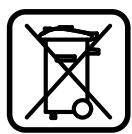
In accordance with European Directive 2002/96/EC on waste electrical and electronic equipment and in accordance with European Directive 2006/66/EC on batteries and accumulators, which cannot be
disposed of with household waste, must be collected separately and taken to a recycling point for environmentally sound disposal.
The built-in rechargeable battery is discharged before removal. Due to opening the housing of the power tool, it may be damaged.
To remove the rechargeable battery from the power tool, press the switch and leave it on until the battery is fully discharged. Unscrew the screws on the housing and remove the cover. Disconnect the cable from the battery and remove it.
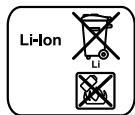
Rechargeable batteries or ordinary batteries:
ANTI-POLLUTION:
Bosch Lawn and Garden Ltd., PT-LG/ENS,
Stowmarket, Suffolk IP14 1EY, England
C09
Dr. Egbert Schneider
Senior Vice President
Engineering
Dr. Eckerhard Strötgen
Engineering Director
PT/ESI

Robert Bosch GmbH, Power Tools Division
D-70745 Leinfelden-Echterdingen
22.08.2011
Please always quote the 10-digit item number from the rating plate of the power tool for all inquiries and spare parts orders.
Serbian
Bosch-Service
Dimitrija Tucovića 59
11000 Belgrade
Tel.: +381 (011) 244 85 46
Fax: +381 (011) 241 62 93
Senior Vice President
Engineering
Dr. Eckerhard Strötgen
Engineering Director
PT/ESI
ppa.
Robert Bosch GmbH, Power Tools Division
D-70745 Leinfelden-Echterdingen
22.08.2011
Senior Vice President
Engineering
Dr. Eckerhard Strötgen
Engineering Director
PT/ESI
ppa.
Robert Bosch GmbH, Power Tools Division
D-70745 Leinfelden-Echterdingen
22.08.2011
Measured noise values determined according to EN 60745. The A-weighted sound pressure level of the device is typically 72 dB(A). Uncertainty K = 3 dB.
The noise level during operation may exceed 80 dB(A).
Wear hearing protection!
For any inquiries or ordering spare parts, please always provide the 10-digit catalog number from the type plate of the power tool.
Croatian
Robert Bosch d.o.o
Kneza Branimira 22
10040 Zagreb
Tel.: +385 (01) 295 80 51
Fax: +386 (01) 5193407
Transport
The lithium-ion batteries installed in the power tool are subject to the dangerous goods transport regulations. The batteries can be transported by road without any further requirements.
If transport is carried out by a third party (e.g., by air or freight forwarding), special requirements regarding packaging and labeling must be observed. When preparing such shipments for transport, prior consultation with a hazardous goods transport expert is required.
Bosch Power Tools

Disposal
General safety instructions
ATTENTION
Technical file (2006/42/EU) available at: Bosch Lawn and Garden Ltd., PT-LG/ENS, Stowmarket, Suffolk IP14 1EY, England
C 09
Dr. Egbert Schneider Senior Vice President Engineering
Dr. Eckerhard Strötgen Engineering Director PT/ESI
ppa.
Robert Bosch GmbH, Power Tools Division D-70745 Leinfelden-Echterdingen 22.08.2011
Bosch Lawn and Garden Ltd., PT-LG/ENS,
Stowmarket, Suffolk IP14 1EY, England
C 09
Dr. Egbert Schneider
Senior Vice President
Engineering
Dr. Eckerhard Strötgen
Engineering Director
PT/ESI

Robert Bosch GmbH, Power Tools Division
D-70745 Leinfelden-Echterdingen
22.08.2011
Senior Vice President
Engineering Director
Engineering
PT/ESI

Robert Bosch GmbH, Power Tools Division
D-70745 Leinfelden-Echterdingen
22.08.2011

Lithuanian 173
The noise measurement values were determined according to EN 60745.
The A-weighted sound pressure level of the device typically reaches 72 dB(A). The uncertainty K = 3 dB.
S644D - Top for Wood


S922AF - Flexible for Metal


S922HF - Flexible for Wood and Metal


S628DF - Special for Plaster