
317 - Audio Amplifier NAD - Free user manual and instructions
Find the device manual for free 317 NAD in PDF.


User questions about 317 NAD
0 question about this device. Answer the ones you know or ask your own.
Ask a new question about this device
Download the instructions for your Audio Amplifier in PDF format for free! Find your manual 317 - NAD and take your electronic device back in hand. On this page are published all the documents necessary for the use of your device. 317 by NAD.
USER MANUAL 317 NAD
IMPORTANT SAFETY INSTRUCTIONS

CAUTION
RISK OF ELECTRIC
RICH OF ELESS TRIC SHOCK DO NOT OPEN
CHECK DO NOT OPEN
ATTENTION:
RISQUE DE CHOC ELECTRIQUE
NE PAS OUVRIR
The Ground Truth image displays a single, solid horizontal line. According to Rule 2 (UNDERSCORE & LINE RULES), this is a stylistic or background line, not a placeholder underscore. Therefore, the OCR result must ignore it and output nothing or only meaningful text. The provided OCR content is "____", which consists of four underscores. This is an incorrect interpretation of the line as a placeholder, violating the rule that stylistic lines must be ignored. The OCR has hallucinated underscores where none should exist based on the GT's visual context. Hence, the OCR result is inconsistent with the Ground Truth.

CAUTION: TO REDUCE THE RISK OF ELECTRIC SHOCK, DO NOT REMOVE COVER (OR BACK). NO USER SERVICEABLE PARTS INSIDE. REFER SERVICING TO QUALIFIER SERVICE PERSONNEL
Warning: To reduce the risk of fire or electric shock, do not expose this unit to rain or moisture.
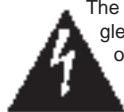
The lightning flash with an arrowhead symbol within an equilateral triangle is intended to alert the user to the presence of uninsulated “dangerous voltage” within the product’s enclosure that may be of sufficient magnitude to constitute a risk of electric shock to persons.
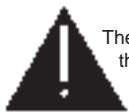
The exclamation point within an equilateral triangle is intended to alert the user to the presence of important operating and maintenance (servicing) instructions in the literature accompanying the product.

Do not place this unit on an unstable cart, stand or tripod, bracket or table. The unit may fall, causing serious injury to a child or adult and serious damage to the unit. Use only with a cart, stand, tripod, bracket or table recommended by the manufacturer or sold with the unit. Any mounting of the device on a wall or ceiling should follow the manufacturer's instructions and should use a mounting accessory recommended by the manufacturer.
An appliance and cart combination should be moved with care. Quick stops, excessive force and uneven surfaces may cause the appliance and cart combination to overturn.
Read and follow all the safety and operating instructions before connecting or using this unit. Retain this notice and the owner's manual for future reference.
All warnings on the unit and in it's operating instructions should be adhered to.
Do not use this unit near water; for example, near a bath tub, washbowl, kitchen sink, laundry tub, in a wet basement or near a swimming pool.
The unit should be installed so that its location or position does not interfere with its proper ventilation. For example, it should not be situated on a bed, sofa, rug or similar surface that may block the ventilation openings; or placed in a built-in installation, such as a bookcase or cabinet, that may impede the flow of air through its ventilation openings.
The unit should be situated from heat sources such as radiators, heat registers, stoves or other devices (including amplifiers) that produce heat.
The unit should be connected to a power supply outlet only of the voltage and frequency marked on its rear panel.
The power supply cord should be routed so that it is not likely to be walked on or pinched, especially near the plug, convenience receptacles, or where the cord exits from the unit.
Unplug the unit from the wall outlet before cleaning. Never use benzine, thinner or other solvents for cleaning. Use only a soft damp cloth.
The power supply cord of the unit should be unplugged from the wall outlet when it is to be unused for a long period of time.
Care should be taken so that objects do not fall, and liquids are not spilled into the enclosure through any openings.
This unit should be serviced by qualified service personnel when:
A. The power cord or the plug has been damaged; or
B. Objects have fallen, or liquid has been spilled into the unit; or
C. The unit has been exposed to rain or liquids of any kind; or
D. The unit does not appear to operate normally or exhibits a marked change in performance; or
E. The device has been dropped or the enclosure damaged.
Upon completion of any servicing or repairs, request the service shop's assurance that only Factory Authorized Replacement Parts with the same characteristics as the original parts have been used, and that the routine safety checks have been performed to guarantee that the equipment is in safe operating condition.
REPLACEMENT WITH UNAUTHORIZED PARTS MAY RESULT IN FIRE, ELECTRIC SHOCK OR OTHER HAZARDS.
ATTENTION
POUR ÉVITER LES CHOC ELECTRIQUES, INTRODUIRE LA LAME LA PLUS LARGE DE LA FICHE DANS LA BORNE CORRESPONDANTE DE LA PRISE ET POUSSER JUSQU'AU FOND.
CAUTION
TO PREVENT ELECTRIC SHOCK MATCH WIDE BLADE OF PLUG TO WIDE SLOT FULLY INSERT.
If an indoor antenna is used (either built into the set or installed separately), never allow any part of the antenna to touch the metal parts of other electrical appliances such as a lamp, TV set etc.
CAUTION
POWER LINES
Any outdoor antenna must be located away from all power lines.
OUTDOOR ANTENNA GROUNDING
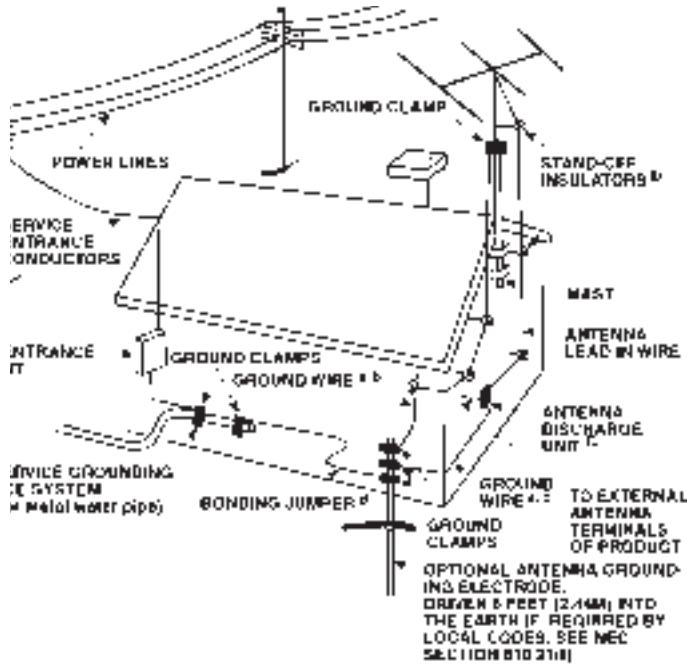
If an outside antenna is connected to your tuner or tuner-preamplifier, be sure the antenna system is grounded so as to provide some protection against voltage surges and built-up static charges. Section 810 of the National Electrical Code, ANSI/NFPA No. 70-1984, provides information with respect to proper grounding of the mast and supporting structure, grounding of the lead-in wire to an antenna discharge unit, size of grounding conductors, location of antenna discharge unit, connection to grounding electrodes and requirements for the grounding electrode.
a. Use No. 10 AWG (5.3mm2) copper, No. 8 AWG (8.4mm2) aluminium, No. 17 AWG (1.0mm2) copper-clad steel or bronze wire, or larger, as a ground wire.
b. Secure antenna lead-in and ground wires to house with stand-off insulators spaced from 4-6 feet (1.22 - 1.83 m) apart.
c. Mount antenna discharge unit as close as possible to where lead-in enters house.
d. Use jumper wire not smaller than No.6 AWG (13.3mm2) copper, or the equivalent, when a separate antenna-grounding electrode is used. see NEC Section 810-21 (j).
EXAMPLE OF ANTENNA GROUNDING AS PER NATIONAL ELECTRICAL CODE INSTRUCTIONS CONTAINED IN ARTICLE 810 - RADIO AND TELEVISION EQUIPMENT.
text_image
POWER LINES SERVICE INTRANCE ONDUCTORS INTRANCE IT GROUND CLAMPS GROUND WIRE a b BONDING JUMPER b GROUND CLAMPS STAND-CFF INSULATORS b MAST ANTENNA LEAD IN WIRE ANTENA DISCHARGE UNIT SERVICE GROUNDING IC SYSTEM MELAL WATER PIPE) GROUNDING WIRE a b TO EXTERNAL ANTENNA TERMINALS OF PRODUCT OPTIONAL ANTENHA GROUND- ING ELECTRODE. DRIVEN E FEET (244m) INTO THE EARTH IF REQUIRED BY LOCAL CODES. SEE NEC SECTION 810.2110)NOTE TO CATV SYSTEM INSTALLER: This reminder is provided to call the CATV system installer's attention to Article 820-22 of the National Electrical Code that provides guidelines for proper grounding and, in particular, specifies that the ground cable ground shall be connected to the grounding system of the building, as close to the point of cable entry as practical.
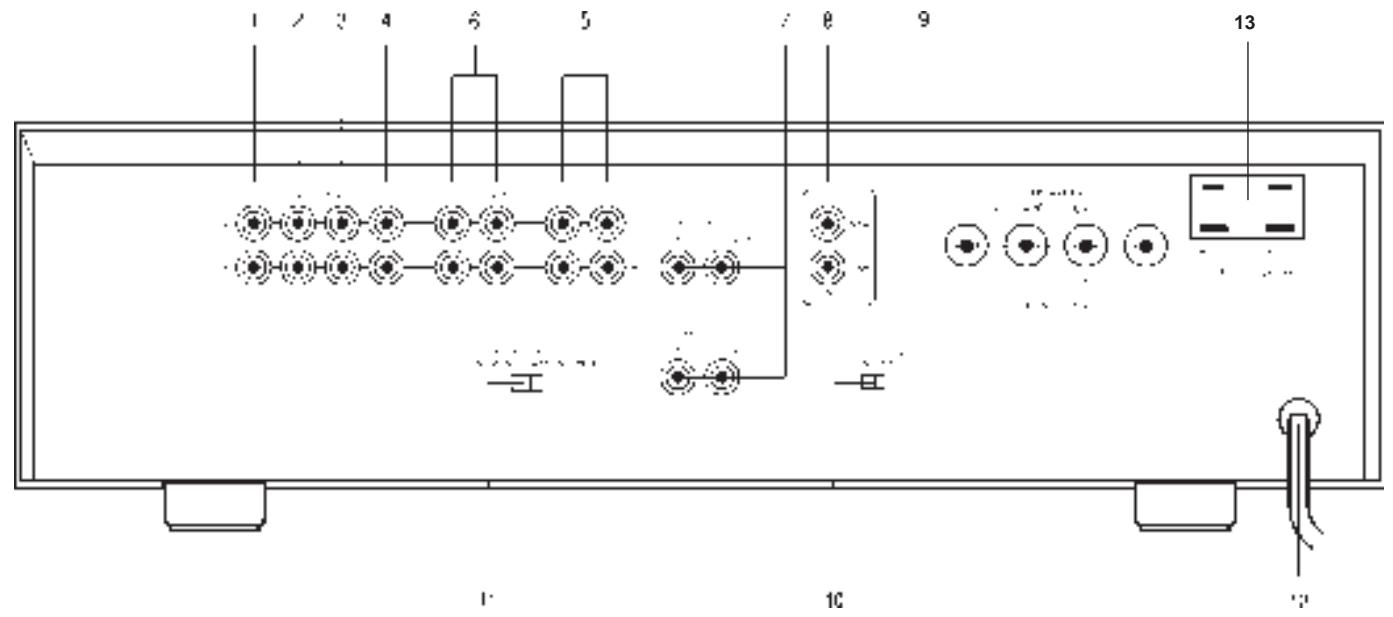
REAR PANEL CONNECTIONS
text_image
1 2 3 4 5 6 7 8 9 10 13 14 15 16 17 18 19 20©1996. 317. NAD ELECTRONICS LTD.
FRONT PANEL CONTROLS
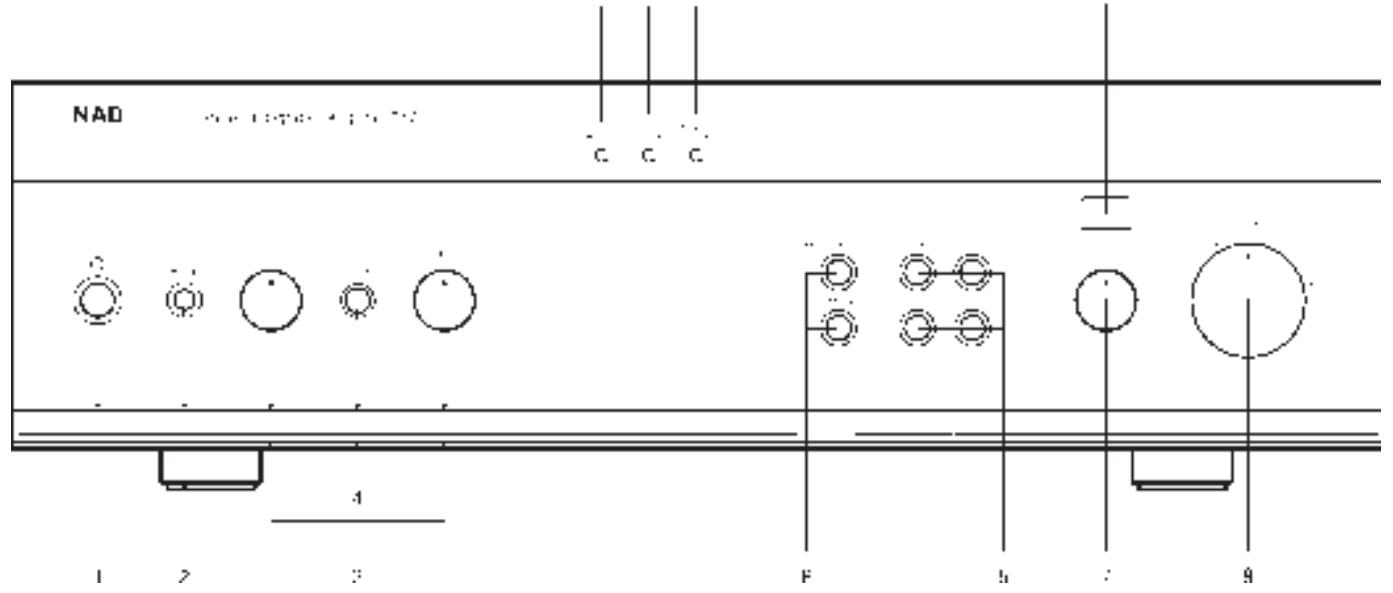
text_image
NAD C C C 1 2 3 F 5 6 A©1996. 317. NAD ELECTRONICS LTD.
REMOTE CONTROL
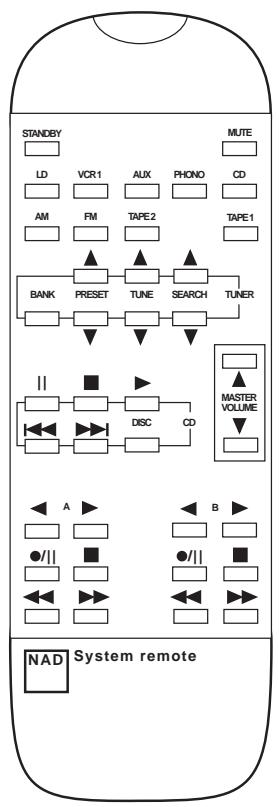
text_image
STANDBY LD VCR1 AUX PHONO CD AM FM TAPE2 TAPE1 BANK PRESET TUNE SEARCH TUNER || ■ ▶ DISC CD MASTER VOLUME A B ●/|| ■ ●/|| ■ NAD System remote- Connect the speakers to the rear Speaker terminals and sources to the relevant rear input sockets.
- Plug in the AC power cord.
- Press the POWER button to turn the NAD 317 on.
- Press the required input selector.
NOTES ON INSTALLATION.
Your NAD 317 should be placed on a firm, level surface. Avoid placing the unit in direct sunlight or near sources of heat and damp.
Allow adequate ventilation. Do not place the unit on a soft surface like a carpet. Do not place it in an enclosed position such a bookcase or cabinet that may impede the air-flow through the ventilation slots.
Switch the unit off before making any connections. The RCA connectors on your NAD 317 are colour coded for convenience. Red and white are Right and Left audio respectively, and yellow for NAD-Link.
The NAD 317 comes with RCA leads for basic connections. Where additional leads are required, use high quality leads and connectors for optimum performance and reliability. Ensure that leads and connectors are not damaged in any way and all connectors are firmly pushed home.
For best performance, use quality speaker leads of 16 gauge thickness or more.
If the unit is not going to be used for some time, disconnect the plug from the AC socket.
Should water get into your NAD 317, shut off the power to the unit and remove the plug from the AC socket. Have the unit inspected by a qualified service technician before attempting to use it again.
Do not remove the cover, there are no user-serviceable parts inside.
Use a dry soft cloth to clean the unit. If necessary, lightly dampened the cloth with soapy water. Do not use solutions containing benzol or other volatile agents.
REAR PANEL CONNECTIONS.
1. CD INPUT
Input for a CD or other line-level signal source. Use a twin RCA-to-RCA lead to connect the CD player left and right 'Audio Outputs' to this input. The NAD 317 only accepts analogue signals from your CD player.
2. VIDEO INPUT
Input for the audio signal from a stereo VCR (or stereo TV/Satellite/Cable receiver) or other line-level audio source. Using twin RCA-to-RCA leads, connect to the left and right 'Audio Out' of the unit to these inputs. Note: These are audio inputs only.
3. TUNER INPUT
Input for a Tuner or other line-level signal source. Use a twin RCA-to-RCA lead to connect the Tuner left and right 'Audio Outputs' to this input.
4. AUX INPUT
Input for additional line level input signals such as another CD player. Use a twin RCA-to-RCA lead to connect the auxiliary unit's left and right 'Audio Outputs' to this input.
5. TAPE 1 IN, OUT
Connections for analogue recording and playback to an audio tape recorder of any type. Using twin RCA-to-RCA leads, connect to the left and right 'Audio Output' of the tape machine to the TAPE 1 IN connectors for playback and tape monitoring. Connect the left and right 'Audio Input' of the tape machine to the TAPE 1 OUT connectors for recording.
6. TAPE 2 IN, OUT
Connections for analogue recording and playback to a secondary audio tape recorder of any type. Using twin RCA-to-RCA leads, connect to the left and right 'Audio Output' of the tape machine to the TAPE 2 IN connectors for playback and tape monitoring. Connect the left and right 'Audio Input' of the tape machine to the TAPE 2 OUT connectors for recording.
7. PRE OUT, MAIN IN
Connections to an external pre-amplifier, power amplifier or processor, such as a surround-sound decoder. In normal use these should be connected together using the links supplied. To connect your NAD 317 to external processor or amplifier sections first remove these links. Use a twin RCA-to-RCA lead to connect to the left and right 'Audio Input' of the Power amp or processor to the Pre Out connectors.
Connect the left and right 'Audio Output' of the Pre-amp or processor to the Main In connectors.
Note: The Pre-Out output signal will be affected by the NAD 317's volume and tone control settings.
8. NAD-LINK IN, OUT
The NAD-Link connector is used to pass commands from the remote control handset to and from other units fitted with NAD-Link connectors. This allows centralised control of a complete system or gives system control from more than one room. To function with other units, connect the NAD 317's NAD-Link OUT to the NAD-Link IN on the other unit. NAD-Link connectors can be daisy-chained, IN to OUT, so that a whole system can be controlled from the remote control facilities of one unit.
A single NAD-Link connection from a hi-fi system in a second room will allow remote control of Multi Room systems.
9. SPEAKERS
Speaker terminals for speakers with an impedance of 4 ohms or more.
Connect the right speaker to the terminals marked 'R +' and 'R-' ensuring that the 'R+' is connected to the '+' terminal on your loudspeaker and the 'R-' is
connected to the loudspeaker's ‘-’ terminal.
Connect the terminals marked 'L+' and 'L-' to the left speaker in the same way.
Always use heavy duty (16 gauge or thicker) stranded wire to connect loudspeakers to your NAD 317.
The high-current binding post terminals can be used as a screw terminal for cables terminating in spade or pin connectors or for cables with bare wire ends.
SPADE CONNECTORS
These should be slotted under the terminal's screw bushing, which is then fully tightened. Ensure the connector is tightly secured and there is no danger of bare metal from spade connectors touching the back panel or another connector, as this may cause damage.
BARE WIRES AND PIN CONNECTORS
Bare wires and pin connectors should be inserted into the hole in the shaft of the terminal. Unscrew the speaker terminal's plastic bushing until the hole in the screw shaft is revealed. Insert the pin or bare cable end into the hole and secure the cable by tightening down the terminal's bushing.
Avoid any danger of bare metal from the speaker cables touching the back panel or another connector. Ensure that there is only 1/2" (1cm) of bare cable or pin and no loose strands of speaker wire.
10. SOFT CLIPPING
When an amplifier is driven beyond its specified power output, a hard distorted sound can be heard on very loud sounds. This is caused by the amplifier cutting off or 'hard clipping' the peaks of sound that it was not designed to reproduce. The NAD Soft Clipping circuit gently limits the output of the system to minimize audible distortion if the amplifier is overdriven.
If your listening involves moderate power levels you may leave the Soft Clipping switch to Off. If you are likely to play at high levels, that could stretch the amplifier's power capability, then switch Soft Clipping On.
The Soft Clipping LED on the front panel will illuminate when the amplifier is in Soft Clipping mode.
11. BRIDGE SWITCH
The NAD 317 can be used as part of a higher power stereo or home-theatre system, by connecting additional power amplifiers. If the power amp section in the NAD 317 is to be used to drive a single speaker, then use the Bridge switch to run the left and right power amplifiers as a single channel, high power unit. Set the Bridge switch to the 'Bridge' position and connect the speaker to the terminals marked 'L+' and 'R+' ensuring that the 'L+' is connected to the '+' terminal on your loudspeaker and the 'R+' is connected to the loudspeaker's '-' terminal. In Bridged mode left channel is taken as the input and the NAD 317 will produce approximately 240W into an 8 ohm loudspeaker. In this mode, the amplifier sections will react as though the speaker impedance has been halved. So speakers with very low impedances (under 4 ) are not recommended as they may cause the amplifier's thermal cut-out to operate if played at high levels.
The Bridge LED on the front panel will illuminate when the amplifier is in Bridge mode.
12. AC LINE CORD.
After you complete all connections to the preamplifier, plug the AC line cord into a "live" AC socket.
13. AC CONVENIENCE OUTLETS (U.S. CANADIAN MODELS ONLY
The AC power cords of other units in the audio system can be connected directly to the AV 711's unswitched AC outlets. If another stereo component is plugged into the UNSWITCHED AC outlet, power will be supplied whether your AV711 is on or off.
FRONT PANEL CONTROLS.
POWER, SPEAKERS AND HEADPHONE FUNCTIONS.
1. POWER
Pressing the POWER switch turns the unit On and after a short pause, the Power indicator LED will illuminate green. Pressing the POWER switch again will turn the amplifier Off.
When the NAD 317 is switched On, pressing the Standby button on the remote handset will put the NAD 317 into Standby mode and the Power indicator will turn amber. The amber Power indicator shows that power is being supplied to the NAD 317, but the system is currently in the Standby Mode.
CAUTION: When in Standby, power is still supplied to your NAD 317. You should switch it off using the front panel Power switch when it is not being used for long periods of time.
2. HEADPHONE SOCKET
A 1/4" stereo jack socket is supplied for headphone listening and will work with conventional headphones of any impedance. Inserting a headphone jack into this socket automatically switches off the loudspeakers. The volume and tone and balance controls are operative for headphone listening. Use a suitable adapter to connect headphones with other types of connectors, such as 3.5mm stereo 'personal stereo' jack plugs.
Warning: Make certain that the volume control is turned to minimum (fully anti-clockwise) before connecting headphones.
Listening at high levels can damage your hearing.
TONE FUNCTIONS
3. BASS & TREBLE CONTROLS
The NAD 317 is fitted with BASS and TREBLE tone controls to adjust the tonal balance of your system.
The 12 o'clock position is 'flat' with no boost or cut
and a detent indicates this position. Rotate the control clockwise to increase the amount of Bass or Treble. Rotate the control anti-clockwise to decrease the amount of Bass or Treble. The Tone controls do not affect recordings made using the Tape outputs but will affect the signal going to the Pre-amp output (Pre Out).
4. TONE DEFEAT
The TONE DEFEAT switch bypasses the tone control section of the NAD 317. If the Tone Controls are not normally used and left in the 12 o'clock position, then it is advisable to switch out the Tone Control section altogether by using this switch. In the 'out' position, the Tone Control circuits are active, pushing the TONE DEFEAT switch in bypasses the Tone Control section.
INPUT SELECTORS.
5. INPUT SELECTORS
These buttons select the active input to the NAD 317 and the signal sent to the loudspeakers, the Tape outputs and the PRE OUT sockets.
LEDs inside each button will indicate which input is currently selected.
TUNER: Selects the tuner (or other line-level source) connected to the Tuner sockets as the active input.
AUX: Selects a line-level source connected to the AUX sockets as the active input.
CD: Selects the CD (or other line-level source) connected to the CD sockets as the active input.
VIDEO: Selects the VCR (or stereo TV/Satellite/Cable receiver) connected to the VCR sockets as the active input.
TAPE FUNCTIONS.
6. TAPE 1 MONITOR/TAPE 2
Selects the output from a tape recorder when playing back tapes or monitoring recordings being made through the Tape 1 sockets. Press the Tape 1 button once to select it and again to return to the normal input selection.
Tape 1 is a tape Monitor function which does not override the current input selection. For example, if the CD is the active input when TAPE 1 is selected, then the CD signal will continue to be selected and sent to both the TAPE 1, and TAPE 2 OUTPUT sockets, but it is the sound from the recorder connected to Tape 1 that will be heard on the loudspeakers.
To show which input is active when in Tape Monitor mode, its indicator light will stay lit.
TAPE 2: Selects Tape 2 as the active input.
TO MAKE A RECORDING
When any source is selected, its signal is also fed directly to any tape machine connected to the TAPE 1 or TAPE 2 OUTPUTS for recording.
TAPE TO TAPE COPYING
You can copy between two tape machines connected to your NAD 317. Put the source tape in the machine connected to Tape 2 and the blank tape into the recorder connected to Tape 1. By selecting TAPE 2 input you can now record from Tape 2 to Tape 1 and monitor the signal coming from the original tape.
Also you can use Tape 1 as the source and copy to Tape 2 but Tape 2 input has to be selected for the duration of the recording. By selecting Tape 1 Monitor input, you can now monitor the signal coming from the original tape.
CAUTION: WHEN TAPE 2 IS SELECTED, ONLY ONE TAPE MACHINE SHOULD BE SET IN RECORD MODE. IF BOTH ARE SET IN RECORD MODE, WITH TAPE 2 SELECTED, A FEEDBACK LOOP RESULTS WHICH MAY CAUSE A LOUD "WHISTLE OR HOWL", POTENTIALLY DAMAGING YOUR AMPLIFIER OR LOUDSPEAKERS.
BALANCE AND VOLUME.
7. BALANCE
The BALANCE control adjusts the relative levels of the left and right speakers. The 12 o'clock position provides equal level to the left and right channels. A detent indicates this position.
Rotating the control clockwise moves the balance towards the right. Rotating the control anti-clockwise moves the balance to the left. The BALANCE control does not affect recordings made using the Tape outputs but will affect the signal going to the Pre-amp output (Pre Out).
8. VOLUME
The VOLUME control adjusts the overall loudness of the signals being fed to the loudspeakers. It is motor driven and can be adjusted from the remote control handset. The VOLUME control does not affect recordings made using the Tape outputs but will affect the signal going to the Pre-amp output (Pre Out).
INDICATORS AND REMOTE SENSOR
9. PROTECTION
In Protection mode; the loudspeakers have been disconnected by an internal relay. This mode is activated briefly during turn-on and turn-off, to protect the speakers from low-frequency thumps. At other times the Protection mode may be activated by severe overheating, short-circuited speaker wiring, or an internal fault.
If the Status light continues to glow red, switch the Power OFF, allow to cool and then switch Power ON. If the protection system interrupts the sound even when the amplifier is cool, return the amplifier to your NAD dealer for service. The protection relays may be disengaging to protect your speakers from a circuit fault, such as an improper DC voltage at the speaker terminals.
10. SOFT CLIPPING
Shows that the NAD 317 is in Soft Clipping mode.
11. BRIDGE
Shows that the NAD 317 is in bridged mode.
12. SENSOR
Sensor for receiving the infra-red signals from your remote handset. An LED in the Power On/Off button will light when a signal is being received from the remote handset.
REMOTE CONTROL HANDSET.
The Remote Control handset handles all the key functions of the NAD 317 and has additional controls to remotely operate NAD Tuners, Cassette and CD machines. It will operate up to a distance of 16ft (5m).
Alkaline batteries are recommended for maximum operating life. Two AA (R6) batteries should be fitted in the battery compartment at the rear of the Remote Control handset. When replacing batteries, check that they have been put in the right way round, as indicated on the base of the battery compartment.
Please refer to previous sections of the manual for a full description of individual functions.
Note: The remote control handset supplied is the NAD universal remote and can be used on any remote controllable NAD system. Not every function on it may be available on your particular unit.
STANDBY Switches the NAD 317 between On and Standby modes. (Caution: Switch the NAD 317 off using the front panel Power switch when it is not being used for long periods of time.)
MUTE Press the MUTE Button to temporarily switch off the sound to the speakers and headphones. Mute mode is indicated by the volume control LED flashing. Press MUTE again to restore sound.
LD Inoperative for the NAD 317.
VCR1 Selects VIDEO as the active input.
AUX Selects the Aux as the active input.
PHONO Inoperative for the NAD 317.
CD Selects CD as the active input.
TUNER AM Selects Tuner input on the NAD 317 and the AM waveband on a separate NAD Tuner.
TUNER FM Selects the Tuner input of the NAD 317 and the FM waveband on a separate NAD Tuner.
TAPE 2 Selects Tape 2 as the active input.
TAPE 1 Selects Tape 1 (Monitor) as the active input.
VOLUME ▲▼ Increases or decreases the Volume setting using the motorised front panel Volume control.
TUNER CONTROL (for use with NAD Tuner).
BANK. Selects a bank of preset stations.
PRESET ▲▼ Selects preset stations.
TUNE ▲▼ Operates the Manual Tune function.
SEARCH ▲▼ Starts the Tuner Search function.
CD PLAYER CONTROL (for use with NAD CD Player).
|| Pause
■ Stop
Play
Skip back. Press once to return to start of track, press several times to skip back to previous tracks.
▶▶1 Skip forward to next track(s).
DISC Go to next disc (for NAD CD changers).
CASSETTE DECK CONTROL (For use with single [A] or double transport [A and B] NAD Cassette Decks).
Forward Play or Reverse Play.
- /|| Record Pause. Press to put cassette deck into record-pause. Press Play to start recording.
■ Stops Play or Recording.
Rewind.
▶▶ Fast Forward.
TROUBLESHOOTING.
NO SOUND
Power AC lead unplugged or power not switched on.
Tape 1 selected.
Mute on.
Rear Pre/power amp links not fitted correctly.
Internal fuse blown.
NO SOUND ONE CHANNEL
Balance control not centered.
Speaker not properly connected or damaged.
Input lead disconnected or damaged.
WEAK BASS/ DIFFUSE STEREO IMAGE
Speakers wired out of phase.
Bridge Mode switched on with speakers connected for stereo operation
REMOTE CONTROL HANDSET NOT WORKING
Batteries flat, or incorrectly inserted.
IR transmitter or receiver windows obstructed.
Check AC lead.
De-select Monitor mode.
Switch off Mute.
Fit links.
Consult dealer.
Center Balance control.
Check connections and speakers.
Check leads and connections.
Check connections to all speakers in the system.
Switch 317 out of Bridged Mode.
Check or replace batteries.
Remove obstruction.
MISE EN ROUTE RAPIDE
4. AUX INPUT [ENTREE AUX]
GRAVES FAIBLES / IMAGE STEREO DIFFUSE
Retirer les obstructions.
SCHNELLANSCHLUSS
INDICADORES Y SENSOR REMOTO
9. POWER
5. TAPE 1 IN, OUT (NASTRO 1 IN, OUT)
6. TAPE 2 IN, OUT (NASTRO 2 IN, OUT)
8. "NAD LINK IN/OUT"
9. HÖGTALARTERMINALER.
5. TAPE 1 IN, OUT (ENTRADA/SAÍDA DE/PARA TAPE1)
6. TAPE 2 IN, OUT (ENTRADA/SAÍDA DE/PARA TAPE 2)
INDICADORES E SENSOR REMOTO
9. POWER (POTÊNCIA)
| (Min. power per channel, 20Hz-20kHz, both channels driven, with no more than rated distortion) | ||
| Rated distortion (THD 20Hz-20kHz) | 0.03% | |
| Clipping power (maximum continuous power per channel) | 105W | |
| IHF dynamic headroom at 8 | +1$8 dB | |
| IHF dynamic power | 8 | 110W (20.4dBW) |
| (maximum short term power/channel) | 4 | 180W (22.6dBW) |
| 2 | 250W (24dBW) | |
| Slew rate | >60V/sec | |
| Damping factor (ref. 8 50Hz) | 200 | |
| Input impedance | 60k + 500pF | |
| Input impedance | 0.9V | |
| Input sensitivity (for rated power into 8 ) | x 28.3 (29dB) | |
| Voltage gain | ±0.2dB | |
| Frequency response 20Hz-20kHz | ||
| -3dB | 2Hz/100kHz | |
| Signal/Noise ratio, A weighted | ref. 1W | 98dB |
| ref. rated power | 119dB | |
| 0.03% | ||
| Bridged (Monophonic) Mode | ||
| CONTINUOUS AVERAGE POWER OUTPUT INTO 8(Min. power, 20Hz-20kHz, with no more than rated distortion) | 240W (23.8dB) | |
| IHF dynamic headroom at 8 | +1.8dB | |
| IHF dynamic power | 8 | 360W (25.6dBW) |
| 4 | 500W (27dBW) | |
| PREAMPLIFIER SECTION | ||
| Line Level Inputs | ||
| (CD,Video,Tuner,Tape 1, Tape 2, Aux) | ||
| Input impedance (R and C) | 20 k + 450 pF | |
| Input sensitivity | ref.0.5V | 80 mV |
| Signal/Noise ratio, A-weighted | ref. 1W | 98dB |
| Frequency response, 20Hz-20kHz | +0.2dB | |
| Voltage gain | 16dB | |
| THD + SMPTE + IHF I.M. | <0.02% | |
| Line Level Outputs | ||
| Output impedance | Pre out | 220 |
| Tape | Source Z + 2k | |
| Headphones | 120 | |
| Maximum output level | Pre out | >12V |
| Tape | >10V | |
| Phones | >8V into 600 | |
| >250mW into 8 | ||
| Controls | ||
| Treble | ±7 dB at 10 kHz | |
| Bass | ±10 dB at 50 Hz | |
| Physical Specifications | ||
| Dimensions in mm (Width x Height x Depth) | 435 x 120 x 280 | |
| Net Weight | 12kg | |
| Shipping Weight | 13.6kg | |
NAD ELECTRONICS
(NEW ACOUSTIC DIMENSION)
LONDON