
AN621 - Uncategorized MAKITA - Free user manual and instructions
Find the device manual for free AN621 MAKITA in PDF.


| Product Type | Construction Coil Nailer |
| Model | AN621 |
| Brand | Makita |
| Power Source | Pneumatic (compressed air) |
| Operating Air Pressure | 0.44 - 0.83 MPa (4.4 - 8.3 bar) |
| Maximum Allowable Air Pressure | 0.83 MPa (8.3 bar) |
| Applicable Nail Length (Wire Welded) | 45 - 65 mm |
| Applicable Nail Length (Plastic Collated) | 50 - 65 mm |
| Nail Capacity | 200 - 300 pcs per coil |
| Minimum Hose Diameter | 6.5 mm |
| Dimensions (L x H x W) | 310 mm x 305 mm x 133 mm |
| Net Weight | 2.8 kg |
| Lubrication | Turbine oil (pneumatic tool oil) |
| Nailing Modes | Intermittent (single) and continuous |
| Depth Adjustment | Yes, by turning adjuster (8 steps, ~1.0 mm per graduation) |
| Exhaust Direction | Adjustable by rotating exhaust cover |
| Trigger Lock | Yes, via change lever to LOCK position |
| Safety Contact Element | Requires both trigger and contact to be activated to fire |
| Hook for Hanging | Yes, reversible on either side |
| Intended Use | Preliminary interior work (floor joists, rafters) and framing in 2\"x4\" housing |
| Noise Level (Sound Pressure) | 86 dB(A) |
| Sound Power Level | 99 dB(A) |
| Vibration (Weighted RMS) | 6 m/s² |
| Maintenance | Regular lubrication, drain compressor tank and air filter, clean magnet |
| Accessories Included | Air socket, cap, small rod for jam cleaning (typical) |
Frequently Asked Questions - AN621 MAKITA
User questions about AN621 MAKITA
0 question about this device. Answer the ones you know or ask your own.
Ask a new question about this device
Download the instructions for your Uncategorized in PDF format for free! Find your manual AN621 - MAKITA and take your electronic device back in hand. On this page are published all the documents necessary for the use of your device. AN621 by MAKITA.
USER MANUAL AN621 MAKITA
GB Construction Coil Nailer INSTRUCTION MANUAL
| UA | Касетний цвяхозабивний пневматичний молоток для будівництва | ІНСТРУКЦІЯ З ЕКСПЛУАТАЦІЇ |
| PL | Wbijak do gwoździ | INSTRUKCJA OBSŁUGI |
| RO | Pistol de bătut cuie pentru construcții | MANUAL DE INSTRUCTIUNI |
| DE | Baubandnagler | BEDIENUNGSANLEITUNG |
| HU | Építőipari hevederes szegező | HASZNÁLATI KÉZIKÖNYV |
| SK | Stavebná klincovačka zvitkových klincov | NÁVOD NA OBSLUHU |
| CZ | Stavební svitková hřebíkovačka | NÁVOD K OBSLUZE |
AN621
natural_image
Technical line drawing of a mechanical device with no visible text or symbols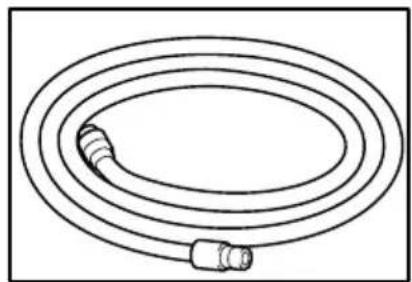
natural_image
Simple line drawing of a coiled tube or hose with a connector (no text or symbols)1
004294
natural_image
Pure diagram of a mechanical system with two pressure regulators and a valve, no text or symbols present.2
004295
natural_image
Illustration of a hand using a tool to adjust or install a mechanical component (no text or symbols visible)3
005237
4
005665
5
6
005667
7
005668
8
005669
005670
1 0
natural_image
Illustration of a welding torch with a downward arrow indicating force or pressure (no text or symbols present)1 1
005672
005673
natural_image
Technical line drawing of a mechanical component with a circular top and arrow indicating rotation (no text or symbols)1 3
1 4
natural_image
Technical line drawing of a mechanical component with no visible text or symbols005675
005676
1 6
natural_image
Line drawing of a hand holding an internal mechanical component (no text or symbols)1 7
1 8
natural_image
Technical line drawing of two mechanical clamping components with no visible text or symbols19
natural_image
Illustration of hands operating a mechanical device with a tool (no text or symbols visible)20
21
natural_image
Illustration of a hand using a tool to adjust or install a mechanical component (no text or symbols visible)2 2
2 3
2 4
2 5
005685
004319
ENGLISH
Explanation of general view
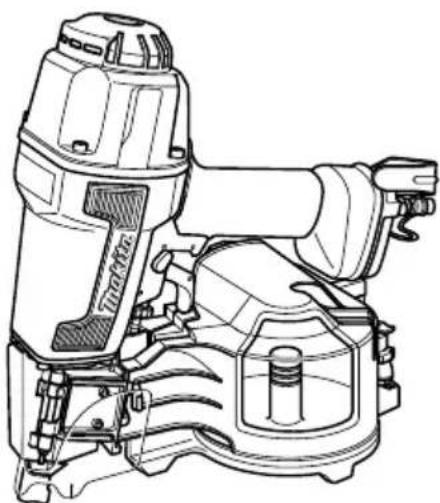
| 3-1. Pneumatic tool oil | 8-2. Magnet | 14-2. Ejection port |
| 4-1. Adjuster | 8-3. Feeder body | 15-1. Hook |
| 5-1. Change lever | 9-1. Air socket | 18-1. Change lever |
| 5-2. Plastic collated coil | 9-2. Air fitting | 18-2. Trigger lock |
| 5-3. Wire collated coil | 10-1. Trigger | 19-1. Cap |
| 6-1. Door | 10-2. Contact element | 22-1. Magnet |
| 6-2. Magazine cap | 12-1. Continuous nailing | 23-1. Drain cock |
| 6-3. Lever | 12-2. Change lever | 24-1. Air filter |
| 7-1. Graduation | 12-3. Trigger lock | 25-1. Oiler |
| 7-2. Coil support plate | 13-1. Exhaust cover | 25-2. Pneumatic oil |
| 8-1. Slot | 14-1. Small rod |
SPECIFICATIONS
| Model | AN621 | |
| Air pressure 0.44 - 0.83 Mpa (4.4 - 8.3 bar) | ||
| Applicable length | Wire welded nails 45 mm | - 65 mm |
| Plastic sheet collated nails 50 | mm - 65 mm | |
| Nail capacity 200 - 300 pcs. | ||
| Min. hose diameter 6.5 mm | ||
| Pneumatic tool oil Turbine oil | ||
| Dimensions (L X H X W) 310 mm X 305 mm X 133 mm | ||
| Net weight 2.8 kg | ||
- Due to our continuing programme of research and development, the specifications herein are subject to change without notice.
- Note: Specifications may differ from country to country.
END105-1
Symbols
The following show the symbols used for the equipment. Be sure that you understand their meaning before use.


- Read instruction manual.
- Wear safety glasses.
ENE059-1
Intended use
The tool is intended for the preliminary interior work such as fixing floor joists or common rafters and framing work in 2 "x 4" housing.
ENG046-1
For European countries only
Noise and Vibration
The typical A-weighted noise levels are sound pressure level: 86 dB (A) sound power level: 99 dB (A).
Wear ear protection.
The typical weighted root mean square acceleration value is 6 m/s^2 .
These values have been obtained according to EN792. ENH013-7
EC-DECLARATION OF CONFORMITY
Model; AN621
We declare under our sole responsibility that this product is in compliance with the following standards of standardized documents;
EN792 in accordance with Council Directives, 98/37/EC.
CE2008
000230
Tomoyasu Kato
Director
Responsible Manufacturer:
Makita Corporation
3-11-8, Sumiyoshi-cho, Anjo, Aichi, JAPAN Authorized Representative in Europe:
Makita International Europe Ltd.
Michigan Drive, Tongwell, Milton Keynes, Bucks MK15 8JD, ENGLAND
ENB067-2
IMPORTANT SAFETY INSTRUCTIONS
WARNING: WHEN USING THIS TOOL, BASIC SAFETY PRECAUTIONS SHOULD ALWAYS BE FOLLOWED TO REDUCE THE RISK OF PERSONAL INJURY, INCLUDING THE FOLLOWING:
READ ALL INSTRUCTIONS.
- For personal safety and proper operation and maintenance of the tool, read this instruction manual before using the tool.
• Always wear safety glasses to protect your eyes from dust or nail injury.
WARNING:
It is an employer's responsibility to enforce the use of safety eye protection equipment by the tool operators and by other persons in the immediate working area.
- Wear hearing protection to protect your ears against exhaust noise and head protection. Also wear light but not loose clothing. Sleeves should be buttoned or rolled up. No necktie should be worn.
- Rushing the job or forcing the tool is dangerous. Handle the tool carefully. Do not operate when under the influence of alcohol, drugs or the like.
- General Tool Handling Guidelines:
(1) Always assume that the tool contains fasteners.
(2) Do not point the tool toward yourself or anyone whether it contains fasteners or not.
(3) Do not activate the tool unless the tool is placed firmly against the workpiece.
(4) Respect the tool as a working implement.
(5) No horseplay.
(6) Do not hold or carry the tool with a finger on the trigger.
(7) Do not load the tool with fasteners when any one of the operating controls is activated.
(8) Do not operate the tool with any power source other than that specified in the tool operating/safety instructions.
- An improperly functioning tool must not be used.
- Sparks sometimes fly when the tool is used. Do not use the tool near volatile, flammable materials such as gasoline, thinner, paint, gas, adhesives, etc.; they will ignite and explode, causing serious injury.
- The area should be sufficiently illuminated to assure safe operations. The area should be clear and litter-free. Be especially careful to maintain good footing and balance.
- Only those involved in the work should be in the vicinity. Children especially must be kept away at all times.
- There may be local regulations concerning noise which must be complied with by keeping noise levels within prescribed limits. In certain cases, shutters should be used to contain noise.
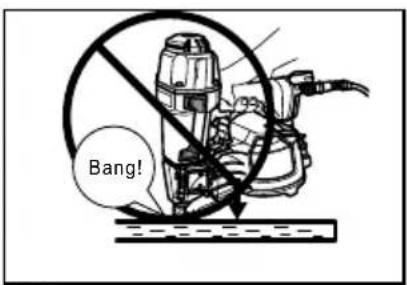
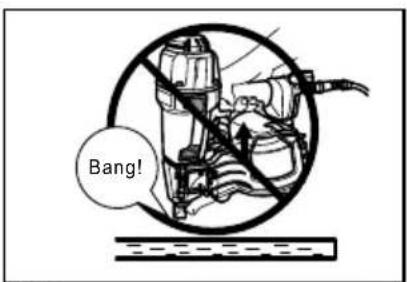
- Do not play with the contact element: it prevents accidental discharge, so it must be kept on and not removed. Securing the trigger in the ON position is also very dangerous. Never attempt to fasten the trigger. Do not operate a tool if any portion of the tool operating controls is inoperable, disconnected, altered, or not working properly.
- Operate the tool within the specified air pressure of 0.44 - 0.83 MPa (4.4 - 8.3 bar) for safety and longer tool life. Do not exceed the recommended max. operating pressure of 0.83 MPa (8.3 bar). The tool should not be connected to a source whose pressure potentially exceeds 1.37 MPa (13.7 bar).
- Make sure that the pressure supplied by the compressed air system does not exceed the maximum allowable pressure of the fastener driving tool. Set the air pressure initially to the lower value of the recommended allowable pressure (see SPECIFICATIONS).
- Never use the tool with other than compressed air. If bottled gas (carbon dioxide, oxygen, nitrogen, hydrogen, air, etc.) or combustible gas (hydrogen, propane, acetylene, etc.) is used as a power source for this tool, the tool will explode and cause serious injury.
- Always check the tool for its overall condition and loose screws before operation. Tighten as required.
- Make sure all safety systems are in working order before operation. The tool must not operate if only the trigger is pulled or if only the contact arm is pressed against the wood. It must work only when both actions are performed. Test for possible faulty operation with nails unloaded and the pusher in fully pulled position.
- Make sure that the trigger is locked when the change lever is set to the LOCK position.
- Check walls, ceilings, floors, roofing and the like carefully to avoid possible electrical shock, gas leakage, explosions, etc. caused by striking live wires, conduits or gas pipes.
- Use only nails specified in this manual. The use of any other nails may cause malfunction of the tool.
- Never use fastener driving tools marked with the symbol "Do not use on scaffoldings, ladders" for specific application for example:
- when changing one driving location to another involves the use of scaffoldings, stairs, ladders, or ladder alike constructions, e.g. roof laths;
- closing boxes or crates;
- fitting transportation safety systems e.g. on vehicles and wagons.
- Do not permit those uninstructed to use the tool.
- Make sure no one is nearby before nailing. Never attempt to nail from both the inside and outside at the same time. Nails may rip through and/or fly off, presenting a grave danger.
- Watch your footing and maintain your balance with the tool. Make sure there is no one below when working in high locations, and secure the air hose to prevent danger if there is sudden jerking or catching.
- On rooftops and other high locations, nail as you move forward. It is easy to lose your footing if you nail while inching backward. When nailing against perpendicular surface, nail from the top to the bottom. You can perform nailing operations with less fatigue by doing so.
- A nail will be bent or the tool can become jammed if you mistakenly nail on top of another nail or strike a knot in the wood. The nail may be thrown and hit someone, or the tool itself can react dangerously. Place the nails with care.
- Do not leave the loaded tool or the air compressor under pressure for a long time out in the sun. Be sure that dust, sand, chips and foreign matter will not enter the tool in the place where you leave it setting.
- Do not point the ejection port at anyone in the vicinity. Keep hands and feet away from the ejection port area.
- When the air hose is connected, do not carry the tool with your finger on the trigger or hand it to someone in this condition. Accidental firing can be extremely dangerous.
- Handle the tool carefully, as there is high pressure inside the tool that can be dangerous if a crack is caused by rough handling (dropping or striking). Do not attempt to carve or engrave on the tool.
-
Stop nailing operations immediately if you notice something wrong or out of the ordinary with the tool.
• Always disconnect the air hose and remove all of the nails: -
When unattended.
- Before performing any maintenance or repair.
- Before cleaning a jam.
-
Before moving the tool to a new location.
-
Perform cleaning and maintenance right after finishing the job. Keep the tool in tip-top condition. Lubricate moving parts to prevent rusting and minimize friction-related wear. Wipe off all dust from the parts.
- When not operating the tool, always lock the trigger by turning the change lever to the LOCK position.
- Do not modify tool without authorization from Makita.
- Ask Makita's Authorized service centers for periodical inspection of the tool.
• To maintain product SAFETY and RELIABILITY, maintenance and repairs should be performed by Makita Authorized Service Centers, always using Makita replacement parts. -
Use only pneumatic tool oil specified in this manual.
-
Never connect tool to compressed air line where the maximum allowable pressure of tool cannot be exceeded by 10% . Make sure that the pressure supplied by the compressed air system does not exceed the maximum allowable pressure of the fastener driving tool. Set the air pressure initially to the lower value of the recommended allowable pressure.
- Do not attempt to keep the trigger contact element depressed with tape or wire. Death or serious injury may occur.
- Always check contact element as instructed in this manual. Nails may be driven accidentally if the safety mechanism is not working correctly.
SAVE THESE INSTRUCTIONS.
INSTALLATION
Selecting compressor
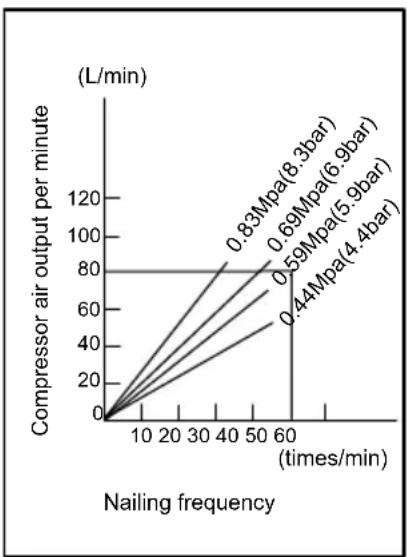
line
| Nailing frequency (times/min) | Compressor air output per minute (L/min) | | ----------------------------- | ---------------------------------------- | | 60 | 83 | | 59 | 69 | | 59 | 59 | | 4.4 | 44 |005236
The air compressor must comply with the requirements of EN60335-2-34.
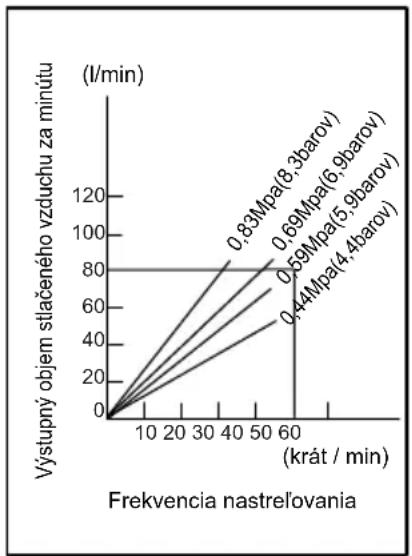
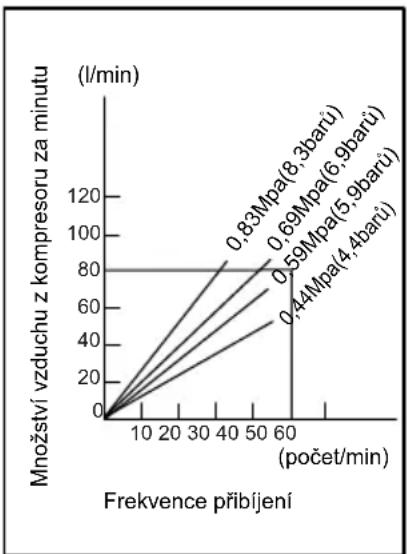
Select a compressor that has ample pressure and air output to assure cost-efficient operation. The graph shows the relation between nailing frequency, applicable pressure and compressor air output.
Thus, for example, if nailing takes place at a rate of approximately 50 times per minute at a compression of 0.59 MPa (5.9 bar), a compressor with an air output over 80 liters/minute is required.
Pressure regulators must be used to limit air pressure to the rated pressure of the tool where air supply pressure exceeds the tool's rated pressure. Failure to do so may result in serious injury to tool operator or persons in the vicinity.
Selecting air hose
Fig.1
Use an air hose as large and as short as possible to assure continuous, efficient nailing operation. With an air pressure of 0.49 Mpa (4.9 bar), an air hose with an internal diameter of over 6.5 mm and a length of less than 20 m is recommended when the interval between each nailing is 0.5 seconds.
⚠️CAUTION:
- Low air output of the compressor, or a long or smaller diameter air hose in relation to the nailing frequency may cause a decrease in the driving capability of the tool.
Lubrication
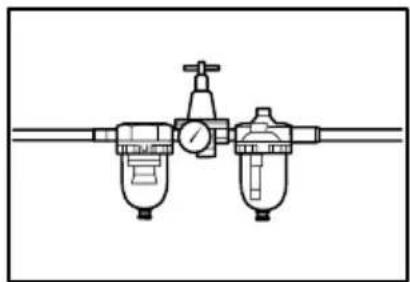
Fig.2
To insure maximum performance, install an air set (oiler, regulator, air filter) as close as possible to the tool. Adjust the oiler so that one drop of oil will be provided for every 30 nails.
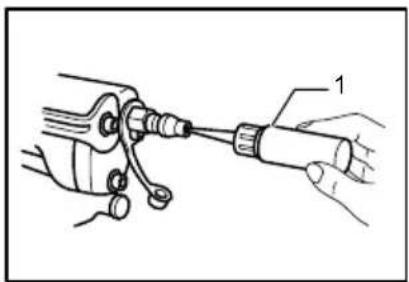
When an air set is not used, oil the tool with pneumatic tool oil by placing 2 (two) or 3 (three) drops into the air fitting. This should be done before and after use. For proper lubrication, the tool must be fired a couple of times after pneumatic tool oil is introduced.
Fig.3
FUNCTIONAL DESCRIPTION
CAUTION:
• Always lock the trigger and disconnect the hose before adjusting or checking function on the tool.
Adjusting depth of nailing
Fig.4
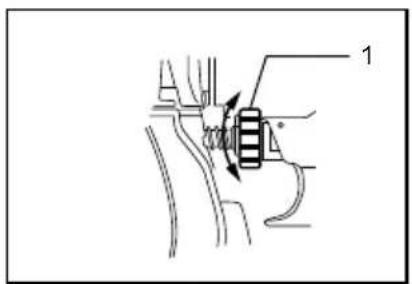
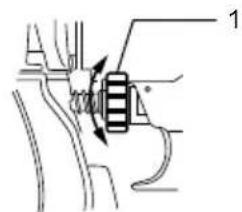
To adjust the depth of nailing, turn the adjuster so that the arrow above the adjuster will point to the number indicated on the adjuster. The depth of nailing is the deepest when the arrow points to the number 1. It will become shallower as the arrow points to higher number. The depth can be changed in approx. 1.0 mm increments per graduation. If nails cannot be driven deep enough even when the arrow points to the number 1, increase the air pressure. If nails are driven too deep even when the arrow points to the number 8, decrease the air pressure. Generally speaking, the tool service life will be longer when the tool is used with lower air pressure and the adjuster set to a lower number.
ASSEMBLY
⚠️CAUTION:
• Always lock the trigger and disconnect the hose before carrying out any work on the tool.
Selecting wire/plastic collated coil
Fig.5
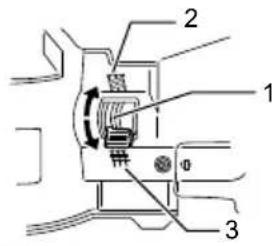
According to the type of collated coil, set the change lever.
Loading nailer
Fig.6
CAUTION:
- Make sure that nails are collated firmly and are not bent.
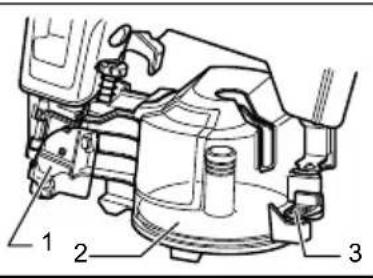
Select nails suitable for your work. Depress the latch lever and open the magazine cap.
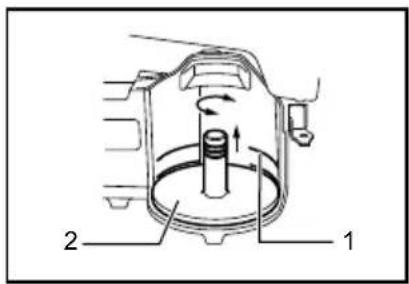
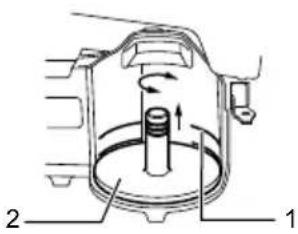
Lift and turn the coil support plate to set it to the graduations of the magazine. If the tool is operated with the coil support plate set to the wrong step, poor nail feed or malfunction of the tool may result.
Fig.7
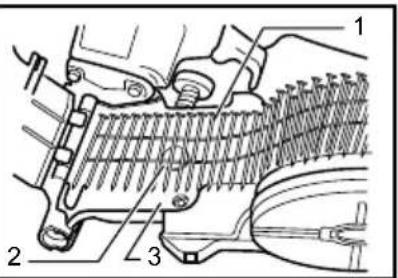
Place the nail coil over the coil support plate. Uncoil enough nails to reach the feed claw. Place the first nail in the driver channel and the second nail in the feed claw. The nail heads must be in the slot in the feeder body. Place other uncoiled nails on feeder body and attach them to the magnet. Be sure that nails are in the feeder claw and are not bent. Then close the magazine cap.
Fig.8
Connecting air hose
Fig.9
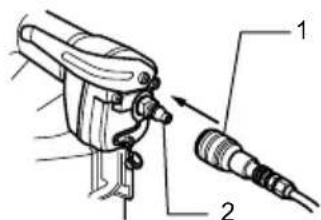
Lock the trigger. Slip the air socket of the air hose onto the air fitting on the nailer. Be sure that the air socket locks firmly into position when installed onto the air fitting. A hose coupling must be installed on or near the tool in such a way that the pressure reservoir will discharge at the time the air supply coupling is disconnected.
OPERATION
CAUTION:
- Make sure all safety systems are in working order before operation.
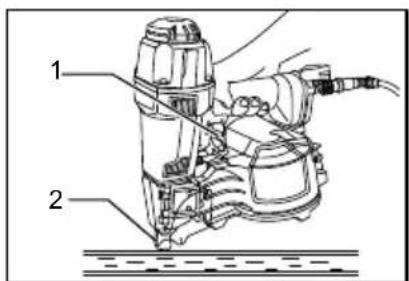
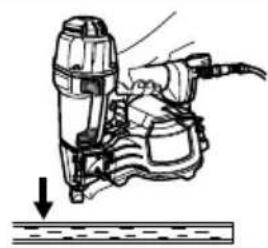
- To drive a nail, you may place the contact element against the workpiece and pull the trigger, or
Fig.10
Fig.11
- Pull the trigger first and then place the contact element against the workpiece.
- No. 1 method is for intermittent nailing, when you wish to drive a nail carefully and very accurately. No. 2 method is for continuous nailing.
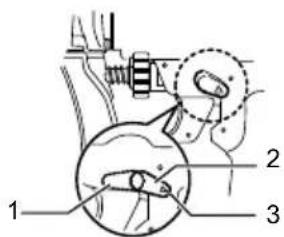
Continuous nailing and trigger locking method Fig.12
For continuous nailing, set the change lever to the "Continuous Nailing" position. For locking the trigger, set the change lever to the "Lock" position. Always make sure that the change lever is properly set to the position.
CAUTION:
- Operating the tool without nails shortens the life of the tool and should be avoided.
Air exhaust
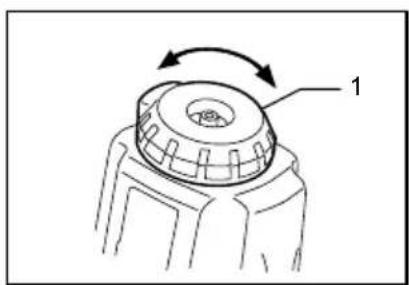
Fig.13
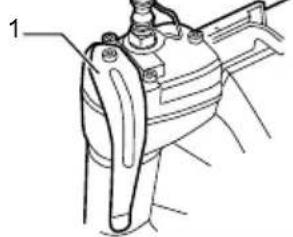
Air exhaust direction can be changed easily by rotating the exhaust cover. Change it when necessary.
Jammed nailer
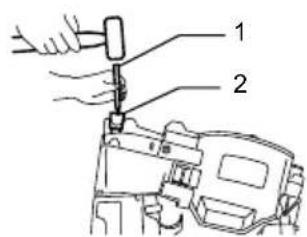
Fig.14
CAUTION:
• Always lock the trigger, disconnect the hose and remove the nails from the magazine before cleaning a jam.
When the nailer becomes jammed, do as follows:
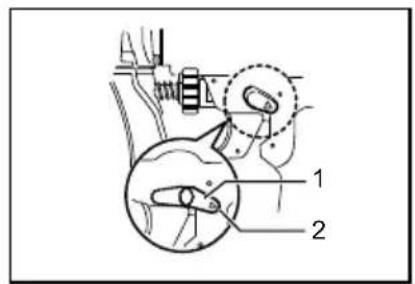
Open the door and magazine cap and remove the nail coil. Insert a small rod or the like into the ejection port and tap it with a hammer to drive out the nail jamming from the ejection port. Reset the nail coil and close the magazine cap and door.
Hook
Fig.15
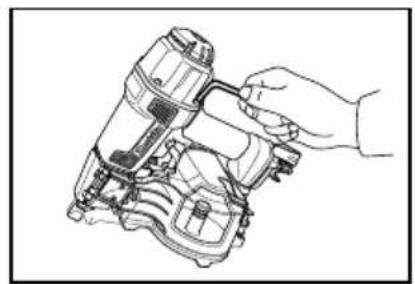
The hook is convenient for hanging the tool temporarily. This hook can be installed on either side of the tool.
CAUTION:
• Always lock the trigger and disconnect the hose when hanging the tool using the hook.
• Always tighten the hook securing bolt firmly.
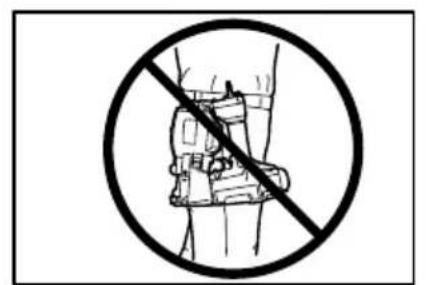
- Never hang the tool on a waist belt or like. Dangerous accidental firing may result.
Fig.16
Nails
004310
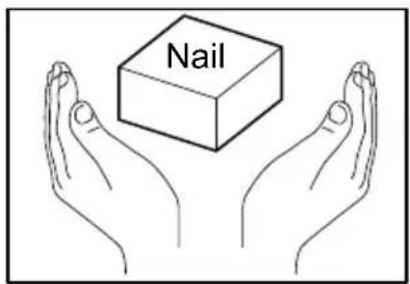
Handle nail coils and their box carefully. If the nail coils have been handled roughly, they may be out of shape or their connector breaks, causing poor nail feed.
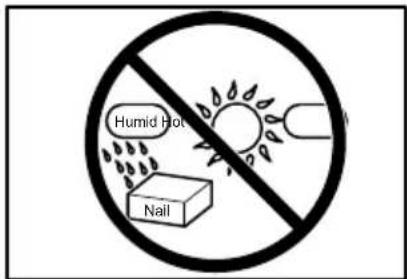
Avoid storing nails in a very humid or hot place or place exposed to direct sunlight.
004311
MAINTENANCE
CAUTION:
• Always disconnect the air hose from the tool before attempting to perform inspection or maintenance.
Maintenance of nailer
Always check the tool for its overall condition and loose screws before operation. Tighten as required.
Fig.17
Make sure all safety systems are in working order before operation. The tool must not operate if only the trigger is pulled or if only the contact element is pressed against the wood. It must work only when both actions are performed. Test for possible faulty operation with nails unloaded.
005679
005680
Entering dirt or foreign matter into the tool may cause damage to the tool.
Make sure that the trigger is locked when the change lever is set to the LOCK position.
Fig.18
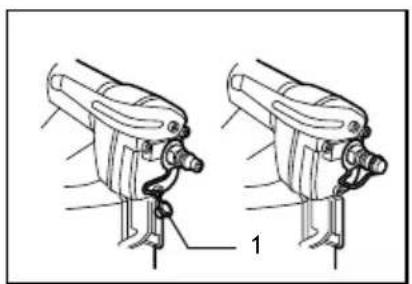
When not in use, lock the trigger and disconnect the hose. Then cap the air fitting with the cap.
Fig.19
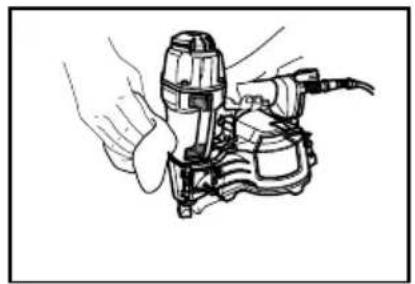
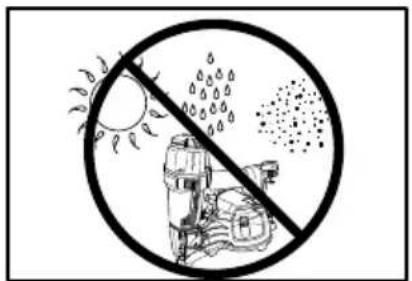
When the tool is not to be used for an extended period of time, lubricate the tool using pneumatic tool oil and store the tool in a safe place. Avoid exposure to direct sunlight and/or humid or hot environment.
Fig.20
Fig.21
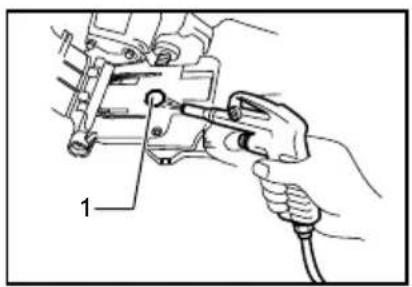
Iron dust that adhere to the magnet can be blown off by using an air duster.
Fig.22
Maintenance of compressor, air set and air hose
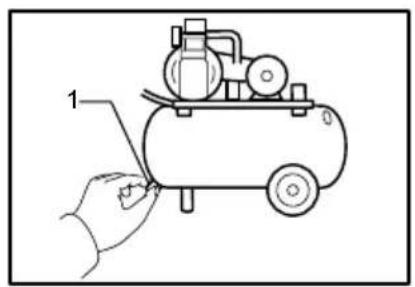
Fig.23
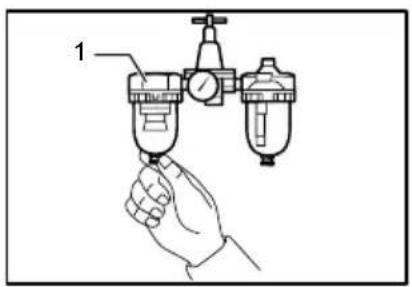
Fig.24
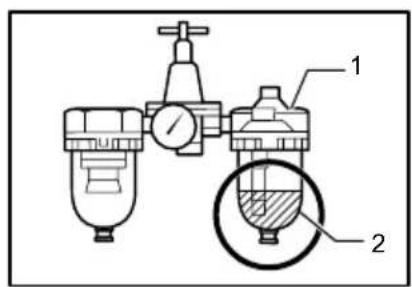
After operation, always drain the compressor tank and the air filter. If moisture is allowed to enter the tool, it may result in poor performance and possible tool failure. Check regularly to see if there is sufficient pneumatic oil in the oiler of the air set. Failure to maintain sufficient lubrication will cause O-rings to wear quickly.
Fig.25
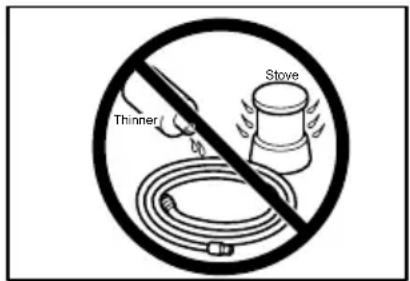
Keep the air hose away from heat (over 60^ C, over 140^ F), away from chemicals (thinner, strong acids or alkalis). Also, route the hose away from obstacles which it may become dangerously caught on during operation. Hoses must also be directed away from sharp edges and areas which may lead to damage or abrasion to the hose.
004320
To maintain product SAFETY and RELIABILITY, repairs, any other maintenance or adjustment should be performed by Makita Authorized Service Centers, always using Makita replacement parts.
ACCESSORIES
⚠️CAUTION:
• These accessories or attachments are recommended for use with your Makita tool specified in this manual. The use of any other accessories or attachments might present a risk of injury to persons. Only use accessory or attachment for its stated purpose.
If you need any assistance for more details regarding these accessories, ask your local Makita Service Center.
- Nails
- Air hoses
- Safety goggles
УКРАЇНСЬКА
Michigan Drive, Tongwell, Milton Keynes, Bucks MK15 8JD АНГЛЯ
Michigan Drive, Tongwell, Milton Keynes, Bucks MK15 8JD, ANGLIA
WAŻNE ZASADY BEZPIECZEŃSTWA
UWAGA: ABY ZMNIEJSZYĆ ZAGROŻENIE OBRAŻEŃ CIAŁA, PODCZAS PRACY Z TYM NARZĘDZIEM NALEŻY ZAWSZE PRZESTRZEGAĆ ZASAD BEZPIECZEŃSTWA, W TYM NASTĘPUJĄCYCH:
NALEŻY ZAPOZNAĆ SIĘ ZE WSZYSTKIMI ZALECENIAMI.
Michigan Drive, Tongwell, Milton Keynes, Bucks MK15 8JD, ANGLIA
INSTRUCTIUNI IMPORTANTE PRIVIND SIGURANTA
AVERTISMENT: CÂND UTILIZAȚI ACEASTĂ MAȘINĂ, TREBUIE RESPECTATE ÎNTOTDEAUNA AVERTIZĂRILE DE SIGURANȚĂ DE BAZĂ PENTRU A REDUCE RISCUL RĂNIRII DE PERSOANE, INCLUSIV URMĂTOARELE:
CITIȚI TOATE INSTRUCTIUNILE.
004311
ÎNTRETINERE
⚠️ATENTIE:
004320
Michigan Drive, Tongwell, Milton Keynes, Bucks MK15 8JD, ENGLAND
WICHTIGE
Michigan Drive, Tongwell, Milton Keynes, Bucks MK15 8JD, ENGLAND
FONTOS BIZTONSÁGI SZABÁLYOK
FIGYELEM: A SZERSZÁM HASZNÁLATA KÖZBEN A SZEMÉLYES SÉRÜLÉS CSÖKKENTÉSE ÉRDEKÉBEN AZ ALAPVETŐ BIZTONSÁGI INTÉZKEDÉSEKET BEK KELL TARTANI, BELEÉRTVE A KÖVETKEZŐKET IS:
MINDEN UTASÍTÁST OLVASSON EL!
Michigan Drive, Tongwell, Milton Keynes, Bucks MK15 8JD, ANGLICKO
DÔLEŽITÉ BEZPEČNOSTNÉ POKYNY
VAROVANIE: V PRÍPADE POUŽÍVANIA TOHTO NÁRADIA JE POTREBNÉ VŽDY DODRŽIAVAŤ BEZPEČNOSTNÉ OPATRENIA S CIEL'OM ZNÍŽIŤ RIZIKO OSOBNÝCH PORANENÍ VRÁTANE NASLEDUJÚCICH OPATRENÍ:
PREČÍTAJTE SI VŠETKY POKYNY.
TIETO POKYNY USCHOVAJTE.
INŠTALÁCIA
Vol'ba kompresora
line
| Frekvencia nastreľovania | Výstupný objem stačeného vzduchu za minútu (l/min) | | ------------------------ | ----------------------------------------------- | | 0.83Mpa | 120 | | 0.69Mpa | 100 | | 0.59Mpa | 80 | | 0.44Mpa | 60 |005236
Michigan Drive, Tongwell, Milton Keynes, Bucks MK15
8JD, VELKÁ BRITÁNIE
DŮLEŽITÉ BEZPEČNOSTNÍ POKYNY
VAROVÁNÍ: V RÁMCI ZAMEZENÍ NEBEZPEČÍ ZRANĚNÍ OSOB PŘI POUŽÍVÁNÍ NÁŘADÍ JE TŘEBA VŽDY ZACHOVÁVAT ZÁKLADNÍ BEZPEČNOSTÍ OPATŘENÍ VČETNĚ NÁSLEDUJÍCÍCH INSTRUKCÍ:
PROČTĚTE SI VEŠKERÉ POKYNY.
TYTO POKYNY USCHOVEJTE.
INSTALACE
Výběr kompresoru
line
| Frekvence přibíjení | Množství vzduchu z kompresoru za minutu (l/min) | | ------------------- | ----------------------------------------------- | | 0 | 0 | | 10 | ~20 | | 20 | ~40 | | 30 | ~60 | | 40 | ~80 | | 50 | ~100 | | 60 | ~120 |005236
004311