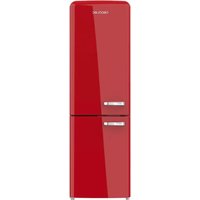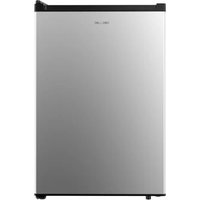
Bolero CoolMarket TT 133 - Fridge CECOTEC - Free user manual and instructions
Find the device manual for free Bolero CoolMarket TT 133 CECOTEC in PDF.


User questions about Bolero CoolMarket TT 133 CECOTEC
0 question about this device. Answer the ones you know or ask your own.
Ask a new question about this device
Download the instructions for your Fridge in PDF format for free! Find your manual Bolero CoolMarket TT 133 - CECOTEC and take your electronic device back in hand. On this page are published all the documents necessary for the use of your device. Bolero CoolMarket TT 133 by CECOTEC.
USER MANUAL Bolero CoolMarket TT 133 CECOTEC
natural_image
Three white refrigerators on a dark background, no visible text or symbolsbolero
Safety instructions 9
-
Parts and components 57
-
Before use 57
-
Product installation
-
Operation
-
Cleaning and maintenance
-
Troubleshooting 62
-
Technical specifications 64
-
Disposal of old electrical and e
lectronic appliances 65
-
Technical support and warranty
-
Copyright 65
SOMMARIE
Read these instructions thoroughly before using the device. Keep this instruction manual for future reference or new users.
- This appliance can be used by children aged 8 years and above and people with reduced physical, sensory, or mental capabilities or lack of experience and knowledge if they have been given supervision or instruction concerning use of the appliance in a safe way and understand the hazards involved. Children must not play with the appliance. Cleaning and user maintenance should not be carried out by unsupervised children.
- Do not store explosive substances such as aerosol cans with flammable propellant in this appliance.
- This device is designed for domestic use only and is not intended for bars, restaurants, farmhouses, hotels, motels, and offices.
- To avoid food contamination, please follow the instructions below:
- Opening the door for a long period of time may cause a significant increase in temperature in the appliance's compartments.
- Clean regularly the surfaces that might be in contact with food and accessible evacuation systems.
- If the appliance remains empty for a long period of time, unplug it, defrost it, clean it, dry it, and leave the door open to prevent interior mould formation.
- WARNING: when positioning the appliance, make sure that the power cable does not get trapped or damaged.
- WARNING: do not place multiple mobile sockets or mobile power supplies on the rear of the appliance.
- WARNING: keep the ventilation grilles on the enclosure of
the appliance or the cabinet in which the appliance is located clear.
- WARNING: do not use mechanical devices or similar to accelerate the defrosting process other than those recommended by the manufacturer.
- WARNING: do not use electrical devices inside the food-preservation compartments unless they are of a type recommended by the manufacturer.
- WARNING: do not damage the refrigeration circuit.
- Check the power cable regularly for visible damage. If the cable is damaged, it must be replaced by the manufacturer, the supplier, or qualified personnel to avoid hazards.
- WARNING! It is dangerous for anyone other than authorised personnel to carry out maintenance or repairs involving the removal of covers. To prevent the electric shock risk do not attempt to repair the appliance yourself.
- See the storage times recommended by the manufacturer.
- Do not allow children to play with the controls or the refrigerator. The refrigerator is a heavy household appliance. Caution must be taken when moving the appliance. It is dangerous to alter specifications or attempt to modify this appliance in any way.
- WARNING: doors or covers fitted with locks and keys must be kept out of the reach of children and not in the vicinity of the freezing appliance to prevent children from being locked inside.
- WARNING: the refrigerant used in your appliance and the insulation materials must be disposed of correctly.
- Keep the packaging material away from children, as there is a risk of suffocation.
WARNING: if the interior light is damaged, contact the official Cecotec Technical
Support Service. Do not try to repair it on your own.
- Make sure the appliance plug is accessible after installation.
- Do not place food directly against the air outlet on the interior of the appliance.
- Keep the ventilation openings clear from obstructions.
- To avoid injuries or death caused by electric shock, do not use the appliance with your hands wet or over a wet surface.
- You should never use this refrigerator with an extension lead or a multi-socket adaptor. Make sure the appliance is plugged in directly to a power supply.
- When positioning the appliance, make sure there is enough free space at the rear, as it is the main heat outlet. This will allow for adequate ventilation.
- Do not place any other appliance on the refrigerator and do not wet it.
- This appliance is not intended to be operated by means of an external timer or separate remote-control system.
- It is advisable to wait for at least four hours before connecting the appliance to allow oil to flow through the compressor.
Free of Freon
- Isobutane refrigerant (R600a), contained within the refrigeration circuit of the appliance, is a natural gas with a high level of environmental compatibility; however, it is flammable. Make sure that no components of the refrigeration circuit have been damaged during the transport and installation of the appliance.
- WARNING: the refrigerant and the insulator gas are flammable. When disposing of the appliance, only dispose of it at an authorised waste-disposal facility. Do not expose it to flames.
- WARNING: the appliance contains refrigerant and gases in


WARNING: if the interior light is damaged, contact the official Cecotec Technical
the insulation. The appliance and gases must be disposed of professionally, as they may cause injuries to eyes or ignition. Make sure the refrigeration-circuit pipe is not damaged before disposing of it correctly.
- WARNING: risk of fire/flammable materials. - If the refrigeration circuit is damaged:
- Avoid open flames and sources of ignition.
- Completely air the room where the appliance is located.
Temperature range
- The appliance temperature range information can be found on its marking. Indicates the optimum room temperature for proper operation of the appliance.
| Climate range | Optimum room temperature |
| SN From +10 °C | to +32 °C |
| N From +16 °C | to +32 °C |
| ST From +16 °C | to +38 °C |
| T From +16 °C | to +43 °C |
WARNING: if the refrigerator operates outside its rated climate class (SN / N / ST), it may not be able to maintain a satisfactory internal temperature.
INSTRUCTIONS DE SÉCURITÉ
- LED light and temperature knob
- Removable shelf
- Glass shelf/lid
- Crisper drawer
- Light switch
- Door shelves
- Bottle compartment
NOTE:
The graphics in this manual are schematic representations and may not exactly match the device.
2. BEFORE USE
- This appliance is packaged in a way as to protect it during transport. Take the appliance out of its box and remove all packaging materials. You can keep the original box and other packaging elements in a safe place. This will help you prevent damage to the appliance when transporting it in the future. In case the original packaging is disposed of, make sure all packaging materials are recycled accordingly.
- Make sure all parts and components are included and in good conditions. If there is any piece missing or in bad conditions, contact the official Cecotec Technical Support Service immediately.
Box content
- Mini fridge
- Instruction manual
3. PRODUCT INSTALLATION
- Place the refrigerator on a completely flat surface. Leave 5-10 cm between each side of the appliance and the wall, and 10 cm between the top of the appliance and the ceiling. Fig. 2
- Choose a place that is not exposed to sunlight, high temperatures, or humidity, as moisture can cause stains.
- Remove the bottom panel before installation.
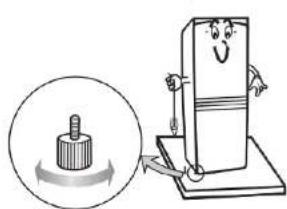
- The refrigerator can be adjusted using the front feet. If you turn them clockwise, the refrigerator will rise. Fig. 3
ENGLISHENGLISH
- The surface on which the refrigerator is to be placed must be stable and flat. If it is not, the appliance may be noisy or vibrate.
Note: you can place a sheet under the appliance if you need to place it on a carpet. - Make sure the adjustable feet are securely on the floor and adjust the tilt of the appliance slightly backwards to keep the door securely closed.
NOTE: air must flow around the appliance. Lack of air leads to overheating. To achieve good ventilation, follow the installation instructions.
Installing the door feet
- The screw required to install the rubber feet can be found in the accessory kit supplied with the appliance.
-
When many heavy objects are placed on the refrigerator door with the door open 90°, the refrigerator may tip over. For this reason, you must install this rubber feet.
-
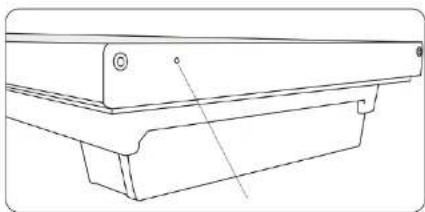
Tilt the refrigerator to find the screw hole. It is located on the left side of the bottom cover of the base. Fig. 4
-
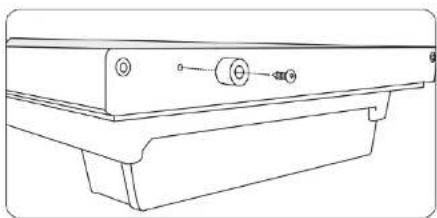
Align the screw with the hole in the bottom base cover using a Phillips screwdriver (not included). Fig. 5
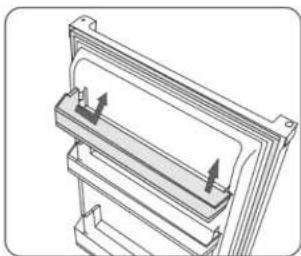
Installing the door shelves. Fig. 6.
NOTE: these shelves can be removed.
To remove them:
- Place your hand on one side of the shelf and press inwards until you can remove it by pulling it upwards.
To install them:
- Place one side of the shelf on its guide. Slide the other side down until it clicks into place.
NOTE: do not overload the door shelves or place too much food on the drawers to prevent items from falling off and damaging the appliance.
Changing the door opening direction
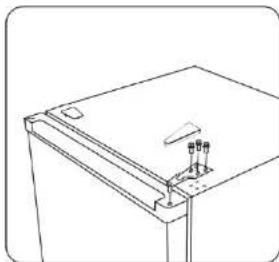
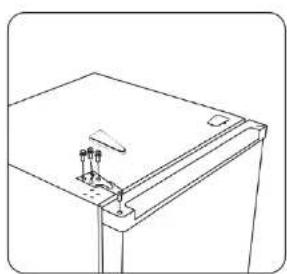
- Remove the upper screws. Then, remove the upper hinge that holds the door. Lift the door and place it on a cushioned surface to prevent scratching. Fig. 7
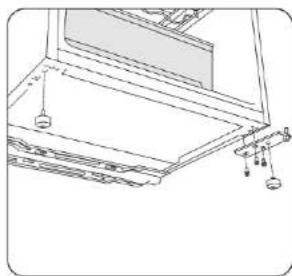
- Remove the bottom screws, bottom hinge and feet. Fig. 8
- Unscrew the nut and remove the bolt. Insert the bolt on the opposite side. Next, fit the nut
and tighten it. Fig. 9
- Replace the bottom screws, bottom hinge, and feet on the opposite side.
- Carefully put the door back in place. Fit the upper hinge and screws. Ensure that the door is aligned horizontally and vertically so that the seals are well sealed at the sides before fully tightening the upper hinge. Use a spanner to tighten it if necessary. Fig. 10
4. OPERATION
Food location
- There should always be some space between the food inside to allow air to circulate.
- Food should be kept in airtight containers to avoid drying out or giving off odours.
- Hot food must be cooled before being placed in the refrigerator.
- Reducing the frequency of door opening can reduce electricity consumption.
Warning:
Do not use electronic equipment inside the refrigerator.
Operating instructions
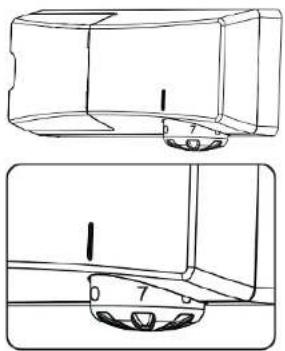
- Use the temperature knob to adjust the temperature inside the refrigerator. However, the number displayed on the temperature knob does not represent the actual temperature. The higher the number, the lower the interior temperature. Fig. 11
- Number 0 on the knob means that the refrigerator is switched off, i.e. it is not generating any cold. On the other hand, the highest level is represented by number 7, indicating the coldest temperature setting available.
NOTE: it is important to know that, if you choose this high temperature level, it is possible that some parts of the refrigerator may reach temperatures below 0 °C. This detail is crucial to ensure proper food preservation, as too low temperatures may freeze certain food, which can affect their texture, taste and nutritional quality. Therefore, when manipulating the temperature knob, this relation between the numbers and the intensity of the cold generated inside the refrigerator must be considered.
Packaging and transport
- When unpacking the refrigerator, pay attention to where all the parts are placed. If you repack it, make sure everything is in place before transporting it.
- Do not pull on the door or door handle during transport.
- When transporting, the refrigerator must not be tilted by more than 45 degrees. Avoid strong vibrations and shocks.
Energy saving tips
- Fridge: placing the drawers at the bottom of the refrigerator and the shelves evenly
ENGLISHENGLISH
distributed ensures efficient use of energy. The position of the shelves on the door does not affect energy consumption.
- Do not open the door frequently or leave it open longer than necessary.
- Do not set the temperature too high to save energy, unless required by the characteristics of the food.
- If the room temperature is high, the selected temperature is also low and the refrigerator is full, the compressor may run continuously, causing frost or ice to form on the evaporator. If this happens, increase the refrigerator temperature.
- Ensure good ventilation. Do not cover grilles and ventilation openings.
Fresh food refrigeration tips
- To ensure that fresh food is well preserved, it is recommended to choose a temperature lower or equal to +4 °C. A higher temperature inside the refrigerator may shorten the life of the food.
- Cover food to preserve freshness and aroma.
- Always use airtight containers for liquids or cooked food to avoid smells.
- To avoid cross contamination between cooked and raw foods, cover or pack cooked foods and separate them from the raw ones.
- Do not place hot ingredients inside the appliance.
- Make sure they have cooled to room temperature before inserting them.
Food refrigeration tips
- Meat (all types): wrap in suitable packaging and place on the glass shelf/lid above the crisper drawer. Keep meat for a maximum of 1-2 days.
- Fruits and vegetables: clean them thoroughly (remove dirt thoroughly) and place them in the crisper drawer. It is not advisable to store exotic fruits like bananas, mangoes, papayas, etc., as well as tomatoes, potatoes, onions, or garlic in the refrigerator.
- Butter and cheese: place in an airtight container, wrap in aluminium foil or place in a polyethylene bag.
- Bottles: seal them with a cap and place them in the bottle compartment on the door or, if available, in the bottle holder.
- Always check the expiry date on products to find out how long you should keep them.
5. CLEANING AND MAINTENANCE
Before carrying out any maintenance and cleaning task, turn off the appliance and unplug it.
Cleaning
The refrigerator must be cleaned regularly. For your safety, unplug it before cleaning. Carry out the following steps:
- Inside cleaning:
Clean the inside of the refrigerator with clean water or neutral soap. Then, wipe it with a dry cloth. - Door seals cleaning:
It is easy to damage the door seals if they are stained with oil, sauce, etc., so it is advisable to clean them carefully. - Cleaning the exterior:
Wipe off dust with a dry cloth and, if necessary, with a little neutral soap. - This refrigerator has a maintenance-free LED light. Light repairs must be carried out by qualified personnel.
Defrost
If a lot of frost has formed, the efficiency of the refrigerator will decrease, and energy consumption will increase. Therefore, if the frost reaches a thickness of 5 mm, a defrosting process is necessary. The manual defrosting processes are as follows:
- Remove all food from the refrigerator.
- Remove the crisper drawer and shelves.
- Unplug the power cable.
- Open the door and wait for it to defrost.
- Clean the water with a dry cloth.
Disconnecting the refrigerator
After a power cut, even in summer, the refrigerator can store food normally for several hours.
-
Interruption during a power cut:
-
After a power cut, do not put any more food into the product and reduce the frequency of opening the door. Prepare several ice cubes in a container if you know in advance that the power cut will occur and place it on top of the refrigerator.
- Holidays:
- Take perishable food out of the fridge before the holidays.
- Afterwards, be sure to close the door securely. If you are going on holiday for a long period of time, remove all food from the refrigerator and disconnect it from the mains.
- Stop using the refrigerator
If you are not going to use the refrigerator for a long time, empty it, unplug it and clean it. The door should be kept open to avoid odour caused by food residues.
Note:
- In general, do not unplug the refrigerator, as this may reduce its lifetime.
- After unplugging the refrigerator from the power supply, allow at least 5 minutes to elapse before plugging it in again.
- Do not splash water on the refrigerator. This could cause it to rust and stop working
ENGLISHENGLISH
properly. Electronic components must be dry cleaned.
-
To clean the refrigerator, do not use products that could damage the exterior, such as: abrasive products, chemicals, thinners, alcohol, etc.
-
Stains can damage the inner plastic component, so clean them as soon as possible.
-
Check the following points after maintenance:
- Has the electronic cable been damaged or lost?
- Can the plug be placed in the socket reliably and without problems?
- Does the plug get too hot?
WARNING: please dispose of the door seal before discarding the refrigerator. Discarded appliances should be handled by professional personnel, as they may be harmful to the environment.
- TROUBLESHOOTING
| Problem Possible cause | Possible solution | |
| The appliance does not work | 1. The appliance is not connected to the mains.2. The switches in the electrical installation or the fuses are damaged.3. There is no power or the fuse trips. | 1. Plug the appliance into the main socket.2. Contact a qualified specialist.3. Power cut or line disconnection. |
| Abnormal noise | 1. The refrigerator is not stable.2. The refrigerator is too close to the wall. | 1. Set the adjustable feet of the refrigerator.2. Separate the refrigerator from the wall. |
| Low cooling efficiency | 1. The food inside is hot or there is too much food.2. You open the door too often. The door gasket has objects that do not allow to close it completely.3. The appliance receives direct sunlight or is close to a heat source.4. It is not well ventilated.5. The selected temperature is too high. | 1. Store food in the refrigerator when at room temperature.2. Check and close the door.3. Remove the refrigerator from the heat source.4. Ventilate the room.5. Correct temperature settings. |
| Unpleasant smells in the refrigerator | 1. There is spoiled food inside.2. The refrigerator should be cleaned.3. Food with a strong odour stored inside the refrigerator. | 1. Dispose of food which is spoiled.2. Clean the refrigerator.3. Pack the strong-smelling foods. |
| The compressor continues to run for a long time | 1. The room temperature may be too high.2. Doors may be opened frequently or even left open.3. Setting the temperature knob to a position between 4 and 7 will increase the working time of the compressor. | 1. Place the refrigerator in a place with a lower room temperature.2. Open the refrigerator doors only when necessary.3. Adjust the temperature to find the right balance between internal temperature and energy efficiency. |
| There is a lot of frost on the back of the refrigerator | 1. Putting moist or hot food in the refrigerator can cause this problem.2. High ambient humidity.3. Poor door sealing. | 1. Allow hot food to cool to room temperature before putting them in and dry the containers thoroughly.2. Consider using a dehumidifier in the area where the refrigerator is located to reduce the ambient humidity.3. Make sure the door seal is in good condition and replace it if necessary. |
Note
If none of these situations match your problem, do not attempt to disassemble, or repair the appliance by yourself. Repairs carried out by unqualified persons may result in injury or serious malfunctions. Contact the official Cecotec Technical Support Service. The repair must be carried out by an authorised technician, and you must use only original spare parts.
ENGLISHENGLISH
The following cases do not imply that the refrigerator is faulty
- Moisture may form dew on the outside of the product, wipe it off.
- The flow of coolant through the capillary tube may make some noise.
- It is normal for the sides of the appliance to heat up as a result of the operation of the cooling pipe.
- The outside of the refrigerator will be warm during operation because of the defrost pipe inside the refrigerator.
Check the above points first. - If the cable is damaged, it must be replaced by the manufacturer, the supplier, or similarly qualified personnel to avoid hazards.
7. TECHNICAL SPECIFICATIONS
You can find more information on this model by scanning the QR code (and the energy label as well).
| Reference 01939 01940 01941 | |||
| Model | Bolero CoolMarketTT 133 L White | Bolero CoolMarketTT 133 L Inox | Bolero CoolMarketTT 133 L Black |
| QR code |  |  | 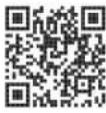 |
| Voltage | 220-240 V | ||
| Rated frequency | 50 Hz | ||
| Rated current | 0.5 A | ||
| Climate class | 5N/N/ST | ||
| Refrigerant | R600a/20g | ||
| Insulating foam | Cyclopentane |
| Dimensions (mm) | Width: 551Depth: 570Height: 835 |
(*) Mini fridge intended for use at room temperatures between 10 °C and 38 °C.
Technical specifications may change without prior notification to improve product quality. Made in China | Designed in Spain
8. DISPOSAL OF OLD ELECTRICAL AND ELECTRONIC APPLIANCES

This symbol indicates that, according to the applicable regulations, the product and/or batteries must be disposed of separately from household waste. When this product reaches the end of its shelf life, you should dispose of the cells/batteries/accumulators and take them to a collection point designated by the local authorities.
Consumers must contact their local authorities or retailer for information concerning the correct disposal of old appliances and/or their batteries.
Compliance with the above guidelines will help protecting the environment.
9. TECHNICAL SUPPORT AND WARRANTY
Cecotec shall be liable to the end user or consumer for any lack of conformity that exists at the time of delivery of the product under the terms, conditions, and deadlines established by the applicable regulations.
It is recommended that repairs be carried out by qualified personnel.
If at any moment you detect any problem with your product or have any doubt, do not hesitate to contact the official Cecotec Technical Support Service at -34 96 321 07 28.
10. COPYRIGHT
The intellectual property rights over the texts in this manual belong to CECOTEC INNOVACIONES, S.L. All rights reserved. The contents of this publication may not, in whole or in part, be reproduced, stored in a retrieval system, transmitted or distributed by any means (electronic, mechanical, photocopying, recording or similar) without the prior authorization of CECOTEC INNOVACIONES, S.L.
FRANÇAISFRANÇAIS
1. PIÈCES ET COMPOSANTS
Image 1
3. INSTALLATION DU PRODUIT
3. INSTALLATIE VAN HET APPARAAT
3. INSTALACE PRODUKTU
Fig./Img./Abb./Afb./Rys./Obr.2
natural_image
Illustration of a cartoon refrigerator with a scroll and directional arrows, showing a rotating handle (no text or symbols)Fig./Img./Abb./Afb./Rys./Obr.3
natural_image
Technical line drawing of a mechanical bracket or support structure (no text or symbols)Fig./Img./Abb./Afb./Rys./Obr.4
natural_image
Technical line drawing of a mechanical component with no visible text or symbolsFig./Img./Abb./Afb./Rys./Obr.5
natural_image
Technical line drawing of a mechanical component with internal channels and mounting brackets (no text or symbols)Fig./Img./Abb./Afb./Rys./Obr.6
natural_image
Line drawing of a refrigerator front view with a small inset showing internal components (no text or symbols)Fig./Img./Abb./Afo./Rys./Obr.7
natural_image
Technical line drawing of a mechanical assembly with mounting holes and a base plate (no text or symbols)Fig./Img./Abb./Afb./Rys./Obr. 8
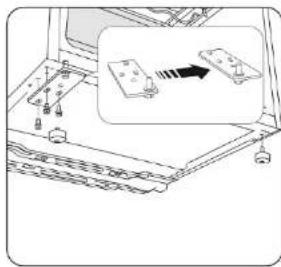
Fig./Img./Abb./Afo./Rys./Obr.9
natural_image
Line drawing of a refrigerator with a lid and mounting base (no text or symbols)Fig./Img./Abb./Afo./Rys./Obr.10
natural_image
Technical line drawing of a mechanical component with two views (top and side), no text or symbols present.Fig./Img./Abb./Afb./Rys./Dbr.11
www.cecotec.es