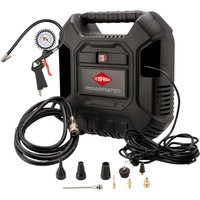
HLO 180 - Pump Airpress - Free user manual and instructions
Find the device manual for free HLO 180 Airpress in PDF.


| Product Type | Air Compressor |
| Brand | Airpress |
| Model | HLO 180 |
| Power Supply | 220-240 V, 50 Hz |
| Motor Power | 1100 W max |
| Operating Pressure | 8 bar |
| Theoretical Air Flow | Approx. 180 l/min |
| Pump Speed | 3750 rpm |
| Operating Mode | S3 (15%) |
| Weight | 5.3 kg |
| Protection Class | IP20 |
| Noise Level | Measured according to EN ISO 3744, wear hearing protection |
| Intended Use | Production of compressed air for low-consumption pneumatic tools (inflation, blow gun, spraying) |
| Safety | Hearing protection mandatory; risk of burns, electric shock, rotating components; do not use in damp environment |
| Maintenance | Clean with a damp cloth and liquid soap; depressurize before any intervention; store vertically in a dry place |
| Common Troubleshooting | If it does not start: check power supply, ambient temperature, motor overheating. If no pressure: check valve or seal leakage. |
| Spare Parts | Contact Airpress Poland after-sales service |
| Warranty | Does not cover defects due to misuse, non-compliance with instructions or unauthorized repairs |
| Tool Compatibility | Pneumatic tools with max demand 180 l/min (inflation gun, blow gun, spray gun) |
| Electrical Connection | 220-240 V outlet with 16 A fuse; extension cord max 25 m, 1.5 mm² cross-section |
Frequently Asked Questions - HLO 180 Airpress
User questions about HLO 180 Airpress
0 question about this device. Answer the ones you know or ask your own.
Ask a new question about this device
Download the instructions for your Pump in PDF format for free! Find your manual HLO 180 - Airpress and take your electronic device back in hand. On this page are published all the documents necessary for the use of your device. HLO 180 by Airpress.
USER MANUAL HLO 180 Airpress
EN | Declares under its sole responsibility that the air compressor described below complies with the safety requirements of applicable directives and standards.
Before operating the compressor, carefully read this manual.

Use hearing protection.

Risk of high temperatures.

Risk of electric shock.

Risk from rotating components.
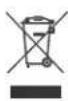
Within the EU, this symbol indicates that the product must not be disposed of with household waste. Old appliances contain valuable recyclable materials that should be recycled to prevent harm to the environment or human health through uncontrolled disposal. Therefore, please dispose of your old devices through appropriate collection systems or return the device to the place of purchase for disposal. In this way, the device will be recycled.
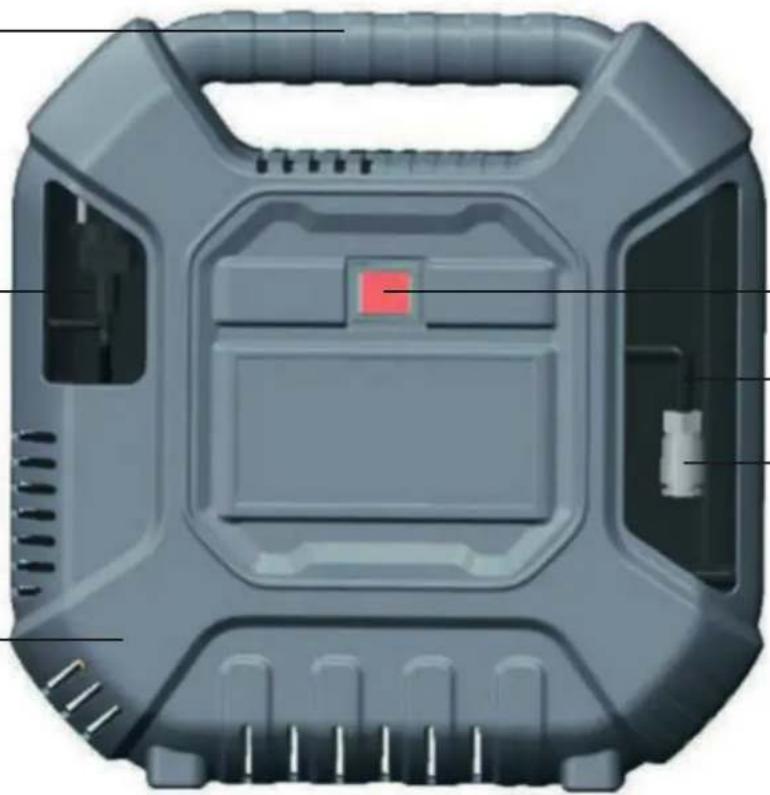
ELEMENTS:
- Handle
- ON/OFF switch
- Compressor housing
- Quick Connect
- Compressed air line
- Power cable
1
6
3
natural_image
Top-down view of a gray ergonomic device casing with internal components and ventilation slots (no text or symbols visible)2
5
4
NOTE: In accordance with the terms of the warranty, claims will not be accepted for defects caused by:
- Improper handling;
- Failure to consistent follow these instructions:
• Repairs performed outside the authorised service centre;
• Installation of unauthorised spare parts;
- Use of the compressor contrary to its intended purpose;
• Defects in the electrical system supplying the compressor.
INTRODUCTION
Read the contents of this manual carefully and thoroughly before operating the compressor. The instructions and recommendations contained within are intended to increase the safety of operation, explain how to operate the device correctly, and provide guidance on its proper servicing. They will enable you to operate the compressor as safely, professionally, and economically as possible, while increasing its service life and reliability. Keep the manual for future reference and protect it from damage. The unit may only be operated by adults who have carefully read this manual and are aware of the risks associated with using the compressor. In addition to following the safety recommendations in this manual, it is also important to be aware of the regulations in your country regarding the operation of pressure equipment and the general rules for operating machinery.
PACKAGE
- Open the cardboard box and carefully remove the compressor.
-
Check the completeness of the device.
-
Check and secure the attached documentation.
- Keep the package until the end of the warranty period.
NOTE: The compressor and its packaging are not toys! Children must not have access to them. There is a risk of swallowing small parts or suffocation with the foil.
INTENDED USE
The compressor is designed to produce compressed air to power pneumatic tools with a maximum demand of about 180 l/min (e.g., pump gun, blow gun, paint gun). Due to the limited capacity of the compressor, it should not be used for pneumatic tools with high air consumption (e.g., sanders, grinders, impact wrenches).
The compressor must be used ONLY for its intended purpose. Any other use will be considered improper and will result in the rejection of warranty claims.
The producer assumes no responsibility for any damage, injury, or death resulting from the use of the compressor contrary to its intended.
The compressor is not intended for commercial or industrial use. Use of the compressor in this manner will result in the rejection of warranty claims.
SAFETY INFORMATION
CAUTION: When working with the compressor, it is imperative to follow the following safety rules to avoid electric shock and other serious injury or death.
- Maintain order in the workplace.
Disorder in the workplace can lead to accidents. - Take Into account the ambient conditions at the compressor site.
- Do not expose the compressor to rain.
- Do not use the compressor in a humid environment.
- Ensure that the workplace is well lit.
-
Do not use the compressor in areas at risk of fire or explosion.
-
Protect yourself from electrical shock.
- Avoid body contact with parts that may be live.
- Do not allow third parties into the working area of the compressor.
- Third parties should not have access to the compressor or its power cord. This is especially true for children.
- When the compressor is not in use, store it in a safe place.
- Store the unused compressor in a dry, closed place, out of the reach of children.
- Do not overload the compressor.
- The compressor operates more safely and efficiently at the parameters for which it was designed.
- Use a compressor with operating parameters suitable for the application.
- Do not use low-powered machines for heavy work.
- Do not use the compressor or tools powered by it for purposes for which they were not intended.
- Do not use the power cord for purposes for which it is not intended.
- Do not pull the plug from the outlet by the cord.
- Take care of the technical condition of the compressor.
- Follow the instructions.
- Regularly check the condition of the compressed air hose and supply line. If they are damaged, contact Airpress Poland Service to replace the damaged components
- Regularly check the condition of used extension cords and replace them if necessary. Use only extension cords adapted to the power consumption of the compressor.
- Pull the plug from the outlet.
- The compressor should be unplugged when not in operation and during any maintenance and/or service activities.
- Avoid accidental launches.
- Make sure the switch is in the O (off) position when the power cord is connected.
-
Use extension cords designed for outdoor use.
-
When working outdoors, use only extension cords designed for this purpose. They should have the appropriate markings confirming their purpose.
-
When using extension cords, ensure that the cable is fully unrolled, even if the distance of the compressor from the outlet does not require it.
-
Be careful and attentive.
- Do not use the compressor if you have concentration problems.
- Regularly inspect the compressor for signs of damage.
- Before using the compressor, check the safety of the device and other components, and verify their correct operation.
- Check moving parts for damage, jamming, and proper operation. All parts must be properly installed to ensure proper operation of the compressor.
- For replacement or repair of damaged compressor components, contact Airpress Poland Service, unless otherwise specified in the instructions.
- Damaged switches must be replaced by Airpress Poland Service.
- Do not use the compressor in situations that restrict access to the I/O switch.
- Do not use damaged air ducts or power cables.
- NOTE!
- To maintain safety, use only accessories listed in this manual or recommended by the producer. Using accessories, tools, or machines and equipment that work with the compressor that are not recommended by the compressor producer increases the risk of an accident.
- Repairs to the electrical circuit of the compressor should be carried out by Airpress Poland Service.
- The compressor meets the requirements of safety regulations. Repairs may only be performed by Airpress Poland Service using original spare parts. Failure to comply with this rule may lead to accident, personal injury, and property loss.
- Noise.
- Use protective earmuffs when working with the compressor.
- Replacing the power cable.
- To minimize the risk of electric shock, the replacement of the compressor power cable should be carried out by qualified personnel from Airpress Poland Service.
- Retain this manual for future reference.
SAFETY INFORMATION ON WORKING WITH COMPRESSED AIR AND BLOW GUNS
- During operation of the compressor, the device, the hoses, and other fittings can reach high temperatures. Contact may result in burns.
- The air sucked in by the compressor must be free of impurities, especially those that could cause an explosion or fire.
- When disconnecting the compressed air hose from the compressor, hold the quick coupler to prevent it from springing back.
- Use safety glasses when working with a blow gun. Blowing dust and small parts can cause eye injuries.
- Do not direct the stream of compressed air at people or animals. Do not use compressed air to clean clothing.
SAFETY INFORMATION WHEN WORKING WITH SPRAY GUNS
- Do not use paints or solvents with a flash point below 55°C. Risk of explosion.
- Do not heat paints or solvents. Risk of explosion.
- If corrosive substances are used, wear masks equipped with appropriate filters. Also, follow the safety guidelines provided by the producer of the substance.
- Be familiar with the warning pictograms on the packaging of the substances used.
- If necessary, use additional protective measures, especially protective clothing and a mask.
-
Do not smoke while spraying the substance or while being in the working area. Flammable vapours may lead to explosion.
-
Do not use the compressor or spray tools in the vicinity of fire, sparks, or light sources that could cause ignition.
- Do not store food or eat or drink in the work area. Paint and solvent fumes are harmful to health.
- The working area must be at least 30 m ^3 , with ventilation provided both during and after spraying. Do not spray substances against the wind. When spraying flammable and/or explosive substances, comply with the relevant regulations in your country.
- Do not use substances such as spirit, butyl alcohol, or methylene chloride if the hose is made of PVC. These substances will damage the hose, which could lead to an accident.
TECHNICAL SPECIFICATION
| Power parameters: | 220 V – 240 V, 50 Hz |
| Motor power: | Max. 1100 W |
| Mode of operation: | S3 (15%) |
| Speed: | 3750 rpm |
| Operating pressure: | 8 bar |
| Theoretical volumetric flow rate at the compressor inlet: | Approx. 180 l/min |
| Protection class: | IP20 |
| Compressor weight: | 5.3 kg |
The sound intensity was measured in accordance with EN ISO 3744. Use protective earmuffs when operating the compressor.
BEFORE STARTING THE COMPRESSOR
- Before connecting the compressor to the power supply, ensure that the parameters of the electrical network match those of the compressor.
- Immediately after delivery of the device, check it for any damage caused during transport. Report any damage immediately to the transportation company responsible for the delivery of the compressor.
- Position the compressor close to where the compressed air is used.
- Avoid using long compressed air hoses and extension cords.
• The air entering the compressor should be dry and free of dust and particles.
- Do not use the compressor in a damp or wet room.
- The compressor should be used only with appropriate environmental parameters (dry air, temperature in the range of 5 to 40^ , absence of acids, vapours, and flammable or explosive gases).
- The compressor is designed for use in dry areas. It is prohibited to use it for work where water is sprayed.
ASSEMBLY AND USE (NOTE: The compressor must be prepared according to all the steps described in this manual before the first start-up).
Connection to the Mains
- The compressor is equipped with a power cord, terminated with a plug protected against electric shock. It should be connected to a socket with 220 V – 240 V and a frequency of 50 Hz. The outlet must have a 16 A fuse for protection against electric shock.
- Before starting the compressor, ensure that the parameters of the current network correspond to the power supply parameters of the compressor indicated on its nameplate.
- The use of long extension cords is associated with a voltage drop and can damage the electric motor and/or make it difficult to start.
- At temperatures below 5^ , startup problems may occur or start-up may be completely impossible.
ON/OFF Switch
- To start the compressor, set the switch (2) to the position "I".
- To turn off the compressor, set the switch (2) to the position "O".
Electric Wires
The insulating sheath on electrical wires is often damaged, which can be caused by, for example:
- Slamming through doors, windows, gates, etc.
- Kinks resulting from improper routing of the cable or poor storage.
- Running over vehicles.
- Pulling the plug out of the socket by the cord.
• Ageing of the insulation coating.
It is forbidden to use damaged electrical cords (this applies to both the compressor power cord and any extension cords connected to it). The use of damaged electrical cables may lead to an accident resulting in serious injury or death. Check electrical cables regularly for signs of damage. Before inspecting wires, make sure they are disconnected from the power supply. Wires must comply with the relevant regulations of the country of operation.
AC Motor
• The supply voltage must be 220 V – 240 V.
- Extension cables with a length of up to 25 m must have a cross-sectional area of at least 1.5 mm ^2 .
Any repairs to the power cables or electrical circuit of the compressor must be carried out by Airpress Poland Service. If you need to report problems with the compressor, you must provide the data (see nameplate) and the parameters of the power supply to the motor.
CLEANING, MAINTENANCE, AND STORAGE
CAUTION: Due to the risk of electric shock, unplug the power cord from the outlet before performing any maintenance or cleaning the compressor.
CAUTION: Wait until the compressor has completely cooled down after use. Risk of burns!
NOTE: Depressurise the compressor, compressed air lines, and associated equipment/tools before performing any maintenance or cleaning work.
Cleaning
- Keep the compressor and its equipment clean for as long as possible. Wipe it down with a clean cloth after use, or blow it out with low-pressure compressed air.
- Clean the compressor with a damp cloth and liquid soap. Do not use strong cleaners or solvents (they may damage the plastic and rubber parts of the compressor). Ensure that water does not get inside the compressor.
- It is recommended to clean the compressor immediately after operation.
- Before cleaning the compressor, disconnect the compressed air hoses and pneumatic tools from the compressor. It is forbidden to wash the compressor with water (except with a slightly dampened cloth) or solvents, etc.
Storage
NOTE: Before storing, disconnect the compressor from the power supply and discharge the pressure accumulated in the hoses or pneumatic tools. Ensure that the compressor is stored in a safe place where it cannot be started by unauthorised persons.
NOTE: Store the compressor in a dry place and protect it from unauthorised access. The compressor should be stored in an upright position; it should not be tilted.
Storage of Power Cord, Compressed Air Hose, and Accessories
- The power cable can be stored next to the compressor.
- The compressed air line can be stored in an area designated for pneumatic tools and accessories.
DISPOSAL AND RECYCLING
The compressor is delivered in packaging designed to protect it from possible damage caused during transport. The packaging can be recycled. The compressor and its accessories contain materials that can be recycled, such as metal or plastic. If you wish to recycle the compressor, or any of its components, please contact Airpress Poland Service or a waste disposal company.
TROUBLESHOOTING
| Fault | Potential Cause | Solution |
| The compressor does not start. | - No power supply.- Inappropriate power supply parameters.- The ambient temperature is too low.- The engine is overheated. | - Connect to a power supply with appropriate parameters.- Place the compressor in a warmer room.- Wait until the engine has cooled down. |
| The compressor starts but does not generate pressure. | - Leakage of the check valve.- Damage to seals. | - Replace the check valve.- Replace the gaskets. |
| The compressor starts, the pressure gauge indicates an increment, but the air tools do not work. | - Leakage of the compressed air hose or its connections.- Leakage of quick couplings.- Improper pressure regulator setting. | - Replace the compressed air hose.- Replace the quick disconnects.- Change the pressure regulator setting. |
CONTACTS OF THE SERVICE
Airpress Poland Service
UTYLIZACJA I RECYKLING
natural_image
Top-down view of a gray industrial device casing with internal components and ventilation slots (no visible text or symbols)2
5
4
natural_image
Top-down view of a gray ergonomic device casing with internal components and ventilation slots (no text or symbols visible)2
5
4
natural_image
Top-down view of a gray ergonomic device casing with internal components and ventilation slots (no text or symbols visible)2
5
4
6
3
LIKVIDACE A RECYKLACE
natural_image
Top-down view of a gray industrial device casing with internal components and ventilation slots (no visible text or symbols)2
5
4
natural_image
Top-down view of a gray industrial device casing with internal components and ventilation slots (no visible text or symbols)2
5
4
6
3
- ELEMENTS:
- INTRODUCTION
- PACKAGE
- INTENDED USE
- SAFETY INFORMATION
- SAFETY INFORMATION WHEN WORKING WITH SPRAY GUNS
- TECHNICAL SPECIFICATION
- BEFORE STARTING THE COMPRESSOR
- Connection to the Mains
- ON/OFF Switch
- Electric Wires
- AC Motor
- Cleaning
- DISPOSAL AND RECYCLING
- CONTACTS OF THE SERVICE
- UTYLIZACJA I RECYKLING
- LIKVIDACE A RECYKLACE
Brand : Airpress
Model : HLO 180
Category : Pump