
SEMST 1500 A1 - Coffee machine SILVERCREST - Free user manual and instructions
Find the device manual for free SEMST 1500 A1 SILVERCREST in PDF.
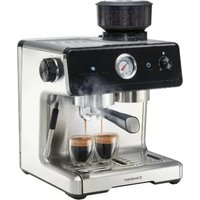


| Product type | Espresso machine with integrated grinder and automatic tamping |
| Brand | SilverCrest |
| Model | SEMST 1500 A1 |
| Mains voltage | 220 - 240 V ~ 50 Hz |
| Power | 1500 W |
| Grinder power | 120 W |
| Water tank capacity | 2500 ml (max) |
| Automatic standby | After 30 minutes |
| Standby power consumption | ≤ 0,5 W |
| Protection class | I |
| Main functions | Automatic grinding and tamping, extraction of one or two espressos, steam wand for frothing milk, hot water spout, cup warming plate, pressure gauge, grind size adjustment, water temperature adjustment, espresso volume adjustment |
| Care and cleaning | Dishwasher-safe filters and filter holder; drip tray and grid hand-washable; removable steam wand; automatic descaling program; grinder cleaning with provided brush |
| Safety | Automatic shut-off in case of overheating; child safety (grinder only works when bean hopper is in place); burn protection (hot surfaces indicated) |
| Spare parts and repairability | Available via after-sales service; 3-year warranty; repair possible by authorized center |
| General information | Premium espresso machine for home use; supplied with filter holder, single and double filters, cleaning diaphragm, brush, cleaning disc, tamping unit removal tool |
Frequently Asked Questions - SEMST 1500 A1 SILVERCREST
User questions about SEMST 1500 A1 SILVERCREST
0 question about this device. Answer the ones you know or ask your own.
Ask a new question about this device
Download the instructions for your Coffee machine in PDF format for free! Find your manual SEMST 1500 A1 - SILVERCREST and take your electronic device back in hand. On this page are published all the documents necessary for the use of your device. SEMST 1500 A1 by SILVERCREST.
USER MANUAL SEMST 1500 A1 SILVERCREST
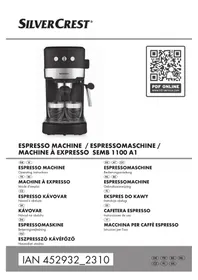
PREMIUM-ESPRESSOMASCHINE SEMST 1500 A1 PREMIUM ESPRESSO MACHINE SEMST 1500 A1 MACHINE À EXPRESSO PREMIUM SEMST 1500 A1
GB Operating instructions
PREMIUM ESPRESSO MACHINE
For EU market: Imported for GB market by:
HOYER Handel GmbH Lidl Great Britain Ltd
Kühnehöfe 12
Lidl House · 14 Kingston Road
22761 Hamburg Surbiton · KTS 9NU
GERMANY
Stand der Informationen · Status of information · Version des information
Inhalt
Wassertank füllen
- Overview 33
- Intended purpose 34
- Safety information 35
- Items supplied 38
- Unpacking and setting up 38
- Your espresso machine at a glance 38
- Preparing an espresso - the most important steps 39
- Before using for the first time 39
- Preparation 40
9.1 Pouring in espresso beans.... 40
9.2 Inserting/replacing the filter 40
9.3 Connecting and switching on/off.... 41
9.4 Rinsing the device 41
9.5 Preheating the cups.... 42
9.6 Preheating the filter and brewing head (flushing).... 42
- Grinding and tamping the coffee 42
- Preparing an espresso 43
11.1 Extracting espresso.... 44
11.2 The pressure gauge.... 44
- Tips for the perfect espresso 45
- Frothing the milk 45
- Extracting hot water 46
- Settings 47
15.1 Espresso temperature.... 47
15.2 Adjusting the volume of a single / double espresso.... 47
- Cleaning 48
- Descaling 50
17.1 Descaling the steam nozzle 50
17.2 Descale the espresso machine 51
-
Cleaning the grinder 52
-
Storage and transport 53
-
Disposal 53
-
Trouble-shooting 54
- Technical specifications 56
- Warranty of the HOYER Handel GmbH 57
1. Overview
1 Lid (of the bean hopper)
2 Bean hopper
3 Lid (of the water tank)
4 Water tank
5 M A X Marking for maximum water level in the water tank
6 Bean hopper unlocking mechanism
7 Hot plate for cups
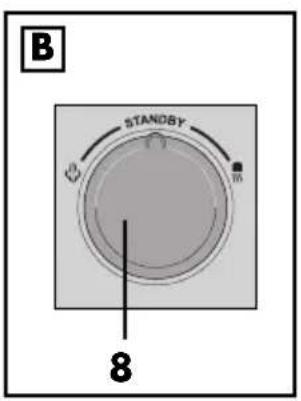
8 STANDBY Dial for steam and hot water
9 Steam nozzle
10 Hot water nozzle
11 Power cable with mains plug
12 Brewing head
13 Tool for removing the tamping unit
14 Cleaning pin
15 Cleaning brush
16 Drip tray
17 Float (indicator: empty drip tray)
18 Storage compartment behind the drip tray
19 Drip grid
20 Coffee powder outlet
21 Control elements (front panel)
22 Marking for the grinding level
23 Grinder
24 Portafilter
25 Filter for double espresso
26 Filter for single espresso with blind filter inserted
27 Blind filter
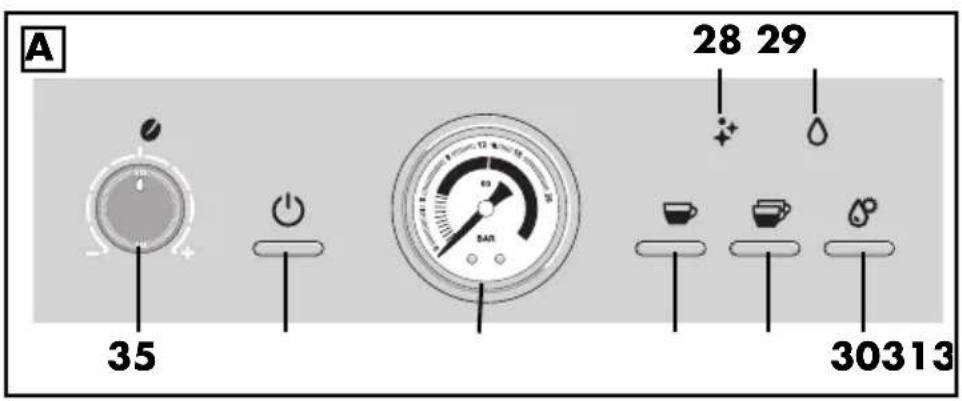
Figure A: control elements (front panel)*
28 LED: descaling
29 LED: water droplets
30 Button / LED: maintenance
31 Button for double espresso
32 Button for single espresso
33 Pressure gauge
34 Button / LED: on/off switch
35 Control dial for manually adjustable espresso powder quantity
* The control elements have other functions that are explained in these operating instructions.
Thank you for your trust!
Congratulations on your new espresso machine with automatic tamping function.
For safe handling of the device and in order to get to know the entire range of features:
- Read these operating instructions thoroughly prior to initial use.
- Above all, observe the safety information!
- The device should only be used as described in these operating instructions.
- Keep this copy of the operating instructions for reference.
- If you pass the device on to someone else, please include this copy of the operating instructions. The operating instructions are a part of the product.
We hope you enjoy your new espresso machine with automatic tamping function!
2. Intended purpose
The espresso machine is intended exclusively for the following uses:
- for grinding coffee beans in the integrated grinder,
- for preparing espresso from ground espresso powder,
- for drawing hot water or steam from the steam nozzle.
The device is designed for private, domestic use. The device must only be used indoors. This device must not be used for commercial purposes.
Foreseeable misuse
WARNING! Risk of material damage!
- Never put liquids other than fresh, cold drinking water into the water tank!
- Do not use caramelised coffee beans. These can cause the grinder to stick together.
Symbols on the device

The food-safe material of devices with this symbol will not change the taste or smell of food.
3. Safety information
Warnings
If necessary, the following warnings are used in these operating instructions:

DANGER! High risk: failure to observe this warning may result in injury to life and limb.
WARNING! Moderate risk: failure to observe this warning may result in injury or serious material damage.
CAUTION: low risk: ignoring this warning may result in minor injuries or damage to property.
NOTE: circumstances and specifics that must be observed when handling the device.
Instructions for safe operation
- This device must not be used by children. The device and the power cable must be kept away from children.
- This device can be used by people with restricted physical, sensory or intellectual abilities or people without adequate experience and/or understanding if they are supervised or instructed on how to use this device safely and if they are aware of the resulting dangers.
- Children must not play with the device.
- The device must be disconnected from the mains if left unattended and prior to assembly, disassembly or cleaning.
- Prior to the replacement of accessories or attachments which move when in operation, the device must be switched off and disconnected from the mains power supply.
- This device is equally intended for use in the home and in applications similar to the home, such as for example...
... in kitchens for staff in shops, offices and other commercial settings;
... on agricultural properties;
… by customers in hotels, motels and other residential facilities;
... in bed-and-breakfast establishments.
- This device is not intended to be operated using an external timer or a separate remote control system.
- The espresso machine, the power cable and the mains plug must not be immersed in water or other liquids.
- If the power cable of this device should become damaged, it must be replaced by the manufacturer, the manufacturer's customer service de-
partment or a similarly qualified specialist in order to avoid any hazards.
- Please take note of the chapter on cleaning (see "Cleaning" on page 48).
- Make sure that no liquid overflows onto the device plug connection.
- Please note that the following surfaces still have residual heat after use: filter and portafilter, brewing head, steam nozzle and hot plate.
- The device must not be placed in a cupboard when in use.
- Please observe the safety information in these instructions, as injuries are possible if the device is used incorrectly.

DANGER for children!
- Packing materials are not children's toys. Children should not be allowed to play with the plastic bags: there is a risk of suffocation.

DANGER to and from pets and livestock!
Electrical devices can represent a danger to pets and livestock. In addition, animals can also cause damage to the device. For this reason you should keep animals away from electrical devices at all times.

DANGER! Risk of electric shock due to moisture!
- Protect the device from moisture, water drops and water splashes: failure to observe this instruction may result in an electric shock hazard.
- Fill the water tank at most up to the MAX marking.
- Empty the drip tray at the latest when the float indicates that it is needed.
- If liquids get into the device, remove the mains plug immediately. Have the device checked before reusing.

DANGER! Risk of electric shock!
- Do not use the device if the device or the power cable has any visible damage, or if the device has previously been dropped.
- Only connect the mains plug to a properly installed and easily accessible wall socket with earthing contact whose voltage corresponds to the specifications on the rating plate. The wall socket must still be easily accessible after the device is plugged in.
- Ensure that the power cable cannot be damaged by sharp edges or hot spots.
- Even after it has been switched off, the device is not completely disconnected from the mains power supply. In order to fully disconnect it, pull out the mains plug.
- When using the device, ensure that the power cable cannot be trapped or crushed.
- When removing the mains plug from the wall socket, always pull on the plug and never the cable.
- Pull the mains plug out of the wall socket:
- when a malfunction occurs
- when you are not using the espresso machine
- prior to cleaning the espresso machine
- during thunderstorms
- In order to avoid any hazards, do not make modifications to the device.

DANGER! Risk of injury through scalding!
- Do not touch the hot parts of the device.
- During the preparation of espresso, hot steam is released from the brewing head. The brewing head is still hot even after preparation. Do not touch it or put your hands or other body parts in the steam under any circumstances.
Hot steam and hot water are released when using the steam nozzle. The steam nozzle becomes very hot. Only touch the steam nozzle by the plastic handle. Never put hands or other parts of your body in the steam.

DANGER! Risk of eye irritation!
- When handling descaling agents, observe the information provided, e.g. on the packaging.
WARNING! Risk of injury by turning parts!
- Do not insert the mains plug into a wall socket until the grinder and bean hopper have been assembled.
- To minimise the risk of injury, the grinder can only be switched on when the bean hopper is in place. Never bypass this safety function!
- Only operate the grinder when the lid is placed on the bean hopper.
- Do not hold any objects in the bean hopper during the grinding process. Keep long hair out of the way.
WARNING Risk of injury from sharp edges!
- Handle the two parts carefully when disassembling the grinder. The grinding surfaces have sharp edges.
WARNING! Risk of material damage!
- The device is fitted with non-slip plastic feet. As furniture is coated with a variety of different varnishes and acrylics, and treated with different cleaning agents, it cannot be completely ruled out that components are contained in some of these substances that could damage and soften the plastic feet. If necessary, place a non-slip mat under the device.
- Under no circumstances pour liquids other than fresh, cold drinking water into the espresso machine!
- To prevent damage to the heating element, do not operate the device without water in the water tank.
- Only use the device with the original accessories.
- Place the device on a stable, level surface.
- During operation, (hot) water and steam, espresso and coffee powder can accumulate on the base. Therefore, place the device on a waterproof, heat-resistant worktop.
- Do not use any astringent or abrasive cleaning agents.
- Do not expose the device to temperatures below the freezing point.
4. Items supplied
1 espresso machine
1 portafilter 24
1 filter for single espresso 26
1 blind filter 27
1 filter for double espresso 25
1 cleaning brush 15
1 cleaning pin for the steam outlet 14
1 tool for loosening the tamping unit 13
1 complete copy of the operating instructions (on the Internet)
1 copy of the short manual (enclosed with the device)
5. Unpacking and setting up
- Remove all packing material.
- Check to ensure that all parts are present and undamaged.
- Clean all parts before first use (see section Cleaning).
- Please remove the protective film between the water tank and the device connection underneath the tank, otherwise the machine cannot be switched on.
- Place the device on a dry, level, non-slip surface.
WARNING! Risk of material damage!
During operation, (hot) water and steam, espresso and coffee powder can accumulate on the base. Therefore, place the device on a waterproof, heat-resistant worktop.
6. Your espresso machine at a glance
Your espresso machine consists of 4 components:
- bean hopper 2 and grinder 23 for grinding the espresso beans
- brewing head 12 and portafilter 24 for preparing espresso from ground espresso powder:
- single espresso
- double espresso
- steam nozzle 9 for frothing milk
- hot water nozzle 10 for dispensing hot water, e.g., for an Americano.
The device has the following indicators:
- A pressure gauge 33 for the extraction process, e.g. to adjust the grinding level.
- LED flashes red when water needs to be refilled or the water tank is not properly inserted. Beeps will also sound.
- LED flashes red when the bean hopper is empty; flashes red/white when the bean hopper is not securely seated.
- LED lights up when the device needs to be descaled.
You can configure the following settings:
- the degree of grinding
- the espresso temperature
- the espresso volume
- the water quantity for single and double espresso to match the size of your cups
7. Preparing an espresso - the most important steps
Before you get to know the individual preparation steps and all the tips and tricks in the following chapters, here is an overview of the steps you need for every good espresso.
- Selecting and inserting the filter 26/25
NOTE: before using the filter for single espresso 26, remove the blind filter 27 from the filter.
- Preheating the cup
- Preheating the filter 26/25 and brewing head 12 (flushing)
- Drying the portafilter 24 and the filter 26/25
- Grinding and tamping fresh espresso
- Inserting the portafilter 24
-
Extracting the espresso:
-
single espresso
-
double espresso
-
As desired: milk frothing
8. Before using for the first time

DANGER! Risk of electric shock!
- Only connect the device to an easily accessible wall socket with earthing contacts whose voltage corresponds to the specifications on the rating plate. The wall socket must still be easily accessible after connection.
WARNING! Risk of injury by turning parts!
Do not insert the mains plug 11 into a wall socket until the grinder 23 and bean hopper 2 have been assembled.
WARNING! Risk of material damage!
- Never put liquids other than fresh, cold drinking water into the water tank 4!
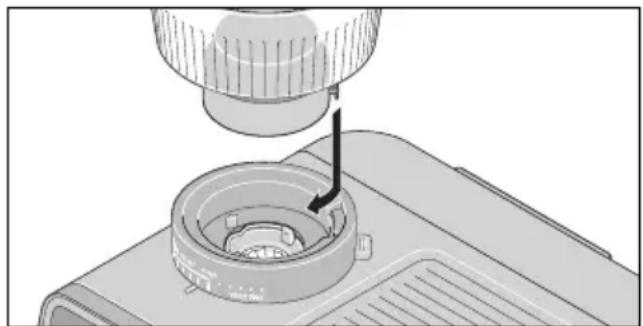
Mounting the bean hopper
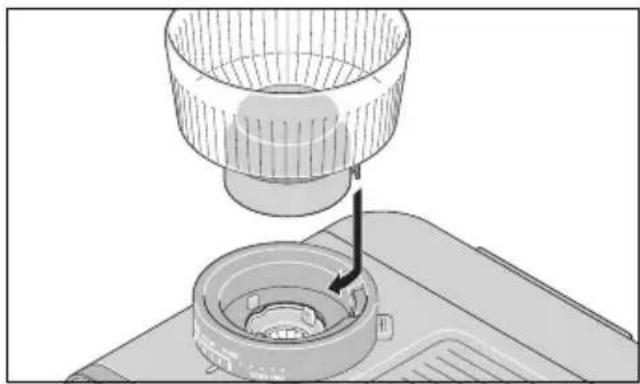
- The plastic tab at the bottom of the bean hopper 2 engages in the inner recess above the unlocking mechanism 6. Turn the bean hopper 2 slightly clockwise until it audibly clicks into place.
Filling the water tank
WARNING! Risk of material damage!
- Never put liquids other than fresh, cold drinking water into the water tank 4!
Use fresh water every day.
- Flip the lid 3 of the water tank 4 open towards the back.
- Remove the water tank upwards.
- Rinse the water tank several times thoroughly with clean water.
- Fill the water tank with fresh, cold tap water no higher than the MAX 5 marking.
-
Put the water tank back in the machine. Please note that the two plastic tabs on the water tank must be placed in the recesses on the back of the device. The water tank 4 must sit correctly at the bottom.
-
Close the lid 3 again.
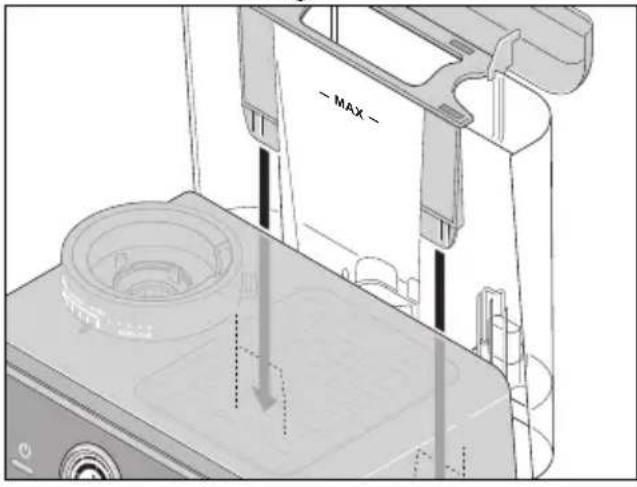
NOTE: if you start a function and there is too little water in the tank, the LED ♂flashes red. The water tank 4 can remain in the device for refilling.
Connecting and switching on for the first time
- Connect the mains plug 11 to a wall socket.
- All LEDs are lit briefly.
- The LED ⏻ of the on/off switch 34 pulses slowly and then is lit dimly.
- Press the button 34.
- The LED flashes and then is lit steadily.
- The LEDs, and are lit.
-
Place a container under the brewing head 12.
-
Press one of the espresso buttons 31, 32.
- The device pumps water through the brewing head 12 for rinsing. The selected LED or flashes.
- When this process is complete, the flashing LED turns off and the LEDs, and are lit again.
- Pour away the rinsing water.
9. Preparation
9.1 Pouring in espresso beans
WARNING! Risk of injury by turning parts!
- Only operate the grinder 23 when the lid 1 is placed on the bean hopper 2.
WARNING! Risk of material damage!
Do not use caramelised coffee beans. These can cause the grinder 23 to stick together.
-
Remove the lid 1 of the bean hopper 2.
-
Pour about as many espresso beans into the bean hopper as you use in one day.
-
Put the lid back on.
9.2 Inserting/replacing the filter
Your espresso machine comes with two filters:
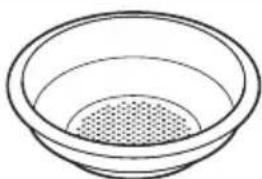
Filter for single espresso 26
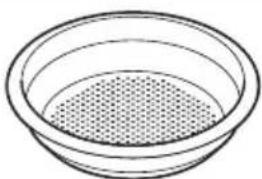
Filter for double espresso 25
- Select the desired filter 26 or 25.
NOTE: before using the filter for single espresso 26, remove the blind filter 27 from the filter.
-
Press the filter 26/25 into the portafilter 24. This is somewhat difficult because the filter has to sit firmly in the portafilter.
-
The unused filter 26/25 can be placed in the storage compartment 18 behind the drip tray 16.
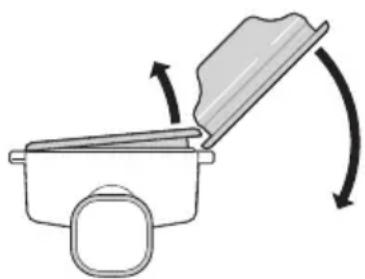
As the filter 26/25 is firmly seated in the portafilter 24, there is a little trick to remove it:
- Use one filter 26/25 to lift the other out of the portafilter 24 as shown.
9.3 Connecting and switching on/off

DANGER! Risk of electric shock!
- Only connect the device to an easily accessible wall socket with earthing contacts whose voltage corresponds to the specifications on the rating plate. The wall socket must still be easily accessible after connection.
- Connect the mains plug 11 to a wall socket. All LEDs are lit briefly.
- The LED ⏻ of the on/off switch 34 pulses slowly and then is lit dimly.
- If only the LED ⚙ dimly lit and all other LEDs are off, the device is in standby mode.
-
Place a cup under the brewing head 12.
-
Press the button 34 to switch on the device.
- The LED flashes. When the LEDs
, and are steadily lit, the device is ready for operation.
- The device now starts the water pump to pump some water into the internal line. Excess water drains through the brewing head 12.
- To return to standby mode, press the button 34.
- The button pulses 3 times and then lights up dimly.
- To turn it off, unplug the mains plug.
NOTE: the espresso machine automatically switches to standby mode if no button is pressed for 30 minutes.
9.4 Rinsing the device
If you have not used the device overnight, for example, or are using it for the first time, we recommend that you flush the device once to fill the pipes with fresh water.
- Place a container under the brewing head 12 and press the button 30 to rinse the brewing head.
- Place a container under the steam nozzle 9.

DANGER! Risk of injury through scalding!
- Keep the steam nozzle 9 as deep as possible in the container while steaming. Hot steam escapes. Do not touch the nozzle and never hold your hands or any other body parts in the steam.
- Turn the dial 8 on the right side of the device to ◆The LED flashes red during heating. Wait until the LED ◆flashes steadily white and steam is emitted.
-
Set the dial 8 back to STANDBY.
-
Place a container under the hot water nozzle 10.
- Set the dial 8 to ☐. The LED 🔔 is lit white. Let hot water run through the hot water nozzle 10 into the container for approx. 10 seconds.
- Set the dial 8 back to STANDBY.
9.5 Preheating the cups
When all 4 LEDs ⏻, and are ⚙ steadily lit, the hot plate 7 is heating up.
- Place the cups on the hot plate 7 to preheat them.
Alternatively, you can pour hot water from the hot water nozzle 10 into the cup and leave it to stand as you brew.
- Hold the cup under the hot water nozzle 10.
- Set the dial 8 to 🔍. The LED ◇ flashes. Run hot water into the cup.
- Set the dial 8 back to STANDBY.
- Pour out the hot water immediately before the brewing process.
9.6 Preheating the filter and brewing head (flushing)
Rinse the filter 26/25 and the brewing head 12 with hot water right before each preparation. This preheating of the filter and brewing head (flushing) improves the taste of the espresso.
- Insert a filter 26/25 into the portafilter 24.
- Insert the portafilter 24 with the filter 26/25 in place, with the handle positioned under the open lock symbol beneath the brewing head.
- Turn the portafilter towards the closed lock symbol 🔍 until it is firmly in place.
-
Place a container under the portafilter 24.
-
Press the button 31.
- The LED flashes and the LED lights up.
- Hot water flows through the portafilter 24 into the container.
- When the process is complete, all 4 LEDs ⏻, and will light up again.
- Turn the handle of the portafilter toward the open lock symbol and remove it by pulling it down.
- Pour away the dishwater and dry the portafilter 24 and the filter 26/25.
10. Grinding and tamping the coffee
WARNING! Risk of injury by turning parts!
To minimise the risk of injury, the grinder 23 can only be switched on when the bean hopper 2 is in place. Never bypass this safety function!
- Only operate the grinder 23 when the lid 1 is placed on the bean hopper 2.
- Do not hold any objects in the bean hopper 2 during the grinding process. Keep long hair out of the way.
NOTES:
- Only remove the bean hopper 2 from the grinder 23 if this is absolutely necessary (e.g. if it is blocked or for cleaning). Please refer to the chapter "Cleaning the grinder" on page 52.
- When using coffee powder, we recommend 12 g for a single espresso and 18 g for a double espresso.
Setting the grinding level
The grinding level can be adjusted between VERY FINE and VERY COARSE:
- Turn the bean hopper 2 on the grinder 23 so that the marking 1 points to the desired grinding level on the bean hopper.
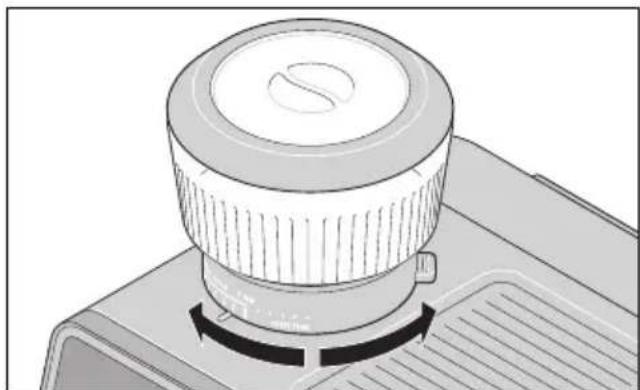
The degree of grinding influences the taste and should match the preparation method. The following general rules apply to the preparation of espresso:
- The finer the degree of grinding, the longer the extraction time. If the espresso tastes too bitter, grind the coffee coarser.
- The coarser the degree of grinding, the faster the espresso flows into the cup. If the espresso tastes too watery and possibly slightly sour, use a finer degree of grinding.
- The optimal degree of grinding also depends on the type of espresso.
Grinding and tamping the coffee
- Insert a filter 26/25 into the portafilter 24.
- Place the prepared portafilter with the filter 26/25 under the coffee powder outlet 20.
- Turn the portafilter toward the closed lock symbol.
- The grinding process starts automatically.
- The LED ● above the control dial 35 flashes during the process.
NOTE: you can adjust the amount of coffee powder using the control dial 35 before or during the grinding process.
- In the next step the coffee is automatically tamped.
- Two short beeps indicate that the tamping was successful.
- Wait until the LED goes out, remove the portafilter 24 with the tamped coffee powder, and insert the portafilter under the brewing head 12.
Tamping
The aim of tamping is to compress the ground coffee powder evenly in the filter 26/25. The surface of the coffee powder should be even and free from cracks so that the water is pressed evenly through the coffee during extraction. Cracks or thin spots mean that the water can find its way more quickly here ("channelling") - at the expense of taste.
11. Preparing an espresso

DANGER! Risk of injury through scalding!
During the preparation of espresso, hot steam is released from the brewing head 12. The brewing head is still hot even after preparation. Do not touch it or put your hands or other body parts in the steam under any circumstances.
11.1 Extracting espresso
-
For a single espresso, use the filter 26.
-
Insert the prepared portafilter 24 with the handle at the open lock symbol under the brewing head 12.
-
Turn the portafilter 24 towards the closed lock symbol 🔍 until it is firmly in place.
-
Place one or two suitable cups under the portafilter 24 spout.
-
Press the button 32 for a single espresso or the button 31 for a double espresso or two cups of espresso.
- The LED for the selected button flashes during preparation.
- The espresso flows slowly into the cup and stops automatically.
NOTES:
- If the water temperature in the boiler is too high for coffee preparation, the device pumps some hot water through the hot water nozzle 10 after pressing buttons 32 or 31.
• Make sure that the handle of your container is not under the hot water nozzle.
- If you want to cancel the process, press the button 32 or 31 again.
- You can change the amount of water stored for a single espresso (see "Adjusting the volume of a single / double espresso" on page 47).
-
When the process is complete, the LEDs 🔊, 🔒 and are lit again. The device is ready for the next espresso.
-
Remove the portafilter 24 by turning it toward the open lock symbol and pulling it down.
-
Clean the filter 25 or 26 and the porta-filter 24, and dry them.
11.2 The pressure gauge

During espresso preparation, the pressure gauge 33 indicates the pressure at which the water is being pumped through the espresso powder.
- T h e ESPRESSO range marked in gre is important for achieving optimal pressure during extraction.
- The outer black lines indicate 1 bar each. The black scale therefore goes from 0 - 20 bar.
Preparation begins with pre-brewing. The pressure gauge needle moves within the range 0 - 6 bar.
A few seconds later the actual extraction begins. During optimal extraction, the needle will move within the ESPRESSO range (approx. 6 - 13 bar).
If the optimum pressure range is not reached during extraction (below 6 bar), this is called under-extraction.
If the optimum pressure range is exceeded (above 13 bar), this is called over-extraction.
What this means for your espresso and how you can achieve an optimal pressure range can be read in the chapter "Tips for the perfect espresso" on page 45.
NOTE: the pressure gauge 33 only shows the pressure when extracting espresso.
Nothing is displayed when steam or hot water is drawn.
12. Tips for the perfect espresso
Preparing the perfect espresso is not always easy right away. So feel free to experiment a little until the result suits your taste. Here are a few tips on what you can pay attention to:
- There are big differences in the quality and taste of espresso beans. Try out different ones.
- Only change one thing at a time, e.g. only the degree of grinding or only the amount of espresso powder, so that you can see the effect of this change.
-
You can recognise the perfect production by the following points:
-
During the actual extraction process, the pressure gauge 33 remains in the ESPRESSO range.
- The production takes approx. 30 seconds.
- The espresso flows slowly into the cup.
- You can recognise an under-extraction by the following points:
- The pressure gauge 33 is below the ESPRESSO range during extraction.
- The espresso flows quickly like water into the cup and tastes watery, possibly a little sour.
Remedy:
- Adjust the degree of grinding to be more fine.
- Use more espresso powder.
- You can recognise an over-extraction by the following points:
- The pressure gauge 33 is above the ESPRESSO range during extraction.
- The espresso drips slowly into the cup and tastes bitter.
Remedy:
- Adjust the degree of grinding to be coarser.
-
Use less espresso powder.
-
Clean your espresso machine regularly. Coffee residues or clogged pores alter the taste.
- Always use fresh tap water that is not too hard. If your tap water is hard, you can use filtered water from a commercially available water filter.
13. Frothing the milk

DANGER! Risk of injury through scalding!
Hot steam and hot water are released when using the steam nozzle 9. The steam nozzle becomes very hot. Only touch the steam nozzle by the plastic handle. Never put hands or other parts of your body in the steam.
You can froth milk with the steam nozzle 9. This requires a bit of practice.
Tips:
- Try milk from different producers.
- Milk with higher protein content froths more.
- A higher fat content results in a creamier milk froth.
- Always use cold milk from the refrigerator (approx. 5 °C).
- When frothing, the milk should not become boiling hot. Higher temperatures change the taste and cause the milk froth to disintegrate.
- When the milk has finished foaming, do not wait too long. Otherwise some of the milk froth will begin to dissolve again.
-
Fill a suitable container no more than halfway with cold milk.
-
Hold another container under the steam nozzle 9 and turn the dial 8 to the symbol.
- The LED flashes white while the device is preheating.
- When steam production begins, the LED ♂flashes white.
-
Let some steam come out and then stop by setting the dial 8 to STANDBY.
-
Immerse the steam nozzle 9 in the milk and set the dial 8 back to the 🔊 symbol.
Tips:
- Immerse the steam nozzle 9 just below the surface so that air is introduced into the milk ("drawing phase").
- Do not dip the steam nozzle into the centre of the jug, but to the side, so that a vortex is created.
-
When the volume of the milk has visibly increased (approx. 50 %), immerse the steam nozzle 9 a little deeper. The vortex should remain. Now the air bubbles are distributed more finely ("rolling phase").
-
If the sides of the container are too hot to hold, set the dial 8 to STANDBY. After a few seconds, the device will pump steam through the nozzle again to cool down.
Tip: even if the milk froth result is not yet satisfactory, stop anyway so that the milk does not get too hot.
-
Gently tap the bottom of the container several times on the work surface to burst larger bubbles. Add the milk froth to the espresso as quickly as possible.
-
Wipe the steam nozzle 9 with a clean cloth immediately after frothing milk to remove any milk residue.
-
Turn the dial 8 again briefly to the symbol ⚙ until steam emerges. This removes milk residues from inside the steam nozzle 9.
-
Set the dial 8 back to STANDBY.
If no button is pressed for approx. 30 seconds, the device begins to cool down the boiler water.
NOTE: the maximum time for steam production is 90 seconds. The function then stops automatically. Set the dial 8 back to STANDBY. You can then immediately use the function again.
14. Extracting hot water

DANGER! Risk of injury through scalding!
- When working with the hot water nozzle 10, some hot steam and hot water will be released. The hot water nozzle gets very hot. Do not touch the hot water nozzle. Never place your hands or other body parts under the outlet.
You can draw hot water from the hot water nozzle 10, for example....
...for an Americano or other hot drinks; ...for preheating cups.
- Hold a container under the hot water nozzle 10 and turn the dial 8 to the symbol ▲.
- The LED flashes white and hot water flows from the hot water nozzle.
- Finish the operation by turning the dial 8 back to STANDBY.
If no button is pressed for approx. 30 seconds, the device begins to cool down the boiler water.
15. Settings
15.1 Espresso temperature
The temperature of the water when extracting the espresso can be modified to adapt it to different types of coffee and to your taste. For dark roasting the temperature should be lower and for light roasting higher. You can choose between three temperature ranges:
| Temperature range | Status of the LEDs during setting |
| hot | [WY05] is lit red |
| medium |  is lit red is lit red |
| low | [RXWA] is lit red |
The default setting on delivery is medium.
- Turn on the device by pressing the button 34.
- Press the , and buttons simultaneously for approx. 3 seconds. The LED lit red indicates the current setting (see table).
- Briefly press one of the buttons 30, 31 or 32 to change the setting.
- The LED for the selected temperature lights up red three times if the setting was successful.
15.2 Adjusting the volume of a single / double espresso
This memory function allows you to adjust the amount of single or double espresso dispensed to suit your cups and preferences.
NOTE: this value is also influenced by the quantity and the density of the espresso powder.
- Turn on the device by pressing the button 34.
- Prepare the filter 26/25, portafilter 24 and espresso powder for a single espresso and clamp the portafilter under the brewing head 12.
- Place the desired espresso cup under the brewing head 12.
- Press and hold the button 31/32 for approx. 3 seconds. The espresso flows into the cup.
- When the desired quantity is reached, briefly press the button 31/32. The process is stopped.
The water volume for single or double espresso has been saved.
Resetting the water volume to factory settings
- Turn on the device by pressing the button 34.
- Press and hold the buttons 31 and 30 for approx. 3 seconds for a double espresso or 32 and 30 for a single espresso.
The device signals that the water volume reset was successful with 2 beeps and flashing of the buttons 31 and 30 or 32 and 30.
16. Cleaning

DANGER! Risk of electric shock!
- The espresso machine and the power cable with mains plug 11 must not be immersed in water or other liquids.

DANGER! Risk of injury through scalding!
- Many components and accessories of the espresso machine become very hot during operation. Allow them to cool down before cleaning.
WARNING! Risk of material damage!
- Do not use any astringent or abrasive cleaning agents.
NOTES:
- The following accessories can be cleaned in the dishwasher or by hand:
- the filters 26/25
- the drip tray 16
-
the drip grid 19
-
The following accessories can be washed by hand with mild detergent:
- the water tank 4 with lid 3
- the tamping unit
- the drip tray 16
-
the drip grid 19
-
The following accessories should only be rinsed with hot water:
- the portafilter 24
- the bean hopper 2 with lid 1
The storage compartment 18 is located behind the drip tray 16.
Inside you will find ...
- the cleaning brush 15 for removing coffee powder residues.
- the cleaning pin 14 for cleaning the opening of the steam nozzle 9.
- the tool for removing the tamping unit 13
After every espresso
- Remove the portafilter 24 from the brewing head 12.
- Rinse the filter 26/25 and the portafilter 24 under hot water and then dry them.
After frothing milk
NOTES:
• Always ensure that the opening of the steam nozzle 9 remains clean. Remaining milk residue is not only unhygienic. It can also quickly clog the small opening.
- For easier cleaning, you can unscrew the lower part of the steam nozzle 9.
-
Wipe the steam nozzle 9 with a clean cloth to remove any milk residue.
-
Turn the dial 8 again briefly to the symbol ♦ until steam emerges. This removes milk residues from inside the steam nozzle.
Drip tray
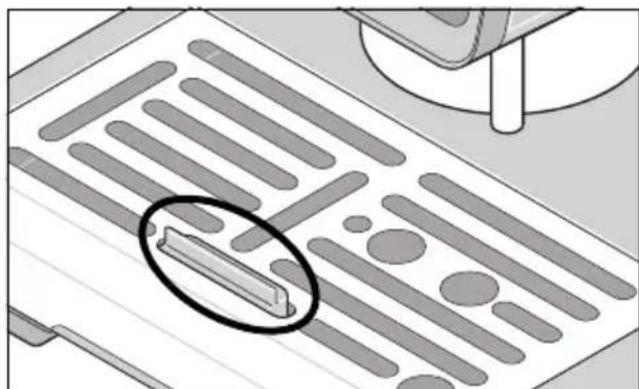
The drip tray 16 must be emptied at the latest when the float 17 protrudes upwards through the drip grid 19 (see illustration). In any case, you should clean the drip tray once a day.
-
Loose, dry espresso powder can be removed from the drip grid 19 with the cleaning brush 15.
-
Remove the drip grid.
-
Pull out the drip tray 16 and take out the storage compartment 18.
- Empty and clean these accessories by hand with mild detergent.
- Dry all parts before reinserting them.
Daily

DANGER! Risk of electric shock!
- Unplug the mains plug 11 from the wall socket before cleaning the espresso machine.
- Empty the water tank 4 and rinse it several times with clean water.
- Wipe the brewing head 12 with a clean, damp cloth. Also clean the rim around the brewing head.
- Wipe the following parts with a damp cloth:
- the device and the hot plate 7,
- the bean hopper 2 with lid 1 from the outside and
- the lid 3 of the water tank 4.
NOTE: if necessary, use a little detergent. Clean thoroughly several times with a cloth that has only been moistened with clear water.
- Dry all parts.
Coffee powder outlet and tamping unit
- Insert the tool 13 into the coffee powder outlet from below and turn it slightly anticlockwise until the two plastic tabs hook into the blades of the tamping unit.
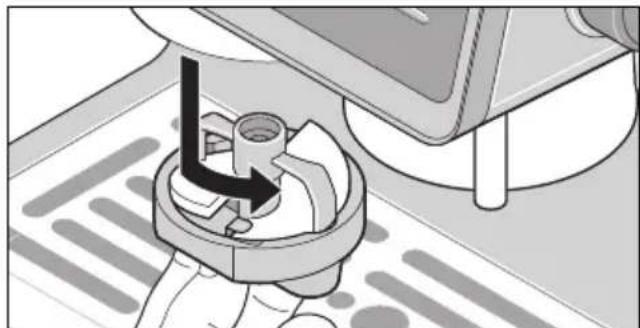
- Pull the tool 13 with the tamping unit straight down.
- Remove the tamping unit and clean it with the cleaning brush 15.
- Put the tamping unit back into the tool 13.
- Insert the tool with the tamping unit from below back into the coffee powder outlet 20. A click indicates that it is securely in place.
Filters
- Loose, dry espresso powder can be removed with the cleaning brush 15.
- Even if you always use the same filter 26/25, you should remove it from the portafilter 24 at least once a week and rinse both parts thoroughly with hot water and a little detergent. Rinse several times with clear, hot water. You can also clean the filters 26/25 in the dishwasher.
- Dry both parts thoroughly before reassembling them.
- Hold the filters 26/25 towards the light and check the holes for blockages.
Brewing unit
The brewing unit inside the device should be cleaned once a week.
By sealing the filter with the blind filter 27, water is "flushed back" into the brewing unit inside the device. The rinsing water is drained into the drip tray 16.
- Remove the portafilter 24 from the brewing head 12 and place a filter 26/25 in the portafilter.
- Now place the blind filter 27 in the filter 26/25.
NOTE: you can apply some coffee oil remover to the membrane.
- Insert the portafilter24 with blind filter with the handle at the open lock symbol under the brewing head 12.
- Turn the portafilter 24 towards the closed lock symbol ▲ until it is firmly in place.
- Fill the water tank 4 with fresh, cold water.
- Start extracting a single espresso.
- Pour the dirty water out of the drip tray 16.
- Repeat the process approx. 10 times without coffee oil remover to rinse cleaning residues from the brewing unit.
- At the end of the process, LED lights up red and LED flashes red. Press the button 34 once to switch the device back to standby mode.
- Carefully remove the portafilter, as some water will have collected in the filter.
- Dry all parts.
- Empty the drip tray 16.
Removing blockages from the steam nozzle
NOTE: for easier cleaning, you can un-screw the lower part of the steam nozzle 9.
- If necessary, use the cleaning pin 14 to clear blockages in the steam nozzle 9. Use it to poke the small hole at the front of the steam nozzle to remove blockages.
- Then hold a container under the steam nozzle 9 and turn the dial 8 to the symbol.
- Allow hot water to flow through the steam nozzle 9 for approx. 40 seconds to rinse out the dissolved residues.
- Finish the operation by turning the dial 8 back to STANDBY.
NOTE: the steam nozzle 9 should be descaled every 2 - 3 months, as lime can also clog the opening.
17. Descaling
17.1 Descaling the steam nozzle
Depending on use, the steam nozzle 9 should be descaled approximately every 2 - 3 months.
- Fill a container with warm water and a commercially available descaling agent. Follow the instructions on the product.
- Unscrew the lower end of the steam nozzle.
- Leave it to soak in this solution overnight.
-
Remove the container the next morning and pour away the descaling solution.
-
Wipe the bottom of the steam nozzle 9 with a clean, damp cloth to completely remove the descaling solution.
- Screw the lower end back onto the steam nozzle.
- Place a container under the steam nozzle 9.
- Turn the dial 8 to the symbol ♣.
- Allow hot water to flow through the steam nozzle 9 for approx. 40 seconds to rinse out the dissolved residues.
- Finish the operation by turning the dial 8 back to STANDBY.
17.2 Descale the espresso machine
Like any hot water appliance, this espresso machine must be descaled regularly. Lime deposits form inside the device and on small openings (e.g. on the steam nozzle 9). This impairs the functionality and damages the device in the long run. Therefore, you should descale your machine regularly. This increases the service life of the device.
How often the device needs to be descaled depends on the water hardness that is used and how many cups of espresso you drink. The presence of hot water and steam also contributes to calcification.
The water hardness is reduced if you use filtered water. The machine will be protected and you will not have to descale as often.
Display for descaling
This machine automatically counts the amount of water dispensed. After dispensing approx. 30 litres of water, the device must be descaled. This is indicated by the LED lighting up.
Descaling programme
You should run the descaling programme as soon as the LED is lit. However, you can also start it at any time.
You can use a commercially available des- caling agent for espresso machines.

DANGER! Risk of eye irritation!
- When handling the descaling agent, observe the information provided, e.g. on the packaging.
Part 1, Descaling:
- Empty the water tank 4.
- Pour the descaling agent into the water tank 4.
- Fill the water tank 4 with fresh, cold tap water up to the MAX marking.
- Insert the water tank 4.
- To collect the descaling solution, place a larger container under the brewing head 12 and under the steam nozzle 9.
- Switch on the device.
- Press and hold the button 30 for approx. 3 seconds.
- The LEDs, and are lit.
-
The LED flashes.
-
Press the button .
-
The device pumps hot descaling solution through the brewing head 12 for approx. 30 seconds.
- This process is repeated 5 times.
- The LED then goes out.
- The LED is lit continuously.
-
A beep sounds every second.
-
Turn the dial 8 to
-
The device now pumps descaling solution through the steam nozzle 9.
-
The LED flashes.
-
As soon as the LED ☐s lit and a beep sounds every second, turn the dial 8 to
-
The device now pumps descaling solution through the hot water nozzle 10.
- The LED flashes.
-
When the water tank 4 is nearly empty, the LED flashes and beeps can be heard.
-
Now turn the dial back to STANDBY.
- Pour away the rinsing water.
The first phase of the descaling process is complete.
Part 2, Rinsing:
- Fill the water tank 4 with clear, cold tap water.
- Press the button 31.
- Repeat the process from step 4 of part 1, Descaling.
NOTES:
- You can interrupt the process by pressing the button 30. Pressing the button again continues the process. Pressing the button for 3 seconds cancels the process.
- If there is not enough water in the water tank, the process will be stopped. Always fill the water tank up to the MAX 5 marking.
18. Cleaning the grinder
WARNING! Risk of injury by turning parts!
- Do not insert the mains plug 11 into a wall socket until the grinder 23 and bean hopper 2 have been completely assembled.
- Only operate the grinder when the lid 1 is placed on the bean hopper.
- Do not hold any objects in the bean hopper 2 during the grinding process. Keep long hair out of the way.
NOTES:
- When removing the bean hopper 2 with beans inside, make sure to lift the bean hopper as straight and carefully as possible. If possible, try to avoid allowing beans or pieces of beans to fall over the edge of the grinder 23.
-
The grinder can only be switched on when the bean hopper 2 is in place. This is a safety function.
-
Press the bean hopper 2 unlocking mechanism 6.
- Carefully remove the bean hopper 2 straight upwards.
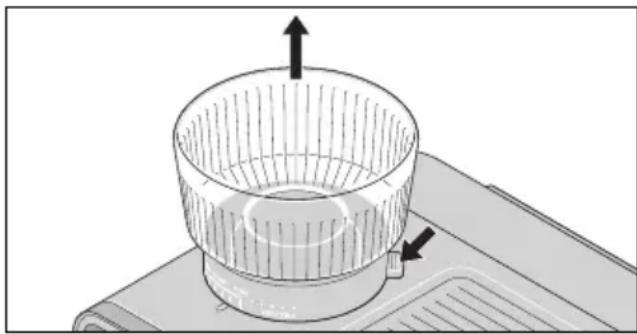
WARNING Risk of injury from sharp edges!
- Handle the two parts carefully when disassembling the grinder 23. The grinding surfaces have sharp edges.
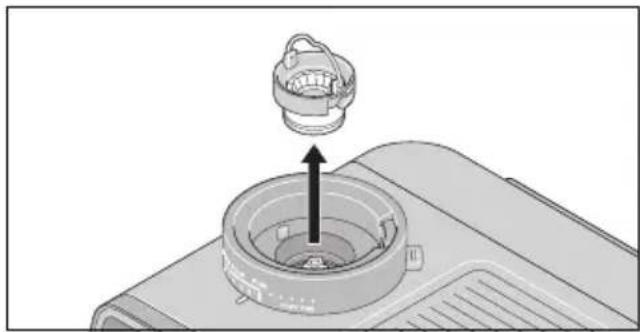
- Flip the small handle of the grinder 23 upwards and turn it anticlockwise until you can lift it out.
-
Clean the grinder with the supplied cleaning brush 15.
-
Then reinsert the grinder and turn it clockwise until it is secure.
-
Fold the small handle back down so that it lies flat on the grinder 23.
-
Replace the bean hopper as shown and turn it clockwise until it is secure.
NOTE: you can buy grinder cleaners, which are designed to thoroughly clean the grinder, from chemists, for example. Follow the application instructions provided with the detergents.
19. Storage and transport

DANGER for children!
- Keep the device out of the reach of children.
WARNING! Risk of material damage!
- Do not expose the device to temperatures below the freezing point.
- Leave the cleaned espresso machine and the cleaned accessories to dry before you assemble them and put them away.
- If you want to transport the espresso machine, empty the water tank 4 and the drip tray 16.
20. Disposal
This product is subject to the provisions of European Directive 2012/19/EC. The symbol showing a wheelie bin crossed through indicates that the product requires separate refuse collection in the European Union. This applies to the product and all accessories marked with this symbol. Products identified with this symbol may not be discarded with normal household waste, but must be taken to a collection point for recycling electric and electronic appliances.
This recycling symbol marks e.g. an object or parts of the material as valuable for recycling. Recycling helps to reduce the consumption of raw

materials and protect the environment.
Packaging
When disposing of the packaging, make sure you comply with the environmental regulations applicable in your country.
21. Trouble-shooting
If your device fails to function as required, please try this checklist first. Perhaps there is only a minor problem, and you can solve it yourself.

DANGER! Risk of electric shock!
- Do not attempt to repair the device yourself under any circumstances.
| Fault Possible causes / action | |
| No function | Has the device been connected to the power supply?Check the connection. |
| The device does not preheat | Check that the dial 8 is set to STANDBY. |
| Poor quality espresso | You will find tips on preparing espresso in the chapter "Tips for the perfect espresso" on page 45. |
| Espresso only drips from the portafilter 24. | Hold the filter 26/25 up towards the light and check for blockages.Is the coffee powder too finely ground? Is there too much ground coffee? |
| Espresso flows out of the portafilter 24 too quickly and is too thin. | Is the coffee powder too coarsely ground? Not enough ground coffee? |
| Grinder 23 does not work. | Is the bean hopper 2 incorrectly placed?The grinder 23 may be blocked. Clean the grinder. |
| The grinder 23 makes an unusual noise. | Pull out the mains plug and check if there is a foreign object in the grinder 23.The grinder 23 may be blocked. Clean the grinder. |
| The grinder 23 cannot be assembled. | Use the crevice nozzle of a vacuum cleaner to remove loose coffee beans and fragments. |
| No water or steam comes out of the steam nozzle 9. | Is the water tank 4 empty?Is the steam nozzle 9 clogged?Does the machine need to be descaled? |
| No more water/steam comes out of the steam nozzle 9 after 90 seconds. | This is normal. This is a protective function. Set the dial 8 back to STANDBY. You can then immediately use the function again. |
| After switching on the device, the LEDs on all 4 buttons flash red. | The two temperature sensors are not functioning properly. Contact the Service Centre. |
| After switching on the device, the LED lights up permanently in red and the buttons and flash alternately in red. | The boiler is not heating or is heating too slowly. Contact the Service Centre. |
| During the grinding process, the LED flashes red and white. | Is the bean hopper inserted correctly? Reinsert the bean hopper and restart the device. |
| During the grinding process, the motor stops, 3 acoustic signals sound, and the LED above the control dial 35 flashes red. | No coffee beans in the bean hopper? Fill the bean hopper 2.Is there too much coffee powder in the grinder 23? Clean the grinder if necessary.Is the device overheating? Let it cool down and start it again. |
| LED ◊29 flashes red and LED lights up white. | Check the water level in the water tank 4. The minimum filling level should be above the float, but should not exceed the MAX 5 marking. Restart the device if necessary.The float is blocked. Check that the float is sitting properly on the water. If it is stuck, free it from the blocked position. Restart the device if necessary. |
| LED ◊34 flashes permanently in red and acoustic signals sound. | Set the dial 8 back to STANDBY and turn the device off and on again. |
| LED ◊34 lights up permanently in red and LED ◊30 flashes red. | Have you removed the protective film between the water tank and the device connection under the tank?Is the water tank inserted correctly? Make sure it is inserted correctly.Is the coffee powder ground too finely? Clean the grinder and grind the beans using a coarser setting.- Switch the device off and then on again.- If necessary, remove the protective film under the tank.- Draw approx. 200 ml of water through the hot water nozzle.- Switch the device off and on again. |
22. Technical specifications
| Model: SEMST 1 | 500 A1 |
| Mains voltage: 2 | 20 – 240 V ~ 50 Hz |
| Protection class: | |
| Power rating: 1,500 W | |
| Grinder power: | 120 W |
| Filling volume of the water tank: | maximum 2,500 ml (MAX) |
| Automatic switch to off mode: after 30 minutes | |
| Power consumption when switched off: ≤ 0.5 watts | |
Symbols used
 | Geprüfte Sicherheit (certified safety): devices must comply with the generally acknowledged rules of technology and the German Product Safety Act (Produkt-sicherheitsgesetz - ProdSG). (Not for UK) |
 | With the CE marking, HOYER Handel GmbH declares the conformity with EU guidelines. |
 | This symbol reminds you to dispose of the packaging in an environmentally friendly manner. |
 PAP PAP | Recyclable materials are marked with the recycling symbol (3 arrows). The material can be specified by the recycling number in the centre (here: 21) and/or an abbreviation (here: PAP). |
| ~ | AC voltage |
 | The symbol identifies parts that can be cleaned in the dishwasher. |
 | It is a recyclable product which is subject to an extended producer responsibility and for which the rules of waste separation apply. |
Subject to technical modifications.
23. Warranty of the HOYER Handel GmbH
Dear Customer,
your device is provided with a 3 year warranty starting with the purchase date. In the event of product defects, you are entitled to statutory rights against the vendor. These statutory rights are not restricted by our warranty presented in the following.
Warranty conditions
The warranty period starts with the purchase date. Please keep the original purchase receipt in a safe place. This document is required to verify the purchase.
If within three years from the purchase date of this product a material or factory defect occurs, the product will be repaired or replaced by us – at our discretion – free of charge to you, or the purchase price will be refunded. This warranty implies that within the period of three years the defective device and the purchase receipt are presented, including a brief written description of the defect and the time it occurred.
If the defect is covered by our warranty, the repaired or a new product will be returned to you. No new warranty period starts with a repair or replacement of the product.
Warranty period and statutory claims for defects
The warranty period is not extended when the warranty has been claimed. This also applies to replaced and repaired parts. Any damages and defects already existing at the time of purchase must be reported immediately upon unpacking. Repairs arising after the expiration of the warranty period are subject to a charge.
Warranty coverage
The device was produced carefully according to strict quality guidelines and tested diligently prior to delivery. The warranty applies to material or factory defects.
Excluded from the warranty are wear parts subject to normal wear and damages to fragile parts, e.g. switches, lamps or other parts manufactured from glass.
This warranty expires if the product is damaged, not used as intended or not serviced. For the proper operation of the product, all instructions listed in the operating instructions must be observed carefully. Any form of use and handling that is advised against in the operating instructions or warned against must always be avoided.
The product is only intended for private and not for commercial use. In the case of incorrect and improper treatment, use of force and interventions not performed by our authorised Service Centre, the warranty shall cease.
Handling in case of a warranty claim
In order to ensure prompt processing of your matter, please observe the following notes:
- Please keep the article number IAN: 516867_2501 and the purchase receipt as a purchase verification for all inquiries.
- The article number can be found on the rating plate, an engraving, the title page of your instructions (in the bottom left), or as a label on the rear or underside of the device.
- If faulty operation or other defects occur, first contact the Service Centre listed in the following by telephone or email.
- Then, you are able to send a product reported as defective free of charge to the service address specified to you, including the purchase receipt and the information on the defect and when it occurred.
At www.lidl-service.com you can download this and many other manuals, product videos and installation software.
This QR code takes you directly to the Lidl Service website (www.lidl-service.com), where you can enter the article number (IAN)
516867_2501 to open your user instructions.

Service Centre
GB Service Great Britain
Tel.: 0800 404 7657
E-Mail: hoyer@lidl.co.uk
IE Service Ireland
Tel.: 1800 101010
E-Mail: hoyer@lidl.ie
MT Service Malta
Tel.: 80062230
E-Mail: hoyer@lidl.com.mt
CY Service Cyprus
Tel.: 8009 4241
E-Mail: hoyer@lidl.com.cy
IAN: 516867_2501

Supplier
Please note that the following address is no service address. First contact the aforementioned Service Centre.
HOYER Handel GmbH
Kühnehöfe 12
22761 Hamburg
GERMANY
Sommaire
Waterreservoir vullen
sítko pro jednodu- ché espresso 26
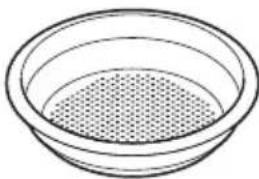
sítko pro dvojité espresso 25
sitko na jednodu- ché espresso 26
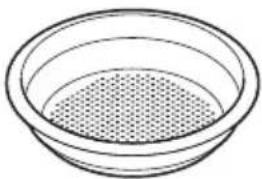
sitko na dvojité es- presso 25
9.3 Pripojenie a zapnutie/vypnutie

... i bed and breakfast.
Trykindikatoren 33 viser under espressotilberedningen det tryk, hvormed vandet pumpes gennem espressopulveret.


- PREMIUM-ESPRESSOMASCHINE SEMST 1500 A1 PREMIUM ESPRESSO MACHINE SEMST 1500 A1 MACHINE À EXPRESSO PREMIUM SEMST 1500 A
- INHALT
- WASSERTANK FÜLLEN
- OVERVIEW
- FIGURE A: CONTROL ELEMENTS (FRONT PANEL)
- THANK YOU FOR YOUR TRUST
- INTENDED PURPOSE
- FORESEEABLE MISUSE
- WARNING! RISK OF MATERIAL DAMAGE
- SYMBOLS ON THE DEVICE
- SAFETY INFORMATION
- WARNINGS
- INSTRUCTIONS FOR SAFE OPERATION
- DANGER FOR CHILDREN
- DANGER TO AND FROM PETS AND LIVESTOCK
- DANGER! RISK OF ELECTRIC SHOCK DUE TO MOISTURE
- DANGER! RISK OF ELECTRIC SHOCK
- DANGER! RISK OF INJURY THROUGH SCALDING
- DANGER! RISK OF EYE IRRITATION
- WARNING! RISK OF INJURY BY TURNING PARTS
- WARNING RISK OF INJURY FROM SHARP EDGES
- ITEMS SUPPLIED
- UNPACKING AND SETTING UP
- YOUR ESPRESSO MACHINE AT A GLANCE
- PREPARING AN ESPRESSO - THE MOST IMPORTANT STEPS
- BEFORE USING FOR THE FIRST TIME
- MOUNTING THE BEAN HOPPER
- FILLING THE WATER TANK
- CONNECTING AND SWITCHING ON FOR THE FIRST TIME
- PREPARATION
- POURING IN ESPRESSO BEANS
- INSERTING/REPLACING THE FILTER
- CONNECTING AND SWITCHING ON/OFF
- RINSING THE DEVICE
- PREHEATING THE CUPS
- PREHEATING THE FILTER AND BREWING HEAD (FLUSHING)
- GRINDING AND TAMPING THE COFFEE
- NOTES
- SETTING THE GRINDING LEVEL
- TAMPING
- PREPARING AN ESPRESSO
- EXTRACTING ESPRESSO
- THE PRESSURE GAUGE
- TIPS FOR THE PERFECT ESPRESSO
- FROTHING THE MILK
- TIPS
- EXTRACTING HOT WATER
- SETTINGS
- ESPRESSO TEMPERATURE
- ADJUSTING THE VOLUME OF A SINGLE / DOUBLE ESPRESSO
- RESETTING THE WATER VOLUME TO FACTORY SETTINGS
- CLEANING
- AFTER EVERY ESPRESSO
- AFTER FROTHING MILK
- DRIP TRAY
- DAILY
- COFFEE POWDER OUTLET AND TAMPING UNIT
- FILTERS
- BREWING UNIT
- REMOVING BLOCKAGES FROM THE STEAM NOZZLE
- DESCALING
- DESCALING THE STEAM NOZZLE
- DESCALE THE ESPRESSO MACHINE
- DISPLAY FOR DESCALING
- DESCALING PROGRAMME
- PART 1, DESCALING
- PART 2, RINSING
- CLEANING THE GRINDER
- STORAGE AND TRANSPORT
- DISPOSAL
- PACKAGING
- TROUBLE-SHOOTING
- TECHNICAL SPECIFICATIONS
- WARRANTY OF THE HOYER HANDEL GMBH
- WARRANTY CONDITIONS
- WARRANTY PERIOD AND STATUTORY CLAIMS FOR DEFECTS
- WARRANTY COVERAGE
- EXCLUDED FROM THE WARRANTY ARE WEAR PARTS SUBJECT TO NORMAL WEAR AND DAMAGES TO FRAGILE PARTS, E.G. SWITCHES, LAMPS OR OTHER PARTS MANUFACTURED FROM GLASS
- HANDLING IN CASE OF A WARRANTY CLAIM
- SERVICE CENTRE
- SUPPLIER
- SOMMAIRE
- WATERRESERVOIR VULLEN
- PRIPOJENIE A ZAPNUTIE/VYPNUTIE
Brand : SILVERCREST
Model : SEMST 1500 A1
Category : Coffee machine