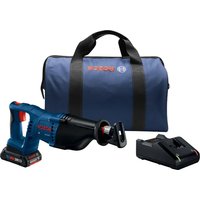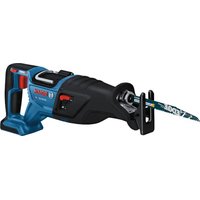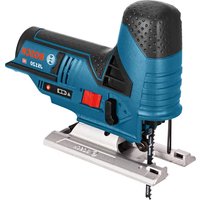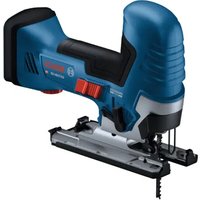
GST18V-50B Professional - Saw BOSCH - Free user manual and instructions
Find the device manual for free GST18V-50B Professional BOSCH in PDF.


User questions about GST18V-50B Professional BOSCH
0 question about this device. Answer the ones you know or ask your own.
Ask a new question about this device
Download the instructions for your Saw in PDF format for free! Find your manual GST18V-50B Professional - BOSCH and take your electronic device back in hand. On this page are published all the documents necessary for the use of your device. GST18V-50B Professional by BOSCH.
USER MANUAL GST18V-50B Professional BOSCH
natural_image
Icon of a person reading a book inside a circle (no text or symbols)Operating / Safety Instructions
Consignes d'utilisation / de sécurité
Instrucciones de funcionamiento y seguridad
natural_image
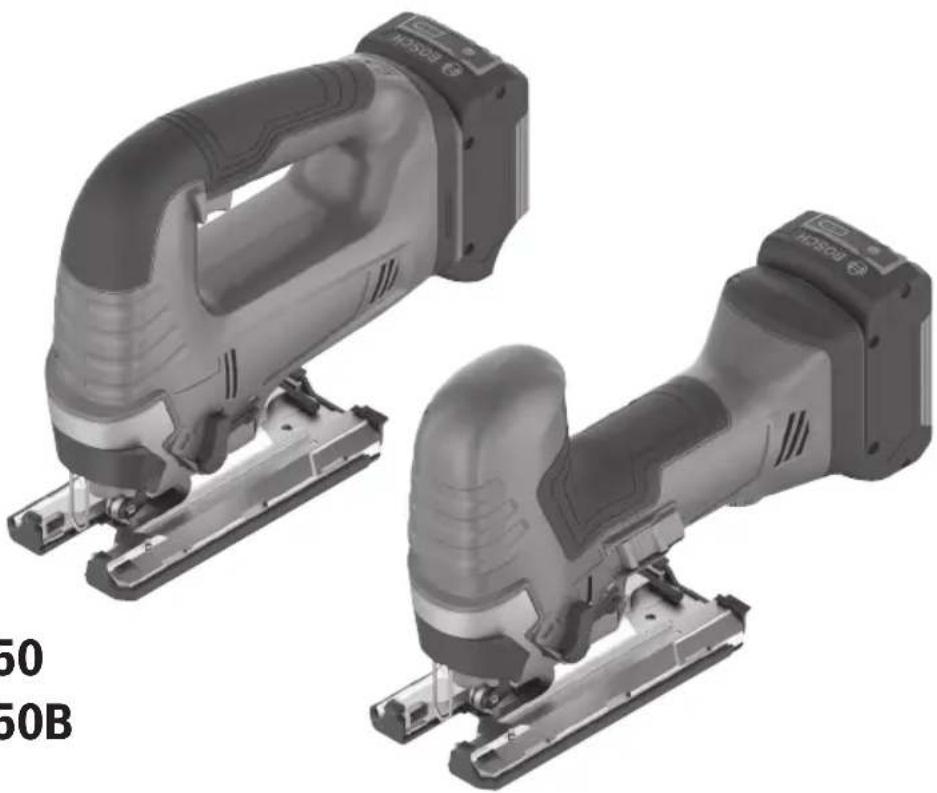
Two JN50 electrical hanger components with visible circuitry and mounting base (no text or symbols)GST18V-50 GST18V-50B

BOSCH
Call Toll Free for Consumer Information & Service Locations Pour obtenir des informations et les adresses de nos centres de service après-vente, appelez ce numéro gratuit Llame gratis para obtener información para el consumidor y ubicaciones de servicio
1-877-BOSCH99 (1-877-267-2499) www.boschtools.com
For English Version See page 2
| Safety SymbolsThe definitions below describe the level of severity for each signal word.Please read the manual and pay attention to these symbols. | |
 | This is the safety alert symbol. It is used to alert you to potential personal injury hazards. Obey all safety messages that follow this symbol to avoid possible injury or death. |
 | DANGER indicates a hazardous situation which, if not avoided, will result in death or serious injury. |
 | WARNING indicates a hazardous situation which, if not avoided, could result in death or serious injury. |
 | CAUTION indicates a hazardous situation which, if not avoided, could result in minor or moderate injury. |
General Power Tool Safety Warnings
WARNING
Read all safety warnings, instructions, illustrations and specifications provided with this power tool. Failure to follow all instructions listed below may result
in electric shock, fire and/or serious injury.
SAVE ALL WARNINGS AND INSTRUCTIONS FOR FUTURE REFERENCE
The term “power tool” in the warnings refers to your mains-operated (corded) power tool or battery-operated (cordless) power tool.
1. Work area safety
a. Keep work area clean and well lit. Cluttered or dark areas invite accidents.
b. Do not operate power tools in explosive atmospheres, such as in the presence of flammable liquids, gases or dust. Power tools create sparks which may ignite the dust or fumes.
c. Keep children and bystanders away while operating a power tool. Distractions can cause you to lose control.
2. Electrical safety
a. Power tool plugs must match the outlet. Never modify the plug in any way. Do not use any adapter plugs with earthed (grounded) power tools. Unmodified plugs and matching outlets will reduce risk of electric shock.
b. Avoid body contact with earthed or grounded surfaces, such as pipes, radiators, ranges and refrigerators. There is an increased risk of electric shock if your body is earthed or grounded.
c. Do not expose power tools to rain or wet conditions. Water entering a power tool will increase the risk of electric shock.
d. Do not abuse the cord. Never use the cord for carrying, pulling or unplugging the power tool. Keep cord away from heat, oil, sharp edges or moving parts. Damaged or entangled cords increase the risk of electric shock.
e. When operating a power tool outdoors, use an extension cord suitable for outdoor use. Use of a cord suitable for outdoor use reduces the risk of electric shock.
f. If operating a power tool in a damp location is unavoidable, use a Ground Fault Circuit Interrupter (GFCI) protected supply. Use of an GFCI reduces the risk of electric shock.
3. Personal safety
a. Stay alert, watch what you are doing and use common sense when operating a power tool. Do not use a power tool while you are tired or under the influence of drugs, alcohol or medication. A moment of inattention while operating power tools may result in serious personal injury.
General Power Tool Safety Warnings
b. Use personal protective equipment. Always wear eye protection. Protective equipment such as a dust mask, non-skid safety shoes, hard hat, or hearing protection used for appropriate conditions will reduce personal injuries.
c. Prevent unintentional starting. Ensure the switch is in the off-position before connecting to power source and / or battery pack, picking up or carrying the tool. Carrying power tools with your finger on the switch or energizing power tools that have the switch on invites accidents.
d. Remove any adjusting key or wrench before turning the power tool on. A wrench or a key left attached to a rotating part of the power tool may result in personal injury.
e. Do not overreach. Keep proper footing and balance at all times. This enables better control of the power tool in unexpected situations.
f. Dress properly. Do not wear loose clothing or jewelry. Keep your hair and clothing away from moving parts. Loose clothes, jewelry or long hair can be caught in moving parts.
g. If devices are provided for the connection of dust extraction and collection facilities, ensure these are connected and properly used. Use of dust collection can reduce dust-related hazards.
h. Do not let familiarity gained from frequent use of tools allow you to become complacent and ignore tool safety principles. A careless action can cause severe injury within a fraction of a second.
4. Power tool use and care
a. Do not force the power tool. Use the correct power tool for your application. The correct power tool will do the job better and safer at the rate for which it was designed.
b. Do not use the power tool if the switch does not turn it on and off. Any power tool that cannot be controlled with the switch is dangerous and must be repaired.
c. Disconnect the plug from the power source and/or remove the battery pack, if detachable, from the power tool before making any adjustments, changing accessories, or storing power tools. Such preventive safe-
ty measures reduce the risk of starting the power tool accidentally.
d. Store idle power tools out of the reach of children and do not allow persons unfamiliar with the power tool or these instructions to operate the power tool. Power tools are dangerous in the hands of untrained users.
e. Maintain power tools and accessories. Check for misalignment or binding of moving parts, breakage of parts and any other condition that may affect the power tool's operation. If damaged, have the power tool repaired before use. Many accidents are caused by poorly maintained power tools.
f. Keep cutting tools sharp and clean. Properly maintained cutting tools with sharp cutting edges are less likely to bind and are easier to control.
g. Use the power tool, accessories and tool bits etc. in accordance with these instructions, taking into account the working conditions and the work to be performed. Use of the power tool for operations different from those intended could result in a hazardous situation.
h. Keep handles and grasping surfaces dry, clean and free from oil and grease. Slippery handles and grasping surfaces do not allow for safe handling and control of the tool in unexpected situations.
5. Battery tool use and care
a. Recharge only with the charger specified by the manufacturer. A charger that is suitable for one type of battery pack may create a risk of fire when used with another battery pack.
b. Use power tools only with specifically designated battery packs. Use of any other battery packs may create a risk of injury and fire.
c. When battery pack is not in use, keep it away from other metal objects like paper clips, coins, keys, nails, screws, or other small metal objects that can make a connection from one terminal to another. Shorting the battery terminals together may cause burns or a fire.
d. Under abusive conditions, liquid may be ejected from the battery; avoid contact. If contact accidentally occurs, flush with water. If liquid contacts eyes, additionally seek
General Power Tool Safety Warnings
medical help. Liquid ejected from the battery may cause irritation or burns.
e. Do not use a battery pack or tool that is damaged or modified. Damaged or modified batteries may exhibit unpredictable behavior resulting in fire, explosion or risk of injury.
f. Do not expose a battery pack or tool to fire or excessive temperature. Exposure to fire or temperature above 265 °F may cause explosion.
g. Follow all charging instructions and do not charge the battery pack or tool outside the temperature range specified in the instruc-
tions. Charging improperly or at temperatures outside the specified range may damage the battery and increase the risk of fire.
6. Service
a. Have your power tool serviced by a qualified repair person using only identical replacement parts. This will ensure that the safety of the power tool is maintained.
b. Never service damaged battery packs. Service of battery packs should only be performed by the manufacturer or authorized service providers.
Safety Rules for Cordless Jig Saws
a. Hold the power tool by insulated gripping surfaces, when performing an operation where the cutting accessory may contact hidden wiring. Cutting accessory contacting a "live" wire may make exposed metal parts of the power tool "live" and could give the operator an electric shock.
b. Use clamps or another practical way to secure and support the workpiece to a stable platform. Holding the workpiece by hand or against your body leaves it unstable and may lead to loss of control.
c. Do not drill, fasten or break into existing walls or other blind areas where electrical wiring may exist. If this situation is unavoidable, disconnect all fuses or circuit breakers feeding this worksite.
d. Disconnect battery pack from tool or place the switch in the locked or off position before making any assembly, adjustments or changing accessories. Such preventive safety measures reduce the risk of starting the tool accidentally.
e. Ensure the switch is in the off position before inserting the battery pack. Inserting the battery pack onto power tools that have the switch in the on position could cause serious injury.
f. Keep hands away from cutting area. Do not reach under the material being cut. The proximity of the blade to your hand is hidden from your sight.
g. Keep hands from between the gear housing and saw blade holder. The reciprocating blade holder can pinch your fingers.
h. Do not use dull or damaged blades. Bent blade can break easily or cause kickback.
i. Before starting to cut, turn tool "ON" and allow the blade to come to full speed. Tool can chatter or vibrate if blade speed is too slow at beginning of cut and possibly kick-back.
j. Secure material before cutting. Never hold it in your hand or across legs. Small or thin material may flex or vibrate with the blade, causing loss of control.
k. Make certain all adjusting screws and the blade holder are tight before making a cut. Loose adjusting screws and holders can cause the tool or blade to slip and loss of control may result.
1. When removing the blade from the tool avoid contact with skin and use proper protective gloves when grasping the blade or accessory. Accessories may be hot after prolonged use.
Additional Safety Warnings
GFCI and personal protection devices like electrician's rubber gloves and footwear will further enhance your personal safety.
Develop a periodic maintenance schedule for your tool. When cleaning a tool be careful not to disassemble any portion of the tool since internal wires may be misplaced or pinched or safety guard return springs may be improperly mounted. Certain cleaning agents such as gasoline, carbon tetrachloride, ammonia, etc. may damage plastic parts.
WARNING Some dust created by power sanding, sawing, grinding, drilling, and other construction activities contains chemicals known to cause cancer, birth defects or other reproductive harm. Some examples of these chemicals are:
- Lead from lead-based paints,
• Crystalline silica from bricks and cement and other masonry products, and - Arsenic and chromium from chemically-treated lumber.
Your risk from these exposures varies, depending on how often you do this type of work. To reduce your exposure to these chemicals: work in a well ventilated area, and work with approved safety equipment, such as those dust masks that are specially designed to filter out microscopic particles.
Specifications
| Model Number GST18V-50 GST18V-50B | ||
| Voltage rating 18 V 18 V | ||
| No load speed 0–3,500/min 500-3,500/min | ||
| Permitted battery temperature during charging | +32...+113°F (0...+45°C) +32...+113°F (0...+45°C) | |
| Permitted ambient temperature during operation and storage | -4...+122°F (-20...+50°C) 4...+122°F (-20...+50°C) | |
| Recommended ambient temperature during charging | +32...+95°F (0...+35°C) +32...+95°F (0...+35°C) | |
| Maximum Capacities | ||
| Stroke length 1-1/32" (26 mm) 1-1/32" (26 mm) | ||
| Wood 4-59/64" (125 mm) 4-59/64" (125 mm) | ||
| Aluminum 25/32" (20 mm) | 25/32" (20 mm) | |
| Mild steel | 25/64" (10 mm) | 25/64" (10 mm) |
Battery Packs / Chargers:
Please refer to the battery/charger list, included with your tool.
NOTE: For tool specifications refer to the nameplate on your tool.
Intended Use
The jigsaw is intended for making straight, curved or intricate cuts in various materials using suitable blades. The jigsaw is only intended for handheld, supervised use. For indoor use only.
Symbols
Important: Some of the following symbols may be used on your tool. Please study them and learn their meaning. Proper interpretation of these symbols will allow you to operate the tool better and safer.
| Symbol Designation/Explanation | |
| V Volts (voltage) | |
| A Amperes (current) | |
| Hz Hertz (frequency, cycles per second) | |
| W Watt (power) | |
| kg Kilograms (weight) | |
| min Minutes (time) | |
| s Seconds (time) | |
| ∅ | Diameter (size of drill bits, grinding wheels, etc.) |
| n_0 | No load speed (rotational speed, at no load) |
| n Rated | speed (Maximum attainable speed) |
| .../min | Revolutions or reciprocation per minute (revolutions, strokes, surface speed, orbits etc. per minute) |
| 0 Off position (zero speed, zero torque...) | |
| 1, 2, 3, ...I, II, III, | Selector settings (speed, torque or position settings. Higher number means greater speed) |
| 0 | Infinitely variable selector with off (speed is increasing from 0 setting) |
| → | Arrow (action in the direction of arrow) |
| ~ | Type or a characteristic of current |
| --- | Type or a characteristic of current |
| ~ | Type or a characteristic of current |
| ☐ | Designates Double Insulated Construction tools |
| ⊕ | Grounding terminal |
Symbols
Important: Some of the following symbols may be used on your tool. Please study them and learn their meaning. Proper interpretation of these symbols will allow you to operate the tool better and safer.
| Symbol Designation/Explanation | |
 | Alerts user to read manual. |
 | Alerts user to wear eye protection. |
 | Alerts user to wear respiratory protection. |
 | Alerts user to wear hearing protection. |
 | Alerts user to wear eye, respiratory, and hearing protection. |
 | This symbol designates that this tool is listed by Underwriters Laboratories, to United States and Canadian Standards. |
 | This symbol designates that this tool is listed by the Canadian Standards Association. |
 | This symbol designates that this tool is listed by the Canadian Standards Association, to United States and Canadian Standards. |
 Intertek Intertek | This symbol designates that this tool is listed by the Intertek Testing Services, to United States and Canadian Standards. |
 | Designates Li-ion battery recycling program. |
Getting to Know Your Product
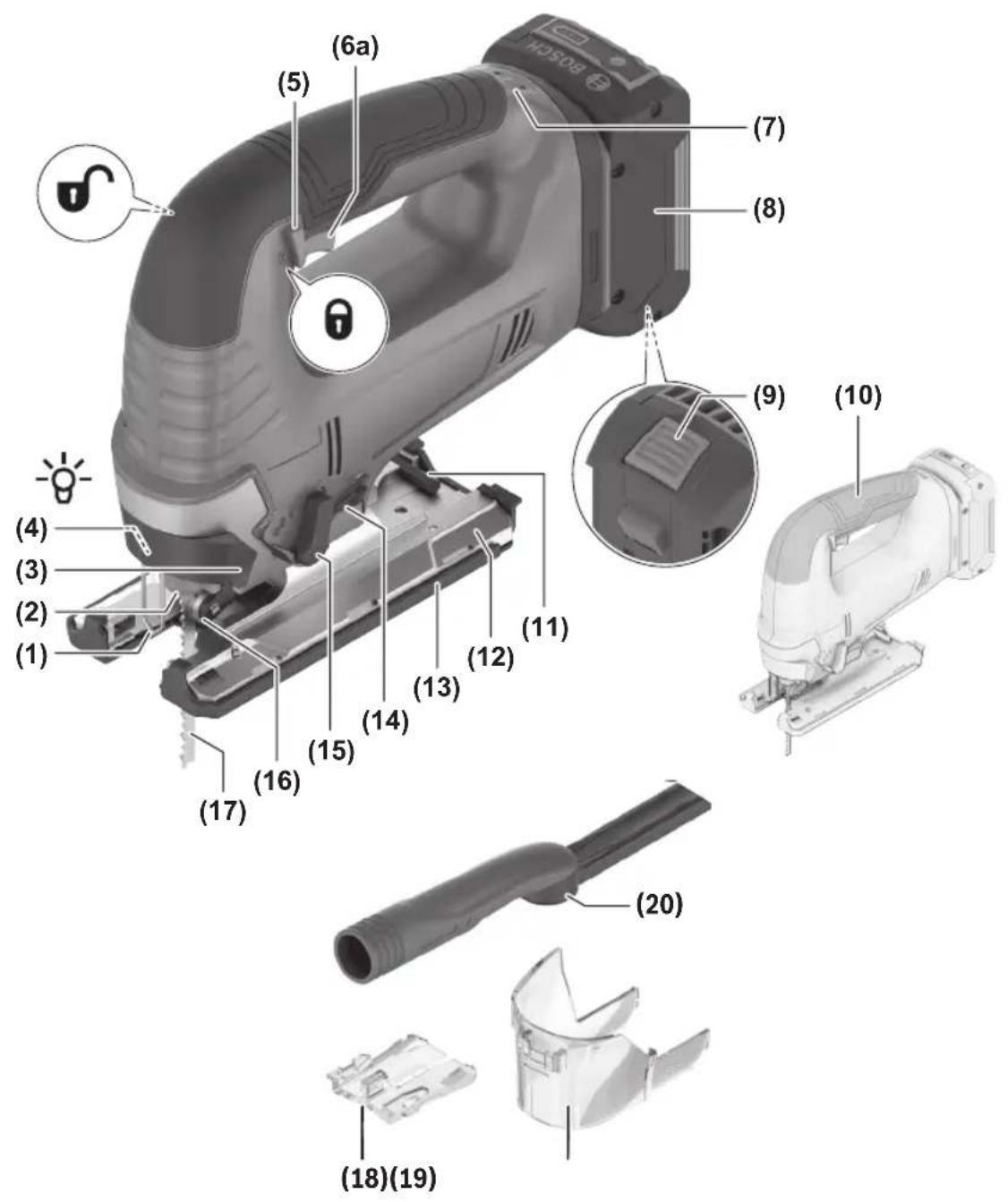
Bosch Cordless Jig Saw GST18V-50
Fig. 1
Getting to Know Your Product
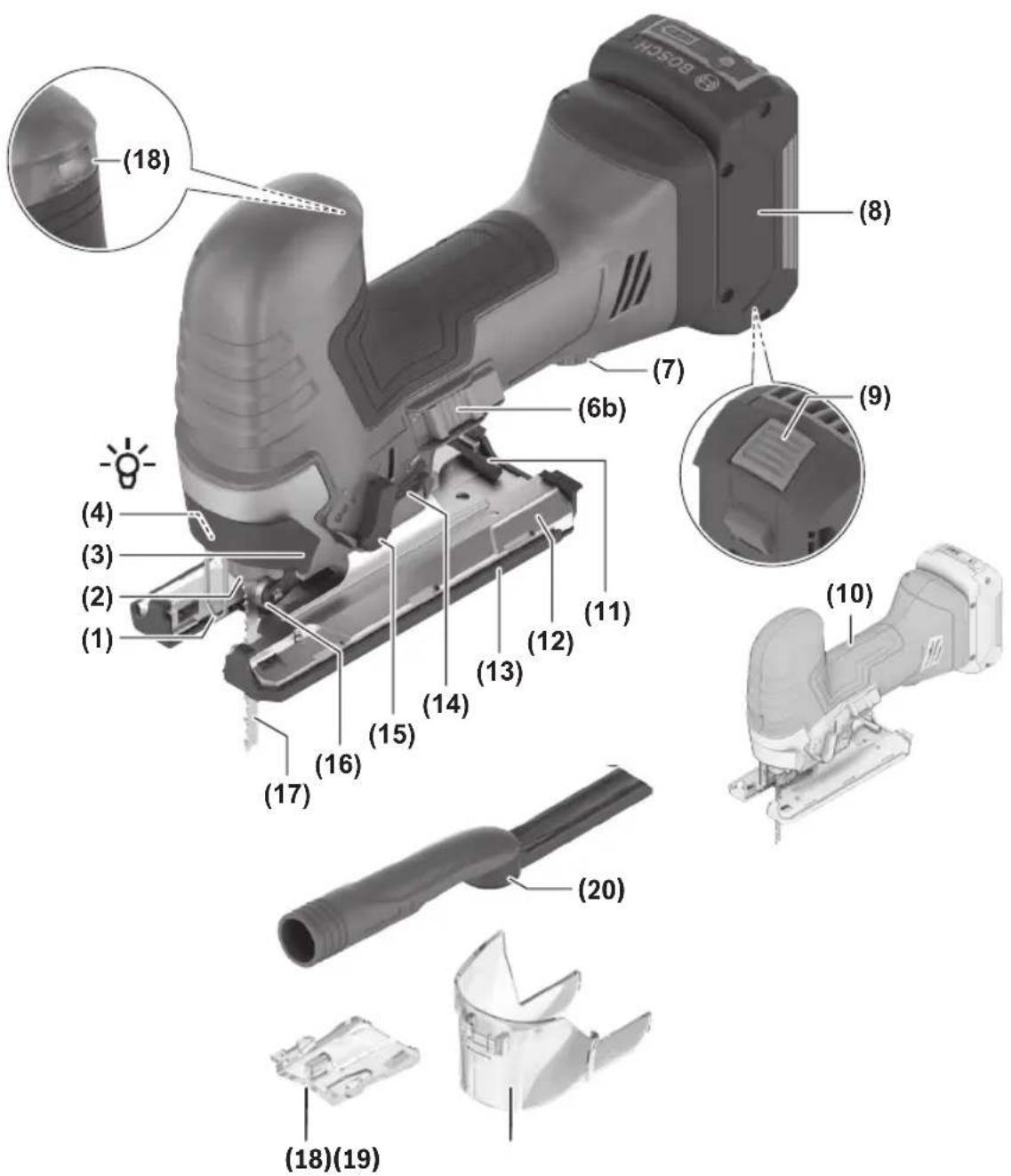
Bosch Cordless Jig Saw GST18V-50B
Fig. 2
Getting to Know Your Product
1 Shock Protection Guard
2 Blade Receptacle
3 Blade Release Lever
4 Work Light
5 Switch Lock (GST18V-50 only)
6a Variable Speed Trigger Switch (GST18V-50 only)
6b On/Off Switch (GST18V-50B only)
7 Variable Speed Dial
8 Battery Pack*
9 Battery Pack Release Button*
10 Handle (Insulated gripping surface)
11 Allen Wrench and Storage Area
12 Footplate
13 Non-Marring Overshoe
14 Chip Blower Switch
15 Blade Orbit Selector Lever
16 Guide Roller
17 Blade
18 Anti-Splinter Insert
19 Dust Hood
20 Extraction Outlet
* Sold separately
Assembly
WARNING
Disconnect battery pack from tool or place the switch in the locked or off position before making any assembly, adjustments or changing accessories. Such preventive safety measures reduce the risk of starting the tool accidentally.
Inserting and Removing the Battery Pack
WARNING
Use only Bosch or AMPShare batteries recommended in
the battery/charger list. Use of any other types of batteries may result in personal injury or property damage.
WARNING
Ensure the switch is in the off position before inserting
battery pack. Inserting the battery pack into power tools that have the switch on invites accidents.
(Fig. 1, 2)
To insert the battery pack:
- Set Switch Lock to the locked position (GST18V-50 model only).
Ensure on/off switch is set to the off position prior to inserting battery pack (GST18V-50B model only).
- Slide charged Battery Pack 8 into the housing until the battery pack locks into position.
Your tool is equipped with a secondary locking latch to prevent the battery pack from completely falling out of the handle, should it become loose due to vibration.
To remove the battery pack:
-
Press the Battery Pack Release Button 9 and slide the Battery Pack 8 from the housing.
-
Press the Battery Pack Release Button 9 again and slide the Battery Pack 8 completely out of tool housing.
Assembly
Blade Installation And Removal
WARNING
Ensure tool speed setting is less than or equal to the
speed rating of the blade. Operating tool at speed higher than blade speed rating may result in serious personal injury and property damage.
(Fig. 3, 4, 5)
This jigsaw is equipped with a Bosch tool-less blade changing system for fast and easy changes of T-shank blades. (Note: This jigsaw does not accept U-shank blades.)
If blade is not properly installed, then the blade may unexpectedly dislodge from jigsaw when tool is energized.
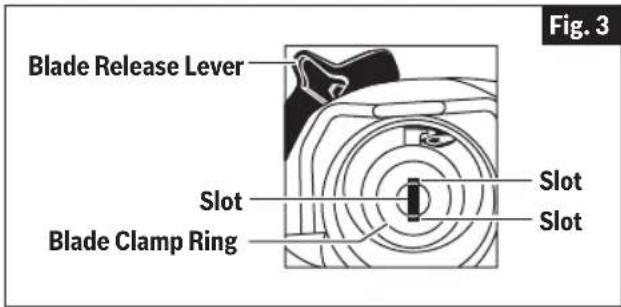
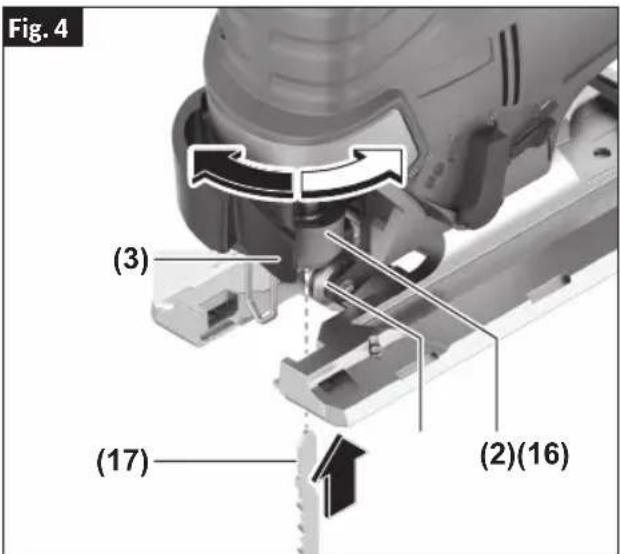
- Pull the Blade Release Lever 3 to the point that the slots on the blade clamp's ring line up with the slot in the center of the clamp (Fig. 3 & 4).
text_image
Blade Release Lever Slot Blade Clamp Ring Slot Slot Fig. 3- To remove a previously-used blade, simply pull it out of the blade clamp (Fig. 5).
- Insert the Saw Blade 17 (teeth in cutting direction) in until the "T" part of the blade shank is completely inserted in to the Blade Clamp 2. When inserting the saw blade, the back of the blade must rest in the groove of the Guide Roller 16 (Fig. 4).
- When Blade Release Lever 3 is released, it will spring back to its closed position.
- Verify that the Blade Clamp 2 has also returned to its closed position (which is the point where slots were previously).
Attaching Non-Marring Overshoe
(Fig. 6)
Your tool is equipped with a protective plastic overshoe that protects finer surfaces.
text_image
Fig. 4 (3) (17) (2)(16)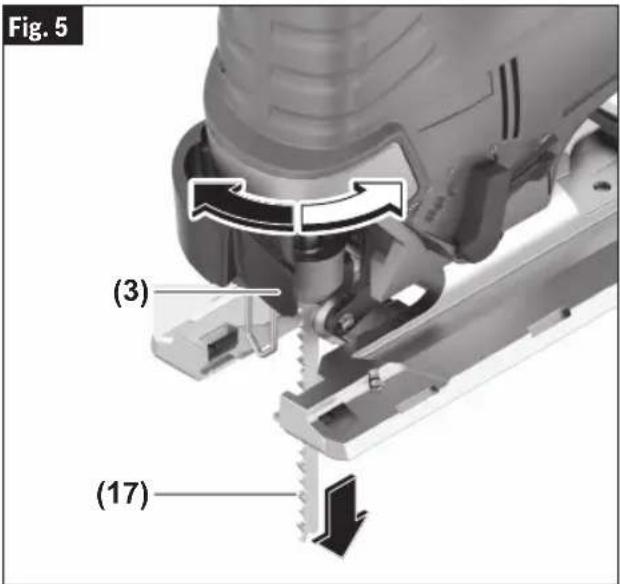
text_image
Fig. 5 (3) (17)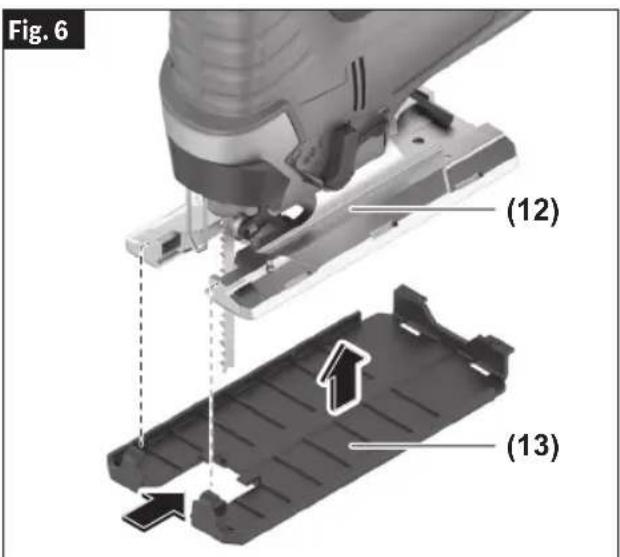
text_image
Fig. 6 (12) (13)Assembly
To attach, hook Overshoe 13 over front of metal Footplate 12 and snap into place at rear of foot-plate.
Anti-Splinter Insert
(Fig. 7)
To minimize splintering of the top surface of the material being cut, place the JA1013 Anti-Splinter Insert 18 in the blade opening of the Footplate 12.
Note: This insert will only work with blades that have ground sides such as T301CD, T101B, T101D, and T101DP.
Dust Cover
(Fig. 8)
Fit the hood before you connect the power tool to the dust extraction system.
Attach the Hood 19 to the power tool so that the bracket locks into place on the Shock Protection Guard 1.
Remove the Hood 19 when working without a dust extraction system, blade installation/removal, and for miter/bevel cuts. To do this, pull the hood forwards off the Shock Protection Guard 1.
Connecting The Dust Extraction
(Fig. 9)
Fit the Extraction Outlet 20 in the recesses of the Base Plate 12. Rotate the Allen wrench head clockwise to allow connection of the Extraction Outlet 20. Connect a dust extraction hose (not included) to the Extraction Outlet 20.
Switch off the sawdust blower device when you have connected the dust extraction system.
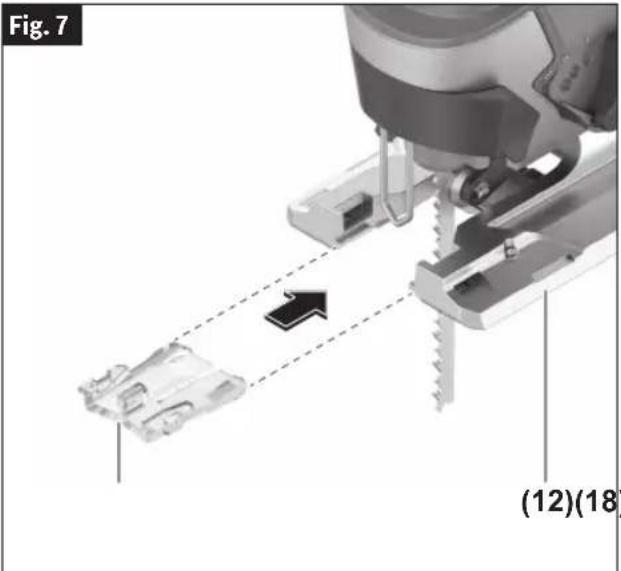
natural_image
Mechanical assembly diagram showing a cutting tool interacting with a battery pack, labeled (12)(18) and an arrow indicating direction (no text or symbols beyond labels)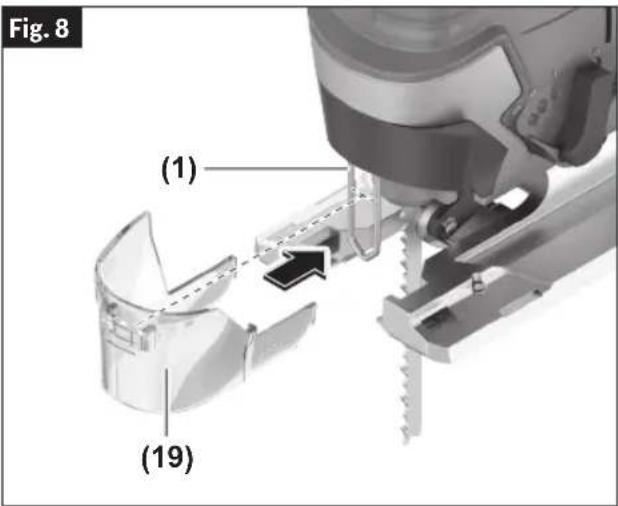
text_image
Fig. 8 (1) (19)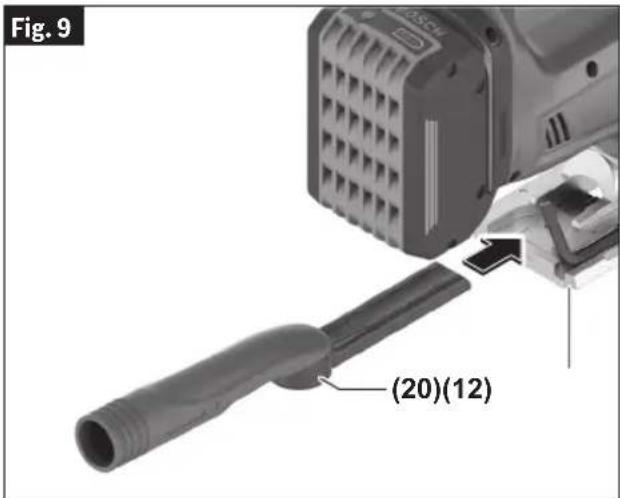
text_image
Fig. 9 (20)(12)Operating Instructions
WARNING
Disconnect battery pack from tool or place the switch in the locked or off position before making any assembly, adjustments or changing accessories. Such
preventive safety measures reduce the risk of starting the tool accidentally.
Switch Lock (GST18V-50)
(Fig. 1)
The Switch Lock 5 is designed to prevent accidental starts. To operate switch, press the switch lock button with your thumb to the unlock symbol 🔒. To lock the switch, press the switch lock button to the lock symbol 🔒
Variable Speed Trigger Switch (GST18V-50)
(Fig. 1)
Your tool is equipped with a Variable Speed Trigger Switch 6a. The tool can be turned "ON" or "OFF" by squeezing or releasing the trigger. The speed can be adjusted from the minimum to maximum nameplate SPM by the pressure you apply to the trigger. Apply more pressure to increase the speed and release pressure to decrease speed.
Switching On and Off (GST18V-50B)
(Fig. 2)
Make sure that you are able to press the On/Off switch without releasing the handle.
To switch on the power tool, push the right or left On/Off Switch 6b all the way forward and let it go.
Note: When switching on, the On/Off Switch 6b needs to be pressed forwards for longer than when switching off in order to prevent unintentional activation.
To switch off the power tool, push the right or left On/Off Switch 6b all the way forward again and let it go.
Variable Speed Dial
WARNING
Ensure tool speed setting is less than or equal to the
speed rating of the blade. Operating tool at speed higher than blade speed rating may result in serious personal injury and property damage.
(Fig. 1, 2)
Your jig saw is equipped with a Variable Speed Dial 7. The blade stroke rate may be adjusted by presetting the dial on or between any one of the six numbers.
| Default Stroke Speed Settings | |
| 1 500/min | |
| 2 1300/min | |
| 3 1800/min | |
| 4 2200/min | |
| 5 3100/min | |
| 6 3500/min |
Work Light
(Fig. 1, 2)
Your tool is equipped with a Work Light 4 for better visibility during operation. When the tool is turned on, the light turns on. When the tool is turned off, there is a slight delay before the light turns off.
Chip Blower
(Fig. 1, 2)
Your jig saw is equipped with a chip blower to help keep the cutting line clear of chips.
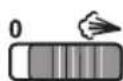
Blower switched on
For working with wood, plastic and similar material that produce large of sawdust.
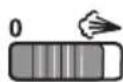
Blower switched off
For working with metals and when cooling agents are used, or with dust
collection accessory.
Operating Instructions
Protection Against Deep Discharging
The lithium ion battery is protected against deep discharging by the “Electronic Cell Protection (ECP)”. When the battery is empty, the tool is switched off by means of a protective circuit.
Temperature-dependent Overload Protection
In normal conditions of use, the tool cannot be overloaded. However, if the power tool is overloaded or not kept within the permitted battery temperature range, the speed is reduced or the power tool switches off.
If the tool speed is automatically reduced in such situations, the tool will run again at full speed once the permitted battery temperature is reached or the load is reduced. During automatic shut-down, switch off the power tool, allow the battery to cool down, and then switch the power tool back on.
Brake
When the trigger on the GST18V-50 is released or the on/off switch on the GST18V-50B is set to the off position, it activates the electrical brake to stop the blade quickly. This feature is especially useful when making repetitive cuts.
Blade Orbit Selector Lever
Maximum cutting efficiency can be obtained by adjusting the blade orbit selector lever to suit the material being cut.
The following chart will help you determine which setting to use for your application. This chart is intended as a guideline only, and test cuts in scrap material should be performed first to determine the best setting.
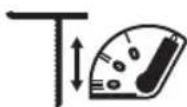
Setting 0
Hard materials such as metals or thin sheet metals. This setting can be used with knife blades, grit edge blades, rasp work. and down cutting blades.
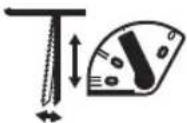
Setting 1
Soft materials where cleaner cutting or delicate scrolling work is performed.
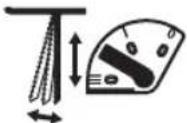
Setting 2
Medium density materials such as harder woods or particle board.
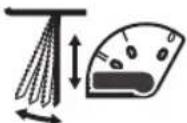
Setting 3
Soft materials such as wood, plastics, etc. and when fast cutting is more important than a clean cut.
Footplate Angle Adjustment
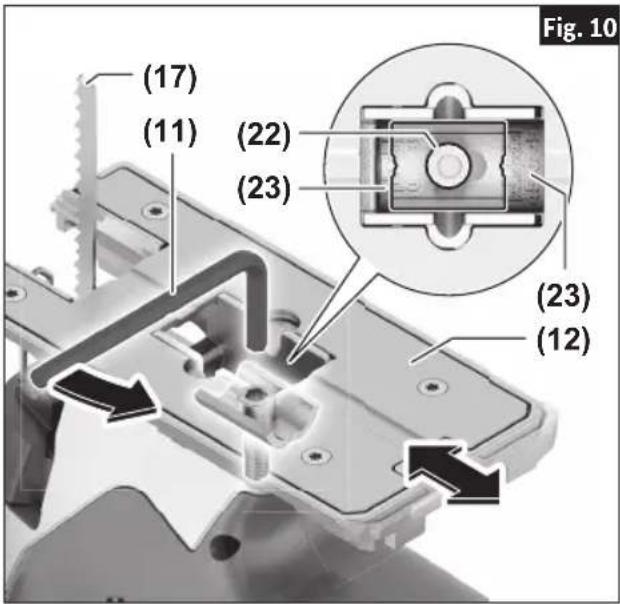
(Fig. 10)
The footplate may be tilted to allow angle cuts up to 45^ in either direction.
Note: Before adjusting the footplate, remove anti-splinter insert, if used.
To adjust footplate: loosen screw with Allen Wrench 11 provided, slide the Footplate 12 slightly forward towards the front of tool, then rotate to desired angle. The detent slots will hold the footplate firmly at 45°, and there are additional position marks for 15° and 30° angles. Intermediate angles may be set with a protractor. After positioning the footplate, securely tighten screw 22.
text_image
(17) (11) (22) (23) (23) (12) Fig. 10Operating Tips
Flush Cutting
To allow the saw to make a perpendicular cut close to a vertical surface in front of the saw, the footplate may be repositioned as follows:
Loosen screw, move the footplate back in the 0^ alignment slot, and securely tighten screw. Note that when the footplate is retracted in this manner, only 90^ cuts are possible, and the optional cutting guide and anti-splinter insert guide may not be used.
Tool Tips
⚠ WARNING Always hold the saw by the insulated gripping surfaces
on the front of the tool and the switch handle.
Failure to hold the tool by the insulated gripping surface may result in electric shock or electrocution if sawing into a blind area where live wiring exits.
Always be certain that smaller workpieces are securely fastened to a bench or other support. Larger panels may be held in place by clamps on a bench or sawhorses.
To begin a cut, clearly mark the cutting line, and rest the front of the footplate on the work. Engage the switch, and move the blade into the work using only enough forward pressure to keep the blade cutting steadily. Do not force, as this will not make the saw cut faster; let the blade do the work.
When sawing metal or similar materials, apply coolant/lubricant alongside the cutting line.
Use of reverse-tooth blade such as the Bosch T101BR requires the orbital setting to be "0" and that downward pressure be applied to the top of the saw.
Blade Selection
- Choose blades carefully, as the ability of the jigsaw to make the fastest cuts, to follow tight curves, to achieve the smoothest finish and/or to maximize the life of the blade are directly related to the type of blade used.
• Always use a blade that is appropriate for the cutting task.
• Always make a test cut in a piece of scrap material.
- For tight curves it is best to use a narrow or scroll blade.
- Most jigsaw blades have upwardpointing teeth, which helps to pull the jigsaw against the workpiece and minimizes vibration. Blades with upward-pointing teeth produce a clean cut on the bottom of the workpiece.
- Blades with downward-pointing teeth (reverse-tooth blade) can be used to produce a clean cut on the top of the workpiece (that side that faces the jigsaw's footplate), such as when cutting an already-installed counter-top from the top. When using reverse-tooth blades, downward force must be applied to the jigsaw.
- Blades with teeth that point straight out (rather than up or down) allow splinter-free cutting on both sides of the workpiece. When using such blades, downward force must be applied to the jigsaw.
- The following types of blades should only be used with orbital Setting 0:
- Blades with teeth that point downward (reverse-tooth blades).
- Blades with teeth that point straight out rather than up or down.
- Carbide-tipped blades.
- Grit-edge blades.
Operating Tips
natural_image
Two mechanical diagrams showing a moving device on a surface, with one being cut and the other fixed (no text or symbols present)Plunge Cutting
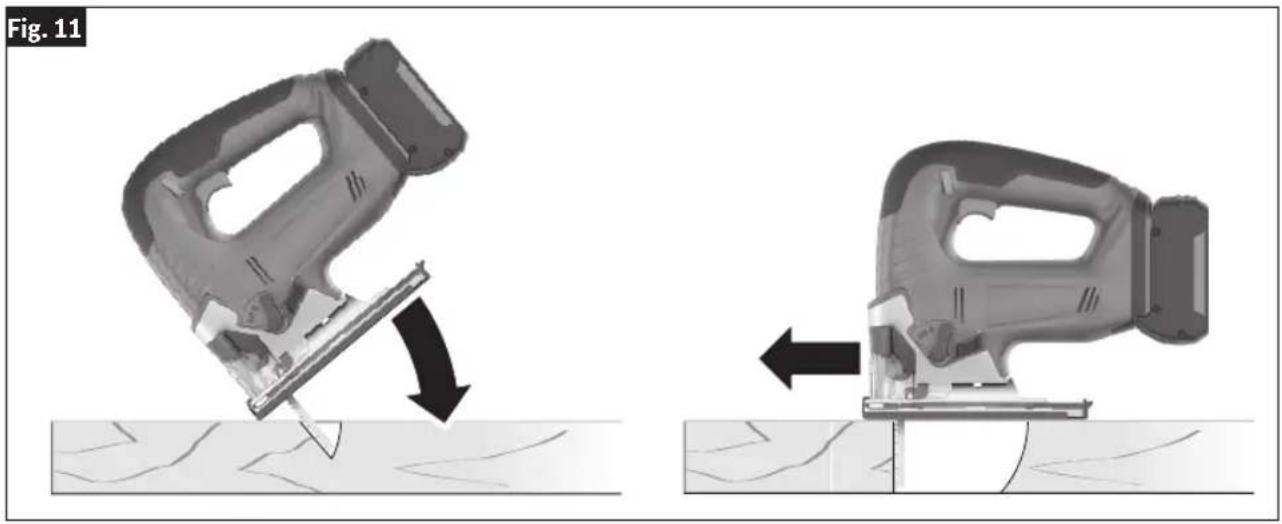
(Fig. 11)
Plunge cutting is useful and time-saving in making rough openings in softer materials. It is not necessary to drill a hole for an inside or pocket cut. The longest blade to be used for plunge cutting is 3-1/8" (80 mm). Footplate must be set 0° setting.
Draw lines for the opening, hold the saw firmly, tilt it forward so that the toe of the saw foot rests on the work, but with the blade well clear of the work. Turn the tool on and run at top speed, and then very gradually lower the blade (Fig. 11).
When it touches, continue pressing down on the toe of the saw foot slowly pivoting the saw like a hinge until the blade cuts through and the foot rests flat on the work. Then saw ahead on the cutting line. We do not recommend plunge cutting with a scroll blade. Do not try to plunge cut into hard materials such as steel.
To make sharp corners, cut up to the corner, then back up slightly before rounding the corner. After the opening is complete, go back to each corner and cut it from the opposite direction to square it off.
Operating Tips
JA1010 Circle and Parallel Cutting Guide (Sold separately)
(Fig. 12, 13, 14, 15, 16)
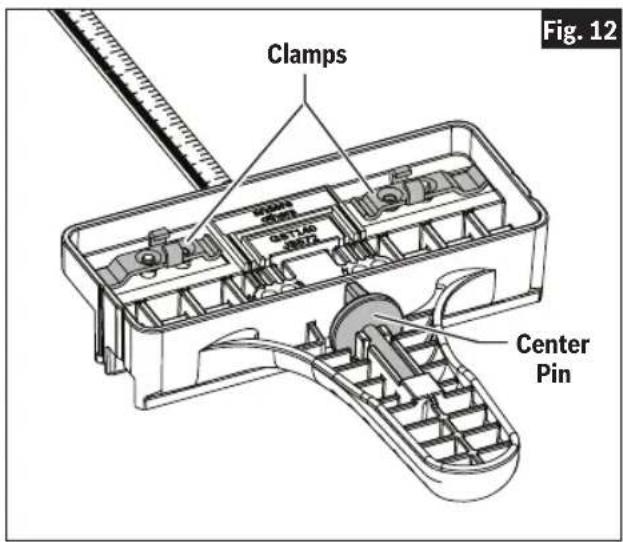
The JA1010 is used for fast and accurate straight and circle cutting. It includes the guide, two clamps for attaching it to the jig saw, and a center pin for guiding circle cuts. The clamps and the centering pin can be stored on the guide (Fig. 12).
One end of the clamp is used to attach the guide bar to the jig saw, which has wide tops on the footplate mounting slots (Fig. 13).
When possible, attach the bar to the jig saw using both clamps for enhanced grip and precision.
ATTACHING GUIDE TO JIG SAW
- Orient the clamp so that the proper end is placed on the jig saw foot from either side of the tool.
- Insert guide's bar through a clamp, then through the slots provided in foot, with the guide's fence orientated correctly for the intended application, parallel cutting or circle cutting. (If possible, place second clamp on bar from opposite side of jig saw.)
- Place lock knob(s) on proper side of clamp(s) and securely tighten lock knob(s) on the clamp(s) (Fig. 14).
PARALLEL CUTTING
Parallel cuts can be made from 5/8" to 6" in from the edge of the workpiece.
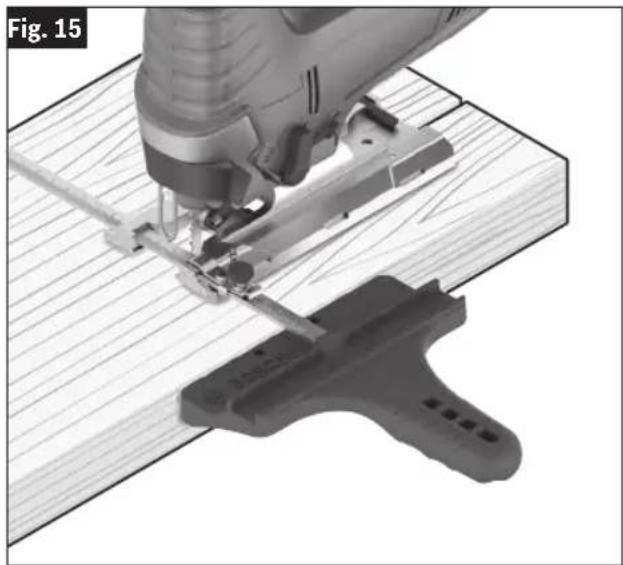
- The guide fence surface needs to be positioned ALONGSIDE the workpiece (Fig. 15).
- Hook clamp(s) onto footplate, adjust fence to desired width and place lock knob(s) on proper side of clamp(s).
- Securely tighten lock knob(s) on the clamp(s) (Fig. 14).
- Insert battery pack onto jig saw, hold the saw firmly, squeeze trigger (GST18V-50 model only) or slide the on/off switch forward into the "on" position (GST18V-50B model only) and slowly push the saw forward (Fig. 15).
text_image
Clamps Center Pin Fig. 12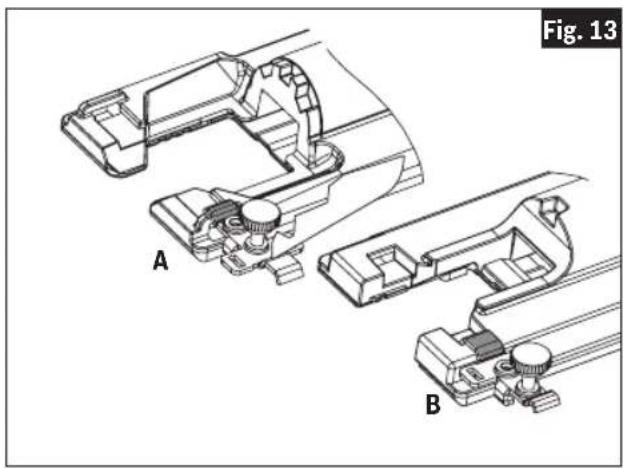
natural_image
Technical line drawing of mechanical components labeled A and B, showing exploded view (no text or symbols beyond labels)
text_image
Fig. 14 Clamp Knob GuideLockOperating Tips
CIRCLE CUTTING
Circle cuts can be made from 5" to 16-1/2" in diameter.
-
Determine the center point of the desired circle.
-
Drill a 3/16" (5 mm) center hole 7/8" (23 mm) deep in workpiece. (For enhanced precision, drill the hole using a drill press, if possible).
-
Drill or plunge cut near the circle's edge, turn saw off, and disconnect battery pack from the tool.
-
Insert guide bar through a clamp, then through the slots provided in foot, from either side of foot (Fig. 14). (If possible, place second clamp on bar from opposite side of jig saw).
-
Remove guide pin from end of guide, push pin through proper hole provided in guide, then into center hole of workpiece (Fig. 16).
- When used with a Bosch JS572 jig saw or the GST18V-50 / GST18V-50B & GST18V-60C / GST18V-60BC cordless jig saw, the holes labeled for the JS572 should be used.
- For other jig saws, one of the other holes should be used.
- Measure the distance from the center of the hole to the desired circle radius. Adjust that measurement as necessary to account for the width of the blade:
- When cutting a hole, cut from inside the intended radius.
- When cutting wheels or discs, cut from the outside the intended radius.
-
Hook clamp(s) onto footplate, and position the guide to that adjusted radius measurement.
-
Place lock knob(s) on proper side of clamp(s) and securely tighten lock knob(s) on the clamp(s) (Fig. 13).
-
Insert battery pack onto jig saw, hold the saw firmly, squeeze trigger (GST18V-50 model only) or slide the on/off switch forward into the "on" position (GST18V-50B model only) and slowly push the saw forward (Fig. 16).
natural_image
Close-up of a sewing machine needle stitching on a wooden workbench, no visible text or symbols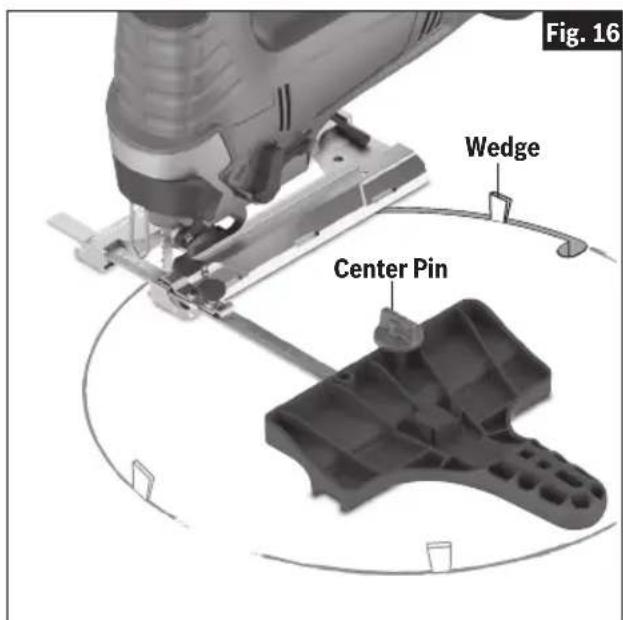
text_image
Fig. 16 Wedge Center PinCIRCLE-CUTTING TIPS:
- Place small wedges in the cut as shown in Fig. 16, to keep the inner circle from spreading when near the end of the cut.
- Use a thick jig saw blade, such as the Bosch T101TP or T144DP whenever possible.
- Make sure that the jig saw's orbital setting is at 0 (zero).
- Cut slowly so the blade will stay straight in the cut.
Maintenance
WARNING
To avoid accidents, always disconnect the battery pack from tool before servicing or cleaning.
Service
WARNING
NO USER SERVICEABLE PARTS INSIDE. Preventive maintenance performed by un au thorized personnel may result in misplacing of internal wires and components which could cause serious hazard. We recommend that all tool service be performed by a Bosch Factory Service Center or Authorized Bosch Service Station.
Batteries
Be alert for battery packs that are nearing their end of life. If you notice decreased tool performance or significantly shorter running time between charges then it is time to replace the battery pack. Failure to do so can cause the tool to operate improperly or damage the charger.
Tool Lubrication
Your Bosch tool has been properly lubricated and is ready for use.
Motors
The motor in your tool has been engineered for many hours of dependable service. To maintain peak efficiency of the motor, we recommend it be examined every six months. Only a genuine Bosch replacement motor specially designed for your tool should be used.
Bearings
Bearings which become noisy (due to heavy load or very abrasive material cutting) should be replaced at once to avoid overheating and motor failure.
Cleaning
CAUTION
Certain cleaning agents and solvents damage plastic
parts. Some of these are: gasoline, carbon tetrachloride, chlorinated cleaning solvents, ammonia and household detergents that contain ammonia.
Ventilation openings and switch levers must be kept clean and free of foreign matter. Do not attempt to clean by inserting pointed objects through opening.
CLEANING BLADE HOLDER
Clean the saw blade holder regularly. For this, remove the saw blade from the tool and lightly tap footplate on a level surface.
Regularly spray penetrating oil onto the saw blade holder.
Check the guide roller regularly. If worn, it must be replaced through an authorized Bosch Factory Service Center
Lubricate the guide roller occasionally with a drop of oil.
Accessories and Attachments
WARNING
The use of any other attachments or accessories not specified in this manual may create a hazard.
Store accessories in a dry and temperate environment to avoid corrosion and deterioration.
natural_image
Mechanical assembly diagram showing a cutting tool interacting with a car chassis, with no visible text or symbols.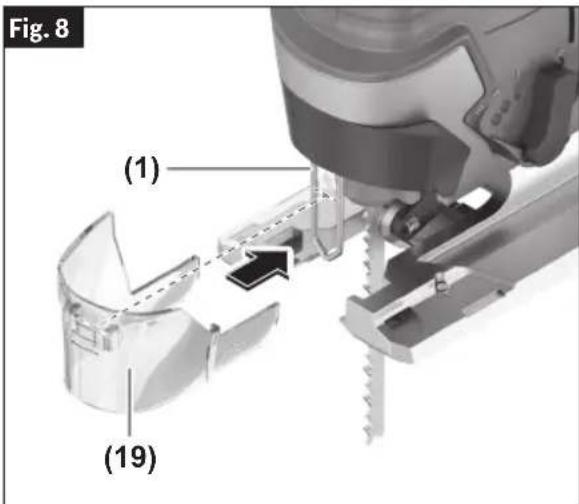
text_image
Fig. 8 (1) (19)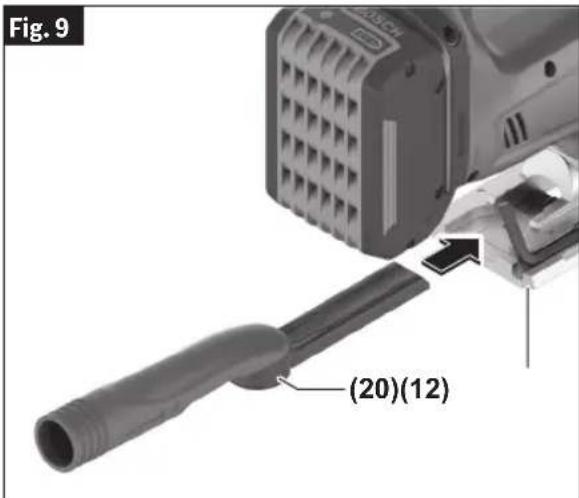
text_image
Fig. 9 (20)(12)natural_image
Mechanical component with downward arrow indicating force or motion, no visible text or symbols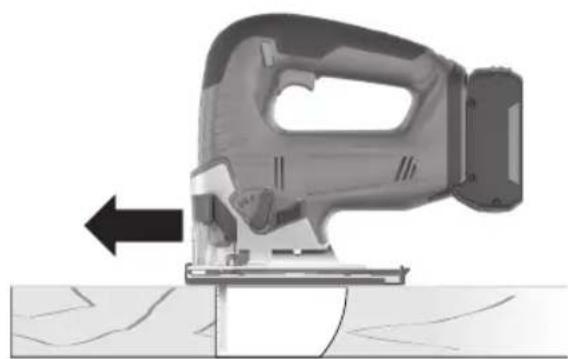
natural_image
Illustration of a manual power tool with a black arrow indicating left motion (no text or symbols)(Fig. 12, 13, 14, 15, 16)
natural_image
Technical line drawing of mechanical components labeled A and B, showing assembly or assembly steps without any readable text or symbols.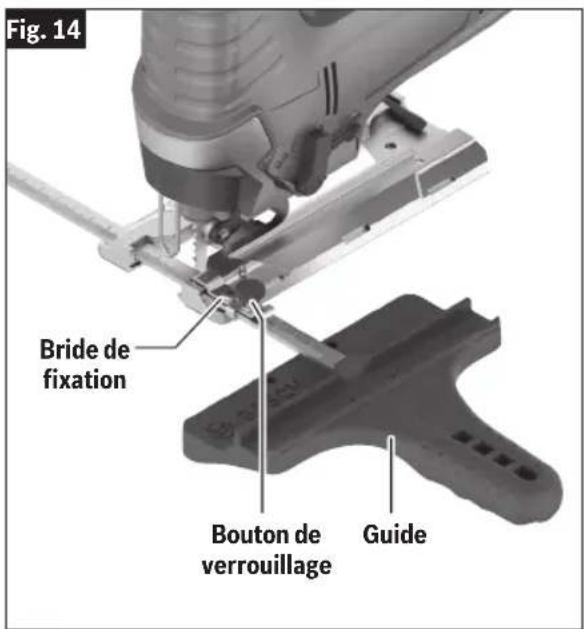
text_image
Fig. 14 Bride de fixation Bouton de verrouillage Guidenatural_image
Close-up of a sewing machine needle stitching on a wooden surface, with no visible text or symbols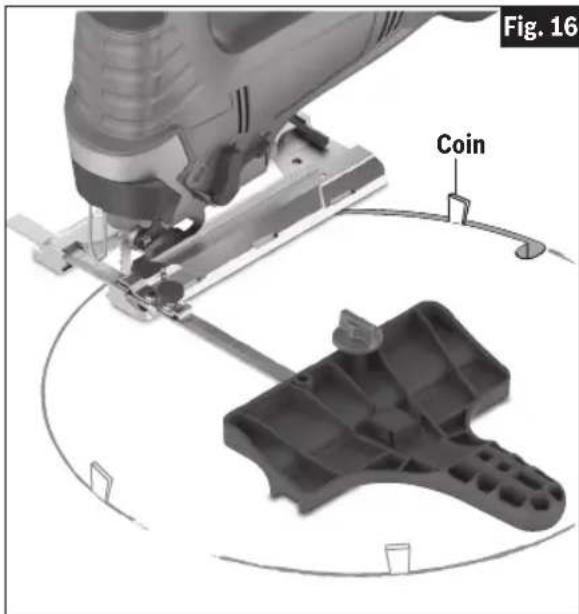
text_image
Fig. 16 CoinCONSEILS POUR LES COUPES CIRCULAIRES :
Note: This insert will only work with blades that have ground sides such as T301CD, T101B, T101D, and T101DP.
Cubierta antipolvo
(Fig. 8)
natural_image
Mechanical assembly diagram showing a cutting tool interacting with a component, with no visible text or symbols.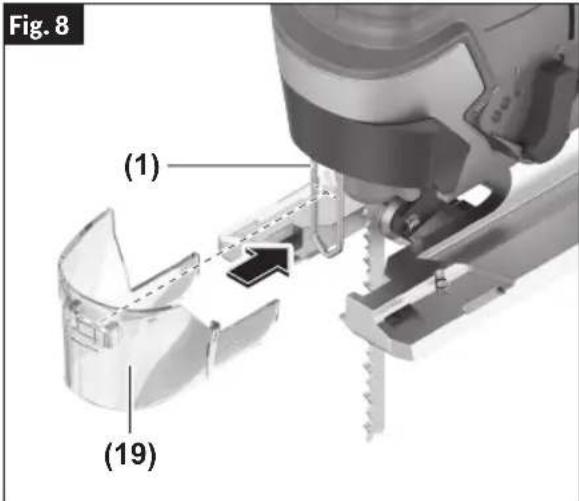
text_image
Fig. 8 (1) (19)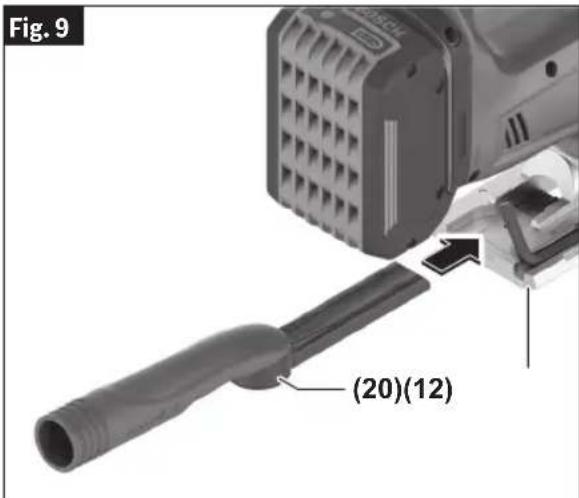
text_image
Fig. 9 (20)(12)natural_image
3D illustration of a mechanical component with a downward arrow indicating force or movement, resting on a surface (no text or symbols)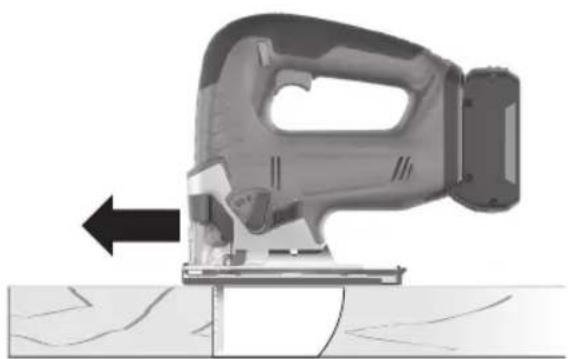
natural_image
Diagram of a manual power tool with a black arrow indicating left motion, mounted on a base (no text or symbols present)Selección de hojas
(Fig. 12, 13, 14, 15, 16)
natural_image
Technical line drawing of mechanical components labeled A and B, showing assembly or assembly steps without any readable text or symbols.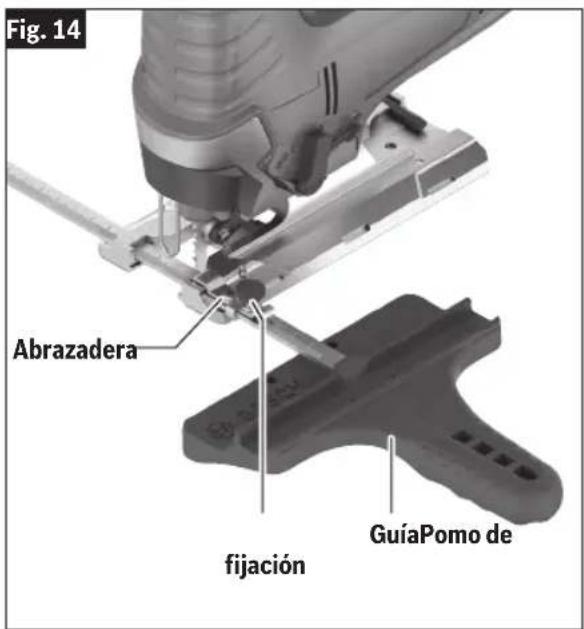
natural_image
Close-up of a sewing machine needle stitching on a wooden workbench, no visible text or symbols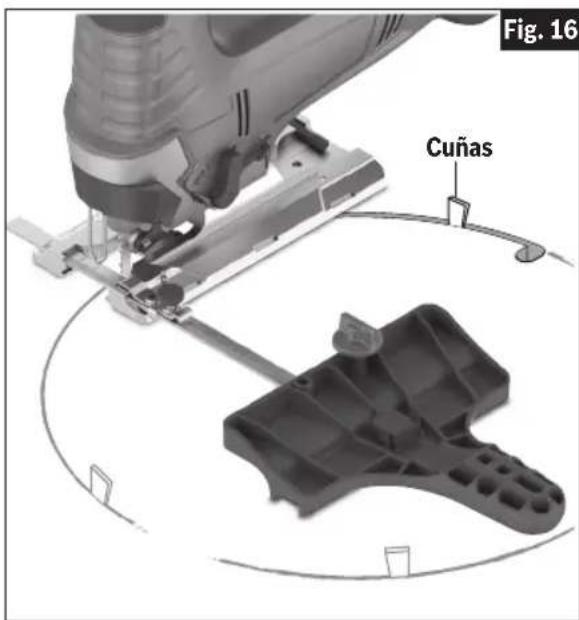
text_image
Fig. 16 CuñasThis page was intentionally left blank
This page was intentionally left blank
Limited Warranty of Bosch Portable and Benchtop Power Tools ("Limited Warranty")
Robert Bosch Tool Corporation ("Bosch", "we" or "our") warrants to the original end-user purchaser only that each BOSCH®-branded portable and benchtop power tool and battery (each, a "Product") will be free from defects in material or workmanship for the period of time listed in the chart below for the "Product Category" applicable for such Product (as applicable, the "Warranty Period"):
| Product Category Warranty Period | ____ |
| 18V Cordless Power Tools, 18V Benchtop Power Tools and 18V Chargers Five (5) years from the date of purchase | date of purchase |
| 18V Power Tool Batteries Three (3) years from the date of purchase | |
| 12V Cordless Power Tools and 12V Chargers One (1) year from the date of purchase | |
| 12V Power Tool Batteries One (1) year from the date of purchase | |
| Corded Portable Power Tools and Corded Benchtop Power Tools One (1) year from the date of purchase |
OUR SOLE OBLIGATION AND YOUR EXCLUSIVE REMEDY under this Limited Warranty and, to the extent permitted by law, under any warranty or condition implied by law, shall be the repair or replacement of parts, without charge, which are defective in material or workmanship and which have not been abused, misused, carelessly handled, or repaired by persons other than Bosch or a Bosch Authorized Service Center.
Normal wear and tear of your Product is not covered by this Limited Warranty. As a result, Product parts that may become worn or exhausted over time due to normal wear and tear (including, without limitation, air filters, blade clamps, brushes, bumpers, bumper cover washers, chucks, cords, driver belts, driver blades, isolators, lifters, o-rings, pistons, piston/driver assemblies, piston stops, saw shoes, seals, strikers, etc.), or any other service or repairs required due to normal wear and tear on a Product, are not covered by this Limited Warranty.
To make a claim under this Limited Warranty, you must return the complete Product, transportation prepaid, to any Bosch Factory Service Center or Bosch Authorized Service Center. Please include a dated proof of purchase with your Product so we can determine if your Product is within the Warranty Period. If you do not have the dated proof of purchase for the Product that is the subject of your claim, we will use the Product's production code to determine whether the Product is within the Warranty Period. For locations of nearby Bosch Factory Service Centers or Bosch Authorized Service Centers, please use our service locator at https://www.boschtools.com/us/en/service/service-center-locator/. For more information on Limited Warranty performance, please contact our customer service at 1-877-267-2499.
THIS LIMITED WARRANTY DOES NOT APPLY TO BOSCH®-BRANDED:
(i) MEASURING TOOLS,
(ii) ACCESSORY ITEMS SUCH AS CIRCULAR SAW BLADES, DRILL BITS, ROUTER BITS, JIGSAW BLADES, SANDING BELTS, GRINDING WHEELS AND OTHER SIMILAR TYPES OF ITEMS; OR
(iii) CARRYING CASES OR CARRYING BAGS.
ANY IMPLIED WARRANTIES FOR A PRODUCT SHALL BE LIMITED IN DURATION TO THE SHORTER OF (i) THE APPLICABLE WARRANTY PERIOD FOR SUCH PRODUCT/PRODUCT CATEGORY LISTED ABOVE, OR (ii) SUCH DURATION AS WOULD OTHERWISE APPLY UNDER APPLICABLE LAW IF THIS LIMITED WARRANTY WERE NOT OFFERED BY BOSCH. SOME STATES IN THE U.S., AND SOME CANADIAN PROVINCES, DO NOT ALLOW LIMITATIONS ON HOW LONG AN IMPLIED WARRANTY LASTS, SO THE ABOVE LIMITATION MAY NOT APPLY TO YOU.
IN NO EVENT SHALL BOSCH BE LIABLE FOR ANY INCIDENTAL OR CONSEQUENTIAL DAMAGES (INCLUDING BUT NOT LIMITED TO LIABILITY FOR LOSS OF PROFITS) ARISING FROM THE SALE OR USE OF THIS PRODUCT. SOME STATES IN THE U.S. AND SOME CANADIAN PROVINCES (INCLUDING, WITHOUT LIMITAITON, QUEBEC) DO NOT ALLOW THE EXCLUSION OR LIMITATION OF INCIDENTAL OR CONSEQUENTIAL DAMAGES, SO THE ABOVE LIMITATION OR EXCLUSION MAY NOT APPLY TO YOU.
THIS LIMITED WARRANTY GIVES YOU SPECIFIC LEGAL RIGHTS, AND YOU MAY ALSO HAVE OTHER RIGHTS WHICH VARY FROM STATE TO STATE IN THE U.S., PROVINCE TO PROVINCE IN CANADA AND FROM COUNTRY TO COUNTRY.
THIS LIMITED WARRANTY APPLIES ONLY TO PRODUCTS SOLD WITHIN THE UNITED STATES OF AMERICA AND CANADA. FOR WARRANTY COVERAGE WITHIN OTHER COUNTRIES, CONTACT YOUR LOCAL BOSCH® BRAND TOOL DEALER OR IMPORTER.
V202211
© Robert Bosch Tool Corporation
1800 W. Central Road
Mt. Prospect, IL 60056-2230
160992A88D 02/2023
text_image
160992A88D