
D1000 - Drain cleaner Vevor - Free user manual and instructions
Find the device manual for free D1000 Vevor in PDF.
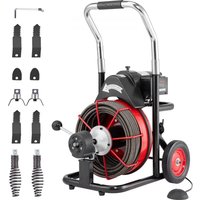


| Product Type | Drum Drain Cleaner (Drainer) |
| Brand | Vevor |
| Model | D1000 |
| Compatible Pipe Diameter | 2 to 4 inches (50-100 mm) |
| Cable Length and Diameter | 3/8" (10 mm): 50-100 feet (15-30 m); 1/2" (12 mm): 50-100 feet (15-30 m) |
| Drum Capacity | 3/10" x 50 ft, 3/8" x 50/75/100 ft, 1/2" x 50/75/100 ft |
| Drum Speed (No Load) | 216/178 rpm |
| Motor | Universal AC Reversible, 115 V/60 Hz or 230 V/50 Hz, 1700/1400 rpm, 180-550 W |
| Power Supply | Electric with GFCI Protection (Ground Fault Circuit Interrupter) |
| Main Functions | Drain cleaning, CW/CCW rotation, manual or automatic feed, foot pedal switch |
| Included Cleaning Heads | Spade, C-type, olive, serrated |
| Accessories Included | Leather/PVC gloves, hex key, manual pulling straps |
| Safety | GFCI, belt cover, gloves, goggles, foot pedal emergency stop |
| Maintenance and Cleaning | Clean with warm soapy water, dry completely; lubricate bearings; store in a dry place |
| Spare Parts and Repairability | Cable, belt, cleaning heads, springs, switch – repair by authorized center |
| General Information | Manufactured by Shanghai Muxin Muye Co., Ltd.; support at www.vevor.com/support |
Frequently Asked Questions - D1000 Vevor
User questions about D1000 Vevor
0 question about this device. Answer the ones you know or ask your own.
Ask a new question about this device
Download the instructions for your Drain cleaner in PDF format for free! Find your manual D1000 - Vevor and take your electronic device back in hand. On this page are published all the documents necessary for the use of your device. D1000 by Vevor.
USER MANUAL D1000 Vevor
Technical Support and E-Warranty Certificate www.vevor.com/support
DRAIN CLEANER
MODEL: D1000
We continue to be committed to providing you with tools at competitive prices. "Save Half", "Half Price", or any other similar expressions used represent an estimate of savings you might benefit from buying certain products with us compared to the major top brands and do not necessarily cover all categories of tools offered by us. You are kindly reminded to compare carefully when placing an order with us if you are actually comparing with the top major brands.
VEVOR®
TOUGH TOOLS, HALF PRICE
DRAIN CLEANER
MODEL: D1000
NEED HELP? CONTACT US!
Have product questions? Need technical support? Please feel free to contact us:
Technical Support and E-Warranty Certificate www.vevor.com/support
This is the original instruction. Please read all manual instructions carefully before operating. VEVOR reserves the right to interpret the user manual. The appearance of the product shall be subject to the product you received. Please forgive us that we won't inform you if there are any technology or software updates on our product.
INSTRUCTIONS
Preface
First of all, let us express our heartfelt thanks to our customers who have purchased our equipment. This manual is for customer service to make better use of this equipment. We hope the company's products and services will bring you convenience and courtesy.
Important reminder
For your own safety, before assembling and using such products, you must read this manual to understand the unique operation, application, and possible problems of this equipment.
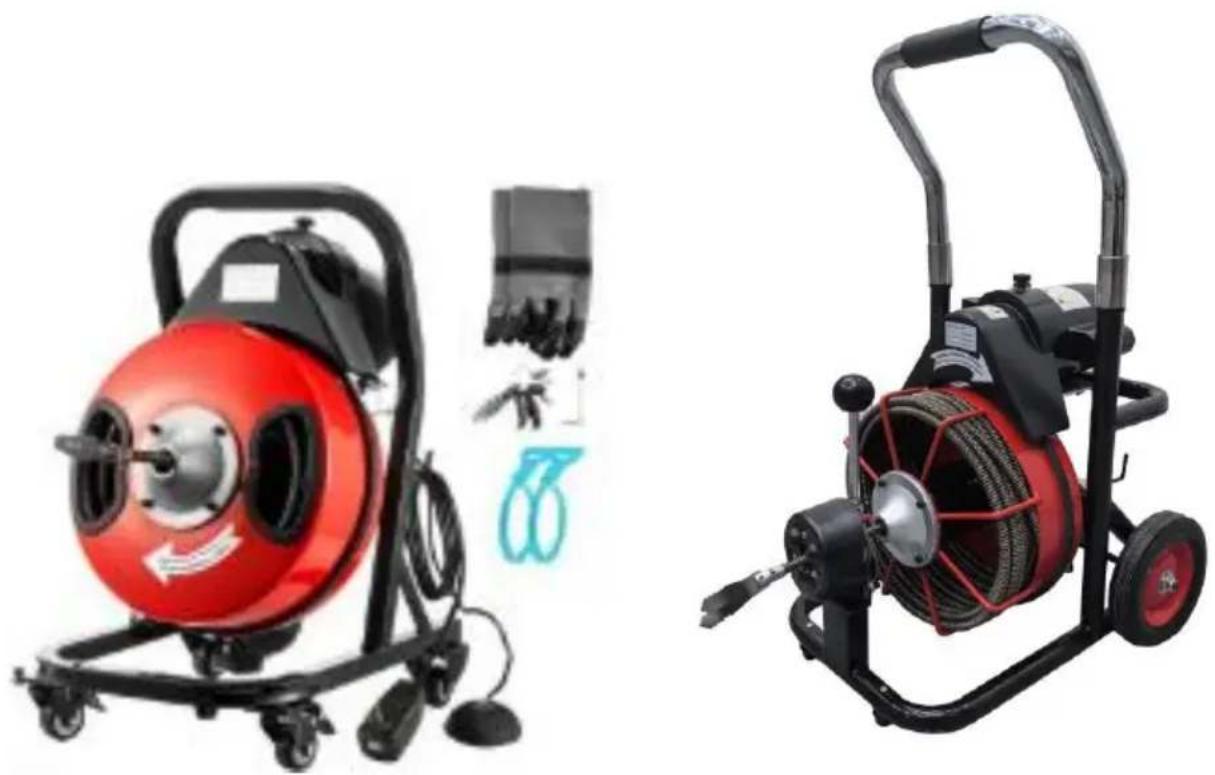
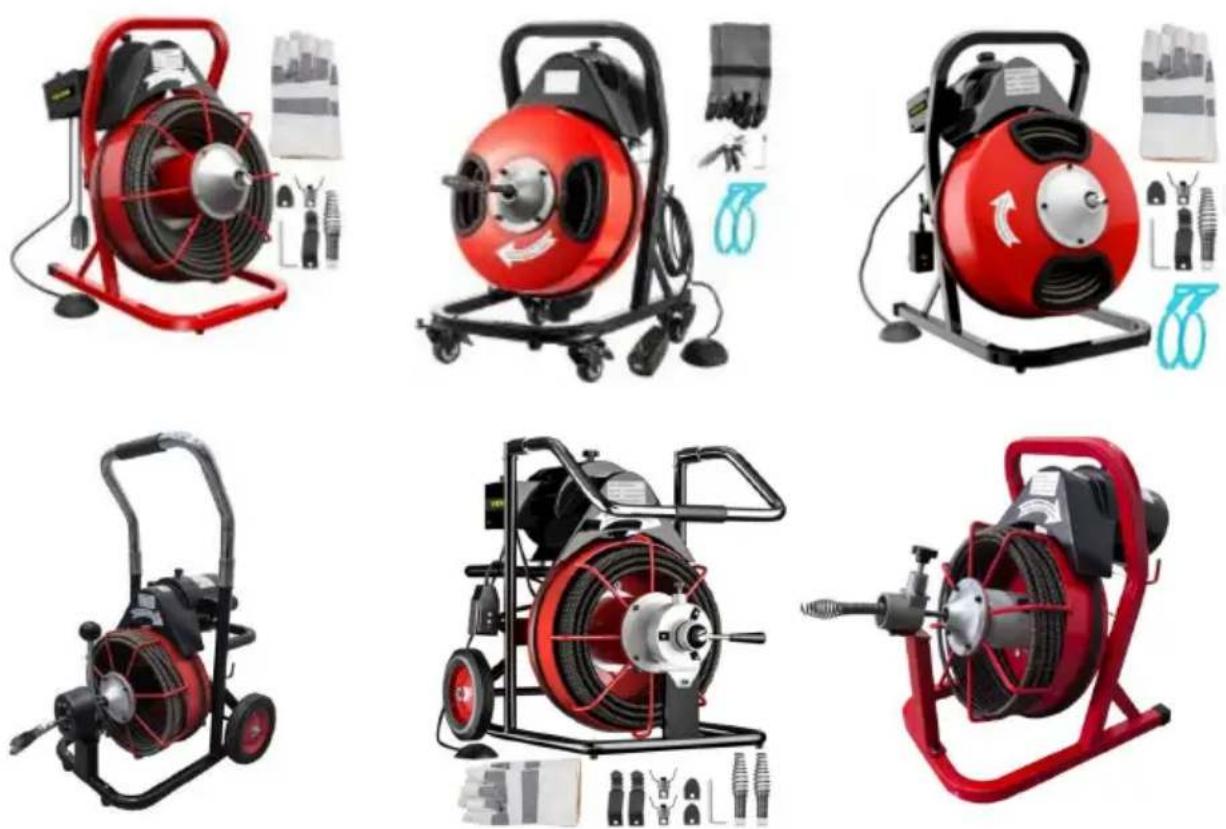
Display of drainage cleaner models
Safety signs:
In this operating manual and on the machine, safety symbols and warning words are used to convey important safety information. This section will help you enhance your understanding of these safety symbols and warning words.
This is a safety warning symbol used to remind or warn you of potential danger or personal injury. Please follow all safety tips to avoid possible injury or death.
A warning indicates a dangerous situation that, if not avoided, may result in death or serious injury.
Be careful, it indicates a dangerous situation. If it cannot be avoided, it may lead to moderate or minor injuries.

Note that it represents information related to protecting property safety.

This symbol indicates that before using the machine, please read the operating manual carefully. The operation manual contains important safety information and correct operating methods.
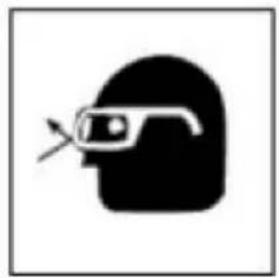
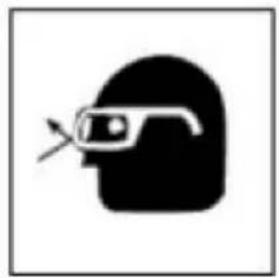
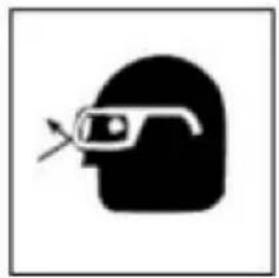
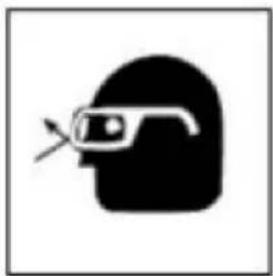
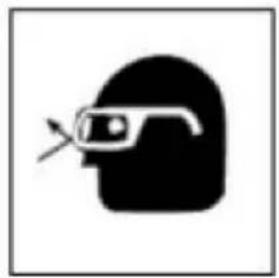
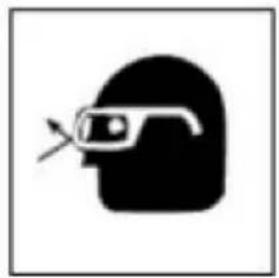
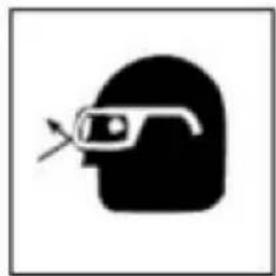
This symbol indicates that when using the machine, please always wear safety glasses with protective plates and eye protection functions to reduce the risk of eye injury.

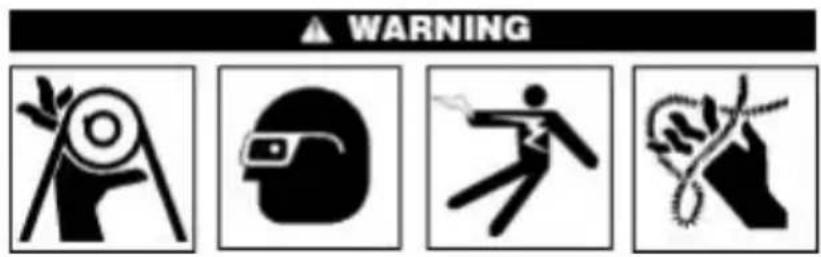
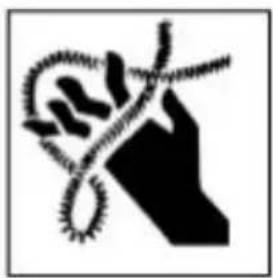
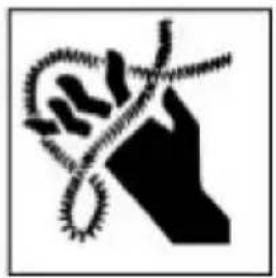
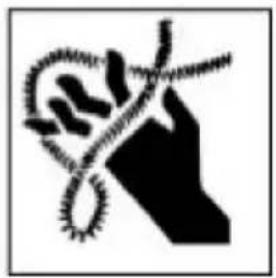
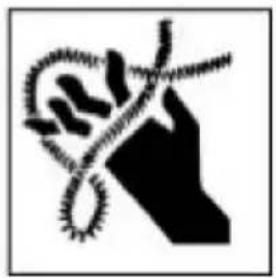
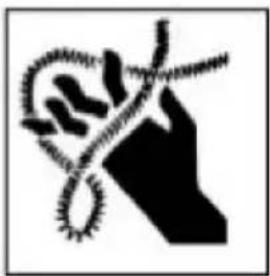
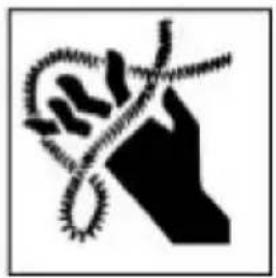
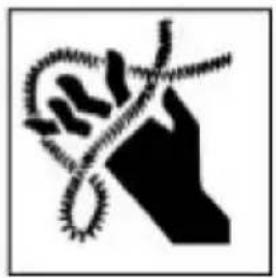
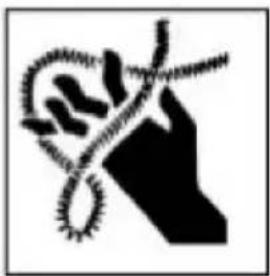
This symbol indicates the danger of hands, fingers, or other body parts being caught in the cable of the dredging machine.

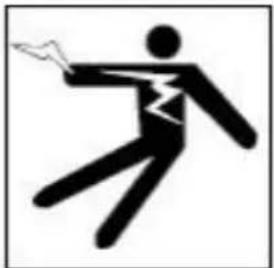
The symbol indicates the danger of having an electric shock.

The symbol indicates the danger of being involved in the belt and pull
Safety instruction
Please read all safety precautions and safety instructions carefully. Failure to follow these safety instructions may lead to electric shock, fire, or serious injury. Please properly keep this safety precautions and safety guidance.
Workplace safety precautions
- Keep the workplace clean and fully lit. Chaos and dark environment are cause safety accidents. Fire should be prevented.
- Do not operate electric tools in dangerous environments such as flammable and explosive, such as flammable and explosive liquids, gases or dust. Power tools may create sparks that can ignite the dust or gas.
- When operating the machine, keep the irrelevant personnel (including children bystanders, non-staff, etc.) away from the work site. Unrelevant interference can affect your proper use of the tool.
Electrical Safety
- Tools with grounding protection should be inserted into sockets that comply with grounding regulations. Do not change the plug at any time and do use any other adapter. If you suspect that the socket does not have ground protection, then you should ask a qualified electrician to inspect it. If an electrical fault occurs, grounding protection will provide a smaller resistance allowing the current to directly enter the ground without passing through the operator themselves.
- Tools with grounding protection should be inserted into sockets that comply with grounding regulations. Do not change the plug at any time and do use any other adapter. If you suspect that the socket does not have ground protection, then you should ask a qualified electrician to inspect it. If an electrical fault occurs, grounding protection will provide a smaller resistance allowing the current to directly enter the ground without passing through the operator themselves.
- Do not expose power tools to rain and humidity, which will increase the electric shock.
- Do not damage the wiring board power cord. Do not use the power cord drag or pull the power tool. Keep the power cord away from heat, oil, and edges, or moving objects. Damaged power cord or involvement in other objects increases the risk of electric shock.
- Do not damage the wiring board power cord. Do not use the power cord drag or pull the power tool. Keep the power cord away from heat, oil, and edges, or moving objects. Damaged power cord or involvement in other objects increases the risk of electric shock.
Personal safety precautions
- When using power tools, keep a clear head and pay attention to the work hand. Do not use power tools when you are tired or under the influence of
Alcohol or drugs. If used carelessly, it will lead to more serious accidents.
- Dress properly. Do not wear loose clothing or jewelry. Keep your clothes, hair, and gloves away from moving parts. Loose clothes, jewelry, and hair can easily get caught in moving parts.
- Do not start the machine unintentionally. Make sure the switch is off before plugging it into a socket. When carrying a power tool, if your finger accidentally touches the switch while it is on, it can lead to a safety accident.
- Remove any adjustment tools, such as wrenches, before starting the machine. These tools are very dangerous if they get caught in the moving parts of the machine, which can easily cause personal injury.
- Maintain your balance and do not lose your balance while operating the machine. This will give you better control of the tool in unexpected situations.
- Use personal protective equipment correctly and always wear safety glasses. Personal protective equipment includes dust masks, non-slip safety shoes, hard hats, or thermal protective devices. Appropriate use of these protective equipment will reduce the occurrence of personal injury accidents.
Use and maintenance of the tools
- Do not overuse the tools, and do the corresponding work according to the purpose of the tools. Reasonably selecting tools to complete the work according to their designed purpose will produce twice the result with half the effort, and be safe.
- If the switch of the machine does not work properly, stop using the machine. Any equipment whose switch does not work is very dangerous and should be repaired immediately.
- Disconnect the power supply before adjusting the tools, replacing accessories, or storing them. These measures may prevent the risk of accidentally starting the tool.
- Be careful not to store power tools where irrelevant people, especially children, can access them. Power tools are very dangerous for untrained people.
- Carefully maintain the tools to ensure that the head and blade are sharp. Proper maintenance and keeping the blade sharp can reduce the risk of binding and easily control the cables.
- Check the tools regularly to see whether the position of the moving parts is correct, whether parts are damaged, or if there is any other damage that may affect the normal operation of the tools. If so, be sure to repair them before use. Many accidents are due to improper maintenance of the tools.
- Please use only the recommended attachments. Accessories suitable for one tool can be dangerous for another tool.
Service
- The machine maintenance service must be provided by personnel who have passed the manufacturer's assessment, otherwise injury accidents may occur.
- Please strictly follow the instructions in the operation manual to use the machine and replace accessories specified by the manufacturer. Otherwise, it may lead to electric shock or injury accidents.
- Cut off all power connections before maintenance work to avoid electric shock accidents and accidental start-up.
Other safety precautions warning!
This section contains important safety information for this tool.
Please read the safety information carefully before using the drum machine. Otherwise, it may cause electric shock, fire, or serious personal injury. Please keep these safety instructions for future reference!
Safe use of the dredge machine
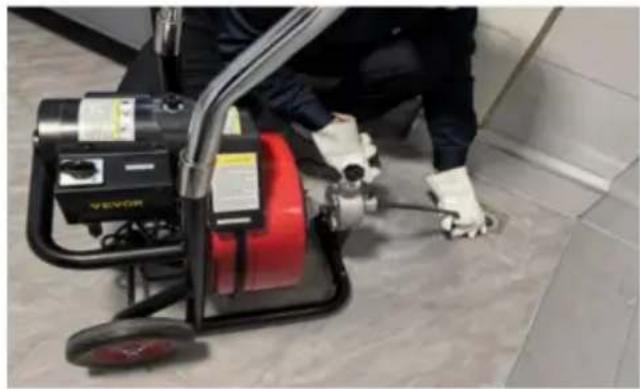
- Please wear the operation gloves provided with the machine. It is forbidden to use rags or cotton gloves to hold the dredging cable, as there is a risk of being caught by the cable and causing injury.
- Do not operate the machine when the belt cover is removed. Fingers are at risk of being caught by the belt and pulley.
- Do not turn the dredge head around when the machine is running. In this case, the cable stress is too large and may produce torque, knots, or even breakage, which can lead to more serious injury accidents.
- Use a gloved hand to operate the cable, so that the hand can feel the movement of the cable, thereby preventing the cable from twisting, knotting, or breaking, and avoiding injury accidents.
- The machine should be kept two feet away from the pipe inlet. If the distance is too large, the cables may twist and knot.
- The machine is designed to be operated by a single person, and the operator controls the foot switch and the steel cable alone. Once the dredge head stops rotating, stop the machine to prevent the cable from twisting, knotting, or breaking, and to avoid injury accidents.
- Do not reverse the machine unless specifically mentioned in the manual. Reversing can easily damage the cables and is usually used to remove head blockage.
- Do not touch the running cable drum and guide pipe with your hands. Wait until the machine stops, then reach into the drum. Otherwise, your hands may be hurt by the rotating parts.
- Do not wear loose clothes or jewelry necklaces, and keep your hair and clothing away from moving parts. Loose clothes, jewelry, necklaces, and hair can easily get caught in moving parts and cause danger.
- When operating and using the dredging machine, please use appropriate personal safety protection equipment. Sewers usually contain a lot of harmful substances that are harmful to the human body. Suitable personal safety protection equipment includes safety glasses, protective gloves, and any other safety equipment, such as masks, rubber gloves, protective blankets, steel-toed boots, etc.
- Maintain personal hygiene, wash hands and other body parts with hot soapy water, and do not eat or drink during dredging work to avoid inhaling toxic substances.
- Do not operate the machine in or near water, as this increases the risk of electric shock.
- Only dredge pipes that match the working capacity of the machine according to the operating specifications. Any other use of the machine will increase the risk of dangerous accidents.
Product overview, technical parameters, and standard configuration
Product overview
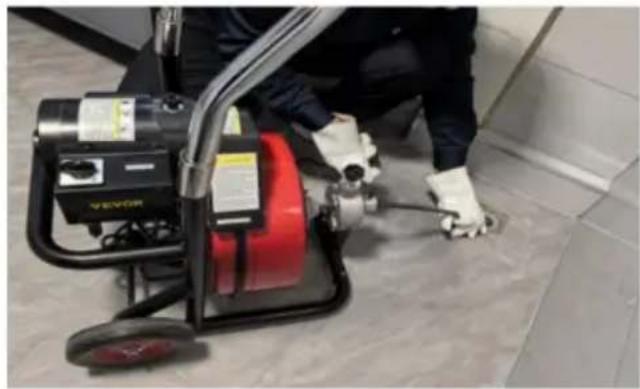
The drum dredging machine with the corresponding steel cable can dredge pipes with diameters from 1 ½" to 4". They can be placed in 3/8" 50-100 ft and 50-100 ft cables (1/2" 100 ft spring drum diameter). The automatic dredging machine is not used to dredge main blockages. The machine is driven by a 250W / 370W / 550W universal motor with a ground protection system. GF is integrated into the circuit, and the motor can be turned on/off through a pneumatic foot switch. The IW cable has a solid cable core that prevents kinking and is durable, and has a joint attached to connect the dredge head.
Name of each part.
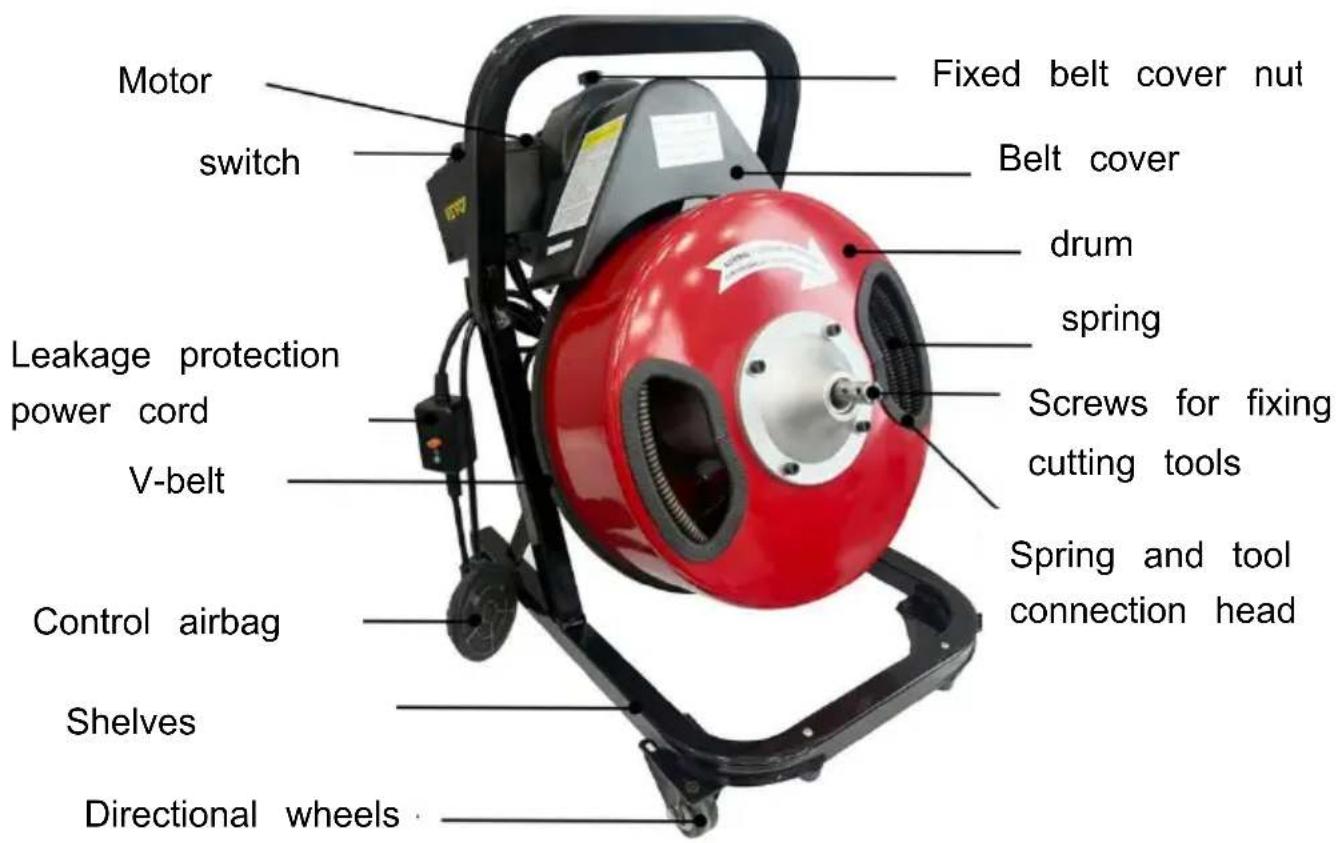
Technical parameters: Drum dredging machine
Pipe diameter: According to the choice of cable, the pipe size also differs (see the table below).
| Steel cable size | caliber | Pipe length |
| in. | ft. (M) | |
| 3/8" (10mm) | 2—4 | 50 (15M) -100 (30M) |
| 1/2" (12mm) | 2—4 | 50 (15M) -100 (30M) |
| 3/10" | 2—4 | 50 (15M) |
Drum capacity
Standard steel rope drum: Six types of springs: 3/10" X 50 feet, 3/8" X 50 feet, 100 feet, and 1/2" X 50 feet, 75, and 100 feet
Rope drum speed: 216/178 RPM (unloaded)
Motor:
Type: 115V/60Hz, 230V/50Hz, reversible universal split-phase AC motor.
Motor speed: 1700 r/min / 1400 r/min
Output power: 180W / 250W / 370W / 550W.
Standard configuration
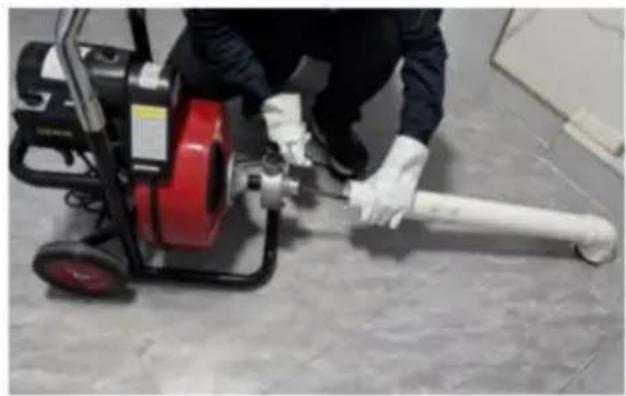
All drum dredging machines are equipped with a pair of dredging machine gloves and two manual plastic dredging strips (used alone for simple blockages).
The drum dredging machine can be used to dredge pipes of the corresponding size. If the design, construction, and installation of the pipeline are free, and the blockage is not very serious, then it is effective to work and will not damage the machine. It is suggested to use a pipe endoscope to understand the blockage inside the pipeline before dredging, and then use the dredging machine to drag. The dredging machine cannot dredge all blockages.
Machine assembly and special tips
Install wheels (with 4 wheels)
- Take out the accessory package containing the wheels and standard parts. Remove the 4 wheels (two directional wheels, two universal wheels) and the standard parts. Find the tool package, open it, take out the hex wrench, and use it to screw the screws of the wheels.
- Mount the two directional wheels on the front of the machine, and the two universal wheels on the back (note: the universal wheel has 4 screws per wheel, and each directional wheel has 2 screws).
The armrest can be folded.
Machine inspection
Before using the machine, follow the steps below to check the machine to prevent accidents such as electric shock, cable distortion, breaking, and other issues.
Always wear safety glasses, gloves, and other suitable protective equipment, such as chemical protection, protective gloves, etc.
- Check the gloves for the dredging machine to confirm that there are no worn or loose parts; otherwise, these parts can easily get caught in the steel cable and cause danger. Gloves protect your hands from rotating steel cables. If the gloves are damaged, worn, or loose, replace them with new ones before using the dredge machine.
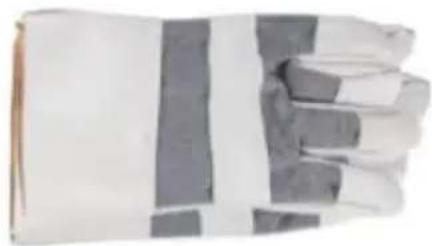
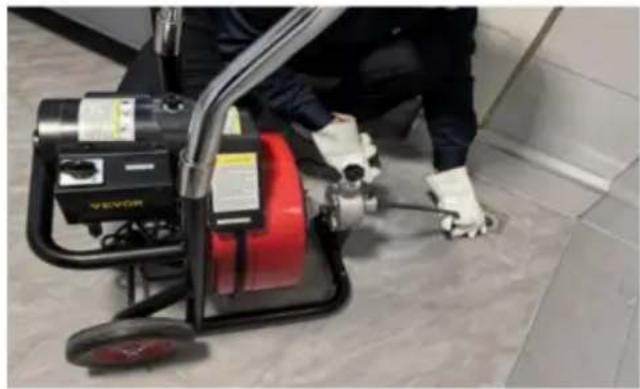
Clean the machine with gloves made of leather or PVC material.
- Check the power cord, grounding, ground fault circuit interrupter (GFCI), and the plug for damage, deformation, or missing grounding prong. If the wire is damaged, replace it immediately and stop using the machine.
- Clean the oil, grease, and dust from the handle and control parts to reduce the risk of various hazards and to easily control the machine.
- Make sure that the foot switch is properly connected to the machine and can be used normally. Do not use the machine without the foot switch or if the foot switch is damaged.
- Check whether the position of the machine's moving parts is correct, and whether there is any damage or other conditions that may affect normal use. If so, repair them before use.
- Check whether the warning label on the machine is attached and clearly readable. Do not operate the machine without the warning label.

- Check that the belt cover is firmly installed and usable, and do not operate the machine if the belt cover is missing.
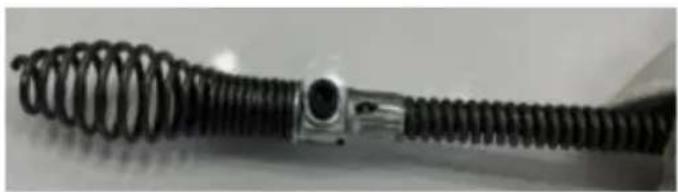
- Clean and dredge the debris on the head and cable, and check for wear or damage. The inspection content includes:
- Wear: The cable is made of round wire. If the outer circle becomes flat, the wear is serious and needs to be replaced.
- Cable knot: Steel cables are not straight; a slight curve is acceptable. In a knot, the steel cable is bent, and the gap between the steel wire and the ring is very large. Less than 15 bends can be straightened. But all wire knots will accelerate cable damage. Therefore, if there is a more serious knot phenomenon, the cable should be replaced immediately.
- Corrosion: This is caused by cables stored in a wet environment or eroded by chemical substances. Corrosion can damage the cables and should be replaced immediately.
All of these factors can cause distortion, knotting, or fracture of the cables. Ensure that the cables are completely put back and do not expose more than 2" of cable outside, which can avoid injury accidents caused by the person when starting the machine.
- Check whether the dredging head is sharp; otherwise, replace it with a sharp dredging head. A dull dredging head will affect the effect, resulting in cable bending, knotting, and even fracture.
- Ensure that the switch is placed in the shutdown (OFF) position.
- Put the plug into the socket with dry hands. To reduce the occurrence of electric shock accidents, keep all electrical connections dry and off the ground, and do not contact them with wet hands. Ensure that the wire has a ground loop disconnection protection function (GFCI) and is normally available. When the test button is pressed, the indicator light goes off; press the reset button to reset the system. If the indicator light is on, then the machine can be used. If the function fails, stop using the machine.
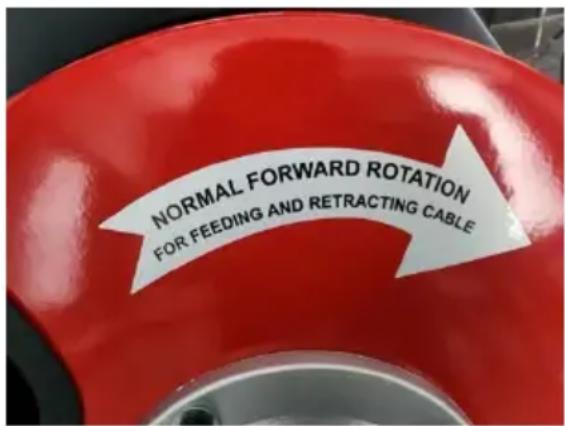
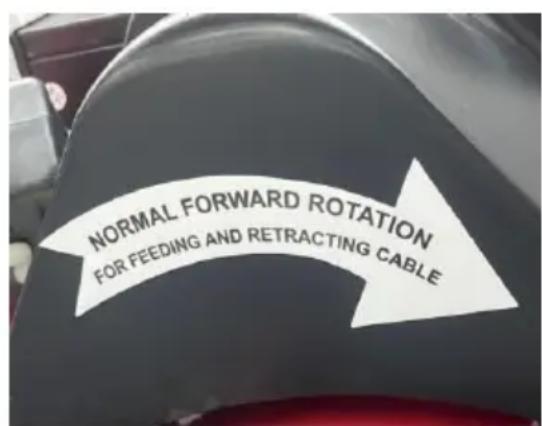
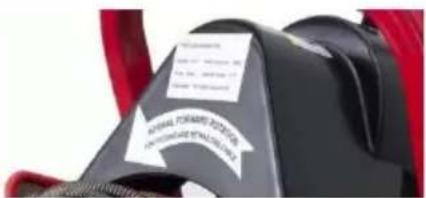
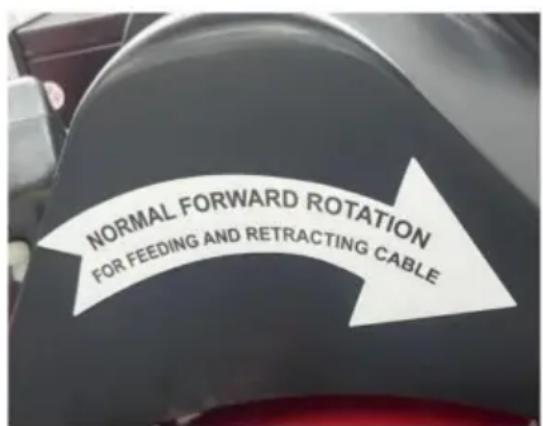
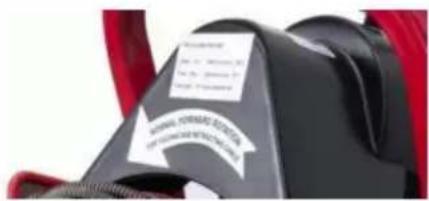
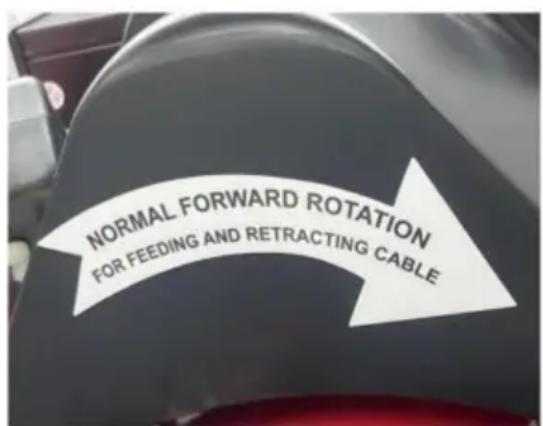
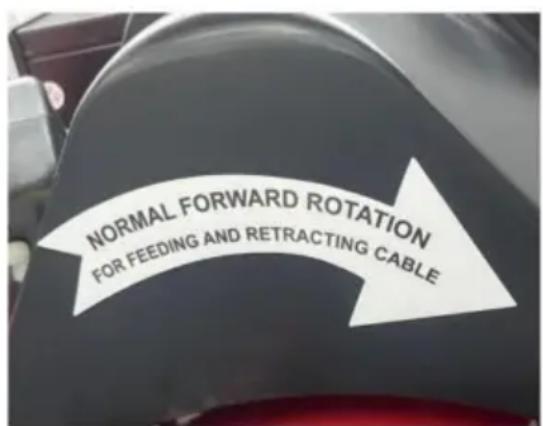
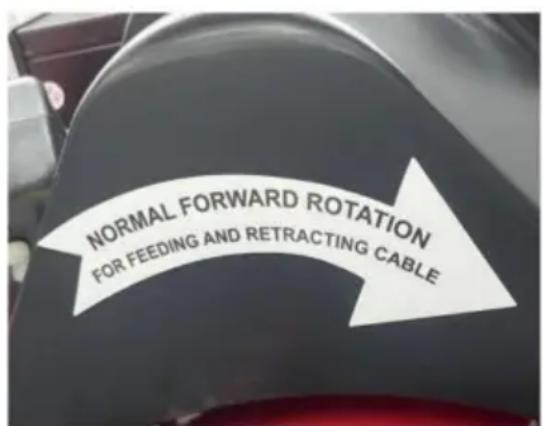
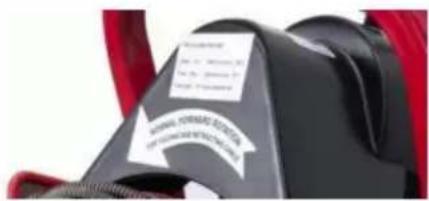
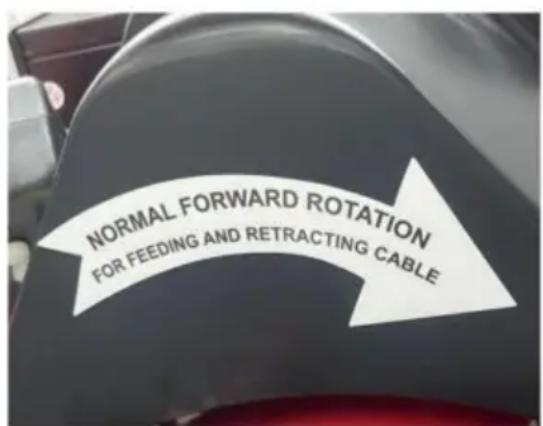
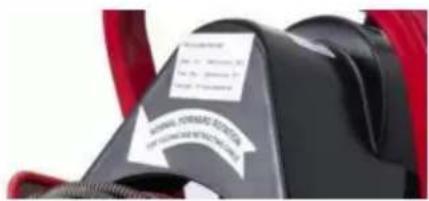
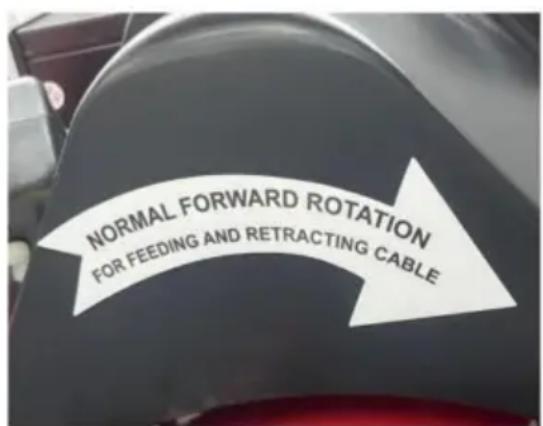
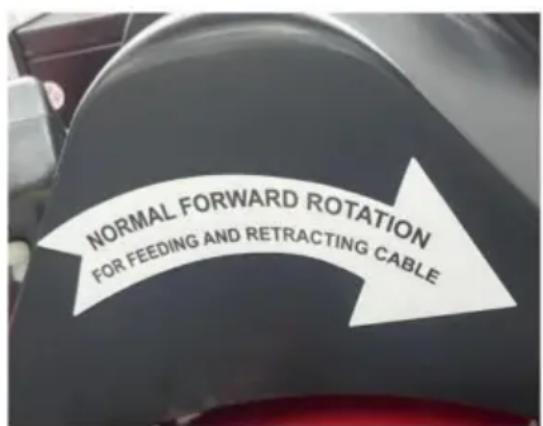
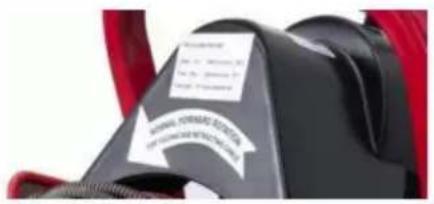
- Turn on the power supply, put the switch at CW gear, step on the foot and check the rotation direction of the cable drum. From the front end of the machine, the cable drum should be rotated clockwise, see the warning label machine and the arrow mark on the drum. Release the foot switch, and the machine stops turning. Put the switch in CCW gear, press the foot switch, a rotate the cable drum counterclockwise. If the cable drum rotates in the wrong direction, please stop using it and repair it.
- After inspection, place the switch in shutdown (OFF) gear and remove the plug with a dry hand.
- Machine and working area settings
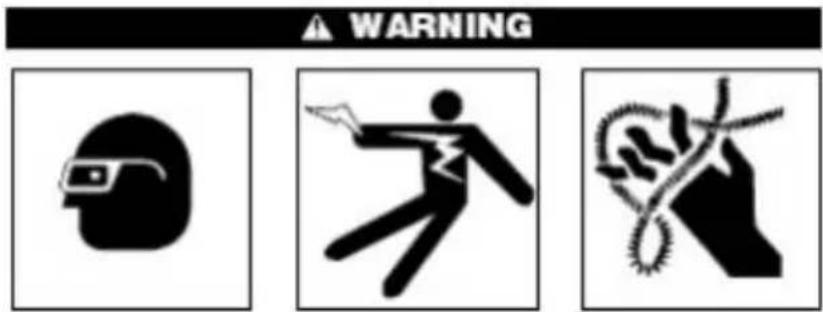
Always wear safety glasses, dredge gloves and other suitable protection devices such as chemical protection devices, in the dredge gloves with a layer of liq protective gloves, etc.
Before using the machine, follow the following steps to set the machine and working area to avoid unnecessary accidents:
- The workplace should meet the following requirements:
● Full lighting, no flammable and explosive gas, liquid, or dust.
- The working area should be dry and the ground is flat. Do not support the machine in the water area, and the operator should not stand in the wa
● A socket with ground protection.
- Clean up the area where the wire passes to ensure that there is no dam the wire, such as heat sources, grease, sharp objects, or other moving objects.
● The path from carrying the machine to the work site should be smooth.
- Check the dredged pipe, if possible, find the starting point, identify the elk the clear distance, the distance to the main pipeline and the blockage, chemi substances, etc. If there is a chemical substance, to understand its composition and take safety protection measures and so on. If necessary, facilities such as birdbasins may be removed, which may hinder the operation of the machine damage the cables.
- Select the suitable dredging equipment:
| Steel cable size | caliber | Pipe length |
| in. | ft. (M) | |
| 3/8" (10mm) | 2—4 | 50 (15M) -100 (30M) |
| 1/2" (12mm) | 2—4 | 50 (15M) -100 (30M) |
| 3/10" | 2—4 | 50 (15M) |
Automatic drum dredging machine cannot dredge the main pipeline blockage.
- Ensure that the machine has been checked.
- If necessary, lay protective pads on the ground because the dredging operation is dirty.
- Please take the usual route. If you move up the stairs, please watch for slips and wear appropriate protective shoes.
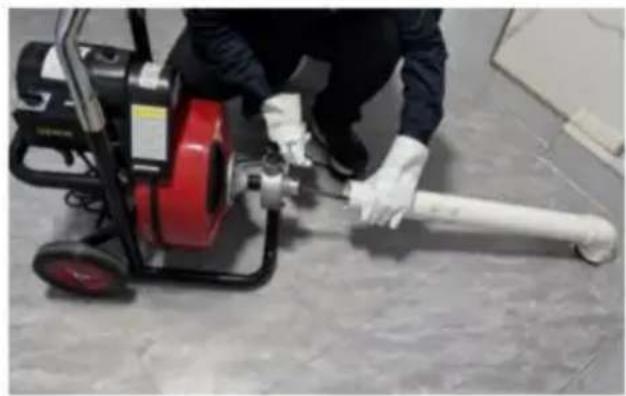
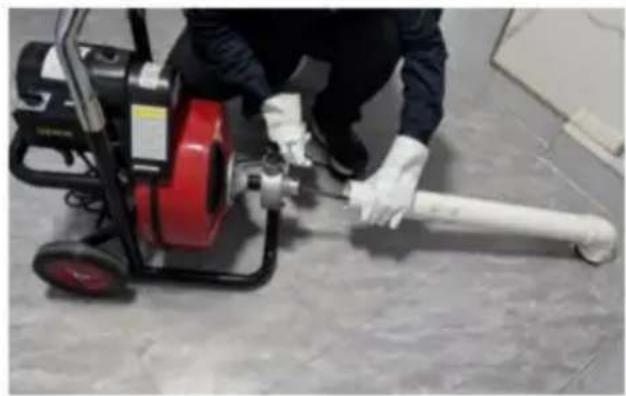
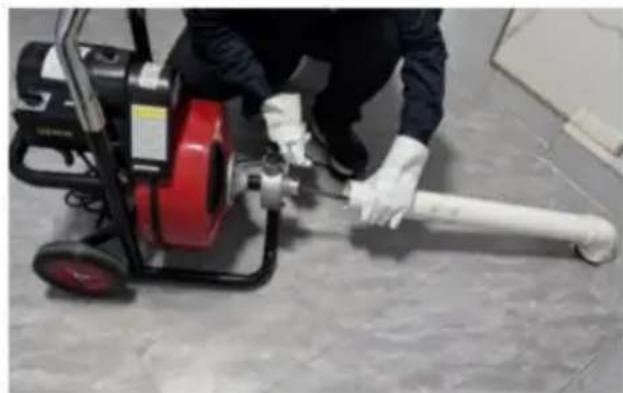
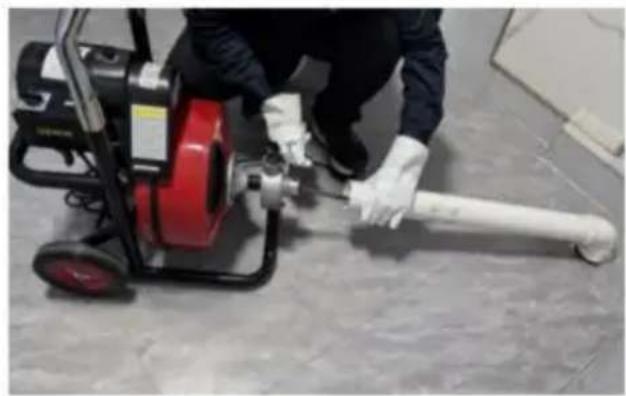
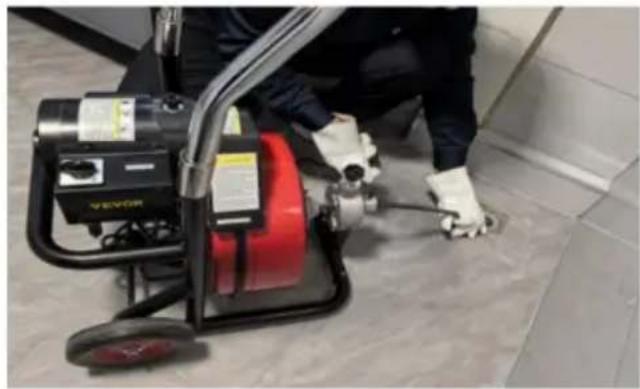
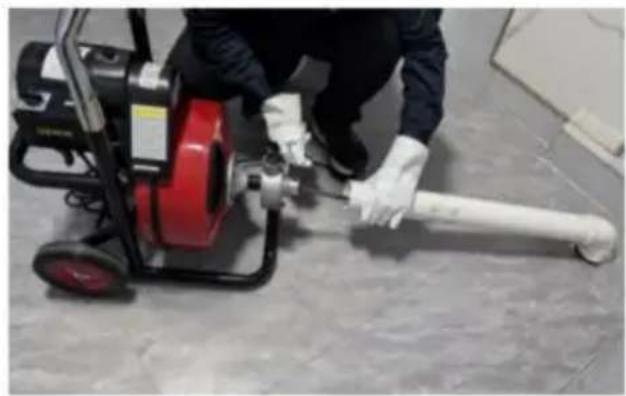
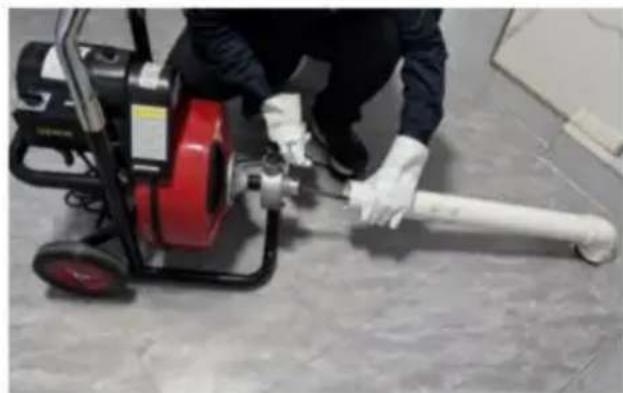
- The machine should be two feet from the entrance; too long a distance can cause cable distortion and knots. If not, it can be connected to the inlet with the appropriate size cable through the extension pipe. Incorrect cable protection measures can cause cable distortion, knotting, or even fracture, or harm to the operator.
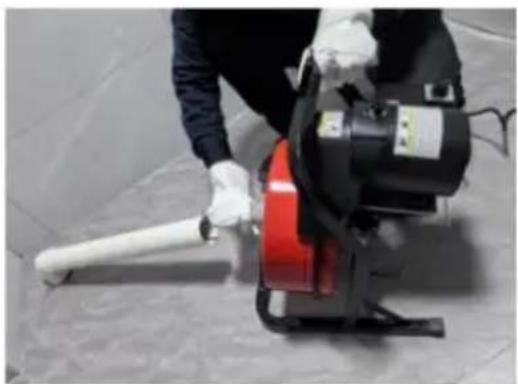
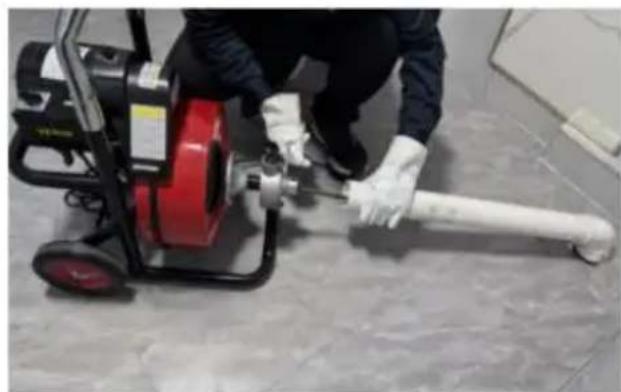
Use an extension pipe to protect the steel cables.
- Inspect the work area to ensure that there are no obstacles and no irrelevant personnel in the work area. The dredging work is very dirty and irrelevant personnel will disturb the operator.
- Choose the right dredge head. If you do not know about the blockage, then choose a straight or spherical dredge head to determine the condition of the blockage. Once you know the situation of the blockage, choose the corresponding dredge head. Use the small blockage first, and then completely clear the pipe with the large size. The maximum dredge head should not exceed the inner diameter by 1 inch.
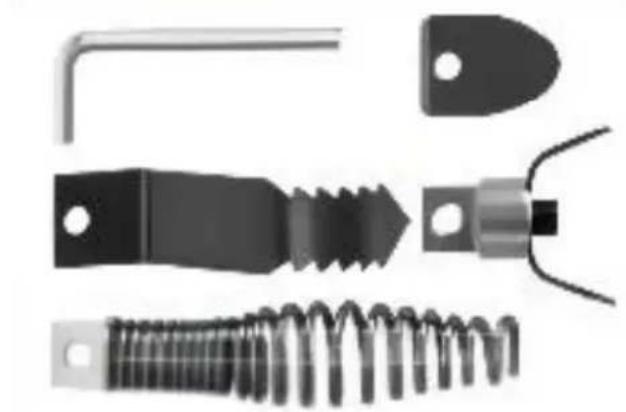
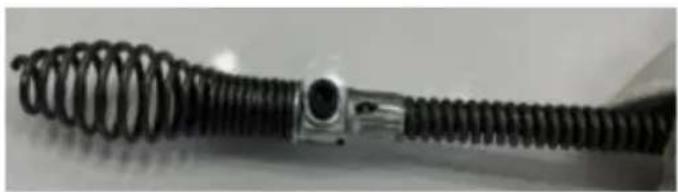
The dredge head includes:
- Outer hexagon wrench ● Shovel-shaped dredge head ● C Type dredge head
- Serrated dredge head
- Olive shape to dredge the head
The choice of the dredge head depends on the condition of the pipe being cleaned and the judgment of the operator. Various other dredge heads are available; please see the manual attachment or product samples.
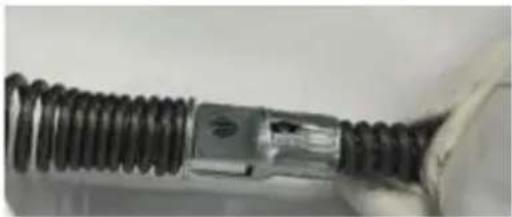
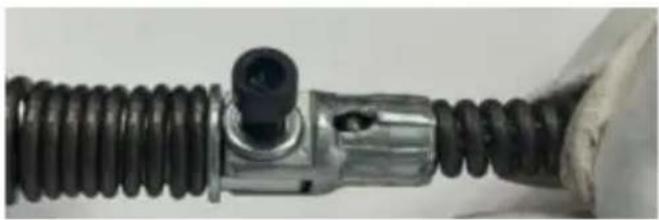
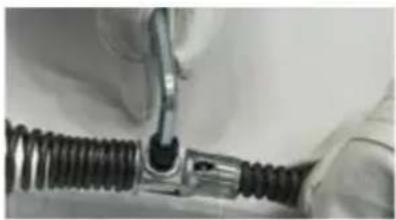
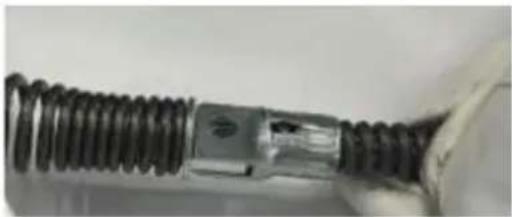
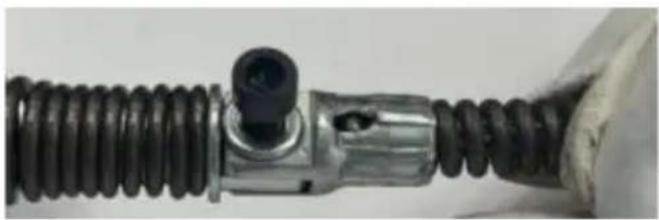
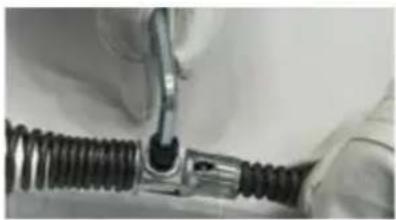
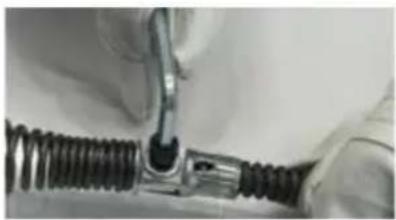
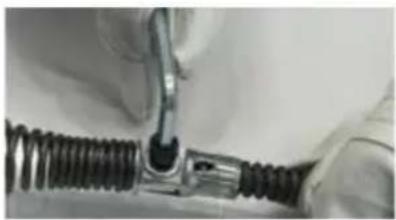
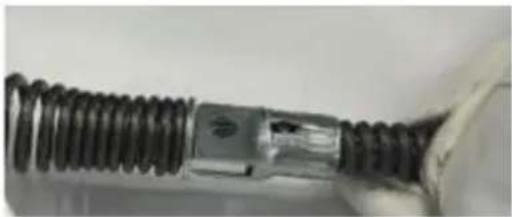
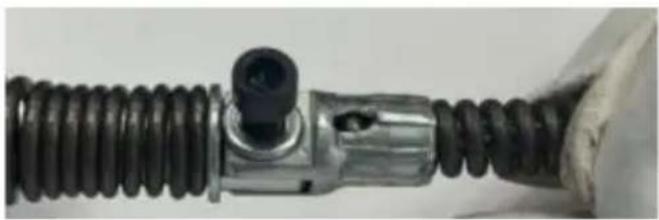
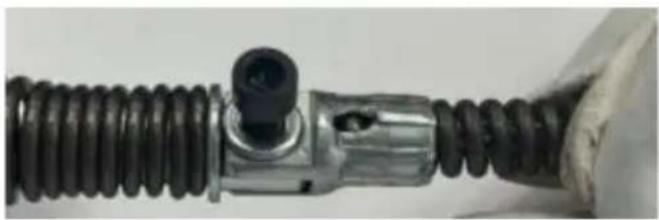
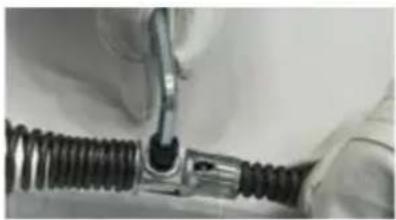
- Use a hexagonal wrench to install and remove the head.
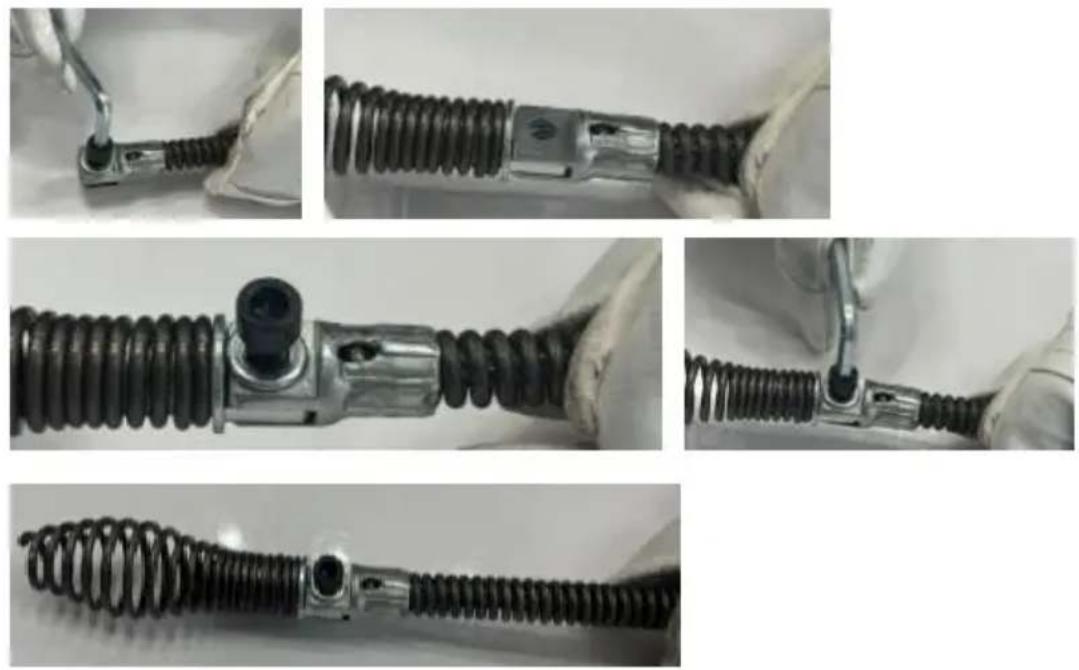
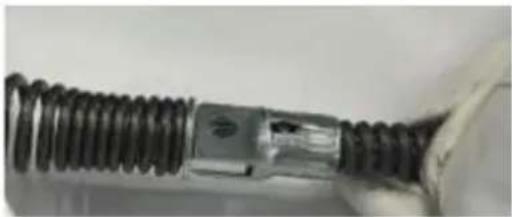
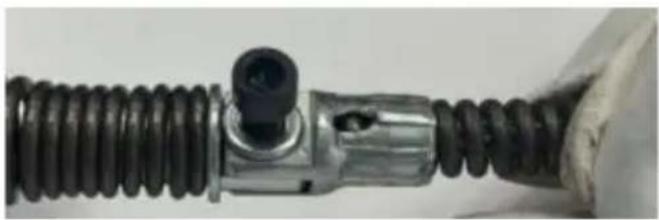
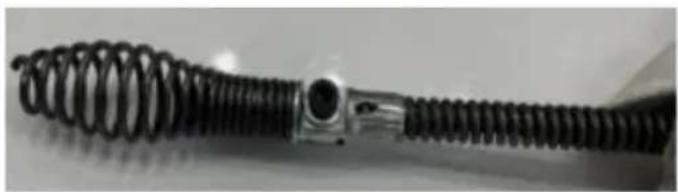
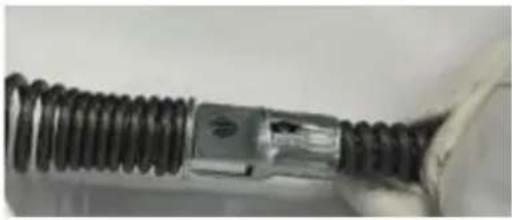
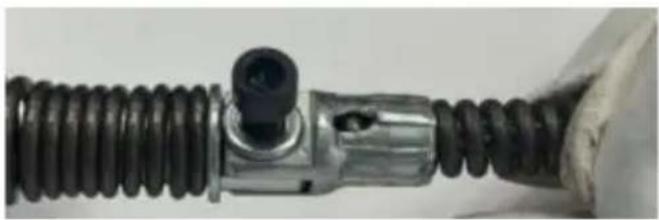
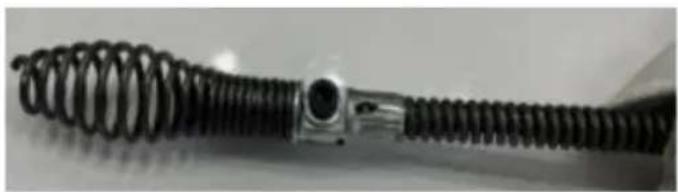
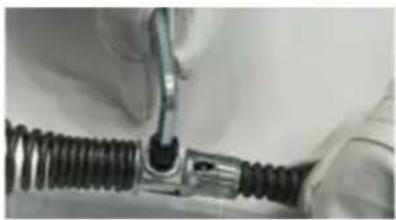
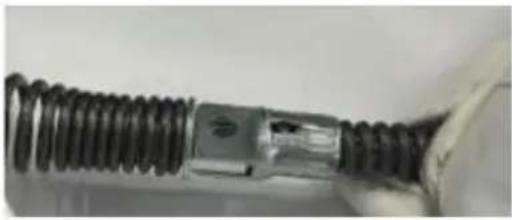
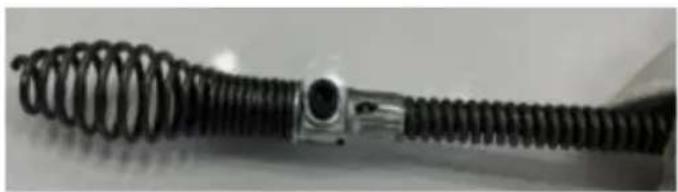
1. Remove the screw at the spring connector. 2. Insert the connector onto the spring connector. 3. Place the removed gasket and screw. 4. Tighten the dredge head.
- Place the foot switch for easy operation, and also for easy operation of the CW / OFF / CCW switch.
- Confirm that the CW / OFF / CCW switch is placed in the closed OFF position.
- Plug the dredge machine plug into the socket, and the wire should be checked according to the above method. If it is not long enough, a suitable wiring board can be used.
- Use three plugs; see the previous electricity safety section.
- Check that all electrical equipment components are intact. ● The wires must meet the standards for outdoor use, such as the "W" or "W-A" mark.
- The wire must have a sufficient diameter (16 AWG for up to 50 ft, 14 AWG for 50-100 ft). If too small, the wire will overheat, melt the insulation, and cause a fire.
The wiring board should also have the GFCI function. The GFCI function of the machine does not protect the operator from electric shock from the wiring board. If the wiring board does not have GFCI function, it is best to use a portable GFCI in the middle to reduce the risk of electric shock.
Operation steps
WARNING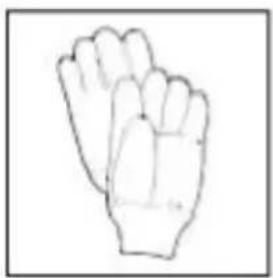
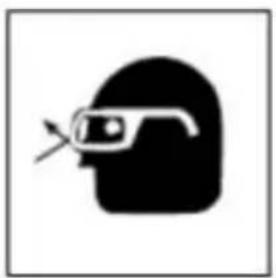
Operators should wear the gloves provided. Do not hold the spring wire with gloves or other loose cloth, so that the hand may be involved and hurt. Wear safety glasses to prevent dust and foreign objects from entering the eyes. Wear rubber boots to prevent slipping and electric shocks, especially in wet conditions.
If the pipe contains chemicals, please wear the appropriate protective equipment such as a mask, respirator, etc. Additional chemical protection equipment also includes liquid isolation gloves and more.
Follow the operating procedures of this manual to reduce injuries caused by twisting, breakage, whipping, machine dumping, chemical burns, or other causes.
- Ensure that the work area and machine are set up correctly and no irrelevant personnel are in the work area.
- Pull the cable out of the drum, get into the pipe, and go as far as you can. Ensure at least 1 foot of wire in the pipe.
This can avoid the cable coming out of the pipe and causing whipping damage.
- Correct operation posture:
- Be able to operate the foot switch, and can leave quickly, do not completely step on it. ● Make sure that you can keep a good physical balance.
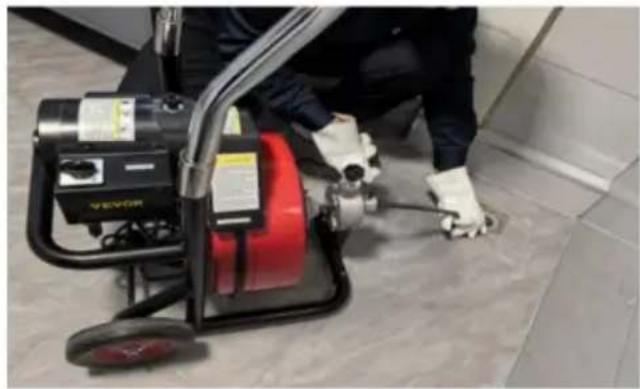
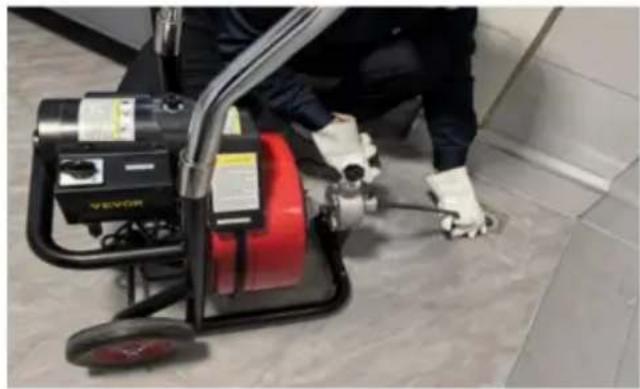
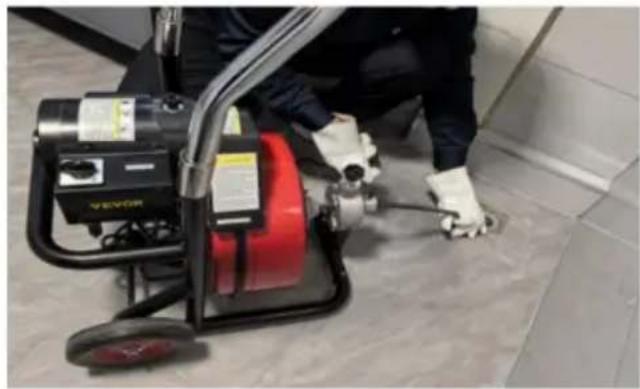
- At least one hand can manipulate the cable, which can feel the movement of the cable. ● The CW / OFF / CCW switch can be controlled. ● See Figure for the correct operating posture example.
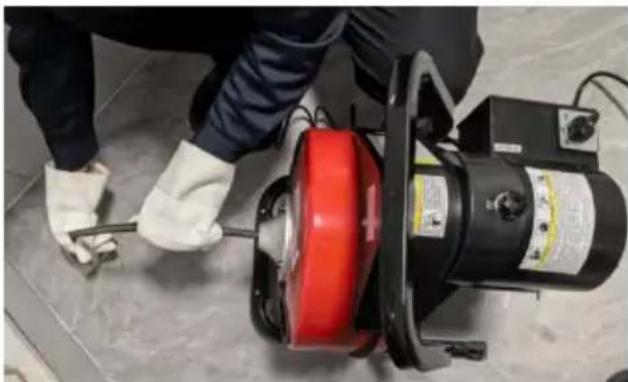
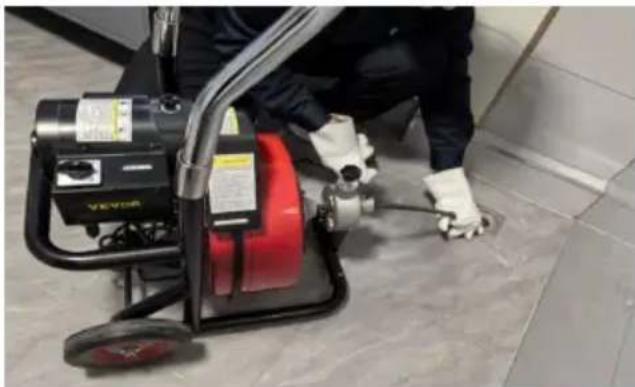
Example of correct operation posture
- Place the switch CW / OFF / CCW at CW gear, and do not press the switch. The CW / OFF / CCW simply indicates the direction of rotation of the cable and the direction of movement. Do not place the switch in CCW gear as it will damage cables unless under certain circumstances.
Manual into the cable
Always use hands wearing specialized leather gloves to pull the steel cable of the drum and feed it into the pipeline. Incorrect operation can cause the steel to knot, twist, and damage the cable, or harm the operator.
Start inserting steel cables into the pipeline.
Confirm that there is a steel cable at least 1 foot long in the pipeline, then foot switch and slowly feed the cable into the pipeline by hand. The machine should be operated by one person, and one person should never step on the switch while another person operates the steel cable. This can cause the steel cable to twist, knot, or break, leading to injury accidents.
It is difficult for steel cables to pass through bends or water traps, and the following techniques can be used:
- The first method: When the steel cable is rotating or not rotating, force it downwards to help clear the head through the elbow.
- The second method: When the steel cable has advanced a long distance, it can be reversed for a few seconds to send the steel cable through the bend.
- The third method is to install a C-9 type steel cable between the steel cage and the dredging head.
- Finally, please use smaller diameter steel cables or more elastic steel cable or other models of dredging machines.
Pipeline dredging
Pull 6-12 inches of wire cables from the drum with a gloved hand and deliver into the pipe, keeping one hand operating the wire. If the speed of the cable changes or it deforms, then the cable has encountered an elbow, bend, or blockage. You should immediately stop, analyze the situation, choose an effective technique, and then continue to dredge the pipeline. This can effectively improve dredging efficiency.
Pay attention to the cable entering the pipe. When the cable enters a larger pipe, there may be a risk of the cable turning and running out of the pipe. When the cable transitions into a smaller pipe with serious blockage, it is easy to cause the cable to wind into knots. When dredging such pipes, closely monitor the cable's movement. Once you notice any abnormality, stop immediately to avoid the cable winding into knots and being scrapped, and to prevent injury to the operator.
Unblock the blockage
If the unblocking head extends into the blockage and cannot rotate, the steel cable will twist and become increasingly severe due to the machine still running. This requires pulling the steel cable back to release the stress on the cable, causing the unblocking head to come out. Never stop the unblocking head from rotating and still operate the machine to twist the steel cable.
If the blockage is cleared, retract the unblocking head and let it rotate inside the blockage to continuously break it apart until the unblocking head can bend and rotate freely.
The blockage has been cleared, and the steel cable and dredging head may be filled with dirt, affecting normal operation. This requires returning the steel cable to clean up these debris (see the section on recycling steel cables).
Handle the dredge head in the blockage.
If the head is stuck in the blockage and cannot exit, for the manual cable shot, immediately release the foot switch, grasp the cable after the machine stops, otherwise the cable will knot, twist and break; for the automatic cable, release the foot switch, place the automatic device handle with the plum screw at the air and hold the wire, otherwise the motor will rotate to release the stress, until stress of the cable is released, and then release the hands. Place the switch OFF / CCW in the OFF position.
Release the dredge head in the blockage
When the dredge head is stuck in the blockage, put the switch CW / OFF in the OFF closing gear, and try to pull the cable out of the blockage by hand out, place the switch CW / OFF / CCW in the CCW gear, hold the cable hands, press the foot switch, and turn for a few seconds to exit the cable. continue to use the CCW gear after leaving the dredge head, which will dan the cable. Position the gear in CW gear and continue working.
Recycled steel cables
Once the pipe is fully dredged, water can be used to wash away the blocka pay attention to the change in the water flow, because it may cause the pip blocked again.
Flush the pipe with the current to recycle the cables. Place the switch knob OFF / CCW in CW gear, and use both hands to recycle the cables into the length of each recovery is approximately 6-12 inches. The water from the flushing pipe can also wash the cables. Continue to recycle the cable, when dredge head is coming out, release the foot switch, make the drum stop turn and then pull the rest of the cable and the dredge head out of the pipe. For the dredge head directly out of the pipe when the machine rotates, so that rotating steel cable and dredging head will hurt the dredge personnel.
Put the switch in the OFF closing gear, unplug, put the rest of the cable in drum, remove the dredge head, and put it away.
In order to extend the life of the steel cable and dredging head, after dredging best to clean the steel cable and dredging head with water, dry with dry clod coated with oil or anti-rust oil, and then put the steel cable back in the drud dredging head, and put the whole machine in a dry and ventilated environment storage.
Automatic retrieval
Grasp the wire rope with gloved hands, and use gloved hands to control and support the wire rope. Incorrect operation can cause the steel cable to knot, and damage the cable, or harm the operator. Use the other hand to operate feed handle of the automatic device. The handle should start in the middle p as shown in the figure. Place the operating handle in this position, and when machine is working, the spring will neither move forward nor backward; When switch is in the CW gear, the automatic cable feeding device 1 needs to tig
Tighten the plum blossom screw on the automatic cable feeding device to the extent that the spring cannot be pulled out. Use your hand to push the operating handle of the automatic cable feeding device to the left to the position where it cannot be pushed, which is the forward gear. Use your hand to push the operating handle to the position where it cannot be pushed, which is the backward gear; Push the operating handle of automatic cable feeding device 2 to the left to the position where it cannot be pushed, which is the reverse gear. Use your hand to push the operating handle to the right to the position where it cannot be pushed, which is the forward gear (as shown in the figure).
Automatic device 3 does not have an operating handle. Tighten the plum blossom screw on the automatic device to the point where the spring cannot be pulled and the machine is in an automatic cable feeding state. By changing the swing gear, the steel cable can automatically move forward and backward. When the switch is placed in the CW gear and the foot switch is pressed, the spring automatically moves forward. If the spring needs to move backward, the switch needs to be placed in the CCW gear; When the switch is placed in the OF position, the machine stops moving; If the plum blossom screw on the automatic cable feeding device 3 is loosened to the point where the steel cable cannot be pulled out, the machine is in manual cable feeding mode.
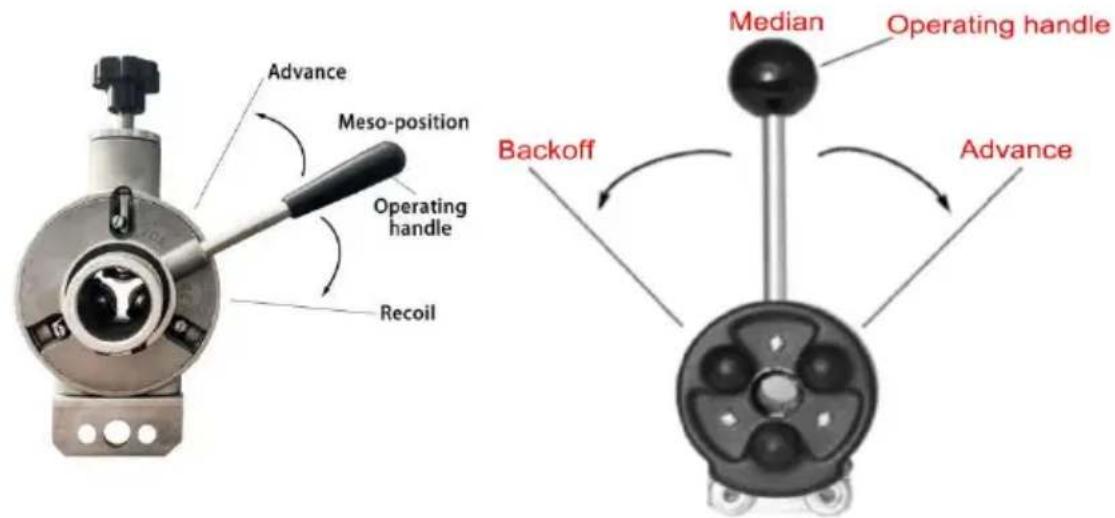
Automatic cable device 1 Automatic cable device 2 Figure-Handle gear (from the front of the machine)
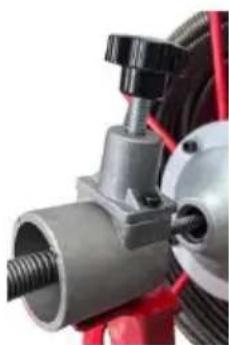
Automatic cable device 3
Start inserting steel cables into the pipeline
Confirm that there is a steel cable at least 1 foot long in the pipeline, then step on the foot switch and pull the handle to the left with your hand, keeping the hand from the center position until it cannot be moved. This way, the steel cable moves forward normally in the pipeline. The machine should be operated by one person, and one person should not step on the switch while the other person operates the steel cable. This can cause the steel cable to twist, knot, or break, leading to injury accidents.
It is difficult for steel cables to pass through bends or water traps, and the following techniques can be used:
- The first method: When the steel cable is rotating or not rotating, forcefully push the steel cable downwards to help clear the head through the elbow.
- The second method: When the steel cable has advanced a long distance, it can be reversed for a few seconds to send the steel cable through the bend.
- The third method is to install a C-9 type steel cable (to be purchased separately) between the steel cable and the dredging head.
- Finally, please use smaller diameter steel cables or more elastic steel cables or other models of dredging machines.
Pipeline dredging
Always keep a hand operating the cables. If the cable speed is slow or deflects, then the cable may encounter the elbow, water bend, or blockage. Do not let the length of the cable outside the pipe become longer and longer, which will cause a kink, distortion, and even fracture.
Pay attention to the length of the cable going into the pipe. When the cable enters the last sewer pipe or is converted into a smaller size pipe, it can easily cause knots. To prevent the cable from running out of the pipe, try to reduce problems caused by the cable passing through different sizes of pipe.
Getting through the blockage
If the dredge head enters the blockage and cannot rotate, because the machine is still running, the cable will distort and become more and more serious. Then you need to pull the backward handle to the backward gear to make the dredge head exit and release the cable. Do not let the dredge head get stuck in the blockage and stop rotating while the machine is still rotating, as this will cause the cable to distort and deform.
If the blockage is broken through, go back to the dredge head and let it rotate to continuously break the blockage until the dredge head can bend and rotate freely.
After going through the blockage, the cable and dredging head may be filled with dirt, affecting normal work. You need to return the cables to clean up the garbage (see the section on recycling cables).
If the cable continues to distort, stop using the feed handle and use manual operation (see the manual cable section) to manually access the cable. For automatic 1, loosen the black plum screw so that the spring can ease the operating handle of either automatic 1 or automatic 2 in the middle.
Handling the dredge head in the blockage
If the head enters the blockage and cannot exit, release the foot switch and place the handle in the middle, holding the cable with your hands. Otherwise, the cable will knot, twist, and break. Then the motor stops turning, and the stress drum of the cable will rotate to release the stress. Until the stress of the cable is released, loosen your hands and put the switch CW / OFF / CCW in the OFF position.
Releasing the dredge head in the blockage
When the dredge head is in the blockage, put CW / OFF / CCW in OFF gear, release the foot switch, and try to pull the cable out of the blockage. If not, put CW / OFF / CCW in CCW gear, put the handle in the middle, hold the cable with your hands, put your foot on the pedal, turn for a few seconds, and exit the cable and dredge head. Do not exit the dredge head and then use the CCW gear, as this will twist the cable. Put the switch gear in OFF, then in CW gear, and continue to work.
Recycling steel cables
Once the pipeline is completely unblocked, water can be used to flush away the blockage, but attention should be paid to changes in water flow, as it may cause the pipeline to become clogged again.
As the water flows through the pipeline, the steel cable can be recycled. The CW/OFF/CCW switch should be set to the CW position, and the steel cable should be recycled in reverse. The automatic device should be placed in manual cable feeding mode, and the steel cable should be recycled with both hands and into the drum. The length of each recycling is about 6-12 inches. The water from the flushing pipeline can also wash the steel cable and continue to receive the steel cable. When the dredging head is about to come out, release the switch to stop the drum from rotating. Do not pull the dredging head directly to the pipeline while the machine is rotating, as this can cause whip injuries. Place the switch in the OFF position, unplug the plug, pull the remaining steel cable out of the pipeline, and place it into the drum. If necessary, replace the dredging head and continue with other work. The pipeline needs to be unblocked several times in a row to be fully unblocked.
Maintenance guidance
Ensure that the machine switch is placed in the off state and the plug is unplugged before machine maintenance and adjustment. Always wear safety glasses and use gloves for maintenance work.
Steel cable
After use, the cables should be washed with clean water to avoid corrosion from various chemicals used to clean the pipe. Periodically apply and maintain with rust protection agent. After the cable is dry and clean, place it back on the drum, and you can wipe off excess rust agent with a cloth.
Do not apply rust protection on rotating cables. The rotating cables will damage your hands, and the rust repellent will spill everywhere.
Cleaning
You can clean the machine with hot soapy water, but do not let water get into the motor or other electrical components. Make sure the machine is completely dry before plugging it in for practical use.
Lubricating
It is necessary to lubricate the bearings when removing and replacing the cable drum.
Complete machine storage environment
When the machine is not in use, always store it in a dry, ventilated, non-corrosive environment.
Belt removal / installation
- Remove the belt protection cover. Do not use the dredging machine without the cover in place.
- With the hexagon wrench in the tool bag, remove the two hexagon screws on the square steel under the motor base, and press the motor vigorously. At that point, the belt on the drum becomes loose and can be removed by hand.
- Follow the opposite step and install a new belt.
Replace the spring
Replace the damaged or worn springs
Remove the spring from the drum
- Pull the remaining cables out of the drum.
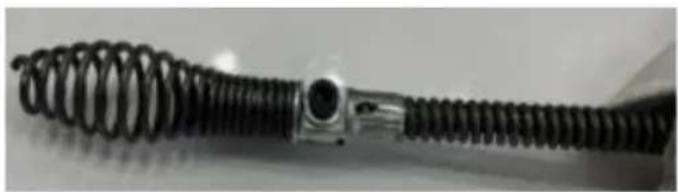
- The machine has a closed drum: there is a 70cm long short spring in the drum. The main cable needs to loosen the screw connecting the long spring; the machine has an open drum: the screw fixes the end of the spring on the wall of the drum.
- Remove all the springs (except the short springs) from the drum.
Install the new spring
- In order to make the spring installation easy, completely untie the new spring coil. Be careful to remove the packaging of the spring. The spring is elastic and can hurt the operator.
- The drum is closed: connect the long spring directly to the short spring in the drum; the drum is open: pierce the spring through the hole of the hat-shaped component.
- Push the spring into the drum by hand (always with gloves fitted with the machine).
The spring should be coiled in a counterclockwise direction.
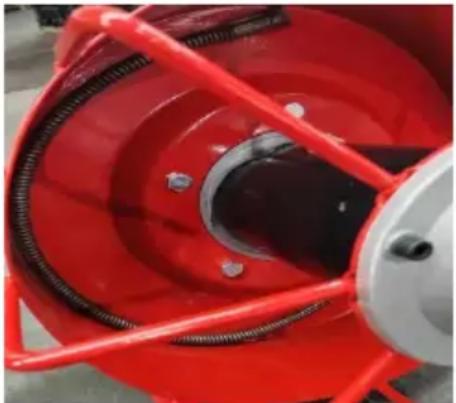
The spring in the drum is coiled direction
- The machine is the screw fixing the end of the spring with the open drum.
- Put the remaining springs in the drum.
Appendix
Only the following accessories can be used together with the dredging machine, and accessories used for other machines cannot be used on the dredging machine. To prevent various accidents, please use the recommended attachments listed below.
| Number | Description | |
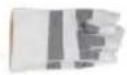 | 1 | Leather glovesPVC gloves |
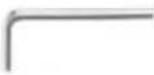 | 1 | External hexagonal wrench |
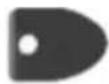 | 2 | Shovel dredge head |
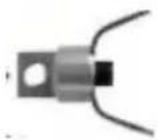 | 2 | Type C dredge head |
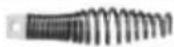 | 2 | Olive dredge head |
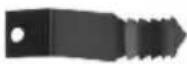 | 4 | Sawed-off head |
 | 2 | Dredge * 1 |
Machine storage requirements

Motor-driven electrical equipment and springs shall be stored in a dry, ventilated, non-corrosive gas room and protected from rain.
The machine should be locked up to avoid untrained people or children. This can cause serious harm to untrained people.
Maintenance and service
WARNING
If there are any repair service problems, even if not listed above, please immediately send the tools to the company's authorized repair center or return the factory.
When repairing the machine, use the specified parts. Using unconfirmed parts can cause damage to the machine or other serious injury accidents.
For any questions about tool use and functionality, please call the company Technical Services department or visit the www.vevor.com/support website to get the most recent authorized service center information.
Fault diagnosis
| Question | Cause | Solution |
| Spring knotted or broken | The spring is exerting too much force. | Do not use force to operate the spring, let the dredging head work normally. |
| The spring does not match the size of the pipeline. | 1/2 "is suitable for pipes ranging from 3" to 4 ". | |
| Motor reversal. | Only use the reverse function when the unblocking head is trappe in a blockage. | |
| The spring is corroded by acidic substances. | Regularly clean and lubricate the steel cables. | |
| The spring is severely worried. | Replace with a new spring | |
| The spring is not properly supported. | Properly support the spring refer to the instructions in the operating manual. | |
| Press the foot switch, the drum v not rotate. When pressed again, restart. | The pedal or hose is fault | Replace faulty components |
| The micro control switch is faulty. | Replace the micro control switch. | |
| The drum can only rotate in one direction. | The reverse switch is fault | Replace switch |
| When the power is plugged in or the foot switch is pressed, the grounding protection is disconnected. | The power cord is damage | Replace with new wires. |
| Motor short circuit. | Send the motor to the designated location for repair. | |
| There is a problem with t disconnection function of th grounding protection circuit. | Replace with new wires disconnect the grounding protection circuit device. | |
| The motor is damp, the switch box or plug is brok | Go to the designated rep center for repairs. |
FCC Information:

CAUTION: Changes or modifications not expressly approved by the party responsible for compliance could void the user's authority to operate the equipment!
This device complies with Part 15 of the FCC Rules. Operation is subject to the following two conditions:
1) This product may cause harmful interference. 2) This product must accept any interference received, including interference that may cause undesired operation.
WARNING: Changes or modifications to this product not expressly approved by the party responsible for compliance could void the user's authority to operate the product.
Note: This product has been tested and found to comply with the limits for a Class B digital device pursuant to Part 15 of the FCC Rules. These limits are designed to provide reasonable protection against harmful interference in a residential installation.
This product generates, uses, and can radiate radio frequency energy, and if not installed and used in accordance with the instructions, may cause harmful interference to radio communications. However, there is no guarantee that interference will not occur in a particular installation. If this product does cause harmful interference to radio or television reception, which can be determined by turning the product off and on, the user is encouraged to try to correct the interference by one or more of the following measures.
- Reorient or relocate the receiving antenna.
- Increase the distance between the product and receiver.
- Connect the product to an outlet on a circuit different from that to which the receiver is connected.
- Consult the dealer or an experienced radio/TV technician for assistance.
Correct Disposal
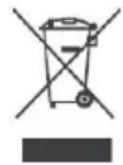
This product is subject to the provisions of European Directive 2012/19/EU. The symbol showing a wheelie bin crossed through indicates that the product requires separate refuse collection in the European Union. This applies to the product and all accessories marked with this symbol. Products marked as such may not be discarded with normal domestic waste, but must be taken to a collection point for recycling electrical and electronic devices.
Manufacturer: Shanghai Muxin Muye Youxiangongsi
Address: Shuangchenglu 803nong11hao1602A-1609shi, Baoshanqu, Shanghai 200000 CN.
Imported to AUS: SIHAO PTY LTD. 1 ROKEVA STREET EASTWOOD NSW 2 Australia
Imported to USA: Sanven Technology Ltd. Suite 250, 9166 Anaheim Place, Rancho Cucamonga, CA 91730
| UK | REP |
YH CONSULTING LIMITED.
C/O YH Consulting Limited Office 147,
Centurion House, London Road,
Staines-upon-Thames, Surrey, TW18 4AX
| EC | REP |
E-CrossStu GmbH
Mainzer Landstr.69, 60329 Frankfurt am Main
VEVOR®
TOUGH TOOLS, HALF PRICE
Technical Support and E-Warranty Certificate
www.vevor.com/support
VEVOR®
TOUGH TOOLS, HALF PRICE
NEED HELP? CONTACT US!
| CAUTION 1. please wear supplied with leather gloves, banning take cloth or cotton class gloves to hold dredge wire, so has been opening up wire involved in danger, so as to cause harm. 2. don't take the belt safety cover shell when operating machine, fingers may be belt and pulley involved in and the risk of injury. 3. machine design for the single operation, the operator can one person to control foot switch and wire rope. Once the dredge head stop rotating, will stop machine, so as to prevent the distortion of the wire rope, knot, and even broken, etc., avoid injury accidents. 4. try not to reverse operation machine, unless in the manual mention in | CAUTION particular cases. Inversion is easy to damage the wire rope, usually used in stemming from the dredge head out. 5. do not touch it with hands operation of the cable drum and wire rope. Unless pull off the plug, machine stop, hand to into the drum. Otherwise, the hand will be hurt by the rotating parts of. 6. the right dress. Don't wear loose clothes anddo not wear any jewelry, in order to prevent was involved in the rotating parts. 7. operation and use of dredging unit, please use the appropriate personal safety protection equipment. The sewer usually contains a lot of harmful | CAUTION substances. harmful is the person body. The right of personal mouth protection equipment including tarsal provide gloves, and other any other equipment, such as safety gloves mask, rubber gloves, pressure blanket, steel head boots or car. 8. don't in the water operation machine of the machine in the water use, for all increase the risk of electric shock. 9. in accordance with the requirements of the standard operation to test any machine of the match of capacity pipeline. Any other charge machine USES will increase various diagnoses accident. |
C/O YH Consulting Limited Office 147,
Staines-upon-Thames, Surrey, TW18 4AX
E-CrossStu GmbH
| CAUTION 1. please wear supplied with leather gloves, banning take cloth or cotton class gloves to hold dredge wire, so has been opening up wire involved in danger, so as to cause harm. 2. don't take the belt safety cover shell when operating machine, fingers may be belt and pulley involved in and the risk of injury. 3. machine design for the single operation, the operator can one person to control foot switch and wire rope. Once the dredge head stop rotating, will stop machine, so as to prevent the distortion of the wire rope, knot, and even broken, etc., avoid injury accidents. 4. try not to reverse operation machine, unless in the manual mention in | CAUTION particular cases. Inversion is easy to damage the wire rope, usually used in stemming from the dredge head out. 5. do not touch it with hands operation of the cable drum and wire rope. Unless pull off the plug, machine stop, hand to into the drum. Otherwise, the hand will be hurt by the rotating parts of. 6. the right dress. Don't wear loose clothes anddo not wear any jewelry, in order to prevent was involved in the rotating parts. 7. operation and use of dredging unit, please use the appropriate personal safety protection equipment. The sewer usually contains a lot of harmful | CAUTION substances. harmful is the person body. The right of personal mouth protection equipment including tarsal provide gloves, and other any other equipment, such as safety gloves mask, rubber gloves, pressure blanket, steel head boots or car. 8. don't in the water operation machine of the machine in the water use, for all increase the risk of electric shock. 9. in accordance with the requirements of the standard operation to test any machine of the match of capacity pipeline. Any other charge machine USES will increase various diagnoses accident. |
C/O YH Consulting Limited Office 147,
Centurion House, London Road,
Staines-upon-Thames, Surrey, TW18 4AX
www.vevor.com/support
VEVOR®
TOUGH TOOLS, HALF PRICE
| CAUTION 1. please wear supplied with leather gloves, banning take cloth or cotton class gloves to hold dredge wire, so has been opening up wire involved in danger, so as to cause harm. 2. don't take the belt safety cover shell when operating machine, fingers may be belt and pulley involved in and the risk of injury. 3. machine design for the single operation, the operator can one person to control foot switch and wire rope. Once the dredge head stop rotating, will stop machine, so as to prevent the distortion of the wire rope, knot, and even broken, etc., avoid injury accidents. 4. try not to reverse operation machine, unless in the manual mention in | CAUTION particular cases. Inversion is easy to damage the wire rope, usually used in stemming from the dredge head out. 5. do not touch it with hands operation of the cable drum and wire rope. Unless pull off the plug, machine stop, hand to into the drum. Otherwise, the hand will be hurt by the rotating parts of. 6. the right dress. Don't wear loose clothes anddo not wear any jewelry, in order to prevent was involved in the rotating parts. 7. operation and use of dredging unit, please use the appropriate personal safety protection equipment. The sewer usually contains a lot of harmful | CAUTION substances. harmful is the person body. The right of personal mouth protection equipment including tarsal provide gloves, and other any other equipment, such as safety gloves mask, rubber gloves, pressure blanket, steel head boots or car. 8. don't in the water operation machine of the machine in the water use, for all increase the risk of electric shock. 9. in accordance with the requirements of the standard operation to test any machine of the match of capacity pipeline. Any other charge machine USES will increase various diagnoses accident. |
Imported in AUS: SIHAO PTY LTD. 1 ROKEVA STREET EASTWOOD NSW 2122
Australia
Imported in USA: Sanven Technology Ltd. Suite 250, 9166 Anaheim Place, Rancho Cucamonga, CA 91730
YH CONSULTING LIMITED.
C/O YH Consulting Limited Office 147,
Centurion House, London Road,
Staines-upon-Thames, Surrey, TW18 4AX
electronics www.vevor.com/support
VEVOR®
TOUGH TOOLS, HALF PRICE
| CAUTION 1. please wear supplied with leather gloves, banning take cloth or cotton class gloves to hold dredge wire, so has been opening up wire involved in danger, so as to cause harm. 2. don't take the belt safety cover shell when operating machine, fingers may be belt and pulley involved in and the risk of injury. 3. machine design for the single operation, the operator can one person to control foot switch and wire rope. Once the dredge head stop rotating, will stop machine, so as to prevent the distortion of the wire rope, knot, and even broken, etc., avoid injury accidents. 4. try not to reverse operation machine, unless in the manual mention in | CAUTION particular cases. Inversion is easy to damage the wire rope, usually used in stemming from the dredge head out. 5. do not touch it with hands operation of the cable drum and wire rope. Unless pull off the plug, machine stop, hand to into the drum. Otherwise, the hand will be hurt by the rotating parts of. 6. the right dress. Don't wear loose clothes anddo not wear any jewelry, in order to prevent was involved in the rotating parts. 7. operation and use of dredging unit, please use the appropriate personal safety protection equipment. The sewer usually contains a lot of harmful | CAUTION substances. harmful is the person body. The right of personal mouth protection equipment including tarsal provide gloves, and other any other equipment, such as safety gloves mask, rubber gloves, pressure blanket, steel head boots or car. 8. don't in the water operation machine of the machine in the water use, for all increase the risk of electric shock. 9. in accordance with the requirements of the standard operation to test any machine of the match of capacity pipeline. Any other charge machine USES will increase various diagnoses accident. |
External hex key
Centurion House, London Road,
Staines-upon-Thames, Surrey, TW18 4AX
E-CrossStu GmbH
NEED HELP? CONTACT US!
| CAUTION 1. please wear supplied with leather gloves, banning take cloth or cotton class gloves to hold dredge wire, so has been opening up wire involved in danger, so as to cause harm. 2. don't take the belt safety cover shell when operating machine, fingers may be belt and pulley involved in and the risk of injury. 3. machine design for the single operation, the operator can one person to control foot switch and wire rope. Once the dredge head stop rotating, will stop machine, so as to prevent the distortion of the wire rope, knot, and even broken, etc., avoid injury accidents. 4. try not to reverse operation machine, unless in the manual mention in | CAUTION particular cases. Inversion is easy to damage the wire rope, usually used in stemming from the dredge head out. 5. do not touch it with hands operation of the cable drum and wire rope. Unless pull off the plug, machine stop, hand to into the drum. Otherwise, the hand will be hurt by the rotating parts of. 6. the right dress. Don't wear loose clothes anddo not wear any jewelry, in order to prevent was involved in the rotating parts. 7. operation and use of dredging unit, please use the appropriate personal safety protection equipment. The sewer usually contains a lot of harmful | CAUTION substances. harmful is the person body. The right of personal mouth protection equipment including tarsal provide gloves, and other any other equipment, such as safety gloves mask, rubber gloves, pressure blanket, steel head boots or car. 8. don't in the water operation machine of the machine in the water use, for all increase the risk of electric shock. 9. in accordance with the requirements of the standard operation to test any machine of the match of capacity pipeline. Any other charge machine USES will increase various diagnoses accident. |
C/O YH Consulting Limited Office 147,
Centurion House, London Road,
Staines-upon-Thames, Surrey, TW18 4AX
| Przedstawiciel UE |
E-CrossStu GmbH
Mainzer Landstr.69, 60329 Frankfurt am Main.
VEVOR®
TOUGH TOOLS, HALF PRICE
NEED HELP? CONTACT US!
| CAUTION 1. please wear supplied with leather gloves, banning take cloth or cotton class gloves to hold dredge wire, so has been opening up wire involved in danger, so as to cause harm. 2. don't take the belt safety cover shell when operating machine, fingers may be belt and pulley involved in and the risk of injury. 3. machine design for the single operation, the operator can one person to control foot switch and wire rope. Once the dredge head stop rotating, will stop machine, so as to prevent the distortion of the wire rope, knot, and even broken, etc., avoid injury accidents. 4. try not to reverse operation machine, unless in the manual mention in | CAUTION particular cases. Inversion is easy to damage the wire rope, usually used in stemming from the dredge head out. 5. do not touch it with hands operation of the cable drum and wire rope. Unless pull off the plug, machine stop, hand to into the drum. Otherwise, the hand will be hurt by the rotating parts of. 6. the right dress. Don't wear loose clothes anddo not wear any jewelry, in order to prevent was involved in the rotating parts. 7. operation and use of dredging unit, please use the appropriate personal safety protection equipment. The sewer usually contains a lot of harmful | CAUTION substances. harmful is the person body. The right of personal mouth protection equipment including tarsal provide gloves, and other any other equipment, such as safety gloves mask, rubber gloves, pressure blanket, steel head boots or car. 8. don't in the water operation machine of the machine in the water use, for all increase the risk of electric shock. 9. in accordance with the requirements of the standard operation to test any machine of the match of capacity pipeline. Any other charge machine USES will increase various diagnoses accident. |
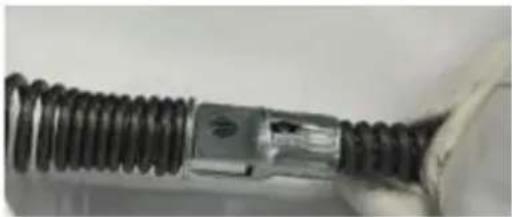
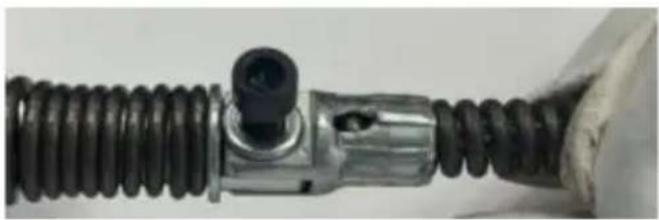
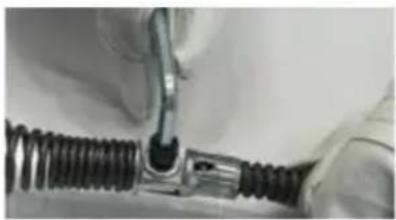
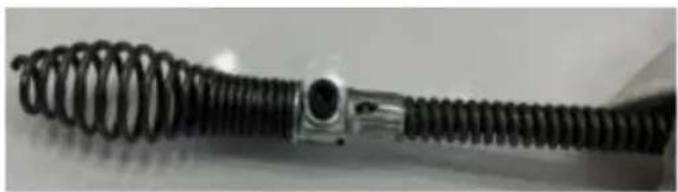
Automatic cable machine 3
C/O YH Consulting Limited Office 147,
Centurion House, London Road,
Staines-upon-Thames, Surrey, TW18 4AX
E-CrossStu GmbH
Mainzer Landstr.69, 60329 Frankfurt am Main.
VEVOR®
TOUGH TOOLS, HALF PRICE
warranty certificate www.vevor.com/support
VEVOR®
TOUGH TOOLS, HALF PRICE
NEED HELP? CONTACT US!
| CAUTION 1. please wear supplied with leather gloves, banning take cloth or cotton class gloves to hold dredge wire, so has been opening up wire involved in danger, so as to cause harm. 2. don't take the belt safety cover shell when operating machine, fingers may be belt and pulley involved in and the risk of injury. 3. machine design for the single operation, the operator can one person to control foot switch and wire rope. Once the dredge head stop rotating, will stop machine, so as to prevent the distortion of the wire rope, knot, and even broken, etc., avoid injury accidents. 4. try not to reverse operation machine, unless in the manual mention in | CAUTION particular cases. Inversion is easy to damage the wire rope, usually used in stemming from the dredge head out. 5. do not touch it with hands operation of the cable drum and wire rope. Unless pull off the plug, machine stop, hand to into the drum. Otherwise, the hand will be hurt by the rotating parts of. 6. the right dress. Don't wear loose clothes anddo not wear any jewelry, in order to prevent was involved in the rotating parts. 7. operation and use of dredging unit, please use the appropriate personal safety protection equipment. The sewer usually contains a lot of harmful | CAUTION substances. harmful is the person body. The right of personal mouth protection equipment including tarsal provide gloves, and other any other equipment, such as safety gloves mask, rubber gloves, pressure blanket, steel head boots or car. 8. don't in the water operation machine of the machine in the water use, for all increase the risk of electric shock. 9. in accordance with the requirements of the standard operation to test any machine of the match of capacity pipeline. Any other charge machine USES will increase various diagnoses accident. |
Automatic cable unit 3
C/O YH Consulting Limited Office 147,
Centurion House, London Road,
Staines-upon-Thames, Surrey, TW18 4AX
| EC | REP |
E-CrossStu GmbH
Mainzer Landstr. 69, 60329 Frankfurt am Main.
VEVOR®
TOUGH TOOLS, HALF PRICE
www.vevor.com/support
- DRAIN CLEANER
- VEVOR®
- NEED HELP? CONTACT US
- INSTRUCTIONS
- PREFACE
- IMPORTANT REMINDER
- DISPLAY OF DRAINAGE CLEANER MODELS
- SAFETY SIGNS
- SAFETY INSTRUCTION
- WORKPLACE SAFETY PRECAUTIONS
- ELECTRICAL SAFETY
- PERSONAL SAFETY PRECAUTIONS
- USE AND MAINTENANCE OF THE TOOLS
- SERVICE
- OTHER SAFETY PRECAUTIONS WARNING
- SAFE USE OF THE DREDGE MACHINE
- PRODUCT OVERVIEW, TECHNICAL PARAMETERS, AND STANDARD CONFIGURATION
- PRODUCT OVERVIEW
- TECHNICAL PARAMETERS: DRUM DREDGING MACHINE
- STANDARD CONFIGURATION
- MACHINE ASSEMBLY AND SPECIAL TIPS
- MACHINE INSPECTION
- OPERATION STEPS
- MANUAL INTO THE CABLE
- START INSERTING STEEL CABLES INTO THE PIPELINE
- PIPELINE DREDGING
- UNBLOCK THE BLOCKAGE
- HANDLE THE DREDGE HEAD IN THE BLOCKAGE
- RELEASE THE DREDGE HEAD IN THE BLOCKAGE
- RECYCLED STEEL CABLES
- AUTOMATIC RETRIEVAL
- AUTOMATIC CABLE DEVICE
- GETTING THROUGH THE BLOCKAGE
- HANDLING THE DREDGE HEAD IN THE BLOCKAGE
- RELEASING THE DREDGE HEAD IN THE BLOCKAGE
- RECYCLING STEEL CABLES
- MAINTENANCE GUIDANCE
- STEEL CABLE
- CLEANING
- LUBRICATING
- COMPLETE MACHINE STORAGE ENVIRONMENT
- BELT REMOVAL / INSTALLATION
- REPLACE THE SPRING
- REPLACE THE DAMAGED OR WORN SPRINGS
- INSTALL THE NEW SPRING
- APPENDIX
- MACHINE STORAGE REQUIREMENTS
- MAINTENANCE AND SERVICE
- WARNING
- FAULT DIAGNOSIS
- FCC INFORMATION
- CORRECT DISPOSAL
- TOUGH TOOLS, HALF PRICE
- AUTOMATIC CABLE MACHINE
- AUTOMATIC CABLE UNIT
Brand : Vevor
Model : D1000
Category : Drain cleaner