PDNB 6.3 B2 - Pneumatic tool PARKSIDE - Free user manual and instructions
Find the device manual for free PDNB 6.3 B2 PARKSIDE in PDF.


| Product type | Pneumatic nibbler |
| Brand | Parkside |
| Model | PDNB 6.3 B2 |
| Maximum working pressure | 6.3 bar |
| Air consumption | 400 l/min |
| Max. cutting thickness (sheet steel) | 1.2 mm |
| Max. cutting thickness (aluminum) | 1.6 mm |
| Cutting width | 5.5 mm |
| Max. no-load speed | 2600 min⁻¹ |
| Compressed air connection | 1/4" |
| Weight | 0.8 kg |
| Sound pressure level | 99.1 dB(A) |
| Sound power level | 113.1 dB(A) |
| Vibration emission value | 14.56 m/s² |
| Recommended lubrication | Special compressed air oil (e.g., Liqui Moly) |
| Intended use | Cutting of sheet steel, aluminum and similar materials |
| Included accessories | Nibbler, male connector, instruction manual |
| Required safety protection | Eye protection, hearing protection, gloves, dust mask |
| Maintenance | Cleaning with soft cloth or compressed air; regular lubrication |
| Warranty | 3 years |
| Recycling | Do not dispose with household waste; take to a collection point |
| Max. cutting power | 1.2 mm (sheet steel) / 1.6 mm (aluminum) |
Frequently Asked Questions - PDNB 6.3 B2 PARKSIDE
User questions about PDNB 6.3 B2 PARKSIDE
0 question about this device. Answer the ones you know or ask your own.
Ask a new question about this device
Download the instructions for your Pneumatic tool in PDF format for free! Find your manual PDNB 6.3 B2 - PARKSIDE and take your electronic device back in hand. On this page are published all the documents necessary for the use of your device. PDNB 6.3 B2 by PARKSIDE.
USER MANUAL PDNB 6.3 B2 PARKSIDE
natural_image
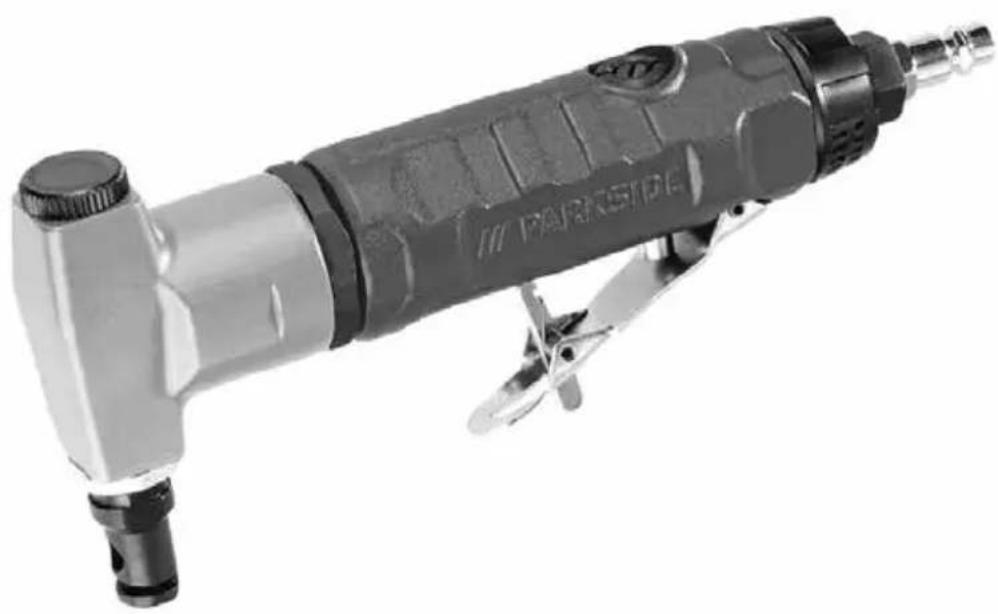
Close-up of a black industrial air purifier tool with visible branding and mounting bracket (no text or symbols on the device itself)DRUCKLUFT-BLECHKNABBER / AIR NIBBLER GRIGNOTEUSE PNEUMATIQUE PDNB 6.3 B2
DE AT CH
DRUCKLUFT-BLECHKNABBER
Translation of the original instructions
NL BE
PERSLUCHT-PLAATKNABBELAAR
Before reading, unfold the page containing the illustrations and familiarise yourself with all functions of the device.
FR BE
GB/IE Translation of the original instructions Page 11
KOMPERNASS HANDELS GMBH
BURGSTRASSE 21
44867 BOCHUM
DEUTSCHLAND
www.kompernass.com
Technical specifications 12
General safety instructions....13
Hazards caused by flying parts 13
Hazards during operation 13
Hazards caused by repetitive movements....14
Hazards caused by accessories 14
Hazards in the workplace 14
Hazards caused by dust and vapours 15
Risks due to noise 15
Hazards caused by vibrations 15
Additional safety instructions for pneumatic machines 16
Residual risk 16
Before use....16
Lubrication 16
Connecting to a compressed air source 17
Use....17
Operation 17
Maintenance and cleaning 18
Disposal....18
Kompernass Handels GmbH warranty 19
Service 20
Importer 20
Translation of the original Conformity Declaration 20
AIR NIBBLER PDNB 6.3 B2
Introduction
Congratulations on the purchase of your new tool. You have chosen a high-quality product. The operating instructions are part of this product. They contain important information about safety, usage and disposal. Before using the product, please familiarise yourself with all operating and safety instructions. Use the product only as described and for the range of applications specified. Please also pass these operating instructions on to any future owner.
Intended use
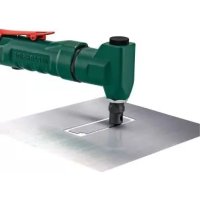
The pneumatic sheet metal nibbler, hereinafter referred to as the tool, is intended for cutting sheet metal, aluminium and similar materials in the specified thickness.
Any other usage or modification of the tool is deemed to be improper and carries a significant risk of accidents. The manufacturer accepts no responsibility for damage(s) resulting from improper usage. This tool is intended for domestic use only.
Symbols on the tool:
 | Read the operating instructions before use. |
 | Wear a dust mask. |
 | Always wear eye protection when using or maintaining the tool. |
 | Always wear ear muffs. |
 | Always wear protective gloves. |
 | Oil regularly. |
Features
(See fold-out page for illustrations)
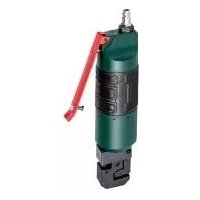
① Connector nipple (pre-fitted)
② Safety lock-out
③ Trigger
4 Punch
5 Die
Package contents
1 air nibbler
1 connector nipple (pre-fitted)
1 set of operating instructions
Technical specifications
Working pressure max. 6.3 bar Air consumption approx. 400 l/min Cutting performance/material thickness max. sheet 1.2 mm aluminium 1.6 mm
Cutting width 5.5 mm
Speed max. 2600 rpm
Compressed air supply 1/4"
Weight (without
accessories) approx. 0.8 kg
Noise emission value
Noise measurement determined in accordance with ISO 15744 The rated noise level of the tool is typically:
Sound pressure level: L_pA = 99.1 dB (A)
Uncertainty: K_pA = 3 dB
Sound power level: L_WA = 113.1 dB (A)
Uncertainty: K_WA = 3 dB
Wear ear muffs!
Total vibration value
Vibration values determined in accordance with ISO 28927-7 and EN 12096:
Vibration emission value a_h = 14.56 m/s^2
Uncertainty K_h = 1.91 m/s^2
NOTE
The noise emission levels and vibration values specified in these instructions have been measured in accordance with the corresponding standardised measuring procedure and can be used to make equipment comparisons. The noise emission levels and vibration values vary depending on the use of the compressed air tool and may be higher than the values specified in these instructions in some cases. It is easy to underestimate the noise emission levels and vibration values if the compressed air tool is used regularly in this manner.
General safety instructions

WARNING!
For multiple hazards: Make sure that you have read and understood the safety instructions before adjusting, operating, repairing, maintaining or replacing any accessories on the nibbler or shears and before working in the vicinity of the machine. Failure to do this can result in serious bodily injury.
■ The nibbler or shears should only be set up, adjusted and used by suitably qualified and trained operators.
■ The nibbler or shears must not be modified. Modifications can reduce the effectiveness of the safety measures and increase the risks for the operator.
- Do not lose the safety instructions – hand them to the operator.
■ Never use damaged nibblers or shears.
■ Machinery must be inspected regularly to ensure that it is marked with the clearly legible design values and markings required by this part of ISO 11148. The employer/user must contact the manufacturer to obtain replacement signs if necessary.
Hazards caused by flying parts
■ Disconnect the nibbler or shears from the power supply before replacing the machine tool or accessories.
If a workpiece or accessory or even part of the machine tool itself breaks, parts can be flung off at high speeds.
■ Always wear impact-resistant eye protection when operating the machine. The degree of necessary protection must be evaluated separately for each individual task.
■ You must ensure that the workpiece has been securely fixed in place.
■ Ensure that sparks and metal offcuts are directed so that they do not cause any hazards.
Hazards during operation
■ When using the nibbler and shears, the operator's hands may be exposed to hazards such as knocks, cuts, abrasions and heat.
- Avoid touching the cutting edge when the nibbler or shears are connected to the power source.
- Cutting with nibblers and shears produces sharp edges.
■ Wear protective equipment such as gloves, aprons and safety helmets.
■ The operator and maintenance personnel must be physically capable of handling the size, mass and power of the machine.
- Hold the machine correctly: Be ready to counteract any normal or sudden movements – keep both hands ready.
■ Ensure that your body is balanced and that you have a secure standing position.
■ Release the start/stop control in case of a disruption to the power supply.
■ Use only the lubricants recommended by the manufacturer.
- Avoid direct contact with the machine tool during and after use as it will have heated up.
■ Always use sharp tools.
- Avoid inappropriate postures as they can make it impossible to respond to normal or unexpected movements of the nibbler or shears.
■ Unexpected movement of the machine or breakage of the blades can cause injury.
■ Warning: there is a risk of explosion or fire due to the material being worked.
Hazards caused by repetitive movements
When using a nibbler or shears to perform work-related activities, operators may experience uncomfortable sensations in their hands and arms, as well as in the neck and shoulders or other parts of the body.
When using nibblers or shears, the operator should adopt a comfortable posture whilst ensuring a secure hold and avoiding awkward postures or positions in which it is difficult to maintain balance. The operator should change positions during the course of long-lasting tasks. This can be helpful in the prevention of discomfort and fatigue.
If the operator notices symptoms such as persistent or recurring illness, discomfort, throbbing, pain, tingling, burning or stiffness, these indications should not be ignored. The operator must inform his/her employer and seek the advice of a suitably qualified medical practitioner.
Hazards caused by accessories
■ Disconnect the nibbler or shears from the power supply before replacing the machine tool or accessories.
■ Use only accessories and supplies of the sizes and types recommended by the manufacturer of the nibbler or the shears; do not use any other types or sizes of accessories or consumable materials.
- Cutting edges can heat up during use; they must not be touched.
- Do not use accessories or machine tools that have cracks or deformations.
Hazards in the workplace
■ Slipping, tripping and falling are the main causes of injuries in the workplace. Look out for surfaces which could have become slippery through use of the machine and for any tripping hazards caused by air or hydraulic hoses.
■ Proceed with caution in unknown surroundings. There may be hidden hazards due to power or other supply lines.
■ The nibbler or shears are not intended for use in explosive atmospheres and are not insulated against contact with electrical power sources.
- Do not operate the machine in the vicinity of electric mains, gas pipelines, etc. which could pose a hazard if damaged by the machine.
Hazards caused by dust and vapours
The dust and vapours produced by using nibblers and shears can be hazardous to health (e.g. cause cancer, birth defects, asthma and/or dermatitis). It is essential to carry out a risk assessment in respect of these risks and to implement corresponding regulatory mechanisms.
The risk assessment should include all dust caused by the use of the machine and the existing dust that may be kicked up at the same time.
The nibbler or shears should be operated and maintained in accordance with the recommendations contained in this manual to keep the release of dust and vapours to a minimum.
■ The exhaust air should be routed so that the raising of dust in already dusty environments is kept to a minimum.
If dusts or vapours are created, the main priority must be to control these at the site of their release.
All inserts or accessories of the machine intended for collecting, extracting or suppressing airborne dust or vapours or should be used and serviced in accordance with the manufacturer's instructions.
■ Consumables/machine tools should be selected, maintained and replaced in accordance with the recommendations in this guide in order to avoid unnecessary intensification of dust or vapour production.
■ Use breathing equipment as per the instructions provided by your employer or as required by health and safety regulations.
Risks due to noise
Excessive noise levels in conjunction with insufficient hearing protection may lead to permanent hearing damage, hearing loss and other problems, such as tinnitus (ringing, buzzing, whistling or humming in your ears). It is essential that a risk assessment is carried out with respect to these risks and that appropriate regulatory mechanisms are implemented.
■ Suitable regulatory mechanisms include measures such as the use of insulation materials to avoid ringing noise occurring on the workpieces.
■ Use ear protection equipment as per the instructions provided by your employer or as required by health and safety regulations.
The nibbler or shears should be operated and maintained in accordance with the recommendations contained in these instructions in order to avoid any unnecessary increase of the noise level.
If the machine is equipped with a silencer, always ensure that it is fitted and is operational while the machine is in operation.
Consumables/machine tools should be selected, maintained and replaced in accordance with the recommendations in this guide in order to avoid unnecessary increase of the noise levels.
Hazards caused by vibrations
■ Vibrations can damage the nerves and cause malfunctions to the blood circulation in the hands and arms.
■ When working in a cold environment, wear warm clothing and keep your hands warm and dry.
If you experience numbness, tingling or pain in your fingers or hands or the skin on your fingers or hands turns white, stop working with the nibbler and consult a doctor. You should also consult an appropriately qualified doctor.
The nibbler or shears should be operated and maintained in accordance with the recommendations contained in this manual to reduce any unnecessary increase of the vibrations.
- Hold the machine securely but not too firmly while maintaining the necessary hand-reaction force, as the vibration risk generally increases the harder the machine is held.
Additional safety instructions for pneumatic machines
■ Compressed air can cause serious injuries.
- When the machine is not in use, the air supply must always be shut off and the air hose depressurised.
The machine must be disconnected from the compressed air supply before replacing accessories or when carrying out repair work.
- Never aim the airflow at yourself or anyone else.
■ Thrashing hoses can cause serious injury. You should therefore always check whether the hoses and their fixings are undamaged and have not come loose.
■ Cold air must be directed away from the hands.
If universal rotary joints (claw couplings) are used, locking pins must be inserted and Whip-check hose restraints must be used to provide protection in the event of failure of the connection between the hose and the machine or between one hose and another.
■ Ensure that the maximum permissible pressure on the machine is not exceeded.
■ Never carry pneumatic machines by the hose.
Residual risk
Even if you operate this tool properly, there will still be residual risks. The following risks can occur in relation to the tool's design and structure:
■ Risk of tripping due to compressed air hoses lying around.
■ Danger caused by thrashing compressed air hoses.
Before use
NOTE
The tool may be operated only with cleaned, atomised-oil air and must not exceed the maximum working pressure of 6.3 bar on the tool. The compressor must be fitted with a pressure reducer to regulate the working pressure.
▶ Note that the maximum working pressure may not be exceeded. An excessive working pressure does not mean increased output; it merely increases the air consumption and accelerates tool wear. Always comply with the technical information.
Lubrication
WARNING!
▶ The safety data sheet provided by the respective manufacturer will contain information about any health hazards posed by the oil you are using.
- Avoid eye and skin contact with lubricants.
NOTE
▶ Regular lubrication is particularly important to prevent friction and corrosion damage. We recommend using a suitable special oil for compressed air tools (e.g. Liqui Moly compressor oil).
- Lubrication with mist oiler
A mist oiler (not supplied) continuously and optimally lubricates the tool as a preparation stage after the pressure reducer. A mist oiler gives off fine drops of oil into the air flow and thus guarantees regular lubrication.
The following options are available
◆ Attach a maintenance unit with an oiler to the compressor.
- Add 3–5 drops of pneumatic oil into the connector nipple ① every 15 minutes of operation.
Connecting to a compressed air source
NOTE
Before connecting the compressed air source, - the correct working pressure (6.3 bar) must be fully reached, and - make sure that the trigger ③ is not actuated.
- Use only connection hoses with an internal diameter of at least 9 mm. - Use only filtered, lubricated and regulated compressed air.
Connect the tool to a compressor by attaching the connector nipple ① to the supply hose of the compressed air source.
ATTENTION!
▶ Ensure that the compressed air hose is firmly attached. A loose hose can thrash about uncontrollably, causing serious danger. Likewise, ensure firm seating of the two screw connections between the coupling piece and the tool.
The compressed air source must be equipped with a pressure reducer so that you can regulate the air pressure.
Use
Operation
Make sure that the workpiece is correctly clamped.
First press the safety lock-out ② and then pull the trigger ③ to turn on the tool. Pull and hold the trigger ③. The further you pull in the trigger, the faster the tool operates.
Make sure that you guide the tool parallel to the surface you are working on, otherwise it can bend or twist.
ATTENTION!
▶ Sparks can occur while working which could hit people or flammable materials! Secure the danger area first.
CAUTION!
▶ Do not exert excessive pressure when working with the tool as this could damage the work-piece.
Release the trigger ③ if the tool is jammed, the compressed air supply is interrupted or you want to stop working.
◆ Disconnect the tool from the compressed air source after you finish work.
Maintenance and cleaning

WARNING! RISK OF INJURY! Disconnect the tool from the compressed air supply.
ATTENTION!
▶ Before maintenance, clean off any hazardous substances that may (due to working processes) have accumulated on the tool. Avoid all skin contact with these substances. If the skin comes into contact with hazardous dusts, this can lead to severe dermatitis.
The dust and vapours produced by using the tool can be hazardous to health (e.g. cause cancer, birth defects, asthma and/or dermatitis); it is essential to carry out a risk assessment in respect of these risks and to implement corresponding regulatory mechanisms.
NOTE
▶ To ensure correct functioning and long-term durability of the tool, pay attention to the following points:
■ Before each use, check the tool and the accessory tool. Also check the speed and vibration levels.
■ After each use, check the speed and vibration level of the tool. During maintenance work, wear appropriate protective clothing (ear muffs, dust mask, protective goggles and protective gloves).
■ Sufficient and continuously intact oil lubrication is highly important for optimum functioning.
■ Use only the genuine replacement parts recommended by the manufacturer, otherwise you could put users at risk.
In doubt, contact the Service Centre.
■ Use only accessories and supplies of the sizes and types recommended by the manufacturer.
■ Clean the tool only with a soft, dry cloth or with compressed air.
■ Never use sharp or abrasive cleaning agents under any circumstances.
■ Store the tool in a clean and dry location. Make sure that no moisture can get into the tool.
Disposal

The packaging consists of environmentally friendly material. It can be disposed of in local recycling containers.
Do not dispose of the tool in the normal domestic waste!
Your local community or municipal authorities can provide information on how to dispose of the worn-out tool.

Dispose of the packaging in an environmentally friendly manner.
Note the labelling on the packaging and separate the packaging material components for disposal if necessary.
The packaging material is labelled with abbreviations (a) and numbers (b) with the following meanings:
1-7: plastics,
20-22: paper and cardboard,
80-98: composites.

Your local community or municipal authorities can provide information on how to dispose of the worn-out product.

The product is recyclable, subject to extended producer responsibility and is collected separately.
Dispose of lubricants and cleaning agents in an environmentally friendly manner. Observe the legal regulations.
■ Dispose of lubricant residues at a disposal point. Do not allow lubricants to get into drains or watercourses. Do not allow them to get into the subsoil/soil. Make sure you use a suitable mat/surface. Dispose of lubricants in accordance with official regulations.
Dispose of contaminated maintenance material and consumables at a collection point provided for this purpose.
KompernassHandelsGmbH warranty
Dear Customer,
This appliance has a 3-year warranty valid from the date of purchase. If this product has any faults, you, the buyer, have certain statutory rights. Your statutory rights are not restricted in any way by the warranty described below.
Warranty conditions
The warranty period starts on the date of purchase. Please keep your receipt in a safe place. This will be required as proof of purchase.
If any material or manufacturing fault occurs within three years of the date of purchase of the product, we will either repair or replace the product for you or refund the purchase price (at our discretion). This warranty service requires that you present the defective appliance and the proof of purchase (receipt) within the three-year warranty period, along with a brief written description of the fault and of when it occurred.
If the defect is covered by the warranty, your product will either be repaired or replaced by us. The repair or replacement of a product does not signify the beginning of a new warranty period.
Warranty period and statutory claims for defects
The warranty period is not prolonged by repairs effected under the warranty. This also applies to replaced and repaired components. Any damage and defects present at the time of purchase must be reported immediately after unpacking. Repairs carried out after expiry of the warranty period shall be subject to a fee.
Scope of the warranty
This appliance has been manufactured in accordance with strict quality guidelines and inspected meticulously prior to delivery.
The warranty covers material faults or production faults. The warranty does not extend to product parts subject to normal wear and tear or to fragile parts which could be considered as consumable parts such as switches or parts made of glass.
The warranty does not apply if the product has been damaged, improperly used or improperly maintained. The directions in the operating instructions for the product regarding proper use of the product are to be strictly followed. Uses and actions that are discouraged in the operating instructions or which are warned against must be avoided.
This product is intended solely for private use and not for commercial purposes. The warranty shall be deemed void in cases of misuse or improper handling, use of force and modifications / repairs which have not been carried out by one of our authorised Service centres.
The warranty period does not apply to
■ Normal reduction of the battery capacity over time
■ Commercial use of the product
■ Damage to or alteration of the product by the customer
■ Non-compliance with safety and maintenance instructions, operating errors
■ Damage caused by natural hazards
Warranty claim procedure
To ensure quick processing of your case, please observe the following instructions:
■ Please have the till receipt and the item number (e.g. IAN 12345) available as proof of purchase.
■ You will find the item number on the type plate on the product, an engraving on the product, on the front page of the operating instructions (below left) or on the sticker on the rear or bottom of the product.
If functional or other defects occur, please contact the service department listed either by telephone or by e-mail.
■ You can return a defective product to us free of charge to the service address that will be provided to you. Ensure that you enclose the proof of purchase (till receipt) and information about what the defect is and when it occurred.

You can download these instructions along with many other manuals, product videos and installation software at www.lidl-service.com.
This QR code will take you directly to the Lidl service page (www.lidl-service.com) where you can open your operating instructions by entering the item number (IAN) 123456.
Service

Service Great Britain
Tel.: 0800 404 7657
E-Mail: kompernass@lidl.co.uk

Service Ireland
Tel.: 1890 930 034
(0,08 EUR/Min., (peak))
(0,06 EUR/Min., (off peak))
E-Mail: kompernass@lidl.ie
IAN 339133_1910
Importer
Please note that the following address is not the service address. Please use the service address provided in the operating instructions.
KOMPERNASS HANDELS GMBH
BURGSTRASSE 21
44867 BOCHUM
GERMANY
www.kompernass.com
Translation of the original Conformity Declaration
We, KOMPERNASS HANDELS GMBH, document officer: Mr Semi Uguzlu, BURGSTR. 21, 44867 BOCHUM, GERMANY, hereby declare that this product complies with the following standards, normative documents and EC directives:
Machinery Directive
(2006/42/EC)
Applied harmonised standards:
EN ISO 11148-11:2011
Type designation of machine:
Air nibbler PDNB 6.3 B2
Year of manufacture: 03 - 2020
Serial number: IAN 339133_1910
Bochum, 27/04/2020
CE
Semi Uguzlu
- Quality Manager -
We reserve the right to make technical changes in the context of further product development.
Table des matières
Introduction 22
KOMPERNASS HANDELS GMBH
BURGSTRASSE 21
44867 BOCHUM
ALLEMAGNE
www.kompernass.com
Directive relative aux machines (2006/42/CE)
CE
Semi Uguzlu
KOMPERNASS HANDELS GMBH
BURGSTRASSE 21
44867 BOCHUM
DUITSLAND
www.kompernass.com
KOMPERNASS HANDELS GMBH
BURGSTRASSE 21
44867 BOCHUM
NIEMCY
www.kompernass.com
CE
Semi Uguzlu
KOMPERNASS HANDELS GMBH
BURGSTRASSE 21
44867 BOCHUM
NĚMECKO
www.kompernass.com
CE
Semi Uguzlu
- manažer kvality -
KOMPERNASS HANDELS GMBH
BURGSTRASSE 21
44867 BOCHUM
NEMECKO
www.kompernass.com
KOMPERNASS HANDELS GMBH
BURGSTRASSE 21
44867 BOCHUM
GERMANY
www.kompernass.com
Stand der Informationen · Last Information Update · Version des informations