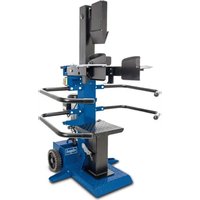
HL1020 - Log splitter SCHEPPACH - Free user manual and instructions
Find the device manual for free HL1020 SCHEPPACH in PDF.


| Brand | Scheppach |
| Model | HL1020 |
| Type | Vertical hydraulic log splitter |
| Dimensions (L x W x H) | 850 x 900 x 990 mm |
| Weight | approx. 125-126 kg |
| Supply voltage | 400 V three-phase or 230 V single-phase |
| Power consumption (P1) | 3500 W (400 V) / 3150 W (230 V) |
| Max. splitting force | 7.95 t |
| Admissible log length | 75 to 107 cm |
| Admissible log diameter | 8 to 35 cm |
| Forward speed | 5.5 cm/s (400 V) / 3.2 cm/s (230 V) |
| Reverse speed | 17 cm/s (400 V) / 16 cm/s (230 V) |
| Oil tank capacity | 4,800 ml |
| Sound pressure level | 77.8 dB(A) |
| Sound power level | 93.6 dB(A) |
| Operating mode | S6 40% |
| Motor protection | Yes |
| Phase inverter | Yes (on 400 V version) |
| Working height | 920 mm |
| Swivel table height | 390 mm |
| Control | Two-hand control (safety) |
| Maintenance | Lubricate column every 5 h, change oil after 50 h, then every 500 h |
| Wear parts | Splitting wedge, hydraulic oil, guides |
| Safety | Two-hand control, automatic shutdown in case of power failure, retaining claws |
Frequently Asked Questions - HL1020 SCHEPPACH
User questions about HL1020 SCHEPPACH
0 question about this device. Answer the ones you know or ask your own.
Ask a new question about this device
Download the instructions for your Log splitter in PDF format for free! Find your manual HL1020 - SCHEPPACH and take your electronic device back in hand. On this page are published all the documents necessary for the use of your device. HL1020 by SCHEPPACH.
USER MANUAL HL1020 SCHEPPACH
natural_image
Industrial machine with articulated arms and a base platform (no visible text or symbols)
Compact 8t
| DE | HolzspalterOriginalbetriebsanleitung | 12 |
| GB | Log splitterTranslation of original instruction manual | 32 |
| FR | Fendeur de bûchesTraduction des instructions d'origine | 49 |
| IT | SpaccalegnaLa traduzione dal manuale di istruzioni originale | 67 |
| NL | HoutsplijterVertaling van de originele gebruikshandleiding | 85 |
| ES | Cortador de maderaTraducción del manual de instrucciones original | 103 |
| PT | FendedeiraTradução do manual de operação original | 122 |
1
2
3
natural_image
Pure technical line drawing of a mechanical component with no text, numbers, or symbols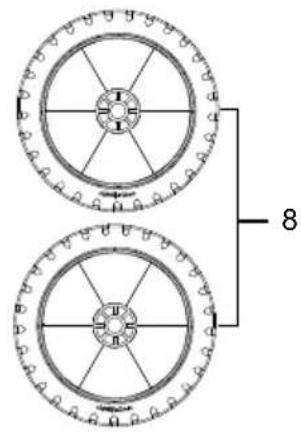

14
15
16
Günzburger Straße 69
D-89335 Ichenhausen
Verehrter Kunde,
Homepage: https://www.scheppach.com/de/service
Explanation of the symbols on the device
Symbols are used in this manual to draw your attention to potential hazards. The safety symbols and the accompanying explanations must be fully understood. The warnings themselves will not rectify a hazard and cannot replace proper accident prevention measures.
 | Warning - read the instruction manual to reduce the risk of injury. |  | If a crane is used, place the lifting belt around the housing. Never lift the log splitter by the transport handle. |
 | Use safety shoes. | 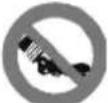 | Dispose of the used oil properly (waste oil collection point on site). Dumping used oil in the soil or mixing it with waste is prohibited. |
 | Wear safety goggles. Sparks created during work or fragments, chippings and dust ejected by the device can case sight loss. |  | Removing or modifying protective or safety equipment is prohibited. |
 | Use work gloves. | 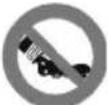 | Do not let hydraulic oil run onto the floor. |
 | No entry for unauthorised persons. Lifting p |  | |
 | No smoking in the working area. | 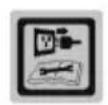 | Attention! Before starting repair, maintenance and cleaning work, switch off the engine and unplug the mains plug. |
  | Keep the work area orderly! Disorder can lead to accidents! | 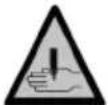 | Cutting and crushing hazard; never touch hazardous areas when the splitting blade is moving. |
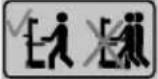 | The machine may only be operated by one person! | 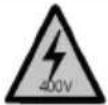 | High voltage, risk of death! |
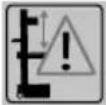 | Caution! Moving tools! | 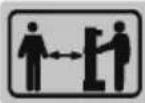 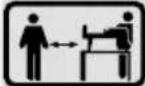 | Only the operator may stand in the working area of the machine. Keep uninvolved persons as well as pets and livestock away from the danger zone (minimum distance 5 m). |
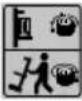 | Before starting work, loosen the bleeder screw by approx. 2 turns. Close before transport. |  | Direction of rotation of the motor |
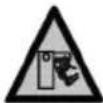 | Do not remove jammed trunks with your hands. | 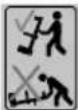 | Do not transport the device lying on its side! |
 | The product complies with the applicable European directives. | 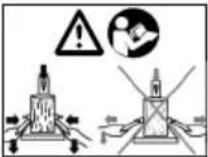 | Familiarise yourself with the two-hand lever operation before commissioning the machine! Read the usage instructions carefully. |
| ⚠ Attention! | We have marked points in these operating instructions that impact your safety with this symbol. |
Table of contents: Page:
- Introduction....35
- Device description (Fig. 1 - 16)....35
- Scope of delivery (Fig. 3)....35
- Proper use 36
- General safety instructions.... 36
- Additional safety instructions.... 38
- Technical data....39
- Unpacking 39
- Layout 40
- Before commissioning 41
- Operation....43
- Maintenance and repairs....44
- Storage 45
- Transport....45
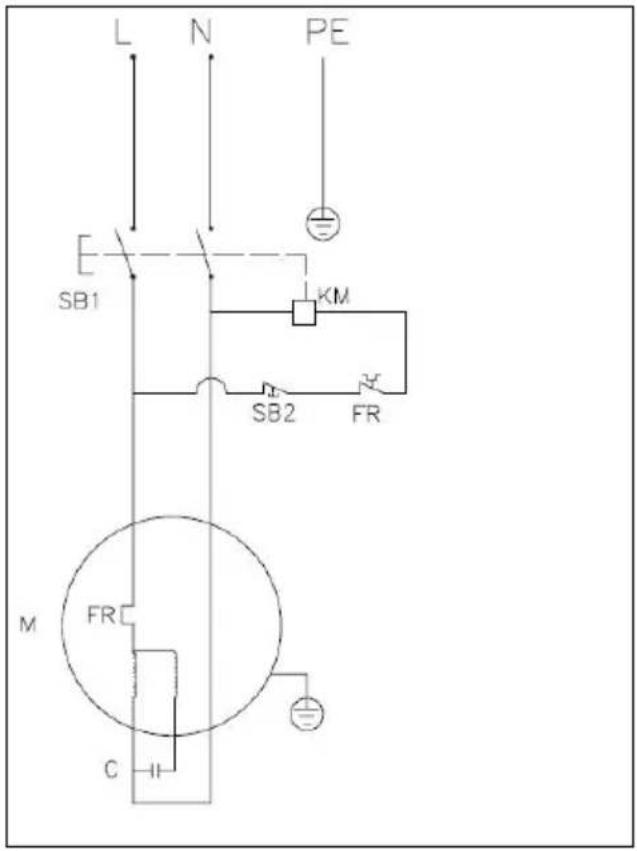
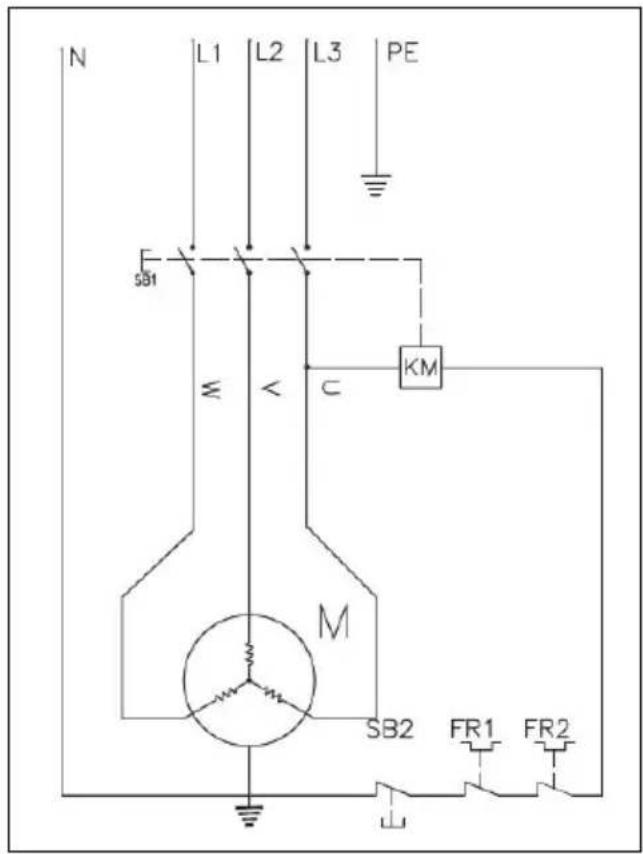
- Electrical connection 46
- Disposal and recycling....46
- Troubleshooting 48
- Declaration of conformity 143
1. Introduction
Manufacturer:
Scheppach GmbH
Günzburger Straße 69
D-89335 Ichenhausen
Dear Customer,
we wish you much pleasure and success in working with your new device.
Note:
In accordance with the applicable product liability laws, the manufacturer of this device assumes no liability for damage to the device or caused by the device arising from:
- Improper handling,
• Non-compliance with the operating manual,
• Repairs carried out by third parties, unauthorised specialists.
• Installing and replacing non-original spare parts,
• Application other than specified, - Failures of the electrical system in the event of the electrical regulations and VDE provisions 0100, DIN 57113 / VDE 0113 not being observed.
Note:
Read through the complete text in the operating manual before installing and commissioning the device.
This operating manual should help you to familiarise yourself with your device and to use it for its intended purpose.
The operating manual includes important instructions for safe, proper and economic operation of the device, for avoiding danger, for minimising repair costs and downtimes, and for increasing the reliability and extending the service life of the device.
In addition to the safety instructions in this operating manual, you must also observe the regulations applicable to the operation of the device in your country.
Keep the operating manual at the device, in a plastic sleeve, protected from dirt and moisture. They must be read and carefully observed by all operating personnel before starting the work.
The device may only be used by personnel who have been trained to use it and who have been instructed with respect to the associated hazards.
The required minimum age must be observed.
In addition to the safety instructions in this operating manual and the separate regulations of your country, the generally recognised technical rules relating to the operation of such machines must also be observed.
We accept no liability for accidents or damage that occur due to a failure to observe this manual and the safety instructions.
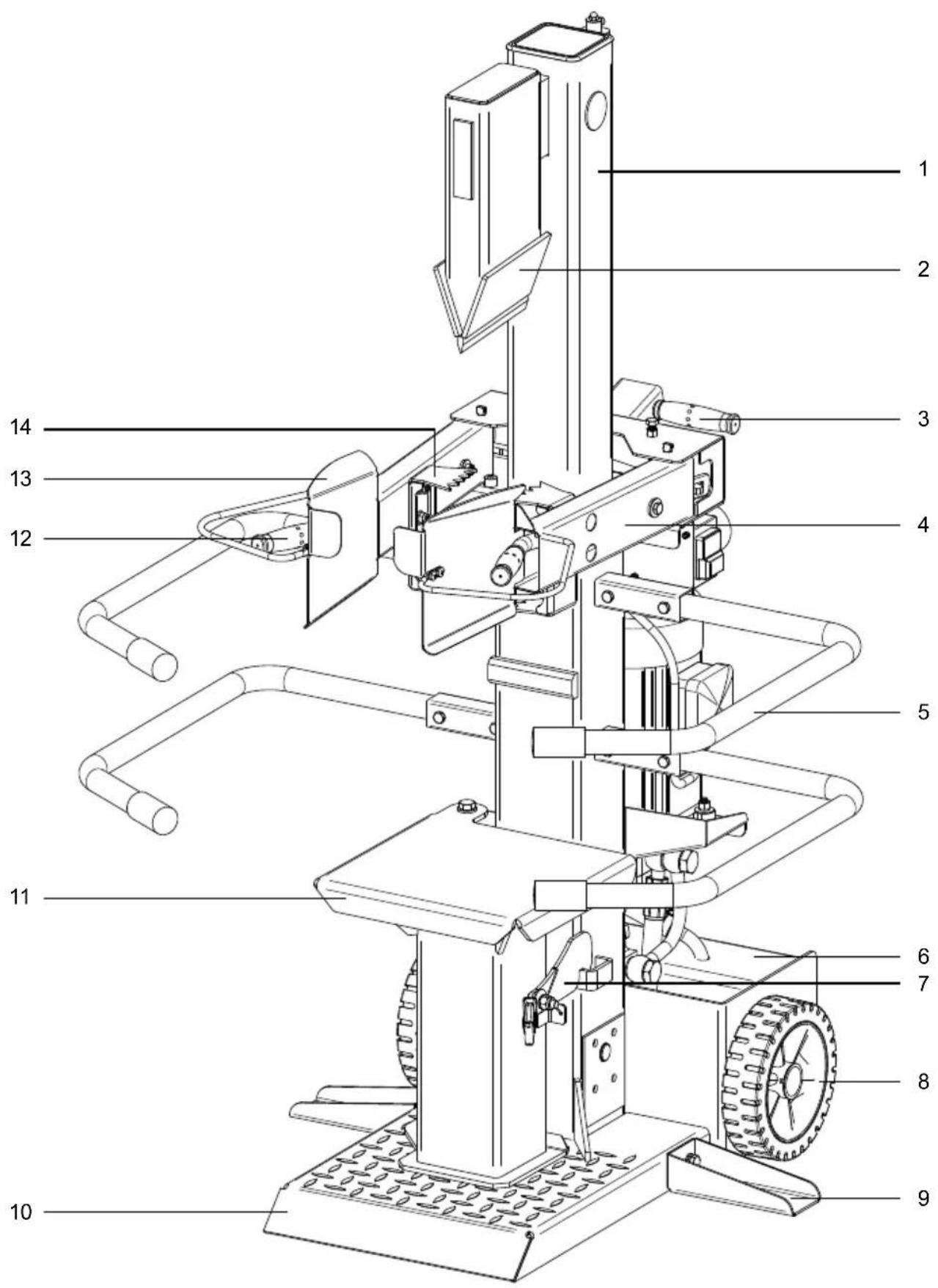
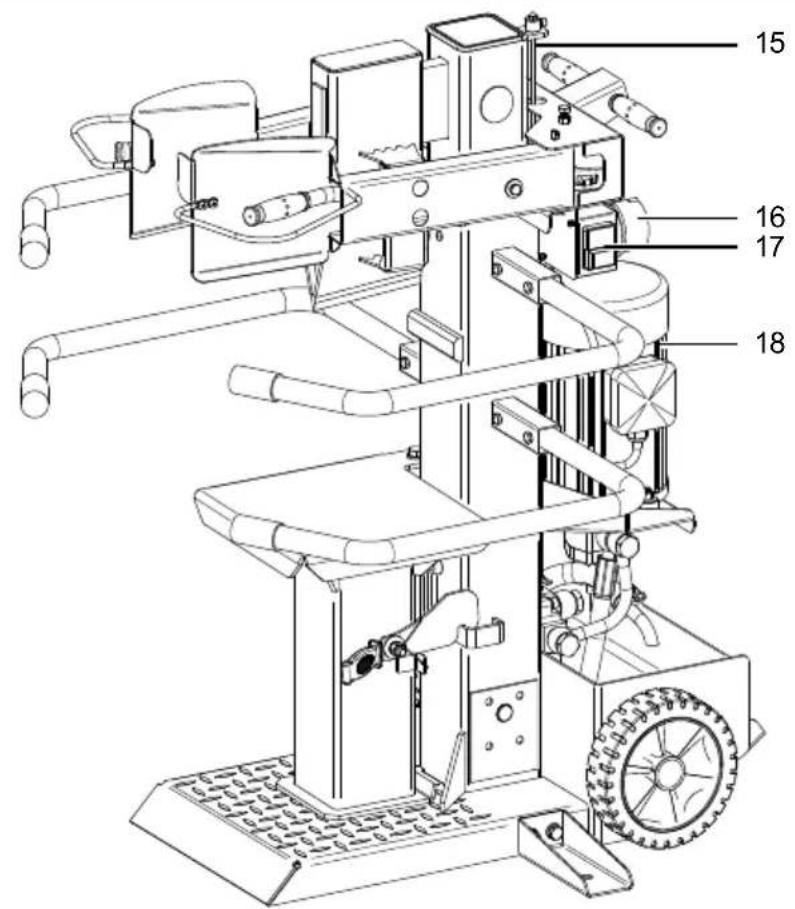
2. Device description (Fig. 1 - 16)
- Splitting column
- Riving knife
- Transport handle
- Control arm
4a. Support points - Hoop guard
5a. Holder - Hydraulic oil tank
- Locking hooks
- Transport wheels
- Supports
- Base plate
- Swivel table
- Control lever
- Handle guard
- Retaining claw
14a. Hole - Stroke setting bar
- Electrical power connection
- On/off switch
- Engine
- Retaining bolt
- Rocker switch
- Cotter pin
- Stop screw
- Ventilation screw
- Oil dipstick
- Oil drain screw
- Cap nut (stroke setting bar)
- Locking screw (stroke setting bar)
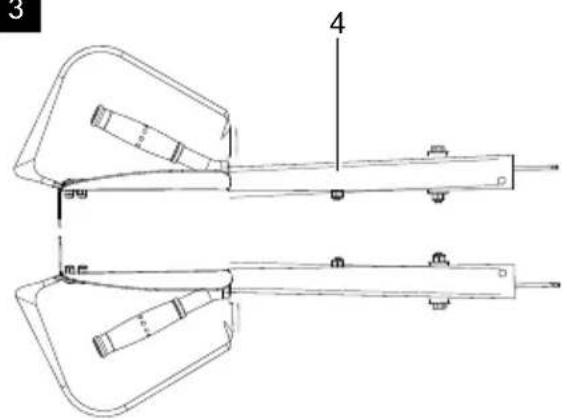
3. Scope of delivery (Fig. 3)
- 1x Log splitter
- 2x Control arms (4)
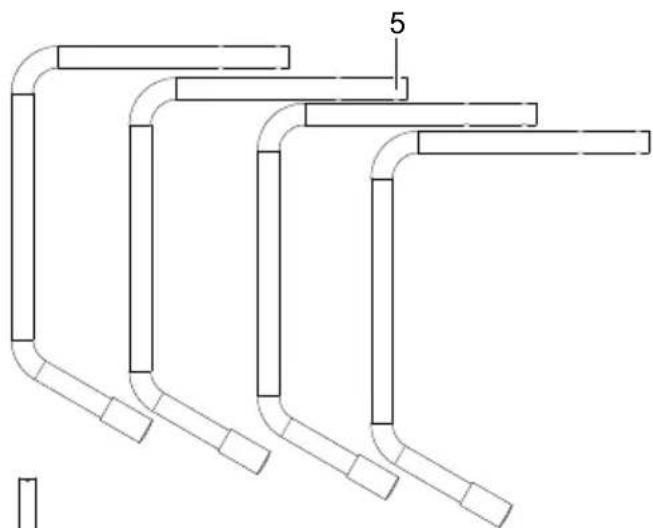
• 4x Protective bars (5)
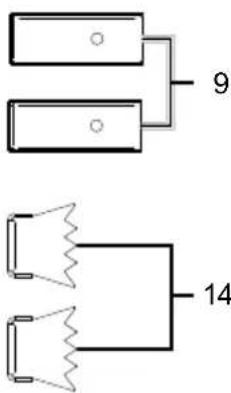
• 2x Transport wheels (8) - 2x Supports (9)
• 2x Retaining claws (14) -
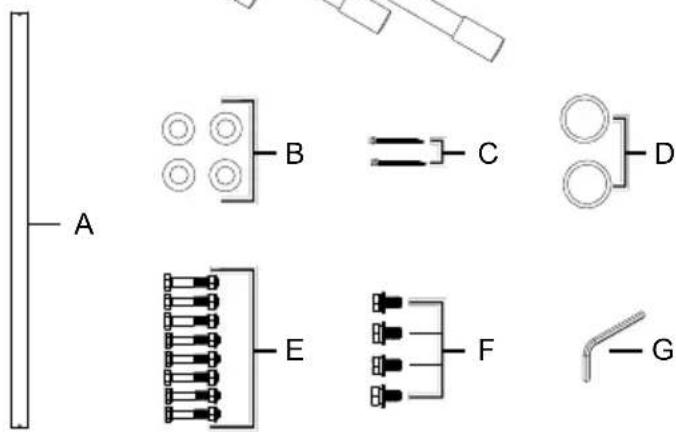
1x Wheel axle (A)
• 4x Washer M10 (B) -
2x Split pin (C)
- 2x Wheel caps (D)
• 8x Hexagon bolts M8x50mm (E)
• 4x Hexagonal bolts M10x25mm (F)
• 1x 5mm Allen key (G)
• 1x operating manual
4. Proper use
The log splitter is designed exclusively for chopping firewood in the direction of the grain.
The machine may only be used in the intended manner. Any use beyond this is improper. The user/operator, not the manufacturer, is responsible for damages or injuries of any type resulting from this.
An element of the intended use is also the observance of the safety instructions, as well as the assembly instructions and operating information in the operating manual.
Persons who operate and maintain the machine must be familiar with it and must be informed about potential dangers.
In addition, the applicable accident prevention regulations must be strictly observed.
Other general occupational health and safety-related rules and regulations must be observed.
The liability of the manufacturer and resulting damages are excluded in the event of modifications of the machine.
- The hydraulic log splitter is only suitable for upright operation. Timbers may only be split vertically in the direction of the grain. The dimensions of the timbers to be split are:
- Wood length: 75 cm - 107 cm
- Wood diameter: 8 cm - 35 cm
- Never split wood horizontally or against the grain!
- The manufacturer's safety, operating and maintenance specifications as well as the dimensions given in the technical data must be observed.
- Relevant accident prevention regulations and other generally recognized safety and technical rules must also be observed.
- The machine may only be used, maintained or repaired by trained persons who are familiar with it and have been informed of the dangers. Any liability of the manufacturer for damages resulting from arbitrary changes to the machine is excluded
- The machine may only be operated with original accessories and original tools from the manufacturer.
- Any use beyond this is improper use. The manufacturer is not responsible for the resultant damages, the user bears this risk alone.
- Keep the work area clean and free of obstructions.
- Only operate the product on a flat, firm surface.
- Before each commissioning, check that the log splitter is functioning properly.
- Only operate the product in areas that are a maximum of 1000 m above sea level.
- Please note that our equipment was not designed with the intention of use for commercial or industrial purposes. We assume no guarantee if the device is used in commercial or industrial applications, or for equivalent work.
5. General safety instructions
We have marked points in these operating instructions that impact your safety with this symbol: ⚠
⚠ WARNING: When using power tools, the basic safety precautions below must be followed in order to reduce the risk of fire, electric shock, and personal injury. Please read all instructions before working with this tool
- Observe all safety information and danger notices on the machine.
- Ensure that all of the safety information and danger notices on the machine are complete and in legible condition.
- The safety equipment on the machine must not be disassembled or made unusable.
- Check mains connection cables. Do not use faulty connection cables.
- Check for correct function of the two-hand control before commissioning.
- The operating personnel must be at least 18 years of age.
• Children may not work with this product. - Wear work and safety gloves, safety glasses, close-, fitting work clothes (PPE) while working.
- Caution when working: Danger of injury for fingers and hands due to the splitting tool.
- Modification, adjustment and cleaning work, as well as maintenance and rectification of faults may only be carried out when the engine is switched off. Pull out the mains plug!
• Installation, repairs and maintenance work on the electrical equipment may only be carried out by electricians.
- All protective and safety equipment must be reassembled immediately after repair, maintenance is completed.
- Switch off the engine when leaving the work station. Pull out the mains plug!
Removing or working without guards is prohibited.
- When splitting, the properties of the wood (e.g. growths, trunk slices of irregular shape, etc.) can result in hazards such as ejecting parts, jamming the log splitter, and crushing.
- Apart from the operator, it is forbidden to stand within the working radius of the machine. No other persons or animals may be within 5 metres of the machine.
- The discharging of waste oil into the environment is prohibited. The oil must be disposed of in accordance with the legal requirements of the country in which the operation takes place.
⚠ Cutting or crushing hazard to hands:
- Never touch dangerous areas while the wedge is moving.
⚠ Warning!
Never remove a trunk that is caught in the wedge by hand.
⚠ Warning!
Always pull out the mains plug before carrying out maintenance work.
Store these instructions safely!
General power tool safety warnings
⚠ WARNING! Read all safety warnings, instructions, illustrations and specifications provided with this power tool. Failure to follow all instructions listed below may result in electric shock, fire and/or serious injury.
Save all warnings and instructions for future reference.
The term "power tool" in the warnings refers to your mains-operated (corded) power tool or battery-operated (cordless) power tool.
Work area safety
- Keep your work area clean and well-lit.
Cluttered or dark areas invite accidents.
- Do not operate power tools in explosive atmospheres, such as in the presence of flammable liquids, gases or dust.
Power tools create sparks which may ignite the dust or fumes.
- Keep children and bystanders away while operating a power tool.
Distractions can cause you to lose control.
Electrical safety
⚠ Attention!
The following basic safety measures must be observed when using electric tools for protection against electric shock, and the risk of injury and fire. Read all these notices before using the power tool and store the safety instructions well for later reference.
- Avoid physical contact with earthed or grounded surfaces, such as pipes, radiators, ranges and refrigerators. There is an increased risk of electric shock if your body is earthed or grounded.
- Keep the device away from rain and moisture. Water entering a power tool will increase the risk of electric shock.
- Do not use the cable for another purpose, for example, carrying or hanging the device or pulling the plug out of the socket. Keep the cable away from heat, oil, sharp edges or moving device parts. Damaged or coiled cables increase the risk of an electric shock.
- If you work with an electric tool outdoors, only use extension cables that are also permitted for outdoor use. Using an extension cable permitted for outdoor use reduces the risk of an electric shock.
Personal safety
- Stay alert, watch what you are doing and use common sense when operating a power tool.
Do not use a power tool while you are tired or under the influence of drugs, alcohol or medication. A moment of carelessness when using electrical tools can result in serious injuries.
- Wear personal protective equipment and always safety goggles.
Wearing personal protective equipment such as a dust mask, non-skid safety shoes to suit the respective use of the power tool will reduce the risk of personal injuries.
- Prevent unintentional starting. Make sure the switch is in the off-position before connecting to the power supply, picking up or carrying the electric tool. Carrying power tools with your finger on the switch or energising power tools that have the switch on invites accidents.
- Remove any adjusting key or screwdriver before turning the power tool on.
A wrench or a key left attached to a rotating part of the power tool may result in personal injury.
- Do not overreach.
Keep proper footing and balance at all times.
This enables better control of the power tool in unexpected situations.
- Dress properly. Do not wear loose clothing or jewellery. Keep hair, clothing and gloves away from moving parts. Loose clothes, jewellery or long hair can be caught in moving parts.
- Do not let familiarity gained from frequent use of tools allow you to become complacent and ignore tool safety principles. A careless action can cause severe injury within a fraction of a second.
Power tool use and care
- Do not force the power tool.
Use the correct power tool for your application. The correct power tool will do the job better and safer at the rate for which it was designed.
- Do not use the power tool if the switch does not turn it on and off. Any power tool that cannot be controlled with the switch is dangerous and must be repaired.
- Disconnect the plug from the power socket before making any adjustments to the device, changing tool inserts or transporting the power tool.
Such preventive safety measures reduce the risk of starting the power tool accidentally.
- Store idle power tools out of the reach of children and
do not allow persons unfamiliar with the power tool or these instructions to operate the power tool. Power tools are dangerous in the hands of untrained users.
- Maintain power tools and accessories.
Check whether moving parts function properly and do not get stuck and whether parts are broken or are damaged and thus adversely affect the electric tool function. If damaged, have the power tool repaired before use. Many accidents are caused by poorly maintained power tools.
- Keep cutting tools sharp and clean. Properly maintained cutting tools with sharp cutting edges are less likely to bind and are easier to control.
- Use the power tool, accessories and tool bits etc. in accordance with these instructions,
taking into account the working conditions and the work to be performed. Use of the power tool for operations different from those intended could result in a hazardous situation.
- Keep handles and grasping surfaces dry, clean and free from oil and grease. Slippery handles and grasping surfaces do not allow for safe handling and control of the tool in unexpected situations.
Service
- Only have your electric tool repaired by qualified specialists and only with original spare parts. This will ensure that the safety of the power tool is maintained.
6. Additional safety instructions
- The log splitter may only be operated by a single person.
- Never split trunks that contain nails, wire, or other objects.
- Wood that has already been split and wood chippings create a hazardous work area. There is a danger of tripping, slipping or falling. Always keep the work area orderly.
- Never place your hands on moving parts of the machine when it is switched on.
- Only split wood with a maximum length of 107 cm.
⚠ Warning! This power tool generates an electromagnetic field during operation. This field can impair active or passive medical implants under certain circumstances. In order to prevent the risk of serious or deadly injuries, we recommend that persons with medical implants consult with their physician and the manufacturer of the medical implant prior to operating the power tool.
Residual risks
The machine has been built according to the state-of-the-art and the recognised technical safety requirements. However, individual residual risks can arise during operation.
- Danger of injury for fingers and hands from the splitting tool in the event of improper guiding or support of the wood.
- Injuries due to the workpiece being ejected at high speed due to improper holding or guiding.
• Health hazard due to electrical power, with the use of improper electrical connection cables. - Switch off the device and pull out the mains plug before carrying out any setting or maintenance work.
• Furthermore, despite all precautions having been met, some non-obvious residual risks may still remain. - Residual risks can be minimised if the "Safety Instructions" and the "Intended Use" together with the operating manual as a whole are observed.
- Avoid accidental starting of the machine: the operating button may not be pressed when inserting the plug in an outlet. Use the tool that is recommended in this operating manual.
- This is how to ensure that your machine provides optimum performance.
- Keep your hands away from the working area when the machine is in operation.
7. Technical data
Compact 8t
| Dimensions D/W/H mm 850/900/990 | ||
| Swivel table height mm | 390 | |
| Working height mm 920 | ||
| Min./max. wood length cm 75 / 107 | ||
| Min./max. wood diameter cm 8/35 | ||
| Splitting force max. t* | 7,95 | |
| 400V 230V | ||
| Feed speed cm/s 5,5 3,2 | ||
| Return speed cm/s | 17 16 | |
| Oil quantity ml | 4800 | |
| Weight kg | 126 | 125 |
| Drive | ||
| Mains power connection 400V3N~/50Hz 230V 1~/50Hz | 400/50 | 230/50 |
| Rated input P1 W | 3500 | 3150 |
| Power output P2 kW | 2500 | 2300 |
| Operating mode | S6 40% ** | |
| Speed rpm | 2800 | |
| Motor protection | Yes | |
| Phase inverter | at 400V | |
Subject to technical changes!
* The maximum achievable splitting force is dependent on the resistance of the log and can differ due to variable contributing factors on the hydraulic system.
** Operating mode S6 40%, uninterrupted periodic operation with intermittent load. The mode comprises of a start-up period, a time with constant load and an idle time. The operating time is 10 mins, the relative duty cycle is 40% of the operating time.
Noise
The noise levels have been determined in accordance with EN 62841.
| Sound pressure level L_pA | 77.8 dB |
| Uncertainty K_pA | 3 dB |
| Sound power level L_WA | 93.6 dB |
| Uncertainty K_WA | 3 dB |
Excessive noise can result in a loss of hearing.
The specified noise emission values have been measured in accordance with a standardised test procedure and can be used to compare one power tool with another.
The specified device emissions values can also be used for an initial estimation of the load.
Warning:
- The noise emission values can vary from the specified values during the actual use of the power tool, depending on the type and the manner in which the power tool is used, and in particular the type of workpiece being processed.
- Try to keep the stress as low as possible. For example: Limit working time. In doing so, all parts of the operating cycle must be taken into account (such as times in which the power tool is switched off or times in which it is switched on, but is not running under a load).
8. Unpacking
- Open the packaging and carefully remove the device.
- Remove the packaging material, as well as the packaging and transport safety devices (if present).
- Check whether the scope of delivery is complete.
-
Check the device and accessory parts for transport damage. In the event of complaints the carrier must be informed immediately. Later claims will not be recognised.
-
If possible, keep the packaging until the expiry of the warranty period.
- Familiarise yourself with the product by means of the operating manual before using for the first time.
- With accessories as well as wearing parts and replacement parts use only original parts. Spare parts can be obtained from your specialist dealer.
- When ordering please provide our article number as well as type and year of manufacture for the product.
⚠ WARNING!
Danger of choking and suffocating!
The packaging material, packaging and transport safety devices are not children's toys. Plastic bags, foils and small parts can be swallowed and lead to choking.
- Keep packaging material, packaging and transport safety devices away from children.
9. Layout
Your log splitter is not completely assembled for packaging reasons.
Note:
Due to the heavy weight of the product, we recommend installation by at least two people.
You require the following for assembly:
- 2x open-ended spanner / socket spanner, size 13mm
- 1x open-ended spanner / socket spanner, size 16mm
• 1x 8mm Allen key - Grease or spray oil
Assembly material is not included in the scope of delivery.
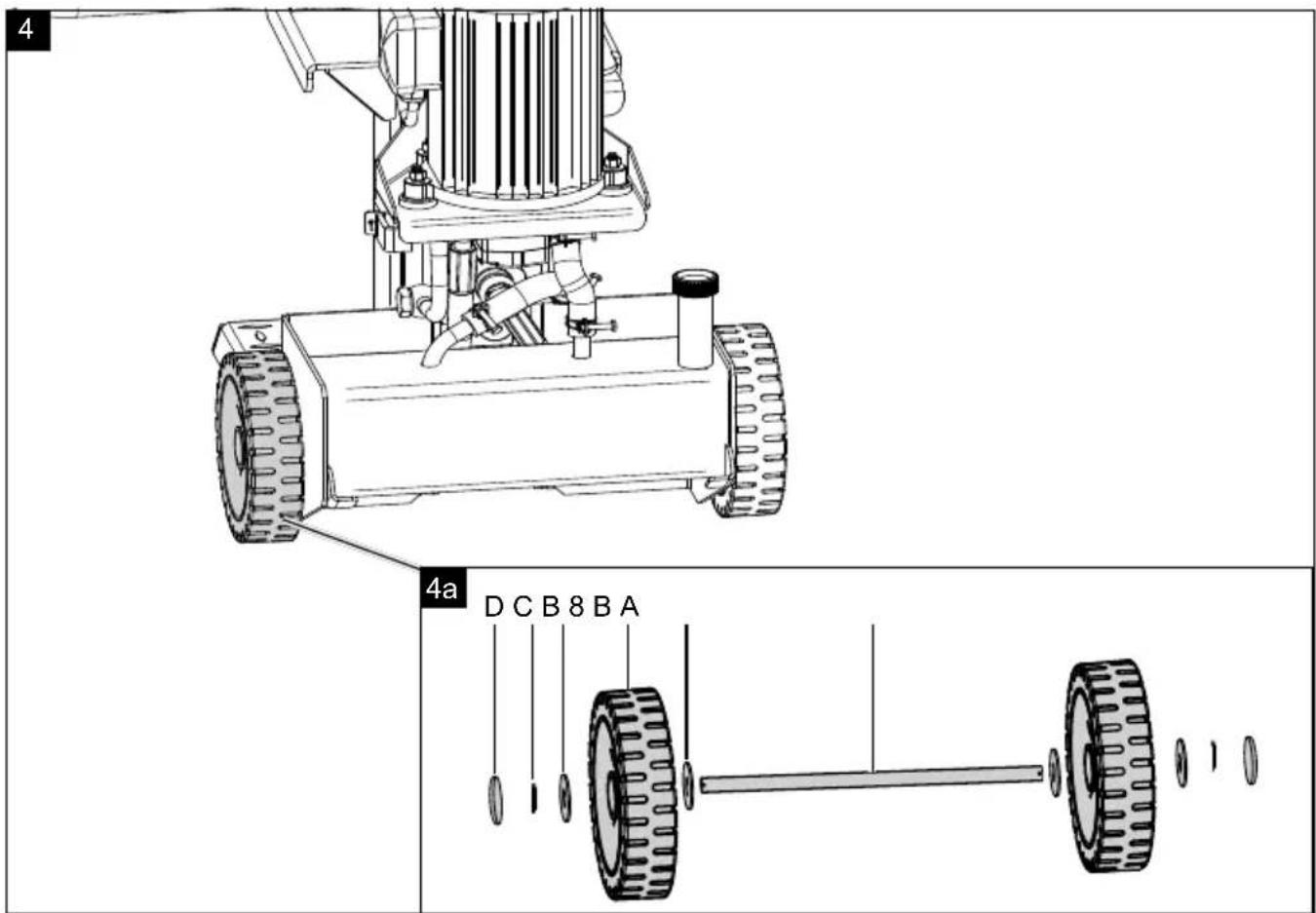
9.1 Fitting the transport wheels (8) (Fig. 4, 4a)
- Slide the wheel axle (A) through the holes on the bottom, rear end of the log splitter.
- Fit a washer (B) on both sides.
- Fit the transport wheel (8) onto the wheel axle (A). Then fix them with one washer (B) and one split pin (C) each. Bend the split pin (C) around slightly.
- Then attach the wheel caps (D) on both sides.
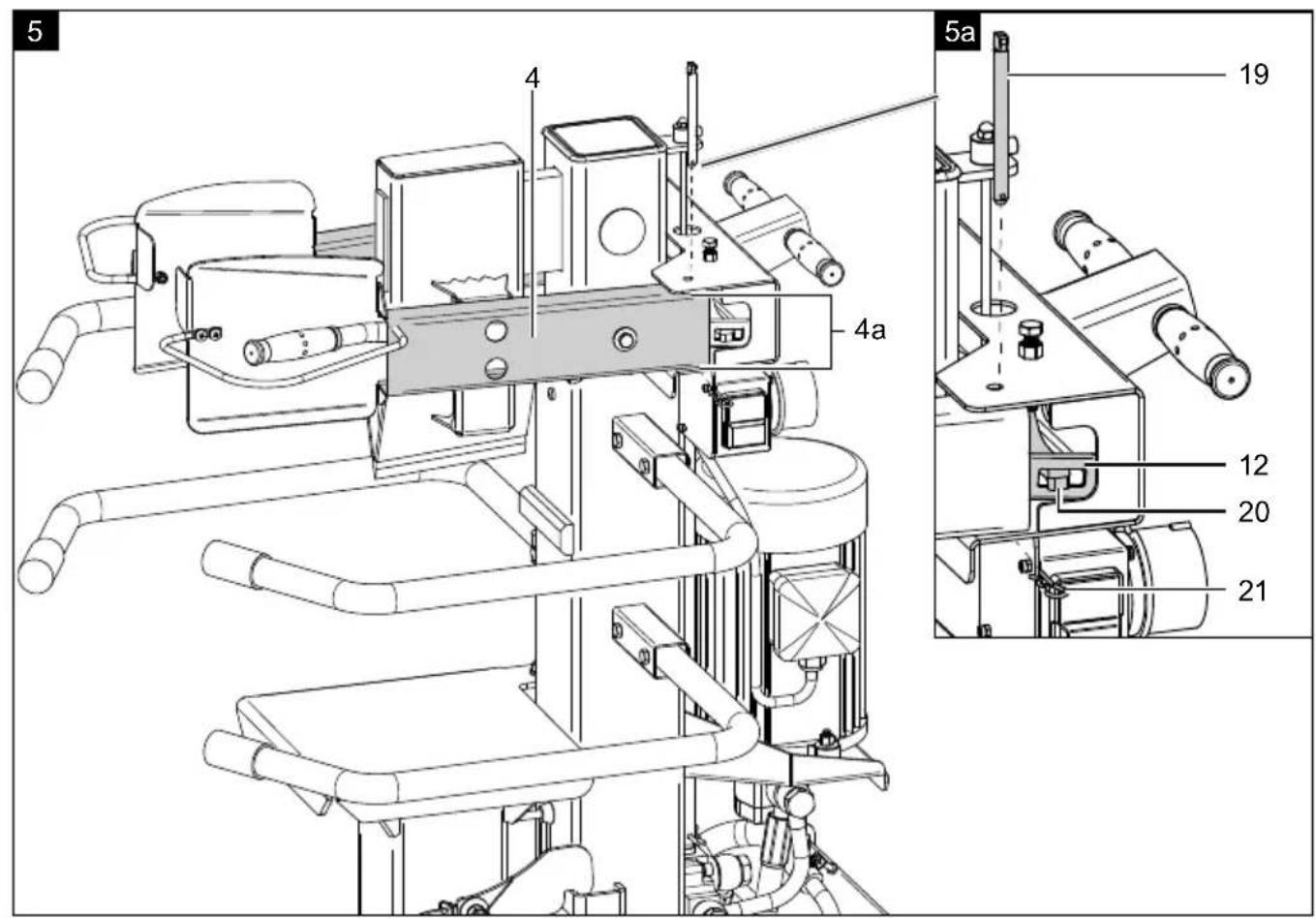
9.2 Fitting the control arms (4) (Fig. 5, 5a)
Note: The operating arms (4) are marked L (left) and R (right).
- Pull out the cotter pin (21) from each and remove the retaining bolt (19).
- Apply a light film of grease or spray oil to the upper and lower support points (4a) of the operating arms (4).
- Attach the operating arm (4). At the same time, guide the rocker switch (20) through the slot in the operating lever (12).
- Fix the operating arms (4) with the retaining bolt (19) by aligning the holes and attaching the retaining bolt (19).
- Now secure the retaining bolt (19) with a cotter pin (21).
- Repeat the process on the opposite side.
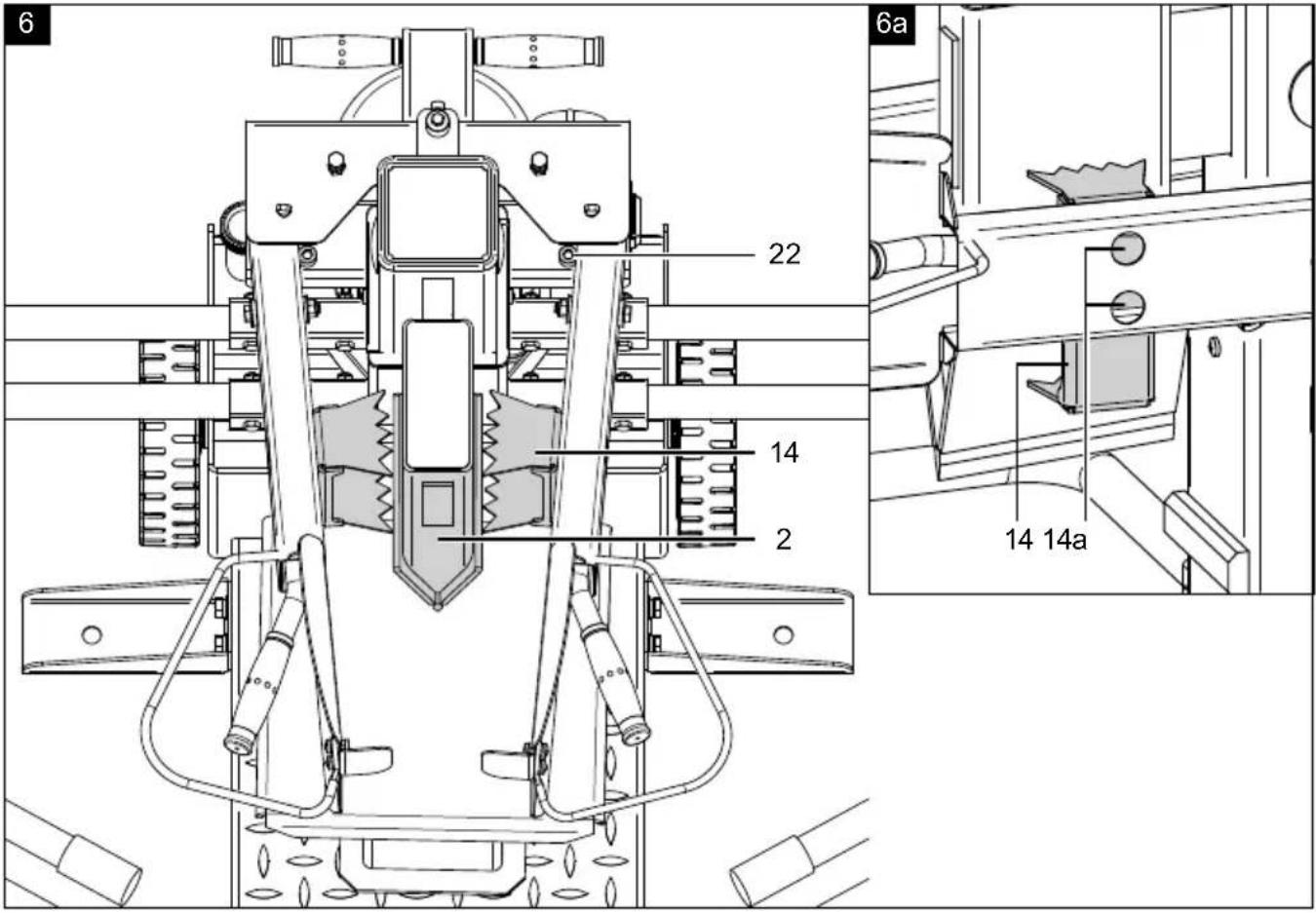
9.3 Fitting the retaining claw (14) (Fig. 6, 6a)
- To fit the retaining claws (14), you must first dismantle the upper locknut of the coach bolt using a 13mm open-ended spanner / socket spanner. To do this, hold the coach bolt through the hole (14a) with a finger so that it does not fall into the tube.
- Place the retaining claw (14) on the upper coach bolt and turn the locknut two turns (do not tighten).
- Repeat the process with the bottom coach bolt.
- Tighten the locknuts with a 13mm open-ended spanner / socket spanner.
- If necessary, adjust the stop screws (22) on both sides with an 8 mm Allen key such that the retaining claws (14) do not touch the splitting wedge (2).
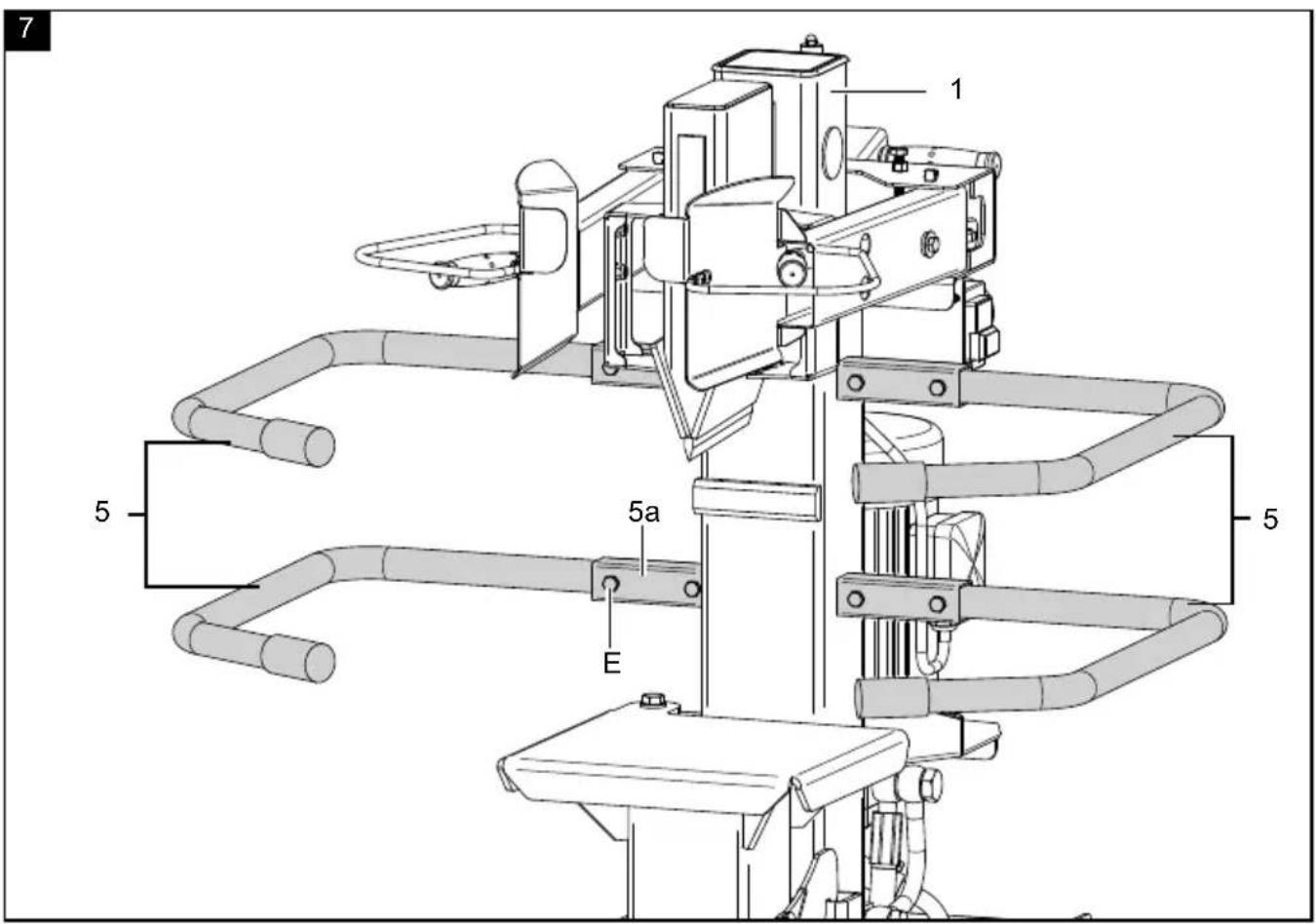
9.4 Mounting the protective frame (5) (Fig. 7)
- Push the bars of the protective frame (5) into the mounts (5a).
- Insert the hexagonal bolts M8x50mm (E) with a washer through each of the holes.
- Secure the hexagonal bolts M8x50mm (E) with one washer and one locknut each. Use two 13mm open-ended spanners / socket spanners.
- Fit all three further protective bars (5) in the same way.
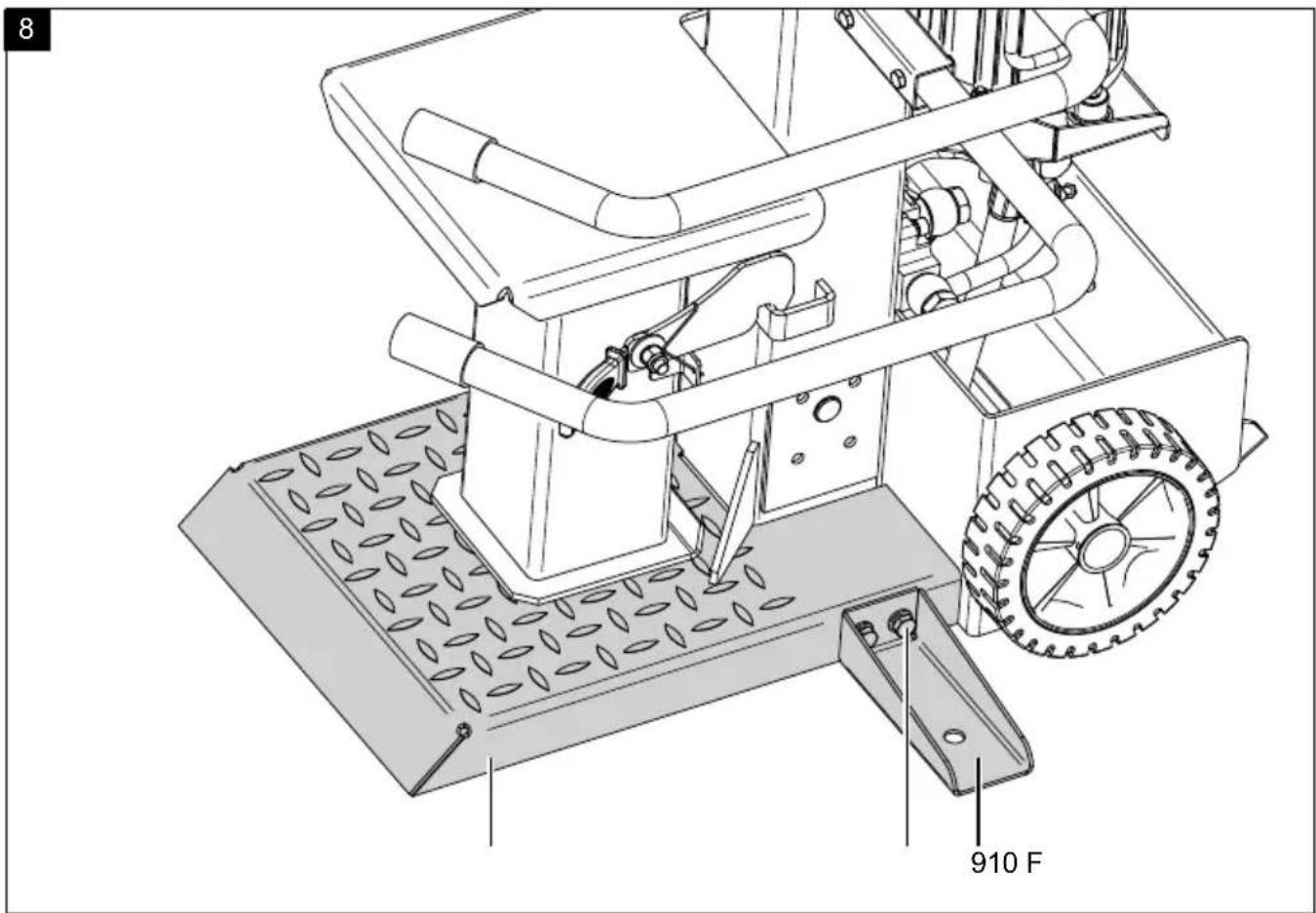
9.5 Fitting the supports (9) (Fig. 8)
- Take the supports (9) and fix them to the base plate (10) on both sides with the M10x25mm hexagonal bolts (F) and a washer for each. Use a 16mm open-ended spanner / socket spanner.
10. Before commissioning
Attention!
Always make sure the product is fully assembled before commissioning!
Attention!
Before performing setting or maintenance work, unplug the mains plug!
⚠ WARNING!
Health hazard!
Inhalation of oil vapours and exhaust gases can cause serious damage to health, unconsciousness and in extreme cases death.
- Do not breathe in oil vapours and exhaust gases.
- Operate the device outdoors only.
NOTE!
Product damage
If the product is operated without or with too little hydraulic oil, this can lead to hydraulic pump damage.
NOTE!
Environmental damage!
Spilled oil can pollute the environment permanently.
The liquid is highly toxic and can quickly lead to water pollution.
- Fill/empty oil only on level, paved surfaces.
- Use a filling nozzle or funnel.
- Collect drained oil in a suitable container.
- Wipe up spilled oil carefully immediately and dispose of the cloth according to local regulations.
- Dispose of oil as per local regulations.
Before each use, always check:
- the connection cables for defective areas (cracks, cuts and the like),
• The device for possible damage, - whether all screws are tightened,
• The hydraulic system for leaks, - The oil level
• The safety devices and - The ON/OFF switch.
Environmental conditions
The device must work under the following environmental conditions:
Minimum Maximum
Recommended
Temperature 5°C 40°C 16°C
Humidity 95% 70%
When working below 5°C, the device should be idled for approx. 15 minutes to allow the hydraulic oil to warm up.
AC motors 230V should have a temperature between 5^ C - 10^ C when starting at low outdoor temperatures, as the starting current increases at low temperatures and the circuit breaker can be triggered.
- The mains power connection is protected with a 16A slow-blow fuse.
- The "RCD circuit breaker" must have a 30mA trip rating.
Tool required:
- Grease or spray oil
Not included in the scope of delivery.
10.1 Setting up the log splitter
⚠ Attention!
Risk of injury from the log splitter tipping over. A toppling log splitter can cause serious injuries and damage.
Prepare the workplace where the device is to be located.
- Create enough space to allow safe, trouble-free working.
- The device is designed for working on level surfaces and must be set up securely on a level and firm surface.
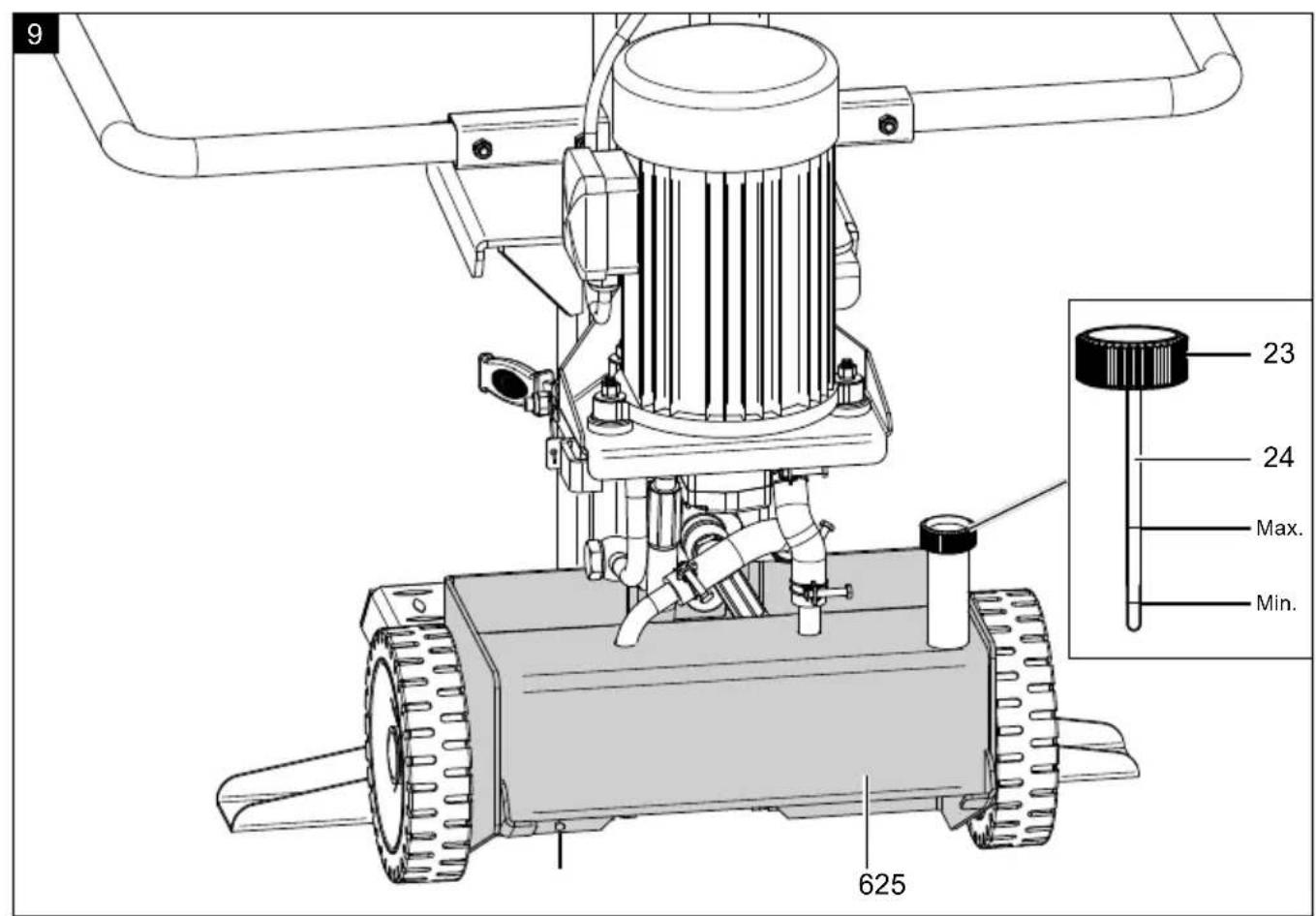
10.2 Checking the oil level (Fig. 1, 9)
⚠ Attention!
Check the oil level prior to commissioning!
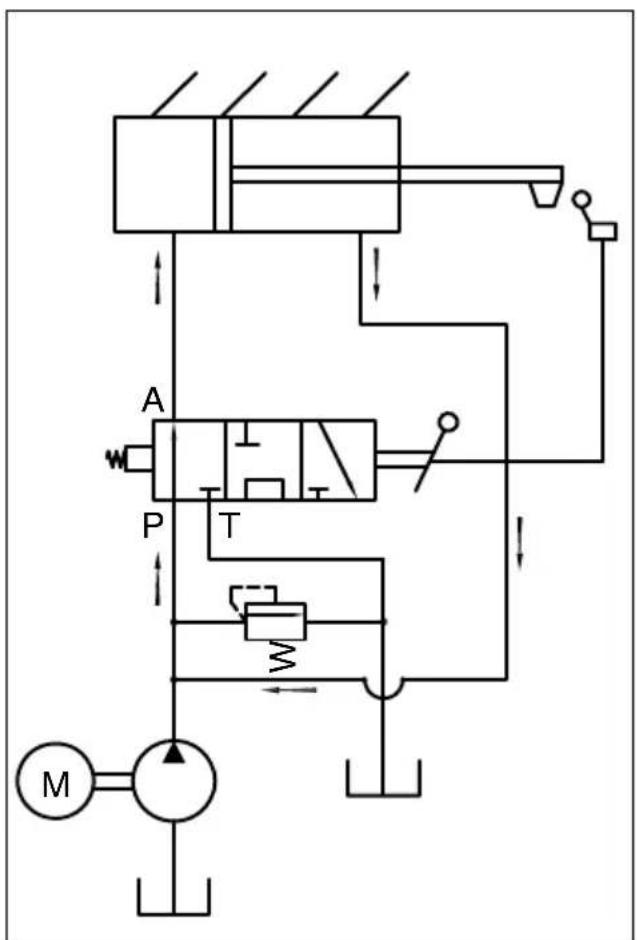
The hydraulic system is a closed system with an oil tank, oil pump and control valve. There is already oil in the system when delivered. Check the oil level before the initial commissioning and regularly before commissioning. An oil level that is too low can damage the oil pump, refill with oil if necessary.
Note
The splitting column (1) must be retracted before the check, the device must be level.
- Unscrew the bleed screw (23).
- Wipe the oil dipstick (24) with a clean, lint-free cloth.
- Screw the bleed screw (23) back into the filler neck until it reaches the stop.
- Unscrew the bleed screw (23) and read the oil level in the horizontal position. The oil level must be between min. and max. at the dipstick (24).
- If the oil level is too low, top up as described in section 12.6.
- Then screw the bleed screw (23) back in.
10.3 Bleeding the hydraulic oil tank (6) (Fig. 9)
⚠ Attention!
Bleed the hydraulic tank before starting the log splitter.
Note
If the hydraulic tank (6) is not bled, the trapped air will damage the seals and therefore the log splitter!
- Before starting work, it is essential to loosen the bleed screw (23) by two turns to ensure air circulation in the hydraulic oil tank (6).
- Leave the bleed screw (23) loose during operation.
- Before you move the log splitter, close the bleed screw (23) again, since oil can run out otherwise.
Attention!
- When working below 5°C, the device should be idled for approx. 15 minutes to allow the hydraulic oil to warm up.
- Before transporting the device, it is essential to tighten the bleed screw to prevent oil leakage.
Functional check
Carry out a functional check before every use.
| Action Result | |
| Push both operating levers down (12). | The splitting wedge (2) drives down. |
| Release one operating lever (12) at a time. | The splitting wedge (2) remains in the selected position. |
| Release both operating levers (12). | Splitting wedge (2) moves back to the upper position. |
10.4 Greasing the splitting column (1) (Fig. 1)
⚠ Attention!
Do not run the splitting column dry.
Generously grease the splitting column (1) of the log splitter before putting it into operation. This process must be repeated every 5 operating hours.
- The splitting column (1) must be in the top position.
- Apply a generous film of grease or spray oil to the splitting column (1).
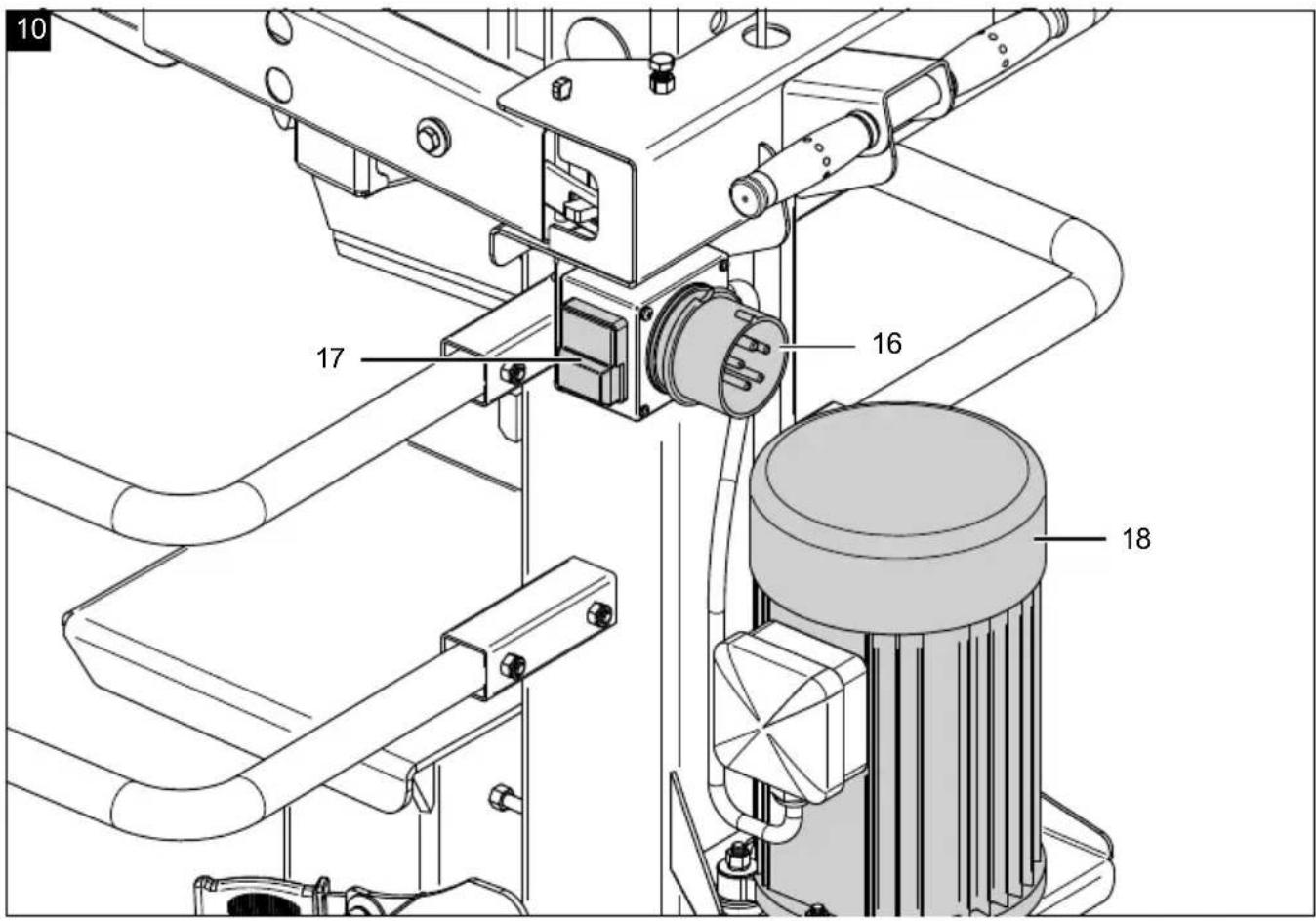
10.5 Switching on/off (Fig. 10, 11)
Note:
Check the function of the on/off switch by switching it on and off again once before each use.
- Connect the electrical power connection (16) to the mains socket.
- To switch on, press the green button on the ON/OFF switch (17), the device switches on.
- To switch off, press the red button on the ON/OFF switch (17), the device switches off.
- Disconnect the electrical power connection (16) from the mains socket when you want to finish work.
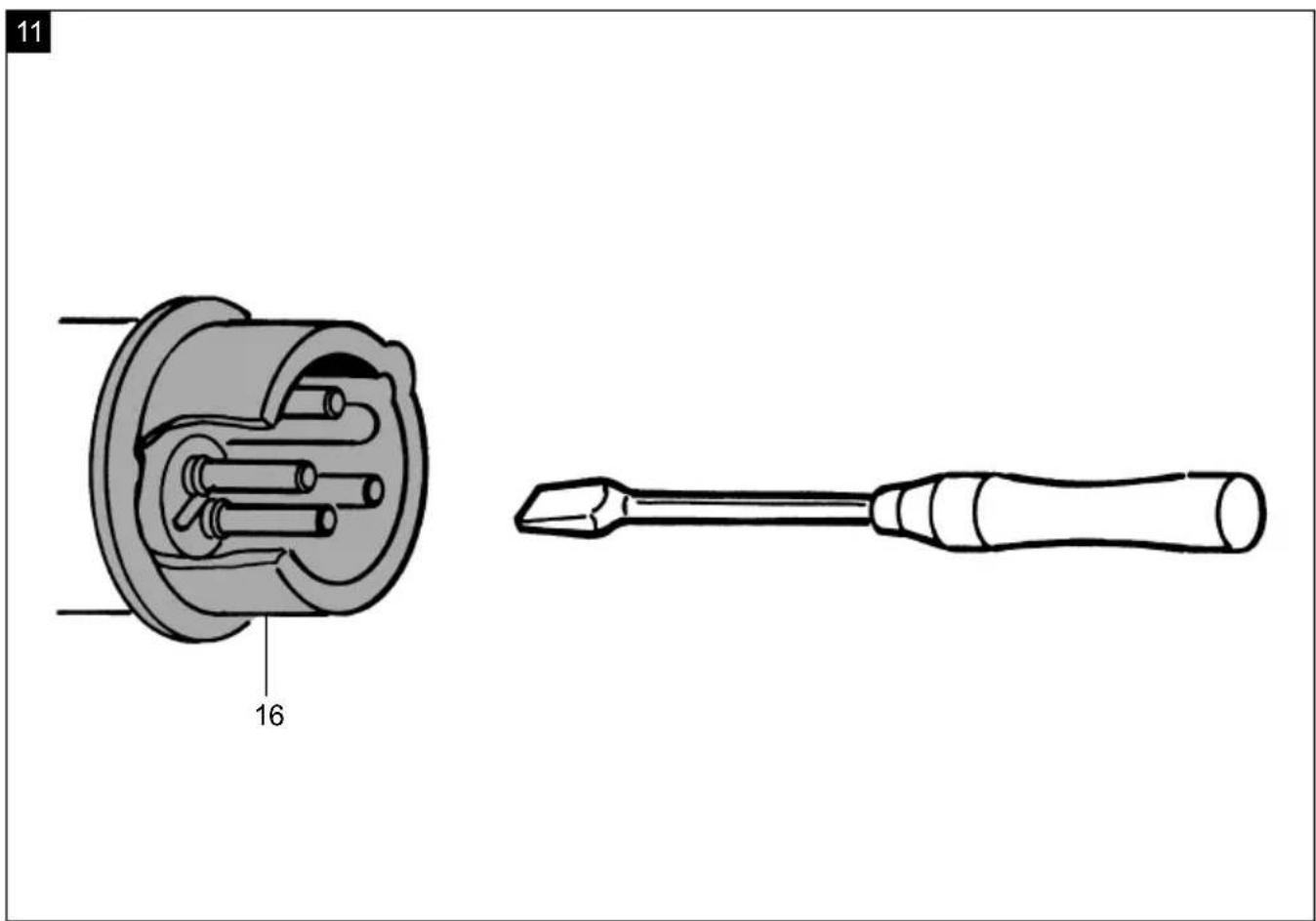
10.6 Check the direction of rotation of the motor (18) (Fig. 1, 11)
⚠ Attention!
The direction of rotation of 3-phase motors must be checked when they are connected for the first time or if they are relocated. If necessary the polarity must be changed with the phase inverter.
- Switch on the log splitter as described in section 10.5.
- If the correct running direction is set, the splitting column (1) automatically moves upwards.
- If the splitting column (1) does not move, switch the device off immediately.
- Change the direction of rotation of the phase inverter with a screwdriver (not included in the scope of delivery) in the power connection (16).
⚠ Attention!
Never allow the motor to run with the wrong direction of rotation! This will inevitably lead to the destruction of the hydraulic system and no warranty claim can be made for this.
11. Operation
Tool required:
- 5mm Allen key (G)
11.1 Splitting logs
⚠ WARNING!
Danger of injury!
Dry and seasoned wood can explode during the splitting process and injure the operator.
During the splitting process, bruising or severing of body parts may occur due to retracting of the riving knife.
Pieces of wood that are produced during a splitting process can fall down.
- Wear appropriate personal protective equipment.
Make sure that the wood to be split does not contain nails or foreign objects. The end of the log must be cut straight. Branches must be sawn off flush.
Pieces of wood cut at an angle can slip away during the splitting process. Only split timbers that have been sawn off straight.
11.1.1 Adjusting the stroke setting bar (15) (Fig. 12)
-
Move the splitting wedge (2) to the desired position with the operating levers (12).
-
Release the operating lever (12).
-
Switch the motor (18) off (see section 10.5).
-
Now release the second operating lever (12).
-
Loosen the locking screw (stroke setting bar) (27) with the 5mm Allen key (G) provided.
-
Guide the stroke setting bar (15) with the cap nut (stroke setting bar) (26) upwards until the stroke setting bar (15) is stopped on the stop.
-
Tighten the locking screw (stroke setting bar) (27) with the 5mm Allen key (G) provided.
-
Engage the operating lever (12). Make sure that the splitting wedge (2) does not move upwards uncontrollably when the motor (18) is switched on.
-
Switch the motor (18) on (see section 10.5).
-
Actuate both operating levers (12) in order to move the splitting wedge (2) downwards.
-
Now release both operating levers (12) and check the top position of the splitting wedge (2).
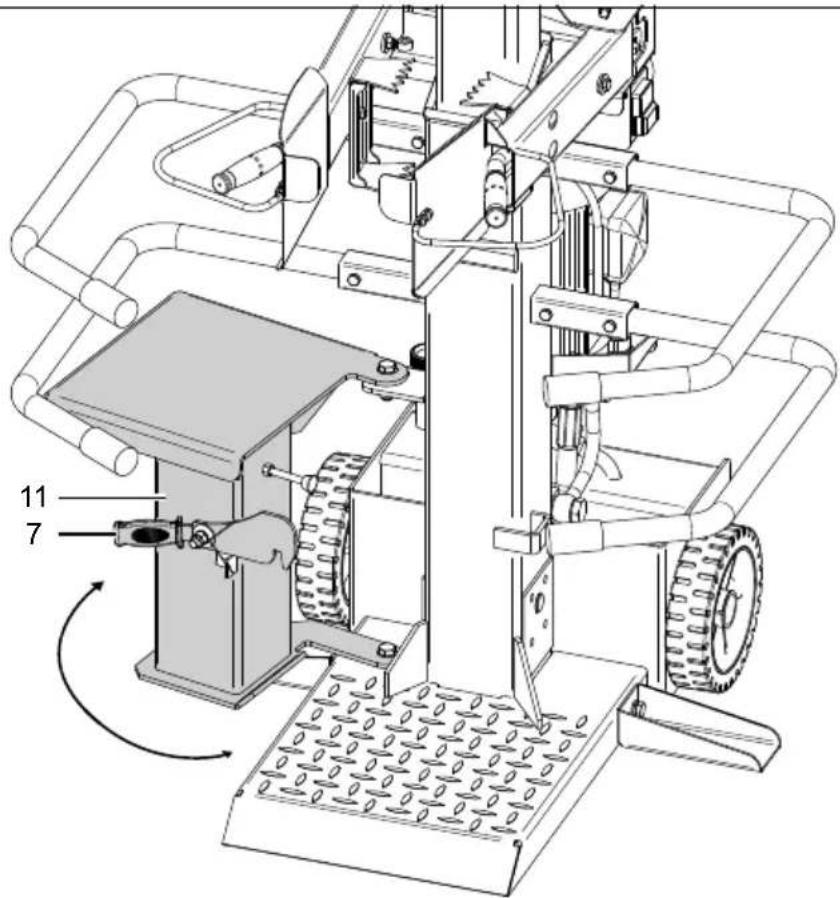
11.2 Splitting long logs (Fig. 1, 14)
-
Swivel the swivel table (11) to the side with your foot.
-
Place the log straight on the base plate (10).
-
Hold the log with the two retaining claws (14) on the operating arms (4). Make sure that the log is placed centrally to the splitting wedge (2).
-
Press both operating levers (12) down simultaneously.
-
Move the operating arms (4) approx. 2 cm away from the log as soon as the splitting wedge (2) penetrates. This prevents damage to the retaining claws (14).
-
Drive the splitting wedge (2) down until the log is split.
-
If the log has not been completely split during the first splitting stroke, proceed as described in section 11.3.
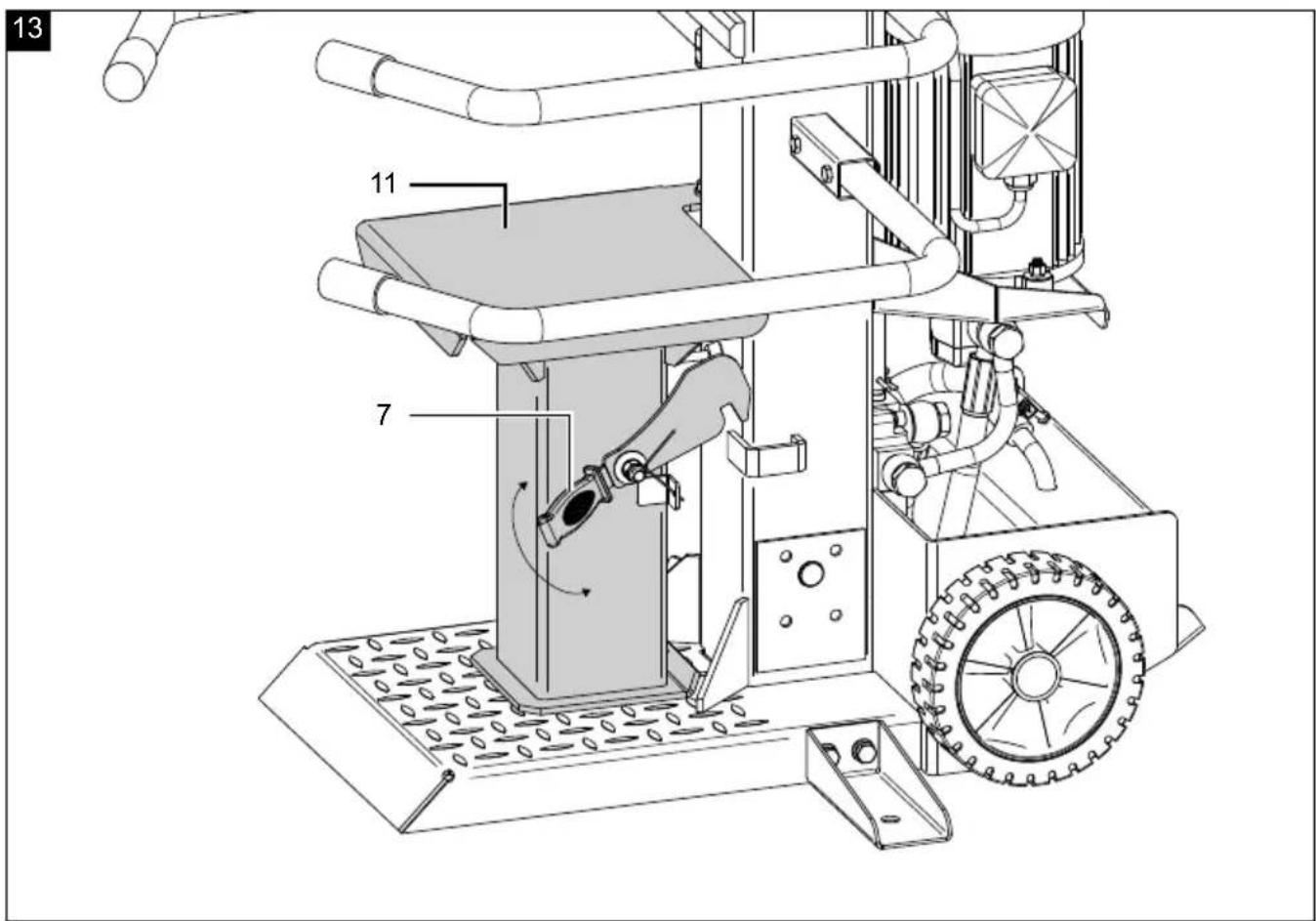
11.3 Remove jammed log (Fig. 1, 13)
Note:
Split through jammed wood using the swivel table, knock it out against the splitting direction or remove it by moving the splitting wedge upwards.
ATTENTION!
Danger of injury!
The swivel table must engage in the locking hook!
ATTENTION!
Danger of injury!
There is a danger of knotty logs becoming jammed during the splitting process. Please note that the wood is under a lot of tension when it is removed and parts of your body can be crushed in the split crack.
- Do not reach into the log splitter when it is running.
- Do not put any objects into the log splitter while it is running (e.g. hammer or similar).
-
If the log is not completely split during the first splitting stroke, carefully move the splitting wedge (2) with the log to the upper position using the two operating levers (12).
-
Swivel in the swivel table (11) by foot until the locking hook (7) engages.
-
Now carry out a second splitting stroke until the log is completely split.
-
Remove the log and swivel the swivel table (11) away with your foot.
11.4 Restart protection in the event of a power failure (zero voltage trigger)
In the event of a power failure, unintentional removal of the plug or a defective fuse, the device switches off automatically.
To switch on again, proceed as described in section 10.5.
11.5 End of work (Fig. 1, 9)
- Move the splitting column (1) to the bottom position.
- Release the operating lever (12).
- Switch off the motor (18) (see section 10.4) and disconnect the mains plug.
- Swivel in the swivel table (11) by hand or foot until the locking hook (7) engages.
- Close the bleed screw (23).
- Protect the device from moisture!
- Observe the general maintenance information.
12. Maintenance and repairs
⚠ WARNING!
Danger of injury!
The device can start unexpectedly and cause injuries.
- Switch the motor off before performing any maintenance work.
- Disconnect the mains plug before carrying out any maintenance work.
⚠ WARNING!
Health hazard!
Inhalation of oil vapours can cause serious damage to health, unconsciousness and in extreme cases death.
- Do not inhale oil vapours.
- Operate the device outdoors only.
NOTE
Product damage
If the product is operated without or with too little hydraulic oil, this can lead to hydraulic pump damage.
NOTE!
Environmental damage!
Spilled oil can pollute the environment permanently.
The liquid is highly toxic and can quickly lead to water pollution.
- Fill/empty oil only on level, paved surfaces.
- Use a filling nozzle or funnel.
-
Collect drained oil in a suitable container.
-
Wipe up spilled oil carefully immediately and dispose of the cloth according to local regulations.
- Dispose of oil as per local regulations.
All protective and safety equipment must be reassembled immediately after repair, maintenance is completed.
Our recommendation to you:
Clean the device thoroughly after each use using a damp cloth and a little soft soap. Do not use any cleaning products or solvents; they could attack the plastic parts of the device. Make sure that no water can penetrate the interior of the device.
Tool required:
- 1x open-ended spanner / socket spanner, size 24 mm
- Funnel
- Drip tray
- File / angle grinder
Not included in the scope of delivery.
12.1 Splitting wedge (2) (Fig. 1)
- The splitting wedge (2) is a wearing part that should be reground with a file or angle grinder or replaced with a new splitting wedge (2) if necessary.
12.2 Operating arms (4) and operating levers (12) (Fig. 1)
- The combined retaining and control device must remain smooth-running. Lubricate with a few drops of oil as required.
12.3 Splitting column (1) (Fig. 1)
- Keep the splitting column (1) clean. Remove fouling, wood chips, bark, etc.
- Lubricate splitting column (1) with spray oil or grease.
12.4 Check the oil level regularly!
An oil level that is too low will damage the oil pump! (see 10.2)
- Check the hydraulic connections and screw connections for leaks regularly and retighten them if necessary.
12.5 Topping up the hydraulic oil (Fig. 1, 9)
We recommend oil from the HLP 32 range.
Note:
The splitting column must be retracted before the check, the device must be level.
- Unscrew the bleed screw (23).
- Top up the hydraulic oil with the help of a suitable funnel. Note the max. filling capacity of 4800 ml. Carefully fill the oil up to the lower edge of the filling port.
- Wipe the oil dipstick (24) with a clean, lint-free cloth.
- Screw the bleed screw (23) back into the filler neck until it reaches the stop.
- Unscrew the bleed screw (23) and read the oil level in the horizontal position. The oil level must be between min. and max. at the dipstick (24).
- If the oil level is too low, repeat the process.
- Then screw the bleed screw (23) back in.
12.6 Changing the hydraulic oil (Fig. 1, 9)
Change hydraulic oil after 50 hours of operating time. Every 500 hours thereafter.
Note
The hydraulic oil change should be carried out while the motor is at operating temperature.
Note
The splitting column (1) must be retracted before the oil change, the device must be level.
- Position a suitable collecting container with min. 7 litre volume.
- Unscrew the bleed screw (23).
- Remove the oil drain screw (25) with a 24mm open-ended spanner to let the oil drain out.
- Screw the oil drain screw (25) back in.
- Fill up with new hydraulic oil (approx. 4800 ml).
- Screw the bleed screw (23) back in.
- Check the oil level as described in section 10.2.
- Dispose of the used oil properly at a local used oil collection point.
The time intervals cited here relate to normal operating conditions. If the device is subjected to heavier loads, these times must be reduced accordingly.
Service information
With this product, it is necessary to note that the following parts are subject to natural or usage-related wear, or that the following parts are required as consumables.
Wearing parts*: Riving knife, hydraulic oil and splitting wedge/bar guides
* may not be included in the scope of delivery!
Spare parts and accessories can be obtained from our Service Centre. To do this, scan the QR code on the front page.
13. Storage
Note
Move the splitting column into the bottom position (see section 11.5).
Store the device and its accessories in a dark, dry and frost-free place that is inaccessible to children. The optimum storage temperature is between 5 and 30°C. Store the power tool in its original packaging. Cover the power tool to protect it from dust or moisture. Store the operating manual with the power tool.
14. Transport
⚠ Attention!
Disconnect the mains plug before transport.
Attention!
Do not transport the device lying on its side! Note
Move the splitting column into the bottom position (see section 11.5).
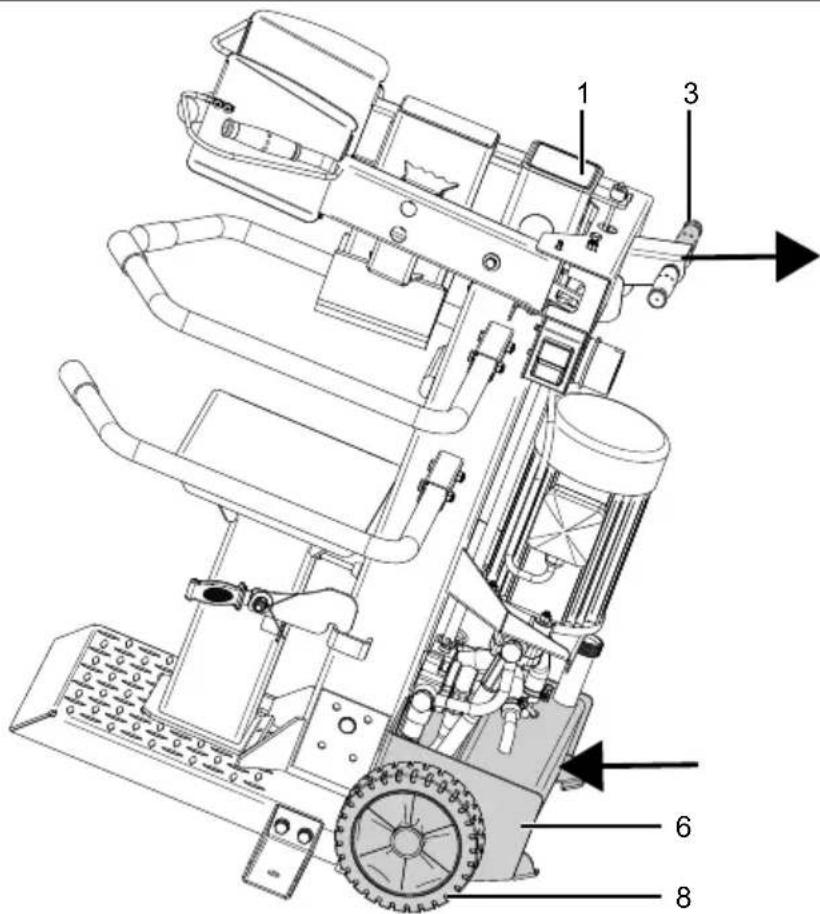
14.1 Transport with transport handle (3) (Fig. 15)
The log splitter is equipped with two transport wheels (8) and a transport handle (3) for easy transport.
- In order to transport the device, hold the transport handle (3) with one hand and tilt the log splitter slightly with your foot.
- The log splitter tilts on the transport wheels (8) and can thus be moved away.
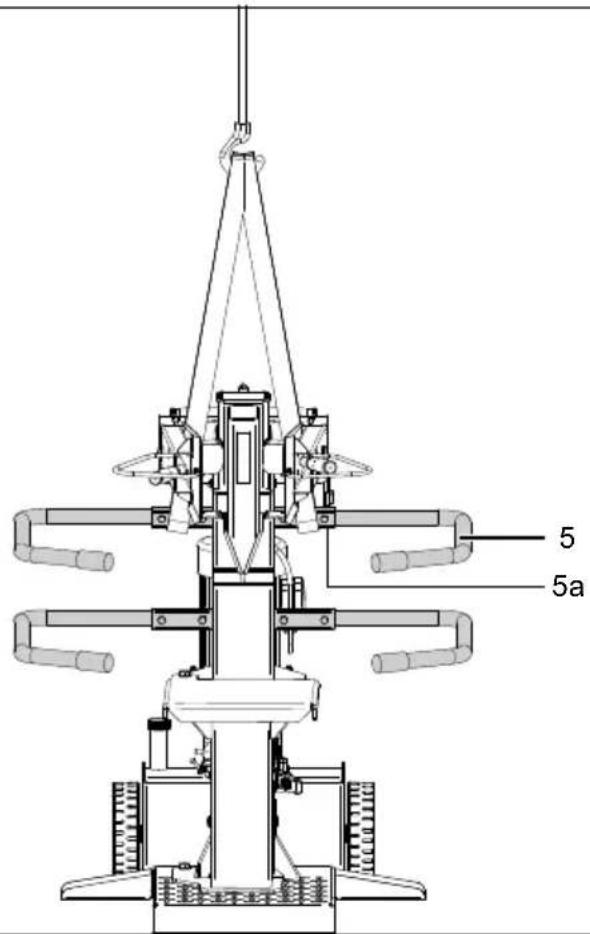
14.2 Transport by crane (Fig 16)
⚠ Attention!
Never lift by the splitting wedge (2)!
- Attach the transport straps (not included in the scope of delivery) on both sides to the top mounts (5a) for the protective frame (5).
- Lift the device up carefully.
15. Electrical connection
The electrical motor installed is connected and ready for operation. The connection complies with the applicable VDE and DIN provisions.
The customer's mains connection as well as the extension cable used must also comply with these regulations.
Use a portable safety switch (PRCD) if the residual current protective circuit (RCD) in the mains power supply is not provided with a rated residual current of no more than 30 mA.
The mains power connection is protected with a 16 A slow-blow fuse.
Damaged electrical connection cables
The insulation on electrical connection cables is often damaged.
This may have the following causes:
- Pressure points, where connection cables are passed through windows or doors.
- Kinks where the connection cable has been improperly fastened or routed.
- Places where the connection cables have been cut due to being driven over.
- Insulation damage due to being ripped out of the wall outlet.
- Cracks due to the insulation ageing.
Such damaged electrical connection cables must not be used and are life-threatening due to the insulation damage.
Check the electrical connection cables for damage regularly. Ensure that the connection cables are disconnected from electrical power when checking for damage.
Electrical connection cables must comply with the applicable VDE and DIN provisions. Only use connection cables with the designation H07RN-F.
The printing of the type designation on the connection cable is mandatory.
- The product fulfils the requirements of EN 61000-3-11 and is subject to special connection requirements. This means that use at any freely selectable connection points is not permitted.
- Given unfavourable conditions in the power supply the product can cause the voltage to fluctuate temporarily.
- The product is intended exclusively for use at connection points which
a) do not exceed a maximum permitted mains impedance "Z" (Zmax = 0.354 Ω (230V\~) / 0.330 Ω (400V\~)), or
b) have a continuous current carrying capacity of the mains of at least 100 A per phase.
- As the user, you are required to ensure, in consultation with your electric power company if necessary, that the connection point at which you wish to operate the product meets one of the two requirements, a) or b), named above.
Three-phase motor 400 V 3\~ / 50 Hz
Mains voltage 400 V 3N\~ / 50 Hz
Mains power connection and extension leads must be 5-core = 3\~ + N + PE.
- Extension cables must have a minimum cross section of 1.5 ~mm^2 ( ≤ 25 ~m ).
- Extension cables must have a minimum cross section of 2.5 ~mm^2 (>25 ~m) .
AC motor 230V / 50Hz
Mains voltage 230V / 50Hz
- Extension cables must have a minimum cross section of 1.5 ~mm^2 (≤ 25 ~m) .
- Extension cables must have a minimum cross section of 2.5 ~mm^2 (>25 ~m) .
Connections and repair work on the electrical equipment may only be carried out by electricians.
Please provide the following information in the event of any enquiries:
• Type of current for the motor
• Machine data - type plate
- Motor data - type plate
16. Disposal and recycling
Notes for packaging


The packaging materials are recyclable. Please dispose of packaging in an environmentally friendly manner.
Notes on the electrical and electronic equipment act [ElektroG]

Electrical and electronic appliances do not belong in household waste, but should be collected and disposed of separately.
- Used batteries or rechargeable batteries that are not installed permanently in the old appliance must be removed non-destructively before disposal. Their disposal is regulated by the battery act.
- Owners or users of electrical and electronic devices are legally obliged to return them after use.
- The end user is responsible for deleting their personal data from the old device being disposed of!
- The symbol of the crossed-out dustbin means that waste electrical and electronic equipment must not be disposed of with household waste.
-
Waste electrical and electronic equipment can be handed in free of charge at the following places:
-
Public disposal or collection points (e.g. municipal works yards).
- Points of sale of electrical appliances (stationary and online), provided that dealers are obliged to take them back or offer to do so voluntarily.
- Up to three waste electrical devices per type of device, with an edge length of no more than 25 centimetres, can be returned free of charge to the manufacturer without prior purchase of a new device from the manufacturer or taken to another authorised collection point in your vicinity.
- For additional take-back conditions of the manufacturers and distributors, please contact the respective customer service.
- In the case of delivery of a new electrical device by the manufacturer to a private household, the latter may arrange for the free collection of the old electrical device upon request from the end-user. Get in contact with the manufacturer's customer service.
• These statements only apply to devices installed and sold in the countries of the European Union and which are subject to the European Directive 2012/19/EU. Different provisions may apply to the disposal of electrical and electronic appliances in countries outside the European Union.
Contact your local refuse disposal authority for more details of how to dispose of your worn-out electrical devices.
Fuels and oils
- Before disposing of the unit, the fuel tank and the engine oil tank must be emptied!
- Fuel and engine oil do not belong in household waste or drains, but must be collected or disposed of separately!
- Empty oil and fuel tanks must be disposed of in an environmentally friendly manner.
17. Troubleshooting
The following table shows fault symptoms and describes remedial measures in the event of your machine failing to work properly. If you cannot localise and rectify the problem with this, please contact your service workshop.
| Fault Possible cause Remedy | ||
| Motor (18) is running, splitting column (1) does not move up. | Motor (18) turns in the wrong direction. | Turn the phase inverter in the power connection (see point 10.6). |
| The motor (18) ends the splitting process automatically. | Overvoltage protective device was triggered. | Call a qualified electrician. |
| The splitting column (1) only moves down slowly. | Not enough oil available. Check oil level with oil dipstick (24) screwed in. | |
| Bleed screw (23) is closed. Loosen the bleed screw (23) two turns before use. | ||
| Check if the cap nut (stroke setting bar) (26) of the stroke setting bar (15) is loose. | Tighten the cap nut (stroke setting bar) (26) of the stroke setting bar (15). If necessary, fit a new cap nut. | |
| Log is not split. | Log splitter loaded incorrectly. Insert the log correctly. | |
| Splitting wedge (2) is blunt. Grind the splitting wedge (2). | ||
| Oil leaks. Locate the leak, contact the dealer. | ||
| Splitting column (1) vibrates, makes noise. | Low oil and excess air in the hydraulic system. | Check the oil level, top up if necessary, otherwise contact the dealer. |
| Splitting column (1) vibrates strongly in the upper position. | Plastic guides are worn out. Replace the plastic guides at the top and bottom. | |
| Hydraulic pump whistles. | Too little hydraulic oil in the hydraulic oil tank (6). | Top up hydraulic oil. |
| Oil leakage at splitting column (1) or in other places. | Trapped air in the hydraulic system during operation. | Loosen the bleed screw (23) two turns before use. |
| Bleed screw (23) not tightened before transport. | Tighten bleed screw (23) before transport. | |
| Oil drain screw (25) loose. Tighten the oil drain screw (25) firmly. | ||
| Oil valve and/or seals defective. | Contact dealer. | |
Günzburger Straße 69
D-89335 Ichenhausen
Cher client,
Günzburger Straße 69
D-89335 Ichenhausen
Egregio cliente,
Günzburger Straße 69
D-89335 Ichenhausen
Geachte klant,
12.1 Splijtwig (2) (afb. 1)
14.1 Transport via transportgreep (3) (afb. 15)
Günzburger Straße 69
Günzburger Straße 69
9.1 Montar as rodas de transporte (8) (figs. 4, 4a)
9.3 Montar as garras de retenção (14) (figs. 6, 6a)
230 V 40
m = 311
flowchart
graph TD
    A["Actuator"] --> B["Pressure Relief Valve"]
    B --> C["Return Line"]
    C --> D["Motor M"]
    D --> E["Control Valve"]
    E --> F["Valve"]
    F --> G["Directional Control Valve"]
    G --> H["Reservoir"]
    H --> I["Check Valve"]
    I --> J["Return Line"]
    J --> K["Valve"]
    K --> L["Directional Control Valve"]
    L --> M["Return Line"]
    M --> N["Valve"]
    N --> O["Directional Control Valve"]
    O --> P["Return Line"]
    P --> Q["Valve"]
    Q --> R["Directional Control Valve"]
    R --> S["Return Line"]
    S --> T["Valve"]
    T --> U["Directional Control Valve"]
    U --> V["Return Line"]
    V --> W["Valve"]
    W --> X["Directional Control Valve"]
    X --> Y["Return Line"]
EU Declaration of Conformity
Article name: FENDEUR DE BÜCHES - COMPACT 8T
Nom d'article: LOG SPLITTER - COMPACT 8T
Standard references:
EN 609-1:2017 (mit Ausnahme 5.10 und 5.9.5.3 in zweistufigem Verfahren | with the exception of 5.10 and 5.9.5.3 in two-step procedure | à l'exception de 5.10 et 5.9.5.3 avec le procédé en deux étapes); EN 60204-1:2019; EN 55014-1:2017+A11; EN 55014-2:2015; EN IEC 61000-3-2:2019; EN IEC 61000-3-11:2019
This declaration of conformity is issued under the sole responsibility of the manufacturer.
The object of the declaration described above fulfils the regulations of the directive 2011/65/EU of the European Parliament and Council from 8th June 2011, on the restriction of the use of certain hazardous substances in electrical and electronic equipment.
Subject to change without notice
Documents registrar: Viktor Härtl
Günzburger Str. 69, D-89335 Ichenhausen
Garantie DE
Apparent defects must be notified within 8 days from the receipt of the goods. Otherwise, the buyer's rights of claim due to such defects are invalidated. We guarantee for our machines in case of proper treatment for the time of the statutory warranty period from delivery in such a way that we replace any machine part free of charge which provably becomes unusable due to faulty material or defects of fabrication within such period of time. With respect to parts not manufactured by us we only warrant insofar as we are entitled to warranty claims against the upstream suppliers. The costs for the installation of the new parts shall be borne by the buyer. The cancellation of sale or the reduction of purchase price as well as any other claims for damages shall be excluded.