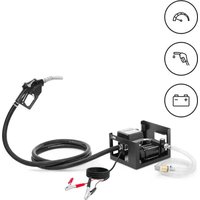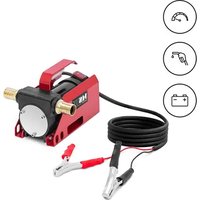
OP-40-DC - Pump MSW - Free user manual and instructions
Find the device manual for free OP-40-DC MSW in PDF.


User questions about OP-40-DC MSW
0 question about this device. Answer the ones you know or ask your own.
Ask a new question about this device
Download the instructions for your Pump in PDF format for free! Find your manual OP-40-DC - MSW and take your electronic device back in hand. On this page are published all the documents necessary for the use of your device. OP-40-DC by MSW.
USER MANUAL OP-40-DC MSW
This User Manual has been translated for your convenience using machine translation. Reasonable efforts have been made to provide an accurate translation; however, no automated translation is perfect nor is it intended to replace human translators. The official User Manual is the English version. Any discrepancies or differences created in the translation are not binding and have no legal effect for compliance or enforcement purposes. If any questions arise related to the accuracy of the information contained in the User Manual, please refer to the English version of those contents which is the official version.
Chapter 1: Technical data
| Parameter description | Parameter value | ||
| Product name | Oil Pump | Oil Pump | Oil Pump |
| Model | MSW-OP-56-DC | MSW-OP-40-DC | MSW-OP-72-DC |
| Rated voltage | DC 12 V | DC 12 V | DC 12 V |
| Rated power [W] | 200 | 150 | 360 |
| Engine speed [rpm] | 3200 | 4200 | 3800 |
| Maximum capacity [l/min] | 56 | 40 | 72 |
| Max lift [m] | 7 | 7 | 14 |
| Duty Cycle: | S2 30 min | S2 30 min | S2 30 min |
| IP protection class | IPX4 | IPX4 | IPX4 |
| Max depth [m] | 2 | 2 | 2 |
| Adapter outlet/inlet diameter [mm] | 25.4 | 25.4 | 25.4 |
| Dimensions (width x depth x height) [cm] | 29.5x21.5x22.5 | 28x19x24.6 | 33x22.5x25 |
| Weight [kg] | 5.25 | 4.85 | 7.75 |
| Parameter description | Parameter value | |
| Product name | Oil Pump | Oil Pump |
| Model | MSW-OP-67-AC | MSW-OP-78-AC |
| Rated voltage [V~] / frequency [Hz] | 230/50 | 230/50 |
| Rated power [W] | 500 | 600 |
| Engine speed [rpm] | 2800 | 2800 |
| Maximum capacity [l/min] | 60 | 80 |
| Max lift [m] | 15 | 15 |
| Duty Cycle: | S1 | S1 |
| IP protection class | - | IPX4 |
| Max depth [m] | 2 | 2 |
| Adapter outlet/inlet diameter [mm] | 25.4 | 25.4 |
| Dimensions (width x depth x height) [cm] | 30.5x20.5x27.5 32.5x23x27.5 | |
| Weight [kg] | 5.8 | 8.3 |

Caution: Please read this manual carefully before operating the pump.
Chapter 2: Warning
- The user must strictly observe all applicable accident-prevention measures and follow the instructions provided in this manual.
- Never move the motor pump during operation.
- Before using the motor pump, ensure the power supply cable and all other devices are in perfect working condition.
- Do not use the motor pump if barefoot, if your hands are wet, or if standing in water.
- All moving parts are protected by casings. Never remove these casings while the motor pump is running.
- Keep the power socket protected from water, rain, and other liquids.
- Do not use with gasoline, alcohol, or in hazardous locations.
- Improper use or installation can result in serious injury or death.
- Do NOT smoke near the pump or use it near open flames.
- Do not use this product to transfer fluids into aircraft.
• This pump is not designed for fluids for human consumption or water-containing fluids. - Do not dispense fluids thicker than diesel fuel as this may cause the motor to overheat.
Safety instructions
To ensure safe and efficient operation, carefully follow these precautions:
- Disconnect power to the pump before servicing.
- Use a diesel-compatible filter on the pump outlet to prevent foreign material from entering the fuel tank.
- Secure the tank or barrel to prevent tipping, whether full or empty.
- Never leave the pump running unattended.
Chapter 3: Handling and transport
3.1 Unpacking
If the packaging appears damaged, inspect the motor pump for any signs of damage due to transport or handling.
Warning: Before installing and using the motor pump, verify that the model and specifications match those on the identification plate.
3.2 Handling, disassembly, and transport
- Never move the motor pump without unplugging it from the power supply.
- Remove the delivery and suction tubes before moving the pump.
- Unscrew the bolts or screws securing the pump in place.
- Do not move or drag the pump by pulling the power cable.
Chapter 4: Use and starting
4.1 Electrical power supply connection
Before use, determine if the pump operates on DC or AC power.
If using DC power:
- Connect the pump's clamps to a battery capable of providing the required voltage and current.
- If using a vehicle battery, remove the battery from the vehicle and place it on a stable surface.
- The pump can be connected to a vehicle battery only if the vehicle is parked outdoors, and the pump's cables and pipes are long enough for stable support.
- Do not use extension cords with the pump's electric cables. If the supplied cables are too short, replace the clamps with jack plugs by a qualified electrician.
- The pump can only be connected to an adequately powered battery charger equipped with terminals. Never connect the pump clamps directly to the charger to avoid sparks.
- Ensure the pump voltage (on the identification plate) matches the battery voltage.
- Always respect polarity: connect the black clamp to the negative (-) terminal and the red clamp to the positive (+) terminal.
- Connect the negative pole first, followed by the positive, to avoid sparks.
- Ensure the pump is securely positioned, and the cables and pipes are long enough for stable operation.
If using AC power:
- A power overload protection switch must be installed.
- Ensure the pump is securely positioned and that the cables and piping are of sufficient length.
4.2 Starting the pump
- Ensure all tubes are sealed, and the power cable is properly connected.
- Insert the suction tube into the tank and the gun into the filling hole.
- Switch on the pump, gradually release the gun lever, and start the fuel transfer.
Warnings:
- Never leave the pump unattended while filling to avoid diesel overflow.
- Do not start the pump without first connecting the suction and delivery tubes.
- Switch off the motor pump immediately after closing the gun.
- Never operate the pump if barefoot, with wet hands, or while standing in water.
- Using undercharged batteries may result in slower pump speed, reduced flow, and insufficient suction.
Chapter 5: Assembly and disassembly
This motor pump requires no additional accessories and does not need assembly. Only qualified technicians or authorized service centers should disassemble the motor.
Chapter 6: Mechanical risks
Extreme temperatures:
• Extremely low temperatures (-30°C) can freeze diesel inside the pump, causing damage.
• Extremely high temperatures (above 40^ C) may cause plastic parts to sag or warp.
Recommendation: Install the unit in a well-ventilated area away from direct sunlight.
Chapter 7: Maintenance and troubleshooting
7.1 Maintenance
- Always disconnect the power supply before performing maintenance.
• The motor pump requires no internal maintenance and must not be disassembled. - Keep the suction and delivery sections clean and free from clogs.
7.2 Troubleshooting
| PROBLEMS | CAUSES | SOLUTIONS |
| The pump fails to turn | No power supplyImpeller jammedMotor malfunction | Check the clamps and the safety devices.Disassemble, check for signs of damage or clogging.Reassemble.Contact your local dealer. |
| Low pump flow. | Tank liquid level too low.By-pass valve jammed.Filter clogged.Air in the suction tube.Decreased pump rotation speed.Leakage of Diesel oil.The suction tube is resting on the bottom of the tank.Excessive suction height. | Fill up the tank.Clean and re-assemble.Clean the filter.Make sure that the suction tube is not damaged.Check and correct pump voltage.Check the connectors and gaskets.Raise the tube in the tank.Lower the level of the pump. |

Poglavje 3: Ravnanje in transport
3.1 Razpakiranje
For the disposal of the device please consider and act according to the national and local rules and regulations.
CONTACT
expondo Polska sp. z o.o. sp. k.