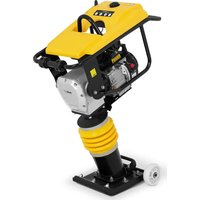
TRAM10 - Vibratory plate MSW - Free user manual and instructions
Find the device manual for free TRAM10 MSW in PDF.


| Product type | Vibrating plate (tamper) |
| Model | MSW-TRAM10 |
| Brand | MSW |
| Rated power | 4.8 kW |
| Engine | Luncin 166F-2H, unleaded gasoline |
| Engine speed | 3 600 rpm (nominal) |
| Impact force | 10 kN |
| Vibration frequency | 10.7 Hz |
| Impact frequency | 450-650 impacts/min |
| Jump height | 650 mm |
| Dimensions (L × W × H) | 1008 × 440 × 775 mm |
| Weight | 78 kg |
| Sound level (LwA) | 108 dB(A) |
| Fuel type | Unleaded gasoline |
| Engine oil | SAE 30 (above -9°C) or SAE 10W-30 (below) |
| Hydraulic oil | ISO VG 46 or equivalent |
| Fuel tank capacity | Not specified in the manual |
| Main use | Soil compaction on roads, embankments, trenches |
| Safety | Emergency stop, mandatory personal protective equipment (helmet, goggles, earplugs, gloves, safety shoes) |
| Routine maintenance | Check oil level, clean air filter (every 200-300 h), change hydraulic oil, replace spark plug (gap 0.6-0.7 mm) |
| Long-term storage | Drain fuel, oil the cylinder, store in a dry and clean place |
| Repairability | Repairs exclusively by the manufacturer's after-sales service |
| Warranty | Not specified in the manual |
Frequently Asked Questions - TRAM10 MSW
User questions about TRAM10 MSW
0 question about this device. Answer the ones you know or ask your own.
Ask a new question about this device
Download the instructions for your Vibratory plate in PDF format for free! Find your manual TRAM10 - MSW and take your electronic device back in hand. On this page are published all the documents necessary for the use of your device. TRAM10 by MSW.
USER MANUAL TRAM10 MSW
The image is too blurry to recognize any text content.
| Parameter description Parameter value | |
| Product name Tamping rammer | |
| Model MSW-TRAM10 | |
| Rated power [kW] 4.8 | |
| Idling speed [rpm] 1,920 | |
| Maximum speed [rpm] 4,050 | |
| Engine Loncin 168F-211 | |
| Rated speed [r/min] 3,600 | |
| Stroke height [mm] .650 | |
| Centripetal force [kN]/Impact force [kN] | 10 |
| Vibration frequency [Hz] | 10.7 |
| Impact frequency [impacts/min] | 450-650 |
| Noise level [dB]/t/wA sound power level [dB (A)] | 108 |
| Dimensions [mm] 1.008x440x775 | |
| Weight [kg] 78 | |
- GENERAL DESCRIPTION
The user manual is designed to assist in the safe and trouble-free use of the device. The product is designed and manufactured in accordance with strict technical guidelines, using state-of-the-art technologies and components. Additionally, it is produced in compliance with the most stringent quality standards.
DO NOT USE THE DEVICE UNLESS YOU HAVE THOROUGHLY READ AND UNDERSTOOD THIS USER MANUAL.
To increase the product life of the device and to ensure trouble free operation, use it in accordance with this user manual and regularly perform maintenance tasks. The technical data and specifications in this user manual are up to date. The manufacturer reserves the right to make changes associated with quality improvement. The device is designed to reduce noise emission risks to a minimum, taking into account technological progress and noise reduction opportunities.
LEGEND
| CE | The product satisfies the relevant safety standards. |
| Read instructions before use. | |
| The product must be recycled. | |
| WARNING! or CAUTION! or REMEMBER! Applicable to the given situation (general warning sign). |
| Use ear protection. Exposure to loud noise may result in hearing loss. | |
| Wear protective goggles. | |
| Wear a dust mask (respiratory tract protection). | |
| Wear protective gloves. | |
| Wear head protection. | |
| Wear foot protection. | |
| ATTENTION! Loud noise warning! | |
| ATTENTION! Hand crush hazard! | |
| Emergency stop! | |
| ATTENTION! Hot surface, risk of burns! | |
PLEASE NOTE! Drawings in this manual are for illustration purposes only and in some details, it may differ from the actual product. The original operation manual is in German. Other language versions are translations from German.
- USAGE SAFETY
ATTENTION! Read all safety warnings and all instructions. Failure to follow the warnings and instructions may result in serious injury or even death. The terms "device" or "product" are used in the warnings and instructions to refer to < Tamping rammer >. Do not cover air inlets / outlets! Do not put your hands or other items inside the device while it is in use!
2.1. ENGINE OPERATION SAFETY
a) Do not smoke near the device. The device contains flammable substances.
b) The engine gets very hot during operation. Do not touch the hot engine because it may cause burns.
c) Acid oil till the full marking before start using the device. If the oil level is low, engine will not start or it might shut down.
d) Oil leaking from the machine should be reported to the appropriate services or comply with legal requirements applicable in the area of use.
c) Danger! Danger to health and the risk of explosion of the internal combustion engine
f) Poisonous carbon monoxide is present in the engine exhaust. Remaining in a carbon monoxide environment may lead to losing consciousness or even death. Do not run the engine in a closed space.
g) Protect the engine from heat, sparks and flame. Do not smoke in the vicinity of the chipper!
h) Petrol is flammable and explosive. Before refuelling the engine should be turned off and cooled down
j) Warning! Risk of engine damage due to wrong fuel
j) Make sure that all users have read, understood and follow the manual.
k) Misuse or careless use of the device may cause serious injuries.
Before each cleaning, regulation, accessory change, or if the device is not in use, turn the engine off and completely cool the device.
m) Do not touch moving parts or accessories unless the engine is turned off and left to cool.
EN
EN
n) Stay away from moving and rotating parts as they may cause injury.
o) Do not use the machine if all protective covers are not installed.
p) Do not increase the engine speed above 3500 rpm without more a load. Any increase may result in injury or damage to the device.
q) Do not touch the silencer or other hot elements when the engine is hot it may cause serious burns.
1) Make sure that petrol is stored only in certified containers (e.g. canister).
s) Do not refuel near sparks, flames or lit cigarettes.
t) Stop the engine before refuelling. Never refuel while the engine is running or is still hot. Otherwise, spilled or evaporated fuel may catch fire from engine sparks or silencer heat.
u) Do not overfill fuel tank and avoid spilling petrol while refuelling. Spilled petrol or petrol fumes may catch fire. If petrol has been spilled, make sure that the area is dry before starting the engine.
v) After refuelling, make sure that the fuel tank cap is properly screwed on.
w) Do not operate the engine or refuel petrol in enclosed areas without appropriate ventilation.
x) Avoid operating the machine in enclosed spaces, tunnels or other poorly ventilated places as the exhaust fumes contain lethal/harmful fumes and gases. If operating the machine in such conditions is unavoidable, provide adequate exhaust extraction.
y) To transport: Stop the engine. Close and secure the fuel tank cap. Switch the fuel valve to the 'OFF O' position. Drain the fuel tank before long distance transportation or on bumpy roads.
2) Keep flammable materials (petrol, matches, straw, etc.) away from the exhaust.
2.2.SAFETY IN THE WORKPLACE
a) Make sure the workplace is clean and well lit. A messy or poorly lit workplace may lead to accidents. Try to think ahead, observe what is going on and use common sense when working with the device.
b) Do not use the device in a potentially explosive environment, for example in the presence of flammable liquids, gases or dust. The device generates sparks which may ignite dust or fumes.
c) If you discover damage or irregular operation, immediately switch the device off and report it to a supervisor without delay.
d) If there are any doubts as to the correct operation of the device, contact the manufacturer's support service.
c) Only the manufacturer's service point may repair the device. Do not attempt any repairs independently!
f) In case of fire, use a powder or carbon dioxide (CO₂) fire extinguisher (one intended for use on live electrical devices) to put it out.
g) Children or unauthorised persons are forbidden to enter a work station. (A distraction may result in loss of control over the device).
h) The device produces dust and debris during operation. It is important to protect bystanders from their harmful effects.
i) Use the EMERGENCY STOP if there is a risk of injury or death, accident or damage.
j) Regularly inspect the condition of the safety labels. If the labels are illegible, they must be replaced.
k) Please keep this manual available for future reference. If this device is passed on to a third party, the manual must be passed on with it.
1) Keep packaging elements and small assembly parts in a place not available to children.
m) Keep the device away from children and animals.
n) If this device is used together with another equipment, the remaining instructions for use shall also be followed.
REMEMBER! When using the device, protect children and other bystanders.
2.3. PERSONAL SAFETY
a) Do not use the device when tired, ill or under the influence of alcohol, narcotics or medication which can significantly impair the ability to operate the device.
b) The machine may be operated by physically fit persons who are able to handle the machine, are properly trained, who have reviewed this operating manual and have received training in occupational health and safety.
c) The machine is not designed to be handled by persons (including children) with limited mental and sensory functions or persons lacking relevant experience and/ or knowledge unless they are supervised by a person responsible for their safety or they have received instruction on how to operate the machine.
d) When working with the device, use common sense and stay alert. Temporary loss of concentration while using the device may lead to serious injuries.
e) Use personal protective equipment as required for working with the device, specified in section 1 (Legend). The use of correct and approved personal protective equipment reduces the risk of injury.
f) Do not overestimate your abilities. When using the device, keep your balance and remain stable at all times. This will ensure better control over the device in unexpected situations.
g) Do not wear loose clothing or jewellery. Keep hair, clothes and gloves away from moving parts. Loose clothing, jewellery or long hair may get caught in moving parts.
h) Remove all adjusting tools or spanners before turning the device on. A tool or spanner left in the revolving part of the device may cause injury.
1) Use eye, ear and respiratory protection.
j) The device is not a toy. Children must be supervised to ensure that they do not play with the device.
2.4. SAFE DEVICE USE
a) Do not overload the device. Use the appropriate tools for the given task. A correctly selected device will perform the task for which it was designed better and in a safer manner.
b) Do not use the device if the ON/OFF switch does not function properly (does not switch the device on and off). Devices which cannot be switched on and off using the ON/OFF switch are hazardous, should not be operated and must be repaired.
c) When not in use, store in a safe place, away from children and people not familiar with the device who have not read the user manual. The device may pose a hazard in the hands of inexperienced users.
d) Keep the device in perfect technical condition. Before each use check for general damage and especially check for cracked parts or elements and for any other conditions which may impact the safe operation of the device. If damage is discovered, hand over the device for repair before use.
e) Keep the device out of the reach of children.
f) Device repair or maintenance should be carried out by qualified persons, only using original spare parts. This will ensure safe use.
g) To ensure the operational integrity of the device, do not remove factory-fitted guards and do not loosen any screws.
h) When transporting and handling the device between the warehouse and the destination, observe the occupational health and safety principles for manual transport operations which apply in the country where the device will be used.
i) Do not leave this appliance unattended while it is in use.
j) Clean the device regularly to prevent stubborn grime from accumulating.
k) The specified vibrations emission was measured using standard measurement methods. Vibrations emissions may change if the device is used in different surroundings.
I) The device is not a toy. Cleaning and maintenance may not be carried out by children without supervision by an adult person.
m) It is forbidden to interfere with the structure of the device in order to change its parameters or construction.
n) Keep the device away from sources of fire and heat.
b) During operation, the device generates vibrations and requires repetitive activities that may be harmful to user's hands and shoulders.
p) The user and the machine should be in a stable position on level ground. Make sure that the machine does not tip over, slip or fall during operation or when left unattended.
q) Before using the device near excavation, make sure that excavation walls are stable and will not collapse under vibration.
r) Make sure that there are no live electrical cables, gas, water or other telecommunication infrastructure in the area to be compacted because they may become damaged by vibrations.
s) Do not stand on the device, whether it is currently in use or not.
t) Slipping, tripping or falling are the main causes of serious injury or death. Be careful of uneven or slippery working surfaces as well as unprotected holes and excavations.
(1) Use proper protective clothing and footwear when working with hot bituminous mixtures.
v) The device is heavy and should be moved and positioned by two sufficiently strong people. Use the handles on the machine and proper heavy-lifting techniques.
ATTENTION! Despite the safe design of the device and its protective features, and despite the use of additional elements protecting the operator, there is still a slight risk of accident or injury when using the device. Stay alert and use common sense when using the device.
- USE GUIDELINES
The tamping rammer is used for compacting soil on roads, embankments and reservoirs, before ground construction works and after completion of underground installation works.
The user is liable for any damage resulting from unintended use of the device.
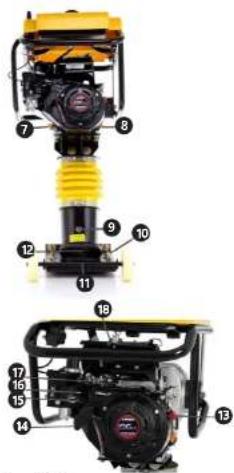
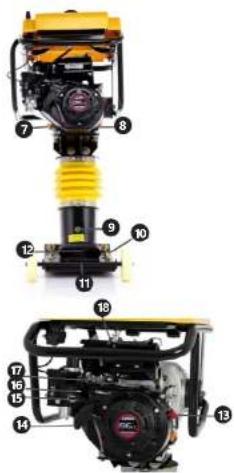
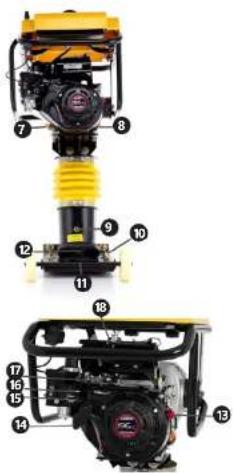
3.1. DEVICE DESCRIPTION
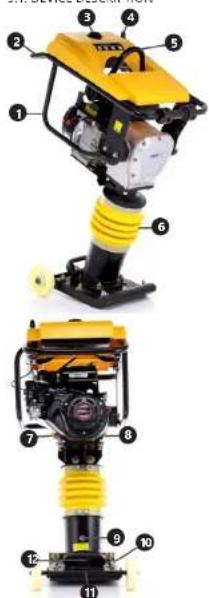
-
Frame
-
Handle
-
Fuel filler cap
-
Speed control lever
-
Handle
-
Bellows
-
Cap 1 with engine oil filler dipstick
B. Cap 2 with engine oil filler dipstick
- Inspection window for checking the hydraulic oil
level
-
Foot
-
Axle with wheels
-
Hydraulic oil drain hole
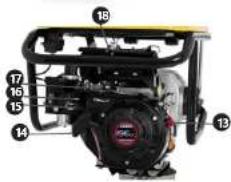
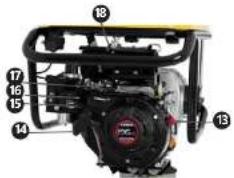
-
Engine starter switch
-
Starter handle
-
Lever regulating the fuel supply to the engine
-
Choke lever
-
Speed control lever
-
Fuel tank valve
3.2. PREPARING FOR USE
APPLIANCE LOCATION
Keep the device away from hot surfaces. Always use the device on an oven, stable, fireproof and dry surfaces. Make sure that the device power supply matches its nameplate specifications!
Assembling the undercarriage
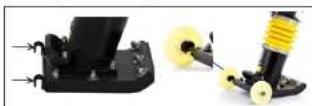
In order to install the undercarriage transport wheels, the wheel axle should be installed on the undercarriage hooks.
3.3. DEVICE USE
CAUTION: Factory new machine is not filled with oil. Starting the engine without adding oil may damage the engine and void the warranty.
a) After unpacking the rammer, check that it has no visible damage, loose structural components, cuts or broken plastic parts.
b) Check the oil level by looking at the oil level sight glass indicator
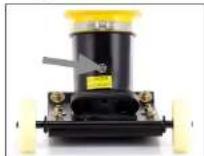
c) If no oil can be seen through the sight glass, top up the level with ISO VG46 oil or other oil of a similar standard.
Important: The oil level should be kept at half the height of the sight glass.
d) Check that the fuel tank valve is closed. Open the fuel filler cap, check the fuel level and top up the tank with unleaded petrol if necessary. Close the fuel filler cap.
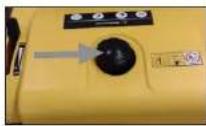
e) Check the engine oil level. Dipstick plugs for checking the engine oil level are located on both sides of the machine, both indicate the level in the same tank. If necessary, top up the oil by inserting the funnel into the hole. Close the cap with the dipstick.
Ambient temperature Engine oil standard
-120°F to +15°F (49°C do -9°C) SAE 30
Below +15°F (-9°C) SAE 10w-30
Before starting
a) Check that the structural components are tightened.
b) Check that the protective accordion does not leak.
c) Remove any dirt from the flat surfaces of the rammer
and make sure that the handle is clean.
d) Adjust the handle angle to the operator's height.
Starting the engine
a) Open the fuel tank valve.
b) Turn the engine starter switch to the "ON" position. c) Slightly move the speed control lever to avoid running the machine at idle speed.
d) Pull the engine fuel control lever to the fully open position (maximum to the right).
c) For a cold start, move the choke lever to the closed position (maximum to the left), for a warm start the lever can be in the middle position or fully open.
f) Grasp the starter handle and pull slowly until resistance is felt. Then pull quickly and vigorously. After starting, do not release the handle, but put it back in place.
Caution! Allowing the starter cord to be pulled too quickly and uncontrollable may cause the user's hand to be pulled towards the machine before the cord is released. Unintentional starting may result in injury, e.g. fracture, bruising, etc.
Adjust the operating speed with the speed control lever. It is recommended to operate at the highest speed.
g) If the engine does not start, move the choke lever to the half-open position (middle position) and repeat previously described steps.
h) If the engine does not start after repeated attempts, check the spark plug for excess fuel. If necessary, clean or replace the spark plug with a new one.
Stopping the engine
ove the speed control lever to the minimum (idle) speed and allow the engine to run for approx. 3 minutes at low speed. Then turn the starter switch to the "OFF" position and close the fuel valves.
3.4. CLEANING AND MAINTENANCE
a) After cleaning the device, all parts should be dried completely before using it again.
b) Store the unit in a dry, cool place, free from moisture and direct exposure to sunlight.
c) Do not spray the device with a water jet or submerge it in water.
d) The device must be regularly inspected to check its technical efficiency and spot any damage.
+ After using the rammer
a) Carefully remove dirt and oil from the engine and the controls area.
b) Check and tighten all fasteners.
c) Check the protective accordion
• After a week of use
a) Remove the fuel filter cover and clean the interior of the fuel tank.
b) Remove and clean the filter from the bottom of the tank.
c) Remove the spark plug. Check the spark plug and spark plug washer for wear or damage. Replace with a new one if necessary. If the spark plug is to be reused, clean it with a wire brush. Check spark plug socket. Carefully bend the side electrode, adjust the gap if necessary. The gap between the electrodes should be 0.6-0.7 mm.
ATTENTION: disassembly, replacement and adjustment of the electrode gap should be done on a cold engine (cold spark plug)!
d) Clean the air filter cover.
• After 200-300 hours of use
a) Ensure that there is no excess oil on the lubricated parts. The air filter (X) should be cleaned with purified kerosene, then immersed in a pre-prepared bath of engine oil and gasoline in a ratio of 1:3. Then squeeze both elements and shake off excess fluid.
b) Open the air filter cover with the clamp. The air filter should be cleaned with purified kerosene, then immersed in a previously prepared bath of engine oil and petrol in a ratio of 1:3. Then squeeze both parts and shake off excess liquid. Put the filter in its place, close the cover and secure it with the clamp.
c) Change the hydraulic oil. To remove the old oil, place a container under the oil outlet. Then loosen the screw of the hydraulic oil drain hole and tilt the machine to ease the oil flow. If you continue to use the machine, fill the tank with MOBIL ISO VG 46 or another oil of the same standard and properties using a funnel and observe the oil level on the dipstick. Tighten the screw.
- For unlimited storage
al Remove fuel from the fuel tank, fuel line, and carburettor.
b) Remove the spark plug and pour a few drops of engine oil into the cylinder. Grasp and pull the starter so that the oil reaches all parts of the engine.
DANE TECHNICZNE
• 97/68/EC, 2004/26/EC, 2006/96/EC, 2010/26/EU.
NAMEPLATE TRANSLATIONS

| 12 | 3 | 5 | 6 | |
| DE | Produktname | Modell | Gewicht | Produktionsjahr |
| EN | Product Name | Model | Weight | Production year |
| PL | Nazwa produktu | Model | Waga | Rok produkcji |
| CZ | Nazev výrobku | Model | Hmotnost | Rok výroby |
| FR | Nom du produit | Modèle | Poids | Année de production |
| IT | Nome del prodotto | Modello | Peso | Anno di produzione |
| ES | Nombre del producto | Modelo | Peso | Año de producción |
| 6 | 7 | 8 | 9 | |
| DE | Motorleistung | Max. Aufprallkraft | Anregungskraft | Schlaghäufigkeit |
| EN | Power | Max. impact force | Excitation Force | Vibration Frequency |
| PL | Moc silnika | Max. sila uderzenia | Sila wybudzeniowa | Crystodliwoic vibrocji |
| CZ | Vykon motoru | Max. sila nárazu | Budici sila | Frekvence rázů |
| FR | Puissance du moteur | Max. force d'impact | Force d'excitation | Fréquence d'impact |
| IT | Potenza del motore | Max. forza d'impatto | Forza di eccitazione | Frequenza d'impatto |
| ES | Potencia motriz | Max. fuerza de impacto | Fuerza de excitación | Frecuencia de impactos |
nDoc
www.riskCE.pl
rev.08-02-2018


NOTES/NOTIZEN NOTES/NOTIZEN
For the disposal of the device please consider and act according to the national and local rules and regulations.
CONTACT
expondo Polska sp. z o.o. sp. k.