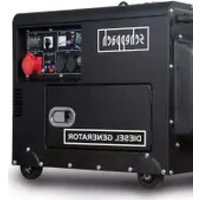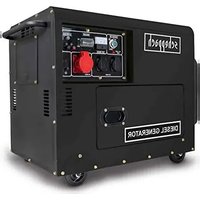
DSE5500 - Generator SCHEPPACH - Free user manual and instructions
Find the device manual for free DSE5500 SCHEPPACH in PDF.


User questions about DSE5500 SCHEPPACH
0 question about this device. Answer the ones you know or ask your own.
Ask a new question about this device
Download the instructions for your Generator in PDF format for free! Find your manual DSE5500 - SCHEPPACH and take your electronic device back in hand. On this page are published all the documents necessary for the use of your device. DSE5500 by SCHEPPACH.
USER MANUAL DSE5500 SCHEPPACH
Günzburger Straße 69
D-89335 Ichenhausen
Verehrter Kunde,
Homepage: https://www.scheppach.com/de/service
Table of contents: Page:
- Explanation of the symbols on the device 27
- Introduction 29
- Device description (Fig. 1 - 15) 29
- Scope of delivery 29
- Proper use 29
- Safety instructions 30
- Technical data 33
- Unpacking 34
9.Before commissioning 34 - Operation 35
- Cleaning and maintenance 36
- Storage 38
- Transport 38
- Transporting & lifting the product 39
- Ordering spare parts 39
- Disposal and recycling 40
- Troubleshooting 41
- Maintenance plan 41
- Declaration of conformity 70
1. Explanation of the symbols on the device
Symbols are used in this manual to draw your attention to potential hazards. The safety symbols and the accompanying explanations must be fully understood. The warnings themselves will not rectify a hazard and cannot replace proper accident prevention measures.
| ! | Attention! Failure to observe the safety signs and warning information affixed to the machine and failure to observe the safety and operating instructions can result in serious injury or even death. |
| Before commissioning, read and observe the operating manual and safety instructions! | |
| Wear hearing protection! | |
| Wear work gloves! | |
| Do not expose the device to rain. | |
| Naked flames or smoking near the device is strictly prohibited! | |
| Warning - Hot parts! | |
| Warning against electrical voltage. | |
| Make sure that other persons maintain a sufficient safety distance. Keep uninvolved persons away from the device. Attention: hot surface! Danger of burning. | |
| Switch the engine off before carrying out any cleaning or maintenance work. Disconnect the spark plug connector from the spark plug and take out the ignition key. | |
| Danger of poisoning! Only use the device outdoors and never in closed or poorly ventilated rooms. | |
| Sparks are produced when the engine is started. These can ignite nearby flammable gases. | |
| Read the whole text of the operating manual through carefully before start up! | |
| Important. Always switch off the engine before refuelling. Do not refill during operation. | |
| Guaranteed sound power level of the device | |
| Be very careful when dealing with fuels and lubricants! | |
| Check the oil level | |
| Mechanical ON/OFF switch | |
| Lifting point | |
| The product complies with the applicable European directives. | |
2. Introduction
Manufacturer:
Scheppach GmbH
Günzburger Straße 69
D-89335 Ichenhausen
Dear Customer,
we wish you much pleasure and success in working with your new device.
Note:
In accordance with the applicable product liability laws, the manufacturer of this device assumes no liability for damage to the device or caused by the device arising from:
- Improper handling
Non-compliance with the operating manual, - Repairs carried out by third parties, unauthorised specialists.
- Installing and replacing non-original spare parts
- Application other than specified.
Note:
Read through the complete text in the operating manual before installing and commissioning the device.
This operating manual should help you to familiarise yourself with your device and to use it for its intended purpose.
The operating manual includes important instructions for safe, proper and economic operation of the device, for avoiding danger, for minimising repair costs and downtimes, and for increasing the reliability and extending the service life of the device.
In addition to the safety instructions in this operating manual, you must also observe the regulations applicable to the operation of the device in your country. Keep the operating manual at the device, in a plastic sleeve, protected from dirt and moisture. They must be read and carefully observed by all operating personnel before starting the work.
The device may only be used by personnel who have been trained to use it and who have been instructed with respect to the associated hazards.
The required minimum age must be observed.
In addition to the safety instructions in this operating manual and the separate regulations of your country, the generally recognised technical rules relating to the operation of such machines must also be observed.
We accept no liability for accidents or damage that occur due to a failure to observe this manual and the safety instructions.
3. Device description (Fig. 1 - 15)
- Sight glass
- Fuel filler cap
- Lifting eye
- Front transport handle
- Maintenance door
- Locking mechanism
7.Wheels - Rear transport handle
- Air filter cover
- Ignition lock
- Oil warning indicator
- Voltage indicator
- Circuit breaker 230V / 400V
- Reset button
- 12 V DC connections
- Earthing screw
- 400V -socket
- 230V -socket(2x)
-
- Oil dipstick
- Oil drain screw
- Oil filter
- Air filter
- Coarse filter
- Air filter outlet
- Diesel filter
- Mechanical ON/OFF switch
- Fuel filter insert
4. Scope of delivery
Power generator
- Ignition key (2x) (A)
- Open-ended spanner, 10mm + 12mm (B)
- Battery (C)
- 2x locking nuts M6 (D)
- 2x M6 x 16 screws (E)
- Operating manual
5. Proper use
The power generator is suitable for devices that are intended to operate on a 230 V/400 V AC or 12 V DC voltage source.
With household devices and electronic devices, please check the suitability according to the respective manufacturer's specifications.
Attention! The power generator must not be connected to the mains supply as a domestic emergency power supply. It can cause damage to the power generator or other electrical devices.
AVR (Automatic Voltage Regulation):
The automatic voltage regulation system ensures that the voltage fluctuations of the power generator are within the range guaranteed by the power supply companies and thus do not pose a danger to electronic equipment.
However, one should always check before use whether the consumption is suitable for operation with a power generator. In the case of extremely sensitive electronics, make enquiries with the manufacturer (such as televisions, mobile phones, tablets, laptops, etc.) beforehand, as a power generator produces a non-constant sine wave voltage due to the combustion engine.
The machine may only be used in the intended manner. Any use beyond this is improper. The user/operator, not the manufacturer, is responsible for damages or injuries of any type resulting from this.
An element of the intended use is also the observance of the safety instructions, as well as the assembly instructions and operating information in the operating manual.
Persons who operate and maintain the machine must be familiar with it and must be informed about potential dangers.
In addition, the applicable accident prevention regulations must be strictly observed.
Other general occupational health and safety-related rules and regulations must be observed.
The liability of the manufacturer and resulting damages are excluded in the event of modifications of the machine.
Please note that our equipment was not designed with the intention of use for commercial or industrial purposes. We assume no guarantee if the device is used in commercial or industrial applications, or for equivalent work.
6. Safety instructions
We have marked points in this operating manual that impact your safety with this symbol.
Furthermore, the operating manual contains other important text sections that are marked with the word "ATTENTION!".
Attention!
When using equipment, several safety warnings must be observed to prevent injuries and damage. For this reason, please carefully read this operating manual / safety instructions. If you hand the device over to another person, please hand over this operating manual / safety instructions as well. We accept no liability for accidents or damage that occur due to a failure to observe this manual and the safety instructions.
DANGER
A failure to observe these instructions poses an extreme danger of death or the risk of life-threatening injuries.
WARNING
A failure to observe these instructions poses a danger of death or the risk of serious injuries.
CAUTION
A failure to observe these instructions poses a minor to moderate danger of injury.
NOTE!
A failure to observe these instructions poses a risk of damage to the engine or other property.
1) It is prohibited to make any modifications to the power generator.
2) The manufacturer's preset speed must not be changed. Power generators or connected devices may be damaged.
3) Danger of poisoning! Exhaust gases, fuel and lubricants are poisonous, exhaust gases may not be inhaled.
4) Fire risk! Fuel and fuel vapours are highly flammable or explosive.
5) Engine exhaust gases are toxic. The power generator must not be operated in unventilated rooms. If the power generator is to be operated in well-ventilated rooms, the exhaust gases must be discharged directly outside via an exhaust gas hose. Additional requirements for protection against fire and explosion must also be observed. Toxic exhaust gases can also escape when operating an exhaust hose. Because of the risk of fire, the exhaust hose must never be directed at flammable materials.
6) Never operate the power generator in rooms with highly flammable substances.
7) Hot surfaces! Danger of burns, do not touch exhaust system and drive unit.
8) Do not touch any mechanically moving or hot parts. Do not remove any protective covers.
9) Protective equipment! Use suitable hearing protection when you are near the device.
10) Only original parts may be used for maintenance and accessories.
11) Repair and adjustment work may only be carried out by authorised specialist personnel.
12) Protect yourself from electrical hazards.
13) Never touch the power generator with wet hands.
14) Only use approved and appropriately identified extension cables for use outdoors (H07RN).
15) If extension leads or mobile distribution networks are used, the resistance value must not exceed 1.5 Ω. As a guideline value, the total length of lines for a cross-section of 1.5mm^2 should not exceed 60 m, and for a cross-section of 2.5mm^2 , 100 m should not be exceeded.
16) Never operate the power generator during rain or snowfall.
17) Always switch off the engine during transport and refuelling.
18) Fuel is combustible and highly flammable. Do fuel the unit during operation. Do not fuel the unit when someone is smoking or near open flames. Do not spill any fuel.
19) Do not refuel or empty the tank near open light, fire or flying sparks. Smoking prohibited!
20) Provide a secure, level place for the power generator. Turning and tilting or changing location during operation are forbidden.
21) Place the power generator at least 1 m away from walls or connected devices.
22) Children must be protected by ensuring that they stay a safe distance away from the power generator.
23) Some parts of the reciprocating internal combustion engine are hot and may cause burns. The warnings on the power generator must be observed.
24) Values specified in the technical data under sound power level (L_WA) and sound pressure level (L_pA) represent emission levels and are not necessarily safe working levels. Since there is a correlation between emission and exposure levels, it cannot be reliably used to determine any additional precautionary measures that may be required.
Factors influencing the current exposure level of the worker include the characteristics of the workspace, other noise sources, airborne noise, etc., such as the number of machines and other adjacent processes and the length of time an operator is exposed to the noise. The permitted exposure level may also vary from country to country.
Nevertheless, this information will enable the operator of the machine to make a better assessment of the risks and hazards. If necessary, acoustical measurements should be taken after installation to determine the sound pressure level.
25) Warning! Comply with the electrical safety regulations applicable to the place where the power generators are used.
26) Warning! Consider the requirements and precautionary measures in case of re-supply of a system by power generators depending on the protective measures of this system and the applicable directives.
27) Power generators should only be used up to their rated power under the rated ambient conditions. If the power generator is used in conditions that do not comply with the reference conditions according to ISO 8528-8:2016, 7.1, and if the cooling of the engine or power generator is impaired, e.g. as a result of operation in restricted areas, a reduction in power is required.
28) Due to high mechanical loads, only durable rubber hose lines (per IEC 60245-4) or equivalent equipment should be used.
29) Observe the electrical safety regulations applicable to the place where the power generator is used.
30) Consider the requirements and precautionary measures in case of re-supply of a system by power generators depending on the protective measures of this system and the applicable directives.
Electrical safety
-
Prior to use, the generator and its electrical equipment (including lines and plug connectors) should be checked to ensure that there are no defects.
-
The power generating unit must not be connected to another power source such as the power supply of energy supply companies. In special cases where a reserve connection to existing electrical systems is provided, this must only be carried out by a qualified electrician who will take into account the differences between the operated equipment using the public mains and operation of the power generating unit. According to this part of ISO 8528, the differences in the operating manual must be specified.
-
Protection against electric shocks depends on the circuit breakers which are matched precisely to the power generating unit. If a circuit breaker must be replaced, this should be done using a circuit breaker with the same rating and performance characteristics.
ATTENTION: Only use diesel as fuel.
Handling fuel
Danger to life! Fuel is toxic and highly flammable.
- Only store fuel in containers (canisters) designed and tested for this purpose. The tank caps must always be properly screwed on and tightened. Defective caps must be replaced for safety reasons.
- Keep fuel away from sparks, open flames, permanent flames, heat sources and other sources of ignition. Do not smoke!
- Refuel outdoors only and do not smoke while refuelling.
- Before refuelling, switch off the combustion engine and let it cool down.
- Fuel must be filled before starting the combustion engine. While the combustion engine runs or if the machine is hot, the fuel cap must not be opened and fuel must not be filled.
- Open the fuel cap carefully and slowly. Wait for the pressure to equalise and only then remove the fuel filler cap completely.
- Use a suitable funnel or filler pipe for refuelling so that no fuel can spill onto the combustion engine and housing or lawn.
Do not overfill the fuel tank!
- To leave room for the fuel to expand, never fill the fuel tank beyond the lower edge of the filling nozzle. Observe additional information in the combustion engine user manual.
- If fuel has overflowed, do not start the combustion engine until the area contaminated with fuel has been cleaned. Avoid starting the engine until the fuel vapours have evaporated (wipe dry).
Always wipe up spilled fuel immediately.
- If fuel has got on clothing, it must be changed.
- The tank cover must be properly screwed on and tightened after each refuelling operation. The device must not be put into operation without the original tank cover screwed on.
- For safety reasons, check fuel line, fuel tank, fuel cap and connections regularly for damage, ageing (brittleness), tight fit and leaks and replace if necessary.
- Only empty the tank outdoors.
- Never use beverage bottles or similar to dispose of or store operating materials, such as fuel. People, especially children, could be tempted to drink from it.
- Never store the device with fuel in the tank inside a building. Any fuel vapours produced can come into contact with naked flames or sparks and ignite.
- Do not place the device and fuel tank near heaters, radiant heaters, welding machines or other sources of heat.
Risk of explosion!
If a defect is detected on the tank, the tank cover or on fuel-carrying parts (fuel lines) during operation, the combustion engine must be switched off immediately. Then consult a specialist dealer.
Battery safety
- To avoid spark formation due to a short circuit, always disconnect the negative cable (-) from the battery first and reconnect it last.
- Never smoke during work on the battery. Always keep sparks, naked flames and other heat sources away from the battery.
- Special care must be taken when using jumper cables. Follow relevant instructions to avoid damage to the device (in particular, do not operate the starter for more than 10 seconds).
- Never open the battery and do not drop it.
Always charge the battery in a closed room with good ventilation, dry and protected against the weather. - Do not short-circuit battery connections.
-
Deformed or defective (leaking) batteries must not be used and must be replaced and disposed of in an environmentally friendly manner. Observe the country-specific regulations.
-
If the batteries are defective, liquid may leak out. Avoid contact! In case of accidental contact, rinse with water. If the liquid gets into your eyes, seek additional medical attention. Leaking battery fluid can cause skin irritation, burns and chemical burns.
- Regularly visually inspect the connection cables on the battery for damage. Have damaged cables replaced by a specialist.
- Never bypass the fuses. Never use a fuse with a rating other than the prescribed rating (amperes).
Residual risks
The device is state-of-the-art and has been built in accordance with the recognised technical safety rules. However, individual residual risks can arise during operation.
- Health hazard due to electrical power, with the use of improper electrical connection cables.
- Furthermore, despite all precautions having been met, some non-obvious residual risks may still remain.
- Residual risks can be minimised if the "Safety Instructions" and the "Intended Use" together with the operating manual as a whole are observed.
- Avoid accidental start-ups of the power generator.
- Use the device in the way that is recommended in this operating manual. This is how to ensure that your power generator provides optimum performance.
7. Technical data
Generator
| Protection category | IP23M |
| Continuous output Pn(COP) (230 V) (S1) | 1.5 kW |
| Continuous output Pn(COP) (400 V 3-)(S1) | 4.4 kW |
| Max. power Pmax(230 V) (S2 5min) | 1.67 kW |
| Max. power Pmax(400 V 3-)(S2 5min) | 5.0 kW |
| Rated voltage Un | 230 V-/400 V 3- |
| Rated current In(12 V DC) | 8.3 A |
| Rated current In(230 V) | 7 A |
| Rated current In(400 V 3- ) | 7 A |
| Frequency Fn | 50 Hz |
| Performance class G1 | |
| Active power factor φ | Single phase / Three phase: 1 / 0.8 |
| Quality class B | |
| Drive motor type | 4-stroke, 1 cylin- der, air-cooled |
| Displacement 418 cm | 3 |
| Max. power (engine) 5.7 kW / 7.7 PS | |
| Fuel Diesel | |
| Tank contents 16 l | |
| Engine oil type 10W30 | |
| Oil volume (approx.) 1650 ml | |
| Weight 136 kg | |
| Temperature Tmax | 40°C |
| Max. installation altitude (above sea level) | 1000 m |
| Battery type Lead acid | |
| Battery capacity 36 Ah | |
Subject to technical changes!
Operating mode S1 (continuous operation)
The machine can be operated continuously with the specified power.
Operating mode S2 (short-term operation)
The machine may only be operated at the specified power for a brief time (5 min.).
Information about the noise level measured in accordance with applicable standards (EN ISO 3744:1995, ISO 8528-10:1998):
| Sound pressure LpA | 76.56 dB |
| Sound pressure LwA | 97 dB |
| Measurement uncertainty K | 3 dB |
Wear hearing protection. Excessive noise can result in a loss of hearing.
8. Unpacking
- Open the packaging and carefully remove the device.
- Remove the packaging material, as well as the packaging and transport safety devices (if present).
- Check whether the scope of delivery is complete.
- Check the device and accessory parts for transport damage. In the event of complaints the carrier must be informed immediately. Later claims will not be recognised.
If possible, keep the packaging until the expiry of the warranty period.
Familiarise yourself with the product by means of the operating manual before using for the first time. - With accessories as well as wearing parts and replacement parts use only original parts. Spare parts can be obtained from your specialist dealer.
- When ordering please provide our article number as well as type and year of manufacture for the product.
DANGER!
The device and the packaging are not children's toys!
Do not let children play with plastic bags, films or small parts! There is a danger of choking or suffocating!
9. Before commissioning
Electrical safety
Prior to use, the power generator and its electrical equipment (including lines and plug connectors) should be checked to ensure that there are no defects.
Never connect the power generator to the mains (socket). The power lines to the consumer must be kept as short as possible.
Earthing (Fig. 3)
Attention! Electric shock!
- Do not use bare wires for earthing.
- Power generator must be safely earthed.
Earthing the housing is necessary to discharge static charging. To do this, connect a cable on one side to the earthing screw (16) of the power generator and on the other side to an external earth (e.g. earth rod).
ATTENTION!
Check before operation
- Check all sides of the engine for oil or fuel leaks.
- Check the engine oil level - Fill with max. 1650 ml oil.
- Check the fuel level - Fill with max. 16 litres of diesel.
- Check the condition of the air filter.
- Check the condition of the fuel lines.
- Look for signs of damage.
- Check that all protective covers are in place and all screws are tightened.
- Ensure that the device is sufficiently ventilated.
- Disconnect any connected electrical devices from the power generator.
9.1 Connecting the battery (C) (Fig. 1, 6, 7)
- Use the locking mechanism (6) to open the maintenance door (5).
- Remove the battery holder by removing the two wing nuts.
- Remove the battery (C) and take the protective caps off the terminals.
- Then connect the red cable to the positive pole (+) and the black cable to the negative pole (-). To do this, use the M6x16 bolts (E) and locking nuts (D) and the 10mm open-ended spanner (B) provided.
- Place the protective caps back onto both terminals.
- Push the battery back into the power generator.
- Re-attach the battery holder and screw on the two wing nuts.
- Close the maintenance door (5).
9.2 Top up oil (Fig. 1, 8)
Attention!
The power generator is delivered without engine oil. Therefore, ensure that you add oil before commissioning. Use 10W30 oil here.
Check the oil level regularly before commissioning. An oil level that is too low can damage the engine.
- Place the device on a level, even surface.
- Use the locking mechanism (6) to open the maintenance door (5).
- Provide a collection container (not included in the scope of delivery).
- Unscrew the oil dipstick (20).
- Top up the engine oil using a funnel (not included in scope of delivery) (max. 1650 ml). Carefully fill the oil up to the lower edge of the filling port.
-
Wipe the oil dipstick (20) with a clean, lint-free cloth.
-
Re-insert the oil dipstick (20) and check the oil level without screwing the dipstick tight again.
- The oil level must be within the middle mark on the oil dipstick (20).
- If the oil level is too low, add the recommended amount of oil (max. 1650 ml).
- Then screw the oil dipstick (20) in again.
- Close the maintenance door (5).
9.3 Filling in fuel (Fig. 10) Attention!
The power generator is delivered without fuel. It is therefore essential to fill with fuel before commissioning.
- Unscrew the fuel filler cap (2).
- Use a suitable funnel (not included) to fill a maximum of 16 l of diesel into the fuel tank.
- Ensure that the fuel tank is not overfilled and that no fuel is spilled. Always use a fuel filter insert (28). Clean up spilled fuel immediately and wait until the fuel vapours have evaporated (wipe dry).
- Check the sight glass (1) while filling in the fuel. The red mark in the sight glass (1) indicates the minimum fill level.
- Retighten the fuel filler cap (2). ATTENTION!
Refuel in a well-ventilated area with the engine stopped.
If the engine was in operation immediately before, allow it to cool first. Never refuel the engine in a building where the fuel vapour may come into contact with flames or sparks.
Fuel is highly inflammable and explosive. When handling fuels, you may suffer burns or other severe injuries.
10. Operation
Before starting the engine, make sure that the power of the consumers corresponds to the capacities of the power generator. Do not exceed the rated power. Do not connect any consumers before starting the engine! The power generator is suitable for 230V and 400V AC voltage devices.
A 12V battery can be charged at the positive and the negative terminals on the 12V DC connections (15). Use an adapter cable for this (not included in the scope of delivery).
You can use the 12V voltage simultaneously with 230 V or with 400 V.
Attention! The power generator must not be connected to the mains supply as a domestic emergency power supply. It can cause damage to the power generator or other electrical devices.
10.1 Starting the engine (Fig. 1, 3, 11)
Attention! Danger of poisoning!
- Only use the device outdoors and never in closed or poorly ventilated rooms.
Note: The battery (C) must be charged and connected in order to start the power generator. To do this, check the state of charge on the battery display (C) (green: sufficiently loaded, black: must be loaded, white: replace the battery).
Do not connect any consumers before starting the generator.
- Use the locking mechanism (6) to open the maintenance door (5).
- Check that the mechanical ON/OFF switch (27) is engaged in the correct position (RUN). Important! The mechanical ON/OFF switch (27) is set at the factory and may not be changed.
- Close the maintenance door (5).
- Switch on the 230V / 400V circuit breaker (23) (ON position).
- Insert the ignition key (A) into the ignition (10).
- Turn the ignition key (A) to the "ON" position
- Note: If the engine is being started for the first time, several tries are required to start until the fuel has been delivered from the tank to the engine.
- Now connect the corresponding consumer.
Note: If the device's battery (C) is empty, the engine cannot be started.
To avoid discharging the battery, it is recommended to operate the power generator for at least 30 minutes once a month. If the power generator is not used for a longer period of time, disconnect the battery from the terminals.
Note: With high outside temperatures, it may be necessary to start the power generator without the choke even when the engine is cold!
Note:
400V heavy current:
The load of a three-phase power generator must be distributed over all three phases, balancing the load for all phases.
The load per phase must not exceed 1/3 of the total generator power. The permissible imbalance shall not exceed 20% . A load of only the first or second phase results in a failure. The total load and current for all three phases must not exceed the normal load and current of the power generator.
10.2 Switch off the engine (Fig. 1, 3)
Allow the power generator to run for a short time (approx. 30 seconds) without load before switching it off so that it can "cool down". To do so, switch off the connected consumers.
- Turn the ignition key (A) to the "OFF" position.
- Disconnect the consumers from the device.
ATTENTION:
- Do not switch off the power generator when the connected loads are in operation.
- Use the mechanical ON/OFF switch (27) only in an emergency.
10.3 Overload protection - circuit breaker 230 V / 400 V (13) (Fig. 3)
The overload protection becomes active if the power consumption is too high and switches off the 230V or 400V socket. The circuit breaker 230V / 400V (13) is automatically set to the "OFF" position.
- Switch the device off as described in section 10.2.
- Disconnect the consumers from the device.
- Wait a minute.
- Set the 230V / 400V circuit breaker (13) to "ON".
Attention! Defective circuit breakers may only be replaced with identical circuit breakers with the same power data. Contact customer service for this.
10.4 "RESET" button (14) for 12 V (Fig. 3)
If the overload protection has been triggered, the "RESET" button (14) restores the output power of the power generator. It is then not necessary to restart the engine.
- Wait a minute.
- Press the "RESET" button (14).
10.5 Oil warning indicator (11) and automatic oil cut-off (Fig. 3)
The oil warning indicator (11) lights up red when starting. If enough oil has been filled in, the oil warning indicator (11) goes out again after starting. If the oil level is too low, the oil warning indicator (11) continues to light up red and the device does not start.
If the oil level drops below the defined minimum level during operation, the oil warning indicator (11) starts to light up red. The automatic oil shut-off switches off the power generator to prevent damage to the engine.
It is not possible to start the engine until the engine oil has been filled (see chapter 9.2).
10.6 Winter operation
As the power generator is driven by a diesel engine, special measures must be taken for winter operation. The use of "winter diesel" is required if operating the power generator in outside temperatures of -3^ to -10^ Celsius. The switchover of the diesel fuel to "winter diesel" takes place mainly at the end of October, differing from country to country. Ask your filling station about the time to switchover to "winter diesel".
- If the power generator is operated regularly, measures do not need to be taken as the switchover to "winter diesel" takes place automatically.
- If the power generator is not used for a long time in the autumn, but will be used again in the winter, it is recommended to keep the fuel tank almost empty. Ask your filling station about the time to switch over to "winter diesel" and fill the tank with "winter diesel" before use in outdoor temperatures from -3^ to -10^ Celsius.
If, however, the diesel fuel "congeals", the power generator must be brought into a room with temperatures of approx. +10^ Celsius for approx. 12 hours. - Empty the fuel tank (see chapter 11.8). If almost empty or up to half empty, it is sufficient to fill up with "winter diesel".
- Fill the fuel tank with "winter diesel".
11. Cleaning and maintenance
Before carrying out any cleaning or maintenance work, switch off the engine and remove the ignition key (A) from the ignition lock (10). Set the mechanical ON/OFF switch (27) to the "STOP" position.
ATTENTION! Danger of burning! Wait until the device has cooled down before cleaning or maintenance.
ATTENTION!
Take any contaminated maintenance material and operating materials to a collection point designated for this purpose.
11.1 Cleaning
Keep protective devices, air vents and the engine housing as free of dust and dirt as possible. Rub the device clean with a clean cloth or blow it off with compressed air at low pressure. We recommend that you clean the device directly after every use.
Clean the device at regular intervals using a damp cloth and a little soft soap. Do not use any cleaning products or solvents; they could attack the plastic parts of the device. Make sure that no water can penetrate the device interior.
11.2 Maintenance
WARNING!
Always wear protective gloves and a mask during maintenance work!
11.3 Maintenance plan
Always comply with the following maintenance intervals in order to ensure problem-free operation.
ATTENTION! At initial start-up, engine oil and fuel must be filled.
11.3.1 Check the oil level (Fig. 8, 9)
- Proceed as described in 9.2.
11.3.2 Changing oil (Fig. 8, 9)
Change the engine oil after 20 operating hours, then after 100 hours or every three months.
The engine oil change should be carried out while the engine is at operating temperature.
-
Place the device on a level, even surface.
-
Use the locking mechanism (6) to open the maintenance door (5).
-
Provide a collection container (not included in the scope of delivery).
-
Unscrew the oil dipstick (20).
-
Then drain the warm oil into a suitable container by removing the oil drain screw (21) with an 17 mm open-ended spanner (not included in scope of delivery).
-
Unscrew the screw of the oil filter (22) with the enclosed 10mm open-end spanner (B).
-
Pull out the oil filter (22) and clean it with diesel or a brush.
-
Then fit the filter back in again. And, screw in the oil filter screw (22) with the enclosed 10mm open-end spanner (B).
-
Top up the engine oil using a funnel (not included in scope of delivery) (max. 1650 ml).
-
Screw the oil dipstick (20) in again.
-
Dispose of the used oil properly.
11.4 Clean the air filter (Fig. 2, 12, 13) NOTE!
Risk of damage!
Operating the engine without a filter element or with a damaged filter element can cause engine damage.
- Never run the engine without the air filter element or with a damaged filter element. This would allow dirt into the engine, which would result in severe damage to the engine.
Clean the air filter (23) every 20 operating hours, replace if necessary.
- Remove the air filter cover (9) by unscrewing the four screws with the combination spanner 10mm (B).
- Remove the air filter box (25) by unscrewing the wing screw. Set the wing screw and the washer aside.
- Release the air filter (23) with the 12mm open-ended spanner provided (B). Set the nut aside.
- Remove the coarse filter (24) from the air filter (23).
- Clean the elements by knocking them out on a flat surface. If heavily soiled, wash with soapy water, then rinse with clean water and allow to air dry. Do not use harsh cleaners or fuel to clean the air filter element.
- The re-assembly takes place in reverse order.
11.5 Charge the battery (C) with a car battery charger (Fig. 1, 6, 7)
DANGER!
Danger due to charging the battery incorrectly!
If the charging voltage is too high, there is a risk of the battery (C) exploding.
Always remove the ignition key (A) from the ignition lock (10) when working on the battery (C).
-
The charging current of the battery charger must not exceed 5 A and the charging voltage must not exceed 14.4 V.
-
Remove the battery (C) as described in Section 11.9.
-
Connect the battery (C) to a suitable car battery charger. Then connect the red cable to the positive terminal (+) and the black cable to the negative terminal (-) of the charging unit.
-
Charge the battery (C) for at least 5 hours.
Attention!
Danger of short circuit!
-
To avoid a short circuit, always disconnect the negative cable (-) from the battery (C) first and reconnect it last.
-
When connecting/disconnecting the battery (C), ensure that the terminals (+/-) do not touch each other and/or the frame.
11.6 Cleaning the fuel filter insert (28) (Fig. 10)
Note: The fuel filter insert (28) is a filter cup which is located directly under the tank cover (2) and filters all the fuel filled in.
- Open the fuel filler cap (2).
- Remove the fuel filter insert (28). Clean it in a non-flammable solvent or a solvent with a high flash point.
- Reinsert the fuel filter insert (28).
- Close the tank cover (2).
11.7 Changing the diesel filter (Fig. 14)
The diesel filter must be changed if it is heavily soiled or clogged.
These maintenance tasks must be carried out only by a specialist or a specialist workshop.
11.8 Drain fuel with a fuel extraction pump (Fig. 15)
In case of storage over a longer period of time, the fuel must be drained.
WARNING!
Health hazard!
Inhalation of fuel / lubricating oil vapours and exhaust gases can cause serious damage to health, unconsciousness and in extreme cases death.
-
Do not breathe fuel / lubricating oil vapours and exhaust gases.
Empty out fuel only outdoors. -
Hold a collection container under the hose of the petrol extraction pump (not included in the scope of delivery).
- Unscrew and remove the tank cover (2).
- Remove the fuel filter insert (28).
- Push the hose of the fuel suction pump into the fuel tank and drain out the fuel completely using the fuel suction pump.
-
Reinsert the fuel filter insert (28).
-
Retighten the fuel filler cap (2).
11.9 Removing the battery (C) (Fig. 1, 6, 7)
- Use the locking mechanism (6) to open the maintenance door (5).
- Remove the battery holder by removing the two wing nuts.
- Remove the battery (C).
- Pull the protective caps from both terminals of the battery (C) and store them safely.
- Remove the two terminal cables from the battery (C) with the 10mm open-ended spanner (B) provided.
Ensure that batteries are secured against unauthorised use (e.g. by children).
Charge the battery (C) during the winter 1-2 times to ensure that the full charging capacity is maintained. Incorrect storage can damage the battery (C). In this case, the warranty is void.
12. Storage
12.1 Preparation for storage
- Empty the fuel tank using a fuel extraction pump (see section 11.8).
Warning: Do not remove the fuel in enclosed spaces, near fire or when smoking. Petrol fumes can cause explosions and fire. - Carry out an oil change (see section 12.3).
- Use the locking mechanism (6) to open the maintenance door (5). Set the mechanical ON/OFF switch (27) to the "STOP" position.
- Remove the ignition key (A) from the ignition lock (10) and store it securely to prevent unauthorised or improper use by children and other persons.
- Remove the battery (C) and store it fully charged in a dry and locked room.
- Store the device in a well-ventilated place or area.
13. Transport
Preparation for transport
- Use a fuel extraction pump to empty the fuel tank into an approved container (see section 11.8).
- If operational, keep the engine running until the remaining fuel has been used up.
-
Drain the engine oil from the warm engine (as described under 11.3.2).
-
Secure the product against slipping using a tension strap, for example.
14. Transporting & lifting the product
WARNING!
Risk of injury and crushing!
Unintended and unexpected start-up of the product may lead to injuries. When transporting, bear in mind the weight of the product. The machine can fall and cause damage or injury if it is not lifted properly.
- Before loading, switch off the engine and wait until the engine has cooled down.
- Remove the ignition key (A) from the ignition lock (10).
- The product can cause severe crushing injuries due to its own weight. The product should be loaded or lifted with at least four people.
- The lifting eye (3) must be used to lift the product via a lifting device (crane or hoist).
- The lifting eye (3) must be inspected regularly for wear, damage or misuse. A damaged lifting eye must be repaired immediately.
14.1 Transport
This product can be transported in a vehicle or by its wheels, depending on the conditions of the place of use and the distance to be covered.
14.1.1 Wheels (7) (Fig. 1)
The wheels (7) facilitate transport over short distances.
- Switch the engine off before transporting (see section 10.3).
- Roll the product with the aid of the rear transport handle (8) or the front transport handle (4) forwards or backwards as required.
14.1.2 Transporting in a vehicle (Fig. 1, 16)
Always transport the machine in an upright position.
- Lift the product into a vehicle. Please note that the machine is too heavy to be lifted without mechanical help (i.e. lifting device).
- Use a loading ramp to roll the product into the vehicle.
- Secure the product on the transport vehicle against rolling, slipping or tipping over and also lash down the machine.
14.2 Lifting the product by means of a lifting device (Fig. 1)
Before lifting, make sure that the lifting device (crane or hoist) is capable of carrying the product weight without danger. See type plate for weight of lifting device.
Please note that loading ramps must be stable and able to bear the load.
- Attach the lifting harness or crane hook to the lifting eye (3).
- Lift the product a small distance and make sure that all connections are properly fastened.
- You can now lift the product as desired using the lifting device.
ATTENTION!
The product is heavy and must not be lifted by a single person. The machine should be lifted with at least four persons.
15. Ordering spare parts
Spare parts and accessories can be obtained from our Service Centre. To do this, scan the QR code on the front page.
Please provide the following information in the event of any enquiries:
Machine data - type plate
- Engine data - type plate
Important note in the case of repairs:
For return delivery of the device for repair, please ensure for safety reasons that it is free of oil and fuel when it is sent to the service centre.
15.1 Ordering spare parts
Please provide the following information when ordering spare parts:
Device type
Device article number
Service information
With this product, it is necessary to note that the following parts are subject to natural or usage-related wear, or that the following parts are required as consumables.
Wearing parts*: Air filter, diesel filter, battery
- may not be included in the scope of delivery!
Spare parts and accessories can be obtained from our service centre. To do this, scan the QR code on the cover page.
16. Disposal and recycling
Notes for packaging


The packaging materials are recyclable. Please dispose of packaging in an environmentally friendly manner.
Notes on the electrical and electronic equipment act [ElektroG]
![SCHEPPACH DSE5500 - Notes on the electrical and electronic equipment act [ElektroG] - 1](/content/2026/04/681448/images/60dc0627c56a52e945f0fe539eaa30b90b1a752dff1a2d49c83ba1069831164c.jpg)
Electrical and electronic appliances do not belong in household waste, but should be collected and disposed of separately.
- Used batteries or rechargeable batteries that are not installed permanently in the old appliance must be removed non-destructively before disposal. Their disposal is regulated by the battery act.
- Owners or users of electrical and electronic devices are legally obliged to return them after use.
- The end user is responsible for deleting their personal data from the old device being disposed of!
- The symbol of the crossed-out dustbin means that waste electrical and electronic equipment must not be disposed of with household waste.
-
Waste electrical and electronic equipment can be handed in free of charge at the following places:
-
Public disposal or collection points (e.g. municipal works yards)
- Points of sale of electrical appliances (stationary and online), provided that dealers are obliged to take them back or offer to do so voluntarily.
- Up to three waste electrical devices per type of device, with an edge length of no more than 25 centimetres, can be returned free of charge to the manufacturer without prior purchase of a new device from the manufacturer or taken to another authorised collection point in your vicinity.
-
For additional take-back conditions of the manufacturers and distributors, please contact the respective customer service.
-
In the case of delivery of a new electrical device by the manufacturer to a private household, the latter may arrange for the free collection of the old electrical device upon request from the end-user. Get in contact with the manufacturer's customer service.
- These statements only apply to devices installed and sold in the countries of the European Union and which are subject to the European Directive 2012/19/EU.
Different provisions may apply to the disposal of electrical and electronic appliances in countries outside the European Union.
Information on the battery act [BattG]
![SCHEPPACH DSE5500 - Information on the battery act [BattG] - 1](/content/2026/04/681448/images/61ca694c45492560dbc3627428d034e7dd8f9ff5b3bfd24c60c3150c594afb96.jpg)
Used batteries and rechargeable batteries do not belong in household waste, but should be collected and disposed of separately.
- For safe removal of batteries or rechargeable batteries from the electrical device and for information on their type or chemical system, please refer to the additional information in the operating or assembly instructions.
- Owners or users of batteries and rechargeable batteries are legally obliged to return them after use. The return is limited to household quantities.
- Used batteries may contain pollutants or heavy metals that can harm the environment or human health. Recycling used batteries and using the resources they contain helps to protect these two important issues.
- The symbol of the crossed-out dustbin means that batteries and rechargeable batteries must not be disposed of with household waste.
- If the signs Hg, Cd or Pb are also located below the dustbin symbol, this stands for the following:
Hg: Battery contains more than 0.0005 % mercury
- Cd: Battery contains more than 0.002% cadmium
- Pb: Battery contains more than 0.004% lead
-
Rechargeable batteries and batteries can be returned free of charge to the following places:
-
Public disposal or collection points (e.g. municipal works yards)
- Sales points for batteries and rechargeable batteries
- Take-back points of the common take-back system for old device batteries
- Take-back point of the manufacturer (if not a member of the common take-back system)
These statements are only valid for rechargeable batteries and batteries sold in the countries of the European Union and subject to the European Directive 2006/66/EC. Different provisions can apply to the disposal of rechargeable batteries and batteries in countries outside the European Union.
Removing the battery before disposing of the device
- The integrated battery must be removed and disposed of separately in an environmentally friendly manner before disposing of the device.
- Mask off the contacts and package the battery such that it cannot move in the packaging. Please also observe any further national regulations.
Contact your local refuse disposal authority for more details of how to dispose of your worn-out electrical devices.
Fuels and oils
- Before disposing of the unit, the fuel tank and the engine oil tank must be emptied!
- Fuel and engine oil do not belong in household waste or drains, but must be collected or disposed of separately!
- Empty oil and fuel tanks must be disposed of in an environmentally friendly manner.
17. Troubleshooting
| Fault Possible cause Remedy | ||
| Engine cannot be started | Automatic oil cut-off trips Check oil level, fill with engine oil | |
| No fuel Refill fuel / have fuel valve checked | ||
| Device battery (C) is flat | If the device's battery (C) is empty, the engine cannot be started. Check the charge level indicator on the battery and charge the battery (C) if necessary. | |
| Device has insufficient or no voltage | Electronics defective Contact the specialist dealer | |
| Circuit breaker tripped | Restart the power generator, reduce the consumers | |
| Air filter dirty Clean or replace filter | ||
18. Maintenance plan
Always comply with the following maintenance intervals in order to ensure problem-free operation. ATTENTION! At initial start-up, engine oil and fuel must be filled.
| Before every use | after operating for 20 hours | after operating for 100 hours | |
| Checking the engine oil X | |||
| Changing the engine oil First time | X | ||
| Clean the oil filter | X | ||
| Checking the air filter | X | Change filter insert if necessary | |
| Cleaning the air filter | X | ||
| Visual inspection of the device | X | ||
| Clean fuel tank, fuel filter insert | X |
Table des matieres: Page:
EC Declaration of Conformity
| Annex IV Notified Body: Notified Body No.: Certificate No.: |
| X 2000/14/EG_2005/88/EG | |
| Annex V | |
| X | Annex VI Noise: measured LWA = 95.1 dB; guaranteed LWA = 97 dB P = 5.7 kW Notified Body: TÜV SÜD Industrie Service GmbH, Westendstrasse 199, 80686 München Notified Body No.: 0036 |
| X 2016/1628/EU | |
| Emission. No: e9*2016/1628*2016/1628EC1/D*1339*00 (V) | |
Standard references:
EN ISO 8528-13:2016; EN ISO 8528-10:1998; EN 60204-1:2018; EN ISO 3744:2010
This declaration of conformity is issued under the sole responsibility of the manufacturer.
The object of the declaration described above fulfils the regulations of the directive 2011/65/EU of the European Parliament and Council from 8th June 2011, on the restriction of the use of certain hazardous substances in electrical and electronic equipment.
Subject to change without notice
Documents registrar: Viktor Härtl Günzburger Str. 69, D-89335 Ichenhausen
Garantie DE
Apparent defects must be notified within 8 days from the receipt of the goods. Otherwise, the buyer's rights of claim due to such defects are invalidated. We guarantee for our machines in case of proper treatment for the time of the statutory warranty period from delivery in such a way that we replace any machine part free of charge which provably becomes unusable due to faulty material or defects of fabrication within such period of time. With respect to parts not manufactured by us we only warrant insofar as we are entitled to warranty claims against the upstream suppliers. The costs for the installation of the new parts shall be borne by the buyer. The cancellation of sale or the reduction of purchase price as well as any other claims for damages shall be excluded.