
PRO PS141 - Stapler RAPID - Free user manual and instructions
Find the device manual for free PRO PS141 RAPID in PDF.



| Brand and model | RAPID PRO PS141 |
| Product type | Professional pneumatic stapler |
| Dimensions (H × W × D) | 168 mm × 225 mm × 48 mm |
| Weight (without staples) | 0.88 kg |
| Weight (with heaviest staples) | 0.91 kg |
| Power supply | Compressed air (1/4" connection) |
| Working pressure | 5 – 7 bar |
| Maximum permissible pressure | 7 bar |
| Actuation mode | Contact actuation |
| Recommended staples | RAPID No. 53 (0.7×0.50 mm), No. 140 (1.25×0.50 mm), No. 12 (0.95×0.62 mm) |
| Magazine capacity | 150 staples |
| Noise level (LpA, 1s) | 83.4 dB(A) (uncertainty 2.5 dB) |
| Noise level (LwA, 1s) | 96.4 dB(A) (uncertainty 2.5 dB) |
| Noise level (LpC, peak) | 106.3 dB(C) (uncertainty 2.5 dB) |
| Vibrations (ISO 8662-11) | < 2.25 m/s² (uncertainty 0.206 m/s²) |
| Recommended lubricant | Hydraulic oil ISO 46 or equivalent |
| Routine maintenance | Daily inspection of safety device and trigger, regular lubrication (2-3 drops of oil through air inlet), cleaning with a cloth |
| Spare parts available | Repair kit A, B, C and actuator protection (5 pcs) |
| Repairability | Maintenance and repairs by qualified personnel or after-sales service |
| Safety symbols | Mandatory reading of manual, wearing eye and ear protection, prohibition of use on ladder/scaffold, etc. |
Frequently Asked Questions - PRO PS141 RAPID
User questions about PRO PS141 RAPID
0 question about this device. Answer the ones you know or ask your own.
Ask a new question about this device
Download the instructions for your Stapler in PDF format for free! Find your manual PRO PS141 - RAPID and take your electronic device back in hand. On this page are published all the documents necessary for the use of your device. PRO PS141 by RAPID.
USER MANUAL PRO PS141 RAPID
PS101 PS111 PS141 (M2)
Rapid
Professional pneumatic stapler DB Professioneller Drucklufttacker FR Agrafeuse pneumatique professionnelle NL Professionele pneumatische tacker IT Graffatrice pneumatica professionale ES Grapadora neumatica professional PT Agrafador pneumatico profissional SE Professionell pneumatisk haftpistol OK Professionel pneumatisk hæftepistol NO Profesjonell pneumatisk stiftepistol FI Ammattilaisen paineilmanaulain PL Profesjonalny zszywacz pneumatyczny RU Профессиональный пневматический степлер
WARNING: Please read the instructions and warnings for this tool carefully before use. Failure to do so could lead to serious injury.
These values are tool-related characteristic values and do not represent noise generation at the point of use. Noise at the point of use will for example depend on the working environment, the working piece, the workpiece support, and the number of driving operations. Workplace design can also serve to reduce noise levels, for example placing workpiece on sound-damping supports.
| Vibration Information (ISO 8662-11:1999) | Vibration | 4.48 m/s2 | 3.21 m/s2 | < 2.5 m/s2 |
| uncertainty | 0.191 m/s2 | 0.206 m/s2 |
This value is a tool-related characteristic value and does not represent the influence to the hand-arm system when using the tool. Any influence to the hand-arm system when using the tool will for example depend on the gripping force, the contact pressure force, the working direction, the adjustment of energy supply, the workpiece, the workpiece support.
SYMBOLS
The following show the symbols used for the equipment. Be sure that you understand their meaning before use.

Read and understand tool labels and manual. Failure to follow warnings could result in serious injury.

Operators and others in work area shall wear impact-resistant eye protection with side shields.

Operators and others in work area shall wear hearing protection.

The tool has the capability of operating in contact actuation mode.
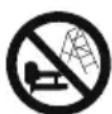
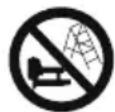
Do not use the tool when you are on a scale, stairs or scaffolds, ladders, or ladder alike constructions, e.g. roof laths, when boxes or crates, when fitting transportation safety systems e.g. on vehicles and wagons.

Never use oxygen, carbon dioxide or any other bottled gas as a power source for this tool.
GENERAL SAFETY WARNINGS
- For personal safety and proper operation and maintenance of the tool, read this instruction manual before using the tool.

- Save all warnings and instructions for future reference.
- The tool is intended to be used for professional application only. Do not use it for any other purpose. It is not designed to drive fasteners directly on a hard surface like steel and concrete.
- The user should assess the specific risks that are present as a result of each use.
- Any other use except for intended use of this tool is forbidden. Fastener driving tools with continual contact actuation or contact actuation shall only be used for production applications.
- Keep fingers away from trigger when not operating this tool and when moving from one operating position to another.
- Multiple hazards. Read and understand the safety instructions before connecting, disconnecting, loading, operating, maintaining, changing accessories on, or working near the tool. Failure to do so can result in serious bodily injury.
- Keep all body parts such as hands and legs etc. away from firing direction and ensure fastener cannot penetrate workpiece into parts of the body.
- When using the tool, be aware that the fastener could deflect and cause injury.
- Hold the tool with a firm grasp and be prepared to manage recoil.
- Only technically skilled operators should use the fastener driving tool.
Do not modify the fastener driving tool. Modifications may reduce the effectiveness of safety measures and increase the risks to the operator and/or bystander.
- Do not modify the fastener driving tool. Modifications may reduce the effectiveness of safety measures and increase the risks to the operator and/or bystander.
- Do not use a tool if the tool has been damaged.
- Do not use a tool if the tool has been damaged.
- Be careful when handling fasteners, especially when loading and unloading, as the fasteners have sharp points which could cause injury.
- Always check the tool before use for broken, misconnected or worn parts.
- Do not overreach. Only use in a safe working place. Keep proper footing and balance at all times.
- Keep bystanders away (when working in an area where there is a likelihood of through traffic of people). Clearly mark off your operating area.
- Never point the tool at yourself or others.
- Do not rest your finger on the trigger when picking up the tool, moving between operating areas and positions or walking, as resting finger on trigger can lead to inadvertent operation. For tools with selective actuation, always check the tool before use to ascertain the correct mode is selected.
- Only wear gloves that provide adequate feel and safe control of triggers and any adjusting devices.
- When resting the tool, lay it down on the flat surface. If you use the hook equipped with the tool, hook the tool securely on the stable surface.
- Do not operate when under the influence of alcohol, drugs or the like.
- Do not use the tool when you are on a scale, stairs or scaffolds, ladders, or ladder alike constructions, e.g. roof laths, when closing boxes or crates, when fitting transportation safety systems e.g. on vehicles and wagons.
Projectile hazards
- The fastener driving tool shall be disconnected when unloading fasteners, making adjustments, clearing jams or changing accessories.
- During operation be careful that fasteners penetrate material correctly and cannot be deflected/ misfired towards operator and/or any bystanders.
- During operation, debris from workpiece and fastening/collation system may be discharged.
- Always wear protective goggles to protect your eyes from injury when using power tools. The goggles must comply with ANSI Z87.1 in the USA, EN 166 in Europe, or AS/NZS 1336 in Australia/New Zealand. In Australia/New Zealand, it is legally required to wear a face shield to protect your face, too. It is an employer's responsibility to enforce the use of appropriate safety protective equipment by the tool operators and by other persons in the immediate working area.
- The operator shall assess the risks to others.
- Be careful with tools that are not in contact with the workpiece, as they can fire unintentionally and injure the operator and/or bystanders.
- Ensure the tool is always safely engaged on the workpiece and cannot slip.
- Wear hearing protection to protect your ears against exhaust noise and head protection. Also wear light but not loose clothing.
Sleeves should be buttoned or rolled up. No necktie should be worn.
Operating hazards
- Hold the tool correctly: be ready to counteract normal or sudden movements such as recoil.
- Maintain a balanced body position and secure footing.
- Appropriate safety glasses shall be used, and appropriate gloves and protective clothing are recommended.
- Appropriate hearing protection shall be worn.
- Use the correct energy supply as directed in the instruction manual.
- Do not use the tool on moving platforms or the back of trucks. Sudden movement of the platform may cause loss of control of the tool and result in injury.
- Always assume that the tool contains fasteners.
- Do not rush the job or force the tool. Handle the tool carefully.
- Watch your footing and maintain your balance with the tool. Make sure there is no one below when working in high locations, and secure the air hose to prevent danger if there is sudden jerking or catching.
- On rooftops and other high locations, drive fasteners as you move forward. It is easy to lose your footing if you drive fasteners while inching backward. When driving fasteners against a perpendicular surface, work from the top to the bottom. You can perform driving operations with less fatigue by doing so.
- A fastener will be bent or the tool can become jammed if you mistakenly drive a fastener on top of another fastener or strike a knot in the wood. The fastener may be thrown and hit someone, or the tool itself can react dangerously. Place the fasteners with care.
- Do not leave the loaded tool or the air compressor under pressure for a long time out in the sun. Be sure that dust, sand, chips, and foreign matter will not enter the tool in the place where you leave it setting.
- Never attempt to drive fasteners from both the inside and outside at the same time. Fasteners may rip through and/or fly off, presenting a grave danger.
Repetitive motions hazards
- When using a tool for long periods, the operator may experience discomfort in the hands, arms, shoulders, neck, or other parts of the body.
- While using a tool, the operator should adopt a suitable but ergonomic posture. Maintain secure footing and avoid awkward or off-balanced postures.
- If the operator experiences symptoms such as persistent or recurring discomfort, pain, throbbing, aching, tingling, numbness, burning sensation, or stiffness, do not ignore these warning signs. The operator should consult a qualified health professional regarding overall activities.
- The continuous use of the tool may cause repetitive strain injury due to recoil produced by the tool.
- To avoid repetitive strain injury, the operator should not overreach or use excessive force. Additionally, the operator should take a rest when feeling fatigue.
- Conduct a risk assessment regarding repetitive motion hazards. It should focus on musculoskeletal disorders and be preferentially based on the assumption that decreasing fatigue during work is
effective in reducing disorders.
Accessory and consumable hazards
- Disconnect the energy supply to the tool, such as air or gas or battery as applicable, before changing/replacing accessories such as workpiece contact, or making any adjustments.
- Use only the sizes and types of accessories that are provided by the manufacturer.
- Use only lubricants recommended in this manual.
Workplace hazards
- Slips, trips and falls are major causes of workplace injury. Be aware of slippery surfaces caused by use of the tool and also of trip hazards caused by the air-line hose.
- Proceed with additional care in unfamiliar surroundings. Hidden hazards may exist, such as electricity or other utility lines.
- This tool is not intended for use in potentially explosive atmospheres and is not insulated from coming into contact with electric power.
- Make sure there are no electrical cables, gas pipes etc. that could cause a hazard if damaged by use of the tool.
- Keep work area clean and well lit. Cluttered or dark areas invite accidents.
- There may be local regulations concerning noise which must be complied with by keeping noise levels within prescribed limits. In certain cases, shutters should be used to contain noise.
Dust and exhaust hazards
- Always check your surroundings. The air exhausted from the tool may blow dust or objects and hit operator and/or bystanders.
- Direct the exhaust so as to minimize disturbance of dust in a dust filled environment.
- If dust or objects are emitted in the work area, reduce the emission as much as possible to reduce the health hazards and risk of injury.
Noise hazards
- Unprotected exposure to high noise levels can cause permanent, disabling, hearing loss and other problems such as tinnitus (ringing, buzzing, whistling or humming in the ears).
- Conduct a risk assessment regarding noise hazards in the work area and implement appropriate controls for these hazards.
- Appropriate controls to reduce the risk may include actions such as damping materials to prevent workpieces from "ringing".
- Use appropriate hearing protection.
- Operate and maintain the tool as recommended in these instructions, to prevent an unnecessary increase in noise levels.
- Take noise reduction measures, for example placing workpieces on sound damping supports.
Vibration hazards
- The vibration emission during operation depends on the gripping force, the contact pressure force, the working direction, the adjustment of energy supply, the workpiece, the workpiece support. Conduct a
risk assessment regarding vibration hazards and implement appropriate controls for these hazards.
- Exposure to vibration can cause disabling damage to the nerves and blood supply of the hands and arms.
- Wear warm clothing when working in cold conditions, keep your hands warm and dry.
- If you experience numbness, tingling, pain or whitening of the skin in your fingers or hands, seek medical advice from a qualified occupational health professional regarding overall activities.
- Operate and maintain the tool as recommended in these instructions, to prevent an unnecessary increase in vibration levels.
- Hold the tool with a light, but safe, grip because the risk from vibration is generally greater when the grip force is higher.
Additional warnings for pneumatic tools
- Compressed air can cause severe injury.
- Always shut off air supply, and disconnect tool from air supply when not in use.
- Always disconnect the tool from the compressed air supply before changing accessories, making adjustments and/or repairs, when moving away from an operating area to a different area.
- Keep fingers away from trigger when not operating the tool and when moving from one operating position to another.
- Never direct compressed air at yourself or anyone else.
- Whipping hoses can cause severe injury. Always check for damaged or loose hoses or fittings.
- Never carry a pneumatic tool by its hose.
- Never drag a pneumatic tool by its hose.
- When using pneumatic tools, do not exceed the maximum operating pressure ps max.
- Pneumatic tools should only be powered by compressed air at the lowest pressure required for the work process to reduce noise and vibration, and minimize wear.
- Using oxygen or combustible gases for operating pneumatic tools creates a fire and explosion hazard.
- Be careful when using pneumatic tools as the tool could become cold, affecting grip and control.
Additional warnings for tools with contact actuation capability
- Do not rest your finger on the trigger when picking up the tool, moving between operating areas and positions or walking, as resting finger on trigger can lead to inadvertent operation.
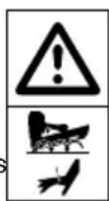
- If this tool has either selective actuation for contact actuation or continuous contact actuation by actuation mode selectors or is a contact actuation or continuous actuation contact tool and marked with beside symbol, intended uses are for production applications such as pallets, furniture, manufactured housings, upholstery and sheeting.
- Do not use this tool in contact actuation for applications such as closing boxes or crates and fitting transportation safety systems on trailers and lorries.
- Warning that the tool shall only be used in safe

working places.
- Be careful when changing from one driving location to another.
LOADING
- Disconnect the tool from air supply. (Figure 3) Release magazine by squeezing click lever. (Figure 4)
- Loading staples: Turn the gun over. Load a strip of staples into the magazine, with the points upwards. Then shut the magazine by pushing it fully frontwards. (Figure 5)
- Use only recommended fasteners (see technical specifications).
- The tool and the fasteners specified in the operating instructions are to be considered as one unit safety system.
TOOL USE
- Keep tool pointed away from yourself and others and connect tool to air supply. (Figure 1)
- Tools shall be operated at the lowest pressure needed for the application. This will reduce noise levels, part wear and energy use.
- Press the nose of the tool onto the workpiece to be fastened and press the trigger to fire staples. (Figure 6)
Adjust the mini pressure which is necessary for the penetration of the fasteners. Then, make some tests in starting with the lowest pressure.
- Check whether the fastener has been driven into the workpiece in accordance with the requirements.
- if the fastener is protruding, increase the air pressure in increments of 0,5 bar, checking the result after each new adjustment;
- If the fastener is driven into an excessive depth, reduce the air pressure in increments of 0.5 bar until the result is satisfactory.
- You should endeavour in any event to work with the lowest possible air pressure.
- Hold the tool during the work operation in such a way that no injuries can be caused to the head or to the body in the event of a possible recoil consequent upon a disruption in the energy supply or hard areas within the workpiece.
- The tool shall be disconnected from the compressed air system for the purpose of transportation, especially where ladders are used or where an unusual physical posture is adopted whilst moving.
- Carry the fastener driving tool at the workplace using only the handle, and never with the trigger actuated.
- Take conditions at the workplace into account. Fasteners can penetrate thin workpieces or slip off corners and edges of workpieces, and thus put people at risk.
- For personal safety, use protective equipment such as hearing and eye protection.
- The trigger and the safety yoke have to be actuated for each driving operation, with the order of actuation not being specified. For repeated driving operations, it is sufficient if either the trigger remains activated and the safety yoke is activated thereafter, or vice versa.
- Avoid triggering the tool if the magazine is empty.
- Any defective or improperly functioning tool must immediately be disconnected from the compressed air
supply and passed to a specialist for inspection.
- In the event of longer breaks in work or at the end of the working shift, disconnect the tool from the compressed air supply and it is recommended to empty the magazine.
- The compressed air connectors of the tool and the hoses should be protected against contamination. The ingress of coarse dust, chips, sand, etc. will result in leaks and damage to the tool and the couplings.
COMPRESSED AIR SYSTEM
- Proper functioning of the fastener driving tool requires filtered, dry, and lubricated compressed air in adequate quantities.
- If the air pressure in the line system exceeds the maximum allowable pressure of the fastener driving tool, a pressure reducing valve followed by a downstream safety valve shall additionally be fitted in the supply line to the tool.
- Connect the fastener driving tool to the compressed air supply using a suitable pressure hose equipped with quick-action connectors. (Figure 1)
- The compressor plant shall be adequately dimensioned in terms of pressure output and performance (volumetric flow) for the consumption which is to be expected. Line sections which are too small in relation to the length of the line (pipes and hoses), as well as overloading the compressor, will result in pressure drops.
- Permanently laid compressed air pipelines should have an internal diameter of at least 19 mm and a correspondingly larger diameter where relatively long pipelines or multiple users are involved.
- Compressed air pipelines should be laid so as to form a gradient (highest point in the direction to the compressor). Easily accessible water separators should be installed at the lowest points.
- Junctions for users should be joined to the pipelines from above.
- Connecting points for fastener driving tools should be fitted with a compressed air servicing unit (filter/water separator/oiler) directly at the junction point.
- Oilers must be checked on a daily basis and if necessary topped up with the recommended grade of oil (see TECHNICAL DATA). Where hose lengths of over 10 m are used, the oil supply for the fastener driving tool cannot be guaranteed. We therefore recommend that 2 to 5 drops (depending on the loading of the fastener driving tool) of the recommended oil (see TECHNICAL DATA) should be added via the air inlet of the tool, or an oiler attached directly to the fastener driving tool.
TROUBLESHOOTING AND MAINTENANCE
- If a staple jam occurs, disconnect tool from air supply. (Figure 3)
- Release magazine and slide the rail back. (Figure 4)
- Remove jammed fasteners. (Figure 7)
MAINTENANCE:
- While the tool is disconnected from the air supply, perform a daily inspection to ensure free movement of the safety yoke and trigger. (Figure 2)
- All screws should be kept tight. Loose screws can result in unsafe operation and parts
breakage. Lightly squirt 2 or 3 drops of oil into the air inlet.
- Only use the recommended oil specified in the technical specifications. Keep the tool clean. Wipe it regularly with a dry cloth and inspect for wear. Lubricate the sliding parts of the magazine occasionally to prevent wear.
- Do not use flammable cleaning solutions. Do not soak or use solvents, as such solutions may damage O-rings and other sensitive tool parts. Use clean, dry air. Preferably, use a compressed air processing unit upstream of the tool connection. Repairs other than those described here should be performed only by trained, qualified personnel or by the producer's after-sales service.
SPARE PARTS LIST
Follow local regulations when disposing of the tool.
PS101 Spare Parts list (Figure 8)
| Index A | Art. No | Description |
| A 50 | 01145 | Repair Kit A for PS101 M2 |
| B 50 | 00143 | Repair Kit B for PS101 |
| C 50 | 00144 | Repair Kit C for PS101 |
| 5000145 | No-Mar Pad (bag of 5pcs) |
PS111 Spare Parts list (Figure 8)
| Index Art. No Description |
| A 5001146 Repair Kit A for PS111 M2 |
| B 5000147 Repair Kit B for PS111 |
| C 5000148 Repair Kit C for PS111 |
| 5000145 No-Mar Pad (bag of 5pcs) |
PS141 Spare Parts list (Figure 8)
| Index Art. No Description |
| A 5001147 Repair Kit A for PS141 M2 |
| B 5000158 Repair Kit B for PS141 |
| C 5000159 Repair Kit C for PS141 |
| 5000178 NoMar Pad (x5pcs) |
PNEUMATIC STAPLER PS101 PS111 PS141 (M2)
GENERAL SAFETY WARNINGS
PS101 Spare Parts List (Figure 8)
PS111 Spare Parts List (Figure 8)
PS141 Spare Parts List (Figure 8)
AIR NAILER PS101 PS111 PS141 (M2)
Colored dust and exhaust gases
The tool has the ability to work in contact with the trigger

Do not use the tool if you are on ladders, scaffolding, or construction platforms, ladders, stepladders, or any structures, for example, roof slopes, for installing gutters or pipes, or when installing transport safety systems, for example, on vehicles or trolleys.

Never use oxygen, flammable gas, or any other gas in cylinders as an energy source for this tool.
GENERAL SAFETY WARNINGS
1. To ensure safe and normal operation of the tool, read this instruction manual before starting work with the tool.

- Keep all warnings and instructions for future reference.
- The tool is intended exclusively for professional use. Do not use it for any other purposes. It is not
designed for fastening fasteners directly onto hard surfaces such as steel or concrete.
4. The tool must only be used for the intended purpose. 5. Any other use, other than the intended use of the tool, is prohibited. Tools for driving fasteners with intermittent contact or contact actuation may only be used in an industrial process. 6. Do not keep your finger on the trigger switch when the tool is not in use and when moving it from one work position to another. 7. Multiple hazards. Read and make sure you understand the safety instructions before connecting, disconnecting, loading, operating, maintaining, replacing accessories, or working near the tool. Failure to comply with this requirement may result in serious injury. 8. Keep all parts of the body, such as hands, feet, etc., away from the direction of discharge and make sure that the fastener cannot penetrate through the workpiece into body parts. 9. When using the tool, be aware that the fastener may change direction of movement and become a cause of injury. 10. Hold the tool firmly and be prepared to handle recoil. 11. Tools for driving fasteners must only be used by technically qualified operators. 12. Do not modify the tool for driving fasteners. Modifications may reduce the effectiveness of safety measures and increase risks to the operator and/or bystanders. 13. Do not discard the operating instructions. 14. Do not use the tool if it has been damaged. 15. Be careful when handling fasteners, especially during loading and unloading, as fasteners have sharp edges that may cause injury. 16. Always check the tool before use for broken, incorrectly connected, or worn parts. 17. Do not allow distractions while working. Use only in a safe work area. Always ensure a secure footing and maintain balance. 18. Do not allow the presence of bystanders (work in areas where there is a possibility of people passing). Clearly mark the work zone. 19. Never point the tool at yourself or another person. 20. Do not place your finger on the trigger switch when lifting the tool, moving between work zones and places, or when walking, as
placing your finger on the trigger switch may cause accidental actuation. For tools with selective actuation, always check the tool before use to ensure the correct mode is selected.
- Wear only gloves that provide adequate tactile feedback of the control elements and safe operation of the trigger switches and any adjusting devices.
- After use, place the tool on a flat surface. If you use the hook with which the tool is equipped, securely attach the tool to a stable surface. 23. Do not work with the tool while under the influence of alcohol, drugs, or similar. 24. Do not use the tool if you are on scales, ladders, scaffolding, stepladders, or similar structures, for example, on roofs, near electrical boxes or panels, or when installing transport systems without safety, for example, on vehicles.
Hazards associated with moving parts
- The tool for driving fasteners under load, adjustment, removal of jams, or changing accessories must be disconnected. 2. During work, ensure that fasteners properly penetrate the material and cannot deflect or unintentionally shoot out in the direction of the operator or bystanders. 3. During work with fastening/sorting systems, debris may be ejected. 4. When using power tools, always wear protective glasses to protect your eyes from injury. Protective glasses and protective shields must comply with ANSI Z87.1 in the USA, EN 166 in Europe, and AS/NZS 1336 in Australia/New Zealand. In Australia/New Zealand, it is also necessary to wear a protective mask on the face in accordance with requirements. The employer is responsible for ensuring that the operator and other persons in the immediate vicinity of the work area use appropriate protective equipment.
- The risk of injury to others must be assessed by the operator. 6. Be careful with tools without contact with the working part, as they may unintentionally fire and cause injury to the operator or bystanders.
- Ensure that the tool is always securely attached to the working part and cannot slip off.
- Use hearing protection from noise and wear head protection. Wear tight-fitting, but not loose, clothing. Sleeves must be buttoned or rolled up. It is forbidden


to wear ties.
Operational hazards
1. Use the tool correctly: be prepared for both normal and sudden movements, such as recoil. 2. Ensure a stable body position and a secure footing. 3. Use appropriate protective glasses, gloves, and protective clothing as recommended. 4. Must use appropriate hearing protection. 5. Use the correct power source as specified in the operating instructions. 6. Do not use the tool on moving platforms or in the bodies of trucks. Sudden movement of the platform may cause loss of control of the tool and result in injury. 7. Always remember that the tool contains fasteners. 8. During operation, do not rush and do not apply excessive force to the tool. Handle the tool with care. 9. When working with the tool, it is necessary to ensure a secure footing and maintain balance. When working at heights, make sure there are no people below, and secure the air hose in such a way as to avoid danger in case of accidental tripping or jerking. 10. When working on roofs or other high places, remember the fasteners and move carefully. If you forget the fasteners, you may easily lose your footing. When fastening on vertical surfaces, start from the top and work downwards. Working in this order will make you less tired. 11. If you accidentally drive a fastener over another or drive it into a place where it cannot be seen, the fastener may bend or jam the tool. The fastener may fly out and hit a bystander, or the tool itself may dangerously rebound. Carefully choose the place for driving fasteners. 12. Do not leave the charged tool or air compressor under pressure for a long time in the sun. Do not allow the tool to be left in a place where it may be exposed to dust, sand, chips, or foreign objects. 13. Never attempt to drive fasteners simultaneously from both inside and outside. Fasteners may penetrate the work surface and/or fly out, causing serious danger.
Hazards associated with repetitive movements
- When using the tool for a long time, the operator may experience discomfort in the hands, arms, shoulders, neck, or other parts of the body.
- When using the tool, the operator should adopt a comfortable but economical posture. Ensure a secure footing and avoid awkward or unbalanced positions. 3. If the operator experiences symptoms such as persistent or recurring discomfort, pain, throbbing, aching, tingling, numbness, burning sensation, or stiffness, do not ignore these warning signs. The operator should consult a qualified health professional regarding these symptoms.
- Continuous use of the tool may lead to injuries caused by repetitive movements due to the vibration generated by the tool. 5. To avoid injuries caused by repetitive movements, the operator should not overexert themselves or apply excessive force. Additionally, when feeling fatigue, the operator should rest.
- Conduct a risk assessment for injuries from repetitive movements. The assessment should be oriented towards musculoskeletal disorders and should primarily rely on the assumption that reducing fatigue during work is effective in preventing these disorders.
Hazards associated with consumable materials
- Disconnect the power supply from the tool, such as air or gas from the compressor, before changing or replacing accessories such as the contact tip, or performing any adjustments. 2. Use only the sizes and types of accessories provided by the manufacturer.
- Use only lubricants recommended in this instruction manual.
Workplace hazards
- Slipping, tripping, and falling are major causes of injuries in the workplace. Beware of slippery surfaces caused by the use of the tool, as well as the danger of tripping over hoses or air lines. 2. In unfamiliar environments, proceed with extra caution. There may be hidden hazards, such as electrical or other utility lines.
- This tool is not intended for use in potentially explosive atmospheres and is not insulated for contact with electricity.
- Ensure there are no electrical cables, gas pipes, etc., that could lead to danger if damaged during the use of the tool.
- The workplace should be clean and well-lit. Cluttered or dark workplaces often lead to accidents.
- Local regulations may apply
Provisions regarding noise that must be observed, without exceeding the permitted noise level. In some cases, for noise control within the premises where the work is performed, barriers should be used.
Hazards associated with dust and exhaust gases
- Before using an air blower for cleaning, always ensure there are no people nearby. Dust and other objects blown by the air blower may hit the operator and/or bystanders.
- Direct the exhaust pipe in such a way as to minimize the impact of dust in a dusty environment.
- If dust and debris are ejected into the work area, minimize the ejections to reduce the risk to health and the risk of injury.
Noise hazards
- Exposure to high noise levels without hearing protection can cause irreversible damage, hearing loss, and other problems, such as ringing in the ears (tinnitus), hearing impairment, or noise-induced hearing loss. 2. Conduct a risk assessment regarding noise hazards in the work area and take appropriate measures to address these hazards.
- Measures required to reduce the hazard may include damping materials to prevent ringing of workpieces.
- Use appropriate hearing protection.
- To avoid unnecessary increases in noise levels, operate and maintain the tool as recommended in these instructions.
- Take measures to reduce noise, for example, placing workpieces on sound-absorbing supports.
Vibration hazards
- The vibration level during work depends on the tool, contact pressure, working tension, energy regulation, working parts, and the support of the working parts. 1. Conduct a risk assessment regarding vibration hazards and take appropriate measures to address these hazards. 2. Exposure to vibration can lead to damage to the nerves and blood supply of the hands or arms.
- When working in cold conditions, wear warm clothing and keep your hands warm and dry.
- If you experience numbness, tingling, pain, or whitening of the skin on your fingers or hands, seek medical advice from a qualified occupational health specialist regarding general recommendations.
- To avoid unnecessary increases in vibration levels, operate and maintain the tool as recommended
in these instructions.
- Hold the tool with a light but secure grip, because the risk of vibration is usually higher when the grip force is higher.
ADDITIONAL SAFETY WARNINGS FOR PNEUMATIC TOOLS
1. Air can cause serious injury. 2. Always disconnect the tool from the air supply when not in use. 3. Always disconnect the tool from the compressed air source before changing accessories, adjusting, or repairing, and when moving from one work area to another. 4. Do not keep your finger on the trigger switch when the tool is not in use and when moving from one work position to another. 5. Never direct compressed air at yourself or anyone else. 6. Slipping of the stapler can cause serious injury. Always check for damaged or loose staples or nails. 7. Never carry the pneumatic tool by the hose. 8. Never pull the pneumatic tool by the hose. 9. When using pneumatic tools, do not exceed the maximum working pressure. 10. Pneumatic tools must be operated only with compressed air at the minimum pressure necessary for the work process, to reduce noise and vibration and minimize wear. 11. Using oxygen or flammable gases to operate pneumatic tools creates fire and explosion hazards. 12. When using pneumatic tools, be careful, as the tool may become cold, which can affect your hands and your ability to control them.
Additional safety warnings for tools with contact actuation capability
- Do not keep your finger on the trigger switch when carrying the tool, moving between work areas or positions, or during a walk, as the position of your finger on the trigger switch can lead to unintentional actuation.
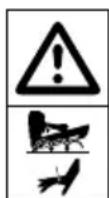
- If your tool can be switched via a selector to contact actuation mode (actuation upon contact with material or with nail retention) or to sequential actuation mode (single or multiple shots upon contact with material) (marked with a symbol), it is intended for professional use (manufacturing
of pallets, furniture, cabinets, upholstery, and coverings).
- Do not use contact actuation mode with nail retention for closing boxes or crates or for installing safety systems for transport on pallets and trucks.
- Warning: The tool must only be used in places where it will not pose a hazard.
- Be careful when moving between work areas.
LOADING
- Disconnect the tool from the air supply. (Figure 3) Disconnect the magazine by pressing the lever. (Figure 4)
- Loading staples: Check the magazine. Load a strip of staples into the magazine with the points facing up. Then close the magazine, pushing it fully forward. (Figure 5)
- Use only recommended staples (see Technical Specifications).
- The tool and its fastening parts, as specified in the operating instructions, must be considered as part of the overall safety system of the unit.
USAGE
1. Connect the tool to the air supply system, turning it clockwise. (Figure 1) 2. The tool should be used at the lowest pressure sufficient to operate it. This will minimize noise, part wear, and energy consumption. 3. Press the tool's nozzle against the workpiece and press the trigger to fire. (Figure 6) Adjust the minimum pressure required for the fasteners to secure properly. After that, perform several test shots, starting with the lowest pressure.
- If the fastener protrudes, increase the air pressure in steps of 0.5 bar, checking the result after each new adjustment; - If the fastener is driven too deep, decrease the air pressure in steps of 0.5 bar until the result is satisfactory.
5. In any case, try to work with the lowest possible air pressure. 6. Hold the tool during operation in such a way that there is no risk of injury to the head or body in case of possible kickback caused by a sudden energy release or by the working parts. 7. For transport, the tool must be disconnected from the compressed air system, especially when using the tool in unusual positions during movement.
PHYSICAL POSITION.
- Carry the tool for driving fasteners to the workplace using only the handle, never with the trigger lock in the engaged position.
- Consider the conditions at the workplace. Fasteners may penetrate thin workpieces or protrude from edges and corners of the workpiece, thus creating a safety hazard. 10. For personal safety, use protective equipment such as hearing protection and safety glasses.
- The trigger lock and the safety yoke must be activated for each fastening operation, but the order of activation is not specified. For repeated fastening operations, it is sufficient that the trigger lock remains active and the safety yoke is then released, or vice versa. 12. Avoid activating the tool's trigger lock if the magazine is empty. 13. Any defective or incorrectly functioning tool must be immediately disconnected from the compressed air source and handed to a specialist for inspection.
- In case of longer breaks in work or at the end of the work shift, disconnect the tool from the compressed air source and, as recommended, empty the magazine.
- The compressed air connections of the tool and the hoses must be protected from contamination. The ingress of coarse dust, shavings, sand, etc., will lead to leaks and damage to the tool and the coupling.
COMPRESSED AIR SUPPLY SYSTEM
1. For lubrication of the tool, it is required to use clean, dry compressed air with a small amount of oil. The air must be supplied in sufficient quantities. 2. If the air pressure in the hose system exceeds the maximum permissible pressure of the tool for driving fasteners, a pressure reducing valve must be installed in the supply line to the tool, followed by a safety valve. 3. Connect the tool for driving fasteners to the compressed air source using a suitable high-pressure hose equipped with quick-release couplings. (Figure 1) 4. The compressor installation must have appropriate characteristics in terms of output pressure and capacity (volume flow) for the intended use. Using a hose with too small a cross-section in relation to the hose length (hoses and fittings), as well as overloading the compressor, will lead to a drop in pressure. 5. Permanently installed compressed air lines must have an internal diameter of at least 19 mm and a correspondingly larger diameter if long hose runs or multiple users are involved.
For long hose runs or multiple users.
- Compressed air hoses must be laid in such a way that a slope (a slight incline towards the compressor) is formed. Easily accessible water separators must be installed at the lowest points.
- Connections for users must be connected to the air hoses from above.
- The tool for driving fasteners must be equipped with a compressed air service unit (filter/water separator/oiler) directly at the connection point.
- The oiler must be checked daily and, if necessary, topped up with the recommended type of oil (see technical specifications). When using hoses longer than 10 m, the oil supply to the tool for driving fasteners cannot be guaranteed. Therefore, it is recommended to add 2 to 5 drops (depending on the load on the tool for driving fasteners) of the recommended oil (see technical data) through the tool's air intake or oiler, which is attached directly to the tool for driving fasteners.
TROUBLESHOOTING AND MAINTENANCE
- If jamming occurs, disconnect the tool from the air supply system. (Figure 3)
- Disconnect the magazine and release the pusher. (Figure 4)
- Remove the jammed staples. (Figure 7) Maintenance:
- With the tool disconnected from the air supply system, perform a daily inspection for free movement of the safety trigger and the trigger button.
- All screws must be tightened. (Figure 2)
Loose screws can pose a danger during operation or cause damage to parts. Add 2-3 drops of oil to the air inlet.
3. Use only the lubricants recommended in the technical specifications. Keep the tool clean. Wipe it regularly with a dry cloth and inspect it for wear. Lubricate moving parts with oil from time to time to prevent wear. 4. Do not use flammable solvents... Do not use solvents, as this can damage the sealing rings and other parts. Use clean, dry air. If possible, use a technical device for dry air above the tool connection. Repair work other than that described here must only be carried out by trained, qualified personnel or the manufacturer's technical service.
SPARE PARTS LIST
When disposing of the tool, follow local
regulations.
PS101 Spare parts list (Figure 8)
| Index | Hó. apтúnуla Or | Исанuele |
| A 50 | 01145 | Ремонтныйkomponent А дlya PS101 M2 |
| B 50 | 00143 | РемонтныйkomponentВ дlya PS101 |
| C 50 | 00144 | РемонтныйkomponentС дlya PS101 |
| 5000145 | Зашатая наладka (мених 5 šт.) |
PS111 Spare parts list (Figure 8)
| Index | Hó. apтúnкуla Or | Исанuele |
| A 50 | 01146 | Ремонтныйkomпlement A對於PS111 M2 |
| B 50 | 00147 | Ремонтныйkomпlement B對於PS111 |
| C 50 | 00148 | Ремонтныйkomпlement C對於PS111 |
| 5000145 | Зашатая налада (Мешок 5 šт.) |
PS141 Spare parts list (Figure 8)
| Index | Ho. apтунуla Or | Исанuele |
| A 50 | 01147 | Ремонтныйkomponent A對於PS141 M2 |
| B 50 | 00158 | Ремонтныйkomponent B對於PS141 |
| C 50 | 00159 | Ремонтныйkomponent C對於PS141 |
| 5000178 | Зашатая налада (мешок 5 šт.) |
PNEUMATIC NAIL GUN PS101 PS111 PS141 (M2)
GENERAL SAFETY WARNINGS
TROUBLESHOOTING AND MAINTENANCE
GENERAL SAFETY WARNINGS
- To prevent accidents and ensure safe operation and maintenance of the tool, read this manual carefully before using the tool.

- Keep the instructions and guidelines for future reference.
- The tool is intended solely for professional use. Do not use it for other purposes. It has not been designed to guide users safely in hazardous environments such as fire and explosion.
- The user must be aware of the potential risks associated with each use.
- This appliance is not intended for use by persons (including children) with reduced physical, sensory or mental capabilities, or lack of experience and knowledge, unless they have been given supervision or instruction concerning use of the appliance by a person responsible for their safety.
BASIC AIR SYSTEM
Do not use the tool when standing on a ladder or scaffold, on a staircase or similar structure; when tightening sanitary fittings or pipes; when mounting transport safety systems, e.g., on wheeled platforms and wagons.

Never use the tool if it is damaged, has been dropped, or if there is any other defect in the bottle for the tool's storage.
IMPORTANT SAFETY INSTRUCTIONS
- For your own safety and correct operation and maintenance of the tool, read this instruction manual before using the tool.

- Keep all instructions for future reference.
- The tool is intended for professional use only. Do not use it for other purposes. It is not designed for fixing to ceilings or walls directly onto hard surfaces such as concrete or brick.
- The user must carefully assess the specific risks associated with the intended use.
- Any other use, other than the intended use of this tool, is prohibited. Tools with contact or proximity contact must be used only for industrial applications.
6. Keep your fingers away from the trigger when not working with the tool and when moving from one working position to another. 7. Many accidents and dangers. Read and understand the safety instructions before connecting, using, charging, working, maintaining, changing accessories, or working near the tool. Failure to do so may lead to serious personal injury. 8. Keep the tool's moving parts, such as the bit, chuck, etc., away from the body and from shooting, and make sure there is no danger of them penetrating the tool's parts. 9. When using the tool, be careful that the bit may break off and cause injury. 10. Keep the tool in good condition and be ready for unexpected events. 11. Only technically qualified operators should use the tool. 12. Do not modify the tool. Modifications may affect the effectiveness of the safety measures and increase the risks for the worker and/or bystanders. 13. Do not discard the instruction manual. 14. Do not use the tool if it is damaged. 15. Be careful when working with fasteners, especially when driving or removing them, as they have sharp surfaces that can cause injury. 16. Always wear protective equipment when using the tool, such as safety glasses, gloves, and hearing protection. 17. Do not overreach. Use only safe working positions. Maintain a stable stance and balance at all times. 18. Keep bystanders away (when working in an area with possible traffic of people). Clearly mark your working area. 19. Never point the tool at yourself or others. 20. Do not place your finger on the trigger when moving the tool, between working positions, or when storing it, as placing your finger on the trigger may lead to unintended operation. For tools with selective actuation, check the tool before use to ensure the correct mode is selected. 21. Wear only gloves that provide adequate grip and safe control of the trigger and all other control devices. 22. When not using the tool, place it on a flat surface. If using a tool with a belt hook, hang the tool safely on a stable surface. 23. Do not use the tool when under the influence of alcohol, drugs, or similar substances. 24. Do not use the tool when on a ladder or scaffolding, on a roof or similar structure; when tightening screws or bolts; when mounting transport.
Safety systems, e.g., on wheeled platforms and wagons.
Project risks
- The tool must be disconnected from the power supply when replacing worn elements, performing corrections, removing blockages, or changing accessories. 2. During work, pay attention to the fastening elements to ensure they penetrate correctly into the material, and for the fasteners to be properly positioned relative to the workpiece and/or the surrounding area.
- Do not work with the tool if there is a possibility of damaging the workpiece or the tool. 4. Wear protective glasses to protect your eyes from flying debris when using the tool. The glasses must comply with ANSI Z87.1 in the USA, EN 166 in Europe, or AS/NZS 1336 in Australia/New Zealand. In Australia/New Zealand, it is legally required to wear a protective face shield for your face. It is the employer's responsibility to ensure the use of appropriate protective equipment by the operators of the tool and other persons in the immediate work area.
- Risks to other persons are reduced when working with the tool.
- Be careful with the tool when using contactless firing, as it can easily produce accidental shots and injure workers or bystanders.
- Make sure the tool is in safe interaction with the workpiece and there is a risk of explosion. 8. Wear protective equipment for the head and ears to protect against noise from the fastener collector. Also wear a helmet, but not loose-fitting clothing. Gloves must be closed or fitted. Do not wear a tie.
Risks during work
1. Hold the tool correctly: be ready for any normal or sudden movements, as you react. 2. Maintain a stable stance and balance of the body. 3. Wear suitable protective glasses. It is recommended to wear suitable protective clothing. 4. Wear hearing protection. 5. Use the correct fastening method as indicated in the instructions for use. 6. Do not use the tool on a moving platform or in a vehicle. Sudden movement of the platform may cause loss of control of the tool and cause injury. 7. Do not allow the tool to be pointed at any person. 8. Do not work with a damaged tool and do not force a broken tool. Work carefully with it. 9. Be aware of your stability and balance.
Keep your balance with the tool. Make sure there is a safe distance when working at height, and use a suitable air hose to prevent the risk of falling or tripping.
- On ladders and other high places, fasten the fastening elements until they are fully driven. It is easy to lose your balance if you work with the tool leaning backwards. When fastening fastening elements onto a horizontal surface, work from top to bottom. In this way, you will reduce the effort and fatigue.
- The fastening element may bend or the tool may jam, in case of an incorrect shot directed at another fastening element or at a hard surface. There is a risk that the fastening element may bounce and hit someone, or the tool itself may react dangerously. Fasten the fastening elements carefully. 12. Do not leave the loaded tool or the air compressor under pressure for a long time. Make sure that at the place where you leave the tool, there is no risk of it being damaged by dust, sand, shavings, or other particles.
- The clamping elements can catch on the surface or detach from the surface of both sides simultaneously. The clamping elements can slide or detach from the surface, presenting a serious danger.
RISK OF REPETITIVE STRAIN INJURIES
- When using the tool, the operator may experience discomfort in the hands, arms, shoulders, or other parts of the body. 2. Before using the tool, the operator should adopt a comfortable but ergonomic posture. Maintain stable balance and avoid awkward or unbalanced positions. 3. If the operator experiences symptoms such as persistent or recurring discomfort, pain, throbbing, tingling, numbness, or stiffness, do not ignore these warning signs. The operator should consult a qualified medical professional regarding these activities.
- Prolonged use of the tool may lead to repetitive strain injuries of the operator.
- To avoid repetitive strain injuries, the operator should not pull the trigger continuously and should use the recommended force during work. In addition, the operator should take breaks when feeling tired.
- Perform a risk assessment regarding the dangers of repetitive strain injuries. It should focus on musculoskeletal disorders and be based on the assumption that reducing fatigue during work is effective in reducing disorders.
POTENTIAL RISKS WITH ACCESSORIES AND CONSUMABLES
1. Check the tool's guards, such as dust, battery, before replacing/
Replace accessories such as the work surface pad or to direct the tool and make corrections.
2. Use only the self-sizing accessories provided by the manufacturer. 3. Use self-lubricating materials recommended by the manual.
RISKS OF THE WORKPLACE
1. Slipping, tripping, and falling are the main causes of workplace injuries. Be aware of slippery surfaces, caused by the use of the tool, as well as the danger of tripping, caused by the air hose. 2. Proceed with additional caution in unfamiliar environments for the presence of hidden dangers such as electricity or other utility lines. 3. This tool is not intended for use in potentially explosive atmospheres and is not insulated for possible contact with live electrical wires. 4. Ensure that there are electrical cables, gas pipes, etc., which could pose a danger if damaged during use of the tool. 5. Keep the work area clean and well-lit. Cluttered or dark work areas can lead to accidents. 6. There may be local regulations regarding noise that must be followed, keeping the noise level within the prescribed limits. In certain cases, hearing protection must be used to limit the noise.
RISKS FROM DUST AND GASES
- Always check the environment around you. The air stream from the tool can blow out dust or objects and hit the operator and/or bystanders.
- Always follow the instructions and information regarding the minimum distribution of dust in the working environment. 3. In the working area, separate dust from the operator, start the maximum level of the exhaust air, to start the dangers to health and risk from inhalation.
Risks from dust
- Inhaling dust at high levels can cause damage to the hearing organs and other problems such as dust in the ears (ringing, buzzing, hissing or humming in the ears).
- Carry out a risk assessment regarding the danger from dust in the working area and apply appropriate control measures for these dangers.
- The risk control measures may include actions such as "sealing materials" to prevent "ringing" of the workers' details. 4. Use appropriate hearing protection. 5. Use and maintain the instrument as described in these instructions to prevent unnecessary increase of noise and dust.
- Take measures for noise reduction, for example installation of working details or noise-absorbing supports.
Risks from vibration
1. Exposure to vibration over time depends on the grip force, contact force, working position, adjusted protection, working details, support of the details. Carry out a risk assessment regarding the danger from vibration and apply appropriate control measures for these dangers. 2. Exposure to vibration can cause damage to the nerves, blood circulation and joints. 3. Wear warm gloves when working in cold conditions; keep your hands warm and dry. 4. If you notice numbness, tingling, pain or whitening of the fingers or hands, seek medical help from a qualified medical specialist. 5. Use and maintain the instrument as described in these instructions to prevent unnecessary increase of vibration. 6. Hold the instrument with a light, but safe grip, because the risk from vibration is lower when the grip force is lower.
Additional risks when working with pneumatic instruments
- The compressed air system can cause serious injuries.
- Always use the air supply and disconnect the instrument from the supply when not using it.
- Disconnect the instrument from the compressed air supply when changing accessories, performing adjustments or repairs, and when moving away from the working area. 4. Keep your fingers away from the trigger when not working with the instrument and when moving from one working position to another.
- Never point the compressed air system at yourself or at anyone else.
- Check the tool for damage or loose parts before use. If the tool is damaged or parts are loose, do not use it.
- Never carry the pneumatic tool by its hose.
- Never pull the pneumatic tool by its hose.
- When using pneumatic tools, do not exceed the maximum working pressure (ps max). 10. Pneumatic tools must be supplied only with clean, dry compressed air at the pressure required for the operation, to reduce noise and vibration and to minimize wear. 11. Use of oxygen or flammable gases for operating pneumatic tools is dangerous and may cause fire or explosion. 12. Be careful when using
pneumatic tools, as the tool may become cold and affect grip and control.
Residual risks when working with tools with contact fastening
1. Do not keep your finger on the trigger when carrying the tool, moving between work areas, or walking, as the trigger may be accidentally activated. 2. If the tool is not designed for contact fastening or sequential contact fastening, and is not marked with the corresponding symbol, then the tool is intended for use with contact fastening or sequential contact fastening only, and must not be used for other purposes.
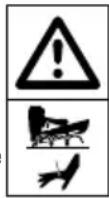
3. Do not use the tool for contact fastening applications such as fastening cables or securing loads on pallets or trucks. 4. The tool must be used only in well-ventilated areas. 5. Be careful when switching from one mode to another.
SHUTDOWN
- Disconnect the tool from the air supply. (Figure 3) Disconnect the magazine, push the pusher. (Figure 4)
- Fastening the staples: Turn the tool over. Place the staples in the magazine with the crown facing up. Then close the magazine, pushing it until it clicks. (Figure 5) 3. Use only the recommended fastening elements (see technical specifications). 4. The tool and the fastening elements, as specified in the operating instructions, must be inspected regularly as a single unit with the safety system.
USE OF THE TOOL
- Hold the tool away from yourself and connect it to the compressed air supply. (Figure 1) 2. The tool must operate at the minimum pressure required for the application. This reduces wear and energy consumption.
- Press the tool against the workpiece and press the trigger to drive the staple. (Figure 6) Adjust the minimum pressure required for driving the fastening elements. Then drive the staples, starting with the lowest pressure.
- Check that the fastening elements are correctly positioned in the workpiece according to the specifications.
Check the pressure of the air in the interval from 0.5 bar, as you check the results after each new adjustment; - if the cracks have penetrated the cracked head
the cylinder head, adjust the air supply in the interval of 0.5 bar, and then check the results.
5. It is desirable in all cases to strive to work with the lowest possible air pressure. 6. During operation, hold the instrument in such a way as to avoid injury to the hands or fingers, in case of accidental detachment of the instrument due to jamming of the locking mechanism or falling of solid particles from the working parts. 7. The instrument must be disconnected from the compressed air system during its maintenance and especially when using a chisel or when applying the unusual physical force to attach it. 8. Hold the instrument only by the handle and never with the trigger pressed. 9. Be aware of and comply with the working conditions. The fastening elements may loosen and cause working parts to detach and be thrown, and may cause injury to people at risk. 10. For your own safety, use protective equipment such as hearing and eye protection. 11. The trigger and the safety device must be activated in all cases, and the sequence of activation is not important. In multiple consecutive activations, it is sufficient for the trigger to remain activated and the safety device to be activated after that or vice versa. 12. Avoid activating the instrument when it is not in use. 13. Any defective or incorrectly working instrument must be immediately disconnected from the compressed air system and handed over to a qualified specialist for inspection. 14. In case of prolonged interruption of work or at the end of the work shift, disconnect the instrument from the compressed air system. It is recommended to release the trigger. 15. The hoses and connections of the instrument to the compressed air system must be protected from damage. The entry of foreign particles, dust, debris, sand, etc. into the system will lead to wear and damage to the instrument and connections.
COMPRESSED AIR SYSTEM
- 1. For the correct functioning of the instrument, clean, dry and lubricated compressed air is required in sufficient quantity. 2. If the pressure in the system exceeds the specified maximum permissible value for the instrument, it is necessary to install a pressure reducing valve, followed by a safety valve with full discharge to the compressed air source.
- Connect the instrument to the compressed air source using suitable hoses and appropriate connectors. (Figure 1)
- The compressor station must be properly adjusted with respect to the output
pressure and the operational characteristics (volume flow) for the expected consumption. The parts that are too tight with respect to the hose diameter (hose length), as well as the compressor overheating, will lead to a drop in pressure.
- The piping for the compressed air system must be sized so that the pressure drop at the maximum flow rate does not exceed the permissible pressure drop, when compared to the piping and the number of consumers.
- The piping for the compressed air system must be laid out so that it forms a slope (the highest point is towards the compressor). The water separators must be installed at the lowest points of the system.
- The connections for the various operators must be connected to the air supply from the top side.
- At the connection points of the tool, the corresponding element, serving the compressed air system (filter/water separator/lubricator), must be installed directly.
- The lubricators must be checked regularly and, if necessary, filled with the oil specified in the technical specification. If the hose length is more than 10 m, proper lubrication of the tool cannot be guaranteed. In this case, it is recommended to add 2 to 5 drops (depending on the tool's consumption) of the specified oil (see technical specification) into the tool's air inlet, or alternatively, to install the lubricator directly at the tool.
TROUBLESHOOTING AND MAINTENANCE
- 1. Disconnect the tool from the air supply. Remove the magazine and pull the pusher back. (Figure 3) 2. Remove the magazine and pull the pusher back. (Figure 4)
- Remove the fastening elements. (Figure 7)
MAINTENANCE:
1. Disconnect the tool from the air supply. Perform daily inspection to ensure free movement of the safety yoke and pusher. 2. All screws must be tightened. (Figure 2)
Loose screws can cause improper operation and damage to parts. Add 2 or 3 drops of oil into the air inlet.
3. Use only the recommended oil in the technical specifications. Keep the tool clean. Clean the housing with a dry cloth and check for wear. Lubricate the moving parts of the magazine from time to time to prevent wear. 4. Do not use flammable cleaning agents. Do not immerse or use solvents, as this may damage the O-rings and other plastic parts of the tool. Use clean, dry air. It is recommended to use
a filter-regulator-lubricator unit for the air system connected to the tool. Repairs and adjustments must be performed only by trained, qualified personnel or by the manufacturer's service.
SPARE PARTS LIST
When ordering the tool, follow local regulations.
PS101 Spare parts list (Figure 8)
| Инданes | Ар. №Опеса范围内 | Ремостен.KOMПLENTA 3a PS101 M2 |
| A 500 | 1145 | |
| В 500 | 0143 | Ремostен.KOMПLENTB 3a PS101 |
| С 500 | 0144 | Pemonten.KOMPLENTC 3a PS101 |
| 5000145 | Проблажених насл徳 (onaikobka 5 sp.) |
PS111 Spare parts list (Figure 8)
UK Importer and authorised representative:
ACCO UK Limited
Oxford House Oxford Road
Aylesbury HP21 8SZ
United Kingdom

Isaberg Rapid AB
SE-335 71 Hestra, Sweden
www.rapid.com



- PS101 PS111 PS141 (M2)
- RAPID
- SYMBOLS
- GENERAL SAFETY WARNINGS
- PROJECTILE HAZARDS
- OPERATING HAZARDS
- REPETITIVE MOTIONS HAZARDS
- ACCESSORY AND CONSUMABLE HAZARDS
- WORKPLACE HAZARDS
- DUST AND EXHAUST HAZARDS
- NOISE HAZARDS
- VIBRATION HAZARDS
- ADDITIONAL WARNINGS FOR PNEUMATIC TOOLS
- ADDITIONAL WARNINGS FOR TOOLS WITH CONTACT ACTUATION CAPABILITY
- LOADING
- TOOL USE
- COMPRESSED AIR SYSTEM
- TROUBLESHOOTING AND MAINTENANCE
- MAINTENANCE
- SPARE PARTS LIST
- PNEUMATIC STAPLER PS101 PS111 PS141 (M2)
- AIR NAILER PS101 PS111 PS141 (M2)
- COLORED DUST AND EXHAUST GASES
- HAZARDS ASSOCIATED WITH MOVING PARTS
- OPERATIONAL HAZARDS
- HAZARDS ASSOCIATED WITH REPETITIVE MOVEMENTS
- HAZARDS ASSOCIATED WITH CONSUMABLE MATERIALS
- HAZARDS ASSOCIATED WITH DUST AND EXHAUST GASES
- ADDITIONAL SAFETY WARNINGS FOR PNEUMATIC TOOLS
- ADDITIONAL SAFETY WARNINGS FOR TOOLS WITH CONTACT ACTUATION CAPABILITY
- USAGE
- COMPRESSED AIR SUPPLY SYSTEM
- PNEUMATIC NAIL GUN PS101 PS111 PS141 (M2)
- BASIC AIR SYSTEM
- IMPORTANT SAFETY INSTRUCTIONS
- PROJECT RISKS
- RISKS DURING WORK
- RISK OF REPETITIVE STRAIN INJURIES
- POTENTIAL RISKS WITH ACCESSORIES AND CONSUMABLES
- RISKS OF THE WORKPLACE
- RISKS FROM DUST AND GASES
- RISKS FROM DUST
- RISKS FROM VIBRATION
- ADDITIONAL RISKS WHEN WORKING WITH PNEUMATIC INSTRUMENTS
- RESIDUAL RISKS WHEN WORKING WITH TOOLS WITH CONTACT FASTENING
- SHUTDOWN
- USE OF THE TOOL
Brand : RAPID
Model : PRO PS141
Category : Stapler