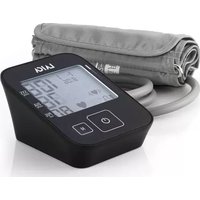
BM2302 - Sphygmomanometer LAICA - Free user manual and instructions
Find the device manual for free BM2302 LAICA in PDF.



| Product Type | Automatic Arm Blood Pressure Monitor |
| Model | BM2302 |
| Brand | Laica |
| Measurement Method | Non-invasive Oscillometric |
| Measurement Range - Pressure | 0 to 300 mmHg |
| Measurement Range - Systolic | 60 to 260 mmHg |
| Measurement Range - Diastolic | 40 to 199 mmHg |
| Measurement Range - Pulse | 40 to 180 beats/min |
| Accuracy - Pressure | ±3 mmHg |
| Accuracy - Pulse | ±5% |
| Memory | 30 measurements per zone, 4 zones |
| Power Supply | 4 AAA 1.5V batteries (type 333) |
| Display | LCD with WHO color indicators |
| Compatible Arm Circumference | 22 to 30 cm (cuff included), optional 36-42 cm |
| Special Functions | Arrhythmia detection, average calculation, WHO classification |
| Operating Conditions | +10°C to +40°C, humidity ≤85% RH |
| Storage Conditions | -20°C to +50°C, humidity ≤85% RH |
| Guaranteed Number of Cycles | 10,000 measurements |
| Warranty | 2 years |
| Approximate Weight | 300 g (with batteries) |
| Approximate Dimensions | 150 x 100 x 50 mm |
Frequently Asked Questions - BM2302 LAICA
User questions about BM2302 LAICA
0 question about this device. Answer the ones you know or ask your own.
Ask a new question about this device
Download the instructions for your Sphygmomanometer in PDF format for free! Find your manual BM2302 - LAICA and take your electronic device back in hand. On this page are published all the documents necessary for the use of your device. BM2302 by LAICA.
USER MANUAL BM2302 LAICA
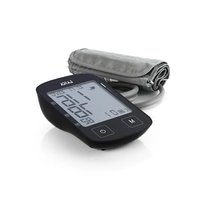
natural_image
Digital blood pressure monitor with digital display and a rolled-up blanket (no visible text or symbols)ISTRUZIONI E GARANZIA
TYPE KD-5923
MISURATORE DI PRESSIONE DA BRACCIO
page 5
INSTRUCTIONS AND WARRANTY
ANN OBLIGO PRESSURE MONITOR
page 14
Instrucciones y garancia
MEDIDOR DE PRESIÓN PARA BRAZO
página 23
INTRAÇÃO E GUAUROS
MEXICULAR DE FRESENCIO DE BRASCO
DE Arbeitsungen und Garantie
Seite 41
OBERANN BLUTDRUCKNESSGERÄT
FR
TENSIOMETRE À BRASSARD
instructions et garantie
page 56
OLIVICOS N. CIVUATION
CHEZONETRO BRAXIONA
Instructivi o garanto
pagir a 85
TERMOLENTO DE SRA
■ Vía del 2013
TLAKOMER NA PAZI
BKN
Narwood u zámionu
PAZNY TLAKOMER
Hasznaki uto block to garanola.
KAR VERNYOMASMERO
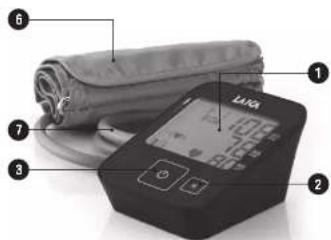
FIG.1
8
6
10
4
5
0

7) TBC netans 2. Swine data by
- Galleri
101 Cuscalia
PRODUCT DESCRIPTION
1) LLD DISP
- "H"
3) 41 hsu w
5) Battery compartment
- Cuff
7) 可 impulse
8) Air hose plug
- Batteries
10) Case
MISURATORE DI PRESSIONE DA BRACCIO
Correct reading position
• 1950: 42.40% to 63.0% for 43.8% and 63.3% for 63.7%.
freq. enza card sea: <80 +2bom, >80 inch: +5%
IT
Italiano Italiano
- Proclones de valor visualized. mmH
- Nomine: 50 mmHg por zona (9.200) - Conference transite: conversalta (23) e 380 mm/ha
• A translocation of beta is a saline. 150 = 120 (MA LPS)
• A. tonia mla cattore o cl 270 mla. natal
I proclitio diagnosca a sequential standarda (EC-6001 - Edition 3.1.2012-09 EN 6001-12/2014) 2013 (Piedcial electrical equipment - Part I: Electronics requirements for basic safety and essential performance; EC0601-1-22014 - EN 6001-1-22015 - Electrical electrical equipment - Part 1.2: General requirements for basic safety and essential performance. Coercal standard, electromagnetic compatibility - Requirements and testis, EC 8001-2-38-2015 / EN FC 8001-2/30/2016 (Piedcial electrical equipment - Part 2.30: Partial requirements for the basic safety and essential performance of augmented micro-magnetic monitoring CV 050-1 - 995 + 42.2029 (Non-invasive spings/mass ratio as - Part I: electrical equipment, EC 8003-3 8946-42 2019). Non-invasive spings/mass ratios as - Part I: electrical equipment, EC 8003-3 8946-42 2019).
- Part 3: Supplementary requirements for electro-mechanical blood pressure measuring systems. ISO 6105C-22013/Non-invasive Schygmomanometers - Part 2: Clinical Validation of Automated Measurement
Produkte de ANCON HEALTH CO., LTD. No. 3 Jinding Street, Yate Road, Kansas District, Tianjin 300° 80, China.
EC REP Health sb. Europe 5/6 36 Rue ce Foutneau, 75006, Paris, France
Distribuito da: Laca Sp.A. Vare de Laboro, 10 - 360-18 Barcarano Messano (MI) - Italy Tel.: 310444.755314 - info@lara.com - www.lara.nl Water China
Dear customer, Laura would like to trans you for crossing one of our products, designed according to all of performance and quality criteria in order to ensure total satisfaction.
IMPORTANT
READ CAREFULLY BEFORE USE
KEEP IN A SAFE PLACE FOR FUTURE REFERENCE
The instruction manual must be considered an integral part of the product and must be kept for its entire line. If the appliance is transferred to another other, no documentation must also be transferred in its entirety. To ensure the safe and correct use of the product, the user must carefully read the instructions and warnings contained in the manual insider as they provide important information regarding safety, issue and maintenance instructions. If the instruction manual is not or in the event you require additional information or claim reasons, please contact the company at the address shown below: Lucas p.A. Valse del Guano, 10-9048 Saboro Moressu (Pty - lat +59 6446795314) - Info@lca.edu.com - www.aca.h
This completely automatic and non-invasive device measures and checks blood pressure (ductile and diastolic), the heart rate and check for amylol/min.
CONTENTS
KEY TO SYMBOLS
SAFETY WARNINGS CLASSIFICATION OF BLOOD PRESSURE READINGS PRODUCT DESCRIPTION
Naring C€0197 in compliance with European legislation on medical devices
Prohibition Production date
Caution: Read the user instructions carefully. Background colour of the symbol: true. Colour of graphic symbol: white.
Symbol for "Type BF applied parts" (the cut is type BF applied part) SN Serial number
Keep diet LOT Batch production number Manufacturer European Representative EC REP
IP20: Degree of protection of electrical equipment covers, where the first figure indicates the degree of protection against penetration by so is foreign bodies from 0 to 6 and the second figure. The degree of protection against penetration by liquids from 0 to 8.
14:15
SAFETY WARNINGS
- Prior to use ensure the product is intact and that there is no viable damage. It is doubt, refrain from using the product and contact the retailer that asks you the product.
- Keep the blast to have away from children cancer of subscales.
- This device must be used only for its intended purpose and according to the user instructions. All other types of use shall be considered inappropriate and therefore hazardous. The manufacturer shall not be deemed liable for any damage caused by inappropriate or unsecured use.
- People with physical, sensory or mental disabilities or unskilled people may use and perform maintenance on the product only under adult supervision. Children must not pay with drugs
• To prevent the possibility of unilateral slang, then, keep the device away from cricket and avoid stopping the cuff are no the neck. - Handle the product with care, protect it against occidental impact, extreme temperature, dryness, humbrally dust, clear sun and sea sources of heat.
- In the event of a failure and/or malfunction, turn off the device without tampering with it. Always contact your retailer for repairs.
• ensure hands are dry when using the on and off key HFR3 surge the contact in water or any other liquids.

CAUTION! PRIOR TO USING THIS DEVICE
• This device can measure blood pressure in ed. hrs, 16 years and older farm circumference from 200 cm, 22 to 30 cm
to measure a child's blood pressure, consult your physician.
DO NOT use this device if you are affected by severe SOLUTIONS.
- Measuring your main blood pressure is a way of man having it and must not be considered a choice for treatment
On a car readings must always be discussed with your physician. Under no circumstances should you alter the desapies of any mod catin prescribed by your physician.
- Consult your physician prior to using the device in the following cases:
• patients with heart pacemaker.
• patients with an irregular head/neck (or typhoma),
• program women
• when splicing the device on an arm wound or injury
• We are applying the new term's words where there may be an interest in a specific device or any previous act. (2-3) - When applying the device on a person that has had a maintenance or symptom, please request
- when using the blood pressure monitor at the same time as other medical monitor, the case of patients can be used on the same birth.
• what underlying a diagnosis treatment
• what is the action of the activities or strategies - when the user's blood could not must be broken
• In the following cases: the starting may be taken or increased after treatment, open link specificity, low blood circulation, cardiovascular system disorders, very low blood pressure.
• The electron may give maximum readings if it is seen in temperatures or humidity levels.
Do not use near strong magnetic fields and therefore keep away at least 30 cm from radio or mobile phone systems for more information on interferences see the paragraph "Electromagnetic compatibility". - Use only with the original manufacturer's cuff. Use of non-original cuffs may lead to increased readings.
Do NCT share the use of the cuff with persons with infectious diseases (less of infection). Do NCT bend or pinch the air tube during the measurements so as to avoid possible errors of cuff, air tube or cough of the nose that is low density your appearance to be null.
• The desire operator is the client
Do not use this device if you are allergic to plastic anchor. - Remove the better as if the device is not used for long periods of time and keep them in a
SAFE USE OF BATTERIES
English EN
EN
English English
well-ventilated and dry class, at room temperature
Do NO rechange the batteries if they are not rechangable.
To AOT change rechargeable batteries using methods other than those indicated in the
manual or using unie,able equipment.
NEVER does the batteries to source of heat or direct sunlight. Failure to observe these
Instructions may result in damage to anchor the reputation of the batteries.
No HOT from the batteries, no an open flame.
• Batteries must always be removed or replaced by adults on v.
- Keep batteries out of reach of children: the ingestion or battery can cause serious harm
and death. A gallery is closed, receiving medical care.
- The sole in batteries is conservative.
field contact with the skin, eyes or garments.
CLASSIFICATION OF BLOOD PRESSURE READINGS
Blood pressure varies from person to person using and taking in each normal every day. It tends to rise with age and also depends on the individual's lifestyle.
After each blood pressure reading, the values will be compared with the following table prepared
by the World Health Organization (WHO), the United Nations specialised health agency.
The segments on the end of the display indicate the classification of blood pressure readings.
| BLOOD PRESSURE CLASSIFICATION | SYSTOLIC (mmHg) | DIASTOLIC (mmHg) | SEGMENT COLOR |
| Oxtrial | <120 | <30 Black | |
| Normal | 120-170 | 80-90 Black | |
| Normal-High 130 - 139.65 - 69 Black | |||
| peritone on Sat grade - Light 140 - 159.98 - 69 Dark grey | |||
| peritone on Sat grade - Microarray 140 | 120-170 | 130-170 light grey | |
| peritone on Sat grade - Science | ≥170 | ≥170 | Chrome |
Values below 100 mmHg systolic and 60 mmHg diastolic indicate hypotension. We
recommend seeking medical advice. This service is able to detect irregular heartbeats, or
andlylcris, indicating from on the display with the symbol (♥). A ditylcris may be caused
on frequent effects, certain emotional states, expressed alcohol use, genetic predisposition age
or other, it can be a symptom of a particular physical or mental condition temporary
disulfurate or an salud heart problem. Always seek medical advice if the monitor
displays the irregular heartbeat symbol.
PRODUCT DESCRIPTION (see fig.1)
| 1. | L2D 36P,6V |
| 2. | T1P,40C |
| 3. | "00" box |
| 4. | Air inside outlet |
| 5. | Battery open inlet |
| 6. | Off |
| 7. | Air inside |
| 8. | Air "two plug" |
| 9. | Returner |
| 10. | Case |
16 17
• 选择的可选标准值:100%
• Komeda: All nomarica per area of access
• Art. bis-mittens: belastukska, 220 and 360 mm
• 2016.04.18:15 — MA 3916-1235
• Battery application, approximately 270 reactions
• Agricultural practices or use in U.S. 2019, research tools & S.EH
• Environmental conditions for space and water: 1cm - 20°C to +50°C relative humidity
无法识别
• Atmospheric pressure for use and emissions: 30kPa-106kPa
• The most resource monitor has been designed to explain its performance and safety
characteristics for a minimum of 10.000 readings.
The cuff has been designed to maintain its condition for around 1000 opening/closure.
cides
• The components belonging to the pressure measuring system (accessories included):
p.mp.19a.c, LCD display, c.i.f and a.seno
INSTRUCTIONS FOR USE
BATTERY INSERTION/REPLACEMENT
This blood pressure monitor works with 4 disposable 1.5m AHA alkali® batteries Al first use and won the display shows the battery symbol 📄 Inser and/or replace the batteries. Door the battery compartment using the labor the cover, then insert the batteries according to the calculated poles and clean the cover. Dispose of warm batteries as described in the "International Procure" paragraph.
DATE/TIME SETTING
1) When the device is switched off, press the "M" and "OM" keys simultaneously for a few seconds; the 24 or 12 hour time format will flash on the display. Use the "M" key to adjust the case and confirm using the "OM" key.
- Then set the year, much, say, but, is and in miles. Adjust Freeds using the "M" by arcl
confirm using the "O" <e#. Press the "A" key to spect up the number according
I'd dispes shows the hour and date
The caterome will need to be reset when or the batteries are replaced.
WRAPPING THE CUFF
-
Open the cuff's wire strap without pulling it out of the ring.
-
Insert the left arm into the cuff as shown in the "Wrapping the cuff" figure and block it by
closing free velocity strap.
The edge of the cuff should be about 1-2 cm above the elbow and the palm of your hand.
should be facing forward, resting on a surface.
Position the air here at the centre of the curb. The curb should then give around the arm but
should to be collected too lightly leave enough produce a finger between the rail and
sm. If the cut is too tight or too loose, the readings will be inaccurate. Never roll sleeves
up or the blood flow will be obstructed and the reaching will not be accurate
Note sure that the applied cell 22 - 30 cm (or spans) are necessary.
A cell line circumference 30 - 42 cm s available; space part code A781002.
PROPER READING METHOD
For accurate blood pressure ratings, follow these instructions
-
Sit down, now, and keep still for at least 5 minutes before taking the reading.
-
Famous sleeves and jewelry from the arm and wrist before applying the cuff
-
Basic ending smoking, drinking and exercising before taking the reading
-
Always use the same arm preferably. The letter is to have the reading
Rest the arm on a hard surface so that the cuff is low with the heart
The arm must be stretched out and replaced. When the reading is being taken, do not move
any part of the body or the blood pressure similar
- Fast both feet on the floor without crossing legs or feet
The reading can also be taken when lying down. It is sufficient to be on your back, applying
the cut level with the heart, with the palm of your hand facing upwards see the 'cormos.
tracing position/figure.
6) Readings should always be taken at the same time to allow a comparison of
blood pressure readings.
7) Do not rely on a single reading. We recommend taking at least two readings at
English English
least 10/15 minutes apart. It is important to rest the arm during this time as blood conversion may result in false readouts.
2) If applicable sections are experienced during a training, immediately run the device off using 1o "CH" button.
TAKING A READING
1) from the air flow plug into the blood pressure monitor.
2) Press the 'Off button' All turtle symbols will appear on the display for a few seconds.
The display will reach "M" which indicates the first memory area; and then the desired memory area using the "M" key and confirm with the "Off" key. If no keys are pressed within 5 seconds, the monitor will automatically use the displayed memory area. The display reads
2) If there is still an in the cut from the previous reading, the symbol will finish on the d spot for a low seconds.
The cut will automatically find that and will stop when it reaches the right level. Try to stay necessary, while speaking or singing.
If the preset pressure (190 mmHg) is considered insufficient; or if a hand movement is made, the device will start inflation over gain until a maximum of 285 mmHg.
4) The call will automatically inflate and the display will show the systolic and diastolic pressure, turbide, date and time of the reading.
The (♥) symbol appears only in the event of an irregular heart chamber, anything. The segments on the left of the display indicate the classification of blood pressure reachings.
5) The device return to automatically after about 1 minute of return. Otherwise, it can be turned off by crossing the "SET lock."
The reaching can be interrupted by pressing the "Off" key.

Make sure the batteries are charged, worn or low batteries compromise the efficiency of the pump which is subsequently unable to provide sufficient inflation pressure within the prenatal time range. For this reason, the motor will display the EPR message. Therefore, replace the better as.
MEMORY FUNCTION
The device can store up to 30 roadings in each memory area (4 memory areas). After every station, all values are a quadratic storage.
To call up the readings, cross the "N" key, the display will show the last memory area used and in the lower left, the number of readings allowed in that specific memory area.
Sect: the desired memory and by pressing the "Off" key and continue by pressing the "B" set. To check the stored readings, press the "A" key and the follow on call appear in order:
- the reading average is indicated by the letter "AL" in the bottom left corner of the display. - the morning reading average from 500am-900am in the last 7 days is indicated by the index "67".
- the afternoon reaching average from 6.00pm-6.00pm in the last 7 days is indicated by the initial "P2".
- most recent to oldest ratings: the number CT indicates the most recent reading, the number 3C indicates the order.
The device will turn off automatically after about 1 minute of non-use. Otherwise, it can be turned off by pressing the "Off" key.
After 30 readings, the codes which will be automatically closed. There are no-shored readings, the display will show "0 SYS 0 CPU".
DELETION OF SAVED DATA
It is possible to select all name readings press the "N" say and when the display shows the reading average, press it again for agree. 3 seconds. The display will show ▶ and turn off automatically.
I is not possible to derive direct data from a secure memory area.
MAINTENANCE
- So is the device in its case in a well-ventilated and any place without wrapping the hose too lightly and without resting any heavy cheats on top of it.
- Clean the hand pressure monitoring using a solid cath, either dry or moistened with water and a fluid disinfection.
NEW use chemicals or abrasives
18 19
- It is recommended to clean the out after about 200 uses. MEER wash the out in the washing machine and do not rub it temporarily, but rather checkback wipe the airmoos with a solid dolle, where dry or moistened with hourly alcohol (75-90%) and leave it to dry naturally. - Make sure liquids are never poured into the airmoos.
Do not send the device whilst operating.
- Before I is ready for use, the case saves about 6 hours to heat up from the minimum storage temperature 120^ to a most temperature of about 20^ .
- Before it is ready for use, the device takes about 6 hours to cool down from the maximum storage temperature +50^ to a room temperature of about 20^ .
Council press the "Off" key if the call is not wrapped on oral the you
Do NOT disassemble free device
- It is recommended to check the performance of the device every 2 years or after repairs. Contact Laura severe assistance activities excluded from the warrant.
- Repairs of the blood pressure monitor should not be made by the user.
In case of qualified and specialized technical personnel able to repair the components considered reliable, the manufacture can provide the support made in necessary to carry and such repairs (such as circuit boards, list of components, container manufacturers, etc.).
TROUBLESHOOTING
TECHNICAL ALARM
The blood pressure monitor may display the messages "H" or "o" on the IGT display if the blood pressure reading (systolic or diastolic) is outside the range indicated in the "Technical Specifications" paragraph.
In this case, it is recommended to consult the "Wrapping the cell", "Pruper reading method" and "Taking a reading paragraph to check that the procedure has been properly carried out, and seek medical advice."
The technical arm (industries) includes the nominal range are press and cannot be adjusted or disassembled. These are in only 2000 runs on standardized EC-0607-3-8.
The technical alarm does not need to be reset, the signal that appears on the LCD display will automatically disappear after approve. 5 seconds.
| Problem | Possible cause | Solution |
| After pressing the 100 key the reading cases not that. | The batteries have not been meared respectively. The batteries are won. Strong electromagnetic interronee. | Check the correct positioning of the salaries. Replace them. Remove the batteries for 5 minutes and take the reading signs. Replace them. Use all the sides to increase opening subway. |
| The display shares in the sound cations symbol key. | The batteries are won. If normal are common batteries are used, they will respect to the repeated some fill. | |
| The readings are very few or very high. | The call is not correctly positioned. Incorrect posture while taking the reading. | 4x-read the "Wrapping the can" paragraphs. 4x-read the "Proper reading method" paragraphs. |
| During the reading, the person made a movement or spoke, or the reading was done at a time or on the position in any particular field or curriculum. | ||
| The heard note reading is too over or the night. | A movement was made during the reading. | 4x-read the "Proper reading method" paragraphs. |
| This reading was taken after over time. |
English English
| Problem Possible cause Solution | ||
| The (●) symbol appears on the display | An irregular heartbeat was detected partly flanked. | Forward the reading, if the symbol appears again, seek medical advice. |
| The blood pressure monitor was made in detect the spastic or diastolic pressure. | Do not move during readings. | |
| The display reads "Dr 1" or "Dr 2". | The curl is too light or too loose. | Amping the call properly here "drinking the cuff" paragraph and to take the reading again. |
| The display reads "Dr 3" or "Dr 4". | The curl pressure has exceeded 500 mmHg. | Wait 5 minutes, then take the reading again. If the display shows this time again continuous disturbance service. |
| The display reads "Dr 5". | Cuff inflation lasts longer than 100 seconds. | |
| The display reads "Dr 6", or "Dr 7" or "Dr 8". | There is a cause or system event. | |
DISPOSAL PROCEDURE

The symbol on the bottom of the device and cases the operated collection of electric and electronic equipment (Dir. 2012/19/Eu-WEEE).
At the end of life of the device, do not disperse. It is most solid municipal waste, but disposed it referring to a specific collection centre located in your area or returning it.
to the distributor, when buying a new device of the same type to be used with the same functions. If the appliance to be elapsed off is less than 25 cm, it can be returned to a retail location that is over 400 m² without buying a purchase a new smaller device.
This procedure of separated collection of electric and electronic devices is carried out forecasting a European environmental policy aiming at safeguarding, protecting and improving environment quality, as well as providing potential effects on human health due to the presence of hazardous substances in such equipment or to an improper use of the same or parts of the same.
Caution: The wrong disposal of electric and electronic equipment may involve sanctions.
To correctly dispose of batteries (Dir. 2013/56/Eu) it's not throw them into household waste but rather dispose of them as special waste at specialised recycling control.
For more information about disposal of used batteries, contact the store where you purchased the equipment containing the batteries, the municipality or the local waste disposal service.
WARRANTY
This appliance is guaranteed for 2 years from the time of delivery of the goods, or another longer term immediately by the rational evaluation of the consumer's resilience. This portion consists of facts and French consumer legislation. The products are designed for home use and mail and he used in public venue. The warranty company covers no manufacture, defect defects and rice not apply if the damage is caused by an accident event, unnamed use, eligibility or misuse of the product. Use only the stainlessenants supplied; the use of different substances may result in reality of its warranty. Do not open the unit for any reason, in the case of opening or opening, the warranty is definitely vested. This warranty does not apply to parts subject to cover or to the buffer on which adopted. If this warranty is not intended to be used, it is not intended to be used as a material or material suitable for any reason, in the case of opening or opening, the warranty is not intended to be used as a material or material suitable for any reason. The warranty is not intended to be used as a material or material suitable for any reason.
20 21
No payment will be due for repairs or reacuments of products that fail within the terms of the warranty, in the case of manufacture, which is created by the creator. De SOI and the appliance absolutely to LAFA. All the letters under scrutiny (including those of replacement) of the product or part thereof will not procing the duration of the original period of warranty of the product declared. The manufacturer of behalf is any liability for any damage that may, directly or indirectly, be caused by possession, property or rights as a result of their occurrence of all the requirements available in the relevant instructions "a and and concerning, capital; war legs relating to installation, use and maintenance of the appliance. LaFA is an important component of the material used in this material, including other materials, incels or in part, its products in relation to production requirements, callous file, trading any liability for LaFA; services by accessories. For further information, www.lasca.it
STANDARDS
The product contracts be the below standards: IEC 80001.1 Flaxon 3.1.2027 06 EJ 5060-1:2006641203 (Medical equipment: Part I Canadian requirements for basic study and essential performance, IEC80001.1:20074 - A/ 600817-1:22015 Medical electrical equipment - Part I.2 General requirements for basic safety and essential performance - Cellular standard: Tectomagnetic component B/V - Acquirements and totals, IEC 80001-2-30.2018 / B/C 80001-2-30.2019 Medical electrical equipment - Part 2.3 Proteas instruments for the basic study and essential performance of automated use; no device's spogram instrument, or no device's circuit equipment, or no device's spigymonomometers - Part I.2 General requirements for basic safety and essential performance, IEC 80001-2-30.2019 & A/22020 Part I.2 General requirements for a physical equipment and equipment, IEC 80001-2-30.2019 & A/22020 Part I.2 General requirements for a mechanical and pressive measurement system, IEC 81060-2:200139 (File Order: Sptigymonomology). Part 2: Clinical Vascular of Automated Measurement

Manufactured by: ANDON HEALTH CO., LTD. No. 3 Jinping Street, Yuan Road, Nanhai District, Tianjin 2001 50, China.

Health Labs Europe SAS 36 Rue de Panthieu, 75003, Paris, France
Distributed by: Lalca S.p.A. Male del Latino, 10 - 36048 Barbarano Messaro (vt) - Italy; Tel. +39.0444.735314 info@lalca.com www.lalca.it
Made in China
ELECTROMAGNETIC COMPATIBILITY INFORMATION Table 1 - Emission
| Phenomenon Compliance Electromagnetic environment | ||
| RF emissions no | C679-11 Group 1, Class B | Home healthcare environment |
| Haemonic distension | IC2-E10.005>2 Class A | Home healthcare environment |
| Voltage fluctuations and Takes | Φ10.000-0.3 Compliance | Home healthcare environment |
Table 2 - Enclosure Port
| Phenomenon | Basic EMC standard | Immunity test levelsHome Healthcare Environment |
| Electrostatic Emissione | EC 61000-4-2 | ± 5% (with 1.75% , 1.8% , ± 5% for 1.15% or 1.3% ) |
| Residuald RF-EM Incl. | BC 61000-4-3 | 110% ( 20% for 2.7% for 20% for 1.1% ) |
| Proximity Levels from RF software communications equipment | EC 61000-4-3 (Refer to scale 2 | |
| Tested power frequency magnetic fields | EC 61000-4-3 | 300% ( 30% for 30% ) |
Table 3 – Proximity fields from RF wireless communications equipment
| Test frequency (MHz) | Band (MHz) | Immunity test levels Professional healthcare facility environment |
| 580-590, 290 Pulse modulation: 164 x 24V/m | ||
| 450-430, 470 x 40, +50 Pulse modulation: 140x 300x | 700x | |
| 710 | 704 x 100 Pulse modulation: 214 x 36V/m/40 | |
| 810 | ||
| 810 | 630-630 Pulse modulation: 180x 28V/m/670 | |
| 920 | ||
| 1720 | 1700-1360 Pulse modulation: 217Hz, 28V/m/345 | |
| 1870 | ||
| 2400-2400, 2500 Pulse modulation: 217Hz, 28V/m | 2400-2400, 2500 Pulse modulation: 217Hz, 28V/m/3500 | |
| 3240 | 5100-5360 Pulse modulation: 217Hz, 28V/m/3500 | |
| ≥450 |
Español

El producto compa oon las siguñez normas: EC 060 - 1. Edit on 3. 20. 2-08 EN 06001-202041. 2013 (Pletal electrical equipment - Part 1). Operational requirements for test capacity and essential performance. EC 06001-1.22014 - EN 06001-1.22015 (Electrical electrical equipment - Part 1.2). General requirements for test, safety and essential performance. Coercal standard, electromagnetic compatibility - Requirements and tests, EC 06001-202016 / EN FC 06001-202016 (Pletal electrical equipment - Part 1.3). Particular requirements for the test, safety and essential performance of unamended non-invasive spirometricomities. EC 060-1 - 995 + 42-3099 (Inflational spirometricome a - Part 1). Electrical equipment, EC 06001-202042, 2020, 378, 378, 378, 378, 378, 378, 378, 378, 378, 378, 378, 378, 378, 378, 378, 378, 378, 378, 378, 378, 37
- Part 3: Supplementary requirements for electro-mechanical blood pressure measuring systems. ISO 61090-220129/Invasive Schygmomanometers - Part 2: Clinical Validation of Automated Measurement

Productie por: NDCN HEALTH CO., LTD. No. 3, Juping Street, Ya'an Road, Nankai District: Tianyi 300° KG, China

EC REP Feathels des Europe SAS 36 Fua en Fortheau, 75006, Paris, France
Distribuido por: Laca Sp.A. via de Lavoro, 10 - 36048 Barbaraano Messano (M) by - tel. +39 0444.705314 - Info3@lac.com - www.lata.1 Waste in China
PROBLEMAS E SOLUÇÕES PROCESSO DE ELIMINACÃO
The image is too blurry to recognize any text content.
2
■
[Unreadable]
-
IP20
(3) No. 0126 CTD. 08/04/16 - 02/05/06 y/o 03 p.m. 05/05/16 no. 01/05/16

Português Português
NÃO login as p1has no hope.
5) Congestion to cas prices
5) Brasidade
APs, 1936; APs: 2018
- M2030: Csohmento ocm cinado os a automático e medida - Insgedna marginar, ca 0,4 mm da inseriu de brevamento
c. OI 200 mmHg, pre-exercise in the
combrue of the following:
PROBLEMAS E SOLUÇÕES
ALARME TÉCNICO
Optimum operation to secure the requirements (E1 90607 - e-bi) 3.1.2012-48, e-100607 - E1 2013. Optical electrical equipment - Air, I thermal requirements for basic surveys and essential per humanism, E1 90607 - E-2014, E1 90607 - E-2015 Medical electrical equipment - Part-1-2 General requirements for basic surveys and essential performance - Cellular standard Performance Sensitivity Requirements and testing, E1 90607 - E-3012/48, E1 90607 - E-3013/48, E1 90607 - E-3014/48, E1 90607
3.195/4+22008 (Bio-Invasive Spraginomethameters - Part 3: Supplementary requirements for electro-mechanical blood pressure measuring systems, ISO 31050-2.2013) (Non-invasive Spraginomethameters - Part 2: Clinical Utilisation of Automated Measurement).
Production per ANOEX HEALTH CO., LTD. No. 3, Jingting Street, Yain Food, Norkai District, Tanjin 300190, China
EC REP HealthLabs Europa SAS 35 Fuc de Portrieu, 75008 Paris, France
Distribuido por: Linta S.p.A. bene dell'artio 70 - 30048 Barcerana Massimo (P) itary - Te. -39 0444.785314 - Info@laks.com - www.isbcait Made in China
The image is too blurry to recognize any text content.
Sino can Tp
The following table is in Chinese:
[Unreadable]

S###

N. 1078
Production losses

(1) d^2 (2) d^3
H19

• Amending on the 200mm x 300 mm
This Potential SDF is Exponent Standard: IC 90631-1 Edition 3 - 2012-08 EN 69631-1/2026B47.2012 Medical equipment - Part I: Transcription requirements for basic safety and essential performance, Is 350501-1-2014 / En 60631-3-2016 electrical equipment. Part I: General regulatory to basic safety and essential performance. Digital standard: Economic management, Canada. In front of the Canadian EC 90631-2-2015 / En 60631-2-2016 Medical equipment. Part I: No. 20 for requirements for the basic safety and essential performance. In front of the Canadian ECGP (HJ 7001-1195), 42-20-30 Non-invasive ECGP (noninvasive) - Part I: General regulations, En 1050-3-1597+42-2009 Non-invasive ECGP (noninvasive) - Part I: Supplementary requirements for electronic mechanical
Blood pressure measuring systems: ICU 51000-2201 Silon-Intrax® Spingomonometers - Part 2 Clinical Validation of Automated Measurement

Hengestoft vine: AYDON HEALTH CO., LTD. No. 3 Jinping Street, Yale Food, Harkai District. Tianjin 300°80, China

REP Foulius, Europe SAS 35 Fuc de Furchien, 75036 Paris, France
Vertrieben von: Lisa S.p.A. Ware und Inord, 10 - 36348 Rufmanno Mozzaro (M) Italy - Tel. -39 0444.795314 - info@laka.co™ - www.laka.it
Made in China
INFORMATION ZUR ELEKTROMAGNETISCHEN VERTRÄGLICHKEIT Tabelle 1 - Emission
3.3.16. The men's health and health care services
EFFACEMENT DES DONNÉES MÉMORISEES
Le produit repend aux normes courantes: EC 60001-1 Edition 3.1.2012-08 EN 60007-1-2006A1 2013 Medical electrical equipment - Part I: General requirements for basic safety and essential performance; IFG 80001-2-2014 / FIU 80001-1-2015 Medical electrical equipment - Part I-1-2: General requirements for basic safety and essential performance. Colateral stratum: Electromagnetic susceptibility. Recuments and tests; IFG 80001-2-2018 / FIU FC 80001-2-2019 Medical Electrical equipment - Part 2-30: Particular requirements for the basic safety and essential performance of a formulated non-invasive sputgmonomolecules EN 1060-11995 - 42-2009 Non-invasive
sphygmomanometers - Part 1 (general requirements), EN 1060-3198/+A2:2009 (Non-invasive sphygmomanometers - Part 3: Supplementary requirements for electro-mechanical blood pressure measuring system); ISO 8 CBD-2.2013(Other-Invasive Sphygmomanometers - Part 2: Clinical Validation of Automated Measurement)

Produit par: ANION HEALTH CO., LTD. No. 3, Juping Street, Yahn Road, Nenkel District, Largo SHUTSLEY, Telco
- bell drive Fuzzy, 542
EC REP 35 Rue de Portrieu, 75018, Paris, France
Distribuè par: l'alsa Sp.A. Vale del Latino, 10 - 36048 Pabarsano Messano (V) Italy Tel. +39 0744.785314 - Info@laka.com - www.isbcalt Made in China
INFORMATIONS DE COMPATIBILITÉ ÉLECTROMAGNÉTIQUE Tabinay 1 - Emission
TABLE 1 - Emission
The following is the following:
aip bao, the jiaqun; aip naiakun, ma in aamal ma deu dper, pahn
(3) 10.000000000000000000000000000000000000000000000000
- KHN periodic to periodic in octo you must you go in the
«Историс редикции».
The following table provides the original text in the image.
Tepalapognola de galdavas ciasa ni na nhaeja-pano. Tepalapognola de galdavas
The following table is the necessary instructions for the purpose of the working
STO KOCUTCO.K
60 61
MIV. enorfo: Zois e p. unac, on dev aoi a unacunlerees.
monal, the me under the present of the
© MTH, notare in unbranded city bonds.
Health Organization, n. 0576, D.C., 100% in the State Health Agency, p.m. 028437
The following table is a series of numerical data:
⚠️ ⚠️ ⚠️ ⚠️ ⚠️ ⚠️ ⚠️ ⚠️ ⚠️ ⚠️ ⚠️ ⚠️ ⚠️ ⚠️ ⚠️ ⚠️ ⚠️ ⚠️ ⚠️ ⚠️ ⚠️ ⚠️ ⚠️ ⚠️ ⚠️ ⚠️ ⚠️ ⚠️ ⚠️ ⚠️ ⚠️ ⚠️ ⚠️ ⚠️ ▶
ΛΕΙΤΟΥΡΓΙΑ ΜΝΗΜΗΣ
In porto/parlo de 2016, la coaoukceles parapogueses: IEC 80001 Edition 3.1.2012-08 EN 80001-1200541.2013 (Medical electrical equipment - Part 1 General requirement for basic safety and essential performance), IEC 80001-12-2014. EN 80001-12-2015 (Medical electrical equipment - Part 2 Basic safety and essential periconience - Collostrid standard Ductomagnanes compatible - Requirements and limits), IEC 80001-2-30-2018. EN IEC 80001-2-30-2019 (Medical electrical equipment - Part 3 JCI. Fazuric requirements for the basic safety and essential periconience) - Part 3: Supplementary requirements for ACG 80001-2-30-2019 (AAG 80001-2-30-2020). Non-invasive sphygmomanometers - Part 1 General requirement, EN 1069-3197-A2 2009 (non-invasive sphygmomanometers - Part 3: Supplementary requirements for electrochemical blood pressure measuring system) - Part 2 Clinical Validation of Automated Measurement.

Koromcoudagateo omb: ARCONHEALT 50, LTD. No. 3 Jumping Street, Yatu Road, Banka Dam pt. Tien in 300'80. China.

REP Huall Labs Europe SAS 36 Fue de Farthieu, 75106, Paris, France
Δινεύμετοι επόλεις Σ.0.1. Vare del Lavoro, 10 - 36048 Barbarane Moszano (M) - Italy Tel.: 39 0444.795314 info@lava.com www.lvice.nl Water in China
close, in care prima clara
103.8745 1588 U 851,
va benoicent: 219340
广力云智慧零售收银系统
baq. 73
D80.74
pag. 74
pag. 75
pag. 75
1.2
m = 311
m = 311
cu
розапа и
positive
[Non-Text]
[Non-Text]
[Non-Text]
表决
de
alb.
[Non-Text]
[Non-Text]
ene
(1) 本说明仅供参考。
(1)
lul de
(五)本说明仅供参考。
20
tui
。
The Ground Truth image displays a single, solid horizontal line. According to Rule 2 (UNDERSCORE & LINE RULES), this is a stylistic or background line, not a placeholder underscore. Therefore, the OCR result must ignore it and output nothing or only meaningful text.
(no text)
ins ctra
10.8.51,
1950
[Non-Text]
[Non-Text]
[Non-Text]
[Non-Text]
[Non-Text]
[Non-Text]
[Non-Text]
[Non-Text]
[Non-Text]
[Non-Text]
[Non-Text]
[Non-Text]
[Non-Text]
[Non-Text]
[Non-Text]
[Non-Text]
[Non-Text]
[Non-Text]
[Non-Text]
[Non-Text]
[Non-Text]
[Non-Text]
[Non-Text]
[Non-Text]
[Non-Text]
[Non-Text]
[Non-Text]
[Non-Text]
[Non-Text]
[Non-Text]
[Non-Text]
[Non-Text]
[Non-Text]
[Non-Text]
[Non-Text]
[Non-Text]
[Non-Text]
[Non-Text]
[Non-Text]
[Non-Text]
[Non-Text]
[Non-Text]
[Non-Text]
[Non-Text]
[Non-Text]
[Non-Text]
[Non-Text]
[Non-Text]
[Non-Text]
[Non-Text]
[Non-Text]
[Non-Text]
[Non-Text]
[Non-Text]
[Non-Text]
[Non-Text]
[Non-Text]
[Non-Text]
[Non-Text]
[Non-Text]
[Non-Text]
[Non-Text]
[Non-Text]
[Non-Text]
[Non-Text]
[Non-Text]
[Non-Text]
[Non-Text]
[Non-Text]
[Non-Text]
[Non-Text]
[Non-Text]
[Non-Text]
[Non-Text]
[Non-Text]
[Non-Text]
[Non-Text]
[Non-Text]
[Non-Text]
[Non-Text]
[Non-Text]
[Non-Text]
[Non-Text]
The Ground Truth image displays a single, solid horizontal line, which is a stylistic or background element (like a rule line on paper). According to Rule 2, such lines must be ignored by the OCR result. The provided OCR content is "____", which consists of underscores. Underscores are not equivalent to a solid line and are not permitted under the “Stylistic/Background Lines (Ignore)” rule. Outputting underscores for a stylistic line is incorrect because it misinterprets the line as a placeholder fill-in-the-blank area. Since the OCR output incorrectly rendered a stylistic line as underscores (which should be ignored), this violates the rule. Therefore, the OCR result is inconsistent with the Ground Truth.
105.70
pag. 73
pag. 74 pag. 74
pag. 74 neg. 75
pag. 75
pag. 75
m = 311
m = 311
34
ocană in
positive
p.2017
[Non-Text]
[Non-Text]
(1)
de
alb
the.
20
erie
[Unreadable]
[Non-Text]
lui cla
for 12c
[Non-Text]
701
(1)
(五)会议
ms clà
C 51.
1393
[Non-Text]
[Non-Text]
[Non-Text]
[Non-Text]
[Non-Text]
[Non-Text]
[Non-Text]
[Non-Text]
[Non-Text]
[Non-Text]
[Non-Text]
[Non-Text]
[Non-Text]
[Non-Text]
[Non-Text]
[Non-Text]
[Non-Text]
[Non-Text]
[Non-Text]
[Non-Text]
[Non-Text]
[Non-Text]
[Non-Text]
[Non-Text]
[Non-Text]
[Non-Text]
[Non-Text]
[Non-Text]
[Non-Text]
[Non-Text]
[Non-Text]
[Non-Text]
[Non-Text]
[Non-Text]
[Non-Text]
Română Română
• Operatori previzul este pedientul.
Inverlā cardias: <80: ±3bpm, >60 (incus): ±5%
- Procze:
• Procze valorior afate: lmmHg
- Memorle: 30 de memoril pe zona (4 zone)
Prevalent Indegeneic urinaldehyde standard; IEC 80601-1 Edition 3.1.2012-08 EN 60601-12006A12013 (Medical electrical equipment - Part 1: General requirements for basic safety and essential performance); IEC 80601-1 2207-4 EN 60801-1 2205 (Medical electrical equipment - Part 1: General requirements for basic safety and essential performance - Collaborative standard: Electromagnetic compulsivity - Requirements and risks); IEC 80601-2 30181 EN IEC 80601-2 30195 (Medical electrical equipment - Part 2: Particular requirements for the basic safety and essential performance of automated non-invasive sphygmomanometers / EN 1660-11835 - 2019-2019-2025) (Non-invasive sphygmomanometers - Part 1: General requirements, EN 1660-11835, EN 1677-A2200, EN 1677-A2200, EN 1677-A2200, EN 1677-A2200, EN 1677-A2200, EN 1677-A2200, EN 1677-A2200, EN 1677-A2200, EN 1677-A2200, EN 3: Supplemental requirements for electric mechanical blood pressure measuring systems); IEC 81600-22013(Non-Invasive Sphygmomanometers - Part 2: Clinical validation of Automatic Measurement).
Proclus de: ANDON HEALTH CO., LTD. No. 3 Jinping Street, YaAn Road, Narkai District, Tierjin 300190, China.

Health Labs Europe SAS 35 Rue de Pontheu, 75008, Paris, France
Distribuit de: Laica S.p.A. Viale del Lavoro, 10 - 30049 Barbarana Mossano (VI) - Italy - Tel. -39 6444.795314 info@laica.com - www.isica.it Made in China
INFORMATII PRIVIND COMPATIBILITATEA ELECTROMAGNETICA Tabclul 1 • Emisii
Tanto product sybase nasolucijal normy: IEC 60601.1 Edition 3.1.2012-08 EN 0001-1:2008/A/2013 (Medical electrical equipment - Part 1: General requirements for basic safety and essential performance). IEC60601.1-2:2014 / EN 60601.1, 2:2015 (Medical electrical equipment - Part 1: 2: General requirements for basic safety and essential performance - Collateral standard - Part 1: General requirements for basic safety and essential performance - Collateral standard - Part 1: General requirements for basic safety and essential performance - Collateral standard - Part 1: General requirements for basic safety and essential performance - Collateral standard - Part 1: General requirements for basic safety and essential performance - Collateral standard - Part 1: General requirements for basic safety and essential performance - Collateral standard - Part 1: General requirements for basic safety and essential performance - Collateral standard - Portion 30:2616; EN IEC 80601.2-30:2019 (Medical electrical equipment - Part 2: 30: Particular requirements for the basic safety and essential performance of automated non-invasive sphygmomanometers) EN 1000-1:995, AN2009 (Non invasive sphygmomanometers Part 1: General requirements), EN 1000-1:997, AN2009 (Non invasive sphygmomanometers Part 3: Supplementary requirements for mechanical head sound pressure measuring instrument, SIC 81086.2:2030/Non invasive sphygmomanometers Part 2: Clinical Validation of Automated Measurements).
54

Vinebee: ANDON HEALTH CO., LTD. No. 3 Jinping Street, YaAn Road.
Nanka District, Tianjin 300190, China.
Healthl.she Europe SAS
91 Delene 101 Buzcino
Ray + Inlare
TECHNICKÉ VLASTNOSTI
a upcowl no subnym zipsom.
Odej menzely by 99 mal nechoczer, sal 1-2 cm had lektovym koom, oden ruky of
mala byt discena smorsom hare a ruka polozena na sikiu. Dmissinić zedubnovo
Izdrck opilnaje nasiolnice standarda: IEC 60011 - Edition 3.1.2012-08 EN 6001 - 12006/A1 2013 (Medical electrical equipment) Part 1: General requirements for basic safety and essential performance; IEC60501-1-2 2014 / EN 6001 - 1:2015 (Medical electrical equipment). Part 1: 2: General requirements for basic safety and essential performance - Collateral standard: Electromagnetic compatibility - Requirements and tests; IEC 8081-2-30,2016 / EN IEC 30001-2-30,2019 (Medical electrical equipment - Part 2-30; Perfluor requirements for the basic safety and essential operations). Part 1: General requirements for basic safety and essential performance - Part 1: 2017-12-305 - A2:2009 (Non-invasive sphygmomanometers - Part 1: General requirements), EN 1003-3:1997-A2:2009 (Non invasive sphygmomanometers. Part 3: Supplementary
requirements for electro-mechanical blood pressure measuring systems). ISO 81060-2.2013(Non-Invasive Sphygmomanometers - Part 2. Clinical Validation of Automated Measurement)

Vyrobené: ANDON HEALTH CO., LTD. No. 3 Jinping Street, YaAn Road, Nankai District, Tianjin 300190, China.

iHealth Labs Europe SAS 36 Rue de Portrieu, 75008, Paris, France
Distribucia: Laica S.p.A. Viale del Lavoro, 10 - 30048 Barbarano Messano (VI) - Italy - Tel. +39 0444.795314 - info@laica.com - www.laica.it Made in China
INFORMÁCIE O ELEKTROMAGNETICKEJ KOMPATIBILITE Tabulka 1 - Emisie
| Jav | Zhoda | Elektromagnetické prostredie |
| Emile RF | CISPR 11Skupina 1,troda R | Prostredie domácaj zdravojné štarstivnosti |
| Harmončke skrošenie | IEC 61000-3-2Trasla A | Prostredie domácaj zdravojné štarstivnosti |
| Kolysjrie napáška s bikanis | IEC 61000-3-3Zhoda | Prostredie domácaj zdravojné štarstivnosti |
Tabulka 2 - Vstupivystup krytom pristroja
| Jav | Základná norma EMC | Úrovna skušky odolnostíProstredie domacej zdravotnej starostitovosti |
| Elekreclastický výboj | IEC 6'000-4-2 | ± 8 kV konvárd ± 2 kV, ± 4 kV, ± 3 kV, ± 15 kV vozduch |
| Vyžarované pola RF EM | IEC 6'000-4-3 | ^10 V/m60 MHz-2.7 GHz80% AM/pt 1kHz |
| Břírko pola z bezárátového komunikacného zrađenia RF | IEC 6'000-4-3 Počn taburku 3 | |
| Magnatické pola z inkovytým prídomi slofověho klimtočtu | IEC 6'000-4-8 | 30 A/m50 Hz akobe 60 Hz |
old. 101 old. 102 old. 102
SZIMBÓLUMOK MAGYARÁZATA

Figyelmezlelések

2014.06.03: 18:30pm, 560 [desticarva] = 5%
MagyarMagyar
A lemèm régéréz az slobbi szabvynapark. EC 80001-1-Culton 3:12-01-08 EN 60081-1-2006/A1.2015 (Medical electrical equipment). - Part 1: General requirements for basic safety and osseitis performance; (EC05601-1-22/04) EN 60081-1-2.2015 (Medical electrical equipment). - Part 1-2: General requirements for basic safety and osseitis performance. Collateral standard: Homogeneous compatibility. - Part 1: General requirements for basic safety and osseitis performance; (EC 80001-2-20/08) EN (EC 80001-2-20/05) (Medical electrical equipment). - Part 2-30: Particular requirements for the basic safety and osseitis performance of automated non-invasive sphygomonomers; EN 1008-11995 - A2.209 (Non-invasive sphygomonometers - Part 1: General requirements); EN 1990-3-1897+A2.2093 than invasive sphygomonometers. Part 3: Supplementary requirements for electro-mechanical fixed pressure measurement (MMS) ED 8.009-2.2015/Non Invasive Sphygomonomers. Part 2: Clinical Validation of Automated Measurement
Gyatrotta: ANDON HEALTH CO., LTD. No. 3 Jingling Street, Yan'an Road, Nanza District, Tianjin 300190, China. HealthLebe Europe SAS 38 Puo de Ponthou, 75008, Paris, France Forgalmazza: Laica S.a.A. Viale del Lavoro, 10 - 36048 Barbarano Massana (Vig) Italy. Tel: +38 0444.795314 info@laico.com www.sica.it Mioe in China
ELEKTROMÁGNESES ÖSSZEFÉRHETŐSEGI ADATOK


- MISURATORE DI PRESSIONE DA BRACCIO
- Italiano Italiano
- IMPORTANT
- READ CAREFULLY BEFORE USE
- KEEP IN A SAFE PLACE FOR FUTURE REFERENCE
- CONTENTS
- KEY TO SYMBOLS
- SAFETY WARNINGS
- CAUTION! PRIOR TO USING THIS DEVICE
- SAFE USE OF BATTERIES
- English EN
- English English
- INSTRUCTIONS FOR USE
- BATTERY INSERTION/REPLACEMENT
- DATE/TIME SETTING
- WRAPPING THE CUFF
- PROPER READING METHOD
- blood pressure readings.
- MEMORY FUNCTION
- DELETION OF SAVED DATA
- MAINTENANCE
- TROUBLESHOOTING
- TECHNICAL ALARM
- DISPOSAL PROCEDURE
- WARRANTY
- STANDARDS
- Español
- Português Português
- PROBLEMAS E SOLUÇÕES
- ALARME TÉCNICO
- EFFACEMENT DES DONNÉES MÉMORISEES
- ΛΕΙΤΟΥΡΓΙΑ ΜΝΗΜΗΣ
- Română Română
- SZIMBÓLUMOK MAGYARÁZATA
- MagyarMagyar
Brand : LAICA
Model : BM2302
Category : Sphygmomanometer