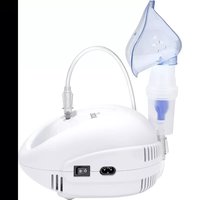
SC 145 - Inhaler Scala - Free user manual and instructions
Find the device manual for free SC 145 Scala in PDF.



| Product type | Inhaler for aerosol therapy |
| Brand | Scala |
| Model | SC 145 (compressor P0504EM F400, nebulizer RF8-3) |
| Dimensions (L x W x H) | 16 x 20 x 12 cm |
| Weight | 1.5 kg |
| Power supply | 230 V ~ 50 Hz |
| Power consumption | 130 VA |
| Maximum pressure | 1.8 ± 0.3 bar |
| Compressor air flow | Approx. 9 l/min |
| Noise level | 54 dB(A) at 1 m |
| Nebulizer capacity | 2 ml (min) - 8 ml (max) |
| Compressor lifespan | 400 hours |
| Nebulizer lifespan | 1 year (replace every 6 months in case of intensive use) |
| Applied part type | BF (patient accessories) |
| Protection rating | IP21 |
| Intended users | Medical staff and patients (adults, children, infants) |
| Operating environment | Healthcare facilities or home |
| Main functions | Aerosol therapy, dual-speed nebulizer with flow selector |
| Maintenance and cleaning | Regular cleaning and disinfection of accessories, replacement of air filter |
| Safety | Warnings against electrocution, fire, suffocation, strangulation; keep out of reach of children |
| Spare parts and repairability | Use only original Flaem accessories; repairs by authorized personnel |
| Symbols on the device | CE marking, class II, IP21, caution, etc. |
Frequently Asked Questions - SC 145 Scala
User questions about SC 145 Scala
0 question about this device. Answer the ones you know or ask your own.
Ask a new question about this device
Download the instructions for your Inhaler in PDF format for free! Find your manual SC 145 - Scala and take your electronic device back in hand. On this page are published all the documents necessary for the use of your device. SC 145 by Scala.
USER MANUAL SC 145 Scala
text_image
C Accessory Bag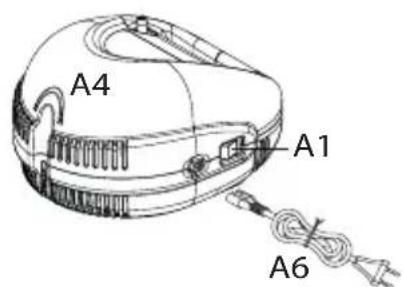
text_image
A4 A1 A6A = # P0504EM F400
B = # RF8-3
VORGESEHENE BENUTZER\*INNEN
text_image
B2.2.1 B2.2.2natural_image
Line drawing of two people wearing face masks, one holding a magnifying glass (no text or symbols)natural_image
Technical line drawing of a mechanical component with no visible text or symbolsnatural_image
Technical line drawing of a mechanical component with no visible text or symbolsnatural_image
Diagram of a mechanical component with a curved handle and a circular arrow indicating direction (no text or symbols)text_image
B2.2.1 B2.2.2natural_image
Line drawing of two people wearing face masks, one holding a magnifying glass (no text or symbols)REŽIMY POUŽITÍ NEBULIZÁTORU „RF8 DUAL SPEED“ S PŘEPÍNAČEM RYCHLOSTI
natural_image
Technical line drawing of a mechanical component with no visible text or symbolsnatural_image
Technical line drawing of a mechanical component with no visible text or symbolsnatural_image
Diagram of a curved mechanical component with a knob and shaft, no text or symbols presentPrístroj na aerosólovú terapiu
text_image
B2.2.1 B2.2.2natural_image
Line drawing of two people wearing face masks, one holding a device (no text or symbols)natural_image
Technical line drawing of a mechanical component with no visible text or symbolsnatural_image
Technical line drawing of a mechanical component with no visible text or symbolsnatural_image
Line drawing of a curved mechanical component with a circular feature and arrow indicating direction (no text or symbols)text_image
B2.2.1 B2.2.2natural_image
Line drawing of two people wearing face masks, one holding a magnifying glass (no text or symbols)natural_image
Technical line drawing of a mechanical component with a cylindrical shaft and flange (no text or symbols)natural_image
Technical line drawing of a mechanical component with no visible text or symbolsnatural_image
Diagram of a car wheel with a handle and gear mechanism (no text or symbols)Aerosol therapy device
These user instructions are provided for P0504EM F400 and RF8-3 model devices. The FLAEM Aerosol Therapy device consists of a compressor unit (A), a nebuliser and some accessories (B).
INTENDED USE
Medical device for the administration of medication through inhalation, with inhalation therapy and medication prescribed by a Doctor.
INDICATIONS FOR USE
Treatment of respiratory diseases. Medications must be prescribed by a doctor who has assessed the patient's general condition.

CONTRAINDICATIONS
- The medical device should NOT be used for patients who are unable to breathe on their own or who are unconscious.
- Do not use the device in anaesthetic or assisted ventilation circuits.
INTENDED USERS
The devices are intended for use by legally authorised medical personnel/health workers (doctors, nurses, therapists, etc.). The device can be used directly by the patient.

TARGET GROUP OF PATIENTS
Adults, children of all ages, infants. Before using the device, the user manual must be read carefully and an adult responsible for safety must be present if the device is used by infants, children of any age or persons with limited abilities (e.g. physical, mental or sensory). It is up to the medical personnel to assess the patient's condition and capabilities in order to determine, when prescribing therapy, whether the patient is able to operate the aerosol safely on their own or whether the therapy should be administered by a responsible person.
Please refer to medical personnel for the evaluation of the use of the device on particular types of patients such as pregnant women, lactating women, infants, incapacitated persons or persons with limited physical capabilities.
OPERATING ENVIRONMENT
This device can be used in healthcare facilities, such as hospitals, outpatient clinics, etc., or even at home.

WARNINGS CONCERNING POSSIBLE MALFUNCTIONS
- Should your appliance fail to perform, please contact the authorised service centre for clarification.
- The manufacturer should be contacted to report problems and/or unexpected events relating to operation and if necessary for clarification of use and/or maintenance/hygienic preparation.
- Please also refer to the case history of faults and their resolution.
WARNINGS
- Use the device only as a therapeutic inhaler. This medical device is not intended as a life-saving device. Any other use is considered improper and can be dangerous. The manufacturer is not liable for any improper use.
• Always consult your general practitioner for identification of treatment. - Follow the instructions of your doctor or respiratory rehabilitation therapist regarding the type of medicine, dosage and treatment indications.
- If you should experience allergic reactions or other problems while using the device, stop using it immediately and consult your doctor.
- Keep this manual safe for further reference.
- If the packaging is damaged or opened, contact the distributor or service centre.
- Do not expose the device to particularly extreme temperatures.
- Do not place the device near heat sources, in sunlight or in an excessively hot environment.
- The time required to switch from storage to operating conditions is about 2 hours.
- It is forbidden to access the compressor unit opening in any way. Repairs may only be carried out
by personnel authorised by the manufacturer. Unauthorised repairs invalidate the warranty and may pose a danger to the user.
- Suffocation risk:
- Some components of the appliance are small enough to be swallowed by children, so keep the appliance out of the reach of children.
- Strangulation risk :
- Do not use the supplied connecting hose and cables outside of their intended use, they could cause a strangulation hazard, take special care for children and people with special difficulties, often these people are not able to correctly assess the dangers.
- Fire risk:
- THIS device is not suitable for use in the presence of an anaesthetic mixture that is flammable with air, or with oxygen or nitrous oxide.
- Risk of electrocution:
- Before first use, and periodically during the life of the product, check the integrity of the structure of the appliance and the power cord to ensure that there is no damage; if it is damaged, do not plug it in and immediately take the product to an authorised service centre or your dealer.
- Keep the power cable away from animals (e.g. rodents), otherwise such animals could damage the insulation of the power cable.
- Always keep the power cable away from hot surfaces.
- Never obstruct the ventilation slots located on both sides of the compressor unit.
- Do not handle the compressor unit with wet hands. Do not use the compressor unit in humid environments (e.g. while bathing or showering). Do not immerse the compressor unit in water; if this happens, pull the plug immediately. Do not pull out or touch the compressor unit while immersed in water, unplug it first. Take it immediately to an authorised FLAEM service centre or your dealer.
- Risk of ineffectiveness of therapy:
- Performance may vary with particular types of drugs (e.g. those with high viscosity or in suspension). For further information, please refer to the package leaflet provided by the drug manufacturer.
- Use the nebuliser in the correct position, as upright as possible; do not tilt the nebuliser beyond an angle of 30 degrees, in any direction, to prevent the drug from spilling into the mouth or being overdispersed, reducing the effectiveness of the treatment.
- Pay attention to the indications provided with the drug and avoid using the devices with substances and dilutions other than those recommended.
- Only use the device in a dust-free environment, otherwise therapy may be impaired.
- Do not obstruct or insert objects into the filter and its housing in the unit.
- In the case of substances that are too dense, dilution with suitable saline solution may be necessary, as prescribed by a doctor.
- Only use original Flaem accessories or spare parts, no liability is accepted if non-original parts or accessories are used.
- Risk of infection :
- We recommend personal use of the accessories to avoid any risk of infection.
- Follow hygienic preparation before each use. Ensure that tubing and accessories are not stored in the vicinity of other accessories or devices for different therapies (e.g. infusions).
- At the end of therapy, do not leave the medicine inside the nebuliser.
- If the nebuliser is used for several types of medicine, the residues must be completely removed. Therefore, perform hygienic preparation after each inhalation, also to achieve the highest degree of hygiene and to optimise the service life and operation of the device.
- Risk of injury:
- Do not place the device on a soft supporting surface such as a sofa, a bed or a tablecloth.
- Always operate it on a hard surface clear of any objects.
WARNINGS ON INTERFERENCE RISKS DURING USE IN DIAGNOSTIC INVESTIGATIONS
This device is designed to meet the current requirements for electromagnetic compatibility. As far as EMC requirements are concerned, electromedical devices require special care when being installed and used, and are therefore required to be installed and/or used in accordance with the manufacturer's specifications. Risk of potential electromagnetic interference with other devices. Mobile or portable RF radio and telecommunication devices (mobile phones or wireless connections) may interfere with the operation of electromedical devices. The device may be susceptible to electromagnetic interference in the presence of other devices used for specific diagnosis or treatment. For more information visit www.flaemnuova.it.
CASE HISTORY OF FAULTS AND THEIR RESOLUTION
Before performing any operation, switch off the appliance and disconnect it from the mains.
| Problem Cause Remedy | ||
| The device is not working | Power cable not correctly plugged into the appliance socket or mains power socket | Plug the power cable correctly into the sockets |
| The device does not nebulise or nebulises poorly | The medicine was not inserted into the nebuliser | Pour the right amount of medicine into the nebuliser |
| The nebuliser has not been assembled correctly. | Disassemble and reassemble the nebuliser correctly according to the connection diagram on the cover. | |
| The nebuliser is obstructed | Hygienic preparation of the nebuliser. Deposits of medicine due to lack of hygienic preparation of the nebuliser impair its efficiency and function. Strictly follow the instructions in the HYGIENIC PREPARATION chapter. | |
| The accessories are not properly connected to the appliance | Check the correct connection between the air inlet of the appliance and the accessories (see connection diagram on cover). | |
| The pipe is bent or damaged or twisted | Unwind the pipe and check it for crushing or punctures.Replace it if necessary. | |
| The air filter is dirty Replace the filter | ||
| The device is louder than usual | The filter is inserted Insert the filter properly into the housing | |
If, after checking the conditions described above, the device still is not working properly, we recommend that you contact your trusted dealer or an authorised FLAEM service centre nearest to you. You can find a list of all Service Centres at http://www.flaemnuova.it/it/info/assistenza
DISPOSAL
Compressor unit
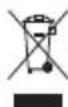
In accordance with Directive 2012/19/EC, the symbol on the equipment indicates that the equipment to be disposed of (excluding accessories) is considered as waste and must therefore be subject to 'separate collection'. Therefore, the user must deliver this waste (or have it delivered) to the separate collection centres set up by the local authorities, or hand it over to the retailer when purchasing a new appliance of an equivalent type. Separate waste collection and subsequent treatment, recovery and disposal operations promote the production of equipment from recycled materials and limit the negative environmental and health effects caused by improper waste management. Unauthorised disposal of the product by the user entails the application of the administrative sanctions provided for in the laws transposing Directive 2012/19/EC of the member state or country where the product is disposed of.
Nebuliser and accessories
To be disposed of as general waste after a sanitisation cycle.
Packaging

Product box

Heat-shrinkable nebuliser film and accessories

Product packaging tube

Sack packaging bag
NOTIFICATION OF SERIOUS EVENTS
Serious events occurring in connection with this product must be reported immediately to the manufacturer and the competent authority.
An event is considered serious if it causes or may cause, directly or indirectly, death or an unforeseen serious deterioration in a person's state of health.
| COUNTRY AUTHORITY | |
| Ireland | Health Products Regulatory AuthorityKevin O'Malley House, Earlsfort Centre, Earlsfort Terrace, IE - Dublin 2E-mail: devicesafety@hpra.ie |
| Malta | Medical Devices Unit Medicines AuthoritySir Temi Żammit Buildings, Malta Life Sciences ParkSan Ġwann SĞN 3000E-mail : devices.medicinesauthority@gov.mt |
SYMBOLS ON DEVICE OR PACKAGING
| CE0051 | Medical CE marking ref. regulation 2017/745 EU and subsequent updates |  | Serial number of the device |
 | Class II device Manufacturer |  | Type BF applied part |
 | Before use: Caution check instructions for use |  | |
 | Function switch off Alternating current |  | |
 | Function switch on Attention |  | Protection rating of the envelope: IP21. (Protected against solid bodies larger than 12 mm. Protected against access with a finger; Protected against vertically falling drops of water). |
 | Phthalate- and bisphenol-free |  | |
 | Model number See instructions for use |  | |
 | Temperature limits Moisture limits |  | |
 | Atmospheric pressure limits Production |  | |
 | Batch Code Unique device identifier |  | |
 | Quality mark Medical device | [Distributor] | |

INFORMATION ON RESTRICTIONS OR INCOMPATIBILITIES WITH CERTAIN SUBSTANCES
- Interactions: The materials used in the device are biocompatible materials and comply with statutory regulations, however possible allergic reactions cannot be completely excluded.
- Use the medicine as soon as possible once it has been opened and avoid leaving it in the nebuliser; once therapy has ended, do not leave the medicine inside the nebuliser and proceed with hygienic preparation.
COMPRESSOR UNIT SPECIFICATIONS
Model: P0504EM F400
| Power supply: | 230V~ 50Hz 130VA |
| Max. pressure: | 1.8 ± 0.3 bar |
| Air flow to compressor: | 9 l/min approx |
| Noise level (at 1 m): | 54 dB (A) approx |
| Operation: | Continued |
| Dimension: 16(L) × 20(W) × 12(H) cm |
NEBULIZER TECHNICAL SPECIFICATIONS
Model: RF8-3
| Nebulizzatore RF8 Dual Speed | |
| Minimum drug capacity: | 2 ml |
| Maximum drug capacity: | 8 ml |
TECHNICAL SPECIFICATIONS OF DEVICE
Model: P0504EM F400 combined RF8-3
Operating pressure (with neb.): 0.8 bar.
| Speed selector B2.2.3 | ||
| in pos Max in pos Min | ||
| (1) Release: | 0.40 ml/min approx. 0.19 ml/min approx. | |
| (2) MMAD: | 4.48 μm 4.01 μm | |
| (2) Respirable fraction < 5 μm (FPF): | 55.5% 61.1% | |
| (1) Data collected according to Flaem's internal procedure.(2) In vitro characterisation performed by TÜV Rheinland Italia S.r.l. in cooperation with the University of Parma. More details are available on request. | ||
APPLIED PARTS
Type BF applied parts are: patient accessories (B3, B4, B5, B6)
Weight: 1.500 Kg
ENVIRONMENTAL CONDITIONS
Operating conditions:
| Ambient temperature Between +10°C and +40°C |
| Relative air humidity Between 10% and 95% |
| Atmospheric pressure Between 69 KPa and 106 KPa |
Storage and transport conditions:
| Ambient temperature Between -25°C and +70°C |
| Relative air humidity Between 10% and 95% |
| Atmospheric pressure Between 69 KPa and 106 KPa |
DURATION
Model: P0504EM F400
(Compressor unit)
Service life 400 hours.
Model: RF8-3
(Nebuliser and accessories)
The expected average life is 1 year, however it is advisable to replace the nebuliser every 6 months during intensive use (or sooner if the nebuliser is clogged) to ensure maximum therapeutic effectiveness.
| EQUIPMENT AND MATERIAL INFORMATION | ||
| The equipment includes: Information on materials | ||
| A- | Compressor unit - Model: P0504EM F400A1 - SwitchA2 - Air intakeA3 - Air filterA4 - Nebuliser holderA5 - Carrying handleA6 - Power cable | |
| B- | Nebuliser and accessories - Model: RF8-3B1 -Connecting tube (compressor/nebuliser unit)B2 - RF8 Dual Speed NebuliserB2.1 - Lower partB2.2 - Upper part with selectorB2.2.1 - Upper partB2.2.2 - Selector switch supportB2.2.3 - Speed selector | |
| B3 - Mouthpiece Polypropylene | ||
| B4 - Paediatric SoftTouch mask | Polypropylene +Thermoplastic Elastomers | |
| B5 - Adult SoftTouch mask | ||
| B6 - Adult nasal piece Polypropylene | ||
| IMPORTANT NOTE: There is an identification label on the packaging, remove it and affix it in the spaces provided on page 2. When replacing the Nebuliser and accessories, perform the same procedure. | ||
| C- | Accessory pouch | |
OPERATING INSTRUCTIONS
Before each use, wash your hands thoroughly and clean your appliance as described in the section "HYGIENE PREPARATION". During application, it is recommended to adequately protect oneself from drips. This appliance is suitable for the administration of medicinal substances (solutions and suspensions), for which aerosol administration is envisaged; such substances must in any case be prescribed by a doctor. In the case of substances that are too dense, dilution with suitable saline solution may be necessary, as prescribed by a doctor.
-
Insert the plug of the power cable (A6) into a mains socket corresponding to the voltage of the appliance. It must be positioned in such a way that disconnection from the power grid is not difficult.
-
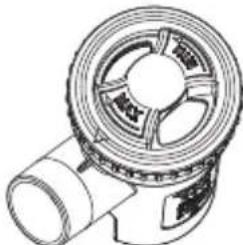
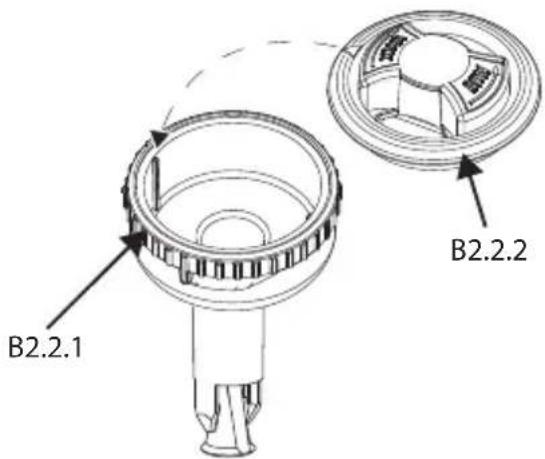
Reassemble the upper part with the selector switch as shown in the connection diagram sect. B2.2.
Attention, the selector support (B2.2.2) must fit perfectly into the upper part (B2.2.1), to do this you must align the arrow on the selector support with the accessory coupling notch, see picture.
-
Add the medicine prescribed by the doctor into the lower part (B2.1). Insert the upper part (B2.2) into the lower part (B2.1), close the nebuliser by turning the upper part (B2.2) clockwise.
-
Connect the accessories as shown in the 'Connection Diagram' on the cover.
text_image
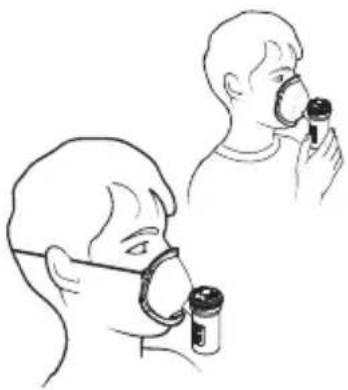
B2.2.1 B2.2.2- Sit comfortably while holding the nebuliser in your hand, place the mouthpiece to your mouth or use a nasal piece (if provided) or mask. If you use the mask accessory, place it on your face as shown in the figure (with or without the use of the elastic band).
- Switch on the device by pressing the switch (A1) and inhale and exhale deeply; after inhaling, it is recommended to hold your breath for a moment so that the inhaled aerosol droplets can settle. Then exhale slowly.
- When the application is finished, switch off the device and disconnect it from the mains.
ATTENTION: If, after the therapy session, an obvious deposit of moisture forms inside the tube (B1), detach the tube from the nebuliser and dry
natural_image
Line drawing of two people wearing face masks, one holding a nasal tube and the other holding a mouth tube (no text or symbols)it with the ventilation of the compressor itself; this action prevents possible mould growth inside the tube.
To facilitate the connection of the connection tube (B1) to the compressor unit, act on the end of it by simultaneously rotating and inserting it, and for removal by rotating and extracting it.
HOW TO USE THE "RF8 DUAL SPEED" NEBULISER WITH SPEED SELECTOR
natural_image
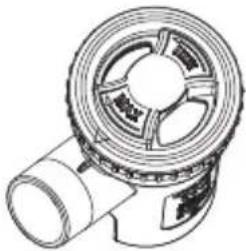
Technical line drawing of a mechanical component with no visible text or symbolsTo speed up inhalation therapy, turn the speed selector (B2.2.3) clockwise.
natural_image
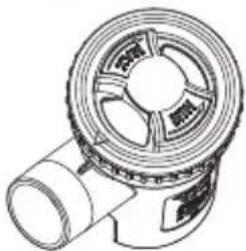
Technical line drawing of a mechanical component with no visible text or symbolsTo make the inhalation therapy more effective, turn the speed selector (B2.2.3) anticlockwise, in this case you will achieve optimal drug administration while minimising the dispersion of the drug in the surroundings.
SoftTouch masks
Soft biocompatible material
Dispersion Limiter
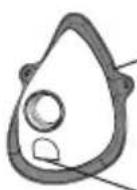
SoftTouch masks have an outer edge made of soft, biocompatible material that ensures an optimal fit on the face, and are also equipped with the innovative Dispersion Limiter. These characteristic features allow for greater sedimentation of the drug in the patient, and again limit its dispersion.
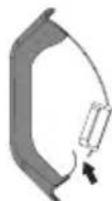
Upon inhalation, the tab, which acts as a Dispersion Limiter, bends inwards in the mask.
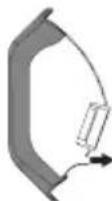
Upon exhalation, the tab, which acts as a Dispersion Limiter, bends outwards from the mask.
HYGIENIC PREPARATION
Switch off the appliance before each hygienic preparation operation and disconnect it from the mains.
Compressor unit (A) and pipe exterior (B1)
Use only a cloth moistened with antibacterial detergent (non-abrasive and free of solvents of any kind).
Nebuliser and accessories
Open the nebuliser by turning the upper part (B2.2) anticlockwise, take apart the upper part (B2.2) as shown in the "Connection diagram" in point B2.2.
Then proceed according to the instructions below.
Sanitisation
Before and after each use, sanitise the nebuliser and accessories by choosing one of the methods provided in the table and described below.
method A: Sanitise the accessories under warm drinking water (approx. 40°C) with mild dishwashing detergent (non-abrasive).
method B: Sanitise the accessories in the dishwasher with the hot cycle (70°C).
method C: Sanitise the accessories by soaking in a solution of 50% water and 50% white vinegar, then rinse thoroughly with warm drinking water (approx. 40°C).
After sanitising the accessories, shake them vigorously and place them on a paper towel, or alternatively dry them with a hot air jet (e.g. hair dryer).
Disinfection
After sanitising the nebuliser and accessories, disinfect them using one of the methods provided in the table and described below. Each method can be performed for a limited number of times (see figure in table).
method A: Obtain a disinfectant of the electrolytic chloride type (active ingredient: sodium hypochlorite), specifically for disinfection, available in all pharmacies.
Execution:
- Fill a container of a suitable size to hold all the individual components to be disinfected with a solution of drinking water and disinfectant, observing the proportions indicated on the packaging of the disinfectant.
- Completely immerse each individual component in the solution, taking care to avoid the formation of air bubbles in contact with the components. Leave the components immersed for the period of time indicated on the disinfectant packaging, and associated with the concentration chosen for the preparation of the solution.
- Recover the disinfected components and rinse them thoroughly with lukewarm drinking water.
- Dispose of the solution according to the disinfectant manufacturer's instructions.
method B: Disinfect accessories by boiling them in water for 10 minutes; use demineralised or distilled water to avoid hard water deposits.
method C: Disinfect the accessories in a hot bottle steamer (not microwave). Carry out the process strictly according to the hot bottle steamer's instructions. For disinfection to be effective, choose a steriliser with an operating cycle of at least 6 minutes.
After disinfecting the accessories, shake them vigorously and place them on a paper towel, or alternatively dry them with a hot air jet (e.g. hair dryer).
At the end of each use, store the device complete with its accessories in a dry and dust-free place.
| Table of planned methods / patient accessories | |||||||
| Accessory patient\Method | Sanitisation Disinfection | ____ | |||||
| method A | method B | method C | method A | method B | method C | ||
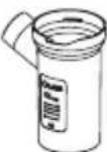 | B2.1 | √ √ √ | √MAX 300 TIMES | √MAX 300 TIMES | √MAX 300 TIMES | ||
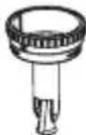 | B2.2.1 | √ √ √ | √MAX 300 TIMES | √MAX 300 TIMES | √MAX 300 TIMES | ||
 | B2.2.2 | √ √ √ | √MAX 300 TIMES | √MAX 300 TIMES | √MAX 300 TIMES | ||
 | B2.2.3 | √ √ √ | √MAX 300 TIMES | √MAX 300 TIMES | √MAX 300 TIMES | ||
 | B3 | √ √ √ | √MAX 300 TIMES | √MAX 300 TIMES | √MAX 300 TIMES | ||
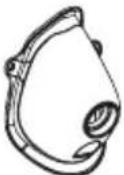 | B4 | √ √ √ | √MAX 300 TIMES | √MAX 300 TIMES | √MAX 300 TIMES | ||
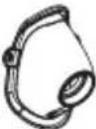 | B5 | √ √ √ | √MAX 300 TIMES | √MAX 300 TIMES | √MAX 300 TIMES | ||
 | B6 | √ √ √ | √MAX 300 TIMES | √MAX 300 TIMES | √MAX 300 TIMES | ||
| √:planned \: not planned | |||||||
AIR FILTRATION
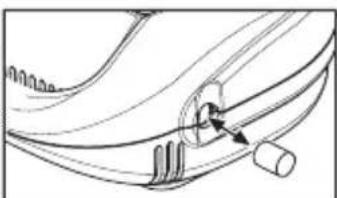
The appliance is equipped with an extraction filter (A3) to be replaced with a replacement filter (D1) when it is dirty or changes colour. Do not wash or re-use the same filter. Regular replacement of the filter is necessary to help ensure proper compressor performance. The filter must be checked on a regular basis. Contact your dealer or authorised service centre for replacement filters.
natural_image
Line drawing of a car wheel with a key inserted into the jaw (no text or symbols)To replace the filter, pull it out as shown in the figure.
The filter is designed so that it is always fitted in its housing. Do not replace the filter during use. Only use original Flaem accessories or spare parts, no liability is accepted if non-original parts or accessories are used.
text_image
B2.2.1 B2.2.2natural_image
Line drawing of two people wearing face masks, one holding a device (no text or symbols)natural_image
Technical line drawing of a mechanical component with a cylindrical shaft and circular housing (no text or symbols)natural_image
Technical line drawing of a mechanical component with no visible text or symbolsnatural_image
Line drawing of a car wheel with a handle and arrow indicating direction (no text or symbols)text_image
B2.2.1 B2.2.2natural_image
Line drawing of two people wearing face masks, one holding a magnifying glass (no text or symbols)natural_image
Technical line drawing of a mechanical component with no visible text or symbolsnatural_image
Technical line drawing of a mechanical component with no visible text or symbolsnatural_image
Diagram of a car's wheel and wheel assembly with a valve mechanism (no text or labels)natural_image
Pure horizontal and vertical lines forming a symmetrical pattern (no text or symbols)
natural_image
Blank white image with no visible content, text, or symbols.
natural_image
Completely blank white image with no visible content, text, or symbols.
natural_image
Blank white image with no visible content, text, or symbols.
natural_image
Blank white image with no visible content, text, or symbols.
natural_image
Completely blank white image with no visible content, text, or symbols.
natural_image
Blank white image with no visible content, text, or symbols.
natural_image
Blank white image with no visible content, text, or symbols.
natural_image
Completely blank white image with no visible content, text, or symbols.
natural_image
Blank white image with no visible content, text, or symbols
natural_image
Completely blank white image with no visible content, text, or symbols.
natural_image
Completely blank white image with no visible content, text, or symbols.
natural_image
Blank white image with no visible content, text, or symbols.
natural_image
Blank white image with no visible content, text, or symbols
natural_image
Completely blank white image with no visible content, text, or symbols.
natural_image
Completely blank white image with no visible content, text, or symbols.
natural_image
Completely blank white image with no visible content, text, or symbols.
natural_image
Blank white image with no visible content, text, or symbols.
natural_image
Blank white image with no visible content, text, or symbols
natural_image
Blank white image with no visible content, text, or symbols
natural_image
Blank white image with no visible content, text, or symbols
natural_image
Blank white image with no visible content, text, or symbols
natural_image
Blank white image with no visible content, text, or symbols
natural_image
Completely blank white image with no visible content, text, or symbols.
natural_image
Completely blank white image with no visible content, text, or symbols.
natural_image
Completely blank white image with no visible content, text, or symbols.
natural_image
Completely blank white image with no visible content, text, or symbols.
natural_image
Blank white image with no visible content, text, or symbols
natural_image
Completely blank white image with no visible content, text, or symbols.
natural_image
Completely blank white image with no visible content, text, or symbols.
natural_image
Completely blank white image with no visible content, text, or symbols.
natural_image
Blank white image with no visible content, text, or symbols
natural_image
Completely blank white image with no visible content, text, or symbols.
natural_image
Blank white image with no visible content, text, or symbols
natural_image
Completely blank white image with no visible content, text, or symbols.
natural_image
Completely blank white image with no visible content, text, or symbols.
natural_image
Completely blank white image with no visible content, text, or symbols.
natural_image
Blank white image with no visible content, text, or symbols
natural_image
Completely blank white image with no visible content, text, or symbols.
natural_image
Completely blank white image with no visible content, text, or symbols.
natural_image
Blank white image with no visible content, text, or symbols
natural_image
Blank white image with no visible content, text, or symbols
natural_image
Completely blank white image with no visible content, text, or symbols.
natural_image
Blank white image with no visible content, text, or symbols
natural_image
Blank white image with no visible content, text, or symbols.
natural_image
Pure horizontal and vertical lines forming a symmetrical design (no text or symbols)$$ \left|\begin{array}{c}1 \end{array}\right| $$

DE> Die Garantie wird vom örtlichen Händler gewährt, der das Gerät gemäß den geltenden Gesetzen verkauft hat.
CZ> Záruka je poskytována místním prodejcem, který prodal zařízení v souladu s platnými zákony.
SK> Záruka je poskytovaná miestnym predajcom, ktorý predal zariadenie v súlade s platnými zákonmi.
HU> A garancia a helyi kereskedő által van biztosítva, aki a készüléket az érvényes törvényeknek megfelelően értékesítette.
EN> The warranty is provided by the local retailer who sold the device in accordance with applicable laws.
FR> La garantie est fournie par le détaillant local qui a vendu l'appareil conformément aux lois applicables.
NL> De garantie wordt verstrekt door de lokale verkoper die het apparaat heeft verkocht in overeenstemming met de geldende wetten.

SCALA Electronic GmbH
Ruhlsdorfer Str. 95
14532 Stahnsdorf, Germany
www.scala-electronic.de

FLAEM NUOVA S.p.A.
Via Colli Storici, 221/223/225
25015 S. MARTINO DELLA BATTAGLIA
(Brescia) – ITALY
Tel. +39 030 9910168
www.flaem.it
© 2023 FLAEM NUOVA®
All right reserved
Cod. 20331 rev. date 10/2023