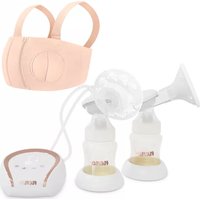
Bianco - Breast Pump Neno - Free user manual and instructions
Find the device manual for free Bianco Neno in PDF.



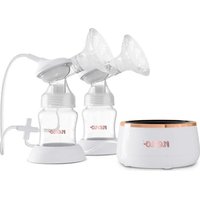
| Product type | Double electric breast pump |
| Brand | Neno |
| Model | Bianco |
| Dimensions (pump) | 115 x 115 x 55 mm |
| Weight (pump) | 284 g |
| Power supply | 5V 2A, USB-C cable |
| Battery life | Up to 120 minutes |
| Charging time | About 2 hours |
| Pumping modes | Stimulation, Expression, Let-down |
| Suction levels | 9 levels per mode (L1-L9) |
| Display | LED screen with battery, duration, suction level |
| Box contents | 2 funnels 24mm, 2 funnels 21mm, 2 bottles, 2 teats, 2 bottle holders, 1 hands-free bra, USB cable, tubing, valves, diaphragms, caps |
| Care and cleaning | Wash with warm soapy water after each use; disinfect by boiling for 10 min once a day |
| Spare parts and repairability | Diaphragm (every 4-8 weeks), valve (every 4-12 weeks), funnel (every 6 months); 24-month warranty |
| Safety | Automatic shut-off after 30 min; built-in battery; personal use only |
| Warranty | 24 months (excluding consumables) |
| Usage | Single or double, hands-free possible with included bra |
Frequently Asked Questions - Bianco Neno
User questions about Bianco Neno
0 question about this device. Answer the ones you know or ask your own.
Ask a new question about this device
Download the instructions for your Breast Pump in PDF format for free! Find your manual Bianco - Neno and take your electronic device back in hand. On this page are published all the documents necessary for the use of your device. Bianco by Neno.
USER MANUAL Bianco Neno
natural_image
Product photo of a baby pacifier with two connected devices and a digital display (no visible text or symbols)Table of contents
Spis treści
B
C
D
natural_image
Illustration of a faucet pouring liquid into a beaker with bubbles and a clock showing 5 (no text or symbols on the diagram itself)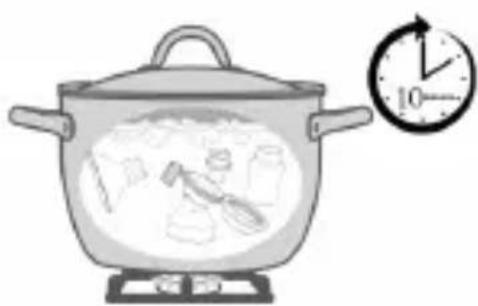
natural_image
Illustration of a cooking pot with ingredients being heated by a clock (no text or symbols)E
natural_image
Line drawing of a medical device with buttons and a folded garment (no text or symbols)F
natural_image
Illustration of a hand holding a cable with a cross-shaped connector (no text or symbols)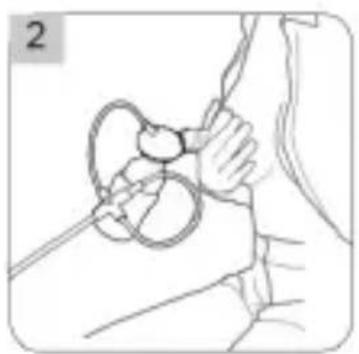
natural_image
Illustration of a hand holding a medical device with a circular component (no text or symbols visible)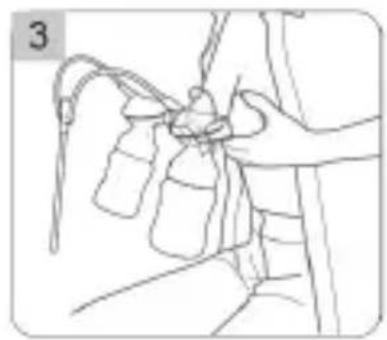
natural_image
Line drawing of a person holding a bottle and a bulb, no text or symbols present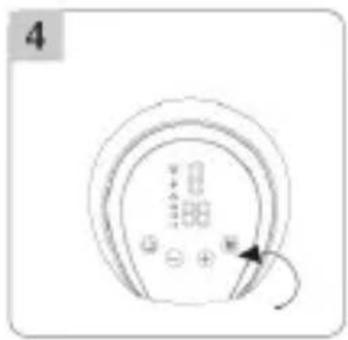
PL
INSTRUKCJA OBSŁUGI
Szanowny Kliencie,
The Neno Bianco device you have bought is a double electronic breast pump, used to express breast milk from a woman's breast after childbirth. Before using the device, please read the instruction manual.
01. PRECAUTIONS
- Always unplug the device after use if you do not need to charge the device battery.
- Do not place the product where it is in danger of falling into sinks, bathtubs or other bodies of water.
- The breast pump and its components are not heat resistant - keep the device away from hot surfaces and open flames.
- Do not use the device near flammable materials.
- The breast pump should not be left unattended while it is connected to a power source.
- Never use the device if it has been dropped or otherwise damaged.
- Do not use a device whose power cord or plug is damaged.
- Do not use the device in the bath or shower.
- Do not place the unit under water or other liquids.
- Do not wash the device under running water.
- Do not connect the device to a power outlet that has been in contact with water or other liquids.
- If the device has been exposed to water or other liquids - do not touch the device directly, disconnect it from the power supply, switch it off and contact the manufacturer.
-
This device is intended for use by a single user. Use of the breast pump by more than one person carries a risk of harm to the users and will invalidate the guarantee.
-
Do not attempt to repair or modify the unit yourself.
- Use the breast pump only as described in the instructions. Do not use the device for any other purpose.
- Inspect all breast pump components before each use.
- Do not heat discharged milk in the microwave. Milk heated in a microwave can burn your baby's face because heating with microwave waves can create high temperature bubbles in the fluid. In addition, microwave waves can change the composition of the milk.
- Do not bring the milk to the boil while heating it.
- Before using the breast pump for the first time, wash and disinfect all parts of the machine that will come into direct contact with your breast lub with milk.
- After each use of the breast pump, wash all parts of the machine that come into direct contact with your breast or milk.
- Take special care when using the breast pump or its accessories near children.
02. ELEMENTS
FIG. A
- Funnel lid x4
- Funnel (diameter 24 mm) x2, Funnel (diameter 21 mm) x2
- Connector x2
- Gasket cover x2
- Diaphragm x2
- Valve x4
- Milk bottle x2
- Bottle teat set x2
- Bottle holder x2
- USB charging cable
- Pumping device
- Tube
- Bottle lid x2
- Hands-free breast pump bra
03. DISPLAY ICONS
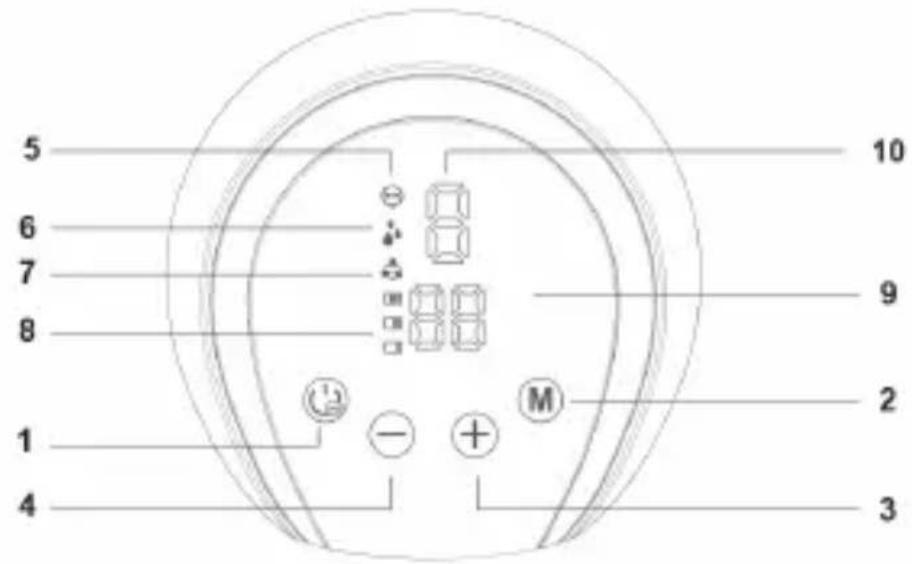
FIG. B
A. Power button (1) - Hold down the button for 2 seconds to turn the unit on or off. Press once to pause.
B. Mode Change Button (2) - Press the button to change the operating mode of the unit. There are 3 modes of the unit available (stimulation, collection, milking). The unit will automatically switch from stimulation mode to
milk-out mode after 2 minutes.
C. Changing the suction level - Press „+” (3) to increase the suction or „-” (4) to decrease the suction. Stimulation mode (5): levels L1-L9; Extraction mode (6): levels L1-L9; Milk delivery mode (7): levels L1-L9.
D. Battery status (8) - The battery icon shows the battery charge status. Connect the device to charge when the battery is close to empty.
E. Device operating time (9) - the indicator shows how many minutes have passed since the breast pump was switched on. The device automatically switches off after 30 minutes.
F. Suction level (10) - Shows the currently selected suction power level.
04. BEFORE FIRST USE
Check that the kit is complete before starting work.
- Connect the breast pump to the power supply. Charge the device battery for 2 hours.
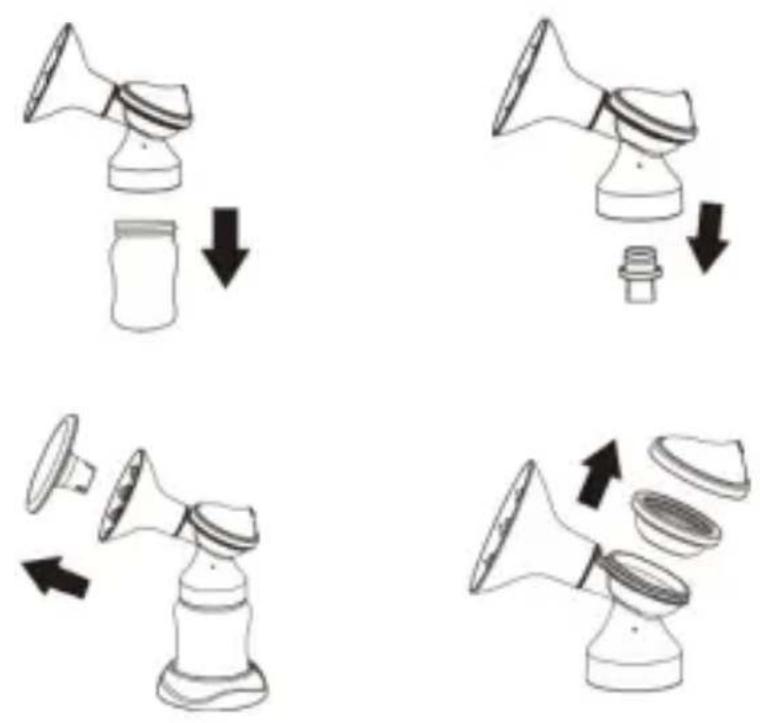
- Disconnect any parts of the breast pump that come into direct contact with the breast or milk (FIG. C)
- Unscrew the milk bottle from the joint.
- Pull the valve down to disconnect it from the joint.
- Remove the lid from the funnel and pull the funnel off the joint.
- Remove the cover and membrane from the joint.
- Clean the machine components (refer to the CLEANING AND DISINFECTING section).
05. CLEANING AND DISINFECTION
Washing and disinfecting are two different operations. They must be done separately to protect your baby and to ensure the correct operation of the breast pump. Washing - washing the surface of the unit and removing dirt.
Disinfection - killing organisms such as bacteria or viruses that may be present on the surface of the equipment.
Funnel and funnel lid, breast pump parts (joint, gasket, gasket cover), bottle and teat:
Wash and disinfect before first use.
Wash after each use.
Disinfection once a day.
NOTE:
- Separate and wash all machine parts that come into contact with milk immediately after using the machine. This will remove any milk residue and prevent the growth of bacteria.
- Use only drinkable tap water for washing. Use bottled water if the water in your tap does not meet this requirement.
- When cleaning the valves, do not use brushes. Be careful not to puncture the
valve on the way out.
- Disassemble, wash and rinse all parts of the breast pump that come into contact with milk, except for the pumping device.
- Use a mild dishwashing liquid or soap when washing the breast pump parts.
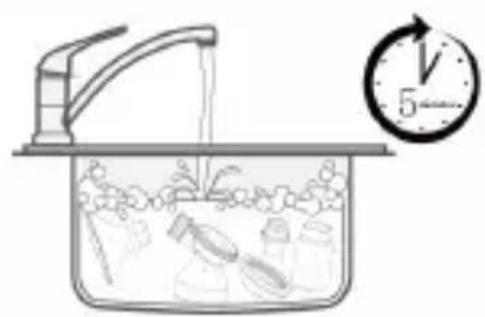
FIG. D
- Washing (before first use and after use - in the sink):
a. Rinse all the detached parts (which have come into contact with the breast and milk) in cold water to rinse off any milk residue and deposits that have formed.
b. Soak in warm soapy water for 5 minutes, then wash and rinse.
c. Allow the parts to dry naturally. Store dry parts in a cool, dry place when you are not using them.
- Disinfection (before first use and once a day on the cooker):
a. Fill the pot with water so that all items placed in it are covered when placed in the water. Bring to the boil. Place the breast pump parts in the boiling water for 10 minutes. Do not boil.
b. Allow the items to dry naturally. Store dry kit items in a cool, dry place when not in use.
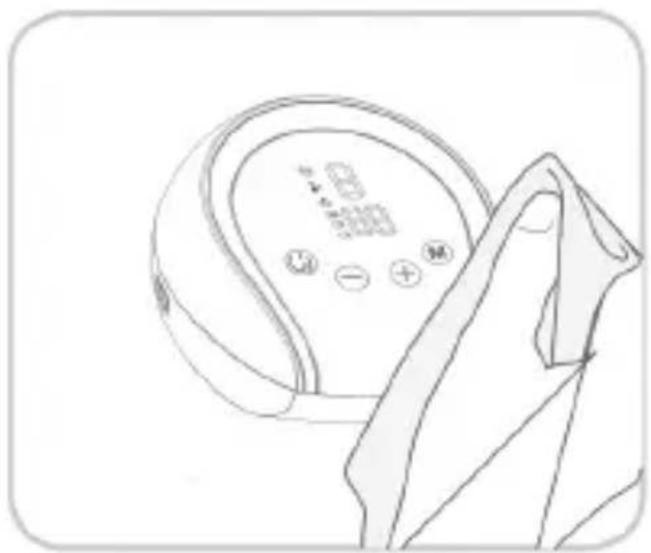
FIG. E
- Cleaning of the pumping device:
a. Wipe the pump unit with a soft, wet cloth and mild dishwashing liquid/soap. Other cleaners or abrasives may damage the unit and its display.
b. Do not immerse the pump unit under water or wash it under running water.
c. When not using the pump unit, store it in a cool, dry place.
06. BREAST PUMP ASSEMBLY
- Wash your hands thoroughly with soap and water before touching the breast pump and breast.
- Connect the funnel, gasket and gasket cap to the joint.
- Place the valve in the joint and screw the milk bottle onto the joint by turning it clockwise until it stops.
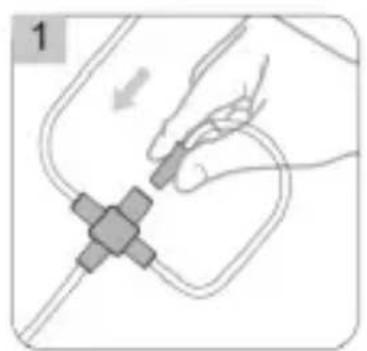
- Connect the tube to the seal cap. The tube can be connected to 1 or 2 bottles (See figure 6).
Councils:
a. Before each use, check the parts of the breast pump for damage. If necessary, replace damaged parts with new ones.
b. Always check the cleanliness of the components before using the device.
c. To avoid damaging the breast pump, make sure all its parts are dry before use.
07. CHARGING THE BREAST PUMP
Before first use, charge the breast pump for 2 hours by connecting it to power using the USB cable. The battery icon on the display will be full when charging is complete.
Full blinking battery - low battery, connect the device for charging.
Incomplete blinking battery - battery connected for charging, current battery charging status.
Full battery - a battery that is fully charged.
You can use the breast pump while the device is plugged in to charge. The device battery will be charged when you connect the device to the power supply. The device battery will not be charged when the pumping device is switched on. Fully charge the breast pump battery before storing it if you intend not to use the device for a long period of time. Charge the device battery before it is completely depleted. This prolongs the life of the battery. If the breast pump has been stored in a hot place, the device battery may not work at first. Allow the breast pump to cool for one hour before use.
08. USE OF A BREAST PUMP
FIG. F
If you are using the single breast pump mode, insert the unused end of the tube into the holder provided.
- Place the funnel on the breast so that the nipple is inside the drainage channel.
- Press the funnel and breast pump connector against your breast using your thumb and index finger. Support your breasts with the palm of your hand.
- Turn on the breast pump by pressing the power button and select the operation mode that suits you.
- Press the power button to turn off the breast pump after use and place the lid on the funnel to protect the device from dust.
The breast pump remembers the last used suction level settings in all modes:
-
The breast pump starts in stimulation mode. Set the level of suction strength comfortable for you using the +/- buttons. Stimulation mode - fast pumping that mimics your baby's natural sucking of breast milk to stimulate milk flow.
-
After 2 minutes, the breast pump will automatically activate the pumping mode. Adjust the level of suction using the +/- buttons to find the highest level of suction that is comfortable for you. If breast milk starts to flow from your breast
Before two minutes have elapsed, press the change mode button to manually switch to draining mode. This is a slower pumping action that gently and efficiently sucks milk from your breast. In draining mode, increase the suction until you feel slight discomfort (not pain) and decrease the suction
by one degree.
- Milk let-down mode - gentle pumping mode. Turn it on when milk is flowing from the breast spontaneously.
09. REPLACEMENT OF CONSUMABLE PARTS
Consumable parts are subject to natural wear and tear during operation of the breast pump and are therefore not covered by the manufacturer's warranty. Worn components of the breast pump that come into contact with milk should be replaced. A worn component has a crack, deformation, tarnishing or a distinct change in colour.
- Replace the diaphragm every 8 weeks (if you use the breast pump 1-3 times a day) or every 3-4 weeks (if you use the breast pump more than 3 times a day).
- Replace the valve every 2-3 months (if using 1-3 times a day) or every 4 weeks (if using more than 3 times a day).
- Replace the funnel every 6 months if you use the breast pump more than 3 times a day.
- Replace the tube only if moisture enters the tube or the tube is damaged.
10. PREPARATION OF MILK FOR FEEDING
- Do not thaw frozen milk in the microwave or in boiling water. There is a risk of scalding the baby's face.
- Thaw the milk in the fridge overnight. Do not refreeze once thawed milk. You can thaw milk quickly by holding it under running water with a maximum temperature of 37^ C.
- Place the closed bottle/bag in a bowl of warm water for 20 minutes to bring the milk to body temperature.
- Do not add freshly drained milk to previously frozen milk if the amount of fresh milk exceeds the amount of previously frozen milk.
- It is recommended that you breastfeed before you start feeding your baby with a bottle.
- Always check the bottle, teat and other components before and after each feeding. If the teat is damaged, stop using it immediately.
- To avoid the risk of strangulation, test the strength of the soother by pulling gently on its protruding part.
- Do not try to enlarge the opening of the teat.
- Infants should not be bottle fed without adult supervision.
- The teat of the bottle should not be used as a soother for the baby.
11. LONG-TERM STORAGE
- The breast pump has a built-in rechargeable battery. To protect itself from
damage, the device goes into storage mode after a long period of inactivity. To deactivate the storage mode, connect the device to power and charge it for 2 hours. Before you put the breast pump away for an extended period of time, make sure that:
a. All parts of the breast pump are clean.
b. You have cleaned the pumping device.
c. The device battery is fully charged.
12. FAQ
- The device does not start: make sure that the breast pump is plugged into a working electrical outlet. If the breast pump has no power source, its display will not turn on and no error message will appear.
- The device does not pump when switched on: make sure the device has a charged battery or is connected to the power supply.
- No/poor suction: Make sure all parts of the breast pump are correctly positioned. Take the breast pump apart and make sure all parts are clean and undamaged. Reassemble the breast pump according to the instructions in the instructions in the Lactator Assembly section. When pumping, make sure the entire surface of the funnel is pressed against the breast.
- More milk has come out of your breast than the bottle can hold: turn off the pump and unplug it. Use a moist (not wet) cloth to wipe the breast pump. Wash the parts of the breast pump that contain milk according to the instructions in the CLEANING AND DISINFECTING section. When all parts of the machine are dry, reassemble.
13. SPECIFICATION
Battery: lithium-ion 3.7V 2000 mAh
Operating time: up to 120 minutes
Charging time: approximately 2 hours
Input power: 5V 2A
Charging cable: USB C
Pump dimensions: 115x115x55 mm
Weight of pump: 284 g
Suction power: single mode: 11\~56; dual mode: 6\~45 kPi
14. WARRANTY/CLAIMS CARD
The product is covered by a 24-month warranty. Warranty conditions can be found at: https://neno.pl/gwarancja
Details, contact and service address can be found at: https://neno.pl/kontakt
Specifications and contents are subject to change without notice. We apologise for any inconvenience.
DE
BEDIENUNGSANLEITUNG
The crossed out trash can symbol indicates that unusable electrical or electronic devices, its accessories (such as power supplies, cords) or components (for example batteries, if included) cannot be disposed of alongside with household waste. In order to dispose of the devices or its components (for example, batteries) deliver the device to the collection point, where it will be accepted free of Disposal is subject to the recast version of the WEEE Directive 19/ EU) and the Directive on batteries and accumulators (2006/66 / oper disposal of the device prevents degradation of the natural ment. Information about the collection points of the facilities is by the competent local authorities. Incorrect disposal of waste is to penalties provided for by the law in force in the given area.
DE
KGK TREND Sp. z o.o. (formerly KGK Trade Sp. z o.o. Sp. K.) st. Ujastek 5b, 31-752 Cracow, Poland. Made in PRC
- Table of contents
- Spis treści
- B
- PL
- INSTRUKCJA OBSŁUGI
- Szanowny Kliencie,
- PRECAUTIONS
- ELEMENTS
- A
- DISPLAY ICONS
- B
- BEFORE FIRST USE
- CLEANING AND DISINFECTION
- NOTE:
- D
- E
- BREAST PUMP ASSEMBLY
- Councils:
- CHARGING THE BREAST PUMP
- USE OF A BREAST PUMP
- F
- REPLACEMENT OF CONSUMABLE PARTS
- PREPARATION OF MILK FOR FEEDING
- LONG-TERM STORAGE
- FAQ
- SPECIFICATION
- WARRANTY/CLAIMS CARD
- DE
- BEDIENUNGSANLEITUNG
Brand : Neno
Model : Bianco
Category : Breast Pump