HUGGY - Baby products Kindercraft - Free user manual and instructions
Find the device manual for free HUGGY Kindercraft in PDF.



| Product type | Soft physiological baby carrier |
| Brand | Kindercraft |
| Model | HUGGY |
| Recommended age | From 3 months (or when baby holds head up) up to about 2-3 years |
| Maximum child weight | 20 kg |
| Carrying positions | Front (facing parent), back (facing parent) |
| Physiological position | M position (legs apart, bottom lower than knees) |
| Adjustable seat width | Yes, with Velcro straps on hip belt |
| Hood | Yes, removable to protect against weather |
| Removable outer fabric | Yes, for hot days (stores in a front pocket) |
| Anti-drool belt cover | Yes, removable and washable |
| Padded shoulder straps | Yes, with adjustment buckles and adjustable straps |
| Padded hip belt | Yes, with locking buckle |
| Approximate dimensions (packaging) | Approx. 40 x 30 x 10 cm |
| Carrier weight | Approximately 650 g |
| Fabric composition | Polyester, cotton (according to label) |
| Care and cleaning | Machine wash at 30°C, gentle cycle; do not bleach, do not tumble dry, do not iron, do not dry clean |
| Safety | Constant supervision required; do not use for sports activities; regularly check baby's position |
| Spare parts / repairability | Contact manufacturer; do not use parts not supplied |
| Warranty | Legal warranty of conformity (according to country) |
Frequently Asked Questions - HUGGY Kindercraft
User questions about HUGGY Kindercraft
0 question about this device. Answer the ones you know or ask your own.
Ask a new question about this device
Download the instructions for your Baby products in PDF format for free! Find your manual HUGGY - Kindercraft and take your electronic device back in hand. On this page are published all the documents necessary for the use of your device. HUGGY by Kindercraft.
USER MANUAL HUGGY Kindercraft
natural_image
Line drawing of a person wearing a backpack and hand near the chest (no text or symbols)10
YEARS
WARRANTY
HIGH QUALITY STANDARD
Avalon's only 10 million euro held Dollar level range (in euro/€ million)

kinderkraft.com

/kinderkraftofficial

kinderkraft

@kinderkraftofficial
(AR) دلیل الاستخدام (CS) Návod k obsluze (DE) Bedienungsanleitung (EN) User manual (ES) Manual de uso (FR) Guide d'utilisation (HU) Használati útmutató (IT) Istruzioni per utente (NL) Gebruiksaanwijzing (PL) Instrukcja obsługi (PT) Manual de instruções (RO) Manual de utilizare (RU) Руководство по эксплуатации (SK) Návod na použitie (SV) Bruksanvisning
(AR) اطقال حاملة (CS) nosítko (DE) die babytrage (EN) baby carrier (ES) portador del bebé (FR) le porte-bebe (HU) babahordozó (IT) il marsupio (NL) draagzak (PL) nosidełko (PT) portador de bebê (RO) marsupiu purtator (RU) детские перевозчика (SK) nosič (SV) bärsele
All rights to this data are entirely reserved to 4Kraft Sp. z o.o. Any unauthorized use or misuse, including usufruct, copying, duplication and sharing, wholly or partially, without consent of 4Kraft Sp. z o.o. may result in legal consequences.
AR 8
CS....11
DE 15
EN 19
ES....22
FR....26
HU....30
IT....34
NL....38
PL....41
PT....45
RO....49
RU 52
SK....56
SV....60
الا Breakfast هي لأغراض توضيحية فقط ولا تشكل تمethylاكاملاً لل문ج. Ilustrace jsou pouze orientační a nepředstavují plné zobrazení produktu. Die gezeigten Bilder dienen nur als Referenz, das tatsächliche Produkt kann von der Abbildung abweichen. The illustrations are for illustration only and do not represent the product. Las ilustraciones son meramente orientativas y no constituyen una representación completa del producto. Les illustrations sont données à titre indicatif et ne constituent pas une représentation complète du produit. Az illusztrációk csak tájékoztató jellegüek és eltérhetnek a valós terméktől. Le immagini sono inserite a scopo dimostrativo e non rispecchiano appieno le caratteristiche del prodotto. De afbeeldingen dienen uitsluitend ter illustratie en geven geen volledig beeld van het product. Ilustracje mają charakter pogladowy i nie stanowią pełnego odwzorowania produktu. As ilustrações têm uma função informativa e não são uma representação fiel do produto. Ilustrațiile sunt doar pentru referință și nu reprezintă produsul complet. Иллюстрации приведены только для справки и не представляют весь продукт. Obrázky slúžia len na ilustráciu a nie sú úplným predstavením produktu. Illustrationer är endast för referens och representerar inte hela produkten
1
natural_image
Close-up of a black athletic suit with straps and buttons, no visible text or symbols2
natural_image
Close-up of a fabric or mesh garment with two black arrows pointing to a seam or seam, no visible text or symbols.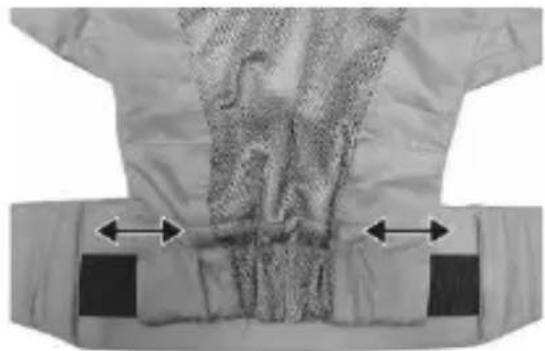
natural_image
Close-up of a garment sleeve with visible stitching and two side barbs, no text or symbols present3
natural_image
Back view of a person with long wavy hair wearing a striped shirt and dark pants, viewed from behind (no text or symbols visible)4
natural_image
Black-and-white photo of a woman holding a baby, both smiling (no text or symbols visible)5
natural_image
Black-and-white photo of a woman holding a baby in a携带式托盘 (no text or symbols visible)6
natural_image
Black-and-white photo of a woman holding a baby, both carrying their face (no text or symbols visible)7
natural_image
Back view of a person wearing a full-body backpack and stretching its back, with hands adjusting the band (no text or symbols visible)8
natural_image
Black-and-white photo of a woman wearing a baby in a full-body gaiton (no text or symbols visible)9
natural_image
Black-and-white portrait of a woman standing with hands on hips, wearing a striped top and dark pants (no text or symbols visible)10
natural_image
Black-and-white photo of a woman holding a baby, both smiling (no text or symbols visible)11
natural_image
Black-and-white photo of a woman carrying a baby in a life vest, with a hand holding the child (no text or symbols visible)12
natural_image
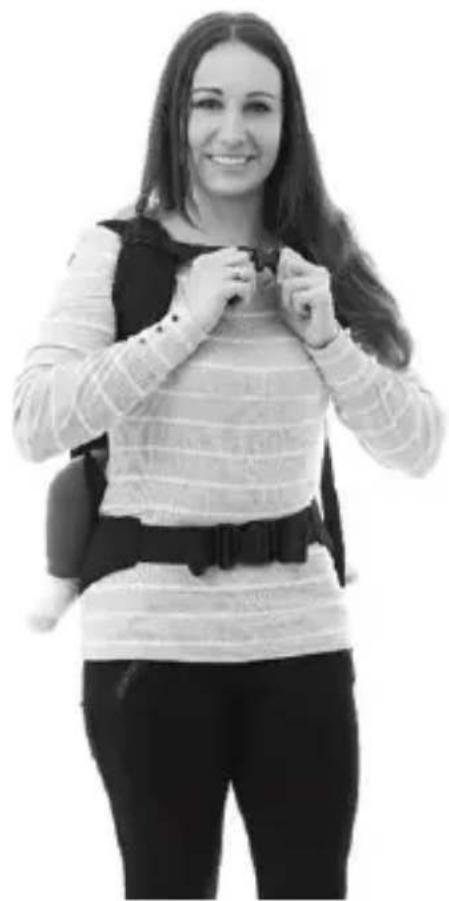
Black-and-white photo of a smiling woman wearing a striped sweater and carrying a backpack, standing indoors (no text or symbols visible)13
natural_image
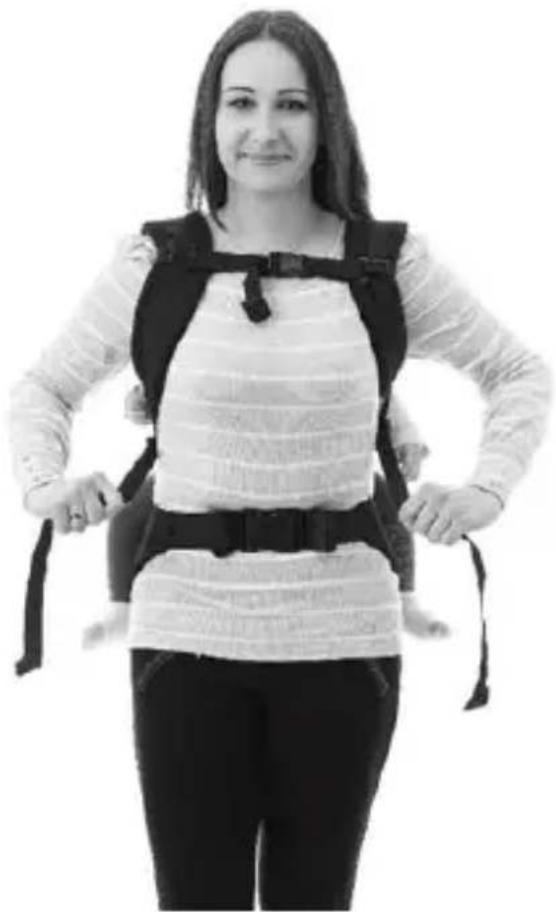
Black-and-white photo of a woman wearing a full-body backpack and patterned top, standing with hands on hips (no text or symbols visible)14
natural_image
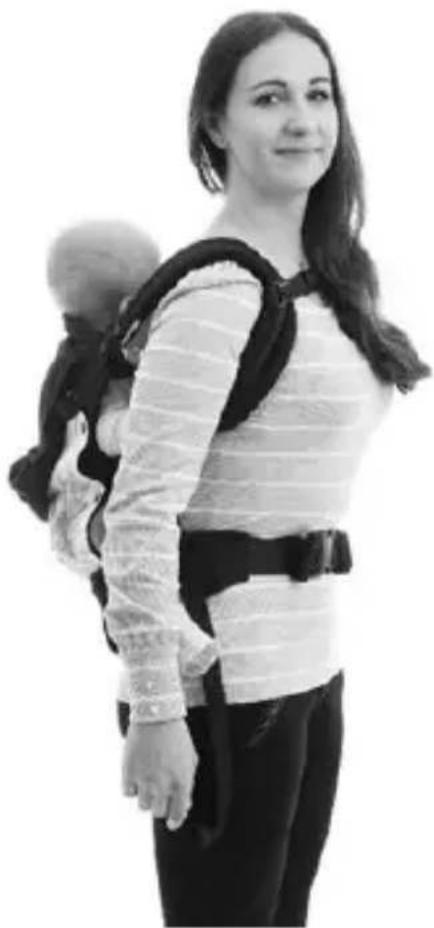
Black-and-white photo of a woman wearing a baby baza lifebuoy, no visible text or symbols15
natural_image
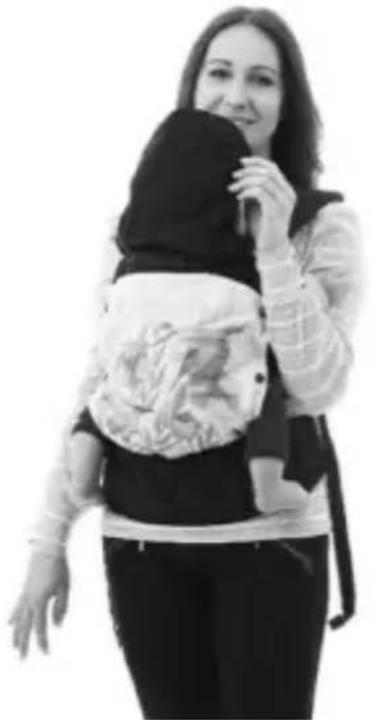
Woman holding a baby in a carrying bag, smiling (no visible text or symbols)16
natural_image
Back view of a person wearing a backpack with a close-up inset showing a textured fabric detail (no text or symbols visible)17
natural_image
Back view of a person wearing a backpack with straps and a floral pattern on the back (no text or symbols visible)18
natural_image
Close-up of a textured fabric or material component with a magnified inset showing a small cylindrical object (no text or symbols visible)19
natural_image
Black-and-white photo of a woman holding a baby in a striped top, smiling (no text or symbols visible)20
AR
عميلنا المحترم!
Thank you for purchasing a Kinderkraft product.
Our products are designed to help your child – we always care about safety and quality, thus ensuring the comfort of the best choice.
IMPORTANT! KEEP FOR FUTURE REFERENCE. READ CAREFULLY BEFORE USE.
Safety and precautions WARNINGS!
- Monitor your child at all times and make sure its mouth and nose are not covered.
- With regard to premature babies, low-weight babies and children with health ailments, consult your pediatrician before you start using the product.
- In order to avoid suffocation, make sure the child's chin does not rest on the chest because it may hinder breathing.
- To avoid falling, make sure the child is properly secured in the sling.
- Babies must be carried at the front until they can control muscles of head, neck and body and therefore keep sitting on their own. This sling is not intended for „forward-facing” position.
- When you use the sling, do not bend. Crouch, if necessary.
- When you use the sling, never unfasten the hip belt before you take the child out.
- Never leave the child with a sling unattended.
The sling is intended solely for children aged 3 months upwards and whose weight does not exceed 20 kg.
When the child cannot keep its own head, adjust the sling so that its head is high at the chest. It is the safest place for the child.
Never use the soft sling when you cook, clean up, carry hot drinks and take
other actions which may expose the child to burning or impact of chemicals.
Be careful when you drink hot drinks, otherwise the hot liquid may hurt the child when in the sling.
The sling serves to carry one child only.
Your and your child's movements may affect your balance. Remain careful when you bend forward or sideways.
The sling must not be used when doing sports, for example running, cycling, swimming and skiing.
Do not use the sling if any of its components/elements has been damaged, torn or lost.
Do not assemble any accessories, spare parts or components which have not been supplied by the manufacturer.
Users must be aware that fall risk rises as the child gets more active.
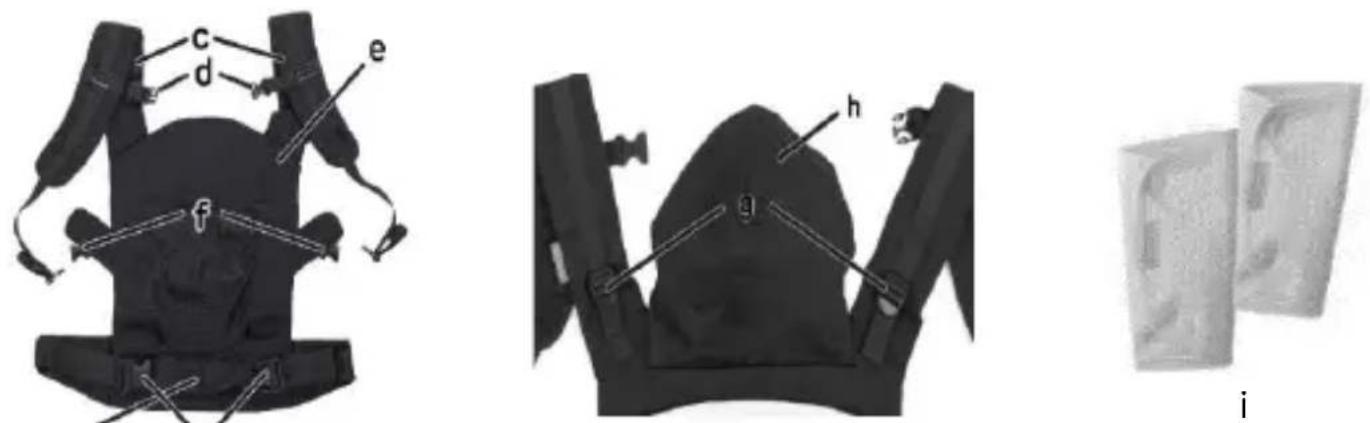
1. Sling components (Fig. 1):
a. Hip belt with sling width adjustment
b. Hip buckle with belt adjustment
c. Shoulder belts
d. Shoulder belts buckle with belt adjustment
e. Sling panel
f. Side buckles with adjustment
g. Shoulder belt length adjustment straps
h. Hood
i. Belt covers
2. Assembly
The product assures the most suitable child restraint position in which the shape of hips and legs resembles M letter. Thanks to this, a natural position in which the child must be carried is maintained. NOTE! In order to make sure the child's position is ergonomic, position child's legs in a way that its bottom is lower than knees while legs spread wide to the sides.
A. Carrying in front, child in a parent-forward position
WARNING! Always put the sling on before you place the child in.
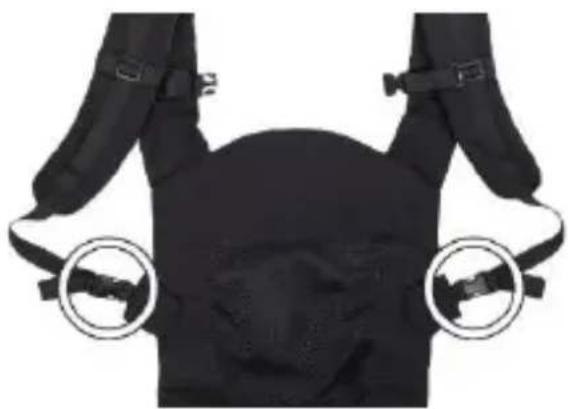
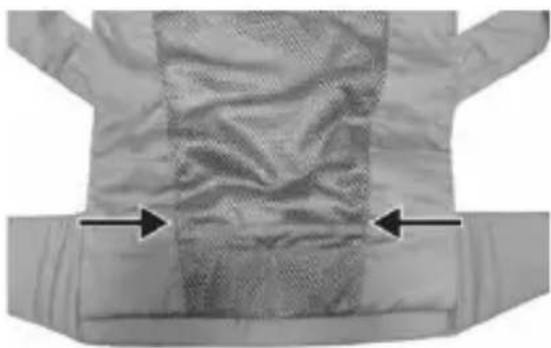
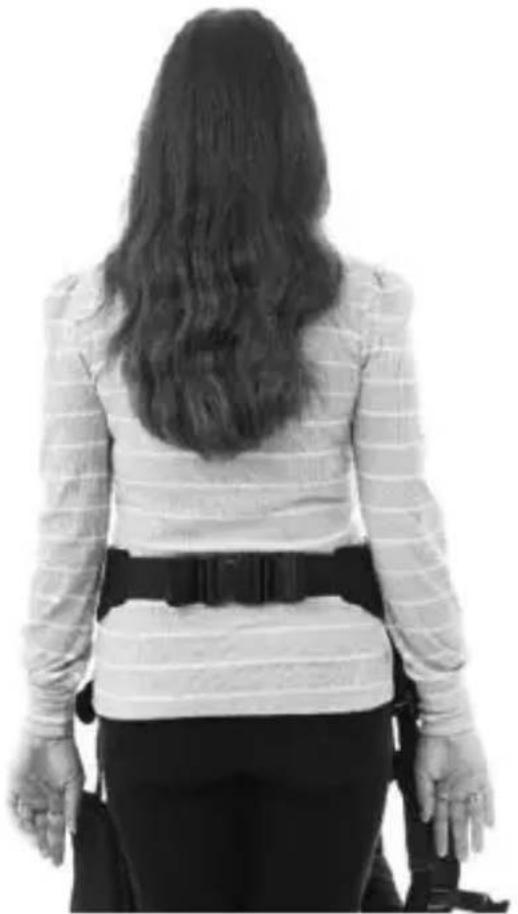
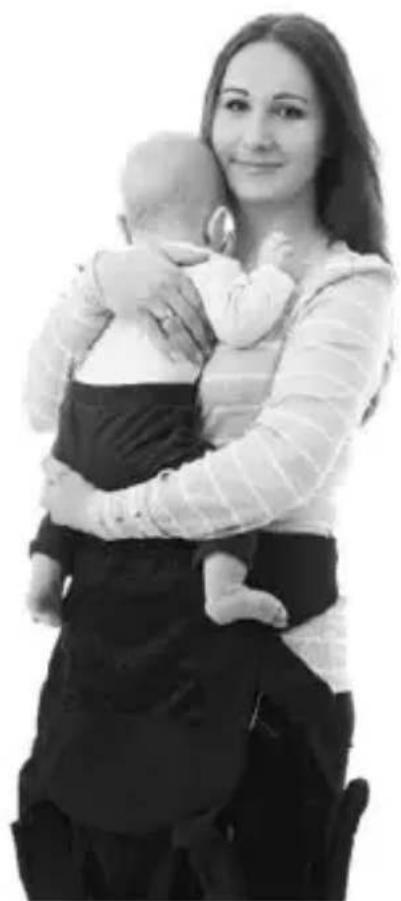
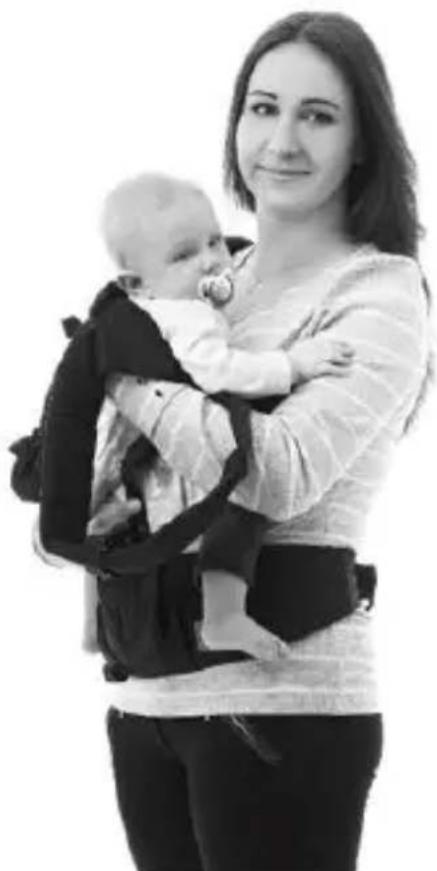
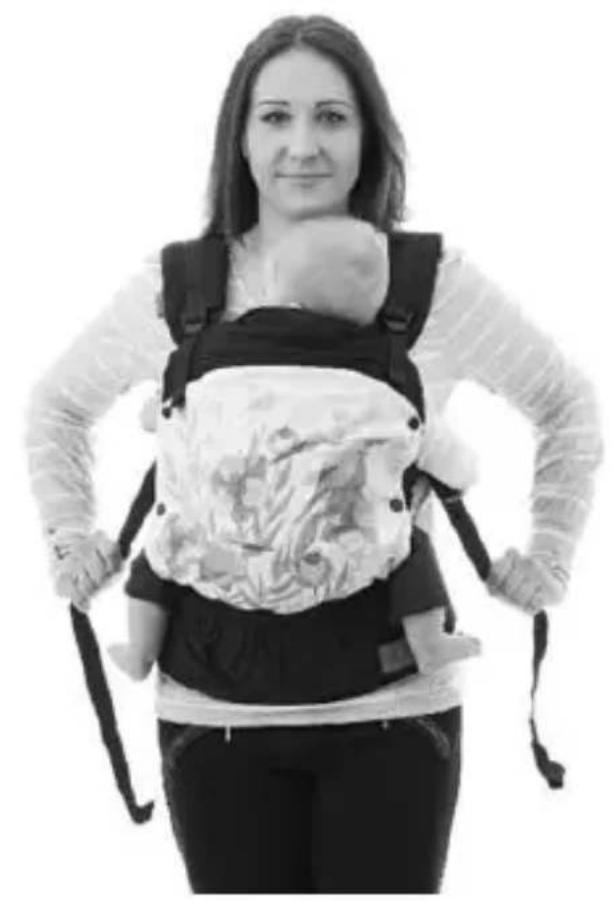
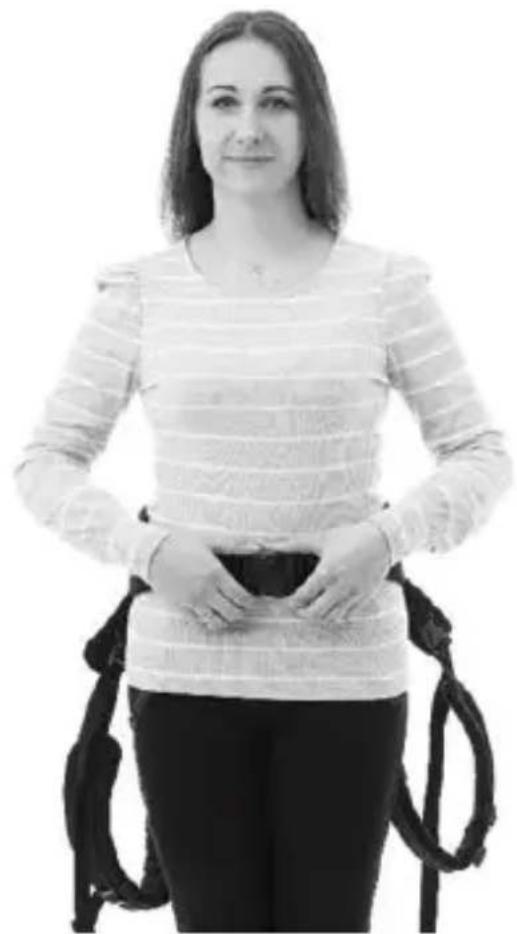
Unfasten the buckle (b) at the hip belt and buckle (d) at the shoulder belts. Side buckles (f) should be secured (Fig. 2). Adjust the width of sling panel (e) by detaching Velcros on the hip belt (a) and sliding the fabric to the right or left so that you can adapt the panel size to your child (Fig. 3). Put the hip belt on and fasten the buckle. Adjust the hip belt to your waist (Fig. 4). After you have made sure the hip belt is properly fixed, cuddle the child to your chest and separate its legs (child's legs must hang behind the belt) (Fig. 5). WARNING! When you perform this operation, hold the child firmly. When holding the child, lift the sling panel so that it covers the
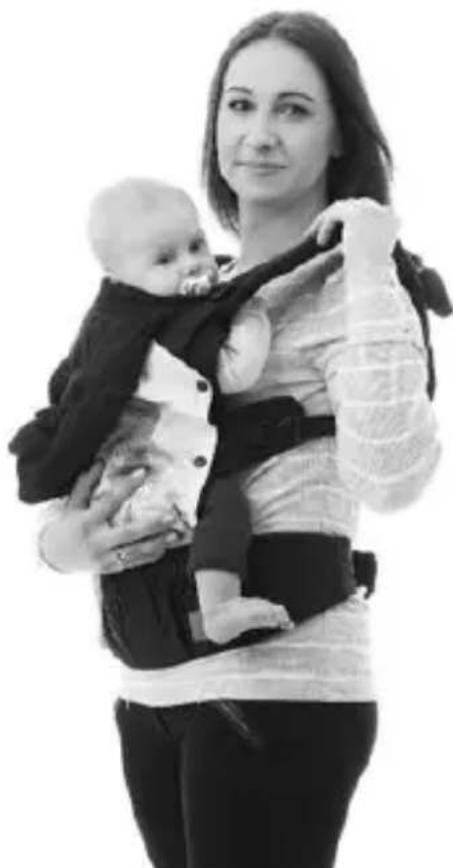
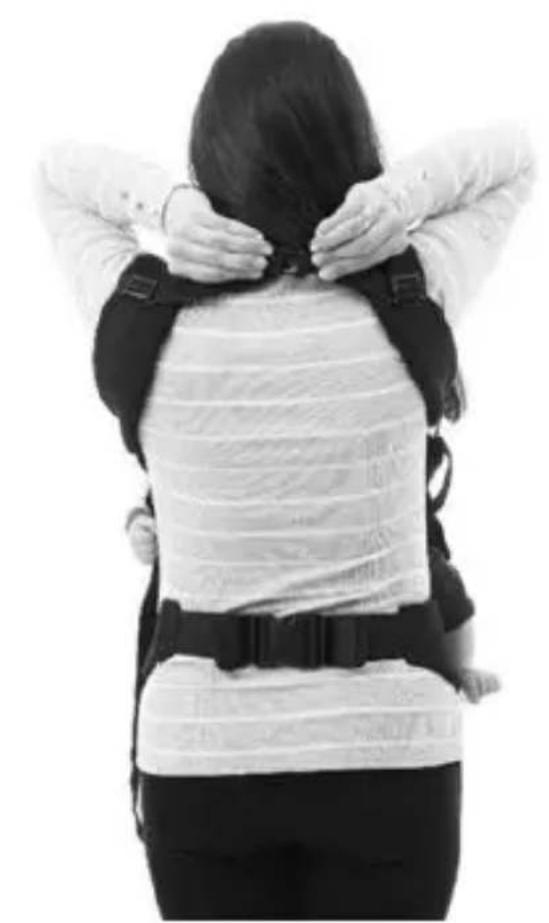
child's back (Fig. 6). Holding the child with your right hand, place the left shoulder belt (c) on the left shoulder (Fig. 7). Next change hands and do the same with the right shoulder belt (c). Use both hands to fasten the shoulder belt buckle (d) and adjust it (Fig. 8). Depending on your needs, tighten the shoulder belts by pulling the adjustment straps (Fig. 9). Pull shoulder belt adjustment straps until the child is properly wrapped with the panel. Make sure the child's legs are not extensively squeezed up.
B. Carrying at the back, child in a parent-facing position
WARNING! Do not carry children aged below 0,5 or those who cannot sit on their own on your back.
WARNING! Regularly make sure the child is safe and feels comfortable, especially when you carry it on your back.
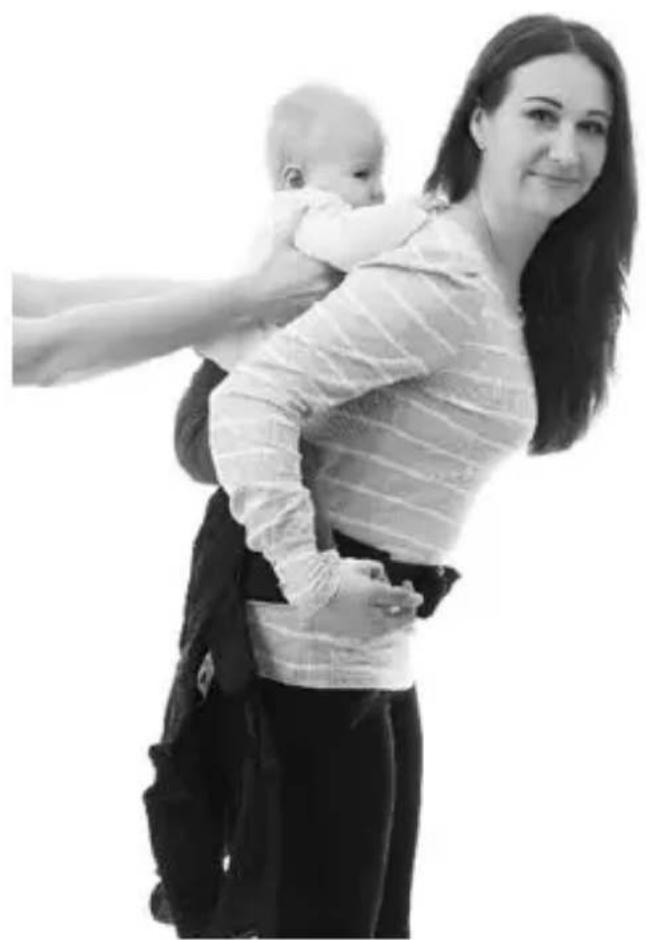
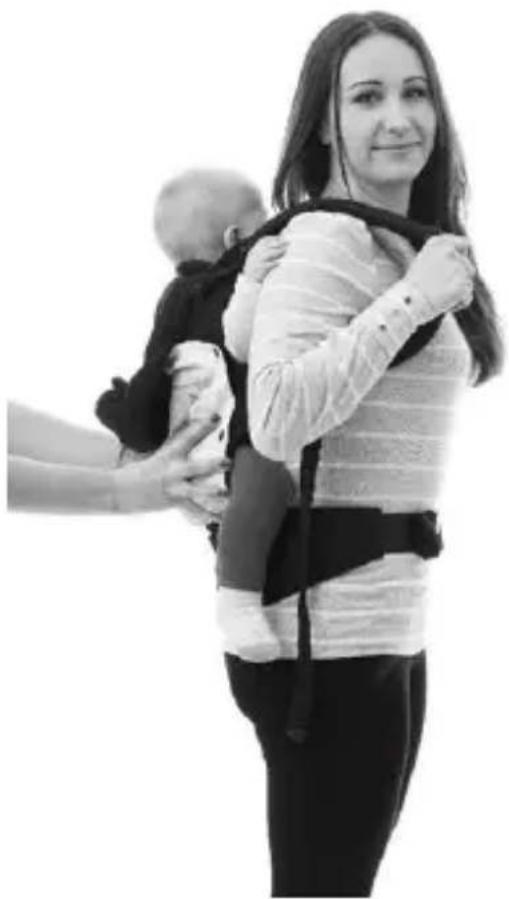
Detach the buckle at the hip belt and shoulder belt buckle. Side buckles must be secured (Fig. 2). Adjust the width of the sling panel in accordance with the figure 4, put the hip belt on and fasten the buckle. Adjust the hip belt to your waist (Fig. 10). After you have made sure the hip belt is properly fixed, ask your partner to lift the child and place it on your back (Fig. 11). Child's legs must wrap around the waist. WARNING! All the time you put the child in the sling, you or your partner must support the child properly. With hands supporting the child, ask your partner to lift the sling so that it covers the child's back. Next put both shoulder belts on (Fig. 12). Fasten the shoulder belts buckle and adjust it (Fig. 13). Depending on your needs, pull the shoulder belts. To do so, pull adjustment straps. Pull shoulder belt straps until the child is properly wrapped with the panel (Fig. 14, 15). Make sure the child is in a proper position. Make sure its legs are not extensively squeezed up.
C. Additional functions of the sling.
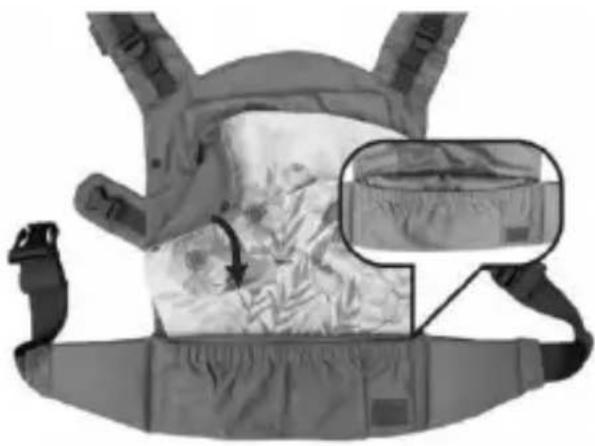
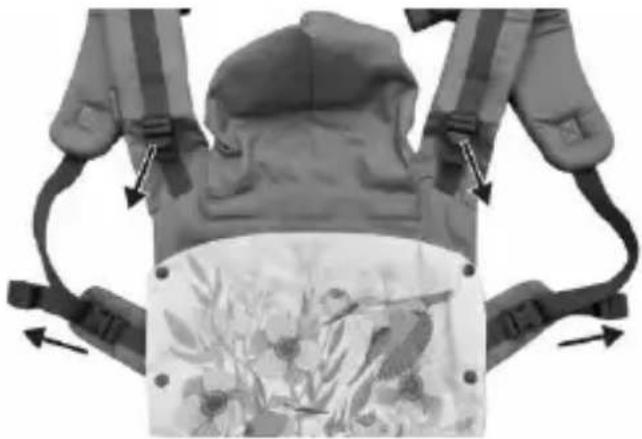
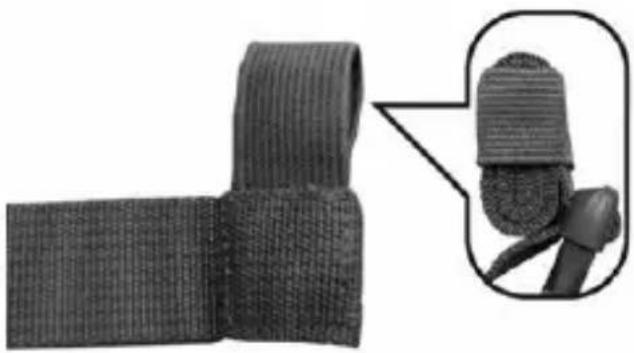
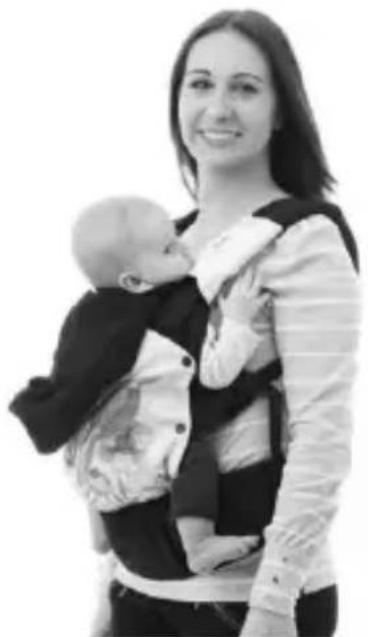
In case of unfavorable weather, put the hood on (h) (Fig. 16). To make sure the child is comfortable on hot days, you can remove the external fabric attached to the sling panel and hide it in the pocket located at the front of the sling (Fig. 17). The buckle straps (f) and belts (g) are used to adjust the length of shoulder belts (Fig. 18). When the adjustment straps are too long, you can roll them up and secure with rubbers located at the end of belts (Fig. 19). The sling is also equipped with belt covers (i) which secure belts against child's saliva (Fig. 20). The covers can be easily removed and washed.
3. Care and maintenance
In order to clean the product, follow the guidelines on the insert. After every washing, check the resistance of the fabric and seams. Periodically inspect the sling; check it for ripping, damage and missing components. If this is the case, do not use the product.
How to wash:
 | Wash at the temperature of max. 30°C, soft mode. |
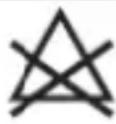 | Do not bleach |
| Do not dry in a tumble dryer | |
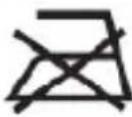 | Do not iron |
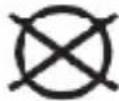 | Do not dry clean |
4. Storage
If the sling is not used, keep it out of reach of children.
ES
¡ESTIMADO CLIENTE!
(EN) In the interests of our Clients - we are at your disposal! If you have a problem with the product you received, contact us in the most convenient way for you!