EasyManual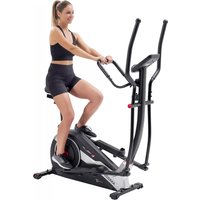
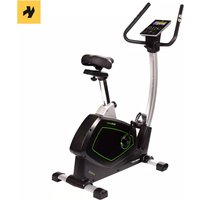
AX 6500 - Exercise bike Christopeit - Free user manual and instructions
Find the device manual for free AX 6500 Christopeit in PDF.



User questions about AX 6500 Christopeit
0 question about this device. Answer the ones you know or ask your own.
Ask a new question about this device
Download the instructions for your Exercise bike in PDF format for free! Find your manual AX 6500 - Christopeit and take your electronic device back in hand. On this page are published all the documents necessary for the use of your device. AX 6500 by Christopeit.
USER MANUAL AX 6500 Christopeit
1. Assembly the machine exactly as described in the installation
instructions and use only the enclosed, specic parts of the ma- chine. Before assembling, verify the completeness of the delivery against the delivery notice and the completeness of the carton against the assembly steps in the installation and operating in- structions.
2. Check the rm seating o all screws, nuts and other connec-
tions before using the machine for the rst time and at regular intervals to ensure that the trainer is in a safe condition.
3. Set up the machine in a dry, level place and protect it from
moisture and water. Uneven parts of the oor must be compen- sated by suitable measures and by the provided adjustable parts of the machine if such are installed. Ensure that no contact occurs with moisture or water.
4. Place a suitable base (e.g. rubber mat, wooden board etc.)
beneath the machine if the area of the machine must be specially protected against indentations, dirt etc.
5. Before beginning training, remove all objects within a radius of
2 metres from the machine.
6. Do not use aggressive cleaning agents to clean the machine
and employ only the supplied tools or suitable tools of your own to assemble the machine and for any necessary repairs. Remove drops of sweat from the machine immediately after nishing train- ing.
7. Attention! Systems of the heart frequency supervision can be
inexact. Excessive training can lead to serious health damage or to the death. Consulta doctor before beginning a planned training programme. He can dene the maximum exertion (pulse, Watts, duration of training etc.) to which you may expose yourself and can give you precise information on the correct posture during training, the targets of your training and your diet. Never train after eating large meals. This item is not suitable for therapeuti- cally purposes!
8. Only train on the machine when it is in correct working order.
Use original spare parts only for any necessary repairs. Atten- tion! Replace the wormparts immediately and keep this equip- ment out of use until repaired.
9. When setting the adjustable parts, observe the correct
position and the marked, maximum setting positions and ensure that the newly adjusted position is correctly secured.
10. Unless otherwise described in the instructions, the machine
must only be used for training by one person at a time. The exer- cise time should not overtake 60 min/daily.
11. Wear training clothes and shoes which are suitable for tness
training with the machine. Your clothes must be such that they cannot catch during training due to their shape (e.g. length). Your training shoes should be appropriate for the trainer, must support your feet rmly and must have non-slip soles.
12. Attention! If you notice a feeling of dizziness, sickness, chest
pain or other abnormal symptoms, stop training and consult a doctor.
13. Never forget that sports machines are not toys. This
appliance can be used by children aged from 8 years and above and persons with reduced physical, sensory or mental capabili- ties or lack of experience and knowledge if they have been given supervision or instruction concerning use of the appliance in a safe way and understand the hazards involved. Children shall not play with the appliance. Cleaning and user maintenance shall not make by children without supervision. Take suitable measures to ensure that children never use the machine without supervision.
14. Ensure that the person conducting training and other people
never move or hold any parts of their body into the vicinity of moving parts.
15. At the end of its life span this product is not allowed to dis-
pose over the normal household waste, but it must be given to an assembly point for the recycling of electric and electronic compo- nents. You may nd the symbol on the product, on the instructions or on the packing. The materials are reusable in accordance with their marking. With the re-use, the material utilization or the pro- tection of our environment. Please ask the local administration for the responsible disposal place.
16. To protect the environment, do not dispose of the packaging
materials, used batteries or parts of the machine as household waste. Put these in the appropriate collection bins or bring them to a suitable collection point.
17. This machine is a speed-dependant machine, i.e. the power
increases with increasing speed, and the reverse.
18. The machine is equipped with 10-speed resistance adjust-
ment. This makes it possible to reduce or increase the braking resistance and thereby the training exertion. Turning the adjust- ing knob for the resistance setting towards stage 1 reduces the braking resistance and thereby the training exertion. Turning the adjusting knob for the resistance setting towards stage 10 increases the braking resistance and thereby the training exertion.
19. The maximum permissible load (=body weight) is specied
as 150 kg. This machine has been tested in compliance with EN ISO20957-1 / 2014 und EN ISO 20957-9:2016 „H/C“. This item’s computer corresponds to the basic demands of the EMV Direc- tive of 2014/30/ EU.
20. The assembly and operating instructions is part of the
product. If selling or passing to another person the documentation must be provided with the product. CONTENTS DEAR CUSTOMER, we congratulate you on your purchase of this home training sports unit and hope that we will have a great deal of pleasure with it. Please take heed of the enclosed notes and instructions and follow them closely concerning assembly and use. Please do not hesitate to contact us at any time if you should have any questions. Top-Sport Gilles GmbH ContentsPage Attention! Before use read operating instructions!
IMPORTANT RECOMMENDATIONS AND SAFETY INSTRUCTIONS
Our products are all TÜV tested and therefore represent the highest current safety standards. However, this fact does not make it unnecessary to observe the following principles strictly. Important Recommendations and Safety Instructions Assembly Instructions Use of the device Computer Cleaning, Checks and Storage Troubleshooting General training instructions Parts List – Spare Parts List Exploded drawing
55L ASSEMBLY INSTRUCTIONS Remove all the separate parts from the packaging, lay them on the oor and check roughly that all are there on the base of the assembly steps. Please note that a num- ber of parts are connected directly to the main frame pre- assembled. In addition, there are several other individual parts that have been attached to separate units. This will makes assembly easier and quicker for you. Assembly time: 60 min.
1. Attach the front stabilizer (56) assembled with front caps
with transportation roller (55) to main frame (40) by using bolts M8x45 (59), washers (37), spring washers (32) and cap nuts (36).
2. Attach the rear stabilizer (58) assembled with height
adjustable caps (57) to main frame (40) by using bolts (59), washers (37), spring washers (32) and cap nuts (36). (For uneven oor, you can adjust the height at rear caps (57) and secure for stable position.)
1. Put the pedal crank (97) at pedal crank holder (93) so that
the holes align and screw it tightly by using screw M8x25 (96) and spring washers (32).
2. Put the crank cover (95) onto the pedal crank (97) and
attach it by using screws M5x15 (32).
3. Attach the crank plug (94) at crank cover (95).
STEP 1 STEP 2 Attach the stabilizer (56+58). Assembly of pedal cranks (97) and crank covers (95).
1. Place screws M8x15 (33), curved washers (31) and spring
washers (32) accessibly beside the front part of the main frame (40).
2. Place the lower end of the support (30) against the main
frame (40) and push the rubber ring (100) and support cover (101) onto the support (30).
3. Plug the ends of the two computer cables (34-38)
projecting from (30+40) together. (Note: The connection cable (34) projecting from the support (30) must not slide into the tube, as it is required for later steps of installation.) When joining the tubes, ensure that the cable connection will not trapped.
4. Connect the middle section tension cable (39) to the
bracket of lower section cable tension (35) (See gure A1-A3). Before this step of the installation, it is advisable to adjust the resistance setting to the lowest stage 1, at which the cable extends furthest from the sheath. Put the lowest part of cable (39) into the small hook (gure A1). Pull it until the small hook get in higher position (A2) and then insert the cable (39) onto the bracket (35) (gure A3).
5. Put one spring washer (32) and one curved washer (31) on
each screw (33). Push the screws (33) through the holes in the support (30), screw into the threaded holes of the main frame (40) and tighten lightly.
6. Push the plastic cover (101) and rubber ring (100) into the
right position to cover the connection point.
1. Push the handgrip bars (5R) onto the connecting tubes
(25R) and adjust the holes in the tubes so that they are aligned. (Note: the handgrip bars must be aligned after as- sembly so that the upper ends are inclined outwards (away from the support (30)).
2. Push the screws M8x20 (66) through the holes and
tighten the handgrip bars (5) with curved washers (31) and spring washer (32) rmly.
3. Put the footrest holder (44R) at the connecting tube (25R)
and adjust the holes in the tubes so that they are aligned.
4. Push the screw M8x78 (23) through the holes and tighten
the footrest holder (44R) at connection tube (25R) with wash- ers (27) and nut (26) rmly. (This connection point has to move easily. So please don’t tighten the screw too much.)
5. Place the preassembled unit of the right footrest holder
(44R) and connecting tube (25R) at the right hand side of the main frame (40). (Note: Right is specied as viewed standing on the machine during training.)
6. Push the grip axle (19) into the middle position at handle-
bar support (30) and put one wave washer (20) and the con- necting tube (25R) onto the axles’ end (19). Put on the hex screw M8x20 (12) a spring washer (32) and a washer 8//32 (22) and tighten it rmly.
7. Put the foot pedal holder (44R) at the pedal crank (97) and
tighten them with steel tube (52), washer 8//20 (49), spring washer (32) and screw M8x20 (48) rmly.
8. Install the left footrest holder (44L) incl. all additionally
required parts on the left hand side of the machine as described in 1. – 7.
9. Put the plugs of pulse cables (10) into the plugs from pulse
connection cables (16) and attach the screw caps (11) onto screws (12). STEP 3 STEP 4 Assembling of the connection cable (34) to the sensor cable (38) and installation of support (30) at the main frame (40). Installation of handgrips (5), footrest holder (44) and connecting tubes (25).
1. Push the right footrest (43R) onto the footrest holder (44R).
Adjust the holes in the parts so that they are aligned.
2. Push the screws M6x50 (42) from above through the holes.
Push from the opposite side on a washer (45) and spring washer (46), screw on a handgrip nut (47) and tighten rmly.
3. Install the left footrest (43L) on the left footrest holder (44L)
as described in 1. – 2. (Note: The position adjusted in this way should always be equal at both sides. The right and left foot- rests can be discerned by the edges of the longitudinal sides of the footrests. The high edges of the footrests (43) must point inwards (towards the main frame.) The positions can change as desired at all times by removing the carriage bolts (42) and sliding the footrests on the footrest brackets to get a comforta- ble exercise position close to the hand grip.)
4. Assemble the step pads (53L+R) with the screws (109) and
(54) on the footrest holder (44L+R).
1. Guide the handle (4) to the opened handle mount on the
support tube (30), thread the pulse cable (16) through the existing opening on the support tube (30) and close the handle mount over the handle (4).
2. Put the handle cover (14) over the handle (4) and fasten
the handle (4) in the desired position on the support tube (30) using the spacer (18) and the handle screw (13). STEP 5 STEP 6 Installation of the footrests (43) and steppads ( 53) at footrest holder (44). Mounting the handle (4) on the support tube (30).
1. Put the plug of connection cable (34) into the plug from
computer (1) backside.
2. Insert the plug of pulse connection cables (16) to the jack
of the computer (1) and attach the computer (1) to top monitor bracket of front post (30) with screws M5x10 (15). (Attention: Ensure that the cable loom are not crunched or pinched during installation.) Please remove rst the screws for fastening the computer from the back of the computer (1). STEP 7 Attach the computer (1) at support (30).
1. Check the correct installation and function of all screwed
and plug connections. Installation is thereby complete.
2. When everything is in order, familiarize yourself with the
machine at a low resistance setting and make your individual adjustments. CHECKS Note: Please keep the tool set and the instructions in a safe place as these may be required for repairs or spare parts orders becoming necessary later. STEP 8 Attach the saddle (110) and saddle slide (113) at saddle support (117).
1. Push the saddle (110) with saddle bracket into the saddle
slide (113) and tight it up in desired position.
2. Place the saddle slide (113) into the holder of saddle
support (117), set it at the desired horizontally position and screw it onto the saddle support (117) by xing with washer (115) and star grip nut (116).
3. Push the saddle support wrapping (114) onto the saddle
support (117). Insert the saddle support (117) into the provided holder of the main frame (40) and secure at the desired posi- tion by screwing in the quick release (106). (Note: To screw in the quick release (106), the threaded hole in the mainframe (40) and one of the holes in the saddle support (117) must bea- ligned. Furthermore, ensure that the saddle support (117) is not pulled out of the main frame beyond the marked maximum position. The setting of the saddle post can be adjusted as de- sired later. For this, the quick release (106) must be loosened by only a few revolutions, the cap of the lock must be pulled away and the saddle adjusted. Then secure the new setting by tightening the quick release (106).
Transportation: There are two rollers equipped on the front foot. For moving, you can lift up the rear foot and drive it to where you would like to locate or store it. Use: Keep your hands in desired position on the xed handlebar. Pedal your exercise item by step your feet on footrests and balance the body weight to left and right side of footrest If you like to exercise the upper body too, you can place the hands from xed handle bar to the left and right handle grips. Then you can increase the pedaling speed gradually and adjust braking resistance levels to increase the exercise intension. Keep always your hands on xed handle bar or hand grips left and right. To cycle, hold the handlebar with both hands in the desired position and remain seated on the saddle throughout the workout. Place your feet on the rear step pedals. Mount: Stand beside the item, put the nearest footrest into deepest position and hold the xed handlebar tightly. Put your foot onto the footrest, try to put whole body weight on your foot and simultaneously cross over with your another foot on the other side footrest and place there on the footrest too. Now you are in the position to start your training. To start cycling, sit down on the saddle and place your feet on the footrests. Dismount: Slow down the pedaling speed until it comes to rest. Keep the hands grabbing the xed handlebar tightly, put one foot cross over the equipment and land on the oor, then land the other one. Attention! Make sure to put the knob back into place in the seat post and tighten it completely. Never exceed the maximum height of the seat. Always get o the bicycle before making any adjustment. A biomechanically optimal seating position ensures optimum power transmission. The aim is that the existing force as large as possible arrives on the pedals and the muscles with optimal eect works. The seat position aects which muscles are in use primarily in essence. The right handlebar position is responsible for keeping the upper body portion. Is the handlebar settings chosen horizontally so you get an athletic posture. With each further step towards the body, you adjust a more relaxed attitude. To adjust the handlebar, simply loosen the screw handlebar until the handlebar can brought into the desired position and tighten them after adjustment again rmly. To avoid any problems such as back- / knee pain or numbness in the feet through bad seat position on the bike, the maintenance of a proper adjustment of the saddle and handlebar we strongly recommend. Note: This training equipment is a stationary exercise machine used to simulate a combination of biking, stepping and walking without causing excessive pressure to the joints, hence decreasing the risk of impact injuries. Exercise this item oer a non-impact cardio- vascular workout that can vary from light to high intensity based on the resistance preference set by the user. It will strengthen your muscles of upper and lower body and increase cardio capacity and maintain tness of your body also. Attention! This product does not have a freewheel. This means that moving parts cannot be stopped immediately.
Adjustment – Seat Position: For an eective workout, the seat must be adjusted properly. While your are pedaling, your Knees should be slightly bent when the pedals are in the farthest position. In order to adjust the seat, unscrew the knob few turns and draw it out slightly. Adjust the seat to the right height, then release the knob and tighten it all the way. Handle adjustment: To adjust the handle, simply loosen the handle screw until the handle can be brought into the desired position and tighten it again after adjustment. Mount and Dismount Transportation Fixed handle Cycling Use: Handgrips21
COMPUTER The supplied computer allows the most convenient training. Every value relevant to training is displayed in a corresponding window. From the beginning of the training session, the required time, the current speed, the approximate calorie consumption, the travel- led distance ad the current pulse rate are displayed. All values are counted from zero upwards. If you wish to see one value displayed constantly during training, select this with the [F] - key. If you wish to see these values in constant alternation, select the „SCAN“ function. The display then changes from one function to the next at intervals of approx. 6 seconds. The computer is switched on by briey pressing the [F] - key or simply by beginning training. The computer begins to register and display all values. To stop the computer, just stop training. The computer stops all measurements and retains the last attained values. The last values achieved in the TIME, CALORIES and KM functions are saved for 4 minutes and when you resume training, you can continue training from these values or set all functions to zero using the [L] - key. The computer switches o automatically approx. 4 minutes after the end of the training. DISPLAYS [SPEED] - Km/h display: The current speed is displayed in kilometres per hour. It is not possible to specify a particular value using the [E] - key. The values last attained by this function are not stored. (Limit of the display: 999.9 km/h.) [TIME] - Time display: The currently required time is displayed in minutes and seconds. It is possible to specify a particular value using the [E] - key. If a particular time has been specied, the remaining time is displayed. When the specied value is attained, this is indicated by an acoustic signal. The values last attained by this function are stored. (Limit of the display: 99 minutes.) [DIST] - Km dispaly: The current status of the travelled distance is displayed. It is possible to specify a particular value using the [E] - key. If a par- ticular distance has been specied, the remaining distance is displayed. When the specied value is attained, this is indicated by an acoustic signal. The values last attained by this function are stored. (Limit of the display: 999,9 km.) [CAL] - Calories display: The current status of the consumed calories is displayed. It is possible to specify a particular value using the [E] - key. If a par- ticular consumption has been specied, the remaining number of calories to be consumed is displayed. When the specied value is attained, this is indicated by anacoustic signal. The values last attained by this function are stored. (Limit of the display: 999,0 calories.) [PULS] - Pulse display: The current pulse rate is displayed in beats per minute. It is possible tospecify a particular value using the [E] - key. The values last attained by this function are not stored. (Limit of both displays:40 – 240 pulse beats per minute.) Attention! For pulse measurement, the two contact surfaces of the pulse measuring handle unit must be gripped simultaneously. The contact surfaces should be located centrally in the palms of the hands. [SCAN] - Function: If this function is selected, the current values of all functions are displayed successively in a constant sequence approx. every 5 seconds. [STOP] - Display: Display of Stopmode. Presets can be set. KEYS [F] - Key (Funktion): Pressing this key once briey makes it possible to change from one function to another, i.e. the respective functions can be se- lected for which entries can be made using the [E] - key. The cur- rently selected function is indicatedin the window. [E] - Key (Enter): By pressing this key once, it is possible to specify values step by step in the respective functions. For this, the desired function must rstly be selected using the [F] - key. Holding the key pres- sed activates faster running. When training begins, the specied values are then counted down to zero. [L] - Key (Delete): When this key is pressed briey, the values chosen with the [F] - key are reset to zero. If the key is held longer (approx. 3 se- conds), all last attained values are deleted.
REPLACING THE BATTERIES
1. Open the battery compartment cover and then remove the
used Batteries.(If the batteries should leak remove them under increased considering that the battery acid is not into contact with skin come and clean the battery compartment thoroughly.)
2. Insert the new batteries (type (AAA) 1.5 V in
the correct order and taking into account the polarity in the battery compartment and close the batterycover so that it clicks into place.
3. If the computer does not pick up immediately, the function
should batteries are removed for 10 seconds and re-inserted.
4. The empty batteries properly in accordance with the disposal
regula tions disposed of and do not give residual waste. Battery compartment AAA batteries22
Use only a less wet cloth for cleaning. Caution: Never use benzene, thinner or other aggressive cleaning agents for surface cleaning as this damage caused. The device is only for private home use and for use suitable indoors. Keep the unit clean and moisture from the device.
Remove the batteries from the computer while intending the unit for more than 4 weeks not to use. Choose a dry storage in-house and put some spray oil at front & rear foot tube connection point and hand grip axle. Also to the thread of the mounting screws for handle and seat tube. Cover the bike to protect it from being discolor by any sunlight and dirty through dust.
We recommend every 50 hours to review the screw connections for tightness, which were prepared in the assembly. Every 100 operating hours, you should put some spray oil at front & rear foot tube connection point and hand grip axle. If you cannot solve the problem with the following information, please contact the authorized service center.
CLEANING, CHECKS AND STORAGE
TROUBLESHOOTING Problem Possible Cause Solution Computer has no value at Display if you press any key. No Batteries insert or batteries empty Check the position of batteries at battery compartment or replace batteries. Computer is not counting data and do not switch on after start cycling. Sensor impulse missing base on not well plugged connection. Check the plug connections at computer and inside of handlebar support. Computer is not counting data and do not switch on after start cycling. Sensor impulse missing base on not correct position of sensor. Take o the cover and check the distance between magnet and Sensor. The magnet at turning belt wheel should have only less than < 5mm distance against the sensor position. No pulse value. Pulse cable is not plugged in. Check the separately pulse cable is well connected with computer. Check the connections of the pulse cable. No pulse value. Pulse sensors not well connected. Screw out the screw for pulse measurement and check if plugs are well connected and no damage at pulse cable. Resistance don’t change Connection of resistance not well Check the resistance connection inside of handlebar support as manual mention.23
You must consider the following factors in determining the amount of training eort required in order to attain tangible physical and health benets. INTENSITY The level of physical exertion during training must exceed the point of normal exertion, without going beyond the point of breathlessness and/or exhaustion. A suitable reference value can be the pulse. With each training session, the condition increases and therefore the training requirements should be adjusted. This is possible by extending the duration of the training, increasing the level of diculty or changing the type of training. FREQUENCY Most experts recommend the combination of a health-conscious diet, which must be adjusted according to the training goal, and physical exer- cise three to ve times a week. A normal adult needs twice a week exer- cise to maintain its current condition. To improve his condition and change his body weight, he needs at least three training sessions per week. Ideal of course is a frequency of ve training sessions per week. TRAINING PLAN Each training session should consist of three training phases: „warmup phase“, „training phase“ and „cool-down phase“. In the „warm-up phase“ the body temperature and the oxygen supply should be increased slowly. This is possible through gymnastic exercises over a period of ve to ten minutes. After that you start with actual training “training phase”. The training load should be adapted according to the training heart rate. In order to support the circulation after the training phase and to preventaching or strained muscles later, it is necessary to follow the training phase with a cool-down phase. This should be consist of stretching exercises and/ or light gymnastic exercises for a period of ve to ten minutes.
To determine the training heart rate, you can proceed as follows. Please note that these are guide values. If you have health problems or are unsure, consult a doctor or tness trainer. Sample calculation Male, 30 years old and weighs 80 kg. I am a beginner and would like to lose some weight and increase my endurance. 01: Maximum pulse - calculation Maximum heart rate = 214 - (0.5 x age) - (0.11 x body weight) Maximum heart rate = 214 - (0.5 x 30) - (0.11 x 80) Maximum pulse = approx. 190 beats/min After you have set your training heart rate for your training condition or Once you have identied goals, you can start training. Most of our endurance training equipment have heart rate sensors or are heart rate belt compatible. So you can check your heart rate on the monitor during the workouts. If the pulse rate is not shown on the computer display or you want to be on the safe side and want to check your pulse rate, which could be incor- rectly displayed due to possible application errors or similar, you can use the following tools: a. Pulse measurement in the conventional way (sensing the pulse beat, e.g. on the wrist and counting the beats within a minute). b. Heart rate measurement with suitable and calibrated heart rate measuring devices (available from medical supply stores). c. Heart rate measurement with other products such as heart rate moni- tors, smartphones.... 01 Maximum heart rate calculation The maximum pulse value can be determined in many dierent ways, since the maximum pulse depends on many factors. You can use the main-formula for the calculation (maximum heart rate = 220 - age). This formula is very general. It is used in many home sport products to determine the maximum heart rate. We recommend the Sally-Edwards-formula. This formula calculates the maximum heart rate more precisely and takes gender, age and body weight into account. Sally-Edwards-formula: Men: Maximum heart rate = 214 - (0.5 x age) - (0.11 x body weight) Women: Maximum heart rate = 210 - (0.5 x age) - (0.11 x body weight) 02 Training heart rate calculation The optimal training heart rate is determined by the goal of the training. Training zones were dened for this. Health - Zone: Regeneration and Compensation Suitable for: Beginners Type of training: very light cardio training Goal: recovery and health promotion. Building the basic condition. Training heart rate = 50 to 60% of the maximum heart rate Fat-Metabolism - Zone: Basics endurance training 1 Suitable for: beginners and advanced users Type of training: light cardio training Goal: activation of fat metabolism (calorie burning). improvement in endurance performance. Training heart rate = 60 to 70% of the maximum heart rate Aerobic - Zone: Basics endurance training 1 to 2 Suitable for: beginners and advanced Type of training: moderate cardio training. Goal: Activation of the fat metabolism (calorie burning), improving aerobic performance, Increase in endurance performance. Training heart rate = 70 to 80% of the maximum heart rate Anaerobic - Zone: Basics endurance training 2 Suitable for: advanced and competitive athletes Type of training: moderate endurance training or interval training Goal: improvement of lactate tolerance, maximum increase in perfor- mance. Training heart rate = 80 to 90% of the maximum heart rate Competition - Zone: Performance / Competition Training Suitable for: athletes and high-performance athletes Type of training: intensive interval training and competition training / Goal: improvement of maximum speed and power. Attention! Training in this area can lead to overloading of the cardio- vascular system and damage to health. Training heart rate = 90 to 100% of the maximum heart rate
GENERAL TRAINING INSTRUCTIONS
Example - stretching exercises for the warm-up and cool-down phases Start your warm up by walking on the spot for at least 3 minutes and then perform the following gymnastic exercises to the body for the training phase to prepare accordingly. The exercises do not overdo it and only as far run until a slight drag felt. This position will hold a while. Reach with your left hand behind your head to the right shoulder and pull with the right hand slightly to the left elbow. After 20sec. switch arm. Bend forward as far forward as possible and let your legs almost stretched. Show it with your ngers in the direction of toe. 2 x 20sec. Sit down with one leg stretched out on the oor and bend forward and try to reach the foot with your hands. 2 x 20sec. Kneel in a wide lunge forward and support yourself with your hands on the oor. Press the pelvis down. Change after 20 sec leg. MOTIVATION The key to a successful program is regular training. You should set a xed time and place for each day of training and prepare yourself mentally for the training. Only train when you are in the mood for it and always have your goalin view. With continuous training you will be able to see how you are progressing day by day and are approaching your personal training goal bit by bit. 02: Training heart rate calculation Due to my goals and training level, the fat metabolism zone suits me best. Training heart rate = 60 to 70% of the maximum heart rate Training heart rate = 190 x 0.6 [60%] Training heart rate = approx. 114 beats/min24
- Magnetic brake system
- Footrest 3-way adjustable
- Additional pedals for cycling training
- Incline-adjustable pulse handle
- Comfortable seating position through adjustable saddle
- Floor level adjustment
- Wheels for easier transportation
- Computer showing: Speed, time, distance, approx. calories, heart rate and SCAN.
- Input of limits for time, distance, approx. calories and pulse.
- Announcement of higher limits. AX6500
Type: Order-Nr.: Date of technical data: Dimensions approx: [cm]: Weight approx. [kg]: Load max. (User weight) [kg]: Space requirements [m
Please contact us if any components are defective or missing, or if you need any spare parts or replacements in future. This product is created only for private Home sports activity and not allowed to us in a commercial or professional area. Home Sport use class H/C. FEATURES NOTE25
Training area in mm (for home trainer and user) Free area in mm (Training area and security area (circulating 600mm))