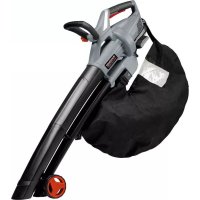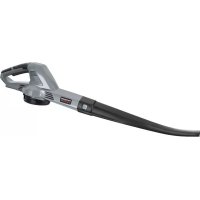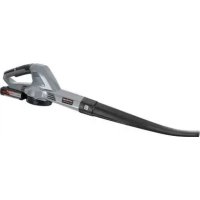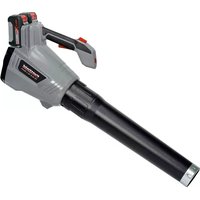
PE-ALB 36 Li Basic - Blower Pattfield - Free user manual and instructions
Find the device manual for free PE-ALB 36 Li Basic Pattfield in PDF.



| Product Type | Cordless Leaf Blower |
| Brand | Pattfield |
| Model | PE-ALB 36 Li Basic |
| Rated Voltage | 36 V (2 x 18 V) |
| No-load Speed | 11,000 - 21,000 rpm |
| Max. Air Speed | 150 km/h |
| Sound Pressure Level (LpA) | 85.2 dB(A) |
| Measured Sound Power Level (LWA) | 97.2 dB(A) |
| Guaranteed Sound Power Level (LWA) | 100 dB(A) |
| Vibration (ahv) | ≤ 2.5 m/s² (K=1.5 m/s²) |
| Weight | 2.5 kg |
| Battery Type | Li-ion Power-X-Change (18 V) |
| Compatible Battery Capacities | 1.5 / 2.0 / 3.0 / 4.0 / 5.2 Ah |
| Charger | Power-X, input 200-250 V~, output 21 V DC, 3.0 A |
| Charging Time (battery 1.5 Ah) | Approx. 40 min |
| Charging Time (battery 2.0 Ah) | Approx. 50 min |
| Charging Time (battery 3.0 Ah) | Approx. 75 min |
| Charging Time (battery 4.0 Ah) | Approx. 100 min |
| Charging Time (battery 5.2 Ah) | Approx. 140 min |
| Protection Class (appliance) | III |
| Protection Class (charger) | II |
| Intended Use | Leaves, grass, small twigs |
| Functions | Blowing, turbo mode, speed regulator |
| Included Accessories | Blower tube, carrying strap, instruction manual |
| Cleaning | Damp cloth, no solvents |
Frequently Asked Questions - PE-ALB 36 Li Basic Pattfield
User questions about PE-ALB 36 Li Basic Pattfield
0 question about this device. Answer the ones you know or ask your own.
Ask a new question about this device
Download the instructions for your Blower in PDF format for free! Find your manual PE-ALB 36 Li Basic - Pattfield and take your electronic device back in hand. On this page are published all the documents necessary for the use of your device. PE-ALB 36 Li Basic by Pattfield.
USER MANUAL PE-ALB 36 Li Basic Pattfield
Pattfield® ERGO TOOLS
GB Translation of the Original Instructions Cordless Leaf Blower 36 V
natural_image
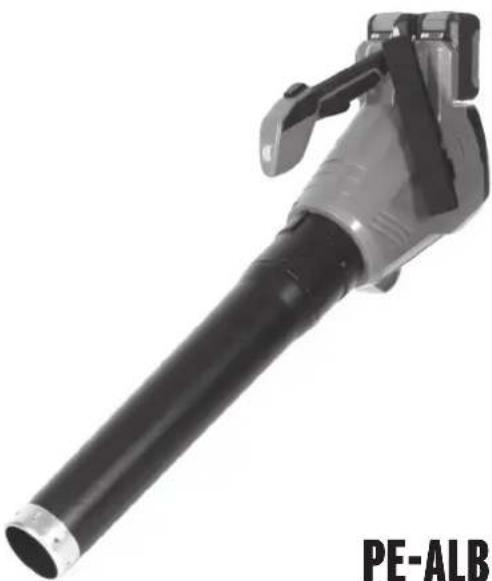
Close-up of a black cylindrical fuel injector with metallic handle, labeled 'PE-ALB' below (no other text or symbols)PE-ALB 36 Li Basic
text_image
1 2 3 4 5 6 1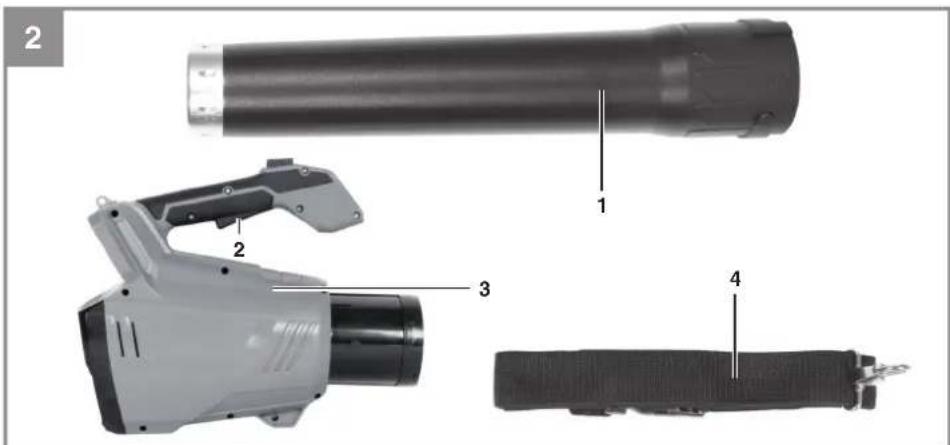
text_image
2 1 2 3 4-2-
text_image
3a 1 3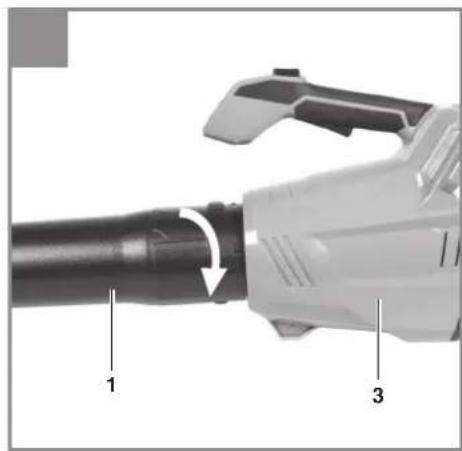
natural_image
Close-up of a mechanical tool with labeled parts (1 and 3), no visible text or symbols beyond labels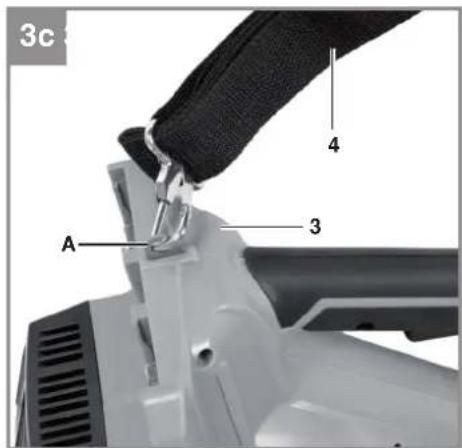
text_image
3c A 3 4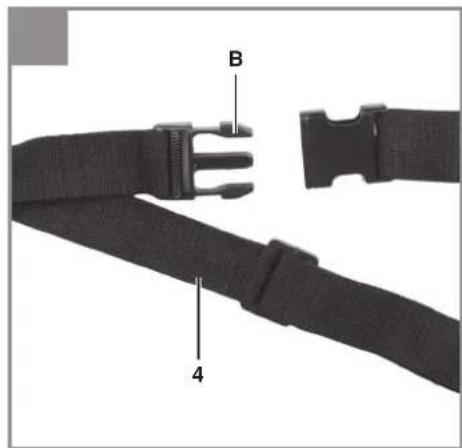
natural_image
Close-up of a black athletic belt with labeled parts (B and 4), no text or symbols present.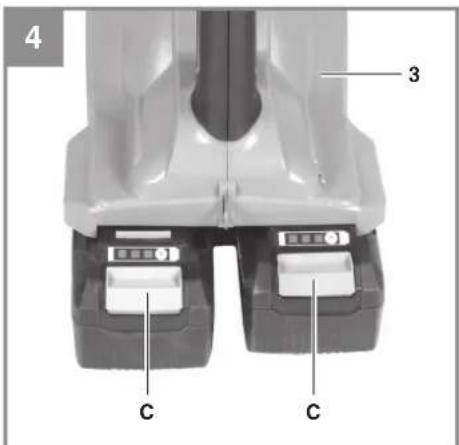
text_image
4 3 C C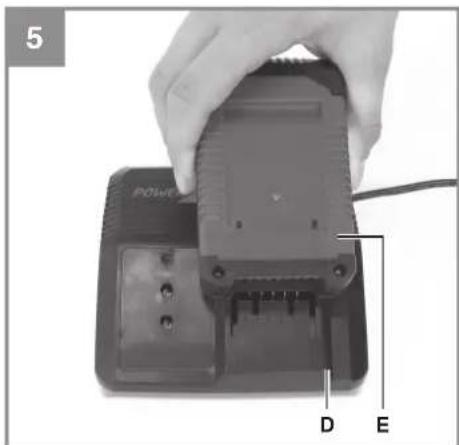
text_image
5 POWE D E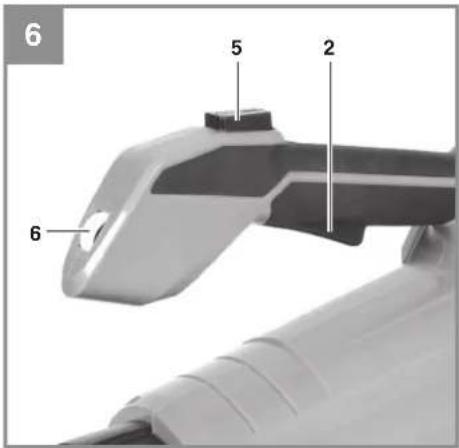
text_image
6 5 2 6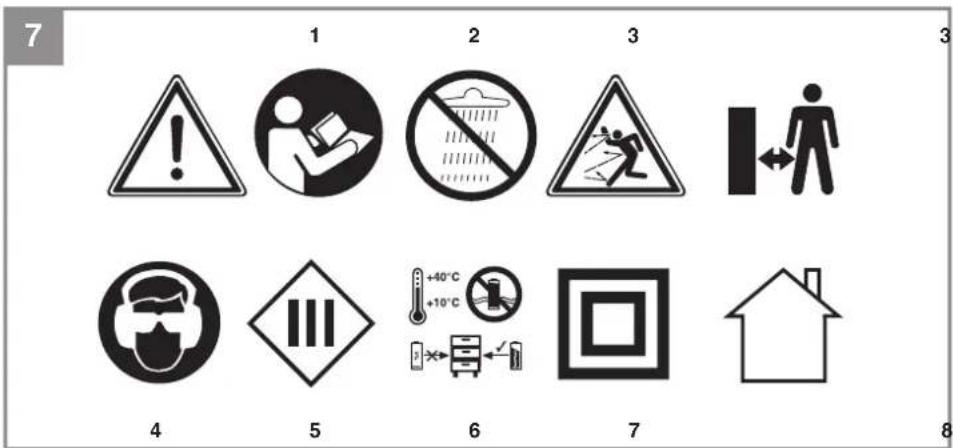
text_image
7 1 2 3 4 5 6 7 8D
Inhaltsverzeichnis
Pattfield® ERGO TOOLS
Batteridriven lövblåsare PE-ALB 36 Li
tillverkad för
Hornbach Baumarkt AG
Hornbachstraße 11
76879 Bornheim / Tyskland
- Safety regulations
- Layout and items supplied
- Proper use
- Technical data
- Before starting the equipment
- Operation
- Faults
- Storage
- Charger indicator
- EC Declaration of Conformity
-
Disposal
-
Cleaning, maintenance and ordering of spare parts
GB
Danger!
When using the equipment, a few safety precautions must be observed to avoid injuries and damage. Please read the complete operating instructions and safety regulations with due care. Keep this manual in a safe place, so that the information is available at all times. If you give the equipment to any other person, hand over these operating instructions and safety regulations as well. We cannot accept any liability for damage or accidents which arise due to a failure to follow these instructions and the safety instructions.
1. Safety regulations
Danger!
Read all safety regulations and instructions.
Any errors made in following the safety regulations and instructions may result in an electric shock, fi re and/or serious injury.
Keep all safety regulations and instructions in a safe place for future use.
The term “electric tool” used in the safety instructions refers to electric tools operated from the mains power supply (with a power cable) and to battery operated electric tools (without a power cable).
1. Workplace safety
a) Keep your work area clean and well illuminated. Untidy or unlit work areas can result in accidents.
b) Do not operate the electric tool in an environment where there is a risk of explosions and where there are infl ammable liquids, gases or dust. Electric tools produce sparks which could set the dust or vapours alight.
c) Keep the electric tool out of the reach of children and other persons. If there is a distraction, you may lose control of the appliance.
2. Electrical safety
a) The connector plug from this electric tool must fit into the socket. The plug should never be altered in any way. Never use adapter plugs together with earthed electric tools. Unaltered plugs and correct sockets reduce the risk of an electric shock.
b) Avoid bodily contact with earthed surfaces such as pipes, heating, ovens and
fridges. The risk of electric shock is increased if your body is earthed.
c) Keep the tool out of the rain and away from moisture. The ingress of water into an electric tool increases the risk of an electric shock.
d) Do not use the cable to carry the electric tool, to hang it up or to pull it out of the socket. Keep the cable away from heat, oil, sharp edges and moving parts of the appliance. Damaged or entangled cables increase the risk of an electric shock.
e) If you are working outdoors with an electric tool, only use extension cables which are designed specifically for this purpose. Using specially designed outdoor extension cables, the risk of electric shock is reduced.
f) If operation of the electric tool in a damp environment can not be avoided, use a earth-leakage circuit-breaker. The earth-leakage circuit-breaker reduces the risk of an electric shock.
3. Safety of persons
a) Be careful, watch what you are doing and use an electric tool sensibly. Do not use the tool if you are tired or under the influence of drugs, alcohol or medication. A moment of inattention when using the electric tool can result in serious injuries.
b) Wear personal protection equipment and always wear safety goggles. Wearing personal protection (such as dust masks, non-slip safety shoes, safety helmet or ear protection, depending upon the type and use of the electric tool) reduces the risk of injury.
c) Make sure that the appliance cannot start up accidentally. Ensure that the electric tool is switched off before you connect it to the power supply and/or insert the battery, or pick up or carry the tool. If your finger is on the switch whilst carrying the electric tool or if you connect the appliance to the mains when it is switched on, this can lead to accidents.
d) Remove keys and wrenches before switching on the electric tool. A tool or key which comes into contact with rotating parts of the appliance can lead to injuries.
e) Avoid abnormal working postures. Make sure you stand squarely and keep your balance at all times. In this way, you can control the electric tool better in unexpected circumstances.
f) Wear suitable work clothes. Do not wear
GB
loose clothing or jewellery. Keep hair, clothes and gloves away from moving parts. Loose clothing, jewellery or long hair can get trapped in moving parts.
g) If vacuuming devices and draining devices can be fitted, make sure that these are correctly attached and correctly used. The use of a dust extraction system can reduce the danger posed by dust.
- Usage and treatment of the electric tool a) Do not overload the appliance. Use the correct tool for your work. You will be able to work better and more safely within the given performance boundaries.
b) Do not use an electric tool with a defective switch. An electric tool that cannot be switched on or off is dangerous and must be repaired.
c) Pull the plug out of the socket and/or remove the battery before making any adjustments to the appliance, changing accessories or putting the appliance down. This safety measure prevents starting the electric tool unintentionally.
d) Keep unused electric tools out of the reach of children. Do not allow people who are not familiar with the appliance or who have not read these instructions to use the appliance. Electric tools are dangerous if they are used by inexperienced people.
e) Clean your electric tool carefully. Check whether moving parts are functioning properly and not jamming, whether parts are broken or damaged enough that the functioning of this electric tool is affected. Have damaged parts repaired before using the appliance. Many accidents are caused by badly maintained electric tools.
f) Keep your cutting tools sharp and clean. Carefully maintained cutting tools with sharp cutting edges will jam less and are easier to control.
g) Make sure to use electric tools, accessories, attachments, etc. in accordance with these instructions. Take the conditions in your work area and the job in hand into account. Using electric tools for any purpose other than the one for which they are intended can lead to dangerous situations.
- Using and handling the cordless tool a) Only charge the batteries in chargers that are recommended by the manufacturer. A charger that is designed for a certain type
of battery may pose a fi re risk if it is used with other types of battery.
b) Use only the correct batteries in the electric tools. The use of other batteries may result in injuries and a fire risk.
c) Keep unused batteries away from paper clips, coins, keys, nails, screws and other metallic objects that could cause a short circuit between the contacts. A short circuit between the battery contacts may cause burns or a fire.
d) In case of incorrect use, fl uid may escape from the battery. Avoid contact with it. If you touch it by accident, rinse the aff ected area with water. If you get the fl uid in your eyes, also seek medical advice. Leaking battery fl uid can cause skin irritation or burns.
6. Service
a) Have your electric tool repaired only by trained personnel using only genuine spare parts. This will ensure that your electric tool remains safe to use.
Additional safety instructions
We pay a great deal of attention to the design of every battery pack to ensure that we supply you with batteries which feature maximum power density, durability and safety. The battery cells have a wide range of safety devices. Each individual cell is initially formatted and its electrical characteristic curves are recorded. This data are then used exclusively to be able to assemble the best possible battery packs. Despite all the safety precautions, caution must always be exercised when handling batteries. The following points must be obeyed at all times to ensure safe use.
Safe use can only be guaranteed if undamaged cells are used. Incorrect handling can cause cell damage.
Important: Analyses confirm that incorrect use and poor care are the main causes of the damage caused by high performance batteries.
Information about the battery
-
The battery pack supplied with your cordless tool is not charged. The battery pack has to be charged before you use the tool for the first time.
-
For optimum battery performance avoid low discharge cycles. Charge the battery pack
GB
frequently.
- Store the battery pack in a cool place, ideally at 15°C and charged to at least 40%.
- Lithium-ion batteries are subject to a natural ageing process. The battery pack must be replaced at the latest when its capacity falls to just 80% of its capacity when new. Weakened cells in an aged battery pack are no longer capable of meeting the high power requirements and therefore pose a safety risk.
- Do not throw battery packs into an open fire. There is a risk of explosion!
- Do not ignite the battery pack or expose it to fire.
- Do not exhaustively discharge batteries. Exhaustive discharge will damage the battery cells. The most common cause of exhaustive discharge is lengthy storage or non-use of partly discharged batteries. Stop working as soon as the performance of the battery falls noticeably or the electronic protection system triggers. Place the battery pack in storage only after it has been fully charged.
- Protect batteries and the tool from overloads. Overloads will quickly result in overheating and cell damage inside the battery housing without this overheating actually being apparent externally.
- Avoid damage and shocks. Replace batteries which have been dropped from a height of more than one meter or which have been exposed to violent shocks without delay, even if the housing of the battery pack appears to be undamaged. The battery cells inside the battery may have suff ered serious damage. In this respect, please also read the waste disposal information.
- If the battery pack suffers overloading and overheating, the integrated protective cut-off will switch off the equipment for safety reasons. Important. Do not press the ON/OFF switch any more if the protective cut-off has actuated. This may damage the battery pack.
- Use only original battery packs. The use of other batteries may result in injuries, explosion and a fire risk.
Information on chargers and the charging process
- Please check the data marked on the rating plate of the battery charger. Be sure to connect the battery charger to a power supply with the voltage marked on the rating plate. Never connect it to a different mains voltage.
- Protect the battery charger and its cable from
damage and sharp edges. Have damaged cables repaired without delay by a qualified electrician.
- Keep the battery charger, batteries and the cordless tool out of children's reach.
- Do not use damaged battery chargers.
- Do not use the supplied battery charger to charge other cordless tools.
- In heavy use the battery pack will become warm. Allow the battery pack to cool to room temperature before commencing with the charging.
- Do not over-charge batteries. Do not exceed the maximum charging times. These charging times only apply to discharged batteries. Frequent insertion of a charged or partly charged battery pack will result in over-charging and cell damage. Do not leave batteries in the charger for days on end.
- Never use or charge batteries if you suspect that the last time they were charged was more than 12 months previously. There is a high probability that the battery pack has already suffered dangerous damage (exhaustive discharge).
- Charging batteries at a temperature below 10^ C will cause chemical damage to the cell and may cause a fire.
- Do not use batteries which have heated during the charging process, as the battery cells may have suff ered dangerous damage.
- Do not use batteries which have suff ered curvature or deformation during the charging process or which show other non-typical symptoms (gassing, hissing, cracking,...)
- Never fully discharge the battery pack (recommended depth of discharge max. 80%) A complete discharge of the battery pack will lead to premature ageing of the battery cells.
- Never charge the batteries unsupervised.
Protection from environmental influences
- Wear suitable work clothes. Wear safety goggles.
- Protect your cordless tool and the battery charger from moisture and rain. Moisture and rain can cause dangerous cell damage.
- Do not use the cordless tool or the battery charger near vapors and infl ammable liquids.
- Use the battery charger and cordless tools only in dry conditions and an ambient temperature of 10-40°C.
- Do not keep the battery charger in places where the temperature is liable to reach over 40^ C. In particular, do not leave the battery
GB
charger in a car that is parked in the sunshine.
- Protect batteries from overheating. Overloads, over-charging and exposure to direct sunlight will result in overheating and cell damage. Never charge or work with batteries which have been overheated – replace them immediately if possible.
- Storage of batteries, battery chargers and cordless tools. Store the charger and your cordless tool only in dry places with an ambient temperature of 10-40°C. Store your lithium-ion battery pack in a cool, dry place at a temperature of 10-20°C. Protect them from humidity and direct sunlight. Only place fully charged batteries in storage (charged at least 40%).
- Prevent the lithium-ion battery pack from freezing. Battery packs which were stored below 0^ C for more than 60 minutes must be disposed of.
- When handling batteries beware of electrostatic charge: Electrostatic discharges cause damage of the electronic protection system and the battery cells. Avoid electrostatic charging and never touch the battery poles.
Additional safety instructions
• Always walk. Never run.
• Always keep the ventilation opening clean.
- Never direct the blow hole at persons or animals.
- The machine may only be used at reasonable times of the day, i.e. not in the early morning or late evening when it will be a nuisance to other people. The times specified by local authorities must be observed.
- Remove all foreign objects with a rake and brush before starting any blowing work.
- Where conditions are dusty, dampen the surface a little or use a sprinkler attachment.
- Use the full-length blower nozzle extension so that the air current can work near to the ground.
- Watch out for children, pets, open windows etc. and blow the foreign objects safely away from them.
- Warning: This machine is not designed for use by children.
• Warning: Risk of injury from rotating parts.
- Warning: Never use this equipment near open windows.
Explanation of the warning signs on the equipment (see Fig. 7)
- Read the directions for use before operating the tool.
- Do not use the tool in rain or snow. Do not expose the tool to wet conditions.
- Keep all other persons away from the danger zone.
- Wear goggles and ear muff s.
- Safety class III / Safety extra-low voltage
- Store the battery only in dry rooms with an ambient temperature of +10°C to +40°C. Place only charged batteries in storage (charged at least 40%).
- Safety class II
- For use in dry rooms only.
2. Layout and items supplied
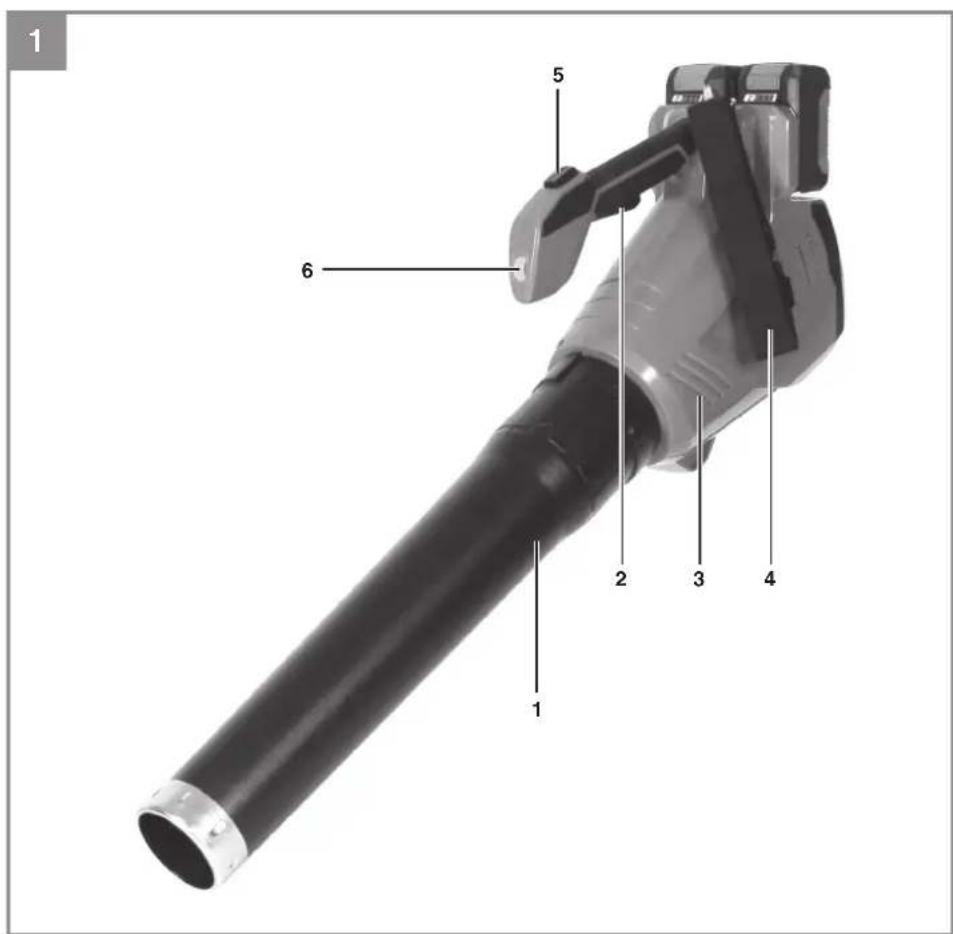
2.1 Layout (Fig. 1/2)
-
Blower tube
-
On/Off switch
- Engine unit
- Harness
- Turbo switch
- Speed controller
2.2 Items supplied
Please check that the article is complete as specified in the scope of delivery. If parts are missing, please contact our service center or the nearest branch of the DIY store where you made your purchase at the latest within 5 work days after purchasing the article and upon presentation of a valid bill of purchase. Also, refer to the warranty table in the warranty provisions at the end of the operating instructions.
- Open the packaging and take out the equipment with care.
- Remove the packaging material and any packaging and/or transportation braces (if available).
• Check to see if all items are supplied. - Inspect the equipment and accessories for transport damage.
- If possible, please keep the packaging until the end of the guarantee period.
Danger!
The equipment and packaging material are not toys. Do not let children play with plastic bags, foils or small parts. There is a danger of swallowing or suffocating!
GB
- Engine unit
- Blower tube
- Harness
• Original operating instructions
3. Proper use
The cordless leaf blower is designed to handle only foliage and garden refuse such as grass and small branches. Any other use is prohibited.
The equipment is allowed to be used only for its prescribed purpose. Any other use is deemed to be a case of misuse. The user/operator and not the manufacturer will be liable for any damage or injuries of any kind resulting from such misuse.
Please note that our equipment has not been designed for use in commercial, trade or industrial applications. Our warranty will be voided if the equipment is used in commercial, trade or industrial businesses or for equivalent purposes.
4. Technical data
Idle speed n_0 .....11.000-21.000 min ^-1
Air speed max.: 150 km/h
Protection class: ....III
L_pA sound pressure level 85.2 dB (A)
L_WA Measured sound power level ..... 97,2 dB (A)
L_WA Guaranteed sound power level ..... 100 dB (A)
Vibration a_hv ≤ 2,5m / s
K uncertainty 1.5 m/s ^2
Weight: 2.5 kg
The machine may exceed 85 dB (A). The operator will require noise protection measures if this is the case.
The specified vibration value was established in accordance with a standardized testing method. It may change according to how the electric equipment is used and may exceed the specified value in exceptional circumstances.
The specified vibration value can be used for initial assessment of a harmful effect.
Important!
The vibration value changes according to the area of application of the electric equipment and may exceed the specified value in exceptional circumstances.
The equipment, which is supplied without batteries and without a charger, is allowed to be used only with the lithium-ion batteries of the Power-X-Change series!
Power-X-Change
• 18 V, 1.5 Ah, 5 lithium-ion cells
• 18 V, 2.0 Ah, 5 lithium-ion cells
• 18 V, 3.0 Ah, 10 lithium-ion cells
• 18 V, 4.0 Ah, 10 lithium-ion cells
• 18 V, 5.2 Ah, 10 lithium-ion cells
lithium-ion batteries of the Power-X-Change series are allowed to be charged only with the Power-X charger.
Power-X charger
Input voltage: 200-250 V \~ 50-60 Hz
Output voltage: 21 V DC
Output current: 3.0 A
Protection class: ..... II / ☐
Keep the noise emissions and vibrations to a minimum.
- Only use appliances which are in perfect working order.
• Service and clean the appliance regularly.
• Adapt your working style to suit the appliance.
• Do not overload the appliance. - Have the appliance serviced whenever necessary.
- Switch the appliance off when it is not in use.
• Wear protective gloves.
5. Before starting the equipment
Caution!
The equipment is supplied without batteries and without a charger is allowed to be used only with the lithium-ion batteries of the Power-X-Change series!
GB
Power-X-Change
• 18 V, 1.5 Ah, 5 lithium-ion cells
• 18 V, 2.0 Ah, 5 lithium-ion cells
• 18 V, 3.0 Ah, 10 lithium-ion cells
• 18 V, 4.0 Ah, 10 lithium-ion cells
• 18 V, 5.2 Ah, 10 lithium-ion cells
The lithium-ion batteries of the Power-X-Change series are allowed to be charged only with the Power-X charger.
Warning!
Always remove the batteries before making adjustments to the equipment.
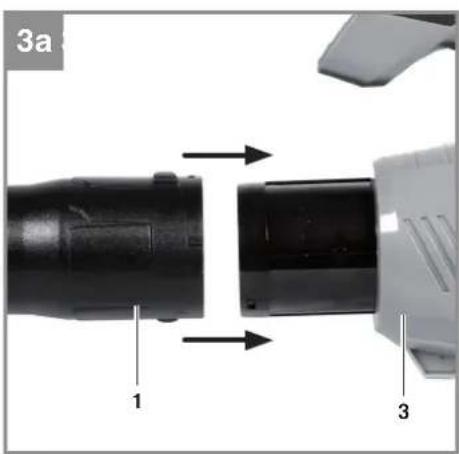
5.1 Fitting the blower tube (Fig. 3a/b)
Plug together the blower tube (Fig. 1) and the motor unit (Item 3). Then lock the tube in place by twisting it clockwise.
Important! The tube must be twisted as far as the stop to ensure that it is locked securely.
5.2 Fitting the battery pack (Fig. 4)
Press the pushlock button of the battery pack as shown in Fig. 4 C and push the battery pack into the mount provided. When the battery pack is positioned as in Fig. 4b, make sure that the pushlock button latches in place! To remove the battery pack, proceed in reverse order.
Important!
Use only batteries which are charged to the same level. Never combine full and half-full batteries. Always charge the two batteries simultaneously. The equipment's operating time depends on the battery with the lower charge level. The two batteries must always be fully charged before use.
5.3 Charging the battery (Fig. 5)
- Take the battery pack out of the equipment. Do this by pressing the pushlock button.
- Check that your mains voltage is the same as that marked on the rating plate of the battery charger. Insert the power plug of the charger (D) into the socket outlet. The green LED will then begin to blink.
- Insert the battery pack (E) into the charger (D).
- In section 11. „Charger indicator“ you will find a table with an explanation of the LED indicator on the charger.
The battery pack can become a little warm during the charging. This is normal.
If the battery pack fails to charge, check:
• whether there is voltage at the socket outlet
- whether there is good contact at the charging contacts
If the battery pack still fails to charge, send
• the charging unit
• and the battery pack
to our customer service center.
To ensure that the battery pack provides long service, you should take care to recharge it promptly. You must recharge the battery pack when you notice that the power of the cordless leaf blower drops. Never fully discharge the battery pack. This will cause it to develop a defect.
5.4 Fitting the harness (Fig. 3c/3d)
Fasten the harness (Fig. 3c / Item 4) to the eyelet (Fig. 3c / Item A) on the motor housing. Place the harness over your shoulder and adjust the length to that you can guide the equipment comfortably. Caution: Carry the harness so that the click fastener is always within reach. In an emergency you can quickly remove the equipment by opening the click fastener (Fig. 3d / Item B).
6. Operation
6.1 Switching on the equipment (Fig. 6)
- To switch on, press and hold the On/Off switch (2).
• To switch off, let go of the On/Off switch. - Channel the air stream forward and walk slowly to blow foliage or garden refuse into a pile or to clear out hard-to-reach places.
6.2. Speed control (Fig. 6)
The equipment is fitted with an electronic speed controller. To use it, turn the speed controller (Fig. 6/Item 6) to the desired position. Use the equipment only with the speed which is actually required and never let it run at a speed which is faster than necessary.
6.3 Turbo mode (Fig. 6)
If you need more blowing power, e.g. to blow away piles of wet foliage, you can press the turbo button (Fig. 6 / Item 5). Pressing the turbo button will raise the speed and therefore the blowing power temporarily.
GB
Important: To reduce noise and prolong battery operating time, never actuate the turbo button longer than necessary.
7. Cleaning, maintenance and ordering of spare parts
Danger!
Always remove the batteries before you carry out any cleaning work.
7.1 Cleaning
- Keep all safety devices, air vents and the motor housing free of dirt and dust as far as possible. Wipe the equipment with a clean cloth or blow it with compressed air at low pressure.
• We recommend that you clean the device immediately each time you have finished using it. - Clean the equipment regularly with a moist cloth and some soft soap. Do not use cleaning agents or solvents; these could attack the plastic parts of the equipment. Ensure that no water can seep into the device. The ingress of water into an electric tool increases the risk of an electric shock.
7.2 Maintenance
- Should the tool experience problems beyond those mentioned above, let only an authorised professional or a customer service shop perform an inspection.
- There are no other parts inside the equipment which require maintenance.
7.3 Ordering replacement parts:
Please quote the following data when ordering replacement parts:
• Type of machine
• Article number of the machine
• Identification number of the machine
• Replacement part number of the part required
Current prices and information are available on request at your Hornbach store.
8. Faults
The equipment does not work: Check that the battery is charged and whether the charging unit is working. If the equipment will not work in spite of the voltage supply being OK, please send it to the customer service address below.
9. Storage
Store the equipment and accessories out of children's reach in a dark and dry place at above freezing temperature. The ideal storage temperature is between 5 and 30^ . Store the electric tool in its original packaging.
GB
10. Charger indicator
| Indicator status | Explanations and actions | |
| Red LED Green LED | ||
| Off | Flashing | Ready for useThe charger is connected to the mains and is ready for use; there is no battery pack in the charger |
| On Off Charging | The charger is charging the battery pack in quick charge mode. | |
| Off On The battery is 85% charged and ready for use.(Charging time for 1.5 Ah battery: 30 min)(Charging time for 2.0 Ah battery: 40 min)(Charging time for 3.0 Ah battery: 60 min)(Charging time for 4.0 Ah battery: 80 min)(Charging time for 5.2 Ah battery: 130 min)The unit then changes over to gentle charging mode until the battery is fully charged.(Total charging time for 1.5 Ah battery: approx. 40 min)(Total charging time for 2.0 Ah battery: approx. 50 min)(Total charging time for 3.0 Ah battery: approx. 75 min)(Total charging time for 4.0 Ah battery: approx. 100 min)(Total charging time for 5.2 Ah battery: approx. 140 min)Action:Take the battery pack out of the charger. Disconnect the charger from the mains supply. | ||
| Flashing Off | Adapted charging | The charger is in gentle charging mode.For safety reasons the charging is performed less quickly and takes more than 1 hour. The reasons can be:- The battery pack has not been used for a very long time or an already fl at battery was further discharged (exhaustive discharge).- The battery pack temperature is outside the ideal range (between 25^ C and 45^ C).Action:Wait for the charging to be completed; you can still continue to charge the battery pack. |
| Flashing Flashing Fault | Charging is no longer possible. The battery pack is defective.Action:Never charge a defective battery pack.Take the battery pack out of the charger. | |
| On On Temperature fault | The battery pack is too hot (e.g. due to direct sunshine) or too cold (below 0^ C).Action:Remove the battery pack and keep it at room temperature (approx. 20^ C) for one day . | |
GB
11. EC Declaration of Conformity
Declaration of Conformity

declare, that the product described
in Technical Data :
Pattfield®
ERGO TOOLS
Cordless Leaf Blower PE-ALB 36 Li
Manufactured for:
Hornbach Baumarkt AG
Hornbachstraße 11
76879 Bornheim / Germany
is in conformity with the following directives:
Machinery Directive 2006/42/EC
EMC Directive 2014/30/EU
RoHS Directive 2011/65/EG
Directive relating to the noise emission in the environment by equipment for use outdoors 2000/14/EC
and in accordance to the following applicable harmonized standards:
EN 60335-1/A11:2014
EN 50636-2-100:2014
EN 62233: 2008
EN 55014-1/A2:2011
EN 55014-2:2015
The conformity with the Noise Emission of Outdoor Equipment Directive is verified by the adherence to the following emissions values:
Measured sound power level: 97,2 dB (A)
Guaranteed sound power level: 100 dB (A)
ppa.
Andreas Jacke
Andreas Back
Head of Quality Management &
Person authorised to compile the technical file
The crossed-out wheeled bin logo requires the separate collection of waste electric and electronic equipment (WEEE). Such equipment may contain dangerous and hazardous substances. These tools must be returned to a designated collection point for the recycling of WEEE and must not be disposed as unsorted municipal waste. By doing so, you will help to conserve resources and protect the environment. Contact your local authorities for more information.
Children must not play with plastic bags and packaging material, due to possible injury or danger of suffocation. Store such material safely or dispose of environmentally friendly.
Used batteries must be disposed of properly.
Battery selling stores and municipal collection points offer special containers for battery disposal.
Subject to technical changes
Pattfield®
ERGO TOOLS
Pattfield®
ERGO TOOLS
Pattfield®
ERGO TOOLS
Pattfield®
ERGO TOOLS
Pattfield® ERGO TOOLS
Manufactured for HORNBACH-Baumarkt AG
Hornbachstraße 11, 76879 Bornheim / Germany
ED201711