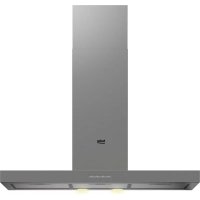
BHCB91632X - Range hood BEKO - Free user manual and instructions
Find the device manual for free BHCB91632X BEKO in PDF.



| Product Type | Decorative Hood |
| Brand | Beko |
| Model | BHCB91632X |
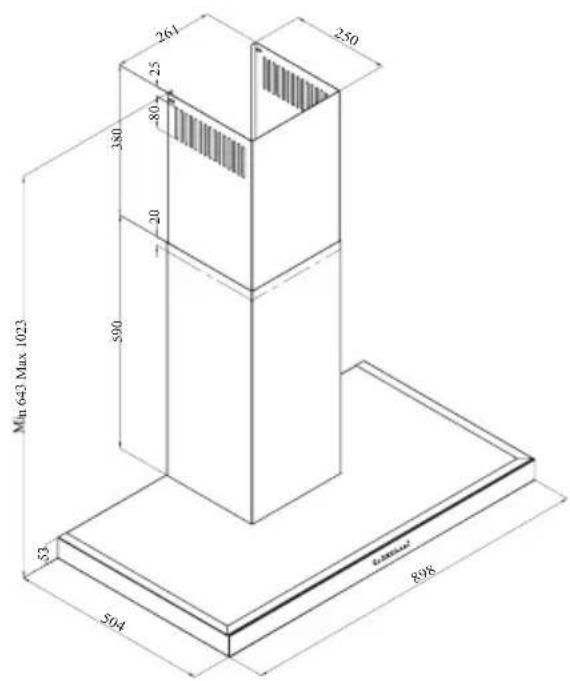
| Dimensions (W x D x H min-max) | 898 x 380 x 641-1023 mm |
| Net Weight | Approximately 15 kg |
| Electrical Supply | 220-240 V ~ 50 Hz |
| Motor Power | 210 W |
| Lighting Power | 2 x 3 W (LED) |
| Maximum Flow Rate | 616 m³/h (speed 3) |
| Number of Speeds | 3 |
| Control Type | Push Buttons |
| Air Outlet Diameter | 120 / 150 mm |
| Grease Filter | Aluminum, dishwasher safe |
| Charcoal Filter | Replacement every 3 months (not washable) |
| Minimum Distance from Cooking Surface | 65 cm |
| Insulation Class | Class I |
| Backdraft Protection | Non-return valve supplied |
| Bulb Type | LED spot GZ10, 3 W |
| Functions | Lighting, 3 speeds, recirculation or extraction |
| Maintenance | Monthly grease filter, quarterly charcoal filter |
| Safety | Motor shutdown if filter missing, thermal protection |
Frequently Asked Questions - BHCB91632X BEKO
User questions about BHCB91632X BEKO
0 question about this device. Answer the ones you know or ask your own.
Ask a new question about this device
Download the instructions for your Range hood in PDF format for free! Find your manual BHCB91632X - BEKO and take your electronic device back in hand. On this page are published all the documents necessary for the use of your device. BHCB91632X by BEKO.
USER MANUAL BHCB91632X BEKO
natural_image
Simple line drawing of a chimney emitting steam (no text or symbols)BHCB 91632 X
EN - DE - FR - ES - BG - NL - PT - RU - CS - SK - SL
CONTENTS
| ENGLISH | 3-16 |
| DEUTSCH | 17-31 |
| FRANÇAIS | 32-46 |
| ESPAÑOL | 47-62 |
| БЪЛГАРСКИ | 63-79 |
| NEDERLANDS | 80-93 |
| PORTUGUÊS | 94-109 |
| РУССКИЙ 110-130 | |
| ČESKY | 131-144 |
| SLOVENSKÝ | 145-158 |
| SLOVENŠČINA | 159-172 |
Please read this user manual first!
Dear Valued Customer,
Thank you for preferring this Beko appliance. We hope that you get the best results from your appliance which has been manufactured with high quality and state-of-the-art technology. For this reason, please read this entire user manual and all other accompanying documents carefully before using the appliance and keep it as a reference for future use. If you handover the appliance to someone else, give the user manual as well. Follow the instructions by paying attention to all the information and warnings in the user manual.
Remember that this user manual may also apply to other models. Differences between models are explicitly described in the manual.
Meanings of the Symbols
Following symbols are used in various sections of this user manual:

Important information and useful hints about usage.

WARNING: Warnings against dangerous situations concerning the security of life and property.

WARNING: Warning for danger of fire.
WARNING: Warning for electric shock.
1 Important safety and environmental instructions
1.1 General Safety
Important Safety Instructions Read Carefully And Keep For Future Reference This section contains safety instructions that will help protect from risk of fire, electric shock, exposure to leak microwave energy, personal injury or property damage. Failure to follow these instructions shall void any warranty.
- Beko products comply with the applicable safety standards; therefore, in case of any damage on the appliance or power cable, it should be repaired or replaced by the dealer, service center or a specialist and authorized service alike to avoid any danger. Faulty or unqualified repair work may be dangerous and cause risk to the user.
- This appliance is intended to be used in household and similar applications such as:
- Staff kitchen areas in shops, offices and other working environments;
- Farm houses
- By clients in hotels, and other residential type environments;
- Bed and Breakfast type environments.
- Operate the appliance for its intended purpose only as described in this manual.
- The manufacturer cannot be held liable for damages resulting from improper installation or misuse of the product.
- This appliance can be used by children aged from 8 years and above and persons with reduced physical, sensory or mental capabilities or lack of experience and knowledge if they have been given supervision or instruction concerning use of the appliance in a safe way and understand the hazards involved.
- Children shall not be allowed play with the appliance. Cleaning and user maintenance shall not be made by children without supervision.
1 Important safety and environmental instructions
- The minimum distance between the supporting surface for the cooking vessels on the hob and the lowest part of your product must be at least 65 cm.
- If the instructions for installation for the gas hob specify a greater distance, this has to be taken into account.
- Make sure that your mains power supply complies with the information supplied on the rating plate of the appliance.
- Never use the appliance if the power cable or the appliance itself is damaged.
- Prevent damage to the power cable by not squeezing, bending, or rubbing it on sharp edges. Keep the power cable away from hot surfaces and naked flame.
- Use the appliance with a grounded outlet only.
WARNING: Do not connect the appliance to the mains until the installation is fully complete.
- Place the appliance in a way so that the plug is always accessible.
- Do not touch the lamps if they have operated for a long time. They can burn your hands since they will be hot.
- Follow the regulations set out by competent authorities on discharge of the exhaust air (this warning is not applicable for use without flue).
- Operate your appliance after putting a pot, pan etc. on the hob. Otherwise, high heat may cause deformation in some parts of your product.
- Turn off the hob before taking the pot, pan etc. from it.
- Do not leave hot oil on the hob. Pans with hot oil may cause self combustion.
- Pay attention to your curtains and covers since oil may catch fire while cooking food such as fries.
- Grease filter must be cleaned at least monthly. Carbon filter must be replaced at least every 3 months.
1 Important safety and environmental instructions
- Product shall be cleaned accordance with user manual. If cleaning was not carried out in accordance with user manual, there may be fire risk.
- Do not use non-fire-resistant filtering materials instead of the current filter.
- Only use the original parts or parts recommended by the manufacturer.
- Do not operate the product without the filter and do not remove the filters while the product is running.
- In the event of be started any flame, de-energize your product and cooking appliances.
- In the event of be started any flame, cover the flame and never use water to extinguish.
- Unplug the appliance before each cleaning and when the appliance is not in use.
- The negative pressure in the environment should not exceed 4 Pa (4x10 bar) while the hood for electric hob and appliances running on another type of energy but electricity operate simultaneously.
- In the environment where the appliance is being used, the exhaust of devices running on fuel oil or gas, such as room heater must be absolutely isolated or device must be hermetical type.
- When connecting the flue, use pipes with a diameter of 120 or 150 ~mm . Pipe connection must be as short as possible and have as few elbows as possible.
- Danger of choking! Keep all the packaging materials away from children.
CAUTION: Accessible parts may become hot when used with coo-king appliances.
- The product outlet must not be connected to air channels that include other smoke.
1 Important safety and environmental instructions
- The ventilation in the room may be insufficient when the hood for electric hob is used simultaneously with the devices operating on gas or other fuels (this may not apply to appliances that only discharge the air back into the room).
- Objects placed on the product may fall. Do not place any objects on the product. - Do not flambe under the your product.
WARNING: Before installing the Hood, remove the protective films.
- Never leave high naked flames under the hood when it is in operation
- Deep fat fryers must be continuously monitored during use: overheated oil can burst into flames.
1.2 Compliance with the WEEE Directive and Disposing of the Waste Product:
This product complies with EU WEEE Directive (2012/19/EU). This product bears a classification symbol for waste electrical and electronic equipment (WEEE).
This symbol indicates that this product shall not be disposed with other household wastes at the end of its service life. Used device must be returned to official collection point for recycling of electrical and electronic devices. To find these collection systems please contact to your local authorities or retailer where the product was purchased. Each household performs important role in recovering and recycling of old appliance. Appropriate disposal of used appliance helps prevent potential negative consequences for the environment and human health.
1.3 Compliance with RoHS Directive
The product you have purchased complies with EU RoHS Directive (2011/65/EU). It does not contain harmful and prohibited materials specified in the Directive.
1.4 Package Information

Packaging materials of the product are manufactured from recyclable materials in accordance with our National Environment Regulations. Do not dispose of the packaging materials together with the domestic or other wastes. Take them to the packaging material collection points designated by the local authorities.
2 General appearance
2.1 Overview
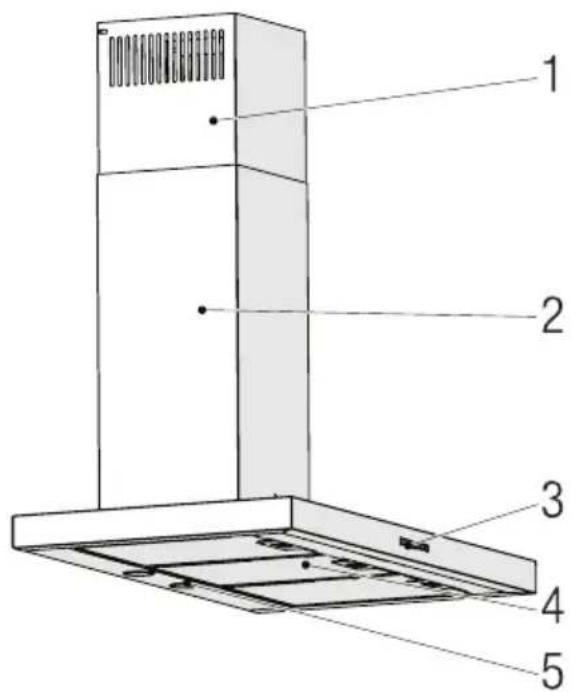
- Inner chimney
- Outer chimney
- Control panel
- Grease filter
- Lighting
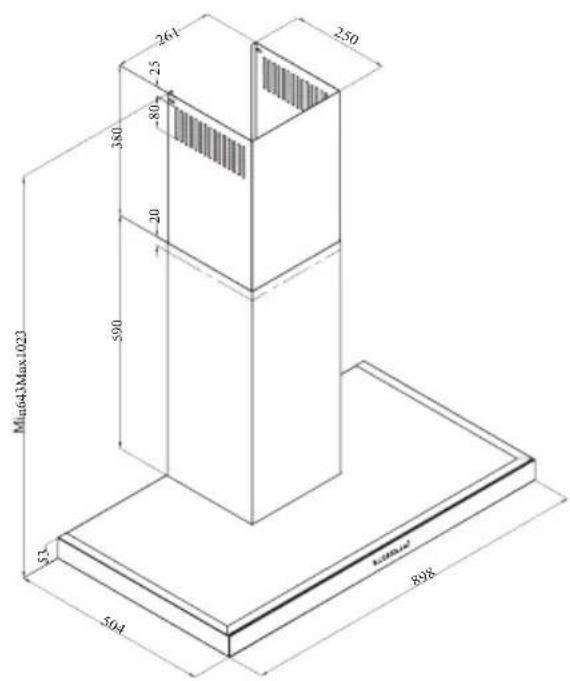
2.2 Technical data
| Model BHCB 91632 X | |
| Supply voltage & frequency 220-240V ~ 50 Hz | |
| Lamp power 2 x 3 W | |
| Motor power 210 W | |
| Flow rate – 3. Level 616 m3/h | |
| Insulation class of motor Class F | |
| Insulation class Class I | |
3 Operation of the appliance
3.1 Controlling the appliance
| 1 ABCD | 2 | 3 | 不 |
| KEY FUNCTION | |||
| A: 1. Stage Button | Operates the appliance on 1st speed.When you press this button again to turn off the appliance, the screen speed stage turns off. | ||
| B: 2. Stage Button | Operates the appliance on 2nd speed. When you press this button again to turn off the appliance, the screen speed stage turns off. | ||
| C: 3. Stage Button | Operates the appliance on 3rd speed.When you press this button again to turn off the appliance, the screen speed stage turns off. | ||
| D: Light On / Off | You may illuminate the cooking area by pressing this button. Re-press the button to turn off the lamp. | ||
3.2 Energy efficient usage
- When using your appliance, adjust the speed settings according to vapour and odour intensity, in order to save energy.
- Use low speeds (1-2) under normal conditions, and high speed (3) for intense odour and vapour.
- The lamps on the hood are placed for illuminating the cooking area.
- Using them for environmental lighting shall cause unnecessary energy expenditure and insufficient lighting.
3.3 Operating the hood
- Your appliance contains a motor that has various speeds.
-
For better performance, we recommend using low speeds under normal conditions and high speeds in cases of strong odours and intense vapour.
-
You can start your appliance by pressing on the desired speed setting button. (A, B, C)
- You may illuminate the cooking area by pressing the lamp (D).
3.4 Replacement of lamp
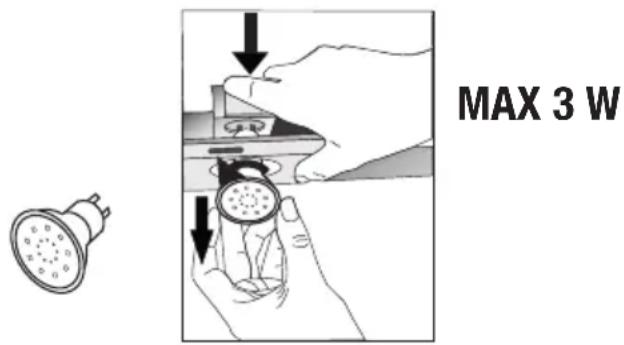
Make the electrical connections of the appliance. Your appliance uses 3W spot LED lamp. For replacing the lamps, push downwards on the holder from its behind, turn it counter-clockwise, and take it out downwards. Apply the above operation in reverse to install new lamps.
| Bulb |  |
| Bulb power 3 W | |
| Holder/Socket GZ 10 | |
| Bulb voltage 220 - 240 V | |
| Size 53 x 50 mm | |
| ILCOS Code DR/F3-220-240-GZ10-50-53 | |
| Luminous flux 260 lm | |
| Correlated colour temperature | 3000 K |
This product contains a light source of energy efficiency class “F”.
3 Operation of the appliance
3.5 Operation with flue connection
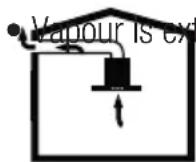
tracted through the
flue duct, which is fastened to the connection head on the hood.
- The diameter of the flue duct must be the same as the connection ring. In horizontal settings, the pipe has to have a slight upward slope (around 10^ ) so that the air can exit the room easily.
3.6 Operation without flue connection
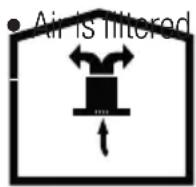
through the carbon
filter and recirculated in the room. Carbon filter is used when it is impossible to use a flue in the house.
- In flueless use, remove the flaps inside the flue adapter.
- Remove the grease filter. To install the carbon filter, fit the filter to the tabs by centring it on the plastic piece on both sides of the fan body. Tighten it by turning right or left.
- Replace grease filter.
4 Cleaning and maintenance

Before cleaning and maintenance, unplug the product or turn off the switch.
4.1 Cleaning of the grease filter
Grease filter retains the oil particles in the air. Grease filters may change colour after repeated cleaning. This is normal and does not require replacement of filters.
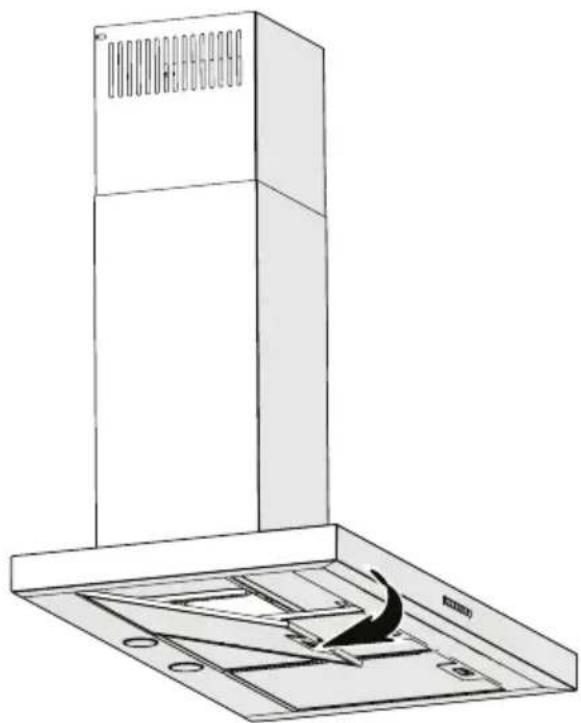
natural_image
Technical line drawing of a kitchen chimney with ventilation grilles and a door panel (no text or symbols)- Push the grease filter lock forward.
- Then pull it slightly down and pull it out. Otherwise, you can bend the filter. Wash and rinse grease filters with liquid detergent and replace grease filters to their sockets by by carrying out the steps specified above in reverse order. This filter retains the oil particles in the air.

You may wash your grease filters in the dishwasher.

CAUTION: In case of normal use, clean your filter once in a month.
4.2 Replacement of carbon filters
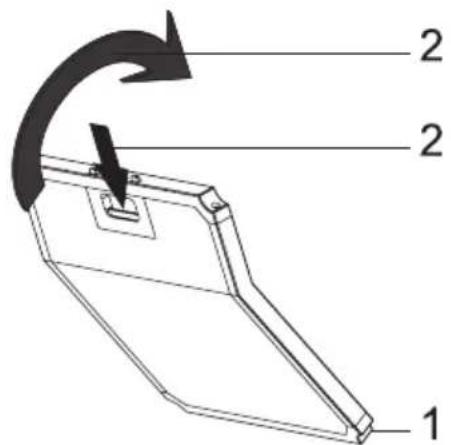
- The appliance you have purchased is appropriate for use with carbon filters.
- Remove the grease filter.
- Place the lower part of the carbon filter to the motor cabinet.
- Press on the tab of the carbon filter and push it forward, and ensure that the tabs of carbon filter are engaged and locked.
- Attach the grease filter.

CAUTION
- Carbon filter shall never be washed.
- Replace carbon filters once every 3 months.
- You can obtain the carbon filter from the authorized services.
5 Installation of appliance

WARNING: Before starting the installation, read the safety information on User Manual.
WARNING: Failure to install with screws and stabilizers in accordance with these instructions may result in electric shock.
For the installation of the hood, please contact the nearest Authorized Service.
It is the customer's responsibility to prepare the location and electrical installation of the hood.
5.1 Position of the appliance
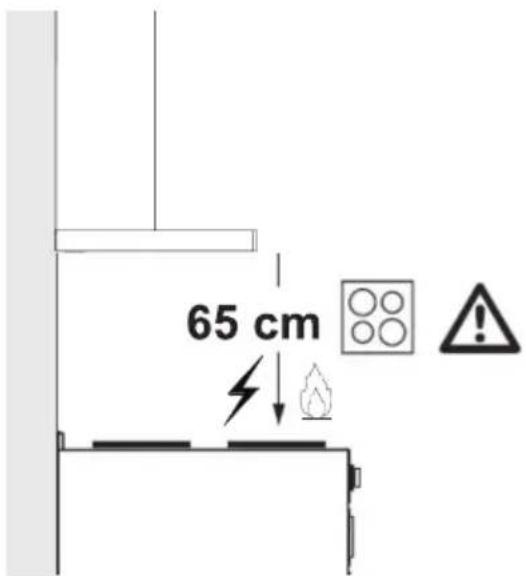
- Distance between the cooker and the cooker hood must be considered prior to assembly. This distance should be 65 cm.
- Distance must be measured from the surface of grate for gas cookers,
• From surface of glass for electric cookers.
5.2 Installation accessories
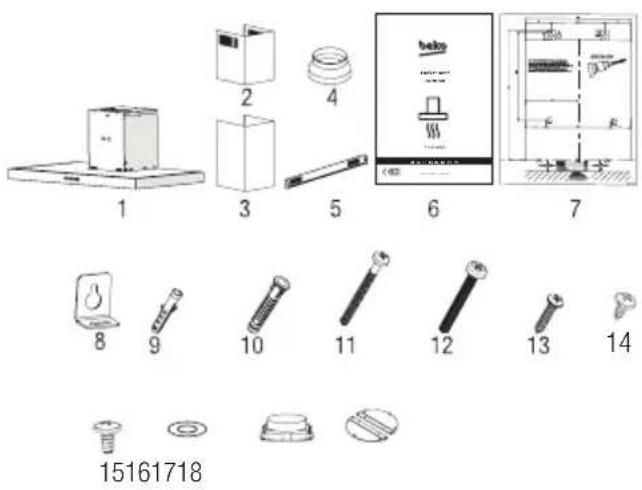
- Product
- Inner Chimney
- Outer Chimney
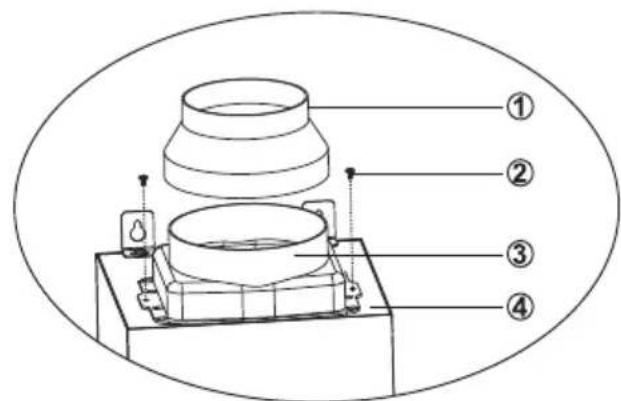
- ∅150/120 mm Plastic Flue Adapter
- Chimney Connection Plate
- User Manual
- Assembly Pattern
- 2x Hanging Plates
- 2x ∅6mm Plastic Dowel
- 4x ∅10mm Plastic Dowel
- 4x 5.5x60 Wall Mount Screw
- 2x M5x35 Hanging Plate Connection Screw
- 2x 3.9x22 Chimney Connection Plate Screw
- 2x 3.5x9.5 Chimney Connection Plate Screw
- 2x 3,5X9,5 Blind Screw
- 2x M4 Washer
- Plastic Adapter (Square to Round)
- Non-Return Valve
The information required to make the location suitable for the installation of the hood is given below.
5 Installation of appliance
5.3 Wall mounting
Wall must be flat, straight and have the sufficient bearing capacity.
Depth of drilling holes must comply with the length of bolts.
The bolts and dowels provided are suitable for brick walls. For other construction material (e.g. drywall, plate, porous concrete), suitable fixing dowels and nuts shall be used.
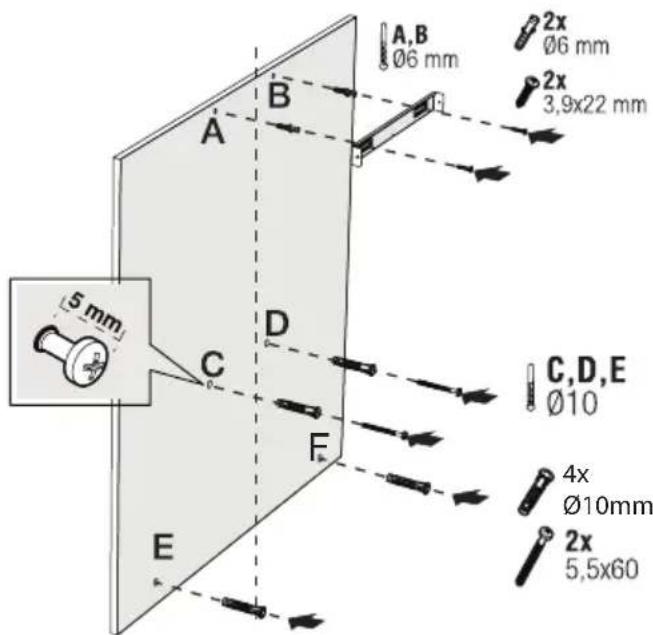
(Figure 1)

CAUTION: Before drilling, ensure that there are no power, gas or water pipes in the close proximity of the drilling locations.
Draw a mid location line from the ceiling perpendicular to the lower edge of the hood.
Fix the assembly scheme on the wall. For points A and B, take the maximum dimensions of the hood as reference, and drill points A and B you have marked with a ∅6mm drill bit, and tap ∅6mm plastic wall plugs. Install the chimney connection plate to the wall with 2 pieces of 3.9x22 screws (Figure 2).
To install the hood body, drill points C,D,E,F specified in the installation template with a ∅10mm drill bit and tap ∅10mm plastic dowels to these points (Figure 2).
Install 2 pieces of 5.5x60 mounting screws to points C and D with a clearance of 5 mm between the screw head and the wall (Figure 2).
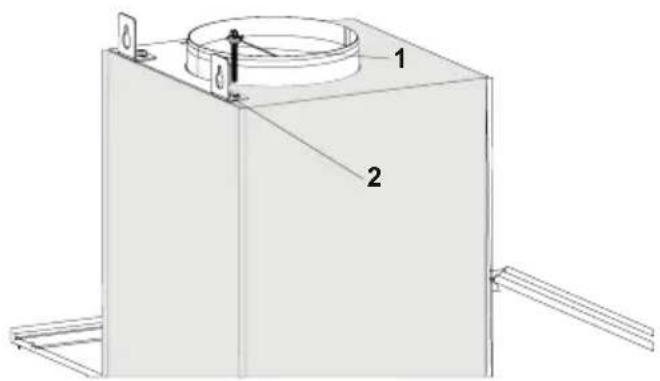
natural_image
3D diagram of a rectangular container with a circular top and two labeled parts (1 and 2), no text or symbols present.(Figure 2)
Install two pieces of hanging plates to the body of the hood with M5x35 mounting screws (Figure 2).
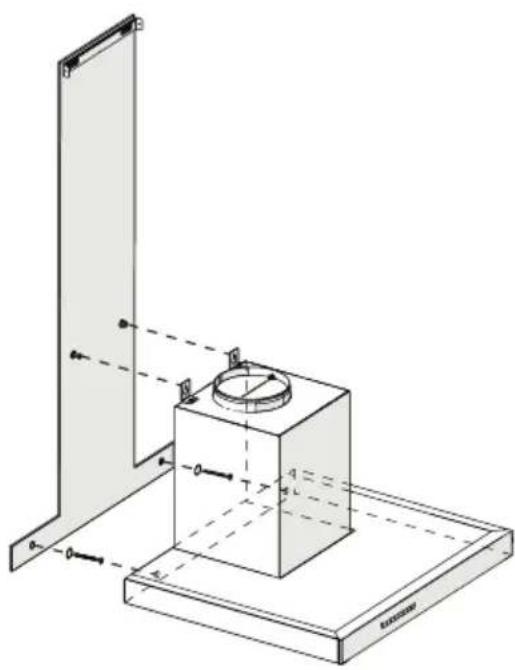
natural_image
Technical line drawing of a mechanical assembly with labeled components (no text or symbols)(Figure 3)
Hold the cooker hood by its body and place it on the mounting screws on the wall and tighten the screws (Figure 3).
5 Installation of appliance
Install M4 washers to the 5.5x60 suspension screws. Secure the cooker hood with 5.5x60 screws to the wall through the mounting hole on the interior of the appliance (Figure 3).
5.4 Connecting to chimney
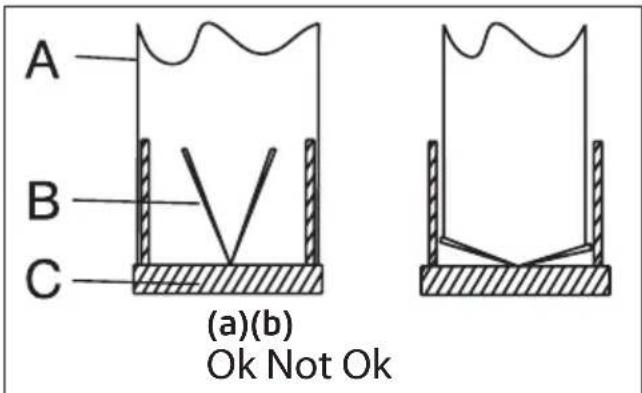
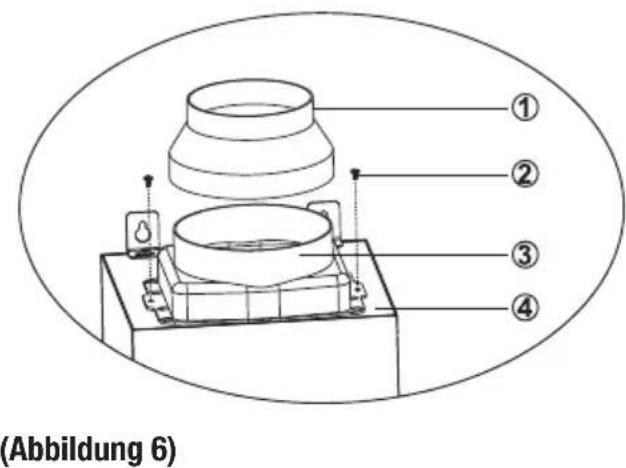
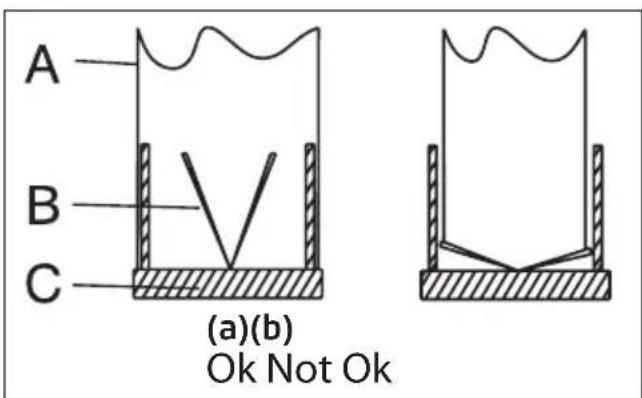
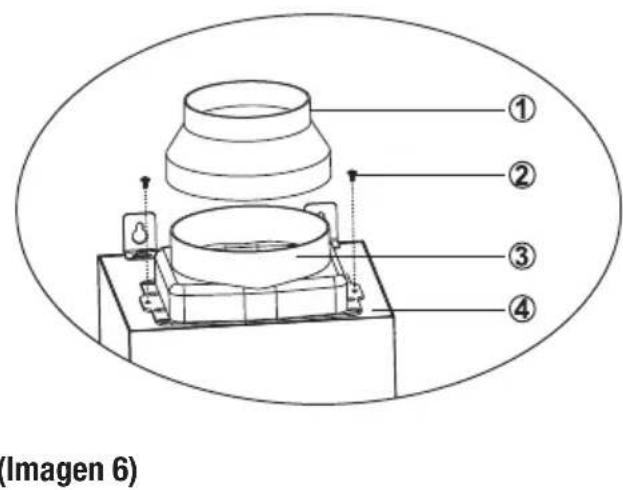
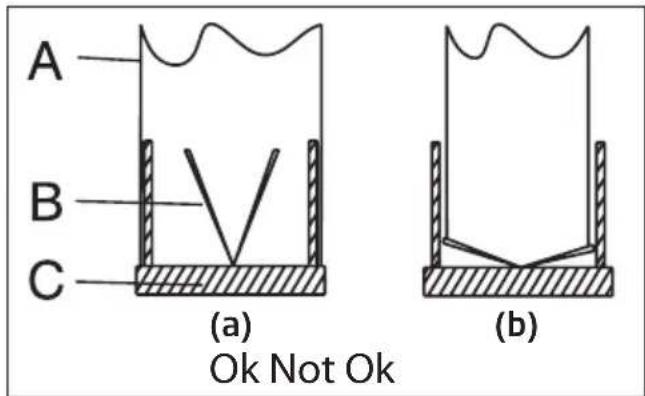
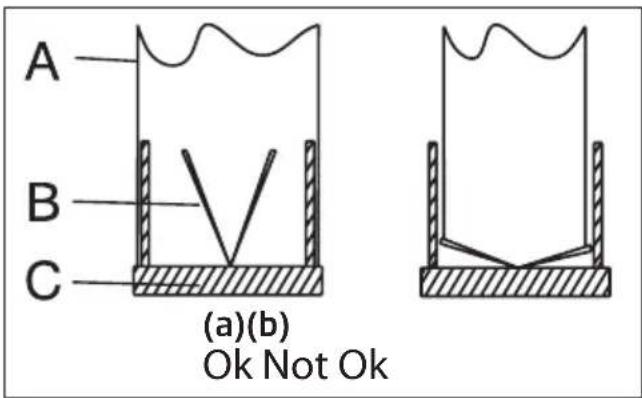
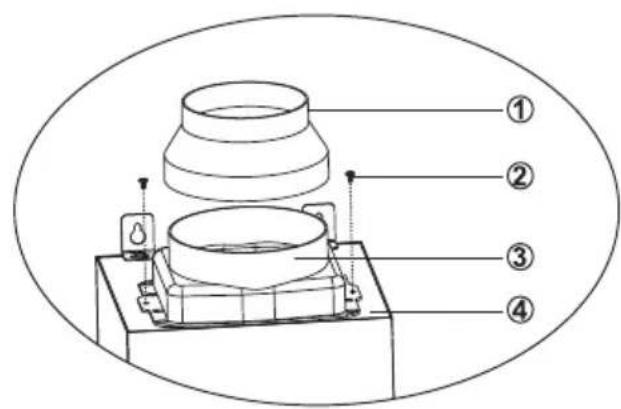
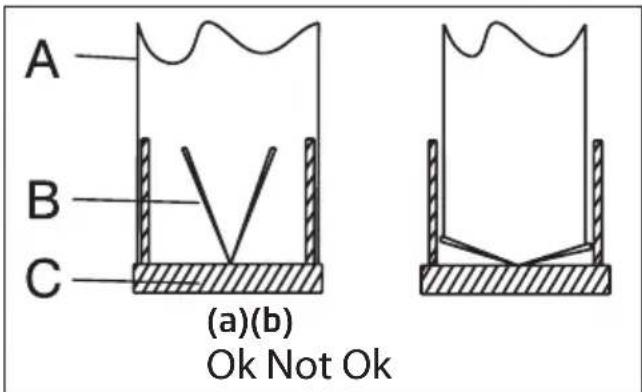
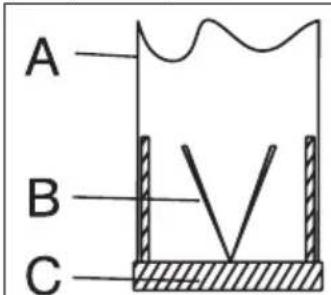
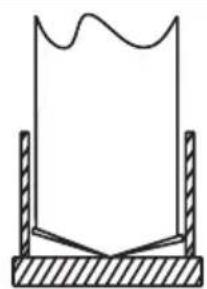
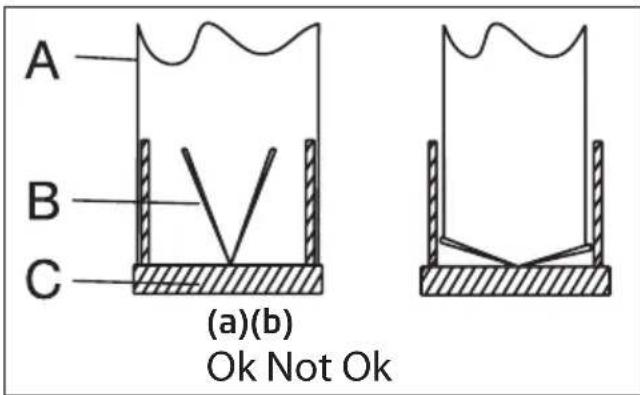
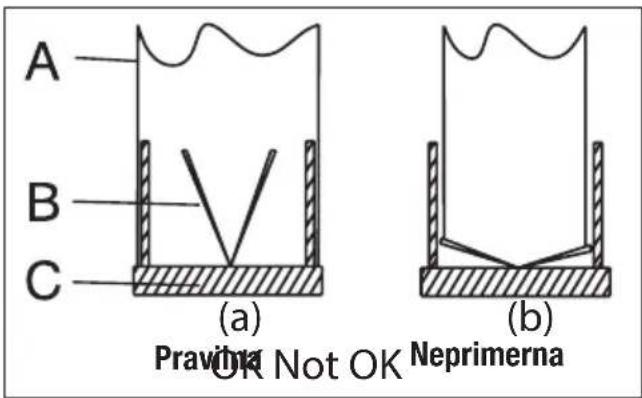
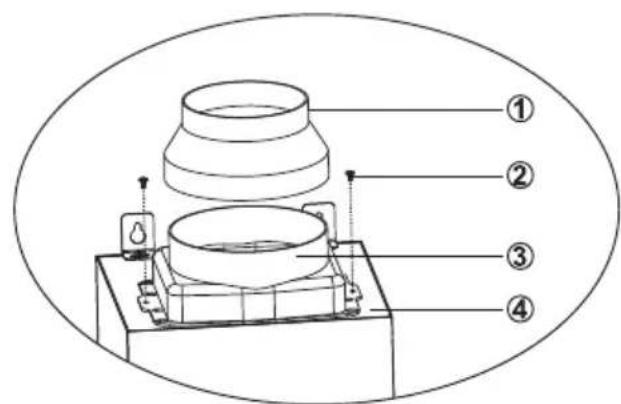
If you are going to use the ∅ 120/150 mm plastic Chimney adapter, connect one end of the pipe to this adapter, if you are not going to use it, to the direct output on the product. Connect the other end of the pipe to your Chimney. Check that these two connections are tight enough so they will not come out when the appliance runs on full power. Check if the flaps inside the Chimney operate when they are tightened with clamps. Connect the Chimney connection duct outside the adapter (Figure 5/a). If the connection duct is fitted inside the adapter, suction of air shall not occur as the Chimney flap that prevents the return of air will remain closed (Figure 5/b). The length of the pipe connection as well as the number of elbows must be as minimum as possible.
A: Chimney exit pipe
B : Non return flaps
C: Plastic flue
The valves are closed then the appliance is not operating and prevent possible outside odour and dust from entering inside.
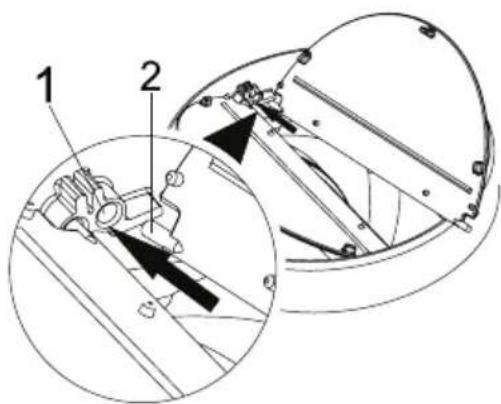
(Figure 4)
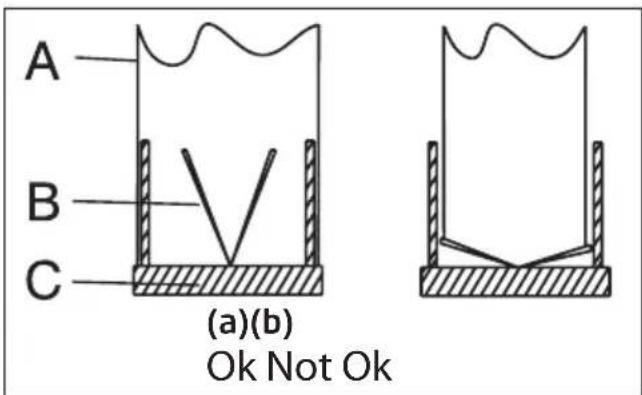
(Figure 5)
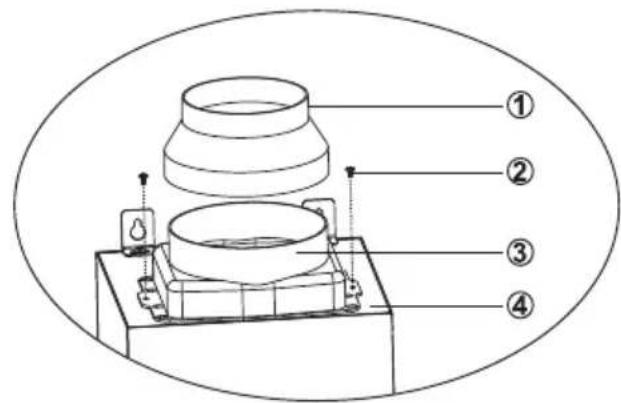
(Figure 6)
5 Installation of appliance
5.5 Installation of the hood to the chimney
Make the electrical connection of your hood before starting the installation of the Chimney. Slip the Chimney plates around the body.
Install the Chimney plate to the Chimney fastening plate that is secured to the wall from its upper outer edges (Figure 7).
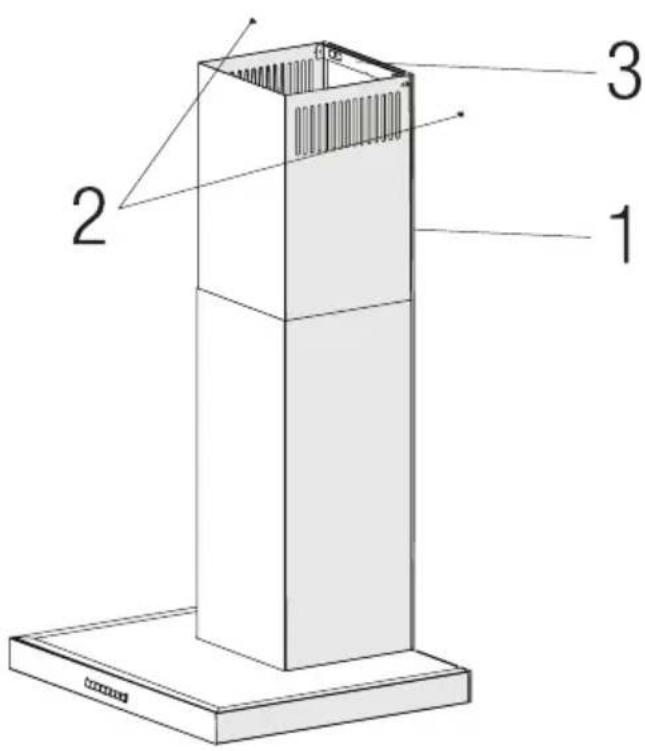
(Figure 7)
- Inner chimney
- 3.5x9.5 screw
- Chimney connection plate
6 Troubleshooting
| Troubleshooting Root Cause Help | ||
| Appliance is not working. | Check your fuses. | Fuse may be blown, inspect and restore it. |
| Appliance is not working. Check the electrical connection. Mains voltage shall be between 220 and 240 V. | ||
| Appliance is not working. | Check the electrical connection. | Check if other appliance in your kitchen operate. |
| Illumination light does not operate. | Check the electrical connection. Mains voltage shall be between 220 and 240 V. | |
| Illumination light does not operate. | Inspect the lamp switch. Lamp switch shall be at "on" position. | |
| Illumination light does not operate. | Inspect the lamps. The lamps of the appliance shall illuminate. | |
| Air inlet of the appliance is inadequate. | Inspect the grease filter. Under normal operating conditions, grease filter shall be cleaned at least once in a month. | |
| Air inlet of the appliance is inadequate. | Check the air discharge flue. The air discharge flue shall be at "on" position. | |
| Air inlet of the appliance is inadequate. | Inspect the carbon filter. The filters of the appliances with carbon filters shall be replaced once in every 3 months under normal conditions. | |
natural_image
Technical line drawing of a kitchen chimney with ventilation grilles and a curved arrow indicating motion (no text or symbols)natural_image
Technical diagram of a rectangular device with labeled components (1 and 2), showing internal structure and mounting points (no text or symbols beyond labels)(Abbildung 2)
natural_image
Technical line drawing of a mechanical assembly with a central component and mounting base (no text or symbols)(Abbildung 3)
(Abbildung 4)
(Abbildung 5)
(Abbildung 7)
natural_image
Illustration of a hand holding a small electronic component with a magnified view showing internal structure (no text or symbols)MAX 3 W
natural_image
Simple line drawing of a box with arrows indicating direction, enclosed in a hexagonal frame (no text or symbols)natural_image
Technical line drawing of a kitchen chimney with ventilation grilles and a curved arrow indicating rotation (no text or symbols)natural_image
3D diagram of a rectangular box with a circular top and two labeled parts (1 and 2), no text or symbols present.(Figure 2)
natural_image
Technical line drawing of a mechanical assembly with a central component and base plate (no text or symbols)(Figure 3)
(Figure 4)
(Figure 5)

(Figure 6)
(Figure 7)
natural_image
Technical line drawing of a kitchen chimney with ventilation grilles and a door panel (no text or symbols)natural_image
3D diagram of a rectangular box with a circular top and two labeled parts (1 and 2), showing internal structure and mounting brackets (no text or symbols beyond labels)(Imagen 2)
natural_image
Technical line drawing of a mechanical assembly with a central component and support structure (no text or symbols)(Imagen 3)
(Imagen 4)
(Imagen 5)
(Imagen 7)
natural_image
Illustration of hands holding a mechanical component with arrows indicating force or movement (no text or symbols)MAX 3 W
natural_image
Technical line drawing of a kitchen chimney with ventilation grilles and a curved arrow indicating airflow or movement (no text or symbols)natural_image
Technical line drawing of a mechanical housing or enclosure with labeled components (no text or symbols present)(Фигура 2)
natural_image
Technical line drawing of a mechanical assembly with a cylindrical component mounted on a base plate (no text or symbols)(Фигура 3)
(Фигура 4)
(Фигура 5)
(Фигура 6)
(Фигура 7)
natural_image
Illustration showing a hand holding a small electronic component with a magnified view of its internal structure (no text or symbols present)MAX 3 W
natural_image
Technical line drawing of a kitchen chimney with ventilation grilles and a door panel (no text or symbols)natural_image
3D diagram of a rectangular device with labeled components (1 and 2), showing internal structure and mounting points (no text or symbols beyond labels)((Afbeelding 2))
natural_image
Technical line drawing of a mechanical assembly with mounting bracket and base plate (no text or symbols)(Afbeelding 3)
(Afbeelding 4)
(Afbeelding 5)
(Afbeelding 6)
(Afbeelding 7)
natural_image
Illustration of hands holding a mechanical device with a circular component, showing a downward force arrow (no text or symbols)MAX 3 W
natural_image
Line drawing of a kitchen chimney with ventilation grilles and an open door, showing a curved arrow indicating rotation (no text or symbols)natural_image
3D diagram of a rectangular container with a circular top and two labeled parts (1 and 2), shown without any text or symbols.(Figura 2)
natural_image
Technical line drawing of a mechanical assembly with a central component and mounting base (no text or symbols)(Figura 3)
(Figura 4)
(Figura 5)
(Figura 6)
(Figura 7)
natural_image
Simple line icon of a chimney emitting steam (no text or symbols)BHCB 91632 X
RU
natural_image
Illustration of a hand holding a small electronic device with a circular component, showing a close-up of its internal structure (no text or symbols present)MAX 3 W
natural_image
Technical line drawing of a kitchen chimney with ventilation grilles and a door mechanism (no text or symbols)natural_image
Technical diagram of a mechanical housing or enclosure with labeled components (no text or symbols present)(Рисунок 2)
natural_image
Technical line drawing of a mechanical assembly with a cylindrical component mounted on a base plate (no text or symbols)(Рисунок 3)
(Рисунок 4)
(a)
OK
natural_image
Simple line drawing of a container with liquid and a base, no text or symbols present(Рисунок 6)
(Рисунок 7)
The Ground Truth image displays a single, solid horizontal line. According to Rule 2 (UNDERSCORE & LINE RULES), this is a stylistic or background line, not a placeholder underscore. Therefore, the OCR result must ignore it and output nothing or only meaningful text. The provided OCR content is "____", which consists of four underscores. This is an incorrect interpretation of the line as a placeholder, violating the rule that stylistic lines must be ignored. The OCR has hallucinated placeholder underscores where none should exist in the GT. Hence, the OCR result is inconsistent with the Ground Truth.
The Ground Truth image displays a single, continuous horizontal line, which is a stylistic or background element (like a rule line on paper). According to Rule 2, such lines must be ignored by the OCR result. The provided OCR content is "____", which consists of underscores. Underscores are not equivalent to a solid line and are not permitted under the “Stylistic/Background Lines (Ignore)” rule. Outputting underscores for a stylistic line is incorrect because it misinterprets the line as a fill-in-the-blank placeholder. Since the OCR output incorrectly rendered underscores (which are text characters), this violates the “Stylistic/Background Lines (Ignore)” rule. Therefore, the OCR result is inconsistent with the Ground Truth.
(一)公司董事会会议决议公告
■ ■ ■ ■ ■
alve b elve b elve
OVO : DOVO : DOVO
PRO | IMPRO | IMPRO
CHN - VCHN - VCHN
[Non-Text]
The image contains four abstract gray shapes on a white background, with no text or symbols present. Therefore, the correct OCR output is an empty string.
The Ground Truth image displays a single, solid horizontal line. According to Rule 2 (UNDERSCORE & LINE RULES), this is a stylistic or background line, not a placeholder underscore. Therefore, the OCR result must ignore it. The provided OCR content is "____", which consists of four underscores. This is an incorrect interpretation of the line as a placeholder, violating the rule that stylistic lines must be ignored. The OCR has hallucinated underscores where none should exist based on the GT's visual context. Hence, the OCR result is inconsistent with the Ground Truth.
(No text)
natural_image
Illustration showing a hand holding a small component with a magnified view of its internal structure (no text or symbols present)MAX 3 W
natural_image
Technical line drawing of a kitchen chimney with ventilation grilles and a curved arrow indicating motion (no text or symbols)natural_image
3D diagram of a rectangular box with a circular top and two labeled parts (1 and 2), no text or symbols present.(Obrázek č. 2)
natural_image
Technical line drawing of a mechanical assembly with a central component and mounting base (no text or symbols)(Obrázek č. 3)
(Obrázek č. 4)
(Obrázek č. 5)
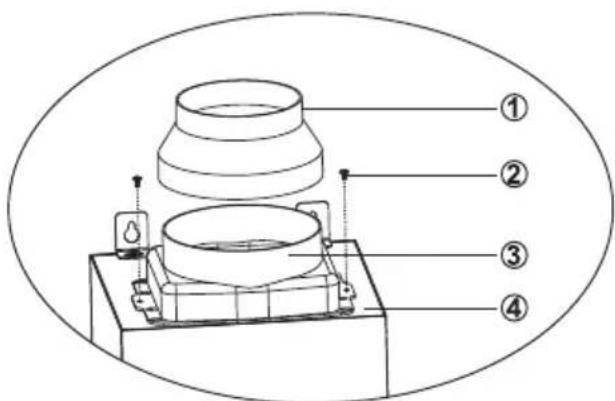
(Obrázek č. 6)
(Obrázek č. 7)
natural_image
Illustration of a hand holding a device with a circular component and two arrows indicating downward motion (no text or symbols)MAX 3 W
natural_image
Technical line drawing of a kitchen chimney with ventilation grilles and a curved arrow indicating rotation (no text or symbols)natural_image
3D technical diagram of a rectangular enclosure with labeled parts (1 and 2), showing internal components and mounting brackets (no text or symbols beyond labels)(Obrázok č. 2)
natural_image
Technical line drawing of a mechanical assembly with mounting bracket and base plate (no text or symbols)(Obrázok č. 3)
(Obrázok č. 4)
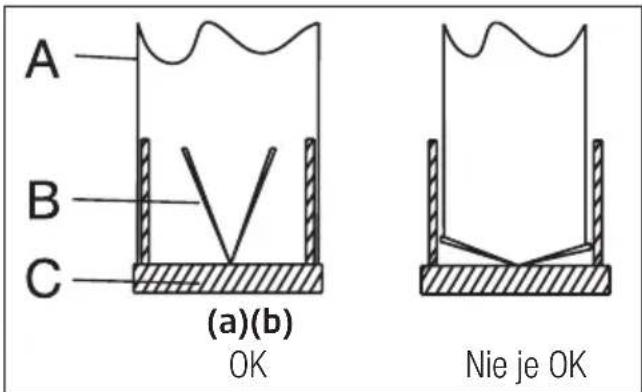
(Obrázok č. 5)
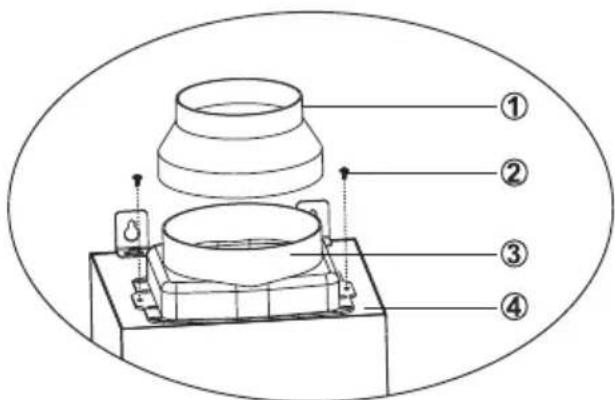
(Obrázok č. 6)
(Obrázok č. 7)
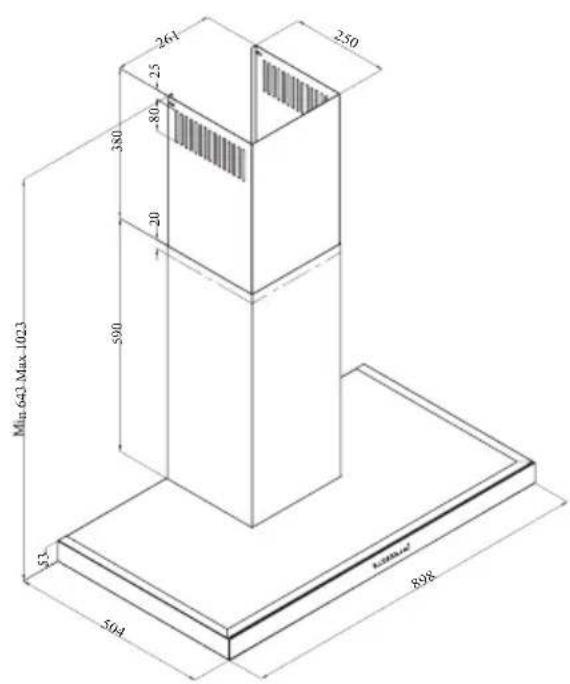
natural_image
Illustration showing a hand holding a small component with arrows indicating process (no text or symbols present)MAX 3 W
natural_image
Technical line drawing of a kitchen chimney with ventilation grilles and a curved arrow indicating rotation (no text or symbols)natural_image
3D technical drawing of a rectangular enclosure with labeled parts (1 and 2), showing internal components and mounting brackets (no text or symbols beyond labels)(Slika 2)
natural_image
Technical line drawing of a mechanical assembly with a central component and mounting base (no text or symbols)(Slika 3)
Kuhinjsko napo primite za ohišje in jo namestite na montažne vijake na steni ter privijte vijake (slika 3). Namestite tesnila M4 na vijake za obešanje 5,5x60. Kuhinjsko napo z vijaki 5,5x60 pritrdite na steno skozi montažno luknjo v notranjosti aparata (slika 3).
(Slika 4)
(Slika 5)
(Slika 6)
5.5 Namestitev nape na dimni kanal
(Slika 7)
- Notranji dimni kanal
- Vijak 3,5x9,5
- Priključna plošča za dimnik


- CONTENTS
- Please read this user manual first!
- Meanings of the Symbols
- Important safety and environmental instructions
- General Safety
- WARNING: Do not connect the appliance to the mains until the installation is fully complete.
- Compliance with the WEEE Directive and Disposing of the Waste Product:
- Compliance with RoHS Directive
- Package Information
- General appearance
- Overview
- Technical data
- Operation of the appliance
- Controlling the appliance
- Energy efficient usage
- Operating the hood
- Replacement of lamp
- Operation with flue connection
- Operation without flue connection
- Cleaning and maintenance
- Cleaning of the grease filter
- Replacement of carbon filters
- CAUTION
- Installation of appliance
- Position of the appliance
- Installation accessories
- Wall mounting
- Connecting to chimney
- Installation of the hood to the chimney
- (Figure 7)
- Troubleshooting
- (Abbildung 2)
- (Abbildung 7)
- (Imagen 2)
- (Imagen 7)
- ((Afbeelding 2))
- (Afbeelding 3)
- (Afbeelding 7)
- (Рисунок 3)
- (Obrázek č. 2)
- (Obrázek č. 3)
- (Obrázek č. 7)
- (Obrázok č. 7)
- Namestitev nape na dimni kanal
- (Slika 7)
Brand : BEKO
Model : BHCB91632X
Category : Range hood