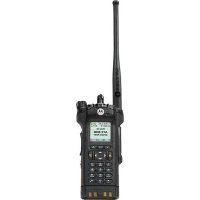
APX 8000 - Radio MOTOROLA - Free user manual and instructions
Find the device manual for free APX 8000 MOTOROLA in PDF.


| Product Type | Professional Two-Way Radio |
| Brand | Motorola Solutions |
| Model | APX 8000 |
| Category | Portable Radio |
| Usage | Professional (Controlled Environment) |
| Dimensions (approx.) | 150 x 60 x 40 mm |
| Weight (approx.) | 300 g (with standard battery) |
| Power Supply | Rechargeable Li-ion battery (Motorola approved) |
| Nominal Duty Cycle | 5% transmit, 5% receive, 90% standby |
| Frequency Bands | VHF, UHF, 800 MHz (depending on version) |
| Transmit Power | Up to 5 W (depending on band) |
| Main Functions | PTT, individual/group calls, channel scanning, emergency mode, tones |
| Included Accessories | Antenna, battery, charger (depending on kit) |
| Maintenance and Cleaning | Clean with a damp cloth; do not use solvents |
| Safety | Respect RF exposure distances (2.5 cm from face); use only approved accessories |
| Hazardous Area Certification | Available in intrinsically safe version (certified FM, UL, CSA, ATEX or IECEx) |
| Spare Parts and Repairability | Batteries, antennas, chargers, and audio accessories available as replacements |
| General Information | User manual available in PDF; radio intended for professional use only |
| Country of Origin | United States (Motorola Solutions) |
| Warranty | Standard manufacturer warranty (according to purchase contract) |
Frequently Asked Questions - APX 8000 MOTOROLA
User questions about APX 8000 MOTOROLA
0 question about this device. Answer the ones you know or ask your own.
Ask a new question about this device
Download the instructions for your Radio in PDF format for free! Find your manual APX 8000 - MOTOROLA and take your electronic device back in hand. On this page are published all the documents necessary for the use of your device. APX 8000 by MOTOROLA.
USER MANUAL APX 8000 MOTOROLA
6881095C98_SafetyP.book Page 1 Wednesday, March 4, 2015 2:35 PM


MOTOROLA
RF ENERGY EXPOSURE AND PRODUCT SAFETY GUIDE FOR PORTABLE TWO-WAY RADIOS
ATTENTION!
Before using this radio, read this guide which contains important operating instructions for safe usage and RF energy awareness and control for compliance with applicable standards and regulations.
MOTOROLA, MOTO, MOTOROLA SOLUTIONS and the Stylized M logo are trademarks or registered trademarks of Motorola Trademark Holdings, LLC and are used under license. All other trademarks are the property of their respective owners. © 2007–2015 Motorola Solutions, Inc. All rights reserved. Printed in
Motorola Solutions, Inc. 1303 E. Algonquin Rd., Schaumburg, IL 60196, U.S.A.


English

natural_image
Simple crosshair target symbol with concentric circles and a number 2 above (no text or labels beyond the number)
natural_image
Pure geometric diagram with intersecting lines and a circular pattern (no text or symbols)
6881095C98_SafetyP.book Page 3 Wednesday, March 4, 2015 2:35 PM

Please refer to the following websites for more information on what RF energy exposure is and how to control your exposure to assure compliance with established RF exposure limits:
http://www.fcc.gov/oet/rfsafety/rf-faqs.html
www.who.int/en/
http://responsibility.motorolasolutions.com/index.php/downloads/dow07-
rfexposureassessmentstand
Federal Communication Commission (FCC) Regulations
When two-way radios are used as a consequence of employment, the FCC requires users to be fully aware of and able to control their exposure to meet occupational requirements. Exposure awareness can be facilitated by the use of a product label directing users to specific user awareness information. Your Motorola two-way radio has a RF Exposure Product Label. Also, your Motorola user manual, or separate safety booklet includes information and operating instructions required to control your RF exposure and to satisfy compliance requirements.
Compliance with RF Exposure Standards
Your Motorola two-way radio is designed and tested to comply with a number of national and International standards and guidelines (listed below) for human exposure to radio frequency electromagnetic energy. This radio complies with the IEEE (FCC) and ICNIRP exposure limits for occupational/controlled RF exposure environments at operating duty factors of up to 50% talk-50% listen and is approved for occupational use only. In terms of measuring RF energy for compliance with these exposure guidelines, your radio generates measurable RF energy only while it is transmitting (during talking), not when it is receiving (listening) or in standby mode.

3
English


6881095C98_SafetyP.book Page 4 Wednesday, March 4, 2015 2:35 PM

NOTE: The approved batteries, supplied with this radio, are rated for a 5-5-90 duty factor (5% talk-5% listen-90% standby) even though this radio complies with FCC occupational exposure limits and may operate at duty factors of up to 50% talk.
Your Motorola two-way radio complies with the following RF energy exposure standards and guidelines:
• United States Federal Communications Commission (FCC), Code of Federal Regulations; 47 CFR et seq. & FCC, OET Bulletin 65
• Institute of Electrical and Electronic Engineers (IEEE) C95.1
• International Commission on Non-Ionizing Radiation Protection (ICNIRP)
• Ministry of Health (Canada) Safety Code 6 & Industry Canada RSS-102
• Australian Communications Authority Radiocommunications Standard et seq.
• ANATEL ANNEX to Resolution No. 303 et seq.
RF Exposure Compliance and Control Guidelines and Operating Instructions for Two-Way Radio Operations
To control your exposure and ensure compliance with the occupational/controlled environment exposure limits, always adhere to the following procedures.
- DO NOT remove the RF Exposure Label from the device.
- User awareness instructions should accompany device when transferred to other users.
4
natural_image
Pure geometric diagram with intersecting lines and a circular pattern (no text or symbols)
6881095C98_SafetyP.book Page 5 Wednesday, March 4, 2015 2:35 PM

Two-Way Radio Operation
- Transmit no more than the rated duty factor of 50% of the time. To transmit (talk), push the Push-To-Talk (PTT) button. To receive calls, release the PTT button. The PTT button may reside on the radio itself or may be hosted on approved wired or wireless (for example, a Bluetooth enabled remote Push-to-Talk button) accessories. Transmitting 50% of the time, or less, is important because this radio generates measurable RF energy exposure only when transmitting (in terms of measuring for standards compliance).
- In front of the face. Hold the radio in a vertical position with the microphone (and other parts of the radio including the antenna) at least one inch (2.5 centimeters) away from the nose or lips. Keeping the radio at a proper distance is important to ensure compliance.

NOTE: RF exposures decrease with increasing distance from the antenna.
- Body Worn Operation. When worn on the body, always place the radio in a Motorola-approved clip, holder, holster, case, or body harness for this product. Using approved body-worn accessories is important because the use of non-Motorola-approved accessories may result in exposure levels, which exceed the occupational/controlled environment RF exposure limits.
- Use only Motorola-approved supplied or replacement antennas, batteries, and audio accessories. Use of non-Motorola-approved antennas, batteries, and wired or wireless accessories may exceed the applicable RF exposure guidelines (iEEE, ICNIRP or FCC).
- For a list of Motorola-approved accessories for your radio model, visit the following website: http://www.motorolasolutions.com/US-EN/Business+Product+and+Services/Accessories/Two-Way+Radio+Accessories

5
English

6881095C98_SafetyP.book Page 6 Wednesday, March 4, 2015 2:35 PM
Electromagnetic Interference/Compatibility
NOTE: Nearly every electronic device is susceptible to electromagnetic interference (EMI) if inadequately shielded, designed, or otherwise configured for electromagnetic compatibility.
Facilities
To avoid electromagnetic interference and/or compatibility conflicts, turn off your radio in any facility where posted notices instruct you to do so. Hospitals or health care facilities may be using equipment that is sensitive to external RF energy.
Aircraft
When instructed to do so, turn off your radio when on board an aircraft. Any use of a radio must be in accordance with applicable regulations per airline crew instructions.
Medical Devices
Pacemakers, Defibrillators or other Implanted Medical Devices
Persons with pacemakers, Implantable cardioverter-defibrillators (ICDs) or other active implantable medical devices (AIMD) should:
- Consult with their physicians regarding the potential risk of interference from radio frequency transmitters, such as portable radios (poorly shielded medical devices may be more susceptible to interference).
- Turn the radio OFF immediately if they have any reason to suspect that interference is taking place.
- Do not carry the radio in a chest pocket or near the implantation site, and carry or use the radio on the opposite side of their body from the implantable device to minimize the potential for interference.
natural_image
Two abstract geometric symbols: a crosshair and a circular pattern with radial lines (no text or labels)
6881095C98_SafetyP.book Page 7 Wednesday, March 4, 2015 2:35 PM

Hearing Aids
Some digital wireless radios may interfere with some hearing aids. In the event of such interference, you may want to consult your hearing aid manufacturer to discuss alternatives.
Other Medical Devices
If you use any other personal medical device, consult the manufacturer of your device to determine if it is adequately shielded from RF energy. Your physician may be able to assist you in obtaining this information.
Use of Communication Devices While Driving
Always check the laws and regulations on the use of radios in the areas where you drive.
- Give full attention to driving and to the road.
- Use hands-free operation, if available.
- Pull off the road and park before making or answering a call, if driving conditions or regulations so require.

7
English


6881095C98_SafetyP.book Page 8 Wednesday, March 4, 2015 2:35 PM

Acoustic Safety
Exposure to loud noises from any source for extended periods of time may temporarily or permanently affect your hearing. The louder the radio's volume, the less time is required before your hearing could be affected. Hearing damage from loud noise is sometimes undetectable at first and can have a cumulative effect.
To protect your hearing:
- Use the lowest volume necessary to do your job.
- Turn up the volume only if you are in noisy surroundings.
- Turn down the volume before adding headset or earpiece.
- Limit the amount of time you use headsets or earpieces at high volume.
- When using the radio without a headset or earpiece, do not place the radio's speaker directly against your ear.
Operational Warnings
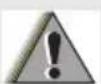
WARNING
For Vehicle With Air Bags:
Refer to vehicle manufacturer's manual prior to installation of electronic equipment to avoid interference with air bag wiring.
DO NOT place a portable radio in the area over an air bag or in the air bag deployment area. Air bags inflate with great force. If a portable radio is placed in the air bag deployment area and the air bag inflates, the radio may be propelled with great force and cause serious injury to occupants of the vehicle.
8

6881095C98_SafetyP.book Page 9 Wednesday, March 4, 2015 2:35 PM

Operational Warnings (Continued)

WARNING
Potentially Explosive Atmospheres
(Explosive atmospheres refers to hazard classified locations that may contain hazardous gas, vapors, or dusts.)
Turn off your radio prior to entering any area with a potentially explosive atmosphere unless it is a portable radio type especially qualified for use in such areas as Intrinsically Safe (for example, Factory Mutual, CSA, UL, ATEX, or IECEx).
DO NOT remove, install, or charge batteries in such areas. Sparks in a potentially explosive atmosphere can cause an explosion or fire resulting in bodily injury or even death.
The areas with potentially explosive atmospheres referred to above include fueling areas such as below decks on boats, fuel or chemical transfer or storage facilities, and areas where the air contains chemicals or particles such as grain, dust or metal powders. Areas with potentially explosive atmospheres are often, but not always, posted.
Blasting Caps and Blasting Areas
To avoid possible interference with blasting operations, turn off your radio when you are near electrical blasting caps, in a blasting area, or in areas posted: "Turn off two-way radio." Obey all signs and instructions.

9
English



6881095C98_SafetyP.book Page 10 Wednesday, March 4, 2015 2:35 PM

Operational Cautions

Caution
Antennas
DO NOT use any portable radio that has a damaged antenna. If a damaged antenna comes into contact with your skin, a minor burn can result.
Operational Warnings
Batteries Do's and Don'ts
Most battery issues arise from improper handling of batteries. Follow these general Do's and Don'ts to avoid injury and damage.
DO'S
- Do exercise care in handling any charged battery, particularly when placed inside a pocket, purse, or container with metal objects.
- Do charge your battery using Motorola-approved battery charger. Charging your battery in a non-Motorola equipment may lead to reduced performance and battery damage.
- Do use your battery in accordance with its water and/or dust Ingress Protection (IP) rating. Refer to your user guide and product specifications sheet for more information on relevant operating environments.
10

6881095C98_SafetyP.book Page 11 Wednesday, March 4, 2015 2:35 PM

Operational Cautions (Continued)

Batteries Do's and Don'ts (Continued)
DON'TS
Caution
- Do not discard battery in a fire.
- Do not replace battery in any area labeled "Hazardous Atmosphere". Any sparks created in a potentially explosive atmosphere can cause an explosion or fire.
- Do not disassemble, crush, puncture, shred, or otherwise attempt to change the form of your battery.
- Do not dry a wet or damp battery with an appliance or heat source, such as a hair dryer or microwave oven. If the radio battery contact area has been submerged in water, dry and clean the battery contacts before attaching the battery.
- Do not allow conductive material such as jewelry, keys or beaded to touch exposed battery terminals as the conductive material may complete electrical circuit, or short circuit, and become hot.
Hazardous Locations Radio Information
The Hazardous Locations approval unit refers to a product that has been approved for use in Hazardous Locations by an approval agency (for example FM Approvals, CSA, UL, ATEX, or IECEx) and certifies that a particular product meets the Agency's applicable Hazardous Locations standards. A portable radio that has been approved for Hazardous Locations will have an Approval label attached to the radio to identify the unit as Approved for specified hazardous atmospheres. This label specifies the Hazardous Locations Class/Division/Group along with the part number of the battery that must be used with the approved radio.

11
English


6881095C98_SafetyP.book Page 12 Wednesday, March 4, 2015 2:35 PM

Operational Cautions for Hazardous Locations Radio Equipment

Caution
- DO NOT operate radio communications equipment in a hazardous atmosphere unless it is a type especially certified (for example, FM, UL, CSA, ATEX, or IECEx). The use of non-Approved unit could result in an unsafe condition.
- DO NOT operate a radio unit that has been approved for use in Hazardous Locations if it has been physically damaged (for example, cracked housing). This could result in an unsafe condition.
- DO NOT replace or charge batteries in a hazardous atmosphere. Contact sparking may occur while installing or removing batteries.
- DO NOT use the radio in Hazardous Locations other than the permitted classification it is rated to.
Radios must ship from a Motorola manufacturing facility with the Hazardous Locations approved design and label (FM, UL, CSA, ATEX, IECEx). Radios will not be upgraded to this capability and labeled once they have been shipped to the field.
A modification changes the unit's hardware from its Approved certified design configuration. Modifications can only be done by the original product manufacturer.
Further warnings and instructions for the safe use of radios in Hazardous Locations can be found in the specific Hazardous Locations safety manual.
12

6881095C98_SafetyP.book Page 1 Wednesday, March 4, 2015 2:35 PM


MOTOROLA
6881095C98_SafetyP.book Page 2 Wednesday, March 4, 2015 2:35 PM

natural_image
Two abstract geometric diagrams: one with a central crosshair and another with a circular pattern (no text or symbols)
6881095C98_SafetyP.book Page 3 Wednesday, March 4, 2015 2:35 PM

http://responsibility.motorolasolutions.com/index.php/downloads/dow07-
rfexposureassessmentstand
Regulamentos da FCC
natural_image
Two abstract geometric shapes: a circular target with crosshair and a spiral pattern on a gray background (no text or symbols)
6881095C98_SafetyP.book Page 4 Wednesday, March 4, 2015 2:35 PM

natural_image
Pure geometric diagram with intersecting lines and a circular pattern (no text or symbols)
6881095C98_SafetyP.book Page 5 Wednesday, March 4, 2015 2:35 PM

6881095C98_SafetyP.book Page 6 Wednesday, March 4, 2015 2:35 PM

natural_image
Two abstract geometric diagrams: one with a central crosshair and another with a circular pattern (no text or symbols)
6881095C98_SafetyP.book Page 8 Wednesday, March 4, 2015 2:35 PM

Segurança Acústica
6881095C98_SafetyP.book Page 9 Wednesday, March 4, 2015 2:35 PM

6881095C98_SafetyP.book Page 10 Wednesday, March 4, 2015 2:35 PM

6881095C98_SafetyP.book Page 11 Wednesday, March 4, 2015 2:35 PM

6881095C98_SafetyP.book Page 12 Wednesday, March 4, 2015 2:35 PM

6881095C98_SafetyP.book Page 1 Wednesday, March 4, 2015 2:35 PM


MOTOROLA
RADIOS BIDIRECTIONNELLES PORTATIVES : EXPOSITION AUX RADIOFRÉQUENCES ET SÉCURITÉ DU PRODUIT
6881095C98_SafetyP.book Page 2 Wednesday, March 4, 2015 2:35 PM

natural_image
Two abstract geometric diagrams: one with a central crosshair and another with a circular pattern (no text or symbols)
6881095C98_SafetyP.book Page 3 Wednesday, March 4, 2015 2:35 PM

http://responsibility.motorolasolutions.com/index.php/downloads/dow07-rfexposureassessmentstand
6881095C98_SafetyP.book Page 4 Wednesday, March 4, 2015 2:35 PM

natural_image
Pure geometric diagram with intersecting lines and a circular pattern (no text or symbols)
6881095C98_SafetyP.book Page 5 Wednesday, March 4, 2015 2:35 PM

6881095C98_SafetyP.book Page 6 Wednesday, March 4, 2015 2:35 PM

natural_image
Two abstract geometric diagrams: one with a central crosshair and another with a circular pattern (no text or symbols)
6881095C98_SafetyP.book Page 7 Wednesday, March 4, 2015 2:35 PM

Aéronefs
6881095C98_SafetyP.book Page 8 Wednesday, March 4, 2015 2:35 PM

6881095C98_SafetyP.book Page 9 Wednesday, March 4, 2015 2:35 PM

6881095C98_SafetyP.book Page 10 Wednesday, March 4, 2015 2:35 PM

6881095C98_SafetyP.book Page 11 Wednesday, March 4, 2015 2:35 PM

6881095C98_SafetyP.book Page 12 Wednesday, March 4, 2015 2:35 PM

6881095C98_SafetyP.book Page 13 Wednesday, March 4, 2015 2:35 PM

6881095C98_SafetyP.book Page 14 Wednesday, March 4, 2015 2:35 PM

natural_image
Pure geometric diagram with intersecting lines and a circular pattern (no text or symbols)
6881095C98_SafetyP.book Page 1 Wednesday, March 4, 2015 2:35 PM


MOTOROLA
6881095C98_SafetyP.book Page 2 Wednesday, March 4, 2015 2:35 PM

natural_image
Simple crosshair target symbol with concentric circles and a labeled number 2 (no text or labels beyond the number)
natural_image
Pure geometric diagram with intersecting lines and a circular pattern (no text or symbols)
6881095C98_SafetyP.book Page 3 Wednesday, March 4, 2015 2:35 PM

http://responsibility.motorolasolutions.com/index.php/downloads/dow07-rfexposureassessmentstand
6881095C98_SafetyP.book Page 4 Wednesday, March 4, 2015 2:35 PM

6881095C98_SafetyP.book Page 5 Wednesday, March 4, 2015 2:35 PM

6881095C98_SafetyP.book Page 6 Wednesday, March 4, 2015 2:35 PM

natural_image
Pure geometric diagram with intersecting lines and a circular pattern (no text or symbols)
6881095C98_SafetyP.book Page 7 Wednesday, March 4, 2015 2:35 PM

Aviones
6881095C98_SafetyP.book Page 8 Wednesday, March 4, 2015 2:35 PM

natural_image
Pure geometric diagram with intersecting lines and a circular pattern (no text or symbols)
6881095C98_SafetyP.book Page 9 Wednesday, March 4, 2015 2:35 PM

6881095C98_SafetyP.book Page 10 Wednesday, March 4, 2015 2:35 PM

6881095C98_SafetyP.book Page 11 Wednesday, March 4, 2015 2:35 PM

6881095C98_SafetyP.book Page 12 Wednesday, March 4, 2015 2:35 PM

natural_image
Pure geometric diagram with intersecting lines and a circular pattern (no text or symbols)
6881095C98_SafetyP.book Page 13 Wednesday, March 4, 2015 2:35 PM

6881095C98_SafetyP.book Page 14 Wednesday, March 4, 2015 2:35 PM

natural_image
Pure geometric diagram with intersecting lines and a circular pattern (no text or symbols)

- MOTOROLA
- RF ENERGY EXPOSURE AND PRODUCT SAFETY GUIDE FOR PORTABLE TWO-WAY RADIOS
- ATTENTION!
- Federal Communication Commission (FCC) Regulations
- Compliance with RF Exposure Standards
- Your Motorola two-way radio complies with the following RF energy exposure standards and guidelines:
- RF Exposure Compliance and Control Guidelines and Operating Instructions for Two-Way Radio Operations
- Two-Way Radio Operation
- Electromagnetic Interference/Compatibility
- Facilities
- Aircraft
- Medical Devices
- Pacemakers, Defibrillators or other Implanted Medical Devices
- Hearing Aids
- Other Medical Devices
- Use of Communication Devices While Driving
- Acoustic Safety
- To protect your hearing:
- Operational Warnings
- For Vehicle With Air Bags:
- Operational Warnings (Continued)
- Potentially Explosive Atmospheres
- Blasting Caps and Blasting Areas
- Operational Cautions
- Antennas
- Batteries Do's and Don'ts
- DO'S
- Operational Cautions (Continued)
- Batteries Do's and Don'ts (Continued)
- DON'TS
- Hazardous Locations Radio Information
- Operational Cautions for Hazardous Locations Radio Equipment
- Regulamentos da FCC
- Segurança Acústica
- RADIOS BIDIRECTIONNELLES PORTATIVES : EXPOSITION AUX RADIOFRÉQUENCES ET SÉCURITÉ DU PRODUIT
- Aéronefs
- Aviones
Brand : MOTOROLA
Model : APX 8000
Category : Radio